Tag: Singapore

  • Tourists help Singapore Q3 GDP beat estimates

    Tourists help Singapore Q3 GDP beat estimates

    Singapore’s economy grew at a much faster clip in the third quarter than initially estimated, as an influx of visitors boosted the hospitality and retail sectors. The economy grew by 1.9 percent on-quarter between in the September quarter, compared with a 2.5 percent contraction in the preceding three months, the Department of Statistics said Wednesday.

    The advance estimate released last month showed the economy had eked out a 0.1 percent gain. The latest reading proves that the export-oriented island-state avoided a technical recession, which is typically defined as two successive quarters in which the economy contracted from the previous three months.

    The Ministry of Trade and Industry expects growth to be 2 percent for all of 2015 and it forecasts an economic expansion of between 1 and 3 percent in 2016. “While sectors such as finance and insurance and wholesale trade are expected to support growth, the manufacturing sector is likely to remain weak,” the Ministry of Trade and Industry said. “In China, there is a risk that ongoing reforms to rebalance the economy may falter, leading to a significant drop in demand.” The wholesale and retail trade sector grew by 5.3 percent on quarter between July and September , up from 1.1 percent in the second quarter.

    A pick-up in tourist arrivals underpinned faster growth in the transportation and storage and accommodation and food sectors, where output expanded by 5.9 percent and 12 percent respectively. On a year-on-year basis, Singapore’s economy also expanded by 1.9 percent, a shade lower than the 2 percent increase in the second quarter but higher than the 1.4 percent increase initially forecast.

    Still, the effects of a slowdown in China cast a pall on the manufacturing sector, where output slumped for the second quarter running, although the pace of the contraction slowed. Construction activity also cooled, falling 1.6 percent from the previous quarter after a feverish 13 percent increase in the second quarter.
  • Singaporeans love to shop overseas

    Singaporeans love to shop overseas

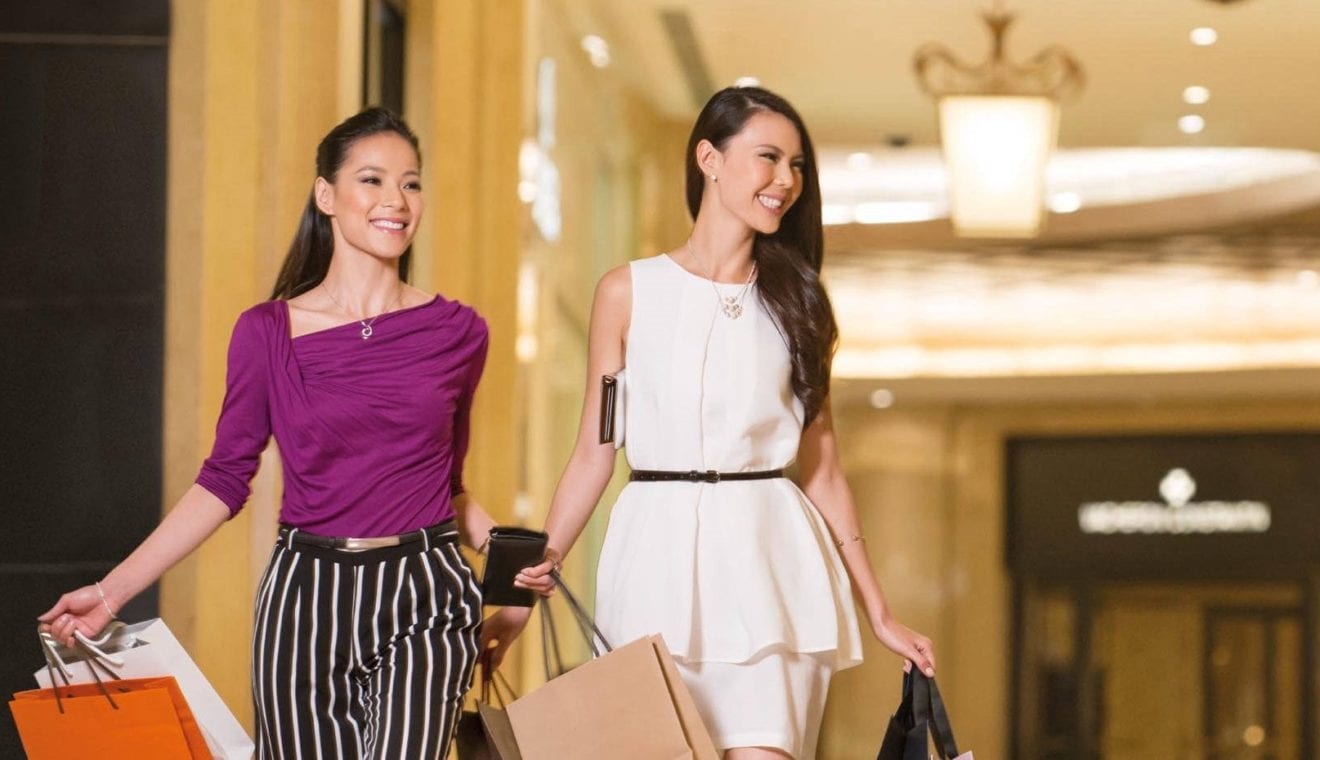
    Never mind that Singapore is renowned globally as a shopping destination.

    Singaporeans want to shop elsewhere.

    A survey by insurance company AIG conducted back in April found 36 per cent of the 1205 polled go on holiday solely to shop.

    When they take a holiday for retail therapy, Singaporeans spend an average of S$336 a day.

    The three most popular overseas shopping destinations are Bangkok, Hong Kong and Taiwan.

    AIG says it had received 7500 insurance claims between November 2014 and October 2015 for baggage lost on trips home from – in order – Thailand, Taiwan and Hong Kong.

    The insurer says people should keep receipts or photographs of their overseas purchases to ensure a smooth claims process.

    Other reasons for non-business travel by Singaporeans rated far lower than retail therapy, including a weekend getaway (21 per cent), to see somewhere exotic (12 per cent) or to indulge in a luxury break (four per cent).

  • Ted Baker thrives on expansion

    Ted Baker thrives on expansion

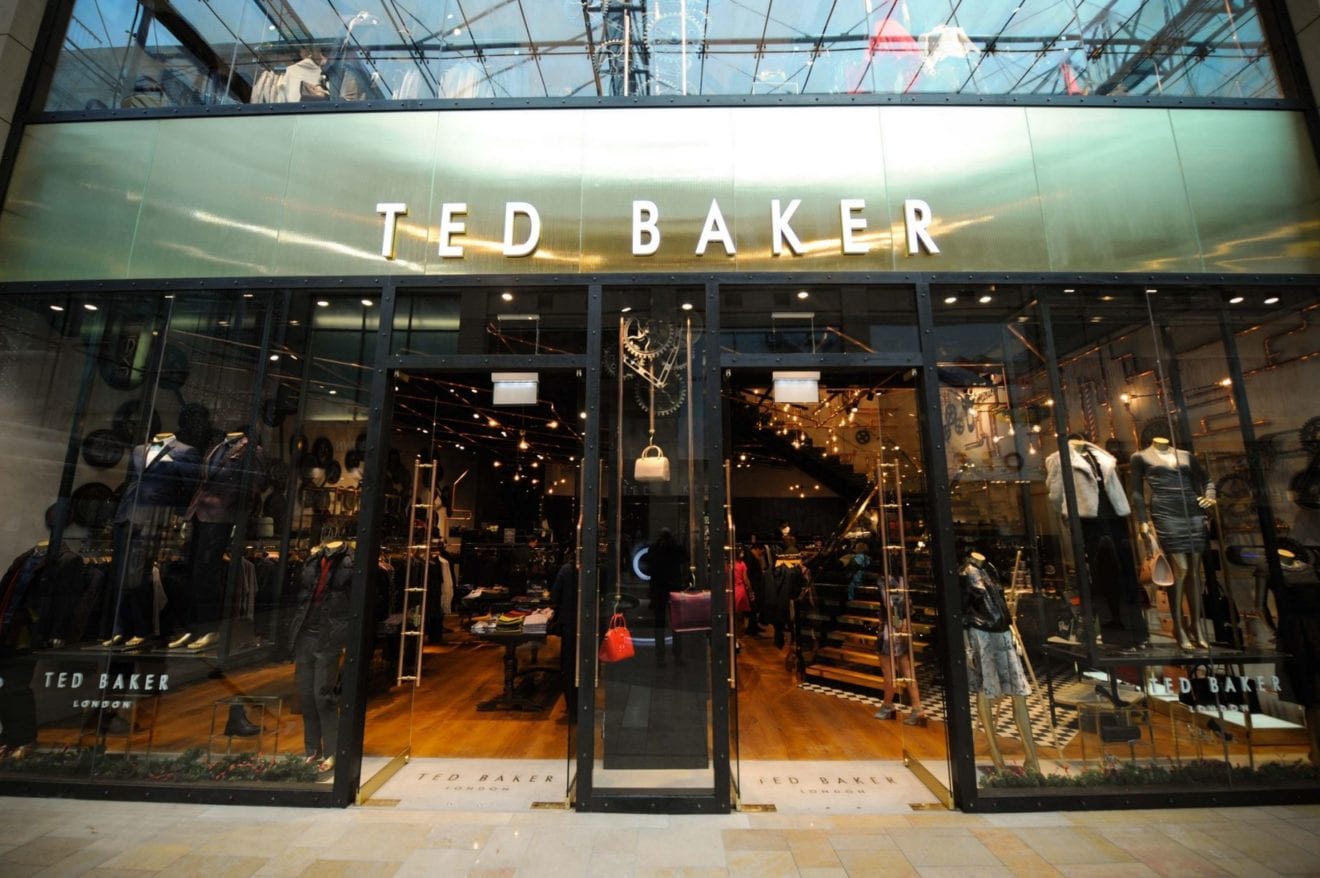
    Quirky UK fashion and lifestyle label Ted Baker has announced a 20.5 per cent rise in group revenue for its third quarter to 14 November.

    Celebrating an 18.1 per cent rise in retail sales at constant rates, these results were helped by the addition of more than 32,516 sqm in average retail space (an increase of seven per cent) during the period. A planned customer event, which fell a week earlier than last year, also boosted sales.

    Despite the continued international challenges that Ted Baker outlined in its half year results last month, the company has proceeded with numerous openings, spanning Amsterdam, Hawaii, Malibu and Toronto, adding further concessions in premium department stores in Germany, Ireland, Spain, North America and Toronto over the last three months. The brand has also made a return to London’s Stansted Airport, following an £80 million transformation of the terminal. The “Departures Store”, which officially opened on November 6, has a summer holiday theme, featuring 3D Polaroid-style wall boxes set against blue swimming pool tiling and light fixtures in the shape of inflatable beach balls. An interactive digital screen across the store front senses movement and invites passersby to move closer.

    Ted Baker’s wholesale arm saw a sales increase of 27 per cent (25.1 per cent in constant currency), helped by strong trading in both the UK and North America. Group wholesale sales are expected to be 28 per cent ahead at the close of the full year.

    Ted Baker’s varied international approach has also seen licensed store openings in Singapore and Taiwan together with licensed concessions in Kuwait and Mexico. These have enabled Ted Baker to progress with expansion in the Far East despite economic volatility in the surrounding region.

    An outtake from the “Wonders Never Cease” Autumn Winter 2015 campaign, shot over five nights at London’s Natural History Museum in collaboration with shoebox film firm Crowns and Owls, currently represents the backdrop for the brand’s website. While the “affordable luxury” label has received a positive reaction to its Autumn/Winter collections so far, the swing of success at the end of the year will be heavily dependent on strong Christmas trading.

  • Poll finds Asian prefer Christmas shopping online

    Poll finds Asian prefer Christmas shopping online

    Nearly half of Asia’s shoppers said they prefer to do their Christmas shopping online this year, according to a new survey conducted by internet services company Rakuten.

    Of 2500 shoppers polled in Singapore, Malaysia, Indonesia, Thailand and Taiwan, 47 per cent said they preferred to complete their Christmas shopping online – due to convenience (83 per cent), the ease of browsing and comparing of products (55 per cent) and cost effectiveness from attractive rebates and loyalty programs (41 per cent).

    The same shoppers reported an average increase of 20 per cent, in terms of the amount spent online on Christmas shopping in 2014, versus the year before.

    The Rakuten Shopping Secrets Survey 2015 found that 75 per cent of shoppers expect to buy more, or at least, the same number of Christmas gifts online this year compared to the previous year.

    “Our survey found that in general, when shopping for a gift, shoppers look at price (33 per cent) as the single biggest factor influencing their decision of what to buy, followed by the likeability of a gift by the recipient (26 per cent) and practicality of the gift (25 per cent),” said Masaya Ueno, director of Rakuten Asia

    Rakuten has launched a five per cent rebate on everything listed on its shopping sites, every day, with no limit on the amount of rebates, through the Rakuten Super Point program, across all its online shopping sites in Asia.

    This means that if shoppers buy anything on Rakuten sites in Singapore, Malaysia, Indonesia, Thailandor Taiwan, they are given Rakuten Super Points that are the equivalent of five per cent of their purchase value. These points can be used like cash, to offset their next purchase.

    Asians spend on average US$30 on a Christmas gift, and Rakuten says its new cashback scheme would reward shoppers with a $15 voucher if they bought gifts for 10 people.

    Meanwhile, the survey found that while three in five people remembered what they received for Christmas last year, a quarter of them received gifts they disliked. Those gifts ended up being re-gifted (38 per cent), kept somewhere and forgotten about (33 per cent), donated to charity (24 per cent), or being sold off (13 per cent).

    That could be one reason why 27 per cent of Asians find Christmas a stressful occasion, with Singapore shoppers the most stressed (40 per cent), well ahead of shoppers from Taiwan (32 per cent), Malaysia (30 per cent), Indonesia (18 per cent) and Thailand (17 per cent).

    “The year-end season is usually the busiest time of the year for online retailers like us, with shoppers wanting to splurge due to great discounts (62 per cent), liking to start a new year with new things (40 per cent), or rewarding themselves after a year of hard work (33 per cent),” said Ueno.

  • New CEO for NTUC Fairprice

    New CEO for NTUC Fairprice

    NTUC FairPrice has announced the resignation of  CEO Tan Kian Chew on December 31 after 23 years with the company.

    Tan will join the Singapore Labour Foundation as CEO.

    His replacement has been named as Seah Kian Peng, who will commence on January 1. Tan joined NTUC FairPrice in 1992 as one of its assistant GMs and quickly rose to become GM (operations and corporate planning) in 1994, COO in 1995, deputy CEO in 1996 and eventually CEO in 1997.

    NTUC FairPrice chairman Bobby Chin said he deeply appreciated Kian Chew’s 23 years of service to FairPrice.

    “In [his] time, he has helped to build and strengthen the social enterprise.  He leaves FairPrice well poised to continue to deliver significant social good and in sound financial health.  He has built strong relationships not only within Fairprice but also across the group of social enterprises and the Labour Movement.  He is not only a colleague, but a friend to all and a mentor to many.  I wish him every success in his next career and I am sure all of us at FairPrice will miss him dearly.”

    During his tenure, Tan focused NTUC FairPrice on its social mission of moderating the cost of living for daily essentials. These include absorbing the initial impact of GST, launching the Everyday Low Price basket of goods and introducing the two per cent discount for seniors (on Tuesdays) and three per cent discount for pioneers (on Mondays), benefitting over 170,000 seniors every week.

    NTUC FairPrice has regularly been voted the most socially responsible company and one of the top brands in Singapore and the region by independent survey companies.

    Apart from delivering on its social mission, under Tan’s leadership NTUC FairPrice also grew quickly to become Singapore’s leading retailer with annual sales growth from $752 million in 1997 to $3.2 billion in 2014, attaining a market share of 59 per cent in 2014. Profit before tax also rose from $49 million in 1997 to $227 million in 2014 and net assets of the cooperative rose from $217 million to $1.5 billion during this period.

    “I am grateful to have spent 23 years with this great organisation, and deeply honored to have had the opportunity to lead it for the last 18 years,” said Tan in a statement.

    “I am very proud of what my colleagues and I have accomplished together during this period; in meeting competition, overcoming challenges and leading FairPrice to becoming a clear market leader in Singapore with a strong social mission.  I am leaving FairPrice with a sense of confidence as I am handing it over to Seah Kian Peng who has proven himself to be a very capable and dynamic leader.”

    Incoming CEO Seah has worked in both the public and private sector and joined the National Trades Union Congress – administration & research unit (NTUC-ARU) in June 1996 and was seconded to NTUC FairPrice in February 2001 as COO. In November 2001, Seah was re-designated as deputy CEO and continued to be overall-in-charge of supermarket operations.  In July 2006, with the announcement of the new group corporate structure, Seah was appointed MD of Singapore and was subsequently promoted to CEO of the Singapore business in April 2010.

    Under Seah’s leadership, FairPrice increased its footprint in Singapore from 99 to 290 stores with the opening of new formats to meet the evolving needs of the people in the city.

    Said Seah today: “I am humbled and excited by this continuing opportunity to serve the people of Singapore. NTUC FairPrice is an important part of the social fabric of Singapore and we will continue to focus on our social mission of moderating the cost of living for daily essentials while meeting the evolving needs and aspirations of the people of Singapore in this area.”

  • DFS partners with kid’s Make-A-Wish charity

    DFS partners with kid’s Make-A-Wish charity

    For the second year running, DFS Group is partnering with Make-A-Wish International (www.worldwish.org) this December in its #JoyToYourWorld charity campaign to help children fighting life-threatening medical conditions by granting their special wishes.

    Jay Frame, DFS Group’s Vice President Corporate Communications and CSR said: “We are thrilled to partner with Make-A-Wish International for the second year in a row and share the goodwill of our customers, employees and partners to help these children’s wishes come true.”

    The retailer says that crowdsourcing and social media combine in this charity campaign and DFS customers can help to grant wishes by following @DFSOfficial and liking posts tagged with #JoyToYourWorld. DFS says that for every #JoyToYourWorld post that receives 1,000 ‘likes’, it will donate to Make-A-Wish International to help grant up to nine wishes to children around the globe.

    Coinciding and honouring DFS’ 55th anniversary, an equal 55 celebrity ambassadors are supporting this year’s campaign, including past DFS campaign spokespeople Godfrey Gao, Ming Xi, Caroline de Maigret and Perry Liu.

    DFS says: “The mission of Make-A-Wish is to grant the wishes of children with life-threatening medical conditions to enrich the human experience with hope, strength and joy. Since its inception in 1980, Make-A-Wish has collectively granted the wishes of more than 350,000 children in nearly 50 countries. Each wish that comes true inspires these seriously ill children to persevere against their illnesses.”

    Make-A-Wish International President and CEO Jon Stettner said: “We are proud to renew our partnership with DFS and its ambassadors this holiday season to help grant even more wishes to deserving children facing serious illnesses. It’s through the support of partners like DFS and its customers around the globe that make these life-changing wishes possible.”

    Amongst those children DFS helped to grant wishes to last year around Asia was Evan, an eight-year-old from Hong Kong battling acute lymphoblastic leukaemia. He wanted to be an astronaut and lift off was duly granted when he attended NASA’s Space Camp in Alabama, US.

    Then there was Mostafa, a 17-year-old from Japan suffering from congenital biliary atresia and pancreatic cancer. He wanted to be a racing car driver and his wish came true when he sat in a Ferrari 138 driven by two-time Formula 1 champion Fernando Alonso.

    This year, DFS and Make-A-Wish International will grant wishes to children like Wang-yau, a nine-year-old boy from Hong Kong battling spinal muscular atrophy who wishes to travel abroad, or Joanna, a 10-year-old girl from Singapore in treatment for medullablastoma, who wishes to become a pastry chef.

    As part of all this, DFS Group is generously encouraging customers to help out with donation boxes placed within its T Galleria by DFS stores worldwide. These will be available at its 11 T Galleria outlets in Hong Kong (3), Macau (4), Singapore, Auckland, Okinawa and Hawaii as well as its DFS Gallerias in Cairns and Sydney.

    In addition – and again celebrating DFS’ 55th anniversary – 55 celebrity ‘ambassadors and influencers’ have signed up this year to help support the #JoyToYourWorld Campaign. These include famous actors, models, make-up artists, photographers, a princess, an athlete, photographers, fashion bloggers, singers and many more.

  • Isetan Singapore losses mount

    Isetan Singapore losses mount

    Isetan Singapore has reported a third straight quarterly loss. The high profile, Japanese-owned four store strong department store chain has more than doubled its loss of the same quarter last year.

    The company says sales were down in all of its stores, a trend evident in the results of other locally listed retailers in recent weeks including Metro and FJ Benjamin, and even Courts whose Singapore sales were down despite a significantly increased profit.

    In the three months to September 30, Isetan Singapore lost S$6.15 million. That compares with a $2.93 million loss in the same quarter last year and a $5.85 million loss in the preceding quarter to June 30.

    Sales fell 14 per cent year on year to $68.71 million, partly due to the March closure of its Isetan Orchard store at Wisma Atria. (The company will now lease that space to various retailers.)

    “With the exception of Isetan Jurong East which is still experiencing growth in sales, the other stores had lower sales,” Isetan Singapore said in a statement.

    “Moving forward, the slower economic growth may impact sales and the trading environment is expected to remain very competitive among retailers.”

  • Real Singapore retail sales slump 4.5 per cent

    Real Singapore retail sales slump 4.5 per cent

    Real Singapore retail sales – the data which excludes motor vehicles – slumped 4.5 per cent from August to September according to government data.

    Year on year sales fell 1.4 per cent, recorded Statistics Singapore.

    The total retail sales value in September 2015 was estimated at $3.4 billion, higher than the $3.2 billion in September 2014 (including motor vehicles).

    Singapore retail sales September 2015

    Sales of food & beverage services (seasonally adjusted) decreased 1.6 per cent in September over August and by 2.7 per cent year on year.

    The total sales value of food & beverage services in September 2015 was estimated at $629 million, lower than the $647 million in September 2014.

    Adding to the concern is that September was the month the city hosted the annual Formula One Grand Prix, traditionally a high driver of inbound tourists.

    The greatest impact on retail sales was a 12.3 per cent decline in sales of watches and jewellery and a 10.2 per cent fall in sales of recreational goods, month on month.

    Sales of clothing, footwear, medical goods, toiletries, optical goods, books, furniture, household equipment; and sales at mini-marts, convenience stores and department stores declined between 2.3 per cent and 8.8 per cent.

    On the upside, retail food and beverage sales, phones, computers and sales at supermarkets rose between 0.8 per cent and 1.7 per cent.

    Singapore F&B September sales 2015

    Year on year, sales at supermarkets, department stores and of medical goods and toiletries grew between 2.8 per cent and 3.9 per cent.

    Sales of optical goods, books, recreational goods, clothing, footwear, phones, computers, watches, jewellery, food, furniture and household equipment; and at mini-marts and convenience stores, declined between 0.4 per cent and 9.9 per cent year on year.

    In the restaurant and hospitality data, fast food sales rose 6.3 per cent year on year, while restaurants declined 7.2 per cent.

  • Virtual wardrobe tech comes to Singapore

    Virtual wardrobe tech comes to Singapore

    Technology from Metail, a United Kingdom fashion technology company is set to arrive in Singapore tomorrow as part of the company’s first Asian collaboration with new Indian fashion retailer abof.com. The new launch is understood to be in partnership with Singapore Press Holding’s e-commerce portal Shop.SheShops.

    According to Metail, 25% are put off online shopping because they are confused with sizing, with 44% returning clothes due to sizing issues. As it is, a majority of customers (62%) wish that images online would be more reflective of their own body shape.

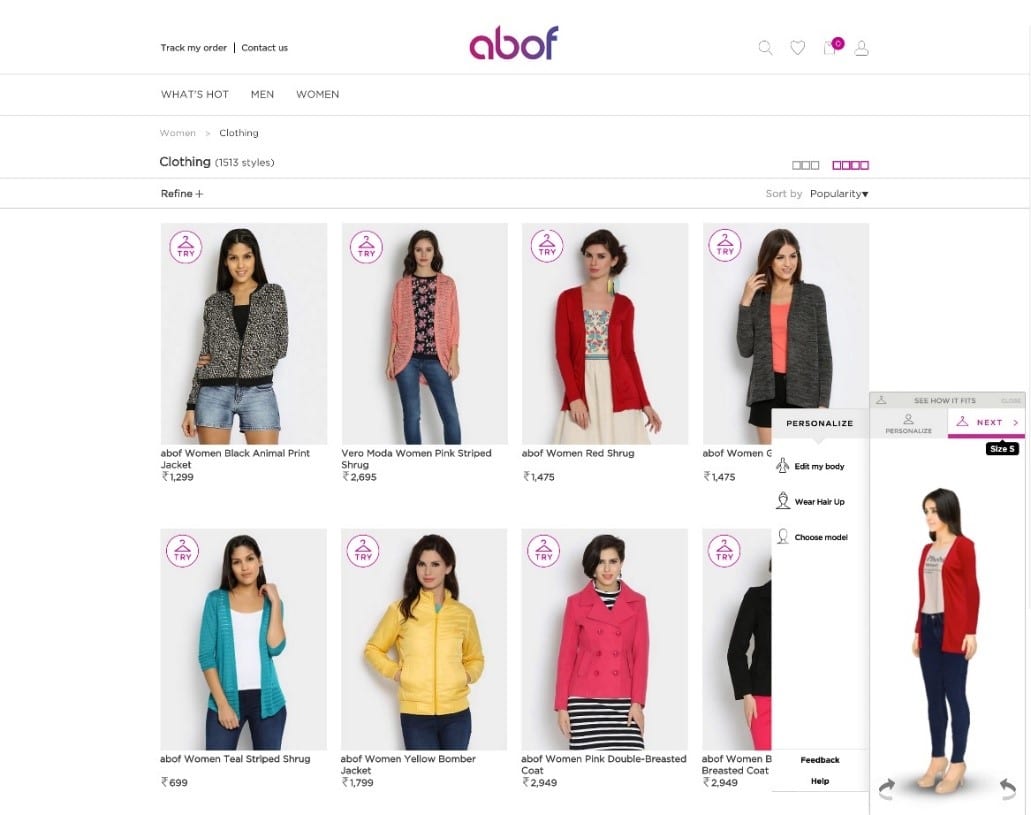
    The technology from Metail is an attempt to solve – or at least alleviate – these issues by allowing users to try out their clothes virtually. This is done by generating customized body avatars dubbed as “MeModels” sporting users’ vital statistics. According to Metail, the MeModel avatar is up to 92% accurate of the customer’s own body shape.

    The objective is to allow customers to better visualize an outfit prior to making the purchase. When browsing through clothing options, shoppers can see the avatar donning selected clothes in a small docked window at the side. This only works with clothing items tagged with a “Try it on” sign though.

    CMO Innovation gave the Metail demo a spin, and the site asks shoppers for vital statistics pertaining to their weight, height and bust. This is used to estimate waist and hips measurements, which can be tweaked if desired. A handful of models can be used as the base template for the avatar, while the hair type can also be tweaked slightly. Male MeModels are not available at the moment.

    It will be interesting to see how well the technology fares with fashion brands in the region, especially in costly retail locations such as Singapore and Hong Kong. Is the technology too nascent or too hard to implement on a wide scale for brands here? Or is it arriving at just the right time to address the growing propensity for online shopping by Millennials, or Gen Y customers.

    Inline image: Metail avatar donning a Halloween-themed Poison Ivy Dress

  • Enhanced Air Connectivity Will Make Mauritius a Gateway to Asia

    Enhanced Air Connectivity Will Make Mauritius a Gateway to Asia

    Mauritius will become a gateway to Asia through Singapore for the islands of the Indian Ocean and countries of eastern and southern Africa as a result of the agreement signed on 14 October 2015 between Mauritius and Singapore Changi Airport.

    In reply to a Parliamentary Question the Prime Minister, Sir Anerood Jugnauth, said that this ‘Air Corridor’ offers an exceptional opportunity for growth for Air Mauritius as it taps into the tremendous potential of traffic between Asia/South East Asia and Africa. The increase of frequencies into Singapore will dovetail with the Regional Airline project.

    Given that Singapore’s Changi Airport is the seventh largest international airport in terms of passenger and air cargo traffic, this agreement will allow the development of both passenger and cargo traffic between Singapore and Mauritius as well as between Africa/Indian Ocean countries and Asia/South East Asia, using Mauritius and Singapore as hubs, he said.

    The Prime Minister outlined that on the west side of the corridor, Mauritius has already signed Memoranda of Understanding/Bilateral Air Services Agreements with the following African countries: Botswana, Comoros, republic of Congo, Egypt, Ethiopia, Kenya, Madagascar, Malawi, Mozambique, Nigeria, Rwanda, Seychelles, South Africa, Swaziland, Tanzania, Uganda, Zambia and Zimbabwe.

    On the east side Memoranda of Understanding and Bilateral Air Services Agreements have been signed with China, Hong Kong, Indonesia, Malaysia, Thailand and Viet Nam. Mauritius is in the process of finalising a Memoranda of Understanding with Japan with a view to allowing its national carrier to extend its network coverage in Asia by code sharing with its partner airlines to market points in Japan.

    This forceful move will have an enormous impact on the other sectors of the country and will promote trade, business and economic development, thereby catapulting Mauritius to the next stage of growth. Through promotion on international trade and business in the region Mauritius is poised to become a robust regional hub, he said.

  • Embraer Selects DHL for Worldwide Bizjet Logistics

    Embraer Selects DHL for Worldwide Bizjet Logistics

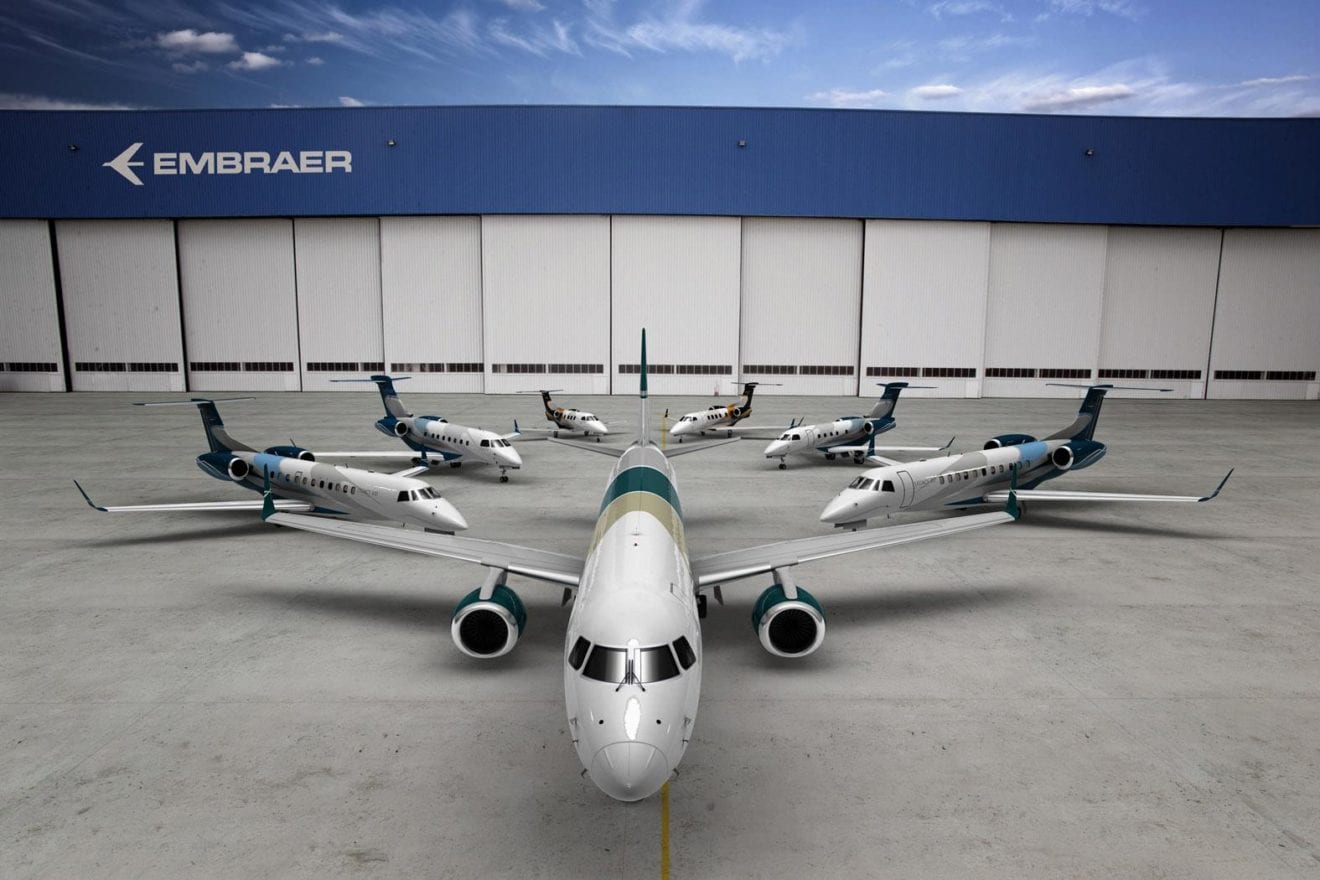
    Embraer Executive Jets and DHL have teamed up on a new global logistics model designed specifically for business aviation. With 930 executive jets (and increasing to more than 1,000 next year) flying in some 60 counties, Embraer clearly has the need for sophisticated logistics support.

    “We have been continuously improving our customers’ experience in all aspects, thanks to relevant actions taken in process quality and support infrastructure,” said Waldir Goncalves, Embraer senior vice-president of customer support and services worldwide. “I’m glad that DHL will join us for this unparalleled global logistics model for business aviation.”

    According to Peter Bonte, DHL’s vice president global business development server parts logistics, “DHL has a network of several locations around the world and we have selected the best of these locations to support Embraer’s customers. Some of the locations are Memphis, Belgium, Dubai and Singapore.” Some warehouses are multi-customer, but all warehouses are certified to distribute parts for Embraer. DHL segregates a part of the building for Embraer and Embraer has people in each location to manage the operation.

    Embraer selected DHL because of its global footprint and relevant experience in the aerospace industry. The logistics service will provide overnight deliveries even when an order comes in late in the day. An integrated ITsolution will offer real-time visibility and improved tracking.

    Asked if Embraer is considering using dedicated AOG (aircraft on the ground) business jets to ferry parts and technicians, Goncalves replied, “No, because now we have hundreds of [DHL] airplanes delivering parts around the world, so if I select just one or two jets, it is not comparable. The logistic model we have selected is much more powerful–we can get parts where we need, when we need. It’s a difference in concept.”

  • BHG Retail on track to list Reit in Singapore

    BHG Retail on track to list Reit in Singapore

    Chinese retail mall owner Beijing Hualian Group (BHG) is looking to list its malls in a Singapore real estate investment trust (Reit) on Singapore Exchange (SGX). If successful, it would be Singapore’s first Real Estate Investment Trust (Reit) listing this year, as several deals were halted due to concerns over uncertain financial markets, local media reported on Monday.

    Beijing Hua Lian Group (Singapore) International Trading, as a strategic investor, has agreed to subscribe for about 148 million units, while Beijing Hualian Mall (Singapore) Commercial Management (BHG Singapore), has agreed to subscribe for 24.64 million units, according to Channel NewsAsia.

    The firm has already attracted four cornerstone investors, China Hi-Tech Holding Company, China Life Insurance Company, China Merchants Bank Asset Management and Dr Chanchai Ruayrungruang, who together will subscribe for over 169.65 million shares.

    Separately, the IPO plans to sell 150.1 million units under the placement at 0.80 Singapore dollar a piece to institutional and retail investors, with initial public offering at 120 million Singapore dollars.

    The funds raised will help the Reit to acquire the five malls from the sponsor that would make up its initial portfolio.

    The public offer is scheduled to open on Dec. 2 and trading will begin on Dec. 11.

  • Singapore businesses embracing analytics tools

    Singapore businesses embracing analytics tools

    According to Gartner, more than 75 percent of companies globally are investing or planning to invest big data in the next two years. In 2015, SAS saw an increased adoption in analytics solutions across various industries – a clear indication that Singaporean businesses are also recognizing the value of analytics in driving business outcomes.

    “We’ve seen an uptake in the adoption of analytics solutions by companies spanning across several verticals, including retail, transport and hospitality. We also see more non-technical employees embracing analytics, and this is largely driven by tools like SAS Visual Analytics, which has interactive, self-serving capabilities to allow anyone to explore and discover insights on their own,” said Francis Fong, Managing Director, SAS.

    Regardless of the size of an organization, its data or the complexity of its services, businesses are now able to take charge of its data quickly and easily. SAS Visual Analytics, uses an interactive interface that works to identify relationships, explore options and uncover hidden opportunities, allowing businesses to make precise decisions faster than ever before.

    Key customer wins in 2015:

    •    Club 21: a global luxury retail company, was looking to get a more holistic understanding of customer spending and shopping behaviors online and offline. With SAS Visual Analytics, they were able to discover insights to move them closer to surfacing omnichannel shopping patterns and merchandising affinity trends. This led to the retail brand integrating their point-of-sale and membership data to gain a more holistic understanding of sales patterns and member performances and habits.

    “The SAS VA tool is new to our organization.  Our goal is to use this tool to enable our teams to move beyond data collection to surface patterns and associations through visualization.  This tool allows our teams to extract insights faster and more strategically because we can finally see and understand data in a way that is custom to our businesses, marketing channels and customer segmentations.” Mei Lee, Senior Vice President, Digital, CRM & e-Commerce.

    •    SMRT: is Singapore’s premier multi-modal land transport operator. Like other large organizations which have a range of business functions and, correspondingly, a number of business units, SMRT had the challenge of collecting data from disparate sources, and synthesizing and analysing it. In 2013, SMRT invested in an Information Fusion capability and SAS Visual Analytics provided the platform through which a strategic dashboard view was built, allowing, among other things, for individual business units and the Group as a whole to track, trend and analyse operational performance.

    Henry Cheng, Head, Information Fusion Center, SMRT, said, “We required a tool that would allow us to have a single dashboard view across the entire Group to guide our decision making, and SAS Visual Analytics was able to provide that. The solution’s easy-to-use, self-service environment has allowed us to run data models across different business units to gain useful insights.”

    •    Far East Hospitality: Singapore’s largest hotels and serviced residences operator, tapped on SAS to help them consolidate and analyze information in a single source. The availability of decision trees and path analyses, in particular, helped Far East Hospitality develop a better data view and make more informed decisions, improving their tracking of flight details and finance data, and strengthening their risk management strategies. Taking into account the higher proportion of nontechnical experts compared to data experts in a typical organization, solutions like SAS Visual Analytics enabled employees to easily grasp the basics on data analytics, with its easy deployment and user friendly interface.

    “There are many strategic and tactical components that goes into a price.  Like most hotels, we have many data variables in our decision making of the price.  It is difficult to pull all this data together, and statistically interpret which factors contribute to success.  We want to become more forward looking, and make this process more intentional and proactive by using tools that can help us visualize the data quickly, and streamline the data access and analysis. We chose SAS Visual Analytics as it fulfilled the requirements: the ability to quickly visually analyse our various data in one single platform, the ability to build analytical models, and the ability to share the analytics and reports in different formats and devices,” Malcolm Leong, Far East Hospitality Management.

  • Apple continues clean energy push with Singapore rooftop solar deal

    Apple continues clean energy push with Singapore rooftop solar deal

    The world’s largest technology company has announced that its entire Singapore operations, including a 2,500-person corporate campus and a forthcoming retail store, will be 100% powered by solar panels.

    Analysts says the company’s recent efforts of focusing on renewable energy would help in cost-savings but will the benefit be transferred to the customers is too early to conclude, and the fact remains that Apple’s loyal consumers see Apple brand as a premium and privilege one, rather than for price.

    According to Sunseap, rooftop installations are an ideal solution for densely populated Singapore, which doesn’t have land to spare for ground-mounted solar arrays. Apple and its chief LCD supplier, Foxconn, have further plans to generate hundreds of megawatts of solar power to boost Apple supply chain’s total clean energy consumption to 2GW. The deal, worth $850 million, will provide enough renewable energy to power every Apple Store in California, offices, headquarters and a data center. This also includes its upcoming store that will be the first-ever solar-powered store in Southeast Asia.

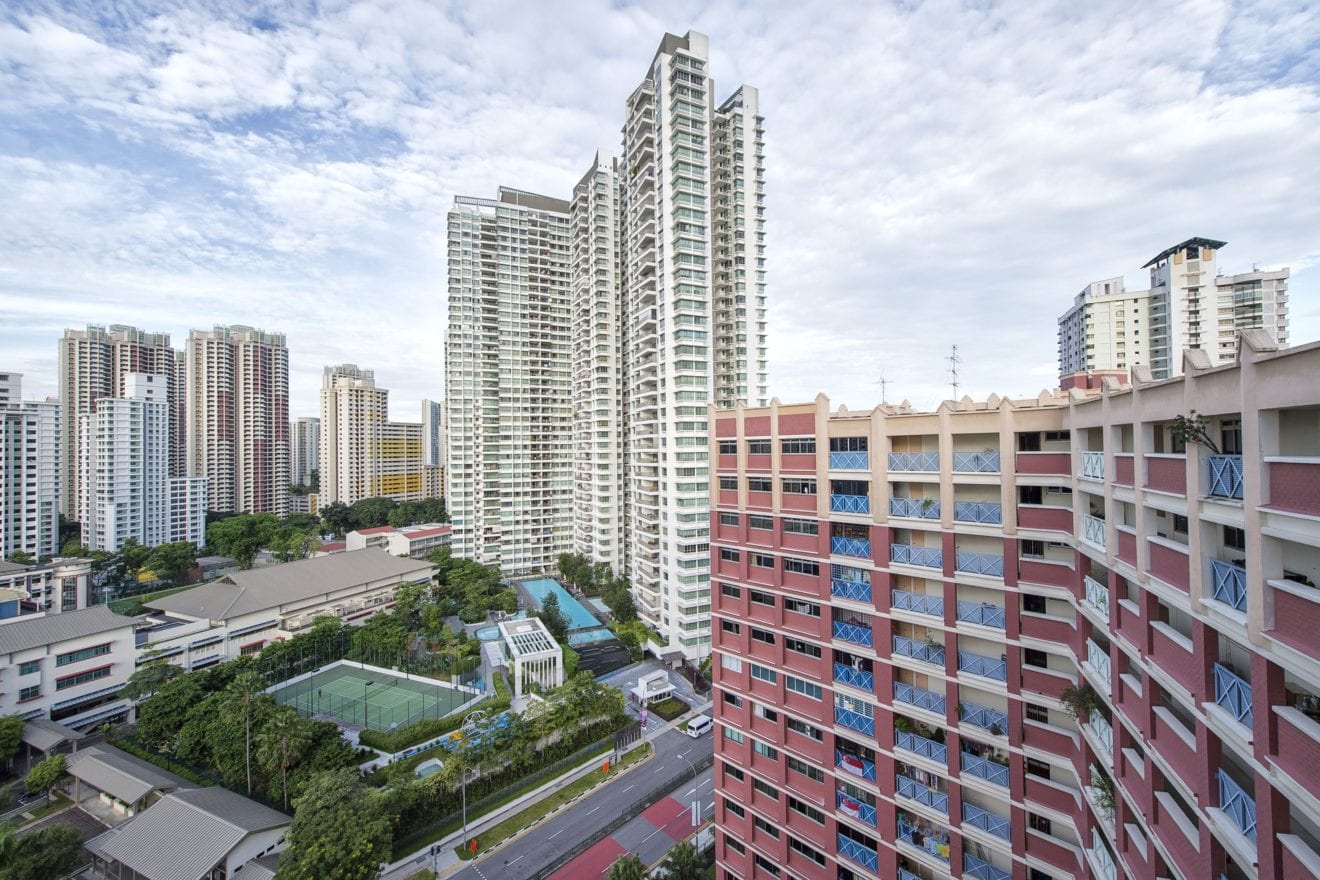
    Currently, about 60 per cent of the power generated by Sunseap across Singapore are from panels spread over 900 tall housing blocks, also known as Housing Development Board (HDB) flats, a company spokesperson said. The island-state has always been alongside larger markets including Japan, Hong Kong and the US, but has never had an Apple Store in list of day one product launchings. Apple will be partnering with local company Sunseap group who will be providing renewable power.

    It is not yet known when the Apple store will exactly open to the public. According to The Straits Times, clothing stores Tommy Hilfiger, Topshop/Topman and Brooks Brothers, as well as watch retailer Dickson Watch & Jewellery will be moving out to make way for this mega store.

    The tech giant has also announced its employment program in Singapore, ahead of the inauguration of its store.

    Angela Ahrendts, Apple’s Senior Vice President for Retail and Online Stores, Recently affirmed that an Apple Store would be opening shortly in Singapore.

  • Johnnie Walker leverages travel retail for Singapore Airlines partnership

    Johnnie Walker leverages travel retail for Singapore Airlines partnership

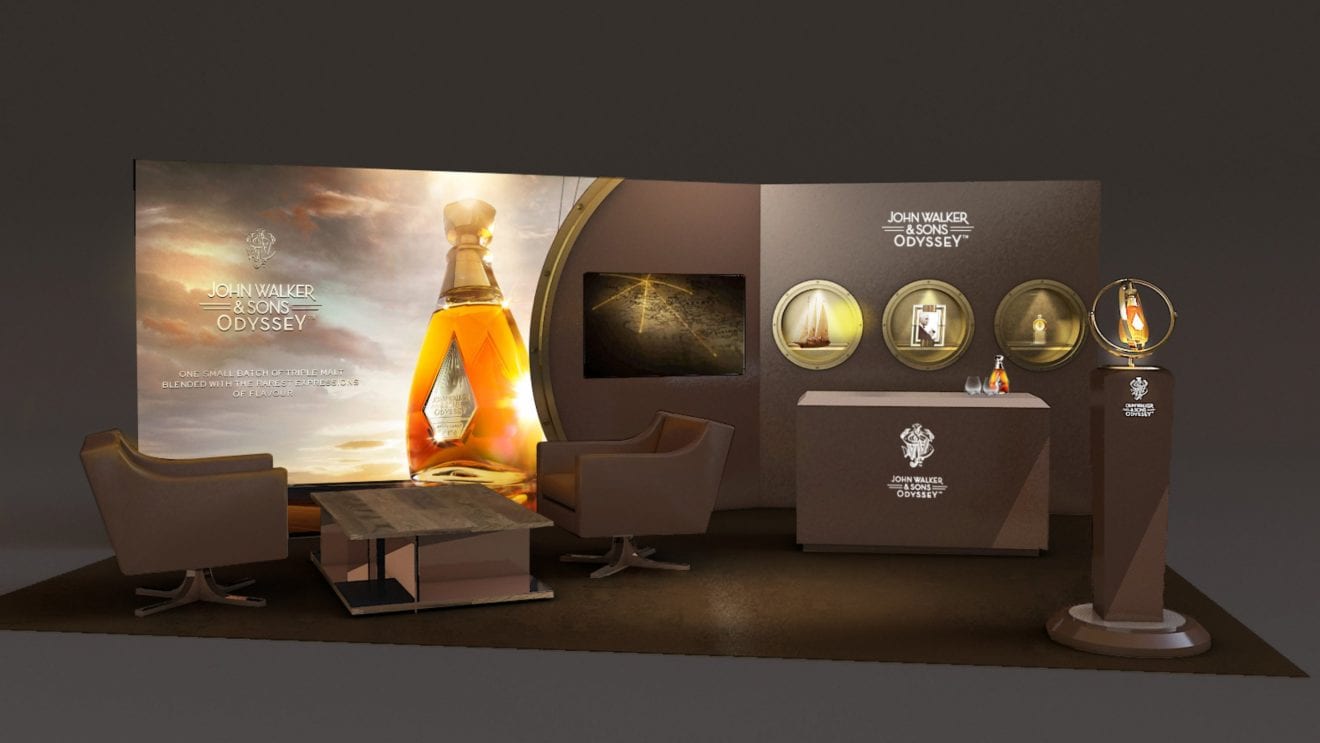
    Diageo-owned Scotch whisky Johnnie Walker Blue Label is elevating its relationship with travel retail through a collaboration with Singapore Airlines.

    The distiller’s Johnnie Walker House network of high-end whisky lounges has worked with Singapore Airlines to design a limited-edition bottle that takes cues from the airliner’s flight attendant uniforms. Travel retail is especially important for spirits brands due to duty-free pieces, and expanding that connection through special-edition bottles may further increase interest from travelers.

    Cheers in the sky
    For its collaboration, Johnnie Walker drew inspiration from Singapore Airlines’ “Singapore Girls” and their sarong kebaya uniform. The distinctive uniform, inspired by traditional fabric patterns, was designed by French couturier Pierre Balmain in 1968, and has stood the test of time to become synonymous with “luxury, heritage and excellence.”

    The lapis lazuli blue bottle has been produced in the same shade as the uniforms sported by Singapore Girls. Furthering the connection, each bottle features the airline’s batik print etched in silver on its front.

    Johnnie Walker Blue Label’s special release bottle stands out as the distillers’ Cask Edition, a richer and more intense whisky. The bottles, limited to 2,000, will be priced at $270.

    Rather than sell in a Duty Free Shopping outlet, Singapore Airlines has made the bottle exclusive to its on-board, inflight retail store KrisShop. The bottles will also be available for pre-order on the KrisShop Web site.

    JOHNNIE WALKER BLUE LABEL The Cask Edition Singapore Airlines_5
    Johnnie Walker and Singapore Airlines collaborative bottle 

    “We are proud to be able to exclusively offer our customers the opportunity to purchase this special release in-flight via Singapore Airlines KrisShop,” said Foo Chai Woo, Singapore Airlines divisional vice president sales and marketing. “Having our Singapore Girls’ signature sarong kebaya batik motif reproduced on the bottle of the world’s leading luxury blended Scotch whisky is an honor and we are thrilled to have been selected as the first Johnnie Walker House airline player.”

    Matthieu Comard, vice president of Diageo Global Travel Americas, agreed, saying, “Johnnie Walker Blue Label, Singapore Airlines and DFASS have much in common. They are progressive, award-winning brands known around the world for excellence.

    “We are proud to take this opportunity to create a special-edition with such esteemed partners in the travel retail and travel sectors,” he said. “Their commitment to continued excellence and remarkable standards of luxury are values shared by the Johnnie Walker brand.”