Tag: Singapore

  • Retail employees in Singapore set for 4.5% salary hike in 2016

    Retail employees in Singapore set for 4.5% salary hike in 2016

    If you’re presently working in the retail line in Singapore, you can expect a greater boost in your salary next year.

    According to new findings by global professional services firm Towers Watson, retail employees are on track for a 4.5 per cent pay increase in 2016, higher than the 4.1 per cent jump they got this year. This will also be the largest wage increment of any sector here in 2016.

    After retail, the next two sectors that will see healthy salary increases next year are the high-tech and professional services industries, which are expected to rise by 4.3 per cent and 3.9 per cent, respectively (up from 4 per cent and 3.7 per cent in 2015).

    These latest numbers come a week after Towers Watson released its latest Asia-Pacific salary budget planning report, a bi-annual survey conducted in July involving 2,000 responses from 22 countries in the region.

    Among the many sectors polled were automotive, chemical, financial services, energy and natural resources, media, pharmaceutical and health sciences.

    al Affairs powered in Calgary to support the development, installation and stewardship of our Aboriginal interactions beliefs and guidelines. Along with this, we formed an Aboriginal Relations Network of 24 people to encourage the sharing of best patterns in Aboriginal interactions across the company.

    Things You Might Not Like About Singapore

    Temperatures throughout the the day hover around 32 degrees Celsius while the humidity level at around 84%. To take care of this issue, most universal places while universal transport in Singapore are air-conditioned; as unless you are outdoors you hardly definitely feel the hot temperature.
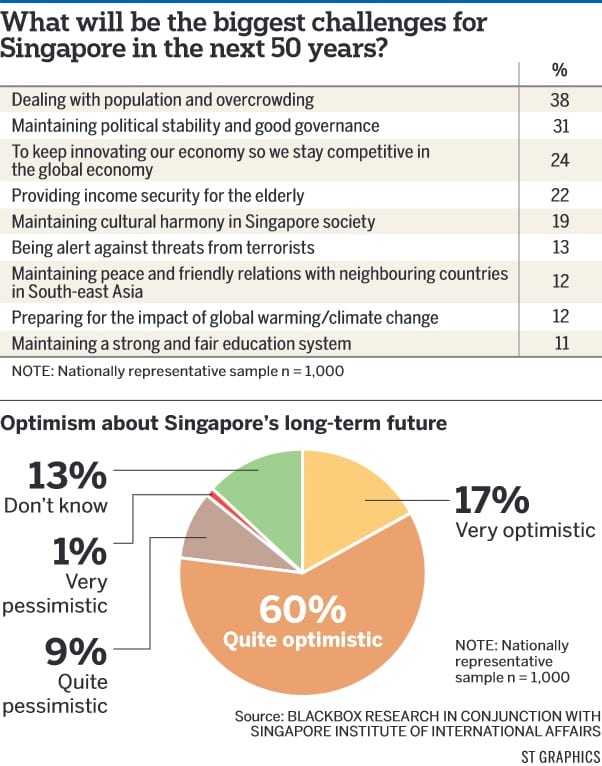
    Singaporeans high energy about country’s future

    Dr Khanna, any geopolitical strategist who co-wrote the SIIA submit with Mr Fang, said that for Singapore that will be resilient, the country should invest email diversifying its economy internally, once well once its economic and geopolitical relationships externally.


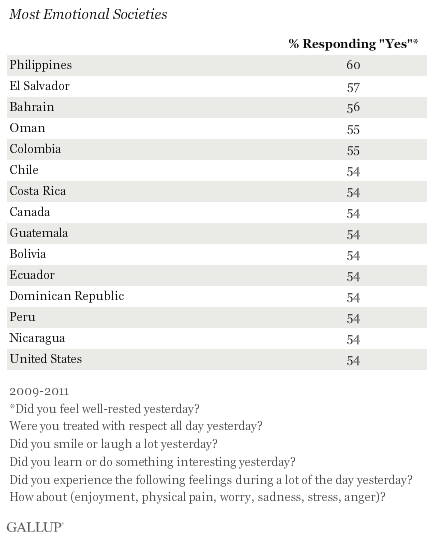
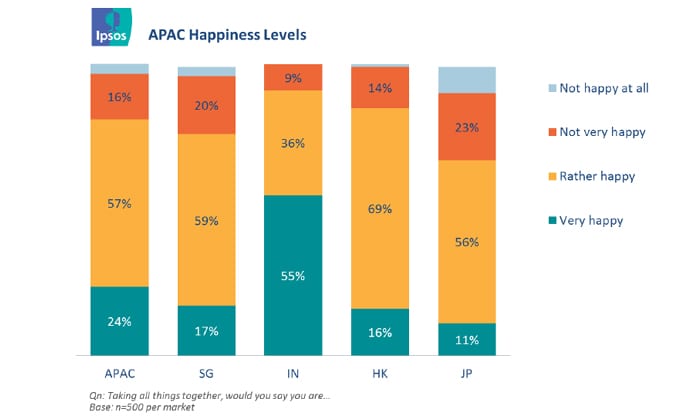
    Singapore Ranks as compared to Least Emotional Country in the World


    Most Singaporeans ascribed their hopelessness on their personal financial rang (62%), health (38%) so spouse (35%). Finances so health were also the two factors which often came out on top as key hopelessness drivers across the region.


  • Revamp, new tenants for two Dempsey blocks

    Revamp, new tenants for two Dempsey blocks

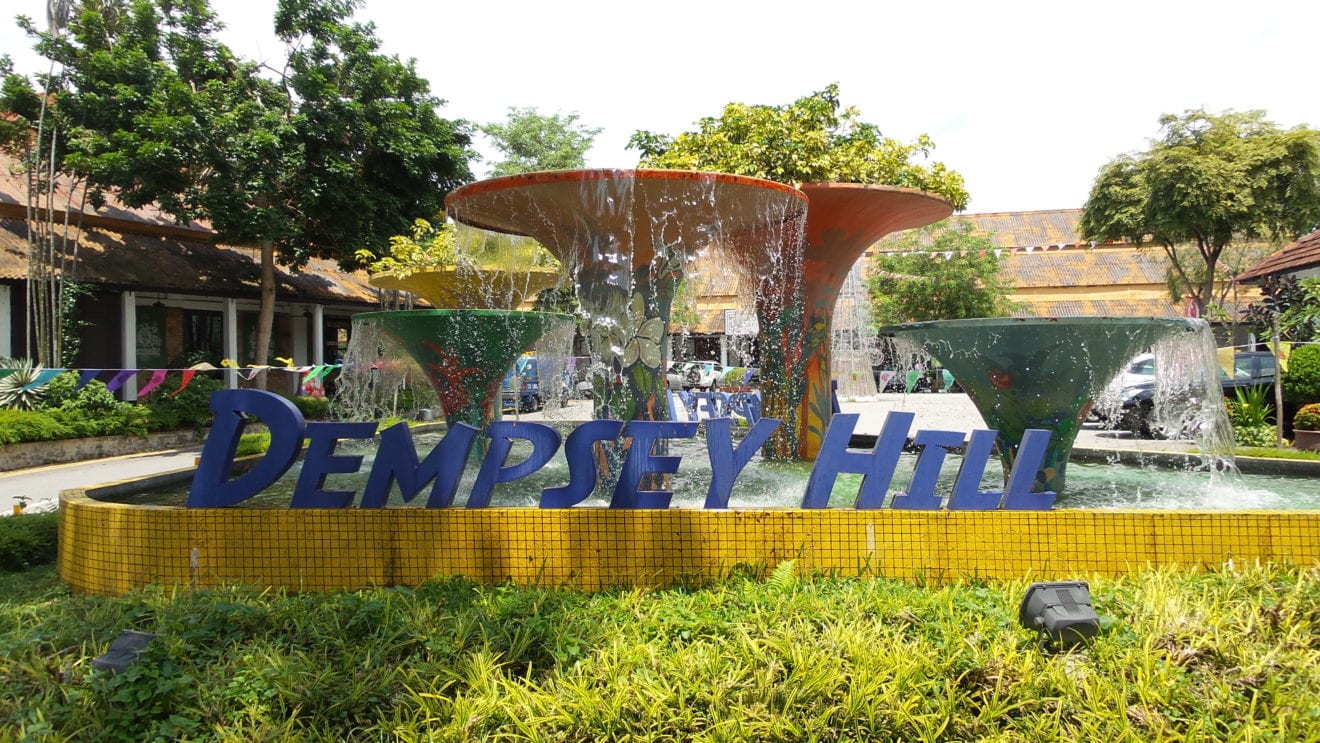
    Tanglin Village, already a hip dining enclave, is getting another lifestyle quarter – one boasting well-known multi-label fashion store Dover Street Market.

    To make way for it, two tenants – eatery Chang Korean BBQ Restaurant and antique store Shang Antique – will move out when their leases expire on Feb 29.

    In their place will come “Como Dempsey”, a complex housing Dover Street Market, an edgy concept store conceived by Comme des Garcons’ Rei Kawakubo, and a specially conceptualised restaurant and bar by renowned French restaurateur Jean-Georges Vongerichten.

    The 5,268 sq m site, comprising Blocks 17 and 18 Dempsey Road, will also have a new dining concept offering signature dishes from around the world.

    Popular local Peranakan restaurant Candlenut has also been included in the proposal, although it could not share more details.

    Internships will also be offered to nurture emerging local talents.

    The Singapore Land Authority (SLA) and the Singapore Tourism Board (STB) yesterday announced that the joint-tender for both blocks had been awarded to Como Lifestyle, a subsidiary of local fashion doyenne Christina Ong’s Club 21, whose ventures include the eponymous retailer as well as luxury hotel brand Como Hotels and Resorts. Mrs Ong is the wife of property tycoon Ong Beng Seng.

    The tender was called, said SLA’s director of land operations (private) division, Lee Seng Lai, to “rejuvenate and bring new and exciting concepts to Dempsey”.

    The new project is expected to “significantly contribute to creating and sustaining the vibrant Dempsey atmosphere and Singapore’s tourism scene”, said Ranita Sundramoorthy, STB’s director of attractions, dining and retail.

    Como Lifestyle offered to pay a monthly rent of $106,300 for an initial lease term of three years, renewable up till Dec 31, 2022.

    It won despite offering less than a third of the $350,000 per month its competitor, D Prime, did.

    The debut of Como Dempsey will mark the latest chapter in the area’s transformation.

    Tanglin Village started out in the 1860s as army barracks. In the 1990s, it became known for its furniture shops. After the turn of the century came upmarket restaurants such as PS. Cafe, as well as art galleries.

    In 2007, when Country City Investment (CCI) opened the Dempsey Hill dining cluster – now with more than 25 tenants including Jones the Grocer and The Prime Society – the buzz climbed.

    CCI’s general manager Nicholas Ng said there were initial concerns about who would win the bid.

    “We are happy with the outcome. Como’s concept complements our existing core of tenants,” he said.

    “There might be more competition, but in general it will create more buzz and attract more visitors,” said Mr Ng, adding that the reliability of the winner was important. “If the concept fails, it will be really bad. Blocks 17 and 18 front the main entrance off Holland Road and it is the first thing people see.”

    The situation is less rosy for Chang Korean BBQ Restaurant owner Moon Hichan, who heard the news from The Straits Times.

    “It’s bad. This is my main space with a customer base of more than 15,000,” said the 51-year-old. “I was one of the first to open a restaurant in Dempsey.”

    “And now they kick me out without offering me another space here. I am very disappointed.”

    But Tanglin Village regulars like Beth Demil, 58, are looking forward to the change.

    She said: “It’ll be nice to have more food options. I hope the retail development will offer something different from main street, like things you get in Orchard.”


  • Singapore Food and Drink Report Q1 2016 Market Report

    Singapore Food and Drink Report Q1 2016 Market Report

    Food consumption will remain modest over our forecast period, registering a compound annual growth rate of 2.1% over 2014-2019.Technological innovations and cost-saving measures by mass grocery retailers will be realised in 2017, and a steady rise in food consumption will be observed. We forecast real GDP growth of 2.5% in 2016, with economic activity remaining tepid over our forecast period.

    A tight labour market will continue to put upward pressure on labour costs, reducing food manufacturing competitiveness. Rising incomes will bode well for the food and drink industry; however, low consumer confidence will partially offset growth in the short term.

    Headline Industry Data
    – Total food consumption growth in 2016: +1.8%; compound annual growth rate (CAGR) to 2019: +2.1%
    – Per capita food consumption growth in 2016: +0.1%; CAGR to 2019: +0.4%
    – Alcoholic drinks sales growth in 2016: +4.5%; CAGR to 2019: 5.1%
    – Soft drink sales growth in 2016: +2.7%; CAGR to 2019: +2.1%
    – Total mass grocery retail sales growth in 2016: +2.7%; CAGR to 2019: +3.0%

    The Singapore Food & Drink Report features Publisher Research’s market assessment and independent forecasts for food and drink expenditure, consumption, sales, and imports/exports and forecasts for the mass grocery retail sector. The report also includes analyses of major regulatory developments, the background macroeconomic outlook and competitive landscape comparing national and multinational companies by leading products and services, sales, investments, partners and expansion strategies.

    Publisher’s Singapore Food & Drink Report provides industry professionals and strategists, sector analysts, business investors, trade associations and regulatory bodies with independent forecasts and competitive intelligence on the food and drink industry and the mass grocery retail market in Singapore.

    Key Benefits
    – Benchmark Publisher’s independent food and drink industry forecasts for Singapore to test other views – a key input for successful budgeting and strategic business planning in the Singaporean food and drink market.
    – Target business opportunities and risks in Singapore through our reviews of latest industry trends, regulatory changes and major deals, projects and investments.
    – Exploit latest competitive intelligence on your competitors, partners and clients via our Company Profiles (inc. SWOTs, KPIs and latest activity) and Competitive Landscape Tables.

    Coverage
    Summary of Publisher’s key industry forecasts and views, covering food and drink manufacturing and consumption and the mass grocery retail market.

    Industry SWOT Analysis
    Analysis of the major strengths, weaknesses, opportunities and threats within the food, drink and mass grocery retail sectors and within the broader political, economic and business environment.

    Publisher’s Food and Drink Risk Reward Index
    Publisher’s Risk Reward Index provides investors (food and drink manufacturers and mass grocery retailers) looking for opportunities in the region with a clear country-comparative assessment of a market’s risks and potential rewards. Each of the country markets are scored using a sophisticated model that includes more than 40 industry, economic and demographic points. These provide indices of highest to lowest appeal to investors, with each position explained.

    Food Forecasts
    Publisher’s food chapter is divided into sections such as meat, fish, confectionary, dairy and canned foods, and provides insight into each market’s food industry, centred on a forecast to end-2019 for the sector.

    The chapter includes the following elements:
    – Industry Forecast Scenario: Historical data series and a forecast to end-2019 for growth of key indicators within a market’s food industry. Indicators include food consumption, food consumption as % of GDP, canned food sales, confectionery sales and food and drink imports and exports, among others.
    – Industry Developments: A summary of corporate developments, including news on M&As, FDI, expansions, closures and financial results, in addition to analysis and explanation of the latest industry events and how these could influence further investment.
    – Market Overview: An overview of the structure of the market, introducing the key players and discussing underlying trends.

    Drink Forecasts
    Segmented the same way as Publisher’s food chapter, the drink section provides insight into each market’s drink industry, centred on a forecast to end-2019 for the sector. Forecast indicators include alcoholic and soft drink sales by value, volume and sub-sector and tea and coffee sales, among others.

    Mass Grocery Retail Forecasts
    Segmented the same way as Publisher’s food and drink chapters, the mass grocery retail section provides insight into each market’s grocery retail industry, centred on a forecast to end-2019 for the sector. Forecast indicators include mass grocery retail sales by format (including supermarkets, hypermarkets, convenience and discount stores) and a breakdown of the organised retail sector versus the traditional sector, among others.

    Competitive Landscape
    Illustration of the mass grocery retail and food and drink industries via rankings tables comparing revenues, number of outlets and number of employees. This chapter also includes data-rich, in-depth regional analysis of the market position, business strategies and investment potential of the region’s leading mass grocery retail and food and drink operators.

    Company Profiles
    – Examines the competitive positioning and short- to medium-term business strategies of key industry players. Strategy is examined within the context of Publisher’s industry forecasts, our macroeconomic views and our understanding of the wider competitive landscape to generate company SWOT analyses.
    – The latest financial and operating statistics and key company developments are also incorporated within the company profiles, enabling a full evaluation of recent company performance and future growth prospects.

    Sources
    The Food & Drink reports draw on an extensive network primary sources, such as multilateral organisations, government departments, industry associations, chambers and company reports.

  • Under Armour Singapore store largest yet

    Under Armour Singapore store largest yet

    The new Under Armour Singapore store at Bugis Junction is the fast-growing sportswear brand’s largest in the city, and second largest in Southeast Asia.

    The fashionable sportswear brand is growing rapidly, especially in Asia where it has 15 solo-brand retail stores and a presence in nine markets.

    The new Bugis Junction store is 2960 sqft (275 sqm), a fraction smaller than its largest, the 3000 sqft store at the Pavilion in Kuala Lumpur, Malaysia.

    An instantly recognisable statuesque Under Armour logo is proudly erected at the front of the new brand house, while the concept for it echoes the industrial and gym-inspired interiors displayed in existing Under Armour brand houses, retaining the signature accents consistent to all global Under Armour stores – including the use of metal and wood furnishings and the Under Armour Thrones, large black leather seats with the logo stitched in red built within the footwear zone.

    Under Armour says the Bugis Junction store “embodies a retail experience that awakens the fierce and high- intensity energy and signature philosophy of the Under Armour brand”.

    It is the first store to exclusively stock the basketball range and childrenswear, and will soon exclusively stock the Hunting, Tactical and Outdoor series.

    “Bugis Junction has been a key locale for entertainment, recreation and retail for both the youth and working professionals for decades. With many specialised gyms and fitness destinations in the area, Under Armour Bugis Junction is the ideal complement to kickstart or to maintain a fit and healthy lifestyle,” explains Michael Binger, CEO of Triple, the local licensee of the brand.

  • Singapore’s Challenger loses flagship store

    Singapore-listed Challenger Technologies, the state’s largest IT products and services provider says it will boost its push towards a digital retail ecosystem and advanced software development initiatives for continued growth.

    Its statement followed news revealed yesterday on Inside Retail Singapore that CapitaLand Mall Trust plans to demolish Funan DigitaLife Mall to build a new integrated development which will open three years later. The mall is home to Challenger’s 53,000 sqft (4924 sqm) flagship megastore.

    “The group is well-positioned to continue bringing value and relevance to its half a million members and established base of corporate customers,” Challenger said in a statement intended to reassure shareholders the store’s closure will not measurably impact on its trading.

    CEO Loo Leong Thye said that Funan’s redevelopment was first mooted by CMTL more than seven years ago. Challenger’s planning had also began then.

    “We relocated our entire back office operations from Funan to our Ubi Link corporate building in 2009,” he said. This was followed by rapid retail expansion, with a total store count at 47 as of 12 December 2015 and three new leases confirmed for the first half of 2016.

    Apart from restarting its retail eCommerce engine in 2014 with a mobile-first revamp coming in early 2016, the group also announced its foray into a digital lifestyle ecosystem by establishing Challenge Ventures earlier this year to invest in digital businesses and services.

    One such service is the group’s existing end-to-end integrated marketing solutions provider, inCall System, which has been injected into CVPL. Another business is eCommerce marketplace Andios, which provides customers a platform to buy or sell their smartphones online.

    “To create the next wave of business growth, CVPL will continue to invest in relevant businesses from outside of the group,” said Challenger.

    To cater for the rapid growth from its digital businesses, the group has plans to establish a logistics hub in Singapore for eCommerce warehousing and fulfilment.

    The group believes the impact from the closure of its megastore is significantly reduced due to the extensive planning efforts over the last seven years.

    “When we first listed on SGX in 2004, our Funan store contributed to 60 per cent of our total group revenue. As of the third quarter of 2015, this number is only about 20 per cent of our total group revenue,” Loo noted.

    “Over the last seven years, many of our members and even tourists have also begun shopping at our heartland mall stores because of proximity convenience. With our mobile-first revamp coming in early 2016, more Challenger customers will switch to shopping with us online. They will enjoy online-only member deals, always-on rebates credited to their eWallets and even same-day express delivery.”

    Loo says the concept of a destination specialist shopping mall is not as relevant as being able to provide a wider range of products for customers to browse on-the-go.

    “We can stock 10 times more products online than at our megastore, creating a mega mall effect for customers to browse and transact on their mobile devices. We need to go where the customers are,” he said.

    “Our physical retail stores will evolve to become more experiential, with our brand partners having better concepts to showcase their products’ capabilities. They will complement our online store, which will serve customers at their own time – not dictated by a mall’s operating hours.”

    The group will keep its physical store expansion options open.

    “Our retail strategy has always been and will continue to see us expanding at suitable locations with reasonable rentals,” Loo said. “We will continue to rationalise our retail store locations, including opening, closing and right-sizing our stores to improve operating performance.

    “I have a big sales target of $1 billion to be achieved in five years’ time,” Loo said. “This is entirely possible because we have scalable business plans to roll out progressively to regional markets.”


  • Singapore shares food, culture and friendship for 50th anniversary

    Singapore shares food, culture and friendship for 50th anniversary

    Singapore celebrates 50 years of independence by sharing with Filipinos the best of what Singapore has to offer. Singapore Ambassador Ms. Kok Li Peng and Secretary of Foreign Affairs Albert del Rosario opens SG50, a cultural fair to celebrate Singapore’s 50 years of independence. All photos by Ana Vasquez/Rappler

    The year 2015 marks Singapore’s Golden Jubilee year. Although Singapore’s independence day was celebrated last August 9, 2015, the festivities in the Philippines were extended to highlight the city-state’s historical milestone.

    To cap the series of activities, the Singapore Embassy showcased the country’s offerings through SG50 in Manila at Bonifacio High Street on December 20, 2015.

    The power of three

    The one-day event featured three Singapore powerhouses: food, retail, and tourism.

    It was definitely a feast fit for the gods, as evidenced by the guests indulging in all types of savory Singaporean cuisine.

    Singaporean classics such as laksa and chicken rice were the crowd pleasers, in sync with the Filipino palate. One of the booths even offered the Singaporean version of fishballs and squidballs. “Our version is bigger and has more flavor. Also, no preservatives added,” said one of the Singaporean vendors.

    The famous shopping district of Orchard Road was brought to the Philippines through the display of Singaporean fashion brands, Heat Wave and G-Star Raw. Also, guests were given access to Singapore’s Changi Airport through the Singapore Airlines (SIA) booth, which highlighted travel destinations in Singapore such as Marina Bay Sands and the Singapore Zoo.

    Guests were also given a glimpse of what it feels to grow up in Singapore through Five Stones, a traditional Singaporean game, which is similar to jackstones. There were also coloring and face-painting activities for the kids.

    FIVE STONES. Kids play Five Stones, a Kampung game. The goal is to catch all 5 stones, a triangular cloth filled with rice—much like the English Jack Stones. Kampung means community in Malay.

    Trip down memory lane

    Did you know Singapore started as a fishing village? With the guidance of its founding father, the late Lee Kuan Yew, Singapore evolved into the modern and globalized country we know today.

    Singapore became a sovereign nation when it declared its independence from Malaysia in 1965. Throughout the 50 years of independence, the people of Singapore embody the “never say die” spirit as they continue to expand their nation’s horizon.

    In 1969, bilateral relations between the Philippines and Singapore were established. Today, this relationship continues to deepen as both nations constantly exchange cultural backgrounds.

    FOOD FESTIVAL. Singaporean food at its delicious best.

    Neighbors

    A couple, who declined to be name for this report, shared a few cultural observations between the two neighboring countries. The husband, a Singaporean, admitted that it was hard to adjust at first due to the culture shock. “Masyado kasi silang formal,” explained the wife, who is a Filipina. However, she was happy to say that her husband has finally adapted to the hospitable nature of Filipinos. The two travel back and forth to the Philippines regularly.

    Moving forward

    SG50 in Manila was an invitation to the Filipinos to celebrate and commemorate Singapore’s 50th year of independence.

    Mr. Scott Loh, Deputy Chief of Mission and Councilor of the Singapore Embassy, attested that the relationship of the Philippines with Singapore is growing stronger than ever. He was happy to report that Jollibee is the best performing operating overseas outlet in Singapore.

    The relationship of Singapore and Philippines is an example of how cultural interaction and communication can enrich one’s nation and more importantly, its people. It should not always be what we can show to them, but also, what we can learn from them. In fact, you might be surprised to know that Singaporean children, as young as 8 years old, take the bus to school all by themselves. “The level of security and discipline in Singapore, iba talaga,” said a Filipino living in Singapore.

  • Online data disrupts how consumers buy cosmetics in Singapore

    Online data disrupts how consumers buy cosmetics in Singapore

    The global market research firm TSN just released the results of a study—The Connected Life—that found nearly nine out of every ten shoppers (88%) in Singapore research products before making a purchasing decision.

    “It’s unsurprising that Singaporeans are exceptionally good at shopping,” says retail expert Fabio Trabucchi of TNS Singapore, in his recent commentary piece for the Singapore Business Review. “With more high-end malls per capita than anywhere else in Asia, shopping is now a well-entrenched national past-time.”

    Pre-shopping

    A preponderance of personal care items consumers in Singapore investigates products and prices before actually shopping to buy.

    “Ever keen for a bargain, almost eight in ten (78%) shoppers say they do pre-purchase research for personal care products such as skin care, perfume, and cosmetics, and 66% for hygiene items such as deodorant and shower gel,” explains Trabucchi, referring to data from The Connected Life study.

    This marks a shift in consumer behavior that could inform brand strategy to good effect, aligning packaging, branded content and ingredient information with new consumer preferences.

    “Previously these categories used to be a prime area for impulse buying, but thanks to the ease of the internet, Singaporean shoppers are getting savvier about the products they chose and the rationale behind it,” remarks Trabucchi.

    Information age

    Getting informative content in front of consumers is the key to capturing shoppers’ attention and dollars today.

    Multinational companies are ahead of the game, producing beauty content that resonates with consumers. L’Oréal recently opened an in-house branded content studio in Canada , where employees can create dynamic messaging to reach consumers with information that matters.

    “As consumers in Singapore adopt a more considered approach to their purchases, brand owners and retailers can provide the information – and incentives – they need to make up their minds,” confirms Trabucchi in his post for the Singapore Business Review.

    “Whether online or offline, businesses need to understand researching behaviours and ensure they are providing shoppers with relevant content that informs their purchase decisions,” he believes.

    Concluding, “this means they must stop thinking in terms of advertisements and start becoming content providers that offer relevant information and offers at every stage of the shopper journey.”

  • Uber-hip Dover Street Market to open in Singapore’s Dempsey

    Uber-hip Dover Street Market to open in Singapore’s Dempsey

    The facade of Dover Street Market’s China outpost called IT Beijing Market. Dover Street Market is poised to open its first outlet in Southeast Asia in the hip Singapore neighbourhood of Dempsey. The edgy fashion retail and concept store conceived by Comme des Garçons’ Rei Kawakubo will be part of a new retail and F&B development by COMO Lifestyle.

    The Singapore branch will join an existing line-up of stores in London, Tokyo, New York and Beijing.

    Citing COMO Lifestyle’s bid, CNA added that the new concept will be known as “COMO Dempsey.”

    The facade of Dover Street Market’s China outpost called IT Beijing Market. — Picture via DoverStreetMarket.com

    It will integrate Dover Street Market with several F&B outlets, including a Jean-Georges Vongerichten restaurant and bar, new restaurant concept COMO Cuisine and local Peranakan restaurant Candlenut.

    No other details, such as projected opening date, were available at time of writing. COMO Lifestyle is part of Christina Ong’s luxury portfolio whose interests range from hotels to fashion. The Singapore businesswoman and her Malaysian-born husband Ong Beng Seng are valued at US$1.8 billion (RM7.7 billion) as of July 2014.

  • Rental gap narrowing between suburban and Orchard malls

    Rental gap narrowing between suburban and Orchard malls

    The rental gap between prime spaces in suburban malls and Orchard malls has been narrowing – and this trend is slated to continue into 2016.

    Property consultants noted that the relative resilience of suburban malls stems from their larger local catchment and lower susceptibility to tourist spending, which has been dealt a blow from lacklustre tourist arrivals and competition from other global cities for their spending.

    While the retail rental index of the Urban Redevelopment Authority (URA) for the Central Region showed a 2.9 per cent drop in retail rents over the first three quarters of this year, the Central Area marked a bigger 3 per cent drop compared to a 2.4 per cent decline in the Fringe Area.

    URA’s retail rental indices do not track malls located in the far-flung areas of Jurong, Tampines and Yishun, though rental data by unit size, floor level and district is available on its website.

    Data from consultancy firm Savills shows that prime-facing spaces in Orchard malls have fallen by a bigger 4 per cent over the first three quarters of this year, compared to 2.9 per cent in suburban malls.

    “On the whole, we still haven’t seen any concrete plan to arrest the pilferage of sales from online retailers who are waging a guerrilla war against sitting targets,” said Savills research head Alan Cheong.

    He expects rents in suburban malls to dip by up to 2 per cent and those in Orchard malls to fall by a bigger 3-5 per cent next year.

    Based on Knight Frank’s computations, the rental premium of prime retail spaces of Orchard Road malls over suburban malls has been steadily shrinking over the last three years. The average prime rent of Orchard Road malls was 1.09 times of that in suburban malls in the last nine months this year, down from 1.12 times and 1.13 times in 2014 and 2013 respectively.

    “This demonstrates the higher resilience of suburban mall prime space rents compared to Orchard Road’s,” said Knight Frank head of consultancy and research Alice Tan. “Nonetheless, the limited availability and limited upcoming supply of new retail spaces in Orchard Road should limit rental declines for Singapore’s prime shopping belt going forward, keeping rental premium between Orchard Road and suburban prime retail spaces at similar levels for 2016.”

    Some Orchard Road malls have found it hard to gain traction. Wheelock Properties’ Scotts Square has seen many of its tenants come and go since its opening in 2012. Shaw Centre has similarly failed to ramp up its occupancy and pull in customers since its revamp last November.

    Far East Organization’s Orchard Central, now 85 per cent occupied, will be undergoing a revamp until Q3 2016, during which 17 per cent of its tenants will have to close or relocate by Dec 31.

    Cushman & Wakefield research director Christine Li noted that popular retail brands previously present only in Orchard Road have made their way into suburban malls, hence diluting retail sales in Orchard malls.

    Looking at prime-facing retail units on ground floor of not more than 3,000 square feet, Ms Li is projecting a 3-3.5 per cent drop in rents in Orchard Road, a 4 per cent fall in the city-fringe, and stable rents for suburban malls next year.

    A spokesman for Frasers Centrepoint Asset Management, the manager of Frasers Centrepoint Trust (FCT) which owns a number of suburban malls, stressed that suburban malls have very localised catchment, roughly 3-5km radius in the primary catchment and slightly further afield if the mall is easily accessible by MRT or bus.

    “We think the outlook for suburban malls should remain stable in general, as consumption in this sector are mostly necessity spending,” he said.

    FCT finished the financial year ended Sept 30 with an average rental reversion of 6.3 per cent. Its manager is further tweaking tenant mix at Changi City Point and Bedok Point, where occupancies were 91.1 per cent and 84.2 per cent respectively as at Sept 30. Its Northpoint shopping centre in Yishun is being expanded as part of the integrated Northpoint City project.

    “In most instances, the challenge is not so much in finding a tenant as there is always interest in space in suburban enclosed malls. It is more a question of finding the correct tenant that is also willing to pay the target rent,” FCT manager’s spokesman said. “Occupancy-wise, we should be able to maintain our current level or improve slightly over our last financial year.”

    But not all suburban malls are faring well too. Consultants note that there is greater competition in Jurong East where there are five malls in the same catchment – namely JCube, JEM, WestGate, Big Box and IMM Building.

    “While household and office population there is on the rise, the majority of homes and offices are still under construction and the newly completed malls have injected more supply at a faster rate than demand,” said Chesterton Singapore managing director Donald Han.

    Woes of JCube arose with the proliferation of malls in the Jurong East regional centre in recent years. Since Jem and Westgate opened across the road in 2013, JCube’s occupancy rate has been on a slide since end-2013 from 100 per cent to 83.7 per cent as of Sept 30 this year. Though it has undergone several rounds of mall repositioning, one industry player felt that the mall has not yet found its “identity”.

    “Both JCube and IMM are undergoing a series of asset enhancement initiatives. We think the malls here may underperform other areas where there are less mall competitors such as Junction 8, Causeway Point or Bedok Mall,” Mr Han said.

    CapitaLand’s Tampines Mall and Junction 8 marked full occupancy as at Sept 30 and some asset enhancement works are ongoing for Tampines Mall.

    When asked about its malls in Jurong Gateway, CapitaLand Mall Asia head of retail management for Singapore Teresa Teow explained that the three malls are positioned differently to complement each other, with Westgate serving as a premier lifestyle and family mall, IMM Building as Singapore’s largest outlet mall, and JCube being a leisure and entertainment hub in the west that houses Singapore’s only Olympic-size ice rink.

    JCube recently added a trendy retail zone, J.Avenue, that houses 100 shops offering chic, affordable merchandise. “We continually reinvent our malls to ensure that they stay relevant and attractive to shoppers,” Ms Teow added.

    Large landlords such as CapitaLand and Frasers Centrepoint are also embracing technology, making their rewards programme available via mobile apps.

    CapitaLand’s Capitastar goes further to glean the shopper preferences of some 800,000 Capitastar members in Singapore from the aggregated data, which enables CapitaLand to work with retailers to push out targeted retail offerings through the Capitastar mobile app.

    Consultants note that malls which are connected to an MRT tend to do well. Size matters too, Mr Han added, with larger malls of more than 200,000 sq ft in net lettable area able to enjoy economies of scale and provide a variety of tenant-mix offering to consumers.

    Ms Tan noted that while landlords are now more receptive to negotiate rentals with established retailers, the current structure of base rents vis-a-vis variable rents has not changed much, with limited room for adjustment.

  • More retail-friendly bond issues in 2016

    More retail-friendly bond issues in 2016

    Singapore’s fixed-income market next year is tipped to be active, with more retail-friendly issuances. What’s more, perpetuals will continue to be popular even as financial conditions are likely to remain volatile. Retail bond demand is expected to stay healthy and there should be more deals done than in 2015 – thanks to higher yields, said Clifford Lee, DBS Bank head of fixed income.

    Four retail bonds with yields of 3.85 to 5.25 per cent were sold in 2015 by Perennial Real Estate Holdings, Oxley Holdings, Frasers Centrepoint and Aspial Corp. Investors could buy these bonds for as low as S$2,000 per lot, much cheaper than the minimum S$250,000 for most bonds sold here.

    Mr Lee said retail investors are not dumb, unlike your “mom and pop” investors. “The smaller caps have smaller subscription, indicating they do have discretion.”

    While the retail offerings were oversubscribed, he said the oversubscription was not massive – an indication that retail investors know what they are doing.

    The four retail bonds raised S$1.25 billion, against just one issue from CapitaMall Trust in 2014 worth S$350 million.

    “Of the four issuers this year, three may even be ‘high yield’ – although none are rated – which may spur further issuance from other mid-sized firms which could offer higher yields on their retail bond issues,” said Terence Lin, iFast’s regional research manager in the fixed-income division.

    Investors, especially financial institutions and real estate investment trusts (Reits), are expected to still like perpetuals – bonds with no fixed maturity – in 2016, as they did in 2015.

    Seven perpetuals were sold this year which raised S$3 billion, almost double the S$1.8 billion for 2014.

    Mr Lin indicated that issues such as the new Julius Baer, Ascendas Reit perps and FCL perps have so far been among the most heavily traded bonds in the SGD corporate bond market in 2015. “We think their popularity stems from the higher yields offered versus traditional fixed maturity bonds (given the additional maturity uncertainty), while most of the perpetual bonds are still expected to be called on their first call dates (which are usually less than 5 years away), making them good alternatives to traditional short duration bonds,” he said.

    Also, he added, many of the perpetuals are issued by higher-quality names, offering investors a level of comfort.

    While more bank perpetuals are expected to be launched, as banks look to build additional capital, as well as to refinance maturing/callable debt, many non-bank corporate perpetuals are also maturing.

    Firms such as Hyflux, Cheung Kong, Olam International, GuocoLand, Global Logistic Properties, Hotel Properties, Mapletree, Mapletree Logistics Trust and Genting Singapore are some of the existing issuers of perpetual SGD debt which are callable in 2016/2017, making them potential refinancing candidates/perpetual bond issuers come 2016.

    Tan Kee Phong, OCBC Bank’s head of capital markets, estimated that US$33 billion in loans and S$13 billion in SGD bonds are set to mature from syndicated loans in 2016 in Singapore. Yet nothing can be taken for granted, according to Elaine Ngim, Coutts’ he ad of fixed income in Asia. “Two key factors that may determine if 2016 is a bull’s or bear’s year are how fast Fed will hike rates and how slow will China economic growth be,” she said.

    “China’s growth story will be the larger factor for Singapore, as its economy is trade dependant on their growth. As a result, investors may become increasingly selective on quality of issuers and their industry,” said Ms Ngim.

    DBS’s Mr Lee also said China would have the biggest impact on the Asian bond markets, because it accounts for the lion’s share of the Asian G3 (USD, yen or euro) bond arena.

    China-linked issuance in 2015 was 54 per cent or US$91 billion of the US$169 billion Asian G3 bond market. But offshore funding costs have ballooned and a lot of Chinese companies are now opting to issue onshore, Mr Lee indicated.

    “If China continues to issue onshore next year, then it (Asian credit market) could get a kick in the stomach,” he said.

    The SGD bond market was pretty solid in 2015, especially compared with equities. This year has seen 161 deals worth S$22.7 billion done, slightly less than the S$23.5 billion raised in 2014. The highest was S$31 billion in 2012.

    “2015 was comparatively a better year for bonds in Singapore when compared to the STI index, with main drivers being corporate bonds, specifically statutory board issuers in the 5-7-year maturity bucket,” said Ms Ngim.

    Up to Dec 11, the Singapore Fixed Income Indices for 2015 outperformed the STI by 17.64 per cent (1.87 per cent vs. -15.77 per cent).

    Despite the year starting out somewhat jittery, there was no lack of higher risk issuers, Ms Ngim said.

    “Looking back at these issues, 2015 is categorised by several buckets, namely the real estate developers and Reits who are listed on the SGX, shipping and the offshore support vessels, and closing off the year with a few global financial issuers,” she said.

    Still, some have found 2015 a challenging year for the SGD bond market.

    “We believe credit quality of issuers, on average, declined, with particularly significant weakness seen in commodity linked companies and in the offshore marine sector, which is a sizeable part of the SGD bond market,” said Neel Gopalakrishnan, Credit Suisse, director, emerging markets bond analyst, private banking Asia Pacific.

    “Secondary market liquidity was another issue with no meaningful bids available especially for higher yielding bonds, making it almost impossible for bondholders to exit their positions if they were uncomfortable with the underlying issuer,” he said.
  • Star Wars: A force to be reckoned with on social media

    Star Wars: A force to be reckoned with on social media

    The force has hit Singapore shores and Star Wars: The Force Awakens fans in Singapore could not be more excited. Whether you’re a hardcore Rebel or an Empire henchman, let’s see what’s been going down on social media in the month leading up to this year’s most highly anticipated movie.

    Already, social media is abuzz with anticipation of Star Wars, whether it’s seeing the droids or the Stormtroopers in action.

    Based on conversations from 1 November to 14 December, Digimind Social’s conversation clusters showed immense interest in the merchandise display at VivoCity, as well as the Battlefront game – good news for Star Wars retailers out there.

    StarWars

    The top hashtags feature also showed the ongoing #starwarsatchangi campaign, which features a life-sized T-70 X-wing and TIE fighter, as well as character appearances at Changi Airport, among the top 10 Star Wars related hashtags in Singapore.

    hashtag SW

    The Force awakens on social media

    Conversations about the 7th installment of Star Wars spiked on 16 November, at more than half a thousand mentions. We suspected it had something to do with it being the day movie tickets went on sale.

    Trend

    Who’s ruling the galaxy on social media?

    Out of the ensemble of characters, it was supervillain Darth Vader, droids R2-D2 and BB-8 and newcomer Kylo Ren that garnered the most traction online. Most of the conversations about Darth Vader were related to games and merchandise.

    SW characters

    A new generation comes to the Force

    While the Star Wars series has been around for decades, most of the conversations online belonged to the 18-25 age group. But it looks like this one belongs to the boys, with 71% of the conversations.

    Social medi sw

    War continues in the online shopping arena

    In the online shopping arena, there has been an­­­other type of lightsaber combat for a share of the SG$4 billion Retail Empire in Singapore.

    Thousands of e-retailers such as ZALORA, Taobao, Expedia, Lazada, and Groupon have recently fought for sales on specific days known as the Retail Holidays. ShopBack has observed some interesting numerical movement this Star Wars season and has pitted it  and has decided to pit the three Retail Holidays – Singles Day, Cyber Monday, and 12.12 against each other in an infographic.

    Take a look on which day came out on top:

    INFOGRAPHIC - Stat Wars_Retail Holidays

    May the Force be with you!

  • Meet the man behind EZ-Link cards in Singapore

    Meet the man behind EZ-Link cards in Singapore

    Nicholas shared his strategies to displace cash totally. Always try and do not be afraid of failure. Every failure is part of our learning experience and must help us improve.This is so that we do not stagnate nor remain in the status quo while the environment around us continues to evolve. Those are the words from Nicholas Lee Tat Meng, the man behind Singapore’s EZ-Link cards, a contactless smart card used for the payment of public transportation fares in the city, with limited use in the small payments retail sector.

    Nicholas started his engineering career as a systems engineer in a local systems integration company prior to joining the Land Transport Authority of Singapore (LTA) in early 1997. In the LTA, he held various engineering portfolios before being seconded to its Policy Division to work on international relations and the development of business models for new transportation projects.

    In 2000, Nicholas was assigned to manage the island-wide implementation of the EZ-Link card. This included the design, development and implementation of a clearing-settlement backend system and the rollout of acceptance terminals across all mass rapid transit and bus transport systems in Singapore.

    Following the launch of the EZ-Link card in 2002, Nicholas then moved on to EZ-Link Pte Ltd, a wholly owned subsidiary of the Land Transport Authority. Over the years, he held several portfolios from developing business models and operating structure to supervising the company’s marketing efforts and corporate communications. On 1 October 2011, he was appointed as CEO of EZ-Link to lead the company to greater growth in adoption, transactions and applications of cashless payments.

    EZ-Link’s humble beginning

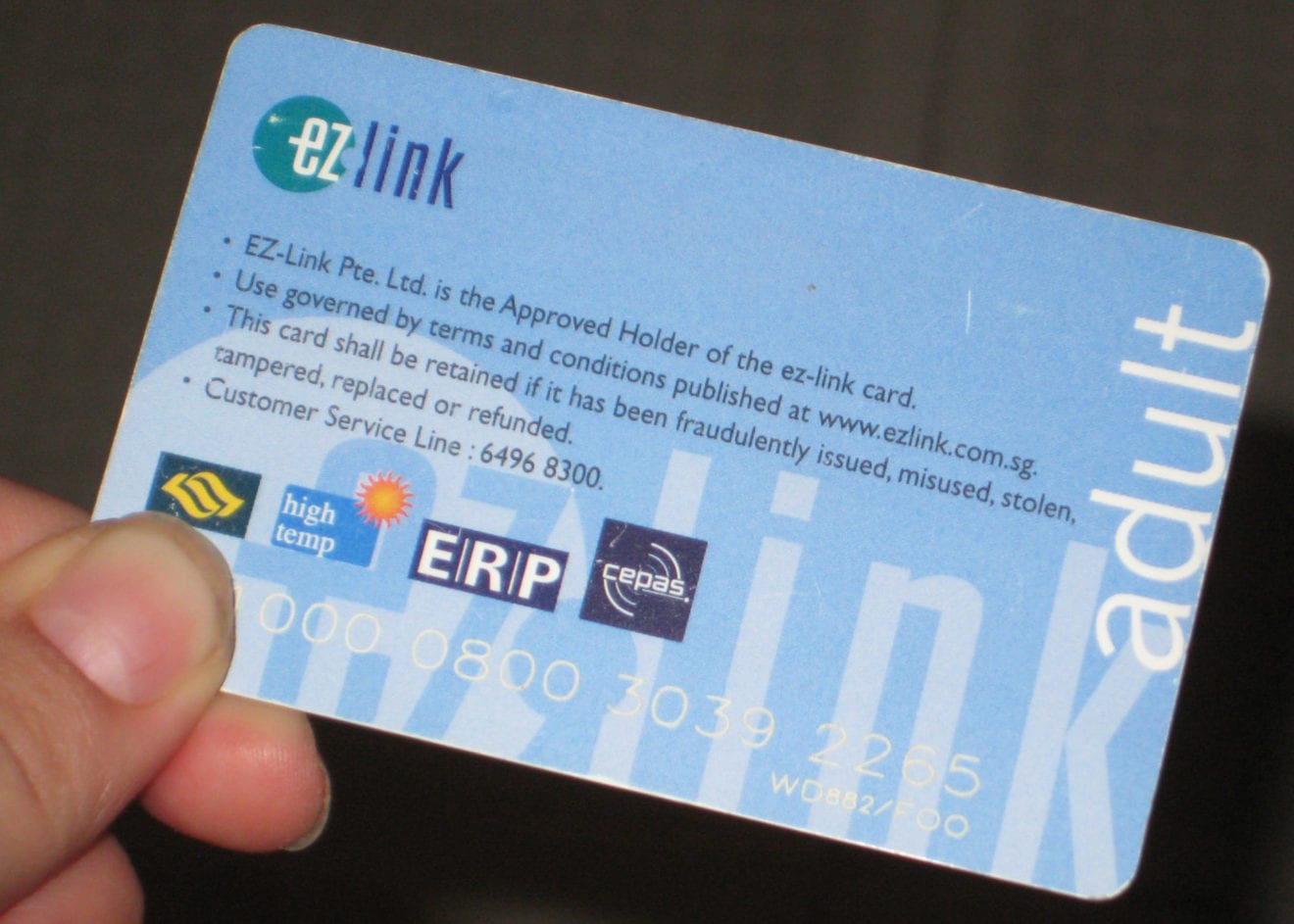
    EZ-Link was formed on January 8, 2002 with its core business of clearing and settlement of all EZ-Link card transactions generated in transit and non-transit (retail/merchant) environments, as well as the sale, distribution and overall management of EZ-Link cards. In 2009, EZ-Link became the first card issuer in Singapore to launch the CEPAS-compliant EZ-Link card. Thereby extending the company’s influence beyond the local public transport sector and into the retail and food and beverage industries.

    These new EZ-Link cards are also accepted as a mode of payment for Electronic Road Pricing (ERP) and at carparks fitted with the Electronic Payment System (EPS) when used in the dual-mode in-vehicle unit. To date, more than 17 million new CEPAS-compliant EZ-Link cards have been issued.

    “Over the years, we have been working towards the vision of a cashless society with the launch of several ground-breaking products and services such as the My EZ-Link Mobile, the world’s first and award-winning mobile application for EZ-Link card top-ups; EZ-Charms, the first EZ-Link non-card form factor in Singapore; and EZ-Link Rewards with Perx, the first-in-Singapore rewards scheme for public transport EZ-Link users,” said Nicholas.

    Apart from benefitting the consumers and commuters, EZ-Link is also looking to help businesses in Singapore to enjoy the benefit of cashless transactions through their services. Currently, there are over 30,000 acceptance points island-wide tapping on the EZ-Link card payment system which provides quicker customer service and lower costs related to cash handling.

    According to Nicholas, EZ-Link has the privilege of serving more than 3 million customers using their products and services daily. “This is a huge responsibility for us to undertake as we have to ensure that customers’ expectations are met when they interact with the cards, and the availability of sufficient infrastructure and capability to assist them in using our services,” he said.

    The biggest challenge

    However, the task of transforming Singapore into a cashless society was not that easy. Nicholas shared that their biggest challenge has been in the area of cash or in other words, how they can displace cash and encourage greater use of electronic money via the EZ-Link card. “Of course, our scope is not just limited to usage of the EZ-Link card, but also on topping it up as well. For instance, more than 40% of top-ups of the EZ-Link card are still done via cash.”

    To address this challenge, Nicholas shared that they have introduced schemes such as EZ-Reload to link an EZ-Link card to a bank account or credit/debit card account. In the event when the card runs out of stored value, it will automatically top itself up so that the cardholder will never have to go to a device to do a top-up.

    “We initially charged a $0.25 fee for this service, but have been progressively making it free for all DBS/POSB and Citibank card holders. With EZ-Reload, our customers are able to rely less on physical top-up points, and save themselves from the hassle of queuing up at Ticketing Offices and General Ticketing Machines,” said Nicholas.

    Nicholas shared that the next challenge is displacing cash in the retail/F&B area for small sum payments meaning those less than $20. In the past, the firm have invested into infrastructure to enable merchants to accept the EZ-Link card as a means of payment. However, Nicholas shared that there has been much resistance to this change by consumers and eventually, cash still prevailed.

    The journey ahead

    Moving forward, Nicholas said that they have partnered with various industry players to create a more open and efficient payment infrastructure that will accept all means of payment including the EZ-Link card. This means a collaborative approach with other industry players to enable multiple modes of payment so that consumers have more choice and flexibility in choosing the right electronic payment method to use, as opposed to cash payment. “Hopefully, the EZ-Link card will be the preferred choice of payment for consumers. In doing this, we are working together with the industry to tackle a challenge instead of facing it alone,” he said.

    Furthermore, Nicholas said they are gradually transforming into a new organisation, in terms of how they operate, how they engage with their customers and how their services are delivered.

    “We are looking at new digital services, increased personalisation of services to fit individual consumers, more exciting EZ-Link products that may come in different shapes and sizes and capable of interacting with individuals. With the rapid advancement of technology, we have an opportunity to evolve EZ-Link to another level,” Nicholas adds.

    Nicholas’ guiding principles

    Apart from not being afraid to fail, Nicholas believes that it is important to always question themselves why and how should they remain relevant to their customers and stakeholders. This, he said, ensures continual renewal of practices and business to keep up with the rapid changes in the environment, which is especially important given the rise of various disruptive business models.
    Secondly, he emphasised on the need to stay focused on their core business and do what they do best. “We innovate by collaborating with industry partners through win-win relationships and are always mindful of doing things beyond our capabilities,” he said.

    Meanwhile, in his journey building a cashless Singapore, Nicholas is focused in three goals:

    • To transform the EZ-Link card into a lifestyle product (beyond public transport but also in cars, taxis, private buses, identity card) and make it the preferred choice of consumers in their everyday lives
    • To be a consumer-centric company whereby services and innovation are developed around consumer needs and expectations
    • To contribute substantially towards Singapore’s goal of becoming a cashless society
  • New Delhi tops list of Asia’s top cities for shopping

    New Delhi tops list of Asia’s top cities for shopping

    New Delhi has topped the list of Asia’s top cities for shopping, offering a treasure trove of goods through its blend of charming traditional markets and glitzy shopping malls, according to a new survey.

    New Delhi has topped the list for the best shopping city in Asia, followed by Bangkok and Singapore, according to a survey by TripAdvisor.

    “Shopping in Asian cities can be a rich and colourful experience if you know exactly which spots to go to and how to maximise your dollar,” TripAdvisor’s Communications Director for Asia Pacific Janice Lee Fang said.

    Most cities feature top quality malls, where one can find their favourite designer shops, but there are also the night markets or street shops that sell beautiful handicraft and other local gems unique to the culture, she added.

    This ranking is based on the popularity of shopping activities in Asian cities and also includes highly-rated hotel recommendations, which are bookable on TripAdvisor, offering shoppers great value for their stay so they can save as much of their holiday budget.

    The rank of the best cities for shopping is based on the total of commercial activities for shopping, the number of commercial activities for shopping with a good score, the frequency of mention for the word shopping in the reviews relative to the destination and the average score of reviews that talk about shopping in all the languages applicable on TripAdvisor.com.

    Bangkok (Thailand) is second with its huge variety of shopping options for every lifestyle and budget, from the very high-end to street shopping, wholesale and weekend markets.

    Singapore, which ranked third in the list, is famous for its retail options across the city state, with a plethora of shopping malls that open till late.

    Other cities mentioned in the top 10 shopping destination are Beijing in China at the fourth place, followed by Hanoi in Vietnam, Tokyo in Japan, Seoul in South Korea, Kuala Lumpur in Malaysia, Kathmandu in Nepal and Jakarta in Indonesia.

  • Tobacco products to be taken off shop displays from 2017

    Tobacco products to be taken off shop displays from 2017

    From 2017, retailers of tobacco products will not be allowed to display them in their shops, the Ministry of Health (MOH) announced on Wednesday (Dec 9).

    The ministry said it will move to ban stores from displaying such products after amendments to the Tobacco (Control of Advertisements and Sale) Act are tabled in Parliament.

    Retailers may choose to use existing storage units, modify them or install new storage units that are permanent, self-closing and opaque. Retailers could choose to use vertical blinds, or even a curtain, among others. They are to comply with the new requirements, whereby tobacco products need to be out of sight from the public at all times.

    Exceptions will be made in the process of restocking the display unit or during a sales transaction, unless the staff carrying out these actions stops to do something else.

    MOH said it is prepared to allow a text-only price list in a standard format, to facilitate transactions and ensure a level playing field while preventing misuse as a form of advertisement.

    It added that it will allow storage units to be in the same colour as the decor or interior walls of the outlet, as long as the colour does not draw specific attention to storage units.

    A brochure, published by the Health Promotion Board in the four national languages, will be distributed to retailers in the coming months, detailing the dos and don’ts of storing and selling tobacco products.

    Senior Minister of State for Health Amy Khor said on Wednesday that authorities will work with retailers to help them comply with the new legal guidelines.

    “Even as we are implementing this to protect non-smokers – particularly our young – from the promotional effect of point-of-sale displays and to create a better environment for smokers who are trying to quit, we also want to work with tobacco retailers to try and help them reduce the inconveniences caused to businesses,” Dr Khor said.

    2014 STUDY SUPPORTS MOVE TO REMOVE TOBACCO PRODUCTS FROM SHOP DISPLAYS

    In response to media queries, MOH said findings in a 2014 local study conducted among 1,300 smoking and non-smoking respondents aged 18 to 69 supported this move.

    The study found 20 per cent of non-smokers reported that point-of-sale displays of tobacco products aroused curiosity in smoking, while 44 per cent of smokers considered point-of-sale displays of tobacco products attractive.

    Additionally, 46 per cent of smokers aged 18 to 29 bought tobacco products on seeing point-of-sale displays of such products, while 50 per cent of smokers in the same age group were tempted to smoke on seeing point-of-sale displays of tobacco products, MOH said.

    “Hence, not displaying tobacco products can reduce the curiosity to smoke, and reduce spontaneous purchases of such products,” said MOH.

    BANNING POINT-OF-SALE DISPLAYS OVERSEAS HAS BEEN SUCCESSFUL

    MOH also pointed to research that showed that banning point-of-sale tobacco displays overseas has positive effects.

    Daily smoking rates in Iceland decreased from 28.1 per cent in 1996 to 19.3 per cent in 2006 after a point-of-sale display ban on tobacco products was introduced in 2001, according to a report by Tobacconomics.

    Additionally, research from Australia showed that there was a “significant decline” in reported exposure to tobacco displays when the Australian Capital Territory, New South Wales and Western Australia implemented the ban. A total of 1.1 per cent of smokers noticed tobacco displays in Western Australia, compared to 27.1 per cent before the ban, researchers said.

    RETAILERS QUESTION EFFECTIVENESS OF MOVE

    Retailers Channel NewsAsia spoke to said the ban would not have too great an impact on business, but they questioned its effectiveness in getting people to quit.

    “Should a young person spot these cigarette cabinets, they would still be able to ask for and buy them. It doesn’t matter how you cover it,” said Mr Leong Kuo Tong, owner of Leong Brothers Departmental Store.

    “Some customers will still insist on buying cigarettes. Even if they are hidden, they will ask us (for them),” said Mr Rajamohamed Jawahar Hussain, co-owner of Fairprice General Store.

    MOH said it would continue to work with retailers to fine-tune the specific details of the measures.

  • Johnnie Walker unveils Singapore Airlines exclusive

    Johnnie Walker unveils Singapore Airlines exclusive

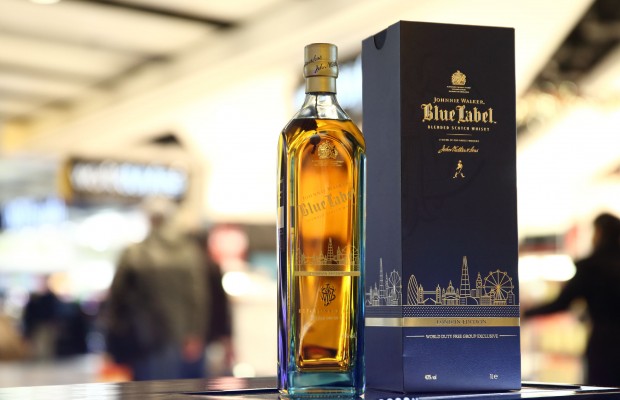
    Diageo’s Johnnie Walker House has launched Johnnie Walker Blue Label The Casks Edition, a Scotch whisky and bottle design available exclusively through Singapore Airlines. The ‘richer and more intense’ Johnnie Walker Blue Label The Casks Edition is a higher strength whisky than the main line liquid, and is bottled at 55.8% ABV.

    Johnnie Walker House, the ‘international network of luxury whisky embassies’, paired the whisky with a new bottle design based on the airline’s cabin crew uniform.

    The ‘Singapore Girl’ wears a sarong kebaya, designed by French couturier Pierre Balmain in 1968. The same shade of blue is used on the Johnnie Walker Blue Label The Casks Edition bottle design, which also features the airline’s signature batik print etched in silver.

    “It brings us great pleasure to work with Singapore Airlines, a company that shares our appreciation for the contemporary but at the same time, a great respect for heritage and progress,” said Lawrence Law, global general manager for Johnnie Walker House.

    “This partnership with Singapore Airlines provides an opportunity for consumers to buy a product that they cannot find anywhere else – an example of our continuing commitment to bringing our most successful innovations to consumers within the world of travel.”

    Mr Foo Chai Woo, Singapore Airlines divisional vice president sales and marketing added: “We are proud to be able to exclusively offer our customers the opportunity to purchase this special release in-flight via Singapore Airlines KrisShop. Having our Singapore Girl’s signature sarong kebaya batik motif reproduced on the bottle of the world’s leading luxury Blended Scotch Whisky is an honour and we are thrilled to have been selected as the first Johnnie Walker House airline partner.”

    Concessionnaire DFASS’s John Garner, president Asia and Middle East, said: “We are delighted to bring this exclusive Johnnie Walker Blue Label offering to KrisShop, for Singapore Airlines passengers. This has been a fantastic collaboration with all three parties actively involved from early ideation to getting it in-flight.

    “We believe that through this strong partnership, we will be able to provide more innovative offerings to Singapore Airlines and their passengers alike.”

    Johnnie Walker Blue Label The Casks Edition is available to purchase through Singapore Airline’s inflight retail store, KrisShop, from 1 December. Customers can pre-order via www.krisshop.com/JW.

    The whisky carries an RRSP of S$378 (US$270) for the 75cl bottle.

    Diageo’s partnership with Singapore airlines follows the publication of Generation Research data which shows that the global inflight retail market declined 6.7% in the first half of 2015.