Tag: Singapore

  • Laneige opens Singapore concept store

    Laneige opens Singapore concept store

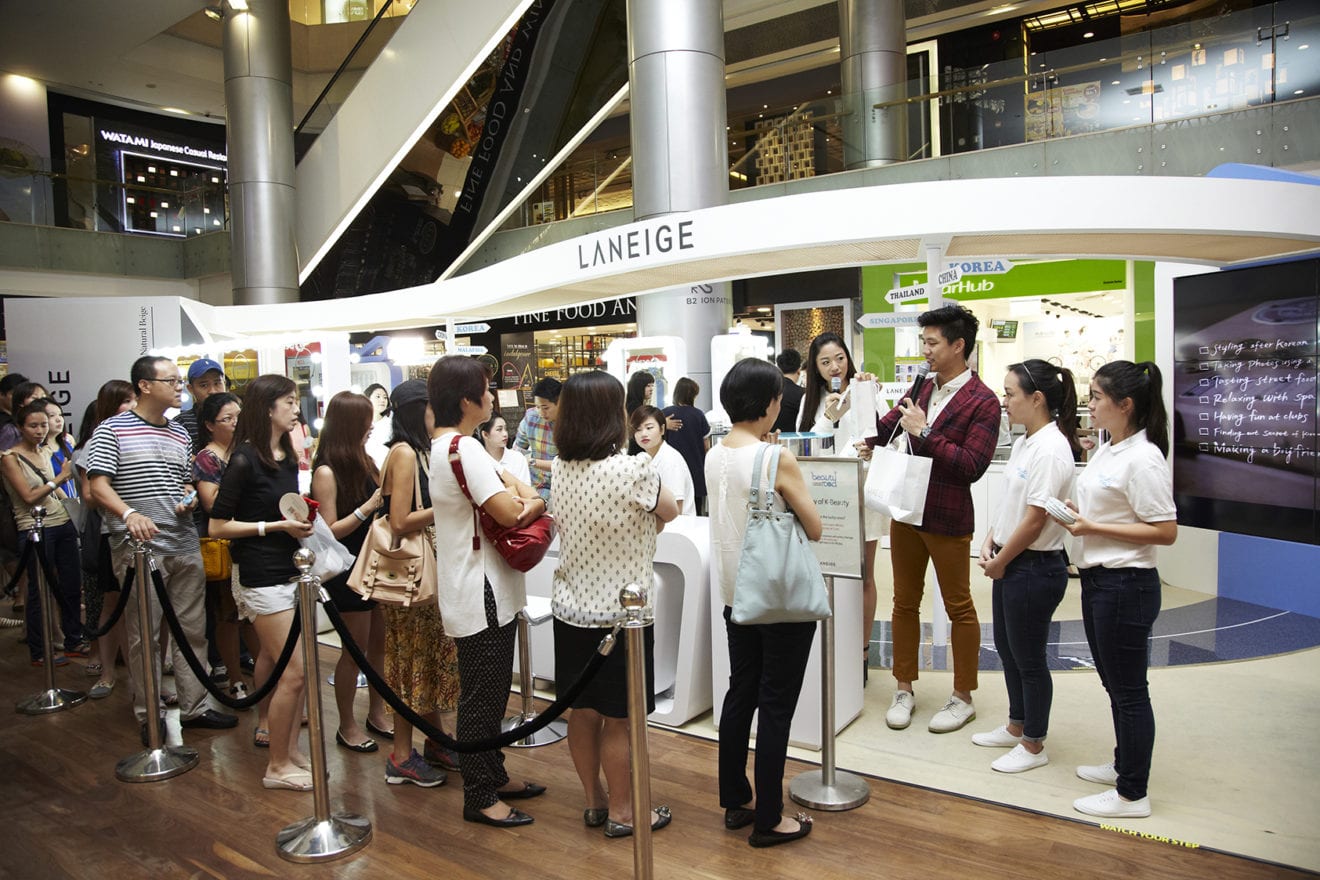
    South Korean skincare brand Laneige has opened a new concept store in Ion Orchard, Singapore.

    Not only does the outlet have a new look, but it features exclusive products. It is the ninth Laneige store for Singapore, the first opening in 2012.

    Exclusive to the store is the Laneige G5 product range, comprising seven variations of Water Science Mist, various types of sleeping balls that serve as a mask for different parts of the body, and lip cards in 20 different shades. The range is exclusive to G5 concept boutiques, and as the new store is the first and only boutique so far, it is the only shop in the world selling it.

    As Laneige’s flagship outlet, the store’s design is different from its other shops. The “water meets light” design concept infuses elements of water, light, and blue and pink colours.

    Laneige brand GM Doreen Chia says the design is “edgy, sophisticated, modern and sparkling” in line with the brand’s beauty concept and vision. Laneige is known for its emphasis on the power of water for revitalising and nourishing the skin.

    There are several zones in the store – one for top-selling items, another for signature products (such as its Water Bank range), Homme for men another for make-up. A feature is a consultation room where beauty advisors can analyse a customer’s skin condition and advise on appropriate products.

    Laneige has stores throughout Asia – in Brunei, China, Hong Kong, Indonesia, Malaysia, Taiwan, Thailand, The Philippines and Vietnam – as well as Canada, New Zealand and the US.

  • Colliers Singapore’s senior executives for industrial services quit

    Colliers Singapore’s senior executives for industrial services quit

    THE exodus of executives from Colliers International Singapore has continued this week. This time, some senior executives in its industrial services team including the division head are leaving for a rival firm.

    Colliers’ executive director and head of industrial services, Tan Boon Leong, three other senior executives and one support staff are said to be joining Knight Frank Singapore.

    This leaves Colliers with two industrial brokers. Meanwhile, Knight Frank’s industrial department will increase significantly to 11 executives, comprising nine brokers and two administrative staff with Mr Tan helming the team.

    Their official starting date at Knight Frank is not confirmed yet. But sources told BT that Mr Tan is expected to join Knight Frank in March after two months of gardening leave. He will be reporting to Knight Frank Singapore group managing director Danny Yeo.

    An internal email to employees announcing the changes were sent out by Knight Frank at 5.30pm on Friday.

    Colliers’ traditional strengths are said to be in industrial services and valuation.

    But last June, five industrial brokers from Colliers Singapore, including executive directors Brenda Ong and Rimon Ambarchi, jumped ship to CBRE. Its former managing director, Dennis Yeo, later joined CBRE as regional head of industrial and logistics services in Asia.

    Since some leadership changes took place at Colliers International, the firm became a poaching ground here.

    In September, a team of eight experienced valuers including Colliers’ head of valuation and deputy managing director, Cynthia Ng, moved to Savills Singapore.

    All three directors of its office services team joined Savills Singapore earlier in February and four members of its retail team hopped over to JLL’s retail agency team in June.

    This week, one of its deputy managing directors, Calvin Yeo, and head of investment service, Stella Hoh, also left the company.

  • Singapore-Indonesia Talk Agribusiness Export

    Singapore-Indonesia Talk Agribusiness Export

    Minister of Foreign Affairs Retno Marsudi received her Singaporean counterpart Vivian Balakrishnan at the Foreign Affairs Ministry building in Jakarta today, January 13. This meeting between the two ministers is their second after the ASEAN Summit in Kuala Lumpur in November last year.

    For Mr. Balakrishnan, this is his introductory visit to Indonesia since he was appointed as Singapore’s Foreign Affairs Minister in October 2015. In the meeting, the two ministers talked about a number of important issues.

    “The relationship between Indonesia and Singapore is one of the most intensive bilateral ties due to our geographic proximity and tight work relations,” Minister Retno said in an official statement on Wednesday, January 13.

    The ministers talked about how to enhance economic ties between the two nations. One way is through agribusiness exports.

    “Singapore needs this product, while Indonesia has the capacity. The geographic proximity between the two countries is a potential than can be brought closer,” the minister said.

    Indonesia and Singapore are planning to hold agribusiness collaborations in the fields of cool storage and infrastructure standard.

    The two ministers also discussed about the potential for a partnership in the manpower sector. Minister Retno said that, in the future, Indonesia will enhance the quality of skilled workers – particularly in fields with high demands such as therapists, caregivers, and other.

    The meeting was also spent talking about regional cooperation, ASEAN in particular, and the plan for Singapore’s Prime Minister to visit Indonesia.

    In addition to meeting Minister Retno, Mr. Balakrishnan’s trip to Indonesia also included an honorary visit to President Joko WIdodo and Luhut Pandjaitan, Coordinating Minister of Law and Human Rights.

    Singapore is Indonesia’s second largest trading partner after China. In 2014, the trading value between Indonesia and Singapore reached US$42 billion.

    In terms of investment, Singapore is Indonesia’s biggest investor. In 2014, Singapore’s investment actualization in Indonesia valued at US$5.8 billion. Singapore is also Indonesia’s largest contributor of foreign tourists, with more than 1.5 million Singaporeans visiting Indonesia per year on average.

  • Europe’s Decathlon sets opening date

    Europe’s Decathlon sets opening date

    Europe’s leading sports retailer Decathlon will open its first Singapore store on January 16.

    It follows the unveiling of five stores in Thailand in the two months prior to Christma, as the UK-based retailer builds its Asian footprint.

    Few details of the store have been released, but the accompanying photograph of the first bangkok shop gives readers an idea of how the interior will look.

    The company describes the new flagship as “Singapore’s first sports megastore with 50 sports under one roof” including football, water sports, trekking, running, road biking and golf. Located at 750A Chai Chee Rd, it will trade from 9am to 10pm 365 days a year “to do what we do best – make sports accessible to you!”

    The Thai stores range in size from 1700 sqm to 2700 sqm, and are evenly located around the capital city, Bangkok.

    Decathlon Thailand boss Frederic Bichet says the stores are exclusive retailers of Decathlon’s Passion brands.

  • Singapore male youth burn more money shopping online than women

    Singapore male youth burn more money shopping online than women

    About 5 in 10 say they spend more than $100/month. Singapore male youth spend more than women on online purchases, according to Singapore Polytechnic’s survey of 816 youth aged 15 to 35. About 5 in 10 (50.6%) males say they spend more than $100 per month on online purchases, compared to about 4 in 10 (41.3%) women.

    On the other hand, the survey revealed that women shop online more often. About 2 in 10 (20.4%) female respondents browsed for products and services online daily, compared to 14.5% of male respondents.

    More males (29%) also purchase from stores that stock limited edition items, compared to 32.5% of women. Meanwhile, female respondents (47.6%) purchase from online stores they liked or are subscribed to on social media, compared to 32.5% of male respondents.

    For male youth, the most popular purchase categories include apparel, technology, and movies. Meanwhile, young women’s top purchase categories include apparel, beauty, and travel.

    The survey also showed that Singapore youth prefer to keep their online shopping habits private. Almost 6 in 10 (59.5%) indicated that they shop online to purchase items without their friends or family knowing, while 57.9% do so to keep their identity private. Also, more male respondents (61.8%) agreed that they shop online as it gives them privacy, compared to women (54.1%).

    It was also revealed that young shoppers were more receptive to special online deals, peer influence and social media. Celebrity endorsements appeared to be the least effective sales strategy, as only 11.4% of respondents purchased from stores endorsed by their favorite celebrity.

  • Valentino Singapore opens Marina Bay Sands boutique

    Valentino Singapore opens Marina Bay Sands boutique

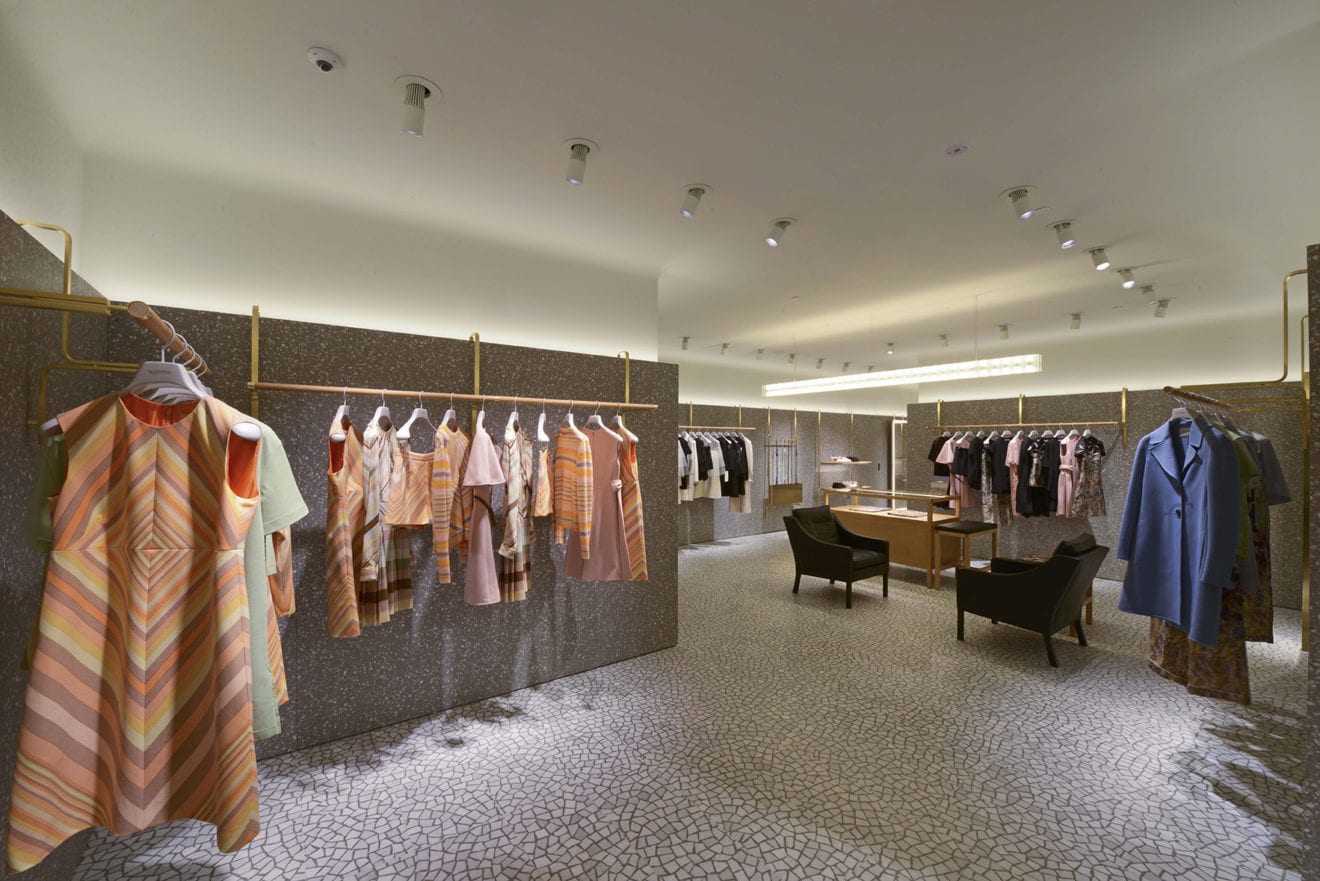
    Italian luxury fashion brand Valentino has opened its second and largest store in Singapore, at Marina Bay Sands.

    The 341 sqm store Palazzo concept was developed in partnership with the brand’s creative directors, Maria Grazia Chiuri and Pierpaolo Piccioli, and British architect David Chipperfield. It features marble, timber and leather interiors.

    The boutique offers the brand’s women’s ready-to-wear line, accessories and fragrances. Few details have emerged as yet, with only the store’s name appearing on the Marina Bay Sands website without any information.

    To mark the opening, the House of Valentino is organising a grand opening celebration cocktail party on January 13. The outlet is in The Shoppes at Marina Bay Sands, one of the city’s largest luxury shopping malls.

    Valentino’s other shop in Singapore is in the Ion Orchard complex.

  • 2015 ends well for private sector in Singapore

    2015 ends well for private sector in Singapore

    Last December proved another positive month for the private sector, with overall business and operating conditions holding up.

    The Nikkei purchasing managers’ index (PMI), which is a proxy for business activity, inched down from 52.2 in November to 52.1 last month. A reading of above 50 signals expansion.

    Output growth was sustained and still noticeable, despite the slight decline since November.

    An official PMI representing only factory activity, out on Monday, indicated a sixth consecutive month of contraction in the manufacturing industry, with a reading of 49.5 for last month, from November’s 49.2 reading.

    The Nikkei Singapore PMI is derived from a survey by Nikkei and Markit Economics. Data is compiled from monthly questionnaires sent to executives in over 400 private sector firms that represent the structure of Singapore’s economy, including manufacturing, services, construction and retail.

    The report said: “The health of the economy has now strengthened in each of the past seven months, though the rate of improvement remained moderate overall.”

    It found that foreign client demand softened last month owing to new export-order growth slowing to a modest rate since November.

    Costs for firms also rose at the quickest rate in 11 months, said to have been driven by faster increases in both purchasing prices and staffing costs. “Companies only passed on part of their higher cost burdens, however, and raised their selling prices marginally,” said the survey.

    Economist Annabel Fiddes at Markit said: “Firms took a cautious approach to employment and purchasing activity, with staff numbers little changed in December and input buying rising only slightly.”

    She said this suggests that growth projections for the start of this year remain muted, as companies wait for a “much- needed pick-up in client demand”.

  • There’s no stopping the e-commerce boom in Singapore

    There’s no stopping the e-commerce boom in Singapore

    Sales will top $1.4 billion this year.

    Singapore’s e-commerce sector will continue to expand at a breakneck pace in coming years, according to a report by CBRE.

    Sales have grown at a record rate over the past five years, rising from just $800 million in 2012 to over $1.34 billion in 2015.

    Citing data from a report by Euromonitor International, CBRE noted that 2014’s internet retail sales grew 12.5% year-on-year to $1.08b, while mobile internet retail sales surged by 53.9% to $280.9 million.

    CBRE believes that the strong growth in online retail will drive demand for industrial space in Singapore.

    “All these indicate that Singapore’s e-commerce sector is poised to expand further, which could potentially emerge as the next underlying demand driver for the industrial market,” said CBRE.

  • Understanding CapitaLand Limited From An Investor’s Perspective

    Understanding CapitaLand Limited From An Investor’s Perspective

    CapitaLand Limited (SGX: C31) is one of Asia’s largest real estate companies with a presence in Singapore, China, Indonesia, Malaysia and Vietnam. It is listed on the Singapore Exchange with a market capitalization of over S$13 billion.

    The company has a diversified suite of real estate businesses. This includes the development of residential and commercial properties, as well as the ownership and management of retail malls, offices, and hospitality properties. In addition, CapitaLand has a number of Singapore-listed trusts under its umbrella and these include:

    • CapitaLand Mall Trust (SGX: C38U), a real estate investment trust (REIT) that owns and manages mainly retail malls in Singapore.
    • CapitaLand Commercial Trust (SGX: C61U), a REIT with a portfolio of predominantly Singapore commercial/retail buildings.
    • Ascott Residence Trust (SGX: A68U), a REIT that holds hospitality-related properties (such as serviced residences) in the U.S., Europe, Asia, and Australia.
    • CapitaLand Retail China Trust (SGX: AU8U), a China-focused REIT that owns a portfolio of retail malls in the country.

    2015 was a year in which the Singapore stock market, as represented by the Straits Times Index (SGX: ^STI), fell by 14%. CapitaLand, however, bucked the trend with a gain, albeit a meagre one of just 1.4%.

    Let’s analyze the company’s financials to understand if it may be a potential investing opportunity now. For this we will be using four metrics, namely the price to earnings (P/E) ratio, price to book (P/B) ratio, net debt to equity ratio, and dividend yield.

    CapitaLand has a trailing 12 months (TTM) earnings per share of S$0.288, according to S&P Capital IQ. With the company’s current share price of S$3.14, this implies a P/E ratio of 11. This is on par with the P/E ratio of the SPDR STI ETF (SGX: ES3) – an exchange-traded fund tracking the Straits Times Index – which stands at 11.

    As at the end of the third-quarter of 2015, CapitaLand has a net asset value per share of S$4.14. This would mean that the company has a P/B ratio of 0.76 at its current share price. What this means is that investors are able to buy the company’s assets, net of all liabilities, at a discount at the moment. Investors might thus be able to get a margin of safety with CapitaLand.

    Moving on, CapitaLand had net debt (total borrowings minus cash) of S$12.5 billion and equity of S$24.5 billion as of 30 September 2015. This would imply a net debt to equity ratio of 51%, which is on the high side, in my opinion.

    Lastly, the company has a dividend yield of 2.9% based on its 2014 annual dividend of S$0.09 per share. It’s worth noting that CapitaLand’s ordinary dividend has been growing over the past few years, rising in 1 cent per share increments in each year from S$0.06 per share in 2011 to S$0.09 in 2014.

    In looking at the four metrics, the negatives appear to outweigh the positives. While CapitaLand’s low P/B ratio may give investors some margin of safety, its high net debt to equity ratio could add some risk. Moreover, CapitaLand’s P/E ratio and dividend yield are not very attractive.

    To sum it up, the four metrics seem to suggest that CapitaLand may not be a potential investing opportunity for investors currently. That being said, a deeper look will still be required before any firm investing conclusion can be reached – the four metrics only represent a useful starting point for further research.


  • What to expect in 2016 as Singapore economy hits slowest growth since 2009

    What to expect in 2016 as Singapore economy hits slowest growth since 2009

    GDP is seen to likely remain stuck in the 2-3% yoy range. The 4Q15 GDP growth flash estimate was a breathtaking +2.0% yoy (+5.7% qoq saar), which beat market consensus forecast marked a sweet end to 2015. OCBC Bank notes that the surprise factor came from construction which doubled to 2.2% yoy (+7.0% qoq saar) in its strongest showing since 2Q15 due to public sector construction activities, and supported by the still resilient services sector which expanded 3.2% yoy (+6.5% qoq saar) in 4Q15 on the back of wholesale & retail trade and finance & insurance sectors. Manufacturing remained the main drag, contracting for the 5th straight quarter and actually deteriorating further from the 5.9% decline in 3Q15 to -6.0% in 4Q15.

    But 2015 GDP growth is still the lowest since 2009’s -0.6% performance.

    The 4Q2015 GDP figure brought the full year growth to 2.1% which is close to the official growth forecast of “close to 2 percent” but is nevertheless a moderation from the 2.9% growth registered in 2014.

    Here’s what analysts had to say:

    Selina Ling, analyst, OCBC Treasury Research

    Notably, this data set reinforced that growth has likely stabilized since 3Q15 after avoiding a technical recession earlier in the year. The 2015 outperformer remained services which accelerated from 3.2% growth in 2014 to 3.6% last year, followed by construction at 1.1% (2014: 3.0%), whereas the 4.8% drop in manufacturing was the worst since 2001 (-11.6%).

    Looking ahead, 2016 growth will likely remain stuck in the 2-3% yoy range.

    Headline GDP growth may not deviate from the 2+% yoy range in the near-term. We expect that manufacturing may continue to be in the doldrums and shrink 0.2% yoy in 1Q16 and constrain overall GDP growth to 2.4% yoy. Note the latest SME business surveys suggest greater caution for the first half of this year. Our full-year 2016 GDP growth forecast remains at 2-3%, which is at the upper end of the official 1-3% forecast. The downside risks remain the ongoing deceleration and policy risks in China, as well as the sustained US monetary policy normalization (given market perception continues to differ significantly from the median dots graph). It is interesting that the two-track growth trajectory in China, with the service PMI outperforming the manufacturing PMI, heralds a trend towards servitization that could be also apparent for the rest of the region.

    Inflation could remain subdued in 2016, with core inflation picking up slightly. Headline CPI prints may stay deflationary in 1H16 but edge back to positive territory before the year is out. That said, headline CPI inflation may remain flat in 2016 as asset price deflation in housing (especially with private residential prices having fallen for nine straight quarters and official rhetoric hinting at no lifting of cooling measures in the near-term) and private road transport sustains, and the pass-through from the tight labour market into the broader cost environment has been fairly limited. Given the benign crude oil price environment, the CPI basket components that would contribute positively to inflation are likely to be food (due to La Nina), healthcare and education costs. At this juncture, we do not see any game-changers that warrant a third monetary policy easing this year as the 4Q15 flash GDP growth estimate is “water under the bridge” so to speak.

    Policy settings will remain within comfort zones for now. The 3-month SIBOR has been relatively stable post-Oct15 MPS, but the SOR have tracked higher as the US FOMC initiated lift-off with a 25bp rate hike to 0.5% in mid-Dec15. The spread between the 3-month SOR-SIBOR has widened to more than 50bps, which is the largest since March 2009, but we anticipate that the gap will narrow to around 30bps as the SIBOR plays catch-up to SOR. Our end-2016 forecasts for 3-month SIBOR and SOR are 2.03% and 2.05% respectively, assuming that the FOMC continues to hike at a benign pace of 100bps next year.

    Francis Tan, analyst, UOB

    The main support in 4Q came from the robust services sector which grew 3.2% y/y, as the wholesale & retail trade and finance & insurance sectors maintained healthy growth paths. The construction sector also expanded 2.2% y/y, compared to the 1.1% y/y growth in 3Q.

    Singapore’s manufacturing engine remained weak as the sector contracted for the fifth consecutive quarter to register a decline of 6.0% y/y due to the decline in output from the electronics, transport engineering and precision engineering clusters.

    Although Singapore’s manufacturing sector is not out of the doldrums yet, we remain optimistic that there could be some pickup in manufacturing growth in2016 and we are projecting the manufacturing sector to grow by a modest 2.5%, compared to the 4.8% decline in 2015.

    The services sector will continue to be a bright spot, although growth for 2016 may slow to 2.7%, from 3.6% in 2015. This is due to the higher base effects for the wholesale & retail trade to hurdle past; While the finance & insurance sector may grow at a slower pace, resulting from the US interest rate normalization that could impact on the overall loans demand in 2016.

    With this, we maintain our forecast for Singapore’s 2016 GDP to grow 2.7%.

    Regarding monetary policy, we hold to our view that the Monetary Authority of Singapore (MAS) will likely leave the current policy of the “modest and gradual appreciation” of the SGD NEER unchanged at our estimated 0.5% pa rate.

    The monetary policy divergence between the US and Singapore will likely see the USD/SGD continue on a weaker path to reach 1.46/USD by the middle of this year. However, the increased trade and investment flows from a stronger US economy will probably see a direction reversal by 2H 2016, where we forecast the USD/SGD to end 2016 at 1.42/USD.

  • Samsung Pay is coming to Singapore

    Samsung Pay is coming to Singapore

    South Korean technology giant Samsung Electronics is expanding its mobile payments service to three additional countries, including Singapore.

    The Korean company made the announcement during its press conference at the Consumer Electronics Show on Tuesday, held ahead of the show’s official opening. Samsung Pay allows consumers to pay at retail locations using their smartphones.

    It also confirmed the news in a Twitter update. “I am happy to announce we’re adding Australia, Singapore, and Brazil to the Samsung Pay roadmap,” said Samsung Electronics America President and COO Tim Baxter. No official date was announced for the three launches.

    The service launched last year in South Korea and the United States, with plans to enter other markets, including China, Spain and Britain.

    Samsung hopes the payments service will set its phones apart from competing devices, helping to protect market share against rivals such as Apple and Huawei Technologies and compel users to pay a bit more for the convenience. Apple announced in October last year its competing Apple Pay service was also coming to Singapore this year.

    Samsung has reported a strong response to Samsung Pay in its home country and the US, though the service does not generate revenue on its own for Samsung. An early advantage for Samsung Pay is its compatibility with magnetic stripe card readers already in wide use among retailers. In comparison, Apple Pay requires retailers to install new equipment supporting near-field communication technology.

  • Victoria’s Secret to open first flagship store here

    Victoria’s Secret to open first flagship store here

    Victoria’S Secret will open its first South-east Asia flagship store in Singapore by year end and unveil a full assortment of its sexy wares.

    The international lingerie brand will open the 12,000 sq ft outlet in the fourth quarter of the year at Mandarin Gallery in Orchard Road.

    The two-storey store, which faces the street, will take over the units that Mont Blanc, Bimba Y Lola and Bathing Ape used to occupy.

    These brands will be moving to other areas in the four-storey mall. The concierge counter on level two was also relocated to level three to accommodate the largest American retailer of women’s lingerie.

    The nine existing Victoria’s Secret stores here are all the brand’s beauty and accessories stores. They sell fragrances, accessories like bags and only a small range of women’s underwear.

    Patrina Tan, senior vice-president of retail, marketing and leasing at Overseas Union Enterprises, which manages Mandarin Gallery, said that the hoarding on the mall went up last week.

    “Mandarin Gallery has always been known to be a mall that houses the best of the best in retail and food. We have the king of ramen, the king of ribs. So naturally, Victoria’s Secret echoes and reinforces what the mall stands for,” she said.

    There are plans for the brand to hold fashion shows here on top of other events, she said. “It is a long-awaited brand that has never been available in this part of the world.”

    The Straits Times understands that prices at the store here will differ from those elsewhere as they will be based on domestic variables like taxes and profit margins.

    Its product range will be identical to that offered in stores in the United States and will not be tailored to the local market.

    Victoria’s Secret is one of several global brands that have chosen to set up shop here recently.

    French sporting goods store Decathlon will open a 35,000 sq ft store in Chai Chee Technopark next week; popular French women’s wear label Maje opened its first flagship store at The Shoppes at Marina Bay Sands in October; Singapore’s first Apple store will open next year; and the renowned Dover Street Market will soon make its debut here.

    Experts said that international retailers, faced with economic challenges in developed markets, are looking to emerging markets such as South-east Asia.

    “Singapore is seen as an ideal test bed for brands looking to break into South-east Asian markets and is viewed as an important place to build brand awareness,” said Sarah Lim, Singapore Polytechnic’s senior retail lecturer. “Customers in countries in the region will identify with the brand when it moves over to their countries.”

    She said that Victoria’s Secret will up the ante in the retail scene here: “They don’t just sell products, but strengthen their brand with fashion shows and experiential shopping. Other brands can learn from them.”

    Shoppers like Gina Farr, 32, are excited.

    The fitness trainer is a fan of the brand’s underwear and owns several pairs that she bought from the smaller stores here.

    “The quality is great, and there will be a wider range including bras. The range of items they have here now is too small,” she said. “I would probably shop there quite often when it opens.”

  • Singapore firms join Chongqing project

    Singapore firms join Chongqing project

    A slew of Singapore firms, including property giant CapitaLand and banks DBS and UOB, have joined the third Sino-Singapore government-led project, which is based in Chongqing.

    DBS inked four strategic partnerships with Chinese government agencies and banks to provide comprehensive financial services for the project. One of them will see DBS and the Industrial and Commercial Bank of China providing financial solutions and services to the Chongqing government to boost trade and investment.

    Financial services is one of four priority areas of the China-Singapore (Chongqing) Demonstration Initiative on Strategic Connectivity, which focuses on modern connectivity and modern services.

    The others are aviation, transport and logistics, and information and communications technology.

    DBS Bank (China) chief executive Neil Ge said the bank will leverage on its experience and expertise in developed financial markets such as Singapore and Hong Kong “to explore financial innovation with its partners as well as strengthen economic ties between Singapore, Chongqing and western China”.

    UOB inked a memorandum of understanding with the Chongqing financial affairs office to promote cross-border trade and investment between Chongqing and South- east Asia. They will help Chongqing firms expand into South-east Asia through UOB’s advisory unit, banking products and regional network.

    Mr Eric Lian, president and chief executive officer of UOB (China), said in a statement that the bank’s Chongqing branch has doubled its wholesale banking customer base since its launch in September 2014, in areas such as electronics, retail and wholesale services and infrastructure sectors that are to be developed as part of the project.

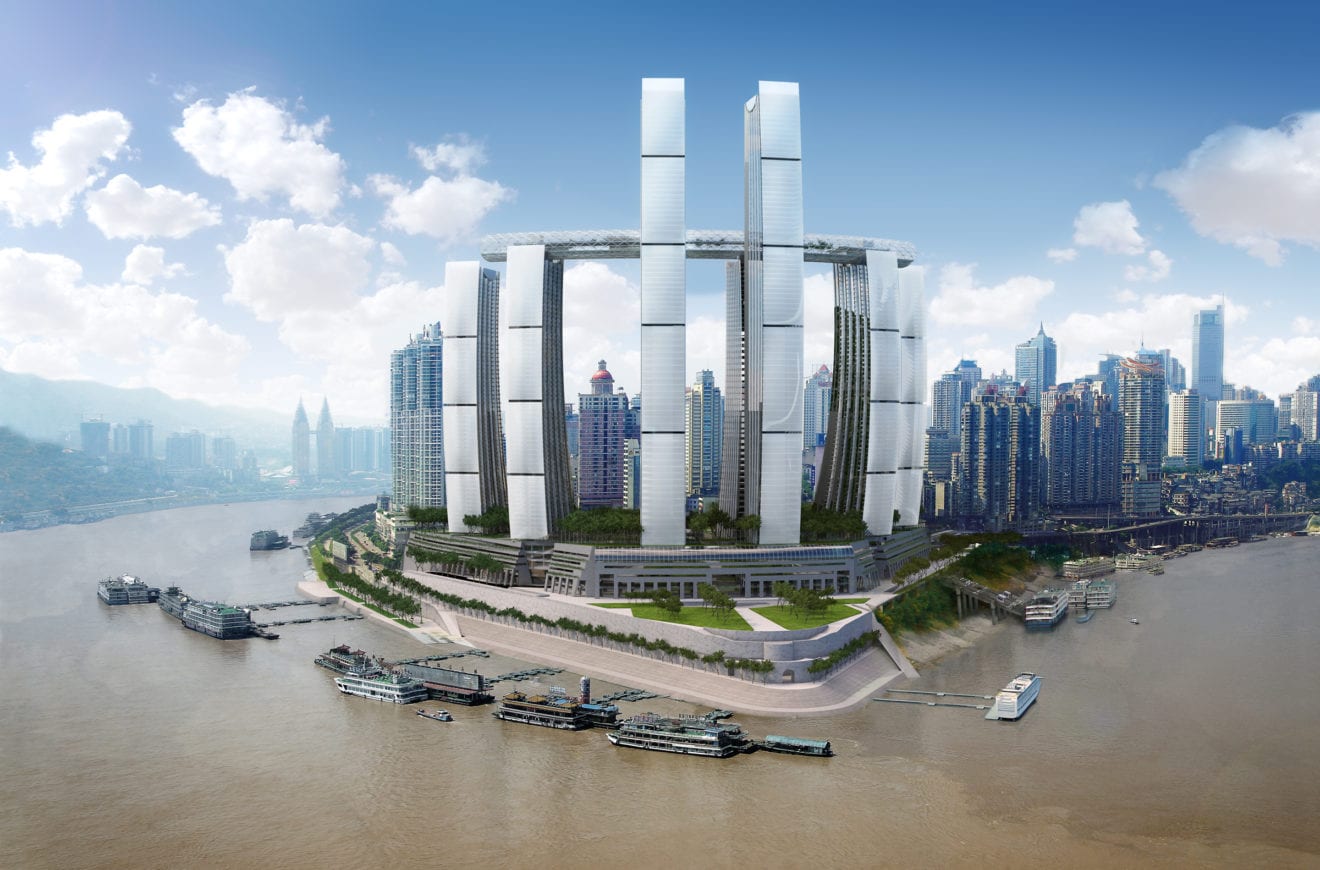
    CapitaLand is partnering the Yuzhong district government to set up the Sino-Singapore Collaboration Centre at Raffles City Chongqing, its biggest single project in China costing 24 billion yuan (S$5.2 billion), to be completed by 2018.

    CapitaLand president and group CEO Lim Ming Yan said its Raffles City aims to be a testbed for the latest technologies in areas such as modern retail, collaborative workspace and smart homes.

    “Coupled with the support of the Sino-Singapore Collaboration Centre located therein, it will be able to effectively bridge companies pursuing cross-border expansion to the immense growth opportunities in Chongqing,” he added.

  • Singapore risks fading into investment backwater as market cap shrinks

    Singapore risks fading into investment backwater as market cap shrinks

    Fresh off its worst year for listings in at least two decades, the Singapore stock market now faces the threat of fading into an irrelevant backwater for global investors as large privatisations, small floats and a broad-based equities slump continue to erode its market value and appeal, market watchers warn.

    With the number of initial public offerings (IPOs) here falling in 2015 to its lowest annual level since the Singapore Exchange (SGX) opened its doors in late 1999, the local share market has been left in the dust by regional rival Hong Kong as of late, while its neighbours in South-east Asia have begun to nip at its heels.

    One crucial and worrying sign is that the sharp slide in Singapore’s total market capitalisation in 2015 reflects evaporating liquidity, decreasing depth and a sore lack of interest in raising funds here as attention turns to markets with brighter prospects, analysts and asset managers say, adding that this trend could well turn into a vicious cycle.

    The total market value of stocks listed on the Singapore Exchange added up to about US$463.46 billion at the close of trading on Dec 31, 2015, going by a Bloomberg gauge based on actively traded primary securities and stripping out exchange traded funds and ADRs (American depositary receipts).

    This number would make the entire Singapore market cap smaller than that of Nasdaq-listed Apple, which weighed in at around US$586.86 billion at the end of last week. It also marks the Singapore market cap’s lowest level since hitting US$464.41 billion at the end of 2011.

    Singapore’s market cap shrank a sharp US$107.18 billion or 18.8 per cent from a year ago, according to Bloomberg data. The bulk of the drop was due to a broad-based equities slump that also put a dent in other bourses across Asia. The Straits Times Index fell 14 per cent in 2015 to finish the year at 2,882.73 points, down from 3,365.15 at the end of the previous year.

    But another significant factor is a handful of big delistings that has occurred alongside a persistent dearth of sizeable initial public offerings (IPOs), analysts say.

    “Privatisations of many large companies in the last few years, especially in the property sector, have shrunk the investable pool of stocks in Singapore,” said Kum Soek Ching, head of Southeast Asia research at Credit Suisse Private Banking Asia Pacific.

    “The absence of large and meaningful IPOs in recent years have also not been supportive to the total market cap of Singapore … With less market participants, a smaller-cap market can suffer from liquidity issue during periods of stress.”

    Large delistings in 2015 included that of conglomerate Keppel Corp’s property arm Keppel Land in July. KepLand had a market value of S$6.56 billion, based on 1.55 billion shares outstanding and the takeover price of S$4.38 per share that KepCorp paid.

    Engineering firm UE E&C, which was worth S$337.5 million based on an offer price of S$1.25 for 270 million shares, was taken over by a private equity firm and delisted in March. Bookstore chain Popular Holdings also delisted in May. It had had a market value of around S$255.07 million, based on offer price of S$0.32 and about 797.09 million shares outstanding.

    The declining total market cap points to an increasing lack of interest from companies in tapping equity capital markets here.

    Against the market values of the delistings last year, there was just S$339.18 million in total IPO fund- raisings in 2015. All but one of the 13 public floats here last year were Catalist listings, and the average IPO size worked out to around a puny S$26 million.

    The number of IPOs and the total IPO funds raised last year were the smallest in at least two decades, going by newspaper reports. Up until 2015, the SGX had not seen fewer than 20 public floats a year. In the depths of the global financial crisis, the year 2008 had 22 IPOs raising US$931 million while 2009 had 23 floats that raised about S$3.21 billion, according to media reports then. Even in 1998, with the Asian financial crisis, SGX managed to rake in 20 IPOs that raised about S$406 million.

    Several Singapore-based companies are also eschewing a local listing for an overseas float. Aircraft leasing firm BOC Aviation said last year that it wanted to list in Hong Kong. A Singapore medical company that develops treatments for Alzheimer’s also said recently that it was gunning for a Nasdaq IPO, according to media reports.

    The recent trend of substantial privatisations and tiny IPOs could continue to reduce Singapore’s market cap this year, which market watchers say does not bode well for local stocks’ investment appeal.

    “Investors, especially foreign institutions, like liquid markets, and market liquidity correlates with market size. Institutional investors take a silo approach and allocate to illiquid private equity and liquid listed equity, where they seek and expect liquidity,” said Bryan Goh, chief investment officer at wealth manager Bordier.

    Dealmakers have already hinted that they expect 2016 to be characterised by Catalist IPOs, and a couple of large delistings are already on the cards. French shipping firm CMA CGM is trying to privatise Neptune Orient Lines (NOL), which had a market cap of S$3.2 billion at end-2015. Singapore Airlines is also trying to delist Tiger Airways, which had a market cap of around S$1.03 billion as at Dec 31.

    Ms Kum added that the size of a market’s total capitalisation would determine its weighting in indices such as the MSCI that institutional investors use as benchmarks. “A market with a small weighting may become irrelevant for institutional investors, unless it has a very compelling story.

    “With a lower index weighting, the Singapore market risks losing its relevance and importance to institutional investors. Private investors may also increasingly need to avail themselves of more investable options in overseas markets, in order to preserve or grow their wealth, creating a vicious cycle in diminishing the market size and relevance.”

    According to Bloomberg data, Hong Kong had a total market cap of US$4.105 trillion at end-2015, nearly nine times that of Singapore. It also eclipsed Singapore in terms of IPO fund-raising last year, raising more than 160 times the total figure in the Republic. Japan’s market cap is nearly 11 times that of Singapore and the US is nearly 51 times as large.

    To makes matters gloomier, other countries in South-east Asia, which have so far remained smaller than Singapore in terms of total market value, are beginning to catch up.

    The gap between Singapore’s and Malaysia’s market cap was US$117.98 billion in 2014; that shrank 27 per cent to US$86.35 billion in 2015. For Indonesia, the gap with Singapore narrowed 24 per cent from US$148.68 billion to US$113.34 billion, while the gap between Singapore and Thailand was reduced by 16 per cent from US$154.85 billion to US$130.53 billion over the same timeframe.

    IG market strategist Bernard Aw noted: “We are always in competition with other bourses, and failing to increase or retain investors’ interest is akin to a kiss of death. This is why Singapore is trying to attract investors’ interest back via initiatives such as the introduction of new equity indices which are sector-specific.”

    However, some market watchers said there were still things to like about the Singapore stock market.

    “Singapore does not necessarily lose its shine as an investment destination as a result of its market cap declining or being relatively smaller than that of other global financial hubs,” said Andrew Wood, head of Asia country risk at BMI Research.

    “It is really the quality of the firms listed in that market as well, the maturity of the financial markets framework, along with other factors such as the political risk and macroeconomic risk environment in that country. Singapore scores very well for the last three criteria.”

    Though he cautioned that Singapore “could lose out if it is seen as a less attractive environment for IPOs, and a shrinking market cap could speak to a relatively shallower capital market”, Mr Wood said Singapore could still remain attractive for investors due to its regulatory environment and its macroeconomic and political stability.

    Hugh Young, Asia managing director of Aberdeen Asset Management, also remained optimistic. Though he noted that “the reality is that for many of the world’s largest investors, Singapore is a backwater given its size and relative lack of liquidity”, he said market size should not matter for “true investors looking for great investments”.

    “Of course for the more thorough investor, small markets and small companies can be a profitable hunting ground as they can be overlooked and neglected … All in all, it’s not something I would overly worry about although for many it can be a matter of pride – ‘we’re better because we’re bigger’. Size is not everything.”
  • Singapore consumer confidence in Dec above long-term average

    Singapore consumer confidence in Dec above long-term average

    Although currently weak in personal finances, consumers in Singapore have expressed confidence over the next five years. This has led December’s level of consumer confidence to rise to levels above the long-term average, according to the results of the ANZ-Roy Morgan Singapore Consumer Confidence survey released on Wednesday.

    The ANZ-Roy Morgan Singapore Consumer Confidence for December rose to 126.5, above the long-term average of 123.7. This month’s index is also higher than last December’s 121.8.

    In terms of personal finances, a smaller proportion of respondents think they are better off financially, with 29 per cent (or down by 2 percentage points) saying their families are “better off” than a year ago. At the same time, 8 per cent (down 2 percentage points) said they are “worse off” financially.

    Respondents are still doubtful about near-term prospects, with an unchanged proportion, or 32 per cent, saying that their family will be “better off” financially in a year’s time. Eight per cent (up one percentage point) expect to be worse off.

    On economic conditions in Singapore going forward, exactly half of respondents (down 2 percentage points) expect Singapore to have “good times” financially over the next 12 months, compared to 11 per cent (unchanged) who expect “bad times”.

    Over the longer term, half (up 2 percentage points) of respondents expect Singapore to have “good times” financially during the next five years and 11 per cent (down 3 points) expect to fare badly.

    Shopping sentiment is still strong. Twenty-three per cent (up 4 points) of respondents say now is a good time to buy major household items, while 13 per cent (down a point) think it’s not worth it.