Tag: Singapore

  • Spending at Changi Airport hits record high to reach $2.2 billion in 2015

    Spending at Changi Airport hits record high to reach $2.2 billion in 2015

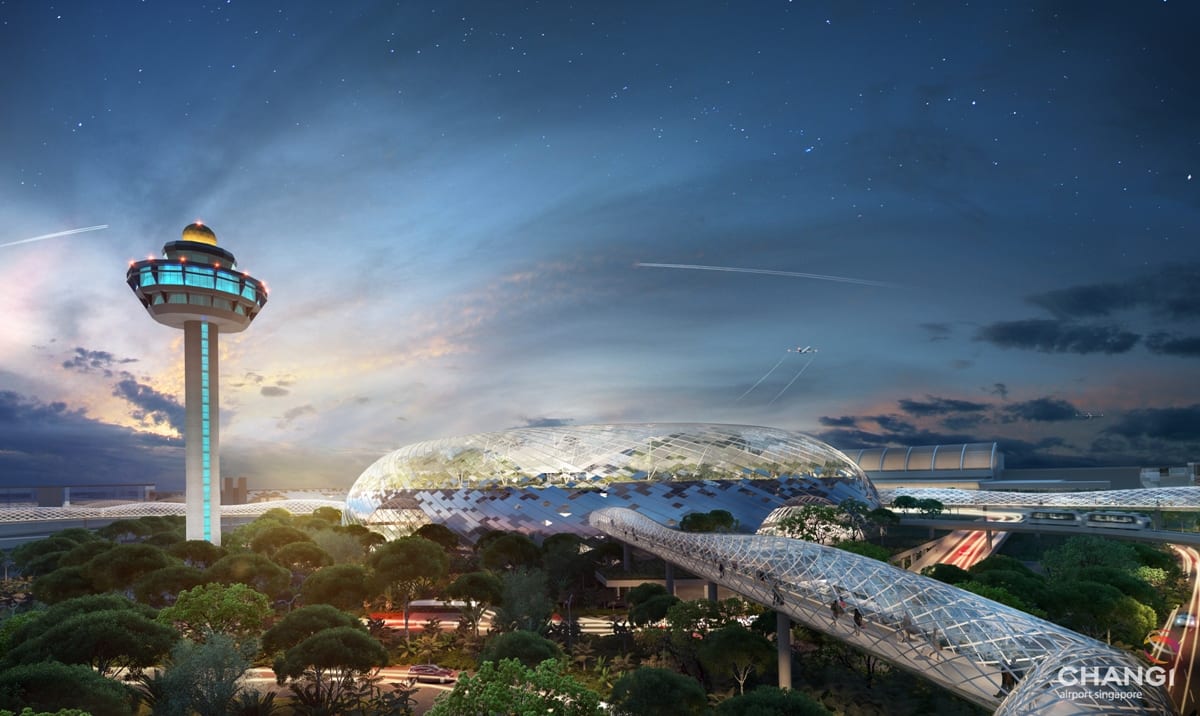
    Sales at Changi Airport has hit another record high of $2.2 billion last year, placing it along the top three airports in the world in terms of retail business performance.

    Spending at the airport’s retail and food stores grew by 8 per cent year on year, on the back of a growing number of passengers using the airport. Passenger traffic figures are expected to be released next week.

    Travellers from China accounted for a third of the airport’s retail market, followed by Singapore consumers, who made up one-fifth. The other top spenders were from Indonesia, India and Australia.

    Ms Lim Peck Hoon, executive vice-president of commercial at Changi Airport Group, said on Sunday (Jan 24): “We are delighted to achieve yet another record high for concession sales at Changi Airport in 2015. This is positive for the Singapore air hub as profits from our retail business help to offset the cost of our aeronautical operations.”

    At Changi, shoppers’ favourite buys are liquor, tobacco, cosmetics and perfumes. They are followed by luxury goods, electronics and equipment and chocolates and candies.

    Ms Lim said last year’s retail performance was due to a successful commercial strategy, which saw the introduction of liquor and beauty duplex stores that are the first in the world. These two-storey stores have their own bar lounges and wine tasting corners.

    Last year also saw well-known brands such as Zara and Samsung launching their first stores at Changi Airport.

    Other promotions such as the Star Wars soft toys promotion during the year-end holidays and the “Be a Changi Millionaire” draw also contributed to the retail buzz.

    This afternoon, one traveller would walk away a million dollars richer from the sixth annual Changi Millionaire contest.

  • Singapore-Based Courts Retail Opens Second Megastore in Indonesia

    Singapore-Based Courts Retail Opens Second Megastore in Indonesia

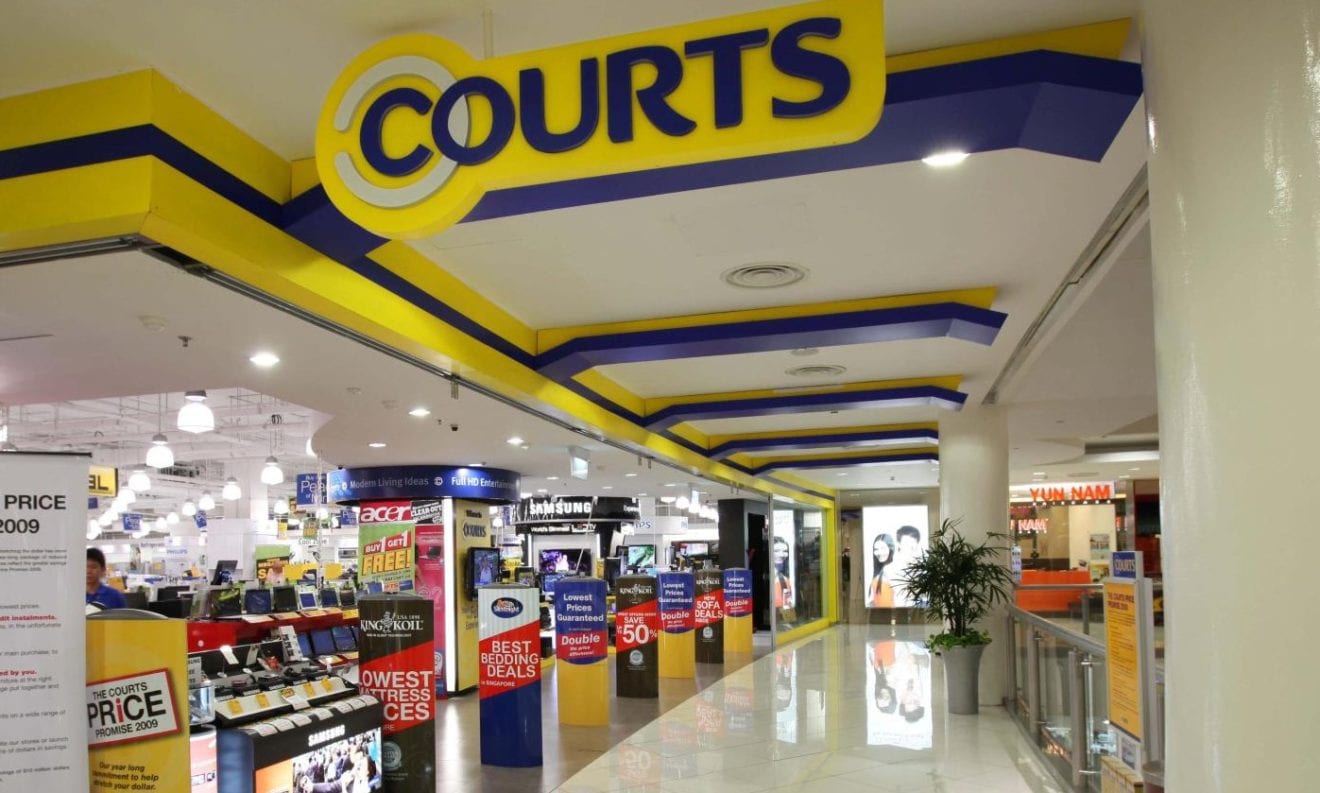
    “Indonesia is currently the driver of Courts’ growth. Since we first entered Indonesia in 2014, we now operate two megastores and three regular outlets. We aim to open twelve more outlets by 2018. This is our commitment in catering to the demands of Indonesians,” Roy Santoso, Courts Retial Indonesia country chief executive officer, said in a statement over the weekend.

    Courts opened its first big-box store in Indonesia last year in the Kota Harapan Indah township of Bekasi, on the eastern outskirts of the capital, before expanding with smaller stores in Bogor, West Java. Its Singapore-based headquarters currently operates 80 stores with over 1.6 million square meters of retail space in Southeast Asia.

    As of November last year, sales from Indonesia contributed to 1.7 percent of Courts Asia’s sales of S$186.1 million ($130.17 million), up 4.2 percent year-on-year, according to a listing on the Singapore Exchange.

    Retailers, both local and foreign-owned, have long touted Indonesia as an attractive market, thanks to its expanding middle class and young consumers.

    The country’s retail industry is projected to grow between 11 percent and 12 percent this year, after a modest 8 percent growth last year, as purchasing power across the country is expected to rebound alongside improving economic growth, according to Indonesia’s Retailers Association chairman Roy Mendey.

    “There was some cooling down in [purchasing power] last year because of slowing growth but we started to see an upward trend in sales during the fourth quarter,” he said recently.

  • Online sellers turn Southeast Asia retail industry upside down

    Online sellers turn Southeast Asia retail industry upside down

    Here’s how bad it is in Southeast Asia’s retail industry for sellers. 

    They are paying more to borrow money to keep their business going than consumers do to keep buying from them.

    Courts Asia Ltd., which offers shoppers zero percent long-term credit on higher-end products, has seen its Singapore dollar bond yields rise 28 basis points to 4.34 percent in the past six months and is trying to refinance the note ahead of its May repayment, Bloomberg reports.

    The yield on US currency bonds of Parkson Retail Group Ltd., part of a Malaysian retailer which operates across Southeast Asia, has soared 320 basis points to 10.21 percent.

    Sagging global growth and rising household debt is knocking consumer demand across Southeast Asia, with Indonesian phone seller PT Trikomsel Oke in November becoming the first company to default on Singapore dollar bonds since 2009.

    Retailers that borrowed to finance growth are also losing ground to online market places like Alibaba Group Holding Ltd.

    The median debt load of the region’s retailers rose to 1.75 times operating profit in latest filings compared with 1.3 at the end of fiscal 2014.

    “I have been very careful about some local currency corporate bonds,” said Singapore-based Desmond Soon, co-head of investment management for Asia at Western Asset Management Co., which had US$446 billion under management at Sept. 30 and held Courts Asia bonds as of Nov. 30.

    “Bricks and mortar retailers do have an issue,” Soon said.

    Retail store sales in Singapore dropped for a third month in November, falling 2 percent from a year earlier, Department of Statistics data show.

    Meanwhile, online transactions in the region are growing.

    Singapore Post Ltd.’s domestic e-commerce orders in Southeast Asia and Australia rose 384 percent in the 12 months through November, according to a company presentation.

    Courts Asia, which sells goods from electronics to home furniture in Singapore, Malaysia and Indonesia, began meeting investors last week ahead of its scheduled S$125 million (US$87.1 million) repayment of notes in May. It’s looking to raise funds to help refinance and repay the bond, Courts’s Singapore-based spokeswoman Tammy Teo said.


  • SingPost fuses e-commerce businesses to form global commerce enabler

    SingPost fuses e-commerce businesses to form global commerce enabler

    It plans to further widen its US logistics footprint.

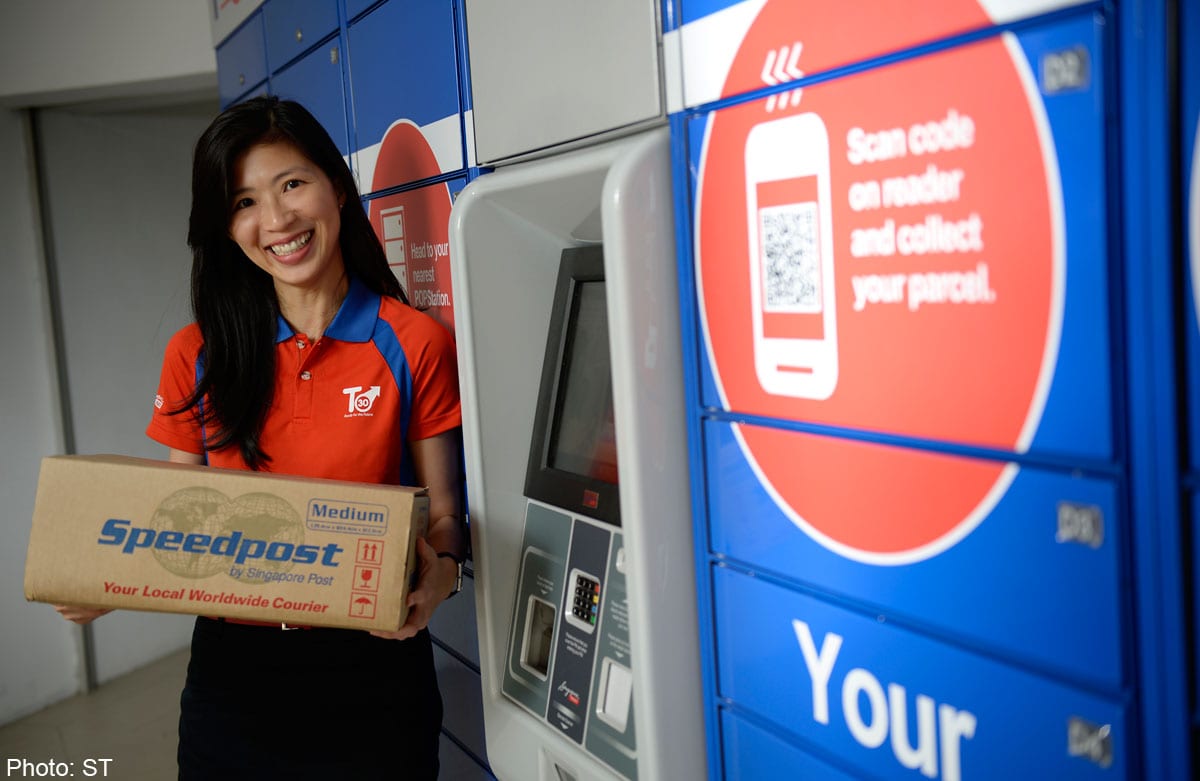
    The Postman is putting its eCommerce business on laser focus as it integrates its logistics limbs TradeGlobal and Jagged Peak to further expand its eCommerce logistics footprint in the US, the largest retail market in the world.

    According to a press release by Singapore Post, the resulting product from the integration would be SP Commerce, a global commerce enabler for brands and retailers.

    SingPost says SP Commerce is a pioneering project in omni-channel enablement for global brands and retailers, and will provide customers easy access to eCommerce markets around the world.

    “The solutions that SP Commerce offer include end-to-end services spanning webstore development and operations, global fulfilment, omni-channel order management, cross-border commerce, performance marketing, and customer care services,” SingPost said.

    Additionally, SingPost said it now provides end-to-end eCommerce logistics solutions to more than 100 mono-brands including Adidas and Calvin Klein.


  • Keppel Land acquires 22.4% interest in 112 Katong

    Keppel Land acquires 22.4% interest in 112 Katong

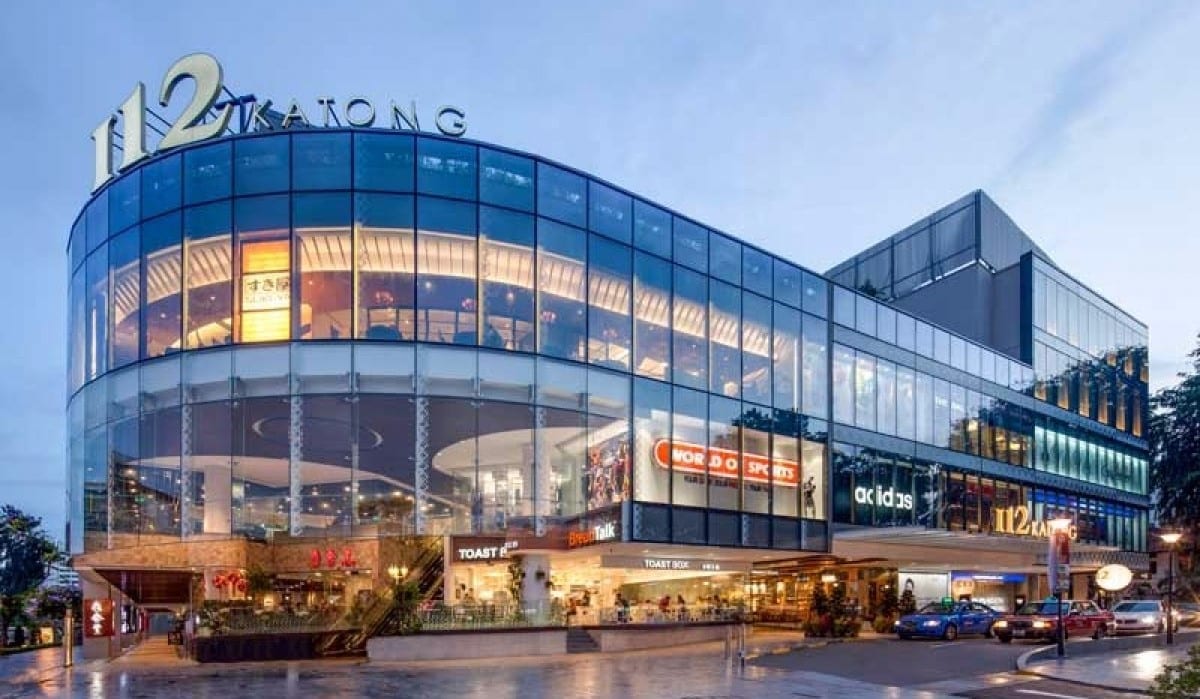
    Keppel Corp’s property arm Keppel Land has acquired a 22.4% interest in 112 Katong Mall from BHG Holdings, Imagine Properties and Perennial Singapore Investment Holdings for $51.4 million in cash. The remaining 77.6% stake is held by a fund managed by Alpha Investment Partners, Keppel Land’s property fund management vehicle.

    Perennial Real Estate’s stake in the mall amounts to 1.46% or $3.4 million. Along with the divestment of its stake in the asset, Perennial Real Estate is also selling its 23% stake in the trust manager of I12 Katong Mall for $1 a share. A Perennial-led consortium had purchased the former Katong Mall for $247.55 million in November 2009. The mall underwent a $70 million asset enhancement exercise that increased its net lettable area by 20% to 206,000 sq ft today.

    “The investment in 112 Katong will add to our quality portfolio of retail and mixed use developments,” said Ang Wee Gee, CEO of Keppel Land in a statement. “We will focus on strengthening the mall’s positioning as a lifestyle and dining destination in the East.”

    Following the acquisition, the mall will be managed by Keppel Land Retail Management headed by Michael Leong, a property veteran with 30 years’ experience in the retail sector. Leong was the former CEO of Array Real Estate, in which Keppel Land acquired a 75% stake in December 2014. Array’s Leong was previously executive director of Guthrie GTS, and over the years, has been instrumental in the development and mall management of 3 million sq ft of retail properties in Singapore such as Jurong Point Shopping Centre, Heartland Mall, Century Square, Tampines One and Tiong Bahru Plaza.

  • Where Chinese tourists are spending their shopping dollar

    Where Chinese tourists are spending their shopping dollar

    Mainland China has become one of the main global suppliers of tourists, and that has been paying dividends for retailers globally.

    But as the Chinese are roaming further afield, Hong Kong and Macau retails have seen their sales dropping.

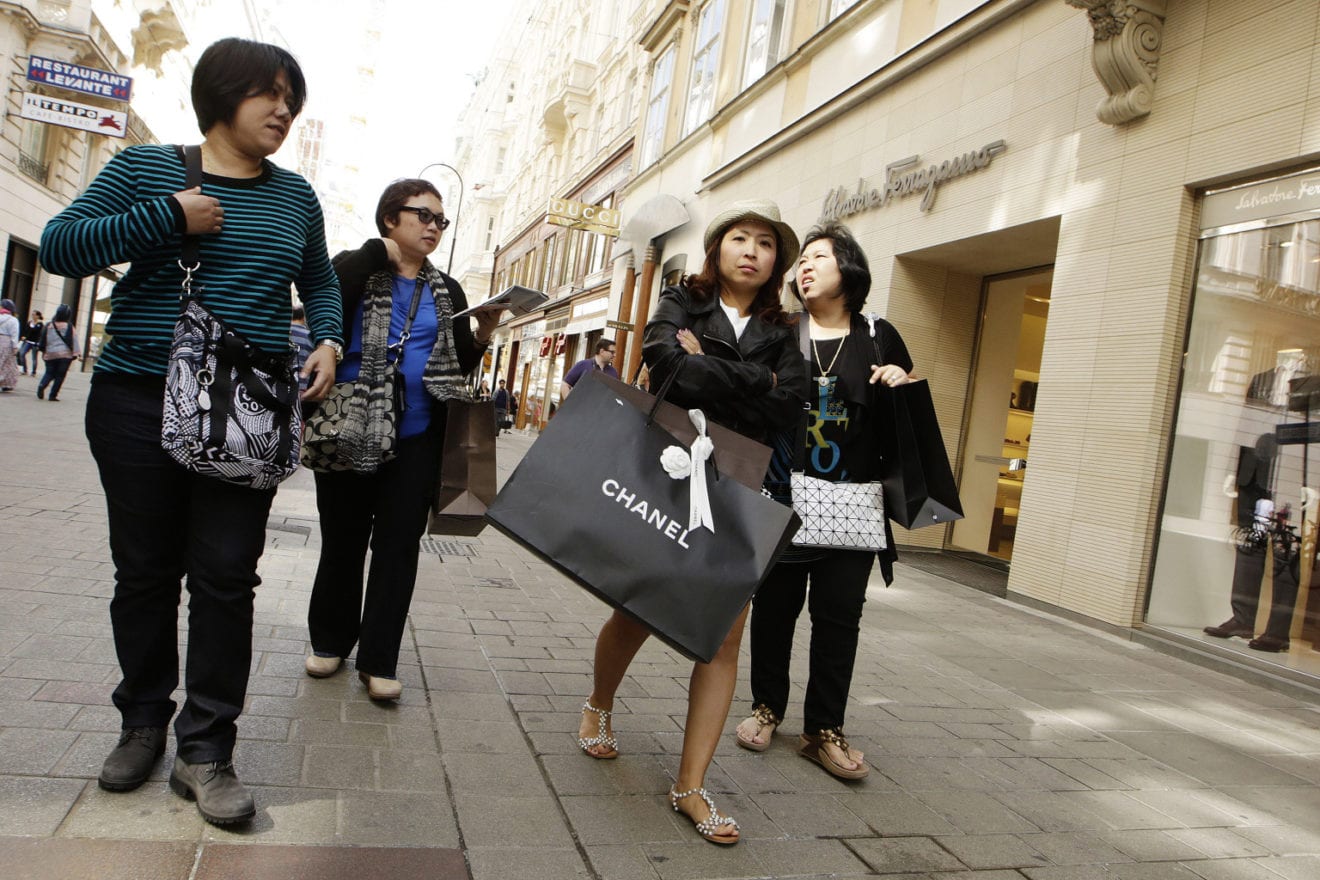
    A fresh analysis from international market research company GFK shows China had 109 million outbound tourists last year… and they spent US$229 billion in retail stores. These statistics consolidate China as one of the main global sources of tourists, both in terms of number of trips and money spent while travelling internationally.

    “At the same time, there have been profound changes in the behaviour of the typical Chinese traveller, with millennials firmly established as the core drivers of spending,” says GFK.

    Because of its cultural similarity, accessibility and lower travel costs, Hong Hong was the preferred destination for Chinese tourists up until 2013. Shopping was a big motivation for visiting. However, since 2014, says the report, more Chinese tourists have been opting for other destinations offering historical and cultural experiences – as well as shopping.

    Air travel and accommodation statistics show that at the start of November, the top five favourite destinations for Chinese travellers were South Korea (visits up 112 per cent since 2011), Thailand (up 263 per cent), Japan (up 157 per cent) and Taiwan (up 54 per cent. Surprisingly, given its loss of retail sales, Hong Kong had 37 per cent more Chinese visitors. This is explained by the new emerging middle class – consumers who do not have enough disposable income to travel further abroad, nor to spend on high-end purchases.

    Europe is the most popular destination outside Asia for Chinese tourists, with 97 per cent more visits in the past four years. This is followed by North America (up 151 per cent) and the Middle East (up 177 per cent).

    “China’s tourists remain strategic to Hong Kong and its businesses, as other destinations are jumping ahead in winning their favour,” says GFK global head of travel and hospitality Laurens van den Oever.

  • Cigarette sales to minors: Shop’s licence revoked

    Cigarette sales to minors: Shop’s licence revoked

    A shop in Bedok has had its tobacco retail licence revoked after it was found to have repeatedly sold tobacco products to minors.

    Two other shops – a 7-Eleven outlet at 523, Bukit Batok Street 52 and Blu Jaz at 11, Bali Lane – have had their licences suspended by the Health Sciences Authority (HSA) for six months for the same offence. Both sold tobacco products to those aged under 18 for the first time.

    The shop whose licence has been revoked, Bedok Goodwill Store – located at 79, Bedok North Road – had already seen its licence suspended for six months in 2012 for the offence.

    Despite that, the outlet continued to sell tobacco products to the underaged, with the most recent case involving three minors in school uniform in two separate incidents on the same day, the HSA said in a press release yesterday .

    The seller also took the opportunity to profit from the sales by selling the cigarettes at a higher price than the actual retail price, it added.

    The shop’s licence was revoked on Dec 10 last year, meaning it is no longer allowed to sell tobacco products, the release said.

    The HSA said the three sellers, all employees of the three respective shops, failed to check the ages of the minors before selling them the tobacco products.

    They were caught following the HSA’s ground surveillance and enforcement activities.

    The authority has reminded licensees that they are responsible for all transactions of tobacco products at their outlets, and for the actions of their employ-ees.

    Anyone convicted of selling tobacco products to those aged under 18 faces a fine of up to $5,000 on the first offence, and a fine of up to $10,000 for subsequent offences.

    In addition, the tobacco retail licence will be suspended for six months for the first offence, and revoked for the second.

    However, any outlet found selling tobacco products to anyone aged under 18 in a school uniform, or anyone below 12 years of age, will have its licence revoked, even for the first offence.

    Twenty-five licences have been suspended and 22 revoked in the last three years, the HSA said.

    A list of these retailers can be found on the HSA’s website (www.hsa.gov.sg) under Health Products Regulation.

    Anyone with information on the illegal sales of tobacco products to minors can call the Tobacco Regulation Branch on 6684-2036 or 6684-2037 during office hours.


  • Tanjong Pagar Centre: New tallest building in Singapore after 20 years

    Tanjong Pagar Centre: New tallest building in Singapore after 20 years

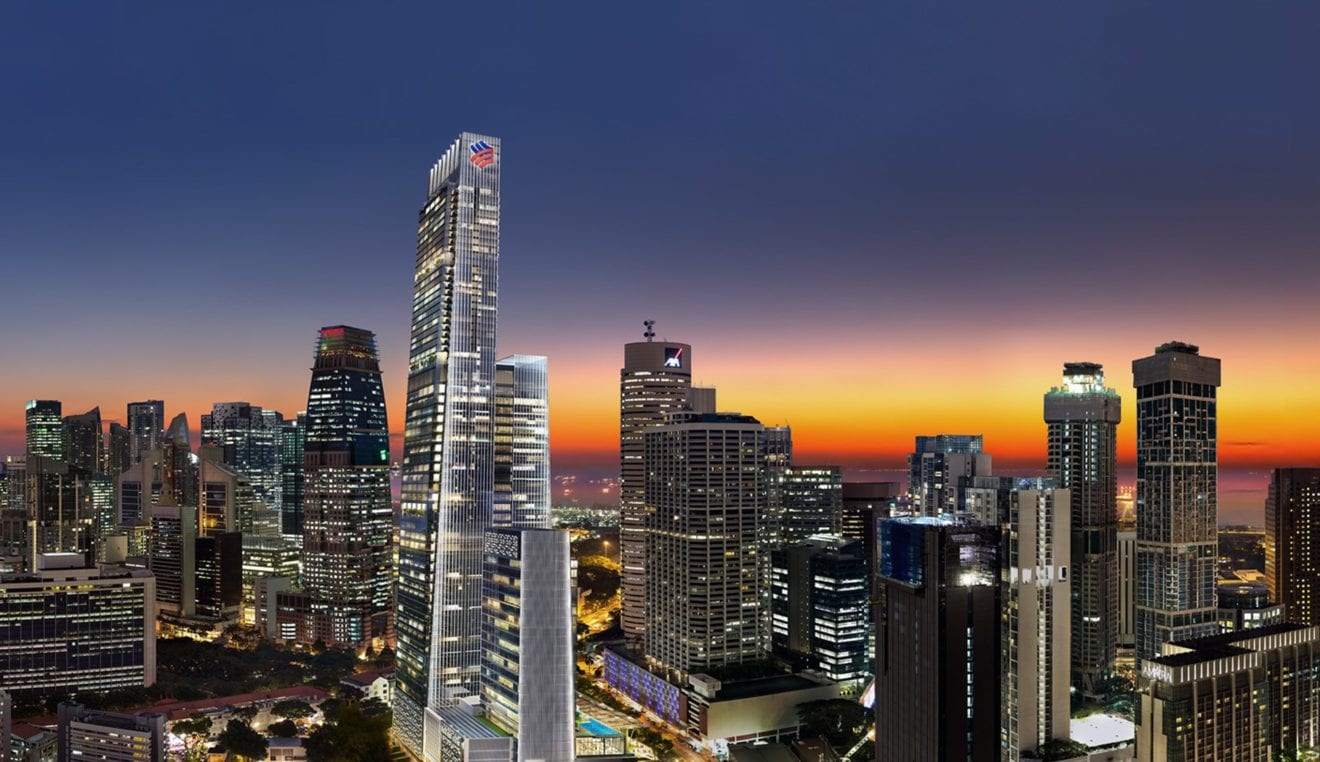
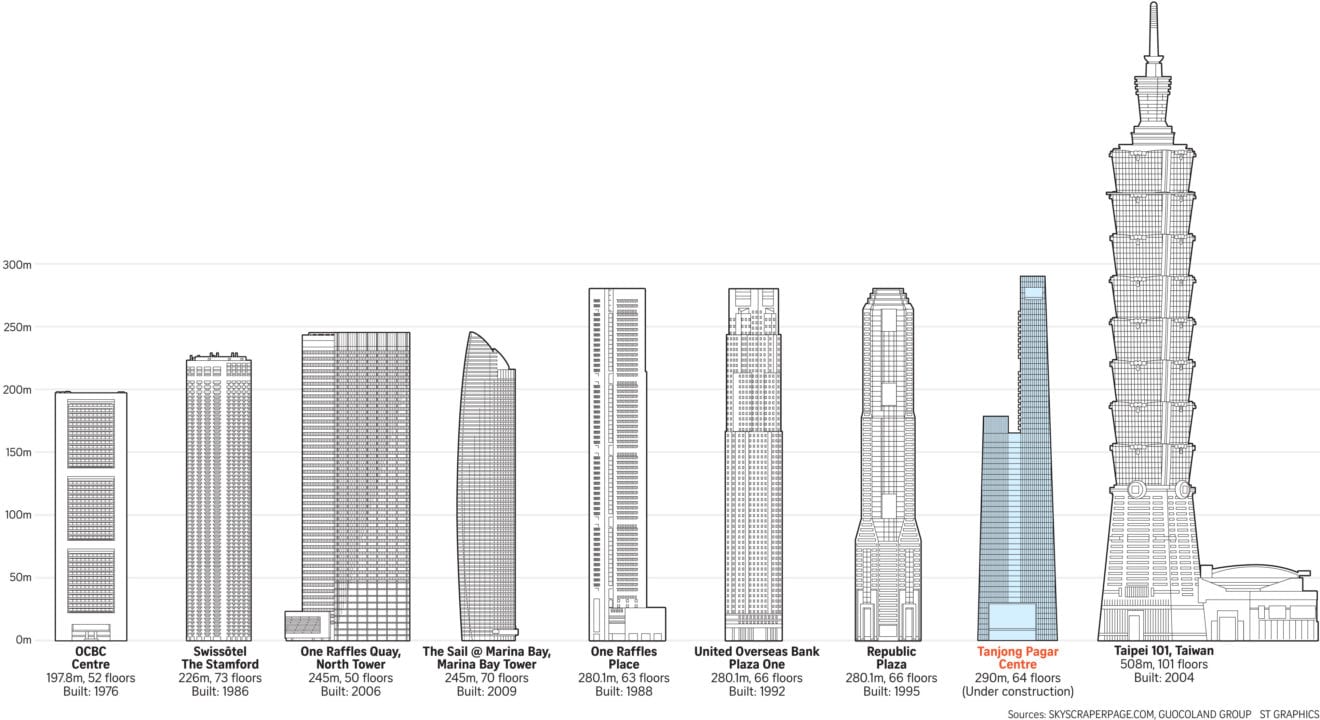
    It’s a record that has held for more than 20 years but by the middle of the year, Tanjong Pagar Centre will claim the title of the tallest building in Singapore – even if it is by just 10m.

    At 290m, Tanjong Pagar Centre will tower over the central business district, displacing UOB Plaza One, One Raffles Place and Republic Plaza, which had jointly held the title.

    The three buildings are about 280m tall – One Raffles Place was completed in 1988, UOB Plaza One in 1992 and Republic Plaza in 1995.

    But the buildings here pale in comparison to some of their overseas counterparts. The tallest building in the world is the 829.8m Burj Khalifa in Dubai; nearer home in Taiwan, Taipei 101 reaches 508m, almost double the height of Tanjong Pagar Centre.

    Last week, Tanjong Pagar Centre’s developer GuocoLand held a topping out ceremony, with National Development Minister Lawrence Wong as guest of honour.


    Sources: SKYSCRAPERPAGE.COM, GUOCOLAND GROUP ST GRAPHICS

    The 64-storey development, which cost $3.2 billion, comprises Guoco Tower, or 890,000 sq ft of Grade A office space; 100,000 sq ft of retail and food and beverage space; a 100,000 sq ft urban park; a 181-unit luxury residential component Wallich Residence; and the 222-room Sofitel Singapore City Centre hotel.

    The take-up rate at Guoco Tower is about 10 per cent. Tenants who have signed on include DNB Asia, Hong Leong Bank, Open Link and Regus. The company is in advanced discussions with tenants who could potentially form another 40 per cent of demand.

    While the office leasing market is not as exuberant as several years ago, there is still activity – from companies looking to upgrade, contract or expand, GuocoLand Singapore managing director Cheng Hsing Yao told reporters yesterday.

    Many interested parties are looking for half a floor, or a floor or two, and they tend to sign on closer to when the building is completed and they can see the product, he said.

    The retail component is 60 per cent committed, with gym operator Virgin Active as the anchor tenant.

    As for Wallich Residence – which was recently renamed from Clermont Residence, to honour its street address – 16 units have been sold since its soft launch at an average price of about $3,200 per sq ft.

    But while the building is the tallest in Singapore, Mr Cheng said it was not given a lofty name because GuocoLand wanted the building to reflect its surroundings.

    “It goes back to why we were interested in this piece of land… It is geographically in the heart of the district, which has offices, residences and hotels, and heritage shophouses… The name will grow and we are confident that we will create a transformation in Tanjong Pagar,” he said.

    And now that the building is close to completion, Mr Cheng said he had seen the view from the top and “it was really amazing”.

  • Singapore’s hip enclave Dempsey stays fresh with bigger, better offerings

    Singapore’s hip enclave Dempsey stays fresh with bigger, better offerings

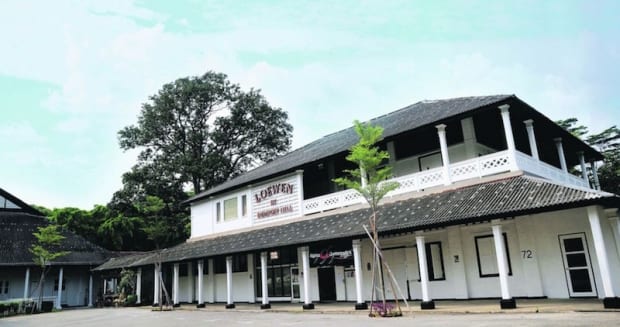
    The new Loewen cluster by Dempsey Hills. — TODAY pic

    The new Loewen cluster by Dempsey Hills.

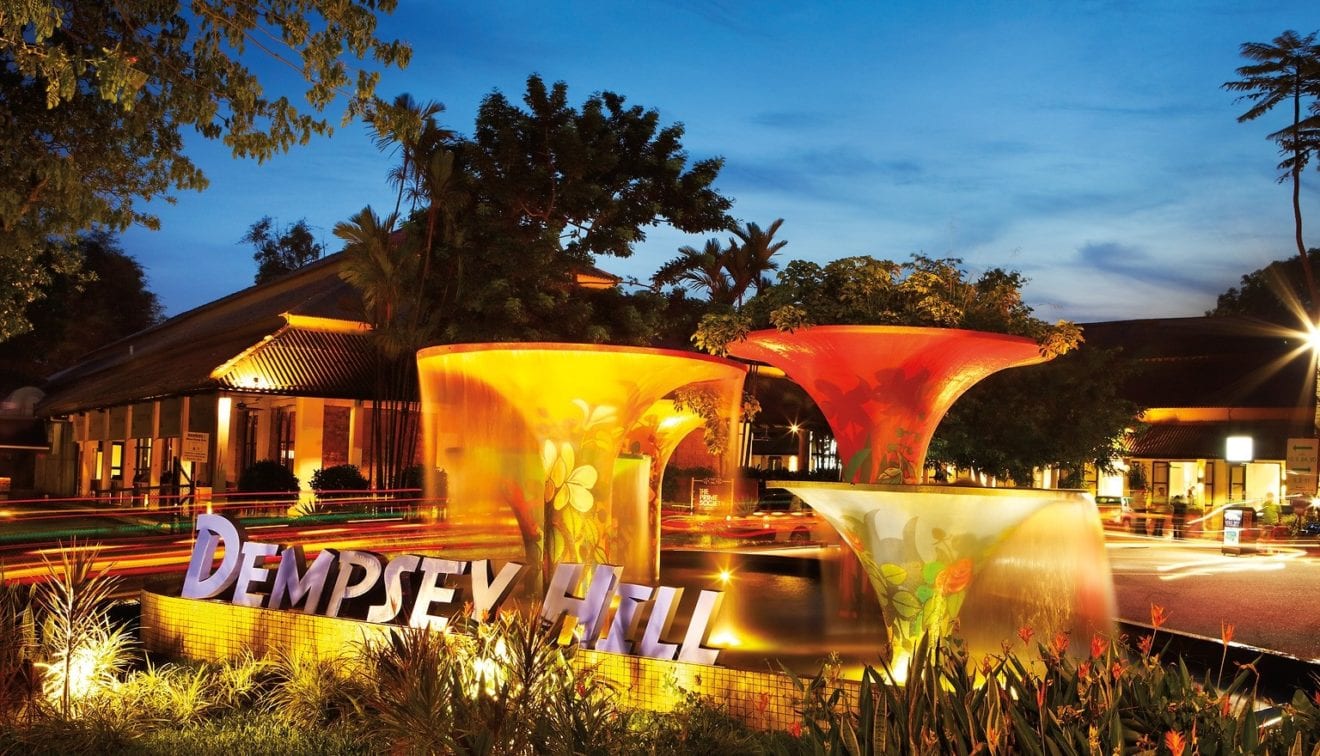
    Quick, name us the coolest hot spots in Singapore. Chances are, you’ll be rattling off places such as Telok Ayer, Keong Saik and even Tiong Bahru. But what about the Dempsey area? Well, while it has become more of a leisurely family weekend destination in recent years, further transformation is in the pipeline and Dempsey is beginning to have a buzz again.

    Last month, it was announced that COMO Lifestyle by Club 21 fashion doyenne Christina Ong won the bid to develop two blocks in Dempsey with its proposal to open fashion concept store Dover Street Market, a Jean-Georges Vongerichten restaurant and bar, and COMO Cuisine, a new restaurant concept.

    This comes hard on the heels of a string of other high-profile developments in the neighbourhood: In November, Loewen by Dempsey Hill, a new cluster best known for being the venue for Chanel’s first Cruise collection show in Asia in 2013, opened. It now houses 13 new tenants with an emphasis on family and educational offerings such as Tanderra, a clubhouse for families with facilities for both kids and adults, as well as Impressions Art Studio, Alpha Gymnastics and Little Mandarins. Events held there have also taken a family-friendly slant, such as a Christmas market and an upcoming Chinese New Year kids’ fashion show and fair, from January 21 to 23.

    Meanwhile, Huber’s Butchery relocated to Block 22 in October. Its new two-storey 13,000sqft home is twice the size of its former address at Block 9, allowing Huber’s to have an outdoor playground for kids, a demonstration kitchen for cooking classes, a staggering selection of 150 varieties of cheese — said to be the largest in town — as well as the longest meat and sausages counter in Singapore at more than 40m long. Portico launched its second outlet Portico Prime at Block 10 in November featuring a more upmarket repertoire of dishes and a Chef’s Table. One Michelin-starred chef Carles Gaig from Barcelona also quietly opened an outpost at Block 16A called La Ventana in June.
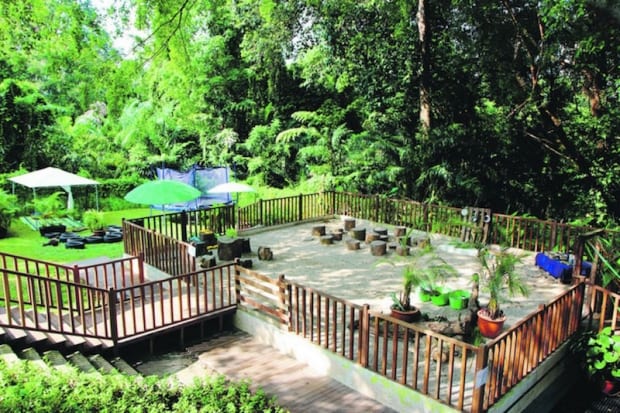
    Think of Tanderra as a clubhouse for families with everything you need for a fun, relaxing day out. — TODAY picThink of Tanderra as a clubhouse for families with everything you need for a fun, relaxing day out. — TODAY picAnother new entrant is Open Farm Community. This latest baby from the Spa Esprit Group is not simply a restaurant — it is, as its name suggest, a farm and a community hub educating diners about the origins of food. The restaurant is popular with the brunch crowd since it opened in July, and has since organised several events such as ice cream and sauce masterclasses, as well as its popular Social Market held every second weekend of the month.

    Discovering more

    For a Dempsey stalwart such as the Spa Esprit Group, which has been here since establishing House in 2007, these changes are a sign of how the area has matured. Lifestyle maven and founder of the group Cynthia Chua recalled how Dempsey was like “a big isolated enclave in the middle of the city” when she made her foray here. “When Dempsey first started, the F&B scene here was still at its infancy stage; indie cafe culture was just beginning. I love (how Dempsey has) the seafood mass hall concept juxtaposed with creative cafes and kid-friendly places, ice cream parlours and spas. The variety of brands reached out to the diversity of the crowd. This diversity made Dempsey a success. It was original,” she said.

    Executive director of Huber’s, Andre Huber, concurred. Having been in Dempsey since October 2008, Huber said the area has definitely changed over the years from “a quiet laidback place to a more vibrant shopping and F&B area with unique concepts”.

    Of course, housing these concepts in colonial buildings amid lush greenery helps tremendously. “This created a unique and delightful urban sanctuary that cannot be found anywhere else in Singapore,” added Nicholas Ng, general manager of Country City Investments, which manages Dempsey Hill and Loewen by Dempsey Hill.
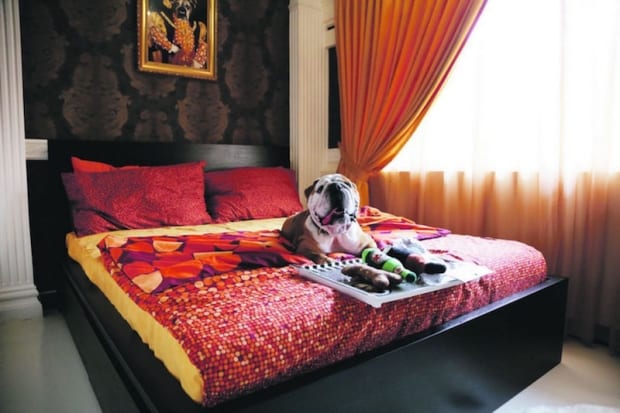
    The Royal Suite of The Wagginton Pet Hotel. — TODAY picThe Royal Suite of The Wagginton Pet Hotel. — TODAY picAnd it’s not just locals who appreciate this charming diversity. Ranita Sundramoorthy, director, Attractions, Dining and Retail, Singapore Tourism Board, said visitors enjoy Dempsey Village as a tranquil hideaway with a distinct character and nearby attractions such as the Orchard Road shopping belt and Singapore Botanic Gardens.

    This is why Country City Investment has taken the opportunity to get Singaporeans and travellers more familiar with the enclave by launching Dempsey Walking Trails. The four trails aim to take visitors through its nature and heritage as well as its food, lifestyle and kid-friendly options. Downloadable maps also offer interesting factoids such as how Loewen by Dempsey Hill used to be the Tanglin Military Hospital and was once also the home of the SAF Music and Drama Company.

    Coming attractions

    Still, there’s no denying the huge boost that comes from having internationally renowned names such as COMO and Dover Street Market. Sundramoorthy expects the COMO Lifestyle Cluster to “significantly contribute to the vibrancy of Dempsey and Singapore’s tourism scene”, especially since brands such as that of the Jean-Georges Vongerichten restaurant are not available in South-east Asia.

    Dempsey’s tenants welcomed news of the COMO Lifestyle cluster. Country City Investment, which is the biggest player in the enclave, doesn’t foresee COMO’s upmarket and fashionable positioning affecting the family-friendly destination. Instead Ng feels this is “win-win situation” as the tenant mix is complementary.
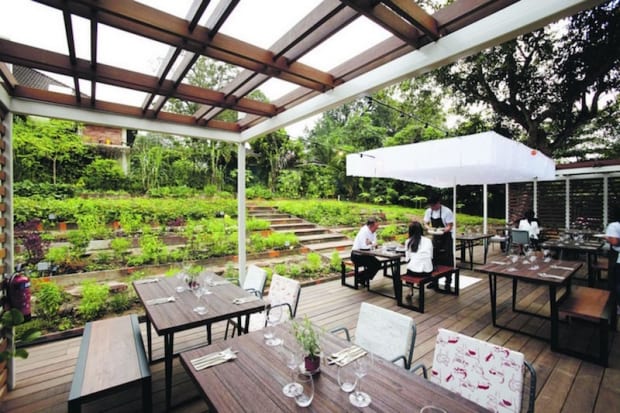
    Live out your farmer fantasies at Open Farm Community. — TODAY picLive out your farmer fantasies at Open Farm Community. — TODAY picAnd even though the well-loved House is a similar lifestyle hub with a spa and beauty emporium in the same building, Chua feels there won’t be any competition with the COMO Lifestyle cluster. “House is about familiarity, comfort food reinvented and a laidback green space that is unique, while COMO targets the high-end luxury crowd,” she pointed out. To keep guests intrigued as House turns 10 next year, Chua’s team recently introduced a revamped high tea offering while a new menu of comfort foods with a distinct Singaporean spin is currently in the works.

    Fans of Dempsey don’t expect the area to transform too much with the addition of the COMO Lifestyle Cluster. “Each restaurant and block in the Dempsey area is pretty self-contained. I’d probably check out Dover Street Market when it opens, but I don’t think it will change the vibe of Dempsey,” said Shirlie Tang, an events manager. “I’d still hang out at my usual familiar places, like PS.Cafe and RedDot BrewHouse.”

    A spokesperson from COMO Lifestyle declined to comment when the COMO Lifestyle Cluster will be ready. In the meantime, there is more than enough indulgences to keep consumers glutted.
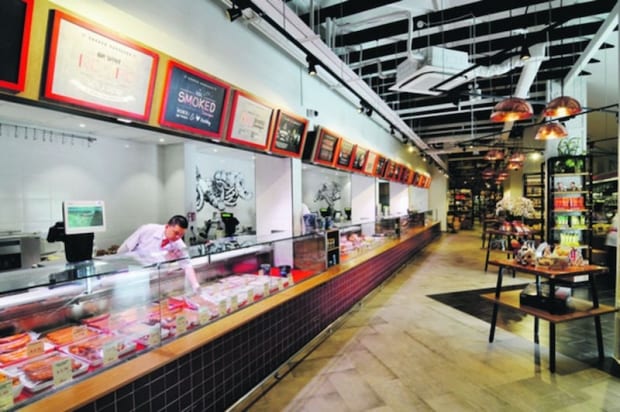
    Huber’s Butchery has the longest meat and sausage counter in Singapore at 40m. — TODAY pic

    Huber’s Butchery has the longest meat and sausage counter in Singapore at 40m.


    New fun outlets to check out at Dempsey:

    Tanderra (73 Loewen Road, #01-21. Tel: +65 6509 3468)

    Its name is an Aboriginal word for “resting place”, and what a resting place it is. This family clubhouse has pretty much everything you want to while away the day with the family. Besides catering to kids with play ateliers and swimming pools, Tanderra boasts a spa, a cosy cafe and multi-purpose rooms for yoga and Zumba lessons.

    Anjali Chocolate (73 Loewen Road, #01-15/16. Tel: +65 6509 6800)

    Craving for handmade chocolates? Besides picking up a gift of chocolatey goodness, you can sign up for workshops and learn how to make truffles and other chocolate treats. Birthday parties and baby showers can also be held here.

    Swish! Swimming School (72 Loewen Road, #01-08. Tel: +65 9832 2522)

    Three words: Temperature-controlled pools. Yes, the pools here are designed to be shiver-free at 32 degrees Celsius, ideal for little ones learning to take to the water. SWISH! Swimming is also a gold-accredited AUSTSWIM school (Australia’s national organisation for the teaching of swimming and water safety) and founder Kristen Romain is an AUSTSWIM Assessor for coaches.
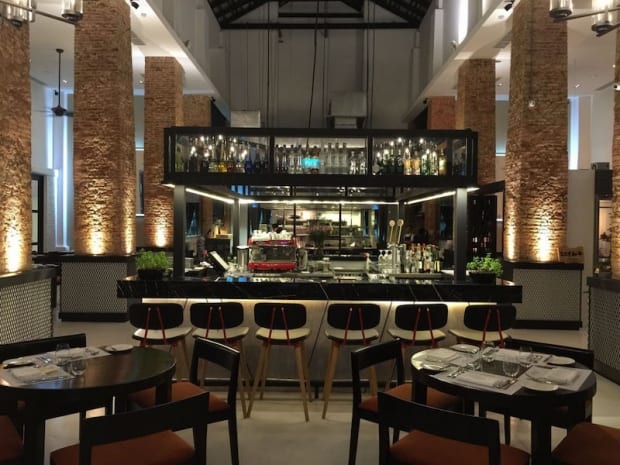
    Portico Prime features a more upmarket repertoire of dishes and a Chef’s Table. — TODAY picPortico Prime features a more upmarket repertoire of dishes and a Chef’s Table. — TODAY picThe Wagington Luxury Pet Hotel (27B Loewen Road. Tel: +65 6471 1689)

    Wagington isn’t kidding when it says it’s a luxury hotel for furry friends. There is a bone-shaped pool with cabanas and parasols for dogs and an outdoor garden with a high-speed air-cooler system to ensure pampered pooches remain cool. Rooms are also equipped with CCTV so pet owners can check in with their beloved anytime. Demand is off the charts so book early.

    Open Farm Community (130E Minden Road. Tel: +65 6471 0306)

    Part farm, part social project, Open Farm Community aims to educate the community about the origins of its food while promoting urban farming and local produce in a delicious setting. Food aside, the restaurant plays host to markets and workshops, and has a dedicated kids’ area.

    Huber’s Butchery (22 Dempsey Road. Tel: +65 6737 1588)

    Huber’s expansive new space now boasts a shady playground for tykes in tow when you’re dining at its 50-seater bistro. It has become more of a gourmet superstore, stocking exclusive craft beers such as Chopfab from Switzerland and Bruce Cost ginger ale from the United States. There are also veggies, fruits and herbs flown in from Australia and cooking classes such as a shabu shabu session at its kitchen studio Tanderra. — TODAY
  • First Singapore Apple Store starts construction

    First Singapore Apple Store starts construction

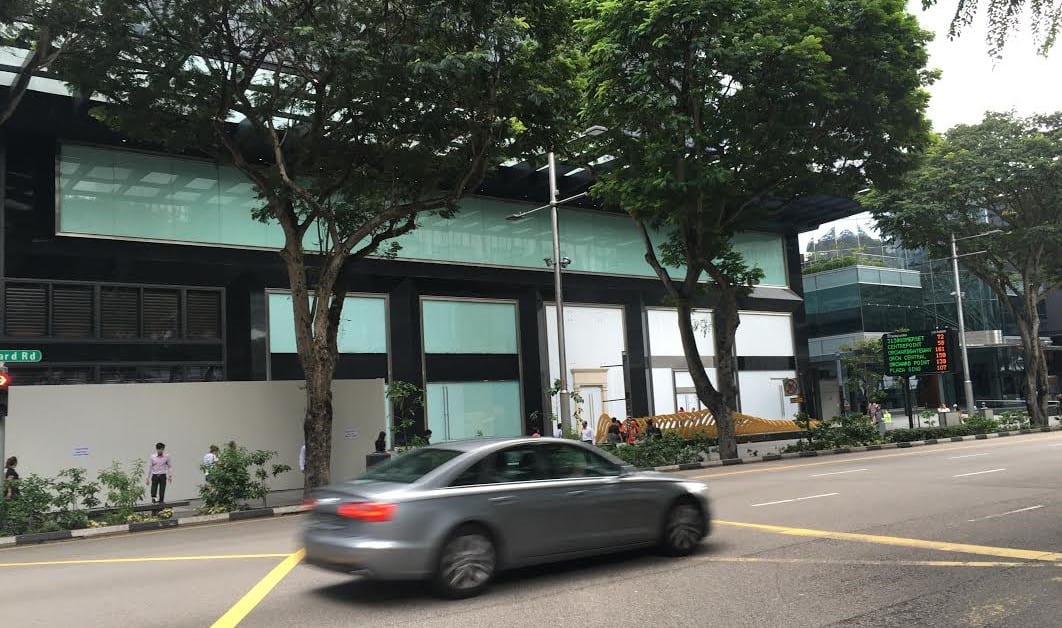
    Singapore’s first Apple Store is taking shape on Orchard Road – not that anyone would notice.

    To keep the design a secret ahead of its grand opening later this year, the company is taking its usual security of measure of keeping the site under wraps, reports iphonehacks.com. There is no sign of the Apple logo.

    In the Knightsbridge retail centre, the store was previously the Pure Fitness gym, which vacated last month. Nearby stores include Tommy Hilfiger and Tangs.

    Despite its low-key approach, Apple has confirmed it will be opening its first retail store in Singapore. “We have more than 900 incredible employees working in our Singapore contact center and are thrilled to begin hiring the team that will open our first Apple Store in Singapore,” Apple retail guru Angela Ahrendts said in a statement last year.

    Iphonehack.com says the debut Singapore store may be powered by renewable energy, possibly solar power. Meanwhile, Apple has posted job vacancies on its website, including business manager, business specialist and Apple Store leader.

  • National Gallery Singapore teams up with & Co to create a dynamic lifestyle space

    National Gallery Singapore teams up with & Co to create a dynamic lifestyle space

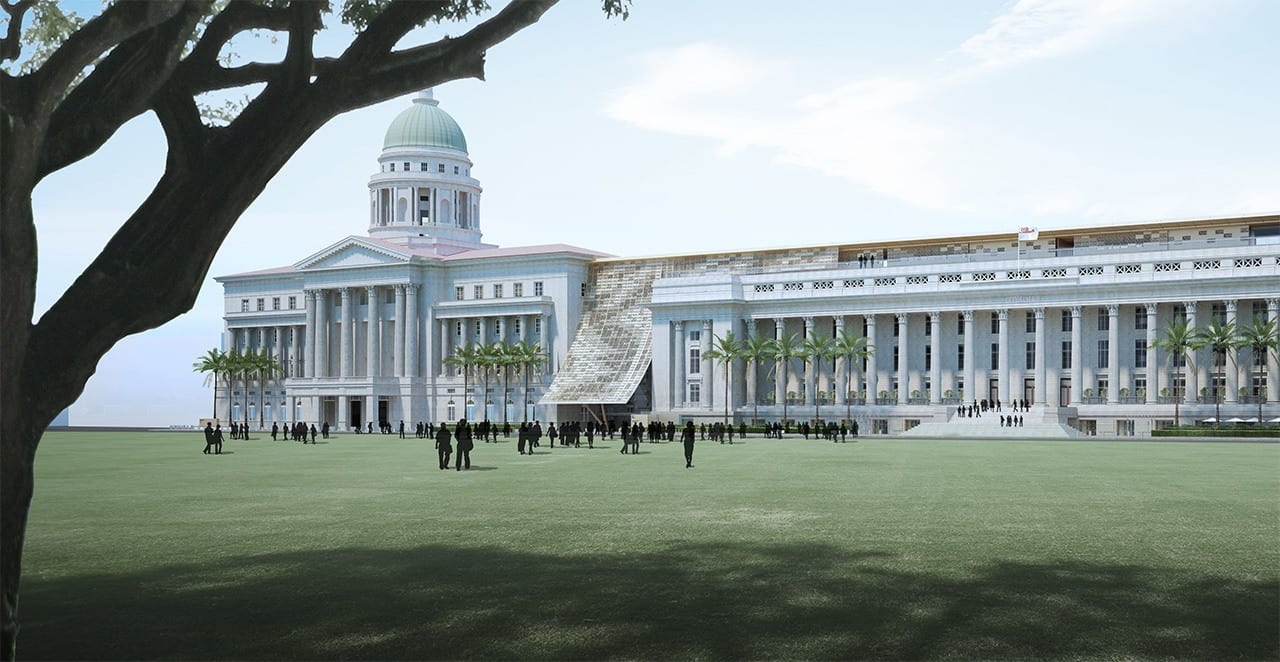
    The National Gallery Singapore and & Co just reinvented the museum store. Located on the ground floor of the newly opened museum, the lifestyle concept space, named Gallery & Co, fuses together several different elements. Comprised of a retail shop, a casual dining area that serves organic bites and a gallery, Gallery & Co seeks to engage museum visitors through its vast offerings. The gallery tapped creative collective & Co to curate and design the space. The retail area features platforms covered in grids, stripes and polka dots, while the cafe consists of clean lines and a green tile floor.

    ‘Each space has its unique aesthetic catering to a different product category and customer type, ensuring relevance and engendering engagement. They are all unified by the custom-designed grey tiles and blue-grey columns,’ says Yah-Leng Yu, co-founder of & Co and the Foreign Policy Design Group.

    The retail shop carries both international and local fashion and design brands, such as French fashion label Kitsuné and Singaporean jewellery brand Argentum. The shop also holds special collaborations between brands and the museum, like the timepiece made collaboratively with Japanese solar watch company Q&Q. The gallery will also exhibit emerging artists.

    ‘Our objective for doing the store was really to make it a living and evolving space, and the idea of the retail store was to really inspire people to be creative. That’s what the museum is for, to bring the public here, and to inspire them through art – and that’s what we aim to do in our store,’ said & Co co-founder Alwyn Chong. ‘That’s why we don’t sell the regular museum souvenirs – really we are about collaborating, about bringing people together, and about creating something special.’

  • Singapore developer plans healthcare hubs in 20 to 40 Chinese cities

    Singapore developer plans healthcare hubs in 20 to 40 Chinese cities

    Less than a year after making its first foray into China’s healthcare sector, Singapore developer Perennial Real Estate Holdings has now set ambitious goals for itself: to set up integrated healthcare hubs in 20 to 40 Chinese cities.

    The concept will be similar to that of the Perennial International Health and Medical Hub in south-western Chengdu city, which is touted as the largest integrated healthcare development in western China with 280,000 sq m of gross floor area.

    Located next to the Chengdu East high-speed rail station, the hub will include eldercare homes, hotels, serviced apartments, commercial offices and retail.

    Perennial chief executive officer Pua Seck Guan said at a briefing yesterday that the company is already in talks over similar projects in several cities.

    He hinted that they are provincial capitals and located in the western regions.

    “The projects should be located around transportation hubs to reach a sizeable population. Also, a capital city can provide sufficient human resources for hospitals,” said Mr Pua, at a media briefing yesterday after Perennial secured key tenants for its Chengdu project.

    Perennial, whose businesses were largely retail, residential, office and hotel till its entry into healthcare last July, entered a joint venture on Thursday with two Chinese firms – Shanghai Summit and Shanghai RST Chinese Medicine – to operate the eldercare segment of its Chengdu hub.

    Yesterday, Singapore healthcare operator Parkway Pantai held a lease-signing ceremony to set up the ParkwayHealth Chengdu Hospital that will occupy 48,000 sq m and provide up to 350 beds.

    It will be the first foreign tertiary hospital in western China and also a first for Parkway Pantai, which is a subsidiary of IHH Healthcare, the world’s second-largest healthcare operator by market capitalisation.

    Parkway Pantai Group CEO Tan See Leng said in his speech that the company is investing 900 million yuan (S$197 million) into the hospital, which is targeted to open next year. He added that the company decided to expand into Chengdu as it is one of the fastest-growing cities in western China and that the location at the Chengdu East rail station is ideal, providing transport to some 148 million people within a two-hour train ride.

    Mr Pua said Perennial and Parkway are working together because they are familiar with each other’s strengths, which is crucial for their first healthcare project and first hospital in China, respectively.

    Now with the key tenants settled, the next step is to ensure that the hub, which is set to complete construction this year, would be able to provide top-notch medical treatment and quality service, said Mr Pua.

    He also outlined potential challenges, such as the need to keep costs low as Perennial has to operate the hub over time, instead of just building and selling properties.

    “Another challenge is to win stakeholders in those cities over to our concept.”

  • Singapore rents dip, says DTZ Research

    Singapore rents dip, says DTZ Research

    First-storey rents throughout SIngapore have fallen by 1.2 per cent to about $30.50 a square foot, according to the DTZ Research South-east Asia fourth-quarter report on the retail sector.

    This is the third consecutive decline since the second quarter of last year, says the report, released today. For the whole of 2015, average first-storey rents fell at a faster pace (5.9 per cent) compared to the 0.3 per cent decline the previous year. The fall was mainly attributed to weakened consumer sentiments amid uncertain global economic conditions.

    Orchard Road rents were the most resilient. Average first-storey rents in Orchard and Scotts Roads saw a more gentle decline than other areas, falling by 1 per cent quarter-on-quarter and 5 per cent year on year to $38.05 a sq ft in the fourth quarter. The Orchard/Scotts Road rates were buoyant because of the likelihood of no new completions for the next four years. Only pockets of new retail spaces will be added through asset enhancement initiatives and other mixed-use projects.

    Average first-storey rents in suburban areas were relatively resilient, says the report, dipping by 1.2 per cent q-o-q and 5.7 per cent y-o-y to $30.70 a sq ft in the same period. In contrast, average first-storey rents in the other city areas had a greater decline – 1.4 per cent and 6.9 per cent to about $21.80 a sq ft, mainly because of the dependence on the weekday office crowd for sales volume.

    Although islandwide rental values have softened over the past year, occupancy rates stayed healthy for the first three quarters of last year as landlords become more flexible. In fact, according to the latest Urban Redevelopment Authority statistics, overall retail occupancy inched up 0.3 per cent to 92.1 per cent in the third quarter. Occupancy rates in Orchard/Scotts Road were unchanged at 92 per cent q-o-q in Q3, while rates edged up in the other city and suburban areas by 0.6 per cent q-o-q and 0.1 per cent y-o-y to 90.6 and 93.1 per cent respectively.

    Looking forward, says the DTZ report, expected completions this year coupled with consumer sentiment are expected to exert further downward pressure on rental values, especially in the other city areas. About 743,000 sq ft of net lettable area (NLA) of retail space (or 60 per cent of the 1.2 million sq ft of NLA in this year’s pipeline) will be added to the existing stock of retail space in other city areas. This is more than double the annual net demand (302,000 sq ft) for retail space in other city areas between 2009 and 2014. Retail developments heading for completion in the other city areas include OUE Downtown Gallery, The Heart at Marina One and Tanjong Pagar Centre, each a mixed-use development comprising more than 100,000 sq ft of retail NLA.

    “While the pending completions will pressure retail rents in other city areas to fall, the decline is likely to be temporary,” says DTZ director of research Dr Lee Nai Jia. “We anticipate retail rents will recover when the residential components in the mixed-use developments receive their temporary occupation permits. The increase in resident population in the other city areas will support the retail trade.”

    Despite many retail completions lined up for the new year, 2015 also saw the exit of such brands as Goods of Desire, Lowrys Farm and M)phosis because of the challenging operating environment within the retail sector. Additionally, big players like Isetan, FJ Benjamin and Metro also reported disappointing sales figures in the same period. In a bid to revitalise the retail scene, landlords have collaborated with online retailers such as Zalora and Love Bonito via pop-up stores to reignite consumer interest. During the year, brick-and-mortar retailers extended their market outreach by adopting omnichannel marketing amid competition from e-commerce.

    “With the softer market, landlords have certainly become more open to exploring new retail concepts,” says DTZ director of retail Anna Lee. “As landlords become more flexible, brick-and-mortar retailers have more leeway to experiment with new retail offerings to improve the overall shopping experience.”

    Anna Lee cites the launch of Café&Meal Muji in September at Paragon, next to its Muji store. After opening the F&B outlet, Muji recorded a y-o-y increase of about 40 per cent in its store sales. At the same time, lifestyle concept store Latulle also introduced a full-service cafe.

  • Singapore retail sales up 4.7% year-on-year, boosted by car sales

    Singapore retail sales up 4.7% year-on-year, boosted by car sales

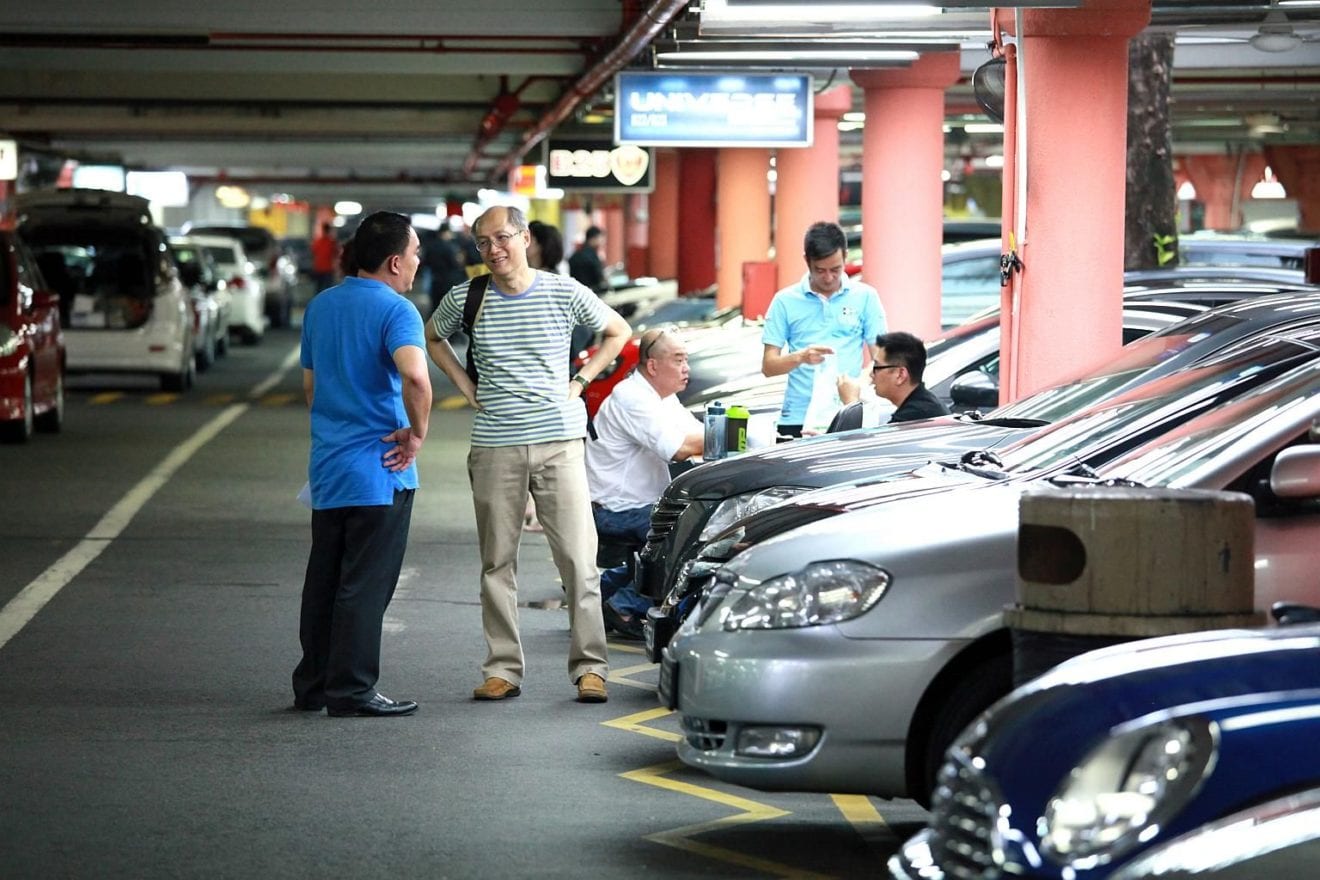
    ONCE more, a massive double-digit surge in motor vehicle sales pulled up Singapore’s retail sales in November. In year-on-year terms, retail sales grew 4.7 per cent, according to data released by the Department of Statistics on Friday.

    Excluding the significant 59.7 per cent jump in car sales, retail sales would have actually fallen 2 per cent.

    The total retail sales value in November 2015 was estimated at S$3.5 billion, higher than the S$3.3 billion in November 2014.

    Apart from car sales, only two other segments – department stores and medical goods and toiletries – experienced growth. The former rose 1.3 per cent year-on-year in November, and the latter, 9.6 per cent.

    All other segments reported a slippage in retail sales, with the worst-performing category being petrol service stations, with a 15.8 per cent drop. Food and beverages followed, with a 11.4 per cent decrease.

    On a seasonally-adjusted basis, retail sales increased 1.4 per cent in November over the previous month.

    Excluding motor vehicles, however – sales of these fell 0.6 per cent month-on-month – retail sales would have increased a larger 1.9 per cent from October.

  • Singapore retail sector kept at ‘neutral’ by OCBC, picks Sheng Siong, Thai Bev

    Singapore retail sector kept at ‘neutral’ by OCBC, picks Sheng Siong, Thai Bev

    OCBC reiterates its “neutral” stance on Singapore’s retail sector, but says opportunities exist in companies that are able to weather the current gloomy sentiment.

    The house notes that the year has started on a bleak note with volatile stock markets and a World Bank report flagging continued fears over developing economies, especially China.

    Singapore reported stronger fourth quarter growth, but the economy logged its lowest pace of growth in six years in 2015.

    OCBC believes its “picks in the sector exemplify stability and are able to ride out the gloomy sentiment.”

    OCBC has “buy” recommendations on Sheng Siong Group, QAF and Thai Beverage.