Tag: Singapore

  • Calm water for Singapore’s CapitaLand Mall Trust quarter

    Calm water for Singapore’s CapitaLand Mall Trust quarter

    CapitaLand Mall Trust Management (CMTML), the manager of CapitaLand Mall Trust (CMT), says CMT has achieved a distributable income of S$103.5 million (US$75 million) for the quarter to September 30. That marks an increase of 4.9 per cent over the $98.7 million for the same period last year.

    Year to date, distributable income was $302.5 million, an increase of 3.3 per cent.

    CMTML CEO Tony Tan says the portfolio continued to deliver stable returns during the quarter, despite uncertain market conditions. Occupancy was 98.5 per cent, “well above the market occupancy level of 92.7 per cent”, he said.

    Asset enhancement initiatives to uplift the customer experience at Tampines Mall and Westgate are on track to complete in the fourth quarter of this year.

    During the third quarter, CMT’s gross revenue and net property income rose by 0.7 per cent and 1.1 per cent respectively year-on-year. Gross revenue was higher from Junction 8, IMM Building, Plaza Singapura, Bedok Mall and Tampines Mall, partially offset by lower gross revenue from Sembawang Shopping Centre, which was sold in June, and lower occupancy and rental rates contracted on new and renewed leases from JCube and Bukit Panjang Plaza.

  • WeChat Pay to be ready in 7-Eleven, Guardian Singapore

    WeChat Pay to be ready in 7-Eleven, Guardian Singapore

    Customers of 7-Eleven, Cold Storage and Guardian stores in Singapore will soon be able to pay for purchases using WeChat Pay. The owner of the two retail chains, Dairy Farm Group, has worked with NETS to enable visitors from China and Chinese nationals based in Singapore to use the service from November 1.

    WeChat Pay is currently being trialled at the 7-Eleven and Guardian stores at Changi International Airport and some stores in key tourist destinations in the Orchard and Chinatown districts.

    According to the Singapore Tourism Board, visitors from China increased by almost 13 per cent, from 2.8 million in 2016 to 3.2 million last year. The partnership between Dairy Farm Singapore and NETS together with WeChat will enable Singapore’s largest multi-format retailer to better cater to the growing number of China visitors, by offering visitors a convenient way to pay when they shop in Singapore.

    Head of merchant services at NETS, Alvin Seck, said working with payment partners like WeChat and retailers like Dairy Farm Group enables NETS to roll out new payment services for consumers quickly while minimising adoption costs for merchants.

    “With this partnership, 7-Eleven and Guardian in Singapore along with Cold Storage and Giant can just make use of its existing NETS uPOS terminals to accept WeChat Pay, in addition to NETS, QR, NETS FlashPay, credit and debit payments.”

    To use WeChat Pay for payments, users simply need to scan the NETS QR code on the NETS uPOS terminal.

    Dairy Farm Singapore’s regional finance director, Tom van der Lee said this latest payment mode service is part of the multi-format retailer’s digital-transformation journey in line with the government’s ‘Smart Nation’ drive.

    “More customers are adopting cashless payments, thanks to easier and faster payment transactions with the uPOS terminal plus the convenience of the wide array of payment options to choose from across our Cold Storage, Giant, 7-Eleven and Guardian stores. Cold Storage alone has seen cashless payment increase by 6 per cent and at Guardian by 3 per cent since Dairy Farm Singapore installed 1800 unified NETS POS terminals last year – the single largest deployment by retailer here.”

  • Why did Dyson pick S’pore for electric car?

    Why did Dyson pick S’pore for electric car?

    When James Dyson, the billionaire British inventor of the bagless vacuum cleaner, unveiled a plan to build an electric car plant in Singapore, it raised a few eyebrows.

    Not only does the land-starved city state have some of the highest average salaries in the world, but it has been nearly 40 years since Ford closed its factory in Singapore, effectively ending car production there.

    “It is a bit of a surprise because of the cost base and no other car manufacturing plant being here,” said Shantanu Majumdar, a regional director at consultancy JD Power.

    Dyson said on Tuesday the decision was based on supply chains, access to markets and the availability of expertise, which offset the cost factor.

    But what other factors could have influenced the decision?

    Why not head straight to the biggest electric vehicle market in the world, China, like rival Tesla?

    Here’s a look at some of the less obvious pros and cons:

    1. High Costs vs Generous Incentives
    Compared with other global cities, Singapore has some of the highest average salaries in the world after tax, according to studies by Deutsche Bank. Land available for industrial use is scarce and expensive, and it ranks highly in general cost-of-living indexes.

    But aside from its skilled engineers and scientists, for a high-tech firm like Dyson, Singapore offers generous incentive schemes. Some schemes include tax breaks for five years, which can be extended, and grants that can cover up to 30% of the cost of projects to improve business efficiency.
    Singapore declined to comment on whether Dyson benefited from any such schemes.

    To shore up productivity in its manufacturing sector, which makes up less than quarter of its output, Singapore has focused efforts on attracting high-end manufacturers and those who adopt automated production processes.

    2. Small Market vs China Gateway
    Dyson may have decided to make electric cars in Singapore, but few are likely to be driven here or anywhere in Southeast Asia for that matter.

    The number of privately owned electric vehicles in Singapore is in single digits, and Tesla CEO Elon Musk has criticised Singapore for not being supportive of electric vehicles.

    Singapore is one of the world’s most expensive places to own a car because the government strictly controls the vehicle population by charging owners a variable rate for the right to own and use a vehicle for a limited number of years.

    In Southeast Asia, only 142 electric vehicles are forecast to be sold this year, data from consultant LMC Automotive shows. By contrast, sales in China are forecast to almost reach 700,000 vehicles this year, more than double the combined sales from the United States and Europe.

    But with one of the world’s busiest ports on its doorstep, Dyson can roll a car off the production line in Singapore and within the hour it can be on its way to China or other sizeable electric vehicle markets like South Korea or Japan.

    Dyson products – which include bladeless fans, air purifiers and hair dryers – are becoming a premium brand in China and other Asian markets. Asia accounted for over 70% of its growth last year, the firm said.

    3. Familiarity vs New Frontier
    Dyson’s history with Singapore probably also played a role. It already employs 1,100 people in Singapore, making 21 million digital electric motors a year. It also has manufacturing hubs in Malaysia – connected to Singapore via two road bridges – and the Philippines.

    “This is obviously a surprise but since Singapore is at the heart of Southeast Asia, Dyson would be best placed to source many components from neighbouring countries and, locally, assemble and manufacture the high-tech car here,” said a corporate banker who deals with multinational firms in the region.

  • Clarks Shoes new store design showcased in Singapore store

    Clarks Shoes new store design showcased in Singapore store

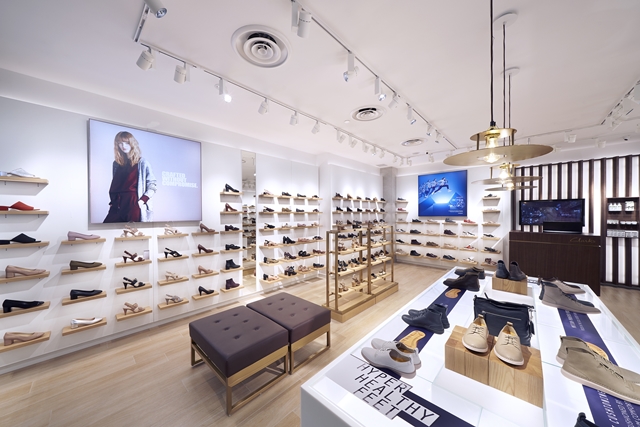
    Singapore’s first Clarks Pure concept store opened its doors today, described as “a classic, understated and uncluttered retail space which reflects the brand’s history and modern spirit”. The new Clarks Singapore store is located in the Ion Orchard shopping centre. It is the first Pure store to be opened by the footwear brand in Southeast Asia and follows successful launches in Manchester and Glasgow, in the UK.

    Guillaume Nagy, president SEA & Oceania, at Clarks, said the store is designed to breath a new personality into the brand. It will be rolled out in other Southeast Asian markets during coming months.

    “We want to offer this elevated brand experience with the Pure store design,” said Nagy. “Singapore has an incredibly dynamic retail environment and we know the extension of Pure to Ion Orchard will be well received by existing and potential consumers. It is the first retail initial initiative of many to be implemented in the city state, turning Singapore into our flagship market and a centre of excellence for the region”

    Nagy said the focus of the store design was to make the shoe the star and to tell immersive stories that resonate with consumers.

    “Pure helps us achieve both in a way that is authentic to Clarks.”

    The new Clarks Singapore store features classic leather buttonback seats on birch floors and soothing neutral colours. It uses natural materials such as oak and timber to build on the themes of simplicity and honesty.

    Light boxes and opal resin podiums create a gallery-like display space for the collections. Brand and campaign imagery are displayed within the store for enhanced storytelling, while large-scale lightboxes draw consumers in and communicate key brand messages.

    The concept was designed by Stiff & Trevillion, whose spokesperson said Pure was chosen as the concept because it links to honesty.

    “Clarks uses honest design and materials in its shoes and we wanted the store design to reflect that through the use of natural materials and truthful lighting.”

  • This Year’s Finest Watch Creations in Singapore

    This Year’s Finest Watch Creations in Singapore

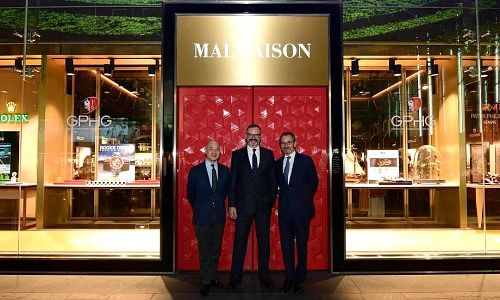
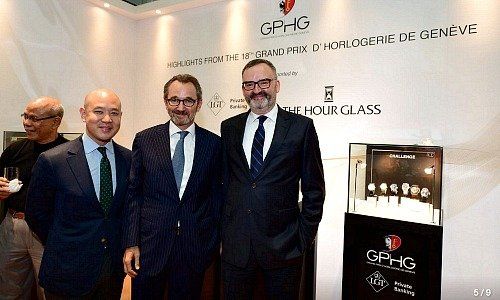
    Malmaison boutique by The Hour Glass in the heart of Orchard Road hosts the exceptional exhibition featuring the 72 pre-selected watches. After Venice and Hong Kong, the 72 watches pre-selected by the jury of the 18th Grand Prix d’Horlogerie de Genève (GPHG) are being exhibited from October 17th to 21st in Singapore by renowned retailer The Hour Glass, within the splendid setting of its Malmaison boutique on Orchard Road.

    On show for five days within this stunning environment imbued with art and culture, the exhibition open to the public welcomes visitors eager to admire the year’s finest watch creations, competing to win the prestigious “Aiguille d’Or” Grand Prix or one of the 16 awards to be handed out in Geneva on November 9th.

    “Our organizational mission to advance watch culture necessitates us to devote resources to deepen our engagement with the watch collecting community both in Singapore and in the region,” Michael Tay, Group Managing Director of Singapore’s leading watch retailer and member of the jury of the GPHG 2018, said.

    Rare Opportunity

    The principal partner of the GPHG, LGT Private Banking, is also taking part in the event by choosing to offer its clients exclusive initiation sessions into the technical and artistic finesse of the timepieces on show, in the company of watchmaking experts.

    A rare opportunity for these end customers to admire within a single location the diversity of today’s watchmaking creativity expressed through models by more than 40 different brands.

    Annual Salute

    Created in 2001 and overseen since 2011 by a foundation recognised as a public interest organisation, the GPHG is intended as an annual salute to the excellence of the contemporary watchmaking art.

  • BMW expands recall on fire risk to 1.6 million diesel vehicles

    BMW expands recall on fire risk to 1.6 million diesel vehicles

    BMW is recalling about 1.6 million diesel cars to fix a potential fire hazard in their engines, expanding repairs from just under half a million vehicles in Europe and Asia. The voluntary service action follows a BMW investigation that found coolant could leak from the car’s exhaust recirculation unit. The defect can lead to sparks while driving and cause fires in “in extreme cases,” the automaker said Tuesday in a statement.

    South Korea’s government, after reports of 40 fires this year, asked drivers to keep vehicles off roads until undergoing checks. Police also raided the automaker’s office in Seoul to probe the safety issue, after videos of cars engulfed by fire went viral.

    The vehicles affected — diesels with four- and six-cylinder engines — were produced between 2010 and 2017, BMW said.

    After the initial recall announced in August, BMW’s internal investigation found more vehicles with similar technical setups. The company said it will replace the components as necessary.

    BMW last month cut its profit forecast, blaming an increase in warranty provisions alongside trade tensions and pricing pressure.

  • An Overview of E-commerce in South East Asian Countries

    An Overview of E-commerce in South East Asian Countries

    Electric commerce or e-commerce is the activity of buying and selling online. Typical e-commerce transaction includes purchase of online books, music purchase and purchase and sales of many other items.  Three known major areas of e-commerce include online retailing, electric market and online auction. Technologies such as mobile commerce, internet market, electronic funds transfer, and electronic data interchange (EDI), online transaction process and many others.

    The practice of e-commerce in Southeast Asia started during the dot.com era in the 90’s just like in many parts of the world. The dot.com era refers to the period where companies started using doing for most of their businesses on the internet, usually through a website that uses the popular domain “.com”. During the dot com era southeastern Asia mainly purchased items from American and European companies that would be delivered in their countries. During this era companies with electronic commerce had shown great prospect with their fast growth and promising profits. Companies’ stock prices skyrocketed and Asia was pretty happy because the rise had resulted to a bubbling economy through electronic commerce.

    Asia then began to attract nearly half of the total capital inflow from developing countries appealing them with high interest rates. Countries like Malaysia, Singapore, Thailand and Indonesia experienced an increase in their GDP rates. Around the year 2000, the e-commerce market was mainly involved in a business to business (B2B) transaction due to customers mistrust after going through the 1997’s financial crises and the bubble burst in southeast Asia – bubble burst is often identified only in retrospect once a sudden drop in price has occurred – The burst is usually profitable for buyers and not sellers. In the 90’s a lot came up as hindrances to the upspring of electronic commerce

    – In those days, aside mistrust e-companies had other issues of which Southeast Asian countries were also affected. As a result of its structural shortcomings, a much more diverse range of payment solutions have become common in the region. The average internet penetration around southeastern Asia with the exception of Singapore was 38% while leading countries have an internet penetration of 70-80%, this made cash on delivery offered by 80% of the players in both Vietnam and Philippines, though bank transfer is another very popular payment method across the SEA. With each of the countries having 94%, 86% and 79% of merchants in Indonesia, Vietnam and Thailand respectively offering it.

    – In addition to a lack of uniformity in payment methods, there is also significant market fragmentation the Southeast Asian consumers have so many platforms to choose for their daily need.

    – Culture also was an inhibiting factor –the influence of Traditions in the Asian region overtime had made people have low trust in bank system and electronic payment, for example; credit card owners and other means used in payment other than in cash is small – government in those times pushed for a cashless policy in their society by trying to implement laws to suit online transactions.

    – Fraud and high level of corruption was another setback to the growth of electronic commerce in the region.

    The prospects and thrive; the battle for supremacy

    The gold rush in the online ecommerce of the as left traditional offline retailers in the Asia region like Thailand and Indonesia scramble for an online business move.

    Over the years until this day the massive growth in e-commerce around southeastern Asian has attracted big name investors into the region. In 2016 the release of the Google Temasek SEA Economy spotlight highlighted Southeast Asia as the world’s fastest growing internet region.  With an existing internet user of 260M which was projected to grow to 480m users by 2020. In the research they predicted that southeast Asia’s internet economy will grow to 200B by 2025 and that $40 – 50bn in investment will be required over a decade to achieve that goal, fast tracking to 2017 they observed that the southeast Asia’s internet user base continues to grow rapidly. there will be 330m monthly active internet users by end of 2017 adding over 70m new users since 2015 13% CAGR.  They estimate that Southeast Asia’s internet economy will reach $50b in 2017, meaning it will Grow at a rate of 27% CAGR outpacing their 20% 10year CAGR projection.

    Asia as a continent had an increase in of around 4.5  billion in the GMV ( gross  merchandise value ) of first hand goods and has had a 41% compound annual growth rate ( CAGR ) in the past couple of years- 2015 to 2017- as given by Google –Temasek’s economy southeastern spotlight 2017 report. The Temasek report went further to predict that CAGR will rise from $5.5bn of 2015 to $88bn by 2026. 2017 witnessed events which proved high results are expected from the e-market in southeastern Asia.  The explosive growth in E commerce as lured china’s two e-commerce giants Alibaba and sd.com to the southeast online market. Amazon much awaited  recent entrance into the E-market of a southeastern nation ( Singapore to be specific) to fast track its online market expansion in southeast Asia also proved there was an attractive raw material in the cyber space of the region.

    The record breaking 1billion dollar sales of shares of Lazadas to Alibaba with alibaba also putting its grip on Tokopedia; arguably a future competitor in Indonesia. The resilience of another China based heavy weight company; Tencent. Tencent has also kicked start investments in companies like SEA (previously Garena) predominantly a gaming powerhouse that runs Shopee, Go-jek, Traveloka, Tiki.nn and Pomelo. The US based KKR  in a bid not to be left out of this massive growth phase through emerald media put US$65million into e-commerce arms dealer Acommerce. This trends of acquiring more shares and grabbing more local companies across the Asian borders by these online giants  is expected in coming years as all stated above points to the fact that the riches in online space of these Asian nations is worth risking for.

    Currently, predictions have given that the home based Asian companies will have to pick sides with either of or stand their ground against the foreign forces from both the western and eastern part of the world.  Predictions went further  to specify that  foreign based companies like Alibaba, Amazon and Tencent is  likely to have a bloodbath battle for the monopoly of the regions  electronic commerce  or share the  Asian online customers, some term this head to head of the western state and eastern state as the clash of the online titans.  It is hope that this clash will result to a much needed gold-shed To Help in the growth of the developing region

    Joe Tsai, Alibaba vice chairman, in speaking with Retail News was quoted as saying “is there a land grab right now for these kind of assets? I think in the land grab they [Tencent] are following us. They are seeing that we have positioned ourselves very well, and they are sort of playing a catch up game. So what we want to do is to work with local entrepreneurs. ”

    Experienced, grown and growing

    Marc woo, Google head of ecommerce , travel and financial services was quoted to have said “Asia pacific (APAC) accounted for 40% of global ecommerce sales in the 1st quarter in 2017, but vast majority of those sales went to larger or more mature markets in the region, particularly china, but also japan, Australia, South Korea, and India. That leaves Southeast Asia as the next frontier for ecommerce in the region.  “

    A steady increase in the advantages of electronic commerce in the region resulted to a 50% growth last year and now totals 200 million individuals across southeastern Asian’s top six economies. The southeastern Asian nation Singapore takes a top spot in Asia with an average of 14.04 sessions per person per year visiting amazon.com. It is rumored and expected that by the end of the year the ecommerce companies should erect physical stores in their resident southeastern nations. This will make a great boost in the economy of this regions.  This huge development in ecommerce have led southeast Asian governments to launch a bid to introduce taxes on ecommerce sales as they look to claim their dollar-and-cents take from one of their most promising engine towards  economic and  financial buoyancy.

    This though might increase the cost price of goods and services offered by the online companies but cannot override nor underestimate its advantage as compared to import and shipping processes. Taxing online sales will align practice with those of world leading countries. It puts online retailers on a leveled playing ground with brick-and-mortar counterpart. This growing market has also initiated an online network process between the Chinese and the Asian region as Alibaba is working to set up a digital free-trade zone in Malaysia and has signed a memorandum of understanding with the government of the Asian country and the authorities of china to simplify cross-border trade between the two regions.

    If this deal falls through under the current government of china a long term mutual profit making relationship is expected to last for a very long time between the Asian nations and the Chinese government  giving that  the china parliament are rumored to have kick started plans in keeping their president more longer in office than usual.  The critical factors responsible or observed to needed for the spontaneous growth of ecommerce in the southeastern region of the continent are

    • A growing middle class – knowing that the middle class contains the highest number of mobile phone users and also the highest number of common goods purchasing.
    • Rapidly expanding internet access are positive indicators for fast paced e commerce growth in coming years. Internet access needs to be at its best for the effective running of electric commerce in a state

    The middle class population of the Asian region is expected to reach a 400million in 2020 from its 190 million of 2012, according to Nielsen project.

    Internet access in the region as not only being expanding at a high pace but has also improved strongly over the years like stated in the research of Google Temasek SEA economy spotlight report stated above.

    The electric commerce has also shown to be of disadvantage though not significant as compared to the many fruit yielded by the online market.

    • The desire for local business owners and the nation’s mobile phone user population to switch online results to more cases of fraud because this system isn’t used to them.
    • Competition between locals and foreigners which should encourage an healthy business environment is not observed as the big guns will slowly silently phase out the local brands
    • The preference of foreign products to locally made products by locals isn’t favorable for the country’s economy.
    • Owing to the creation of a good relationship with certain world leading countries, good tides with others could be altered.
    • If not properly monitored, foreign companies might have a full grip of the southeastern nation economy.

    One major benefit that has been observed to have taken the front line in the advantage of electronic commerce in the southeastern Asian region is the quest for each nation to outperform each other. Especially between Thailand, Vietnam and Indonesia, this healthy beef has led to varying developments in these nations as none wants to be left behind in the development and modernization of their country. These alongside the introduction of big time investors, the rise in economy growth, job creation in nations, strengthening diplomatic tides and many other advantages.

    Stakeholders and experts have advised to government of these Asian nations to support the region to grow by fixing reasonable tax levies in other not to discourage foreign and local investors, encourage a competitive market, improve online network and provide adequate education to ease communication with foreign partners. With the huge wealth emanating from the electric commerce sector, if properly managed these nations can get a massive boost in their nations wealth and reputation. The potentials possessed to build a nations revenue by employing electric commerce cannot and should not be undermined.


     

  • Bvlgari’s cinema themed pop-up at Singapore’s ION Orchard mall

    Bvlgari’s cinema themed pop-up at Singapore’s ION Orchard mall

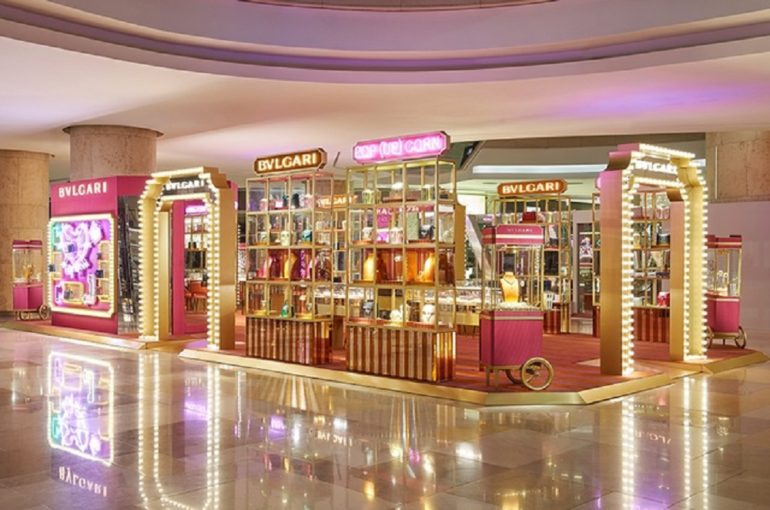
    High-end Italian jewellery house Bvlgari has opened a pop-up retail place this month in Singapore. Located on level one of the ION Orchard mall, the “Pop (Up) Corn” shop is decked out in saccharine pink and blinking neon lights and takes inspiration from 60s Italian theatre.

    It is also a mini-reproduction of the Italian luxury brand’s Via Condotti boutique in Rome where Hollywood icons such as Audrey Hepburn and Elizabeth Taylor would shop when in town.

    Inside, the pop-up offers limited-edition Bvlgari handbags including Serpenti and Divas Dream bags in calfskin leather, as well as sparkling jewellery pieces and watches.

    The standout piece is the limited-edition matching set of a Bvlgari-Bvlgari necklace and bracelet in rose gold, which is an ION Orchard exclusive. Not to mention a series of cinema-themed objects such as glitzy popcorn boxes, rectangular ticket stubs and dazzling neon lights.

    The Pop (Up) Corn store is open now until December 31.

    The new pop-up serves as a precursor to the official store opening in ION Orchard from Bvlgari in December, joining the store in Marina Bay.

    It’s not the first time Bvlgari has opened a pop-up store in a key capital city.

    In 2017, Bvlgari opened a pop-up store inside France’s Galeries Lafayette department store on boulevard Haussmann in Paris.

    Bvlgari operates flagship stores in most Asian cities including Singapore, Taipei, Shanghai, Beijing, Hong Kong and Macau.

    Founded in 1884 in Rome Sotirios Voulgaris, Bvlgari is now majority-owned by French luxury conglomerate LVMH Group.

    For the first-quarter 2018, LVMH’s watches and jewellery category, which Bvlgari is a part of, witnessed 8% growth in revenue terms and 14% organic growth in the category, totaling 9.5 billion euros. Overall revenues tipped 33 billion euros for the three months ending September 30.

  • 7-Eleven Outlets In Singapore Are Now Lazada Collection Points

    7-Eleven Outlets In Singapore Are Now Lazada Collection Points

    Lazada and Ninja Van have teamed up with the Singapore 7-Eleven convenience store chain to allow online shoppers to designate any of the nearly 350 stores island-wide as collection points. The collaboration will offer the largest network of collection points around Singapore. The new service debuted at 159 7-Eleven stores this week, with a progressive rollout planned for the rest of the store network by the end of the year.

    Lazada and last-mile logistics provider Ninja Van say the new service eliminates the need for a purchaser to ensure someone is home to receive goods bought online. They can nominate any participating Singapore 7-Eleven store as their delivery point upon checkout.

    “More than 35 per cent of Singaporean households have only one or two residents, with close to 25,000 new dual or single person households forming just between 2016 and last year,” said Crispian Leong, Singapore 7-Eleven head of marketing.

    “Most are working during the day, and many may not find it convenient to receive parcels at their office. With close to 350 participating stores islandwide, we are excited that we can partner with Lazada and Ninja Van to offer this added convenience to consumers’ daily lives and online shopping habits.”

    Ray Chou, country head of Ninja Van Singapore, said the problem will address the high number of failed deliveries its partners encounter, “which is disruptive not only for our customers, but for sellers and delivery companies as well”.

    Users of the service will enjoy free delivery, as opposed to S$1.49 for normal and S$2.99 for express drop-off to their homes.

    Pierre de Bellescize, CEO at Lazada eLogistics Singapore, said partnering with 7-Eleven and Ninja Van will bolster the click-and-collect options the company already offers with SingPost’s PopStations, SPH Buzz Convenience Stores and Parcel Santa Lockers located in Condominiums and others.

  • Honestbee risk losses with new experimental offerings

    Honestbee risk losses with new experimental offerings

    Online grocery service Honestbee has opened a retail space which merges cashless grocery store with a restaurant and a testbed for new retail technologies.

    Habitat by Honestbee in Pasir Panjang is billed as “the world’s first tech-integrated multi-sensory grocery and dining destination of its kind”. While Chinese online behemoth Alibaba may well challenge that claim, Habitat is certainly a revolution in Southeast Asia, boasting a cashless checkout experience and a fully automated robotic collection point, called RoboCollect.

    Spanning 60,000sqft, Habitat by Honestbee is a full supermarket with more than 20,000 Asian and global foods and ingredients as well as daily essentials, which can be purchased both online and offline.

    The store also features 15 unique food and beverage concepts ranging from grain bowls and grilled wagyu meats to Japanese souffle pancakes and homemade kombuchas, all available to eat on site or take away.

    More features are under development, including an invitation-only private dining space, an oyster bar, an entire section devoted to charcuterie and cheese, and a hidden bar.

    Honestbee says the new space heralds the arrival of NewGen Retail, a concept defined as “innovation in retail technology that inspires more human engagement for a multi-sensory experience” and not hugely dissimilar to Alibaba’s New Retail concept.

    For purchases of 10 items or less, shoppers can use the Scan & Go function on the Honestbee app, so they can skip the checkout line and get their items on the spot. Those with bigger shopping lists can drop off their trolleys at the convenient AutoCheckout and Habitat will take care of the scanning and packing, with bags ready for collection at the RoboCollect Stations.

    Honestbee says customer orders can be processed between checkout and collection in as little as five minutes.

    Online grocery orders are fulfilled by ‘Shopper Bees’ (Honestbee staff) using overhead conveyor belts for greater productivity before ‘Driver Bees’ pick them up for delivery.

    Purchases can be paid for securely using BeePay, Honestbee’s own digital wallet, either online or offline.

    “Habitat by Honestbee is a beautiful, physical extension of the honestbee brand we all love,” said VP and MD at Habitat by Honestbee, Pauline Png.

    “With its launch, we now provide tech-enabled convenience, value and quality through food in both the online and offline experience. It is a unique combination of a full supermarket, speciality grocer, dining and interactive lifestyle destination. In this innovative space, one can expect a multi-sensorial food experience that nourishes, educates and inspires. We designed it so that customers can get their groceries and meals efficiently but also linger and enjoy the experience.”

    View the full gallery of the newest Habitat store below (16 images) :

  • HSBC Appoints New Chairman for Singapore

    HSBC Appoints New Chairman for Singapore

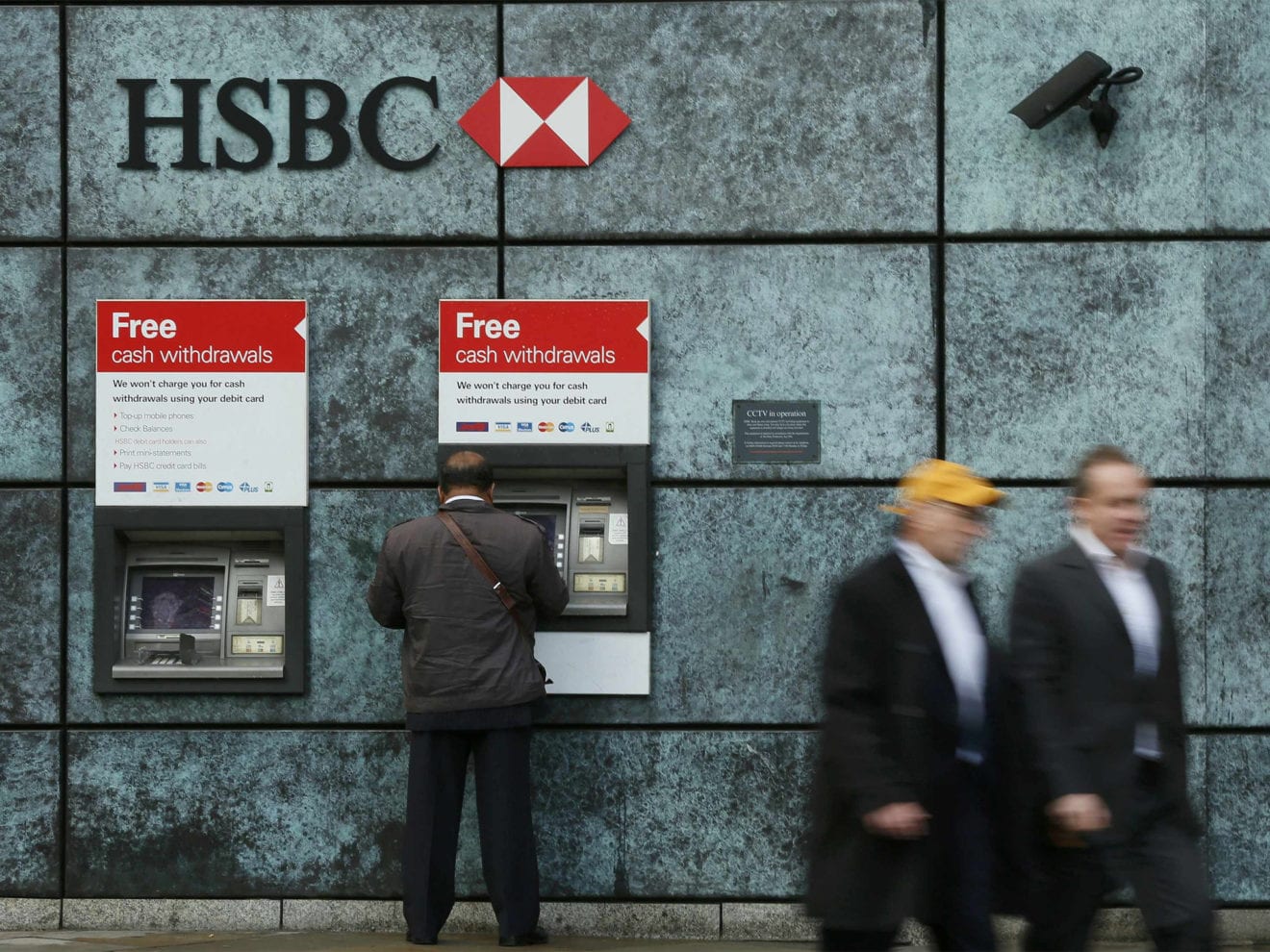
    HSBC Singapore appointed Mukhtar Hussain as chairman effective this week, the company said in a statement. The local subsidiary of HSBC  includes the retail banking and wealth management business in the city-state. It was formed when the bank incorporated its retail operations in May 2016.

    «Mukhtar’s presence, experience and counsel will go a long way to support our three-year growth plans – not just for retail banking – but across all of our business lines,» said Tony Cripps, chief executive officer of HSBC Singapore.

    Regional Knowledge

    On the consumer banking side, HSBC will tap on Mukhtar’s regional knowledge to provide oversight of the bank’s strategy to capture the personal wealth that is flowing from Asean markets into Singapore.

    «On the institutional side, his role in spearheading HSBC’s regional activity in support of BRI will be invaluable in advising Singapore on how it can further position itself as a strategic partner of this multi-decade investment programme,» said Cripps.

  • StarHub offering free local calls to prepaid customers

    StarHub offering free local calls to prepaid customers

    Singapore’s StarHub has started offering prepaid customers free outgoing local calls as long as they have an active data plan. The company will continue offering prepaid customers free local calls for the duration of their data plan, even if they run out of data.

    StarHub offers customers a choice of six prepaid data plan over its Happy Prepaid app, starting at S$2 for 30MB of data and free outgoing calls for three days. An S$8 mid-tier option adds 1GB and free calls for seven days, while an S$25 plan offers 5GB of data and free calls for 30 days.

    “Just by being on our new prepaid data plans, customers can enjoy the best of two worlds – surfing on Singapore’s fastest 4G network and chatting with family, friends and co-workers easily and affordably,” StarHub VP of marketing Donovan Kik said.

    “Simplicity is key and we will continually enhance our services to ensure we deliver the best possible experience to customers.”

  • Hai Di Lao Is Opening Its First Store In Malaysia

    Hai Di Lao Is Opening Its First Store In Malaysia

    Popular hot pot franchise Hai Di Lao is finally coming to Malaysia. According to Makan Main Tengok’s Facebook page, the food chain’s first Malaysian outlet will be located at the ground floor of Sunway Pyramid Hotel.  Known for its fragrant and flavourful soups, Hai Di Lao started off as a humble shop selling “Ma La Tang” (which literally means spicy-numbing soup).

    The opening of Hai Di Lao also means there’s going to be a long queue and months of advance booking. On the bright side, the shop is known for offering free snacks, drinks, games and manicure services for those who are willing to wait for their table.

    Hai Di Lao operates more than 300 branches worldwide.

    The official opening date has yet to be announced.

  • StarHub pursuing network sharing to cut costs

    StarHub pursuing network sharing to cut costs

    Singapore’s StarHub has revealed it is pursuing network sharing arrangements to further cut costs, after announcing a planned 12% reduction in the operator’s workforce.

    The operator could reach a commercial network sharing agreement shortly and be reaping financial benefits by the end of next year, the company’s CEO Peter Kaliaropoulos.

    The company’s new CEO, who took his position in July, said sharing of facilities is a necessity once an industry hits maturity.

    StarHub and smaller rival M1 have already indicated that they are evaluating further collaboration on mobile infrastructure sharing to reduce costs.

    Earlier this month, StarHub announced it will cut 300 jobs as part of cost reduction efforts aimed at saving S$210 million ($152.3 million) over the next three calendar years.

    According to the report, Kaliaropoulos believes StarHub needs to be leaner and more agile and focus its resources on growth areas such as its enterprise business.

    The company is under particular pressure due to the recent entry of Australia’s TPG as Singapore’s fourth mobile operator. Kaliaropoulos warned that the Singapore market may not be large enough to sustain four mobile operators, hinting that the smallest player may find it difficult to survive.

  • Real Singapore retail sales rise 2.4 per cent in August

    Real Singapore retail sales rise 2.4 per cent in August

    Singapore retail sales rose 2.4 per cent in August, after excluding the impact of motor vehicles on the figure. Including vehicles, retail sales posted a year-on-year decline of 0.4 per cent. They rose 2 per cent month on month, excluding cars.

    By category, August delivered a mixed bag for retailers, year on year. Jewellers drove the watches and gem sector up 6.3 per cent while apparel and footwear sales rose 6 per cent. Recreational goods rose 4.4 per cent and sales in department stores by 3.3 per cent.

    But sales of computers and phones dropped 3.8 per cent, partly due to declining computer sales. Food retailers experienced a 3.5 per cent decline and optical goods and book vendors, 2.3 per cent.

    Petrol stations had the highest movement, up 10.4 per cent, reflecting high fuel prices.

    The total of Singapore retail sales in August, including motor vehicles, was estimated at S$3.8 billion, of which online sales accounted for 4.6 per cent.

    Sales of food & beverage services from restaurants, cafes and fast-food retailers, increased 3.2 per cent in August, reaching $728 million.