Tag: Singapore

  • Ralph Lauren sales decline, and Asia saves it

    Ralph Lauren sales decline, and Asia saves it

    Fashion label Ralph Lauren sales reached US$1.4 billion for the first quarter of this fiscal year, driven by sales in Asia and Europe.

    Ralph Lauren sales in Asia increased 19 per cent to US$248 million on a reported basis and by 16 per cent in constant currency, driven by strength in both retail and wholesale channels. Samee-store sales in Asia increased 6 per cent in constant currency, reflecting growth in both the brick-and-mortar and digital-commerce operations.

    By comparison, European revenue in the first quarter increased 8 per cent, while North America declined by 2 per cent.

    Ralph Lauren, executive chairman and chief creative officer for the company said, “I continue to be inspired and energised by the passion our teams have for our brand and our company. This passion, along with Patrice’s [Louvet, president and CEO] partnership over the last year, the clear plan he and the team laid out in June, and the initial progress in this quarter, gives me confidence in our future as we celebrate 50 years in business.”

    Louvet added: “We are off to an encouraging start to the new fiscal year on both the top and the bottom line… we are on track to return the company to long-term, sustainable growth and value creation.”

  • Ng Ah Sio Bak Kut Teh opens first restaurant in Taiwan

    Ng Ah Sio Bak Kut Teh opens first restaurant in Taiwan

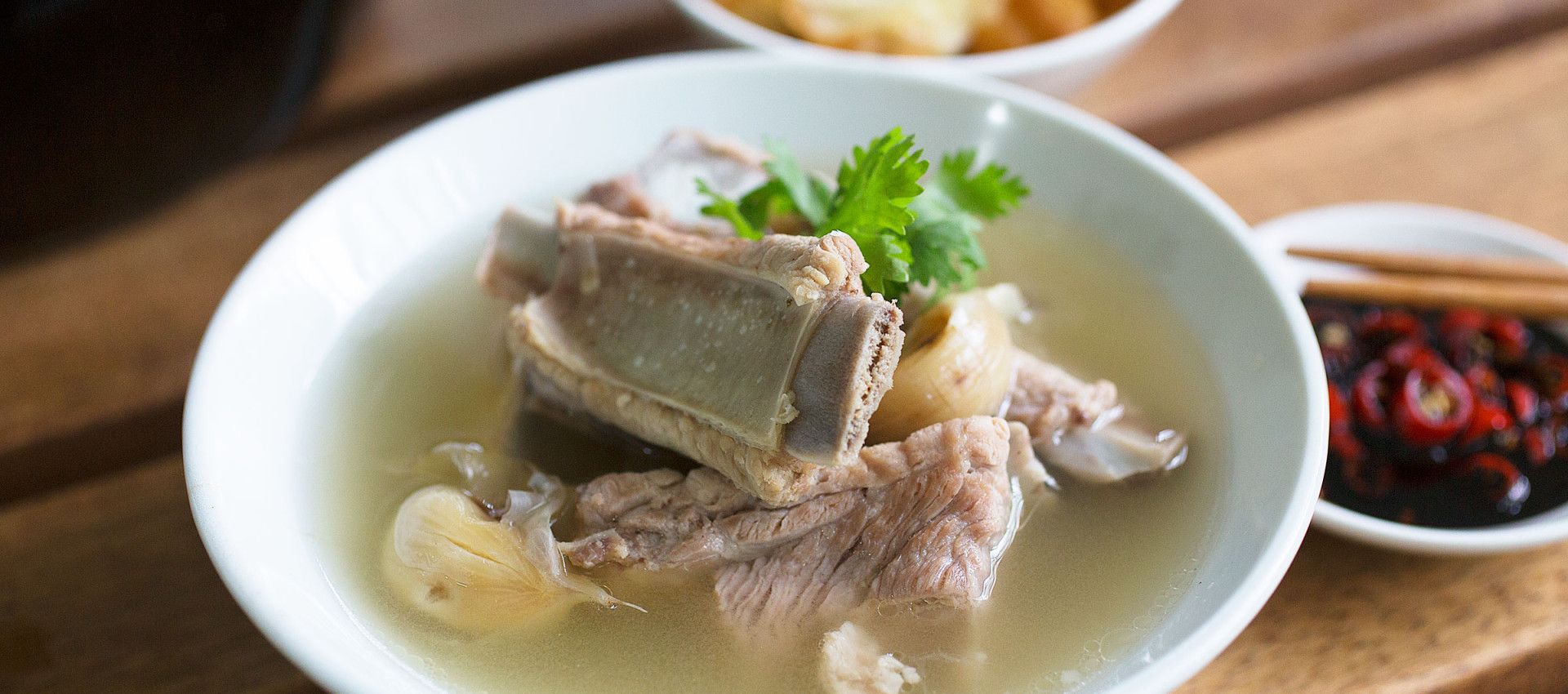
    Singapore-listed restaurateur Jumbo Group has opened its first Ng Ah Sio Bak Kut Teh restaurant in Taiwan.

    The new venue, which specialises in peppered pork soup, is situated in a 1400sqft space in Taipei’s Shin Kong Mitsukoshi Mall, seating 86 guests. It is operated by local franchisee Ho Sing Food, which intends to open at least 19 more outlets in the country.

    Jumbo CEO Ang Kiam Meng said the introduction of Ng Ah Sio Bak Kut Teh to Taiwan marks a key milestone for the group and is testament to the company’s growing presence in the Asian consumer market.

    “We are excited to bring one of the most-loved Singaporean heritage dishes to Taiwan, and aim to leverage the potential demand for Singapore’s cuisine in the Taiwanese consumer market, together with our franchise partner.”

    The group runs Jumbo-branded franchises in Vietnam, Taiwan and Thailand.

  • Japan’s Utena debuts in Singapore

    Japan’s Utena debuts in Singapore

    Japanese beauty brand Utena has launched in Singapore.

    The 91-year-old heritage brand, which is currently distributed throughout Greater China and Thailand, is now available at selected Watsons stores, Yue Hwa, Welcia-BHG, Tokyu Hands, Don Don Donki, Metro Singapore, and online via Shopee, Lazada, Redmart and Qoo10.

    Its key products are a high-level beauty serum mask called the Premium Puresa Golden Jelly Series, now selling in Singapore, and the Matomage Hair Styling series fortified with natural ingredients, arriving in stores next month.

  • JD Sports Opens its Flagship Store at ION Orchard

    JD Sports Opens its Flagship Store at ION Orchard

    UK-based multi-brand sportswear and shoes retailer JD has opened an Ion Orchard flagship.

    The new 7200sqft store follows the recent opening of a JD’s store at Jurong Point, and offers an expanded range that includes favourite brands such as Nike, Adidas, Puma, Under Armour, and JD’s home brand Supply & Demand. It also retails a wider range of JD Exclusive trainers, only available at JD stores in Singapore.

    JD also stocks trainers direct from Europe with the Western Europe range, which are not readily available in Southeast Asia.

    The group runs over 1400 stores under various retail fascias.

  • Flamingo Bloom plans expansion in Australia, Singapore

    Flamingo Bloom plans expansion in Australia, Singapore

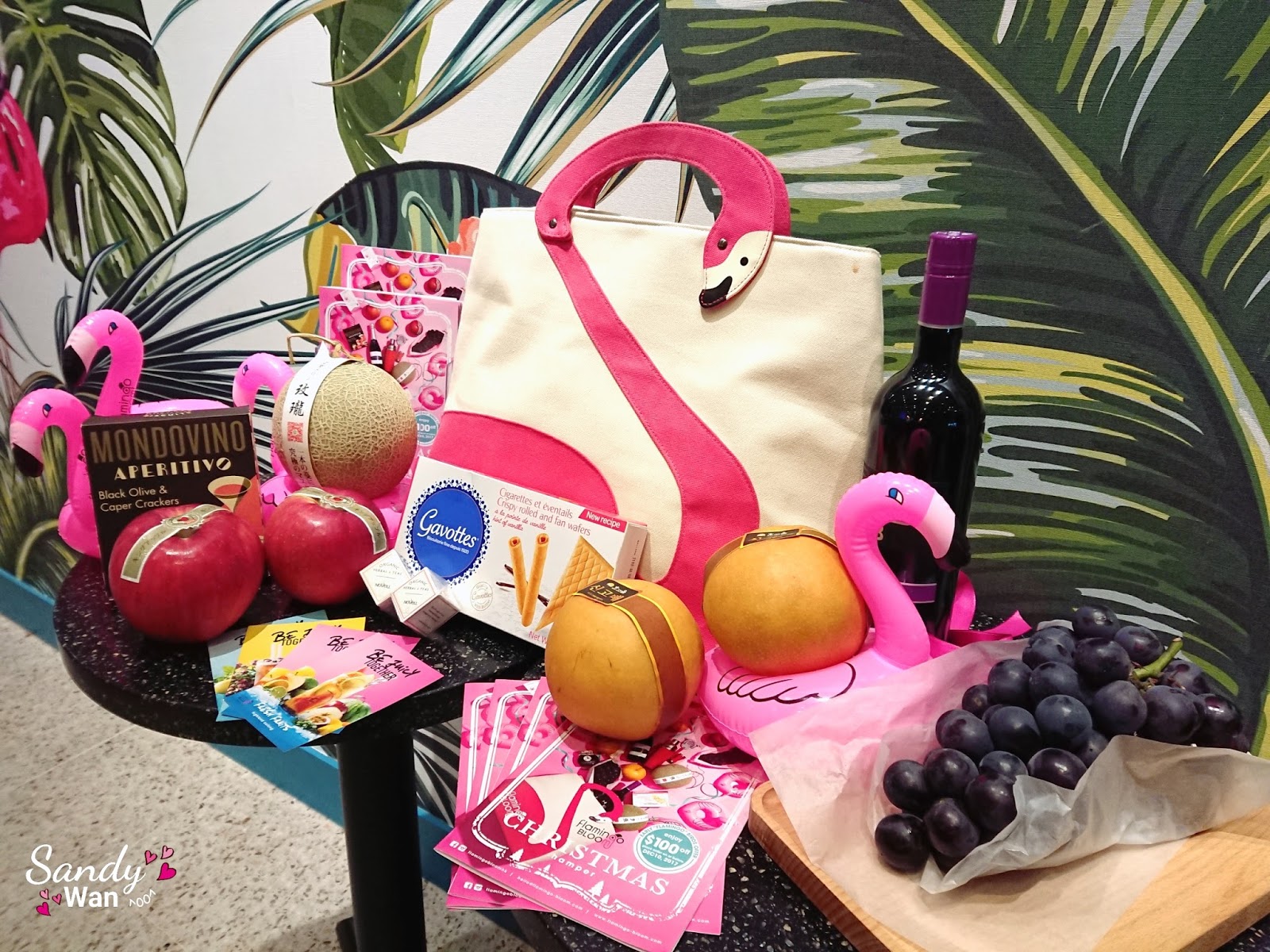
    Hong Kong-based fresh-brewed tea brand Flamingo Bloom has opened four stores in its first year of trading.

    The health-conscious beverage retailer first set up just last year in Hong Kong’s Central, but has already opened a larger space in Tsim Sha Tsui, a flagship in Malaysia, and a store at the IFC mall this month, which attracted long queues on launch day.

    Founder Louisa Wong has indicated plans to open further locations in Malaysia, as well as expand to Australia and Singapore, with the intention to open in Melbourne by the end of this year.

    “Even though we’re in a quality mall, the operating costs in Malaysia are so much lower – about a third of what we pay in Hong Kong – so it’s easier to reach sales targets,” she said. “In Malaysia’s tropical climate, cold teas mixed with fresh fruits have proved popular.”

    The store retails highly Instagrammable Chinese tea-based beverages mixed with fresh fruit and boba pearls – or blended as a latte.

  • Orchard Road retail vacancy rate free jump

    Orchard Road retail vacancy rate free jump

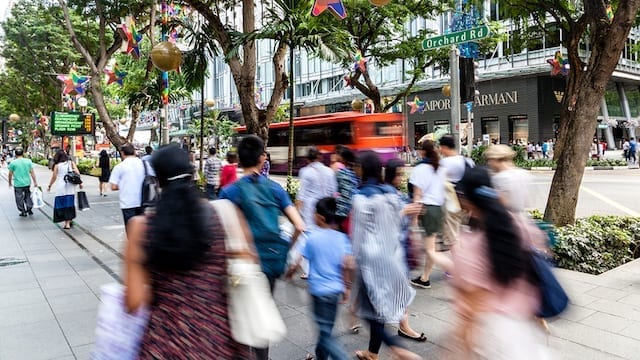
    The Orchard Road retail vacancy rate has dropped to 5.6 per cent in the second quarter.

    According to a report by CBRE, the rate is the lowest in 14 quarters and well below 2016 figures.

    CBRE’s head of research for Southeast Asia Desmond Sim said, “On the back of an improved tourism market, coupled with limited new supply along our famous shopping belt, Orchard Road is still able to attract new tenants.”

    Noting that new-to-market brands still require and demand visible frontages with high footfall, Sim cautioned that there may be vacancies on secondary corridors and secondary floors.

    Meanwhile, senior director of research at Cushman & Wakefield, Christine Li, said, “A two-tier market is forming in the retail segment, as accessible and well-managed malls attract the bulk of pedestrian footfall.

    Retailers and landlords have to continue to reinvent themselves, invest in technology and focus on lifestyle and activity-based experiences to keep pace with the fast-changing retail landscape.”

    This year’s new openings were largely in the food and beverage and fashion categories.

  • Asia’s large format retailers prepare for steady growth

    Asia’s large format retailers prepare for steady growth

    Global research organisation IGD has reported that Asia’s large format retailers are set to grow 3.3 per cent a year to 2022, with Vietnam, India and the Philippines forecast to see double-digit growth from large format players over the next five years.

    Most of this growth is predicted to be driven by domestic retailers, except for Vietnam where foreign retailers have been investing to gain a foothold in this fast-growing market. Indonesia will see steady growth, also driven mainly by domestic players; with China coming through as another market with significant growth opportunities due to its vast geography.

    Many large format retailers in Asia are still enjoying steady growth through expansion although they are facing pressures from increased competition in more developed markets.

    Besides expansion to new regions, retailers are also digitising physical stores to create a seamless shopping experience in more matured markets.

  • Puma opens first Puma Kids in Singapore

    Puma opens first Puma Kids in Singapore

    Sports lifestyle brand Puma has opened its first standalone Puma Kids store in Southeast Asia at Singapore’s United Square shopping mall.

    The 500sqft store will offer a selection of apparel, footwear and accessories for kids, making the brand’s Junior range available in Singapore for the first time. Puma’s infants and Pre-school product lines are already well received in local Puma stores.

    Puma Southeast Asia marketing manager Eleanor Wang said, “The market for kids’ segment has always been a staple pie in Puma’s retail business in Southeast Asia, especially Singapore… Puma Kids is designed to be a one-stop destination with a newly extended product offering, catering to the lifestyle needs of young parents and families here.”

    The Puma Kids debut closely follows the recent opening of the Puma Select store at The Shoppes at Marina Bay Sands.

    View the gallery below (5 images) :

  • Dairy Farm restructures after recent result

    Dairy Farm restructures after recent result

    “Underperforming” subsidiaries and rising rent and labour costs are disturbing the chairman of Hong Kong-listed multinational retailer Dairy Farm International – but those factors failed to prevent a solid second-half year performance.

    Dairy Farm’s total sales rose 17 per cent to US$12.215 billion in the six months to June 30 and profit attributable to shareholders was $215 million, up 6 per cent. The increased sales came largely from the Yonghui supermarket operation and Maxim’s which owns food retail channels and the Starbucks business in Hong Kong, Singapore, Vietnam and Cambodia.

    Chairman Ben Keswick said the health and beauty business in Hong Kong and Macau drove strong results in North Asia, but the Southeast Asian food businesses continued to face challenges producing a weaker overall performance.

    “While the outlook for the remainder of the year is expected to remain challenging for the Food businesses, particularly in Southeast Asia, the group’s other businesses should continue to make steady progress. Significant management and structural changes have been made to address the issues the group faces in a number of areas, but time will be needed to deliver sustainable improvement.”

    The company has consolidated its trading operations into a more centralised structure with two main trading divisions: North Asia and Southeast Asia, in addition to the standalone business of Home Furnishings (essentially Ikea) and Maxim’s.

    Keswick says five strategic priorities have been identified: building capability, growing presence in Mainland China, protecting the group’s Hong Kong business, revitalising the Southeast Asia operations and driving digital innovation. “A series of programs are underway to support these priorities across all of the group’s businesses,” he said in the earnings statement.

    In North Asia, overall sales within the food businesses were ahead of prior year, but profits declined, mainly due to higher rent and labour costs in Hong Kong. “The health and beauty business in Hong Kong and Macau delivered very strong sales and profit growth, driven by a significant increase in business from higher numbers of mainland Chinese tourists.”

    Southeast Asia challenges

    However, in Southeast Asia, challenging trading conditions continued for Dairy Farm’s food businesses.

    “The group saw lower sales and profits in Singapore, Malaysia and Indonesia, while in the Philippines, sales were higher but profits lower, due to increased operating costs resulting from more store openings. Generally, these businesses have suffered from a lack of investment in infrastructure, range and competitive pricing for some time, while competition in each market has been increasing.

    “Turning these food businesses around and becoming more relevant to the changing demands of customers will take significant effort. Appropriate plans are now being put in place following the strategic review, but will require time to take effect,” said Keswick.

    He said the improving performance of the majority of the group’s health and beauty businesses in Southeast Asia is encouraging, with Malaysia, Indonesia and Vietnam reporting better underlying results.

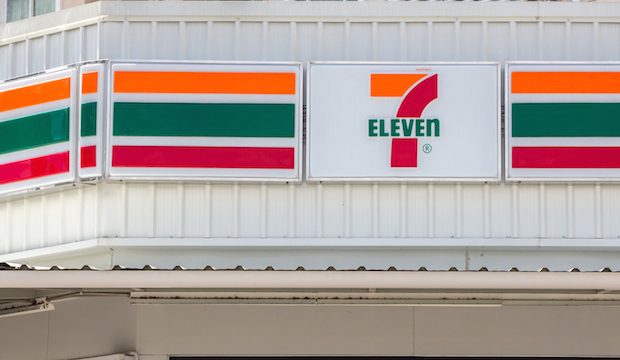
    Dairy Farm’s convenience store operations (7-Eleven) performed well, with Hong Kong and Macau trading in line with last year.

    “In Singapore, overall convenience store sales were slightly lower than last year due to the termination of a multi-site agreement, but profitability improved following the closure of some underperforming stores. Like-for-like sales increases and store expansion in Mainland China continued to underpin growth in this sector.

    “In Home Furnishings, Ikea performed ahead of last year in Taiwan and Indonesia, with sales and profits growth. Hong Kong reported higher sales, helped by a contribution from the new store which opened in October last year, but associated higher operating costs resulted in reduced reduction in profits. Progress continues to be made on new store development in both Taiwan and Indonesia, with several sites under development. Meanwhile, e-commerce activities are showing increased results in all markets but from a small base.

    Keswick said Maxim’s delivered another good performance and is continuing to expand its presence across Mainland China and Southeast Asia. In Hong Kong, Maxim’s opened its first Shake Shack in May with “encouraging initial results”.

    Supermarket chain Yonghui reported strong sales growth and underlying profits from the core food business remained strong, but total profits were behind prior year due to the investment in new technology formats and the introduction of an employee incentive scheme announced earlier this year.

    Philippines restructure

    Meanwhile, back in March, the group announced it had agreed to partner with Robinsons Retail Holdings Inc. (‘RRHI’), the third largest retailer in the Philippines, to build a leading food retail business in that market. Dairy Farm will combine its Rustan Supercenters operations with RRHI to build on the combined strengths of both businesses, creating a new platform for growth. Following completion of the transaction, Dairy Farm would own 18.25 per cent of RRHI. The transaction, which is subject to certain regulatory approvals, is expected to be completed in the fourth quarter.

    As at June 30, Dairy Farm, including associates and joint ventures, operated more than 7400 outlets across all formats, compared with 7181 at the end of last year.
  • Tanduay partners with Shopee to launch online fashion store

    Tanduay partners with Shopee to launch online fashion store

    Rum distiller turned fashion-brand Tanduay has launched an online store in partnership with Singaporean e-commerce platform Shopee.

    The new international e-storefront features some fashion products formerly only available at the Tanduay store in Century Park Hotel.

    The fashion foray is an unusual execution of using apparel to build brand awareness and thus expanding the potential customer base for an unrelated product (in this case alcohol).

    Chief marketing officer of Tanduay Paul Lim said, “Online shopping has continued to gain traction in the region with the increasing internet and smartphone penetration. We are excited about the opportunities that our partnership will open for our business.

    “As of now, the move is consistent with our core strategies to reach a growing global market of online shoppers.”

    Tanduay’s brand manager Edzel Ty noted that all of the brand’s marketing insights point towards the future of commerce online.

    The brand’s rum was recently named number one globally by Drinks International, displacing Bacardi.

  • Be prepared for property bubble burst, Ideas tells govt

    Be prepared for property bubble burst, Ideas tells govt

    The government must be ready for the property market bubble to burst, and the risk of it leading to an economic crisis, said the Institute for Democracy and Economic Affairs (Ideas).

    Ideas senior fellow Dr Carmelo Ferlito (pix) in his policy paper titled “Affordable Housing and Cyclical Fluctuations: The Malaysian Property Market” recommends that the government respond with market-oriented solutions and pay special attention to the household financial exposure.
    “Second, the government needs to downplay its role in the property market by reducing the number of government agencies and encourage the private sector to get involved in the affordable housing market.

    “Third, the government must enhance Malaysian financial literacy, with an orientation toward the value of saving and the possibilities offered by the rental market,” Ferlito said in a statement today.

    He said the government may also open and ease up the regulation in the property market for foreigners who are in possession of a regular working visa and are paying taxes, to help the industry.

    Ferlito’s policy paper highlights the evolution of the Malaysian property market over the past decade, which has resulted in a high number of unsold properties, especially in the high-end segment, and a partially unsatisfied demand for affordable housing.

    He said the spectacular growth of the high-end property segment was ignited by rising profit expectations supported by a growing demand and, at a later stage, by a supportive credit market.

    The mix of these elements has generated a bubble which, following the property transaction dynamics, reached its peak between 2012 and 2013, and that bubble is now expected to burst.

    Ferlito noted that the focus on the high-end segment was justified by high demand and it is therefore natural that investment expanded in that sector.
    “However, now that it appears clear that unexploited profit opportunities are disappearing, a capital allocation restructuring appears necessary.”

    He added that the high involvement of government agencies in the affordable housing market risks crowding out private initiative and prevents the necessary restructuring from taking place.

    “It is important to let the bubble burst; too much credit will only delay the bursting, keeping prices artificially high and putting at risk the financial solvency of buyers. Without credit support, the crisis will happen faster and force both capital restructuring and prices to move downwards,” Ferlito said.

  • Qoo10’s acquisition is finally done

    Qoo10’s acquisition is finally done

    US-headquartered eBay has bought out its partners in the Japanese e-commerce business Qoo10.

    According to regulatory filings seen by US media, eBay has paid US$306 million in cash for Qoo10’s Singapore-headquartered parent Giosis and relinquished its existing equity holding.

    In July 2015, eBay was a partner in a founding round lead by Singapore Press Holdings, and also including Saban Capital Group, UVM 2 Venture Investments LP, Brookside Capital and Oak Investment Partners, which raised $182 million. eBay was an original founding investor.

    At the time, Qoo10 operated six online e-commerce marketplaces across Asia – in Singapore, Japan, Indonesia, Malaysia, Hong Kong and China. It had 17.6 million registered users across the region and a combined turnover of more than US$408 million in 2014.

    eBay’s investment this month would value Giosis at $573 million, given the cash paid combined with eBay’s shareholding of $266 million.

    Earlier this year, when flagging the proposed purchase, eBay CFO Scott Schenkel projected Qoo10 would generate about $1 billion in gross merchandise volume per year, a fraction of eBay’s circa $100 billion expected this year.

  • Toll opens logistics hub in Singapore

    Toll opens logistics hub in Singapore

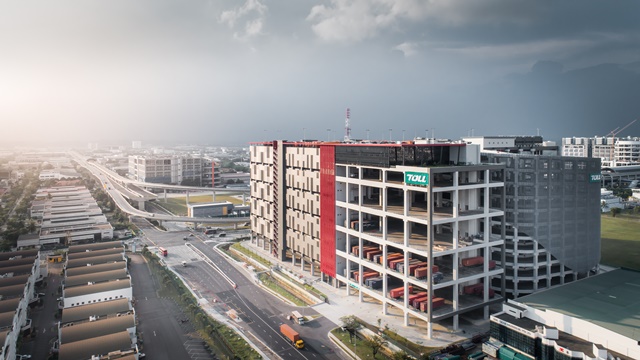
    Transport and logistics provider Toll Group has opened a S$228 million (US$167 million) logistics hub spanning over 1 million square feet.

    Located in Tuas, Singapore, the opening of Toll City is expected to increase the firm’s Asian network and traffic, strategically located near road links into Malaysia. It has in part been created to serve the booming Asian e-commerce industry.

    Toll City accommodates new technologies such as driverless vehicles, smart-city telematics to track and optimise road fleet in real-time, 3D-printing and Smart RFID cabinets for real-time inventory accuracy and accountability. In addition, Toll City hosts the SiTadeL Control Tower that provides decision support. SiTadeL won the Supply Chain Asia innovation award in 2017.

    Other emerging technologies being explored at the facility include automated machine handling equipment, in-warehouse cycle counting drones, voice picking and intelligent conveyor systems, augmented reality glasses for navigation and instruction, and exoskeletons for warehouse operation.

    Kelvin Wong, assistant MD for EDB said: “Toll City… is in line with the Logistics Industry Transformation Map, catalysing deep supply-chain innovation that translates into better business opportunities and good jobs within the logistics sector in Singapore.”

    Vincent Phang, executive VP of Toll Global Logistics Singapore and CEO of ST Logistics added: “Toll’s focus on technology developments will revolutionise the way people work, as we create resilient supply chain solutions that deliver smarter, faster and better outcomes for our clients… we offer an integrated supply chain management process that’s prepared for surge periods, and potential supply chain disruptions caused by human or natural disasters.”

    Toll City is supported by the Singapore Economic Development Board.

  • First time’s charm – Amazon’s Prime Day success in Singapore

    First time’s charm – Amazon’s Prime Day success in Singapore

    Prime day, Amazon’s own one-day-only retail holiday, was introduced in 2015 to overtake the well-established Black Friday and Cyber Monday and become the sales event of the year.

    The student has now surpassed the master as the number of ordered items by prime members in Singapore went through the roof for the exclusive shopping event surpassing those of Cyber Monday, Black Friday and the launch of Prime Now.

    Prime Day is a one-day only global shopping event exclusively for Prime members. Amazon Prime is a paid membership programme currently charged S$2.99 a month, with the option of a 30-day free trial. It offers members free international shipping, exclusive shopping and entertainment benefits. Crucial benefit of the program in Singapore is the free two-hour delivery service on a wide range of products for orders over S$40.

    This year, Amazon welcomed the Singaporean market to celebrate Prime Day. The kickoff was given at midday on July 16 where prime members were given 36 hours to shop with exclusive advantages.  Members enjoyed deals on a variety of categories including groceries, beauty products, consumer electronics and home appliances. Coca-Cola Zero, Kleenex toilet tissue and Play-Doh playsets were among the best-selling items for the event. Members also received thousands of units of free gifts and samples and enjoyed significant savings through credit card promotions.

    Henry Low, director of Prime Now Asia-Pacific said they “were excited to bring Amazon’s epic shopping event to Singapore for the first time this year to say “thank you” to our members”. A very-well received thank you as more members in Singapore joined Prime on 17 July than on any other single day since its launch.

    Prime Day is now officially Amazon’s biggest global shopping event in its history, another notch on the company’s belt.

  • How does an Airport “Terminal of Tomorrow” look like?

    How does an Airport “Terminal of Tomorrow” look like?

    National Geographic and Singapore’s Changi Airport Group (CAG) proudly announce a new partnership dedicated to sharing the story of Singapore.

    Kicking off the partnership, National Geographic is going deep inside Changi Airport’s Terminal 4 to explore the innovative design and technology solutions which are making the airport of tomorrow a reality for passengers today.

    Produced by National Geographic in partnership with CAG, Inside T4: Terminal of Tomorrow premieres on Thursday, July 19, 2018.

    Singapore Changi Airport has been named the World’s Best Airport for six consecutive years. Inside T4: Terminal of Tomorrow goes behind the scenes to meet the team responsible for conceptualizing Changi Airport’s new terminal and bringing it to life. With dramatic obstacles and thrilling achievements, National Geographic stays close to the T4 team as they tackle airport efficiency and security challenges, introduce cutting-edge facial recognition technology, install 12-meter-tall indoor trees and the world’s largest kinetic sculpture, and ultimately deliver groundbreaking design and technology solutions set to change the air travel game in Asia and across the globe.

    In 2017, 62 million passengers came through the gates of Singapore’s Changi Airport. By 2030, it plans to bring its capacity to more 150 million passengers. The first step to this expansion is the opening of its new terminal – T4. But while grappling with soaring passenger numbers is essential, Changi Airport has a reputation to uphold as an award-winning airport with the best experience in the world. Through Inside T4: Terminal of Tomorrow, viewers can join in the drama as designers and technical experts devise how to keep Changi ahead and raise the bar even further.

    Vineet Puri, Senior Vice President and Territory Head for Singapore & Malaysia, FOX Networks Group Asia said, “National Geographic has been extremely proud to join forces with the Changi Airport Group to bring the T4 story to life. With its rich cultural heritage and pioneering smart city development, Singapore has a treasure trove of stories to share on innovation, technology, science, nature and culture. Working in strong partnership with CAG, we are thrilled to explore how we can continue to collaborate on content creation which tells the story of Singapore.”

    Kelvin Ng, Changi Airport Group’s Director of Corporate and Marketing Communications said, “It has been a pleasure to share Changi Airport’s story of progress and innovation with people in Singapore and across the region. Together we hope to shine the light on all the innovation, the inspiration and the minds behind the new terminal; and to inspire everyone to rethink travel.”

    MayYi Lee, Vice President of Regional Production & Development, National Geographic added, “Changi Airport’s T4 is like a microcosm of Singapore and we are thrilled to bring an Inside story of technology, design, culture, and foresight to our viewers.”