Retail News CRM

Tag: smartphone

  • Oppo will be the next brand to copy Apple’s MagSafe charger

    Oppo will be the next brand to copy Apple’s MagSafe charger

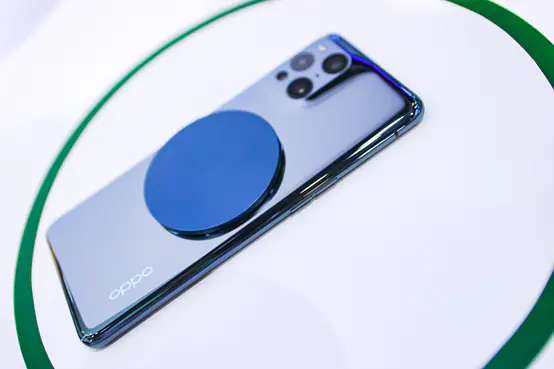
    Demonstrated at the Smart China Expo 2021, Oppo’s magnetic wireless charging system is called MagVOOC and consists of two adapters, one of which supports 20W speeds while the other supports 40W charging.

    The 40W charger resembles a typical wireless charging stand. If you don’t have a compatible MagVOOC smartphone from Oppo, it’ll work over the Qi charging standard at speeds of up to 15W.

    The smaller 20W charger, on the other hand, looks a lot like Apple’s MagSafe charger. Like the bigger charger, it supports Qi charging too, though this time speeds are limited to 10W.

    In addition to those products, Oppo showcased a dedicated 20W MagVOOC Power Bank that includes a 4,500mAh battery. Again, it includes Qi charging support with the aim of being compatible with wireless earphones and smartwatches.

    It’s unclear when Oppo will release its newly announced MagVOOC products to the public, but if the brand is already willing to demonstrate them in full, a launch shouldn’t be too far off.

  • Chinese smartphones have 50 percent market share

    Chinese smartphones have 50 percent market share

    With Vietnamese phone brand Vsmart stopping production, Chinese smartphones grabbed a 50 percent market share in the second quarter of this year, according to Counterpoint Research.

    Of five prominent Chinese brands, Xiaomi, Oppo and Vivo accounted for a 45 percent share, according to the global research firm that specialized in technology, media and telecom. South Korea’s Samsung from and the U.S.’s Apple account for another 44 percent.

    Smartphone sales grew by 11 percent year-on-year in the second quarter. Pent-up demand and a new user base coming from the feature phone segment largely contributed to this growth, according to Counterpoint’s Monthly Vietnam Channel Share Tracker.

    Samsung topped with a 37-percent share riding on the Galaxy M31, Galaxy A12 and Galaxy A02s.

    Xiaomi was in second spot with 17 percent driven by the Redmi 9 and Note 10 series. OPPO and Vivo took third and fourth spots.

    The OPPO A series was the volume driver for the brand and it was the Y series for Vivo. Apple continued to do well in Vietnam and became the fifth-largest brand in the market.

    Six of the 10 best-selling smartphones at FPT Shop in the second quarter were Chinese, including Oppo the A15, Oppo Reno 5 and Vivo Y20.

    5G-capable smartphones have a 14-percent share of the market, and it will grow as mwobile phone operators are gearing up to launch 5G services, according to Counterpoint.

    Vietnam has already started 5G trials, with Viettel becoming the first company to do so.

  • Xiaomi patents an all edge curved screen phone

    Xiaomi patents an all edge curved screen phone

    Some trends in the tech world just don’t want to fade away, and one of those is the endless desire to curve screen edges. It all started with the Galaxy Note Edge in 2014, but it wasn’t until the Samsung Galaxy S6 Edge that the trend gained popularity.

    With time, however, curved displays started feeling more like a cumbersome gimmick than the beautiful innovation it was meant to be and its flame dwindled in the wind of progress. In recent years, the feature has boiled down to just a slight curve in flagship devices.

    Having said that, it would seem some mobile phone manufacturers out there are trying to light the fire once again. In February this year, Xiaomi patented a design with an 88˚ curved screen, covering almost everything besides the edges and the back. Now the company pushes the idea of the curved display even further to the extreme.

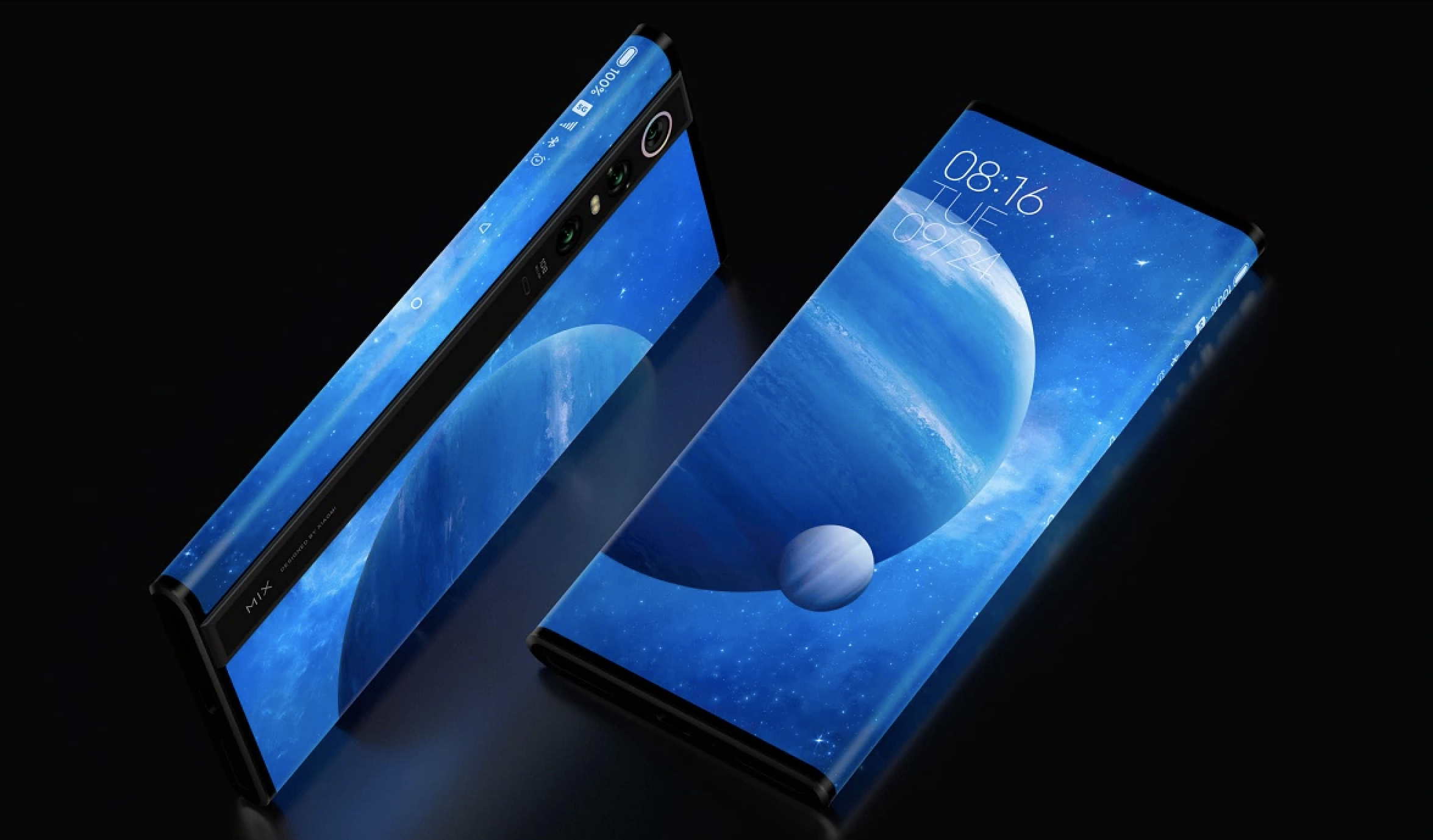
    The new patent envisions a waterfall display that envelops all four sides including the edges, which is much more difficult to achieve. The additional screen real estate could probably be used for displaying notifications, battery status, or other general information. There is also a possibility that pressure sensitivity could be added for additional functionality thanks to the whole lack of buttons thing.

    As the patent shows, Xiaomi has not only stretched the screen to hug all of the device’s front but has also removed all ports and buttons on the sides. What’s more, you won’t find any camera cutouts or notches to disrupt the beautiful flawlessness of the panel.

    How will you take selfies, you ask? Well, Xiaomi is one of the first to start experimenting with under-display cameras and has reached its third variation of that technology. The company is expected to release the Xiaomi Mi Mix 4 this year, which is rumored to have one.

    The back of the patеnted phone also features a peculiar design. We can see the large cutout for the camera, but there is also one right below it that doesn’t portray any clear purpose.

    Nevertheless, it is doubtful that such extreme designs will come back in fashion. They are not practical in more ways than one, and users seem to have lost interest in them. On the other hand, the idea of port- and buttonless mobile devices is starting to creep up, and it might not be too long until it becomes the new mainstream approach.

  • Sony Xperia 5 III coming to Europe in September and it won’t be cheap

    Sony Xperia 5 III coming to Europe in September and it won’t be cheap

    Sony announced that it will bring the Xperia 1 III in the United States in late September, but didn’t mention anything about the Xperia 5 III, the former’s cheaper brother. That could mean a few different things like maybe Sony isn’t sure when it will be able to bring it to the US, or perhaps it has no intention to sell it in North America.

    Either way, we at least have an idea about how much the Xperia 5 III will cost in the US. The company’s European branch revealed that the Xperia 1 III and Xperia 5 III will be launched in Europe for €1.300 and €1000, respectively.

    Considering the Japanese company has already opened Xperia 1 III pre-orders in the US and the phone is priced at $1,300, it’s safe to assume that the Xperia 5 III will sell for $1,000 in case Sony decides to bring it to the States.

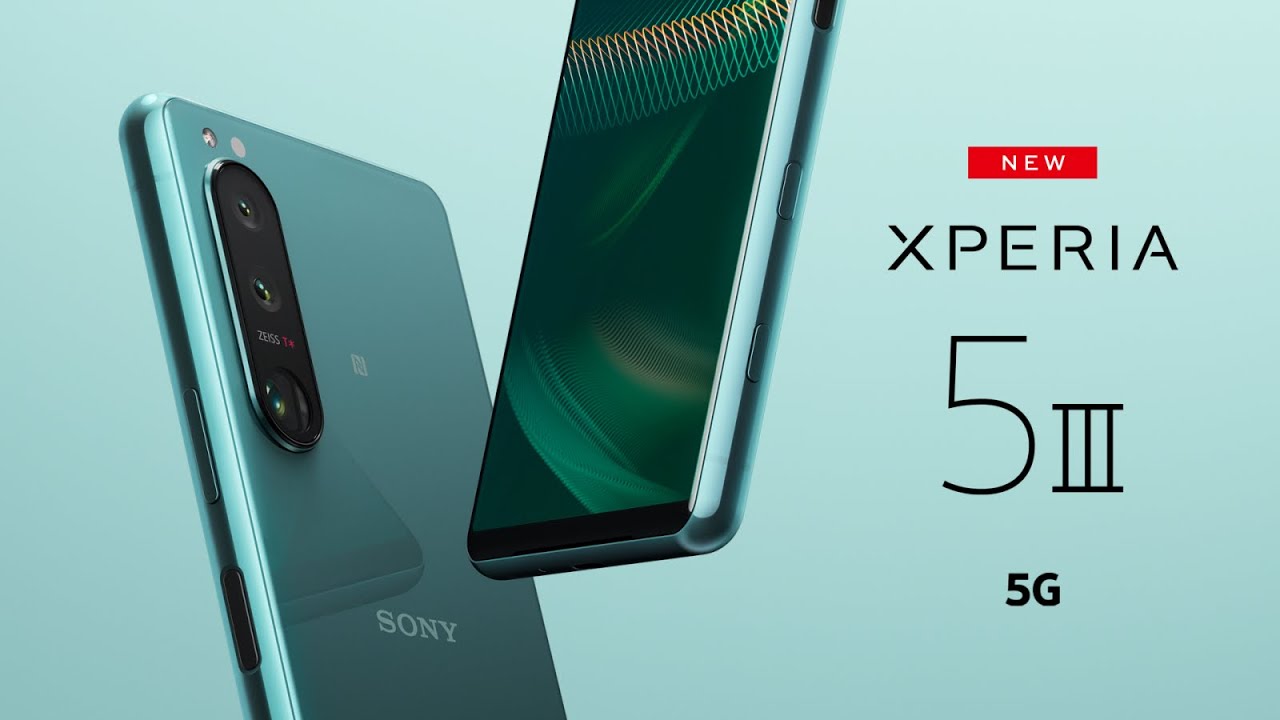
    Just like the Xperia 1 III, the Xperia 5 III will be shipped in Europe from September. This one will be available in Black and Green, but additional colors may be introduced after the phone’s market launch.

    The Xperia III 5 is a top-tier smartphone powered by a Qualcomm Snapdragon 888 5G processor, paired with either 8GB RAM and 128GB storage, or 8GB RAM and 256GB storage. Also, the smartphone boasts a stunning 6.1-inch OLED FHD+ display featuring Corning Gorilla Glass 6 coating.

    However, one of the phone’s main selling points is the triple camera setup (12MP+12MP+12MP). Along with the Xperia 1 III, the Xperia 5 III is the world’s first smartphone with a variable telephoto lens paired with a dual PD sensor. Not to mention that the camera features Zeiss optics and a brand new AI super-resolution zoom technology.

    As far as the battery goes, Sony claims the 4,500 mAh battery can charge up to 50% of capacity in 30 minutes with the 30W charger that comes with the phone.

  • Vivo files a patent application for a detachable flying smartphone camera

    Vivo files a patent application for a detachable flying smartphone camera

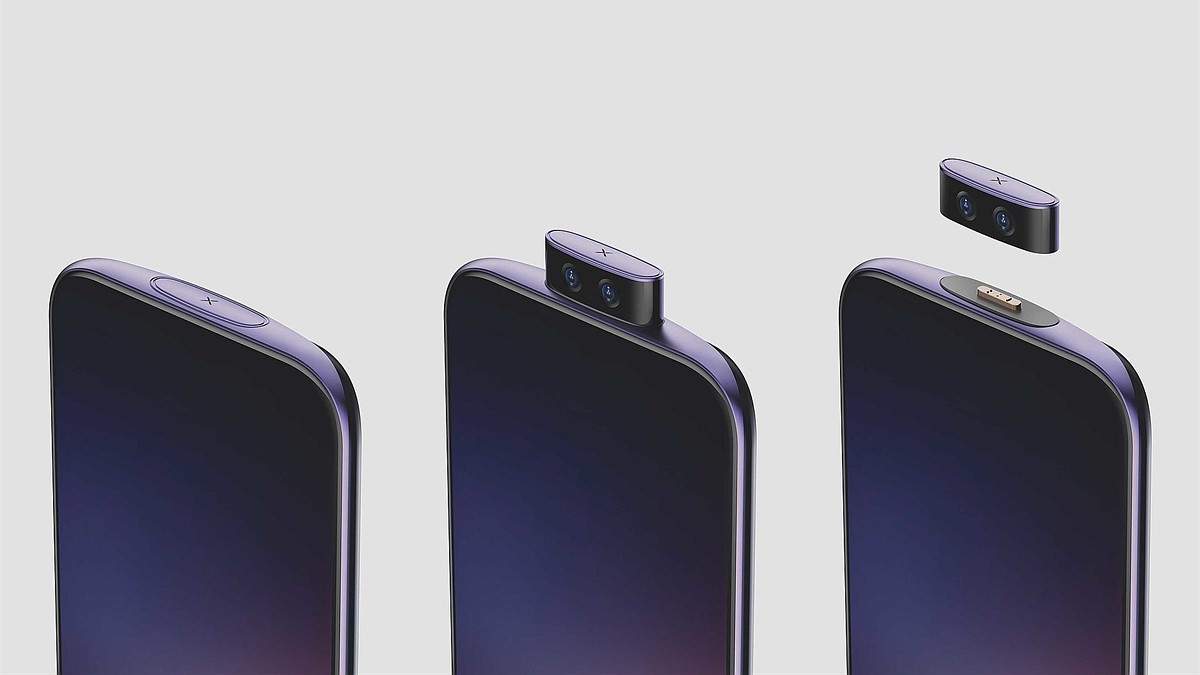
    Vivo has filed a patent for a flying smartphone camera. You read that right, the camera disconnects from the phone and takes to the air to provide the user with unusual photo opportunities to take snapshots and video from. The camera module features four propellers, two dual cameras, three infrared proximity sensors and an extra battery.
    While in flight, the proximity sensors are used to prevent the flying camera module from crashing into other items that have escaped gravity by calculating the distance from a possible hazard to prevent mid-air collisions. Once in the air, the “flight camera” will be able to change positions and we expect to see one camera at the front of the module with another at the top.
    The patent application was filed with the World Intellectual Property Organization (WIPO) and while camera drones are not new, Vivo is the first manufacturer to have a flying camera drone fit into the body of a smartphone. But there is a caveat. To make the camera module fit inside a phone, it has to be made smaller and lighter which means that it can be blown off track because of the wind which can also make images appear shaky.
    The vast majority of smartphone innovations have been coming from Chinese-based smartphone brands. But keep in mind that just because Vivo seeks to patent a flying camera for a smartphone, that doesn’t mean that such a product is coming soon.
  • Samsung to launch another mid-range 5G smartphone in Europe

    Samsung to launch another mid-range 5G smartphone in Europe

    After Galaxy A52 and A72, Samsung plans to launch yet another mid-range smartphone in Europe, which is supposed to bring 5G to the masses. The unannounced phone is known as Galaxy M52 and it’s likely to be cheaper than the other two Galaxy A series phones.

    Based on a benchmark spotted by GalaxyClub, the upcoming Galaxy M52 will be equipped with Qualcomm’s Snapdragon 778G processor. It’s the same chipset that will be used by Honor inside its 50 series, so it’s bound to be good enough for a mid-range phone.

    Apart from its chipset, we also know that the Galaxy M52 will pack a 64-megapixel main camera, complemented by a secondary 32-megapixel camera in the front. There’s no info yet about the size of the display, but the phone is expected to feature a massive battery, just like the predecessor.

    It’s too early to talk about price, but it looks like information about color variants has already leaked, so we’re happy to let Samsung fans know that the Galaxy M52 will be available in at least three different colors: black, blue, and white.

  • Apple will not force you to update to iOS 15 if you’re happy running iOS 14

    Apple will not force you to update to iOS 15 if you’re happy running iOS 14

    With the 2021 edition of WWDC (Worldwide Developers Conference) finally underway earlier today, all the media attention is naturally directed at the next versions of Apple’s many popular operating systems, set to be released in their stable form at some point in the fall.

    But in an unusual move, the Cupertino-based tech giant is keeping iOS 14 in the limelight after unveiling and fully detailing its sequel by… essentially taking a page out of Google’s book.

    Apple plans to make the iOS 15 update optional for every single owner of all current and previous-gen iPhones eligible to make the software leap starting in September. Obviously, no one was ever forced at gunpoint to install iOS 14 or any older OS builds as soon as they were made generally available.

    But until this year, if you wanted to keep your handset’s security up-to-date, you had to first embrace whatever major iOS version was latest. In other words, you could refuse to jump on the iOS 14 bandwagon, for instance, until you felt comfortable leaving iOS 13 behind, but from a security standpoint, it was pretty dangerous to hold off for too long.

    That will no longer be the case when iOS 15 rolls out to the masses, as said masses will be offered a real choice between “the latest features and most complete set of security updates” on one hand and slightly older features nonetheless combined with “important security updates” on the other.

    While that may feel like a no-brainer for many users, others will undoubtedly relish the opportunity to wait and see just how stable and smooth iOS 15 proves at launch before committing to an update. You can also hang onto your beloved iOS 14 if you fear your ancient iPhone 6s, 6s Plus, first-gen SE, or iPhone 7 will have trouble making the most of Apple’s “latest features.”

    Separately delivering major OS promotions and “important” security patches for the exact same devices, of course, is what Google and its mobile hardware-making partners have been doing since, well, forever. In the short run, Apple’s very uncharacteristic move is bound to impact the adoption rate of iOS 15, but after a while, we don’t expect many people to stick with the older version.

    Besides, something tells us the company is fully aware that this could lead to a mini-fragmentation problem of sorts, which probably means you will eventually need to get iOS 15 to continue receiving security updates.
  • McDonald’s unit hands out free iPhones to new employees who meet certain conditions

    McDonald’s unit hands out free iPhones to new employees who meet certain conditions

    Some businesses are just dying to find new employees as the U.S. starts to see the beginning of a post-COVID economy. A tweet disseminated by a Twitter subscriber with the handle Bragard (@brogawd) shows just how desperate a particular McDonald’s unit is to attract and keep new workers. A sign in the unit’s window says in huge letters that the restaurant is “Now Hiring” and in slightly smaller print it states “Free iPhone.”

    Now as you might expect, there are some caveats here. The sign notes that the iPhone is given out after six months of employment as long as the employee meets unnamed employment criteria. And speaking of unnamed, the iPhone model being given away to qualified burger-flippers is not mentioned and neither is the condition of the phone. We can take an educated guess based on the photo used on the sign in the window.

    The last Apple iPhone models outside of the iPhone SE (2020) with Touch ID was the iPhone 8 series released in September, 2017. We suspect that the model they are giving away could be the iPhone 8. A certified refurbished model with 64GB of storage is priced at $200 and up which might not be enough of an incentive to attract new workers.

    And hey, we’re not even sure which iPhone model is being handed out by the wner of this McDonald’s. It would be interesting to know that information and whether the employment bonus has attracted a large response.

    If the model being handed out is an iPhone 8 refurb, it still is a serviceable device able to use iOS 14 and will probably be supported for at least another year or two. Under the hood is the 10nm A11 Bionic chipset with a 12MP single-rear camera.

    If we do manage to find out more information, we will up update this story.

  • Vingroup shuts down smartphone, TV manufacturing

    Vingroup shuts down smartphone, TV manufacturing

    Vietnam’s biggest private conglomerate, Vingroup, will stop manufacturing smartphones and televisions, focusing instead on producing equipment for VinFast cars.

    Its VinSmart unit, established nearly three years ago, will start making “infotainment” features for VinFast cars to make them more competitive in the global market, Vingroup said in a statement Sunday.

    VinSmart will also research, design, and manufacture electric engines, electronic parts and batteries for electric vehicles to increase the localization ratio of its products.

    The unit will also push research on devices for smart cities and smart homes.

    “The production of smartphones or smart TVs no longer brings breakthroughs and creates unique values for users,” said Nguyen Viet Quang, vice president and CEO of Vingroup.

    But developing smart cars, smart homes and smart cities will bring many “outstanding” benefits to humanity, therefore, the company wants to devote all its resources towards doing this, he added.

    VinSmart will continue to produce TVs and smartphones to complete the products’ lifecycle.

    Later, a part of VinSmart facility will be used to manufacture products for partners and the remaining part will be expanded to make its own new products.

    Since its establishment in June 2018, VinSmart has introduced 19 smartphone models and five TV models to the market.

  • Video from Google shows an unreleased Pixel smartphone

    Video from Google shows an unreleased Pixel smartphone

    An unreleased Google Pixel smartphone was spotted on the Instagram story of Made By Google, reports Android Authority. The story has now expired, but the outlet has shared a screenshot that shows the phone.

    The device in question appears to be a white variant of the Pixel 4a. Like the Clearly White Pixel 3a, it has an orange power button.

    The Pixel 4a was delayed by months due to the pandemic. At launch, only the Just Black variant was available. A few months later, a Barely Blue option was also released. Maybe Google had originally planned to release a white model as well but decided to drop it because of production challenges posed by the pandemic.

    The Pixel 4a is one of the best affordable phones around. We are unlikely to see the alleged Clearly White model as Google is now gearing up to launch the Pixel 5a, which will probably be announced in August. It will have a very limited release.

    The phone will apparently stay close to the Pixel 4a 5G and Pixel 5. It will reportedly also have the same Qualcomm Snapdragon 765G chip under the hood. Other details remain scarce at this point, but it appears that Google is disproportionately focused on the Pixel 6 and 6 XL – which are rumored to feature a 5nm in-house chipset and the Ultra-wideband tech, amongst other upgrades – and its first foldable handset.

  • Samsung overtakes Apple in smartphone shipments as Xiaomi closes in

    Samsung overtakes Apple in smartphone shipments as Xiaomi closes in

    Samsung Electronic reclaimed its crown as the world’s biggest smartphone maker from Apple in the first quarter, cornering a fifth of overall global shipments.

    China’s Xiaomi rounded out the top three positions with its best quarterly performance ever as shipments surged 62% to 49 million phones and its market share rose to 14%, market research firm Canalys said.

    Overall, global shipments surged 27% to 347 million units in the first quarter as the Chinese economy opened up after the pandemic and a swift vaccine rollout in the United States raised hopes of an economic recovery.

    South Korea’s Samsung shipped 76.5 million smartphones in the quarter to grab a 22% share of the market, Canalys said. The company on Thursday reported a 66% surge in quarterly profit in its mobiles business, thanks to robust sales of its flagship Galaxy S21 smartphone series.

    Canalys said Apple shipped 52.4 million iPhones in the January-March period, falling to the second spot with a 15% share of the market.

    Apple still grabbed record market share in the United States, China, India and Japan, Counterpoint analyst Varun Mishra said, adding that the iPhone Pro Max was a top seller in the United States.

    Smartphone sales have surged over the past year as people stayed and worked from home. But the shopping frenzy has fuelled a global shortage in semiconductor chips that has roiled industries including autos and large appliances.

    “Supply of critical components, such as chipsets, has quickly become a major concern, and will hinder smartphone shipments in the coming quarters,” Canalys analyst Ben Stanton said.

    Apple said on Wednesday that the chip shortage could cost the company $3 billion to $4 billion in revenue in the April-June quarter, affecting primarily iPads and Macbooks.

    March-quarter smartphone shipments for China’s Oppo and Vivo brands also surged, Canalys said. But Huawei, the former No. 1 that remains shackled by U.S. sanctions, took only seventh place after selling its Honor brand last year.

  • Xiaomi appears to be on the verge of announcing an affordable flagship

    Xiaomi appears to be on the verge of announcing an affordable flagship

    Xiaomi’s Mi 10 lineup is about to get bigger and even more confusing. The range currently comprises eight models: Mi 10 5G, Mi 10 Pro 5G, Mi 10 Ultra, Mi 10T 5G, Mi 10T Pro 5G, Mi 10 Lite 5G, Mi 10T Lite 5G, and Mi 10i 5G.

    The platform implies that at least one variant will have 8GB of RAM and the phone will run Android 11.

    The phone has previously also been seen on TENAA, and according to the website, it will feature a quad-camera array.

    Save for the new chip, the Mi 10 5G is expected to have the same design and specs as last year’s Mi 10. Thus, it will likely have a 6.67-inches FHD+ AMOLED panel with a refresh rate of 90Hz, and a 4,780mAh battery with 30W fast charging support. The Mi 10 packs one 108MP camera, a 13MP wide-angle unit, a 2MP macro module, and a 2MP depth sensor. The front camera is 20MP.

    The new model will reportedly cost around CNY3,500 (~$541). The launch date remains a mystery but the phone’s visit to Geekbench and TEENA suggests an announcement is not far off.

  • Apple returns to 4th place in Vietnam smartphone market

    Apple returns to 4th place in Vietnam smartphone market

    Apple surpassed VinSmart to become the fourth-largest smartphone brand in Q4 of 2020 as sales of iPhone 12 surged.

    With a market share of 11 percent, it was behind China’s Vivo (13 percent), which climbed two places from the previous quarter, Singaporean technology market analysis firm Canalys said in a recent note.

    South Korea’s Samsung stayed on top with a 24 percent market share followed by China’s Oppo (16 percent), but their sales plummeted by 19 percent and 28 percent year-on-year.

    Hundreds of people queued up in front of Apple stores to become the earliest owners of iPhone 12 late last year.

    Almost 10 smartphone brands have been vying for third place in recent years, with Apple, Xiaomi, and Vivo the most notable names. None has remained in that position for more than six months.

    Around 75 million people, or almost 80 percent of the population, use smartphones, according to We Are Social, a social media marketing and advertising agency.

  • Phones continue to lead exports

    Phones continue to lead exports

    Exports of phones and phone parts were worth $51.18 billion last year, a whopping 18 percent of Vietnam’s total exports, according to the General Statistics Office.

    The phones were exported to over 50 countries and territories, with China being the largest market, accounting for almost a quarter.

    The second-largest market was the EU with 19 percent, followed by the U.S., South Korea, and the UAE.

    But for the first time in 10 years, phone and component exports fell, by 0.4 percent.

    Samsung was the biggest contributor to the exports. Its smartphone manufacturing factories in the northern provinces of Bac Ninh and Thai Nguyen are its two largest in the world and are also its largest home electronics factory in Southeast Asia.

    About 60 percent of all Samsung smartphones are produced in Vietnam.

  • Growing 5G demand will drive major 2021 smartphone market recovery

    Growing 5G demand will drive major 2021 smartphone market recovery

    The global smartphone market was only one of the major industries to suffer a big and largely unexpected decline in 2020 as a direct consequence of the coronavirus pandemic, but while the COVID-19 threat is projected to linger this year and potentially even beyond that, 2021 should mark the beginning of a beautiful rebound.

    The first signs of an imminent recovery showed up during last year’s third calendar quarter, when shipments were down around the world by a measly four percent compared to the same period of 2019, becoming evident in the final three months of 2020, as the year-on-year sales decline further contracted to one percent according to Counterpoint Research. In contrast, the same market intelligence firm estimated the mobile industry’s Q1 and Q2 slumps at 13 and a record 26 percent respectively.

    Clearly, there’s no way to go but up now that people are slowly regaining their appetite for both mid-range and high-end handsets pretty much in all key regions, and according to a hot new report published by Gartner, worldwide sales could register a healthy total increase of 11 percent in 2021.

    While that’s unlikely to be enough to boost the market to its pre-pandemic levels, this year’s forecasted 1.53 billion units would come incredibly close to the 1.54 billion smartphones sold in 2019. The aforementioned 11 percent growth is expected to be mainly driven by “mature” markets across Western Europe, Asia Pacific, and Latin America on a regional level, as well as rising demand for 5G-enabled devices essentially everywhere.

    Affordable 5G models starting as low as $200 could be particularly successful in 2021, especially in emerging European and Asian countries. Overall, 5G smartphones are likely to exceed 500 million unit sales, accounting for around 35 percent of the entire market. In comparison, 2019 saw less than 20 million 5G-capable handsets reach the hands of their owners, with said number growing to more than 200 million last year.

    Unfortunately, Gartner’s latest report doesn’t go into any detail regarding the prospective evolution of the world’s top mobile device vendors this year, so it’s not entirely clear yet who will drive the 11 percent global hike from that perspective.