Retail News CRM

Tag: Social

  • CEO Jack Dorsey leaves Twitter “effective immediately”

    CEO Jack Dorsey leaves Twitter “effective immediately”

    Jack Dorsey, who co-founded the popular Twitter social media site back in 2006, is stepping down as CEO of the company effective immediately. Replacing Dorsey will be Twitter chief technology officer Parag Agrawal.

    In a statement, Dorsey said, “I’ve decided to leave Twitter because I believe the company is ready to move on from its founders. My trust in Parag as Twitter’s CEO is deep. His work over the past 10 years has been transformational. I’m deeply grateful for his skill, heart, and soul. It’s his time to lead.”

    The 45-year-old Dorsey is also CEO of Square, a mobile payments company he co-founded. Dorsey will remain a member of the Twitter board until his current term expires at the  2022 stockholders meeting. Salesforce President and COO Bret Taylor will take over from Patrick Pichette as Chairman of the Board. Pichette will remain on the board as chair of the Audit Committee.

    The controversial social media site hopes to at least double its annual revenue by the end of 2023 while reporting 315 million monetizable daily active users by the end of that year. But these are goals that now are up to Mr. Agrawal to reach. As of last month, Twitter counted 206 million daily active users or 187 million monetizable daily active users worldwide. In the U.S., Twitter has 37 million monetizable daily active users.

    Dorsey had been removed as CEO of Twitter in 2008 before returning in 2015 when Dick Costolo left. Since Dorsey’s return on October 5th, 2015, Twitter shares have risen 85%. Shares of Dorsey’s other public company, Square, have risen 1,566% since the firm went public on Nov. 19, 2015. Investors initially took Twitter shares 11% higher to 52.27. But the stock has given up all of its gains and is now down more than 1% for the day at $46.49.

    Dorsey, as you might expect, took to his @jack Twitter page to confirm the news and to leave a long message to his followers. In it, Dorsey writes, “I want you all to know that this was my decision and I own it. It was a tough one for me, of course. I love this service and company … and all of you so much. I’m really sad … yet really happy. There aren’t many companies that get to this level. And there aren’t many founders that choose their company over their own ego. I know we’ll prove this was the right move.”

    Twitter became known worldwide as the platform used by former President Donald Trump who used the platform to float policy, attack opponents, and comment on the world as he saw it. Using Twitter in this fashion allowed the public to get an unprecedented and transparent look at the thoughts of a president.

    Twitter executive Vijaya Gadde, two months after Trump was inaugurated in 2017, said, “To me, there’s nothing better than having a political discourse in plain and open view and having access to your elected officials and being able to hold them accountable. In that sense, I think it’s a great thing because this wasn’t always possible before.” But Twitter permanently banned Trump on January 8th of this year, two days after the attack on the U.S. Capitol by Trump supporters who believed his lie about the election being stolen.

    At the time, Twitter announced the ban with a statement that read, “After close review of recent Tweets from the @realDonaldTrump account and the context around them — specifically how they are being received and interpreted on and off Twitter — we have permanently suspended the account due to the risk of further incitement of violence.”
  • Meta looking into launching its own retail stores in the US

    Meta looking into launching its own retail stores in the US

    Facebook’s parent company Meta is looking into opening its own retail stores in the United States, according to a report.

    The stores will largely be used to show off the business’ physical goods, such as its virtual reality headsets and video chat tablets which are already sold in other chains across the country, and allow customers to try them out in a bid to get them hooked into Meta’s forthcoming ‘metaverse’.

    “Today we are seen as a social media company, but in our DNA we are a company that builds technology to connect people, and the metaverse is the next frontier just like social networking was when we got started,” Meta CEO Mark Zuckerberg said when announcing Facebook’s name change.

    The first Meta flagship store is likely slated for Burlingame, California. The store was likely going to be called the ‘Facebook Store’, though it remains to be seen if this will still be the case after the business’ rebrand last week.

    Meta is late to the party on launching its own physical stores, with fellow tech giants Amazon and Google both having launched their own stores in the last few years.

    However, with its roughly 2.9 billion monthly active Facebook users globally as of the third quarter of 2021 (according to Statista), the business has a large pool of potential consumers to market itself toward.

  • Instagram replaces swipe up gesture for sharing links with stickers

    Instagram replaces swipe up gesture for sharing links with stickers

    Instagram started to test a new way to share links for its users several months ago, but not many people have had access to the feature until recently. Starting this week, the so-called “link stickers” will be rolled out to all Instagram users on both Android and iOS platforms.

    The link stickers are meant to replace the “swipe up” gesture for sharing links, which will be retired. Here is what you’ll have to do, to add a link to an Instagram story:

    • Capture or upload content to your story
    • Select the sticker tool from the top navigation bar
    • Tap the “Link” sticker to add your desired link and tap “Done”
    • Place the sticker on your story — like our other stickers — and tap on the sticker to see color variations

    Instagram also hinted at future tweaks that the sticker might get, such as various customization options to make it clear what someone will see when they tap a link. If you don’t see the ability to add links in Stories yet, make sure to update your Instagram app to the latest version. Also, keep in mind that link stickers cannot be used on the main Instagram feed, they’re limited to Stories.

  • Internal memo reveals Instagram’s concern about losing its teenage users

    Internal memo reveals Instagram’s concern about losing its teenage users

    A year ago, Instagram was so concerned about losing teen users that it decided to spend a huge percentage of its marketing budget to reach teenagers. This report was published in The New York Times and was based on anonymous sources and internal documents. One company memo said, “If we lose the teen foothold in the U.S. we lose the pipeline.”

    Facebook, which bought Instagram for a reported $1 billion back in 2012, garnered some negative media coverage earlier this month when a former product engineer named Frances Haugen leaked documents to The Wall Street Journal. The documents revealed that Facebook’s own researchers discovered that Instagram is “harmful for a sizable percentage” of its young users, specifically teenage girls who can get depressed, anxious, and develop body-image issues from using the app.

    Haugen also testified before Congress and said that the products offered by Facebook “harm children, stoke division and weaken our democracy.” Besides Instagram and Facebook, the latter also owns messaging apps WhatsApp and Facebook Messenger. Instagram has competition in the teen market from Snapchat.

    Facebook says that the media and the public are taking Facebook’s internal research out of context. It says that the report actually showed that teens benefited from using Instagram. The company said that its researchers were told by teenagers that they use the app “when they are struggling with the kinds of hard moments and issues teenagers have always faced.”

    Starting in 2018, most of the spending earmarked for Instagram’s annual worldwide marketing budget was focused on messaging directed at teens. The budget for this year is $390 million. A Facebook spokesman said, “. “While it’s not true that we focus our entire marketing budget towards teens, we’ve said many times that teens are one of our most important communities because they spot and set early trends. It shouldn’t come as a surprise that they are a part of our marketing strategy.”

    The Times was told by marketers that focusing on a specific age group to the extent done by Facebook is not usual. And the newspaper’s report noted that Facebook also focused some of its advertising on parents and young adults.

    In March, it was discovered that Facebook was developing a version of Instagram for those children under 13 who are not allowed on the Instagram site. Instagram Kids wouldn’t be designed like the adult version of the app as it would be free of ads and parents would have control. The 1998 Children’s Online Privacy Protection Act restricts companies from collecting or storing personal data on anyone under 13.

    Last month, half a year after the initial report about Instagram Kids leaked, Instagram announced that it was halting work on the site. Despite pausing the development of the kid-friendly version of Instagram, Facebook still believes that it “is the right thing to do.” Additionally, the company said that it will continue to work on opt-in parental supervision for teens. It also wants the app to flash a “Take a Break” warning to remind users that it is time to move on to something else.

    Instagram Kids would also have allowed parents to limit the amount of time their kids used the app, oversee who they were following on the app, and who was following them.

    An unnamed source told it that Facebook managers explained to workers that it is doing all that it can to prevent underage users to sign up for an Instagram account, but these kids find a way to open such an account anyway. The Instagram Kids platform would have been aimed at children 10 to 12 years of age, would have required parental permission to join, and the app would include only “age-appropriate content and features.”

  • Instagram is trying its best to keep up with TikTok

    Instagram is trying its best to keep up with TikTok

    After TikTok shook the social media market and fundamentally changed the name of the game, western companies quickly rushed in to grab a piece of the pie. As per usual, Instagram was quick to follow up with a similar feature with the release of Reels in 2020.

    On June 30, the head of Instagram shared a video on his Twitter page about upcoming changes in the social media platform. In his post, he mentions the addition of fullscreen mobile-first video to the app.

    We’re also going to be experimenting with how do we embrace video more broadly — full screen, immersive, entertaining, mobile-first video.

    These videos will appear in your feed in the form of recommendations, even if you don’t follow the account that’s posted them. Adam Mosseri explained the need for such changes by addressing the increasingly competitive environment in which Instagram finds itself.

    Let’s be honest, there’s some really serious competition right now. TikTok is huge, YouTube is even bigger, and there are lots of other upstarts as well.

    The days when the app was primarily photo-centric are long gone. It used to be a place where people would casually share photos of their everyday life with their friends and family. It then became a creative place for professional artists to showcase their work and promote it to a wider audience. Some would say that was the golden age of Instagram.

    In the last couple of years, however, Instagram evolved into a platform that also focuses on retail, instant entertainment, and product advertising. “We’re no longer a photo-sharing app or a square photo-sharing app,” said Mosseri. He then cemented his message, saying that “people are looking to Instagram to be entertained, there’s stiff competition and there’s more to do. We have to embrace that, and that means change.”

  • Hollister teams with social media stars to launch new brand Social Tourist

    Hollister teams with social media stars to launch new brand Social Tourist

    Hollister Co., a division of Abercrombie and Fitch is building upon its successful relationship with leading social media personalities Charli and Dixie D’Amelio to launch Social Tourist, a new trend-forward apparel brand within the Abercrombie & Fitch Co. portfolio. For its initial May 20 launch, Social Tourist will be available exclusively in Hollister stores and online.

    The launch of Social Tourist marks the beginning of an exclusive, multi-year apparel agreement between Abercrombie & Fitch Co. and the D’Amelio sisters. The new brand has been imagined and inspired by Charli and Dixie’s experiences at the epicenter of social media, and also reflects Gen Z’s unique lens of living in a digitally native environment. Hollister has leveraged its pool of talent, resources, and global reach, as well as its connection to the global teen customer, to authentically bring Charli and Dixie’s vision to life.

    Working together with Hollister, Charli and Dixie have been involved in every aspect of Social Tourist, including product selection, design, branding, positioning and marketing. The family has a strong background in the apparel industry with their father, Marc D’Amelio, having over 30 years of experience in sales and design. Marc will serve as a consultant for Social Tourist.

    Social Tourist will have four distinct apparel lines: gender-inclusive items, trend pieces such as dresses and skirts, everyday essentials featuring premium basics, and swim. Each collection will include limited-edition items, with new products dropping approximately every month.

    “We’ve always loved fashion, and it’s been amazing to be so involved in this process. We feel like Social Tourist really represents both of us and explores how our generation is balancing who they are on social media with real life,” said Dixie D’Amelio. “The first product drop is all about introducing the brand to our fans, and the second drop in June reflects our individual personalities – designs that reflect Dixie’s personality are a bit edgier, with dark color palettes and patterns, where my vibe is shown through super feminine and cute styles. We can’t wait to put our vision out into the world!” added Charli D’Amelio.

    “Charli and Dixie are the quintessential example of what it’s like to grow up in the digital world, and we’ve always believed they authentically represent our teen customers’ mindset both online and in real life. We’re thrilled to unlock new opportunities for all of us beyond our co-created products, which strongly resonated with our global customers. Given the high demand, we knew we could take our relationship further,” said Kristin Scott, Global Brand President at Abercrombie & Fitch Co. “Creating a new brand virtually was no small feat, but the excitement and energy of the D’Amelio family, combined with the talent and experience of the Hollister family, has allowed us to push boundaries and make this a reality.”

    In working with Hollister since 2020, the social media stars have served as “Chief Jeanealogists,” where they tested and approved every aspect of Hollister’s denim; launched the #MoreHappyDenimDance TikTok challenge, which garnered over 5.4 billion views worldwide; and dropped a series of limited-edition, co-created collections. The sisters currently have a combined 250 million followers across their social media handles and in November 2020, Charli became the first TikTok user to surpass 100 million followers on the platform.

    Abercrombie & Fitch Co. is represented by Philip Daniels of Ginsburg Daniels Kallis and Bruce Paige of Vorys, Sater, Seymour and Pease. The D’Amelios are represented by UTA and Gary Stiffelman, Robert Kahan, and Kevin Yorn.

    Safe Harbor Statement under the Private Securities Litigation Reform Act of 1995

    A&F cautions that any forward-looking statements (as such term is defined in the Private Securities Litigation Reform Act of 1995) contained herein or made by management or spokespeople of A&F involve risks and uncertainties and are subject to change based on various important factors, many of which may be beyond the Company’s control. Words such as “estimate,” “project,” “plan,” “believe,” “expect,” “anticipate,” “intend,” and similar expressions may identify forward-looking statements. Except as may be required by applicable law, we assume no obligation to publicly update or revise our forward-looking statements.

    Risks and uncertainties related to the duration and impact of the COVID-19 pandemic on the Company and the factors disclosed in “ITEM 1A. RISK FACTORS” of A&F’s Annual Report on Form 10-K for the fiscal year ended January 30, 2021, in some cases have affected, and in the future could affect, the company’s financial performance and could cause actual results for fiscal 2021 and beyond to differ materially from those expressed or implied in any of the forward-looking statements included in this press release or otherwise made by management.

  • TikTok, seeking advertisers, reveals info about its subscribers and how they use the app

    TikTok, seeking advertisers, reveals info about its subscribers and how they use the app

    TikTok has been seeking more advertisers for the global and U.S. versions of the short-form video app. As a result, the company has been meeting with potential advertising partners while carrying a B2B pitch book for its TikTok for Business unit. As you might imagine, the pitch deck reveals information about TikTok designed to show off the large number of TikTok users that could be mined by advertisers.

    The pitch deck has leaked online revealing plenty of information about TikTok’s audience. As of October, TikTok’s own numbers show that it’s monthly active users (MAUs) worldwide amount to 732 million. In the U.S., the MAU figure is over 100 million.

    When you consider that those figures are six months old, the numbers are much higher-perhaps tens of millions higher globally. Thanks to a lawsuit filed against the government last year, we know that from the end of July 2020 to October 2020, the app gained approximately 14.3 million monthly active worldwide users each month. If this growth continues over the next 13 months, by May 2022 the app will have over one billion monthly active users globally.

    Some of the data that TikTok is pitching to advertisers should be able to convince them to put some money in TikTok’s till. 47% of users said that they have purchased something that they saw on TikTok in the past while 67% said that TikTok gave them the inspiration to go shopping even if they weren’t planning to do so.

    The pitch deck also revealed the app’s attractive demographics with 42% of active users between 18 and 24 years old. 17% are between 13 and 17 with 22% aged between 25 and 34, 12% between 34 and 44 and only 7% over the age of 45. TikTok users continually return to the app as the average user opens TikTok 19 times a day although it isn’t clear whether this number reflects the actions of global or U.S. users.

    And as of this past January, the average TikTok user views the app 89 minutes a day. 80% of users call TikTok “the most entertaining platform.” The pitch deck is supposed to make TikTok sound like the perfect place for advertisers to spend their money and based on the numbers, many of them will do so on the app.

  • Twitter is working on an Undo button

    Twitter is working on an Undo button

    Judging by evidence spotted by reverse engineer Jane Wong, Twitter is working on a yet-unannounced Undo button. The feature will appear after the user sends a tweet. The point of the “Undo” button is probably to give the user the option to stop their tweet from posting shortly after hitting the Send button if a mistake has been made. This alleged feature could be the answer to the criticism Twitter has gathered for not having an edit button.

    Over the years there has been pressure on the social network from the Twitter community to add an edit button.

    Twitter’s new “Undo” button seems like a partial solution, as it shows the company is still on the offensive about the idea to edit tweets.

    The Undo Button isn’t the only new feature expected to come to Twitter. Recently, the network was spotted testing a Shop button that shows up in tweets including links to online stores, and earlier, the Super Follow feature was introduced, allowing people to charge for access to their tweets. We won’t be surprised if Twitter has more goodies to show us in the near future.

  • Instagram working on TikTok-like vertical Stories feed

    Instagram working on TikTok-like vertical Stories feed

    Instagram borrowed the short-form video format from TikTok and rebranded it as Reels. Now, the Facebook-owned platform is looking to clone another one of TikTok’s ideas.

    The social media giant has announced that it’s in the process of testing a TikTok-like vertical feed for Instagram Stories, a feature that was rather ironically borrowed from rival Snapchat.

    Alessandro Paluzzi was the first to spot the new feature and his screenshots reveal a fairly simple UI that informs users about the new ability to scroll vertically to view Stories.

    Instagram, which confirmed the feature’s development to TechCrunch, is probably planning to prioritize videos over photos moving forward, hence the updated Stories feed.

    Adam Mosseri, the Head of Instagram, recently implied that Reels and IGTV videos could be merged into a single content format alongside regular videos. After all, most users likely don’t know the difference. This would leave Instagram with a much cleaner and, more importantly, clearer UI for users to navigate.

  • Introducing Clubhouse, the invite-only alternative to Linkedin

    Introducing Clubhouse, the invite-only alternative to Linkedin

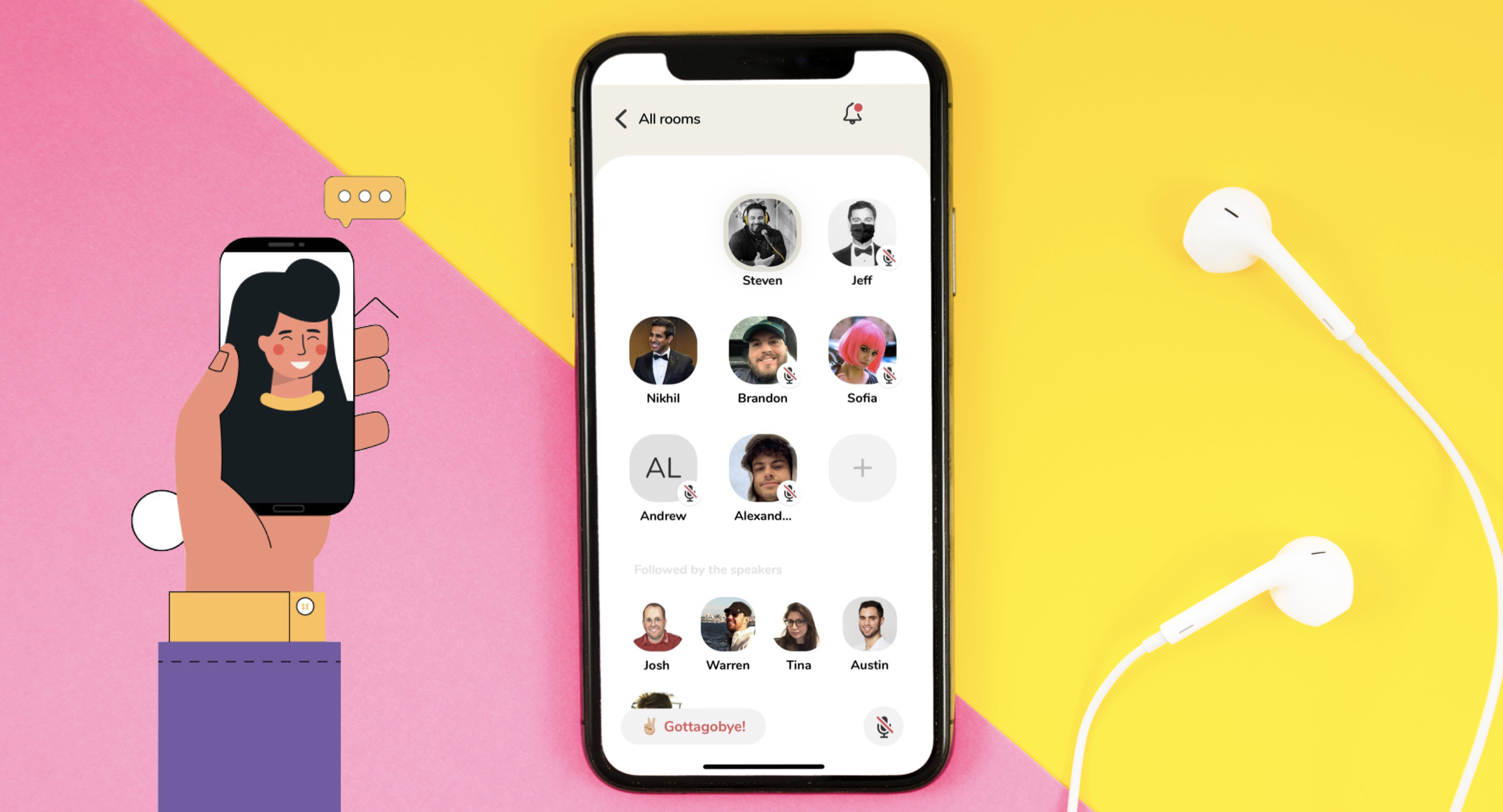
    Forget The Nice Guy or Soho House. The place to find Hollywood and Silicon Valley powerhouses during the pandemic has been on Clubhouse, the invite-only, audio-driven app that’s quickly gaining steam as a networking tool for those looking to make it in the entertainment and tech worlds.

    Hop on Clubhouse at any given time and you could stumble into conversations led by Wiz Khalifa, Tiffany Haddish, Ava DuVernay, Ashton Kutcher, Brian Koppelman or Scooter Braun, among several other celebs. Kevin Hart, in a story that’s already solidified in Clubhouse lore, recently took part in an hours-long conversation focused on whether he was, in fact, funny. And on the tech side, Clubhouse is packed with entrepreneurs like former Twitter CEO Ev Williams, Reddit co-founder Alexis Ohanian, and former Y Combinator President Sam Altman, along with a laundry list of angel investors and venture capitalists.

    Clubhouse isn’t complicated: Users can go on the app and join a “room” where a particular conversation is going on. Often, these conversations are focused on business and networking topics; “Pivoting from live events to virtual events + sponsorships” and “virtual writing cafe” were two rooms pulling in users on Monday, for example. Once inside, users can listen to the discussion and, if approved by the room moderator, chime in and join the conversation themselves. It’s not uncommon to see rooms with a few dozen speakers and a few hundred users listening in.

    Since launching in April, the app has grown to over 100,000 beta users, according to an individual familiar with the company’s internal metrics. The app’s early traction helped it land a $12 million round of funding from Andreessen Horowitz, valuing Clubhouse at $100 million.

    As the new, go-to spot to listen to entrepreneurs and stars, Clubhouse has also become the audio version of LinkedIn for those looking to make connections in Hollywood. Even in normal times, making it in the movie business is tough enough. But for Sade Sellers, a 31-year-old screenwriter from Burbank, California, one of the many problems tied to the pandemic has been the end to casual networking events — coffee meet-ups with executives, conferences and post-work drinks with people in the film industry — that have helped her career grow.

  • DBS Ramps Up Support for Social Enterprises

    DBS Ramps Up Support for Social Enterprises

    The bank disbursed S$7 million ($5.23 million) in loans to social enterprises so far this year, up fourfold from 2019.

    Much of this support has gone towards creating and preserving livelihoods, with many of the SEs using the funds to create and retain jobs that hire people from disadvantaged communities, DBS said in a statement on Thursday.

    DBS said that access to working capital was an immediate priority for many SEs when the pandemic emerged, but many of them faced challenges in getting loans as they typically lacked a borrowing history with banks or relevant credit profiles.

    The bank rolled out its SE Digital Business Loan in May this year, which covers working capital needs at preferential rates. The bank also offers the Social Enterprise Business Loan which provides unsecured loans at a preferential interest rate, and the Temporary Bridging Loan, which provides short-term relief assistance.

    In addition, DBS Foundation awarded S$2 million in grants to social enterprises (SEs) to support the deployment of social innovations. The funding includes S$1.4 million given to 13 SEs in six of the bank’s key markets (Singapore, China, Hong Kong, India, Indonesia and Taiwan) in the 2020 cycle of its DBS Foundation Social Enterprise Grant Program.

    Two were from Singapore: Ento Industries – a biotech focused on reducing food waste, and Zigway, a ASEAN-focused fintech that makes bulk buying affordable for low-income families through a monthly subscription model.

    Recipients were chosen from a record 820 applications across Asia, based on social impact, innovation, as well as the sustainability and scalability of their business models. They were also required to demonstrate a path to achieving key business and social impact milestones.

    DBS noted the increasing recognition for the role SEs play in society.

    In the world we’re living in today, companies must not only think about delivering value to shareholders, but also consider the interests of the communities they serve. This has really come to the fore amidst Covid-19, which has sparked unprecedented social and economic challenges – yet, these very issues have also heightened opportunities for social enterprises to make a difference, and helped to cement the importance of their role in society, Karen Ngui, Board Member of DBS Foundation, said in the statement.

  • Line Launches Social Banking Platform in Thailand

    Line Launches Social Banking Platform in Thailand

    Thailand is the first market where Line has integrated banking services on its main mobile platform. Japan-based Line, which operates one of Thailand’s most popular social media platforms, has rolled out banking services in the kingdom in partnership with Kasikornbank.

    The Line BK service allows users to customers to transfer money, open savings accounts, apply for loans, and make payments directly from the messaging platform. It also promises high-interest rates for saving accounts and a range of banking services, including personal loans for freelancers and individuals without fixed incomes, according to an announcement on Tuesday.

    The company said it plans to expand banking services into other countries, including Japan, Taiwan, and Indonesia.

    The Line messaging app launched in 2011 and since then has grown into a diverse, global ecosystem that includes AI technology, fintech and more.

    In Thailand, LINE introduced its messenger service in 2012, and quickly grew into the country’s leading social media platform.

  • TikTok could be forced to stop operating in the U.S. following a hearing scheduled for next month

    TikTok could be forced to stop operating in the U.S. following a hearing scheduled for next month

    a U.S. judge said today that he will hold a hearing on November 4th-the day after election day-to decide whether the U.S. government can ban transactions with TikTok. The popular short-form video app is owned by ByteDance, a Chinese manufacturer that the Trump administration fears is passing on personal and corporate data to Beijing. An executive order signed by the president in August ordered ByteDance to divest itself of TikTok’s U.S. operations or have it removed from app stores in the states.

    At first, the president gave a thumbs up to a deal that would create a new company called TikTok Global that would be 80% owned by ByteDance and 20% owned by U.S. firms Oracle and Walmart. The plan was for TikTok Global to go public via an IPO. Since the president had earlier mused about the U.S. Treasury getting paid for the country’s participation in a TikTok deal, we wonder how the distribution of the shares would be handled with millions of dollars of possible profits at stake. Talks between all of the parties involved continuing.

    Meanwhile, a preliminary injunction issued by U.S. District Judge Carl Nichols on September 27th prevented the U.S. government from forcing the Apple App Store and Google Play Store from removing their listings for TikTok. The latter is not even close to being out of the woods in the states. First of all, the current injunction is temporary and another Trump-signed executive order against TikTok and ByteDance takes effect on November 12th. This order will shut down TikTok in the U.S. if there is no deal to divest the popular app by then. According to a schedule released by the court, no ruling on any legal matter before the court in relation to TikTok will be issued until late next month at the earliest.

    What’s holding up the deal are questions about majority ownership of the new company; additionally, China needs to approve the transaction and the country now bans the export of Chinese-made algorithms to other countries. TikTok uses such an algorithm to determine what video subscribers can see. This technology reportedly would not be included in any deal between ByteDance, Oracle, and Walmart.

    TikTok is beloved by many teens who use the app to create 15-second and 60-second videos of lip-synchs, dances, pranks, and more. During the pandemic, teens stuck inside their homes turned to the app to give them something to do. In the states, TikTok has 50 million active daily users and 100 million active monthly users; the latest data from app analytical firm Sensor Tower reveals that TikTok was the top-grossing app worldwide during the third quarter. It also was the most downloaded app on iOS and Android during the three months that ended in September. Consumer spending on the app rose 800% on an annual basis from July through September.

    As with most Chinese tech firms that operate some sort of business in the states, the U.S. government considers TikTok and it’s parent company to be national security threats because of their perceived close ties with the Communist Chinese government. There never has been any proof that these firms (such as Huawei and ZTE) have backdoors built into their products in order to obtain personal data. In the case of TikTok specifically, the fear is that 100 million Americans could be at risk of having this information sent to a server owned by the Communist Chinese government.

  • TikTok asks judge to block a ban against U.S. downloads of the app

    TikTok asks judge to block a ban against U.S. downloads of the app

    Starting this Sunday, TikTok will be removed from the Apple App Store and the Google Play Store based on an order from the Trump Administration. On Wednesday, TikTok asked a U.S. judge to block the administration’s order similar to the way a federal judge on Saturday issued a preliminary injunction that prevents the U.S. government from banning downloads of WeChat in the states.

    TikTok is a short-form video app with over 50 million daily active users in the U.S. Extremely popular with teens, subscribers can create 15-second and 60-second videos. Much of the content includes lip-synchs, dances, comedy bits, and pranks. During the pandemic, TikTok became even more popular as it gave those stuck at home something to do. TikTok owner ByteDance is a Chinese company and the U.S. government fears that it is able to steal the personal data belonging to 100 million American subscribers and send it to Beijing. Thus, the Trump administration has called TikTok a threat to national security.

    Downloads of TikTok were supposed to be banned in the U.S. starting this past Monday. But talks between Oracle, Walmart, and Byte Dance over a plan that would give Oracle 12.5% and Walmart 7.5% of a new company called TikTok Global was considered a step in the right direction. Thus, the Commerce Department decided to give TikTok an additional week to get the deal done. TikTok Global would be an American company 80% owned by ByteDance, and President Donald Trump has already given his blessing to this arrangement.

    In the papers that were filed in court on Wednesday, TikTok said that it is not a national security threat. In fact, TikTok said that the restrictions that the Trump administration want to be placed against it “were not motivated by a genuine national security concern, but rather by political considerations relating to the upcoming general election.” If the order against it isn’t blocked by the court, TikTok says, “hundreds of millions of Americans who have not yet downloaded TikTok will be shut out of this large and diverse online community – six weeks before a national election.”

    Chinese State media is not happy about the deal between Oracle, Walmart, and Byte Dance. China Daily and the Global Times said yesterday that there was no reason for a deal to be signed. The papers said that the transaction being discussed is based on bullying and extortion by the U.S. Chinese state news agency Xinhua said on Wednesday that the national security concerns that the U.S. consistently brings up are bogus. The papers wrote, “It is time that other countries saw through the outrageous farce of the TikTok drama, knew what is really at stake, and joined hands to oppose such blatant robberies and maintain a fair global business environment.”

    ByteDance has also applied for a tech export license. The application was made through Beijing’s municipal commerce bureau and ByteDance is awaiting a decision. Last month, for the first time in 12 years, the Chinese government updated the list of technologies that it can ban from export. On that list is the algorithm used by TikTok that determines which videos users get to see. Developed in China, the algorithm cannot be exported out of China which gives the Communist Chinese government some control over the deal that is being worked out between ByteDance, Oracle, and Walmart. There have been some conflicting statements between the companies over the terms of the deal they each reached with the White House which means that we could remain extremely far away from a deal being announced. But again, there is the deadline to think about and once again those in the states who want to download TikTok on their mobile devices might have only a few days to do so. In November, U.S. subscribers might be forced to give up the app forever.

  • Trump claims to have a deal in concept with Oracle, Walmart, and TikTok

    Trump claims to have a deal in concept with Oracle, Walmart, and TikTok

    U.S. President Donald Trump told reporters gathering to see him off to a campaign rally, that he has approved “in concept” Oracle’s bid for the U.S. operations of TikTok. The short-form video app, owned by China’s ByteDance, has been accused by the Trump administration of being a national security threat because it could pass along personal data from U.S. customers to the Communist Chinese government in Beijing. Trump signed an executive order that forced ByteDance to divest itself of TikTok’s U.S. operations this coming Monday, September 21st

    Last week, after several U.S. companies had expressed interest in TikTok such as Microsoft, Oracle, and Walmart, Oracle’s plan was given the nod by ByteDance. However, the administration felt that the plan didn’t go far enough to protect them better than 50 million active U.S. TikTok users. As a result, the U.S. said that it would ban downloads of TikTok in the states starting on Monday morning. Those who have already downloaded the app before Monday would be allowed to continue using it until November 12th unless a deal was approved by the U.S. But everything might have changed following this afternoon’s announcement. What isn’t clear at this point is what the president means when he says that a deal has been approved “in concept.”

    While things are still up in the air at this hour, Trump says that the deal will also include Walmart and hinted that TikTok would be “totally controlled” by Oracle and Walmart, something that he repeated several times this afternoon. “I have given the deal my blessing,” the president said. “If they get it done, that’s great. If they don’t, that’s okay, too.” Previously, the president wanted the companies involved in acquiring TikTok’s U.S. operations to make a payment to the U.S. Treasury. But such a deal would be illegal, something that Trump was not aware of. Still, the president spoke with Oracle Chairman Larry Ellison and Walmart Inc. Chief Executive Officer Doug McMillon on Friday, telling both executives that he still wanted a cash payout for the U.S. government.

    A new company called TikTok Global will be created, according to those in the know, and it will help create a $5 billion fund for U.S. education. Discussing this contribution, Trump stated that “They’re going to be setting up a very large fund. That’s their contribution that I’ve been asking for.” The new TikTok Global will probably be headquartered in Texas and 25,000 people will be hired according to the president. But that figure could not be independently verified. Facebook had 45,000 employees last year while Twitter had 4,900 employees. There is speculation that TikTok Global will hold an IPO and go public within the next year. The president said about TikTok Global, “It will have nothing to do with China, it’ll be totally secure, that’ll be part of the deal. All of the control is WalMart and Oracle, two great American companies.”

    ByteDance will retain TikTok’s algorithm which is used to decide which videos are available to certain TikTok users. China recently announced a regulation that prevents other countries from using any algorithm created in the country. Oracle will get full access to review TikTok’s source code and any updates to make sure that there are no backdoors involved that could be used to steal U.S. subscribers’ personal data.

    TikTok has been a popular destination for teens and others looking to pass time during the pandemic. Users can create 15 or 60-second videos showing lip-synching, dancing, pranks, protests, and more. The app has been installed over two billion times from the App Store and the Google Play Store.