Retail News CRM

Tag: Social

  • Instagram’s standalone Direct app is Obsolete

    Instagram’s standalone Direct app is Obsolete

    Facebook has a habit of frequently testing changes (both big and small) for its extensive library of crazy popular social networking services, but while most new features added to Instagram tend to stick, enriching the app’s functionality or expanding its reach, others never get to see daylight or move past the public testing phase.

    Instagram Direct is part of the latter category, reportedly “going away” some time “in the coming month” after making a limited global debut way back in December 2017. This was actually a standalone app rather than something built directly into the main Instagram interface, but technically, the thing never got a proper, wide-scale release. Instagram (or rather Facebook) also didn’t do much to promote the service, which essentially cloned one of the core features of arch-rival Snapchat.

    Namely, Instagram Direct was largely focused on enabling message exchanges between users, with Instagram friends instantly added to one’s list upon signing up and, of course, support for fun face filters to spice up your photos and videos. If that sounds useful in any way, fret not, as Instagram Direct conversations will automatically move to the main Instagram app, where you’ll be able to continue enjoying the same messaging features as before. After all, private messaging has been supported by Instagram since 2013.

    As the company was quick to highlight in a short statement after the imminent death of the standalone Direct experience ironically started making the Twitter rounds, Instagram Direct will remain the “best place for fun conversations with your friends.” Just not in a separate app, whose tests are being “rolled back” after merely exceeding a million Android installs in Google Play and receiving largely mediocre iOS user reviews.

  • Instagram test designed to make users more trusting of content

    Instagram test designed to make users more trusting of content

    When Instagram first launched, it was known for the filters that users could apply to their photos, which would then be shared among members. The company was acquired by Facebook in 2012 for a reported $1 billion. Instagram is not as well known as Facebook is for inflaming the passions of subscribers by spreading fake news and political propaganda. Still, a report published says that steps are being taken to prevent the dissemination of false posts over the platform. Instagram is currently running tests with fact checkers.

    Facebook currently employs 52 firms that it has partnered with to conduct fact checks. If content found on a particular Facebook post is proven to be false by one of the fact checkers, the post’s distribution through users’ news feed is reduced. And not surprisingly, Instagram’s policy is basically the same. Stephanie Otway, a spokesperson for the app says, “Our approach to misinformation is the same as Facebook’s — when we find misinfo, rather than remove it, we’ll reduce its distribution.” That means flagged posts will be removed from the Explore tab and the hashtag result page, but it will stay up on the author’s page. That limits the readership of these polarizing posts to those who have made a decision to subscribe to authors who disseminate such information.

    But there is a big difference between the two sites. The content on Instagram is not nearly as news-oriented as it is on Facebook, especially since the platform doesn’t have hyperlinks inside captions or member comments. Thus, the hysteria is more subdued than on Facebook where a single lie could turn millions of members into a foaming at the mouth crazy. So unlike Facebook, photos that are fake won’t be labeled and there will be no warning shown to Instagram members who want to share these images.

    “We all know any kind of images and pictures are a main driver of misinformation in any platform. Alerting those who share (false posts) like they do on Facebook would be best. But perhaps it is only the beginning of their actions there, I suppose. Even though there are plenty of problems regarding misinformation inside Facebook’s many platforms, they are still the ones who are taking the combat of misinformation more seriously.”-Tai Nalon, Director Aos Fatos

    Lees ook:

  • Twitter is growing at an impressive Pace

    Twitter is growing at an impressive Pace

    Twitter is not the world’s most popular social networking service, but one number considered essential for the prosperity of the San Francisco-based company continues to grow at a healthy pace, which should keep investors relatively happy for the foreseeable future.

    Interestingly, the metric Twitter is focusing on as the “best way to measure” its success counts so-called monetizable daily active users rather than the MAU (monthly active usage) number generally employed by rivals to flaunt their progress. These monetizable daily active users (mDAUs), which are defined as Twitter users who logged in or were otherwise authenticated and accessed the platform on any given day through its website or apps that are able to show ads, have surged a solid 11 percent year-on-year, to 134 million in the January – March 2019 timeframe.

    The same number is up 6 percent from 126 million reported for the final quarter of 2018, which suggests a pretty great trend for Twitter in terms of user engagement and monetization opportunities. That’s especially notable as multiple recent market reports have claimed Facebook’s usage figures are on the decline, possibly due to the many controversies and scandals surrounding the social media giant’s data harvesting policies and privacy protecting strategies (or lack thereof).

    Then again, there might be another reason why Twitter is choosing to shift its focus away from average MAUs. While that number has also grown from 321 million people in Q4 2018 to 330 million during Q1 2019, there were actually more monthly active users on the platform this time last year. Namely, 336 million people, so although Twitter seems to have gotten better at making money, its efforts to snatch users from Facebook, Instagram, or Snapchat aren’t exactly working.

    Instead of trying new things to pull that off like finally adding the ability to edit tweets, Twitter plans to no longer share its MAUs with the public starting next quarter. That’s certainly an interesting, albeit not entirely original tactic, as Facebook has recently began focusing on the combined usage numbers of all its products.

    As far as money goes, Twitter is doing pretty well, generating total Q1 revenues of $787 million (up 18 percent year-on-year), as well as an operating income (aka profit) score of $94 million, compared to $75 million in the first three months of 2018.

  • Change your Instagram password Immidiatly

    Change your Instagram password Immidiatly

    An updated entry made yesterday to a post on the Facebook blog reveals that the company left millions of Instagram passwords in a “readable format.” Originally, Facebook said that “tens of thousands” of Instagram customers were involved. Facebook says that normally its login systems are designed to “mask passwords using techniques that make them unreadable.”

    The good news is, if you believe Facebook, its investigation has shown that no one from inside or outside the company accessed these passwords. Of course, since Facebook updated its original blog post after one month increasing the number of passwords affected, who knows what they might say in another month?

    “In line with security best practices, Facebook masks people’s passwords when they create an account so that no one at the company can see them. In security terms, we ‘hash’ and ‘salt’ the passwords, including using a function called “scrypt” as well as a cryptographic key that lets us irreversibly replace your actual password with a random set of characters. With this technique, we can validate that a person is logging in with the correct password without actually having to store the password in plain text.”-Facebook

    Last month, Facebook admitted that it stored hundreds of millions of passwords in plain text dating back to 2012. At the time, it was estimated that 200 million to 600 million accounts had their passwords exposed to as many as 20,000 Facebook employees.

    Facebook purchased Instagram for approximately $1 billion back in 2012. The company suggests that subscribers to Facebook, Instagram or WhatsApp use two-factor authentication when signing in. Besides entering a password, a code is sent to the subscriber’s smartphone that is also required for a successful login. To set this up, go to the settings menu from your Facebook app and click on “Security and Login.”

  • Instagram is preparing to implement a new feature

    Instagram is preparing to implement a new feature

    Instagram is an already hugely popular photo and video-sharing social networking service, with over 1 billion monthly active users as of last year, but believe it or not, there’s still plenty of room for growth, mostly due to the many security and privacy scandals surrounding its parent company’s core platform. At the same time, it’s pretty crazy to think Instagram has reached this insane level of mainstream success without ever offering some basic features.

    Case in point, a fast-forward option for those 15-second clips you can add to your stories or the up to 60-second videos allowed to be uploaded to one’s Instagram profile. Incredibly enough, that’s not yet a thing, even though the video social component has enriched Instagram’s focus and functionality years ago. But according to a Twitter userknown for her very reliable work discovering unreleased features for apps like Facebook and Instagram, the long-awaited video seek bar is currently being tested internally.

    Jane Manchun Wong has the GIF to prove that claim, and indeed, the feature works as expected, with no unnecessary bells and whistles. Unfortunately, we can’t be sure this will roll out to the masses anytime soon, although given its simplicity and potential popularity, we don’t see what could possibly hold off its wide-scale rollout. Once that happens, you’ll presumably be able to both go forward and back in time in any given Instagram video instead of waiting for the whole thing to unfold, then play it back from the beginning if only a small part of it caught your attention.

    Interestingly, this seems to be only one of several Instagram add-ons in the pipeline, alongside a delay and warning for posting comments identified as potentially offensive, a new “Trusted Devices” section in the app’s two-factor authentication settings, and a couple of changes targeting Creator Accounts, aka high-profile influencers. It remains to be seen how many of these features will go public and when.

  • Regulating Facebook could hinder small businesses

    Regulating Facebook could hinder small businesses

    Digital platforms provide a host of challenges for governments. Questions about how to best protect privacy, democracy, and speech online become more pressing every year.

    But policies that affect online platforms also affect international trade. Many Australian small businesses rely on digital platforms to stay on par with their international competitors.

    As Australia starts tackling the challenges wrought by digital platforms, policymakers should be careful not to undo the good things that stem from an evermore connected world. That includes the critical role of these platforms in helping retailers sell their products to overseas customers.

    Platforms facilitate exports

    As my new research with colleague Danielle Parks shows, digital platforms appear to significantly reduce the economic distance and trade costs between buyers and sellers.

    Take Facebook, for example. Facebook is both a social networking platform and digital market platform, where Facebook’s Marketplace helps business owners connect with potential customers.

    The social networking interface allows buyers and sellers to message each other and exchange information about what the seller has, and what the buyer wants. Meanwhile, Marketplace features like identity verification and buyer ratings help to facilitate connections more quickly, and with more trust, than might otherwise be possible.

    There isn’t a lot of large-scale data on cross-border e-commerce, so researchers must get creative to study digital platforms and trade. The findings are extraordinary.

    One study found that 97% of US-based eBay sellers export product to overseas buyers. Another found the “economic effect of distance” to be 65% smaller on eBay. In other words, the digital platform reduces the challenges of selling to people in other countries.

    Research conducted by PayPal showed that 79% of US small businesses on its platform sell to foreign markets. And PayPal merchants that exported, outperformed businesses in general. Interestingly, that finding held for coastal and non-coastal businesses, and for rural and urban businesses alike.

    In our new study, we surveyed Australian businesses on Facebook. We found that those with a Facebook presence were 63% more likely to export their products internationally than other businesses. The propensity to export was higher across all business sectors and nearly all company sizes.

    This emerging pattern shows how world markets are opening up to smaller businesses that might not otherwise be able to compete with their larger, multinational rivals. These findings can partly be attributed to export-prone firms being more likely than others to use digital platforms. But there is no question that the platforms can also enable trade.

    Most governments recognise the need to dismantle barriers to foreign market access, and any new policies regarding digital platforms should not make it harder for small and medium sized businesses to engage in trade.

    How regulation could hurt small businesses

    The Australian Competition and Consumer Commission (ACCC) is currently conducting an inquiry into digital platforms at the request of the treasurer.

    The ACCC’s preliminary report recognises how digital platforms have revolutionised the ways consumers and businesses communicate with one another. The report also highlights concerns over data privacy and the influence of bad actors producing and spreading misinformation.

    The final report, expected in June, will make policy recommendations that aim to address these concerns. But these policies could also inadvertently threaten the revenue streams of businesses that advertise on these platforms or that use them to facilitate online sales.

    Restrictions on the cross border flow of consumer information could interfere with everyday business practices. For example, a key advantage of e-commerce, especially for small businesses, is using search engine techniques to reach larger audiences, and target potential customers. So, search engine restrictions could limit the way businesses target customers with advertising, therefore limiting a business owner’s ability to reach customers abroad.

    Other regulations could restrict business owners from storing the personal information of customers – such as credit card information, consumer preferences and purchase history. That would then limit businesses in how they interact with customers at home and abroad.

    What’s happening at the moment

    Australia is not alone in considering these tough issues. The landscape of digital data flows, data privacy, and e-commerce is a work in progress for governments across the globe.

    The EU recently enacted data privacy regulation called the General Data Protection Regulation (GDPR), which is designed to:

    […] fundamentally reshape the way in which data is handled across every sector, from health care to banking and beyond.

    Meanwhile, the United States Congress will likely consider new internet privacy legislation this year.

    Provisions on digital data flows have been included in major recent international trade agreements. Both the United States-Mexico-Canada Agreement (USMCA) and the Trans Pacific Partnership (TPP) bar data localisation requirements. That means foreign companies would only be allowed to work in a country if they built out or leased separate data infrastructures in that country – a costly endeavour, especially for smaller businesses.

    On the other hand, USMCA and TPP do not allow participating countries to require that platforms disclose their source code or algorithms. These provisions do not necessarily preclude countries from adopting privacy protections, but they do make it easier for platforms like Facebook to operate without fear that they will be asked to handover important intellectual property.

    As the government considers the Australian Competition and Consumer Commission report, one thing should be clear: any policy changes should not overlook the role of these platforms in helping Australian small businesses sell goods to customers in the global marketplace.


  • Facebook strikes deal with SK to pay data fees

    Facebook strikes deal with SK to pay data fees

    Facebook reportedly finally agreed to pay data traffic fees to SK Broadband after two years of negotiations. According to local media reports Sunday, the social media giant and internet provider agreed to a two-year network usage deal to set up a cache server for temporary data storage and provide fast Facebook access to SK Broadband users. While the two companies did not confirm the exact sum, Facebook will reportedly pay more than what it previously proposed during negotiations.

    SK Broadband is not the first internet provider that Facebook will be paying in the country. In 2015, it signed a contract with KT to open a cache server. The two companies are currently working on renewing the contract after it expired last July.

    The new deal with SK Broadband comes after Facebook faced negative press for inconveniencing users while trying to avoid paying network fees to SK Broadband and LG U+.

    In late 2016 and early 2017, the social media giant re-routed non-KT users to its server in Hong Kong when they tried to connect to the platform, slowing down access considerably. The Korea Communications Commission charged the company 396 million won ($353,900) in fines and ordered it to change its practices.

    Following the agreement with SK Broadband, the social media giant is expected to open up a cache server with the internet provider.

    The company is also reported to be working with LG U+ on a similar deal.

    The recent deal highlights the question of whether other foreign IT giants will follow suit and pay data traffic fees to Korea’s network providers.

    Many Korean businesses have complained that current laws and practices hurt domestic firms. Naver and Kakao, for example, pay around 70 billion won and 30 billion won every year to Korea’s three network providers to compensate for their high traffic volume, while Google and Netflix – which are thought to be responsible for half of Korea’s data traffic together with Facebook – pay none.

  • AEON Thailand Foundation donation proceeded

    AEON Thailand Foundation donation proceeded

    Last week, Mr.Kiyoyasu Asanuma (4th from left), Chairman of AEON Thailand Foundation, and Ms.Suporn Wattanavekin (3rd from left), Vice Chairman of AEON Thailand Foundation, together with Mr. Nuntawat Chotvijit (2nd from left), Director of Marketing, AEON Thana Sinsap (Thailand) Public Company Limited and Mr.Veerawat Ariyaviriyanant (left), President & CEO of Data Products Toppan Forms Ltd. donated 1,000,000 Baht from the “AEON Charity Bowling Competition You are a HERO” to Ramathibodi Foundation in support of “New Innovation for treatment of cancer ” program. The donation was received on behalf of the foundation by Prof. Dr. Suradej Hongeng (4th from right), Executive Director of Ramathibodi Foundation and the research team from the Ramathibodi Hospital.

  • Lenovo achieves world records in fund raising event

    Lenovo achieves world records in fund raising event

    Lenovo achieves a new GUINNESS WORLD RECORDS™ title for the “Most people performing the warrior I pose (yoga) simultaneously (multiple venues)” on Sunday, 16 December 2018, across three cities doing a Warrior I Yoga pose simultaneously. Taking place at Boost in Yoga Style, a fundraising event co-organised by Lenovo and Pure Yoga, the event saw a turnout of over 600 participants across Singapore, Hong Kong and Taiwan region. Locally, 116 participated in setting the record at the National Gallery of Singapore.

    Boost in Yoga Style aimed to increase awareness on heart wellness and cardiovascular disease, and all proceeds from the event were donated to the Singapore Heart Foundation, totaling S$4,500.

    ‘This event represents a unique partnership between Lenovo and Pure Yoga and is aligned with our shared goal of enriching and enhancing lives in the community. We are glad to see such a positive turnout today and are delighted to have achieved the GUINNESS WORLD RECORDS™ title together with Pure Yoga. We hope that the money we’ve raised goes a long way in helping patients at the Singapore Heart Foundation,’ said Eddie Ang, Country General Manager, Singapore, Lenovo. ‘Partnering with a consumer-focused brand like Lenovo is important for us to deliver a differentiated experience for our members, and Boost in Yoga Style was a great way to drive awareness by leveraging the power of yoga to benefit the community,’ said Miryam Acosta, Pure Yoga Singapore.

    The GUINNESS WORLD RECORDS™ achievement is aligned with Lenovo’s shift toward becoming a customer-centric organisation with the belief that ‘different is better’, exemplified through partnerships that deliver better value and unique experiences to users.

  • OUE Limited takes new approach to retail

    OUE Limited takes new approach to retail

    Singapore’s Downtown Gallery has introduced three retail concepts that prioritise shopper experiences, pioneered by retail property developer OUE Limited.

    OUE Social Kitchen offers Singapore’s first communal cooking kitchen in a retail space; OUE Re:Store is an automated deli service that serves heritage food using an efficient order and pick-up system; and OUE Beauty Bar features a beauty dispensing machine.

    OUE Social Kitchen has more than 10 kitchen spaces styled by appliance brand Smeg. Users have access to an in-house chef and helpers, with cooking tips being provided on request.  Communal dining is encouraged, so the dining area can be used free for hosted meals or to interact with other users. Customers can book a space using the OUE Downtown Gallery’s smartphone app.

    OUE Re:Store allows customers to use the app to place a food order along with a preferred pick-up time. This enables CBD diners to skip lunch-hour queues. The menu was designed by chefs KF Seetoh, Malcolm Lee, Sau del Rosario and William Wongso, and offers Filipino, Indonesian, Peranakan and Singaporean dishes. Free of preservatives, the meals are packed in a four-section bento box.

    Opening this month, OUE Beauty Bar uses interactive technology and features four beauty vending machines along with a standalone virtual assistant display. Each vending machine has a touchscreen display enabling shoppers to browse, explore and choose from more than 140 skin and makeup staples. These self-service kiosks offer skincare and cosmetics from global brands including Clarins, Nars and Shiseido. Product information, videos and samples are also available.

    “We have created a version of what we imagine retail experiences will look like in future,” says OUE senior VP for retail, marketing and leasing Patrina Tan. “We will continue to invest in creating new connection points and culling real-time feedback so we can introduce better customer experiences.”

  • Influencer posts are 8 times more popular than brand posts in China

    Influencer posts are 8 times more popular than brand posts in China

    Luxury brands experimenting with WeChat’s commerce model rose from 3 percent to 10 percent from the year-ago, suggesting that the sector is beginning to have better understanding of the Chinese commercial ecosystem.

    L2’s Digital IQ Index China: Luxury 2017 report looked at different luxury brands and how they are performing in the Chinese market. What the report found was that familiarity with China’s unique digital platforms leads to better performance, particularly when engaging with Chinese influencers on social media.

    “The most successful luxury brands in China have embraced ecommerce and are experimenting with new channels such as WeChat commerce,” said Danielle Bailey, head of APAC research at L2, New York. “They have also responded to the rising popularity of livestreaming and short video platforms with celebrity campaigns that resonated with consumers and spiked both social engagement and search volume.

    “Investments in the performance in their localized China sites with a heavy emphasis on mobile, which is crucial for the China market, have paid off,” she said. “These brands also understand that serving Chinese consumers digitally extends beyond the mainland.”

    Chinese ecosystem
    Every market in the world has its own idiosyncrasies that force businesses to adjust their strategies there, but few have the kinds of differences that China poses.

    For one, China has its own set of digital platforms distinct from what most countries use. There is no Facebook, Google, Instagram or many other common digital destinations in China due to government regulation.

    Instead, Chinese consumers rely on platforms such as WeChat, Tmall and JD to search for products, view and share social content and make online purchases.

    Currently, the most successful have been watches and jewelry brands such as Bulgari and Cartier as well as fashion house Christian Dior. These brands are among those that have launched their own direct-to-consumer ecommerce platforms in China.

    Dior, for example, tried its hand at social selling by offering its followers on WeChat the opportunity to purchase a limited-edition handbag directly through a post. Burberry currently leads L2’s China IQ Index in terms of overall digital competence in China.

    This can be partially attributed to Burberry’s embrace of Chinese social media platforms such as WeChat and its partnerships with prominent Chinese influencers such as Mr. Bags, with whom Burberry released an exclusive bag.

    Mobile first
    Another notable trend of the top performing luxury brands in China is an embrace of ecommerce. Online shopping is huge in China and even eclipses in-store purchases by some measurements.

    Because of its reach, some ecommerce sites have become host to the kind of content that would normally appear on a brand’s personal site.

    Instead of getting most of their brand interactions from social media, Chinese shoppers spend a lot of time on ecommerce platforms. The two most popular are Tmall and JD

    China also places heavy emphasis on mobile, with mobile far outweighing desktop as the channel of choice for engaging with brands, consuming media and making purchases. WeChat is a strong driver of this trend, with its emphasis on mobile payments helping to boost the mobile commerce sector.

    WeChat’s social gifting and augmented reality coupons on Alibaba’s Alipay are a few of the tools consumers can leverage through mobile wallets that make the customer experience in China extremely advanced. Marketers should be prepared for this to be replicated throughout the world, as well as advancing beyond. Understanding how the Chinese market works is paramount to luxury brands as the overall spending from Chinese consumers outside of China grows more each year.

  • HCM City tax department to monitor social media businesses

    HCM City tax department to monitor social media businesses

    The Ho Chi Minh City Department of Taxation has said recently that its data center is checking Facebook accounts used for conducting business, with a view to determining any tax obligations.

    Not all individual Facebook accounts, however, have to pay tax on their business. Those that are conducting “non-professional” business on an irregular basis and with low turnover will not have to pay tax.

    Only those with large sales and unpaid taxes are targeted, according to the head of the city’s tax department.

    Upon completing the checks, the department will submit plans to the city’s People’s Committee to coordinate with other departments to collect e-commerce business management taxes, including business Facebook accounts.

    At a meeting between city leaders and the department in February, the Department of Industry and Trade proposed collecting taxes from Facebook businesses.

    The Department of Tax Policy under the General Department of Taxation (GDT) is also studying the management of taxes on business activities conducted via social networks such as Facebook, YouTube, and Zalo.

    According to experts, collecting sales tax from Facebook business is not an easy task. Every organization and individual can now own multiple accounts on social networks for their business.

    Sales are mainly made in cash, so it is difficult to monitor. In addition, some people only do business via Facebook as a seasonal job or to earn more income, which also challenges tax management.

    The department’s current solution is to require people doing business on social networks to provide information such as their name, address, telephone number, and personal tax code, in order to control their business activities more strictly.

    In 2015, revenue from e-commerce in Vietnam reached $4.1 billion, an increase of five-fold compared to 2012, according to the latest data from the GDT. It is expected to reach $10 billion by 2020, accounting for 5 per cent of total retail sales in the country. E-commerce will therefore play a significant role in Vietnam’s retail sector in the future.

  • 500 Startups funds Stockbit, a social network for stock trading

    500 Startups funds Stockbit, a social network for stock trading

    Indonesia’s Stockbit bills itself a “social network for stock traders.” Individual traders sign up for customizable stock market information and analytics. Basic features are free, while paying subscribers get more in-depth intelligence.

    The site’s been growing and adding features since 2012. The company just closed an investment from 500 Startups, it said in a release today. It’s a pre-series A round, and the sum is undisclosed.

    The new investment is supposed to fuel the launch of a new a feature that lets community members follow more experienced stock traders and copy their investment moves in an automated process.

    “Our proposition is simple. Just copy, let the best do the rest,” is how CEO Wellson Lo explains the feature. You can allocate a fixed amount, say US$5,000, and this amount will be invested by mirroring the person you are following. Trading “leaders,” as the people you can follow are called, also benefit. They get a share of the profits you make.

    It’s been in development since last year and will become available on Stockbit’s iOS and Android apps soon, though there’s no set launch date yet.

    Traders wanted

    Public participation in the stock market is extremely underrepresented in Indonesia, argues Wellson. Less than 0.3 percent of the adult population have a stock trading account. In Singapore, it’s 39 percent and more than 20 percent in China.

    Part of the reason is a knowledge gap, which Stockbit hopes to address by making it simple for novice traders to learn and reap benefits without risking too much.

    Back in 2015, after Stockbit last raised funds, including from local VC firm Ideosource, Wellson had told Retail News that the startup had 15,000 registered users, while paid subscribers were still only in the hundreds. The user base has about tripled since then, according to Stockbit.

    There’s an ongoing effort by the Indonesian Financial Services Authority to raise awareness about investment opportunities on Indonesia’s public markets, a development Stockbit hopes to be able to leverage for its growth.

    500 Startups partner Vishal Harnal says Stockbit is already the largest and most active community of stock traders in the country, which gives the startup an advantage over potential competition.

    Besides Stockbit, there are trading information sites like Idsaham or Infovesta, but those sites merely aggregate stock information and don’t yet offer analytics tools. Bareksa can be seen as a possible competitor, as it offers a variety of financial analytics tools and also aggregates information about the Indonesian Stock Exchange, among other functions.

    Algomerchant from Singapore has a similar solution, offering a mix of social networking and analytics. However, Algomerchant lets you subscribe to a set of trading algorithms, not individual people, explains Wellson. Stockbit’s social trading model is most comparable to Covestor in the US.

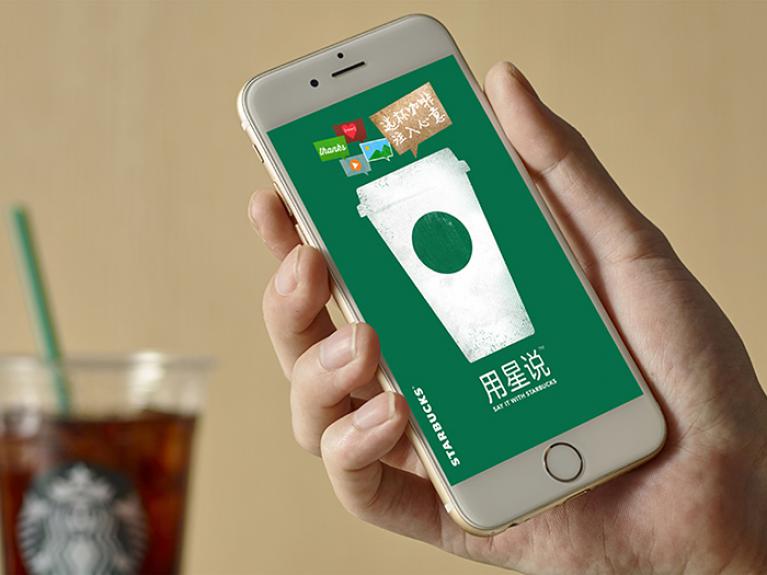
  • Starbucks’ social gifting feature launches in China

    Starbucks’ social gifting feature launches in China

    Starbucks has extended its social gifting promotions into China, where it has launched a major expansion program to double its stores within the next five years.
    The coffee giant’s new “Say It With Starbucks” program, created by Starbucks and Weixin, China’s leading mobile social communications app, enables users to gift a Starbucks beverage or digital gift card via a social gifting platform.
    A sister product of WeChat, China’s leading mobile social messaging app, Weixin’s platform has 846 million global monthly active users, as of third quarter 2016. The launch comes on the heels of a strategic partnership between Starbucks and Tencent, WeChat’s developer, in December 2016.
    Users will be able to select from a curated selection of Starbucks-branded gifts and add a personalized message in the form of text, images or video to uplift the day of a loved one, Starbucks explained. Once a gift is received, it will be saved in the recipient’s Weixin app and can be redeemed at any Starbucks store in Mainland China.
    During the initial launch period, Weixin added access to ‘Say it with Starbucks’ users in its Weixin Wallet-function. This partnership makes Starbucks the first retail brand to bring a locally-relevant social gifting experience in China, the coffee giant said.
    Starbucks launched a trial phase two weeks ago among employees and Starbucks customers.
  • First ever sale kicks off on AirAsia India social channels

    First ever sale kicks off on AirAsia India social channels

    Riding on the increasing digital penetration in the Country, AirAsia India is launching its first ever ‘Big ASS’ Sale on its social channels at 2130 hours on Thursday, 2 nd February 2017.

    Here’s the chance for travel enthusiasts to pick up their bags, without thinking twice and head out to their favourite destinations immediately! By immediately, we mean as early as NOW till 30 th April 2017.

    Unable to hold on to your excitement? Don’t lose time! between 3 rd & 5 th Feb 2017 and get going! What’s more thrilling than indulging yourself in an unexpected holiday? It is the amazing fares that come with it! Your Goa dreams are finally coming true – fly to Goa from Bengaluru or Hyderabad at INR 899 (All-inclusive).

    It’s the perfect time to plan those long weekends coming up in Feb, March and April! There’s so much for you to explore in India and beyond – Kuala Lumpur & Bangkok. AirAsia India currently flies to 11 destinations with its two hubs in Bengaluru & New Delhi covering Chandigarh, Jaipur, Guwahati, Imphal, Pune, Goa, Visakhapatnam, Kochi and Hyderabad. The airline will start flying to Srinagar & Bagdogra form 19 February 2017.

    Keep yourself updated with AirAsia’s latest promotions and activities via Twitter

    (twitter.com/AirAsiaIN) and (facebook.com/AirAsiaIndia).