Tag: starbucks

  • Starbucks opens new Hong Kong flagship

    Starbucks opens new Hong Kong flagship

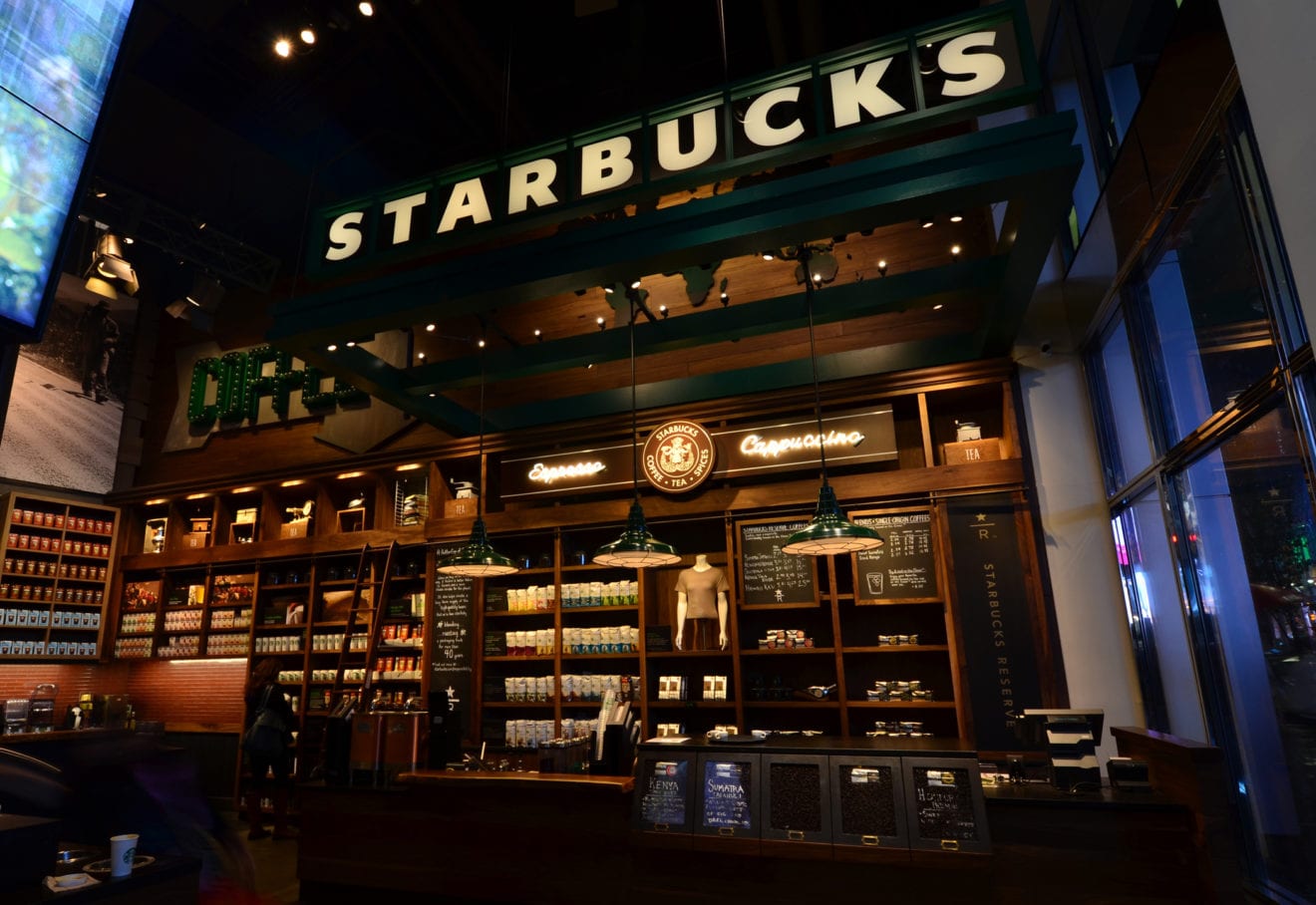
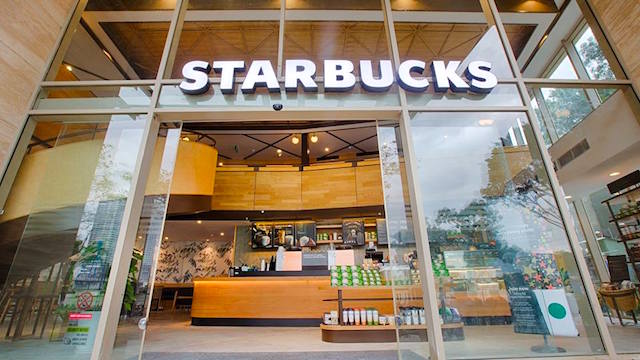
    The first Starbucks Hong Kong flagship has formally opened in Causeway Bay.

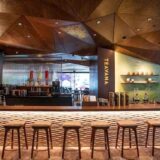
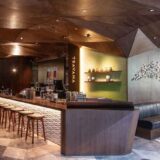
    The new store is located on level one of Lee Garden Three. As previously reported, the store features the city’s first standalone Teavana Bar and a ‘Mixology Bar’ where coffee-inspired alcoholic beverages are served, along with premium coffee and an expanded food menu.

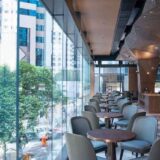
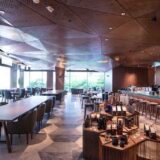
    The 5500sqft store is positioned as “an urban retreat within the bustling city” and what Starbucks describes internationally as “a Third Place” for customers to socialise with family and friends. (First and second places are home and work).

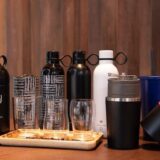
    The Starbucks Hong Kong flagship opened on Friday and boasts more than 50 new food and beverage items, as well as branded homewares and merchandise, including items exclusive to the store.

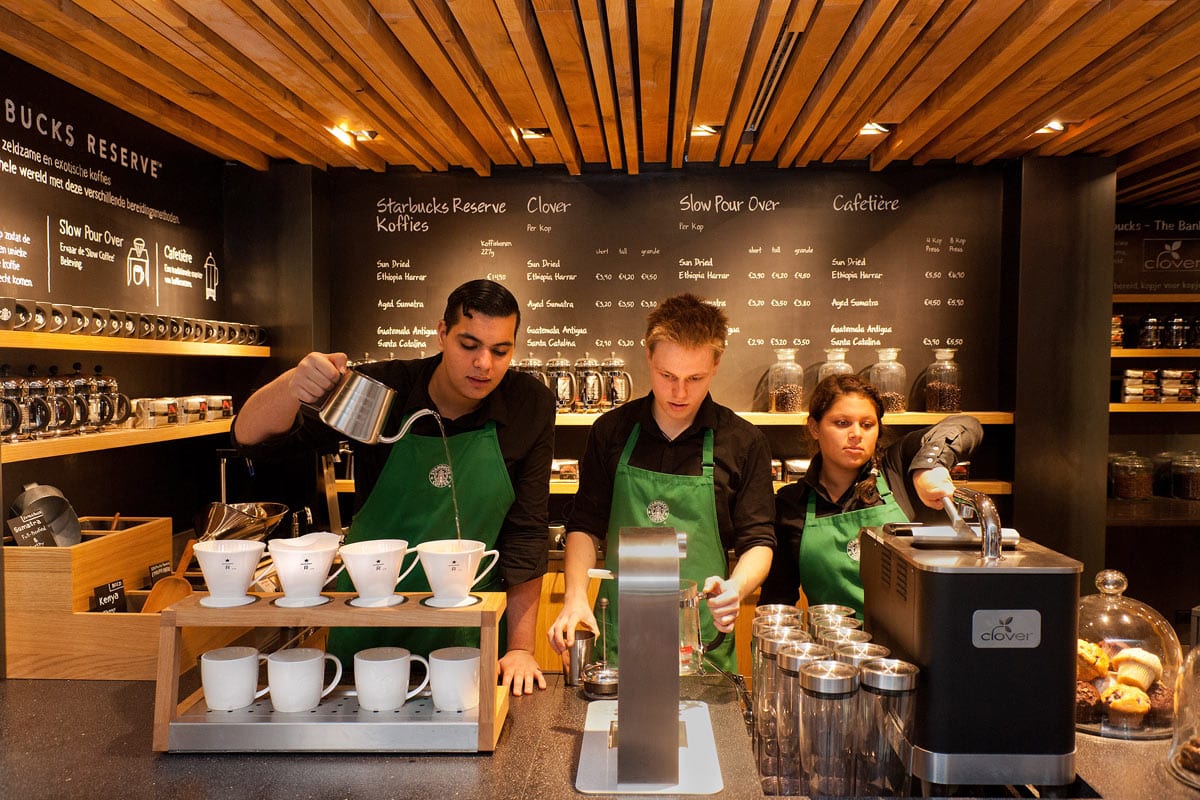
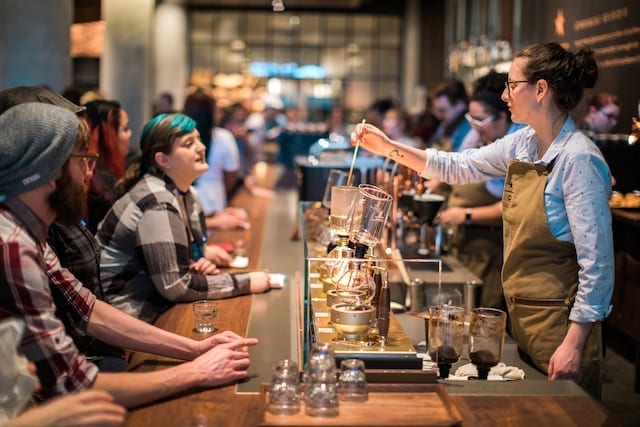
    The Starbucks Reserve coffee bar is built with marble in deep green shades inspired by coffee plantations. Staff will guide customers through the flavours of different coffee origins, and through various coffee brewing methods including nitro cold brew, siphon, pour over, coffee press, Chemex and Black Eagle Espresso.

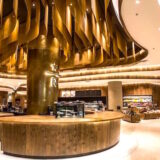
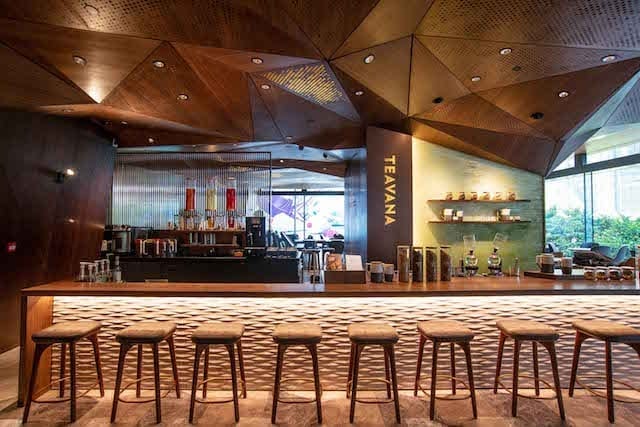
    The Starbucks Hong Kong flagship features a coffee tree-inspired centre pillar that extends through the store ceiling, made with 370 pieces of geometric wooden panels shaped like coffee leaves.

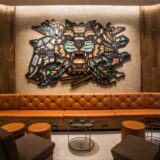
    Local designers Fa and Jun from Kanvas Studio created a feature art piece for the flagship made with 250 pieces of handcrafted ceramics inspired by the natural form of coffee and tea leaves.

    The Teavana Bar will feature five Hong Kong-exclusive teas among 15 new menu items at the Starbucks Hong Kong Flagship to offer consumers an alternative to coffee.

    The Teavana Bar will launch the first cold foam-tea series, bringing the foaminess customers of hot beverages to iced beverages with matcha latte with cold foam and black tea with Earl Grey jelly and cold foam.

    Food options at the new Starbucks Hong Kong flagship include gourmet toasts (bacon, Nurnberger sausage & scrambled eggs, avocado & scrambled eggs and soft-boiled egg & smoked salmon, for example). The menu also features a salad bar, flatbreads and pancakes.

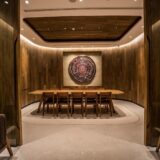
    The full pictures of the new flagship store can be viewed below :

  • Starbucks to close 150 stores in the US

    Starbucks to close 150 stores in the US

    Seattle-based coffee chain Starbucks announced it will close 150 underperforming company-operated stores next year, up three times from the usual rate of 50 closings a year.

    The need for closures was mostly driven by slowing sales in the US, the company stated.

    The global coffee chain said affected stores are those located mostly in urban areas that are already densely populated with Starbucks locations.

    The company also said it expects one per cent growth in global same store sales for the third quarter, lowering its previous guidance.

    Kevin Johnson, Starbucks president and CEO, said the company’s recent performance does not reflect the potential of their brand.

    “While certain demand headwinds are transitory, and some of our cost increases are appropriate investments for the future, our recent performance does not reflect the potential of our exceptional brand and is not acceptable.” Johnson said. “We must move faster to address the more rapidly changing preferences and needs of our customers.”

    Johnson said they have taken several actions to streamline the company over the past year, positioning it to increase their innovation agility as an organisation and enhance focus on their core value drivers which serve as the foundation to re-accelerate growth and create long-term shareholder value.

    The coffee chain closed about 8,000 stores on May 29 to offer about 175,000 employees mandatory anti-bias training after two black men were arrested at a store in Philadelphia while waiting for a friend.

  • Life at Starbucks after Howard Schultz

    Life at Starbucks after Howard Schultz

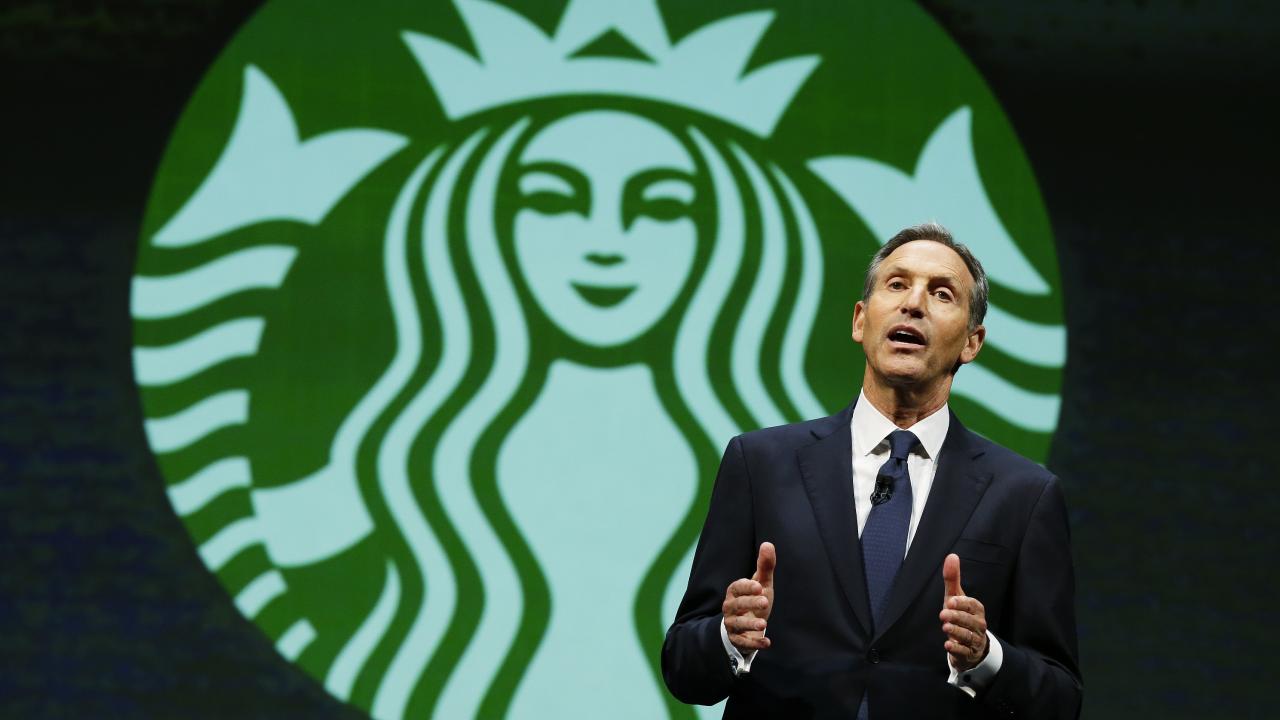
    Howard Schultz, Starbucks’s public face, wrote an emotional letter to employees on Monday to announce his plans to leave the Seattle company on June 26 after some 40 years, saying, “I would like to humbly remind you not to lose sight of what matters most: your fellow partners and our customers.”

    Schultz, who will leave his position as Starbucks’s executive chairman, continued, “Success is not an entitlement; it must be earned every day through hard work and teamwork.”

    A good reminder that was. Starbucks, under Schultz, has been a success story.

    The company has expanded from 11 stores in 1987 to 28,000-plus, in 77 countries, becoming the world’s No. 1 coffeehouse chain thanks to its “Third Place” pitch as a community spot for people between home and work. The company’s stock has jumped 21,000% since its 1992 IPO, and Starbucks was ahead of curve in offering employee benefits including comprehensive health care and free college tuition.

    It also has become a poster child for corporate activism and social consciousness. And with mobile phones fast changing consumer behavior, Starbucks was also ahead in building a mobile payment and rewards system that’s given it coveted customer insights.

    Starbucks’s share in the $58 billion global specialty coffee shop market rose to about 46% last year, from 41% in 2014, according to Euromonitor. Its share in the nearly $25 billion U.S. market surged to more than two-thirds, from 61%, during the same period, Euromonitor data shows.

    However, as much as Starbucks, or Schultz, can take pride in those accomplishments, the reality is that what once set Starbucks apart has been widely replicated and, in some cases, outdone. Just look at the crop of gourmet coffee shops like Think Coffee, Gregorys Coffee, Blue Bottle Coffee and Stumptown Coffee Roasters, which have suddenly mushroomed in cities like New York and beat Starbucks at its own game.

    Starbucks is also facing growing competition on the low end, led by McDonald’s, and increasingly has to respond to the trend of consumers’ brewing more high-end coffee at home or buying more ready-to-drink coffee on the go. A recent Mintel study, for instance, showed ready-to-drink coffee has posted five straight years of double-digit sales growth, outpacing the specialty coffee shop sales growth tracked by Euromonitor.

    Meanwhile, as Starbucks has grown, it has faced the mounting challenge of training its employees and maintaining the same level of customer service and experience. For instance, even though the company recently shut its more than 8,000 company-owned U.S. stores to train nearly 175,000 employees on unconscious bias after a Philadelphia manager called the cops on two black men, the response from both employees and customers has been mixed. (Just look at Starbucks’s painstaking responses to each Facebook post applauding or faulting it for the move.)

    With its recent move to officially declare its Use of Third Place policy to welcome anyone, paying customer or not, to its stores, the chain also needs to figure out who and how it wants to please without alienating its loyal customers.

    The warning signs started coming even before the Philadelphia incident. A Market Force Information study of U.S. coffee, bakery and donut shops in February found Starbucks’s composite loyalty index, which measures things such as customers’ satisfaction and their likelihood to recommend a restaurant, actually declined to 49% this year, from 58% in 2017. This ranked Starbucks below rivals including Krispy Kreme and Panera Bread.

    In yet another cautionary sign, in KPMG’s 2018 U.S. Customer Experience study, which was released Tuesday and covers 250 brands of various sectors, Starbucks actually came in a less-than-impressive 80th place. Among those categorized as restaurants in the study, it fell behind chains like Chick-fil-A, In-N-Out Burger and Krispy Kreme.

    Starbucks, which has also been hurt by declining U.S. mall traffic, has seen the Americas region’s comparable sales, or sales at company-owned locations open for more than 13 months, slow each year to 3% in fiscal 2017 from 7% in fiscal 2013. Even in Asia, where Starbucks has identified China as a big growth driver, comparable sales have slowed over that time.

    That’s not even counting the fact that growth elsewhere likely won’t come fast enough to move the needle and eclipse the U.S.-dominated Americas region, which represented 70% of fiscal 2017 sales versus Asia’s 14%.

    “Never embrace the status quo,” Schultz, whose upcoming departure from Starbucks has sparked speculation of a possible presidential run, wrote in his letter. “Have the curiosity to look around corners and the courage to push for reinvention. … Change is inevitable, and the world has become a more fragile place since we first opened our doors.”

    Starbucks needs to take those words to heart. After all, the world has not only become a more fragile place; it’s also become a more fickle place.
  • Starbucks Launches New Auto-payment System

    Starbucks Launches New Auto-payment System

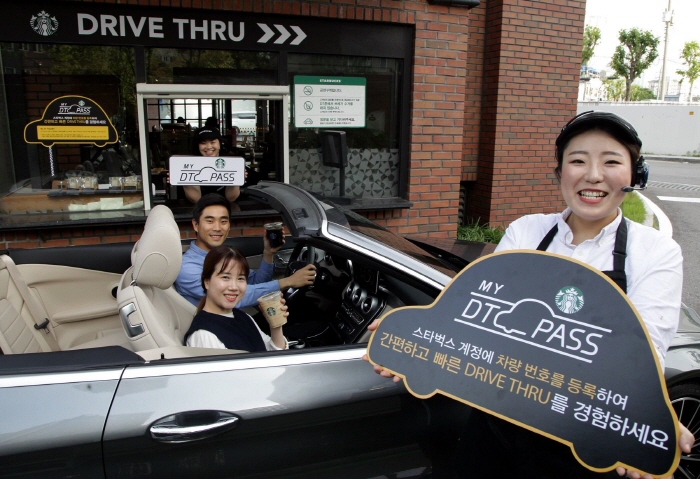
    Starbucks Korea has launched automatic payment drive-through locations, using DT Pass technology.

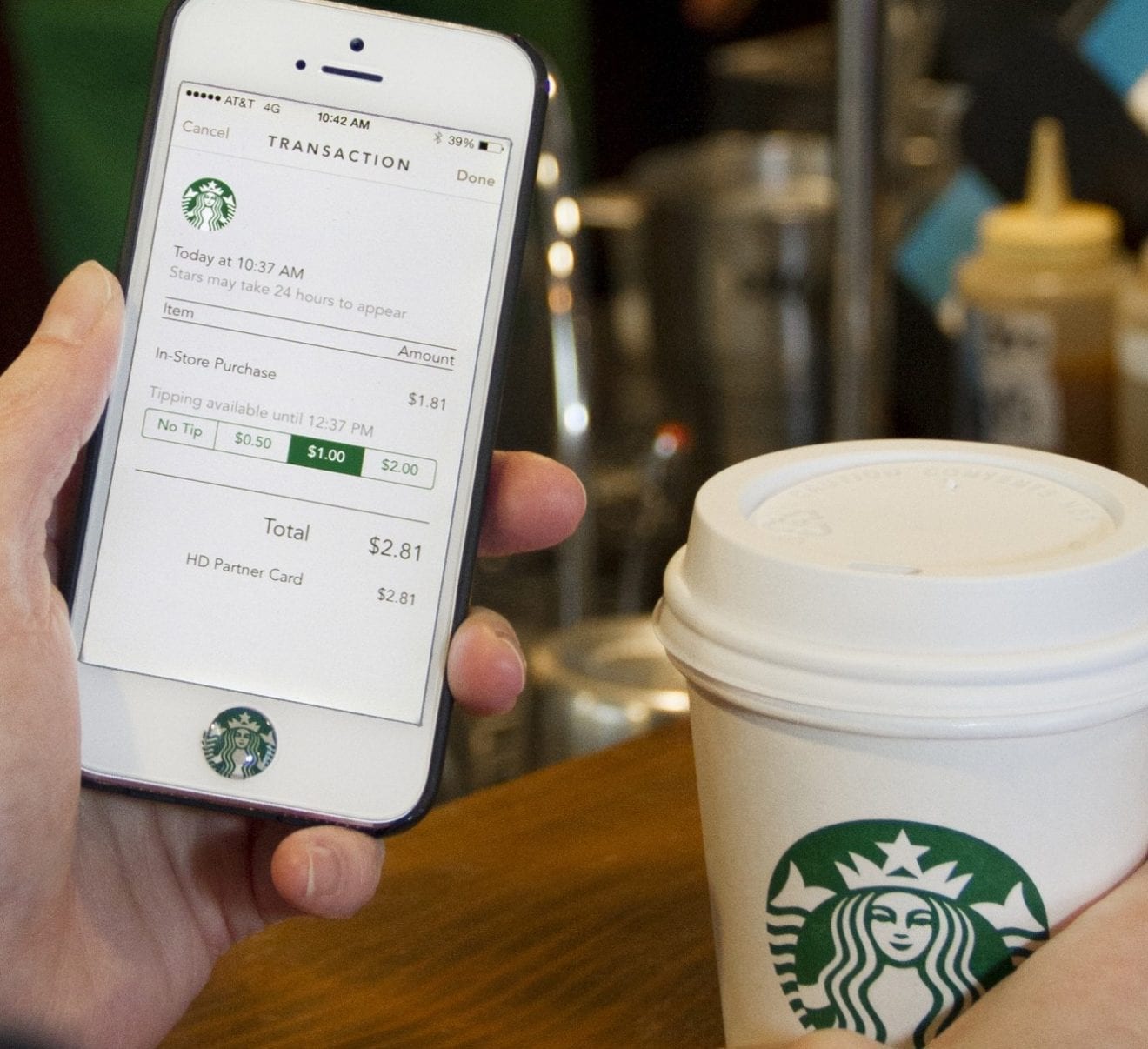
    To use the service, customers need to have a Starbucks online account with a rechargeable membership card, and register their car licence plate. A DT Pass device at the drive-through entrance will identify the customers via their registered car licence plate and deduct the payment automatically.

    The company says the time for a barista to receive the order information and for customers to make a payment is reduced by 13 to 15 seconds, which accounts for 10 per cent of the time spent at a drive-through.

    Starbucks Korea launched the service after a survey of account members. It is available at 11 branches in Seoul and will expand to 140 branches nationwide by August.

    Korea was also the first country to adopt Siren Order four years ago, which let customers order in advance so everything would be ready when they arrived.

  • Starbucks Hong Kong to ban plastic utensils

    Starbucks Hong Kong to ban plastic utensils

    Starbucks Hong Kong will stop displaying disposable plastic utensils in all stores from July 4 and will launch the policy at its new Causeway Bay store this month.

    All disposable plastic utensils will be removed from the condiment bar and will be provided only upon request. The new sustainable living policy will apply to both in-store and takeaway orders.

    Meanwhile, Starbucks is billing its new Lee Garden store as the territory’s first flagship.

    The 5500sqft ‘Third Place’ experience will open on June 22 in Lee Garden Three. It will be the largest single-story Starbucks cafe in Hong Kong, featuring the city’s first Teavana Bar, an expanded food menu and Starbucks Reserve coffee selection.

    The Teavana Bar is described as “a modern tea experience re-interpreted by Starbucks through an artful combination of the finest tea and botanicals”.

    The broader store’s interior design has been inspired by a coffee plantation.

    Following the successful launch of coffee-infused craft beers at the Starbucks IFC Mall store in March, a coffee-inspired cocktail will make its debut at the flagship-exclusive Mixology Bar.

    From June 21-27 a Starbucks cup installation will be set up at Lee Garden One on the ground floor facing the pavement by the taxi station. Limited-edition dock coasters will be given away at the pop-up.

  • Starbucks Chairman Howard Schultz To Step Down

    Starbucks Chairman Howard Schultz To Step Down

    Starbucks chairman Howard Schultz shocked many of his 350,000 associates across the world by announcing his resignation with just three weeks notice.

    Political commentators have been quick to link his sudden departure to a bid for the Democratic presidential nomination for the 2020 election, rumours about which have been swirling for months.

    Schultz’s last day at the small Seattle company he bought in 1987 and built into one of the world’s largest cafe chains will be on June 26 when he will be designated chairman emeritus. Myron E Ullman, formerly chairman and CEO of JCPenney, will take over as chairman with Mellody Hobson, president and director of Ariel Investments, becoming vice chairman.

    In a long letter to staff and customers, Schultz said it seems like yesterday that he first walked into the Pike Place store, “stepped across the threshold, and was swept into a world of coffee and community”.

    “That moment began the journey of a lifetime. Not just for me, but for so many of us. Who could have imagined how far we would travel together, from 11 stores in 1987 to more than 28,000 stores in 77 countries. But these numbers are not the true measures of our success. Starbucks changed the way millions of people drink coffee, this is true, but we also changed people’s lives in communities around the world for the better.”

    Perhaps a clue to his future political intentions was an invitation in the letter to follow his website which appears to be brand new. On the site he signs off from Starbucks in another letter, closing with the comment: “I still have the same curiosity that’s fuelled me all these years, and a relentless passion to enhance the lives of others. I encourage and welcome your thoughts about what comes next…”

    During recent years, Schultz has been more outspoken about his political views, publicly endorsing Hillary Clinton and condemning several actions of US President Donald Trump.

    It’s not goodbye

    In his letter to Starbucks staff and customers, Schultz said the move will be an emotional transition.

    “But I’m looking forward to spending time with my family this summer. I’m also writing a book about Starbucks’ social impact work and our efforts to redefine the role and responsibility of a public company in an ever-changing society. It’s a journey that has prompted me to consider the many ways that each of us, as citizens, can give back to our communities. I’ll be thinking about a range of options for myself, from philanthropy to public service, but I’m a long way from knowing what the future holds.”

    He was also clear in his desire to remain part of the company he built so strong. “I’ll never say goodbye to you. Just thank you.”

  • Thailand’s biggest Starbucks opens at CentralWorld Bangkok

    Thailand’s biggest Starbucks opens at CentralWorld Bangkok

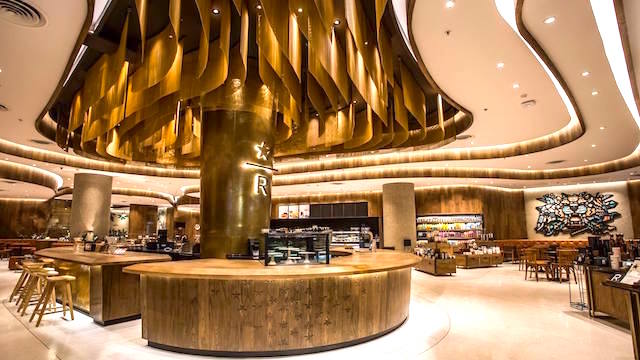
    After months-long renovation, Starbucks on the 1st floor of CentralWorld is now back in operation and, this time, becomes Thailand’s biggest store with the area spanning over 600 square meters.

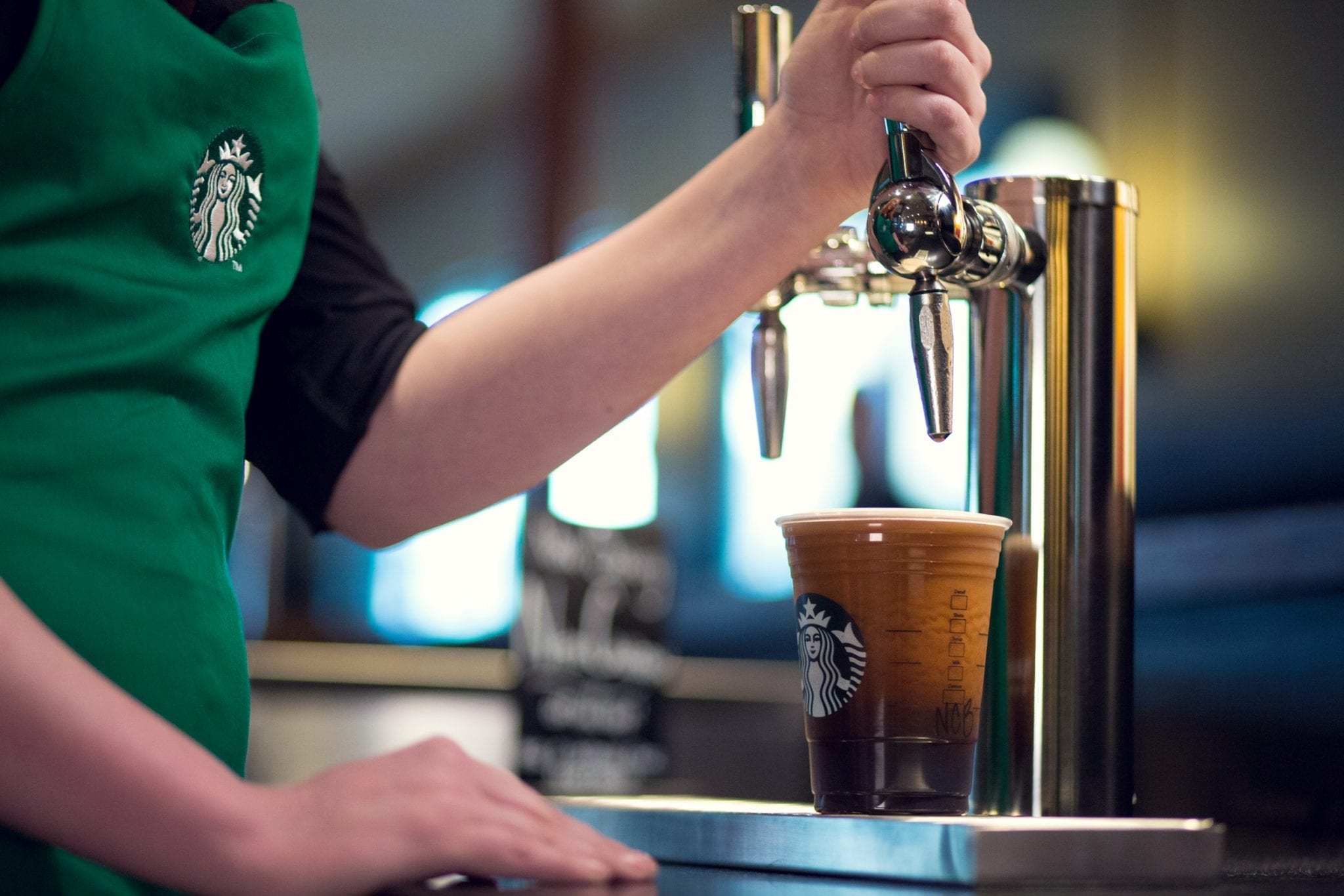
    Decked out with curvy, bright-colored wood and artsy details, the newest Starbucks cafe also offers a new nitrogen-infused drinking experience. While Nitro Cold Brew coffee has been around for a while, Starbucks sets off a new line of frothy drinks on tap (dubbed Draft) composing of Cold Brew Coffee, Nitro Cold Brew coffee, Nitro milk and Nitro peach tea, from which you can choose to create your choice of eight concoctions. For example, Nitro Green Tea Latte is the creamy foam of matcha with Nitro milk, while Nitro Flat White is composed of intense shot of espresso with Nitro Milk.

    Draft drink starts from B130 for short glass or you can go for a flight of four selections for B600.

  • Starbucks is now a public space

    Starbucks is now a public space

    You no longer have to buy a coffee to use Starbucks’ bathroom or plug in your laptop for an afternoon of web browsing, but that doesn’t mean you can camp out for a nap or bring alcohol into the cafes.

    Starbucks has been updating its guest policy in the wake of public outcry over the arrest of two black men in a Philadelphia cafe.

    “Any person who enters our spaces, including patios, cafes and restrooms, regardless of whether they make a purchase, is considered a customer,” the company said in a statement last week.

    However, Starbucks’ decision to open up its doors and patios to nonpaying customers drew complaints that Starbucks stores would turn into havens for drug users and the homeless.

    While some have praised the coffee giant for its more open policy, others have used it to poke fun at the company. On Twitter, some users joked about Starbucks becoming free offices for freelancers, homeless shelters and drug dens.

    The coffee giant has since clarified its policy, telling The Wall Street Journal that employees have been instructed on how to deal with people who are being disruptive, smoking or using drugs and alcohol or sleeping inside the cafes.

    “We want our stores to be the third place, a warm and welcoming environment where customers can gather and connect,” the company said in a statement. “When using a Starbucks space, we respectfully request that customers behave in a manner that maintains a warm and welcoming environment by: using spaces as intended, being considerate of others, communicating with respect [and] acting responsibly.”

    Starbucks said employees should contact the police if a situation “presents immediate danger” and can request that a customer be prohibited from returning to Starbucks stores.

    The policy change, which was first announced last week, comes as Starbucks gears up for its nationwide racial-bias education program on May 29. The company will close all of its 8,000 company-owned restaurants in the U.S. during the afternoon to address implicit bias, promote inclusion and help prevent discrimination.

  • Coffee Concepts will open 20 Starbucks branches in Myanmar

    Coffee Concepts will open 20 Starbucks branches in Myanmar

    Hong Kong’s Coffee Concepts has won the rights to open Starbucks stores in Myanmar.

    The first Starbucks Myanmar store will open in Yangon, operated by a subsidiary Coffee Concepts (Myanmar), having received overseas investment approval.

    Coffee Concepts is a division of the Maxim’s Group, in turn a partly owned unit of Dairy Farm International. The company operates Starbucks in Hong Kong, Singapore, Vietnam and Cambodia.

    Starbucks will be something of a late-comer to the Myanmar coffee with rivals Singapore-US joint venture The Coffee Bean & Tea Leaf and Australia’s Gloria Jeans already operating in Yangon. The latter is a joint venture with local company Seezar Soesan.

  • Starbucks China believes in a strong future by doubling Shops

    Starbucks China believes in a strong future by doubling Shops

    Starbucks China plans to open a new store every 15 hours for the next five years, doubling its store count to 6000.

    During its first-ever China Investor Conference in Shanghai on Tuesday, the US-headquartered coffee company said it plans to more than triple sales and more than double operating income in China by the end of 2022, compared with last year’s levels.

    At the end of last year, Starbucks China had about 3000 stores. Yesterday the company promised to open 600 annually from this year through to 2022.

    “The power of our brand in China, the strength and momentum in our business, and the world-class Chinese leadership team give me great confidence in our ability to capture the enormous growth opportunities ahead in this dynamic market,” said Kevin Johnson, Starbucks president and CEO. “No Western company or brand is better positioned to evolve with the rapidly expanding Chinese middle class – and we continue to mindfully evolve a coffee culture in China where the reward will be healthy, long-term, profitable growth for decades to come. We are committed to long-term investment in China.”

    Starbucks China’s agenda is to focus on enhancing its coffee-forward approach to elevating the third place (a philosophy in which home and workplace are the first two places and Starbucks is the third, as a preferred leisure space), building deeper customer relationships in digital and extending the Starbucks Experience to the on-the-go and at-home consumers.

    “Starbucks is committed to playing the long game in China and is proud to be an integral part of the local community for nearly 20 years,” said Belinda Wong, Starbucks China CEO.

    “The strong trusted relationships between our partners and customers give me great confidence in our ability to deliver our long-term growth while continuing to make investments in China, for China.”

    Disciplined growth in China

    Starbucks China says its newest generation stores are delivering the highest average unit volumes, return on investment and profitability of any of the market’s prior store classes in its history – “a clear demonstration that customers in China continue to embrace the Starbucks brand”.

    The company has drafted what it terms a “brand roadmap” to deepen coffee knowledge and human connection, “creating a Starbucks Discovery Journey that manifests itself into a unique store development process and respect for local heritage specific to China”.

    This journey starts with locally curated, core store experiences. After opening its first Starbucks Reserve Bar in 2014, it now has more than 150 of them and will reach 200 by the end of this year.

    Beijing Fun flagship

    Next month, the company will open its newest multi-level concept – the Beijing Fun flagship store. Located inside the high-traffic Beijing Fun shopping area, this will be the largest store globally, aside from its Roasteries.

    Starbucks China also plans to expand its in-store experience and drive customer loyalty using apps and other digital platforms, embracing personalisation, mobile ordering and payment services, and home or office delivery.

    During the past four years, the number of active 90-day loyalty members has nearly tripled to almost 7 million – and 90 per cent of members are now actively using the Starbucks app.

    Early last year, the company launched a social media gifting feature “Say it with Starbucks” on WeChat. That has now expanded onto the Alibaba platform.

    More than 60 per cent of transactions in Starbucks China stores are completed with digital payments, with just 20 per cent in cash.

    Ready-to-drink

    Over the next five years, the Starbucks China Ready-to-Drink (RTD) business is expected to expand to more than 400 major Chinese cities across more than 125,000 premium points of distribution in partnership with Tingyi, a leader in China’s RTD beverage category.

    Next month, the company will introduce the Starbucks chilled cup platform with four flavours, launching a new Starbucks category to Chinese consumers.

    “This beverage platform is expected to quickly become a preferred on-the-go format for coffee and tea in China. The chilled cup concept builds on the success of Starbucks Doubleshot RTD beverages, which were introduced last month,” the company said.

    Starbucks China also plans to use the recently announced global coffee alliance with Nestle to provide more at-home options to Chinese consumers.

    “The alliance will enable Starbucks channel development to grow its reach and scale in the single-serve and foodservice businesses, leveraging Nestle’s reach to expand Starbucks consumer packaged goods presence from 28 countries to nearly 190 countries around the world. The alliance will also bring Starbucks Coffee to both the Nespresso and Nescafe Dolce Gusto machine platforms around the world,” said Starbucks.

  • Nestle to pay billions to obtain Starbucks rights

    Nestle to pay billions to obtain Starbucks rights

    Nestle is to pay Starbucks US$7.1 billion for the global rights to sell and distribute Starbucks products outside cafes. The Starbucks rights deal includes Seattle’s Best Coffee, Starbucks Reserve, Teavana, Starbucks VIA and Torrefazione Italia packaged coffee and tea in all global at-home and away-from-home channels. And the Starbucks brand portfolio will be represented on Nestlé’s single-serve capsule systems, such as the Nespresso machines.

    The Seattle-headquartered cafe giant says the alliance with Nestle will allow it to accelerate and grow the global reach of Starbucks brands in the consumer packaged goods market and in foodservice channels.

    Starbucks will lead in sourcing, roasting and global brand management for the alliance, while the two companies will work closely together on innovation and go-to-market strategies.

    “With a shared commitment to ethical and sustainable sourcing of coffee, this alliance will transform, expand and elevate both the at-home and away-from-home coffee and related categories around the world,” Starbucks said in a statement.

    Neil Saunders, MD of GlobalData Retail, said the scale of the deal underlines the brand strength of Starbucks and of Nestle’s desire to use it to power its own growth.

    “For Starbucks the deal will help to drive brand recognition outside of its core North American and European markets as Nestle ramps up expansion using its distribution capacity. Arguably, it also allows Starbucks to concentrate more fully on developing its retail business, including the higher end concepts like Reserve Roastery that it is currently rolling out.

    “For Nestle, Starbucks gives it a powerful brand it can add to a coffee armoury that is looking a little tarnished. The group has always struggled with market share in North America and this deal essentially buys immediate scale. It also provides numerous opportunities for expansion elsewhere in the world by leveraging the Starbucks brand.”

    Kevin Johnson, president and CEO of Starbucks, said the alliance will take the Starbucks experience into the homes of millions more consumers around the world through the reach and reputation of Nestle.

    “This historic deal is part of our ongoing efforts to focus and evolve our business to meet changing consumer needs, and we are proud to work alongside a company that is committed to our shared values.”

    Nestle CEO Mark Schneider said the deal marked a “significant step” for the Swiss headquartered company’s coffee business.

    “With Starbucks, Nescafe and Nespresso we bring together three iconic brands in the world of coffee. We are delighted to have Starbucks as our partner. Both companies have true passion for outstanding coffee and are proud to be recognised as global leaders for their responsible and sustainable coffee sourcing. This is a great day for coffee lovers around the world.”

    Saunders observed the deal is yet another example of how large consumer goods companies are struggling to develop and grow their traditional brands.

    “Arguably, Nestle’s preferred vehicles for driving growth in coffee would be its own Nescafe and Nespresso brands. However, these have failed to gain traction in North America and have reached maturity elsewhere. There is a case to be made that Nestle has failed to innovate and develop either brand to the extent it should.”

    Saunders cautioned there may be a downside for Nestle in the deal:

    “There is a risk for Nestle is that while Starbucks is one of the best known and most powerful brands in coffee, others like McDonald’s are looking to cash in on the category by selling their own brand products through supermarkets. A host of innovative small companies, like Bulletproof Coffee and Four Sigmatic, are also making advances into the sector by emphasising the health and wellness benefits of the beverage.

    “Arguably, Nestle has gone with the obvious and easy choice – and paid a lot of money for it. It could, and probably should, also examine at how it could also acquire and develop some more innovative startups,” Saunders concluded.

  • Starbucks Plans To Step Up Digital Marketing Efforts

    Starbucks Plans To Step Up Digital Marketing Efforts

    The coffee chain added 1.6 million new U.S. members to its Starbucks rewards program. In addition, Starbucks discovered that members of Starbucks rewards were buying more: Over the quarter, their spend increased to 39 percent of U.S. company-operated sales.

    Beyond its loyalty program, Starbucks noted that customers were taking advantage of opportunities to skip the counter: Mobile Order & Pay represented 12 percent of U.S. company-operated transactions during the quarter.

    Overall, Starbucks also saw growth in comparable store sales in both the U.S. and abroad. Global comparable store sales rose by 2 percent, essentially in line with analysts’ estimates of 1.9 percent. Americas and U.S. comp store sales also increased 2 percent, while China comp store sales rose at the slightly higher rate of 4 percent.

    In terms of financials, Starbucks reported better-than-expected sales: The coffee chain beat revenue estimates by $100 million, with revenues of $6 billion, and met analysts’ earnings estimates at $0.53 per share. Starbucks President and CEO Kevin Johnson said the company reported solid results for the quarter.

    “Starbucks Q2 of fiscal 2018 represented another quarter of record financial results, highlighted by accelerating momentum across our Americas business — particularly in the U.S. — continued strong performance in China and our strongest comp growth in Japan in five quarters,” Johnson said in a press release.

    Digital Expansion

    One of Starbucks’ key priorities is to expand its digital interactions with customers.

    “Establishing digital relationships with many more customers represents a significant growth opportunity, as we have proven that a direct communications channel combined with personalization enhances the customer experience and drives customer engagement,” Johnson said during the call.

    To expand its digital relationships, Starbucks is implementing new ways to attract digitally registered customers beyond the rewards program. For example, the coffee chain is offering its Mobile Order & Pay to all customers and leveraging Wi-Fi sign-ins at its brick-and-mortar stores. In addition, Starbucks is reinventing Frappuccino Happy Hour through the use of single-use digital coupons. Johnson said these efforts are already yielding results and will generate a few million more registered users by the year’s end.

    This difference is driving a shift in Starbucks’ marketing strategy. In the past, Starbucks has offered a drumbeat of promotional offers that have not necessarily led to sustained sales. For example, the company offered a Frappuccino Happy Hour to all of its customers over a short period of time. But that strategy didn’t work: The deal didn’t improve sales of other drinks in 2017. The promotion saw “a lower-than-expected lift in non-discounted Frappuccino beverages following Happy Hour,” Chief Financial Officer Scott Maw explained on a July 2017 conference call.

    As a result, the company is taking a new approach. Starbucks’ updated program will sign customers up for direct digital relationships and promote a variety of beverages throughout the year. In essence, the goal behind the shift is to transition from a short-term, one-and-done approach for promotions to more sustained marketing efforts. Through this strategy, the company is expanding its digital reach beyond its loyal rewards members to connect with as many non-rewards customers as possible. Starbucks can now personalize its communications to customers while also gaining direct access to them.

    China Expansion

    Starbucks already has 3,200 company-operated stores in 141 cities across Mainland China, but the coffee chain anticipates a larger potential market there.

    “The opportunities for Starbucks in China, which are significant, are growing along with the size and scale of our business,” Johnson said on the call.

    To that end, the company is holding a China Investor Tour. Of course, the company is no stranger to China: It’s been in the Chinese market for 20 years. According to Johnson, the middle-class population in China stands around 600 million people, which could provide an expanded market for the company.

    “No Western company or brand is better positioned to benefit from the rapidly expanding Chinese middle class than Starbucks,” Johnson said.

  • Starbucks CEO apologises

    Starbucks CEO apologises

    Starbucks has found itself in the middle of a public relations disaster in the United States after an incident in one of its Philadelphia stores last week that saw two African American men arrested went viral.

    Starbucks chief executive Kevin Johnston has issued a statement unreservedly apologising to the men, who were handcuffed by half a dozen police officers in an outlet last Thursday following a dispute with a store manager.

    The men, who were waiting for a friend, were asked to leave after using the bathroom without making a purchase but refused, at which time the manager called 991, local police said.

    A video of the arrest was shared millions of times on social media over the weekend, sparking calls to boycott the coffee chain and protests outside of its stores.

    In a public statement Johnstone said the incident led to a “reprehensible outcome” and that he would be personally overseeing a review of Starbuck’s training processes.

    “We have immediately begun a thorough investigation of our practices. In addition to our own review, we will work with outside experts and community leaders to understand and adopt best practices,” he said.

    “The video shot by customers is very hard to watch and the actions in it are not representative of our Starbucks mission and values.

    “Regretfully, our practices and training led to a bad outcome—the basis for the call to the Philadelphia police department was wrong,” Johnston continued.

    Johnstone has offered to meet the two men in person to offer a face-to-face apology.

    Philadephia mayor Jim Kenney said the incident exemplified an example of racial discrimination, adding that he has referred the matter to the Philadelphia commission on human relations.

    “I am heartbroken to see Philadelphia in the headlines for an incident that — at least based on what we know at this point — appears to exemplify what racial discrimination looks like in 2018,” he said in a statement.

  • Starbucks Uruguay opens first cafe in the country

    Starbucks Uruguay opens first cafe in the country

    Starbucks Uruguay has opened its first cafe, located in the capital city Montevideo.

    The Seattle-headquartered coffee giant appointed Alsea International as its local partner, a leading restaurant operator in Latin America and Spain, whose brand portfolio already includes Domino’s Pizza, Burger King, Chili’s, California Pizza Kitchen, PF Chang’s, Italianni’s, The Cheesecake Factory, Archie’s and Foster’s Hollywood. It has 3300 stores in total in Mexico, Argentina, Chile, Colombia, Brazil and Spain, including 900 Starbucks outlets in include Mexico, Colombia, Argentina and Chile.

    The debut Starbucks Uruguay store is located in the Montevideo Shopping mall. Starbucks says the store’s design honors Montevideo city and its culture. Exposed concrete columns and ceilings bring character and texture to the store. Custom leather details  – a material with great local relevance – are designed to evoke a warm ambience. The cafe has a green living wall with local plants to connect the store to the origins and environment of a coffee farm.

    One of the most striking features of the store is a mural painted by Nicolas Alfalfa, a local artist. Alfalfa was able to illustrate the Siren, the iconic symbol of the Starbucks brand, over a concrete finish, extending across the back wall of the store and which can be observed from any point within the space.

    “Our first store in the beautiful country of Uruguay marks a key milestone for our expansion in Latin America,” said Ricardo Rico, Starbucks GM and VP for Latin America.

    Federico Tejado, director of Alsea International, said at least five Starbucks Uruguay stores would be opened this year and 10 by 2020.

    “We are proud to present a one-of-a-kind store that will make all our partners and customers in Uruguay feel proud,” said Pablo Jaratz, GM of Starbucks Uruguay. “Our passionate and knowledgeable baristas have spent many months training with some of our best Starbucks baristas, coffee masters and experienced partners only for this day.”

  • Starbucks Coffee Korea walks the talk

    Starbucks Coffee Korea walks the talk

    Voice recognition ordering has been introduced by Starbucks Coffee Korea, thanks to a 50/50 JV between Starbucks Coffee International and Shinsegae Group.

    Starbucks Coffee Korea has become the first retailer to use Samsung’s intelligent assistant Bixby, available on certain Samsung Galaxy devices, to allow for end-to-end ordering and payment.

    The features are an extension of Starbucks Siren Order, the company’s mobile order-and-pay technology that lets customers in South Korea order and pay for their purchases before arriving at the store.

    Bixby allows members of Starbucks loyalty program (My Starbucks Rewards) to place an order and pay through voice recognition “on command”. Customers simply speak as they would to a barista, including modifying their drinks to meet their preferences.