Tag: starbucks

  • IPhone addiction may be a virtue, not a vice for investors

    IPhone addiction may be a virtue, not a vice for investors

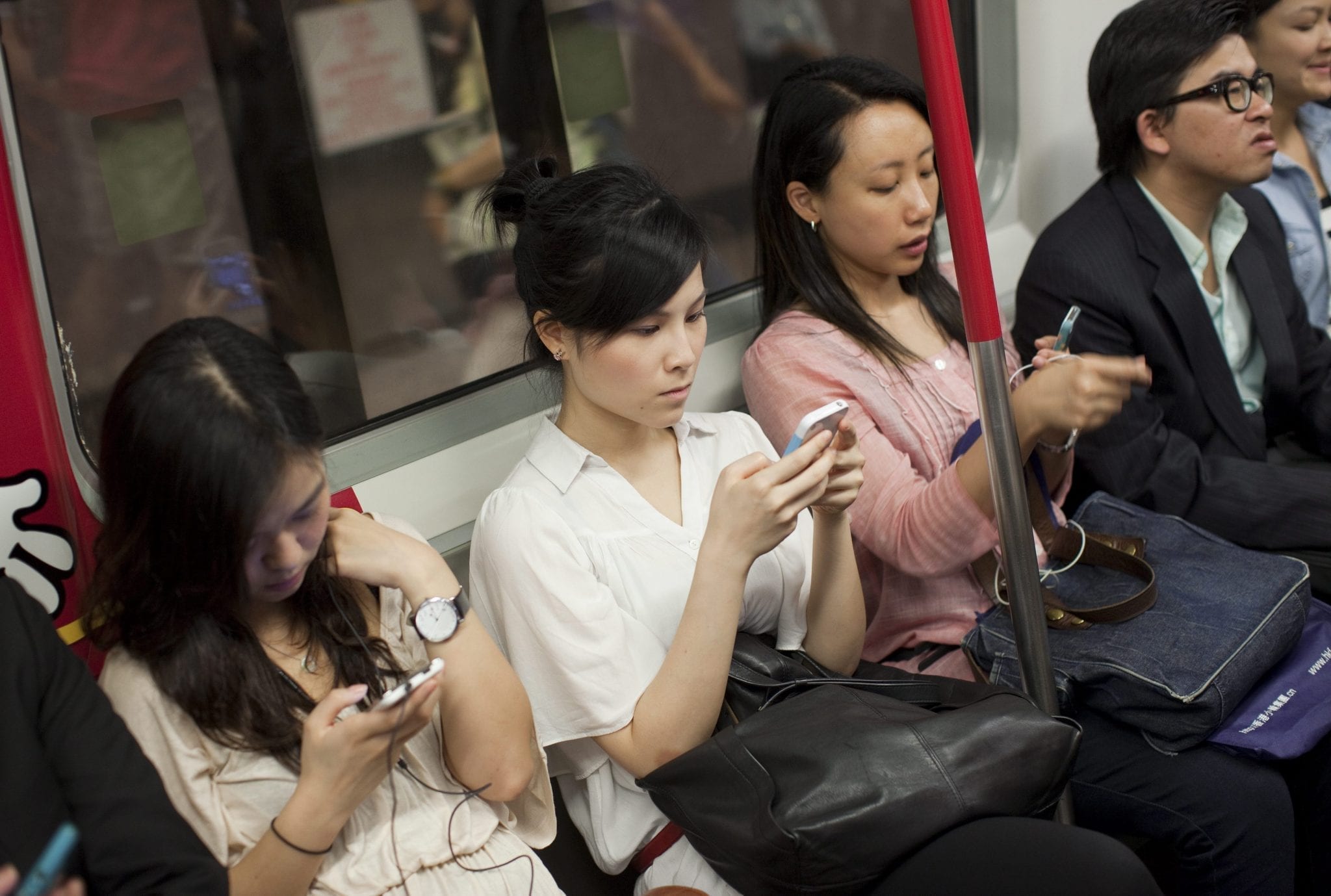
    Apple Inc investors are shrugging off concerns raised by two shareholders about kids getting hooked on iPhones, saying that for now a little addiction might not be a bad thing for profits.

    Hedge fund JANA Partners LLC and the California State Teachers’ Retirement System (CalSTRS) pension fund said on Saturday that iPhone overuse could be hurting children’s developing brains, an issue that may harm the company’s long-term market value.

    But some investors said the habit-forming nature of gadgets and social media are one reason why companies like Apple, Google parent Alphabet Inc and Facebook Inc added $630 billion to their market value in 2017.

    “We invest in things that are addictive,” said Apple shareholder Ross Gerber, chief executive of Gerber Kawasaki Wealth and Investment Management.

    He also owns stock in coffee retailer Starbucks Corp, casino-runner MGM Resorts International and alcohol-maker Constellation Brands Inc.

    “Addictive things are very profitable,” Gerber added.

    Still, the investment community is increasingly holding companies to higher social standards, and there is some concern that market-leading tech companies could draw attention from regulators much like alcohol, tobacco and gambling companies have in the past.

    Apple, Alphabet and Facebook could not immediately be reached for comment on Monday, but Facebook has said social media can be beneficial if used appropriately.

    Apple shares traded marginally lower on Monday. CalSTRS holds $1.9 billion in Apple stock, a sliver of the company’s nearly $900 billion market value, while JANA declined to disclose the size of its smaller stake.

    “Before Apple speaks, I think it’s too early to change the narrative” for investors, said Peter Jones, vice president of research for Ferguson Wellman Capital Management, which has about 350,000 Apple shares.

    Social media companies, not hardware makers, are more deserving of any addiction-related scrutiny, some said.

    Jordan Waldrep, who invests in alcohol, tobacco and gambling stocks as manager of the USA Mutuals Vice Fund, said blaming Apple for their customer’s addiction was analogous to blaming makers of cigarette packs instead of tobacco companies.

    “The social media, the cigarettes, are the addictive product,” he said. Waldrep’s Vice fund does not own Apple but he said he would consider including social-media companies.

    Kim Forrest, senior portfolio manager and vice president at Fort Pitt Capital Group, agreed that companies like Facebook, Twitter Inc and Snap Inc might be more at risk than Apple if investors and regulators push back on how much time people spend on mobile devices.

    “Apple is just the delivery device,” said Forrest, who said Fort Pitt has limited Apple holdings. “It’s only compelling with software. Software is the dopamine releaser that keeps you coming back.”

    Twitter declined to comment and Snap could not immediately be reached.

    The letter from JANA and CalSTRS recommends Apple set up a committee of child-development experts and make more new tools available to parents.

    The addiction issue gained notoriety when former Disney child star Selena Gomez said she canceled a 2016 world tour to go to therapy for depression and low self-esteem, feelings she linked to a social media addiction.

    Fears about smartphone addiction have already kicked off regulatory backlash. In December, the French education minister said mobile phones would be banned in schools, and draft legislation in France would require children under 16 to seek parental approval to open a Facebook account.

    Even tech insiders are among the vocal critics of social media and its addictive potential.

    “Apple Watches, Google Phones, Facebook, Twitter – they’ve gotten so good at getting us to go for another click, another dopamine hit,” said Tony Fadell, a former Apple executive, on Twitter.

    John Streur, chief executive of Calvert Research and Management, an Apple shareholder that focuses on social responsibility, said it is plausible that tech devices may some day be understood to hold risks we do not currently understand well.

    That would hurt investors if evidence later emerged that companies intentionally built features that create dependency and had evidence that doing so was unsafe.

    For the time being, John Carey, a portfolio manager at Amundi Pioneer Asset Management in Boston, said concerns over the human impacts from being glued to screens are not likely to cut into profits. The company holds Apple stock, but the funds Carey manages do not.

    “I doubt there will be any impact on the use of smartphones. We’re already addicted to them,” he said.
  • Starbucks opens largest store yet in Korea

    Starbucks opens largest store yet in Korea

    Starbucks Korea opened its largest store yet in Seoul’s Jongno district today, in a move to solidify the brand’s already strong presence in an increasingly competitive market.

    The coffee shop, at Jongno Tower, covers 1097sqm on the first and second floors of the building – making it four times bigger than the chain’s typical 264sqm store size.

    The latest move by the US coffeehouse chain comes on the heels of low-cost coffeehouse Ediya Coffee’s decision to open a flagship store of a similar size last year in Gangnam District.

    A wide range of menu items and premium services to differentiate from other locations will be on offer, such as herbal teas ‘Teavana Blueberry Bliss’ and ‘Teavana Citrus Lavender Sage’, which will be available at four of the Teavana-inspired stores across the country including the Jongno location.

    Some 100 beverages and 60 bakery products will be available at the new location, 30 per cent more than the average number of items available at other stores.

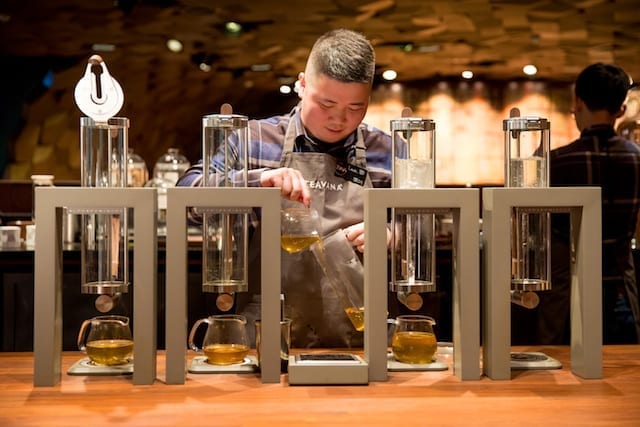
    Siphon coffee makers will be used to brew some of the drinks at the new coffee shop, while an exclusive trial program available at the store’s community room will introduce some completely new offerings such as Origin Flight and Brew Comparison.

    In addition, seven types of rice products made in South Korea using Starbucks coffee grounds as a fertiliser will also be on sale, including beans & sweet potato rice chips.

    A large-scale artwork installed on one side of the store uses traditional Korean fabric to recreate the coffee chain’s signature Siren logo with a Korean touch, a fitting addition for Jongno District, a neighborhood boasting traditional venues such as Gyeongbokgung Palace and Insadong.

    Starbucks currently operates about 1100 stores across South Korea.

    Earlier this month, the American coffeehouse opened its largest store in the world in Shanghai, China

  • Starbucks CEO talks about the future in China after the opening of its biggest store yet

    Starbucks CEO talks about the future in China after the opening of its biggest store yet

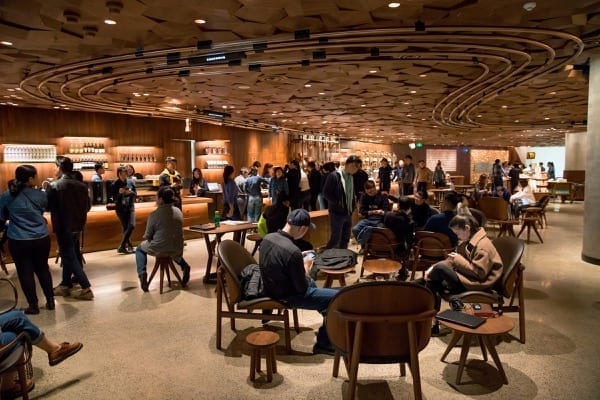
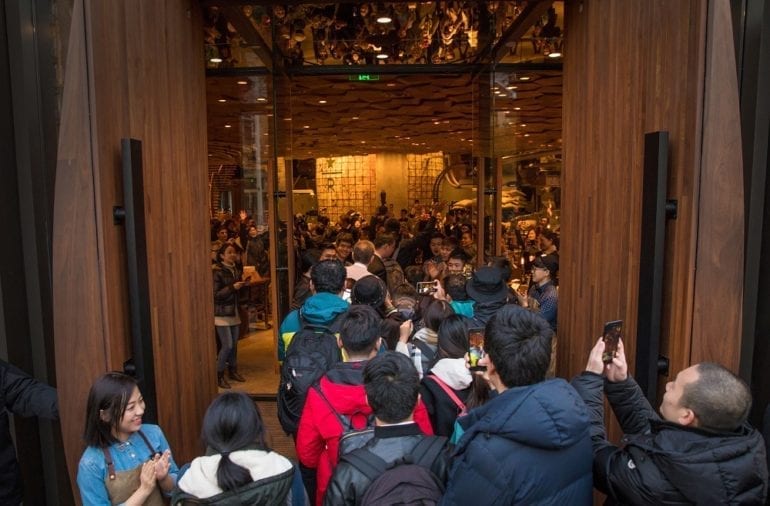
    That would be the company’s new Shanghai Roastery, a 30,000 square-foot “coffee wonderland,” which opened Tuesday and is Starbucks’ largest store to date.

    Located in the company’s fastest-growing country, the new Roastery is double the size of the original in Seattle that opened in 2014. It features three coffee bars offering multiple brewing methods; a 3D-printed tea bar; an Italian bakery, Princi; and a ceiling built with 10,000 handmade wooden hexagon-shaped tiles. There’s also a two-story, 40-ton copper cask with more than 1,000 hand-engraved Chinese stamps that tell the story of Starbucks and coffee.

    Technology is weaved into the store, including Starbucks’ first-ever in-store augmented reality experience, built in partnership with Chinese tech giant Alibaba, which is also selling Roastery coffee and merchandise on its Tmall online marketplace. Yahoo noted that sales on Tmall reached $1 million in the 48 hours before the Roastery opened.

    Starbucks plans to open more Roastery locations next year in Milan and New York City; and in Chicago and Tokyo in 2019. Speaking at the GeekWire Summit in October, Starbucks CEO Kevin Johnson explained that the Roastery stores act as “a center of innovation” for the company, which now has 27,000 stores in 75 countries and serves 90 million customers per week.

    “You’ll see us invest in taking the innovation we get from the Roasteries and propagate it throughout all our Starbucks stores around the world,” Johnson said.

    China represents Starbucks’ fastest-growing market with more than 3,000 stores across 136 cities, and 600 alone in Shanghai. The company posted same-store sales growth of 8 percent in the most recent quarter for China, compared to a 2 percent global average growth for stores worldwide. In July, Starbucks paid $1.3 billion to acquire the remaining shares in its East China business as it unified mainland China as a company-operated market.

    At a press event in Shanghai this week, Johnson said that China will become Starbucks’ fastest-growing market within a decade, according to the South China Morning Post.

    “If you look at the growing middle class in China and the opportunity for more and more people to frequent Starbucks, we can build stores in China for decades and still have runway to build more,” Johnson said at the GeekWire Summit.

    Starbucks CEO Kevin Johnson speaks at the 2017 GeekWire Summit.
    China can also act as a testbed for the company’s new digital products and services, given that there are nearly 700 million smartphone users. In July, Starbucks Chairman Howard Schultz hinted that Starbucks would partner with more Chinese tech companies “based on the fact that the consumer in China is well more advanced than the U.S. consumer in terms of being a digital native.” It previously partnered with another Chinese tech giant, Tencent, for social gifting integration on WeChat.

    At the GeekWire Summit, Johnson noted that Starbucks is working to create a “unified commerce platform” that enables its rewards program to work seamlessly across international markets.

    “The key factor is some software that our teams are writing that is rolling out country by country around the world, and it might take us another two years to touch every country,” he noted.

    Asked how Starbucks creates a consistent customer experience at its stores around the world while staying true to local culture, Johnson said it’s about creating a welcoming store environment, providing top quality coffee, and most importantly, human connection — the “one thing that every single one of us on this planet has in common.”

    “We’ve all experienced joy and sorrow; we’ve all experienced the struggle and the success,” Johnson explained. “So just anchoring on the fact that human beings, we are tribal people — we get energy from one another. If you create an environment where people are connecting with other people in our stores, it works everywhere.”

    Johnson also talked about how Starbucks ties together a physical store experience with digital innovation.

    “One, you must be focused on experiential retail that creates an experience in your store that becomes a destination for the customer,” Johnson explained when asked about what physical retailers must consider in 2017. “And number two, you have to extend that experience from brick-and-mortar to a digital-mobile relationship. So our approach to this is investing in elevating the experience we create in our stores, and investing in the digital-mobile connection we have with our customers.”


  • What to know about the breathtaking Starbucks Reserve Roastery in Shanghai

    What to know about the breathtaking Starbucks Reserve Roastery in Shanghai

    The world’s largest, most beautiful Starbucks yet opened its doors yesterday in Shanghai at 30,000 square feet.

    Featuring everything from Starbucks longest coffee bar, to the world’s only 3-D printed tea bar, and Starbucks first Augmented Reality experience, the roastery takes coffee lovers through a one-of-a-kind coffee journey that is sure to impress.

    The Roastery in Shanghai is the epitome of coffee and retail innovation for Starbucks. As China is at the forefront of Starbucks vision for global growth and innovation, it was the perfect place for the largest Starbucks to open. China is the company’s fastest growing market with more than 3,000 stores across more than 130 cities.

    On Dec 5, two of the world’s most innovative retail titans – Howard Schultz and Jack Ma – came together to celebrate the opening of Starbucks Reserve Roastery Shanghai.

    1. Officially the largest, most beautiful Starbucks® location in the world at nearly 30,000 square feet (2,700 square meters). FUN FACT: The Starbucks Reserve Roastery Shanghai is twice the size of the flagship Reserve® Roastery in Seattle and the equivalent of 40 average NYC apartments.
    2. Home to three coffee experience bars, one of which is 88 feet (26.9 meters) long, making for the longest Starbucks coffee bar in the world. FUN FACT: Known as the main engine of the Roastery, the coffee bar was handcrafted by premiere Chinese artisans and references the unique roasting curve of individual coffee beans.
    3. Mirroring the signature copper cask at the inaugural Reserve Roastery in Seattle, at entry, customers will be greeted by the stunning site of a two-story, 40-ton copper cask adorned with over 1,000 traditional Chinese chops, or stamps, hand-engraved to narrate the story of Starbucks and our Reserve coffee. FUN FACT: The iconic cask connects to the three coffee bars with pneumatic copper piping, replenishing all the roasted Starbucks Reserve® coffee silos. 
    4. Unique beverage menu items that cannot be found at any other Starbucks in China. FUN FACT:  Over 100 beverages are on the Roastery menu including Teavana tea infused with nitrogen as well as a new take on tea brewing with the Steampunk, which uses steam to extract unique flavors from each tea leaf. 
    5. Overall design of the space inspired by coffee and created exclusively in China for China – it will never be repeated. FUN FACTS: Some of the key design features include a ceiling consisting of 10,000 handmade wooden hexagon-shaped tiles inspired by the locking of an espresso shot on an espresso machine.  
    6. First PrinciTM bakery and café location in Asia, with more than 30 skilled Chinese bakers and chefs. FUN FACT: More than 80 menu items will be baked fresh onsite daily, bringing acclaimed Italian baker Rocco Princi’s artisanal Italian recipes to customers in China for the first time.
    7. The new Shanghai Roastery features China’s first Starbucks® Teavana Bar, a reimagined tea experience supported by the world’s only tea bar made entirely from 3-D printed recycled materials. FUN FACT: The light jade coloring of the Teavana Bar was inspired by ancient green clay teapots and the stains formed by brewing over time. Starbucks will continue China’s rich brewing tradition alongside tea curators as they practice mixology with the help of the Steampunk system’s nitrogen flavor extraction.    
    8. First Starbucks Reserve Roastery outside the U.S., and only second Reserve Roastery to date. FUN FACT: Additional Roasteries are slated to open in Milan and New York in 2018, and Tokyo and Chicago in 2019.
    9. Starbucks first-ever in-store Augmented Reality Experience. FUN FACT: Designed by Starbucks, and powered by Alibaba, the Shanghai Roastery will become the first Starbucks location, and the first-of-its kind in China, to seamlessly integrate a real-time, in-store and online customer experience. Roastery customers are invited to immerse themselves in the first Starbucks augmented reality (AR) experience by simply pointing their phones at key features around the Roastery to bring to life information about the Starbucks bean-to-cup story. Guided through the space by a custom-designed AR “tour-guide,” customers can unlock virtual badges and a unique Roastery filter to commemorate their visit.
    10. China is Starbucks fastest growing market with a new store opening every 15 hours. FUN FACT: Starbucks has had a presence in China for more than 18 years, now with more than 3,000 stores across 136 cities, over 600 of which are in Shanghai, the largest number of stores globally of any city where Starbucks has a presence.
  • Shanghai is home for world’s largest Starbucks Reserve Roastery

    Shanghai is home for world’s largest Starbucks Reserve Roastery

    The world’s largest Starbucks Reserve Roastery opens in Shanghai tomorrow, a store the company also describes as its “most beautiful”.

    At 2700sqm (nearly 30,000sqft) the store is twice the size of the Seattle Starbucks Reserve Roastery flagship. It features three coffee experience bars, the largest 27m long. The coffee bar was handcrafted by premiere Chinese artisans and references the unique roasting curve of individual coffee beans.

    Starbucks Reserve Roastery - Shanghai 1

    China is Starbucks’ fastest-growing market with a new store opening every 15 hours. The US coffee chain has been in China for more than 18 years and now has more than 3000 stores across 136 cities. More than 600 of those  are in Shanghai.

    Starbucks Reserve Roastery - Shanghai 2

    Starbucks Reserve Roastery - Shanghai 11

    The ambitious store expands Starbucks’ core offer, with more than 100 beverages on the menu, including Teavana tea infused with nitrogen and a new take on tea brewing with the Steampunk, which uses steam to extract unique flavors from each tea leaf.

    Starbucks Reserve Roastery - Shanghai 3

    Starbucks says the design is unique and will not be repeated elsewhere. Key design features include a ceiling consisting of 10,000 handmade wooden hexagon-shaped tiles inspired by the locking of an espresso shot on an espresso machine.

    Starbucks Reserve Roastery - Shanghai 4

    At the store’s entrance, mirroring the signature copper cask at the inaugural Starbucks Reserve Roastery in Seattle, customers will be greeted by the sight of a two-story, 40-ton copper cask adorned with more than 1000 traditional Chinese chops, or stamps, hand-engraved to narrate the story of Starbucks and its Reserve concept. The cask has a practical purpose, as well – connecting to the three coffee bars with pneumatic copper piping, replenishing all the roasted Starbucks Reserve coffee silos.

    Starbucks Reserve Roastery - Shanghai 8

    New bars and AR

    Besides the coffee experience bars, the new store features Asia’s first Princi bakery and cafe, with more than 30 Chinese bakers and chefs baking 80-plus menu items fresh onsite daily, based on artisanal recipes created by Italian baker Rocco Princi.

    Starbucks Reserve Roastery - Shanghai 9

    And it features China’s first Teavana Bar. Made entirely from 3D printed recycled material, the bar’s light jade colouring was inspired by ancient green clay teapots and the stains formed by brewing over time. Starbucks will continue China’s brewing tradition alongside tea curators as they practice mixology with the help of the Steampunk system’s nitrogen flavor extraction.

    Starbucks Reserve Roastery - Shanghai 10

    Designed by Starbucks, and powered by Alibaba, the Shanghai Roastery will become the first Starbucks location, and the first-of-its kind in China, to seamlessly integrate a real-time, in-store and online customer experience. Roastery customers are invited to immerse themselves in the first Starbucks augmented reality (AR) experience by simply pointing their phones at key features around the Roastery to bring to life information about the Starbucks bean-to-cup story. Guided through the space by a custom-designed AR “tour-guide,” customers can unlock virtual badges and a unique Roastery filter to commemorate their visit.

    “The affinity we have built with our partners (employees) and customers over the past 18 years in China is special and we knew we must bring the Reserve Roastery, our boldest, most premium store ever, to Shanghai, China’s bustling metropolitan hub and one of the world’s most dynamic retail destinations, as well as a gateway to customers from across Asia and the world,” said Howard Schultz, executive chairman of Starbucks Coffee Company. “We’ve created a space that both recognises and celebrates our 46-year history of coffee leadership and retail innovation with China’s rich, diverse culture.”

    Here’s a video from Starbucks showing some of the interior (no sound):

  • Dairy Farm sales stagnate

    Dairy Farm sales stagnate

    Dairy Farm sales were described as “flat” in the third quarter to September 30.

    The Hong Kong-headquartered company said improved performances in health and beauty, Ikea, restaurants and Yonghui were offset by lower sales in the food and grocery division.

    “The lower food division sales, together with new store pre-opening costs in home furnishings, (Ikea) led to underlying profits being marginally below the same period in the prior year,” the company said in a statement issued in London, where it has a secondary listing. “Similar trading conditions are expected to continue for the remainder of the year.”

    Dairy Farm said the weakness seen in food and grocery sales was principally driven by difficult trading for the hypermarket and supermarket operations in Southeast Asia, where it operates Giant hypermarkets and Cold Storage supermarkets. It says reviews of “a number of the businesses” are being undertaken.

    The results from greater China (including its Hong Kong Wellcome supermarkets) showed improvement over the same period last year. Convenience store operations (including 7-Eleven stores in Hong Kong and Singapore) produced improved sales and profitability.

    Yonghui reported a strong 20 per cent  growth in revenue and 131 per cent increase in profit in the quarter.

    Improved sales in the health and beauty division (Manning’s, Guardian and Rose Pharmacy) were driven principally by a strong performance in Hong Kong and Macau. Home Furnishings (Dairy Farm has the Ikea franchises in Hong Kong and Taiwan) traded well, although profitability was reduced due to pre-opening expenses for the new store in Hong Kong.

    Maxim’s (which also includes Starbucks operations in Hong Kong, Vietnam and Cambodia) had a seasonally strong quarter in both sales and profit, benefiting from record mooncake sales during the Mid-Autumn Festival period. In September, Maxim’s acquired the existing business and exclusive rights to operate and develop Starbucks franchise stores in Singapore.

    In August, the group completed the acquisition of the remaining 34 per cent interest in Rustan’s in the Philippines from its joint venture partner.

  • Starbucks Japan opening in tourist attractions

    Starbucks Japan opening in tourist attractions

    Starbucks Japan is about to open stores at two tourist spots, Dogo Onsen and Miyajima (pictured).

    An island in Hiroshima Bay, Miyajima goes by the official name of Itsukushima and is known for its floating torii gate off the shore of Itsukushima Shrine, a Unesco World Heritage Site. Starbucks says its new location on the island, accessed by a 10-minute ferry ride from the mainland, is a first for the company as the only outlet that has to be reached by boat.

    Starbucks Japan- Miyajima 1

    Featuring wood panels, panoramic windows and a balcony, the new Starbucks will share a building with a brewery restaurant run by local company Miyajima Beer.

    Starbucks Japan- Miyajima 2

    Also on an island, Dogo Onsen is believed to be Japan’s oldest hot spring, reports Sora News 24. It is in Matsuyama, on the island of Shikoku.

    Starbucks Japan - Dogo Onsen station

    Starbucks will take up residence in the two-storey wooden replica of the island’s original station. Its interior will pay homage to the original building that dated back to 1911. The tables and chairs will be made from old rails and sleepers.

    Starbucks Japan - Dogo Onsen station 2

    Starbucks Japan - Dogo Onsen station 1

    The Miyajima Starbucks opens on November 22 while the Dogo Onsen outlet follows a month later.

  • Blue Bottle Coffee heading for Korea

    Blue Bottle Coffee heading for Korea

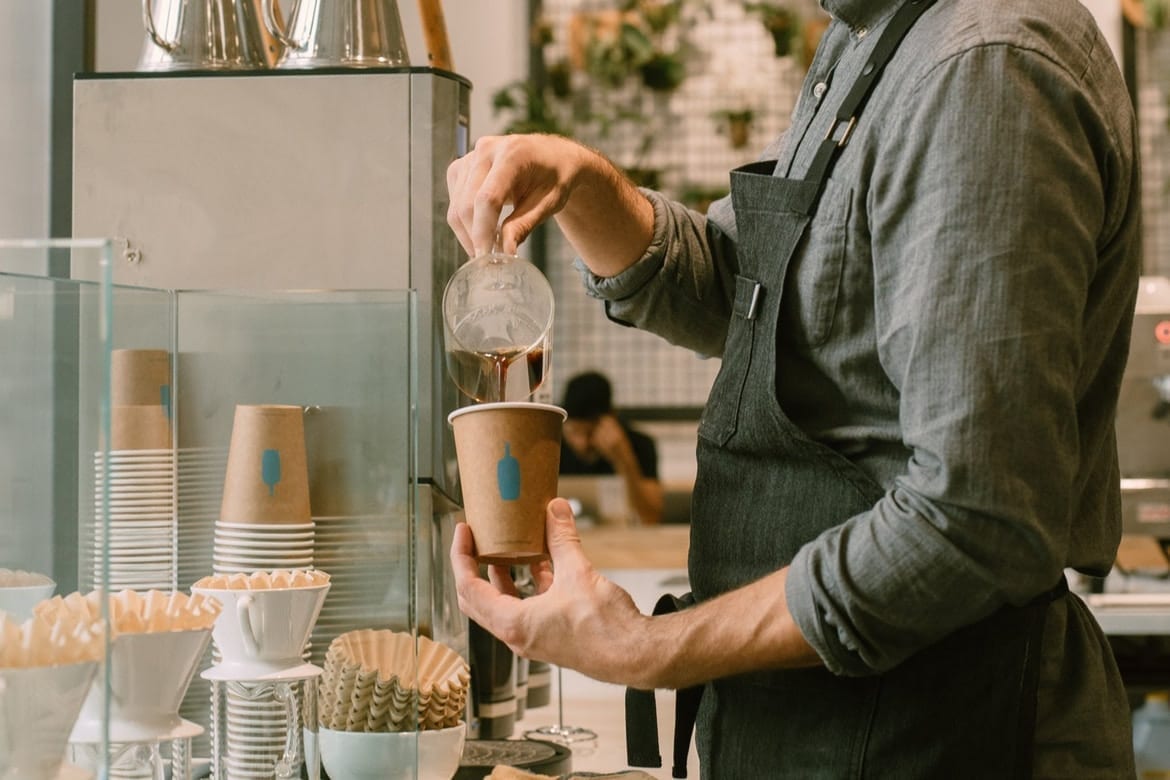
    US brand Blue Bottle Coffee is expected to open in South Korea soon, followed by other Asian countries including China, Hong Kong and Taiwan.

    “We’re developing our contact here,” CEO Bryan Meehan said while attending the World Coffee Leaders Forum at the Seoul Cafe Show.

    He said Blue Bottle was researching the market and looking for a GM in Korea, with no specific set yet for a launch.

    Meehan said the company headquarters would directly manage its stores in Korea, as it does in other countries.

    “Actually, we had a lot of pressure for a joint venture in Japan. A lot of companies wanted licensed approaches,” he said. “We are very passionate about controlling the quality of Blue Bottle, so we like to do things ourselves. We have never franchised.”

    While local coffee chains in Korea have been hit by losses over the past few years, Starbucks Coffee has alone seen rapid growth, reports The Korea Times.

    “Blue Bottle has grown along with Starbucks in the US. We think we can survive side-by-side,” said Meehan.

    Known for its innovation, Blue Bottle has 44 stores in the US and Japan. Nestle acquired the chain for US$425 million in September.

    “Nestle CEO Mark Schneider has a wonderful vision of where specialty coffee should be in five years’ time, and he sees the value of Blue Bottle,” said Meehan. “Nestle is allowing Blue Bottle to remain a standalone company. I don’t report to anybody at Nestle.”

    Founded in Oakland, California, by musician James Freeman in 2002, Blue Bottle has expanded around San Francisco. Because of Freeman’s interest in Japan, the chain has expanded there and will open its eighth outlet next year in Kyoto.

  • Hong Kong retail start recovering

    Hong Kong retail start recovering

    A “steady if cautious” Hong Kong retail recovery is clearly underway, according to a report from Savills released today.

    “The retail sector is slowly coming to life after four years of painful adjustment which has seen the emergence of a ‘tenant’s market’, a rare occurrence in Hong Kong’s landlord-dominated retail scene,” observed Simon Smith, head of research and consultancy with Savills.

    Over recent months, he said, retailers have been taking the opportunity to upgrade for little or no extra cost and examples include Pandora which moved within IFC Mall and Hourglass, which runs Patek Philippe, relocating within Tsim Sha Tsui from the Imperial Hotel to a better site in the Holiday Inn.

    In further evidence of upgrade demand, Harry Winston has taken the space previously occupied by Ferragamo in the Mandarin Hotel and will open in early 2018. Alternatively, retailers are cutting overheads as they find that renewal negotiations are yielding significant savings as landlords discover a new pragmatism.As reported, Topshop has renewed the lease on its Queen’s Road Central store at a discount of about 50 per cent.

    While landlords of high street shops remain on the back foot, larger shopping centres, such as  Harbour City, IFC Mall and New Town Plaza, are proving relatively immune to the downtown, says Smith.

    In IFC Mall, Italian menswear brand Boggi opened recently while Brunello Cucinelli has launched a new flagship in the same mall.

    “As street-shop rents have fallen heavily while centre rents have only seen a minor adjustment, the gap between the two has narrowed considerably and tenants are now finding that a prime street front pitch can be a viable alternative to taking space in a nearby mall. This is the narrowest the gap has been since 2009 and represents a return to the norm after seven years of major gains in street shop rents.”

    Strength in regions

    Savills also notes that regional and district malls such as Popcorn in Tseung Kwan O and Tuen Mun Town Plaza are doing relatively well.

    “Hong Kong’s tight geography, excellent transport infrastructure and dense retail environment has helped this type of mall defend against the threat from online. The appeal of air conditioned spaces in the summer months and the lure of enhanced F&B offerings have also helped boost the appeal of local malls. We have also seen landlords putting more effort into marketing campaigns with better events, more pop-up stores and creative TV and online advertising,” said Smith.

    “Most malls now have a very well-established cyber-presence via websites and apps. Click-and-collect is making some limited headway locally, with brands such as Zara, Burberry, L’Occitane, Watson’s Wine, Chow Sang Sang and Starbucks all offering the service.

    “In a mixed market some trade categories are performing well and pharmacies in particular are expanding aggressively at the moment. Not every landlord wants them but they are often prepared to pay above-market rents. F&B is also out-performing, driven in part by a richly valued stock market and rising wages.”

    Nick Bradstreet, head of retail with Savills, said luxury fashion is turning around in Hong Kong even though brands have been closing stores in Macau and Mainland China over the past year or so. Luxury sales in China have actually surged over the past six to nine months.

    “Cosmetics retailers are reporting fairly stable business, but after a period of rapid expansion, many brands are still culling store numbers. Electrical goods retailers are consolidating in what is a very competitive marketplace,” he said.

    Savills prime street shop rental indices remained flat over the third quarter while rents in prime malls continued to drift off marginally. The latest September retail sales figures from government recorded a seventh consecutive month of rises attributable in part to a strong inbound tourist numbers. Jewellery, watches, clocks and valuable gift sales outperformed, rising by 14.7 per cent year-on-year, with strong growth also noted for medicines, cosmetics and Chinese drugs.

  • Food helps, says Starbucks boss

    Food helps, says Starbucks boss

    Food and digital innovation are helping attract customers into stores, says Starbucks Corporation CEO/president Kevin Johnson.

    He was commenting on the coffee giant’s growth during its fourth quarter and fiscal year ending October 1.

    For the quarter, net revenues for the China/Asia Pacific segment grew 2 per cent to US$859.9 million. Excluding $56.9 million for an extra week last year’s fourth quarter, net revenues grew 10 per cent, primarily driven by incremental revenues from 1036 store openings over the past 12 months and a 2 per cent growth in comparable store sales. The increase was partially offset by unfavourable foreign currency translation.

    China comparative-store sales increased 8 per cent, driven by a 7 per cent increase in transactions.

    Overall four-quarter operating income grew 5 per cent to $201.7 million, while the operating margin expanded 60 points to 23.5 per cent, primarily driven by higher income from joint ventures, and partially offset by the lapping of the 53rd week in fourth quarter.

    Consolidated net revenues were steady for the quarter at $5.7 billion, excluding $412.4 million for the extra week. Consolidated net revenues grew 8 per cent.

    GAAP operating income of $1 billion declined 16.7 per cent while non-GAAP operating income grew 2.8 per cent to $1.1 billion. GAAP operating margin of 17.9 per cent declined 360 points while the non-GAAP decline was 20 per cent, down 90 points.

    The increased operating loss was primarily because of restructuring and impairment costs related to the company’s strategy to close Teavana tea retail stores and focus on the brand within Starbucks stores.

    Global comparable store sales increased 2 per cent, driven by a 2 per cent increase in average ticket and a 1 per cent increase in transactions; but up 3 per cent excluding the impact from Hurricanes Harvey and Irma. The impact from the hurricanes affected consolidated and US comparative store growth by 1 per cent as more than 1000 stores were temporarily closed.

    Revenue growth

    For the year, global comparable-store sales increased 3 per cent while consolidated net revenues grew 5 per cent to $22.4 billion. Excluding $412.4 million for the extra week in the fourth quarter last year, consolidated net revenues grew 7 per cent year-on-year.

    GAAP operating income of $4.1 billion declined 0.9 per cent compared while non-GAAP operating income grew 7.8 per cent to $4.4 billion.
    GAAP operating margin of 18.5 per cent declined 110 points, but was up 10 points to 19.7 per cent non-GAAP.

    Starbucks opened 603 stores globally, taking its total to 27,339 across 75 countries.

    Johnson says system improvements are enabling the company to drive increased throughput, particularly in its busiest stores at peak times.

    In September, the company announced it had entered into an agreement with long-time strategic partner Maxim’s Caterers in Asia to fully licence Starbucks business in Singapore, including transitioning the more than 130 company-run Starbucks stores. The partnership started in Hong Kong in 2000, and together they run more than 210 outlets across Cambodia, Hong Kong, Macau and Vietnam.

  • Starbucks Thailand supporting regional artisans

    Starbucks Thailand supporting regional artisans

    Thai craft products are to go on sale in Starbucks Thailand outlets in a national promotion with the title “We bring crafts to life in harmony with the contemporary lifestyle”.

    In co-operation with the Support Arts and Crafts International Centre of Thailand (SACICT), the project aims to help Thai artisans take their crafts to the public. Initially there are three products – handmade bags, natural-dye cotton outfits for teddy bears, and woven trays.

    “We are grateful to be able to provide an opportunity for Thais at district level to promote their innovative arts and crafts and generate income. We are also giving a boost to Thai handicrafts by showcasing their uniqueness to Thais and foreigners,” says Starbucks Coffee Thailand MD Murray Darling. “Customers can buy these crafts through our 303 stores in Thailand.”

    The bags are produced through a collaborative program between SACICT and the Department of Corrections that trains inmates of the Central Women’s Correctional Institution as part of a project under the royal initiative of Princess Bajarakitiyabha. The project aims to provide help and support to inspire women in prison to self-develop so they can find work after release.

    The outfits for Starbucks’ teddy bears features Nong Bua Daeng handwoven material coloured through natural dyes by groups in Chaiyaphum.

    Woven trays are a folk-art product from craftsmen in Varni Southern Wickery in Phatthalung province.“We believe this collaboration with Starbucks will help generate income for these local craftspeople while also showcasing Thai handicrafts and promoting these distinctive works to the public,” says SACICT CEO Amparwon Pichalai.

  • Starbucks bucks trend, closes online store

    Starbucks bucks trend, closes online store

    Global coffee giant Starbucks has closed its online store in the US, bucking the broader trend in retail to invest in the growing e-commerce industry.

    Starbucks announced the decision to customers in late August and officially closed the online store on 1 October.

    The coffee chain is operated in Australia by the Withers Group, which also runs 7-Eleven. The local website provides information about various Starbucks products, but does not sell any items.

    Starbucks initially launched its online store in the US in 2011 as an additional sales channel for its coffee, syrups and sauces, mugs, coffee machines and other coffee-related products. It also offered a subscription service for customers to receive regular coffee orders through the website. This service was discontinued on 1 September.

    While customers can still buy Starbucks coffee and other merchandise in the company’s coffee shops and at certain grocery stores, the company’s syrups and sauces are no longer available for purchase.

    “We cannot guarantee availability of any product in stores, but we know you will find many choices to enjoy. You can purchase your favorite coffee and Starbucks merchandise in your local Starbucks,” the company wrote in a note to customers.

    “You can also purchase coffee on the Starbucks App for in-store pickup. And you can find Starbucks coffee to enjoy at home in your local grocery aisle. Syrups and sauces will no longer be available for retail purchase.”

    The online store closure comes as major retailers in the US, like Walmart, are ramping up their investment in e-commerce.

    But the move should not be seen as a wholesale repudiation of digital retail. If anything, Starbucks is more focused than ever on getting customers to make purchases through its mobile app.

    The company has implemented a ‘digital flywheel strategy’, involving customer acquisitions, spend-based rewards, personalised offers and convenient ordering, to make the app more sticky.

    At the same time, the company’s leadership has previously spoken about the need for retailers to create unique in-store experiences to survive.

    Starbucks CEO Kevin Johnson referred to a “seismic shift” in retailing in the company’s most recent earnings call, and chairman Howard Schultz indicated a few months earlier that he had soured on digital sales.

    “Every retailer that is going to win in this new environment must become an experiential destination,” Schultz told investors in April. “Your product and services, for the most part, cannot be available online and cannot be available on Amazon.”

  • Maxim’s Caterers wins exclusive Starbucks rights

    Maxim’s Caterers wins exclusive Starbucks rights

    Multibrand restaurant company Maxim’s Caterers has been fully licensed to run Starbucks Coffee Company business in Singapore.

    Maxim’s has been a long-time strategic partner of Starbucks, and the new agreement gives it the exclusive rights to develop and run the brand’s coffee stores in Singapore.

    “We’re pleased to take another step in our ongoing growth aspirations in Asia by transitioning the Singapore business to Maxim’s Caterers, our trusted business partner with a successful track record in delivering the Starbucks Experience and developing our iconic brand,” says Starbucks International group president John Culver, who oversees channel development.

    “Starbucks remains committed to growing in Singapore, an important market where we will build on 20 years of proudly serving customers.”

    Starbucks opened its first store at Liat Towers in Orchard Road and now has more than 130 outlets.

    “Our partnership with Starbucks is 17 years strong, and we are proud to deliver the Starbucks Experience to customers in Hong Kong, Macau, Vietnam and Cambodia,” says Maxim’s chairman/MD Michael Wu.

    Maxim’s now operates more than 210 Starbucks stores in Cambodia, Hong Kong, Macau and Vietnam and has a payroll of nearly 2900 employees.

  • Starbucks China rolls out Alipay in 2800 stores

    Starbucks China rolls out Alipay in 2800 stores

    Starbucks China has introduced Alipay, Alibaba’s third-party online mobile payment platform, to more than 2800 of its coffee shops.

    Alipay also covers some Starbucks outlets in Japan, Macau and Malaysia, adding up to more than 3200 stores worldwide. Its coverage outnumbers that of WeChat Pay, Tencent’s digital wallet, which covers about 2500 Starbuck shops in China, reports Caixin media group.

    Starbucks China also supports all mainstream digital payment methods, including Apple Pay and Quick Pass. Previously, the coffee company has promoted its digital VIP card, Starbucks Rewards, which is embedded in its app, as well as a prepaid card.

  • Starbucks patents cold-pressed espresso process

    Starbucks patents cold-pressed espresso process

    Starbucks has developed a new, patent-pending cold extraction process that produces a concentrated, smooth tasting shot of cold-pressed espresso.

    The cold-pressed espresso shot will serve as the foundation for a new suite of in-store menu options focused on cold espresso beverages and which has been launched at the company’s premium, Starbucks Reserve Roastery in Seattle this week. Since opening in December 2014, the Seattle Roastery has served as a pipeline of innovation for Starbucks including the introduction of Nitro Cold Brew which is now available in more than 1000 stores across the US and 16 markets globally.

    “From Cold Brew to Starbucks Draft, we have been building a cold coffee platform that not only appeals to our customers, but acknowledges that cold beverages are no longer just seasonal,” said Kevin Johnson, Starbucks president and CEO. “This new technique, which produces a dense shot of cold-pressed espresso, is the next step in our cold coffee journey and the perfect ingredient to design a menu of cold espresso or coffee options. We believe the opportunities are limitless.”

    Designed by Starbucks Research and Development team, the new Aqua Tamp Technology uses an ascending flow filtration system that is pressurised by cold water. The inverted process allows for a precise release of flavour characteristics resulting in a dense concentration of cold espresso. In doing so, it allows the release of a sweeter coffee flavour and smooth finish to break through making the cold-pressed espresso extracted the ideal pairing to a variety of cold liquids allowing it to retain the intensity of the espresso flavour.

    This new breakthrough builds on the company’s ongoing investment in the category of iced beverages. During its 2016 Investor Conference, Starbucks said it expects to quadruple the Cold Brew business by 2021 and its overall cold beverage mix to move from over 35 per cent in 2013 to nearly 50 per cent by 2021. US iced coffee consumption has grown by 75 per cent in the past decade and cold brew sales grew 338.9 per cent between 2010 and 2015, according to industry data.

    The Seattle Roastery Cold-Pressed Espresso Menu will include:

    • Sparkling Cold-Pressed Americano: A shot of cold-pressed espresso poured over sparkling water, served on ice.
    • Cold-Pressed Americano Exploration Flight: A tasting flight featuring one Cold-Pressed Americano, one traditional Iced Americano, and one Sparkling Cold-Pressed Americano.
    • Cold-Pressed Ginger Fizz: Crisp, refreshing ginger ale infused with a shot of cold-pressed espresso, poured over barrel-aged vanilla syrup. Finished with grapefruit bitters.