Tag: starbucks

  • Starbucks Korea eyes record sales and profits

    Starbucks Korea eyes record sales and profits

    Starbucks Korea is expected to exceed a record 100 billion won (US$88.4 million) profit this year as the US coffee chain’s popularity booms.

    Industry sources told Yonhap news agency that the 50-50 joint venture between retail conglomerate Shinsegae and the US company achieved a 52.8 billion won operating profit on 593.5 billion won in sales during the first six months this year. That marks the first time Starbucks recorded more than 50 billion won in profit since it opened its first local branch near Ewha Womans University in Seoul in 1999.

    Full-year profit is likely to easily surpass the 100 billion-won mark as coffee shops usually earn more during the latter half of the year, which includes Christmas and the year-end holiday season.

    The strong figure compares with those of its local competitors Twosome Place and Angel-in-Us Coffee, which averaged between 10 and 20 billion won during the same period.

    Sources told Yonhap the popularity of Starbucks in South Korea is due to the growing loyalty of women in their 20s and 30s, pointing out that the company has succeeded in promoting its image as a luxury brand in South Korea where the luxury coffee market has yet to mature.

    Starbucks Korea’s annual sales topped the 1 trillion-won mark for the first time last year.

    Starbucks has 1050 stores in the country as of the end of June, the world’s fourth-largest number of Starbucks Coffee stores on a pro-rata population basis, behind only Canada, the US and Singapore, according to industry data.

    The number of the stores has risen sharply from 327 in 2010 and 500 in 2013 to 1000 as at the end of last year.

    The dramatic rise has apparently been helped by the regulations that ban franchises from opening new stores within a 500-metre radius from the shop of the same brand: Running its own stores, rather than franchising, exempts Starbucks from such regulations.

    However, critics say while the regulations aimed to protect food franchise contractors from intense competition, they have instead aided foreign businesses operating in South Korea.

    “We are not subjected to the franchise law as all of our shops are run by the company directly,” a Starbucks Korea official said.

  • Simon sues Starbucks over Teavana closures

    Simon sues Starbucks over Teavana closures

    US shopping mall owner Simon Property is taking coffee chain Starbucks to court over its planned Teavana closures.

    In late July, Starbucks announced it would shutter all 379 of its Teavana stores, including 78 in Simon-managed malls, because they were “under-performing”.

    In documents filed with the Marion Superior Court, Simon accuses Starbucks of “shirking its contractual obligations at the expense of Simon’s shopping centres and the dozens of communities they serve and support,” not to mention breaching its lease agreements.

    The landlord is seeking temporary and permanent injunctions preventing the Teavana closures.

    Starbucks paid US$629 million to buy the tea-store chain in December 2012, promising at the time “to do for the tea market what Starbucks had done for coffee”. While it will close all retail outlets, Starbucks plans to maintain the Teavana brand in its own cafe network and has been actively rolling it out Teavana-branded drinks in Asia during the last two years.

    Simon says Starbucks has advised it will close all its Teavana stores in Simon malls by the end of 2017, despite some leases due to run as long as January 2027.

    “In order to successfully operate its shopping centers, Simon depends upon each tenant fulfilling the covenants in their respective leases,” the company said in court documentation. “Crucially, each of Simon’s tenants promises that it will open and operate continuously for the entire term of its lease.”

    Simon acknowledged in the suit that a lot of retailers have been closing stores in its malls in recent years because of financial stress – including Gap, Ralph Lauren, Sears, Macy’s, Rue 21 and American Eagle.

    “Those retailers, at least, claimed closure was necessary to avoid bankruptcy, and that staying open and fulfilling their leases would cause them financial ruin,” Simon said. “That obviously is not the case with Starbucks, which is one of the largest and most recognised companies in the world.”

    The landlord also claimed Teavana was not losing money, arguing it wasn’t growing fast enough to fit with Starbucks’ business plan.

    “Starbucks’ decision to close its Teavana stores is simply an effort to further increase its economic gains at the expense of others,” Simon said. “Starbucks does not contend that Simon breached any lease or that Starbucks cannot remain viable if it continues to honor its promises in its leases for stores in Simon’s shopping centers. Instead, Starbucks simply believes it can make more money if it violates the leases than if it honored its contractual promises and obligations.”

    Teavana stores were described by Simon as “a valuable contribution to the synergistic mix of tenants” in its malls.

    “A shopping center is not merely a random collection of stores. Rather, it is a co-dependent ecosystem of tenants with a complex system of governance that ensures its wellbeing. Tenants depend on a mix of a certain types of retailers. Accordingly, Simon enters into long-term leases with its tenants to provide stability in Simon’s occupancy rate and tenant mix.”

    Starbucks has not yet commented on the lawsuit.

  • Starbucks Korea to trial voice ordering with AI

    Starbucks Korea to trial voice ordering with AI

    Starbucks Korea is to partner with the country’s largest telco in a trial of voice ordering using AI.

    If it works, Starbucks customers will be able to order and pay for a coffee just by speaking, speeding the payment process.

    SK Telecom Co says the trial will use the company’s AI device Nugu, released last September, which focuses on providing household-related services. Earlier this month, SK Telecom released a portable edition of Nugu, seeking to tap deeper into the AI industry.

    Nugu provides various services to users, including music streaming, Internet-of-Things solutions, schedule management and weather alerts.

    The mobile carrier also plans to connect Nugu to its driving-navigation platform T-map, allowing drivers to order drinks and locate the nearest drive-thru Starbucks shops. If the development is completed, drivers will be able to safely order drinks without having to tap their smartphones.

    Starbucks Korea and SK Telecom plan to complete the development by the end of the year.

  • Sombre reflection on noticeboard of Nagasaki Starbucks

    Sombre reflection on noticeboard of Nagasaki Starbucks

    Usually, the handwritten message of the day at Starbucks cafes are light-hearted, but to mark the anniversary of Japan’s surrender that ended World War II, a Nagasaki Starbucks outlet decided to take a more serious tone.

    Nagasaki was one of two Japanese cities destroyed by a nuclear bomb near the end of the conflict.

    “Almost all the beans for the coffee we drink are imported from Africa, the Middle East, Latin America and other regions … A year from now, that coffee might no longer be available because of civil war and other conflict,” says the message.

    It says coffee can actually come from perilous parts of the world.

    “You probably don’t think of the concepts of war and peace having such a direct connection to yourself, but now, as you’re drinking your coffee or frappuccino, knowing that you might not be able to do so in the future, is this not an opportunity to reflect on peace?” the message continues.

    “This is the 72nd summer since the end of World War II. What does ‘peace’ mean to you?”

    “Hate has no home here”

    Meanwhile, in the US, Starbucks executive chairman Howard Schultz convened a forum in Seattle entitled “Hate has no home here”.

    A small rock Schultz had brought back from the Auschwitz concentration camp 17 years ago was passed around as “a tangible reminder of unchecked hate” as the gathering addressed the recent events in the US involving white supremacists and neo-Nazis.

    “I come to you with profound, profound concern about the lack of character, morality, humanity, and what this might mean for young children and young generations,” he told the crowd of more than 500 in the room, plus 1000 in overflow areas. “We are imprinting them with levels of behaviours and conduct that are beneath the United States of America.”

    He said it was a critical juncture in American history. “The moral fibre, the values and what we as a country have stood for is literally hanging in the abyss.”

    For 90 minutes, as the rock circulated around the room, Schultz shared his thoughts, followed by Starbucks partners.

  • Starbucks to buy out Chinese venture in its biggest deal yet

    Starbucks to buy out Chinese venture in its biggest deal yet

    Starbucks is buying the rest of its East China joint venture in a $1.3 billion transaction, marking the biggest deal ever for a company that sees China as a huge growth opportunity.

    The Seattle-based coffee chain will acquire the remaining 50 percent of the business from partners President Chain Store Corp. and Uni-President Enterprises Corp. Starbucks also is divesting its 50 percent stake in a separate joint venture in Taiwan, according to a statement on July 27th.

    The move underscores Starbucks’ bet that China will be one of the company’s top sales drivers in coming years. It’s wagering that the nation’s growing middle class and urbanization will give it a huge population of potential coffee drinkers to tap.

    The deal mirrors the company’s strategy in Japan, where Starbucks entered the country with a joint venture, spent time learning the local market and then brought the business back in house, said Jennifer Bartashus, an analyst at Bloomberg Intelligence. In 2014, Starbucks agreed to buy out its Japanese joint venture with Sazaby League and other partners for about $913.5 million.

    “With the level of expectations they have for China, it isn’t really a surprise that they want to exert as much control over the stores as possible,” Bartashus said.

    Starbucks shares gained as much as 1.9 percent at $59.03 in New York on July 27th. The stock had climbed 4.4 percent this year through the close of trading on July 26th.

    Expansion Plan

    Starbucks plans to operate 5,000 cafes in mainland China by 2021, a goal it reaffirmed on July 27th. The company currently has 2,800 locations there.

    The deal gives Starbucks 100 percent ownership of about 1,300 cafes in Shanghai and the Jiangsu and Zhejiang provinces. In the Taiwanese transaction, its partners will acquire Starbucks operations in the territory for about $175 million. The Starbucks business there, which was founded in 1997, has about 410 cafes.

    “Unifying the Starbucks business under a full company-operated structure in China reinforces our commitment to the market and is a firm demonstration of our confidence in the current local leadership team,” Chief Executive Officer Kevin Johnson said in the statement.

    The status of Taiwan is a sensitive political issue in China. The Chinese government considers Taiwan a renegade province. The decision to sell the business there was about allowing its partners to “maximize the opportunities” for the brand in Taiwan, according to a spokeswoman for Starbucks.

    Dunkin’ Forays

    Dunkin’ Donuts Inc., a major Starbucks rival in the U.S., has a much smaller presence in China. The chain failed in two previous attempts to crack the Chinese market, but is now working with two franchisees there and has 34 stores, including 16 in Beijing. Dunkin plans to grow to 1,400 location in the world’s most populous country over the next 20 years.

    Chinese consumers still drink a relatively small amount of coffee, but the category is growing fast and could eventually surpass tea, according to Dunkin’ CEO Nigel Travis.

    China is the fastest-growing market outside the U.S. for Starbucks. With full control of the local operations, Starbucks can enhance the coffee and in-store experience, said its China CEO, Belinda Wong. It also plans to rely more on technology in the country. Starbucks’ mobile-ordering app has been key to locking in customers in the U.S.

    The deal is another sign that Starbucks views China as key to its future and can’t let execution slip there, said Jack Russo, an analyst at Edward Jones.

    “Asia is incredibly important for them — there’s no mistaking that,” he said.

  • Starbucks Japan going traditional in Kyoto

    Starbucks Japan going traditional in Kyoto

    Starbucks Japan’s new Kyoto branch will have a traditional Japanese cafe space complete with tatami mats.

    It will be in a 100-year-old, two-storey traditional Japanese townhouse, one of the only buildings in the area still in its original form.

    Starbucks Kyoto

    There will be three gardens within the wooden building, one in the front, one in the middle and one in the back. Each will have greenery, rocks and light in an attempt to recreate a traditional Japanese interior space.

    On the second floor, guests can take off their shoes to sit on tatami mats and cushions with Japanese designs.

  • Indonesia, Malaysia Muslims call for Starbucks boycott over LGBT stance

    Indonesia, Malaysia Muslims call for Starbucks boycott over LGBT stance

    Muslims in Indonesia and Malaysia were urged to boycott Starbucks on Tuesday (Jul 4) by major Islamic groups accusing the coffee chain of being pro-gay rights, as concerns grow over rising religious conservatism in both nations.

    Leaders from Muhammadiyah, Indonesia’s second biggest mass Muslim organisation, also urged the government to revoke the company’s business licence for its stance on lesbian, gay, bisexual and transgender (LGBT) issues.

    “The ideology, business and view that they support are against our ideology,” Anwar Abbas, Muhammadiyah’s head of economic affairs.

    Another Muhammadiyah leader, Yunahar Ilyas, said the group was calling on “Muslims to not drink in Starbucks so that the income is not used to strengthen LGBT campaigns”.

    The firm is among a slew of US companies to have spoken up against discrimination in the US, with representatives signing a letter to North Carolina’s Republican governor protesting legislation targeting transgender people last year.

    Hardliners and Islamic groups have led a growing backlash against Indonesia’s LGBT community over the past year, which activists believe was triggered by widespread media coverage of a decision in the United States to legalise same-sex marriage.

    The group Pribumi Perkasa Malaysia this week also called on the government to “re-evaluate the trading licence given to companies that support same-sex marriages and LGBT,” spokesman Amini Amir Abdullah said in a statement.

    The Muslim leaders said concerns about Starbucks arose after reading Starbucks chairman’s comment when tackling a shareholder’s complaint in 2013 that the company were losing customers due to the firm’s stance on LGBT.

    At the time, chairman Howard Schultzman, then the chief executive, responded by asking the shareholder to sell the shares.

    Homosexuality has long been taboo in Malaysia, where 60 per cent of the population is Muslim, and where sodomy is a crime punishable by up to 20 years in prison.

  • Starbucks Caffeinates Plans for New Stores in Japan

    Starbucks Caffeinates Plans for New Stores in Japan

    Starbucks Coffee Japan plans to open new outlets at an accelerated pace while shifting its focus from urban centers to suburban areas. Over the next three years, the company will spend roughly 15 billion yen ($146 million) to open 260 new coffee shops, which is 60% more than were opened during the last three years. Starbucks now operates some 1,000 stores in Japan, of which around 10% are located in suburban areas along main streets.
    Now that the urban market has become saturated, and even convenience stores have become rivals offering quality coffee, the company is looking to expand outside cities. The plan is to open 75 new outlets in fiscal 2014, 85 in fiscal 2015 and 100 in fiscal 2016. These will be located mainly along arterial streets in suburban areas and near residential districts.

    The stores will offer both seating and drive-thru windows, and they will be open longer hours than the urban stores, which close at 11 p.m. Some of Starbucks’ existing suburban outlets are open until 2 a.m. and remain busy until closing.

    In a typical day, the stores capture business from people on their way to work in the morning, seniors at lunchtime, housewives in the afternoon, as well as from workers and students returning home at night. Rents are cheaper than in the city, and sales tend to be 30-40% higher, with the average suburban store generating annual revenue of 150 million yen.

    But Starbucks is not alone among companies making the push outward to suburban markets, where coffee shops are filling the gap left by the demise of roadside family restaurants. For example, Hoshino Coffee, owned by Doutor-Nichires Holdings, is opening more coffee shops with sit-down service, hand-dripped coffee, and sweet and savory foods. Thirty-five new branches are planned for the current fiscal year. And Komeda is opening coffee shops with brick walls, wooden tables and other cozy touches.
  • Starbucks gets boost in China with Wechat partnership

    Starbucks gets boost in China with Wechat partnership

    CEO of Starbucks China, Belinda Wong hailed last week the success seen in the company’s China business after teaming up with social media and payment platform WeChat.

    “Partner and customer enthusiasm for the Starbucks brand and the momentum in Starbucks China business have never been greater,” Wong said. “We saw growth in all categories and dayparts. Beverage, food and digital innovation are laser-focused on operational excellence, and targeted brand investments are attracting new customers into our stores and bringing existing customers in more often.”

    Sales for China grew 7% in the first quarter of the year, following a strategic partnership with WeChat parent company Tencent, which was launched last December.

    “Following on that success, in February this year, we launched social gifting to unprecedented customer demand, partner excitement and social media interest. In only the first seven weeks after launch, over 1.2 million gifts were sent and over half have been redeemed by recipients in our stores.”

    China is the company’s second biggest and fastest growing international market.

  • Starbucks Reserve opens 10th Singapore store in Changi airport

    Starbucks Reserve opens 10th Singapore store in Changi airport

    American coffee house Starbucks has opened its 10th Reserve café in Singapore. Located inside Singapore’s Changi airport, the 24-hour airport outlet has opened in T3’s public area, in the United Square section.

    While patrons will be familiar with Starbucks, Starbucks Reserve is the coffee chain’s more high-end version of a café or coffee bar.

    Every year, Starbucks coffee buyers travel to coffee-growing regions to find and purchase some of the world’s finest Arabica coffee beans. Starbucks Reserve then offers these to its customers, which are in limited quantity and only available at select Starbucks Reserve stores and online.

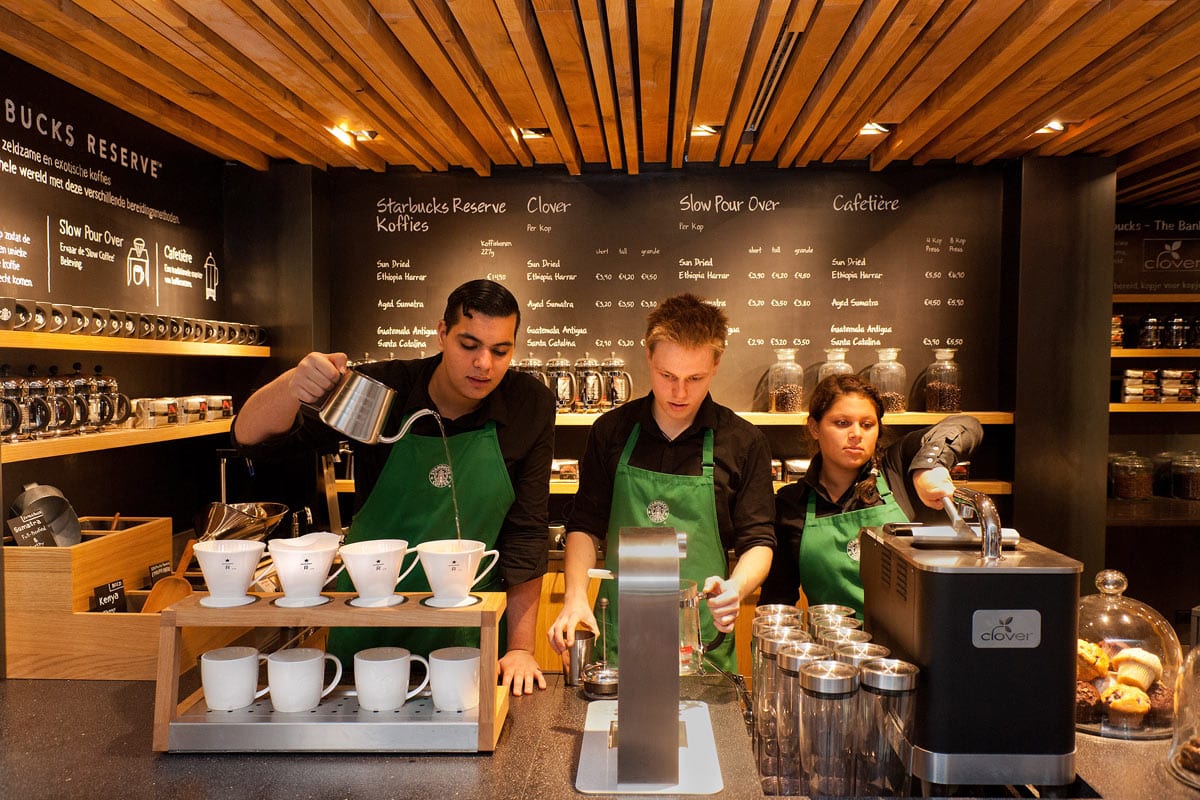
    On the ground, Starbucks Reserve allows customers to ask exactly how they would like their coffee brewed at the bar: Starbuck’s proprietary Clover brewer, the Chemex coffeemaker, the traditional Coffee Press and Pour-overs, mimicking a more boutique coffee house.

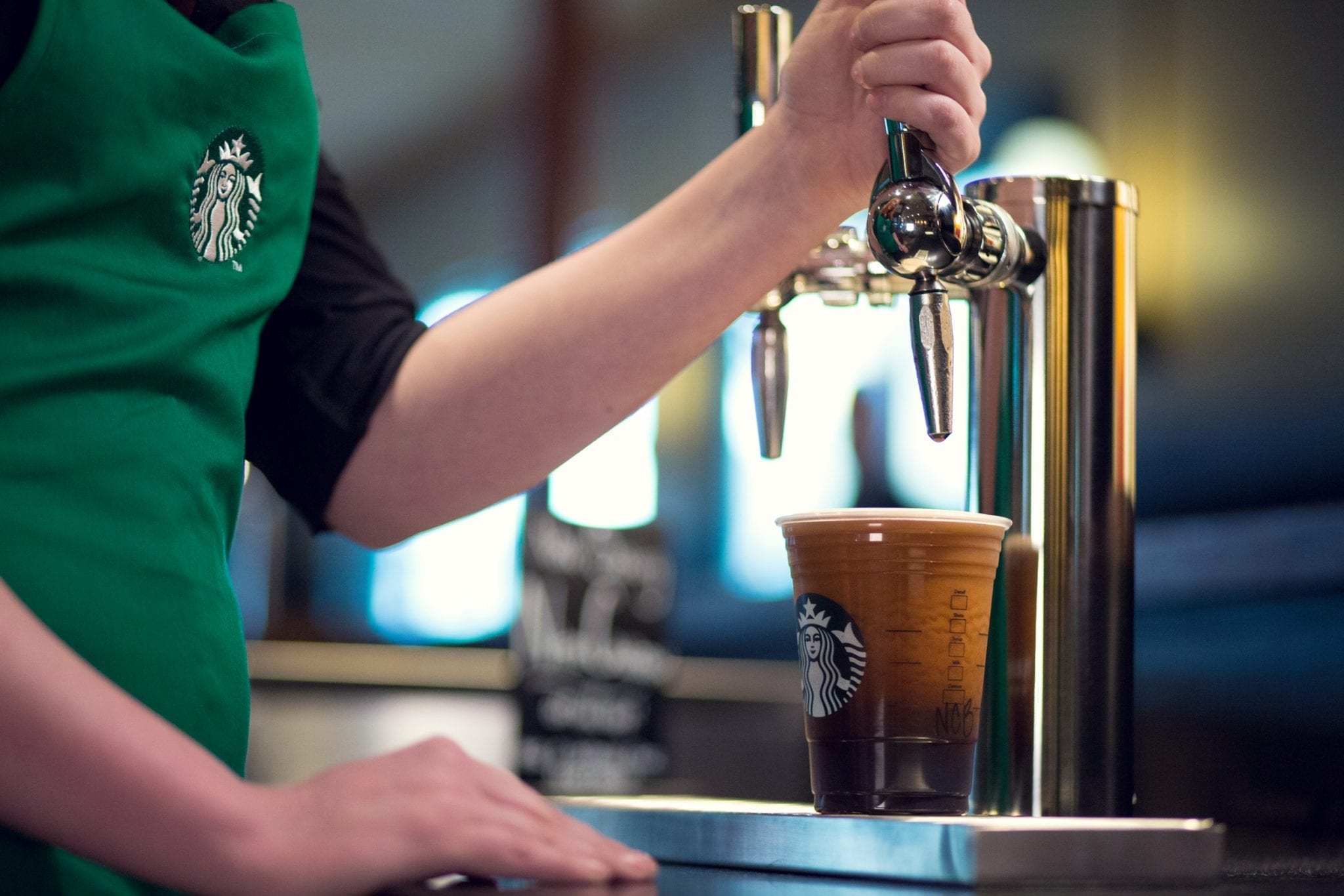
    While there are several other Reserve outlets in Singapores, the Changi store is the first to feature the interactive Coffee Bar, along with the Black Eagle espresso, and the Nitro Cold Brew, which is served from the tap.

    However, Reserve customers can still order normal Starbucks coffee as seen available at the regular stores.

    For the last financial quarter ending January 26, Starbucks reported revenues of $5.7 billion, up 6.7% on a year-over-year basis.

    Starbucks is a roaster, marketer and retailer of coffee. As of October 2016, the company operated in 75 countries.

  • Korea ranks world No. 4 for most Starbucks stores per capita: data

    Korea ranks world No. 4 for most Starbucks stores per capita: data

    South Korea has the world’s fourth largest number of Starbucks Coffee stores in relation to its population, industry data showed Thursday.

    Starbucks Coffee Korea, the local unit of the U.S. coffee giant, said it has 1,008 stores across the country as of the end of February, meaning one outlet for every 50,000 South Koreans. South Korea’s population is 50.5 million as of the end of July last year.

    Canada topped the list with 1,035 shops for a population of 36.2 million, translating into one shop for every 35,000 Canadians.

    The United States came in second with 7,880 stores or one outlet for every 41,000 Americans, trailed by Singapore with 126 shops which translates into one store for every 45,000 Singaporeans.

    Japan has 1,140 shops or one shop for every 110,000 people.

    Industry sources attributed the popularity of Starbucks in South Korea to the growing loyalty of women in their 20s and 30s to the U.S. coffee brand.

    “Starbucks Coffee Korea has succeeded in promoting its image as a luxury brand in South Korea where the luxury coffee market has yet to mature,” a source said.

    Starbucks Coffee Korea’s annual sales topped the 1 trillion won (US$884.17 million) mark for the first time last year since it opened its first branch near Ewha Womans University in Seoul in 1999. Starbucks Coffee Korea is a joint venture between retail conglomerate Shinsegae and the U.S. coffee giant.

    Industry data showed annual sales of its local competitors Twosome Place and Angel-in-us Coffee averaged between 100 and 200 billion won last year.

  • Starbucks Asia boosts digital engagement

    Starbucks Asia boosts digital engagement

    Starbucks Asia has debuted its mobile Order and Pay app in Hong Kong and India.

    Starbucks globally already offers the largest and most robust mobile ecosystem of any retailer in the world, with more than 12 million Starbucks Rewards members, 8 million mobile paying customers with one out of three now using Mobile Order & Pay, and more than US$6 billion loaded onto prepaid Starbucks Cards in North America during the past year alone.

    Now Starbucks has expanded its digital platform to Asia Pacific with the launch of the Mobile Order and Pay program in Hong Kong and India.

    Starbucks Hong Kong and Tata Starbucks Private Limited are the first retailers in their markets to launch a mobile-ordering feature using its mobile payment technology combined with a loyalty program.

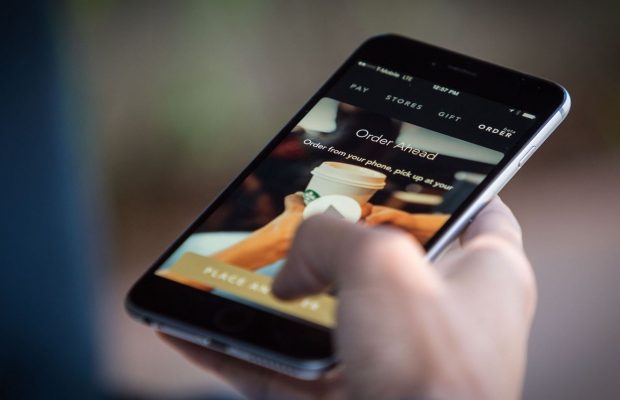
    Customers can choose a store from a map view, browse, select and customise beverage and food items – including the option to modify the size, number of espresso shots and dairy selections – view the estimated pick up times and pre-pay for the order – all within the Starbucks app. Every order is freshly prepared and ready for pick-up in the beverage handoff area. Members can easily collect Stars and earn rewards with Starbucks Rewards loyalty program.

    “Hong Kong is one of the busiest cities in the world and our customers have a very high expectation of convenience,” said Norbert Tan, executive director, Starbucks Hong Kong and Macau. “Starbucks is committed to exploring digital innovations which deliver meaningful value and convenience that enhance the Starbucks Experience.”

    The Mobile Order & Pay feature will be accessible through an update to the Starbucks mobile app. Customers who do not yet have the app can download it from the App Store or Google Play.

    Sumitro Ghosh, CEO of Tata Starbucks India, said mobile app will help meet Indian customers’ needs while serving them seamlessly on the My Starbucks Rewards program.

    “This digital innovation underscores our continued commitment to drive innovation and provide an exceptional and convenient customer experience in our stores across the country.”

  • Starbucks Coffee Korea sales booms

    Starbucks Coffee Korea sales booms

    Starbucks Coffee Korea said its annual sales topped the 1 trillion won (US$884.17 million) mark for the first time ever last year.

    The local franchise of the US coffee giant, which is operated by retail conglomerate Shinsegae, debuted in South Korea in 1999.

    Annual sales rose 29.6 per cent from the 773.9 billion won of 2015.

    Operating profit also increased 81.2 per cent year-on-year to 85.4 billion won in 2016.

    As at the end of February, Starbucks operated 1008 shops across the country.

    Industry observers said Starbucks’ record is astonishing as annual sales of other players such as Twosome Place and Angel-in-us Coffee are averaging between 100 and 200 billion won.

    “Starbucks gained popularity among women in their 20s and 30s who are attuned to the latest consumer culture of the United States,” an analyst said, adding that Starbucks has constantly launched new menus.

    Starbucks acquired tea retailer Teavana in 2012 and has since rolled out various tea menus along with bakery products.

  • Starbucks’ New Cold Brew Mason Jar Is Only Available in Singapore

    Starbucks’ New Cold Brew Mason Jar Is Only Available in Singapore

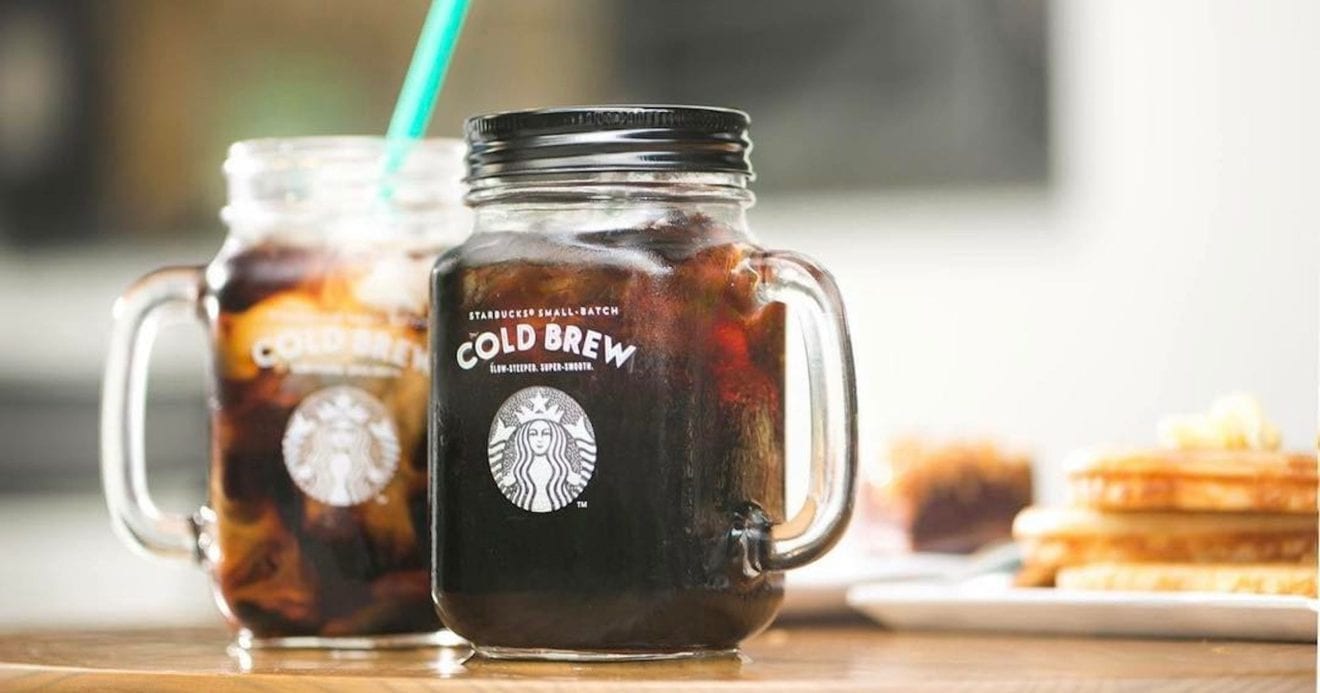
    Starbucks has had an exciting few weeks, with the launch of its barrel-aged coffee, the announcement of its first location in Italy, and two new macchiato drinks. The company has added to this series of new products with the recent debut of cold brew in branded mason jars currently available in Singapore.

    Last year, the company sold mason jars with green caps in South Korea, but the new limited-edition version comes with a black cap instead.

    The jars are emblazoned with the classic Starbucks mermaid logo and appear to come with a screw-top lid.

    Don’t book your tickets to Singapore just yet; the company confirmed to Seventeen that the drinkware is only available in the Southeast Asian island “for now.”

    The mason jars are currently available for 8.90 Singapore dollars ($6.30) retail or SG$5.90 ($4.20) with the purchase of a cold brew.

  • Solid year for revitalised Dairy Farm International

    Solid year for revitalised Dairy Farm International

    Hong Kong-headquartered multi-format retailer Dairy Farm International has celebrated its 130th anniversary with a strong set of results, with food, home furnishings and restaurants delivering higher profits.

    Total sales, including those of associates and joint ventures, rose 14 per cent in US dollar terms and 17 per cent on a constant-currency basis to US$20.4 billion. Sales of wholly-owned subsidiaries rose 1 per cent to $11.2 billion.

    Underlying net profit rose by 7 per cent to $460 million, partly due to a 13 basis point net improvement in operating margins as well as increased contributions from Yonghui and Maxim’s. Operating profit rose 6 per cent.

    Supermarkets & hypermarkets solid

    Total food division sales, which include Wellcome and Giant, were flat in US dollar terms, although up 1 per cent on a constant currency basis.

    “In an environment of severe pressure on pricing, sales growth in Hong Kong supermarkets and in the convenience store businesses in Hong Kong, Mainland China and Singapore helped to offset declines in the group’s supermarkets and hypermarkets in Singapore and Indonesia and largely flat sales elsewhere,” explained CEO Graham Allan.

    “The closure of a number of unprofitable stores in Singapore and Indonesia also weighed on sales performance. However, specific actions, including strategic store closures, prudent management of costs and more targeted promotional activity, delivered improved operating margins.’

    Operating profit from the food division rose 13 per cent to $267 million, with the largest gains coming from Singapore and Indonesia.

    Sales of $6.2 billion from supermarkets and hypermarkets (excluding Yonghui) were in line with last year in constant currency while operating profit increased by 13 per cent to $194 million.

    Wellcome in Hong Kong drove higher sales through strengthening its fresh offer and an enhanced merchandise assortment. Operating profit was lower, principally due to a continued rise in rental costs and competitor promotional activities. In Macau, San Miu achieved sales and operating profit growth in its first full year in the group with range enhancement and increased fresh participation.

    In Taiwan, sales and operating profit were ahead of last year. A new ‘superstore’ concept was introduced for Wellcome with two net new stores opening during the year, while Jason’s continued its store expansion.

    “The retail landscape in Indonesia was challenging with limited recovery in consumer confidence and significant competition from the continued rollout of mini-market stores across the country, which impacted sales growth at supermarkets and hypermarkets,” said Allan.

    “Nevertheless, improved margins, from pricing and promotional activities, the closure of a number of underperforming stores and tighter cost control boosted profitability. Improving the fresh assortment and revitalising the upscale Hero brand remain key focus areas for the business.”

    In Malaysia, sales and operating profit were behind 2015 due to persistent low consumer confidence together with ongoing price controls following the introduction of GST, which continued to weigh on performance.

    The Philippines recorded a strong year with all banners reporting like-for-like sales growth and improved profitability. “A more appealing fresh assortment coupled with tactical pricing and successful marketing activities underpinned an encouraging increase in footfall,” said Allan.

    “Rustan’s benefited from increased sales of its imported and exclusive brands, while measures to improve cost efficiency were also implemented.”

    In Singapore, sales were down year-on-year due to poor consumer sentiment and the impact of store rationalisation. “Cold Storage achieved an encouraging operating profit increase, despite reduced sales following the closure of underperforming stores. Giant saw steady sales and positive profit growth, driven by increased margins and lower operating costs.

    “In the coming year, we aim to invest in the renewal of customer facing and back office technologies to improve our customer experience and internal efficiency whilst optimising ranges and supply chain productivity.”

    In Vietnam, Giant posted sound sales growth, from its single store, with increased customer traffic being the main driver and in Cambodia, the group saw “encouraging increases” in like-for-like sales and operating profit.

    Convenience sales reach $2 billion

    Convenience stores reported $2 billion in sales, an increase of 5 per cent year-on-year in constant-currency terms. Operating profit increased by 15 per cent to $73 million.

    In Hong Kong, 7-Eleven outpaced the competition and grew sales and operating profit despite soft consumer sentiment and difficult market conditions. Like-for-like sales strengthened during the year supported by promotions, range improvements and new products. A slight gross margin improvement led to a higher operating profit despite cost increases from labour and rent. In Macau, sales were flat and operating profit was lower due to slowing tourist numbers and a substantial cigarette tax increase in 2015.

    In Mainland China, 7-Eleven continued its solid growth and passed its 800th store milestone. During the year, sales and operating profit increased, with store network expansion and like- for-like sales growth. This was driven in part by an expanded ready-to-eat (RTE) product range.

    In Singapore, 7-Eleven achieved positive like-for-like sales growth arising from a store re-ranging project with a strong focus on RTE, including the successful introduction of new private label products sourced from 7-Eleven Japan.

    “Operating profit was significantly ahead of 2015 due to these initiatives and the rationalisation of loss-making stores,” said CEO Graham Allan. “The RTE range will be further expanded in 2017 and there will be increased focus on acquiring new profitable sites.”

    Health & beauty sales rise

    Dairy Farm’s health & beauty division achieved $2.6 billion in sales, up 4 per cent on a constant currency basis, however profit declined 5 per cent to $175 million due to margin pressure and higher rents in Hong Kong.

    “Gains in Hong Kong, Mainland China, Singapore, Indonesia and the Philippines, offset disappointing sales in Malaysia,” said Allan.

    In Hong Kong, Mannings’ sales increased in 2016 despite a smaller store network. “As mainland Chinese tourist arrivals continued to decline, promotional campaigns and loyalty programmes were launched throughout the year targeting local consumers,” said Allan. “Sales were flat in Macau as mainland Chinese tourist arrivals remained soft.

    On the mainland, Mannings “showed gradual improvement” with solid sales growth, particularly in baby care, beauty care and personal care, while the contribution from corporate brands increased.

    In Singapore, Guardian reported growth in sales, while operating profit also increased with higher gross margins and greater focus on cost and shrinkage management, partially offset by higher rental costs, but in Malaysia, Guardian experienced “a challenging year” with lower sales and operating profit due to subdued consumer sentiment, increased competition and weakness of the ringgit.

    In Indonesia, Guardian posted double-digit sales growth for the fifth year in a row, despite the net closure of 73 stores. Operating profit was higher than in 2015 with higher gross margins.

    In Vietnam, Guardian recorded another strong year of double-digit sales growth and improvement in gross margin. Corporate brand penetration increased significantly as brands such as Botaneco Garden proved popular with local consumers and in the new market of Cambodia, progress was made through range expansion and increased corporate brand penetration supporting strong like-for-like sales.

    In its second year in the group, Rose Pharmacy in the Philippines delivered performance improvement through sales growth, gross margin enhancement, better cost efficiency and the closure of a number of underperforming stores. Guardian brand products were launched with encouraging early signs of customer acceptance.

    Home furnishings solid

    Home Furnishings, essentially the Ikea business in Hong Kong, Taiwan and Indonesia, recorded a 12 per cent rise in operating profit to $71 million driven by increased sales of $597 million, 6 per cent ahead of 2015.

    “Sales and operating profit were higher than last year in all three markets. Like-for-like sales growth was particularly strong in Taiwan and Indonesia.”

    Hong Kong led the group in introducing new concepts to increase consumer access, launching online shopping in April 2016 and opening two pick-up points in Macau and on Hong Kong Island. Indonesia introduced online shopping in July. Taiwan opened a pick-up point in Hsinchu and launched online shopping in February 2017.

    “We continued to strengthen our low price image through ongoing price investment, and increased our focus on market specific products to enhance our local consumer appeal.

    “In the coming year, Home Furnishings plans both to continue its push in consumer accessibility and to drive forward its expansion plans, having identified a second Indonesia store location and opening a fourth store in Hong Kong in the second half of 2017,” said Allan.

    Solid growth for Starbucks, Maxim’s

    Sales in Dairy Farm International’s restaurants division rose 7 per cent year-on-year to $2 billion and profit rose 4 per cent.

    “The business delivered another year of record earnings in a difficult market environment while continuing to expand outside Hong Kong,” said Allan.

    The division expanded its reach by acquiring Cova, a premium chain of cake shops and restaurants, and by opening its first Treats food hall.

    In China, Maxim’s added 16 new stores across its brands, including the first Cheesecake Factory franchise at Shanghai Disney Town.

    The company now operates 20 Starbucks cafes in Vietnam and Cambodia and describes their performance as “encouraging”. The group launched its first Thai franchise in September – MX Cakes and Bakery, a joint venture with ThaiBev, which has opened three outlets in Bangkok.

    “Looking ahead, the group continues to see various exciting opportunities, including entry into the Beijing market with the opening of Jade Garden, Cafe Landmark and The Cheesecake Factory planned in 2017. Maxim’s will also continue to explore franchise and acquisition opportunities across the region.”

    Dairy Farm will “compete aggressively”

    Chairman Ben Keswick said Dairy Farm International is “transforming itself to compete aggressively in a changing retail landscape”.

    “Central to this are a strong focus on understanding changing consumer behaviour, growing market share, building digital engagement with customers and sharing know-how across the group. Investment is being sustained in supply chain, IT infrastructure and systems, and the skills and expertise of our people to support this transformation. Each business is committed to optimising the shopping experience of its customers and to serving their evolving needs as efficiently as possible.”

    Keswick said increasing convenience through expansion and enhancement of the store network remains a high priority, although when necessary, underperforming stores will be closed. Last year the entire group added a net 114 stores, despite a number of closures across its divisions.

    At December 31, Dairy Farm International had 6548 stores in operation in 11 countries and territories, including its interest in 487 Yonghui stores in Mainland China.

    “Despite the uncertain economic outlook for 2017, the group continues to strengthen its businesses,” said Keswick. “Investments are being made to enhance its competitive position, increase customer convenience and adapt to emerging consumer trends. These investments, coupled with the exposure of its market-leading retail brands to Asia’s growth markets, will support Dairy Farm’s long-term success.”