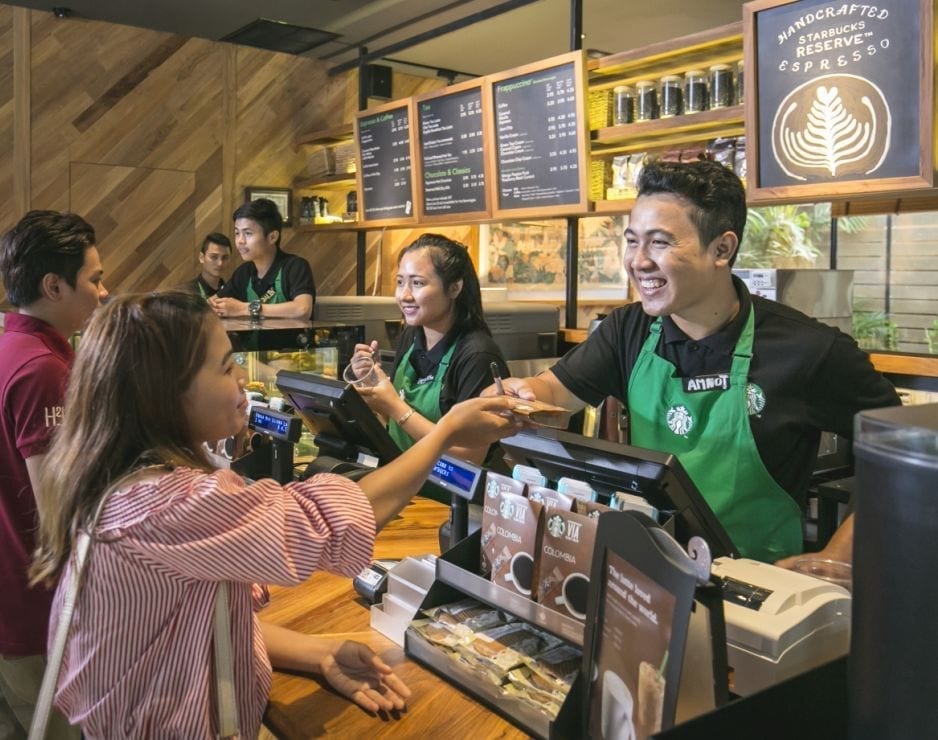
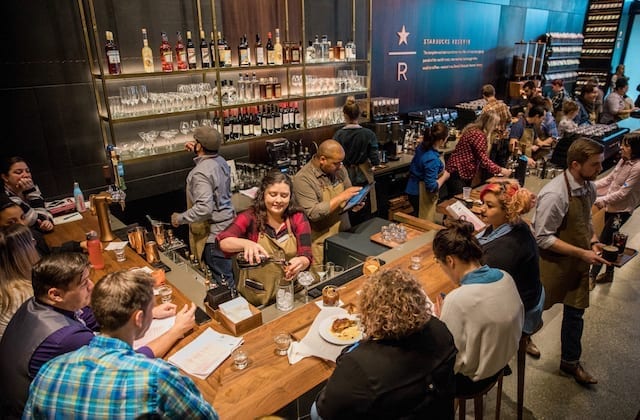
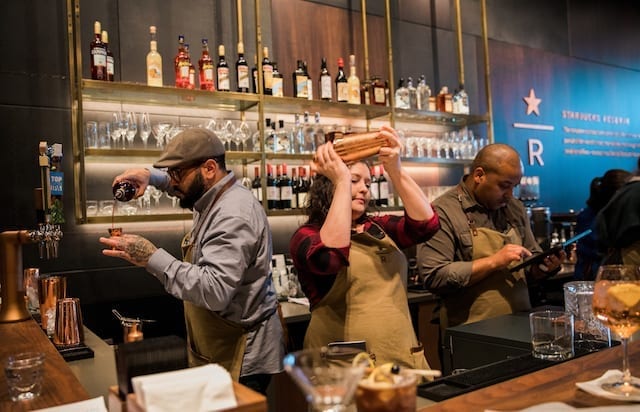
Starbucks Hong Kong has opened its first cafe serving alcohol – including coffee-infused craft beers, exclusive to the city.
Starbucks’ local licensee, the Dairy Farm International subsidiary Coffee Concepts, says the move is part of its strategy of elevating the chain’s ‘Third Place’ experience for its customers through continuous innovation in its coffee offer and in-store experience.
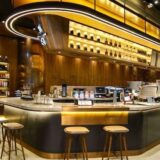
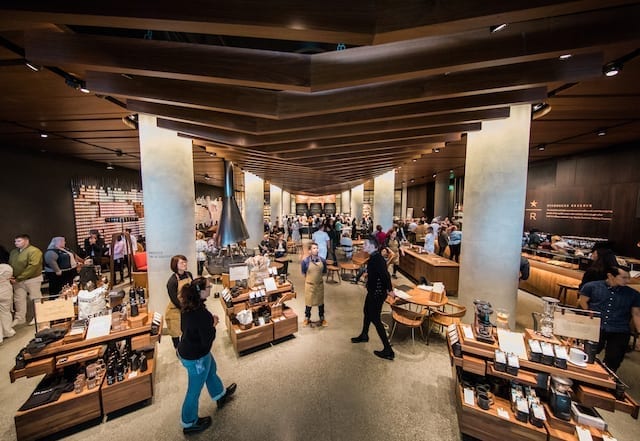
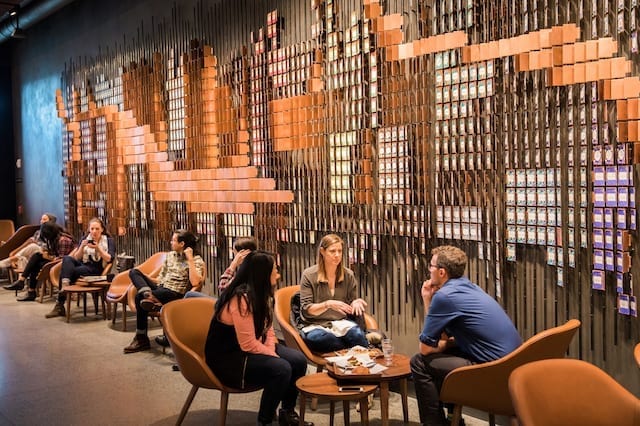
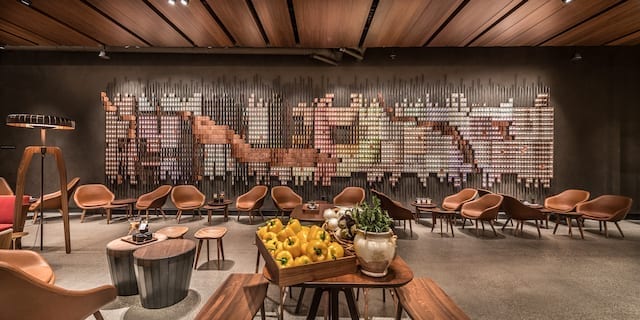
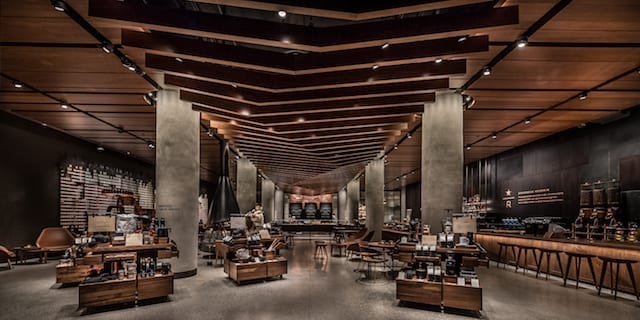
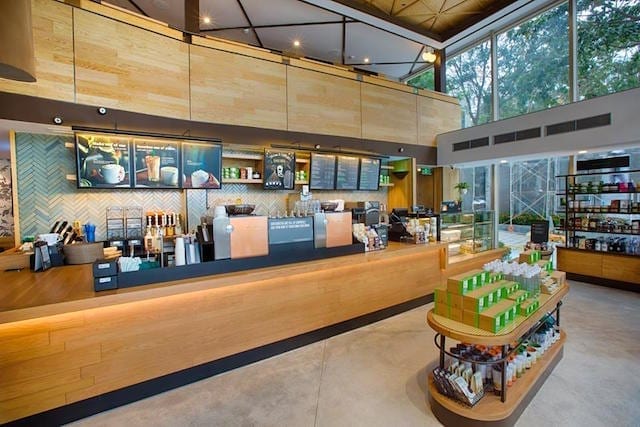
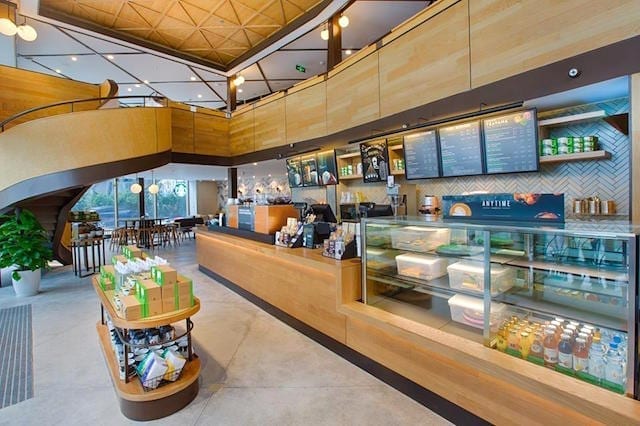
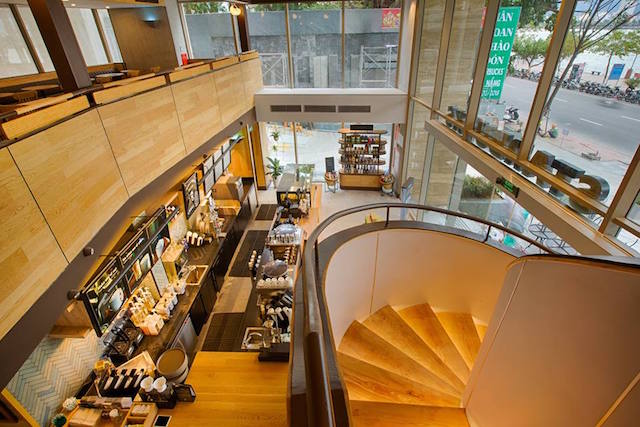
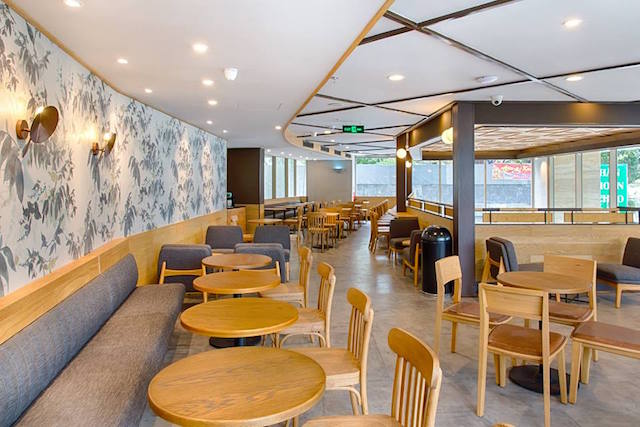
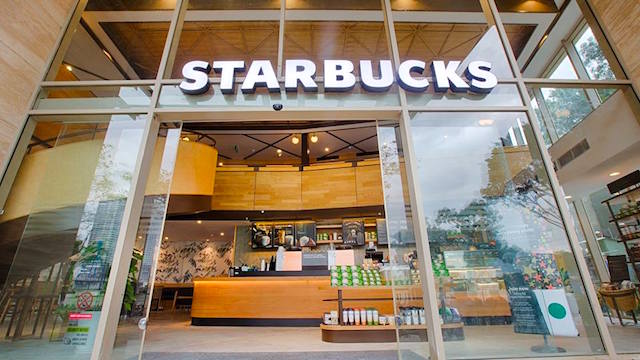
After a month-long refit, the store on the level 2 podium of IFC Mall in Central was formally unveiled to media last evening. It has been upgraded into the Starbucks Reserve format in a bid to attract customers after work as well as during the day.
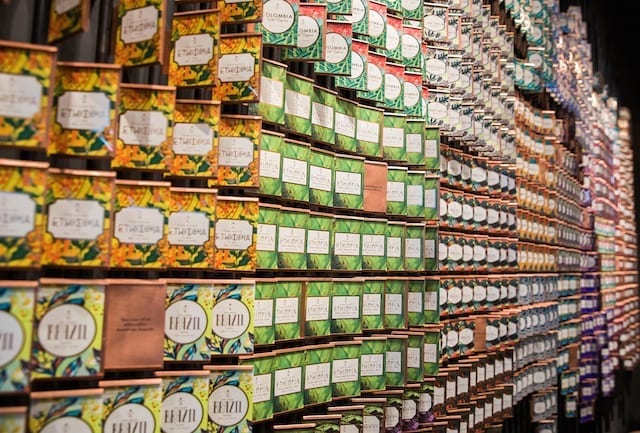
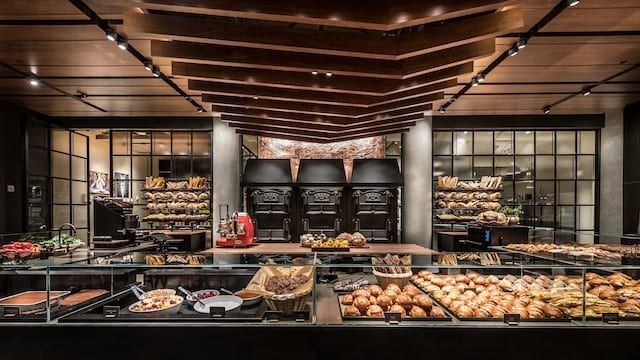
And besides gourmet coffee blends, a Starbucks Reserve range of merchandise and beer, the cafe offers a selection of wines and light meal menu featuring dips, cured-meat-and-cheese board, bacon-wrapped asparagus skewers and baked meatballs.
Craft beer partnership
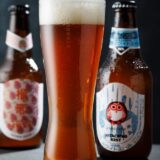
Starbucks Hong Kong has released two coffee-infused craft beers created in partnership with a local brewery. A company spokesperson says the two beers are infused with “signature notes of Starbucks coffee, leaving a refreshing taste on the tongue”.
“The Caramel Macchiato Cream Ale is inspired by the signature Starbucks Caramel Macchiato. Cream ale is harmoniously brewed with pre-ground Starbucks Colombian coffee and delectable caramel for more than 18 hours, resulting in an irresistibly smooth taste with nutty notes and a subtle caramel sweetness, as well as a brilliant golden colour.
“The Mocha Brown Ale marries a robust brown ale with the indulgent chocolate and soft spice notes of Starbucks Caffe Mocha. Brewed with Starbucks Guatemala Antigua cold-brewed coffee and cocoa nibs, the intense brown ale will surprise customers with its distinctive contrast of dark-brown hue and luscious sweetness.”
Starbucks Hong Kong is also launching three bottled beers including Hiiro Seed Guava Love, a fruity beer with a tropical pink guava aroma, brewed locally by Hitachino Nest Beer.
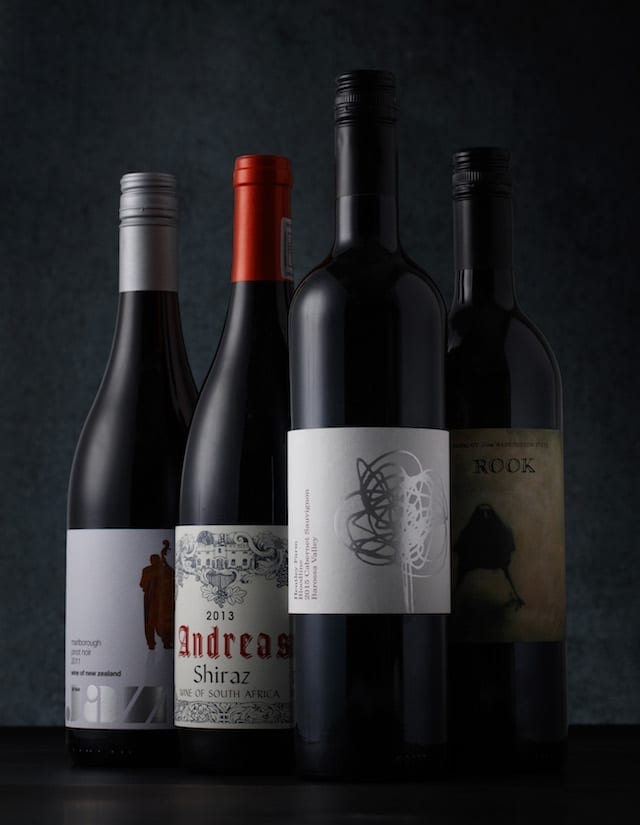
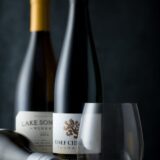
The Starbucks Reserve wine list features four red wines (pinot noir, merlot, cabernet sauvignon and shiraz), three white wines (sauvignon blanc, chardonnay and riesling) and an Italian prosecco.
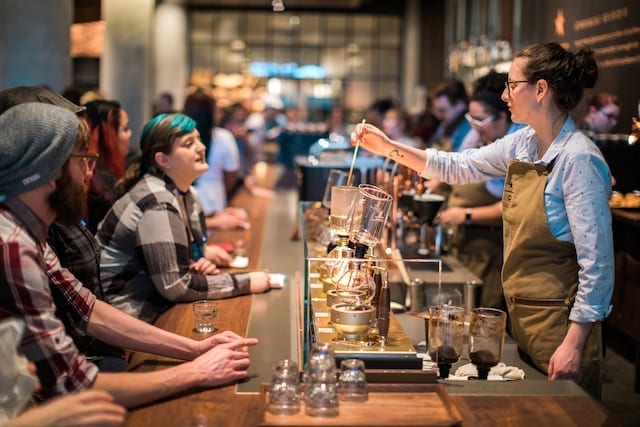
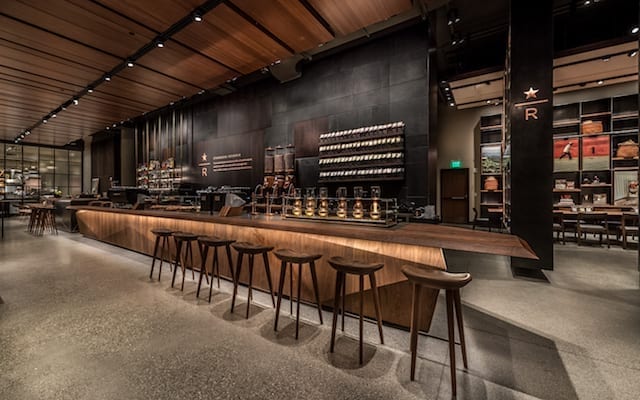
Starbucks says that extending the ‘Third Place’ experience (in which home and workplace are the first and second places) the Starbucks Reserve Coffee Experience Bar provides “the widest in-store offerings for customers as they connect with colleagues and friends over their beverages of choice”.
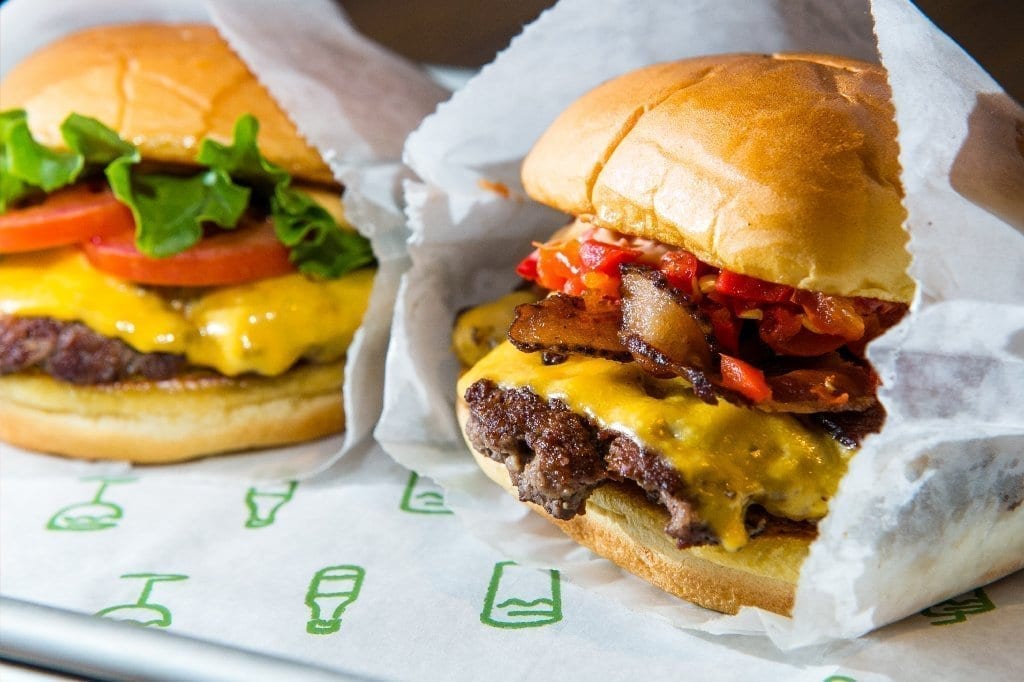
A Shake Shack Singapore store is reportedly planned for the Jewel Changi Airport shopping centre.
Singapore food blog 8 Days, quoting an “industry source” says the chic American gourmet burger chain is in the final stages of preparation to launch in Singapore. Elsewhere in Asia, the brand is preparing to open in Hong Kong, where it has appointed local licensee Maxim’s Caterers, a division of Dairy Farm International, which also owns the Starbucks license for Hong Kong and Singapore.
However 8 Days is tipping the Shake Shack Singapore eatery to be run by Korean food and beverage company SPC Group, which operates Paris Baguette and has the Korean rights to Shake Shack.
The burger chain’s founder Danny Meyer was in Singapore to address a Restaurant Association of Singapore event and while “coy” about plans for Singapore, he reportedly told 8 Days he wants to see the brand launched in the city state.
“It’s a possibility,” he told 8 Days. “My guys have visited Singapore thrice for site trips and they loved it here. It’s all about finding a good licensee.”
Jewel Changi Airport is a shopping centre to be managed by CapitaLand, attached to the airport’s Terminal 1 and scheduled to open early next year.
No confirmation was forthcoming from Changi Airport or SPC.
Shake Shack, which started out as a food cart in New York City, now has more than 170 outlets internationally.
Besides burgers, it is known for milkshakes, ice cream and other staple US dishes, but with more focus on flavour and serving size than is traditional in US fast-food restaurants.
Partners are at the heart of Starbucks’ success in its largest growing market, Starbucks China CEO Belinda Wong told the coffee company’s annual meeting in Seattle.
“They are our core purpose of being and the reason why we are passionate about what we do,” she said more than 3000 shareholders and special guests. “Since our earliest days, we’ve been bringing to life Starbucks deeply rooted mission and values by investing in our partners.”
Wong presented a video about the critical illness insurance for parents of Starbucks China partners, announced last year. “I wish you could have seen the reception when we announced the Starbucks critical care insurance,” she said. “There were tears of joy and almost disbelief.”
Already, 93 percent of eligible partners have signed up and 14,000 parents have joined. “But we have higher ambitions – we want to inspire other companies,” said Wong, who has met with other companies in China to discuss the parental plan, leading to some now planning to launch similar programs.
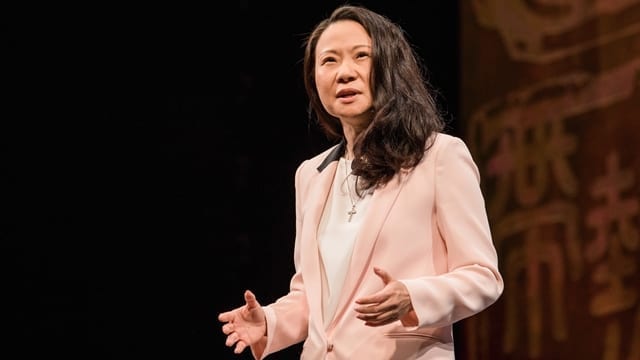
Belinda Wong, Starbucks China CEO, speaks at the Starbucks Annual Meeting of Shareholders at McCaw Hall in Seattle on Wednesday, March 21, 2018. (John Edwards, Starbucks)
“That commitment to family has built a phenomenal sense of pride, enthusiasm and commitment among our 45,000 partners,” said Wong.
Starbucks now has 3200 stores across 139 cities in China and is serving 6.4 million customers a week. There is now a goal of 5000 stores by 2021.
“We are opening a new store every 15 hours,” said Wong.
“It makes me even more excited how we can use the scale from growth to benefit the communities we serve,” she said, citing Starbucks’ $20 million commitment over the next five years to benefit social-impact programs in China.
“Also, with Yunnan coffee, grown in China and sold at Starbucks, we are bringing China’s coffee to the world stage.”
Starbucks’ Farmer Support Center has worked with 17,000 farmers in the Yunnan area on sustainable farming practices. “Starbucks has become the fabric of the local community,” she said. “We will continue to work with farmers to help change their lives.”
Wong also shared a video of the Starbucks Reserve Roastery in Shanghai, which opened in December. Three more are coming online soon, including one in Tokyo.
Starbucks Hong Kong has opened its first cafe serving alcohol – including coffee-infused craft beers, exclusive to the city.
Starbucks’ local licensee, the Dairy Farm International subsidiary Coffee Concepts, says the move is part of its strategy of elevating the chain’s ‘Third Place’ experience for its customers through continuous innovation in its coffee offer and in-store experience.
After a month-long refit, the store on the level 2 podium of IFC Mall in Central was formally unveiled to media last evening. It has been upgraded into the Starbucks Reserve format in a bid to attract customers after work as well as during the day.
And besides gourmet coffee blends, a Starbucks Reserve range of merchandise and beer, the cafe offers a selection of wines and light meal menu featuring dips, cured-meat-and-cheese board, bacon-wrapped asparagus skewers and baked meatballs.
Craft beer partnership
Starbucks Hong Kong has released two coffee-infused craft beers created in partnership with a local brewery. A company spokesperson says the two beers are infused with “signature notes of Starbucks coffee, leaving a refreshing taste on the tongue”.
“The Caramel Macchiato Cream Ale is inspired by the signature Starbucks Caramel Macchiato. Cream ale is harmoniously brewed with pre-ground Starbucks Colombian coffee and delectable caramel for more than 18 hours, resulting in an irresistibly smooth taste with nutty notes and a subtle caramel sweetness, as well as a brilliant golden colour.
“The Mocha Brown Ale marries a robust brown ale with the indulgent chocolate and soft spice notes of Starbucks Caffe Mocha. Brewed with Starbucks Guatemala Antigua cold-brewed coffee and cocoa nibs, the intense brown ale will surprise customers with its distinctive contrast of dark-brown hue and luscious sweetness.”
Starbucks Hong Kong is also launching three bottled beers including Hiiro Seed Guava Love, a fruity beer with a tropical pink guava aroma, brewed locally by Hitachino Nest Beer.
The Starbucks Reserve wine list features four red wines (pinot noir, merlot, cabernet sauvignon and shiraz), three white wines (sauvignon blanc, chardonnay and riesling) and an Italian prosecco.
Starbucks says that extending the ‘Third Place’ experience (in which home and workplace are the first and second places) the Starbucks Reserve Coffee Experience Bar provides “the widest in-store offerings for customers as they connect with colleagues and friends over their beverages of choice”.
The pictures can be viewed below :
Starbucks ifc mall store Starbucks Reserve™ Coffee Experience Bar 2
Starbucks ifc mall store 1
Starbucks Bottled Beers 1
Starbucks Bottled Beers 2
Starbucks White Wines 2
Starbucks ifc mall store Starbucks Reserve™ Coffee Experience Bar 1
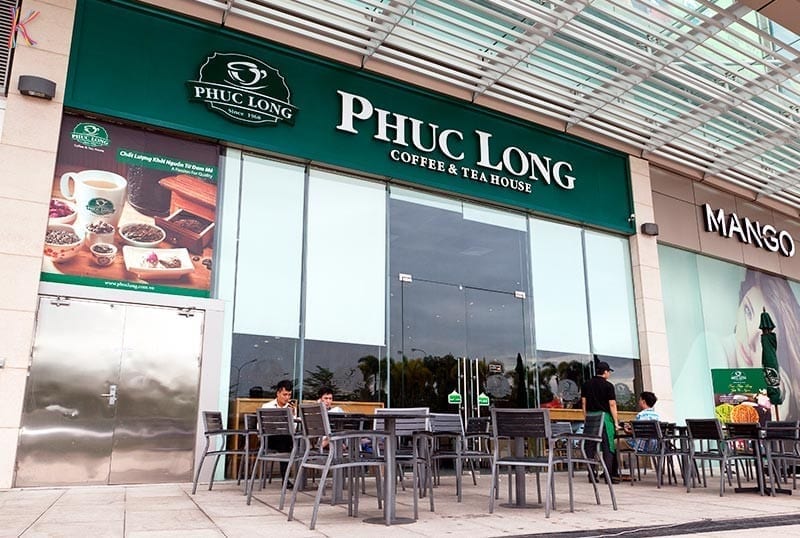
Vietnamese coffee and tea chain Phuc Long is expanding into Danang next month.
The brand will open two stores inside Lotte Mart and on Nguyen Van Linh Street in the city’s Hai Chau district.
The chain has also enriched its food menu, offering traditional Vietnamese banh mi sandwiches alongside croissants, cookies, waffles and tiramisu.
Targeting younger customers, Phuc Long is considered a competitor with international chain Starbucks and local rival The Coffee House.
Established in 1968 in the highlands of Lam Dong, Phuc Long started by selling packaged Vietnamese traditional coffee and tea through retail stores. Phuc Long expanded to Ho Chi Minh City during 1980s with both retail stores and a coffee chain. The brand now has 25 stores across the city.
Starbucks opened its first store in Danang last month.
Poor trading by Dairy Farm International’s Southeast Asian grocery business hit the company’s bottom line last year, with underlying profit falling 13 per cent.
But every other one of the company’s divisions traded strongly throughout the year, according to the results just released.
Full-year profit was US$403 million, after allowing for $64 million of costs relating to business restructuring. Sales by Dairy Farm’s wholly-owned subsidiaries totalled $11.3 billion, largely unchanged from 2016’s $11.2 billion. But total sales, including 100 per cent of associates and joint ventures, at $21.8 billion were up 7 per cent year on year, reflecting strong growth at both supermarket operator Yonghui and cafe-restaurant operator Maxim’s, which owns the Starbucks business in Hong Kong, Vietnam, Cambodia and now Singapore.
“After a disappointing year… for our food businesses in Southeast Asia, actions are being taken to improve their long-term performance,” explained chairman Simon Keswick. “All of the group’s other formats and markets are trading well and growth opportunities are being pursued, in Mainland China and elsewhere.”
In Dairy Farm’s food division, sales were down and profits were “significantly lower” than in 2016, primarily due to poor performances in the supermarket and hypermarket businesses in Malaysia, Singapore and Indonesia.
“A number of underperforming stores are being closed and prices lowered to clear or write off discontinued and slow moving stock.
“In Hong Kong, sales were more resilient, although profits were marginally down due to increasing rents and labour costs. Positive sales growth seen in the Philippines reflected the ongoing investments being made to improve the business,” said Keswick.
Elsewhere in the company there was brighter news.
The convenience store format (including 7-Eleven in Hong Kong and Singapore) produced increased sales and profit. “In part, this reflected a consumer shift to more convenient retail formats, as well as a positive reception to the service and range enhancements introduced for customers,” said Keswick.
The convenience stores division reported $2 billion in sales, an increase of 4 per cent over the previous year – but operating profit surged 16 per cent to $85 million.
In the health and beauty division, (led by Guardian and Mannings), sales and profit were higher, principally due to strong performances in Hong Kong, Macau and Indonesia, together with improvements in Mainland China.
Keswick said this was led by an increasing focus on the beauty category and the continued development of the division’s house brands.
The home furnishings division (Ikea in Hong Kong, Taiwan and Indonesia) recorded higher sales and trading profit, but the reported profit declined, mainly due to costs associated with the opening of the fourth Ikea Hong Kong store in October. Sales and profits increased in Taiwan and Indonesia and there was solid growth in the e-commerce business.
Maxim’s enjoyed good sales growth and profit expansion during the year, in large part due to strong performances from its branded products, particularly mooncakes, and its business in Mainland China. The company also acquired the Starbucks Singapore business last year.
The group’s 19.99 per cent-owned associate in Mainland China, Yonghui Superstores, opened a net 292 new stores last year, which underpinned a 19 per cent growth in revenue. Ongoing supply chain optimisation and shrinkage improvement resulted in improved margins, which together with better capital use, led to a 45 per cent growth in profit.
Convenience focus
Keswick said Dairy Farm International will focus on increasing its convenience store operations in the year ahead through expansion and enhancement of the store network. New smaller-store formats are being piloted in some markets.
The group will also continue to develop its e-commerce presence, focusing on a number of initiatives in its home furnishings, food, and health and beauty operations introduced last year.
Dairy Farm International added a net 633 stores last year. At year end, it had 7181 stores in operation in 11 countries and territories, including its interest in 779 Yonghui stores in mainland China and 1210 Maxim’s stores.
Besides the Starbucks Singapore deal, Maxim’s also acquired the existing businesses and franchises of Genki Sushi in Singapore and Malaysia. It opened its first The Cheesecake Factory in Hong Kong in May, which Keswick said is trading well, and this year will introduce American casual restaurant format Shake Shack in Hong Kong and Macau.
In the Philippines, Rustan became a wholly-owned subsidiary following the acquisition of the remaining 34 per cent interest from the group’s joint venture partner.
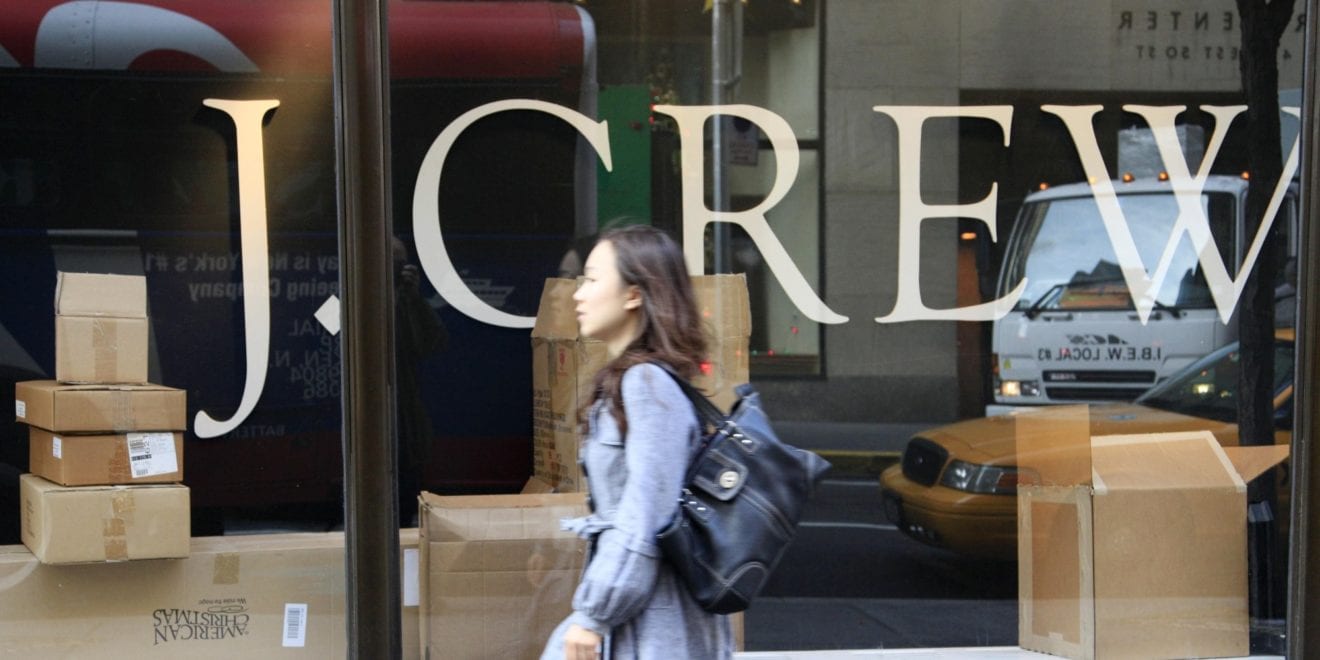
Adam Brotman, a longtime Starbucks executive who helped mold the Seattle coffee giant into one of the most technologically advanced retailers, is leaving the company after nine years for a top role at J.Crew.
Brotman will join J.Crew as president and chief experience officer and report to new CEO Jim Brett, who replaced legendary chief executive Mickey Drexler this summer.
Brotman was most recently the top executive overseeing Starbucks stores but is perhaps best known for the work he did in previous digital-focused roles. As chief digital officer, Brotman oversaw the launch of Starbucks’ popular “mobile order and pay” smartphone feature — which now accounts for 11 percent of total transactions at Starbucks-owned stores.
He also led the teams that developed the original payment feature inside the Starbucks app. Starbucks said last year that 30 percent of in-store transactions are completed via mobile payments.
“Adam’s experience with global field operations and cutting-edge consumer-facing digital platforms makes him an invaluable partner in shaping and driving J.Crew Group’s strategic initiatives to the next level,” J.Crew’s CEO said in a statement. “Adam will help us establish customer relationships that leverage all our channels, helping us to serve them in ways that are more meaningful and relevant to how they shop and live.”
Brotman will join an executive team attempting to lead a turnaround of the classic American clothing giant that has seen sales slide as customers opt for less expensive clothes from fast-fashion retailers and shift loyalty to clothing brands that originated online.
Amazon’s push into fashion probably hasn’t helped either. Last year, Drexler said J.Crew approached Amazon about a sale.
With the latest generation design and product offer, the new Starbucks Reserve Seattle store which opened this week offers a taste of what is to come for the 1000-plus stores planned globally bearing the sub-brand, including in Asia.
In just 14 months since the concept was unveiled at an investors conference, dozens of Reserve stores have opened including a massive Chinese flagship in Shanghai.
Starbucks partners work in the new Starbucks Reserve store at the Starbucks Support Center in Seattle on Wednesday, February 21, 2018.
The marketplace-styled Starbucks Reserve Seattle Sodo store is remarkable not just for the latest evolution of the upmarket sub-brand’s fit-out, but for the inclusion of the new Princi Italian restaurant concept with an open kitchen, seamlessly folded into the cafe format. Starbucks plans to open standalone Princi outlets in Seattle, Chicago and New York, so expect to see them integrated into the brand’s offer in key Asian markets as well.
Starbucks partners work in the new Starbucks Reserve store at the Starbucks Support Center in Seattle on Wednesday, February 21, 2018.
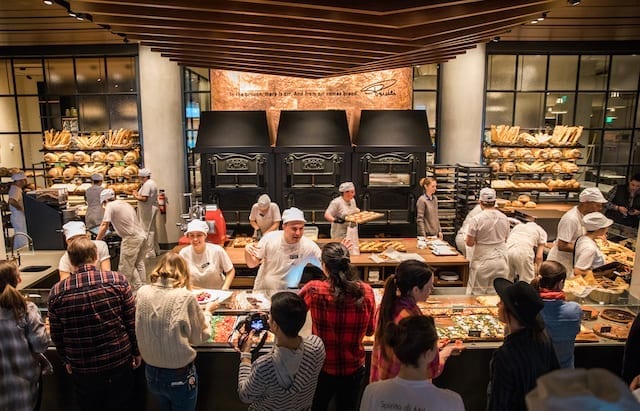
Designed in an open, marketplace style, Starbucks Reserve Sodo store customers can engage with and order from partners (employees) at the Princi counter or Reserve coffee bar, then gather with family and friends at community tables or lounge areas around two fireplaces. Open to view is the Princi kitchen where customers can see breads and pastries being made and fresh ingredients prepared daily.
Starbucks partners work in the new Starbucks Reserve store at the Starbucks Support Center in Seattle on Wednesday, February 21, 2018.
Located on the street level of the company’s headquarters, the store opened on Tuesday (February 27). It was created “to offer a mingling of public and private; a place where Starbucks partners and visitors can relax in a leather lounge chair near the fireplace, nosh on a piece of focaccia at the counter or enjoy the latest Reserve espresso and a flaky cornetti from Princi,” in the words of Starbucks in-house writer Heidi Peiper.
Christian Davies, VP creative global design & innovation for Starbucks, wants visitors to feel like they are part of an experience from the moment they cross the threshold and pass through the entry doors.
“Every detail is deliberate, starting with the pattern on the hand-carved doors – concentric circles borrowed from the art for a Starbucks Reserve coffee card.
“When you walk into the space from the entry, you can take everything in in the sweep of an eye,” says Davies. “We wanted people to walk through those doors and immediately find themselves in something different and unique, but they would still recognise as Starbucks.”
To the left, there’s a colorful art installation. Just beyond is the chef’s table and Princi case.
Behind that, through framed art glass, is the Princi kitchen. Anchoring the center of the main cafe is a floor-to-ceiling fireplace, signaling a welcoming place to gather. Then look to the right and you’ll see a long wood-topped craft bar with Starbucks Reserve coffees and a mixology bar, finishing with the coffee library and doors to the patio.
In addition to the open layout, Davies added other subtle touches, such as flecks of amber-colored glass and mirror sprinkled into the concrete floor that help suggest a path through the store.
“When people come into a space they can navigate, you can see their shoulders relax. They instantly feel more comfortable,” says Davies.
Art meets leisure
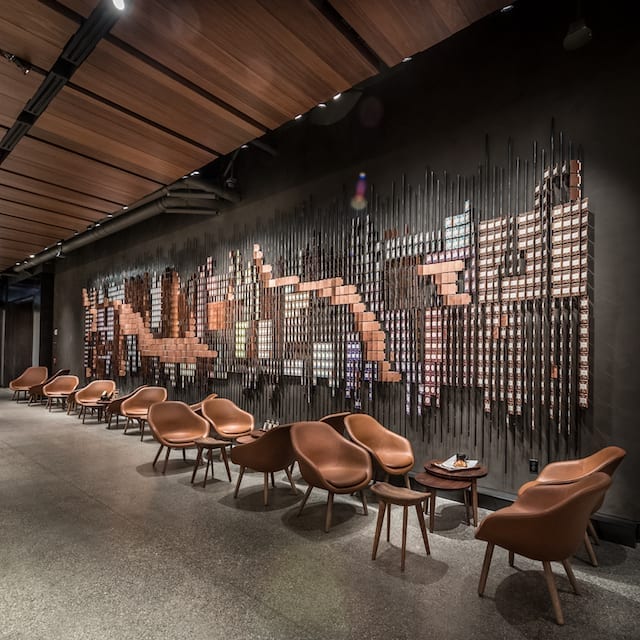
The path begins at a stunning copper art installation that features nearly 3700 Starbucks Reserve cards, designed in-house. From a distance, the card wall’s shape evokes the topography of the gentle mountains where coffee is grown. Each card can pivot, creating shimmering waves of color like fish scales. But step closer, and individual coffee cards come into view, each one a work of art in itself. Every now says and again, a copper card is planted in the field of cards that tells a story about Starbucks Reserve.
“On one level, it’s simply a beautiful, gestural piece,” says Davies. “As you dive into the next level, and then the next, more comes out.”
Beyond the card wall is the first of three intimate meeting spaces, each creating its own moment of storytelling. The chef’s table room features the story of Rocco Princi, with shelves lined with ingredients from his pantry – cans of capers, artichokes and tomatoes and tall glass jars of preserved lemons. A favorite poem by Alda Merini, a friend of Princi, hangs in a place of honor.
Gathered around the long wooden chef’s table, visitors can look through a glass wall into the Princi kitchen with artisan bakers and chefs at work.
And taking center stage is the Princi bakery and cafe, featuring the full Princi menu with artisanal baked breads, and breakfast anchored by signature cornetti and brioche. At lunchtime, the menu offers soups, salads, focaccia and pizza. To the right is the mixology bar for later in the day with traditional Italian aperitivo, such as Aperol Spritz paired with small plates, as well as beer, wine and spirits.
Celebrating ‘our never-ending curiosity’
The store represents the latest phase of innovation in the century-old building in Seattle’s Sodo neighborhood, which has served as Starbucks headquarters since 1993. In its previous life as a Sears Catalog distribution center, it employed what was then cutting-edge technology, with orders being picked by warehouse workers on roller skates and bicycles and delivered to the first floor via slides for quick shipping. The Reserve store continues that enterprising spirit, acting like a testing ground for the company, where it will debut new coffees, launch new products and host events. The store’s second meeting room, tucked back between the kitchen and the craft bar, is a tribute to this tradition. Starbucks R&D team will use this working lab to taste and test new beverages, starting with the cold coffee innovation.
“The lab celebrates our never-ending curiosity,” says Davies. “We can continue to push R&D around new beverages and ingredient combinations.”
The Reserve coffee bar is an eye-catching counterpoint to the Princi case. Here the craft of coffee is on display, with a full-lineup of brewing methods to explore, including siphon. Chemex, pour-over and Clover and a variety of Starbucks Reserve beverage creations to explore. The backdrop for this stunning display is a dark-stained walnut and leather back-bar, with hand-stitched copper wire adding sparkle and interest.
The story from bean to cup
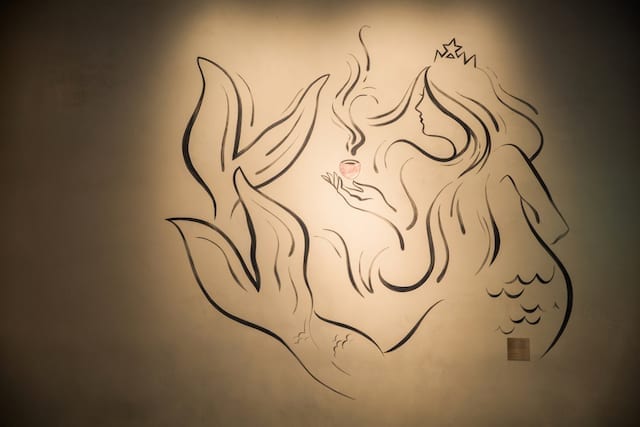
In the third meeting space, visitors can learn coffee’s story from bean to cup. The Starbucks Reserve coffee library can be hidden away behind a pivoting full-height wall of 1200 bags of Starbucks Reserve Coffee. The space houses a collection of books on the geography, flora and fauna of Starbucks coffee-growing regions, and features a hand-painted Siren by Jordan Kay, the Starbucks artist behind this year’s holiday cup. An inside-outside fireplace brings warmth to those gathered in the room, and visitors enjoying the patio outside.
“When we were designing the space, we wanted to create layers of experiences and understanding – something new to discover,” adds Kenna Giuzio, senior store concept designer for Starbucks. “I hope with each visit, our customers will come away with a new story of Starbucks.”
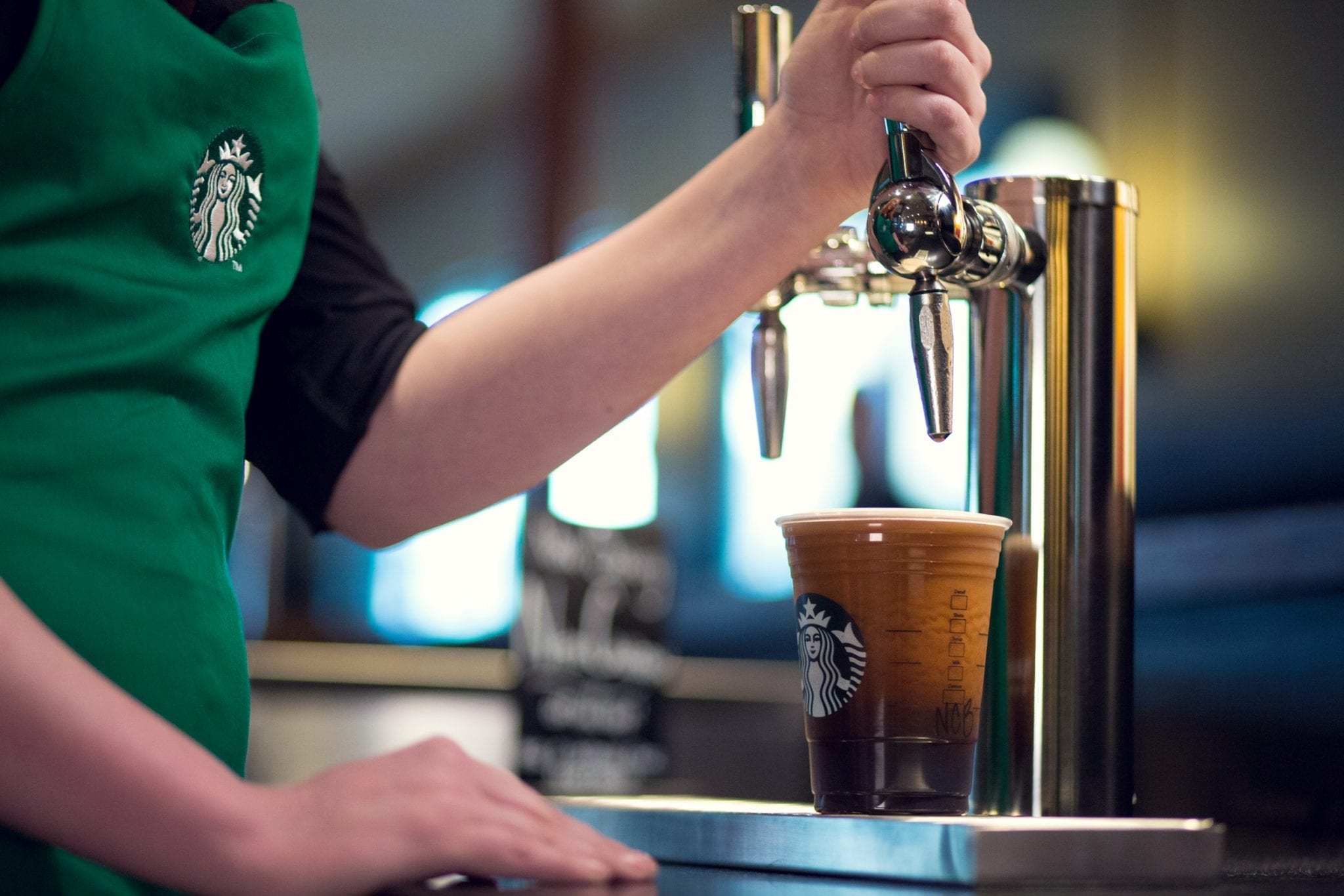
The new cafe also features several new menu items, including Nitro Draft Latte, Spiced Ginger Cold Brew on tap, and new espresso drinks such as the Bianco Mocha.
Starbucks Korea recently issued commercial papers worth 30 billion won (US$28.07 million), possibly to further speed up its domestic expansion, according to news reports on Feb. 19.
Seattle-based Starbucks is the nation’s No. 1 specialty coffee chain with about 1,100 outlets, followed by rival CJ’s A Twosome Place with 910 outlets. Its revenue hit the 1 trillion won mark last year for the first time as a coffee chain brand here.
The Korean unit, a 50:50 joint venture with local retail giant Shinsegae Group, last year opened 130 new outlets nationwide, spending about 100 billion won. Sources said the firm is seeking to raise funds possibly to open about 150 new stores this year as part of its aggressive expansion plans.
“We will continue to expand our presence here like we did last year,” a company spokesperson said. “We cannot confirm any details of the CPs now.”
According to industry watchers, Starbucks Korea is issuing CPs as it has reduced its debt over the past years thanks to strong earnings. In the early years, the firm issued CPs to fund the expansion. Its debt reached more than 60 billion won five years ago but the figure dropped to 4 billion won by the end of last year.
For Chinese tourists traveling South Korea, paying for a grande latte at Starbucks is now as easy as showing your smartphone.
Ant Financial, which now Alibaba a 33% stake, said Sunday its Alipay e-wallet service is now available at over 1,150 Starbucks branches across South Korea – the first third-party mobile-based payment method enabled nationwide at Starbucks in the country.
“Starbucks branches are among the most-visited places by Chinese travelers in South Korea. We will continue to introduce Alipay to more local merchants, including restaurants and shops to make Chinese travelers’ journey as convenient as at home,” said Danny Chung, General Manager of Alipay Korea.
Alipay, the world’s leading third-party payment platform available in 38 countries and regions, was first introduced in South Korea in 2015. Users of the online payment platform can also enjoy an instant tax refund via Alipay at four major airports in South Korea. Earlier this month, Finland became the first country to offer Chinese tourists fully cashless experience by adopting Alipay.
According to the state-run Korean Tourism Organization, travelers from China make up around one-third of South Korea’s inbound tourists each year.
The announcement comes on the heels of Alibaba’s launch of an interactive showcase at Gangeung Olympic Park, a staging area for PyeongChang 2018 that hosts the Games’ ice sports.
Alibaba Group is an Olympic TOP partner through 2028. As part of the Olympic Partner worldwide sponsorship program, the Hangzhou-based technology giant is the official “Cloud Services” and “E-Commerce Platform Services” partner of the International Olympic Committee, as well as a Founding Partner of the Olympic Channel.
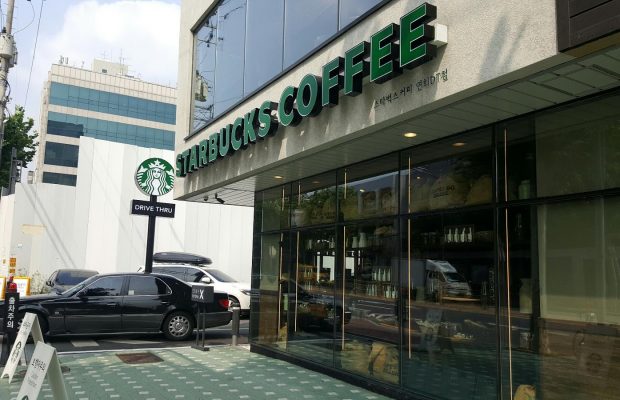
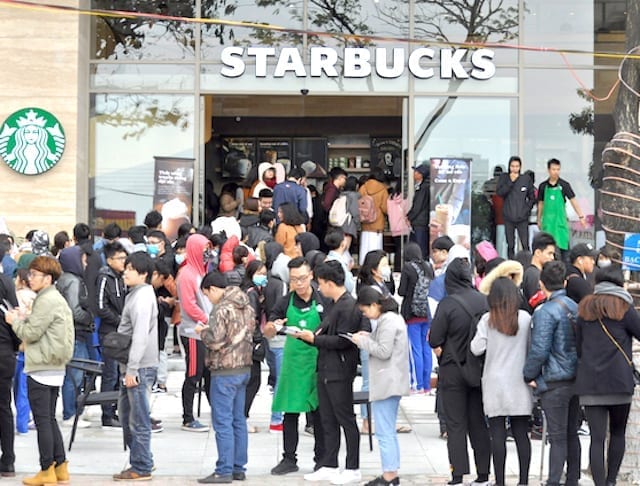
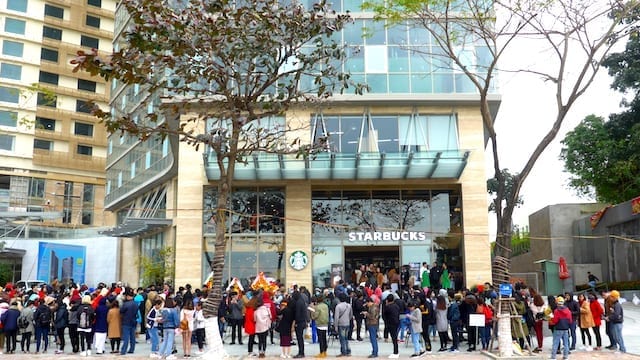
While the Hilton hotel complex is still under construction in Da Nang, there was a queue all morning despite chilly weather when Starbucks Vietnam opened an outlet on the site on Saturday.
Queue outside Starbucks on the cafe’s opening day at the unfinished Hilton Da Nang.
On the ground floor of the unfinished building, it is the US coffee chain’s first outlet for the tourist city. Hilton has not yet released an opening day for its riverside hotel in Da Nang.
Starbucks Vietnam GM Patricia Marques says the chain has further plans for this, its fifth year. It opened its first store in Ho Chi Minh City in February 2013 and this is its 35th outlet. It also has cafes in Hanoi and Hai Phong.
To mark its fifth anniversary, Starbucks Vietnam is offering special prices with extra points under its Starbucks Rewards program.
The company has also re-introduced its Starbucks Reserve Da Lat coffee, which first made an appearance in 2016.
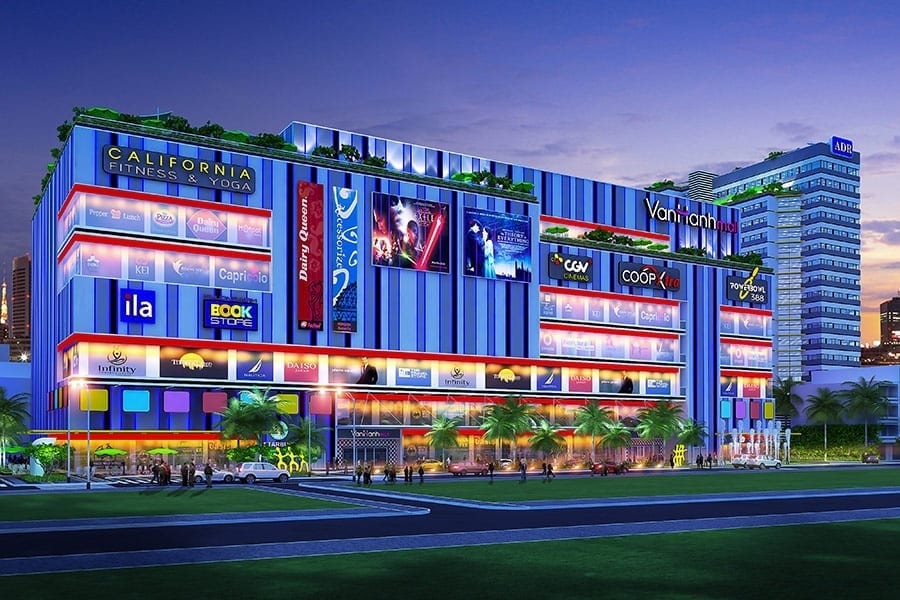
Vietnam’s newest shopping centre, Van Hanh Mall, has opened in Ho Chi Minh City, on Su Van Hanh Street in District 10.
Built on a 90,000sqm site, the shopping complex has 55,000sqm of retail space, which is 90 per cent occupied already, by more than 200 international and local brands.
Tenants include Bata, Charles & Keith, Levi’s, Mujosh and Nike and a raft of dining options, including Buffalo Wild Wings, Crystal Jade, Sushi Kei, Starbucks and Phuc Long coffee.
For entertainment, there is a CGV multiplex cinema, a Superbowl amusement center and a giant European-themed bookstore.
A Co.opXtra hypermarket, operated by Saigon Co.op and Singapore’s NTUC FairPrice, also opened, marking the brand’s third outlet in the city.
There are nine parking floors from basement to fifth floor, enough space for 350 cars and 3000 bikes.
Built at the cost of VND1 trillion (US$43.9 million), Van Hanh mall rentals range from US$30-60 per sqm.
Starbucks China sales grew 30 per cent in the first quarter, overshadowing a lacklustre performance in the US company’s home market.
Same-store sales in the core Asian market rose a respectable 6 per cent, with the majority of the growth down to new store openings: 700 new Starbucks stores opened, taking its global network to 28,039.
US same-store sales rose by 2 per cent, driven by a similar increase in the average transaction value. Global revenue reach US$6 billion in the 13 weeks to December 31.
Neil Saunders, MD of GlobalData Retail, said the strong Chinese result “hides an underlying softness – although we would stop short of saying problem – in the rest of the business”.
“Barring last quarter – which was affected by one less week of trade than the prior year – Starbucks’ growth trajectory has slowed. This is most noticeable in the US, where both overall and comparable sales growth is trending lower,” said Saunders.
“This slowdown does not mean the domestic business is broken. Instead, it is a function of maturity and saturation which has made both adding new stores and driving performance from existing locations steadily more challenging. Given that this dynamic will only worsen over time, it raises a question as to how Starbucks intends to remedy the issue.”
Kevin Johnson, president and CEO of Starbucks, said the strategic acquisition of East China positioned the company to accelerate its growth in the key China market.
“Today, Starbucks has two powerful, independent but complementary engines driving our global growth, the US and China. Our work to streamline the company is sharpening our focus on our core operating priorities.”
Starbucks Korea’s annual operating profit soared past 100 billion won (US$94 million) for the first time last year, despite intense competition in the domestic cafe sector.
Industry sources told Yonhap news service the record result was driven by solid demand from young consumers.
The operating profit of the coffee chain, which is run by South Korean retail conglomerate Shinsegae, was estimated at 110 billion won last year, according to the sources. Sales were estimated to have reached 1.2 trillion won (US$1.128 billion).
The company’s annual revenue first topped the 1 trillion-won mark in 2016, setting a milestone in the South Korean coffee industry.
The figures for its competitors, such as A Twosome Place and Angel-in-us Coffee, are known to average between 100 and 200 billion won, according to industry sources.
Starbucks, which opened its first Korean branch near Ewha Womans University in Seoul in 1999, had 1140 stores throughout the country as of last month.
Starbucks Coffee Korea Co., a 50/50 joint venture between Starbucks Coffee International, Inc. and Shinsegae Group, celebrated the opening of Korea’s largest Starbucks store in Central Seoul near Jonggak Station in December 2017. Located in Jongro Tower, with more than 900 residents, the store sits between two of the Tower’s floors covering over 1,000 square meters (11,000 square feet). Jonggak Station serves as a gathering place for all generations of Koreans to shop, dine, work and play in a location where history and tradition of Korean culture merge with modern city amenities.
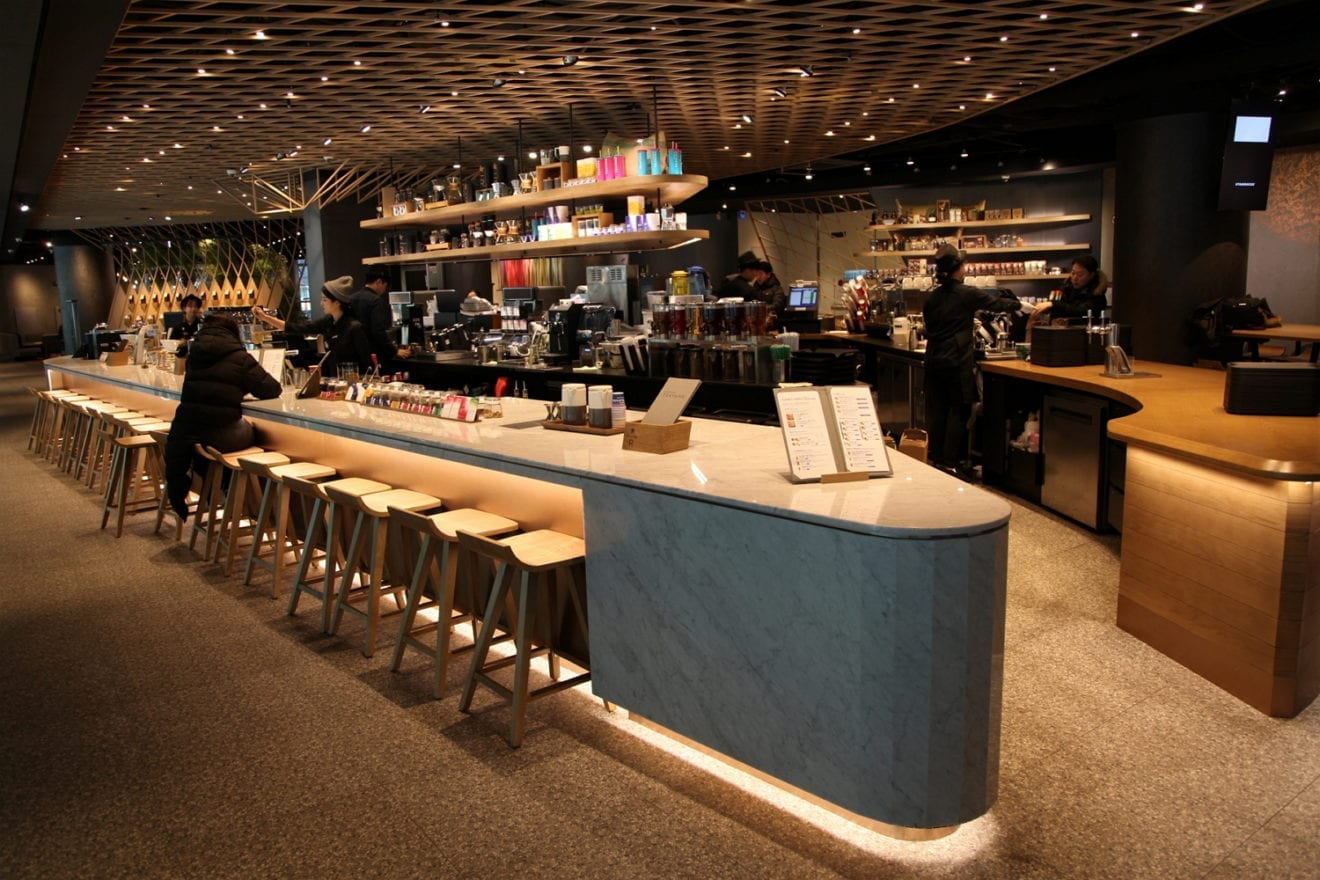
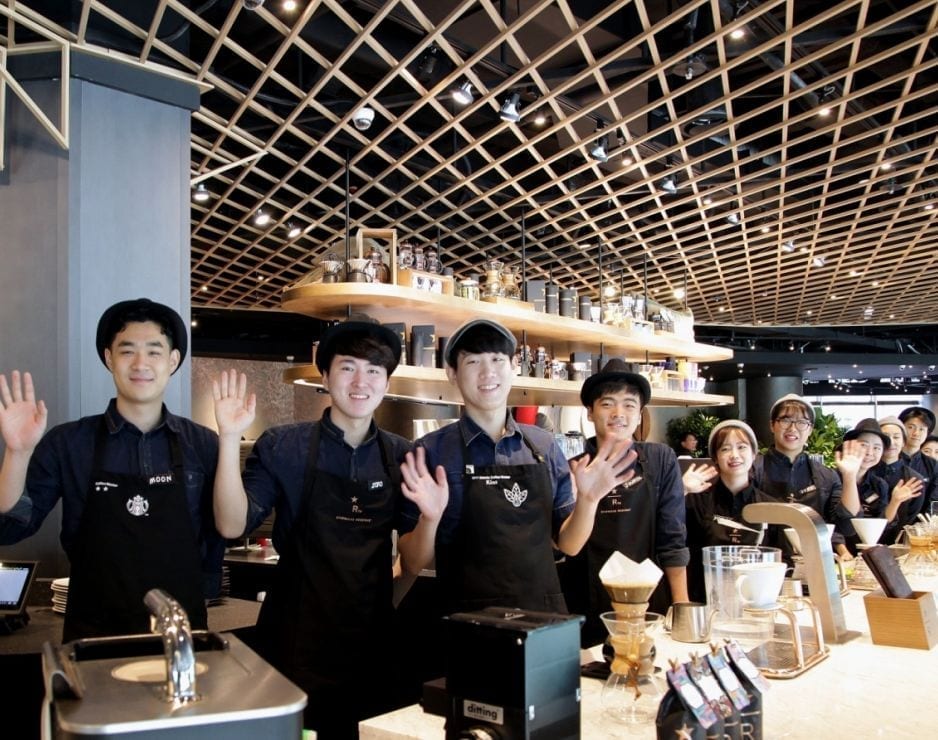
The Jongro store features a “Grand Bar,” a triangular bar on the second floor measuring 25 meters (82 feet), making it the largest stand-alone bar at any Starbucks across South Korea, and puts both coffee forward and Teavana handcrafted beverages at centerstage.
Beyond the Grand Bar, the space also offers a space known as the Coffee Stage, for a more personalized and intimate coffee experience with Starbucks baristas. In addition, specially-designed seating zones, inspired by the six commonly traded goods among Koreans during the Chosun Dynasty, provide comfortable seating for large groups, close friends and individuals to enjoy a cup of coffee in this unique atmosphere.
“The Jongro store represents the 19-year coffee journey we’ve been on with Korean customers,” said S.K. Lee, CEO, Starbucks Coffee Korea. “We are pleased to create a place which pays respect to our Korean heritage while elevating the coffee retail experience customers have come to expect of Starbucks.”
The beverage menu at the Jongro store includes nearly 100 handcrafted customized beverages. The Teavana Blueberry Bliss and Teavana Lavender Sage beverages are uniquely brewed on a Siphon to extract the full tea flavors and aromas. These teas, as well as the Starbucks Reserve Origin Flight and Reserve Brew Comparison tasting experiences, can only be found at the Jongro store.
In addition, more than 60 locally-sourced food items are available, including seven various rice dishes such as a Cactus rice ball with beans and sweet potato, as well as light meals and snacks, and can be found only at this location.
“We are committed to innovating the Starbucks Experience to meet the expectations and needs of our customers and are proud to bring our Korean customers closer to our coffee and partners (employees) than ever before,” said Mark Ring, president of Starbucks Asia Pacific.
Since opening in 1999, Starbucks today has more than 1,140 stores across 75 cities in South Korea. Employing over 13,000 partners (employees), Starbucks Korea is a leading Employer of Choice in the country and is also a model of corporate citizenship with an robust social impact agenda, partnering with over 140 communities and nonprofits to serve its partners and the community.