Tag: starbucks

  • Starbucks Coffee Japan aims to blend in

    Starbucks Coffee Japan aims to blend in

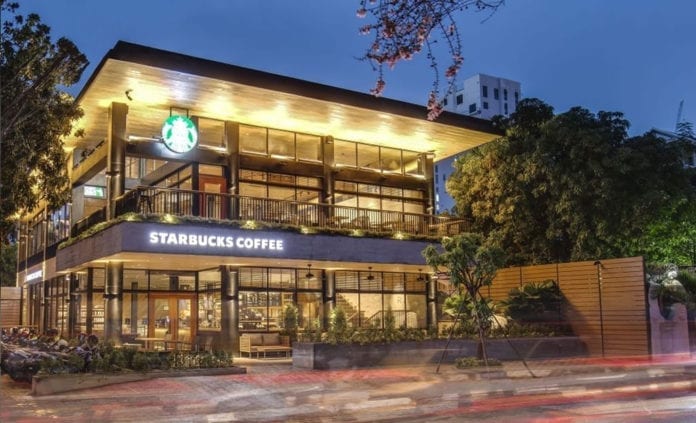
    Starbucks Coffee Japan is aiming to blend in with its first cafe in Uji, Kyoto, giving it a local tea culture theme.

    The branch of the US coffee chain will be opened by the front gate of Byodoin temple, a UNESCO World Heritage site, on March 31.

    It will occupy a space along the front approach to the temple, offering customers a view of the Ujigawa promenade. The 142 sqm outlet will have 41 seats inside and 19 outside.

    Starbucks Japan

    A gable roof will match local custom, and decor features will be related to Uji tea culture.
    Another cafe and a parking lot stood on the site until last year.

    Ten years ago, Starbucks had a 19 sqm outlet in the 587-year-old Forbidden City in Beijing, but protests led to the Seattle-based company closing it.

  • Starbucks Korea polls 1 million customers

    Starbucks Korea polls 1 million customers

    Starbucks Korea is killing two birds with one stone – improving sales by making customers happier.

    According to the coffeemaker, the number of participants on its mobile survey platform “My Starbucks Review” has exceeded 1 million. Surveys are offered to Starbucks members who use Siren Order – ordering food and beverages on a smartphone, instead of having to wait in line.

    Starbucks Korea app


    The platform has been serving the coffeehouse well in terms of gathering customer feedback, officials said, and some 20 of the suggestions coming from customers have either been adopted or are expected to be introduced in the near future.

    One of the suggestions was related to Grapefruit Honey Tea, a seasonal drink temporarily introduced last year that was met with unprecedented popularity. Following the soaring demand, Starbucks decided to introduce the tea as an official menu item, and ended up selling over 1.2 million cups in just five months.

    Other successful ventures with the help of consumer input include the Starbucks Card Holder, with over 10,000 units sold since its launch late last year, and special edition coin pouches for chocolate coins, which sold out in just five days (50,000 batch) in early January.

    “We’ll continue to take into account customer feedback, to offer better products and services,” an official said.

    -Kevin Lee

  • Starbucks’ social gifting feature launches in China

    Starbucks’ social gifting feature launches in China

    Starbucks has extended its social gifting promotions into China, where it has launched a major expansion program to double its stores within the next five years.
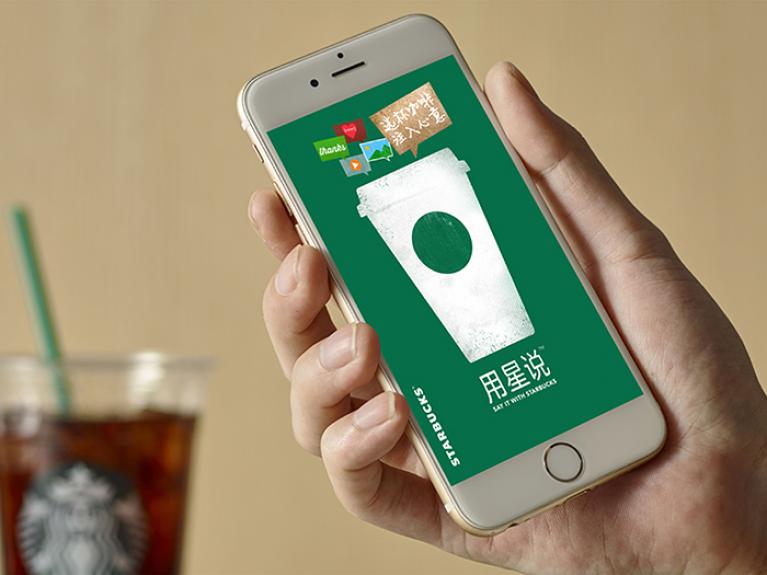
    The coffee giant’s new “Say It With Starbucks” program, created by Starbucks and Weixin, China’s leading mobile social communications app, enables users to gift a Starbucks beverage or digital gift card via a social gifting platform.
    A sister product of WeChat, China’s leading mobile social messaging app, Weixin’s platform has 846 million global monthly active users, as of third quarter 2016. The launch comes on the heels of a strategic partnership between Starbucks and Tencent, WeChat’s developer, in December 2016.
    Users will be able to select from a curated selection of Starbucks-branded gifts and add a personalized message in the form of text, images or video to uplift the day of a loved one, Starbucks explained. Once a gift is received, it will be saved in the recipient’s Weixin app and can be redeemed at any Starbucks store in Mainland China.
    During the initial launch period, Weixin added access to ‘Say it with Starbucks’ users in its Weixin Wallet-function. This partnership makes Starbucks the first retail brand to bring a locally-relevant social gifting experience in China, the coffee giant said.
    Starbucks launched a trial phase two weeks ago among employees and Starbucks customers.
  • Starbucks future strategy applauded

    Starbucks future strategy applauded

    While Starbucks has kicked off its new fiscal year with the lowest same-store sales growth since 2009, there is no reason to be overly discouraged by these results.

    Certainly, there are a few areas of softness, but the uplift of 3 per cent in the Americas comes off the back of a 9 per cent rise in the prior year. For a mature, fairly saturated company operating in a competitive segment of the market, the numbers show resilience.

    In any case, the overall revenue numbers are somewhat more robust – both within the Americas and on a global basis – thanks to a healthy program of store expansion. Starbucks may be reaching its peak in some localities, but it has demonstrated that even in its more mature markets it can still find headroom for new openings.

    Starbucks has done a reasonable job of managing its profitability at a time when margins are being squeezed by higher staffing costs. During this period, overall operating income increased by 7 per cent on a global basis and by 3 per cent within the Americas – partly thanks to the price increases of last year.

    All of that noted, there is no doubt that Starbucks is now firmly in middle age: it is finding growth more difficult to come by and, in financial terms, the business is not moving upwards at the pace it once did. In our view this is not demonstrative of a company in trouble, or even a company doing the wrong things, it is simply a reflection that Starbucks is a more mature business.

    Given that this dynamic is only likely to intensify over the next few years, it is incumbent on Starbucks to find new avenues for growth. The company is managing this well and has already set out its stall in terms of the innovations it intends to pursue to drive both the top and bottom lines.

    Some of these future plans lie outside the existing business model. Starbucks should be applauded for having the courage to look beyond its existing core operation, and to indicate its commitment to these ventures by putting Howard Schultz in charge of the new division. In truth, the push into premium through the development of the Princi chain and the Roastery and Reserve-only stores are not going to deliver sales volumes anywhere near those of the main business. However, their contribution will take the edge off the more subdued growth coming from core markets.

    As much as new initiatives will help, it is also important for Starbucks to look for ways to improve productivity at existing stores. This includes improvements to the food offer, which remains fairly low key and lacklustre.

    The year ahead will be both exciting and challenging in equal measure. However, Starbucks is a solid operator that will deliver single digit comparable sales growth, with total revenue uplifts just nudging into double digits.

  • First Starbucks roastery coming to Shanghai in 2017.

    First Starbucks roastery coming to Shanghai in 2017.

    Located along Nanjing Road (West), one of the world’s busiest shopping destinations, the Roastery will be part of the soon to be built HKRI Taikoo Hui Project, Shanghai’s newest premium world-class retail, office, and hotel area.

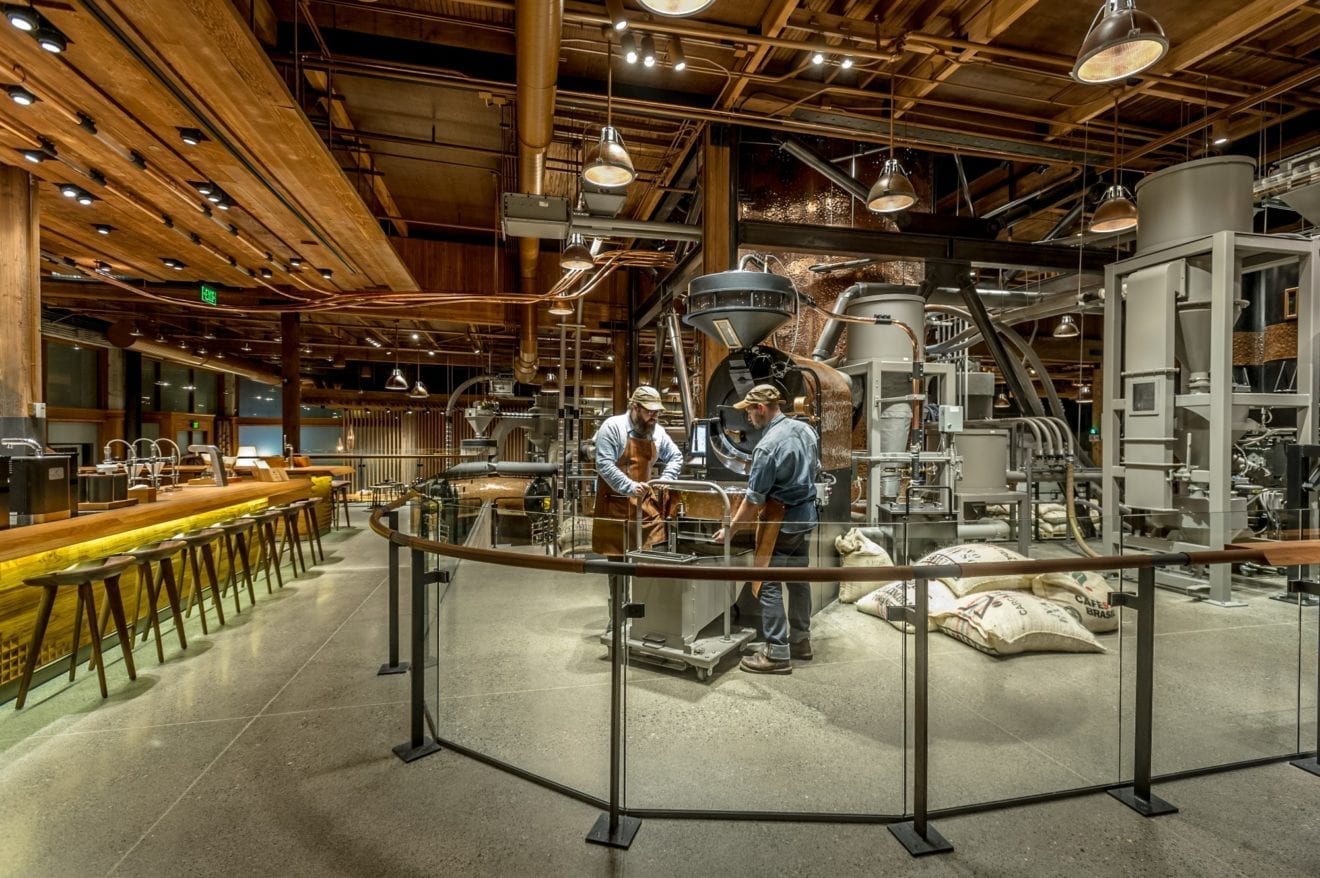
    Scheduled to open in late 2017, the new Starbucks Roastery and Tasting Room in Shanghai will be inspired by the first location that debuted in December 2014 in the company’s hometown of Seattle, Washington. The 2,700 square-meter (30,000 square-foot) Shanghai space will reflect a similar, immersive all sensory experience.  This interactive, retail environment will allow customers in China to better understand the craft of roasting and brewing a range of Starbucks coffees including the rare, limited availability of Starbucks Reserve coffees from around the world.

    “China represents the most important and exciting opportunity ahead of us. As our first international Roastery, we will take even bolder steps to make this Shanghai location our most stunning store, while making it completely unique and relevant to the Chinese customer,” said Howard Schultz, chairman and chief executive officer of Starbucks. “The Starbucks Roastery environment honors coffee innovation as a modern day Willy Wonka experience, where customers are only feet away from the theatre and artistry of our coffee craft. I am confident this will be one of the most highly-anticipated store openings in our international markets.”

    China is, today, Starbucks largest international market with more than 2,100 stores across over 102 cities, including 55 Starbucks Reserve® stores. The new Roastery represents Starbucks 45-year relentless pursuit for coffee excellence and promises to bring to China an unparalleled experience that starts with the passionate Starbucks partners. Exclusively at the Roastery, customers will be able to watch freshly-roasted beans arrive, connect with Starbucks coffee specialists and master roasters, enjoy a unique beverage and food menu, as well as savor some of the most unique, small-lot coffees brewed multiple ways. Starbucks believes this revolutionary retail concept will make the new Roastery one of the city’s latest and most iconic must-visit lifestyle destinations and landmarks, for Shanghainese and visitors from China and around the world.

    The Shanghai Jing’an Government has given Starbucks their full support to bring this first-of-its-kind coffee retail experience that combines coffee roasting, manufacturing, education and retail within a single facility in China. Following a meeting with Starbucks global leaders, Shanghai Jing’an Party Secretary, Mr. An Lusheng, and Shanghai Jing’an Mayor Mr. Lu Xiaodong reiterated: “The new Jing’an is focused on developing high-end commercial sectors, establish new developmental goals for a modern cosmopolitan city, and encourage new retail innovations within our district. The government fully supports this pioneering retail experience and initiative from Starbucks.”

    The Starbucks Roastery will be part of the HKRI Taikoo Hui complex, developed jointly between HKR International Limited and Swire Properties Limited, who are fully committed to launch this pioneering project with sustainability and quality at its core. The revolutionary retail experience of the new Starbucks Roastery will be located within a standalone semi-circle building of the complex that faces the bustling Nanjing Road (West), known as China’s Number One Commercial Street, due to its deep history and rich cultural heritage, which is set to become the most anticipated business and lifestyle destination in Shanghai.

  • Has Starbucks met its match?

    Has Starbucks met its match?

    Vietnam – known for its deep-rooted coffee culture – has become one of the most diverse markets in Asia for the uplifting beverage, with scores of global giants, local chains and small cafés severing a wide variety of freshly roasted beans.

    Domestic chains are competing well against international brands including coffee giant Starbucks, which has opened 24 outlets across Vietnam since its debut in the country four years ago.

    Not long after Starbucks entered Ho Chi Minh City, the country’s southern business hub where people drink coffee from sunrise to sundown, local chain Phuc Long stepped up its game and presented a direct challenge to the global giant.

    At a main intersection at the heart of the city, a Starbucks shop is under fierce competition from two Phuc Long stores just a few steps away.

    Phuc Long has shown a determined attempt to take on international brands like Starbucks by building up its presence in busy downtown areas across Ho Chi Minh City that are densely crowded with office buildings and shopping malls.

    Where there’s a Starbucks outlet, there’s a Phuc Long store to draw in those who otherwise would be Starbucks clients, mostly upper- middle class consumers willing to pay a few extra bucks for a cup of premium-branded coffee.

    “We are not overwhelmed by international brands as we have targeted young consumers who enjoy international products at reasonable prices,” said a Phuc Long executive.

    Phuc Long is definitely not the only local coffee chain going head-to-head with foreign players.

    A survey conducted by Financial Times Confidential Research of 1,000 consumers in each of the five biggest economies in Southeast Asia found that Vietnam was the only country where Starbucks was not as frequently visited by local coffee lovers as local brands Trung Nguyen and Highlands Coffee.

    There remains far more growth potential, with more homegrown chains entering the market.

    Saigon Café opened its first shop in July last year. Since then the domestic chain has reportedly invested about $50 billion ($2.2 million), excluding rental costs, in 10 outlets across the city.

    “Despite increasingly fierce rivalry from international brands, we started generating a net profit not long after our first store opened,” said a Saigon Café executive. “Currently, each outlet is reporting monthly revenues of VND1.5 billion on average. Our estimate is that net profit can range between 20 and 25 percent.”

    Despite the fact international coffee chains such as Starbucks and The Coffee Bean & Tea Leaf have been well received in the Southeast Asian country, there has been a surge in the establishment of homegrown brands.

    On one hand, local coffee chains are confident that locals will stick to the strong taste of Vietnamese coffee. On the other, they have been responsive to the demands of a growing upper-middle class urban population who are more interested in sampling the ambiance of the store than the taste of coffee.

    According to Euromonitor International, a U.K.-based market research organization, annual growth of coffee franchises in Vietnam is currently standing at 7 percent.
  • Starbucks launches first single-origin Yunnan coffee in China

    Starbucks launches first single-origin Yunnan coffee in China

    Starbucks today launched its first Starbucks Single-origin Yunnan coffee to usher in the New Year in China. Available for a limited time across all Starbucks retail locations in Mainland China, the new Starbucks Single-origin Yunnan coffee pays tribute to four years of close collaboration between the Starbucks China Farmer Support Center and local coffee farmers in Pu’er, Yunnan Province. The introduction of the Starbucks Single-origin Yunnan coffee, which features 100 percent arabica coffee from the region, signifies an important step forward to completing the Starbucks China supply-chain, delivering premium coffee from bean to cup.

    “The Starbucks Yunnan Coffee Project is about creating a positive impact on the local coffee farming communities and we are thrilled to bring this vision to life with the launch of the Starbucks Single-origin Yunnan coffee, especially at the beginning of the New Year,” said Belinda Wong, ceo, Starbucks China. “We will continue to build on the strong foundations established by the Starbucks China Farmer Support Center to deepen our partnership with local farmers and to develop even more localized, high-quality coffee that can be celebrated and enjoyed in Starbucks stores across China and globally.”

    Located at the same latitude as other renowned coffee-producing regions, such as Colombia and Jamaica, Pu’er is the coffee capital of China. The distinctive packaging of the Starbucks Single-origin Yunnan coffee is inspired by its sub-tropical landscape, which is home to soaring mountains, running creeks, and vibrant coffee and tea plantations.

    “Over the past few years, we have been extremely humbled by how the local Pu’er coffee farming community has embraced us as part of their extended family,” said Alan Tong, director, Starbucks Farmer Support Center. “The Starbucks® Single-origin Yunnan coffee is the fruits of labour for many local farmers and I am very excited that we are able to share them with our customers in China. This medium-roasted coffee is rich, multidimensional and consistently captures the unique flavors of Yunnan in a Starbucks cup – herbal notes, balanced acidity, and a smooth and elegant mouthfeel.”

    Yunnan plays an important strategic role in Starbucks growth in China. In 2012, Starbucks established its first Asia-based Starbucks Farmer Support Center in Pu’er with the aspiration to help improve the quality of Yunnan coffee and to share it with the world. Over the past four years, the Starbucks Farmer Support Center has trained nearly 10,000 farmers in Yunnan province on sustainable farming practices. It has also certified over 1,200 farms, covering nearly 11,000 hectares of land, through the company’s Coffee and Farmer Equity (C.A.F.E.) Practices, which ensures high-quality coffee that is grown in a socially and environmentally responsible manner. In the 12 months between 2015 and 2016 alone, the Starbucks Farmer Support Center has certified 576 farms.

    Starbucks has a long history of collaboration with Yunnan coffee farmers. In early 2009, as part of the Starbucks 10th Anniversary celebrations in China, the company launched the Starbucks South of the Clouds Blend, featuring high-quality Yunnan arabica coffee beans. With firm support from the local and provincial governments, the Starbucks South of the Clouds Blend is now available in Starbucks stores in numerous locations across Asia and the United States.

  • Starbucks, Tencent debut social gifting on WeChat

    Starbucks, Tencent debut social gifting on WeChat

    Starbucks Coffee Company and Tencent Holdings have entered an alliance to co-create a new social gifting feature on WeChat.

    The new service, which will be rolled out early next year, will make it easy for Starbucks China customers to gift items to a friend or a family member.

    Customers will be able to select from Starbucks-branded gifts and products and add a personalized message. Recipients of these personal gifts and messages can save their gifts and memories on their WeChat accounts and redeem their gift at Starbucks stores across China.

    Users can use WeChat Pay to pay for their goods and services from their mobile devices at Starbucks retails stores. In China, more than 300 million users (as of March 2016) have linked their bank cards with WeChat or QQ, another flagship service of Tencent.

    “Just as Starbucks cards are among the most gifted around the globe, we aspire to also become the most gifted brand digitally in China,” said Belinda Wong, Starbucks China’s newly appointed CEO.

    The online social gifting platform is part of the company’s growing digital presence focused on connecting with customers through digital channels, including the Starbucks Mobile App, the My Starbucks Rewards program and social media.

    The announcement also builds on Starbucks rapidly expanding the portfolio of digital innovations in the country, which integrates the in-store experience with the digital “Fourth Place” experience.

    Earlier this year, Starbucks also launched a mobile payment system in China aimed at providing My Starbucks Rewards (MSR) members access to a fast, seamless and convenient way to pay for purchases, using their pre-loaded Starbucks Gift Card on their mobile devices.

    Wong, who was appointed from president to CEO of Starbucks China in October, has been instrumental in Starbucks unprecedented growth in country – from 400 stores in 2011 to over 2,300 stores today.

    The company said in a news release when her appointment was announced that she will oversee Starbucks plans to double its scale to operate 5,000 stores in China by 2021.

    Aside from focusing on the company’s overall long-term growth strategy, she will be responsible for key areas, including the vast digital and e-commerce opportunities across the market.

  • Starbucks, Tencent to launch social gifting on WeChat in China

    Starbucks, Tencent to launch social gifting on WeChat in China

    Starbucks Coffee Company and Tencent Holdings Limited has partnered  to co-create a new social gifting feature on WeChat, China’s leading mobile social communications service.

    The new service, which will be rolled out early next year, will make it easy for Starbucks China customers to gift Starbucks to a friend or a family member.

    Customers will be able to select from Starbucks-branded gifts and products and add a personalized message. Recipients of these personal gifts and messages can save their gifts and memories on their WeChat accounts and redeem their gift at Starbucks stores across China.

    Users can use WeChat Pay to pay for their goods and services from their mobile devices at Starbucks retails stores. In China, more than 300 million users (as of March 2016) have linked their bank cards with WeChat or QQ, another flagship service of Tencent.

    “Just as Starbucks cards are among the most gifted around the globe, we aspire to also become the most gifted brand digitally in China,” said Belinda Wong, Starbucks China’s newly appointed CEO.

    The online social gifting platform is part of the company’s growing digital presence focused on connecting with customers through digital channels, including the Starbucks Mobile App, the My Starbucks Rewards program and social media.

    The announcement also builds on Starbucks rapidly expanding the portfolio of digital innovations in the country, which integrates the in-store experience with the digital “Fourth Place” experience.

    Earlier this year, Starbucks also launched a mobile payment system in China aimed at providing My Starbucks Rewards (MSR) members access to a fast, seamless and convenient way to pay for purchases, using their pre-loaded Starbucks Gift Card on their mobile devices.

    Wong, who was appointed from president to CEO of Starbucks China in October, has been instrumental in Starbucks unprecedented growth in country – from 400 stores in 2011 to over 2,300 stores today.

    The company said in a news release when her appointment was announced that she will oversee Starbucks plans to double its scale to operate 5,000 stores in China by 2021.

    Aside from  focusing on the company’s overall long-term growth strategy, she will be responsible for key areas, including the vast digital and e-commerce opportunities across the market.

  • Starbucks Vietnam And The Asia Foundation To Prepare Disadvantaged People to Work

    Starbucks Vietnam And The Asia Foundation To Prepare Disadvantaged People to Work

    Starbucks Vietnam and The Asia Foundation, a nonprofit international development organization, today announced a one-year vocational training program in Hanoi to prepare young people from disadvantaged backgrounds for careers in Vietnam’s fast-growing food and beverage industry. The Starbucks Vocational Training program will engage 50 youth between the ages of 18 and 24, including those who have been affected by family violence, human trafficking, and poverty, in a training program where they will acquire the professional and life skills required to succeed in the retail sector.

    As part of the program, youth will receive both classroom instruction focused on subjects such as customer service, English language learning, financial literacy, and work readiness, as well as on-the-job training. Starbucks partners (employees) will actively engage in the program, providing seminars and in store experience. Upon completion of the program, youth will receive six months of follow-up assistance to help them secure full-time employment.

    “Being an active part of the communities we serve in is intrinsic to who we are as a company,” said Mark Ring, president of Starbucks Asia Pacific. “As Starbucks continues to grow in Vietnam and across Asia, so too does our aspiration to build a different kind of company – one committed to performance that is driven through the lens of humanity – and being a positive force in building the future success of young people.”

    “We are proud to partner with The Asia Foundation and REACH to provide lifelong experiences and skills for disadvantaged young people,” said Patricia Marques, general manager for Starbucks Vietnam.

    “Youth in Vietnam represent a huge pool of talent for this dynamic country, but at the same time there are also challenges for many young people to gain access to work. We have created this project to build confidence, self-esteem and training, which will help them to succeed in the economy.”

    Figures from the General Statistics Office in 2015 indicate that the unemployment rate among youth is more than triple the overall unemployment rate, standing at 6.75%. While well-educated workers are able to access expanding opportunities in the private sector, for less educated workers, and particularly those from rural areas, it is much more challenging due to their lack of education, skills and business connections. This leaves them with fewer options and makes them more vulnerable to exploitation.

    “The gap between supply and demand in Vietnam’s fast-growing industries is an opportunity to provide disadvantaged youth with market-driven, practical vocational training. And by providing employers with skilled young people, we are proud to partner with Starbucks Vietnam to contribute to the development of a workforce that can help to meet the demands of Vietnam’s rapidly changing economy, while empowering some of the country’s most disadvantaged communities,” said Dinh Thi Kieu Nhung, The Asia Foundation’s project manager.

    Starbucks Vietnam and The Asia Foundation will implement this program in partnership with REACH, a local non-governmental organization specializing in providing vocational training, career advice, and job placement to some of Vietnam’s most disadvantaged youth. Funding for the project is supported by The Starbucks Foundation.

  • Starbucks unveils plans for 12000 new stores over next 5 years

    Starbucks unveils plans for 12000 new stores over next 5 years

    Starbucks said it expects its fast-growing China business could one day eclipse its U.S. market. The company said Wednesday it plans to open 12,000 additional stores globally in the next five years, taking the chain to a total of about 37,000 outlets. Half of the new units will be in the U.S. and China.

    “Our core business has never been stronger in the U.S. and around the world,” Starbucks Chairman and CEO Howard Schultz told analysts at the coffee retailer’s investor day event in New York.

    The CEO also emphasized something he’s said before: “These are the early days of the growth and development of the company. If Starbucks was a 20-chapter book, I still think we’re in chapter 4 or 5.”

    “Demand is there, and our ability to deploy capital and get the return on invested capital is very strong,” Starbucks President and COO Kevin Johnson told attendees. Johnson will become CEO of Starbucks in April, succeeding Schultz, who will continue as the Seattle-based company’s chairman.

    Executives during presentations Wednesday highlighted how the company is focusing on both its flagship Starbucks stores and the higher-end Reserve Roastery and Tasting Room outlets for future growth. The company also has targeted the Reserve Roastery stores, which will sell premium coffee at around $10 a cup, to represent about one-fifth of total outlets by 2021.

    Also, Starbucks plans to open new stand-alone outlets under Princi, a high-end Italian bakery the company invested in over the summer. The bakery will serve pizza and have locations in major markets such as New York, Seattle and Chicago by 2018. Also, Princi food is expected to be offered at all of the company’s new Roastery locations.

    At the meeting, Starbucks presented a five-year strategic plan to grow revenue by 10 percent and earnings per share to 15 to 20 percent. At the same time, the company targeted “mid-single digit” comparable-store sales each year.

    “I know some of you are concerned about the slowdown in U.S. comps, which candidly I don’t share,” Schultz told analysts.

    Schultz said the retailer continues to open 500 to 600 stores annually and the new store performance on a sequential basis has been “better than the year before. There’s no better evidence of the health, the strength, the equity of the brand and the relevance of the Starbucks business.”

    On the international front, Schultz said China is one market that remains particularly attractive for the retailer.

    “Not only will China one day be bigger than the U.S., but our business in China will demonstrate that we will be one of the…most significant winners in terms of a Western consumer brand,” he said.

    Indeed, China remains the company’s fastest growing market and management sees revenue and operating income nearly tripling there over the next five years. The chain is opening a new Starbucks store in China about every 15 hours and will soon reach 2,500 stores in 118 cities.

    “Despite our early success, we are only in the beginning chapters of our growth story,” Starbucks China CEO Belinda Wong told analysts Wednesday. “In the next five years, we’re well positioned to double our scale to 5,000 stores in over 200 cities.”

    Wong said urbanization and an emerging middle class in China will help drive the rapid expansion of the specialty coffee market.

    According to Wong, more than 230 million people in China have been lifted into the middle class in the past decade due to the Asian nation’s booming economy, and over the next six years she said another roughly 300 million people will also attain middle-class status.

    “Coffee consumption in China is currently low, but growing rapidly,” Evercore ISI analyst Matt McGinley said in a research note this week. “On a per person basis, Chinese people consume less than 2 percent of the coffee of U.S. consumers and less than 3 percent of the coffee of Japanese people.”

    The company also said it sees food innovation and its cold coffee beverages as key areas fueling its future growth.

  • Starbucks and Tencent Announce Strategic Partnership to Launch Social Gifting on WeChat

    Starbucks and Tencent Announce Strategic Partnership to Launch Social Gifting on WeChat

    Starbucks Coffee and Tencent Holdings, a leading provider of internet value-added services in China, today pioneered a strategic partnership to co-create a new social gifting feature on WeChat, China’s leading mobile social communications service, in early 2017.

    This partnership positions Starbucks as the first retail brand to combine and bring a locally-relevant social gifting and digital payment experience to life on WeChat in China. Tapping into the 846 million global monthly active user accounts (as of the third quarter of 2016), the new integrated feature will seamlessly allow customers in China to instantly and conveniently gift Starbucks to a friend or loved one. Beginning today, Starbucks customers will also be able to use WeChat Pay to make purchases at close to 2,500 Starbucks stores across Mainland China.

    “Starbucks and Tencent share similar values to enable greater human connections through our respective products and services, and I am pleased to partner with an established and respected social and mobile industry leader in China,” said Belinda Wong, ceo, Starbucks China. “This new strategic partnership will leverage the strengths of both Starbucks and WeChat to create a true online-to-offline social gifting platform that will deepen our engagement with our customers in a unique and powerful way. Just as Starbucks cards are among the most gifted around the globe, we aspire to also become the most gifted brand digitally in China.”

    “The strategic cooperation between WeChat and Starbucks enables us to bring the unique Starbucks retail experience seamlessly to hundreds of millions of WeChat users in China,” said Allen Zhang, Senior Executive Vice President of Tencent. “We are happy to be the partner of choice of Starbucks and look forward to deepening our connection to our users through the highest-quality services.”

    Starbucks is committed to innovative digital experiences that surprise, delight and deliver an elevated Starbucks Experience for its customers across China. The online social gifting platform is part of the company’s growing digital presence focused on connecting with customers through digital channels, including the Starbucks® Mobile App, the My Starbucks Rewards® program and social media.

    Jointly created by Starbucks and WeChat, the social gifting feature encourages everyday acts of kindness and appreciation among family and friends. Customers will be able to select from Starbucks-branded gifts and products and add a personalized message of love, of gratitude or to simply uplift someone’s day. Recipients of these personal and simple acts of kindness can save their gifts and memories on their WeChat accounts and redeem their gift at Starbucks stores across China to enjoy the unparalleled Starbucks Experience.

    As part of this partnership, Starbucks will introduce the use of WeChat Pay for purchases in its retail stores in a continued effort to elevate the in-store experience for customers. This cash-free digital payment experience, which allows users to pay for their goods and services from their mobile devices, is one of the most popular payment methods in China, with more than 300 million users linking their bank cards with WeChat or QQ, another flagship service of Tencent, as of March 2016.

    Today’s announcement builds on Starbucks rapidly expanding portfolio of digital innovations in China, which integrates the exceptional in-store experience with the digital Fourth Place experience. Earlier this year, Starbucks launched a mobile payment system in China aimed at providing My Starbucks Rewards® (MSR) members access to a fast, seamless and convenient way to pay for purchases, using their pre-loaded Starbucks Gift Card on their mobile devices.

  • Starbucks CEO Schultz steps aside

    Starbucks CEO Schultz steps aside

    Starbucks CEO Howard Schultz has stepped aside from the CEO role to take up a new role driving innovation, design and development of the Starbucks Roastery and Reserve retail store formats internationally.

    He will also oversee the company’s social impact initiatives and continue to serve as chairman.

    President and COO Kevin Johnson will expand his responsibilities, assuming the role and responsibilities of president and CEO, effective April 3.

    In his current role, since March 2015, Johnson has led the company’s global operating businesses across all geographies as well as the core support functions of Starbucks supply chain, marketing, human resources, technology, and mobile and digital platforms. Johnson has been a Starbucks board member since 2009, and will continue to serve as a member of the Board.

    “Over the past two decades, I have grown to know Starbucks first as a customer, then as a director on the board, and for the past two years as a member of the management team. Through that journey, I fell in love with Starbucks and I share Howard’s commitment to our mission and values and his optimism for the future,” said Johnson.

    Johnson’s career spans 33 years in the technology industry which included a 16-year career at Microsoft and a five-year tour as CEO of Juniper Networks. At Microsoft, he led worldwide sales and marketing and became the president of the platforms division. In 2008, he was appointed to the National Security Telecommunication Advisory Committee where he served presidents George W. Bush and Barack Obama.

    Announcing the changes overnight, Schultz said the company was continuing to deliver quarter after quarter of record, industry-leading revenue, comp sales and profit growth, and that the newest classes of Starbucks stores continue to deliver record-breaking revenues around the world.

    “The truth is, in all my years at Starbucks I have never been more energised or exhilarated about the opportunities that lie ahead.”

    Schultz said the Roastery concept added a previously unattained level premiumisation into the coffee category.

    “Its success is unparalleled, last year achieving a comp sales increase of 24 per cent and delivering a ticket that is four times the ticket of a typical Starbucks store. The Roastery has become a learning laboratory for breakthrough innovation and experiential design and a beacon for the next wave of Starbucks global growth and evolution.”

    Starbucks will open at least 20 Roasteries around the world, six by the end of 2019 alone.

    “At the same time, elements of the Roastery are forming the basis of the 1000 or more Starbucks Reserve stores we will be opening around the world in the years ahead.”

  • Starbucks in Cambodia: From Coffee Beans to Housing Dreams?

    Starbucks in Cambodia: From Coffee Beans to Housing Dreams?

    There’s nothing particularly new with coffee places opening in Phnom Penh. There is a different brand of coffee shop at just about every corner.

    But the recent launching of the Starbucks Reserve brand in Phnom Penh seems to mean something significantly more for both the international F&B franchise sector, and local urbanite Phnom Penh citizens.

    Been There, Done That

    With 45 years of experience in the coffee industry, Starbucks has managed to open around 22,519 stores worldwide (as of June 28, 2015). The brand has become one of the world’s most recognized, through intensive advertising campaigns and aggressive product placement.

    Fast-forward to October of 2016, another branch just opened to serve the Cambodian public in Phnom Penh’s BKK1 district. It was launched under the high-end “Reserve” brand of the company.

    If the market can prove profitable for Starbucks, other international F&B and consumer goods franchises may look to enter the Cambodian market place as well

    The new branch features two floors and 650 square meters filled with local craftsmanship, including a mural centerpiece depicting the Cambodian Folklore of Sovann Maccha.

    Starbucks Cambodia has partnered up with a local NGO – Cambodian Children’s Fund – as part of its long-term community investment. They said, “We take a thoughtful, disciplined approach to growth in Cambodia that is locally relevant and in line with our company’s values. Our growth story is not just about expanding our store count in the market.”

    Something Brewing:

    Yet Starbucks’ opening of another high-end coffee place doesn’t only signal a positive outlook for the F&B industry…

    It also transcends into real estate. A few months back, the World Bank declared Cambodia a lower-middle income country – where Cambodians currently have an average yearly income of between $1,026 and $4,035.

    So, locals are now able to afford items that have a higher price tag, according to the Bank.

    With this rise in consumers’ expendable incomes, Starbucks isn’t worried about the huge difference in price of their coffee compared to local ones. The local coffee costs about $0.74 (and sometimes as cheap as $0.25), while a small latte from Starbucks is $2.95.

    If a cup of coffee is any indication of rising incomes, then sectors like real estate might follow a similar trend. Investors may be getting closer to a market in which the local population can afford resale units and higher rental rates. The current lack of a secondary market, resale and rental, for new development units is proving one of the biggest risks of the Cambodian market for pure investors.

    Furthermore, if the market can prove profitable for Starbucks, other international F&B and consumer goods franchises may look to enter the Cambodian market place as well – spurred by this signal of consumer confidence and affluence.

    So while Starbucks opening in BKK1 has been warmly welcomed by local cafe enthusiasts keen to try an international flavor, its significance for investors may have longer lasting influence.

  • Starbucks launches mobile payment app in Indonesia

    Starbucks launches mobile payment app in Indonesia

    Starbucks recently launched a mobile application in Indonesia to allow customers to pay for in-store purchases at the coffee marker’s more than 260 stores across the country.

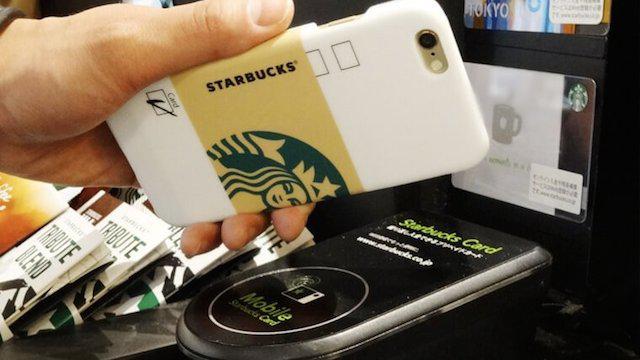
    Building on the cashless payment system Starbucks Indonesia introduced in 2013 with Starbucks Card, the move is part of the broader plan to expand the company’s digital ecosystem.

    The new Starbucks Indonesia Mobile App for iPhone and Android allows customers to quickly pay for in-store purchases by scanning the barcode linked to a registered Starbucks Card. Customers can register multiple Starbucks Cards onto their account, which are linked to the Starbucks mobile app.

    The app also compiles the latest information on Starbucks products in a browsable menu of beverage, food, and merchandise, as well as feature a convenient store locator.

    “This is the latest Starbucks innovation which aims to provide an enhanced experience and meet customers’ needs in the digital space while continuing to provide an exceptional experience in our stores,” Starbucks Indonesia VP of marketing and operations Roger van Tongeren said.