Tag: startup

  • Grab and GoJek get closer to merger deal

    Grab and GoJek get closer to merger deal

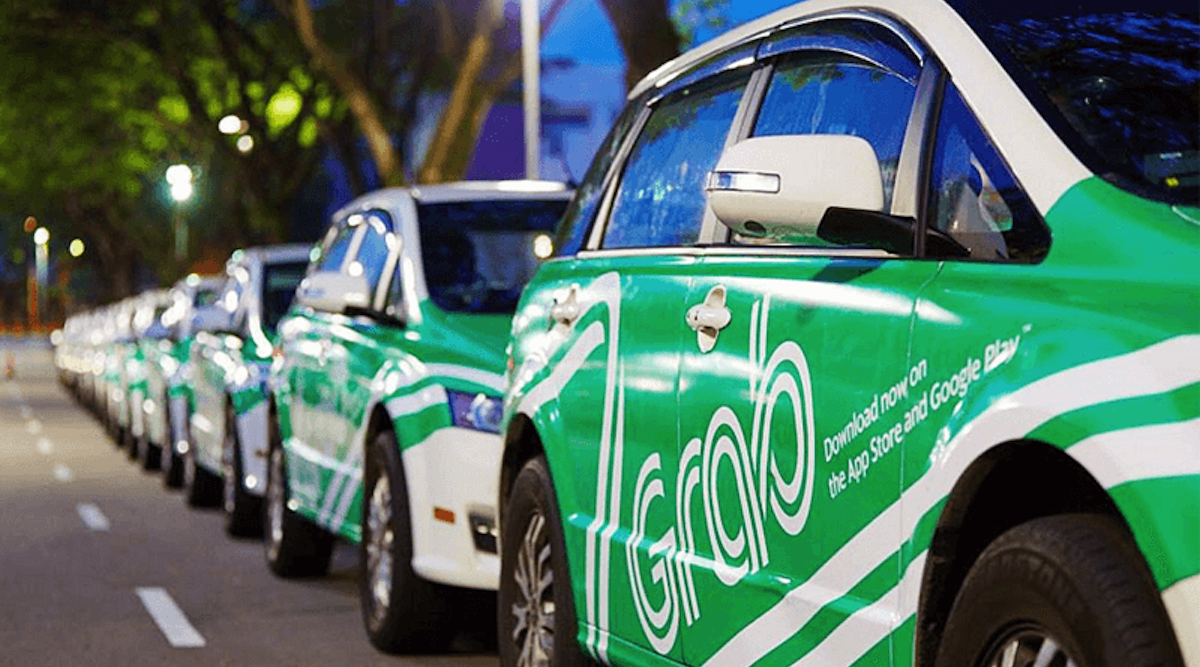
    Grab Holdings. and Gojek have made substantial progress in working out a deal to combine their businesses in what would be the biggest internet merger in Southeast Asia, according to people with knowledge of the talks.

    The region’s two most valuable startups have narrowed their differences of opinion, though some parts of the agreement still need to be negotiated, said the people, asking not to be named because the talks are private. The final details are being worked out among the most senior leaders of each company with the participation of SoftBank Group Corp.’s Masayoshi Son, a major Grab investor, one of the people said.

    Under one structure with substantial support, Grab co-founder Anthony Tan would become the chief executive officer of the combined entity, while Gojek executives would run the new combined business in Indonesia under the Gojek brand, the people said. The two brands may be run separately for an extended period of time, one of the people said. The combination is ultimately aimed at becoming a publicly listed company.

    Representatives of Grab, Gojek and SoftBank declined to comment. The talks are still fluid and may not result in a transaction, the people said. The deal would need regulatory approval and governments may have antitrust concerns about the unification of the region’s two leading ride-hailing companies.

    Grab and Gojek have been locked in a fierce, expensive battle for dominance in that business along with food delivery and mobile payments over the last several years. Investors have been pushing for them to combine forces across Southeast Asia in order to reduce cash burn and create one of the most powerful internet companies in the region. Grab, which is present in eight countries, was last valued at more than $14 billion, while Gojek, valued at $10 billion, has a presence in Indonesia, Singapore, the Philippines, Thailand and Vietnam.

    SoftBank has been pushing for a deal since Son visited Indonesia in January, but he’s grown increasingly frustrated with the lack of progress. The old rivalry and personality clashes between the two companies’ leaders have led to deadlocked negotiations in the past, according to one of the people familiar with the talks.

    Sea Ltd.’s rise as a formidable force in e-commerce and digital payments has injected fresh impetus to the Grab-Gojek conversation, the people said. The Singapore-based company’s e-wallet, ShopeePay, has been gaining market share at a rapid clip, aided by the growing popularity of Sea’s e-commerce platform Shopee. That, in turn, is challenging market leaders GoPay and Grab-backed Ovo in Indonesia.

    Sea’s surprise journey from a scrappy startup to Southeast Asia’s most valuable company in the past 10 years has been the “biggest inspiration” for local internet companies lately, Rohit Sipahimalani, chief investment strategist at Temasek Holdings Pte, said in an interview at the launch of the e-Conomy report in November. Sea went public in 2017 after raising more than $720 million from investors and now has a market value approaching $88 billion.

    “People are now seeing that the public markets are a viable alternative for internet companies in Southeast Asia,” said Sipahimalani, whose firm is an investor in Gojek. “But they also recognize that they need to get to a certain scale, which is why the IPO route is becoming more attractive. I think that’s leading to some dialogue around combinations and consolidations in the region.”

    He declined to comment on the Grab-Gojek deal, adding that Singapore’s state-owned investment firm isn’t taking part in the negotiations.

  • Singapore Beefs Up Wealth Management Talent Pipeline

    Singapore Beefs Up Wealth Management Talent Pipeline

    After a deadly pandemic wiped out most revenue for the year, Macau’s gaming industry could face a permanent structural shift with the potential introduction of a new system to exchange digital yuan for gambling chips.

    Macau’s watchdog, the Gaming Inspection and Coordination Bureau, has been in talks with various casino operators over the usage a digital yuan to buy casino chips, according to a report citing unnamed sources.

    The discussions are still in the initial stages and no final decision has yet to be made.

    Currently, tourists entering Macau to gamble commonly use two methods to obtain casino chips. One method is to obtain chips by converting Hong Kong dollars (which is widely accepted in the fellow special administrative region). Another is to obtain credit often from junket providers, a method commonly used by mainland high rollers to sidestep Chinese capital control rules.

    By introducing the digital yuan and enforcing it as the medium to exchange casino chips, authorities risk disrupting Hong Kong dollar flows and, more importantly, putting junkets out of business.

    In addition to hurting service providers in the middle, imposing a digital yuan would significantly increase the transparency of money flows from the mainland to Macau.

    Industry watchers are concerned not only about the lack of privacy for gamblers but also the potential of a conversion cap to expand the coverage of mainland China’s capital control rules.

    Although some believe the introduction of the move could boost Chinese middle-class participation in Macau’s gambling sector through the ease of conversion, others expect a fallout in the casino hub due to its strong reliance on high rollers that need financial flexibility.

    The report added that the increased exposure to casinos in Russia and the Philippines by Suncity Group, the listed arm of Macau’s biggest junket operator and the recent mystery buyer of cigar brands like Cohiba, was a response to changes such as the potential implementation of the digital yuan, citing another unnamed source.

    Gaming revenue in Macau has plunged by $27 billion this year, down at least 90 percent for six straight months since March.

  • Grab’s reign over Vietnam ride-hailing market continues

    Grab’s reign over Vietnam ride-hailing market continues

    Grab remains the dominant player in the Vietnamese ride-hailing market with close to a 75 percent share, and is widening the gap with competitors. Global market advisory firm ABI Research said Grab completed 62.5 million rides in the first six months of 2020, or 74.6 percent of the market, an increase from last year’s 73 percent.

    The market share of FastGo, a Vietnamese competitor, dropped to 0.7 percent from 1 percent.

    But, the Covid-19 pandemic came as a huge blow to the market as Grab’s figures showed. Its 62.5 million rides were a mere 20 percent of the 313 million it completed in the first half of last year.

    The overall market shrunk to 19.5 percent of last year’s 429.5 million rides.

    Two new Vietnamese apps, HCMC-based Viservice’s viApp, and GV Asia’s GV Taxi, made their debuts during the year. But analysts are skeptical about their prospects.

    With the ride-hailing field being extremely competitive, even strong players like Grab, Be and Gojek have turned to the food delivery market for profits.

    Vietnam was the fourth largest ride-hailing market in Southeast Asia last year behind Indonesia, Singapore and Thailand, according to a report by Google, Singaporean sovereign fund Temasek and U.S. management consultancy Bain.

    ABI Research estimated the market at US$1.1 billion last year and said it could rise to $4 billion by 2025.

  • Revolut Singapore Compliance Chief Joins Swiss Private Bank

    Revolut Singapore Compliance Chief Joins Swiss Private Bank

    He leaves the fintech a little over a year after he joined from Credit Suisse.

    Rayson Tan, who joined Revolut Singapore in September 2019, has left the company. Tan joined the fintech as chief compliance officer, and was later appointed chief risk officer and head of legal in April 2020.

    Since his departure, Tan has taken on a new role at Geneva-based private bank Pictet as chief risk officer, Asia. A spokesperson for Pictet confirmed the appointment as of 4 November 2020.

    Based in Singapore, Tan is responsible for overseeing the firm’s risk management framework across Asia, covering all key risks (including strategic, operational, regulatory, financial, reputational, etc.), as well as management of its Risk and Compliance teams.

    Tan was one of Revolut’s most senior hires. He spent 18 years in banking, and was a managing director in the Compliance & Regulatory Affairs department of Credit Suisse.

    He was previously with Deutsche Bank and UBS Investment Bank in various country, regional and global compliance roles.

  • Alibaba eyes to invest in online fashion retailer Farfetch

    Alibaba eyes to invest in online fashion retailer Farfetch

    Alibaba Group Holding Ltd 9988.HK is in advanced talks to invest nearly $300 million in online luxury fashion retailer Farfetch Ltd FTCH.N, the Information reported on Monday, citing people familiar with the matter.

    Shares of London-based Farfetch jumped about 16% to $32.59 following the news.

    The two companies are also in talks to create a Chinese joint venture, the report said here, adding that Cartier-owner Richemont, which has teamed up with Alibaba to create mobile applications, is also considering investing in Farfetch alongside the Chinese e-commerce giant.

    Both Farfetch and Alibaba were not immediately available for comment.

    Farfetch, which counts Alibaba’s competitors JD.com 9618.HK and Tencent Holdings Ltd 0700.HK among its investors has been betting on China’s burgeoning online luxury goods world. Chinese consumers make up a third of luxury goods purchases worldwide.

    Terms of the current and past deals with Tencent and JD would not prevent Alibaba from investing in Farfetch, the Information said, citing a source.

  • Couche-Tard acquires Circle K business in Hong Kong

    Couche-Tard acquires Circle K business in Hong Kong

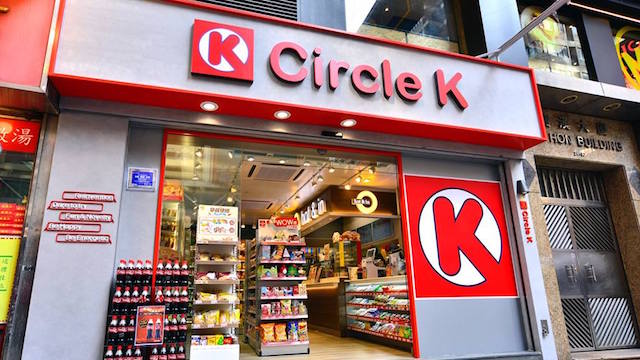
    Convenience Retail Asia Ltd said on Thursday it had agreed to sell its convenience store business in Hong Kong to Canadian convenience store and road transportation fuel retailer Alimentation Couche-Tard Inc for HK$2.79 billion ($359.8 million).

    The Circle K convenience stores and Saint Honore bakery chain operator plans to declare a special dividend of HK$3.85 per share to its shareholders, with the dividend to be paid before the end of 2020, the firm said in a filing to the Hong Kong bourse.

    The convenience store business, with a net asset value of HK$622 million as of end-June 2020, comprises of 340 Circle K stores in Hong Kong, and the net proceeds will be used to pay the special dividend, the Hong Kong-listed firm added.

  • Line Launches Social Banking Platform in Thailand

    Line Launches Social Banking Platform in Thailand

    Thailand is the first market where Line has integrated banking services on its main mobile platform. Japan-based Line, which operates one of Thailand’s most popular social media platforms, has rolled out banking services in the kingdom in partnership with Kasikornbank.

    The Line BK service allows users to customers to transfer money, open savings accounts, apply for loans, and make payments directly from the messaging platform. It also promises high-interest rates for saving accounts and a range of banking services, including personal loans for freelancers and individuals without fixed incomes, according to an announcement on Tuesday.

    The company said it plans to expand banking services into other countries, including Japan, Taiwan, and Indonesia.

    The Line messaging app launched in 2011 and since then has grown into a diverse, global ecosystem that includes AI technology, fintech and more.

    In Thailand, LINE introduced its messenger service in 2012, and quickly grew into the country’s leading social media platform.

  • Uber Seeking Options Including Partial Sale For Uber Elevate

    Uber Seeking Options Including Partial Sale For Uber Elevate

    Uber Technologies Inc is seeking options for its Uber Elevate business, including strategic partnerships or a partial sale, Axios reported on Friday, citing multiple sources.

    The move reflects Chief Executive Officer Dara Khosrowshahi’s obsession with achieving profitability, the report added. Uber declined to comment on the report.

  • Japan’s first gourmet restaurant delivery app lifts off

    Japan’s first gourmet restaurant delivery app lifts off

    Starting today, Tokyo foodies will no longer have to compromise when they order food for delivery. Japan’s first gourmet restaurant delivery app, Food-e, launches today in central Tokyo. With a curated collection of Tokyo’s best restaurants, exclusively available on Food-e, such as Nobu Tokyo, Elio Locanda, Oak Door, Shunbou and Chinaroom, consumers and companies can order great food, professionally delivered to their homes, offices or other locations of their choice.

    Users can access the app at www.food-e.jp from a browser on their smartphones, tablets or PCs and make their selections from menus of mouth-watering professional photos. The food will be delivered in high-quality packaging, with hot and cold items separated to control temperature. Food-e’s drivers are uniformed and insured, full-time professionals, expert in Tokyo’s roads, who will delicately handle the food to your door. Food-e is also the first delivery app offering bilingual customer service to both restaurants and users.

    For restaurants owners, Food-e has changed the traditional business model of delivery apps by charging users a fair fee for delivery and significantly lowering the commissions paid by restaurants. This allows restaurants to make a fair profit on delivery orders while gaining new customers for in-store dining.

    For users, Food-e offers a choice of great restaurants, most of which have never been available for delivery before, at prices generally the same as in-store dining. All of Food-e’s restaurants are not available on any other delivery app.

    Initially, Food-e’s delivery area is a 5km radius from Nishi Azabu, which includes parts of Minato, Chuo, Chiyoda, Shibuya, Meguro and Shinjuku wards. In the near future, Food-e will expand to other parts of Tokyo and eventually to other major cities in Japan.

    Following the official launch today, Food-e will regularly add new restaurants, offering users high quality and an increasing variety of cuisines.

  • Deliveroo Singapore launches on-demand grocery delivery service, increasing convenience for Singaporeans through access to thousands of grocery products

    Deliveroo Singapore launches on-demand grocery delivery service, increasing convenience for Singaporeans through access to thousands of grocery products

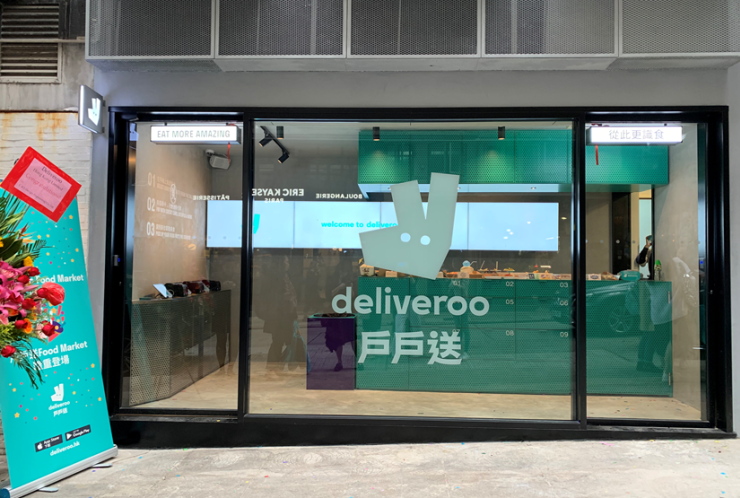
    Deliveroo Singapore today announced the launch of its first ever on-demand grocery delivery service, aimed at providing customers with greater access to a plethora of grocery products, especially important amidst the ongoing COVID-19 pandemic. Following an earlier soft launch on the platform with The Providore and Shell Select, Deliveroo will partner with British retailer Marks & Spencer to offer over 800 grocery products, underscoring the brand’s commitment to delivering amazing food to customers whenever and wherever they want it. This will be followed by further partnerships with specialty store favourites serving different areas of Singapore, including Blu Kouzina Mart, Ryan’s Grocer, Kuriya Japanese Market and Asia Pacific Breweries, all set to launch on the platform in mid-October.

    The new on-demand grocery delivery service will provide consumers with easier access to household essentials such as fruit and vegetables, meat and seafood, eggs, milk and dairy, snacks and sweets, alcoholic and non-alcoholic beverages, as well as store cupboard essentials. With a fleet of over 7,000 riders in Singapore, Deliveroo is committed to delivering essential grocery items to people within as little as 30 minutes, ensuring that great food is never far away.

    “As Singaporeans continue to work from home, Deliveroo’s new on-demand grocery delivery service will make convenience even more convenient for busy Singaporeans, giving people access to the food they want and need within a few clicks. Whether it’s household items from some of Singapore’s most loved grocery brands, or dine-in dishes from local restaurant favourites, Deliveroo continues to raise a smile amongst our customers who now more than ever look for amazing food to be delivered directly to their doors,” said Sarah Tan, General Manager, Deliveroo Singapore.

    Providing Deliveroo customers more food options through Marks & Spencer partnership 

    From today, customers will be able to order an assortment of grocery products on-demand via the Deliveroo platform, including top selling wines, biscuits, baked goods, fruits and vegetables, ready meals and cupboard essentials. Customers will be able to order a plethora of grocery items from Marks & Spencer stores in the Central Business District, Orchard and Eastern areas.

    To help families and communities during these uncertain times, Marks & Spencer food items will be priced at the same price as those in store, giving customers easy access to everyday essentials. Delivery fees will be fixed at S$5.49, with Deliveroo Plus subscribers continuing to enjoy free delivery.

    In celebration of the launch, the first 3,000 customers to shop on Marks & Spencer on the Deliveroo platform will be able to enjoy $5 off when they spend $40 on each of their first two orders with a unique promo code.

    Deliveroo partners with speciality stores to increase on-demand grocery availability across the island

    To make groceries even more accessible to consumers, in addition to Marks & Spencer, Deliveroo is also partnering with a selection of Singapore’s most popular specialty grocery stores. The new line-up will provide on-demand essential grocery delivery coverage across the island, including to the Little Red Dots heartland areas.

    Deliveroo has exclusively onboarded speciality grocer Blu Kouzina Mart, a new venture from the creators of Greek restaurant Blu Kouzina, enabling customers to order Mediterranean favourites such as breads, dips and fresh produce. Customers with a sweet tooth have previously been able to order sweet bakes from deli specialist The Providore, and now fans of the beloved brand also have access to premium grocery items such as La Maison de la Truffe Truffle Brie and Fior di Cotto cheeses, Pat and Stick’s vegan ice cream sandwiches, and a wide variety of premium wines. Blu Kouzina Mart and The Providore are both available on-demand on the Deliveroo platform ow.

    Boutique grocer and butcher Ryan’s Grocery will exclusively join the platform with two stores, while premium fish, seafood and sushi supplier Kuriya Japanese Market, under leading regional food service company RE&S, will join the platform with 11 stores. Deliveroo customers can also look forward to ordering alcoholic beverages to their doorsteps on-demand from Asia Pacific Breweries, Singapore’s only brewery producing world-acclaimed beers such as Tiger, Heineken, Guinness, and more. Ryan’s Grocery will launch their grocery offering on the Deliveroo platform by mid-October, while Kuriya Japanese Market and Asia Pacifc Breweries will both launch by end-October.

    To increase convenience for last minute grocery saves, Deliveroo customers also currently have access to snacks, ready-to-eat meals drinks, party supplies, healthcare and household products through the platform’s current partnership with Shell Select.

  • Banking-as-a-Service Startup to Expand in Singapore

    Banking-as-a-Service Startup to Expand in Singapore

    Singapore-headquartered fintech RootAnt has raised $1.46 million in a seed investment round, led by Linear Capital and co-investor KZM Group.

    The funds will be used for expansion in Singapore, the rest of Southeast Asia, and Japan, with an aim to provide both anchor corporates and SMEs with new and enhanced solutions on its platform, as well as R&D and the development of its multi-tier financing platform the startup announced on Thursday.

    RootAnt operates a cloud transaction banking engine and specializes in embedded financing for enterprises, connecting financial institutions with new tech solutions, data sources, enterprise systems, blockchain networks, and business partner platforms.

    The company said it is also planning to launch other financial solutions this year that will cover verticals such as SME finance, green finance, Islamic finance, and supply chain finance.

    The entry of digital-only banks into the market, along with increased challenges among SMEs to make payments while ensuring healthy liquidity has prompted a need for more innovative and relevant digital banking solutions has become a priority.

    We aim to address the financial challenges faced by businesses caused by COVID-19, and also to create avenues for business sustainability, growth, and continuity, Lincoln Yin, RootAnt CEO and founder, said about the seed funding.

    We aim to become a key player in this industry to continue supporting businesses with their financing demands as they recover from the impact of COVID-19, Yin added.

  • Russian ride-hailing app makes Vietnam debut

    Russian ride-hailing app makes Vietnam debut

    Russia’s InDriver has become the latest entrant in Vietnam’s growing but fiercely competitive ride-hailing market, joining several foreign and domestic firms in the fray.

    Starting this month, the company is offering car and motorbike ride-hailing services in the central province of Thua Thien Hue, the southern city of Can Tho, and the northern city of Hai Phong.

    It now has 260 car and 300 motorbike driver-partners. The company currently does not charge any fee from drivers, allowing them to receive in full the amount that customers pay.

    The biggest difference between InDriver and other ride-hailing apps is its real-time deal feature, which allows customers to offer an initial fare for the ride and send it to nearby drivers, who have the option to either accept the fares or propose a higher one.

    While other companies automatically select drivers, InDriver allows customers to manually choose one based on their proximity, reviews and price offers.

    A company spokesperson said this feature goes against popular algorithms which automatically increase fares during peak and high-demand hours.

    InDriver has over 50 million users worldwide. Its main competitors in Vietnam are currently Singapore’s Grab, domestic player Be, and Indonesia’s Gojek.

    U.S.’s ABI Research estimates Grab dominates the Vietnamese market with a 73 percent share, followed by Be with 16 percent and Gojek with 10.3 percent.

    In July, domestic player GV Taxi became a new player in the ride-hailing market, aiming to have 8,000 partner drivers in six months.

    Vietnam’s ride-hailing market was the fourth largest in Southeast Asia last year behind Indonesia, Singapore, and Thailand, according to a report by Google.

  • Alibaba Weighs Investment in Grab

    Alibaba Weighs Investment in Grab

    The Chinese e-commerce giant is in talks with Singapore-based ride-hailing and payments firm Grab over a potential $3 billion investment into the company.

    Part of the funds will be used to purchase Grab stock held by Uber, which acquired 23.2 percent of the company when it exited Southeast Asia in 2018, as reported on Monday, citing people related to the matter.

    Alibaba’s potential tie-up with Grab gives it access to data on millions of users in eight countries, a growing delivery fleet as well as a stake in a digital wallet and financial services noted.

    The news comes just a day after Grab had resumed merger talks with Jakarta-headquartered rival Gojek, at the urging of shareholders including SoftBank. The two companies are facing large losses due to Covid-19 related restrictions – Grab already laid off 5 percent of its workforce in June, which founder and CEO Anthony Tan said would help it better face the challenges of a post-Covid economy.

    Grab was valued at $14 billion in its last funding round in 2019, when it raised $1.5 billion from SoftBank’s Vision Fund. However, «FT» noted, citing secondary market brokers, that Grab shares have been trading at a 25-percent discount, while shares in Gojek, valued at close to $10 billion last year, have also been selling at steep discounts, particularly from early shareholders wanting to exit.

    Grab rolled out a new strategy in August to expand its consumer services ecosystem, with new products including a micro-investment solution, a third-party loan platform, and a buy-now-pay-later service.

    The firm has partnered Singtel in its application for a digital bank license in Singapore. It also moved into wealth management with the acquisition of Singapore-based robo-advisor Bento, which was relaunched as GrabInvest.

  • Singapore Watchdog Fines Ride-Hailing App Grabcar $10000 For Data Privacy Violation

    Singapore Watchdog Fines Ride-Hailing App Grabcar $10000 For Data Privacy Violation

    Singapore’s privacy watchdog fined ride-hailing app Grabcar S$10,000 ($7,310), saying a 2019 update put the data of some users at risk of unauthorized access in what the watchdog said was the fourth breach of data privacy regulations and “a significant cause for concern”. In a filing published on Sept. 10, the Personal Data Protection Commission (PDPC) said the update risked the personal data of 21,541 drivers and passengers, including profile pictures, names and vehicle plate numbers, related to carpooling service GrabHitch.

    Grabcar, a unit of Southeast Asia’s largest startup Grab Holdings, rolled back the app to the previous version within about 40 minutes and took other remedial action, the PDPC said.

    “Given that the organization’s business involves processing large volumes of personal data on a daily basis, this is a significant cause for concern,” the PDPC said.

    The regulator also directed Grab to put in place data protection by design policy, where data protection measures are considered and built into tech systems as they are being developed.

    In a statement, Grab said: “To prevent a recurrence, we have since introduced more robust processes, especially pertaining to our IT environment testing, along with updated governance procedures and an architecture review of our legacy application and source codes.”

  • Fintech firm NextPay seeks to raise $100 mln

    Fintech firm NextPay seeks to raise $100 mln

    E-payment company NextPay Holdings plans to raise up to $100 million in the first quarter next year via a private placement. Its CEO, Nguyen Huu Tuat, said that the company is looking for strategic foreign investors and would offer them a 20 percent stake, revealing that it is in talks with several investors from the U.S., Japan, South Korea, and China.

    Last year it had wanted to raise around $30 million from investors, but Tuat said the company has jettisoned the plan and instead now seeks to make a $100 million IPO in 2022 on the Ho Chi Minh City Stock Exchange.

    The company provides mobile points of sale devices and an app for cashless payment. It has 70,000 merchants in Vietnam and aims to increase the number to 300,000 by 2023.

    NextPay allows a customer to pay by a variety of methods such as card, contactless, and QR code by providing a merchant with a pocket-size mobile point of sale device which connects with a smartphone.

    Vietnam is seeing increasing competition in the fintech market as the government seeks to promote cashless payment.MoMo, the most popular e-wallet in the country, last year reportedly raised $100 million from U.S. private equity firm Warburg Pincus following previous investments of $25 million by Standard Chartered and $3 million by Goldman Sachs.

    Vietnam’s fintech market was valued at $4.4 billion in 2017 and is estimated to reach $7.8 billion in 2020, according to market research firm Solidiance.