Retail News CRM

Tag: startup

  • Singapore man uses fake Grab receipts and timesheets to defraud employers $18,000

    Singapore man uses fake Grab receipts and timesheets to defraud employers $18,000

    A 33-year-old man, Muhammad Fariz Shaik Sha Marican, scammed his employer out of more than SGD24,000 (US$17,950) by forging over 460 Grab receipts and false timesheets.

    On Tuesday, he pleaded guilty to two charges of forgery, with two additional charges to be considered during sentencing. Deputy Public Prosecutor Kelly Ng stated that Fariz was employed by the recruitment agency Persolkelly (PSK), which partnered with Ministry of Health (MOH) to provide staffing.

    In November 2021, PSK assigned Fariz as temporary support staff for MOH’s Covid-19 operations. By April 2023, as MOH considered making him a permanent staff member, they reviewed his annual leave balance.

    Following this review, both PSK and MOH filed police reports, leading to an investigation that revealed Fariz had forged Grab receipts on 228 occasions from July 2022 to April 2023.

    He digitally altered dates and times on existing receipts for rides he never took, submitting them to PSK and obtaining over SGD9,500 in fraudulent reimbursements.

    Additionally, between July 2022 and April 2023, he forged his supervisor’s signature on timesheets, falsely claiming overtime, resulting in SGD7,700 in fraudulent payments.

    The fraud was exposed in April 2023 during MOH’s review of his leave records, which revealed discrepancies between PSK and MOH in timesheets and transport claims. Fariz confessed in a letter and resigned before his arrest in July 2023.

    The prosecutor requested a six to eight-month jail term, highlighting the calculated nature of his actions.

    “Each time the accused forged a receipt or timesheet, he had to put in the deliberate effort of altering it digitally or filling it up with extra days or hours, and each time he did this, he had the opportunity to stop his offending. Instead, he did not do so,” said the prosecutor.

  • Grab Vietnam chief says company ‘stronger than ever’

    Grab Vietnam chief says company ‘stronger than ever’

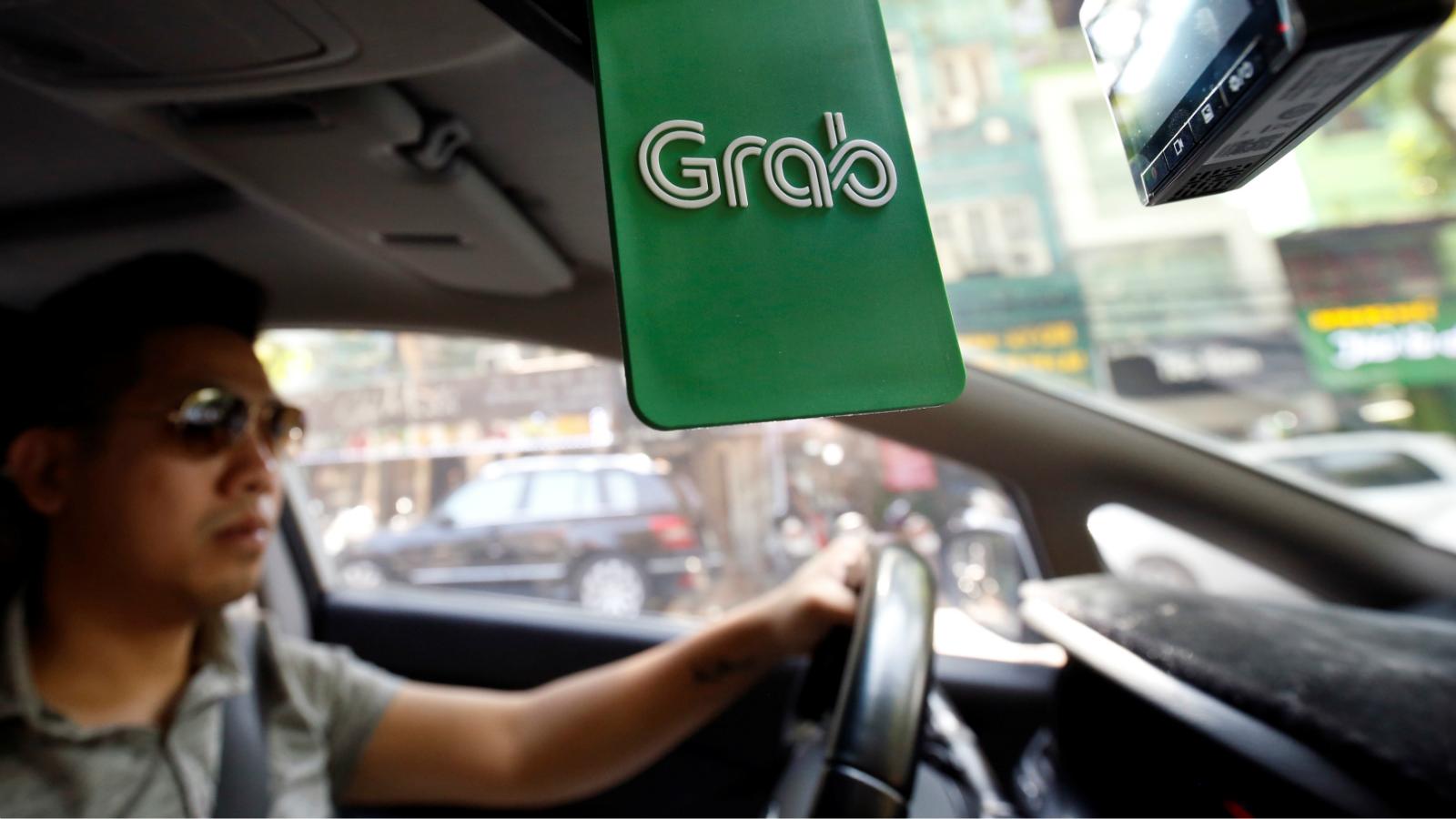
    Grab is now “stronger than ever” after 10 years of operations in Vietnam, its country chief said in the wake of competitor Gojek’s exit from the market.

    It now has more users and partners than ever, Alejandro Osorio, managing director of Grab Vietnam, said at the company’s recent 10th year celebration.

    They number in the millions, and tens of millions of transactions are conducted each month, he said. The Singaporean company entered Vietnam in 2014 as GrabTaxi, and has since grown to offer 15 services in 50 localities.

    The ride-hailing market has also seen many other competitors like Uber, Tada and Baemin come and go and now only Be and Xanh SM remain.

    Grab remains the predominant player with a two-third market share, according to research firm Q&Me. In the food delivery business, Grab faces competition from Be and ShopeeFood.

    Many competitors entered the market and spent a great deal of resources on discounts, but did not achieve sustainability, Osorio said referring to their exit.

    Grab on the other hand focused on giving users a number of reasons to open its app, not just for booking a ride, he said.

    Food, delivery, shopping, and other services help maintain a loyal group of customers and reduce the cost of acquiring new ones, he said.

    This complicated network of services helps create success and is difficult to duplicate, he said.

    Grab has also changed its discount strategy, and only has promotions when necessary instead of offering many, he said.

    It also works with partners such as restaurants and payment companies, and so the discounts come from them and not its pockets, allowing it to maintain a price advantage, he explained.

    However, it continues to pour “large investments and efforts” into improving tech solutions, he said, pointing to the new features it has been offering such as personalizing users’ experience and allowing them to order as a group as examples of this.

    But what competitors remain are not making things easy.

    ShopeeFood is backed by e-commerce giant Shopee, while Be and Xanh SM are widely supported since they are Vietnamese businesses.

    Xanh SM’s all-electric fleet also aligns with the government’s plans for future development.

    Le Hong Hiep, a fellow at the ISEAS – Yusof Ishak Institute in Singapore, told the Vietnamese media in June that Xanh SM has the potential to threaten the dominance of Grab if it maintains current growth rates.

    But Osorio said Grab believes competition is positive and fosters development.

    The company is considering helping drivers switch to environment-friendly vehicles, and combining food delivery orders to reduce travel for drivers, he added.

    Vietnam’s ride-hailing and food delivery market was estimated at US$3 billion last year and is expected to reach $10 billion by 2030, according to a 2023 report by Google, Temasek and Bain & Co.

  • Gojek to exit Vietnam

    Gojek to exit Vietnam

    Indonesian ride-hailing and delivery company Gojek has announced it will stop operating in Vietnam starting Sept. 16 after 6 years in the market.

    It said the decision, made by its parent company GoTo after assessing its market presence in Vietnam, aims to strengthen business operations and aligns with the company’s long-term growth strategy.

    “We will provide the necessary support to all affected parties and comply with current regulations and laws throughout this transition.”

    Gojek was founded in 2010 with a focus on delivery and ride-hailing services, and its app was launched in January 2015 in Indonesia.

    Since then it has grown to become that country’s leading on-demand service platform.

    It entered Vietnam in 2018 as GoViet, which merged with the Gojek brand in 2020.

    It offers two-wheel (GoRide) and car (GoCar) rides, food delivery (GoFood) and parcel delivery (GoSend), and operates in HCMC and Hanoi and Binh Duong and Dong Nai provinces.

    According to market research company Mordor Intelligence, Vietnam’s ride-hailing market is expected to be worth US$880 million in 2024 and grow to $2.16 billion by 2029.

    Another market research company, Q&Me, found that 42% of users in Vietnam favor Grab for motorbike rides followed by Be with 32% and Xanh SM with 19%. Only 7% said they frequently use Gojek.

    With the Vietnamese operations accounting for less than 1% of GoTo’s gross transactions in the second quarter of this year, the exit from the market is expected to have little impact on its financial situation.

    Gojek previously pulled out of Thailand in 2021 and is focusing on its home market and Singapore.

    In Indonesia, Gojek’s gross transaction value increased by 18% year-on-year in the second quarter of this year while its number of completed orders rose 24% to reach record levels. It also saw a 3 percentage point increase in market share in Singapore.

  • Grab no longer buying Trans-cab, Singapore watchdog says

    Grab no longer buying Trans-cab, Singapore watchdog says

    Grab, Southeast Asia’s biggest ride-hailing and food delivery firm, has called off its proposed acquisition of Singapore’s third-largest taxi operator, Trans-cab, according to a statement from Singapore’s competition watchdog.

    The Competition and Consumer Commission of Singapore (CCCS) said in the statement on Thursday evening that both Grab and Trans-cab had notified it on July 22 that they would no longer be proceeding with the proposed acquisition.

    “With the termination of the proposed acquisition, the parties have withdrawn their application to CCCS for a decision, and CCCS has accordingly ended its assessment of the proposed acquisition,” CCCS said in the statement.

    Trans-cab did not immediately respond to a request for comment after working hours.

    “(The) ruling does not change our determination to do everything that we can to offer affordable, reliable transport options to passengers in Singapore,” Yee Wee Tang, managing director at Grab Singapore.

    The commission added that it encourages businesses with acquisition plans to engage CCCS at an early stage if they think there are likely to be competition concerns.

    The commission first raised concerns about the taxi deal in October 2023 before asking Grab and Trans-cab for solutions to address competition concerns earlier this month.

    Grab is one of the city-state’s top ride-hailing companies, with the deal for Trans-cab reported to be worth around S$100 million ($74.55 million).

  • Singapore’s ride-hailing platform Tada sets sight on Hong Kong

    Singapore’s ride-hailing platform Tada sets sight on Hong Kong

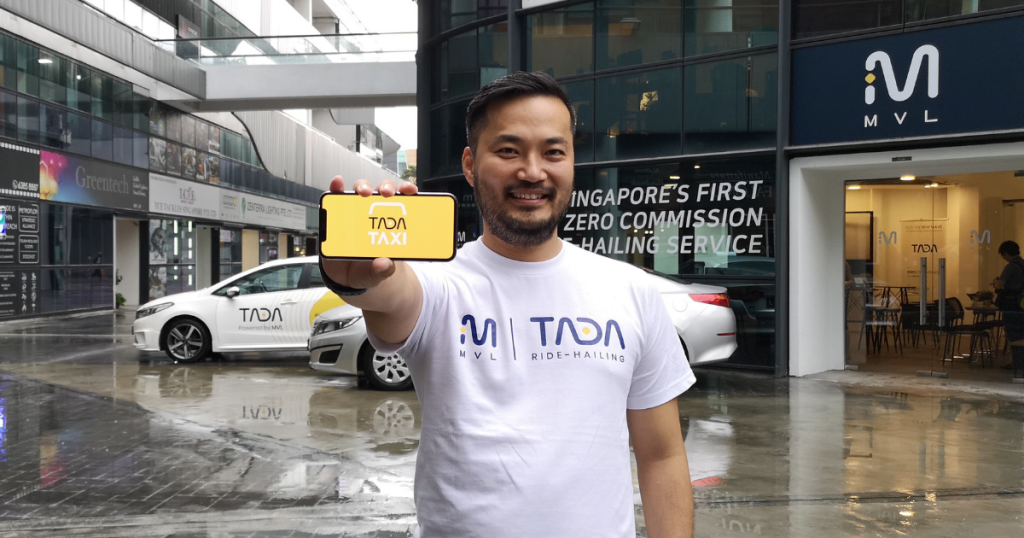
    Singapore-based ride-hailing company Tada will expand to Hong Kong in November with up to 4,000 vehicles as part of a collaboration with local taxi firms.

    “Singapore and Hong Kong share many similarities, which allows us to bring what we have learnt from our success in Singapore over to Hong Kong,” Tada’s chief executive officer Sean Kim said.

    As Hong Kong does not allow drivers to operate transport services without a taxi or car-hire permit, ride-hailing firms such as Uber have been focusing on partnering with taxi drivers.

    Tada charges a fixed platform fee per ride instead of a flexible commission as other ride-hailing apps.

    This policy appeals to drivers as it allows them to keep more of their earnings and will result in better service, Kim said.

    Tada was established in 2018 and is one of five ride-hailing platforms licensed in Singapore.

    Hong Kong has three services currently operating in the city, including U.S.-based Uber, Beijing-based Didi.

  • Only 25% of Vietnamese firms have website

    Only 25% of Vietnamese firms have website

    According to the Vietnam Internet Network Information Center, only 25% of businesses in Vietnam have a website with a national domain, compared to over 70% in Europe.

    Amid a growing trend of omnichannel commerce, many retailers invest only in social media and e-commerce platforms, and do not build websites, causing many shoppers to worry about the legitimacy of the shops they encounter, thus detracting the shopping experience, VNNIC director Nguyen Hong Thang said. “Many entities are not fully aware of the importance of a legitimate online presence.”

    He said a website is like the home or headquarters of a retail store on the Internet, and could integrate and link to other sales platforms without being dependent on the policies and algorithms of social networks and e-commerce platforms.

    According to the Ministry of Information and Communications, there are 14 million grocery stores and over 9,000 traditional markets in the country, accounting for 75% of the retail market and meeting 85% of consumer needs.

    If their digital transformation is not ensured, the business activities of small traders would be affected and have social consequences, it warned.

    To encourage businesses to go digital and promote e-commerce, it has launched a program to support their online presence with digital services using the national domain “.vn.”

    The program offers free domain names and accompanying digital services for two years, including email and website services for their “.vn” domain for new businesses and individuals aged 18-23, and support for creating a website within one hour.

    The government seeks to have 350,000 id.vn domain names and 50,000 biz.vn domain names by 2025.

  • AI skills fetch IT engineers 11% higher incomes

    AI skills fetch IT engineers 11% higher incomes

    IT engineers with AI skills earn around 11% higher than those without, a study has found.

    The report by Levels.fyi, a platform that provides salary data in the U.S., shows that AI engineers make 8.57% more at the entry level than non-AI ones. The gap widens to 11.08% at the staff engineer level.

    The median salary for AI engineers in the U.S. was US$300,600 as of March, the highest ever. Some companies pay much more than the median level.

    Self-driving car company Cruise, for example, offers its senior-level AI engineer $450,000, and Amazon pays $427,500.

    “As AI shakes up much of the industry, it also raises the bar for engineering compensation in 2024,” Levels.fyi analyst Alina Kolesnikova said.

    “It’s a testament to where businesses are choosing to invest and where they aim to compete for top talent.”

    A report by professional services firm PwC says U.K. employers are prepared to pay an average 14% wage premium for jobs that require AI skills, with legal and tech sectors seeing the highest premiums of up to 58%.

    This puts the U.K. in second place behind only the U.S., which is prepared to pay on average 25% more for AI skills.

    Companies are making big plans to train the next generation of AI workers.

    J.P. Morgan has invested an unspecified amount in establishing an AI research center at Carnegie Mellon University in the U.S. and Amazon has pledged to educate two million people worldwide on generative AI by 2025.

    In April U.S. tech billionaire Elon Musk said salaries for engineers must be increased to prevent them from being lured away by OpenAI with huge sums.

  • IT jobs often fall off after 35 years old

    IT jobs often fall off after 35 years old

    Information technology education in Vietnam tends to focus on breadth rather than depth, so few people can or choose to stay in the field after turning 35.

    Recently, I came across a reader’s account sharing an interesting perspective. According to this person, IT engineers make thousands of dollars a month and can afford expensive houses and cars because very few people can stay in their positions or find similar ones after they reach the age of 35.

    However, I find this assertion about the IT profession falling off after 35 to be inaccurate.

    The essence of the IT field revolves around continuous learning. With a commitment to learning, one can excel in the industry well into their retirement years. The critical aspect here is the quality and depth of one’s learning.

    I can personally attest to the importance of fundamental knowledge acquired during university studies. Thanks to my solid foundation in linear algebra and statistics and probability, learning machine learning and artificial intelligence is relatively easy for me, while many others struggle because they lack the basic knowledge.

    Yet, there remains a significant gap between theoretical education and practical skills in Vietnam as IT education there tends to focus on breadth rather than depth.

    Hence, I have interviewed some candidates with a decade of experience who lack fundamental IT knowledge. Similarly, many boast impressive resumes filled with proficiency in numerous programming languages and tools. However, when it comes to understanding the underlying principles, they fall short.

    This gap presents a challenge when it comes to staying updated with the latest knowledge and trends. This is especially true for those employed in outsourcing companies. Often, they must quickly grasp the necessary knowledge and skills for a project, only to move on without delving deeper into the subject matter.

    This is why Vietnam has very few IT specialists.

    I have been in the industry for many years after turning 35 and have continued to pursue my IT career as I settle in the U.S. I am confident in my ability to stay relevant and thrive in the field until retirement age. Currently, I am doing fine despite tech companies facing a layoff wave here.

    So, do you think IT jobs truly lose their allure after the age of 35?

  • Vietnam’s overseas graduates face job-finding struggles at home

    Vietnam’s overseas graduates face job-finding struggles at home

    Holding a high school diploma from Canada and a university degree in Chinese commerce language from China, Tat Dat has faced difficulties securing a fulfilling job upon his return to Vietnam.

    After moving back to his hometown of northern Quang Ninh province in 2022, it took him four months and over 20 job applications to land a position in e-commerce, with a starting salary of VND8 million ($320) per month – less than he hoped for.

    “I diligently monitored job platforms every hour, in search of an e-commerce trade position, hoping for a monthly salary of VND12 million to VND20 million,” Dat said. “Upon eventually securing such a position, the employers informed me that what they could offer me would be VND8 million, a figure not open to negotiation.”

    Dat said he believed that the salary he was offered would never compensate for the VND15 billion invested in his education, yet he remained at the position for six months.

    However, the unsatisfactory salary was merely one of several challenges he encountered in the Vietnamese job market, including difficulties adjusting to workplace culture, being tasked with duties not outlined in his contract, and frequently working overtime without additional compensation.

    “In practice, although the company’s policy stated an eight-hour workday, the actual hours frequently extended to 10-12 hours a day, with no additional overtime compensation,” Dat said. “This was a stark contrast to my previous experiences where an eight-hour workday strictly meant eight hours, nothing more.”

    Dat discovered that being bilingual was no longer a distinctive advantage, facing competition from peers fluent in three or four languages.

    “Encountering peers fluent in English, Chinese, Korean, and French made me feel less competent,” he admitted.

    Dat’s experience aligns with the results of a survey conducted by recruitment agency SHD involving 350 Vietnamese graduates of foreign institutions. The study revealed that 87% experienced cultural and workplace adaptation challenges within Vietnamese corporations, while 83% were dissatisfied with their salary and benefits.

    Ngo Thi Ngoc Lan of headhunt service Navigos Search observed that although graduates returning from abroad bring confidence, language skills, and open-mindedness, they often face difficulties adjusting to Vietnam’s distinct workplace culture. Such graduates require additional time to acclimate compared to their domestically-educated peers, due to the substantial differences in business practices between Vietnam and other countries.

    Ha Vy, a U.S. taxation degree holder, had experiences similar to Dat. After investing VND6 billion in her degree, Vy returned to Vietnam confident in her ability to get a well-paying position. Nonetheless, her lack of practical work experience meant it took her up to four months to find employment offering a monthly salary of VND10 million.

    “My expectations were set on a starting salary of at least VND20 million, but such opportunities proved elusive,” she said.

    After enduring over a year of dissatisfaction due to the mismatch between her efforts and remuneration, the 27-year-old embarked on a job search in Malaysia, driven by her frustration with the undervaluation of her degree in Vietnam.

    “I had anticipated that my degree would garner greater appreciation and financial reward in Vietnam,” Vy said.

    She further explained that despite her proficiency in English, the absence of practical experience posed a significant barrier. Consequently, she said that she now deems it unrealistic for overseas-educated graduates to expect salaries ranging between US$2,000-$3,000 upon their return to Vietnam.

    Le Thanh Ngan, the Head of Recruitment at FPT Education, said that foreign degree holders frequently aspire to high-ranking positions straight out of college, overlooking entry-level opportunities despite their lack of experience, which further complicates their job search in relation to salary expectations.

    But there are more reasons than that for graduates returning from abroad’s challenging job seeking journeys. Vu Hanh Hoa, CEO of a leadership training institute in Hanoi, pointed out that the ongoing economic downturn has been an additional hurdle for this group. As companies streamline operations, they favor experienced employees over those with overseas degrees who necessitate comprehensive training.

    “Major corporations are also facing challenges and have been compelled to reduce expenses to optimize their functions,” she commented. “They prioritize retaining efficient, versatile staff capable of delivering immediate value.”

    Hoa noted that many graduates returning from abroad come from affluent backgrounds, thus lacking the resilience and perseverance deemed essential in the challenging Vietnamese job market. Only a small fraction exhibit the endurance and tenacity valued by employers in today’s global economic climate, she added.

    Another challenge for holders of foreign degrees is their limited experience in communication and building connections within the Vietnamese context.

    “Students who have spent significant time abroad tend to understand foreigners better than their own compatriots, necessitating a considerable period to re-acclimatize to Vietnamese society, its people, attitudes, and work culture,” Hoa explained.

    Thus, many employers estimate that international graduates require six to 12 months to adapt, during which they incur significant training expenses without providing immediate benefits to the company. This in turn leads to employer’s reluctance to offer high initial salaries.

    Hoa advised that instead of focusing solely on the prestige of their foreign degrees, graduates returning from abroad should pursue opportunities to gain practical work experience to alleviate their employment challenges.

    “Often, these graduates return with the expectation that their “higher” qualifications merit positions at renowned, large companies with substantial salaries,” she said. “This expectation creates a barrier to employment.”

    Hoa thus encouraged returning graduates to adjust their expectations and recognize that a foreign degree serves merely as an additional credential. In the face of the economic downturn, as companies increasingly prioritize actual work performance over academic qualifications, Hoa said the ability to “genuinely contribute” was the key factor in getting hired.

    Thus, overseas degree holders should consider the importance of accruing work experience and evaluate how they can add value to a company based on their strengths. Hoa advised against holding out for positions in their preferred fields that meet their salary expectations.

    “Set aside your degrees and avoid becoming ensnared in delusions of grandeur,” she counseled. “Don’t become overly fixated on your foreign education.”

    Otherwise, such graduates risk enduring continuous challenges similar to those faced by Dat.

    Disheartened by his comparatively lower earnings in relation to his domestically-educated counterparts, he opted to take out loans from his parents and other sources to launch a homestay business.

    “The overwhelming financial pressure left me with no choice but to venture into entrepreneurship,” he said. “Starting this business has put me in debt of VND7 billion.”

    Although the financial success of his new business remains uncertain, the venture’s costs have accumulated to the total amount Dat has spent on his education and business startup, making it even more difficult for him to earn back what he has invested.


  • Grab chalks up first profitable quarter, but clouds loom

    Grab chalks up first profitable quarter, but clouds loom

    Grab Holdings reported its first quarterly profit on Thursday and unveiled a maiden share repurchase program, but the ride-share and food-delivery firm’s weak annual sales forecast fanned growth worries and weighed on its shares.

    While the Singapore-based company’s ride-share growth hit pre-pandemic levels in 2023, its food-delivery services is rebounding from a slowdown following a boom during the lockdown.

    “There will be revenue acceleration in the years beyond 2024 as investments in our new products bear fruit,” CFO Peter Oey told Reuters.

    He said Grab was building premium offerings in its mobility and delivery services that could generate high-value transactions.

    US-listed shares of Grab, which also said it expects an annual adjusted core profit, were down 2 percent at $3.38 in early trading.

    The company forecast fiscal 2024 revenue between $2.70 billion and $2.75 billion, compared with analysts’ average estimate of $2.80 billion, according to LSEG data.

    Grab said on Thursday it would repurchase $500 million worth of class A ordinary shares, and announced an early payment of the remainder of a term loan. This followed global peer Uber announcing its first-ever share buyback last week.

    Grab also projected full-year adjusted core profit of $180 million to $200 million, compared with estimates of $135.2 million.

    The company’s fourth-quarter revenue of $653 million beat estimates of $629 million. Revenue rose 26 percent in its mobility business on holiday quarter travel demand, while it increased 20 percent in its delivery unit.

    Grab posted a net income of $11 million in the fourth quarter, helped in part by a “reversal of an accounting accrual”.

    The company delivered its first adjusted core profit in its fiscal third quarter, aided by workforce reduction and cut to some incentives and technology costs over the past two years.

  • Deliveroo announces the appointment of Nick Price as General Manager for their Hong Kong operations

    Deliveroo announces the appointment of Nick Price as General Manager for their Hong Kong operations

    Deliveroo today announced the appointment of Nick Price as General Manager for Deliveroo’s operations in Hong Kong. In his role, Nick will oversee Deliveroo’s business in Hong Kong, with a focus on growing the business and further establishing Deliveroo in the Hong Kong market.

    Nick joined Deliveroo as Finance and Strategy Director in May 2021, since then, Nick has played a pivotal role in accelerating Deliveroo’s growth in Asia. After stepping into the role of Interim General Manager for Deliveroo Hong Kong in July 2023, Nick assumed responsibility for strategic planning, operations, marketing, commercial development, and staff development, as well as being tasked with building relationships with restaurants, riders and customers.

    Nick Price, General Manager, Deliveroo Hong Kong, said, “Deliveroo has established ourselves as a household name in Hong Kong by delivering Hong Kong people with what they need, helping our merchant partners to grow and enabling our rider partners to have more earning opportunities. I am excited about the journey ahead, and thrilled to work closely with the amazing team to realise our vision.”

    Eric French, Chief Operating Officer, Deliveroo, said, “Nick’s breadth of knowledge about the Hong Kong market and leadership skills have been instrumental to our development and success in Hong Kong. We celebrated our 8th anniversary in Hong Kong in November, and we saw record breaking orders with our anniversary campaigns. 2024 is sure to be an exciting year for Deliveroo Hong Kong with Nick at the helm.”

  • IT workers surplus to plans for many companies

    IT workers surplus to plans for many companies

    Many IT employees are being laid off or forced to quit and struggling to find new jobs due to a decline in demand due to the economic downturn.

    After a payment project was unexpectedly canceled in July as the company, a big tech brand in HCMC, no longer had the cash to keep it running, IT manager Quang Vu had no choice but to start looking for a new job, just many of his peers in the industry.

    “Many people I know in e-commerce, e-wallet and delivery companies are being affected by a wave of restructuring,” he said, adding that the layoffs are often not publicly announced.

    Dinh Ngo, who works at an IT job, said his German employer has stopped looking to hire for certain positions and is not extending contracts with people in those jobs.

    “Projects that are not profitable will be suspended.”

    A recent report by recruitment platform VietnamWorks said most companies have reduced their recruitment budget for IT employees this year.

    It surveyed non-tech companies that need IT staff and tech and IT businesses.

    It said only 61.3% of employees in tech companies believe they have stable jobs.

    At non-tech companies, 21.6% of IT workers have quit this year.

    Around 22.2% of companies in HCMC have reduced IT staff recruitment and 14.7% in Hanoi have reduced their salaries and bonuses.

    IT is among the three sectors with the biggest drop in recruitment in the last three years — at 23% — according to a report by consulting firms Talentnet and Mercer.

    Industry insiders attributed this to the impact of global economic challenges.

    Cai Dang Son, director of products and engineering at recruitment company Navigos Group, said businesses are focused on coping with the current difficulties.

    The biggest decline in hiring is seen at e-commerce and ride-hailing companies.

    Investment in Vietnamese tech startups dropped by 82% to US$66 million in the first half of this year.

    Tung Lam, a former product manager who has been jobless for six months, said “Compared to before Covid-19, the number and diversity of jobs have plummeted.”

    The VietnamWorks report also pointed out that more than 25% of IT staff have difficulty finding jobs, with new graduates all but ignored.

  • Vietnamese billionaire’s taxi firm to expand to Laos

    Vietnamese billionaire’s taxi firm to expand to Laos

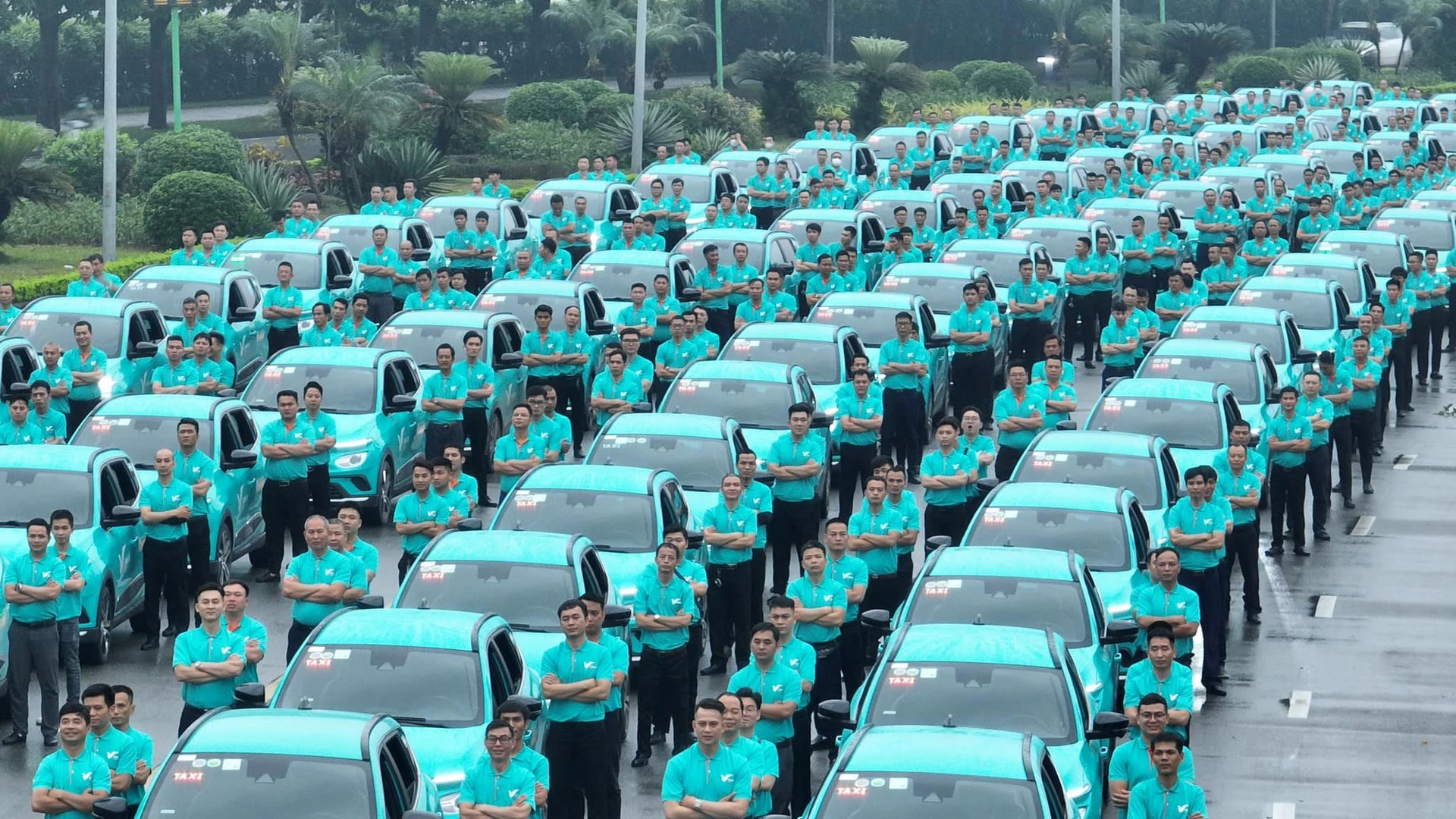
    GSM, an exclusively all-electric taxi company owned by Vietnam’s richest man Pham Nhat Vuong, plans to open services in Laos this year.

    The company, which uses only VinFast electric vehicles, aims to ship 150 electric cars to Laos first, and then increase the number to 1,000 by the end of the year. The cars will be the VF 5 Plus and VF e34 models.

    It will eventually sell and lease VinFast electric cars, similar to its services in Vietnam.

    “This is the first step in GSM’s plan to go overseas, giving it a place in the regional and global markets, is to help introduce electric vehicles to users,” GSM CEO Nguyen Van Thanh wrote on his personal social media page.

    GSM was established in March by Vingroup chairman Pham Nhat Vuong, who owns a 95% stake. It offers taxi and motorbike ride-hailing services.

    The company has partnered with ride-hailing Be Group to incorporate VinFast vehicles in the taxi service.

    GSM is the largest buyer of VinFast cars, according to a report VinFast sent to the U.S. Securities and Exchange Commission in the second quarter.

    GSM had received 7,100 electric cars from VinFast by the end of the second quarter. It had earlier signed a deal with VinFast to buy 200,000 electric bikes and 30,000 electric cars.

  • Delivery Hero could sell part of Asian business for $1 billion

    Delivery Hero is in advanced talks on a partial sale of its Asia business, the Wirtschaftswoche business magazine reported, saying Singapore’s Grab could pay a little more than US$1.07 billion.

    The Berlin-based company could sell its activities under the Foodpanda brand in Singapore, Cambodia, Malaysia, Myanmar, the Philippines and Thailand, according to Wirtschaftswoche, which cited sources familiar with the matter.

    Investors in the online takeaway food company welcomed the report, lifting its shares as much as 13.5 per cent.

    Delivery Hero and Grab did not immediately reply to emailed requests for comment.

    Delivery Hero has been focusing on reaching profitability while maintaining growth as investor confidence in the company started to wane after a pandemic-driven boost.

    The group has said that it reached an adjusted profit before interest, tax, depreciation and amortisation (EBITDA) in the first six months of the year, although it did not quantify it, after a loss of US$343.6 million in the same period a year earlier.

    Last month, CEO Niklas Oestberg said that Asia was the segment where the company saw the most opportunity to invest.

    Singapore internet firm Grab posted $567 million in revenue in the quarter that ended June 30 and expects to break even on an adjusted core earnings basis in the current quarter. Grab makes most of its sales from its food delivery business and has recently seen strong growth in its ride-share business.

  • Cake digital bank cooperates with VinFast to support e-bike buyers

    Cake digital bank cooperates with VinFast to support e-bike buyers

    Cake by VPBank and VinFast are working together to provide e-bike purchase loans at 0% interest, benefiting both customers and promoting environmental protection in line with green consumption trends.

    With this loan package, the customer experience will be simplified. They can sign up for loans without visiting a bank branch and receive approval results on the Cake app within a few minutes.

    The first priority group of customers to experience the development is Be Group’s tech drivers, who are familiar with consumer loan services on Cake.

    According to statistics from the Ministry of Industry and Trade, e-bike sales in Vietnam have increased by about 30–35% recently, making the country the largest market for e-bikes in ASEAN, and the runner-up in the world, just behind China.

    There is ample potential for electric vehicles, including e-bikes and electric cars, given that the world in general and Vietnam in particular are promoting green transformation trends in transportation and other fields.

    Ho Thanh Huong, CEO of VinFast Vietnam, said that the partnership agreement gives customers the opportunity to own and use smart, modern, and environmentally friendly e-bikes at optimal costs through simple and convenient procedures.

    This partnership offers customers access to a safe and civilized transportation alternative, contributing directly to the government’s net-zero carbon emission target by 2050.

    In the current context, the collaboration between the large-scale EV manufacturer and the digital bank Cake by VPBank is expected to bring benefits to the mass of customers on both sides.

    While Cake will expand its digital financial product line to include vehicle installment payment services, VinFast offers customers a “Buy Now, Pay Later” payment experience quickly, conveniently, and securely.

    Furthermore, this is also an opportunity to promote digital financial inclusion. Specifically, Cake by VPBank boasts a large and diverse digital ecosystem, while VinFast owns a nationwide distribution network with a diverse lineup of two-wheeler and four-wheeler models.

    According to Nguyen Huu Quang, CEO of Cake, in the coming time, Cake by VPBank will keep working with VinFast to research different financing packages tailored for customers looking to acquire electric vehicles across several channels.

    “We are in discussion to develop more diverse products to bring practical benefits to customers, thereby contributing to promoting comprehensive digital finance and green energy in Vietnam,” he said.

    The handshake between VinFast and Cake by VPBank digital bank will promote comprehensive digital services, popularize EVs, and foster environmental protection.

    Cake by VPBank is a testament to the trend of innovation in consumer finance products. Before venturing into the electric vehicle market, the digital banking app has already enabled its tech drivers to borrow cash online within a few minutes.

    Cake has rolled out niche lending products such as “Ung tien nhanh” with instant approval.