Retail News CRM

Tag: startup

  • Singapore sneaker platform Novelship secures US$9.5 million in Series B

    Singapore sneaker platform Novelship secures US$9.5 million in Series B

    Singapore-based sneaker marketplace Novelship has bagged US$9.5 million in its Series B funding round led by East Ventures, iGlobe Partners, and GSR Ventures.

    The company said the new funds will be used to accelerate its expansion plans in Southeast Asia, including enhancing its logistics capabilities, refining authentication processes, expanding its slew of in-house collections, and optimizing its environmentally-conscious delivery process.

    “As collectors’ priorities shift towards accessibility, efficiency, and integrity, Novelship stands firm in our dedication to enhance these aspects on our platform,” said Richard Xia, co-founder and CEO of Novelship.

    The company was founded in 2018 as a platform for buyers and sellers to trade authentic sneakers, limited-edition apparel, and exclusive physical and digital collectibles.

    The funding round came after Novelship’s recent collaboration with Snoop Dogg. The marketplace also introduced new in-house products, including Novelty-branded T-shirts, socks, shoelaces, and Shoe Sole Protectors.

    “Our recent expansion of collections and the introduction of new in-house products reflect our commitment to providing broader accessibility for all collectors,” Xia said.

    Novelship reported a compound annual growth rate (CAGR) of 37 percent in revenue and 55 percent in transactions.

    “Novelship has been proven as a one-stop marketplace to fulfill the desires of collectors,” said Willson Cuaca, co-founder and MD at East Ventures. “We also take great pride in witnessing how Novelship incorporates sustainable practices into its operations.”

    Further reading, Asics says its new sneaker offers the lowest CO2 emissions of any brand.

  • Poor training makes up to 200,000 IT engineers unemployable

    Poor training makes up to 200,000 IT engineers unemployable

    A gap between IT engineers’ skill levels and market requirements is making 150,000-200,000 of them unemployable every year, a report by IT jobs platform TopDev warns.

    The recently published “Vietnamese IT market report in 2023” on TopDev says most recruiters look for three types of developers: back end, full-stack (who will build the interface), and front end.

    The top five skills that are sought are java script, Java, PHP, C# or .NET, and Python.

    TopDev says by 2025 Vietnam will need close to 700,000 IT engineers. The country has around 530,000 now. The number of new IT graduates is increasing steadily, but do not meet the job market’s demands.

    Of more than 57,000 graduating annually only 30% have the required skills and expertise required by companies, and the rest need additional training by employers for three to six months.

    A long-term supervisor at a company based in the Quang Trung Software City in HCMC said recently that the market has few experienced developers and an excess of “freshers.”

    Between inadequate training in schools and a shortage of experienced people, quality candidates are always scarce and desirable.

    Nguyen Thi Thu Phuong, the Hanoi director of recruitment for Adecco Vietnam, said firms intensified their search for experts in the year’s first half. Vietnam saw a 35% decrease in the number of vacancies in IT jobs in the same period in 2022.

    Despite the economic downturn, the average salary of IT personnel has increased since 2022, albeit marginally, according to TopDev.

    More than 70% of new hires earn US$600-1,000 a month, and the salaries go up to $1,100-1,500 for mid-level jobs and $1,100-2,000 at the top level, with 10% getting around $2,500.

    Information and communication technology is one of the fastest-growing industries in Vietnam. Its revenues have risen from less than $103 billion in 2018 to $136.15 billion in 2021.

    In the 2021 Global Innovation Index, Vietnam ranked 44th out of 132 economies.

    According to Tran Thi Nguyet Oanh, HSBC Vietnam’s head of human resources, plenty of future jobs are linked to IT fields like artificial intelligence (AI) and machine learning, information security and financial technology.

    TopDev recommends that developers should improve their understanding of new technologies such as cybersecurity, DevOps, AI, and machine learning, and cloud computing and soft skills such as critical thinking, communication, time management, and foreign languages.

  • Deliveroo Launches New Advertising Platform

    Deliveroo Launches New Advertising Platform

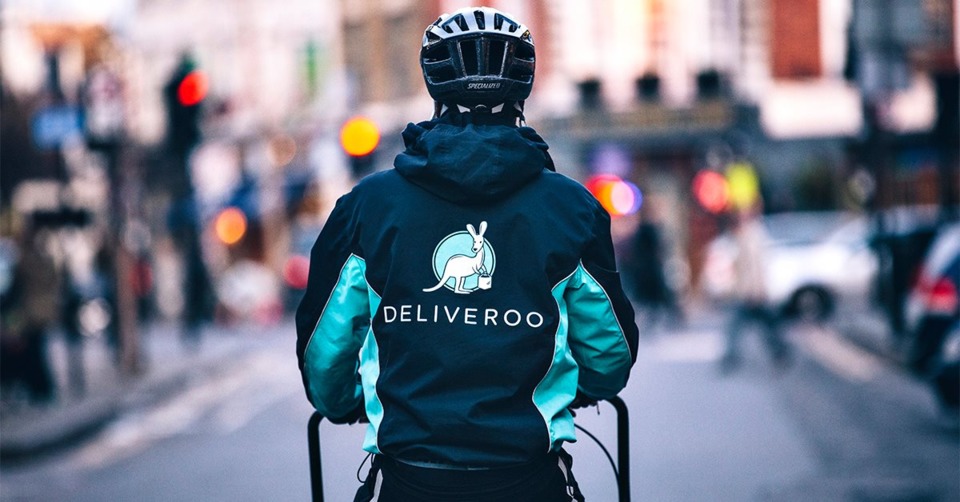
    Deliveroo today announced the launch of its new advertising platform, Deliveroo Media and Ecommerce, in Hong Kong. From now, brands will be able to advertise to Deliveroo customers with relevant offers across its app, on Deliveroo’s website and as part of social media, email and push notification campaigns.

    For the first time, advertising is planned for Deliveroo’s order tracker page, with new formats to launch over the coming months, alongside sponsored search listings.

    Currently Deliveroo partners are able to make use of Deliveroo’s advertising services, with sponsored positioning for restaurant or grocery partners for example. The new advertising platform means consumer FMCG brands will be able to advertise to millions of highly engaged Deliveroo customers.

    Deliveroo’s network of delivery-only ‘Editions’ kitchens and rapid grocery delivery ‘HOP’ stores are also part of Deliveroo’s new advertising proposition, enabling brands to get relevant content or samples into consumers’ hands as their meals and groceries are delivered to their door. 

    Nick Price, Interim General Manager of Deliveroo Hong Kong, said “Deliveroo has over seven million monthly active consumers globally, so we have an engaged and valuable audience for brands to connect with. Our new advertising platform will enable restaurant and grocery partners to tell their story emotionally and effectively whilst ensuring Deliveroo customers continue to receive a food-first experience. Done in the right way, both of our advertising activities can improve the customer experience by helping consumers to discover content they want in an engaging way, as well as helping merchants to drive incremental demand.”

    Advertising on Deliveroo will include partnerships with restaurant partners as well as FMCG companies. This will be done in a way that is mindful of the consumer experience, which is Deliveroo’s priority. Consumers will continue to receive a food-first experience in-app and Deliveroo intends to provide more space to enable restaurant and grocery partners to tell their story emotionally and effectively to Deliveroo consumers via the platform. The advertising solutions will sit within this context.

    With a food delivery marketplace in 10 markets, and with over 162,000 restaurants and 20,000 grocers on the platform, Deliveroo Media and Ecommerce is well positioned to connect brands with over seven million monthly active consumers.

    Deliveroo Media and Ecommerce was launched in the UK last Summer and has made an encouraging start, with advertising revenue reaching an annualised run-rate of £55 million or 0.8% of GTV in Q2 2023, reflecting that this is an effective way for merchants to drive incremental demand. Some of the popular brands that successfully utilised the advertising platform in the UK include Coca-Cola, Unilever, Reckitt and PepsiCo.

    Deliveroo is working with Criteo, the Commerce Media company, who will supply the advertising technology and media sales services.

  • Food tech company Enough raises 40 million euros

    Food tech company Enough raises 40 million euros

    Food technology company Enough, which has partnerships with Unilever and Marks & Spencer, has raised $43.5 million, attracting investment despite signs of a slowdown in the alternative meat and protein sector.

    Enough, which ferments fungi to produce protein for plant-based chicken, mince and dairy products, said the funding round was led by venture capital firm World Fund and CPT Capital, which was an early investor in Beyond Meat and has a stake in Upside Foods.

    Other participants in the fund-raising for Britain- and Netherlands-based Enough included existing investors such as AXA IM Alts and the Olympic Investments company of the Onassis shipping family.

    “Enough has made great strides in the past few years to launch our new factory in the Netherlands and scale up to work with customers across the UK and Europe,” said CEO Jim Laird, a former chief executive of plant-based meat producer Quorn.

    “With this new funding, we will accelerate that growth,” he added.

    Companies involved in producing alternative-sources of meat and protein say they are helping in the battle to protect the climate, since meat from a laboratory has less impact on the environment than traditional farming.

    Nevertheless, there are signs that consumers’ demand for plant-based meat may be waning, with Beyond Meat cutting its annual revenue forecast earlier this month.

  • Vietnamese EV maker VinFast gets go ahead for Nasdaq SPAC listin

    Vietnamese EV maker VinFast gets go ahead for Nasdaq SPAC listin

    Vietnamese electric vehicle maker VinFast said it expects to start trading on the U.S. Nasdaq as soon as next week after its merger into a special purchase acquisition company (SPAC) was approved on Thursday.

    On Thursday, shareholders of Hong Kong-based Black Spade Acquisition, a blank-check company, voted to approve the merger with VinFast.

    VinFast, in a joint statement with Black Spade, said it would list on the Nasdaq under the ticker symbol VFS “on or around August 15”.

    The remaining shareholders of Black Spade approved the merger on Thursday. In July, over 80% of the shareholders in the SPAC had opted to redeem their shares before the merger.

    The SPAC merger will not raise new capital for VinFast but the company’s founder Pham Nhat Vuong has championed a U.S. listing as the carmaker seeks to expand in the U.S. market and is building a plant in North Carolina.

    The two companies said the merger had valued VinFast at $23 billion. In comparison, the current market capitalization of U.S.-listed EV makers Rivian and Lucid are $21 billion and around $17 billion, respectively.

    It leaves VinFast’s existing shareholders, including parent company Vingroup and Vuong, Vietnam’s richest man, with 99% of shares in the company.

    “The voting results today are a vote of confidence in VinFast from Black Spade shareholders,” VinFast’s global head Thuy Le said in the statement.

    VinFast had filed for an initial public offering on the Nasdaq last December, but in May announced plans to list through a merger with Black Spade.

    Other EV makers including Faraday Future, Nikola Corp and Lucid have listed via SPAC deals but the market for such deals has faced increased scrutiny from investors and regulators.

    VinFast has shipped around 3,000 EVs to the United States from its plant in Haiphong, Vietnam. It started to deliver its first VF8 EVs in March. It has not announced U.S. sales figures.

    VinFast’s first-quarter revenue dropped 49% from the previous year and it posted a net loss of $598 million. In 2022, the company posted a loss of $2.1 billion. It has not yet made a profit.

    Vuong, who is also chairman of Vingroup, Vietnam’s largest conglomerate, told Vingroup shareholders in May that VinFast expected to sell as many as 50,000 EVs this year and could break even as soon as the end of 2024.

    The company has previously missed some of its internal delivery targets. It faces competition from established rivals led by Tesla, which have been driving down prices and bringing a range of new EVs to market.

    Black Spade was founded by the private investment arm of Lawrence Ho, son of the late gambling mogul Stanley Ho.

  • Chinese car Lynk & Co to come to Vietnam in October

    Chinese car Lynk & Co to come to Vietnam in October

    Lynk & Co cars will be sold in Vietnam from October, according to their distributor GreenLynk Automotive.

    The brand is jointly owned by China’s Geely and Volvo Car, who develop the cars on the compact modular architecture Evo platform with engines produced in Sweden and the vehicles assembled in China, GreenLynk said.

    Its models have serial numbers rather than names, and currently the range extends from 01 to 09.

    04 is a foldable electric scooter. GreenLynk said it would be selling 01, 03, 05 and 09. 01 is a C-segment SUV, 03 is a C-segment sedan, 05 is also a C-segment SUV but with a coupe-like hybrid design, and 09 is a midsize SUV developed with Volvo.

    GreenLynk is an affiliate of transport infrastructure developer Tasco, which fully owns car distribution giant SVC Holdings.

    It can thus take advantage of the 83 car showrooms SVC Holdings has, but has not said if it would use them for the Lynk & Co cars.

    Lynk & Co was founded by Geely in 2016, six years after it bought Volvo from Ford.

    In Europe, Lynk & Co does not sell cars in the traditional manner: Its customers do not own the cars, but pay a monthly or other usage fee.

    It is the latest Chinese car brand to enter Vietnam in the last few months after Wuling and Haval.

    According to experts, the wave of Chinese cars flooding Vietnam has become overwhelming this year though the vehicle market is dormant due to the economic situation.


  • IT talents sought after amid frozen labor market

    IT talents sought after amid frozen labor market

    Amid a season of low recruitment demand due to economic challenges, companies are still headhunting for experienced and high-skilled IT staff to speed up their digital transformation.

    Although many companies are scaling down their payroll, demand for IT experts remains high with the most popular recruitment positions being business administration, software development, cybersecurity, artificial intelligence, digital platform development and data analysis.

    Quang Trung Software City, a hub for IT businesses, has seen several companies such as Larion, TMA, Rakus, and SPS recruiting staff in recent weeks.

    An experienced manager at a business there said that companies were overpaying staff to ensure positions were filled even though it was not ideal.

    The gross income of programmers with more than three years of experience in Vietnam ranges from $2,100 to $6,000 per month, according to a survey by recruitment company IT TopDev last year.

    Recruiters say that the price range is the same this year as staff shortages remain.

    Companies expect IT experts to have design and analysis skills, along with team management and expertise in a particular sector such as finance or e-commerce. They are also required to have good communication and language skills.

    Truong Thien Kiem, a deputy director at recruitment firm Adecco Vietnam, said that the decline in orders this year had urged factories to increase automation and therefore hike their needs for high-skilled IT staff.

    Domestic companies must race with foreign enterprises who are also looking for the best IT experts.

    Thailand’s Kasikorn Business-Technology Group (KBTG) last month opened its Vietnam unit in Ho Chi Minh City, its third in Asia, to attract IT talent.

    The group plans to recruit 200 developers this year and will be partnering with universities to find suitable candidates.

    In May, representatives of seven Japanese companies in Hanoi showed up at a job fair at Hanoi University of Science and Technology to find graduate IT candidates.

    Recruitment demand is forecast to be high as Vietnam is estimated to need 600,000 developers this year and 800,000 next year, but the shortage could be between 175,000 and 195,000, according to TopDev.

    This is because only 35% of the 57,000 annual IT graduates meet business demand, it said, adding that beginners in the industry outnumbered seniors.


  • Fintech startup GIMO completes $17M fund-raising round

    Fintech startup GIMO completes $17M fund-raising round

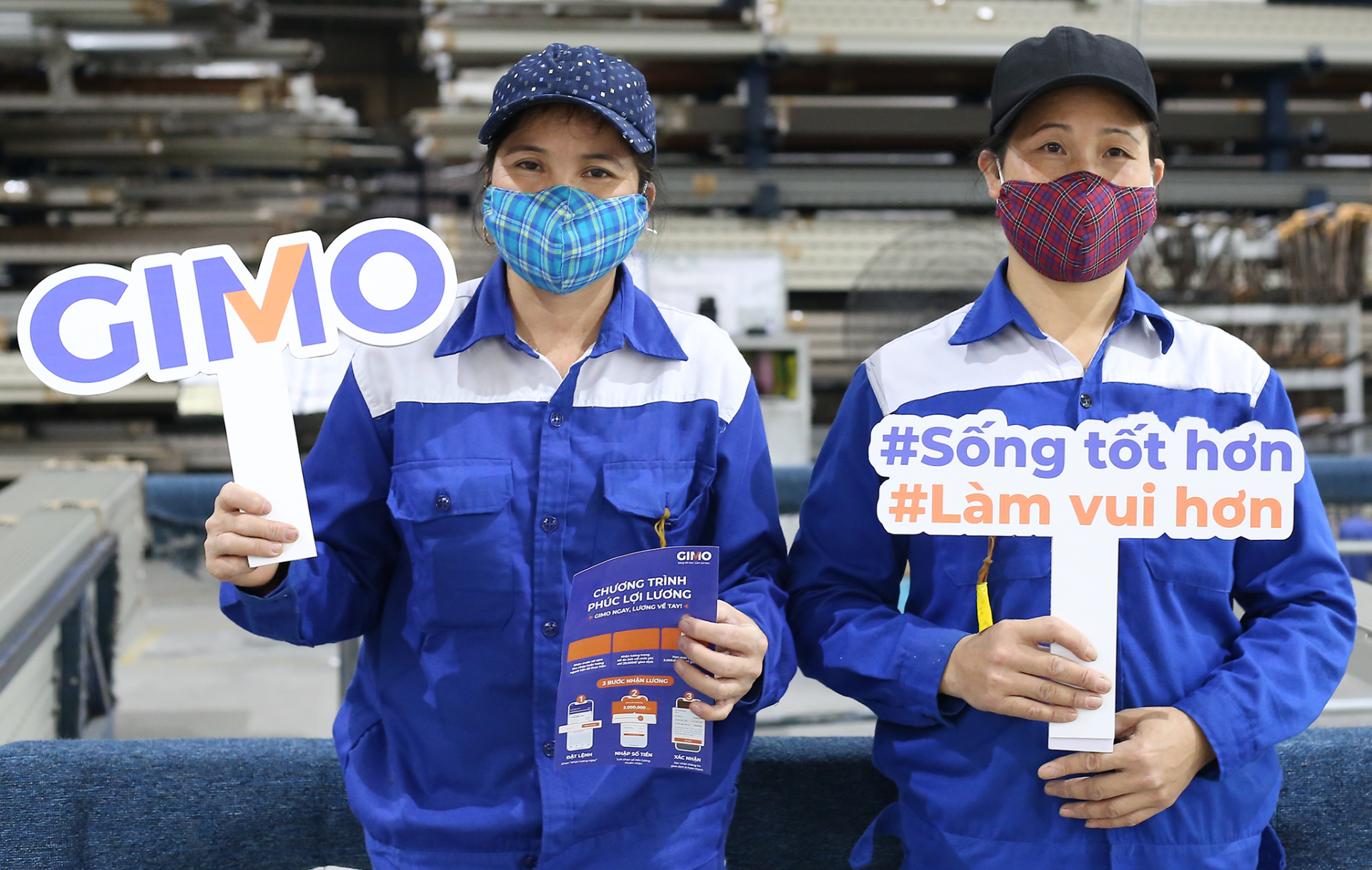
    Vietnam-based fintech startup GIMO, which seeks to provide flexible salary payments to blue-collar workers, has completed its Series A funding round, raising $17.1 million.

    The final closing, comprised of a mixture of equity and debt financing, is led by venture fund TNB Aura, with participation from the company’s existing backers including Integra Partners, Resolution Ventures, Blauwpark Partners, ThinkZone Ventures, and Y Combinator, according to a press release of the company.

    “We look forward to working closely with the GIMO team in breaking down barriers to financial inclusion for millions of blue-collar workers across Vietnam,” said Charles Wong, founding partner of TNB Aura.

    GIMO offers near-instant payroll to blue-collar workers whenever they need it.

    It allows employees to access their earned salary via a mobile app integrated with the company’s payroll system. Users can also keep track of their workdays and daily earnings.

    GIMO currently serves 500,000 workers from medium to large-sized multinational manufacturing companies across Vietnam.

    Despite the economic slowdown in 2023, the company has demonstrated a solid growth rate of 15% and is on track to reach 2.5 million underbanked employees by 2025.

    The funding will be used to develop its products, increase customer experience, and establish strategic partnerships.

    Research by professional services firm KPMG in 2022 showed that an average user draws their earned pay two to three times per month, almost simulating bi-weekly and weekly pay.

    A flexible pay cycle takes the burden off blue-collar workers’ shoulders by helping them pay for financial emergencies and everyday bills.

  • Sydney startup RecycleSmart raises $1 million on Birchal

    Sydney startup RecycleSmart raises $1 million on Birchal

    Australian investors have poured more than $1 million into plastics recycling service RecycleSmart, as co-founder Marco Prayer says he has invested his entire career to proving the business benefits of the circular economy.

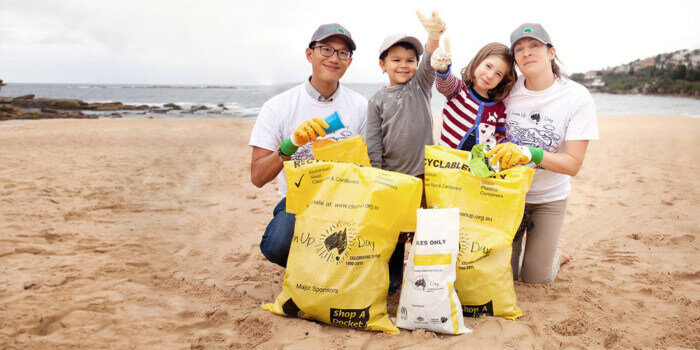
    Sydney-based RecycleSmart provides households with a way to dispose of recyclable plastics that are unsuitable for regular recycling bins, offering to pick up unwanted waste from a customer’s doorstep.

    The startup accepts soft plastics, clothes, shoes, and small e-waste, with those materials sorted and transferred to specialist recycling partners like APR Plastics, Mobile Muster, and the Red Cross, which accepts unwanted but wearable clothing.

    The company claims to have facilitated 115,000 pick-ups since 2019, keeping 400 tonnes of hard-to-recycle waste out of landfill.

    RecycleSmart closed its Birchal equity crowdfunding raise on Thursday night, booking $1.04 million from 965 investors.

    While the business got its start by selling its services to NSW councils, it now hopes to use the new funding to expand in capital cities nationwide, while expanding its DTC and B2B offerings. Co-founder and chief technical officer Marco Prayer says RecycleSmart will use funding from the “astonishing” raise to power its launch in Melbourne, with the goal of covering as many major metro areas as possible by the end of 2023.

    “We need to make sure that the recyclers have the capacity to manage, that we have the right infrastructure in place, that everything is safe, but so far, so good,” Prayer said on Monday.

    Without delving into specific revenue figures, Prayer says RecycleSmart is enjoying “healthy” margins, and states its core business model is scalable, meaning expansion won’t come at too high a cost.

    Reaching more councils remains a priority, but RecycleSmart hopes to diversify by reaching out to household customers, building managers, and even businesses themselves.

    The company says its DTC offering would allow users to schedule pickups for $5 a bag, with a minimum of two bags per pickup.

    Beyond the cost to customers, RecycleSmart is conscious of the need to prove the efficacy and sustainability of its process to would-be customers.

    Australian households are still adapting to the high-profile collapse of the RedCycle soft plastic recycling scheme in 2022, which highlighted the difficulties in recycling some forms of single-use plastic.

    The business is “trying to really deliver as much transparency as possible to our customers,” Prayer said, using social media to show how its partners repurpose the materials RecycleSmart collects.

    “We know very well that the first step is establishing trust with anyone in the waste industry, and if you want to play that role, we know that we have to go an extra mile and verify as much as possible,” he added.

    What appears to captivate Prayer is the possibility of working with major businesses as they adopt a circular economy model.

    Like fellow Australian recycling startup Seabin, RecycleSmart collects data on the types of waste it receives.

    It then passes those findings onto councils, enabling city planners to run education campaigns for residents confused about how to best dispose of their waste.

    But Prayer sees a massive opportunity in providing that same data to businesses, given the increasing push for sustainability and traceability across the supply chain.

    “We strongly believe that there’s going to be an opportunity for businesses to leverage RecycleSmart to really ‘green up’ their operations,” he said.

    Prayer also touts the benefits of integrating the startup’s offerings into a business’s overall operations.

    “A simple example is that we hope shopping online at The Iconic, for example, if you spend more than $100 with them, they give you [cash back] to spend with RecycleSmart for your next pickup.”

    Pointing to businesses like meal delivery service HelloFresh, which prioritises recyclable packaging, Prayer said ensuring packaging circularity is a powerful customer retention tool.

    “That is going to be the game changer,” he added.

    “I mean, I’ve invested basically my professional life into believing that result is definitely achievable.”

    Participants in the equity crowdfunding raise are largely existing supporters, Prayer said, suggesting that building that engaged fanbase — and proving their demand for recycling solutions — could build RecycleSmart’s appeal to brands.

    The $1 million raise comes at a unique point for the equity crowdfunding sector, which has seen a 26% year-on-year decrease in funding value through choppy economic conditions.

    However, Birchal co-founder Matt Vitale today pointed to RecycleSmart, among others, as recent success stories.

    “We are a couple of weeks into the new financial year and Birchal has achieved over $6 million in funding volume across five campaigns already, more than double compared to this time last year,” he wrote on social media Monday.

    The number of successful equity crowdfunding rounds over the last year also surpassed the number of ASX IPOs, Vitale added.


  • Indian burger chain Good Flippin’ Burgers raises $4 million

    Indian burger chain Good Flippin’ Burgers raises $4 million

    Good Flippin’ Burgers has successfully raised $4 million in its latest Series A funding round, which Tanglin Venture Partners led.

    Viren DSilva, co-founder of Good Flippin’ Burgers said, “This investment is a significant milestone for us and will empower us to expand our operations, fortify our supply chain, and bring our delicious burgers to an even wider customer base. We are grateful for the overwhelming love and support we have received from our loyal patrons and will continue to delight them with our product portfolio,” he added.

    “Viren, Sid Marchant and Sijo Matthew are exceptional founders with extreme customer obsession and process orientation. They have built a strong brand in Good Flippin’ Burgers with extraordinary customer love. We are really impressed with their focus on supply chain capabilities which has enabled them to maintain the highest level of quality as well as consistency across their store footprint,” added Sankalp Gupta, partner at Tanglin Venture Partners.

    Good Flippin’ Burgers raised $1 million in April 2022.

    With the latest capital infusion, the start-up plans to fuel its geographical expansion, reinforce its supply chain and refine its dining and quick service restaurant (QSR) models. It also hopes to scale up its growth, which it claimed had increased by 3X last year.

  • Grab cuts 1000 jobs

    Grab cuts 1000 jobs

    Singapore-based Grab Holdings, Southeast Asia’s leading ride-hailing and food delivery app, is cutting 1,000 jobs or 11 per cent of its workforce, its CEO said on Tuesday, citing the need to manage costs and ensure more affordable services long term.

    In a letter sent to employees late on Tuesday and seen by Reuters, chief executive Anthony Tan said the cuts, the biggest since the start of the pandemic, were not “a shortcut to profitability” but a strategic reorganisation to adapt to the business environment.

    “Change has never been this fast. Technology such as generative AI (artificial intelligence) is evolving at breakneck speed. The cost of capital has gone up, directly impacting the competitive landscape,” Tan said in the letter.

    “We must combine our scale with nimble execution and cost leadership, so that we can sustainably offer even more affordable services and deepen our penetration of the masses.”

    Tan said that even without layoffs, Grab had managed costs and should hit its target for group adjusted EBITDA breakeven this year.

    The “superapp”, founded in 2012, offers deliveries, rides and financial services in eight Southeast Asian countries, including Indonesia, Malaysia, the Philippines, Singapore, Thailand, and Vietnam.

    Its shares were up 4.7 percent premarket after Tan’s announcement to staff. The stock had climbed as much as 5.6 percent premarket, extending earlier gains on a Bloomberg News report of the cuts.

    The layoffs follow a similar move last year by Indonesian tech firm GoTo, which offers rides, e-commerce and financial services. It has undergone strict cost-cutting, including axing 12% of its workforce in 2022. It laid off a further 600 staff in March.

    Its incoming CEO is planning to head the firm only temporarily and quit after improving profitability, sources told Reuters last week.

    In May, Grab reported a quarterly loss of $250 million but said revenue in the first quarter of this year rose 130.3 percent to $525 million from a year ago.

    In February, it issued an upbeat forecast for full-year revenue for 2023 and brought forward its profitability timeline.

    The US-listed Grab’s last job cuts were in 2020, when 360 people were laid off in response to the impact of the pandemic. The company had 11,934 staff as of the end of 2022, including about 2,000 from its acquisition of a grocery chain last year, its latest annual report said.

    In September last year, it said it had no plans to undertake mass layoffs despite the weak market. In December, Tan told staff the company was freezing most hiring, payrises for senior managers, and cutting travel and expense budgets.

  • Indonesian Based Apparel Startup Claude sewn the Seed in Funding

    Indonesian Based Apparel Startup Claude sewn the Seed in Funding

    The fast growing direct-to-consumer apparel company, Claude, that aims to be everyone’s go to brand for going shopping has just announced the closing of its seed round.

    This independent brand that introduces relevant elevated looks has been busy stealing the hearts of the global market, stepping out from the comfort zone of domestic base and successfully penetrate international waters, from Southeast Asia, to Europe, to the United States. Suspected to be one of the first brands from Indonesia that are daring to be global and succeeded. “In this globalized world where technology enables us to cross-border real-time, becoming global immediately enhances your total addressable market hundred times over while simultaneously strengthening the strong brand equity we carefully preserve”, Co-Founder and CEO Tommy Budihardjo says.

    Revolutionary in its business model, Claude uses micro-batches system for new designs and produces more only after the demand is proven, hence minimizing waste while enhancing the speed in offering of new designs. Combined with its own real-time analysis, Claude understand the customers’ behaviour and taste real time and therefore can adapt instantly. “Apparel industry is one of the biggest contributor of waste – especially due to unsold stock – the industry is overdue for a change, and we are happy to lead the charge with our business model that successfully cut finished goods waste by 90% and maximize the revenue and profitability at the same time”, the CEO stated.

    Claude’s latest round will be used to enhance current product offerings and strengthen the market it has already penetrated. The fund was led by one of the early-backers of Tokopedia and Kakao Corp, CyberAgent Capital and supported by the family office Prima Fund I. “Indonesia is one of the largest consumer retail markets in the world. With Claude’s strong brand value along with the experiences brought by the management team, we believe that the company could bring its unique value propositions and be well-accepted by the huge Indonesian and SEA apparel markets.”, says Nobuaki Kitagawa, Managing Director of CyberAgent Capital, Inc.

  • Education startup TEKY raises $5M from foreign investors

    Education startup TEKY raises $5M from foreign investors

    Education startup TEKY Alpha has raised US$5 million from Singaporean investment firm Sweef Capital to expand its operations.

    TEKY plans to expand its educational services at public schools and after-school programmes for children aged five to 18, Sweef Capital said in a statement.

    The startup, founded by Dao Lan Huong in 2016, delivers science, technology, engineering, the arts and mathematics (STEAM) education.

    It operates 16 STEAM coaching academies in five cities and partners with more than 45 schools to deliver STEAM courses to more than 25,000 children.

    “I’m excited about our expansion plan to open more STEAM centers across the country in the next two years and the prospects of a partnership with public schools to integrate the STEAM curriculum and increase accessibility,” Huong said.

    The International Labour Organization has forecast that 137 million workers in Southeast Asia, or a fifth of the region’s population, will lose their jobs because of automation, robots and artificial intelligence in the next two decades.

    Workers around the world are likely to need to switch jobs and learn new skills, but many of the new jobs created by 2030 by technology would not have existed before.

    Vietnamese education must keep pace with these big shifts so that the future workforce could seize the opportunities of the industry 4.0 era, Huong said.

    This is Sweef Capital’s first investment from its Southeast Asia Women’s Economic Empowerment Fund.

    Existing investor Hong Kong-based Strategic Year Holdings also participated in the round.

  • Vietnam edtech startup receives $15M investment

    Vietnam edtech startup receives $15M investment

    MindX, a startup that offers training in technology and programming, has received a US$15 million investment from a group of international funds in the Series B round.

    The funding round was led by Singaporean fund Kaizenvest, which has invested in many famous startups in the field of education technology (edtech), including unicorns Byju’s and upGrad in India, and Yola English Center in Vietnam.

    The other participating investors are Thai education group Aksorn, Japanese human resources group Mynavi, and venture capital funds like Wavemaker Partners and Beacon Fund.

    MindX, founded in 2015 in Hanoi, specializes in technology training for people of various age groups. It has centers in many cities, and also provides training online.

    In November 2021 it had raised $3 million in a Series A round.

    Sandeep Aneja, the founder of Kaizenvest, said the demand for learning technology in Vietnam and Southeast Asia is increasing.

    “This investment is commensurate with the market potential and our belief in today’s growing demand for technology learning.”

    Nguyen Thanh Tung, MindX’s co-founder, and CEO, said being equipped with skills and critical thinking to apply new tools and technologies is the way for Vietnam to have a pioneering generation of innovation, considering how technology is constantly evolving today.

    With the new funding, the company plans to expand its scale and portfolio of products and services and optimize the user experience and data systems.

    MindX is also partnering with more than 200 firms in countries like Singapore, Australia, and Thailand, allowing the world to access Vietnam’s highly skilled digital workforce.

    The $15 million represents one of the largest amounts raised by edtech in Vietnam this year.

    According to the e-Conomy report by Google and Bain&Company, investments for startup projects in Vietnam went down to $0.7 billion in the first half of 2022.

  • Indonesia’s GoTo posts $201.9 million quarterly loss

    Indonesia’s GoTo posts $201.9 million quarterly loss

    Indonesia’s biggest tech firm PT GoTo Gojek Tokopedia Tbk posted a narrower adjusted EBITDA loss for the fourth quarter of 2022 of 3.1 trillion rupiah ($201.89 million), the firm said on Monday.

    GoTo posted 6.5 trillion rupiah in adjusted EBITDA (earnings before interest, tax, depreciation, amortisation and rent) loss in the same period of 2021.

    Its group CEO Andre Soelistyo said the results showed the company was making progress towards profitability through its cost-cutting measures, such as reducing incentives and marketing spending.

    “Although we expect growth to moderate in the short term, we will continue to focus on building the foundational product infrastructure that will drive sustainable, profitable growth over the long term,” he said in the statement.

    GoTo said its growth of gross transaction value in the next quarters will be slowing down as the company reduced its spending on promotion and a high-based effect last year, which saw higher transactions due to COVID-19 public movement restrictions.

    “There will be a normalisation for our food deliveries and e-commerce transactions…and there’s still macrouncertainty that will affect customer spending,” GoTo Group CFO Jacky Lo said in an investors call on Monday.

    GoTo said the group is on track to achieve positive adjusted EBITDA within the fourth quarter this year, while its 2023 adjusted EBITDA loss is expected to be in range of 5.3 trillion rupiah to 4.6 trillion rupiah.

    The results were indicative position and results based on unaudited reports. Audited numbers would be available by the end of March, it said.

    Gross revenue in the last quarter of 2022 was up 19 per cent year-on-year to 6.3 trillion rupiah, while net loss in the quarter was 19.5 trillion, up almost double from 10.2 trillion in the fourth quarter of 2021.

    For the whole year of 2022, it booked a net loss of 40.4 trillion rupiah or up 55.9 per cent from 2021’s net loss of 25.9 trillion rupiah.

    The group said the higher net loss was due to several reasons, including an 11 trillion rupiah goodwill impairment related to the business combination of Gojek and Tokopedia, which are both their units.

    Prior to the 2022 result announcement, shares of GoTo closed 6.9 per cent down or hit their bottom trading limit on Monday to 108 rupiah a piece.