Tag: Stores

  • Apple takes action to close most U.S. stores after looting occurs

    Apple takes action to close most U.S. stores after looting occurs

    Some Apple Stores were looted last night as the U.S. suffered through another night of violent protests related to the death of George Floyd. Floyd was killed when a Minneapolis police officer put his knee into the man’s neck for nine minutes even though he was handcuffed, compliant with all of the officers’ demands, and no longer a threat. All four officers were fired and one charged with third-degree murder.

    To protect its employees from the violence, Apple has decided to temporarily close some of its brick and mortar locations. These stores had only recently reopened after being shut down because of the coronavirus pandemic. Apple Stores that were damaged or looted included locations in Portland, Philadelphia, Brooklyn, Salt Lake City, Los Angeles, Charleston, Washington, D.C., Scottsdale, and San Francisco. Some of the stores that were heavily damaged are closed indefinitely while others will reopen on Monday. Apple today said, “With the health and safety of our teams in mind, we’ve made the decision to keep a number of our stores in the US closed on Sunday.”

    One Twitter subscriber named Brian Mitchel tweeted about the Apple Store Uptown located in Minneapolis. The store was looted, boarded up, looted again, and boarded up again. In Portland, the Apple Store at Pioneer Place had tall windows smashed on all sides. This location had just reopened two days ago and it now will take some time to repair the store to make it safe for customers. Video from Portland’s KOIN 12 shows people running into the aforementioned Apple Store and running out with boxes of iPhones and iMacs in their hands.

    What the looters probably don’t know is that the iPhones that they steal from looted stores won’t work. Since 2016, demo iPhones in a particular Apple Store do not work if removed from that store. In the latter situation, these demo units will only respond to “Find My iPhone.”

    Out of the 271 U.S. Apple Stores, 140 stores had reopened over the last couple of weeks. It isn’t clear whether the violence will delay the reopening of the remaining 131 locations. Apple’s retail chief Deirdre O’Brien said earlier this month that “Our new social distance protocol allows for a limited number of visitors in the store at one time so there may be a delay for walk-in customers. We recommend, where possible, customers buy online for contactless delivery or in-store pickup.”

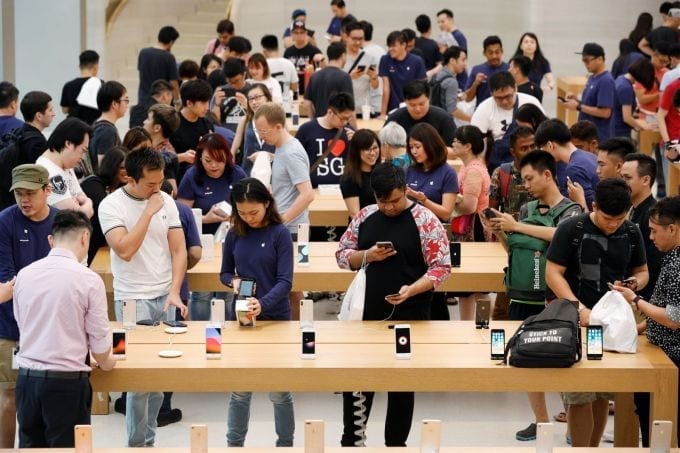
    If you decide to visit an open Apple Store, O’Brien says, “In every store, we’re focused on limiting occupancy and giving everybody lots of room, and renewing our focus on one‑on‑one, personalized service at the Genius Bar and throughout the store. We’re also taking some additional steps in most places. Face coverings will be required for all of our teams and customers, and we will provide them to customers who don’t bring their own. Temperature checks will be conducted at the door, and posted health questions will screen for those with symptoms — like cough or fever — or who have had recent exposure to someone infected with COVID‑19. Throughout the day, we’re conducting enhanced deep cleanings that place special emphasis on all surfaces, display products, and highly trafficked areas.”

    Because of the COVID-19 pandemic, the fiscal third quarter for Apple was looking glum even before the looting forced the company to close most U.S. Apple Stores today. And again, stores with extensive damage are going to be closed for some time.

  • Apple to reopen 25 U.S. Apple Stores this coming week

    Apple to reopen 25 U.S. Apple Stores this coming week

    Deirdre O’Brien, Apple’s Senior VP of Retail + People, published an open letter today on Apple’s website. In the letter, O’Brien notes that nearly 100 Apple Stores around the world have reopened. First, let’s have a little recap. The company was one of the first insides of China to take action right away, and by using social distancing Apple was able to slow the spread of the virus. Apple has continued to develop a set of rules that it has stuck within China and elsewhere, and this has allowed it to safely keep its stores open for months. It plans on bringing over these rules to the U.S.

    On March 13th, Apple reopened its retail stores in China, and on April 18th it opened its one location in South Korea. Last Monday, an Apple Store in Idaho became the first in the states to turn the lights back on again and as of today, there are 99 brick and mortar Apple Stores open for business. In the coming week, there will be 25 more U.S. stores re-opening along with 12 in Canada and 10 in Italy.

    O’Brien says, “Our commitment is to only move forward with a reopening once we’re confident we can safely return to serving customers from our stores. We look at every available piece of data — including local cases, near and long‑term trends, and guidance from national and local health officials. These are not decisions we rush into — and a store opening in no way means that we won’t take the preventative step of closing it again should local conditions warrant.

    You can check the status of any Apple Store by going to this website and typing in the store’s zip code. Each reopened store will limit the occupancy and make sure that everyone has sufficient room. The Genius Bar will focus on one-to-one personalized service. Team members and customers will be required to wear face masks and those without a mask will be provided one by Apple. Customers will have their temperatures taken at the door and posted health questions will screen for those with a fever or a cough, or who had recent exposure to someone affected. During the day Apple will allow the stores to be deep cleaned with “special emphasis on all surfaces, display products, and highly trafficked areas.” And many Apple Stores will provide curbside pick-up and drop off. Online orders can be picked up from an Apple Store or shipped to a home address. As O’Brien wrote, “you can continue to find the same excellent standard of customer service and support online and over the phone to help you with any questions you might have.”

    The executive in charge of the Apple Store, Deirde goes on to add, “The response to COVID‑19 is still ongoing, and we recognize that the road back will have its twists and turns. But whatever challenges lie ahead, COVID‑19 has only reinforced our faith in people — in our teams, in our customers, in our communities. Down the road, when we reflect on COVID‑19, we should always remember how so many people around the world put the well‑being of others at the center of their daily lives. At Apple, we plan to carry those values forward, and we will always put the health and safety of our customers and teams above all else.

    Thank you for all you’re doing to support the COVID‑19 response — whether that’s volunteering, donating, sharing gratitude for our medical workers, or maintaining social distance to protect the health of our communities.”

    Apple has 510 Apple Stores worldwide with 271 of them located in the United States.

  • Strict Thai curfew forces stores to close cross nation

    Strict Thai curfew forces stores to close cross nation

    Thailand’s government has imposed an overnight curfew effective tonight that will force the closure of tens of thousands of convenience stores and street vendors.

    The curfew will run from 10pm to 4am. During that time all Thais and visitors to the country must remain indoors, with exceptions only for emergency services, medical workers and patients.

    Further exemptions include the transportation of goods, farm produce, medical supplies, fuel, parcels, goods destined for export or import, vehicles transporting people to quarantine sites, shift workers, and people traveling to or from airports.

    People who breach the curfew face up to two years in jail and/or a fine of up to Bt40,000 (US$1200).

    A majority of Thailand’s 7-Eleven stores, and rival chains, in urban areas traditionally trade 24 hours a day serving shift workers and tourists, but as of tonight, they will be forced to close.

    The move follows a ban on restaurants and bars serving customers on-site and a total, indefinite liquor retailing ban in one northern province.

    Thailand’s usually vibrant tourist industry has been decimated by the coronavirus epidemic with foreigners now all but banned from entering the nation and lockdowns and social-distancing measures being enforced nationwide.

    In addition to the curfew, public transport will be suspended across Thailand from 9.30pm to 4am, from tonight onwards.

    As of Thursday, Thailand had reported 1875 cases or coronavirus and 15 fatalities.

  • Xiaomi reopens its 1,800 stores across China

    Xiaomi reopens its 1,800 stores across China

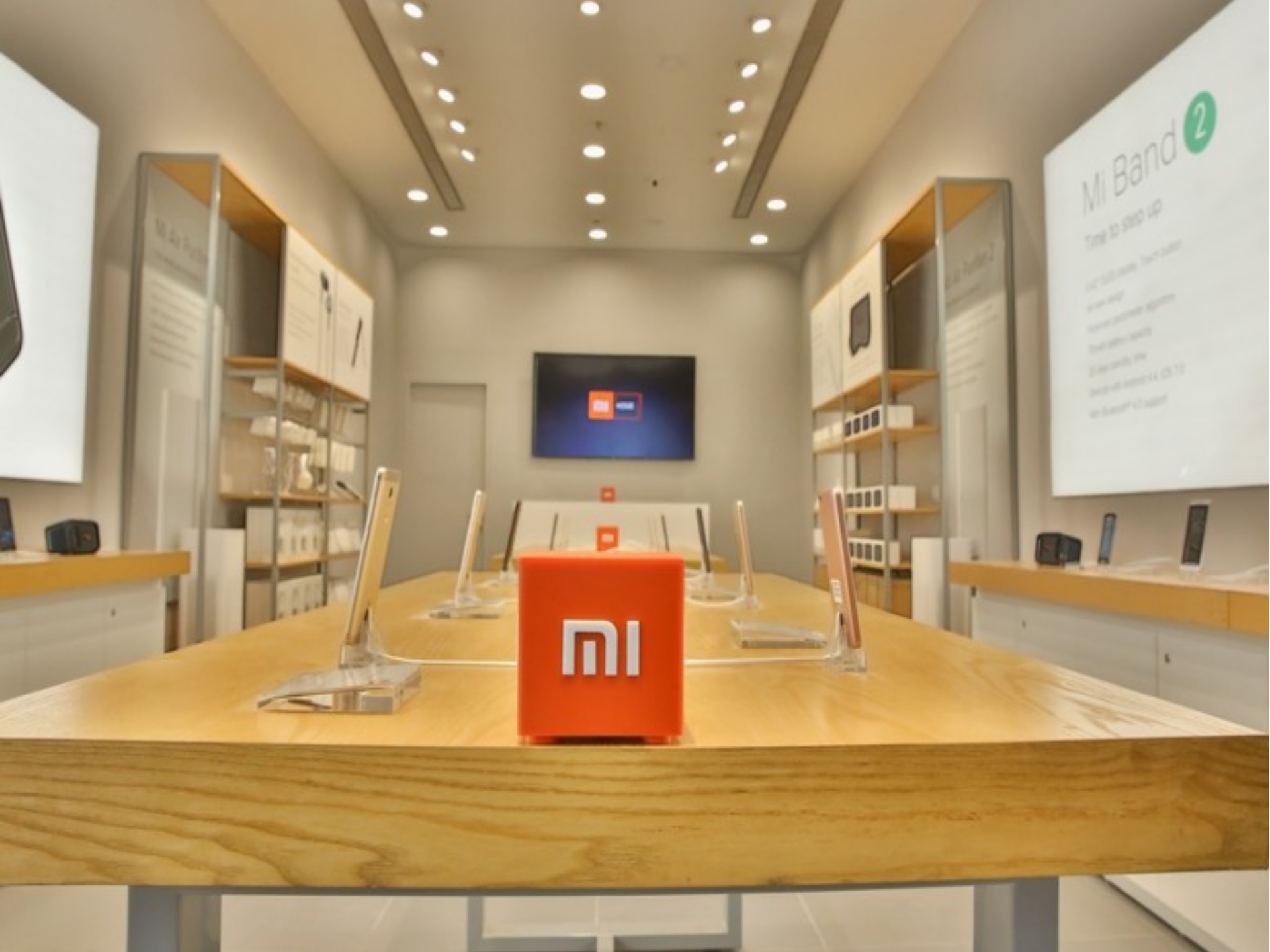
    As Mainland China registered no new cases of coronavirus for the first day since the disease emerged late last year, Chinese tech retailer Xiaomi says it has reopened more than 1800 retail stores across the mainland.

    The company also says the majority of its component suppliers – about 80 percent – had resumed operations.

    In a telephone conference call yesterday, Xiaomi president Wang Xiang said the company was working with its suppliers and service providers both upstream and downstream to achieve a stable supply line of products during the coronavirus crisis.

    Many other retail groups are steadily reopening stores across China. Some, including Apple and Lego, have closed their entire global store networks until at least late this month, with the exception of China.

  • Esprit warns of big loss as Europe shuts down

    Esprit warns of big loss as Europe shuts down

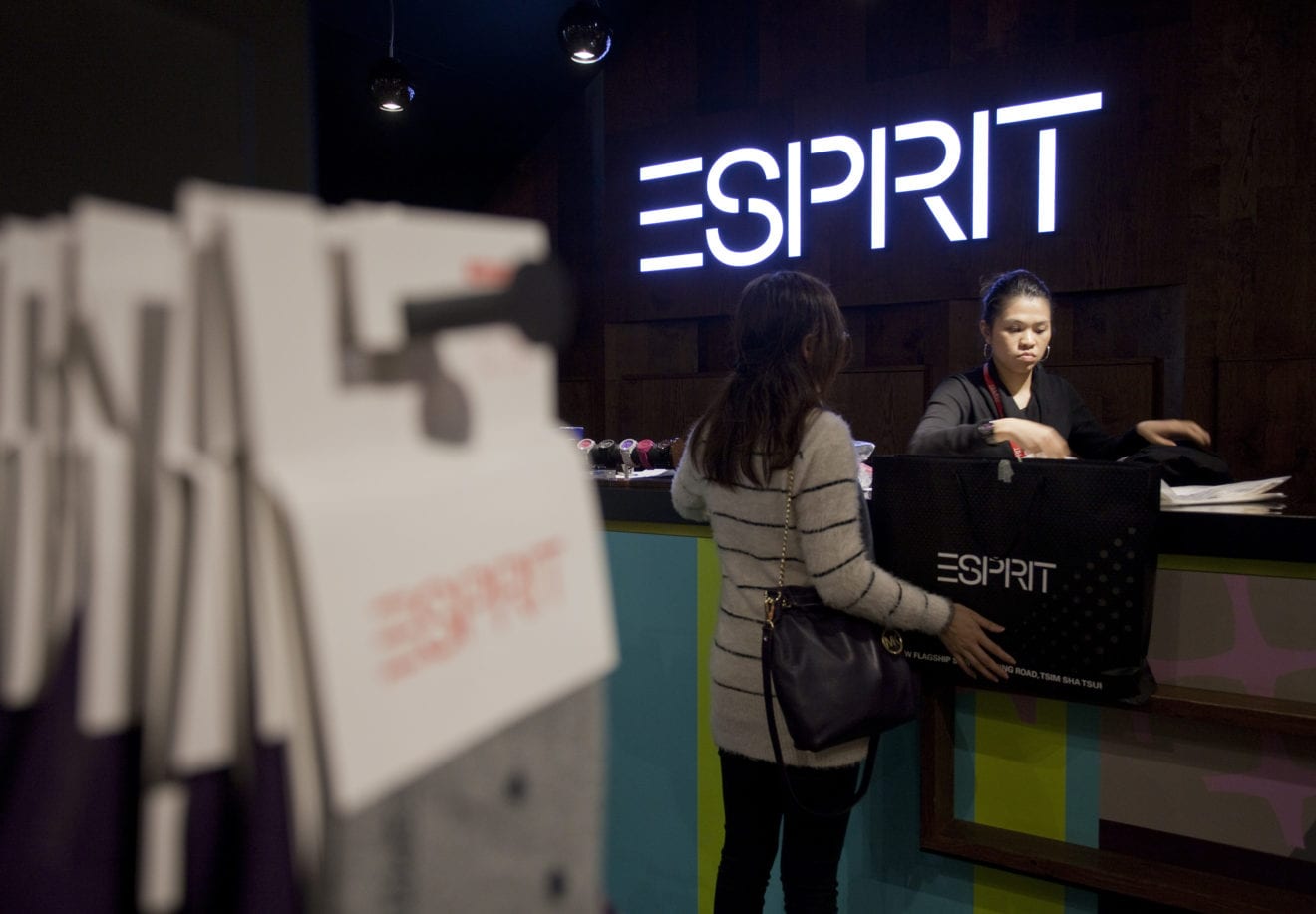
    Fast-fashion retailer Esprit says foot traffic into its stores worldwide have evaporated in the wake of the coronavirus pandemic and warned shareholders to expect a “considerable loss”.

    Public health initiatives enacted in many countries across the world aimed at slowing the spread of the pandemic have resulted in the closure of “a significant number of stores,” said Esprit company secretary Ophelia Lo.

    Public life has been locked down in France, Italy, Spain, Poland and Austria with other European countries most likely to follow, she said. All of those are important markets for Esprit which as part of a major restructuring plan is refocusing its business on Europe.

    “Obviously apparel retail sentiment is at its lowest level possible and store traffic in the group’s retail stores and its partners’ points of sale has subsided entirely,” said Lo.

    “In addition, the logistics of the supply chains of merchandise shipments are significantly affected.”

    Esprit expects the pandemic will “significantly adversely impact the sales of the group” in the second half of the current financial year, ending June 30.

    “As a result, management expects the group to incur a considerable loss in the second half,” said Lo.

    Right now, Esprit management cannot quantify the actual impact of the pandemic on the group’s business performance, given the inability to predict the speed and extent to which the pandemic will spread in markets in which the group and its suppliers operate in, and with no reliable estimation on when the pandemic may be over.

    “The company will continue to diligently assess the impact of the pandemic on the group’s business performance and will make appropriate announcements on updates as and when necessary,” she said.

    Meanwhile, the company will take “all practicable measures to cope with the challenges ahead,” including using working capital management and cost-control measures, and exploring financial support provided by local governments.

  • Bossini Taiwan stores will be closed before summmer

    Bossini Taiwan stores will be closed before summmer

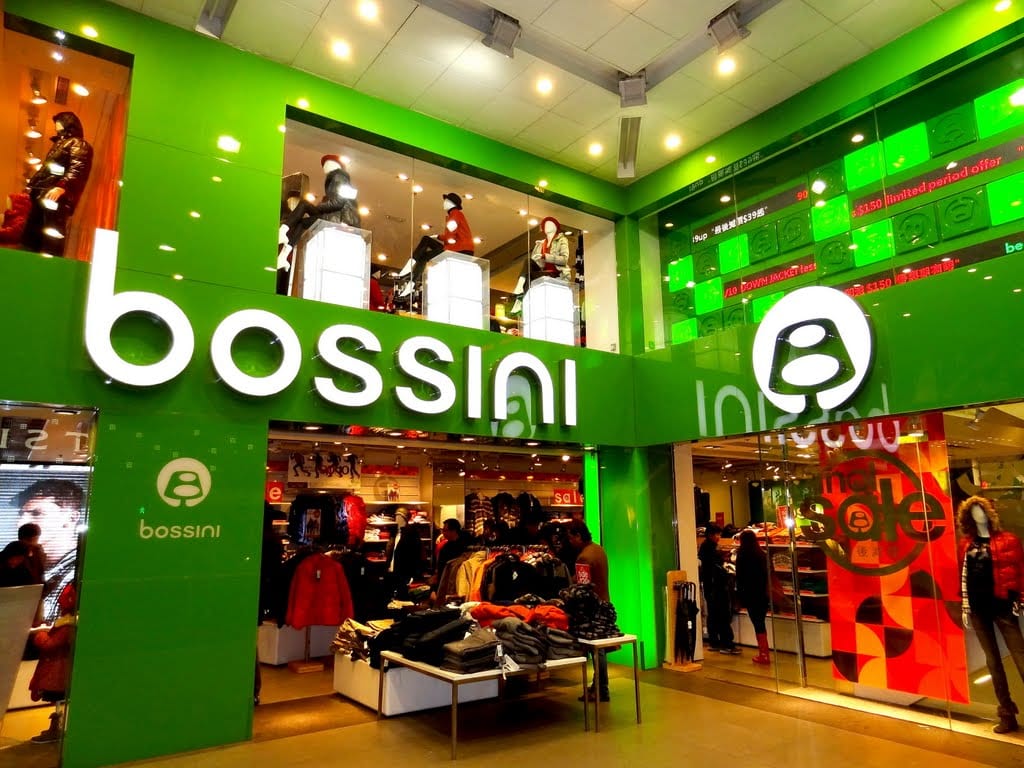
    Hong Kong-headquartered apparel chain Bossini is to close down its Taiwan business, expecting to close all 51 stores by July 31.

    Chairman Bess Tsin said Bossini Taiwan will start discussions with landlords over terms for exiting leases early and all employees made redundant will be compensated as required by local laws.

    She expects the closure to result in one-off costs of HK$20 million (US$2.57 million), subject to the outcome of landlord negotiations.

    Bossini Taiwan was launched in 1992, an early foray into the Greater China market for the brand.

    “The decision to withdraw from the Taiwan market is a difficult one for the company,” said Tsin. “However, due to the continuing sluggish consumer market in Taiwan over the last two decades, Bossini Taiwan has been loss-making since the 2005/06 financial year.”

    Tsin said given the current challenging market conditions in Hong Kong and Mainland China, the board resolved yesterday that it was in the best interests of the company and its shareholders to cease the Taiwan operations and focus its resources on its other major markets.

    Last month, Bossini revealed a loss of HK$93.7 million (US$12 million) during the six months to December – more than triple the $25.7 million loss of the same period a year earlier. Sales were down 20 percent to $699 million ($89.9 million).

    “The company and the board would like to express their greatest gratitude to the management and staff of the Taiwan division for their unwavering support to the group in the past years,” she said in a stock exchange filing.

  • Lotte Shopping closing 200 stores as losses mount

    Lotte Shopping closing 200 stores as losses mount

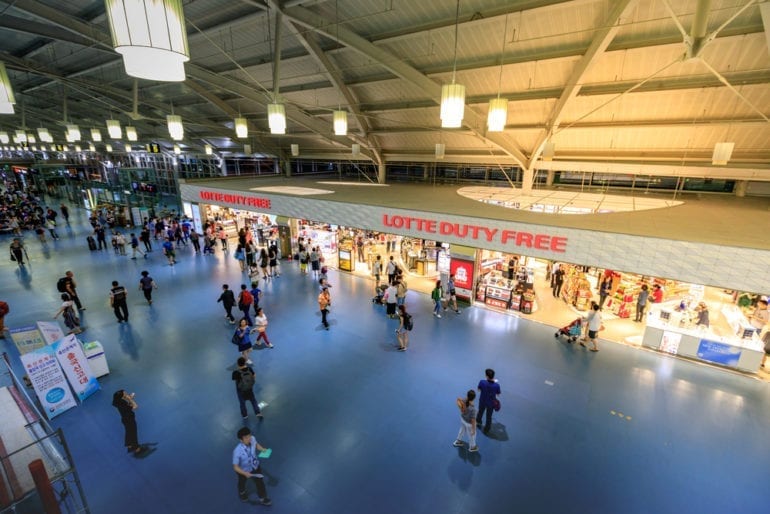
    Lotte Shopping plans to shut down as many as 200 department stores and large-format supermarkets in South Korea, marking one of the biggest retail network culls in the nation’s history.

    Lotte Group operates more than 700 stores under its Lotte Mart, Lotte Department Store, Lotte Super and drug-store chain LOHB banners, which means its closure plans will affect almost one in three stores.

    There are no reports that Lotte will scale back its international business, which is largely in Southeast Asia after it began withdrawing from China last year.

    “The focus of our business strategy in 2020 is a heavy downsizing to enhance efficiency and profit,” the company said in a statement.

    “The food sections at underperforming small- and mid-sized department stores will be changed into supermarkets selling fresh groceries.”

    The rationalization plan follows news that South Korean convenience stores are outperforming supermarkets and hypermarkets in financial terms.

    Lotte Shopping’s net loss grew by 83.6 percent year on year to US$721 million last year, on an operating profit down 28.3 percent to $361.7 million. Sales slipped 1.1 percent to $14.9 billion, largely driven by a 5.8-per-cent decline in supermarket sales. Department-store sales dropped by 3.1 percent.

    Kang Hee-tae, who heads Lotte Shopping, said its major stores were performing poorly and market conditions remain tough. He cited an increase in the minimum wage and falling Chinese tourist arrivals as contributors to the poor result. But analysts in Seoul say Lotte Shopping’s problems are in part caused by a shift to online shopping, where consumers can often pay less for goods.

    According to Yonhap, South Korean retail sales rose 4.8 percent last year, with online sales growing 14.2 percent based on a sample of 13 e-commerce players. Overnight fresh-food deliveries were a contributor to the online growth.

    “The top priority at Lotte Shopping is to resolve fundamental problems and deliver clearly positive results,” said Kang.

    Besides store closures, the company plans to restructure some of its operations. For example, the fashion zones at its Lotte Mart stores will in future feature stock curated from the company’s department stores and likely feature more branded apparel rather than discount garments.

    The company also plans to use big data to refine and personalize its services to customers instead of running hundreds of too many loss-making branches.

    Lotte Shopping is not alone with its challenges in a changing South Korean market. Last August, rival Emart posted its first-ever loss, of $24.7 million, for the June quarter, its worst result since it was spun off from Shinsegae Group in 2011. It reported a 53-per-cent drop in full-year net profit to $189 million.

    The company said it planned to raise $820 million by selling assets and will buy back stocks to boost shareholder value.

    Emart has since embarked on a plan to downsize its Electro Mart gadgets chain and its Boots drugstore franchise and it is closing all it’s discount Pierrot Shopping stores, which are modeled on the Don Don Quijote concept from Japan.

  • Apple and Levi’s closing China store

    Apple and Levi’s closing China store

    Apple and Levi’s joined the growing list of international retailers shuttering stores in Mainland China as the infection rate and death toll from the coronavirus continued to grow over the weekend.

    Elsewhere, in South Korea, duty-free stores have closed and throughout Asia retailers have introduced policies for dealing with the virus aimed at protecting staff and customers.

    Apple says all of its 42 stores in Mainland China will remain closed until February 9, although customers will be able to continue to buy products on its online store.

    “Out of an abundance of caution and based on the latest advice from leading health experts, we’re closing all our corporate offices, stores and contact centers in Mainland China through February 9,” Apple said in a statement sent to CNN Business. “We will continue to closely monitor the situation and we look forward to reopening our stores as soon as possible.”

    Levi’s, meanwhile, has closed about half of its stores in the market, although China accounts for just 3 percent of its global revenue compared with 15 percent for Apple.

    Apple and Levi’s are not the only chains to have announced large-scale store closes on the mainland. Starbucks has closed more than 2000, KFC, Pizza Hut and Haidilao Hot Pot have closed stores in the worst-affected Hubei province and Ikea has closed all of its stores there.

    Shilla’s shutdown

    In Seoul, The Shilla Duty-Free closed its giant downtown store adjacent to its five-star hotel after it was confirmed a Chinese national infected with coronavirus visited the store twice in January.

    The company said it has already been rolling out disinfection operations to prevent possible contamination.

    Rival operator Lotte Duty-Free closed its Jeju Island store late Sunday after it was confirmed an infected person shopped there last month.

    “We just started banning new customers entering the shop and asking the customers to leave the outlet,” a company official told a local news outlet.

    “We will announce the date of the reopening after discussing the matter with health authorities and the Jeju provincial government officials.”

    E-Mart also closed one of its stores in Bucheon, near Seoul, after a similar confirmation of a visit by an infected patient.

    Hong Kong supermarkets see spike

    A spokesperson for Hong Kong-headquartered Dairy Farm International told Inside Retail Asia that, like other supermarket chains, its stores have experienced a spike in demand for fresh produce, along with household cleaning and hygiene products, as a result of the coronavirus.

    “In areas of high demand, we are working around the clock to restock as quickly as we can and will continue to do our best to serve the people of Hong Kong through our stores and online,” said the company, which operates the Wellcome grocery-store network.

    All of Dairy Farm’s stores in Hong Kong, including Ikeas, are operating as normal, however, the company has reinforced its sanitization and hygiene protocols.

    “In this challenging environment we remain focused on taking care of our customers and our team members, who we’ve offered flexible working arrangements to, where appropriate,” the spokesperson said.

  • Ikea China shuting most stores in wake of coronavirus

    Ikea China shuting most stores in wake of coronavirus

    Swedish furniture and homewares chain Ikea has closed all of its mainland Chinese stores in the wake of the coronavirus outbreak.

    The decision, announced Thursday, came just hours after the company said it would shutter half its 30-strong network in the country.

    Ikea China is the latest in a long line of international retail groups to announce a curtailment of activities in the country as the death toll and infections from the Wuhan-centred virus rose rapidly this week.

    McDonald’s CEO Chris Kempczinski said the chain has closed “several hundred” stores in Hubei, but outlets in other parts of the country would remain open for now.

    On Wednesday, Starbucks said more than 2000 stores would close indefinitely, including its flagship Shanghai Roastery, although delivery services would continue from some of those locations. KFC, Pizza Hut and Haidilao Hotpot were among other restaurant chains to close part of their network.

    Tech giant Apple has closed three stores to date: Rainbow City in Nanjing, Tahoe Plaza in Fuzhou, and Vientiane City Qingdao. The company said it would reopen the stores by February 4, however, this is likely to depend on further advice from government authorities.

    Uniqlo, the Japanese fast-fashion chain, has closed about 100 stores, mainly in Hubei province where Wuhan is situated, its remaining 650 stores in Mainland China continuing to trade at the time of writing. Muji has closed about 10 stores in Wuhan’s inner-city district.

    Some of the Wuhan stores have been closed because the staff is unable to travel to work due to travel restrictions imposed by government authorities.

    Selected supermarkets are continuing to trade in affected areas of China to allow locals to purchase food and daily essentials, although some suppliers are encountering difficulty delivering products to retailers, due to traffic restrictions and a shortage of staff.

    Anne Ling, an equity analyst at Jeffries, says she expects food retailers will be relatively more resilient under the current situation. “Online delivery capability and strong fresh-produce capabilities are highlighted from this incident.”

    By retail category, fresh produce like vegetables, meat and cleaning products are selling well, with strong double-digit increase while liquor and beverage sales have declined by double digits as sales are driven by gatherings and events. “Non-food products experienced a substantial decline.”

    Ling anticipates landlords will offer tenants rental relief. “Hypermarket chains might also consider rental relief for tenants at their shopping areas.”

  • Iconic US stationer to close all its stores

    Iconic US stationer to close all its stores

    US stationery retailer Papyrus is preparing to close all of its more than 260 physical stores throughout the country.

    Brand owner Schurman Retail Group’s COO Dominique Schurman broke the news in a letter to all staff, citing “current challenges of the retail industry”, explaining that the firm had been “diligently working to revitalize our business” during the previous months, without success.

    Liquidation firm Gordon Brothers will help with sales as the firm drops off the brick-and-mortar retail map, having traded via its physical outlets since 1973.

    “This decision is heartbreaking for me, personally of course,” said  Schurman, “and also because I know how dedicated you all have been to your stores and this company”.

    At present, it is unclear whether or not the firm will file for bankruptcy.

    The company will reportedly maintain its online store and its wholesale business which distributes Papyrus-branded greeting cards to other retailers.

  • Walmart China opening 500 more stores

    Walmart China opening 500 more stores

    US retailer Walmart is planning to launch 500 new outlets in China within five to seven years.

    The expansion will more than double the firm’s presence in the territory in time for China to emerge as the world’s biggest grocery market come 2023. The move comes in the face of an economic slowdown as China grapples with the US trade war and slow growth.

    In spite of the setback, Chinese consumers are still buying from Walmart, which experienced 6.3-per-cent year-on-year growth in the last quarter. Its global growth during the period was just 2.5 percent.

    “We will continue to collaborate with partners and policymakers in China to accelerate our expansion,” Walmart China senior VP James Ku said.

    The firm will also remodel more than 200 of its stores in China in the coming years, including installing self-service checkouts using facial recognition technology.

    Walmart China has operated for more than 20 years.

  • HanesBrands about to double Champion Asia store network

    HanesBrands about to double Champion Asia store network

    US apparel company HanesBrands plans to double its Champion Asia store network within two years.

    The company has just announced a partnership with LF Corporation in South Korea which will see its store network there expand from around 10 now to more than 30 by the end of next year, with a further five-year expansion program planned beyond that. LF Corporation will also develop an online offer there.

    LF Corporation directly operates more than 1400 stores in South Korea, including for fashion brands Daks, Hazzys and Lafuma.

    The South Korea Champion partnership is part of a broader strategy by HanesBrands to expand the brand’s store footprint throughout Asia. There are currently more than 200 Champion Asia stores and shops-in-shops across Asia, including in Japan, China, Thailand, Taiwan and Hong Kong, which represent two-thirds of its global network.

    HanesGroup says it wants to more than double the number of stores and shops in those markets within two years.

    Beyond Asia, the company is also continuing to open stores in Europe, the US and Australia, and is pursuing a distributor retail model to open stores in Mexico, Central America and South America.

    Jon Ram, HanesBrands’ group president of global activewear, described its new South Korean partner as “a highly accomplished large-scale distributor” that operates a large network of department stores, shop-in-shops, street shops and online platforms.

    “We are looking forward to the growth that we can generate through the growing power of the Champion brand combined with the retail, e-commerce and brand building expertise of LF,” he said of the ambitious Champion Asia plan.

    LF plans to locate retail stores and shops-in-shops near and in the country’s major department stores and shopping malls. In addition, LF will distribute Champion products to the company’s Around the Corner multi-brand lifestyle-apparel stores and to other parts of its online and store network.

    “Champion is a global leader in sports performance and athletic casualwear apparel and is particularly appealing to younger consumers in their teens and 20s,” said LF Corporation MD Yoo Hyosang. “We believe Champion has the positioning to be an upscale brand in Korea, and we plan to use a dual-distribution strategy of opening Champion stores and expanding points of distribution in other store channels and online platforms. We are eager to tap the growth potential of Champion in Korea.”

    Champion has doubled its global net sales in the past three years with strong double-digit compound annual growth rates in the US, Europe and Asia. Popular with celebrities, sports figures and pop culture artists, the brand has more than 7 million followers on Instagram and has collaborated on apparel offerings with other leading apparel brands, designers and retailers, including Todd Snyder, Kith, Supreme, Urban Outfitters and Vetements.

    Based in Winston-Salem, North Carolina, HanesBrands sells products under brands including Hanes, Bonds, Maidenform, Playtex, Bras N Things, L’eggs, Lovable, Wonderbra, Berlei and Gear for Sports.

  • E-Mart plans to sell several stores

    E-Mart plans to sell several stores

    South Korean big-box retailer E-mart will sell 13 store buildings and land to improve its financial situation.

    The firm will sell the properties to Mastern Investment Management for KRW952.48 billion (US$802.65 million) in the face of plummeting sales and intensifying competition from e-commerce. It will continue to operate its businesses on the properties under a lease arrangement.

    The properties constitute 5.7 percent of the Shinsegae-owned firm’s total assets.

    E-mart will use the funding to pay debt and diversify its operations into e-commerce.

    “As the current retail market is dominated by e-commerce platforms, retailers have no choice but to continue to reduce their offline business,” said Hyundai Motor Securities analyst Park Jong-ryul. “With the fresh funds, they focus on venturing into the online market.”

  • Tiitan Holdings plans to open 50 stores in India

    Tiitan Holdings plans to open 50 stores in India

    Hong Kong-based digital accessories firm Tiitan Holdings plans to invest US$5 million to set up its first 50 branded outlets in India by March next year.

    The company announced its foray into India in collaboration with distribution firm Mak Mobility – which also makes and sells fitness band Aq-Fit under its sister firm in the territory.

    “This alliance will help us in reaching the customers in India and boost our strategy of increasing our pan-India presence and thereby reaching to customers,” said Tiitan Holdings co-founder Piyush Sharma. “Also, this collaboration will help both the companies to further leverage its innovative product range to customers across India.”

    Tiitan Holdings has plans to make its smart accessories – bluetooth speakers, headphones, intelligent charger, wireless power bank, etc, – at Mak Mobility’s manufacturing facilities.


  • Crabtree & Evelyn stores closed and brand moves to E-commerce

    Crabtree & Evelyn stores closed and brand moves to E-commerce

    Beauty-products brand Crabtree & Evelyn halved its losses in the first half of the year as parent, Hong Kong-listed Nan Hai Corporation continued its transformation from offline to online.

    Since January, Crabtree & Evelyn has closed all of its 150 traditional retail stores across eight countries, shifted its manufacturing and distribution to third-party providers and sold its Australian warehouse.

    Nan Hai Corporation CEO Liu Rong said that while traditional retail companies continue to struggle or close, “Crabtree & Evelyn is now ahead of the market in meeting the challenges of the current and future business environment”.

    Crabtree & Evelyn is the only retail activity business by Nan Hai Corporation, whose principal areas of focus are cinemas, news media, and property investment.

    The brand’s sales for the six months to June 30 reached HK$166.5 million (US$21.2 million), down from $288.5 million during the same period last year. The brand lost $185.1 million, down from $363.5 million.

    Liu said the decrease in revenue but lower loss were due to the effective execution of the innovative business restructuring initiated last November.

    Crabtree & Evelyn’s new focus on direct e-commerce drove online revenue to approximately $64 million, an increase of 69 percent compared to the corresponding period last year.

    Sales in Mainland China increased to approximately $8.2 million, up 93 percent year on year.

    Liu says Crabtree & Evelyn’s new strategy is to transform its business from one of traditional retailing to an “OMO operating model”, (which we believe refers to Open Market Operations), starting from e-commerce.

    In the current half-year, Crabtree & Evelyn is rolling out its new branding and business model internationally which comes off the back of two years’ research and development.

    “All of these products have been manufactured by third-party partnerships, the first result of a faster, more flexible, and lower cost global supply chain,” said Liu in Nan Hai’s half-yearly results analysis.

    “A new global digital platform with full e-commerce and social functionality will be introduced in 35 markets, with corresponding investment in internal teams and capabilities. The new products will also be launched on online shopping malls via exclusive arrangements with Tmall global, Amazon, and Feelunique. Initial feedback from both the new millennial consumer and retail partners has been extremely positive.”

    Liu said he expects the relaunch of Crabtree & Evelyn will inject new vitality into the brand. “We have prepared for this relaunch with the brand communication, product portfolio, digital communication and distribution model, and the transformation of the operating model along with business restructuring required to attract more users to become loyal customers.”

    Previously, the company had said it planned flagship stores in major cities in the future, but this was not referenced in the half-year results summary.