Tag: Technology

  • New Zealand opens technology center in Vietnam

    New Zealand opens technology center in Vietnam

    New Zealand has opened a new technology center at Quang Tring Software City in Ho Chi Minh City.

    The Kiwi Technology Center is envisioned to be a hub for New Zealand tech companies investing and doing business in Vietnam and the ASEAN region.

    The first companies to set up shop in the center include software services business Augen Software Group which won the Vietnam IT Excellence award last year, healthcare technology companies Orion Health and HealthTech and apparel manufacturing optimization firm ShapeShifter.

    “This is a fantastic opportunity for New Zealand technology companies and I look forward to more of them utilizing the Kiwi Connection hub and meeting with businesses from around the region who want to work with New Zealand companies and use technology services from within ASEAN,” said New Zealand’s Economic Development Minister Steven Joyce in a statement.

    Joyce also announced last week a project to build a New Zealand-Vietnam friendship bridge in Ho Chi Minh City to celebrate the ties between the two countries.

    Vietnam is New Zealand’s fastest growing trade market in Southeast Asia, with merchandise exports reportedly doubling since 2007.

  • Leica camera store opens in Shanghai

    Leica camera store opens in Shanghai

    A new Leica camera store in Shanghai has had a soft launch, with its grand opening scheduled for June 3.

    In West Nanjing Road, Leica Shanghai XinTianDi is surrounded by luxury brand boutiques.

    Leica-Store-Shanghai-XinTianDi-1-560x420


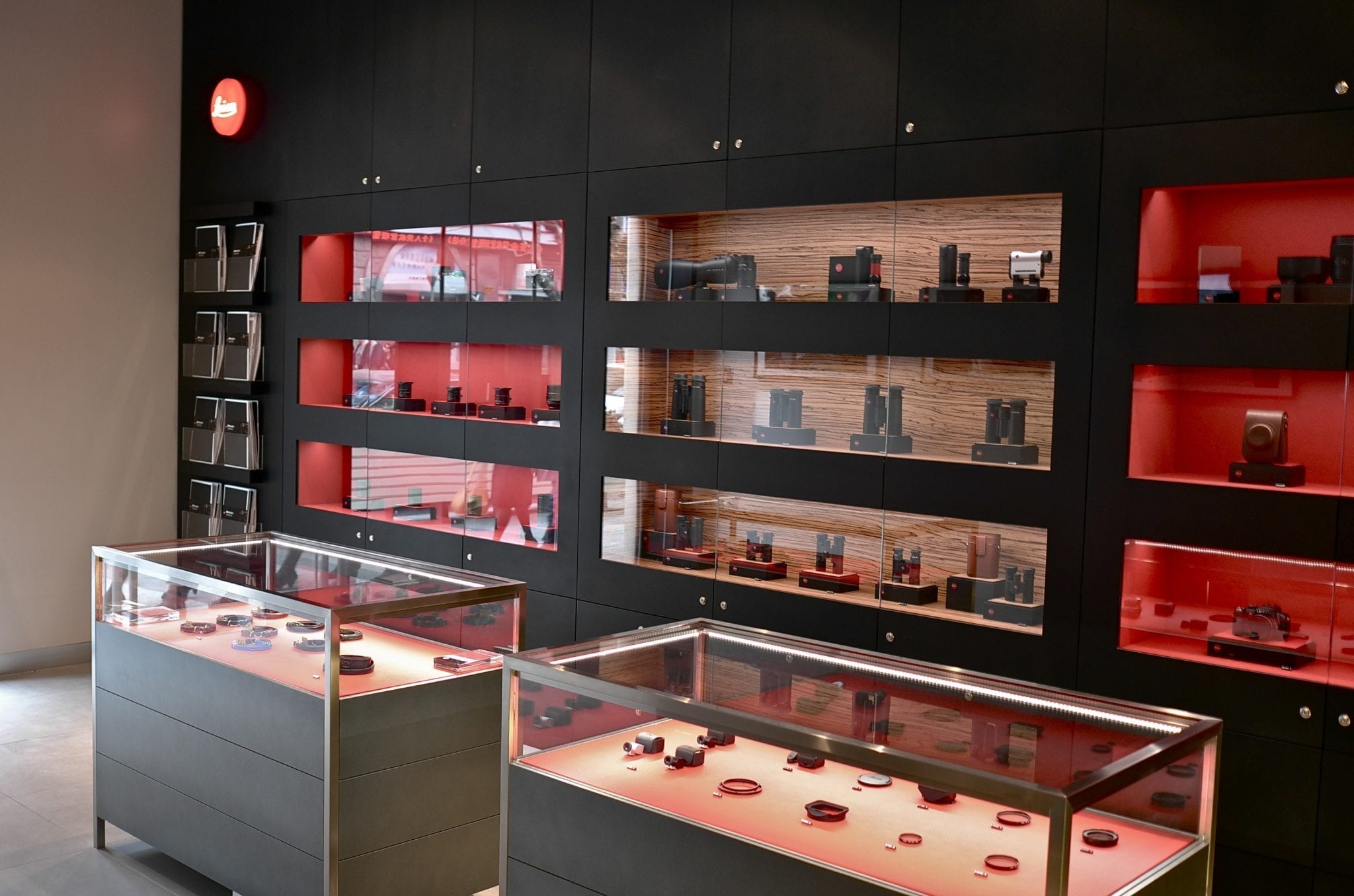
    It displays a full range of Leica products, including cameras as well as binoculars, and includes a gallery for exhibitions of the latest images and photographic works from Leica photographers.

    Leica-Store-Shanghai-XinTianDi-3-560x420

    The store will be open every day, from 10am until 9.30pm.

    Leica opened its first store in China at the Beijing China World Mall in 2010.

  • OCBC Singapore launches voice biometrics, speech recognition in contact center

    OCBC Singapore launches voice biometrics, speech recognition in contact center

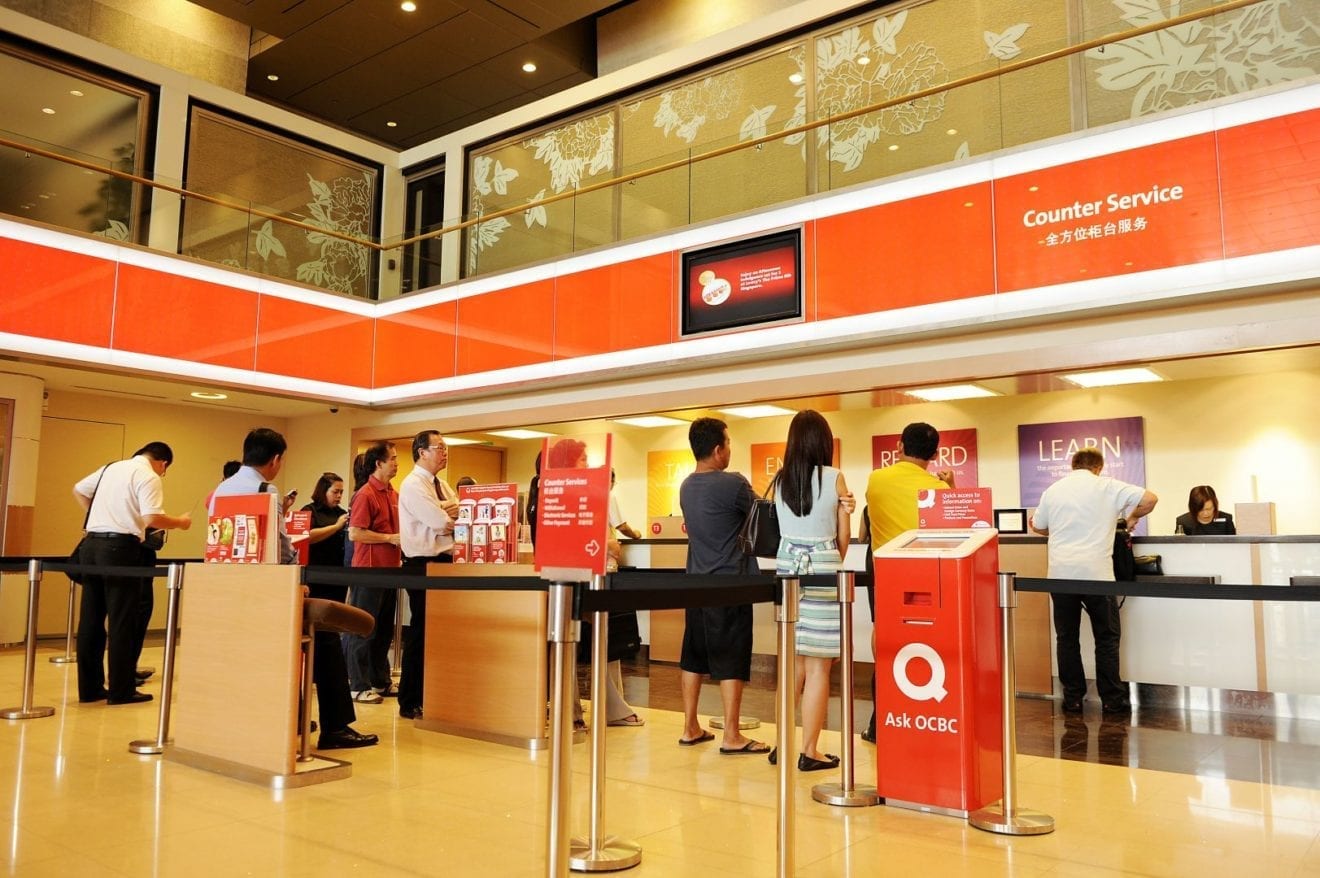
    OCBC Bank in Singapore has launched voice metrics and speech recognition in its contact center to improve the retail customer experience.

    According to the bank’s head of consumer financial services Dennis Tan, the solutions launched reduce the time taken for customer verification, giving customers quicker access to services required. The voice biometric authentication replaces PINs, one-time passwords and security questions at the bank’s contact centre. Customers can use their voices as vocal passwords for authentication.

    Voice biometrics was launched by OCBC in September last year to a targeted group of retail customers. With the technology, customers could use their voiceprints to authenticate requests for account balances, latest transactions and the status of deposited cheques.

    Voice biometrics will be available to the bank’s retail customers in the fourth quarter of this year, with customers expected to be able to use their voiceprints to authenticate a majority of banking transactions.

    To enrol their voiceprint, customers are asked to say a specific phrase, called a passphrase, three times. A passphrase is an explicit sentence crafted by OCBC Bank to be spoken by the customer into the system to capture the customer’s voice. The voiceprint is created using the spoken passphrase and stored in the system’s database. A voiceprint is not a recording of a voice but a digital representation of a person’s vocal characteristics, so it cannot be disguised and is not affected by emotion or a blocked nose.

    To authenticate a banking transaction, the customer will be asked to say the passphrase that was used to enroll his or her voiceprint. If further verification is needed to confirm the customer’s initial vocal password is valid and is not a voice recording, the system will then ask the customer to say a different sentence from the enrolled passphrase. The customer’s voice is captured and is compared with the relevant stored voiceprint on the database. A verification result is then provided by the system. The authentication process is hassle-free and can be done in 15 seconds.

    Speech recognition

    OCBC Bank launched speech recognition at its contact center in April this year to all personal banking customers.

    While voice biometrics enhances customer experience by replacing PINs, passwords and security questions, speech recognition replaces the need to select service options via the phone keypad. The deployment also reduces the number of steps needed to enter the options sequentially on the keypad to access a particular service. Speech recognition technology recognizes and understands a customer’s spoken request, thereby enabling the customer to access the required service faster and more accurately.

    According to OCBC Bank, the top customer enquiries received via speech recognition are checking recent transactions and account balances, requests for fee waivers, and Internet Banking and statement enquiries. These requests amount to 30.4 per cent of all requests to the Contact Centre. The success rate of the speech recognition service has been extremely high, says OCBC Bank, with 90 per cent of customers having their spoken requests recognised by the system.

  • Apple Pay Singapore launched

    Apple Pay Singapore launched

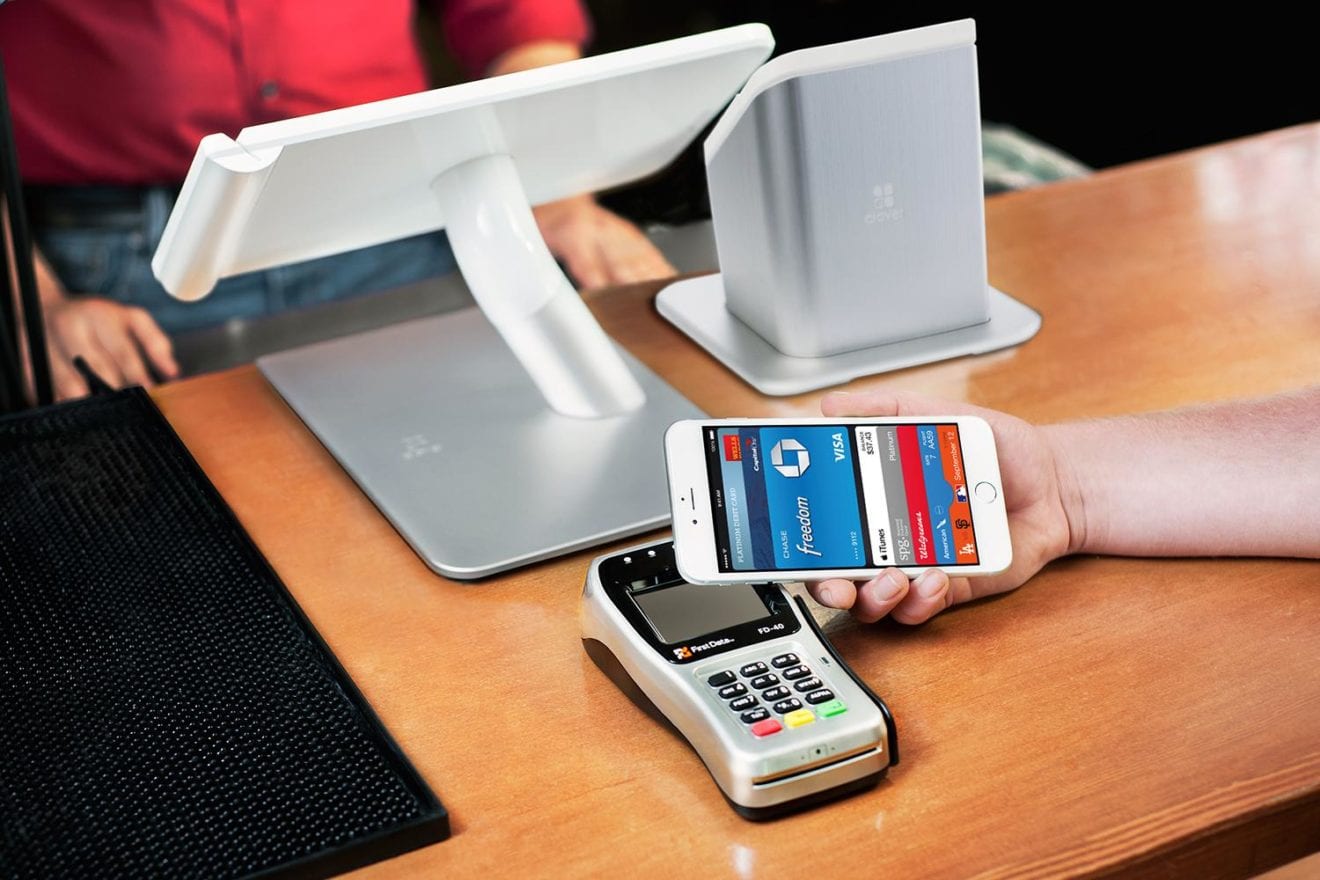
    Apple Pay Singapore is now live – the second Asian market in which the tech giant’s new payments system is now accepted.

    The cardless, cashless payment system debuted in China last month and more Asian markets are expected to follow after negotiations are concluded with partnering banks and card systems.

    Apple Pay allows shoppers to buy goods using their iPhone, iPad or Apple Watch – but in Singapore only American Express card holders can use the facility, for now.

    Apple pay

    “Credit and debit cards from Singapore’s most popular banks, including DBS, UOB and Standard Chartered will work with Apple Pay in the coming months,” Apple Singapore said in a statement.

    But Forrester researcher Zhi Ying Ng believes consumer adoption of Apple Pay will be slower than expected in Singapore.

    “The use of contactless card payments is increasing in Singapore, and consumers are comfortable with using it. While there are still significant barriers to consumer adoption of digital wallets today, it will take time before these wallets become more convenient for customers and as customers realise the benefits and additional value that digital wallets bring,” he said in a statement.

    Apple Pay is also now accepted in the US, Canada, Australia and the UK.

  • Acer brings first PC phone to Philippines

    Acer brings first PC phone to Philippines

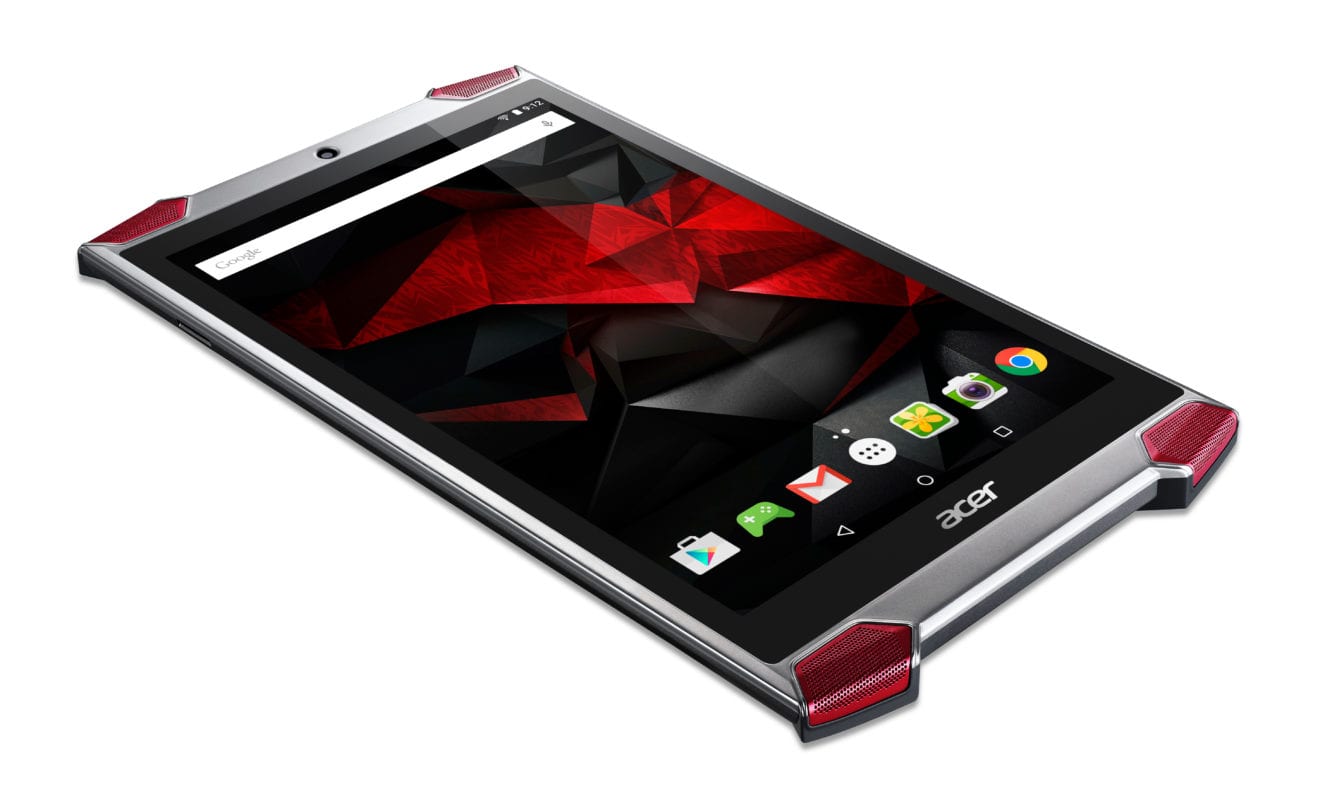
    Taiwan-based technology giant Acer has brought its latest flagship product, the world’s first personal computer phone, to the Philippines aimed at providing a new kind of platform and improved productivity for local consumers.

    The Liquid Jade Primo, the first PC phone, has a Windows 10 operating system and brings productivity to the next level with a Continuum compatible smartphone that doubles as a PC.

    In an earlier interview, Acer chief executive officer Jason Chen said he is confident the first PC phone would be warmly received in the Philippine market as the company continues to bank  on user excitement and innovation.

    “Excitement will become either hype then disappear or it becomes useful, create an ecosystem and then become a true business or industry segment,” he said.

    Acer targets commercial users, business travelers and millennials who want the convenience of carrying a single device but with the components of the normal computer set-up.

    “This 2016, we are centered on innovation and optimal and real end-goal solution. We want to come up with something that people will feel great but the most important thing is we want to enhance everything so consumers will enjoy the content,” Chen said.

    The Liquid Jade Primo, which would retail at P28,990, has an AMOLED 5.5-inch full high-definition display, 21-megapixel main and eight-megapixel front cameras, and zero air gap technology for better visual experience.

    It has an ultra-tough gorilla glass that strengthens the phone’s structure and protects displays and a storage memory of 32 gigabytes, expandable up to 128 gigabytes.

    Acer also boasts of its advanced cooling system consisting of metal piping that dissipates heat more effectively and BitLocker technology that allows for full encryption of all user data stored internally, protecting the device from offline hardware-level attacks.

    It also comes with a suite of accessories comprised of a dock, keyboard and wireless mouse, and can be connected to any screen and charge high definition multimedia interface (HDMI) output.

    In the local market, Acer has maintained its No. 1 position in the notebook computer category for 10 consecutive years.  It accounts for a 30 percent share of the Philippine computer industry.

    Acer entered the Philippine market in 2003.

  • Why Retailers Should Care About Google’s Eddystone Beacon Upgrade

    Why Retailers Should Care About Google’s Eddystone Beacon Upgrade

    Beacons have been mired in a no man’s land of emerging technologies ever since they came onto the scene, and their lethargic progress can’t be chalked up to any single deficiency. Developers don’t know all their use cases; retailers aren’t quite sure how to deploy them; shoppers can’t trust that the push notifications aren’t collecting information that’s only sent back to the merchant in question.

    At the very least, Google’s latest upgrade to its Eddystone platform promises to address that last one.

    Google — or Alphabet as the kids say these days — announced a new security protocol for its beacon format on Thursday (April 14) that goes by the name of Ephemeral IDs (EID). While that’s not a very sexy sentence for merchants on the hunt for new ways to create sticky experiences for in-store customers, the technology behind the EID protocol might.

    Instead of previously available security standards that variously had sensors and devices automatically and periodically scan their environments for all potential communicable nodes, EID uses a more targeted and personal approach. Sensors on the platform broadcast encrypted keys that autonomously change as frequently as every other second, depending on the owner’s preference, and only devices with access to that same platform can decrypt the key. Without proper access, there’s no way to unscramble the eight-bit identifier code and no way for snoopers to eavesdrop on digital conversations.

    Best of all, since the EID changes so often, Google says that there’s little to no chance it can be falsely reproduced or the signal tracked over time.

    While this still might not be enough to get retailers’ motors going, it’s important to note that EID protocols don’t require consumers to authorize apps or verify that the inanimate beacon is communicating the right information to the right users; during installation, retailers set the access parameters themselves. Yossi Matias, vice president of engineering at Google, told Wired that this EID update achieves something in beacon technology that’s eluded researchers from the outset: enhanced security without increased friction.

    “It’s very easy to provide security layers which compromise the user experience,” Matias said. “These are very easy to deploy from a technology point of view and are very bad experiences. The real challenge from a technology perspective is how to keep things simple but also add a security layer on top of everything.”

    The Eddystone EID protocol is already seeing some real-world use. Google touted how in Hong Kong, the part-art studio, part-retail mall K11 is employing EID-upgraded beacons to deliver information on installations and targeted promotions as soon as customers come within a certain range of sensors. Stateside, Washington, D.C.-based Monumental Sports has rolled out Eddystone’s newest update to sensors all over the Verizon Center, allowing personalized updates on seat upgrades and secure transactions within a crowded (both physically and digitally) 18,000-seat stadium.

    Matias himself has seen success with a somewhat new use case for beacons: personal belongings tracking.

    “As we started this project, my favorite use case was the suitcase, since I travel so much,” he told Wired. “You can think about many benefits; my favorite one was getting a notification once it’s near the carousel, so I don’t need to waste time watching other bags … But the question is: How can I do that knowing that I’m the only one that can recognize my suitcase and that it’s not recognized by anyone else’s mobile device?”

    It’ll likely take time to build up confidence in both consumers and retailers that a technology they can’t see is actually doing a better job of securing their data than all the previous architectures that have promised the same thing. But if beacons are ever going to work in the brick-and-mortar world, EID doesn’t seem like such a bad place to start.

    Or, in the case of beacons: a place to start again.

  • Technology drives Timberland sales

    Technology drives Timberland sales

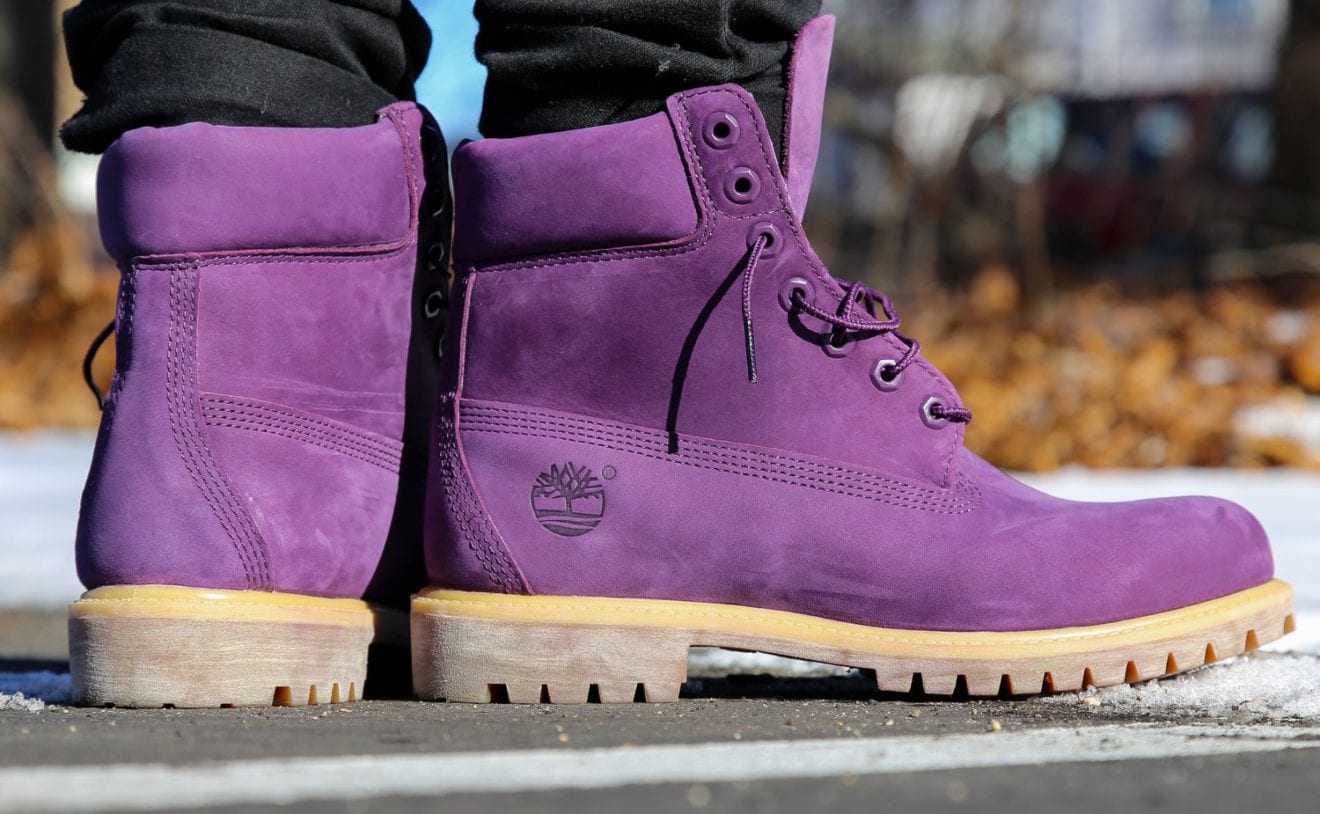
    In-store technology is helping brick-and-mortar stores like Timberland retain their relevance in a fast-growing online world according to leading US retailer VF Corporation (VFC).

    Todd Starcevich, Americas VP of direct-to-consumer with VFC, says his company is focused on growing its business at retail level and points to research from the International Council of Shopping Centers (ISCS) reminding etailers that brick-and-mortar stores continue to deliver the bulk of today’s total industry retail sales.

    VFC, which owns high-profile brands including Timberland, 7 For All Mankind and The North Face, achieves 85 per cent of its sales in its direct-to-consumer business through its onground stores.

    “We are building our sales by focusing on building our retail technology foundation while simultaneously experimenting and testing new technologies and experiences in-store,” said Starcevich.

    Consumer insights are woven into every aspect of VFC’s retail business. During testing periods, retail teams watch how consumers engage with various technology and process adjustments.

    In one recent experiment, Timberland deployed tablets to customers at its Herald Square store in New York City, allowing them to engage with every product in the store without having to sign up, download an app or initiate registration.

    As part of its Connected Store, which was introduced at the last National Retail Federation trade show, shoppers receive a guided Timberland sales experience with rich digital product information, styling options and recommendations for footwear, apparel and accessories. They can then choose to opt in via email to receive personalised content related to their store visit.

    Timberland’s Connected Store also offers “tap walls” featuring exclusive merchandise. Nimbus, CloudTags’ in-store recommendation engine, allows customers to shop from an extended range of styles, colours and sizing based on their location and interests.

    Meanwhile, The North Face and 7 For All Mankind brands have partnered with California-based Jaunt on innovative virtual-reality experiences. Shoppers at select The North Face stores could experience remote hiking or base jumping.

    Also partnering with Jaunt, 7 For All Mankind offered its customers Visions of California, filmed against the backdrop of a Paris chateau using 360-degree, stereoscopic 3D cameras and advanced 3D sound-field microphones. To amplify the content, Elle, the first fashion brand to collaborate with Jaunt, will promote the content across its digital platforms.

    Both The North Face’s and 7 For All Mankind’s virtual experiences are available via apps.
    VFC’s direct-to-consumer business accounts for about 30 per cent of its overall revenue. It includes 1520 retail stores and eCommerce sites.

  • Mei.com & Alibaba Launch the TMALL Luxury Flash-Sale Channel with Star-Studded Live-Streamed Fashion Show

    Mei.com & Alibaba Launch the TMALL Luxury Flash-Sale Channel with Star-Studded Live-Streamed Fashion Show

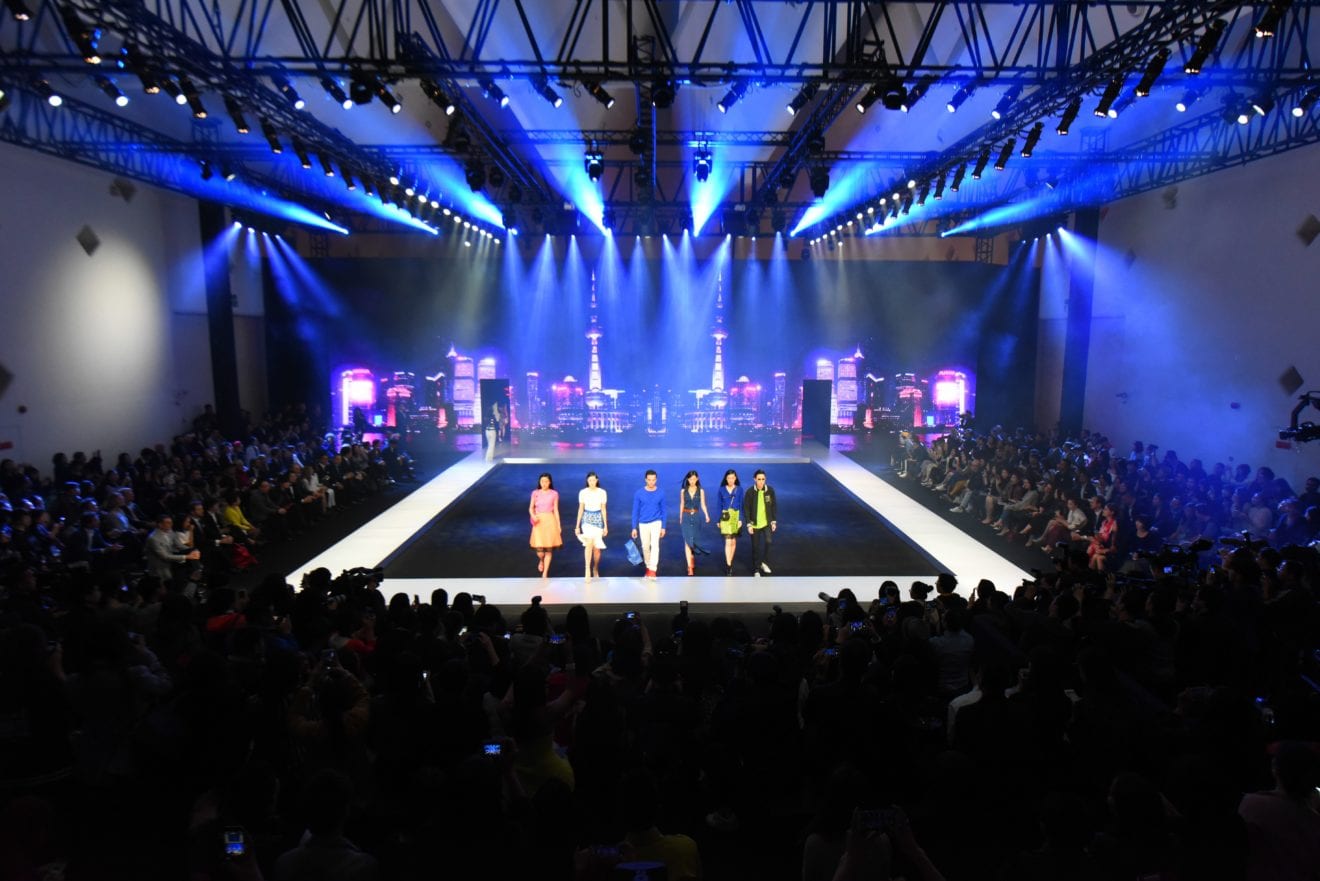
    A live-streamed fashion show featuring 42 looks has marked the launch of a luxury Tmall flash sales channel via app that makes the styles immediately available to shoppers.

    Alibaba Group’s B2C online marketplace Tmall.com has launched the channel through its mobile-phone app, allowing viewers of the live stream to “scan and buy” the runway looks.

    Soft-launched about three months ago, the Tmall channel is being managed by Mei.com, which since 2010 has run a website in China that provides a flash sales outlet for nearly 300 international luxury brands including Armani, Longchamp, Michael Kors, Tumi and Zegna, through exclusive partnerships.

    Mei.com CEO Thibault Villet with Olivia Palermo and Mei.com President Seamon Shi.

    Mei.com CEO Thibault Villet with Olivia Palermo and Mei.com President Seamon Shi.

    Alibaba invested an undisclosed amount in Mei.com in July, saying the site’s relationships with affordable luxury goods merchants would complement Tmall’s roster of high-end retailers such as Burberry, Coach and Hugo Boss. The new flash-sales channel gives Tmall.com shoppers direct access to discounted luxury goods from more than 3000 retailers and authorised distributors.

    “The launch of the channel will further the variety of brands on Tmall and offer China’s burgeoning middle class a one-stop shopping platform,” says Alibaba Group CMO Chris Tung.

    Millions of consumers across China watched the fashion show. It featured clothing and accessories, including 30 womenswear looks, 10 menswear looks, and a finale including two children’s looks.

    Actor Peter Sheng, famous for his role in the China web series Go Princess Go, made his runway debut in the show wearing a Carven suit. American socialite Olivia Palermo styled one of the runway looks and was a front-row attendee of the show wearing the look herself.
    Trendsetters and tastemakers attending the event also included singer Chris Lee and runway model and pop star Tia Ray, who also performed.

  • Fossil wearables teams with major fashion labels

    Fossil wearables teams with major fashion labels

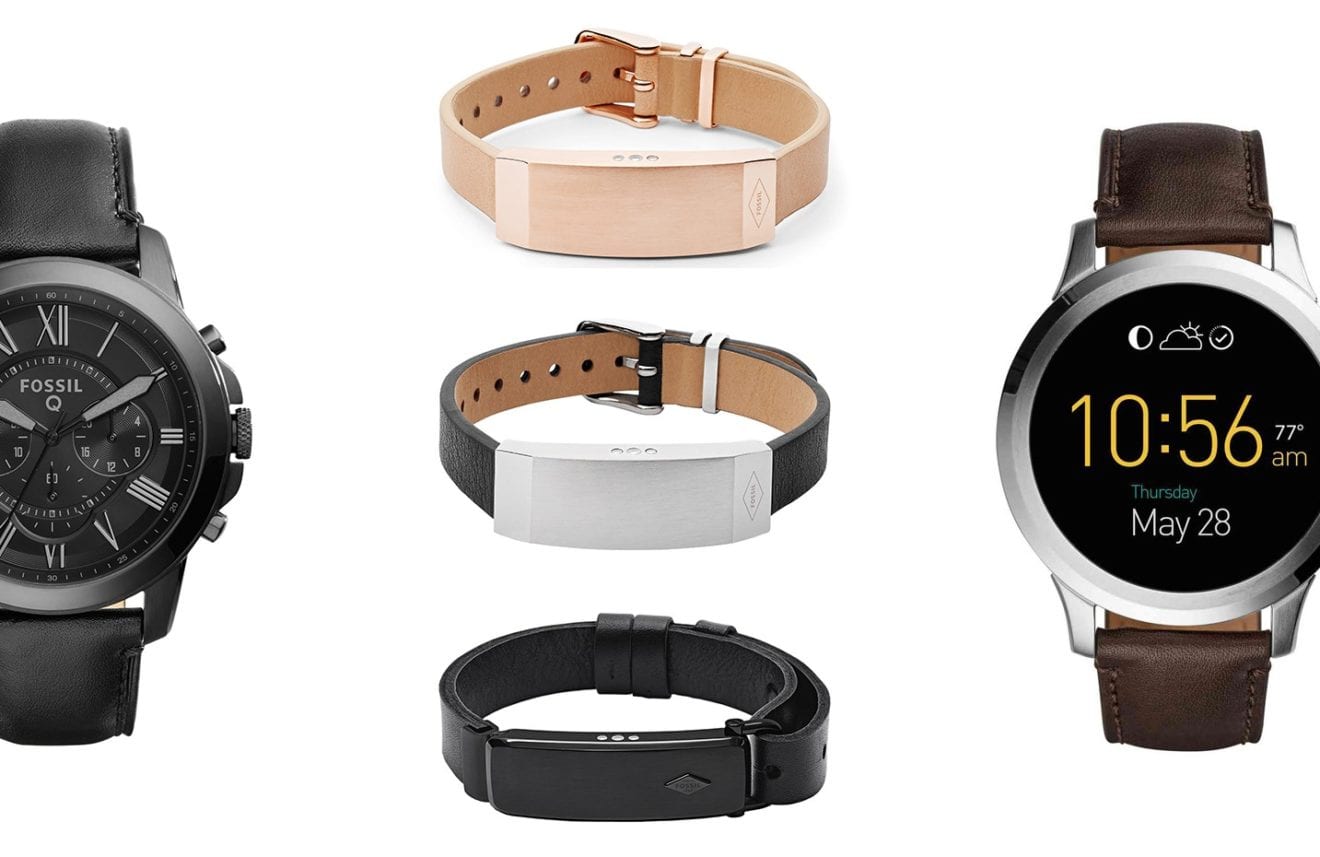
    Fossil wearables has teamed with major fashion brands Chaps, Diesel, Emporio Armani, Fossil, Kate Spade New York, Michael Kors, Misfit and Skagen to launch in 40 countries in 2016.

    Fossil Group says it plans more than 100 wearables products – which include display- and non-display watches and trackers – will be available in 40 countries and more than 20 languages later this year. The category of wearables offered will vary by brand.

    Fossil Group will support the wearables with unique and branded apps across all brands, three product categories, and two operating systems. The 2016 launches are part of the company’s efforts to bring a fashion-first focus, innovation and an increased variety of products to the wearables industry.

    “One of the distinct advantages of a fashion company over traditional consumer electronics manufacturers is our product cycle,” said Greg McKelvey, chief strategy and digital officer with Fossil Group.

    “We demonstrate remarkable speed to market, from development to launch, in order to meet the retail industry’s seasonal new product deadlines.

    “The industry has been slow to adapt to growing consumer desires for new styles and options for wearables. With the diversity of major fashion brands we offer, customers will be delighted with the sheer volume of styles and options available when shopping for a wearable that fits their personal style.”

    With the look, feel and fashion appeal of traditional watches, Fossil Group’s digital display watches and non-display watches leverage the company’s core competency in making beautiful, quality watches.

    Since acquiring Misfit in November 2015, Fossil Group has increased capabilities for the development and production of the technology supporting its wearables products. The company’s wearable technology platform includes proprietary power management technology that enables coin cell battery-powered non-display watches and trackers to be deployed across the entire Fossil Group brand portfolio.

    Without the need for daily, weekly or even monthly charging, the new devices function much more like traditional watches and lifestyle accessories than as typical consumer electronic products that require daily maintenance.

    Concurrent with the advancement of Fossil Group’s owned technology and research and development capabilities, the company continues its strong partnerships with third-party technology partners, including Google and their Android Wear platform, to deliver on the company’s short- and long-term wearables strategy.

    Fossil Group this week displayed Fall products – including wearables, watches, jewellery, leather goods and other accessories – to business partners and media in its new European headquarters in Basel, Switzerland, during the annual Baselworld marketplace show for the world’s watch and jewellery industry.

    The new, 108,000 sqft, seven-floor Basel facility was constructed with modern geometric architecture. Three floors of brand showrooms present brand-immersive experiences for each of the company’s 17 owned and licensed brands, and a large auditorium and event space.

  • Product Lighthouse to launch in Singapore

    Product Lighthouse to launch in Singapore

    Singapore is to become the first offshore market for Australian consumer electronics product information platform Product Lighthouse.

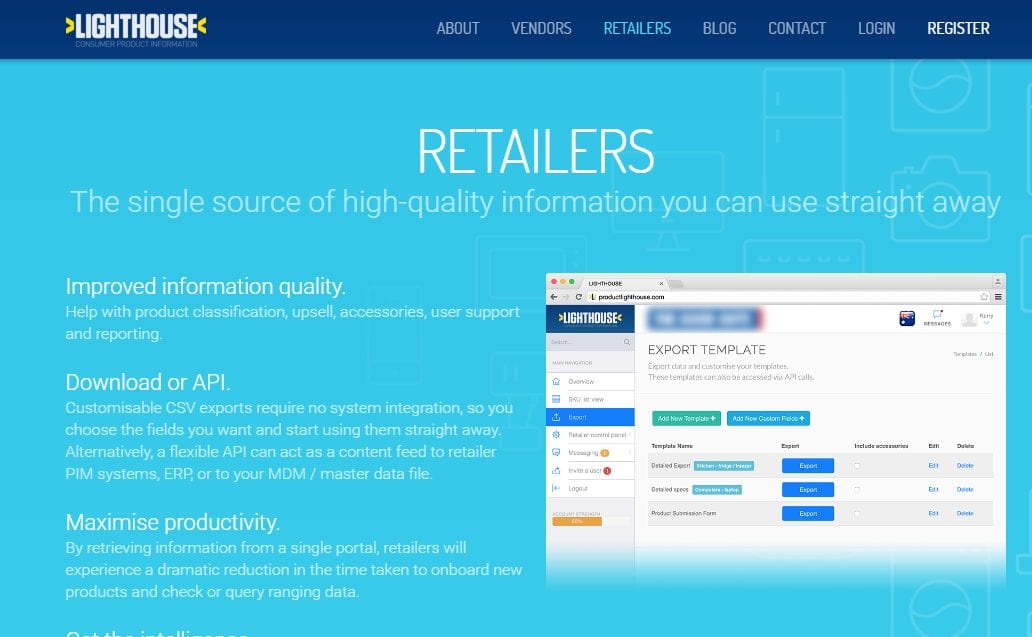
    Electronic goods retailers upload product information to the content distribution platform, and its data-validation tools identify and correct data errors and gaps. Retailers can use the system to access product data in the format that suits them. They can receive product submissions, compare specifications and send information about products.

    Product Lighthouse replaces the manual system of sharing data via email and spreadsheets, saving time and improving data integrity. Its name is a reference to the importance of helping customers and store staff alike navigate to the right products.

    Singapore has been chosen by the company because of the sophistication of its domestic market, the demand for electronic goods and the close level of integration with neighbouring countries.

    With the platform’s launch set for the second half of this year, discussions have started with retailers and manufacturers.

    Through Product Lighthouse, information entered by vendors is available for retailer websites, catalogues, staff training and in-store tickets.

    Research by Product Lighthouse shows that 87 per cent of consumers say they leave a website and go elsewhere when product data is not available, and 64 per cent of consumers say they are less likely to buy from a retailer who does not provide full product information.

    “Most of us have visited a store and found staff unable to answer our questions,” says CEO Chris Grannell. “Even though most consumers buy electronic goods in a physical store, the growing significance of the internet in the product-discovery process means that comprehensive and accurate information online is essential.”

    In an audit of product information on retail websites in Singapore, the company found inaccuracies and information gaps. Grannell says there were some “astonishing” inaccuracies such as incorrect specifications, key attributes missing, wrong weights and sizes.

    “We even found one website that had a laptop listed with a gender. These things happen because content is transferred from manufacturers to retailers manually. Even with the most conscientious staff, mistakes will happen.

    “Added to that, the nature of this industry means that information is not available all at once, which means it is more of a drip feed and less of a single transfer.”

    Product Lighthouse is designed with low-fi integration in mind. “Making things easy is part of our DNA,” says Product Lighthouse chief technology officer Gex Cheng, “so we’ve created the ability for retailers to export content in customised spreadsheets that can be loaded into their systems. We’ve also invested heavily in collaboration tools and in the ability to read output from all kinds of manufacturer databases and libraries.

    “I always like to remind our users that our approach is to ensure our software fits their workflow rather than changing it.”

    Cheng and Grannell will be in Singapore next month, with their product also being showcased at theTech in Asia expo at Suntec Convention Centre.

  • Inside SingTel Singapore

    Inside SingTel Singapore

    SingTel Singapore has repositioned itself as a ‘human services brand’ by putting the customer at the core of its retail store design rationale.

    The latest generation store rendition was created by Sydney­-based design agency Public Design Group. Co-­founder and director of retail strategy and business development, Jason Pollard, says the agency is focused on ensuring that SingTel’s store design strategy supports the market opportunity and the business opportunity – with particular focus on recognising the rapid technological change driving the telecommunications sector and business model.

    “It’s not about device sale, the plans or the data,” he explained. “That’s only one-­third of the total revenue that’s going to be made in the future; the other two­ thirds is called the Internet of Things or information and communications technology.”

    Singtel store 2

    Since launching the partnership with SingTel Singapore, Public Design Group has implemented the new design across four additional SingTel stores, with the telco embracing the concept of ‘brand experience’ as opposed to ‘branded space’.

    Pollard explains that taking lifestyle propositions and fully enabling them across a variety of devices with different services represents the fundamental design ethos of the store.

    The approach to designing the store represents a departure from that of other telecommunications retail stores, which often emulate the streamlined devices and technology.

    “We’re not celebrating devices anymore, we’re celebrating what they can do,” said Pollard.

    Singtel store 6

    Customer ­centric design

    The store’s entrance features a digital portal showpiece, identified by Public Design Group as a gateway into the new market of information and communications technology solutions. The portal’s purpose is to emphasise SingTel’s shift in brand focus from product to people. “SingTel as a brand no longer wants to be perceived as a technology organisation,” Pollard said.

    Singtel store

    “They want to be perceived as a service brand, which is mirrored in providing the very latest greatest lifestyle solutions for their customers.”

    Singaporean retailers have widely adopted an electronic queuing system, as part of dealing with high volumes of traffic. Public Design Group saw an opportunity for personalising the customer experience and collaborated with digital agency, Texture, in Singapore to develop a bar code system, which allows waiting customers to explore the store instead of standing in a queue.

    Singtel store 1

    The ‘Q ticket’ is imbued with a barcode that can be scanned on any of the hundreds of micro screens around the store. Each screen is associated with a product or accessory, providing detail and price. Once scanned, the detail is stored in a virtual shopping basket, which is viewed by the store assistant prior to them meeting the customer.

    “That barcode allows you build a virtual shopping basket of things that interest you, so that by the time you go to meet the service staff and do whatever you want to do, you can hand them your virtual shopping basket,” explained Pollard. “Immediately that opens conversations relevant to the customer and empowers the staff to be more relevant to their customer.”

    Singtel store 5

    A customer service lounge, featuring leather wing back chairs, is designed with the purpose of creating an environment that encourages more consultative conversations. Placing the service proposition in the front window of the store as opposed to the back of the store emphasises SingTel’s focus on providing a premium customer experience.

    “One of the key factors of having to deal with a Telco is addressing how well they are going to look after me when it all goes wrong, so that service lounge is a key part of winning market share and making a statement in the market place,” Pollard said. “At SingTel, we’re looking after our customers – even if they’re not buying, we’re solving problems.”

    Singtel store 3

    Pull over push

    As part of the new ‘pull’ sales strategy for SingTel, promotional material in the store is significantly reduced, with statistics showing high value transactions typically come from conversations rather than communications.

    Similarly, new social trends and customer behaviours were studied to showcase lifestyle themed propositions on gesture­ controlled displays.

    Gesture control for the large format screens within the store was employed to allow customers to scroll through the various ‘integrated technology’ stories in the same way as they would on a tablet.

    Singtel store 7

    “People don’t like touching big technology because it’s hot, expensive and it puts them in the spotlight,” argued Pollard.

    “SingTel has put the customer first,” said Pollard. “We have developed a customer centric store and that’s why it’s such a great experience.”

  • Virtual reality in retail stores

    Virtual reality in retail stores

    Virtual Reality, as a concept, has been around for over 50 years.

    In the beginning, it was literally the stuff of science fiction.  Then in the early 90’s it actually became reality, when physical prototypes were developed, using the modern technology of the era.  The results were underwhelming – imagine pixelated graphics and heavy, nausea inducing headsets. The concept lay dormant for 20 years before anyone thought to revisit its feasibility.

    That person was Palmer Luckey, the young inventor and founder of Oculus VR. What he discovered is that without anyone realising it, technology had quietly caught up with the requirements of VR. There were now low-latency head orientation sensors and small, high-refresh rate OLED displays which didn’t exist just five years ago.

    Using these off the shelf parts, he constructed a rudimentary hardware proof-of-concept which delivered an immersive experience far beyond what had been seen before.

    From this initial prototype, Oculus was founded, bringing on board many high profile experts in the field of computer graphics, alongside millions of dollars in funding. Their inaugural consumer VR product is about to be released to the public, and many smart people consider this to be a watershed moment.

    Will this be the event that introduces practical VR to the masses?

    Oculus (now owned by Facebook) is leading the way, but Apple, Google, Microsoft and Sony are all working on their own implementations of VR. There’s a full-on VR technology arms race happening, with the usual suspects involved.  They recognise the huge potential of the medium, and the unique ways it can complement their existing product offerings.

    VR 2.0

    This new generation of VR technology is in its infancy, and as with any nascent platform, pundits try to predict the types of experiences it will enable. Stereotypically, new mediums are often projected (interpreted) through the lens of the incumbent platforms which precede it.

    The first automobile was considered a “horseless carriage”. The first motion picture content was essentially just televised theatre. Simply re-imagining the experience of an old medium through a new one may be the path of least of resistance, but it ignores the unique elements of the new.

    So the theory goes, in order to fulfill its true potential, a new medium needs to abandon previous biases and embrace the characteristics and constraints which are unique to it.

    But does this calculus apply to VR? Perhaps not. Unlike all previous mediums, it is has no baked-in constraints. It is not simply a proxy for storytelling or communication. Its ambition is to replicate the reality we natively experience. It is, by design, the last medium.

    The obvious question becomes, what are the scenarios for which diving into an alternate reality becomes preferable to the “real” reality someone is experiencing. As mature as the underlying technology becomes, VR, for the foreseeable future, will forever be chasing the tail of “real life”.

    So what is the individual incentive to temporarily replace what we already (if we’re so lucky) get for free? Understanding the motivations that drive these virtual experiences can uncover the opportunities and jobs to be done of the medium.

    Applications

    In the context of VR, the virtual “reality” is simply “content”. As with all previous mediums, the success of this one will be intrinsically tied to the abundance and quality of content created for it. In this respect, authors and the tools they use to create with will be just as important as the technology that audiences use to consume with.

    These creation tools are also nascent, and consist of both hardware and software solutions.  Let’s explore a potential use-case for this technology within the realm of current domains.

    Virtual reality in retail: eCommerce and virtual stores

    A common current trend in the eCommerce space is the realisation that an online presence alone is not enough to deliver the ideal consumer experience. Even Amazon, the largest pure-play online commerce company has recently opened a “bricks and mortar” physical presence near its headquarters in Seattle.

    What is the impetus for taking this step “backwards” into the 20th century? Well, these companies have discovered that even with an (essentially) limitless online catalogue, the experience of browsing their catalogues online doesn’t compare to the act of literally walking down the aisles of a physical store. It is no substitute for the physical discovery process we take for granted.

    This applies not only to the type of merchandise that Amazon became famous for, like books, but especially so for more visual products like clothing and fashion. There is no substitute for the tactile experience of wandering through a curated store.

    But providing a physical presence requires sacrificing one of the key advantages of online commerce; having an effectively infinite reach, with the ability to target any consumer, wherever they are, independent of their physical location. Reaching global penetration at this physical scale is beyond the reach of all but the largest retailers.

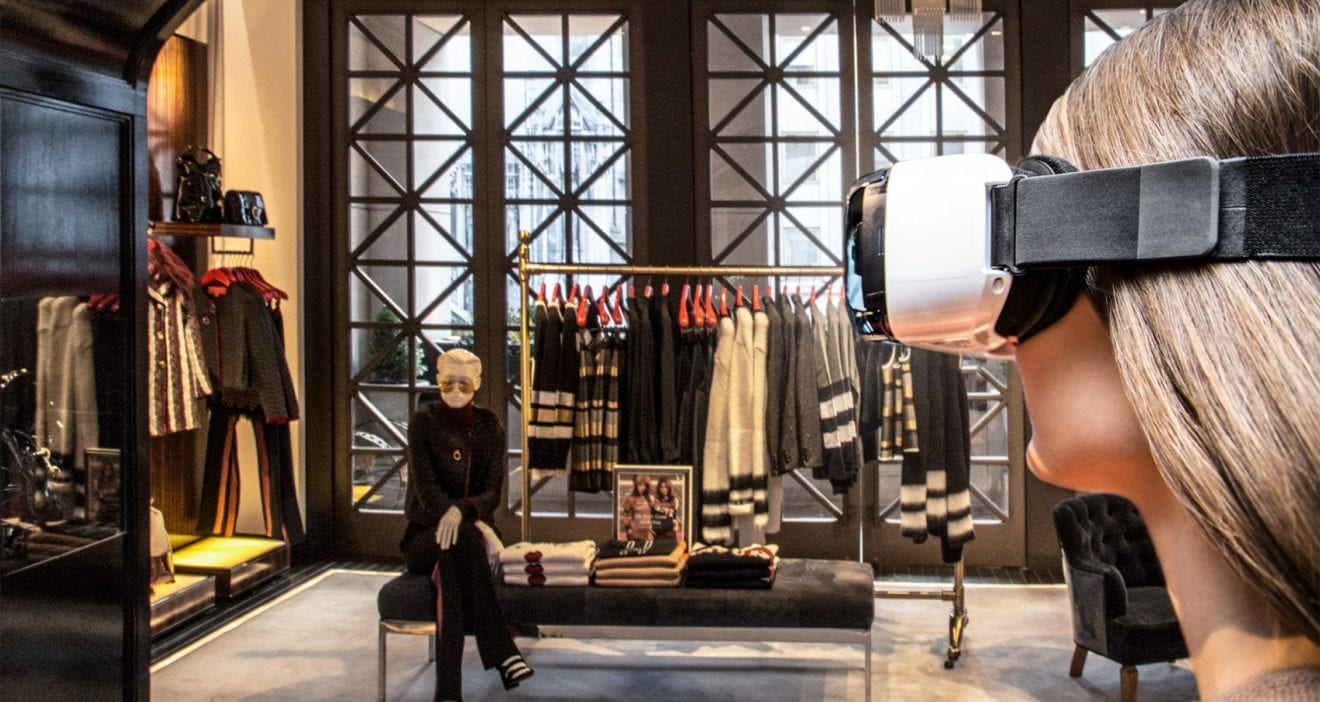
    Imagine consumers using VR to browse a virtual physical store, representing the catalogue (or a subset of) the online inventory. Even brands that have an existing physical retail footprint would benefit from the ability to amplify this bricks-and-mortar experience across markets they don’t have the scale or reach to address.

    Sizing has been an eternal struggle for online clothing retailers and consumers alike. How to know if the shirt you’re purchasing online will actually fit properly when it arrives?  Sizing charts are not standardised, and even if they were, there is no single reference body type to target a perfect fit.

    So how do you try before you buy? A virtual fitting room could come very close to replicating the experience of trying on clothes in a real physical fitting room. Imagine associating detailed physical dimensions of your body with your online shopping persona.

    Using this information, alongside similarly detailed sizing information for the individual clothing items could let you try on pieces of clothing in a virtual mirror. As you raise your arms or tilt your hips, you could see the fabric as it contours and hangs off your virtual body.

    Future opportunities

    This is just one creative application of VR hardware and virtual environments. The potential is almost limitless, and there isn’t a field or industry that won’t be touched in some way by this technology.

    While the incumbent hardware/software companies have all planted their stakes in the ground, there will be massive opportunities for all players in the ecosystem, especially content creators who understand how to create experiences on this new canvas.

    Once again, this illustrates the competitive advantage which exists for companies who can master the intersection of design and technology. Organisations who successfully combine these two disciplines will be in a unique position to benefit from the enormous future demand for virtual experiences.

    written by Marc Lamothe, Technical Director at Start Hong Kong

  • Mobile, millennials to drive retail innovation

    Mobile, millennials to drive retail innovation

    Mobile commerce, millennials and faster fulfilment will drive retail innovation this year, according to commercial supply chain specialist Manhattan Associates.

    It predicts a rapid migration to more personalised shopping, with mCommerce presenting big challenges as well as inspiring innovation.

    Emerging Asia is still the fastest-growing region of the global economy, says the company, with strong labour markets and a growth in disposable income expected, especially in Southeast Asia. This means a continued rise in consumer spending along with mounting pressure for retailers to keep up with consumers and their rising expectations.

    “Millennials particularly demand seamless experiences across multiple channels, as well as more and slicker order and fulfilment options,” says Manhattan’s Southeast Asia MD Richard Wright.

    This means retailers must make informed choices about not only what is right for the consumer, but also right for the business.

    Wright says retailers will have to make some fundamental changes this year to address growing consumer demand, expectations for a more personalised shopping experience and increased use of mobile technology.

    “We have identified five key areas in which retailers can focus attention, not only to achieve customer satisfaction but also to drive business growth and profitability.”

    He defines the five key areas as:

    • Making the shopping experience personal and frictionless,
    • Recognising the power of millennials,
    • Embracing mobile technology to achieve customer-centric retailing success,
    • Delivering faster; and
    • Being more flexible with returns.

    “The anonymous shopping experience has had its day,” says Wright. “On the back of digital personalisation success, retailers are turning their attention to the in-store experience, recognising both the rise in customer expectation and the differentiation personal service can offer.”

    He says this experience can range from recipe ideas and ingredients lists in supermarkets to intuitive, customer-inspired fashion recommendations. “Retails have the chance to transform the in-store engagement.”

    Research by the group last month has shown that tailored shopping experiences will encourage more shoppers to engage with the in-store experience. In a consumer survey, 49 per cent of respondents said they would interact more with store staff members if the shopping experience was personalised.

    “When a shopped reaches the point of sale, give them tailored discounts, recommendations based on their shopping history, and even style tips matched to their recent purchases,” the group suggests.

    Manhattan Associates also says personal shopping is back. “It is time for retailers to redefine the role of stores, embrace technological innovation that drives both service enhancements and operating margins, and engineer a cultural shift that will enable staff to reinforce brand value and deliver personalised service across every channel.”

    There is a need to redefine the role of the store assistant. As consumers become ever more connected, store assistants need the knowledge, skills and desire to offer the best possible shopping experience.

    Dissatisfaction impacts brand reputation

    “Failing to give customers what they want will result in dissatisfaction and more complaints, which can have a longer-term impact of brand reputation and sales.”

    In Malaysia alone, says the company, the National Consumer Complaints Centre received 41,531 complaints in 2014, a 28 per cent increase for the previous year.

    Retailers can avoid such dissatisfaction by educating their store staff, but more is needed than just product information, says Manhattan Associates.

    Frontline staff need access to stock levels across all stores, warehouses and distribution hubs so they can sell the entire network of available inventory rather than just the stock in an individual store.

    Having an overview of enterprise stock and being able to offer delivery alternatives will keep customers loyal.

    “We predict that many retailers will being emulating the experiences of companies like Parkson, and change their structure so the store assistant plays a fundamental part in the buying process from start to finish, and acts more as a personal advisor.

    “However, a cultural change such as this cannot happen unless it is championed from the top down. Board-level executives need to buy into the potential results possible from investment in staff and customer experience initiatives.”

    Manhattan Associates believes millennials, who constantly interact with the online world, are frequent yet demanding shoppers.

    “We think it is time for millennials to take the lead on what they would like from a retail experience, and help retailers drive new strategies and initiatives. With 40 per cent of Millennials happy to give up cash completely, and 91 per cent opting to use a self-service checkout, it is clear these 18 to 34-year-olds shop differently to the traditional retail model. They adapt to technology quickly and expect retailers to do the same.”

    Another finding from the company’s research is that customers shopping via mobile devices spend up to 66 per cent more than those solely shop in a store. But as mobile devices now play a more important role in not only browsing and buying, but also paying for goods, the potential is even greater.

    Manhattan Associates predicts that retailers will use more beacons this year to augment the in-store experience.

    “Not only are these devices cost-effective, they communicate directly with smartphones through Bluetooth, meaning stores can lure in passing customers with offers and discounts.”

    Store assistants can also use mobile technologies to enhance the shopping experience. Tablet devices can enable assistants to deliver a personalised experience. They can access an online product catalogue populated with a shopper’s purchasing history, wish lists, online shopping cart and return history, improving their ability to up-sell and cross-sell.

    Meanwhile, POS technology is transitioning from fixed-point transactions to mobile engagement, offering payment acceptance “on the go” for all of a customer’s orders in a single transaction. This can be by cash, cheque, credit or such systems as Apple Pay.

    Advanced mobile POS technology can handle the most complex return situation with the least amount of friction, regardless of which channel initiated the order or how the customer chooses to receive credit.

    While price is the main attraction for 67 per cent of shoppers, across both online and in-store shopping, fast delivery is important for 51 per cent, and flexible returns for 42 per cent.

  • China retail consumption to jump 50%

    China retail consumption to jump 50%

    China’s total retail consumption will jump 50 per cent to $6.5 trillion by 2020, with online transactions accounting for half of that growth, according to new research.

    Seventy per cent of those e-tail purchases will be conducted via mobile devices. Over that same five-year period, cross-border eCommerce will have grown so high – to $152.1 billion – that it will represent one-third of the country’s total foreign trade.

    So say think tanks and research firms watching the world’s second-largest economy as it transitions from its former manufacturing base to one driven by consumption. The predictions were issued by Alibaba Research Institute, the research arm of Chinese eCommerce giant Alibaba Group, as part of its inaugural “Think Tank Summit on the New Economy” held last weekend in Beijing.

    The new annual event brought together over 600 thought leaders to look at ahead at the next five years in Chinese commerce. A panel of judges surveyed research from the 40 participating organisations and picked “10 Forecasts for the New Economy,” which focused not only on the importance of eCommerce but also the impact the internet will have China’s manufacturing, logistics, rural economy and society.

    The use of data, culled from billions of transactions as Chinese consumers buy and sell goods and services online, will also play a key role.

    “China today is in the midst of transforming from an industrial-driven economy to a data-driven economy,” Gao Hongbing, dean of AliResearch and vice president of Alibaba Group, said in a statement.

    “These 10 forecasts are a small part of our observation and thinking, and we hope they can play a part in stimulating further deliberation on the society’s future development.”

    Bain & Company predicted that China’s online retail market would reach $1.52 trillion, accounting for 22 per cent of the country’s retail industry, with maternity and baby products being the strongest category and third-and fourth-tier cities driving a significant part of the growth. The Boston-based management consultancy also said that mobile Internet would make up 70 per cent of all online sales.

    Bain put the total figure for cross-border eCommerce in China at $152 billion, with AliResearch in a separate prediction saying it expects cross-border eCommerce to make up one-third of China’s foreign trade in five years. The China Center for International Economic Exchanges said “e-international trade” will change how trade overall is done and that it will account for account for 30 per cent to 40 per cent of total world trade by 2025.

    Boston Consulting Group estimated that China’s consumer market will climb $2.3 trillion, or 50 per cent, to $6.5 trillion by the close of the decade. Online will account for 42 per cent of that growth, the management consultancy said.

    The internet would also penetrate all rural areas of China, according to Zhejiang University’s China Academy for Rural Development. As a result, the Information Research Department of the State Information Center of China said the sharing economy will rise to full prominence given this full penetration of broadband coverage in China. The Institute of Information Society Studies said China would have a “soft law” system providing a framework for Internet governance by 2020 as well.

    The other predictions included one from the Information Society 50 Forum & Department of Sociology and Anthropology at Peking University, which said that data will digitise how consumers are assessed, say, in providing individual recommendations. The Information Society also noted that the vast reams of data collected as consumers buy and sell goods online will as a result erode some of their privacy.

    ZenCoo, meanwhile, predicted that social measurement and cognitive experiments will replace statistical sampling, revolutionising the fundamental theories of many disciplines including psychology, sociology, economics, and communications.

    And finally, according to the Data Center of China Internet, the 3D printing market will reach $15.2 billion, with households using them the most.

  • Pos Indonesia eyes eCommerce boom

    Pos Indonesia eyes eCommerce boom

    Indonesia’s national postal service, Pos Indonesia, is mulling a spin-off its logistics arm in 2019 an IPO to capitalise on the online shopping boom.

    Pos Indonesia is aiming for Rp 11 trillion ($796 million) in revenue within the next two years, according to its director of technology and financial services, Indyruwani Asikin Natanegara. One third of this would come from its logistics arm, Pos Logistik Indonesia.

    This would more than double Pos Indonesia’s estimated revenue of about Rp 4 trillion last year, and be a nearly eightfold increase (about Rp 500 billion) for Pos Logistik Indonesia.

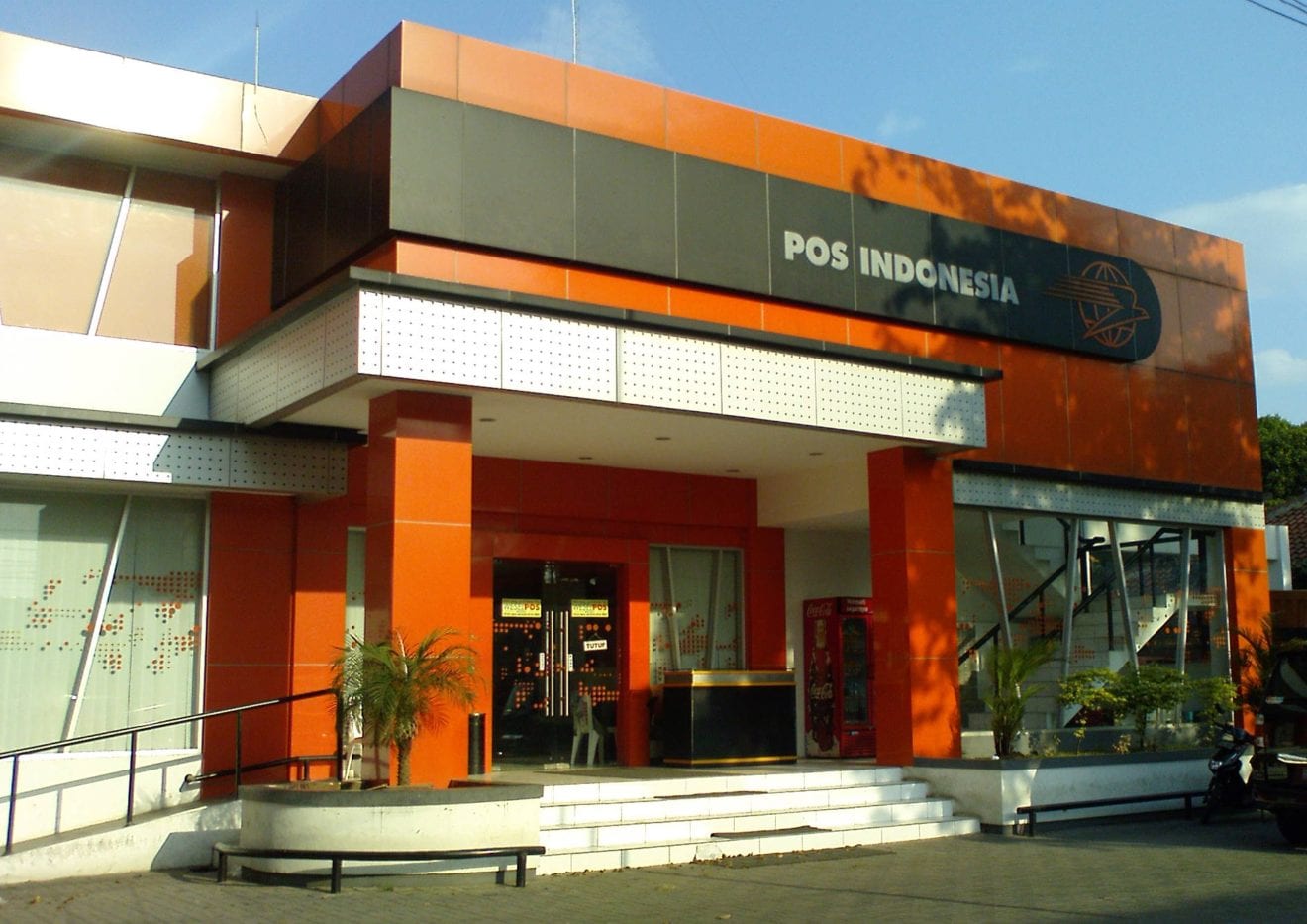
    Established four years ago, Pos Logistik Indonesia may make its trading debut before its holding company. It is something Pos Indonesia has been discussing for three years. With a network of 4367 offices and more than 28,000 agents, Pos Indonesia has established ties with such eCommerce companies as MatahariMall and Zalora Indonesia, in providing pickup and delivery services.

    Pos Logistik Indonesia’s business solutions director Yan Hendry Jauwena says the idea is to provide logistics for eCommerce companies. It has formed a partnership with Singapore-based technology firm Anchanto, which will be offering its services for warehousing and inventory, processing orders and delivery.