Tag: telecom

  • Reliance Jio Pushes for Satellite Spectrum Auction

    Reliance Jio Pushes for Satellite Spectrum Auction

    In a letter to Minister Scindia, Reliance Jio highlighted the Supreme Court’s ruling in the 2G case, warning that the TRAI’s omission of questions regarding a level playing field could result in potential legal disputes.

    The letter from Reliance Jio was prompted by the TRAI’s rejection of its request to include questions about the level playing field between terrestrial network providers, which use ground-based towers for mobile services and satellite communication service providers.

    The TRAI previously reported to have initiated a consultation process that aimed to determine the methodology and pricing for assigning spectrum to satellite companies, enabling them to offer calling, messaging, broadband, and other services in India.

    In its letter, Reliance Jio pointed out that several satellite communication companies, including Elon Musk’s Starlink, Amazon’s Kuiper, Bharti Group-backed OneWeb, Eutelsat, and the SES-Jio joint venture, have shown interest in offering their services in India. This development poses a direct challenge to land-based mobile networks. Consequently, Reliance Jio asserted that a fair and transparent auction system for satellite services is crucial to ensure equitable competition in the market.

    Reliance Jio noted that while the Department of Telecommunications (DoT) acknowledged the necessity for a level playing field in its reference to the TRAI, the consultation paper released by the TRAI seemed to neglect this important concern. Reliance Jio expressed that it believes the TRAI has prematurely closed the discussion without seeking input from stakeholders.

    The telecom operator further stated that the consultation paper did not pose relevant questions regarding the level playing field, preventing stakeholders from expressing their views.

    “Such a consultation exercise could result in recommendations that disregard this vital issue of level playing field. Although we have raised this issue with TRAI and asked that the consultation paper be revised to address the level playing field issues between satellite and terrestrial networks, our request has not been considered favorably,” Reliance Jio said.

    The government, under the Telecommunications Act 2023, has chosen to allocate spectrum for specific satellite services through an administrative process instead of using an auction.

    Reliance Jio emphasized that a comprehensive analysis of technological advancements, market demand and supply, and the economic feasibility of conducting spectrum auctions was not carried out by the DoT or the TRAI prior to the decision to allow administrative allocation for satellite phone services.

    Reliance Jio further stated that, in accordance with the clear legislative intent and the DoT’s acknowledgment of the need for a level playing field between satellite and terrestrial services, the TRAI should conduct a thorough assessment of technological advancements, market demand and supply, as well as the technical and economic feasibility of auctions for satellite services.

    Reliance Jio warned that failing to do so could render the TRAI’s consultation process and subsequent recommendations subject to legal scrutiny. The company highlighted that the Honorable Supreme Court of India, in various judgments, has underscored the importance of a transparent and fair mechanism for spectrum assignment, rejecting the ‘first-come-first-served’ method.

    “Any preferential treatment of satellite-based services, whether under the guise of emerging technologies or global precedents, should be firmly rejected. Spectrum assignment policies must align with established legal mandates, including the Supreme Court’s directive on adopting a fair, transparent and non-discriminatory approach,” Reliance Jio added.


  • Telkomsel Trials Facial Recognition for Prepaid SIM Registration

    Telkomsel Trials Facial Recognition for Prepaid SIM Registration

    This makes Telkomsel the second telecom company in the country to adopt this biometric technology.

    On Friday, Telkomsel announced that it is trialing facial recognition in its customer service portal, GraPARI Online, and the MyGraPARI app.

    The facial scan compares the individual’s features with government identity databases to confirm the customer’s identity. Facial recognition will be used alongside current validation methods like Population Identification Numbers (NIK) and Family Card Numbers (KK).

    Telkomsel’s MyGraPARI has been indirectly using facial recognition by supporting eKTP, the digital version of Indonesia’s ID card that includes biometric data. MyGraPARI also offers fingerprint scanning as an ID verification option.

    Telkomsel’s Sales Director, Adiwinahyu Basuki Sigit, mentioned that facial recognition will simplify and secure the process of registering and replacing prepaid cards, while also enhancing personal data protection.

    He stated, “This biometric technology not only streamlines the registration process but also supports the implementation of Know Your Customer (KYC) standards to ensure the accuracy of customer data and reduce the risk of fraud and identity theft in today’s digital age.”

    Telkomsel’s announcement follows XL Axiata’s launch of a new prepaid SIM card registration process using facial recognition after a successful trial last month.

    These developments signify that facial recognition technology is becoming more prevalent in Indonesia, especially among government agencies and companies. There is a notable focus on immigration checkpoints.

  • Globe Expands Network with New Cell Sites in Central Luzon

    Globe Expands Network with New Cell Sites in Central Luzon

    Globe Telecom has constructed six new towers in Bulacan, including two in Marilao and one each in Angat, Doña Remedios Trinidad, Hagonoy, and San Jose Del Monte, while expanding a total of 22 additional sites across the province.

    In Nueva Ecija, the company has built six new towers, located in Aliaga, Gapan City, General Tinio, San Isidro, Santa Rosa, and Talavera, and expanded 11 existing sites to provide enhanced digital services to both urban and rural areas.

    Globe Telecom has added five new cell towers in Apalit, Floridablanca, Mexico, San Luis, and Sasmuan in Pampanga to improve network coverage.

    In Tarlac, three new sites were added in Bamban, Concepcion, and Tarlac City, with additional site upgrades further improving the province’s overall network coverage. Approximately 15 existing sites were upgraded to boost network capacity and coverage.

    Joel Agustin, Globe’s SVP of Service Planning and Engineering, emphasized that the company’s network expansion across Central Luzon highlights its dedication to delivering world-class connectivity to all Filipinos.

    Agustin noted that the addition of the new towers and expansion sites aims to improve connectivity and empower communities to prosper in the digital age.

    Globe’s ongoing network expansion aligns with its mission to close the digital divide in the Philippines. The company aims to offer all Filipinos access to digital benefits, promoting inclusive growth nationwide through continuous infrastructure upgrades and network expansion.

  • India Becomes World’s Second-Largest 5G Handset Market in H1 2024

    India Becomes World’s Second-Largest 5G Handset Market in H1 2024

    Senior Research Analyst at Counterpoint Research, Prachir Singh, remarked on the overall market dynamics, noting that 5G handset shipments have been consistently increasing. He highlighted that the rise in availability of budget-friendly 5G handsets has led to significant growth in emerging markets.

    According to Singh, India has become the second-largest 5G handset market, surpassing the US during the first half of the year. “The strong shipments from Xiaomi, vivo, Samsung and other brands in the budget segment were the main reason for this trend. Other emerging markets also witnessed high growth in 5G handsets. Consumers in emerging markets are looking at 5G handsets as an upgrade to their devices, even in the lower price segments,” explained Singh.

    “The Caribbean and Latin America (CALA) region was the fastest-growing region, registering 63% YoY growth, driven by high growth in key countries like Mexico and Brazil. The CALA region accounted for 14% of global net adds despite having a 6% 5G shipment share in H1 2024. Asia Pacific accounted for 63% of the overall global net adds and commanded a 58% 5G shipment share. In Europe and the Middle East and Africa (MEA) regions also, 5G handset shipments witnessed double-digit growth,” he added.

    Apple led global 5G handset shipments, capturing over 25% of the market share, due to strong sales of the iPhone 15 and 14 series. Samsung was the second-largest player with more than 21% of the market, driven by its Galaxy A and S24 series. Both Apple and Samsung secured five positions each in the top-10 list of 5G models for the first half of 2024, with Apple dominating the top four spots.

    Xiaomi ranked third, primarily due to significant growth in India, where it saw triple-digit increases, and double-digit growth in the Middle East, Europe, and China. vivo also experienced notable growth, driven by strong performances in India, China, and other emerging Asian markets. Among the top 10 brands, Motorola achieved the fastest growth, with notable advances in the CALA region, India, MEA, and North America.

    Commenting on the near-term outlook for 5G shipments, Research Director, Tarun Pathak, indicated that, “5G handset contribution to the overall handset market was over 54% in H1 2024, crossing 50% for the first time. As the democratization of 5G handsets increases with increasing 5G penetration in lower price segments as well as increasing expansion of 5G networks, this trend will further grow. The ongoing global premiumization trend will further fuel this growth. According to our market outlook, [the] 5G share will cross 57% in 2024 and 65% in 2025.”

  • SoftBank Corp., Intelsat Forge Partnership to Enhance Connectivity

    SoftBank Corp., Intelsat Forge Partnership to Enhance Connectivity

    SoftBank Corp. and Intelsat have announced a pioneering partnership to develop a unified ubiquitous network designed to provide constant connectivity for users regardless of their location.
    The collaboration will see the two companies working together on research and development (R&D) initiatives to achieve seamless 5G integration between terrestrial mobile networks and satellite communications.

    Under their new partnership, SoftBank and Intelsat aim to create a hybrid communication solution that will keep users connected globally, whether it be via terrestrial or satellite networks or using a single device and account.

    This solution will utilize standard architectures, interfaces, and processes similar to those that currently facilitate device roaming between cellular networks. It is expected to accelerate the commercial deployment of mobility solutions based on the latest 3GPP 5G standards for non-terrestrial networks.

    A primary objective of the SoftBank-Intelsat collaboration is to create a universal device that remains connected in different regions and scenarios.

    For instance, a connected vehicle equipped with this device would automatically switch to satellite communication when out of range of terrestrial networks. This innovative solution is anticipated to have broad commercial applications, including in land transportation, maritime operations, and disaster response and recovery.

    The project will proceed through several phases including design, development, field testing, and commercialization. These efforts will synchronize with the evolution of new 3GPP 5G non-terrestrial network standards. The hybrid solutions developed will support both existing satellite terminals and future 5G-based terminals as they become available.

    “Intelsat and SoftBank share a pioneering vision of ubiquitous networking and seamless interoperability between satellite and terrestrial networks,” said Bruno Fromont, Intelsat Chief Technology Officer. “Until now, the challenge was aligning standards that allowed the two different networks to connect. With recent progress on 5G-based standardization of non-terrestrial networks led by Intelsat at 3GPP and this strategic collaboration with SoftBank, we are ideally positioned to accelerate the design and practical implementation of commercial hybrid services that will allow devices to freely roam between satellite and terrestrial networks.”

    Hideyuki Tsukuda, Executive Vice President and CTO of SoftBank, emphasized that integrating terrestrial mobile networks with satellite communication through advanced roaming technology could merge these previously separate networks.

  • 2G network shutdown postponed to October

    2G network shutdown postponed to October

    The Ministry of Information and Communications has deferred the shutdown of 2G networks to Oct. 15, saying over three million users have yet to upgrade their devices.

    The shutdown had been planned for Sept. 15. The ministry pointed out that subscribers need phones that support 3G or newer technologies to continue using telecom services after the shutdown.

    The Vietnam Telecommunications Authority said at a meeting Friday that over five million subscribers have upgraded in the last two months, bringing the number of 2G users down to 3.4 million as of Sept. 8.

    Authorities have been nudging 2G users to make the switch for months, even rolling out policies to help them buy new devices and shutting down networks in some areas.

    But typhoon Yagi has stymied the process, with people and businesses focused totally on coping with its aftermath.

    There is also a shortage of phones, especially budget devices, making the switch difficult for many.

    Pulling the plug on 2G will promote the adoption of 4G, which can help familiarize people with digital and online public services, and free up resources for network providers to focus on developing 5G and 6G technologies.

  • Washington tries to curb Huawei with eight more license revocations

    Washington tries to curb Huawei with eight more license revocations

    Someone’s been a busy little bee and has revoked eight licenses in 2024 that allowed some companies to export high-tech products to Chinese giant Huawei. This busy little bee is, of course, the Biden administration.

    The latest Reuters report shines a light on the matter and tells the story how Washington managed to cancel a total of eight licenses (so far in 2024) with the goal to increase pressure on the company, which has resurrected with the release of the Mate 60 Pro. You know, this 5G-capable phone shouldn’t have materialized in the first place, but in spite of the US sanctions did so last year.

    Huawei’s smartphone sales surged by 64% year-on-year in the first six weeks of 2024, according to various reports. Huawei’s smart car component business also contributed to its fastest revenue growth in four years in 2023.

    As I’ve said on previous occasions: good luck trying to contain technology. Yes, it may take some time, but, eventually, other companies will figure things out. You simply cannot contain it.

    In 2019, Huawei faced a significant setback. The United States said Huawei phones pose a thread (because of privacy issues) and imposed sanctions on the company. These sanctions restricted American firms from doing business with Huawei, particularly in supplying key technologies and software essential for its smartphones.

    One of the most critical impacts was the loss of access to Google Mobile Services (GMS), which includes popular apps like Gmail, Google Maps, and the Play Store, on Huawei’s new smartphones. This meant that Huawei phones released after the sanctions could no longer come pre-installed with these familiar Google apps, affecting their appeal to international consumers who rely on these services.

    The US government argued that Huawei’s close ties to the Chinese government posed a potential risk of espionage and unauthorized data access, particularly through Huawei’s telecommunications equipment. As a result, the U.S. placed restrictions on American companies supplying Huawei with critical components and technology necessary for building and expanding 5G networks.

  • Huawei opens a flashy store across the street from the Apple Store in this city

    Huawei opens a flashy store across the street from the Apple Store in this city

    You surely have seen a McDonald’s located next to a Burger King, or a Nike store near Adidas. Believe me, it’s not a coincidence.

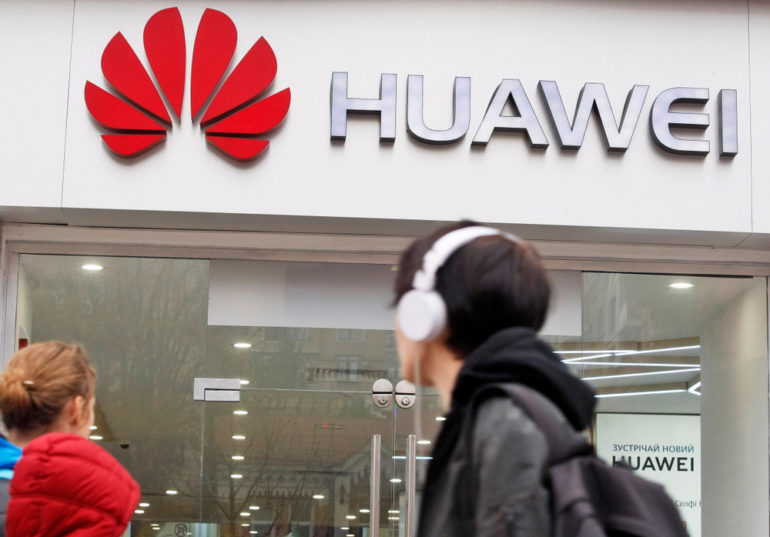
    Now, if you hop on the plane to Shanghai for the weekend, you’ll see Huawei’s new flagship store – it’s just across the street from Apple’s flagship shop. A Reuters report tells the story – Huawei, updating its retail strategy, is aggressively opening flagship stores in China.

    Many are “just a stone’s throw away from Apple shops”. How convenient.

    Huawei’s recently renovated Shanghai flagship store takes an enormous place – three floors of a famous heritage architecture building in the financial hub’s busy shopping district. It includes a coffee shop and a gym!

    Huawei opened four such flagship stores in major Chinese cities between December and February, shifting from licensed distributors after rebounding from 2019 U.S. sanctions. “The Huawei flagship store is very nice. It looks much brighter inside compared to the Apple Store across the street,” said Amy Chen, a 27-year-old physiotherapist.

    Huawei now has 11 flagship stores and plans to surpass 20, aiming to catch up to Apple’s 47 in China. Huawei’s new stores and premium products challenge Apple, which saw a 6.6% drop in iPhone sales in China in Q1 2023, while Huawei’s shipments increased by 110%.

    The Far East behemoth has developed its own chips and popular 5G products, aggressively recruiting dealers.

    “As Huawei now manages to ship in large quantities, given the good profit margin they could provide, (distributors) have become willing to purchase Huawei devices again,” said Ethan Qi, associate director at Counterpoint.

    Over 5,200 licensed stores opened in early 2023, mostly in smaller cities. This marketing push has significantly impacted Apple and other Chinese smartphone makers like Xiaomi, Oppo, and Vivo.

    Huawei’s flagship stores showcase premium products, competing directly with Apple. “Huawei now has a long product line,” Qi noted. Between 70-80% of Huawei’s sales come from physical stores, while Apple sees about 40% online.

    This comeback is felt beyond mainland China, with Hong Kong shops like Trinity Electronics stocking more Huawei devices. “People are willing to pay a lot of money for high-end Huawei,” said owner Simon Lam.

  • Nvidia aims to set up a base in Vietnam

    Nvidia aims to set up a base in Vietnam

    Nvidia wishes to establish a base in Vietnam to develop the country’s semiconductor industry as it considers the Vietnamese market an important one, the Vietnamese government said, citing the U.S. chipmaker’s chief executive.

    In his first visit to the Southeast Asian country, Nvidia’s CEO, Jensen Huang, said the company viewed Vietnam as its home and affirmed its plans to set up a center in the country.

    “The base will be for attracting talent from around the world to contribute to the development of Vietnam’s semiconductor ecosystem and digitalization,” the Vietnamese government statement cited Huang after his meeting with Prime Minister Pham Minh Chinh.

    Nvidia, which has already invested $250 million in Vietnam, is set to discuss cooperation deals on semiconductors with Vietnamese tech companies and authorities in a meeting on Monday, Reuters reported on Friday.

    Vietnam, which is home to large chip assembling factories including Intel’s biggest globally, is trying to expand into chip designing and possibly chip-making.

    The chipmaker has already partnered with Vietnam’s leading tech companies to deploy AI in the cloud, automotive and healthcare industries, a document published by the White House in September showed when Washington upgraded diplomatic relations with Vietnam.

  • FPT Telecom becomes Cloudflare’s official distributor

    FPT Telecom becomes Cloudflare’s official distributor

    FPT Telecom has reached a cooperation agreement with Cloudflare to provide solutions to Vietnamese businesses’ network security problems.

    The cooperation was announced at FPT Tower, Hanoi, on September 5, with the attendance of representatives from both sides, including Vu Anh Tu, CTO of FPT Corporation; Tran Thanh Hai, CTO of FPT Telecom; Tran Hai Duong, Chairman and CEO of FPT Telecom International (FTI); Do Anh Tuan, Director of FPT Telecom International’s Business Division; Karun Ruamsuke, Cloudflare’s Head of Indochina, Thailand, PHL; Mai Thi Ngoc Tu, Cloudflare’s Indochina Sales Lead; and Tan Ghim Hwee (Ghims), Cloudflare’s ASEAN Channel Account Manager.

    There were also solution experts, many guests from government agencies, and senior leaders in technology and financial companies.

    Duong said that FPT Telecom has officially become Cloudflare’s distributor in Vietnam, Laos, and Cambodia. This marks a crucial step forward in the company’s Go Global strategy.

    The event also plays an important role in helping businesses in the region optimize their website’s access speed, enhance security, and reduce operation costs.

    FPT Telecom, with a large customer base and proven ability to deploy cloud computing services through many typical case studies in the banking and finance sectors, can advise on and deploy security solutions for all customers in all industries.

    Becoming Cloudflare’s first official focused distributor in Vietnam, Laos, and Cambodia also helps FPT Telecom deliver the best support to customers in terms of technology and cost optimization.

    Accordingly, FPT Telecom will provide enterprises with two main product groups: Cloudflare SME for small and medium enterprises with optimal performance and cost; and Cloudflare Enterprise, which provides the full range of Cloudflare product groups (network, application, zero trust, developer services) and tailor-made solutions to meet the unique service requirements of customers.

    Karun, a Cloudflare representative, also shared his sincere thanks and affirmed the importance of the solid cooperative relationship between Cloudflare and FPT Telecom. It is strengthening its position as a leading telecommunications supplier and bringing advanced cloud technology and cloud security solutions to customers.

    FPT Telecom is committed to bringing various benefits and excellent experiences to customers using services from Cloudflare based on their strengths in deploying and providing solutions for large customers; having connections with network operators in Vietnam with the largest PoP placed at FPT Telecom; owning an experienced technician team with more than 40 Cloudflare certified engineers who are available to support anytime, anywhere; and being adequately qualified to be Cloudflare’s Level 1 support in Vietnam.

    Established in 2009 with headquarters in San Francisco, California, USA, Cloudflare is a technology company specializing in security solutions, DDoS attack prevention from layer 3 to layer 7, and global network infrastructure.

    Cloudflare is one of the leading security and privacy service providers in the industry with the largest infrastructure capacity compared to any similar providers, with infrastructure in over 300 cities in over 100 countries, including China with more than 30 POPs.

    The company aims to build a more sustainable and secure Internet environment for everyone. It meets the flexible requirements of any customer with diverse solutions such as security, optimization, and acceleration for websites and applications; it provides an all-in-one solution for network scalability and security; data storage; and developer timeline improvement.

    FPT Telecom Joint Stock Company (FPT Telecom) is one of the region’s leading telecom and Internet service providers. Established on January 31, 1997, the Online Service Center was founded by four members with the first Internet product from Vietnam, called Vietnamese Wisdom (TTVN).

    The product is considered the foundation for Internet development in Vietnam.

    With the pioneering mission of bringing the Internet and connection to the Vietnamese people, along with the great desire for every Vietnamese family to use at least one service of the company, FPT Telecom is making efforts to implement the strategy “Bringing the Best Experience for Customers” on the basis of promoting the core cultural value of “customer-centric” and the foundation of FPT technology power, thereby pioneering to become a digital service provider with the most outstanding customer experience nationwide.

    FPT Cloud Hub is an ecosystem of applications and services surrounding cloud computing developed by FPT Telecom International Co., Ltd. (FTI).

    The company provides advanced, quality solutions specifically for businesses in Vietnam and the region, with the top criteria being: increasing the application experience of businesses and their customers; optimizing costs of equipment, infrastructure, and cloud computing platforms; and supporting the building and conversion of systems from classic platforms to advanced cloud computing infrastructure.

  • T-Mobile is making things worse for people struggling financially

    T-Mobile is making things worse for people struggling financially

    Just when you think T-Mobile is done delivering bad news, something new comes along. Just today, it was reported that customers are having a meltdown at stores after learning about the new fee for offline payments and now the carrier has dropped two more bombs.
    The Mobile Report spotted a change to the company’s terms and conditions and found two potentially worrying things. One of the clauses says that “you may still incur charges while an account or service is suspended.” This means that the company has the right to charge you even when you are not using their services because of a non-payment suspension.

    And even though the website uses the word “may,” The Mobile Report has received a screenshot of an internal document that says that customers will be charged during account suspension.

    This went into effect on July 19 and employees have apparently been told that the charges are not prorated – meaning customers will be charged the full amount for the entire billing period – and they will not be credited.
    As is the case with the offline payment fiasco, employees will have to deal with disappointed customers and this time around, T-Mobile doesn’t even explain why it has made this change.
    Verizon is the only of the big three carriers that does not charge customers during non-payment suspensions.
    Besides that, T-Mobile also says it’s “not responsible for any… …information, goods, or services provided by third parties.” So if you do business with a third party and something goes wrong, you can raise a dispute but it would be up to T-Mobile if it wants to help and it can walk away scot-free.
    This means that customers will have to be a lot more careful about where they shop from as T-Mobile can simply refuse to help if something goes wrong with the device you were provided or you were misguided about a plan by an authorized retailer.
  • Verizon’s all-digital Visible unit has a deal on the Pixel Fold that starts on July 18th

    Verizon’s all-digital Visible unit has a deal on the Pixel Fold that starts on July 18th

    July is almost here already which means that from now through next Wednesday, July 5th, Verizon’s all-digital wireless unit Visible is still offering $5 a month off of its Visible plan for new subscribers. For $25 per month per line (taxes and fees included), you get unlimited talk, text, and data. This plan does support 5G and LTE connectivity, but keep in mind that the 5G service for this plan is limited to Verizon’s slower low-band 5G.
    The Visible plan includes unlimited calls and texts from the U.S. to Puerto Rico, the U.S. Virgin Islands, Guam, and Saipan. In times of heavy traffic for the Nationwide 5G and LTE networks, your data speed may get throttled. This plan also offers unlimited mobile hotspot capabilities for one device at speeds up to 5Mbps. During times of heavy traffic, your hotspot speed might get throttled. When you’re in the States, you can make unlimited calls and send unlimited messages to Canada and Mexico. And spam is blocked before it even gets to your phone. Again, this plan is $25 per month unless you wait until July 6th or later to subscribe when the price reverts back to $30 per month.
    If you want faster 5G data speeds, the Visible+ plan is $45 per month (fees and taxes included) and it uses both Verizon’s Nationwide 5G and its C-band Ultra Wideband signals. The latter delivers a download data speed up to 10 times faster (from personal experience) than Nationwide 5G. And yes, Visible+ has 4G LTE connectivity. With this plan, you can use your phone as a mobile hotspot with unlimited data speed of up to 5Mbps.
    This plan also offers $10 off on Verizon home internet, spam protection, and unlimited calls and texts to Canada and Mexico when you’re in the States. It also provides talk, text, and unlimited data when traveling in Mexico and Canada, plus the U.S. Virgin Islands and Puerto Rico. International calling is included from the U.S. to 30+ countries. You can call up to 500 minutes per month at no additional cost. With the Visible+ plan, you also can partake in unlimited texting internationally from the U.S. to over 200 countries & territories worldwide.
    Now here’s the big news. Starting on July 18th you can buy the Pixel Fold from Visible and receive a $200 gift card back. Here’s how it works. Join Visible and sign up for the Visible+ plan and create your account. Within 30 days of purchasing the Pixel Fold from Visible, transfer your number from an eligible carrier. Set up your SIM and activate the phone. After completing 3 full months of service payments on the Visible+ plan, you will receive an email with a code to redeem your virtual gift card.
    The Pixel Fold will be available in Obsidian with 256GB of storage and will be priced at $1,799; it can be financed through Affirm for 36 months ($49.97 per month).
    You can also test out the Visible network free for 15 days without having to produce a credit card number. You just need to have an unlocked iPhone XS/XR or later. The thing about Visible is that while it doesn’t have any physical retail stores, it does have a chat team that you can get in contact with 24 hours a day, seven days a week. And since Visible uses Verizon’s networks, its signals cover 99% of the U.S. population.
    Some say that wireless firms like Visible are the wave of the future since subscribers can take care of everything from the comfort of home without having to drive to a crowded store and be forced to deal with company reps. Still, not everyone is tech savvy which means that old-school retail stores are still necessary for now. But if you do know what you’re doing, an all-digital wireless provider might save you some money in the long run.
  • ​FPT Telecom gets new chairman

    ​FPT Telecom gets new chairman

    Hoang Nam Tien, chairman of FPT Telecom for the last three years, has been named vice chairman of FPT University.

    He will not join the board of directors of FPT Telecom Joint Stock Company (FPT Telecom) for the 2023-28 term.

    After becoming chairman in March 2020, Tien, 54, led FPT Telecom past the numerous challenges posed by the Covid pandemic.

    In 2020-22 the telecom operator’s revenues increased from VND11.46 trillion ($490 million) to 14.7 trillion and profits from VND 1.6 trillion to VND2.25 trillion.

    It also launched many new products and services such as FPT Camera, Foxpay e-wallet and FPT Play, an OTT service offered directly to viewers via the Internet.

    Tien started working for FPT Group in 1993.

    He has held many leadership positions in the corporation such as chairman of FPT Software Co. Ltd (2012-20), general director of FPT Hoa Lac Hi-Tech Park Development Co. Ltd (2007-12) and general director of FPT Distribution Co. Ltd (2003 – 08).

    Replacing him as FPT Telecom chairman is Hoang Viet Anh.

    FPT Group said the changes are in line with its agenda of rotating senior leaders.

    Anh also joined FPT in 1993 as a programmer when he was still a student.

    He too has held many senior management positions, working as general director of FPT Telecom since early 2018 and currently also holding the position of deputy general director of FPT Corporation and chairman of FPT Digital Transformation Consulting Company.

    Nguyen Hoang Linh replaces hun as FPT Telecom general director.

    Linh has worked for 15 years at FPT Telecom and is currently deputy general director.

  • Telecom operators want OTT players to pay for use of networks

    Telecom operators want OTT players to pay for use of networks

    Vietnamese telecom operators want OTT communications service providers to pay for using their networks, which they use to deliver their services but end up competing with them.

    Paying for the use would ensure a more fair and sustainable business model for themselves since they invest in setting up and maintaining the networks, telecom companies said at a meeting with the Ministry of Information and Communications on April 6.

    The CEO of Viettel Telecom, Cao Anh Son, said while telecom operators are witnessing a sharp decline in such services as calling and SMS, foreign OTT service providers operating in Vietnam are growing strongly, some in double digits.

    “The operators provide infrastructure for OTT players, but the OTT players do not contribute to the infrastructure development. The investment burden on the operators is big.”

    Data from Viettel shows 80% of Internet traffic between Vietnam and the world is for Facebook, Google and Netflix.

    A minor change in user behavior or content delivery, such as upgrading videos from HD to 4K resolution, can put a lot of pressure on network transmission. Bui Son Nam, deputy general director of MobiFone, hoped the amendments to the Telecommunications Law being drafted by the ministry would require cross-border OTT players to share infrastructure development costs with telecom operators.

    Nam and Son also pointed out that if cross-border OTT players and social networks cooperate with telecoms operators, it would help the ministry manage platforms and their contents better.

    In the amendments being made to the law, the ministry’s Vietnam Telecommunications Authority has called for regulating OTT services such as Zalo and Telegram.

    These OTT services are similar to calling and texting, and so should be regarded as basic telecom services on the Internet and need to be brought under the Telecommunications Law.

    In March European telecom operators they asked big tech firms in the U.S. to pay for the use of their networks.

    But the latter argued that they should not be asked to pay for the use of networks because they are already paying for the data they use as consumers.

    It would stifle innovation and competition in the internet and OTT space, and could lead to higher costs for end-users, they claimed.

    At a seminar held to discuss the proposed amendments on March 23 Vu Tu Thanh of the US-ASEAN Business Council said 10 years ago U.S. telecom company AT&T asked OTT players to pay, resulting in a major controversy.

    Eventually, OTT players did not pay after the principle of net neutrality was invoked to prevent discrimination between various services on the Internet, he said.

    “For example, high-priced services will be prioritized for bandwidth, while bandwidth for free services will be squeezed. This will make it difficult for essential social services, and services for small and medium-sized businesses.”

  • Better late than never, Google Fi’s 5G network now works on iPhones

    Better late than never, Google Fi’s 5G network now works on iPhones

    Google Fi, the company’s MVNO cellular carrier service, has tweeted that it is extending its 5G coverage to include iPhones. This is a major step forward for the company, as only Google’s Pixel phones could connect to Fi’s 5G network earlier.

    iPhone users who are Google Fi subscribers will now be able to utilize the service’s 5G network in 35 cities across the United States due to the extension. Google Fi’s use of numerous wireless networks, including T-Mobile, Sprint, and US wireless, enables this.To use Google Fi’s 5G network, iPhone users must have a compatible smartphone and be in a 5G coverage region.

    The network supports 5G-capable iPhones such as the iPhone 12 or newer.

    Google Fi’s 5G network guarantees customers faster bandwidth and reduced latency. This is especially useful for those who watch video or play games on their phones and companies that require dependable and quick internet connections.

    This late, but welcomed, expansion of Google Fi’s 5G network into the iPhone market is part of the company’s continuing attempts to bring its service to a broader variety of devices. While Google Fi was initially only accessible on Google’s Pixel phones, it has since been extended to include a wide range of Android devices and, most recently, iPhones using 4G.

    Using 5G on existing iPhones that are already on Google Fi’s network will require a few steps which include navigating to your iPhone’s Settings, then accessing the “Cellular” section. Once there, select “Cellular Data Options,” then “Voice & Data” or “Cellular”. Finally, pick “Voice & Data” and “5G Auto” after tapping your phone number.

    Overall, Google Fi’s 5G network extension to iPhones is a major development for both the business and its customers as Google Fi’s 5G network claims to provide a better user experience. Furthermore, the expansion of Google Fi’s service to iPhones is likely to draw new users, cementing the company’s place as a significant participant in the wireless carrier market.