Tag: telecom

  • T-Mobile subscribers can make hands-free calls using the Alexa digital assistant

    T-Mobile subscribers can make hands-free calls using the Alexa digital assistant

    Back in 2020, AT&T subscribers could use the Alexa digital assistant on their Echo smart speaker and smart display to make and take phone calls over the AT&T network. These calls could be going out to numbers in the U.S., Canada, and Mexico, or coming in from callers in those countries. A year later, Verizon subscribers were allowed to link their phone numbers to the Alexa digital assistant on their smart speakers allowing them to make or take hands-free calls.

    T-Mobile subscribers are now able to connect their phone numbers with Alexa allowing subscribers of the nation’s second-largest carrier to make or take calls hands-free through Alexa. A tip  The Mobile Report (formerly The T-Mobile Report) received included an image showing a cartoonish T-Mobile subscriber saying “Alexa, make a call.”  The rest of the copy on the promo says, “Link your T-Mobile number to your Alexa speaker to connect to the people & places that matter most-with the same hands-free convenience you’ve come to expect from Alexa.”

    T-Mobile has put up a support page explaining how to set up Alexa to make calls. First, to link your T-Mobile account to Alexa you will need the following:

    • A T-Mobile account with a Voice line
    • A T-Mobile ID
    • An Amazon/Alexa account
    • Alexa Speakers
    • iOS 14 or Android 8.0 or newer smartphone to pair via Alexa app
    To link using the T-Mobile with Alexa skill, open the Alexa app on your phone and go to More > Settings > Communication. Under accounts, select T-Mobile and follow the directions on linking your T-Mobile account.
    To link using the settings in the Alexa app, follow these directions:
    1. Download and sign in to the Alexa app.
    2. Select More > Skills and Games.
    3. Select the Search icon in the top-left corner and enter “T-Mobile”, then select T-Mobile with Alexa.
    4. Select Enable Skill.
    5. On the T-Mobile login page, enter the phone number or email address and password you used to create your T-Mobile ID, then select Sign in. You will be prompted to verify your account via text message with a T-Mobile verification code.
    6. Once verified, select the line you’d like to use for calling on Alexa and confirm your address for 911 calls.

    To unlink your T-Mobile account from Alexa, open the Alexa app and go to More > Settings > Communications. Under accounts, go to T-Mobile > Disable Skill. Follow the directions.

    To make a phone call, Say, “Alexa, call [contact name or phone number]” When there is an incoming call, Alexa will ring and announce the call / caller ID. Say “Alexa, answer call” or “Alexa, decline”. To make an emergency call, Say, “Alexa, call 911.” Alexa will share your e911 address with the operator prior to the operator answering the phone call.
    When you’re home in a room where you have one of your Amazon Echo speakers or screens, using Alexa sure is a convenient way to make or take calls without having to reach for your phone.
  • Providers of pre-activated SIM cards face suspension

    Providers of pre-activated SIM cards face suspension

    The Ministry of Information and Communications has announced that it will suspend network providers found distributing pre-activated SIM cards or cards registered under incorrect personal info.

    The providers need to publish a list of authorized salespoints on their websites and ensure that their employees only register subscribers who submit personal details in line with the national database, the ministry’s Telecommunications Authority announced Tuesday.

    The moves comes as part of a government effort to make sure that phone subscriber data matches the national database. Millions of subscribers have used pre-activated SIM cards registered under false information for years.

    Some salespeople even sell thousands of SIM cards registered with the same data, and buyers continue using them without updating the info.

    Pre-registered SIM cards are taken advantage of by many businesses for cold calling purpose. Last year, the Hanoi Department of Information and Communications had to request network providers suspend 882 subscribers from making spam calls and sending mass text messages to advertise their products or services.

    Network providers have been ordered to send text messages to falsely registered subscribers asking them to make corrections. After 15 days, if no changes are made, the user will be locked from making calls, while still being able to receive calls.

    There are 127 million phone subscribers in Vietnam, 96% of them belonging to VinaPhone, Viettel and MobiFone.

    Each of these three providers has 1.1 million to 1.4 million phone subscriptions with data that needs to be corrected.

  • Huawei is expected to make some noise in Barcelona

    Huawei is expected to make some noise in Barcelona

    It’s like old times in Barcelona where the MWC exhibition means something again. Manufacturers are showing off prototypes of future handsets, some with amazing form factors. Other firms are unveiling new phones at the event just like in the good old days. One company expected to announce its new flagship phone in Barcelona is Huawei as the P60 series is rumored to see the light of day very soon.
    According to MyDrivers, the Austrian Gax blog wrote that the Huawei P60 series could be unveiled at MWC 2023. Huawei’s P-series phones are focused on photography (don’t mind the pun since it won’t bite) and the P60 models will feature Huawei’s own XMAGE photography platform (as did last year’s Mate 50 line).
    The P60 Pro will be the first smartphone to carry the 50MP Sony IMX888 sensor (for the primary camera), and a 50MP Sony IMX858 sensor will be employed for the ultra-wide-angle camera.  We expect Huawei to use Omnivision’s 64MP OV64B sensor for the telephoto camera that delivers 3.5x optical zoom.
    The non-Pro P60 could sport the 48MP Sony IMX789 sensor for its primary camera. Both the P60 Pro and P60 should feature the 10-speed adjustable variable aperture feature that debuted on last year’s Mate 50 Pro and allows the aperture to change between f/1.4 and f/4.
    The Huawei P60 Pro could be powered by the Snapdragon 8 Gen 2 chipset modified to work with 4G signals only. The P60 might be equipped with the Snapdragon 8+ Gen 1 SoC which also would be tweaked not to support 5G signals. All things considered, these are not a bad pair of chips to employ.
    Huawei launched its emergency satellite communication service last year on the Mate 50 series. The firm’s second-gen satellite system will be featured on the P60 line and reportedly Huawei has added voice text capabilities and support for short-term voice calls to the ability to send and receive two-way text messages via satellite. Huawei beat out Apple last year by one day to become the first smartphone manufacturer to announce emergency satellite connectivity for its smartphones.
    The P60 line will have HarmonyOS 3.1 pre-installed. This could be a minor upgrade from HarmonyOS 3.0 that will focus on exterminating bugs, and improving the stability of the software.
    Keep your eyes peeled. MWC 2023 ends on March 2nd so we could see the Huawei P60 series introduced sometime soon. Huawei, returning to two flagship series a year, is expected to unveil the Mate 60 line in September. The Mate series usually comes out late in the year and focuses on innovative new technology and features. In 2021 and 2022, Huawei released only one flagship model each year with the P50 series launched in 2021 and the Mate 50 line released late last year.
  • Google Fi reportedly drops US Cellullar service from main supported network to extended roaming

    Google Fi reportedly drops US Cellullar service from main supported network to extended roaming

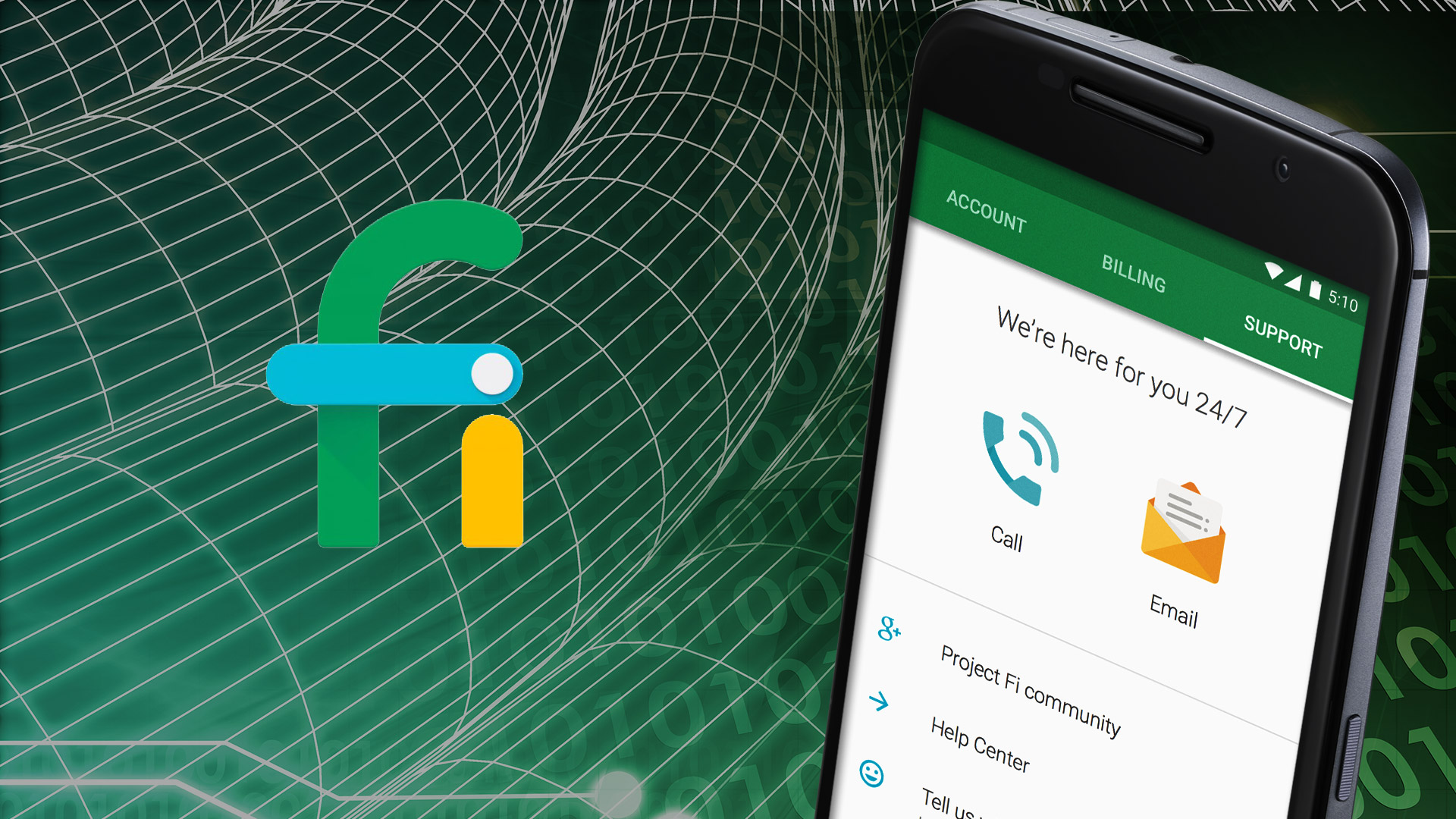
    Although not officially confirmed, it appears that Google Fi has dropped US Cellular as main network partner, leaving T-Mobile as the sole provider to choose from when using the MVNO. However, US Cellular is still supported as part of Google Fi’s extended network.

    This was discovered by users of the service when reaching out to Google Fi’s customer service and was then promptly posted on Reddit where other users have chimed in confirming that they are receiving the same information. Chat representatives have responded to each query with somewhat conflicting information, but the one thing they agree on is that T-Mobile appears to now be the only main supported network that doesn’t involve roaming.
    This has been cause for concern for Google Fi customers who live in areas where the US Cellular towers are more prominent. In one chat conversation, Google Fi customer support assured that although US Cellular is not longer an official network for Google Fi, users may still be able to access it through roaming on the company’s Extended Network without incurring roaming charges while using it in the United States. Additionally, the MVNO has removed its dialer code, which was required for manual switching to the carrier.
    What this means for users is that they will no longer be able to manually choose a network as there is no other choice besides T-Mobile. Previously, although the setting wasn’t permanent, Google Fi would allow users to manually select their preferred network. Additionally, it would automatically switch between T-Mobile and US Cellular in locations where both networks were available but one had better coverage than the other. This latest change takes both of these options away.
    Now, T-Mobile will take precedence over US Cellular when both networks are available, despite the fact that US Cellular may have a stronger signal in some areas. This is a big change from when Google Fi started offering its MVNO services in 2015 by utilizing T-Mobile and Sprint, and then subsequently added US Cellular as a third partner a year later. However, options began to shrink once T-Mobile acquired Sprint in 2020, effectively combining those two options into one.
  • Huawei reportedly testing HarmonyOS 3.1 before it is pre-installed on P60 line

    Huawei reportedly testing HarmonyOS 3.1 before it is pre-installed on P60 line

    The last Huawei phone to feature the Google Mobile Services version of Android was the P30 Pro released in March 2019. Banned from using Google software and apps by the U.S. Commerce Department due to security issues, Huawei developed its own operating system called HarmonyOS. It was first used on a Huawei smartphone with the Mate 40 series and the Mate X2 foldable. Eventually, Huawei Mobile Services was also released in 2019 and includes the company’s AppGallery app storefront.

    Gizchina reports that according to an unnamed tech blogger, Huawei is currently in the process of testing HarmonyOS 3.1 internally. Version 3.0 of the operating system was pre-installed on the Mate 50 line that was released to a warm reception domestically last year. The latest rumor says that the new build kills off some bugs while improving system stability. The report also says that Huawei doesn’t have plans in place to update recently released handsets over the air with HarmonyOS 3.0.

    And it isn’t too soon to be thinking about version 4.0 of HarmonyOS. The report says the operating system’s next major build will include some new designs (we assume that the UI of the operating system is what will be changed) along with some new functionality. Now here’s the deal folks, while HarmonyOS-powered handsets make up only 2% of the world’s smartphones, that is good enough to make Huawei’s in-house operating system the third largest smartphone platform in the world after Android and iOS.
    In talking with our readers throughout the years, some believe that Huawei deserves all of the punishments placed on it by the U.S. because the company is truly a national security threat. And there are others who believe that the U.S. started punishing Huawei only to make sure that it didn’t negatively impact Apple’s businesses. No matter what you believe, the Chinese manufacturer may not have thrived as it did in the past, but it didn’t roll over and die either.

    And Huawei’s Mate 50 featured some innovations including the Emergency Battery Mode that even with 1% battery life remaining allowed users to make calls for 12 minutes, send messages, and stay on standby for up to three hours. The Mate 50 Pro became only the second handset to feature a camera with a variable aperture.

    One of the most interesting apps available from AppGallery is called Petal Search. The app allows users to obtain, “daily weather forecasts and top news; live sports scores and schedules; video, image, and music searches; and financial news and stock market updates.” If you’re about to travel, Petal Search will “search millions of hotels worldwide and book rooms; and check flights and travel info for top global destinations.” Petal Search will also “look up local services and businesses with comprehensive directories.” But there is even more functionality to this app.
    If you’re looking for a particular app that isn’t listed on AppGallery for one reason or another, search for it on Petal Search and even apps developed by Americans will show up if they are available to be sideloaded from a third-party app store. If an alternative source for such an app is found, you can install it directly from the Petal Search app. When we first wrote about the app three years ago, it allowed Huawei device owners to install American-developed apps such as Amazon, Snapchat, Speedtest.net, and AccuWeather.
    Now that the U.S. has banned Huawei from receiving the 4G-only Snapdragon chipsets from Qualcomm, the company’s continued existence in the smartphone industry will depend on whether Huawei receives a patent for a new light source it created for the extreme ultraviolet (EUV) lithography machines that are used to etch extremely thin circuitry patterns on silicon wafers. It is crucial to the production of cutting-edge chips. One Ditch company, ASML, makes these machines and is banned from shipping them to China.
  • MobiFone profits down in 2022

    MobiFone profits down in 2022

    Telecom giant MobiFone reported a decline in profits and revenues in 2022, and said they fell short of targets.

    At a review meeting on January 5 the company said revenues fell to VND28.329 trillion (US$1.18 billion), and profits to VND2.71trillion.

    They had been VND31 trillion and VND4.96 trillion in 2021.

    The bright spot in the business last year was that data revenues increased by 27%.

    In April it had launched MobiFone Pay e-wallet and Mobile Money e-money.

    With the telecom market saturated and revenues on a downtrend, the company this year eyes new businesses such as digital finance, digital health and digital education, chairman Nguyen Hong Hien said.

  • Viettel profits highest in 5 years

    Viettel profits highest in 5 years

    Military-owned telecommunications giant Viettel Group earned pre-tax profits of VND43.1 trillion ($1.8 billion) in 2022, the highest growth recorded since 2017.

    The profits rose 3% from 2021. The group’s consolidated revenues increased by 6.1% to VND163 trillion.

    Viettel said telecommunications continued to be its main source of revenue, as the company remained the largest mobile telecommunications service provider in Vietnam, with a market share of 54%.

    Viettel’s telecommunications service revenue growth rate was 1.5 times higher than the world’s average.

    Last year, Viettel’s foreign investment for the first time reached nearly $3 billion. Meanwhile, it remitted home nearly $500 million, the highest amount in the last five years. By the end of last year, it had repatriated nearly 70% of its total investment abroad.

    The digital solutions and services provided by Viettel also had a breakthrough when revenues from information technology solutions surged by 58%.

  • Huawei collected more from patent licensing than it paid out for the second straight year

    Huawei collected more from patent licensing than it paid out for the second straight year

    No matter how hard the U.S. tries to punish Chinese manufacturer Huawei for being a threat to national security, the company keeps fighting back. After losing access to its U.S. supply chain in 2019 and being forced to abandon the Google Mobile Services version of Android, Huawei developed HarmonyOS with version 3.0 of the software running the Mate 50 series. The following year, the U.S. forced chip foundries using American technology to produce chips to stop shipping cutting-edge silicon to Huawei.
    Right now, Huawei can use 4G versions of Qualcomm’s top Snapdragon chips. While China’s largest foundry is unable to match TSMC and Samsung when it comes to producing the most powerful and energy-efficient chipsets, this could eventually change. Huawei has a patent to develop its own Extreme Ultraviolet (EUV) lithography machine. The EUV is used to etch circuitry patterns on wafers and with billions of transistors inside chips these days, these patterns must be a fraction of the width of a human hair.
    The top EUV lithography supplier is a Dutch firm called ASML, and it is not allowed to sell these machines to China. Since the invention of the EUV helped take chips to a 7nm process node and lower, Huawei’s patent could help China’s SMIC eventually compete with TSMC and Samsung Foundry. Right now, SMIC is believed to be able to produce 7nm chips for cryptocurrency mining but is limited to a 14nm process node for smartphone chips.
    Even with Huawei handicapped, the company continues to innovate, and according to Reuters, in 2022 it will generate more patent income from royalties than it pays out to license other firms’ patents. This will be the second consecutive year that Huawei has achieved this. Steven Geiszler, U.S. chief intellectual property counsel, said that Huawei signed or renewed 20 patent licensing deals this year.
    Some of the companies reaching an agreement with Huawei on these deals were non-U.S. automakers seeking to improve the communications capabilities of their cars. These firms include Mercedes-Benz, Audi, Porsche, and BMW. Geiszler pointed out the advantages to Huawei of making these deals when he said, “By getting a return on our R&D investment, it allows us to re-invest and re-invent.”
    This is a cycle that Huawei might be able to ride for some time even with the restrictions placed on it by the U.S. As Geiszler points out, the technology included in the patents that Huawei is licensing isn’t subject to U.S. restrictions. That’s because the technology is publicly disclosed.
    Huawei also agreed to extend its licensing deal with Nokia which collected revenue from Huawei when the deal was first signed in 2017. While Huawei has generated $1.2 billion from patent licensing over the last three years ending in 2021, it still has a long way to go to catch up with a company like Nokia which took in $1.59 billion in patent licensing revenue in 2021 alone. Huawei’s full-year 2022 patent licensing revenue won’t be computed until some time next year.
    The money generated by patent licensing still doesn’t make up for the billions of dollars in sales Huawei lost from the U.S. restrictions. However, the U.S. actions have helped Huawei become more aggressive when licensing its own patents. And with some cross-licensing deals, the company is getting money back from companies on the other side of the deal since Huawei isn’t producing as many devices as it used to.
    Huawei saw plenty of excitement earlier this year when it released the Mate 50 smartphone line using its homegrown Xmage photography system. One of the new features on the Mate 50 Pro is called the Low Battery Emergency Mode. When the phone is down to 1% battery,  it will deliver up to 12 minutes of phone calls or put the phone on standby for up to three hours.
  • Vodafone launches Business Pro II, broadband made for small businesses

    Vodafone launches Business Pro II, broadband made for small businesses

    If you have a small business in the UK and need a new broadband connection, you might want to check out Vodafone’s latest offering. As the mobile operator announced in a blog post, it has launched a new broadband service called Business Pro II.

    Depending on the tariff, Business Pro II has average download speeds ranging from 67Mbps to 900Mbps. It starts at £32.50 a month — for the 67Mbp plan — and can go up to £53.50 — for the 900Mbps tier. Business Pro II customers also receive free unlimited landline and mobile calls, 4G backup, and Wi-Fi support from technical experts.

    Something that distinguishes the Business Pro II from the rest of Vodafone’s business broadband options is that it comes with Vodafone’s Ultra Hub router and Super Wi-Fi 6E Booster — a device you can use to eliminate Wi-Fi dead zone

    Both the router and the booster support the latest Wi-Fi 6E technology and let you connect over 150 devices simultaneously. Wi-Fi 6E offers faster speeds, and since devices that support it utilize the still-uncongested 6GHz frequency, you should also have a more reliable connection with less interference when using Vodafone’s Ultra Hub router and Super WiFi 6E Booster.

    Only new and existing small business customers with between one and nine employees can sign up for Vodafone’s Business Pro II broadband. If your company is eligible and you want to get Business Pro II broadband, dial 191 from your Vodafone mobile, go to a retail store, or visit Vodafone’s official website.

    In case you want a new phone as well, feel free to check out our best Vodafone phone deals and get one from there with an amazing discount. Or, if you are rolling with another carrier, you can visit our top Virgin Media phone deals, best O2 phone deals, best Three phone deals, and best EE phone deals.

  • FPT Telecom Int’l, ViewQwest to offer one-stop DX services in Asia-Pacific

    FPT Telecom Int’l, ViewQwest to offer one-stop DX services in Asia-Pacific

    FPT Telecom International partnered with ViewQwest on Nov. 30 to elevate their capabilities in providing ICT and digital transformation (DX) services in Asia-Pacific, especially for large regional retailers.

    Known as one of the leading providers of telecommunications services and technology solutions in Vietnam, FPT Telecom International (FTI) has formed a strategic partnership with ViewQwest, an award-winning Singapore telecommunications, network and security solutions provider.

    ViewQwest will work with FTI in deploying digital transformation services in Vietnam and Singapore. Both companies will be establishing colocation facilities in FTI’s data center, providing on-ground technical and engineering support to ViewQwest’s customers in the two countries, including for software and hardware installation and troubleshooting services.

    “Businesses globally are being swept up by the digital transformation wave, none more pronounced than in the retail sector, especially enterprises with extensive multi-market coverage. Our partnership with FTI leverages their deep knowledge and experience in the Vietnam and Singapore market. The collaboration with FPT International Telecom will enable us to better serve our customers with regional operations,” said Vignesa Moorthy, Chief Executive Officer of ViewQwest

    Moorthy also affirmed that the cooperation had marked an important milestone in the Viewqwest’s journey of helping customers build and transform their network and security architecture with confidence, streamlining operations, driving cost-savings, and enabling business agility

    Tran Hai Duong, Chairman of FPT International Telecom expressed his desire to see positive results from the strategic partnership, stating that the two sides are ready to implement the commitments based on the agreement of FTI and ViewQwest.

    “The signing ceremony comes at an important juncture, where we use this agreement to further advance our partnership and support. I would like to emphasize FTI’s commitment to deliver the best values to customers and express our desire to focus on strategic engagement. We consider this partnership as an important part of a long and promising relationship,” said Tran Hai Duong.

    Established in 2001, ViewQwest is an award-winning telecommunications service provider in global and local connectivity, SASE and SD-WAN management, and managed security solutions. Consistently recognized as Singapore’s fastest fixed network from 2018 to 2022 by Ookla Speedtest Intelligence, ViewQwest is a partner of global multinational companies and leading enterprises in SEA in terms of building, transforming infrastructure and security.

    Headquartered in Singapore, ViewQwest expanded into Malaysia in 2016 as a fully-licensed operator serving the enterprise and residential market with its full suite of connectivity and managed network and security services. In 2019, ViewQwest commenced commercial operations in the Philippines. In 2022, the company expanded its market coverage to Hong Kong with Managed SASE, SD-WAN, and cybersecurity solutions.

    Established on May 22, 2008, FPT Telecom International is a member of FPT Telecom. Inheriting the experience and infrastructure of the mother company, one of the leading telecommunication services providers in Vietnam, FPT Telecom International has been operating independently since the beginning of 2008 and is now considered to be one of the top reliable services providers in Vietnam.

    FTI is one of Vietnam’s most comprehensive and broadly adopted Cloud and IT services providers, offering a full spectrum of services nationwide. Customers, including the fastest-growing startups, largest enterprises, and leading government agencies, use FTI to optimize their costs, as well as to promote the digital transformation process in the most effective way.

    The combination of FTI’s comprehensive digital solutions and ViewQwest’s regional network promises to bring many economic benefits and contribute to improving the competitiveness of businesses in the Asia-Pacific region.

  • Globe Deploys 252 More 5G-Ready Cell Sites on Philippines’ Southern Island

    Globe Deploys 252 More 5G-Ready Cell Sites on Philippines’ Southern Island

    Globe announced it has deployed 252 5G-ready cell sites on the Philippines’ southern island of Mindanao. The telco giant’s scaled-up deployment of 5G wireless technology across the country has yielded 933 cell sites in the first half of 2022.

    As of June 30, Globe’s 5G network had reached 85.8% of key cities in Visayas and Mindanao and 96.6% in the National Capital Region in terms of 5G outdoor coverage.

    Data showed a steady hike in 5G usage in Mindanao, particularly in Davao City, which almost tripled in June from the January figures. Likewise, hefty increases were registered in June by Cagayan de Oro and the town of Libona.

    Nationwide, Globe saw a 73.4% increase in 5G data traffic from January to June this year.

    “We continue to invest in the latest mobile technologies like 5G as part of our commitment to bring better mobile experiences that can uplift the lives of our customers no matter where they are in the country,” said Darius Delgado, head of Globe’s consumer mobile business.

    So far, Globe has already spent more than half, or 50.5 billion pesos, of its 89 billion-peso budget for capital expenditures this year. It was used to build new cell sites, upgrade existing sites to 4G/LTE, accelerate the rollout of 5G connectivity and ramp up the fiberization of Filipino homes nationwide, as part of Globe’s commitment to the United Nations Sustainable Development Goals.

    By the end of the first half of 2022, the number of devices serviced by Globe’s 5G network had increased by 52.6%, to 2.7 million, from 1.62 million in January.

    Globe 5G has fiber-fast download speeds of up to 156.84 Mbps (nationwide average) and even higher in Metro Manila at 167.63 Mbps on average as of May this year. These speeds peak at 342.7 Mbps nationwide and 347.2 Mbps in the capital region.

  • Singtel and Ericsson to Roll Out Singapore’s Most Energy-Efficient Radio Cell on 5G Network

    Singtel and Ericsson to Roll Out Singapore’s Most Energy-Efficient Radio Cell on 5G Network

    Singtel has announced the deployment of Singapore’s greenest radio cell, the Ericsson AIR 3268, to its 5G network. This is part of Singtel’s ongoing sustainability and decarbonization measures towards achieving net-zero emissions by 2050 and paves the way for more such radio cells to be deployed across the country to augment its nationwide 5G coverage.

    The AIR 3268 radio is expected to save up to 18% more energy and weigh approximately 40% less than earlier generations of 5G radios. At just 12kg, its proportions simplify upgrades and make new site acquisitions and installations easy on towers, rooftops, poles and walls – even in challenging locations. It also makes a 5G site 76% lighter than a 4G site that typically requires multiple radios while providing the same network capacity. This further reduces Singtel’s overall 5G network energy consumption, up to 58% lower than 4G today.

    The AIR 3268 is designed to provide real-time channel estimation and ultra-precise beamforming – or elimination of undesirable noise interference – to accelerate 5G mid-band spectrum deployment and boost capacity, coverage and connectivity speeds, thus enhancing mobile experiences for customers.

    Anna Yip, chief executive officer, Consumer Singapore, Singtel, said, “We are always looking for ways to deliver Singapore’s greenest 5G network while further reducing our carbon footprint. By integrating energy-efficient technologies into our operations and infrastructure, we aim to build a better, more sustainable future as we continue to deliver the best network performance and user experience to consumers and enterprises through our 5G solutions and services. With an optimized network, even end-users will be able to conserve energy on their mobile devices, making them part of the movement of building a better future together.”

    Martin Wiktorin, head of Ericsson Singapore and Philippines, noted, “Sustainability and energy efficiency are a priority for us at Ericsson. Deploying our energy-efficient AIR 3268 radio as part of Singtel’s 5G network is a significant step in our larger sustainability plan, which is focused on breaking the energy curve by activating energy-saving software, building 5G with precision and operating the site infrastructure intelligently. This will serve to manage mobile traffic growth while reducing energy consumption.”

    Deployment Simplicity and Improved Energy Efficiency

    Singtel 5G is a greener technology with higher data transfer rates compared to any previous wireless technology generation, working on a wide spectrum of 100 MHz, which provides cell capacity comparable to four Singtel 4G bands combined.

    The deployment of the AIR 3268, the lightest and smallest Massive MIMO (multiple-input and multiple-output) in the industry, is another step in Singtel’s energy-saving improvements as it explores smart and sustainable mobile technologies that optimize power and energy utilization in its operations.

  • Maxis in Metaverse Aims to Provide Immersive, Engaging Experiences for Customers

    Maxis in Metaverse Aims to Provide Immersive, Engaging Experiences for Customers

    Maxis is exploring the future of living, working, playing and learning in the metaverse. This is in line with its Rangkaian Kita Rangkaian Malaysia (RKRM) campaign to serve all Malaysians in every way possible and at all times.

    RKRM is the reinforcement and deepening of Maxis’ Always Be Ahead brand purpose. Maxis is driven by its evolution from a mobile telecommunications provider into a connectivity and digital solutions expert, one that offers solutions for every segment, powered by its leading 4G network and fiber coverage, as well as the best 5G innovation.

    While still in its preliminary stages, Maxis in metaverse aims to provide a unique destination for an immersive experience with highly engaging, relevant and rewarding interactions. Through the platform, Maxis provides a glimpse into the possibilities of what the future may look like from multiple perspectives – from essential services, customer engagement, enterprise solutions, gaming, talent procurement and immersive education – and is building an ecosystem of partnerships with multi-industry verticals.

    “The metaverse mirrors our brand purpose and our What’s Possible core value as it expands minds to the possibilities of what we can do in the digital future to continue serving our customers in the best possible way,” said Patrick Er, Maxis’ chief sales and service officer.

    In kickstarting this exploratory phase, Maxis has unveiled Malaysia’s first Virtual Telco Store in the metaverse, Maxis Centre Decentraland, a connected retail experience in the metaverse to benefit customers with specific offerings. Users will be able to shop for Maxis products and services using the latest 3D technology; view and develop ideas on how they can transform their homes with Maxis home devices powered by Maxis Fiber; and even purchase collectible NFTs through collaboration with Malaysian artists.

  • Telenor Asia Headquarters in Singapore to Capture New Market Growth

    Telenor Asia Headquarters in Singapore to Capture New Market Growth

    Telenor Group has announced the formation of Telenor Asia, a more independent regional entity with headquarters in Singapore. Telenor Asia will take on full oversight and responsibility for the company’s operations in Bangladesh, Malaysia, Pakistan and Thailand.

    “The strengthened team at our Singapore headquarters will add value to our operations and safeguard our regional interests. This will also help us ensure value creation of our assets. We will explore structural partnerships or, in the future, a potential IPO,” said Jørgen Rostrup, head of Telenor Asia.

    “The foundation for our continued growth in Asia is how our services help improve people’s lives and empower societies. In a recent survey we conducted of 8,000 people in South and Southeast Asia, a resounding 93% said that mobile connectivity improved their quality of life,” he added.

    Each market will now have dedicated Investment Management teams. These teams will take on an asset manager role and represent Telenor’s interests in local boards. The team in Singapore will also be strengthened with expertise in finance, operations, risk management, governance, people management and responsible business.

    In 2021, Telenor Asia signed merger agreements in Malaysia and Thailand. These mergers are the largest and second largest in Southeast Asia. When the two mergers are completed, Telenor Asia’s portfolio will comprise leading telco players in three large Asian markets, with more than 200 million customers and US$10 billion in revenue.

    To achieve a target of US$1.2 billion in cash flow by 2025, Telenor Asia will realize synergies from the two mergers and maximize opportunities across three areas.

    The first is increasing mobile adoption and data usage in Bangladesh and Pakistan. There are more than 150 million people in these two countries without mobile devices, and 50% of the current customer base subscribe to voice services only.

    Second, Telenor Asia will grow business-to-business (B2B) revenue. Current revenue contribution to Telenor Asia from this sector is around 5%, with large growth potential. Throughout the pandemic, when the overall telco sector was contracting, Telenor Asia’s B2B revenue was up by 10%.

    Third, focus will be placed on expanding customer value by offering services beyond core mobile connectivity, such as insurance, security and gaming products.

    Telenor has been present in Singapore since 1998 and has a diverse workforce of over 180 employees. Singapore is also home to Telenor’s global procurement company, where a team of skilled professionals manages complex supplier relationships and ensures responsible supply chains. Telenor Connexion, which provides cutting-edge IoT solutions, has a team of sales professionals covering Asia Pacific from Singapore. Telenor’s journey in Asia began with Bangladesh in 1997. Fast forward 25 years, Telenor has 165 mil