Tag: telecom

  • The World’s largest wireless carrier is removed by the New York Stock Exchange

    The World’s largest wireless carrier is removed by the New York Stock Exchange

    This past Thursday, the New York Stock Exchange (NYSE) said that it would stop handling transactions involving the securities of China Mobile, China Unicom and China Telecom. The move by the securities exchange comes after U.S. President Donald Trump, back in November, banned American companies and consumers from investing in 31 outfits that Trump said are owned or controlled by the Chinese military.

    Among the three telecom firms mentioned by the NYSE last week, China Mobile is the world’s largest wireless provider. As of last October, the carrier had more than 946 million subscribers. Compare that figure with the 120 million+ subscribers that Verizon counted at the end of the last quarter; the latter is the largest mobile carrier in the states.

    As you might imagine, Chinese government officials are not pleased. The Chinese Ministry of Commerce said in a statement, “This kind of abuse of national security and state power to suppress Chinese firms does not comply with market rules and violates market logic. It not only harms the legal rights of Chinese companies but also damages the interests of investors in other countries, including the United States.” The Ministry not only said that it will take action to protect its firms, it also asked the U.S. to agree to a compromise over issues like trade and human rights. It isn’t clear exactly what actions China is considering against the U.S.

    Over the last two weeks the outgoing Administration has been even tougher on China than it has been. On January 20th at noon ET, the Biden era begins and China is hoping that the seating of the new U.S. president eases tensions between the two economic powers. Yesterday, China’s senior diplomat Wang Yi said that relations between China and the United States had reached a “new crossroads” and “a new window of hope” is on the way.

  • Ooredoo welcomes Maldives to a new digital age with the roll out of 5G Services & 5G AirFibre

    Ooredoo welcomes Maldives to a new digital age with the roll out of 5G Services & 5G AirFibre

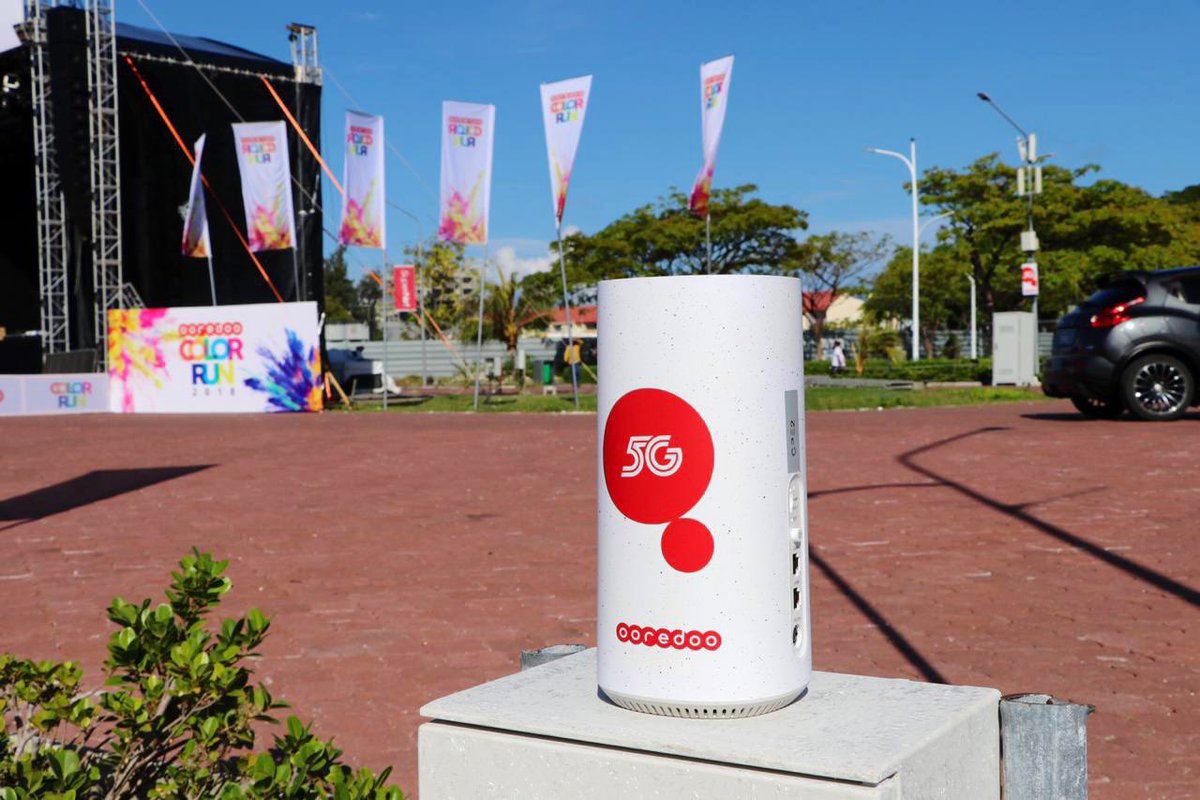
    Telecom giant Ooredoo announced the commercial launch of its 5G services in the Maldives, with the initial rollout covering a large percentage of the capital city of Male’, including key business hubs, hospitals, public spaces and more.

    At a special event held today to celebrate the kickstart of the 5G era for the company, Ooredoo Maldives also launched 5G AirFibre – the first 5G powered Home Broadband services in the Maldives providing speeds that are tenfold.

    The event was attended by the Minister of Communication, Science & Technology, Hon. Mohamed Maleeh Jamal who officially launched Ooredoo 5G services in the Maldives, the Minister of Economic Development, Uz. Fayyaz Ismail, Chief Executive of CAM, Ilyas Ahmed, Chief Technology Officer of Presidents Office, Mr. Hamid Shafeeu, as well as the Chairman of Ooredoo Maldives, Mr. Andrew Kvalseth, the Board of Directors and employees of Ooredoo Maldives who joined the event virtually to be part of this historic moment for the company.

    Speaking at the event, the Minister of Communication, Science & Technology, Hon. Mohamed Maleeh Jamal said: “5G technologies have the potential for extraordinary breakthroughs across industries, which is now being witnessed worldwide. As the role of internet connectivity continues to become more and more crucial for the country’s social and economic growth, the roll-out of 5G technologies in the Maldives creates a strong digital infrastructure on which creative new solutions can be built on for the betterment of our communities. I would like to thank the management and staff of Ooredoo Maldives for their strong commitment towards a Digital Maldives, by continuing to invest in creating a stronger and more capable network which can power new technologies and innovations, at a time when it is needed more than ever.”

    Najib Khan, Managing Director and CEO, Ooredoo Maldives said: “Over the past year, we have seen a huge shift towards digital across industries, from healthcare, education, communication, governance, e-commerce and more. Despite the challenges faced by the pandemic, our team has prioritized the roll-out of 5G services, understanding its unparalleled capabilities to unlock the full power of a connected society – something that is of pivotal importance in the new normal. We are equally proud to launch the first 5G broadband services in the Maldives, which overcomes the challenges faced in installation of fibre optic cables in congested areas such as Male’. A flexible alternative which offers comparable internet speeds to fiber broadband, 5G AirFibre services will accelerate fiberisation through airwaves of Ooredoo 5G. Today, we welcome a new digital age in the Maldives, enabling endless possibilities and innovative new digital services for people and businesses. We reaffirm our commitment to the people of Maldives, ensuring our support in transforming their digital lifestyles to achieve the full benefits of the digital world.”

    5G technology not only promises a fundamental boost in speed, but offers significantly lower latencies, increased capacities and is much more reliable. Paired with IoT Technologies, this unlocks a wave of advances such as intelligent homes, smart cars, drone deliveries and much more than can transform life as we know it and power healthcare services, education and even entertainment such as sporting events & gaming.

    Available for both prepaid and postpaid customers, Ooredoo 5G covers a large percentage of the capital city, on certified handsets. With the official launch of 5G, we are working with global operators to certify the network on additional handsets as soon as possible. The coverage map for Ooredoo 5G is available on Ooredoo Maldives website.

    In addition to 5G mobile services, customers in the capital city can also experience the superfast speeds of 5G via 5G AirFibre Home Broadband. The enhanced connectivity with 5G AirFibre will provide incredibly high speeds which is extremely positive news for local communities and businesses; especially for small and medium business working remotely or working from homes. Customers in Male’ can now check the eligibility of their area and pre-book their 5G AirFibre devices via Ooredoo Maldives website.

    Ooredoo Maldives also announced 5G Experience zones, for customers who are curious to test out 5G and 5G AirFibre services. This includes the first 5G powered VR Café’ in the Maldives and Ooredoo Club Premier Lounge.

    Ooredoo was the first operator in the world to have launched a live commercial 5G network in Qatar in early 2018 which marked a major technological breakthrough for Ooredoo and the global telecommunications industry. Following its vision to create communities powered by digital services, the company continuously made investments in North Africa, the Arabian Gulf to Southeast Asia to enhance customers’ digital experiences. Ooredoo Maldives will continue to enhance its network across the nation in order to connect customers to the best technologies and services that the digital world has to offer.
  • Huawei, Qualcomm, and Oppo are arguably the three most innovative firms in wireless technology

    Huawei, Qualcomm, and Oppo are arguably the three most innovative firms in wireless technology

    This might not come as a surprise to some people living in China, or to those who make a living by following the goings on of the wireless world, but there is a good case for calling Huawei the most innovative outfit in this realm. The company’s Mate series phones are traditionally one of the top technologically based smartphones in the world each year. However, the powerful 5nm chips it designed for this year’s Mate 40 line can no longer be shipped to the company because of a new U.S. export rule. The rule bans foundries like TSMC from shipping cutting-edge chips to Huawei without a license if said chips were produced using American technology.

    An industry report cited by the South China Morning Post states that from the beginning of this year through the end of October, Huawei filed 8,607 patent applications related to wireless technology. That put the firm at the top of the pack, well ahead of San Diego, California based chip designer Qualcomm; the latter sought 5,807 patents during the same January to October time period. Chinese smartphone manufacturer Oppo was third with 5,353 patent applications. Database provider incoPat, headquartered in Beijing, is responsible for the data used to compile the list.

    According to incoPat, both China and the U.S. led the way with each making up 32% of the patents filed from January through October. Japan was next with 15% followed by the 7% submitted by South Korea. IncoPat says that the information it uses comes from patent filings available to the public in the field of wireless communications. This includes patents filed to protect inventions related to 5G technology. The report issued by incoPat notes “As a key area of modern communications, wireless communication network technology has always been a very important part in the 5G research and development process. With the new technological competition and new globalisation situation, wireless communication network technology is becoming an important strategic choice for enterprises to face international competition.”

    5G is the next generation of wireless connectivity and the countries that control 5G will have an advantage economically. That is why, seeing how innovative Huawei is and not wanting to be left behind, back in June the U.S. Commerce Department amended the entity list ruling that prevents Huawei from working and doing business with U.S. based firms. Now, American tech companies are allowed to work alongside Huawei to help create global 5G standards. The U.S. feared that being left out of the meetings attended by Huawei would hold the U.S. back in terms of the development of 5G.

    Huawei is also the leader in helping the 3GPP develop standards for 5G. 3GPP (the 3rd Generation Partnership Project) is a term that covers standards organizations that help create protocols for mobile telecom. After Huawei, Ericsson and Qualcomm provide the most contributions to 3GPP for 5G standards. According to SCMP, this year 3GPP completed its next set of standards for 5G which include possible applications for 5G such as autonomous driving, smart factories, and remote surgery.

    Earlier this month, China’s Ministry of Industry and Information Technology (MIIT) said that the country has built nearly 700,000 base stations in 2020 topping its original target of 500,000 for the whole year. As the world’s leading provider of networking equipment, Huawei is also an important supplier of 5G base stations. In fact, published reports indicate that Huawei will replace Ericsson this year to become number one in 5G base stations. Ericsson is expected to see its market share decline from 30% last year to 26.5% in 2020. Huawei, on the other hand, should see its 5G base station share rise from 27.5% last year to a leading 28.5% in 2020. That is, along as it can find enough 5nm Kirin 9000 chipsets to power these base stations. As we mentioned earlier in this article, the U.S. is preventing Huawei from receiving cutting-edge chips from TSMC.

  • Vietnamese startup acquires US mobile testing platform

    Vietnamese startup acquires US mobile testing platform

    Vietnamese tech startup Kobiton has acquired U.S.-based mobile testing platform Mobile Labs Inc after raising $14 million for the purpose. Kobiton, which provides a platform for app developers to test their products, said in a statement that the acquisition would help customers deliver apps of higher quality faster by utilizing artificial intelligence.

    The acquisition was funded by U.S.-based investment funds BIP Capital and Fulcrum Equity Partners.

    Ha Ngoc Vinh Du, director of Kobiton in Vietnam, said that the acquisition was also positive news for the Vietnam tech industry as it confirms the talent of Vietnamese tech engineers among the global tech community.

    Jim Douglass, the partner at Fulcrum Equity Partners, said that companies are increasingly reliant on their mobile channels to improve revenues, and they need new ways to test their apps on real devices without sacrificing quality.

    Kobiton, with offices in Ho Chi Minh City and Atlanta, U.S., was founded by Vietnam-based KMS Technology in 2016. It has over 50 IT engineers and developers in its employ. Its platform is used by over 60,000 developers worldwide.

  • Vietnam to close 2G services by 2022

    Vietnam to close 2G services by 2022

    Vietnam plans to bring the number of 2G subscribers to under 5 percent by 2022 so that it can stop this service and push the development of higher-technology cellular networks.

    There are 24 million 2G subscribers in the country or 18.5 percent of the total, and the Ministry of Information and Communications aims to bring the figure down to 5-7 million, or around 5 percent by early 2022 towards stopping the 2G service by then.

    Closing 2G will leave more bandwidth for 3G, 4G, and the upcoming 5G network and help accelerate the establishment of a digital economy, the ministry said.

    It is working to boost the sales of low-cost smartphones so more people will be familiar with 3G and higher networks, it added.

    Among 24 million 2G subscribers, 12.4 million are using feature phones. Hoang Minh Cuong, head of the telecommunications department under the ministry, said these are the users that telecom operators need to help transition to smartphones.

    The number of 2G subscribers has dropped by 6 million since last year, showing that the goal to bring the ratio to under 5 percent is possible, he added.

    The telecommunications department plans to lower the rates of regular phone calls, which will reduce their revenues to telecom operators and urge them to rely more on data calls.

    It also plans to require all smartphones produced or imported into Vietnam to support 3G network or higher.

    There are 630,000 2G subscribers age 70 or more, and some say this group of people lack the tech-savvy needed to use smartphones.

    However, Cuong said Vietnamese companies were capable of making 4G feature phones for around VND600,000, and these would serve this user group.

  • Huawei welcomes a thorough examination of its 5G technology to prove it’s not a security threat

    Huawei welcomes a thorough examination of its 5G technology to prove it’s not a security threat

    Since 2012, Chinese phone and networking equipment manufacturer Huawei has been considered a national security threat. Perceived ties with the Communist Chinese government have the current administration concerned that Huawei collects personal and corporate data using back doors placed inside the company’s handsets and networking gear. Even though this has never been proven and has been denied by the company, President Donald Trump cited “security” for placing Huawei on the Entity List last year preventing the firm from accessing its U.S. supply chain.

    Being placed on the Entity List forced Huawei to scramble to find replacement suppliers for some of the key parts it needs to build phones and networking gear. Losing the ability to license the Google Mobile Services version of Android also meant that Google’s Android apps like Search, Maps, YouTube, Gmail, Drive, and others could not be installed on Huawei phones. In China, where Google’s apps are banned anyway, the absence of these apps wouldn’t affect sales of the manufacturer’s phones. But outside of the firm’s home country, sales of the International Models were reportedly impacted by Huawei’s inability to license Google’s Android ecosystem.

    On the first anniversary of its placement on the Entity List, the U.S. tightened the screws a little more by changing certain export rules. Now, a foundry anywhere in the world must obtain a license before shipping chips made with U.S. technology to Huawei. That includes new cutting-edge 5nm Kirin 9000 semiconductors that are supposed to power Huawei’s most technologically advanced phones this year, the Mate 40 series. These chips are also vital to the production of two-way radios and other gear required for the firm’s 5G networking equipment. The number one provider of such equipment worldwide, the U.S. had asked its allies last year not to use Huawei gear for their 5G networks. Some countries followed the U.S. request while others, like Britain, did not. But now Britain is feeling buyer’s remorse and is thinking about stripping Huawei’s parts out of its new networks.

    According to Reuters, the head of Huawei’s Italian unit, President Luigi De Vecchis, said that the company is ready and willing to have its facilities examined with a fine-tooth comb to prove that its technology does not create a security risk to those countries that use Huawei’s gear in their 5G networks. In Rome on Wednesday, De Vecchis spoke at the opening of the company’s new cyber-security center and stated, “We will open our insides, we are available to be vivisected to respond to all of this political pressure. I am speechless that a country the size of the United States attacks another country through the demolition, via groundless accusations, of a company of that country.”

    Coincidentally, U.S. Secretary of State Mike Pompeo arrived in Italy to begin a two-day visit to the country at the same time that Huawei was opening its cyber-security center. De Vecchis added that the company will not leave the Italian market and in fact is looking to create products for the country in different fields including the energy industry. The Huawei executive said, “It’s extremely unlikely Huawei will leave the market because of the current situation.”

    The U.S. continues to put pressure on Chinese tech firms. U.S. companies now need a license to export certain materials to SMIC, China’s largest foundry (SMIC). And the Trump administration is thinking about adding SMIC to the Entity List as well. Of course, we’ve been closely following what is going on between the White House, short-form video app TikTok, and the latter’s parent ByteDance. Once again it comes down to the same fear over the safety of personal data belonging to American consumers and corporations. And yet, there has been no smoking gun to date.

  • MobiFone offers customers free data, calls to make up for disruption

    MobiFone offers customers free data, calls to make up for disruption

    Telecom operator MobiFone has promised free data, calling, and text credit to customers affected by a network error lasting hours on Tuesday. It will offer 7.5 gigabytes of data for free to subscribers using smartphones and 1,000 minutes of calls in case of feature phones.

    On Tuesday many subscribers complained they were unable to make phone calls, send text messages or access the Internet from around 4.30 p.m. The issue was fixed the same evening. A spokesperson for the state-owned company said Wednesday it was still trying to determine how many subscribers were affected by the issue.

    Many people have expressed indignation that the problem occurred and the fact the operator was slow in notifying them about it. They were unable to contact the operator either during the disruption. In 2005, 2010, 2011, and 2016 too similar problems occurred.

    On December 6, 2018, many MobiFone subscribers in Hanoi and Ho Chi Minh City were unable to connect to the Internet. MobiFone is the third-largest network operator in Vietnam behind Viettel and VNPT.

  • Samsung to manufacture Qualcomm’s upcoming 5G chipset for premium phones

    Samsung to manufacture Qualcomm’s upcoming 5G chipset for premium phones

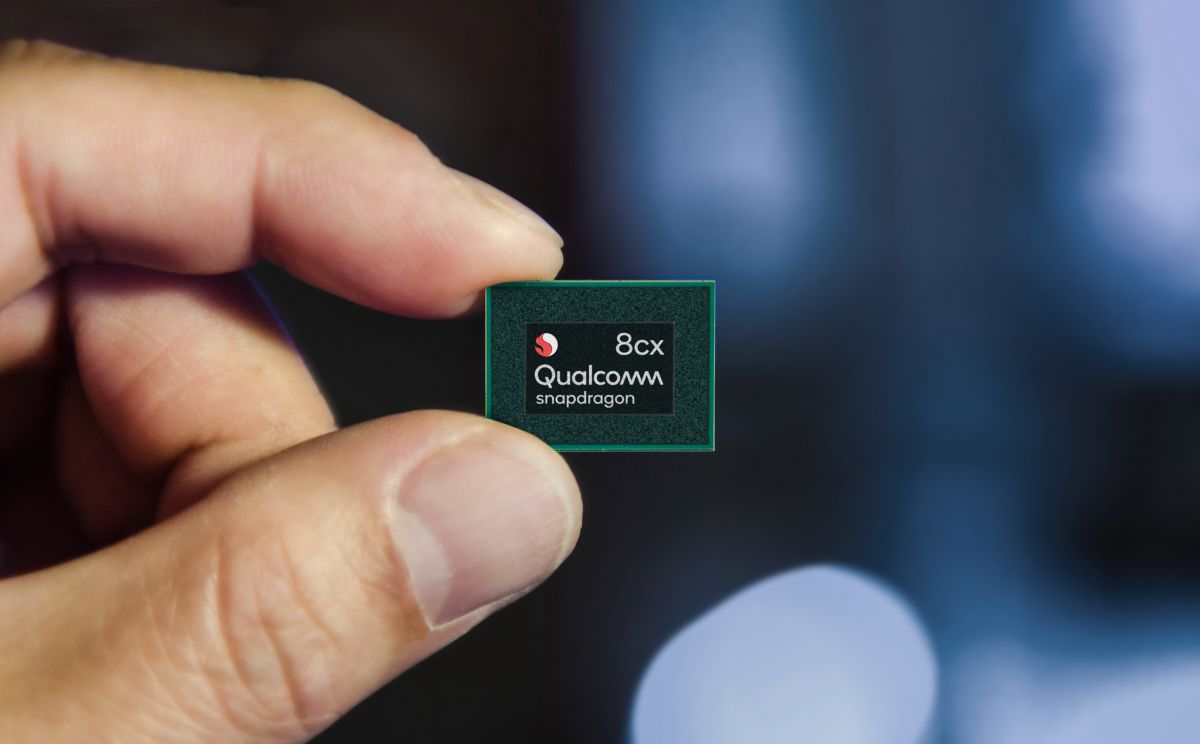
    Samsung is the sole manufacturer of Qualcomm’s upcoming Qualcomm Snapdragon 875 chipset, South Korean media reports. Apparently, the South Korean giant is about to ink a deal with the US chipset maker for the manufacture of the premium chipsets that will power flagships launching in 2021 and beyond.

    The deal worth about $1 billion elevates Samsung from a relatively large chipset supplier for the smartphone market to a major position. Reports claim Samsung’s offer was slightly better than TSMC’s, but no numbers were revealed in the report.

    Qualcomm’s Snapdragon 875 chipset (tentative name) is manufactured using a 5-nanometer process and it’s aimed at premium smartphones. The new chipset is expected to be unveiled in December, but the first devices powered by Snapdragon 875 won’t be ready until next year.

    Samsung Galaxy S21 and other flagships from Xiaomi and Oppo will be among the first to pack Qualcomm’s new Snapdragon 875 processor, which also includes 5G support. Samsung Electronics has already started the mass production of the new chipset at its foundry line in South Korea.

  • Huawei says that it will release a HarmonyOS phone next year

    Huawei says that it will release a HarmonyOS phone next year

    Last year, after the U.S. Commerce Department banned Huawei from its U.S. supply chain, the Chinese phone and networking equipment manufacturer scrambled to find new sources. The one stateside supplier that it missed the most was Google since the ban prevented the latter from delivering the Google Mobile Services version of Android to Huawei. While it didn’t matter in China where most of Google’s Android apps are banned, not being able to equip its international models with the Google ecosystem might have cost the manufacturer some sales.

    In August of 2019, Huawei announced that it had developed a new operating system called Harmony. Many assumed that this new operating system would be immediately used by Huawei to replace Android. This turned out not to be the case. Richard Yu, CEO of Huawei’s consumer group, pointed out that Harmony is based on a microkernel allowing it to be used on a wide range of devices such as smart speakers, tablets, smartwatches, computers, autos, and smartphones. Huawei also noted that HarmonyOS will work on devices equipped with a small amount of RAM and those requiring hundreds of gigabytes of memory. Thus far, Harmony OS has been available for consumers only on television sets.

    Mr. Yu said today that in 2021, Huawei will ship its first handset powered by HarmonyOS. What set off this announcement by the long-time Huawei executive was the word that the company plans on introducing a second version of Harmony OS this coming Thursday, September 10th, during the 2020 HDC Developers Conference. Several new devices powered by the operating system will soon be announced and this year Huawei says that its new smartwatches will be driven by HarmonyOS.

    Yu did admit that Huawei has been sitting on a phone running HarmonyOS, but the company has had to wait because of an agreement it has with Google. But that doesn’t mean that the company doesn’t have high hopes for the platform in the future. The executive says that HarmonyOS will eventually become a worldwide platform.

    In a previous speech, Yu said that the upcoming Huawei Mate 40 series will be powered by a new series of 5nm Kirin chips, the Kirin 9000. Not only will these components be produced using the new 5nm process, but they will also have more powerful 5G and AI capabilities, CPUs, and GPUs. But a new export rule put into place by the U.S. prevents foundries from shipping chips to Huawei that were made using U.S. technology. Yu notes, “Unfortunately, under the sanctions of the United States, TSMC only accepted orders before September 15th. By September 15th, it will not be able to produce chips for Huawei. So Kirin 9000 may be our last generation of Huawei Kirin high-end chips.”

    Huawei was TSMC’s second-largest customer after Apple last year but the world’s largest individual foundry will not be allowed to ship to the Chinese manufacturer after September 14th. Until that date, TSMC is reportedly running its assembly line 24 hours a day to produce as many as chips that it can until it isn’t allowed to ship to Huawei. China’s largest foundry, SMIC, is not a viable replacement since it is several process nodes behind TSMC. Chip designer Mediatek has reportedly been seeking permission to develop cutting-edge chips for Huawei. It would seem unlikely for the company to get that permission from the U.S., especially considering that Mediatek relies on TSMC to produce its chips. Additionally, administration officials in the U.S. have complained about Huawei’s ability to skirt the Entity List ban.

    Assuming that Huawei has been able to stock up on 5nm chips, the company has a little time-not much mind you-to find a new source of 5nm SoCs.

  • Despite strength from Huawei, smartphone shipments are expected to drop in China

    Despite strength from Huawei, smartphone shipments are expected to drop in China

    The world’s largest smartphone market is going to report a drop in shipments during the current quarter. The report states that the Q3 decline will show up both year-over-year and month-over-month (aka sequentially) and would appear following a huge sequential second-quarter surge of 104.6%. The strong smartphone market in China during the three months covering April through June was fueled by the lessening of negative impacts from the coronavirus, economic stimulus measures, and the launch of new handset models. While the growth in second-quarter smartphone shipments was in triple digits compared to Q1 deliveries, on a year-over-year basis the Q2 growth in smartphone shipments was a puny 1.4%.

    The top five smartphone manufacturers based on shipments in the country during Q2 were Huawei, Vivo, Oppo, Xiaomi, and Apple. The top five were responsible for 98.1% of smartphone deliveries in China from April through June, up 1.4 percentage points from the previous quarter. For the current quarter, Digitimes expects smartphone shipments in China to contract 7.9% as some of the effects of the stimulus measures imposed in the country have started to fade.

    Despite the expected decline in shipments, Huawei’s shipments are supposed to remain strong in the current quarter. During Q2, research firm Canalys said that Huawei overtook Samsung to become the largest smartphone manufacturer globally. In 2016, the head of Huawei’s consumer division, Richard Yu, predicted that Huawei would become the top smartphone manufacturer in the world by 2021. Despite losing access to its U.S. supply chain and the Google ecosystem, Huawei has become number one thanks to its own rapidly growing Huawei Mobile Services.

    700 million people are using Huawei’s ecosystem and with that number growing, Huawei is expected to own nearly half of the Chinese smartphone market during the third quarter.

  • Huawei is retreating from a key market

    Huawei is retreating from a key market

    Troubles continue to mount for Huawei as India joins the US and Europe in banning Chinese firms over espionage fears. The company has reportedly slashed its revenue target in India by 50 percent for the current year and is also laying off up to 70 percent of its staff in the country. The manufacturer will apparently be retaining employees in research and development and the Global Service Centre.

    Tensions between the two countries have been rising ever since a border clash resulted in the death of 20 Indian soldiers. Consumer sentiment has turned sour against China and there all calls to boycott goods such as smartphones originating from the country.

    Another setback for Huawei’s 5G plans

    The Indian government has already stopped state-run carriers from getting equipment from Huawei and ZTE and is seemingly requesting private telecoms to do the same. They have supposedly been requested to phase out Chinese equipment gradually so that consumer services are not disrupted.

    Reliance Jio, the country’s largest mobile network, sourced components from Samsung for its 4G network. The other two dominant companies, Bharti Airtel and Vodafone Idea, got their equipment from various vendors including Huawei. According to research, the Chinese giant’s gear makes up 40 percent of Vodafone Idea’s network and around 33 percent of Bharti Airtel’s existing network.

    All of these telecom companies have submitted applications to carry out 5G tests with different manufacturers including Huawei.

    Whether Huawei will make the cut remains to be seen, but it seems highly unlikely. According to an insider, the company currently has no new projects in India and there is no clarity on any new business from carriers.

    Huawei was earlier expecting India to generate nearly $700-800 million in revenue in 2020, a far cry from sales of $1.2 billion posted in 2017. Now, it has revised those expectations and is only forecasting sales of around $350-500 million.

    As grim as the situation may sound, experts believe it would be an uphill task for India to disengage from China as the later’s influence in investments, trade, and technology has grown significantly over the years. Per an estimate, Huawei’s India unit employs nearly 700 people and this figure doesn’t include the hundreds of people working for the company through third-party firms.

    That said, telecommunication is one sector where alternatives are available and thus Huawei will probably not be included in India’s 5G rollout.

  • Nokia will build U.S. Cellular’s 5G network throughout 2020

    Nokia will build U.S. Cellular’s 5G network throughout 2020

    U.S. Cellular, one of the smaller carriers in the country, has teamed up with Nokia to enhance its 5G network. Since Huawei is no longer an option, there are very few choices that US carriers have at their disposal whenever they need to deploy 5G equipment or upgrade new ones.

    Nokia and Ericsson would be the most obvious choices, but both offer more expensive services than Huawei did. In any case, U.S. Cellular wants to extend the capabilities of its 5G mmWave network with the addition of 24 GHz and 28 GHz spectrum bands, which are absolutely needed for 5G.

    In that regard, Nokia will be deploying its AirScale radio solution to support U.S. Cellular’s customers with 5G and IoT services. The discussion can get very technical going forward, so let’s just summarize and say that U.S. Cellular hopes to start providing 5G services to its customers in 2021.

    Nokia will work throughout 2020 on making sure that U.S. Cellular’s 5G network will meet the demand capacity and speed required. Good things are coming to U.S. Cellular customers, just not this year.

  • Ooredoo and Ericsson Reach a Record System Throughput of 4.2Gbps over a Bandwidth of 200MHzs

    Ooredoo and Ericsson Reach a Record System Throughput of 4.2Gbps over a Bandwidth of 200MHzs

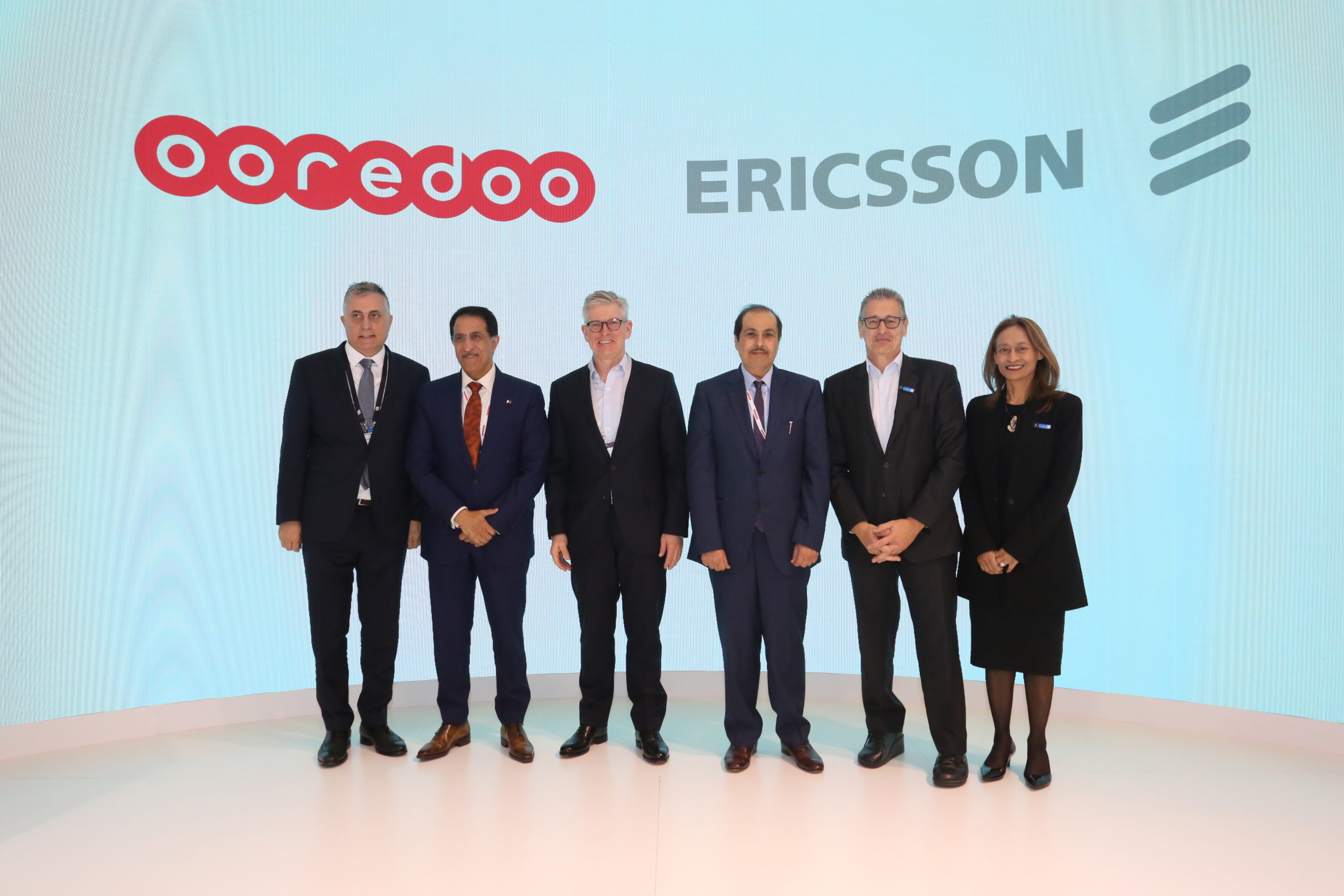
    Ooredoo Qatar, working with technology giant Ericsson, has successfully tested the 200MHz spectrum and achieved a record system throughput of 4.2Gbps, as part of the growing shift towards complete 5G delivery.

    The technology, deployed within Ooredoo’s network, uses advanced 5G and 4G carrier aggregation functionality, increasing the data rate per user by assigning multiple frequency blocks to the same user. This innovation is expected to play an important role in the build-up to achieving 90 percent 5G coverage throughout Qatar by the end of 2020.

    Increasingly, Ooredoo Qatar is positioned as a key digital enabler. With this recent breakthrough in both speed and delivery, customers will be able to maximize the benefits of streaming services, virtual learning environments, cloud gaming and augmented and/or virtual reality applications. Likewise, it will allow businesses to pursue new customer bases, while potentially streamlining their contribution to such endeavors as smart cities, telemedicine, and logistics.

    Sheikh Mohammed Bin Abdullah Al Thani, CEO at Ooredoo Qatar says: “5G is a phenomenal evolution that opens doors to a world of new possibilities — many of which we have already tested — and we are proud to be at the forefront of the 5G revolution amongst global telecom operators. Keeping our customers connected and enabling them to enjoy the best of the internet is at the core of what we do, and this partnership with Ericsson will enable us to achieve our strategic goals in network development and expansion. We are making use of the latest innovative technology to apply 5G in existing frequency bands and deploying the latest 5G radios to shift our subscriber experience to a whole new level; with the addition of 5G, we are committed to offering Qatar the best mobile digital infrastructure, which will result in enhanced user experience ahead of the major world sporting events set to be held in Qatar.”

    Fadi Pharaon, President of Ericsson Middle East & Africa, says: “We are pleased to be working with our long-standing partner Ooredoo Qatar helping them achieve the full potential of 5G. Today’s trial cements Ooredoo’s commitment to bring the latest technology and prepares its network for the new era of 5G use cases. This announcement highlights Ericsson’s 5G leadership enabling wider opportunities, innovative solutions, and applications that 5G will bring.”

    By reaching this milestone, Ooredoo Qatar is taking a crucial step forward for an efficient and seamless roll-out of the latest mobile technology, offering enhanced network performance.

  • Forget 5G, Samsung says that now is the time to begin work on 6G

    Forget 5G, Samsung says that now is the time to begin work on 6G

    Just when you’ve finally been able to wrap your mind around 5G and understand the difference between sub-6GHz and mmWave airwaves, and know why low-latency is better than high-latency (which puts you way ahead of the average consumer by the way), Samsung throws you a curveball and releases a “White Paper” about 6G. A “White Paper” is supposed to make a complicated issue easier for the public to understand.

    The paper, titled “The Next Hyper-Connected Experience for All,” says that the company’s goal is to bring 6G “to every corner of life.” Samsung sees 6G standards completed by 2028 with mass commercialization starting two years later. While 5G is based on performance goals, Samsung says that three requirements must be met for 6G service to become available: For example, to be called 6G the download data speed must be no lower than 1,000 Gbps. As a comparison, Open Signal says that in the states Verizon currently has the fastest average 5G download data speed just shy of 500Mbps. With 6G, latency is expected to be less than 100 microseconds or one-tenth the latency of 5G.

    Samsung says that by 2030, the number of connected devices (500 billion) will exceed the human population (8.5 billion) by a factor of 59. Mobile devices will include AR glasses, VR headsets, and hologram devices. These screens will be connected to 6G networks and these networks will be built for machines rather than humans. The dominant users of 6G will be machines and Samsung’s report states that “the capability of human eye is limited to a maximum resolution of 1/150° and view angle of 200° in azimuth and 130° in zenith. On the other hand, machine vision capability is not constrained by such limitations, since it can take advantage of many cameras with various functions. Considering such high capabilities of machines, the performance requirements for the 6G system could be extremely high for relevant service scenarios.”

    6G will help the world by addressing social issues with its hyper-connectivity according to Samsung. “A wide deployment of 6G will reduce differences in regional and social infrastructure and economic opportunities and thereby provide alternatives to rural exodus, mass urbanization, and its attendant problems. We expect, in summary, that 6G mobile communications will…tremendously contribute to the quality and opportunities of human life.”

    The White Paper discusses technologies that are not available now due to the limitations of today’s technology. Truly Immersive XR, which combines AR, VR, and mixed reality, will be an important tool for entertainment, medicine, science, education, and manufacturing. But current mobile devices do not have the current processing power required and battery capacity needed.

    High-Fidelity Mobile Holograms will require data speeds hundreds of times faster than 5G is capable of delivering. Even at 5G’s peak data speed of 20Gbps, faster rates are required and 6G will be able to deliver this. In addition, a full-sized human hologram requires a large number of pixels. The paper also mentions Digital Replicas. Samsung explains what this is by saying, “With the help of advanced sensors, AI, and communication technologies, it will be possible to replicate physical entities, including people, devices, objects, systems, and even places, in a virtual world.” These are called digital twins and users will be able to interact with them using VR devices or holographic displays.

    Samsung says that improvements in technology have allowed standards for each new generation of wireless to be created in only eight years down from the 15 years that it used to take. The report says that as soon as next year, the International Telecommunication Union (ITU) could start working on its 6G vision. You might think that this is all crazy talk considering that 5G is far from finished. The company explains in its conclusion that it is actually the right time to start preparing for 6G.

  • Britain close to final decision on whether to ban Huawei from its 5G networks

    Britain close to final decision on whether to ban Huawei from its 5G networks

    Despite constant pressure applied by the U.S. not to allow Huawei’s networking equipment inside Britain’s 5G networks, in January the British announced that it would not heed the warning. Gear from the world’s largest networking equipment supplier would be used on the country’s 5G networks although the parts would be placed away from sensitive areas. At the time, a spokesman said, “The United States is disappointed by the U.K.’s decision.” British Prime Minister Boris Johnson felt that there was no other decision he could make because of Huawei’s technological and financial advantages over the competition.

    But according to the U.S. government, Huawei is a national security threat because of its rumored ties to the communist Chinese government. Huawei, of course, has denied this repeatedly. The U.S tried to convince Britain that it wouldn’t be able to pass along the intelligence to its allies if Huawei was involved in the country’s 5G network. And finally, there were some cracks in the prime minister’s resolve. Johnson could announce as soon as this coming Tuesday’s National Security Council meeting that Huawei equipment will be banned from British networks before the end of next year.

    In the U.S. Huawei products, including both phones and networking gear, are banned from use by the military and by telecom firms. Some rural wireless providers have Huawei equipment in their older networks which the current administration would like to see removed.

    While the U.S. did apply enough pressure to get the ball rolling in Britain, what really convinced the Brits to think twice about Huawei’s presence in its 5G networks was the recent export rule change by the U.S. Under the new rules, a foundry using American technology to produce chips cannot ship any product to Huawei without a license from the U.S. As a result, Huawei could be forced to use “untrusted” chips which greatly lessens the security of any 5G network that employs Huawei’s gear. A review in Britain concluded that under these conditions, the country will not be able to control the security of its 5G networks.

    The Conservative Party that Prime Minister Johnson belongs to has been pushing for a reversal of the decision to allow Huawei equipment to be used. Bob Seely, a member of the Conservative Party, praised the U.S. sanctions for getting Britain to revisit its initial decision. “The sanctions have changed the dynamic, he said. “The government is listening, and it’s important to give them credit for trying to do the right thing.” Seely said that Members of Parliament want a “no new kit date” and a “rip out date.” After the former date, no company would be able to install Huawei equipment in Britain. By the latter date, all Huawei equipment would have to be removed in the country. The politician would like to see the “no new kit date” set for late 2021 while there is a debate over where the “rip out date” should fall on the calendar. The range under consideration is a date between 2023 and 2025.

    Some Conservatives aren’t pushing for such draconian terms. Neil O’Brien said he wasn’t so concerned about the timing of the removal of Huawei gear and is also not terribly worried about the removal of equipment from older networks. That’s because the latter “will come to the end of its life over a couple of years.” That mirrors the comments made by Damian Green who also isn’t worried about older equipment. He simply wants to see a new equipment ban “in this parliament by 2024.

    The next generation of wireless connectivity, 5G will deliver download data speeds up to ten times faster than 4G LTE. Not only will it allow users to download movies in seconds instead of minutes, but it should also help to create new technologies and businesses.