Tag: telecom

  • Vodafone is the latest partner to bail from Facebook’s Libra project

    Vodafone is the latest partner to bail from Facebook’s Libra project

    Facebook’s digital currency initiative Libra continues to fall apart as British telco Vodafone becomes the latest partner to bail from the project.

    In a statement, Vodafone said: “Vodafone Group has decided to withdraw from the Libra Association. We have said from the outset that Vodafone’s desire is to make a genuine contribution to extending financial inclusion.

    “We remain fully committed to that goal and feel that we can make the most contribution by focusing our efforts on M-Pesa. We will continue to monitor the development of the Libra Association and do not rule out the possibility of future cooperation.”

    Digital currencies are beginning to gain traction following the success of Bitcoin. The king of cryptocurrencies is quickly becoming a modern store of value but it’s looking unlikely to be adopted by many average consumers for daily purchases.

    Part of the reason for the lack of day-to-day use of Bitcoin is its slow transaction times and poor scalability. Advancements, particularly off-chain “layer two” solutions like Lightning Network, are helping to fix these problems but at the cost of decentralization and security.

    Behind most digital currencies is a blockchain. The so-called “trilemma” with blockchains is that, in order to achieve scalability, you must sacrifice decentralization or security. Bitcoin is seen as a reliable store of value because it’s secure and its decentralization properties also make it appealing in a world of global uncertainties, censorship, and currency manipulation.

    Your average consumer only cares that a transaction is fast and cheap while also adequately secure, especially when dealing with predominantly smaller transactions like buying a coffee. Currencies like Ripple are criticized by cryptocurrency enthusiasts as being “centralized” but they fulfill the needs of your typical person.

    Facebook’s Libra intends to be a centralized currency along the lines of Ripple. Taking advantage of Facebook’s massive global userbase, Libra could potentially scale very quickly.

    Many partners initially jumped on the Libra project including Visa, PayPal, Mastercard, and eBay. Not long after Facebook released its whitepaper for Libra did it come under intense regulatory scrutiny. All the aforementioned partners decided to leave the project.

    Several central banks are looking to issue their own digital currencies for their advantages like fast international payments and lower fees. And, of course, they’ll persuade most people to adopt centralized alternatives to cryptocurrencies.

    China looks set to be the first major country to issue its own digital currency. The country already uses mobile payments extensively, with the ability to pay for pretty much everything through apps such as WeChat and Alipay. If China goes ahead with a digital yuan, you can bet the US won’t be far behind with a digital dollar.

    On Tuesday, the Bank of England announced it too is exploring central digital currencies alongside the Bank of Canada, Bank of Japan, the European Central Bank, the Sveriges Riksbank, and the Swiss National Bank.

    While digital currencies are pretty much inevitable, Libra is looking more uncertain by the day.

  • Viettel soars in global valuable brand ranking

    Viettel soars in global valuable brand ranking

    Vietnam’s largest telecommunication service provider Viettel has climbed 126 positions to be ranked 355th most valuable brand in the world in 2020.

    Currently valued at VND134.9 trillion ($5.8 billion), up 34 percent compared to 2019, Viettel was placed 102nd in Asia, and 7th in Southeast Asia, according to Brand Finance, a London-based branded business valuation consultancy.

    The company saw its consolidated revenues increase by 7.4 percent in 2019 over 2018, and it currently occupies 53 percent of Vietnam’s mobile network market.

    Viettel successfully operated 5G phone calls on self-developed equipment on January 17, and is expected to commercially launch 5G services this June. It plans to expand its operations both within Vietnam as well as in 10 foreign markets.

    There are just 36 telecom companies in the 2020 listing of the world’s top 500 brands by value. Most of the  36 branks saw their values fall. Over the past five years, the combined value of all telecom brands in the Brand Finance Global 500 listing has fallen slightly, reaching $558.4 billion in 2020, compared to $567.7 billion in 2015.

    The Brand Finance Global 500 list covers 10 sectors in 29 markets, using a sample size of 50,000 adults over 18 years old. For the latest ranking, surveys were conducted online from September to December 2019.

  • Australian telco undertakes crucial restructuring of senior management

    Australian telco undertakes crucial restructuring of senior management

    Vodafone Hutchison Australia (VHA) has carried out a major overhaul of its senior management, with two of its top executives resigning just a few days before the Federal Court’s ruling on its halted merger with TPG Telecom.

    Vodafone stated that both Kevin Millroy and Ben McIntosh, CTO and CCO of the company respectively, were already planning to depart the company this month, citing mutual decisions.

    Millroy will be replaced by Barry Kezik who has been part of the network team for almost a decade, while Ana Bordeianu will take over McIntosh’s responsibilities.

    Vodafone CEO Inaki Berroeta stated, “It’s going to be an exciting year for Vodafone and our customers with the launch of 5G and continuing to drive competition in the market at every opportunity.”

    He added, “Kevin and Ben have been key players in one of the most successful turnarounds in Australian corporate history, and they are handing over to extremely capable leaders, so I wish them both all the best for the future.”

  • Starhub, Amazon Prime strike new membership deal for subscribers

    Starhub, Amazon Prime strike new membership deal for subscribers

    StarHub has become the first info-communications company in Singapore to offer Amazon Prime membership to its entire mobile customer base, including no-contract SIM Only and prepaid customers.

    StarHub is home to more than 40 unique channels, amassing diverse entertainment programming of over 160 ‘live’ and on-demand channels in total. In collaboration with Amazon following the launch of its Singapore marketplace Amazon.sg, StarHub now enables its mobile customers to enjoy the full range of Amazon Prime membership benefits, from fast, free delivery on millions of items on Amazon.sg and Prime Now, to unlimited streaming of Amazon Original series, popular movies and hit TV shows on Prime Video, as well as access to free games and in-game loot on Twitch Prime. The Amazon Prime membership is available at S$2.99 per month.

    “We are reaffirming our #HelloChange commitment in 2020 to deliver to customers the best experience and transparent offers without a contract,” said Johan Buse, Chief of Consumer Business Group, StarHub. “Offering innovative digital lifestyle services with best-in-class businesses enhances our customers’ experience, and we are delighted to announce this collaboration with Amazon Singapore. First, to offer Amazon Prime membership for all StarHub Mobile customers, we enable them to enjoy the best of Amazon’s shopping and entertainment options on Singapore’s fastest mobile network.”

    “We are pleased to collaborate with StarHub to offer Amazon Prime membership to more people in Singapore,” said Henry Low, Country Manager, Amazon Singapore. “We welcome StarHub customers to experience the many benefits of Amazon Prime, including exclusive shopping deals on items they love most on Amazon.sg and Prime Now, free and fast delivery on millions of products, unlimited streaming of movies and TV series on Prime Video, and a wide selection of free games on Twitch Prime.”

    All StarHub Mobile customers will enjoy a three-month Amazon Prime membership on StarHub when they get a new #HelloChange two-year or no-contract SIM Only plan. Existing customers can also enjoy the same offer by renewing their two-year plans or upgrading to the abovementioned plans.

    After the renewal or sign-up is complete, customers can simply activate their Amazon Prime membership through the My StarHub app. Following the three-month period, the Amazon Prime membership is available at $2.99 per month, which will be charged to their StarHub Mobile bill.

    Additionally, StarHub also launched a new prepaid data plan with Amazon Prime. The data plan is called ‘600MB with Amazon Prime’ and offers prepaid customers four weeks of Amazon Prime membership and 600MB of data for $6.

    These customers can conveniently extend their Amazon Prime membership by buying the same data plan through the StarHub Prepaid app. Customers who need more data can add on other plans, from as low as $3 for 1GB to options that offer free data usage on Sundays.

    Amazon Prime members in Singapore can enjoy three main benefits as part of their membership; shopping and delivery, entertainment and gaming. For shopping and delivery, members will enjoy a free one-day local delivery with no minimum purchase on Amazon.sg’s domestic Prime eligible selection, free international delivery on millions of eligible items from Amazon US on Amazon.sg for orders over S$60, free two-hour delivery for tens of thousands of items, including groceries and household essentials on Prime Now, for orders above S$40 and 30 minutes early access to Prime eligible lightning deals and exclusive access to special shopping deals and events before other customers.

    In terms of entertainment, Amazon Prime members can stream or download Amazon Originals, popular movies and TV shows on Amazon Prime Video, including critically acclaimed and award-winning Amazon Originals such as Carnival Row, Tom Clancy’s Jack Ryan, The Marvelous Mrs Maisel, Good Omens, Mirzapur, Made in Heaven, Inside Edge and more. There is also a range of content for the whole family including Pete the Cat, Just Add Magic, and Kung Fu Panda: The Paws of Destiny. Prime Video is available via the Prime Video app on select smart TVs, mobile devices, tablets, game consoles, Apple TV, Chromecast, or online at PrimeVideo.com. In the Prime Video app, users can download all episodes on their mobile devices and tablets and watch anywhere offline at no additional cost. Prime Video also offers exclusive X-Ray functionality. Powered by IMDb, X-Ray uses authoritative data that gives users instant access to cast photos, bios and filmographies, and soundtrack info related to your TV shows and movies while you watch, right on the screen.

    Lastly, a selection of free games every month, exclusive in-game loot, and a free channel subscription on Twitch.tv will also be offered in the membership.

  • ZTE commissions 5G networks in Chinese hospital amid coronavirus outbreak

    ZTE commissions 5G networks in Chinese hospital amid coronavirus outbreak

    ZTE Corporation, a major international provider of telecommunications, enterprise and consumer technology solutions for the Mobile Internet, today announced that it has assisted China Mobile, China Telecom, China Unicom and China Tower deploy telecommunications networks, including 5G networks, in Dabie Mountain Medical Center in Huanggang, to cope with the outbreak of new coronavirus pneumonia in Wuhan.

    On January 25th, ZTE’s technical personnel performed an on-site investigation and developed a solution. On January 26th, ZTE retrieved devices from operator warehouses and local ZTE warehouse. Some devices were in short supply and sent from ZTE headquarters in Shenzhen. ZTE actively coordinated with the local government to apply for a pass for goods transfer from Wuhan. All the devices arrived at the operators’ offices in Huanggang before 12 am on January 26th. The devices were commissioned on January 27th and put into use together with the hospital.ZTE assisted operators in commissioning wireless macro-station equipment, wireless indoor coverage equipment, and IPTV networks, and achieved good cell phone signal coverage and TV signal transmission in the building, thereby fully meeting the requirements of medical staff for communication, video transmission, and radio and TV broadcasting.The Huanggang Municipal Government of Hubei Province has decided to transform the unfinished Dabie Mountain Medical Center into a hospital and set up more than 1,000 beds to treat fever patients in a centralized manner. The hospital will be built within 48 hours and put into use on January 27.

    Huanggang City is adjacent to Wuhan, but its medical conditions and resources are far inferior to that of Wuhan. The epidemic control situation in Huanggang is very serious. Moreover, the medical center is in a remote location. To ensure smooth information transmission, the telecommunication networks need to be built immediately.

    ZTE will continue to pay close attention to the epidemic situation, respond to the temporary construction requirements of communications networks in various places in real-time, and make every effort in the production, distribution, construction, and commissioning, to ensure smooth communication in responsible areas and help contain the new coronavirus pneumonia as soon as possible.

  • Verizon’s 5G network goes live in three more cities

    Verizon’s 5G network goes live in three more cities

    Verizon’s 5G network covered 31 cities in the United States until recently but starting today, three more cities will benefit from Verizon’s 5G mobility service. The carrier announced its 5G network is now live in three more cities: Little Rock, Kansas City, and Cincinnati.

    Just like every other city on the list, these three won’t feature full 5G network coverage. If you live in one of these cities, here is where you should be able to take advantage of 5G blazing-fast data speeds.

    • Little Rock: parts of Midtown, University District, Birchwood, Otter Creek and near landmarks such as UAMS College of Medicine, the University of Arkansas at Little Rock, Rock Creek Square Plaza Shopping Center, and Outlets of Little Rock.
    • Kansas City: parts of Downtown, Midtown-Westport, Plaza Midtown, Olathe and near landmarks such as The Garment District, Kauffman Center for the Performing Arts, Rockhurst University as well as inside and around the professional football stadium.
    • Cincinnati: parts of Downtown, Mt. Adams, West End, Evanston, Walnut Hills, Corryville, Clifton, Price Hill, Over-The-Rhine, Mt Auburn, Avondale, Newport (KY), Dayton (KY), Bellevue (KY) near landmarks such as Great American Ballpark, Duke Energy Convention Center, Serpentine Wall, City Hall, Xavier University, Cincinnati Zoo, Hebrew Union College, Cincinnati Christian University and Newport Waterfront (KY).

    Besides the three cities included in today’s announcement, Verizon’s 5G network is live in parts of Cleveland, Columbus, Hampton Roads, Charlotte, Greensboro, Grand Rapids, Miami, Salt Lake City, Spokane, Hoboken, Memphis, Des Moines, Los Angeles, Boston, Houston, Sioux Falls, Dallas, Omaha, Chicago, Minneapolis, Denver, Providence, St. Paul, Atlanta, Detroit, Indianapolis, Washington DC, Phoenix, Boise, Panama City, and New York City.

  • Telenor Group welcomes new leadership for Asian divisions

    Telenor Group welcomes new leadership for Asian divisions

    Sharad Mehrotra, CEO of Telenor Myanmar, has been appointed the new CEO of dtac, Telenor Group’s mobile operator in Thailand. He replaces Alexandra Reich, who is seeking new leadership opportunities. Hans Martin Hoegh Henrichsen, currently Chief Corporate Affairs Officer in Telenor Myanmar, will become acting CEO after Mehrotra. Grameenphone’s Deputy CEO and CMO, Yasir Azman has been appointed the new CEO of the Bangladeshi operation, with current CEO Michael Foley relocating to Africa, where his family is based.

    “After leading our Thai mobile operator through a challenging transition including new spectrum and network rollout and a renewed focus on customer satisfaction and distribution excellence, Alexandra Reich has delivered solid results according to the back-to-growth strategy outlined in dtac’s Capital Markets Day in June 2019. We are grateful to Reich for her willingness to step in and support dtac in the very important transformational phase, and we wish her all the best in her next leadership role. With Reich seeking new opportunities, we are pleased that Sharad Mehrotra will join dtac and bring valuable insights and knowledge to Thailand from Myanmar and India, where he has managed a strong commercial turnaround,” says Sigve Brekke, President and CEO of Telenor Group.

    “I am also pleased Yasir Azman has accepted the challenge to lead our operations in Bangladesh. While also serving as deputy CEO, he has run one of our best performing sales and distribution organizations in Telenor Group. Having risen through the ranks, it’s extra special to welcome Azman as the first home-grown CEO of Grameenphone. I’d like to take this opportunity to thank Michael Foley for leading the company through an impressive digital transformation as well as his valuable contributions also in Pakistan and Bulgaria,” adds Brekke.

    The changes are effective as of 1st February 2020.

  • Vietnam eyes 5G equipment sale to US

    Vietnam eyes 5G equipment sale to US

    Vietnam hopes to sell locally-made 5G equipment to the U.S. as it prepares the commercial launch of the telecom technology this year.

    Information and Communications Minister Nguyen Manh Hung proposed to a delegation of the U.S. House of Representatives Monday that they initiate discussions of 5G technical standards to see if made-in-Vietnam equipment could enter the U.S. market.

    Vietnam plans to commence commercial operations of 5G this year, becoming among the first countries in ASEAN to do so, he said.

    The minister had set the stage for launching the new telecommunications technology by making the first 5G phone call on January 17, using equipment manufactured by Vietnamese telecom giant Viettel.

    The military-run Viettel is set to become the sixth firm in the world to launch its own 5G equipment after Ericsson, Nokia, Huawei, Samsung, and ZTE.

    Viettel plans to commercially launch 5G services this June. It has been testing and installing equipment since last year.

    Hung, a former Viettel CEO, has been pushing 5G research in Vietnam since taking over as communications minister towards the end of 2018. He asked local firms to produce their own equipment so that Vietnam is among the first countries in the world to launch 5G technology.

    The number of 5G subscriptions in Vietnam could hit 6.3 million by 2025 or 6 percent of total mobile subscriptions, technology conglomerate Cisco has forecast.

    In ASEAN, Singapore is expected to lead the way in launching 5G in 2020, followed by Vietnam, the Philippines, Malaysia, and Thailand, according to U.S. consulting firm AT Kearney.

    5G is said to offer speeds 100 times faster than 4G and support new applications like remote medical procedures and autonomous driving.

  • ZTE acquires significant chunk of NFV network equipment

    ZTE acquires significant chunk of NFV network equipment

    Moreover, in this bidding, ZTE has also won the bidding for the user plane in Shandong, Anhui, Fujian, Yunnan and other 12 provinces in China, demonstrating ZTE’s leading position in the fields of NFV cloudification and the next-generation core network.

    The phase-1 project of China Mobile’s NFV network includes six parts: PS network VNFs of eight regions and 31 provinces, IMS network VNFs, virtual-layer software, distributed storage, MANO, and system integration. This purchase marks the beginning of the large-scale construction of the NFV cloud network of China Mobile, the world’s largest operator.

    As a technology leader and provider of cloudified products and solutions, ZTE has partnered with China Mobile to build a secure, reliable, mature, and stable end-to-end cloudified network, by means of four years and five stages of pilot and verification in NFV field.

    Furthermore, ZTE’s NFV infrastructure TECS, Ceph-based carrier-grade distributed and unified storage platform CloveStorage, carrier-grade server operation system CGSL, 2/3/4/5G fully integrated cloud core network Common Core and the AI-based automatic O&M management system CloudStudio have also been put into commercial use in global operators’ networks and government & enterprise networks, laying solid foundation for 5G commercialization and vertical industry applications.

  • Telstra Australia waives firefighters’ phone bills in unprecedented show of support

    Telstra Australia waives firefighters’ phone bills in unprecedented show of support

    Exacerbated by prolonged drought, intense heat and the overall global climate change, the bushfires have had catastrophic consequences on people, their livelihoods as well as the myriad of native animal species that call the Australian bush home. It is now estimated that billions of native wildlife have perished in the deadly blazes.

    Australian telco giant Telstra has responded immediately to the crisis by showing their support for the countless firefighters who have left their families to battle the fierce fires. Earlier this year, Telstra announced that they will be waiving all mobile phone bills for firefighters as a show of thanks for their heroic efforts.

    “Today we’re doing our part to thank our volunteer firefighters by providing them with free mobile bills over December and January,” said Telstra CEO Andrew Penn.

    Penn added, “”We’re doing everything we can to get these communities back up and connected as quickly as possible, but given the horrific conditions we have seen over the past few days, this may take some time.”

    Not long after Telstra made the announcement, both Optus and Vodafone joined in by waving their own mobile service costs for volunteer firefighters doing their part to protect the lives of all Australians.

  • One-Third of Chinese Tourist Payments Made Through Mobile

    One-Third of Chinese Tourist Payments Made Through Mobile

    The mobile payment’s penetration of the Chinese tourist market continues to grow with 3.4 times out of 10 transactions made through the channel in 2019.

    Whilst the user base remained stable, usage increased compared to 2018 when 3.2 out of 10 transactions were made through a mobile payment platform, according to a report jointly released by Nielsen and Alipay. This was in spite of the fact that Chinese tourist was increasingly shifting travel destinations from popular East Asian countries in favor of more distant locations where cash is more prominent.

    «In contrast to Asian tourism markets where Chinese mobile payment solutions were adopted earlier, some European countries are witnessing an acceleration of the acceptance of Chinese mobile payment solutions,» the report explained.

    In the U.K. and France, for example, the percentage of Chinese tourists who used mobile payments increased to 65 percent in 2019 while per capita mobile-based spending rose about 10 percent.

    Despite only being ranked as the sixth most popular travel destination for the Chinese in 2019 (9 percent), Singapore was a leader in mobile payments (77 percent).

    Unsurprisingly, the city-state is reaping the rewards from its early and collective efforts including the government’s decision to name e-payments as a national priority in its 10-year plan for a «Smart Nation». And 66 percent of the surveyed merchants in Singapore hopes to run more digital retail operations and improve marketing through mobile payments platforms, the report added.

    Rounding out the remaining top five Chinese tourist mobile payment leaders are South Korea, Japan, Australia and Thailand.

  • Qualcomm has started a price war that will impact prices of 5G phones

    Qualcomm has started a price war that will impact prices of 5G phones

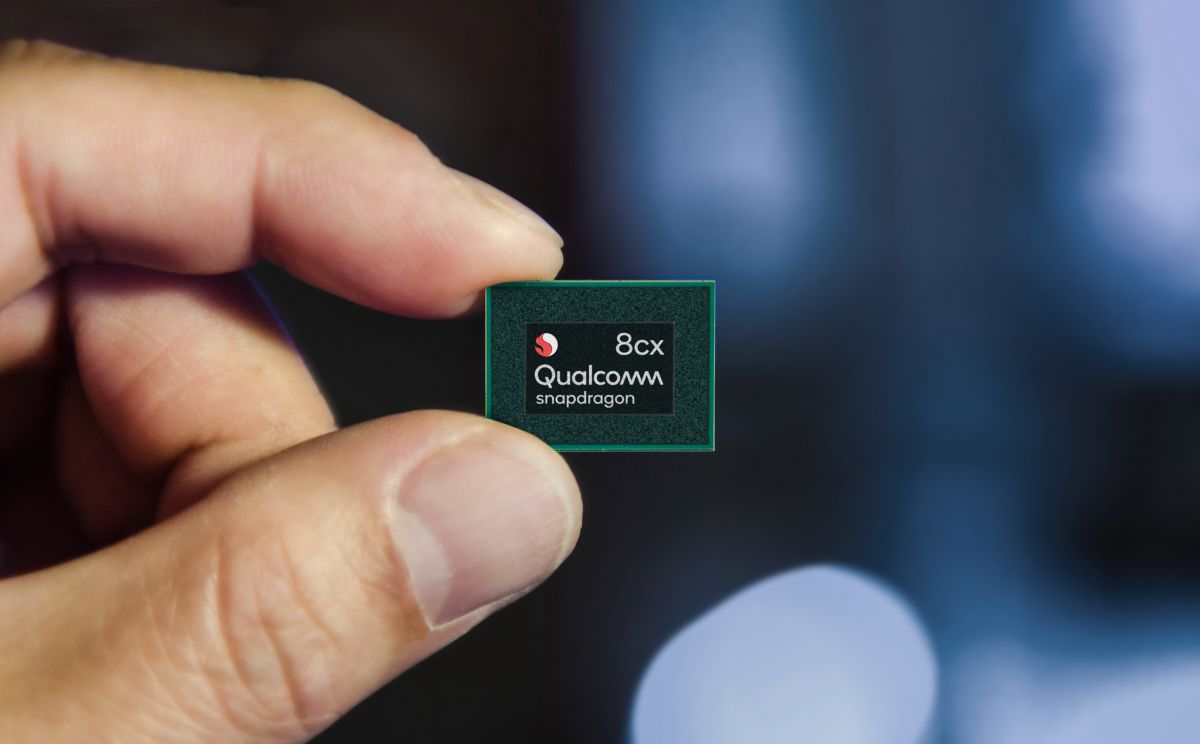
    A report issued by reliable analyst Ming-Chi Kuo says that a price war has begun in the 5G chip industry. Kuo’s note to clients, says that Qualcomm has cut pricing for its mid-range 5G Snapdragon 765 chipset after sales of high-end 5G smartphones fell short of expectations. By cutting the cost of its mid-range 5G chips to manufacturers, Qualcomm is trying to get these firms to produce more affordable 5G handsets to entice the public. The price cuts will also extend to Qualcomm’s low-end chips as well.
    As a result of the price cut, Kuo sees MediaTek facing pricing pressure for its Dimesnity line of 5G chips three to six months earlier than expected. Instead of achieving gross margins of 40% to 50% for its chips as the consensus expects, the analyst sees MediaTek’s margins dropping to less than 30%-35%.
    Qualcomm has reportedly cut the price of the 5G Snapdragon 765 chipset (SD7250) by $25-$30 to $40. MediaTek’s Dimensity 1000 5G chipset costs the company $45-$50 to make and it sells for $60-$70 per chip. As a comparison, Qualcomm’s top-of-the-line Snapdragon 865 Mobile Platform with the Snapdragon X55 5G modem costs $120-$130 and has not had its price cut. The company’s flagship chip outperforms the MediaTek Dimensity 1000 and Qualcomm sees no need to drop the price of its high-end chipset.
    The recently announced MediaTek Dimensity 800 chipset, which supports only the slower sub-6GHz 5G signals, is due to be released in May. This chip, developed for lower-priced 5G handsets, is expected to be sold at a price of $40-$45 per chip and costs MediaTek $30-$35 to make. There might not be that much room for MediaTek to maneuver in response to Qualcomm’s pricing actions.
    The pricing shakeup could cost MediaTek some business. The company’s major 5G chip customers like Oppo, Vivo, and Xiaomi are said to be switching orders for 20 million to 25 million chips from MediaTek to Qualcomm. These components are scheduled to be shipped next month.
    The Snapdragon 765 SoC is equipped with eight Kryo 475 CPU cores running at a clock speed as fast as 2.4GHz. It features an integrated Snapdragon X52 5G modem that supports both mmWave and sub-6GHz 5G signals, and sports the Adreno 620 graphics processor. There is also a Snapdragon 765G for gaming phones that is equipped with an enhanced version of the GPU offering 10% faster graphics rendering compared to the standard Snapdragon 765 chipset.
    The Dimensity 1000 also has an integrated 5G modem and is packed with four performance Cortex-A77 CPU cores running at a clock speed of up to 2.6GHz. Four efficiency Cortex-A55 CPU cores are also included. This SoC is equipped with the ARM Mali-G77 MC9
    Qualcomm’s salvo would have less of an impact on the market if MediaTek’s margins were a little wider. A larger margin would allow the company to take a hit and still thrive. But the Dimensity 1000 brings $10-$25 per chip to MediaTek’s bottom line and the Dimensity 800 garners profits of $5-$15 per chip.
    MediaTek’s Dimensity 1000 and Dimensity are manufactured by TSMC using its 7nm process. The Snapdragon 765/765G will be manufactured by Samsung using its 7nm process. The flagship Snapdragon 865 Mobile Platform is also a 7nm chip, and it also will be produced by TSMC. Qualcomm originally planned to have Samsung’s foundry roll out the Snapdragon 865, but the chipmaker was concerned about allowing Samsung to get a peek under the hood of its top chipset for 2020.
    Chip prices might also run into pressure halfway through this year when TSMC starts producing more powerful and energy-efficient 5nm chips. Among the first to be manufactured will be Apple’s A14 Bionic and Huawei’s next high-end IC expected to be named the Kirin 1020.
  • Samsung ships nearly 7 million Galaxy 5G devices in 2019

    Samsung ships nearly 7 million Galaxy 5G devices in 2019

    Even though 5G services are still in the early stages of development, consumers have already started to invest in 5G devices. Samsung is one of the biggest providers of 5G smartphones, at least according to the numbers revealed today by the South Korean company.

    During 2019, Samsung has shipped no less than 6.7 million Galaxy 5G devices, which accounts for nearly 54% of the global smartphone market. Currently, Samsung offers five 5G-enabled smartphones, including the Galaxy S10 5G, Note 10 5G, Note 10+ 5G, Galaxy A90 5G, and Galaxy Fold 5G.

    Also, Samsung will launch the Galaxy Tab S6 5G, the world’s first tablet to feature 5G support, in the first quarter of 2020. The slate should be initially released in South Korea, but customers in the United States will be able to buy it soon afterward.

    Samsung Electronics’ president TM Roh promised that 2020 will be the year of Galaxy 5G and that his company will slowly bring the technology to more device categories, so expect even more 5G Galaxy devices to arrive in the coming months.

    On a side note, Samsung confirmed that it is now providing network equipment for the 5G commercial service in South Korea and that it’s been selected to offer 5G network equipment for three major US carriers.

  • AT&T continues to expand its 5G+ network to 10 more cities

    AT&T continues to expand its 5G+ network to 10 more cities

    AT&T is the US carrier that calls its 5G network for business customers 5G+. Until earlier today, the 5G+ service was available in 25 cities, but AT&T announced 10 more cities benefit from 5G+ network coverage starting today.

    Unlike 5G network that runs on the carrier’s 600MHz spectrum, 5G+ runs over ultra-high band mmWave spectrum, which has both benefits and downsides. While 5G+ offers blazing-fast download data speeds, it has issues penetrating buildings.

    Here are the 10 cities that are now partially covered by AT&T’s 5G+ network: Cleveland, OH, Menlo Park, CA, Miami, FL, Miami Gardens, FL, Oakland, CA, Ocean City, MD, Phoenix, AZ, Philadelphia, PA, Redwood City, CA, and San Bruno, CA.

    These add to the 25 cities that already benefit from AT&T’s 5G+ service: Atlanta, Austin, Baltimore, Charlotte, Dallas, Detroit, Houston, Indianapolis, Jacksonville, King of Prussia, Las Vegas, Los Angeles, Louisville, Nashville, New Orleans, New York City, Oklahoma City, Orlando, Raleigh, San Antonio, San Diego, San Francisco, San Jose, Waco, and West Hollywood.

    If you’re not a business customer, you can get 5G data speeds on AT&T’s network in 19 cities: Baltimore, Birmingham, Ala., Bridgeport, Conn., Buffalo, Detroit, Indianapolis, Las Vegas, Louisville, Ky., Los Angeles, Milwaukee, New York City, Philadelphia, Pittsburgh, Providence, R.I., Rochester, N.Y., San Diego, San Francisco, San Jose, Calif., and Washington D.C.

  • Apple reportedly has plans to bypass carriers and deliver data itself to the iPhone

    Apple reportedly has plans to bypass carriers and deliver data itself to the iPhone

    In five years, Apple iPhone and iPad users might be able to receive online content on their phone directly via satellite and bypass their wireless carrier. According to Bloomberg, the company has a secret team involving 12 engineers currently working on such a project. Sources cited by Bloomberg caution that the project is in its early stages and could still be dropped. But with company CEO Tim Cook taking an interest in the project, it is clear that satellite delivery of online content is high on Apple’s to-do list.

    Besides using satellites to beam the internet directly to iPhone units, Apple could be looking into the use of satellite technology to provide iPhone owners with improved navigation and mapping capabilities. It is unclear whether the company plans on developing its own satellites, which would be a rather costly endeavor, or will use the equipment on the ground to send data obtained by a satellite and send it to iPhones and iPads.

    The project might not be limited to Apple’s mobile devices and could actually be a workaround allowing Apple to become a wireless operator. This would allow the company to take on the carriers worldwide. While this was something that the late Steve Jobs was hoping to accomplish, back in 2016 Tim Cook said that the company didn’t have the expertise on a network level. But using satellites might be a different story. However, this won’t be easy. “The lessons of prior failures like Iridium, Globalstar and Teledesic are that it’s really hard to find a viable business plan for multibillion-dollar satellite communications projects,” said satellite expert Tim Farrar, a principal at TMF associates. But Apple must feel confident that it can turn a buck with this technology. Apple isn’t the only tech company looking at the sky; Amazon plans on deploying more than 3,000 satellites that will first be sent into space in 2021. In a regulatory filing, Amazon said that it hoped to connect “tens of millions of unserved and underserved consumers and businesses in the United States and around the globe.”

    Some have noticed that Apple is looking for software and hardware engineers that have worked on designing components for communications equipment. Pair that with recent hires made by Apple of people with experience in the aerospace and wireless data delivery industries and it all starts to become a little clearer. The team working on the project is led by aerospace engineers Michael Trela and John Fenwick. The pair worked on a satellite imaging firm that was eventually sold to Google five years ago and they ended up running Google’s satellite and spacecraft operations before leaving for Apple in 2017. After spending 18 months examining whether Apple could benefit from satellite technology, the team has started work on making this a reality. Both Trela and Fenwick report to Apple’s iPhone engineering group.

    Apple’s work on the use of satellites to deliver content to mobile devices is one of several special projects that the company is reportedly working on. Virtual reality and augmented reality headsets are said to be in the works with launches expected in 2021 and 2022 respectively. Bloomberg also mentions that Apple continues to work on technology for the Apple Watch that will allow the timepiece to provide non-invasive blood glucose readings for diabetics. This is a project that we have mentioned from time-to-time. And the company is also planning to design its own modem chips which will allow it to replace Qualcomm. Even though Apple spent $1 billion to purchase Intel’s smartphone modem business earlier this year, it will still be several years before an Apple-designed modem chip is found inside the iPhone.