Tag: telecom

  • Ooredoo Group Extends Working from Home until End of Year, Supports a More Agile Operational Culture

    Ooredoo Group Extends Working from Home until End of Year, Supports a More Agile Operational Culture

    In a pilot initiative aiming to adopt and support a more agile digital culture, Ooredoo Group has extended its Work-From-Home procedures, allowing employees whose work doesn’t require them to physically be in the office to continue working remotely until the end of 2020

    The company is one of the first in the region to make such a decision, paving the way to an innovative working environment that could reshape the contemporary workplace.

    Ooredoo Group employees and contractors will have the option to agree more flexible working arrangements from home or the office, subject to individual agreement and at management discretion. As for the Group’s operating companies around the world, each will have the flexibility to test more localized working arrangements in a way that works best for them and in line with the regulations and directions of the countries in which they operate.

    Based on key lessons learned in the recent period, the Group management team believes that this “experiment” will foster the creation of more agile and modern work culture. As a leader in technology and telecommunications, the Group aims to leverage the insights of the recent period into a competitive advantage.

    Sheikh Saud Bin Nasser Al Thani, Group Chief Executive Officer, Ooredoo, said: “Amid the COVID-19 situation, we are presented with a real opportunity for taking our digital transformation journey to a whole new level, which will see our company leverage digital solutions to ultimately adopt a more holistic digital culture. This will transform the organization and how we work. If colleagues found the combination of working off-site and socially distancing a challenge at first, we have emerged from this disruption empowered, able to get things done as a team – even when not sharing the same physical space, and even more dynamic. I’m both very excited and optimistic about the coming period.”

    Ooredoo Group has led the way among regional tech companies by providing a supportive environment for colleagues working from home. As business returns to normal, these new workplace relationships can be repurposed to strengthen the enterprise in its ability to meet the needs of its customers and the societies they live in.

    While the company will seek to incorporate and build upon the potential for improved work practices discerned in recent months, it will continue to operate within official public health guidelines, against a backdrop of rigorous emergency and business continuity planning. This will allow for changes of direction should the medical situation change.

    “All this requires commitment, responsibility, and accountability — but given the positive experience of the past few months, I’m convinced that together we can further transform the Ooredoo culture,” reflected Sheikh Saud Bin Nasser Al Thani.

    Enforced changes saw hundreds of staff members working from home since March — an unprecedented scenario that can now be built upon leading to a positive outcome. Ooredoo is now testing these exciting new ways of working going forward, amid the economic and medical uncertainties accompanying the novel coronavirus COVID-19 pandemic.
  • France won’t ban Huawei gear from its 5G networks but will ask carriers not to install it

    France won’t ban Huawei gear from its 5G networks but will ask carriers not to install it

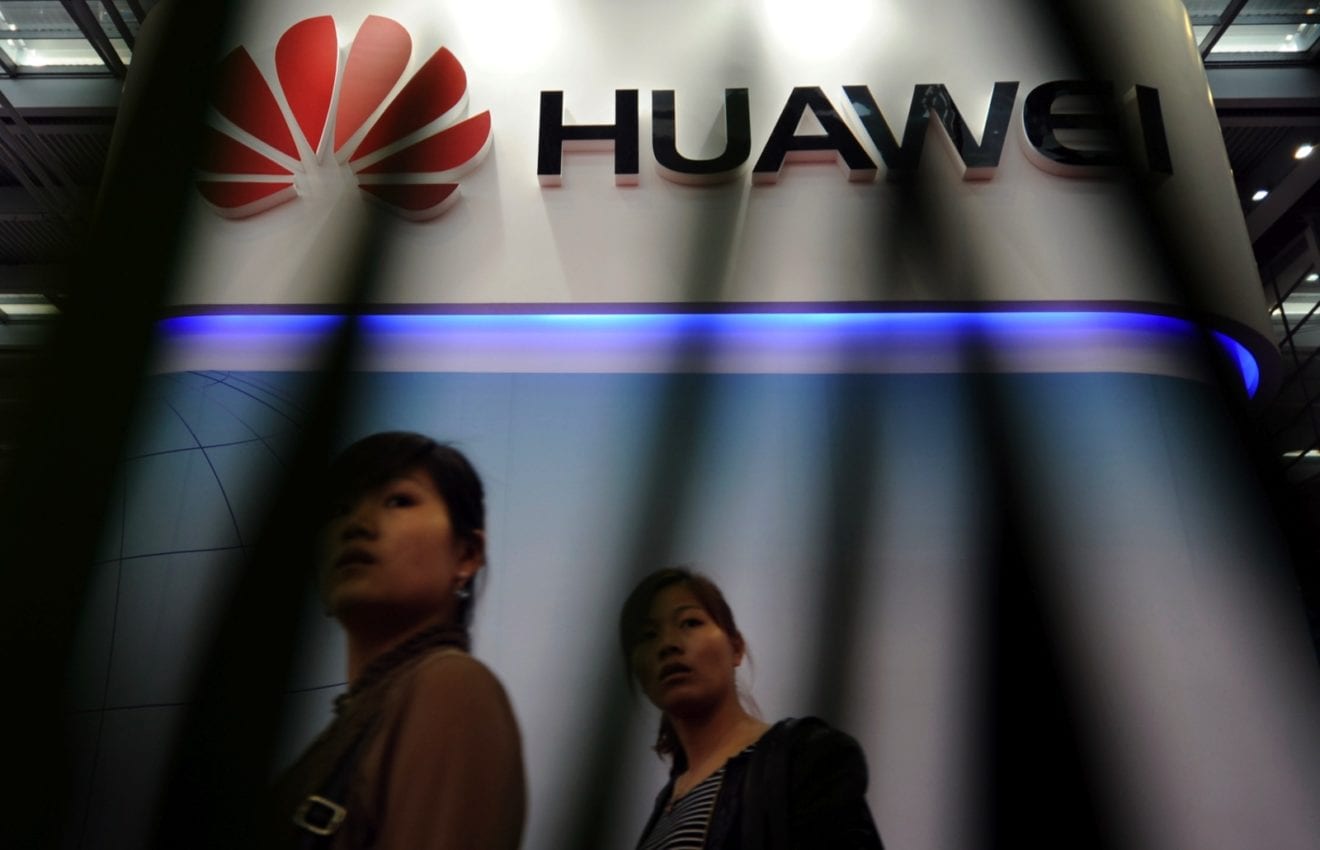
    Huawei is the world’s largest supplier of networking equipment although some countries like the U.S. are worried about how close the company is to the communist Chinese government. Just the other day we told you that England is now looking to stop the installation of Huawei gear in its 5G networks and also plans on pulling out the company’s equipment that has already been installed. The New York Post published a story about how France is going to handle the use of Huawei’s industry-leading technology in the country’s 5G pipelines.

    Guillaume Poupard, who runs French cybersecurity agency ANNSI, says that the country won’t “totally” ban Huawei from 5G networks in France although it will try to get French carriers not to use the Chinese manufacturer’s gear. Poupard said to a French newspaper, “What I can say is that there won’t be a total ban. (But) for operators that are not currently using Huawei, we are inciting them not to go for it.” He also said, “For those that are already using Huawei, we are delivering authorizations for durations that vary between three and eight years.”

    Earlier this year, sources told Reuters that while France wouldn’t ban Huawei, it would try to keep its gear out of the country’s core mobile networks. These networks carry the personal data belonging to customers of the country’s wireless companies which means that keeping Huawei equipment from these networks is of paramount importance. That’s because Huawei has been accused of using its networking gear to spy on consumers and corporations and send the data to Beijing. No evidence of this has ever been discovered and Huawei has repeatedly denied the allegations.

    What France decides to do will be critical to half of the country’s four major wireless providers; about 50% of the networks employed by carriers Bouygues Telecom and SFR use Huawei’s technology. Orange, which is controlled by the French government, has decided to use equipment supplied by Huawei rivals Nokia and Ericsson.

    The head of ANNSI said that starting next week, wireless operators who have yet to receive authorization to use Huawei equipment for their 5G networks should consider a non-response to be a rejection of their request. Poupard stated, “This is not Huawei bashing or anti-Chinese racism. All we’re saying is that the risk is not the same with European suppliers as with non-Europeans.”

  • Singtel Adds Insurance Savings to E-Wallet

    Singtel Adds Insurance Savings to E-Wallet

    Singtel is adding financial services to its mobile wallet Dash, in the form of offer an insurance savings solution underwritten by Etiqa.

    The Dash EasyEarn savings insurance is designed for investors who want to start saving regularly for their future but who may be concerned about cash flow, Singtel said in a statement on Monday announcing its launch.

    The insurance plan has a minimum initial premium of S$2,000, up to a maximum of S$20,000. Policyholders are automatically covered with a 105 percent death benefit of the account value.

    Other benefits include up to 2-percent per annum returns for the first policy year, no lock-in period and unlimited withdrawals with zero penalties. Customers can purchase, top-up and make withdrawals on their EasyEarn plan via the Singtel Dash app on their mobile phone.

    The offering represents the next steps for Dash as it grows to become a more inclusive everyday app that will play a bigger part in enabling our customers’ digital lifestyles, Gilbert Chuah, head of mobile financial services, International Group, Singtel, said.

    Dash is among the largest non-bank mobile wallets in Singapore. Since its launch in 2014, the app has expanded beyond payments and mobile remittance to include lifestyle services like restaurant bookings and travel insurance. The app now has over 1 million registered users.

  • Huawei opens its largest flagship store in Shanghai

    Huawei opens its largest flagship store in Shanghai

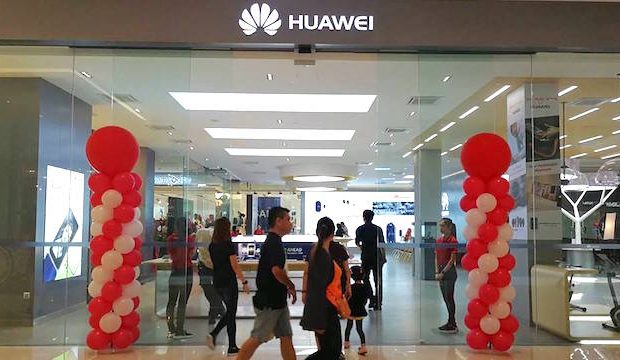
    The new Huawei Shanghai store, the Chinese smartphone and electronics brand’s largest yet, opened its doors this week. The three-story Huawei Shanghai flagship covers 50,000sqm – equivalent to the size of a small to medium shopping mall. It houses the full product range, experience zones and an exhibition area

    Construction of the flagship began during February and is said to have cost more than US$42 million to complete.

    Taking over the space once housing a giant Forever 21 store, the Huawei Shanghai flagship is built in an art deco-style building, incorporating modern design while preserving its original form.

    The store is adjacent to Apple and neighbor to Samsung and Gucci on the city’s oldest commercial street. Its location is part of the current Nanjing Road extension project, connecting the pedestrian mall to the Bund.

    Consumer products can be found on the first floor spanning 12 categories, from phones to smart wearables. Some 220 consultants work in the store, with skillsets including music, dance and v-logging. The theory is that by sharing common interests and hobbies with customers, they can offer suggestions on product use and technical support.

    Staff are able to provide services in more than 10 languages, including the local Shanghainese dialect. There are 19 checkout counters and 12 repair stations

    The second floor features a “Seamless AI Life Zone” encompassing smart experiences in different scenarios such as a smart home, mobile office, fitness and health, travel and entertainment. Products are placed in settings to enable guests to experience the Internet of Things paired with Huawei’s proprietary 5G technology.

    Meanwhile, the upper floor debuts a multi-functional experience zone as an exhibition space for films, paintings and art. Customers can also view Huawei’s first smart vehicle, HiCar.

    The flagship houses many public spaces with the patio of the building functioning as an atrium. Customers are invited to relax and roam around the store, socialise with friends and chat to consultant experts as part of the brand’s community-building initiative.

    More than 60 lectures every week will be available free, covering topics including video production, programming, fitness, and music. Creators and technology experts from around the world, as well as local artists, will be invited for art salons, sharing meetings, and developer talks every month.

    “Our relationship is not just a buyer-seller relationship. We have a deeper bond with our customers,” explains Richard Yu, CEO of Huawei’s consumer business group. “The flagship store is a place for consumers, customers, and developers to get together.”

    Tony Rong, global retail director of Huawei has hinted that more flagship stores will open in other major Chinese cities, including Beijing and Guangzhou. The brand will also soon debut in Germany, Russia and the UAE.

  • SoftBank sells T-Mobile shares at a 4 percent discount

    SoftBank sells T-Mobile shares at a 4 percent discount

    Back in July 2013, the battle between SoftBank and Dish Network over Sprint was won by SoftBank as the latter paid $21.6 billion for 78% of the company. Over time, SoftBank hiked its stake to 80% of Sprint and when T-Mobile closed on its purchase of Sprint on April 1st, SoftBank ended up with 304.6 million shares of T-Mobile.

    Perhaps at a different time, SoftBank might have held on to the 24.7% of T-Mobile’s stock that it received following the merger. But the company has been having difficulties; during its most recent fiscal year SoftBank was drowning in $13 billion worth of red ink. Positions it held in WeWork and Uber produced disastrous results and SoftBank had even considered selling as much as $11.5 billion of its stake in Chinese tech firm Alibaba.

    As part of the transaction, former Sprint CEO Marcelo Claure will purchase 5 million T-Mobile shares in a stock purchase that Claure will fund via a loan provided by SoftBank. Interestingly, Claure happens to be the current CEO of SoftBank Group International and is also a director on T-Mobile’s board. Not adding to its holdings in T-Mobile is Germany’s Deutsche Telekom. The latter owns a 43% stake in T-Mobile and some analysts expected it to add the additional 7% that would put it near the 50% mark. Instead, Deutsche Telekom has two options to purchase 101.5 million T-Mobile shares. If it exercises all of the options it has, the German telecom giant would own 51.8% of T-Mobile. Both options expire on June 22nd, 2024.

    SoftBank is selling as many as 198 million T-Mobile shares or 65% of its stake via the carrier. 133.5 million is going to the general investment public while the underwriters get a total of 10% to cover over-allotments. Existing T-Mobile holders get a crack at 19.75 million shares and 30 million more are being sold to a public trust. The transaction had an interesting effect on T-Mobile’s stock price over the last few days with increasing volatility. Today, with most shares getting hit by coronavirus fears in several states, the broad market was taking it on the chin. But after early weakness, T-Mobile moved ahead for the day and closed at $108.43 for a gain of $1.27.

    So what does the future hold for T-Mobile? With its cake-based 5G setup consisting of low-band 600MHz airwaves that travel great distances and penetrate buildings better than other signals; the 2.5GHz mid-band spectrum it acquired in the Sprint merger providing faster than expected 5G download speeds; and mmWave spectrum delivering zippy fast download data speeds, some believe that the carrier will end up as the fastest 5G wireless provider in the country. It is important to note that the number of T-Mobile shares outstanding will not increase due to the transaction which is actually positive for the carrier’s current stockholders.

    A week from today, on July 1st, Dish Network will close on its purchase of Boost Mobile and 14MHz of 800MHz spectrum for $6 billion. Dish will then sign a seven-year MVNO agreement with T-Mobile that will allow it to offer wireless service while it builds a standalone 5G wireless network. The goal is to make Boost the nation’s new fourth-largest wireless carrier replacing Sprint which was swallowed up by T-Mobile. The Justice Department was concerned that reducing the number of major carriers by 25% would lead to higher prices for consumers.

    The complex financial dealings happen to mark the end of the T-Mobile career of long time Chief Financial Officer Braxton Carter. The latter first became T-Mobile’s CFO back in 2005.

  • Singtel ushers in 5G era with 5G licence

    Singtel ushers in 5G era with 5G licence

    Singtel today was officially awarded the 3.5GHz and the millimeter wave spectrum as part of the 5G license issued by the Infocomm Media Development Authority. This paves the way for Singtel’s nationwide 5G rollout that will not only massively boost the quality of connectivity of its services but set the stage for extensive digital innovation that will prove transformative for industries, businesses, and how people work and live.

    “We are excited to get this greenlight to lead and shape 5G in Singapore by building a world-class, secure, and resilient 5G network that will serve as the backbone of Singapore’s digital economy. More than a business investment, we see this as a significant investment in Singapore’s digital future as 5G spurs innovation among enterprises and industries, creating new businesses, jobs, and economic value in the process,” said Singtel Group CEO Ms Chua Sock Koong. “This license is also very timely in light of Covid-19 and the ensuing reliance on robust infrastructure and connectivity. Our existing network capabilities have allowed us to pivot quickly to the needs of the public and businesses at this critical time and 5G will help extend and accelerate the digital adoption we’ve witnessed as we navigate our way out of Covid-19 towards recovery.”

    Singtel will build on the momentum created from ongoing 5G trials in the fields of port operations, manufacturing, and cloud gaming to offer the most transformative services and solutions to support Singapore’s digital economy.

    “As a company, we intend to move beyond access and connectivity to create new enterprise use cases and innovative platforms, applications, and services to reposition ourselves for growth in the converging eco-systems of tech and telecoms,” Ms Chua added. “As our subsidiary Optus in Australia and our regional associates forge ahead with their 5G strategies, the Group will leverage this experience and scale to build a robust 5G ecosystem with the right partners across our footprint.”

    After a rigorous tender process, Singtel has selected Ericsson to commence a period of negotiation to provide the 5G SA Core, RAN and mmWave network, with a view to finalising the contractual terms as soon as practicable.

    Singtel has been test-bedding new consumer and enterprise 5G solutions through various trials with key technology vendors and public service agencies. This includes working with the PSA on developing port-related 5G use cases such as drones and crane automation at the Pasir Panjang Terminal, exploring how 5G can enable Industry 4.0 manufacturing technologies at the Agency for Science, Technology and Research’s Advanced Remanufacturing and Technology Centre, and testing network readiness for 5G cloud gaming with IMDA and Razer. Singtel is also driving 5G innovation at the 5G Garage together with Ericsson and Singapore Polytechnic, a live facility where enterprises can develop and test 5G solutions. In the same vein, Singtel’s Centre of Digital Excellence helps enterprise customers realise the value and speed up the adoption of 5G in their digital transformation journeys.

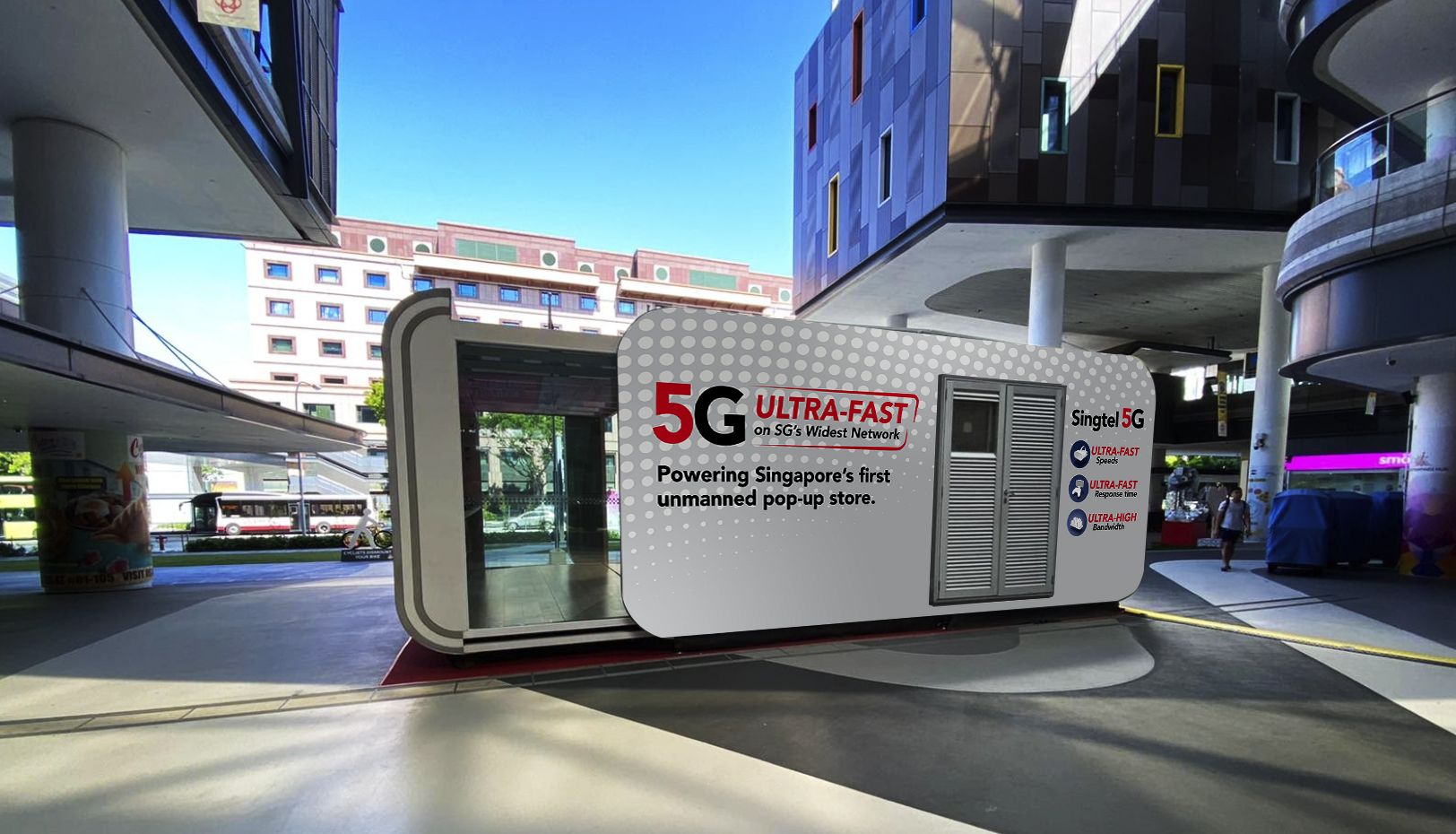
    In a first for Singapore, Singtel is bringing 5G to life for consumers at its unmanned 24/7 pop-up retail store, UNBOXED, which has been outfitted with live 5G connectivity. With 5G powering all self-serve Singapore Telecommunications Limited Company registration number: 199201624D

    kiosks and sentinel surveillance systems within the store, UNBOXED can now be relocated anywhere without laying fibre cables and serve customers with faster transactions. From late July, customers can get a taste of a 5G future while trying out applications such as cloud gaming, 360⁰ immersive entertainment, augmented reality education, as well as checking out the latest 5G mobile devices. Consumers will be able to visit UNBOXED at its current location at Tampines Hub or find out more about 5G at www.singtel.com/5g.

  • AT&T starts rolling out a potentially game-changing 5G technology

    AT&T starts rolling out a potentially game-changing 5G technology

    There’s been a lot of talk over the last few months about T-Mobile’s great progress in terms of 5G coverage and speeds, as well as Verizon’s early (and impressive) lead in the latter department. Meanwhile, Sprint’s own early 5G rollout efforts and development resources are now in Magenta’s hands, positioning “New T-Mobile” as an industry trendsetter and possible market leader in the not-so-distant future.

    But where does that leave AT&T in the grand scheme of the nation’s 5G deployment equation? The short answer is… in a pretty awkward place. We’re talking about a carrier that technically offers three different flavors of commercial 5G services, nonetheless ranking behind Verizon and Sprint in average download speeds and behind T-Mobile and Sprint in 5G availability in the latest in-depth Opensignal report.

    That’s because Ma Bell’s 5G Evolution technology is little more than a publicity stunt (and a misleading one at that), the “standard” 5G signal is based on low-band spectrum and therefore not very fast, while the 5G+ network suffers from the same coverage limitations and problems as Verizon’s 5G “Ultra-Wideband” service. On top of everything, AT&T also doesn’t own as much dedicated 5G low-band spectrum as T-Mobile, making it impossible for America’s second-largest carrier for the time being to challenge Magenta’s 5G availability numbers.

    Fortunately, that’s where a groundbreaking technology dubbed Dynamic Spectrum Sharing (DSS) comes in. Unfortunately, this is not ready for nationwide primetime just yet either. The way DSS works is essentially by allowing mobile network operators to, well, dynamically share spectrum. In other words, AT&T can now use the same “channel” for both 4G and 5G users “dynamically”, aka simultaneously.

    Even simpler put, the carrier doesn’t need to permanently switch off its 4G LTE signal and repurpose said spectrum to exclusively serve 5G-enabled smartphones. Instead, DSS is what AT&T calls a “traffic-aware” technology, instantly responding to changes on its network to allocate and split 4G and 5G resources depending on demand.

    In theory, that sounds like an absolute game-changer with the potential to significantly shorten AT&T’s path to nationwide 5G, but in reality, there are still a number of kinks to iron out, as well as many important unanswered questions.

    Although both Verizon and T-Mobile plan to embrace Dynamic Spectrum Sharing… eventually to help with their own 5G support expansion efforts, the “Un-carrier” has been very vocal about its skepticism regarding the technology’s wide-scale implementation in the short run.

    T-Mobile President of Technology Neville Ray anticipated “a tough year on DSS” back in February, further highlighting that the potential industry game-changer was “still bumpy” just last month due to a previously unforeseen delay in the rollout schedule of one unnamed major network equipment vendor.

    While AT&T didn’t care to elaborate what equipment vendors made its recent DSS launch possible, it’s definitely worth pointing out that the software-based technology is currently only live in “parts” of Ma Bell’s network in North Texas.

    Obviously, the carrier hopes to “continue expanding” its 5G coverage “throughout the year, bringing the power of 5G to more customers from coast to coast”, but at least for the time being, there are no other details to share on actual dates or places.

    The list of “5G devices already upgraded in the field” to support Dynamic Spectrum Sharing is also disappointingly short, merely including Samsung’s Galaxy S20, S20+, S20 Ultra, and Galaxy Note 10+ 5G, as well as LG’s V60 ThinQ.

    Last but certainly not least, there’s the question of the actual user benefits DSS is expected to facilitate. The answer is unlikely to make AT&T customers very happy, as the mobile network operator anticipates significant improvements in speed… further down the line. Until the technology is refined, upgraded, and deployed on a larger scale, you’ll have to settle for pretty much the same download numbers you usually get on LTE.

  • Comprehensive new report highlights the pretty terrible state of US 5G networks

    Comprehensive new report highlights the pretty terrible state of US 5G networks

    We were warned well in advance of the world’s first 5G rollouts not to expect the game-changing wireless technology to, well, instantly change the game in terms of widespread download speeds, but obviously, some progress was made over the last year or so pretty much everywhere around the globe.

    Because not all 5G mobile networks are created equal and many countries haven’t even started the transition from 4G LTE, you shouldn’t be surprised to find out there are major geographical differences to report as far as everything from raw speeds to video experience and the availability of the “outdated” aforementioned cellular standard is concerned.

    While it’s clearly not easy to collect enough data to get a full and accurate picture of the way everyday smartphone users regularly connect to 4G LTE and 5G networks worldwide, especially during a pandemic, OpenSignal impressively managed to perform more than 87 billion measurements on over 43 million devices between January 1 and March 30, 2020.

    After comparing all that information with similar data gathered in the first three months of last year, the mobile analytics company released an in-depth report full of interesting findings and detailed examinations of regional differences. Here are just a few of the conclusions that captured our attention:

    While all 20 “leading” 5G countries assessed by OpenSignal for its latest report saw their download speed “experience” index grow between Q1 2019 and Q1 2020, said growth was far from impressive in places like Kuwait, Romania, the UK, Spain, and… the US.

    Due to T-Mobile’s initial nationwide focus on low-band 5G technology, which is barely faster than 4G LTE across many areas, and the modest footprint covered by Verizon’s blazing fast mmWave 5G network, it’s hardly surprising to see the US ranked below Germany, Sweden, Finland, Qatar, UAE, Denmark, Switzerland, Australia, Norway, Japan, and South Korea in this key metric.

    Believe it or not, US users are getting less than half the average 5G download speeds of their South Korea-based counterparts, although for what it’s worth, the 26.7 Mbps score is 25 percent higher than the regional speed result from the same period last year.

    If you thought ranking 12th out of the aforementioned 20 leading 5G countries for download speed experience was bad, wait until you see where the US is positioned in OpenSignal’s latest 5G video experience chart. With 56 points (on a scale to 100), the “land of the free” managed to edge out Puerto Rico and finish the global competition second to last.

    Although the 56 score does technically put the US in the “Good” category, 5G users in seven countries enjoyed an “excellent” average mobile video experience during the first quarter of 2020, while another 11 countries earned a “very good” rating.

    Adding other countries into the equation paints an even more embarrassing picture for the US wireless industry, as the nation sits in the 73rd spot of the overall top 100 charts for mobile video experience, making far too little year-on-year progress to raise any hopes for short-term future improvement.

    Canada doesn’t need widespread 5G connectivity to rule the general download speed hierarchy, incredibly jumping from 42.5 to 59.6 Mbps in the space of 12 months and totally crushing the 26.7 Mbps US score, which saw a modest surge from 21.3 Mbps a year ago.

    If it makes you feel any better, the US did manage to defeat two G7 countries (Italy and the UK) in download speeds while ranking dead last in the group as far as the video experience is concerned. Overall, the US sits in the 25th spot out of 100 countries in the download speed experience chart, which is a little better than the nation’s abysmal video performance.

    On the other hand, the US continues to shine when it comes to 4G availability (which is not the same as coverage, mind you), with a remarkable 96.1 percent score that’s only surpassed by Japan and South Korea. At least in theory, that should allow the nation’s largest wireless service providers to deploy a 5G signal faster than carriers in many other countries. Unfortunately, that’s not enough to also guarantee remarkable nationwide speeds… yet.

  • Indosat Ooredoo Reports Revenue Growth of 8% for Q1 2020 Year-on-Year

    Indosat Ooredoo Reports Revenue Growth of 8% for Q1 2020 Year-on-Year

    President Director and CEO Indosat Ooredoo, Ahmad Al-Neama, said, “Building on the growth momentum from 2019, Indosat Ooredoo has delivered a strong performance in Q1’20. We are on track with our 3 years’ turnaround plan and see positive momentum continuing in the coming quarters. We all are facing unprecedented challenges and Indosat Ooredoo has been taking proactive & progressive steps to ensure that we support our employees, customers, and community in this challenging situation. We were amongst the first to implement virtual ways of working for our employees to ensure their health and safety. We have accelerated our network rollout plan to make sure that people can stay connected during these times. Steps have been taken to support business continuity for enterprise customer and Indosat Ooredoo continues to support government initiatives in these tough times. Indosat Ooredoo remains committed to accelerating Indonesia’ digital economy agenda and will continue to support to navigate our country through this pandemic.”

    Revenues of IDR6,523.1 billion were recorded for 1Q 2020, an increase of IDR476.9 billion or 7.9% higher compared to 1Q 2019. Indosat Ooredoo’s Cellular, MIDI, and Fixed Telecommunication business each contributed 82%, 15%, and 3% respectively to the consolidated operating revenues for the period ended 31 March 2020. Indosat Ooredoo recorded net loss of IDR605.6 billion, increased by IDR313.1 billion over net loss recorded in 1Q 2019 primarily driven by one-off impact of organization rightsizing and loss on foreign exchange.

    The Company operated 133,186 BTSs as of 31 March 2020, adding 51,680 BTSs compared to last year. To date, the Company has operated 52,174 4G BTS.


  • Once again, ZTE is in trouble with the U.S.

    Once again, ZTE is in trouble with the U.S.

    Before Huawei was banned from its U.S. supply chain last May, fellow Chinese manufacturer ZTE was blocked from its state-side supply chain in 2018. While Huawei was able to thrive despite its placement on the U.S. Commerce Department’s entity list, ZTE almost went out of business. Surprisingly, a tweet from President Donald Trump set the wheels in motion for a settlement that ultimately saved the company.
    But ZTE is once again in the Trump administration’s crosshairs. The smartphone and networking equipment manufacturer is being investigated for allegedly bribing foreign officials to help its global operations. The Justice Department has not revealed any information about the investigation. In 2016, the Commerce Department fined ZTE $1.19 billion for selling goods and services to Iran and North Korea despite U.S. trade sanctions against both countries.
    As part of the punishment, ZTE was banned from its U.S. supply chain for seven years; the Commerce Department suspended the ban as long as the manufacturer was following all of the penalties placed on it by the U.S. government. But once the Trump administration realized that ZTE was paying bonuses to some employees in violation of that agreement, the supply chain ban was initiated in April 2018 running through March 2025.
    Unlike Huawei, which rode a wave of Chinese patriotism and still managed to deliver approximately 240 million handsets last year (second behind Samsung and ahead of Apple), ZTE does not design its own chips and did not prepare for a ban as Huawei had done by stockpiling chips. ZTE, which was the fourth-largest smartphone manufacturer in the U.S. prior to the 2018 ban, was running into trouble. But out of nowhere, President Trump disseminated a tweet expressing concern for the jobs being lost in China because of the supply chain ban. Trump wrote that he had instructed the Commerce Department to reach a deal with ZTE. Weeks later, a deal was made. ZTE paid the U.S. $1 billion and put $400 million into an escrow account in case it committed any illegal acts in the future (like the new charges). The Chinese manufacturer also agreed to overhaul its Board of Directors and replace its executive team. A compliance team from the U.S. was placed inside the company.
    ZTE was never able to regain its position as a top smartphone vendor in the states. Motorola took over its spot as the fourth most popular brand in the U.S. and that continues. The U.S. still considers ZTE to be a national security threat. Back in November, the FCC voted to block the Universal Service Fund (USF) from purchasing networking equipment from ZTE and Huawei. The $8.5 billion fund is managed by the regulatory agency and is funded through a fee tacked on to consumers’ wireless bills. The USF is charged with helping rural carriers provide internet service to rural Americans. Many of these operators used Huawei and ZTE gear for their 3G and 4G networks.
    The FCC and the U.S. government want these rural operators to remove any Huawei and ZTE equipment that is embedded in their networks. The FCC has already estimated that this will cost nearly $2 billion to accomplish over a two-year period. Congress has approved a resolution offering rural carriers $1 billion to remove this gear from their networks. Both Huawei and ZTE are considered national security threats because of their ties to the communist Chinese government. U.S. lawmakers are concerned that the two companies place backdoors in their equipment that gather intelligence and send it to Beijing. ZTE and Huawei have repeatedly denied these allegations.
  • Huawei lawsuit against ‘unconstitutional’ ban in the US is thrown out

    Huawei lawsuit against ‘unconstitutional’ ban in the US is thrown out

    A judge has ruled against a lawsuit filed by Huawei in the US relating to a ban on government personnel using the company’s devices.

    Huawei filed the lawsuit on the basis that the ban was “unconstitutional” back in 2018. Since then, Huawei has faced increased US-led scrutiny globally over claims the company is controlled by Beijing – an allegation the company denies.

    US District Court Judge Amos Mazzant ruled that Congress has the right to ban federal agencies from using equipment manufactured by specific firms.

    In a 57-page ruling on Tuesday, Mazzant wrote: “Contracting with the federal government is a privilege, not a constitutionally guaranteed right—at least not as far as this court is aware.”

    Huawei is now considering its options and said in a statement the “approach taken by the US Government in the 2019 NDAA provides a false sense of protection while undermining Huawei’s constitutional rights.”

    Earlier this month, the Department of Justice charged Huawei and its subsidiaries with racketeering and conspiracy to steal trade secrets.

    Last week, a bipartisan US delegation voiced their concerns about Huawei during this year’s Munich Security Conference.

    Secretary of State Mike Pompeo claimed that Huawei, and other firms backed by Beijing, are “trojan horses for Chinese intelligence”. Meanwhile, Defense Secretary Mark Esper said China is conducting a “nefarious strategy” through companies like Huawei.

    From the other side of the House, Republican Speaker Nancy Pelosi said the use of Chinese telecoms equipment would be “choosing autocracy over democracy” and “putting the state police in the pocket of every consumer in these countries”.

    February is typically a great month for those in telecoms as it’s a time when everyone convenes at MWC in Barcelona to show off their latest technologies, make deals, and celebrate the industry. Of course, this year’s MWC has been canceled over fears about the spread of the deadly coronavirus.

    The best recent news for Huawei arrived last month when the UK government announced it will be allowing the company to have a “limited role” in national 5G networks following a comprehensive security review.

    Huawei will be hoping for fewer months like February for the rest of 2020.

  • Shocking AGR debts could spell doom for Vodafone Idea

    Shocking AGR debts could spell doom for Vodafone Idea

    Following a Supreme Court ruling made last week, India’s Vodafone Idea could be facing potential bankruptcy for failing to pay billions in outstanding government fees in the next few days.

    Vodafone Idea, the brainchild of a collaboration between Britain’s Vodafone Group Plc and India’s Idea Cellular has been hit the hardest by the court’s order that telcos would need to clear their AGR fees; a ruling made last October which resulted in unpaid debts for operators going back a few years.

    Vodafone Idea has stated that it is unable to pay the $3.9 billion owed but is assessing the amount and is hoping for a timeline extension to keep their business afloat.

    Additionally, the multi-billion-dollar debt incurred by the telco could put a dampener on India’s economy and reputation as an investment hub for multinationals, unless business continuation was secured.

    The company announced, “As disclosed in the company’s financial statements for the quarter ending December 31, 2019, the company’s ability to continue as a going the concern is essentially dependent on a positive outcome of the application for modification of the Supplementary Order.”

    An anonymous spokesperson for Vodafone Idea said, “”They have been beaten down by the environment here. We’re sending investors a very negative signal – it says the trust factor between the government and the industry doesn’t exist.”

    Since news of the ailing telco broke, analysts have already begun to predict the growth of Bharti Airtel’s and Reliance Jio’s opex and capex levels if Vodafone Idea were to shut down permanently.

  • Huawei Lawyers Accuse U.S. for Overlooking HSBC Misconduct

    Huawei Lawyers Accuse U.S. for Overlooking HSBC Misconduct

    Huawei’s legal representatives claim that U.S. authorities had knowledge of the bank’s violations against Iran sanctions but chose not to pursue the matter.

    In exchange, HSBC allegedly cooperated to support the American federal prosecutor’s case against the Chinese telecom tech giant.

    The government agreed to overlook HSBC’s continued misconduct, electing not to punish the bank, prosecute its executives or even extend the monitorship,» according to a report citing a letter filed by Huawei’s lawyers. «[In return], HSBC agreed to cooperate with the government’s efforts to depict Huawei as the mastermind of HSBC’s sanctions violations and supply witnesses to the government’s stalled investigation of Huawei.»

    This is the latest development in the legal battle involving allegations against Huawei of bank fraud and Iran sanction violations with more charges coming later this month. In an indictment unsealed last year, Huawei’s chief financial officer Meng Wanzhou – currently fighting extradition from Canada to the U.S. – was accused of defrauding banks by misrepresenting the smartphone maker’s relationship with Skycom Tech Co Ltd, a suspected front company in Iran.

    The timing couldn’t be worse for HSBC’s interim chief executive Noel Quinn who is not only fighting to regain shareholder confidence after 2019 profits plummeted but also for his job, as the bank has yet to name a permanent chief.

  • Apple’s chip supplier sees strong demand for 5G phones

    Apple’s chip supplier sees strong demand for 5G phones

    Despite the current coronavirus pandemic, trade wars, and uncertain economic times ahead, the world’s largest independent foundry sees strong growth in the near future. Taiwan Semiconductor Manufacturing Company (TSMC) is sinking billions more into its chip manufacturing business. Last week, the firm’s board of directors announced that it was going to budget $6.74 billion to build more fabrication facilities and increase its production capacity.
    Last month, the company said that it planned on spending between $14 billion and $15 billion for capital expenditures this year up from the $10 billion-$11 billion it spent last year. The 2020 spending includes $2.5 billion for its 5nm process chips and $1.5 billion for its 7nm chips. Let’s back up a bit. What TSMC does is manufacture chips for companies that design their own components but don’t have the facilities to actually produce them. That includes some of your giant tech companies like Apple, Qualcomm, Huawei, and others. Last week, TSMC said that the coronavirus has not led to any reduction in orders from its customers.
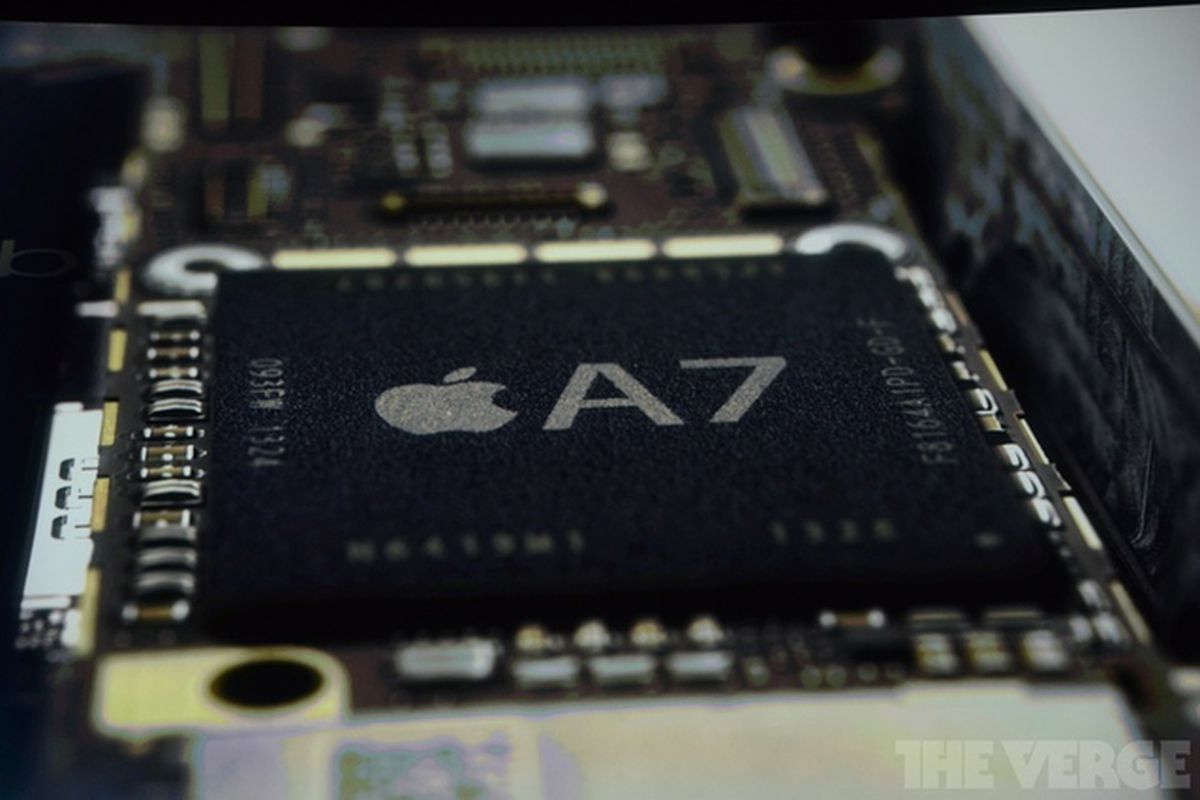
    The process node refers to the number of transistors that can fit into a dense area like the inside of an integrated circuit. The lower the number, the larger the number of transistors inside a chip. That is important because as more transistors are placed inside an IC, the more powerful and energy-efficient it is. For example, Apple’s current A13 Bionic SoC containing 8.5 billion transistors is manufactured using TSMC’s enhanced 7nm process.
    Starting in the middle of this year, the company will begin producing 5nm chips and the Apple A14 Bionic will reportedly be packed with 15 billion transistors making it more powerful and energy-efficient than the A13 Bionic. This means that Apple could have a huge performance lead over most Android phones when it releases the 2020 iPhone models later this year. That’s because the Qualcomm Snapdragon 865 Mobile Platform, the chip that will power most flagship Android phones in 2020, is manufactured by TSMC using its 7nm process node. The only Android phones that could match the 2020 iPhone’s performance this year could be the Huawei Mate 40 line. That’s because Huawei’s 5nm flagship chipset is due to roll off of TSMC’s assembly line later this year.
    Speaking of the A13 Bionic, Apple recently said to increase the production of the chip due to higher than expected demand for the iPhone 11 series. Additionally, the upcoming iPhone 9, due to be introduced next month, will employ the A13 Bionic chip. Reliable TF International analyst Ming-Chi Kuo believes that Apple could sell as many as 30 million iPhone 9 units this year and each one will be powered by the A13 Bionic chip. With a price rumored to start at $399 and up, the iPhone 9 will look just like the iPhone 8 but will sport the more powerful chip and include a 50% hike in memory from 2GB to 3GB of RAM.
    As for the A14 Bionic, TSMC sees strong demand for the new 5G iPhone models that will be powered by this SoC. The latest rumor has Apple releasing four iPhone models this year including the iPhone 12 (5.4-inch screen, dual cameras), iPhone 12 Plus (6.1-inch screen, dual cameras), iPhone 12 Pro (6.1-inch screen, triple cameras) and the iPhone 12 Pro Max (6.7-inch screen, triple cameras). All four will be equipped with the TSMC built Snapdragon X55 5G modem chip which supports both sub-6GHz and mmWave 5G spectrum. That means the new iPhones will be compatible with the 5G signals disseminated by all four major U.S. wireless carriers.
    Last year, the semiconductor industry had its worst year since the dot com collapse of 2001 with revenue declining 12% on an annual basis to $412 billion. But TSMC’s decision to throw billions into new production facilities indicates that at least one of the industry’s leading firms is confident that the business is turning around.
  • Viettel used fake accounts to discredit rivals

    Viettel used fake accounts to discredit rivals

    Facebook has removed a network of accounts and pages linked to Vietnamese telecom giant Viettel for allegedly using disinformation tactics to discredit rivals.

    The social network behemoth said Wednesday it had removed 13 accounts and 10 pages linked to Vietnam’s biggest telecom provider Viettel and its Myanmar venture Mytel for “violating” its “policy against coordinated inauthentic behavior”.

    The move marks the first time Facebook has taken action against businesses for directly using disinformation against competitors.

    Facebook said the individuals behind the network used fake accounts to manage pages posing as independent telecom consumer news hubs. They posed as customers to criticize their rivals, it stated in a release.

    “The page admins and account owners typically shared content in English and Burmese about alleged business failures and planned market exit of some service providers in Myanmar and their alleged fraudulent activity against their customers.”

    The world’s largest social media platform also noted that although the people behind these activities, which originated from Myanmar and Vietnam, attempted to conceal their identities and coordination, its investigation found links to Mytel in Myanmar and Viettel in Vietnam.

    Viettel owns a 49 percent stake in Mytel.

    The controversial pages have around 256,600 followers, and admins have paid around $1.15 million for ads on Facebook in U.S. dollars and Vietnamese dong, it added.

    Military-run Viettel said in a statement Friday that as a company with a presence in 11 countries, it always complies with the laws and business ethics in each market.

    The company is verifying the allegation and is willing to cooperate with Facebook. It will punish anyone guilty of misconduct, Viettel said.

    The company added it supports Facebook’s efforts to clean up the social network environment and expects the latter to function in a cooperative manner to avoid making unilateral allegations.

    Viettel’s revenue last year rose 7.5 percent year-on-year to $251 trillion ($10.78 billion), accounting for 50 percent of Vietnam’s telecom revenues. The company eyes to commercially launch 5G services in June using its own equipment.