Tag: telecom

  • ZTE, Ooredoo Myanmar alliance to display multiple 5G use cases

    ZTE, Ooredoo Myanmar alliance to display multiple 5G use cases

    This standard specifies the technical requirements of centralized control of shared air-conditioners, setting a benchmark for the centralized control operation of the shared economy in the home appliance industry. It is another breakthrough in the wake of the joint release of the industry’s first shared air-conditioning technology standard based on NB-IoT in September 2018 by ZTE, China Telecom Shanghai Research Institute, Haier AC and other partners.

    ZTE, China Telecom and Haier AC carried out a comprehensive evaluation and pre-commercial verification of the shared air-conditioner centralized control model at University of Shanghai For Science and Technology. China Telecom and ZTE provided indoor and outdoor wireless network coverage to ensure stable and reliable signal quality, data transmission, and service applications in the centralized control area. The centralized control based on NB-IoT wireless network can effectively address the problems of traditional centralized control, such as difficult engineering, complex cabling, and overwhelming maintenance.

    With the release of the shared home appliance industry standard, the NB-IoT network can realize the centralized control of temperature, mode and switch of the shared air conditioners, hence the wide application in campus, apartment and hotel scenarios.

    ZTE has always been exploring continuous innovations in the field of IoT. Based on its self-developed IoT platform and its leading edge in the 5G field, ZTE has created a series of end-to-end 5G+ integrated industry solutions in various fields, including 5G+ Smart Campus, 5G+ Industrial Park, 5G+ Smart Water Control, 5G+XR Cloud Coordination, 5G+ Cloud Education, 5G+ Smart Stadium, Smart Home, and Internet of Vehicles. By integrating the cutting-edge technologies, such as big data and AI, with the IoT, ZTE is committed to promoting the incubation and deployment of innovative IoT solutions.

    “We have been exploring the opportunities in each industry with our industry partners to create values by virtue of our experience and capabilities in the ICT field,” said Mr. Yin Gang, vice president of ZTE Corporation. “We’re happy to join hands and connect closely to build a bright future together.”

    ZTE is a provider of advanced telecommunications systems, mobile devices, and enterprise technology solutions to consumers, carriers, companies and public sector customers. As part of ZTE’s strategy, the company is committed to providing customers with integrated end-to-end innovations to deliver excellence and value as the telecommunications and information technology sectors converge. Listed in the stock exchanges of Hong Kong and Shenzhen (H share stock code: 0763.HK / A share stock code: 000063.SZ), ZTE sells its products and services in more than 160 countries.

    To date, ZTE has obtained 25 commercial 5G contracts in major 5G markets such as Europe, Asia Pacific, MEA (Middle East and Africa), etc. ZTE commits 10 percent of its annual revenue to research and development and has leadership roles in international standard-setting organizations.

  • Viettel Global reports profit surge

    Viettel Global reports profit surge

    Telecom giant Viettel Global Investment JSC has made VND1.17 trillion ($50.5 million) in pre-tax profits after reporting a loss last year. Viettel Global, which covers overseas investments by military-run Viettel Group, had made a VND15.77 billion ($681,000) loss in the same period last year, according to the company’s audited consolidated financial statements.

    Revenues in the first six months reached VND7.9 trillion ($341 million), down 1.5 percent year-on-year, but a sharp decrease in the cost of sales improved profits, the company’s management board said.

    In the first half of the year, the company focused more on its core business of telecommunications, raised its average revenue per user (ARPU) and cut down the sale of equipment with low-profit margins. This raised the company’s operating profit margin (excluding financial income) to 35.3 percent from 26.4 percent in the same period last year.

    Revenue in Southeast Asia, especially driven by growth in the Cambodian market, accounted for 53 percent of Viettel Global’s revenue in the first six months, followed by Africa with 33 percent and South America with 14 percent.

    Viettel Global was established in 2006 to spread Viettel Group’s presence in foreign markets. It currently operates in ten markets, namely Cambodia, Laos, Timor Leste, Mozambique, Burundi, Haiti, Peru, Cameroon Tanzania and entered Myanmar last year.

    Viettel Global said it has plans to enter new markets, mainly in ASEAN.

    Viettel Global is one of the largest enterprises on Vietnam’s Unlisted Public Companies Market (UPCoM) in terms of both asset size and market capitalization. As of June 30, the company’s total assets were VND59 trillion ($2.54 billion), of which equity accounted for VND25 trillion ($1.08 billion).

  • First 5G network broadcasts in Vietnam

    First 5G network broadcasts in Vietnam

    Telecom giant Viettel broadcast its first 5G network Saturday from its network of 5G base stations in Ho Chi Minh City.

    “The official broadcast of 5G in Ho Chi Minh City is an important milestone in Viettel’s strategy to make Vietnam one of the first countries in the world to commercialize 5G services,” Viettel deputy director Tao Duc Thang said in a statement.

    The 10 stations will be used by Viettel, the nation’s largest telecom firm, to comprehensively check and assess its 5G service before launching it commercially next year.

    Military-run Viettel installed the first 5G station in Hanoi early this year and made the first 5G phone call in May. It was the first firm in the country to receive permission to trial 5G services in January, followed by MobiFone.

    Last November, Information and Communication Minister Nguyen Manh Hung said at a conference that Vietnam should test 5G in 2019 and ensure nationwide coverage by 2020.

    “Vietnam should be one of the first countries to launch the network, at least in Hanoi and HCMC,” he had said. The country had been one of the last in Southeast Asia to roll out 4G services.

    5G is said to offer speeds 100 times faster than 4G, primarily used for smartphones and other similar devices. 5G is also expected to support new applications like remote medical procedures and autonomous driving.

  • Google Fi announces its first Unlimited Plan

    Google Fi announces its first Unlimited Plan

    Google Fi is getting its first Unlimited Plan, which should offer subscribers everything in unlimited quantities. Well, that’s not how it really works in the United States, at least when it comes to data.

    Since the carrier’s launch in 2015, only one plan was available for customers, the Fi Flexible plan. Starting today, Fi is adding a second plan, a Google Fi Unlimited Plan. It will be available for $70 for a single line, but the more people you’re sharing it with, the less it will cost. So, for two lines, the Unlimited Plan is priced at $60, while three lines cost just $50 per line. Finally, if you add between four and six lines, you’ll be paying $45 per individual user (taxes excluded)

    Google Fi’s Unlimited Plan offers 22GB of unthrottled data per line, after which your data speed will be limited. Also, Google mentions that it “may optimize video streaming quality to 480p to extend customers access to high-speed data before they hit 22GB.”

    Besides data, you’ll get unlimited calls and texts, including international calls. Google says that the plan covers free international calls from the US to 50 countries and territories, as well as unlimited data and texting abroad in 200 destinations at no extra charge.

    To make things even more appealing, the Unlimited Plan comes with a Google One membership with 100GB of cloud storage and extra benefits such as expert support across Google, discounts on Google products, and much more.

  • How 5G will revolutionize our retail industry as a great enabler

    How 5G will revolutionize our retail industry as a great enabler

    Mobile communication is about to experience its greatest revolution in the 12 years since Apple invented the smartphone. This time, however, it is not handsets that will drive the change, rather the network technology we have come to know as 5G. 5G technology offers data speeds 20-times faster than existing 4G long-term evolution (LTE) networks, promotes mass adoption of Internet of Things (IoT) by enhancing information exchange across different appliances, and better supports artificial intelligence (AI), virtual reality (VR) and augmented reality (AR) thanks to the low latency. In some cases, 5G will offer speeds 100-times faster.

    South Korea became the first country in the world to launch fully-fledged 5G commercial services in April. By June of this year, 5G subscribers in the country had surpassed the 1 million mark, encouraged by aggressive network promotional campaigns, along with Samsung’s new 5G-enabled Galaxy S10 smartphone. Next year, networks will be established in Australia, Japan, Hong Kong, and Singapore, initially in dense city environs before moving into smaller population centers. The worldwide rollout is inevitable. An Apple executive has confirmed that some of its next-generation iPhones scheduled for release next year will be 5G enabled.

    “The next chapter of IoT is just beginning,” wrote Carrie MacGillivray, vice-president for IoT and mobility at research house IDC, in a recent report. “We see a shift from digitally enabling the physical to automating and augmenting the human experience with a connected world.” Not surprisingly, that massive increase in speed and response time is delighting gamers, news services, and entertainment broadcasters: graphics or video imagery will be able to be streamed seamlessly in high definition.

    But are retailers ready? How many even understand the potential of the new-generation technology which is set to change our daily lives, let alone are making plans to ride the wave. To imagine the impact 5G will have on retail business, think of every single function of a retail store that becomes digital: the in-store AR experience, the product(s) presented to customers through Omni-channels, the seamless payment gateways, and the logistics required to fulfill customers’ order. Now think of them functioning at 20 times the current speed. That’s 20 times the data transfer rate. Now think of it happening at 100 times the current speed. That is 5G.

    Massive benefits for retailers

    Retailers will discover massive benefits using 5G. To customers, at the start of the process when consumers are researching and purchasing products during the delivery process, the incorporation of 5G and other technologies will, without doubt, uplift their experience. Despite the frustration faced by the early adopters of VR and AR technologies, both consumers and marketers, because of the latency, dropouts and limitations on the imagery definition; the arrival of 5G will eventually enable a seamless, free-moving experience outside a fixed, usually indoor environment.

    The high network speeds will allow a vastly more complex level of engagement between retailers and shoppers. It will allow high-quality imagery, seamless streaming 3D video and personalized product matching, including previews of how a product will look alongside a previous purchase; or for homewares or furniture, for example, inside a living space or office.

    5G also brings transparency. Put simply, faster data means it will soon be easier for your customers to compare your offer with those of your competitors. There won’t be secrets anymore on pricing, product specification, determining suitability for purpose, and more importantly, a store’s credibility – making the reviews from customers after checking out the shopping basket all the more important.

    Price, once a bedrock of customer decision, is being overtaken by value as a leading consideration. Consumers who connect through 5G devices will be able to access as much information as they want online faster than ever before: that includes price comparison sites, product review blog posts, unboxing videos by KOLs. Such content has been available in the past, and more are coming along with the rise of micro-influencers, which has accelerated since 2017. “The advent of 5G is going to be a make-or-break moment for retailers,” says Corey Pierson, co-founder, and CEO of US advanced customer analytics consultancy Custora. “And those that can effectively leverage the data at their disposal only stand to gain.”

    Research by Mintel found consumers lack trust in the online shopping process, a major barrier to online shopping; not just trust in data protection issues, but also the high chance of buying counterfeit products – more than 70 percent of them are sold online, and whether an unbranded product is true to the online description is sometimes also questionable.

    Improved consumer confidence and trust will remove a pain point for shoppers, potentially reducing return rates as well. But to make the most of this opportunity, retailers will have to embrace technologies like AR, VR, chatbots, and video streaming to replicate the in-store shopping experience for customers in a digital environment.

    A synonym of agility

    5G will be a synonym of agility, allowing changes of actions and vast amounts of information to be transmittable in an instant. An order could be canceled while the product is en route to the recipient: warehousing management tools could simultaneously update the inventory records and if there is another order waiting, redirect the product to another customer, sending all relevant details to the delivery driver in a heartbeat.

    With connectivity everywhere, technology like autonomous vehicles that are currently in limited testing in several countries such as Singapore and the US, will soon be commonplace in the major cities worldwide.

    On the other hand, imagine customers being able to see their shipments in real-time via AR through their smartphones, a service more than just the tracking of location thanks to the improved IoT; and logistics companies being able to increase the automation of sorting and delivery of packages, resulting in higher accuracy and speed to reaching the customers. 5G is a key to realizing the future of e-commerce fulfillment.

    5G is an enabler

    As new 5G networks are rolled out in more and more cities, it is imperative that companies embrace technologies based on 5G connectivity to remain competitive and responsive to consumer needs. As more and more consumers purchase and experience 5G devices, their expectations will rise: they will demand the brands and suppliers they deal with are keeping up with them, whether selling products, providing services such as delivery or providing content.

    5G is as much a cornerstone of customer engagement and connectivity in the next decade as smartphones and social media were in the last.

    But it is critical to remember that 5G is an enabler, not a solution in itself.

  • Google shuts down service that helped carriers provide better coverage

    Google shuts down service that helped carriers provide better coverage

    Google has shut down a service that was aimed at helping carriers around the world improve their coverage, by providing them with aggregated data from Android devices. The closure comes at a time of heightened concerns about data privacy across the industry.

    Google’s Mobile Network Insights service was launched in 2017 as a free tool for wireless providers around the world that allowed them to see weak spots in their network coverage. The service was “essentially a map showing carriers signal strengths and connection speeds they were delivering in each area.”

    Thee data shared by Google were aggregated and anonymized, meaning that carriers didn’t get information about individual users, but it was still a valuable tool for providers, as they could see stats about the performance of their network in different regions. The platform also displayed stats relating to competitor services, which were not identified by name.

    The data for Google’s Mobile Network Insights was sourced from devices running Android, which totals to about 75% of the world’s smartphones, but was limited only to users who had “Location History Sharing” and usage and diagnostics enabled on their Google accounts. Despite this, Google opted to discontinue the service in April, without citing any formal reasoning behind the decision. Carriers around the world were simply notified of the closure.

    A Google spokeswoman has confirmed for Reuters that the service is now, indeed, discontinued and that changing “product priorities” was the main driving factor behind the decision. However, people with knowledge of the decision claim that Google’s move was motivated by “concerns about data privacy,” and possibly to avoid further scrutiny from lawmakers.

  • Vodafone named ‘national retailer of the year’

    Vodafone named ‘national retailer of the year’

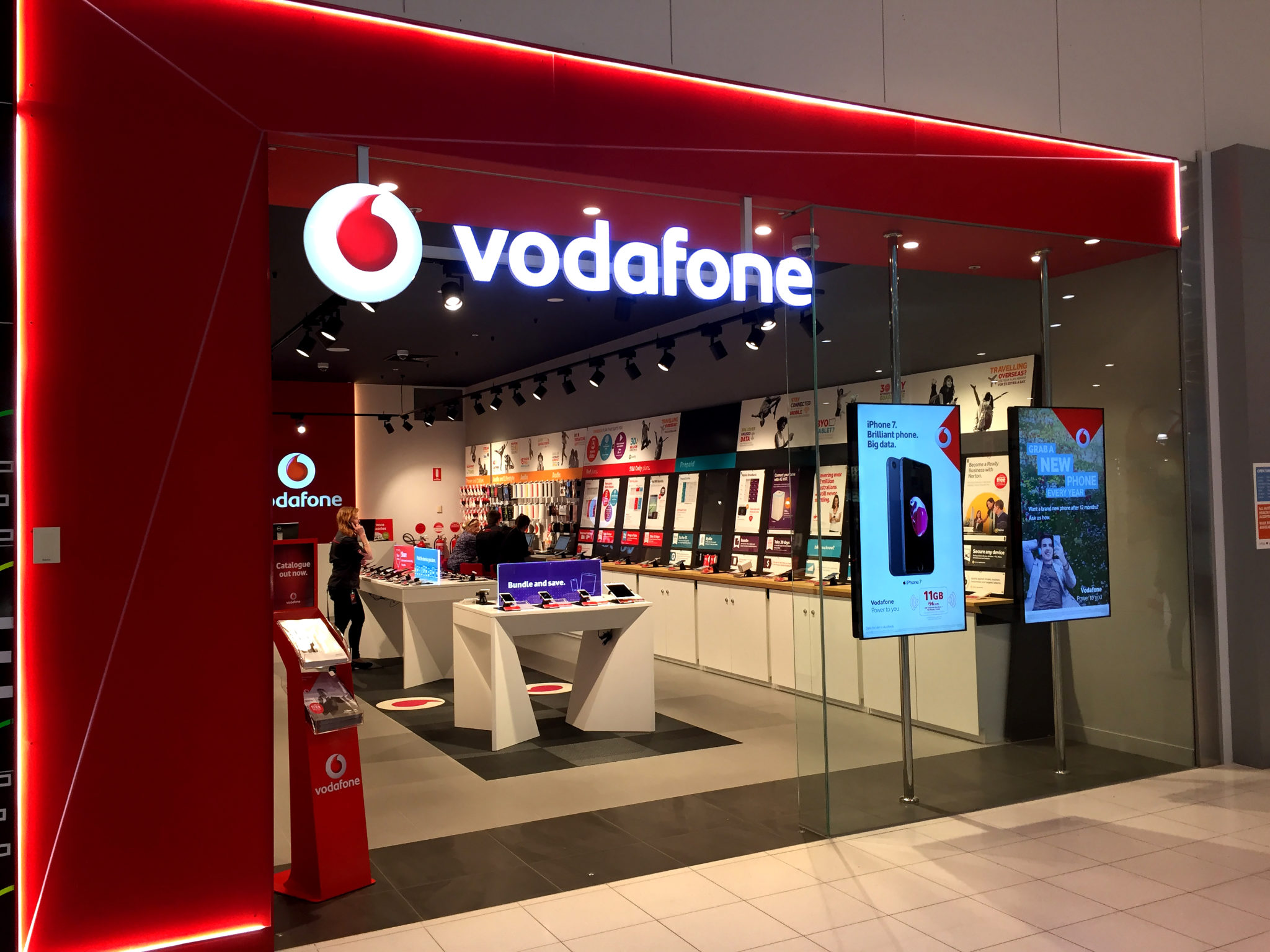
    Vodafone was crowned ‘national retailer of the year’ at the Australian Retailers’ Association’s annual awards in Melbourne on Thursday.

    The telecommunications company said it had made significant improvements to its business and customer experience since a low point a few years ago by making common sense decisions and backing its people.

    This was a fitting result, given this year’s theme, ‘Retail Morphosis’, which is all about how retailers adapt to change in order to succeed.

    “Although the retail landscape will continue to be disrupted by emerging technology and international competitors, it is truly gratifying to see the industry filled with hardworking retailers who continue to power retail through innovation and adaption,” Russell Zimmerman, executive director of the ARA, said.

    Retailers including Petstock, Bakers Delight, Birdsnest, Coles Group and Biome were recognised for their achievements in innovation, marketing, customer experience and more. The winners in all 12 categories are listed below.

    The awards took place at Myer Mural Hall on Thursday morning, and featured fashion parade capturing the history of Australian retail from the 1920s to the 1990s, with outfits curated by Myer and hair and make-up created by Chiseled Hair.

    Consumer futurist Amanda Stevens delivered a keynote speech on what the latest consumer research insights reveal about the opportunities for growth in the sector, and host Steve Plarre, CEO of Ferguson Plarre Bakehouses, entertained the audience with a rendition of ‘Uptown Funk’.

  • AT&T launches 5G service in New York City

    AT&T launches 5G service in New York City

    After Sprint and Verizon, it’s AT&T’s turn to bring 5G to another US city. The carrier has just announced that starting today, customers in New York City will be able to use its 5G service if they own a compatible device.

    However, AT&T’s 5G network won’t cover the entire city and it will be available in limited areas initially. Sadly, unlike other US carriers, AT&T wouldn’t list areas in New York City where customers will be able to access its so-called 5G+ network.

    For the time being, select customers in NYC can access AT&T’s 5G+ network using the Samsung Galaxy S10 5G on the carrier’s AT&T Business Unlimited Preferred plan. As such, the AT&T 5G service is only for business customers, at list initially.

    NYC is the 21st city in the US with AT&T 5G, but the carrier announced plans to offer nationwide 5G in the first half of 2020, so there’s more to come.

  • JD takes stake in Beijing Digital Telecom

    JD takes stake in Beijing Digital Telecom

    Chinese online retail platform JD is acquiring 9 percent of Beijing Digital Telecom.

    The consumer electronics retailer, which operates from around 3000 physical stores throughout China selling predominantly phones and computers, will expand JD’s offline presence within the market, including lower-tier cities.

    The transaction value has not been disclosed, as it falls below the amount that requires public notification under US Securities and Exchanges Commission regulations.

    At the same time, Beijing Digital Telecom is entering a joint venture with a network-technologies developer and provider Suqian Jiashi, which is wholly owned by JD. The firm is investing RMB191 million (US$28.5 million) for a 49 percent stake, while Suqian Jiashi is putting in RMB 204 million ($29.6 million).

  • Singapore Telcom Debuts Mobile Payment in Japan

    Singapore Telcom Debuts Mobile Payment in Japan

    Singtel launches its cross-border mobile payment capabilities in Japan, joining a handful of sectors outside of finance making a run at market share in the payments business.

    Singtel’s VIA, cross-border mobile payment alliance in Asia, debuts first in Tokyo’s Haneda Airport before expanding to the rest of the city and beyond in popular tourist locations such as Osaka, Kyoto, and Hokkaido. NETTERS is the participating network enabling payments.

    The VIA network enables tourists from Singapore (mobile wallet: Dash) and Thailand (mobile wallet: AIS Global Pay) to make payments in Japan using QR code in the local currency at a «competitive rate», the release said.

    In Southeast Asia, digital payments are gaining widespread acceptance and fast replacing cash as the preferred transaction mode,» said Arthur Lang, CEO of Singtel’s International Group, adding that announcements of more wallets joining would be made in the coming months.

    This is a big step in further bridging the digital economies of Japan and Southeast Asia, facilitating travel for our customers and connecting Japanese merchants to more consumers, he added.

  • Singtel Makes Foray Into Insurance Market

    Singtel Makes Foray Into Insurance Market

    Singtel announced its first foray into the insurance market on Thursday, introducing Singapore’s first prepaid data plan and Dash mobile remittance service that comes with personal insurance cover.

    Singapore’s dominant telco provider will be offering customers of its prepaid data plan and users of Dash mobile remittance service insurance cover that is provided by NTUC Income (Income), with premiums paid for by Singtel.

    As many of our prepaid and Dash mobile remittance customers are the sole breadwinners in their families, income stability and protection from financial loss are among their topmost concerns. By working with Income to remove price barriers and simplify the sign-up process, we want to make insurance accessible for all, enabling our customers to protect their loved ones, by simply topping up their data or remitting money back home, said Yuen Kuan Moon, CEO of Consumer Singapore at Singtel in a media statement.

    Prepaid customers who purchase a 30-day 50MB Protect data plan worth S$2 or do a S$20 prepaid top-up will be entitled to an insurance policy that provides coverage for 30 days. The coverage provides a range of benefits, including lump-sum payouts in the event of loss of employment due to hospitalization, as well as permanent disability and accidental death.

    The plan also offers daily cash benefits for each day of hospitalization and a one-off get-well benefit, together with mobile data to ensure that the beneficiary can stay connected with his or her loved ones, according to Singtel’s web page. Dash customers who remit at least S$100 will qualify for Free 30-Day Dash Protect, an insurance policy that offers lump-sum payouts in the event of permanent disability and accidental death – a first in the remittance market.

    Currently, the Singapore telco company provides mobile connectivity to more than 60 percent of foreign workers in Singapore, including S Pass workers (mid-level skilled staff), foreign domestic workers and migrant workers which number about 1.171 million in Singapore. Dash mobile remittance volumes have been growing steadily, doubling in the quarter ended June 2019 from a year ago.

  • Judge’s ruling is bad for Qualcomm

    Judge’s ruling is bad for Qualcomm

    Back in May, Judge Lucy Koh ruled that Qualcomm’s business practices are anti-competitive. The judge, already known for presiding over the iconic Apple v. Samsung patent trial sat through the FTC v. Qualcomm non-jury trial held earlier this year. Judge Koh found that the chipmaker’s business practices violated antitrust laws. These included Qualcomm’s “no license, no chips” policy and its failure to license standard-essential patents to competitors at a fair, reasonable and non-discriminatory (FRAND) manner. These are patents that companies need to license so that their products can meet technical standards. Qualcomm was also called out by Judge Koh for charging royalties based on the retail price of a phone instead of just the cost of its chips.

    Of course, Qualcomm says that it will appeal the decision since it requires the company to renegotiate its contracts and licensing agreements with manufacturers. Qualcomm is also complaining that all of these negotiations can make it difficult for it to complete talks with phone producers who want to purchase Qualcomm’s 5G modem chips. And the ruling would force the company to work out deals with its rivals over licensing of its standard-essential patents.

    Qualcomm also is seeking a stay of the decision until it exhausts the appeals process. This way it doesn’t have to go through the whole exhaustive renegotiation process and then reverse the new deals if it wins on appeal. Even though that might make sense to some, Judge Koh has denied Qualcomm’s request. A spokesman for the chipmaker says that it will immediately request a stay from the 9th U.S. Circuit Court of Appeals.

    The FTC v. Qualcomm trial was held in January and featured testimony from employees of several phone manufacturers. Many testified about Qualcomm’s onerous terms for licensing its IP and how it bases the royalties it charges manufacturers on the entire retail price tag of a phone. So instead of paying a percentage of a $20-$40 part for each unit sold, phone manufacturers were charged a percentage of retail prices amounting to $400 and up for each phone rung up with a Qualcomm part. This is the difference between the chipmaker receiving dollars per phone or pennies per phone.

    One of those who took the stand was Apple supply chain executive Tony Blevins. At the time, Apple and Qualcomm were not on speaking terms and both companies had filed multiple suits against each other. But that all changed in April after closing arguments were heard in a trial that pitted Apple against Qualcomm. A settlement was announced that resulted in Apple paying Qualcomm an undisclosed amount (believed to be as much as $4.5 billion) and in return, Apple received a licensing agreement for six years (with a two-year option) and a multi-year chip supply agreement. In addition, both sides dropped all lawsuits filed against each other.

    One phone manufacturer happy with Tuesday’s decision is LG. It doesn’t want to see Koh’s decision stayed because it is currently negotiating a licensing and chip supply deal with Qualcomm and is worried that it might be forced to sign another “unfair” deal with the company. And needless to say, the FTC was also against a ruling that would stay the decision.

    Unless the decision has stayed, LG and other phone manufacturers will probably be working out new deals with Qualcomm while the appeals process goes on. It could take more than a year before a final decision is rendered by an appellate court. Wall Street weighed in with its decision and in after-hours trading on Wednesday (the market closed regular trading early for the July 4th holiday), the stock dropped by $2.49 or 3.25% to $76.63.

  • Apple decision forces Intel to auction its smartphone modem patents

    Apple decision forces Intel to auction its smartphone modem patents

    Intel confirmed plans to exit the smartphone business a few months ago, but news about the auction of its smartphone modem assets emerged only today. The announcement follows Apple’s decision to buy 5G smartphone modems from Qualcomm rather than Intel.

    Although the US company said it will continue to produce 4G smartphone modems and honor all orders, it will no longer invest in 5G modem product line following the announcement. Instead, Intel will shift focus on its 5G network business, which is expected to grow in the coming years

    According to a new report from IAM, Intel has decided to auction all its IP relating to cellular wireless connectivity. There are no less than 8,500 patents that Intel is now looking to sell in order to recover some of the resources it invested. The report also mentions that Intel is launching this auction separate to its efforts to sell the smartphone modem division, hoping that a potential buyer for both will appear.

    Intel’s inability to meet Apple’s deadlines proved to be fatal for the business in the end, as the Cupertino-based company decided to make sure it’s got enough 5G modems in 2020. Left without the main client for its smartphone modem division, Intel is forced to cut its losses and refocus on those businesses that apparently bring much more money.

  • Docomo Pacific set to launch first VoLTE services for Guam and the CNMI

    Docomo Pacific set to launch first VoLTE services for Guam and the CNMI

    As part of the rollout of the next generation of wireless technology, DOCOMO PACIFIC is preparing to launch the first VoLTE services in Guam and the CNMI.

    VoLTE or Voice over Long-Term Evolution allows customers to place a phone call over your LTE connection instead of the traditional voice network, resulting in high-definition (HD) Voice services providing clearer audio quality.

    VoLTE lets you experience HD Voice calls with minimal background noise, making it much easier and clearer for both people on a call to hear one another. The mixture of voice and data to make calls will produce faster call setup times and quicker connections. Additionally, VoLTE services are less power-intensive than calls being made over a 3G connection, resulting in better battery life.

    VoLTE allows the efficient use of network resources, helping to lower operational costs. With the use of VoLTE, voice traffic is routed over the 4G LTE network used to transmit data, freeing up spectrum for the 5G technology that DOCOMO PACIFIC will launch soon.

    On June 19th, DOCOMO PACIFIC engineers made the first commercial VoLTE call on Guam and the following day they made the first VoLTE call to Saipan. The commercial launch of VoLTE services will begin to roll-out in July 2019 for VoLTE capable devices on DOCOMO PACIFIC’s network. VoLTE services will be an added value to our existing services and will not come at any additional cost.

    “DOCOMO PACIFIC is excited to be the first to bring another innovative service that improves the voice quality of calls for our customers in the Marianas. VoLTE is the future of voice communications and we can’t wait for our customers to have a higher quality experience while talking with family and friends. As we prepare to launch 5G technology soon, VoLTE is another step in our journey to be the technology leader and bring the best and fastest services to our customers,” DOCOMO PACIFIC President and CEO Roderick Boss said.

    In March 2019, NTT DOCOMO was the first to bring 5G to Guam with the opening of the DOCOMO 5G Open Lab Guam. The 5G Open Lab allows worldwide partners including businesses on Guam to test the first 5G environment and co-create practical solutions using 5G.

  • China is reportedly behind huge hack of global cell networks

    China is reportedly behind huge hack of global cell networks

    Security research firm Cybereason reports that over the last seven years, hackers have been able to break into more than 10 cellular networks worldwide to gather information on calls made by at least 20 targeted individuals. The data obtained from this operation included the dates that calls were made, the times they were connected, the locations of the callers and more. The attack, dubbed Operation Soft Cell, has been active since 2012 and was spotted by Cybereason earlier this year.
    While the goal of the hackers was to obtain call detail records (CDR), other information obtained from this operation included usernames and passwords. According to the report, “the attackers worked in waves-abandoning one thread of attack when it was detected and stopped, only to return months later with new tools and techniques.” Cybereason says that it is very certain that this operation is a state-sponsored attack and is affiliated with China. The methods and tools used lead the security researcher to name APT10 as the so-called threat actor. This group reportedly works with Chinese Ministry of State Security (MSS).
    So why would the MSS go to all the trouble of hacking into 10 global cell networks? As Cybereason points out, when a nation runs an operation like this, it is not about the money. It is often done to steal intellectual property or obtain information about some of the carriers’ subscribers. The data that was stolen allowed the hackers to get call records that provided the destination, and duration of a call, information on the device used to make the call, the version number of the phone and its vendor, and the physical location where the call was made. With that data, the MSS (assuming that they were behind this) was able to learn who the individuals they were targeting had been talking to, the devices they were using to make such calls and where these people were traveling to. The security research company says that this is the type of information used to gather dirt on politicians and to track law enforcement.