Tag: telecom

  • Ooredoo Myanmar and friends launch digital literacy campaign

    Ooredoo Myanmar and friends launch digital literacy campaign

    Ooredoo Myanmar, Facebook and the GSMA have jointly launched a digital literacy campaign to raise awareness and increase adoption of mobile internet in Myanmar. The “Internet 1O1” (Internet One on One) campaign aims to inform and educate first time and new internet users, through one-on-one training at Ooredoo retail points and exclusive stores across the country, particularly in rural areas.

    According to GSMA Intelligence, around 21 Million people are using mobile internet in Myanmar out of a population of 54.1Million people.

    One of the biggest barriers to connectivity is a lack of digital literacy. This initiative aims to guide users through the multiple uses and benefits of the Internet and help them to do so responsibly. Ooredoo Myanmar, Facebook and the GSMA believe that digital literacy initiatives across the countrywill support internet users in Myanmar to use the internet responsibly and be empowered by it.

    Internet 1O1 will be available to consumers in Ooredoo retail stores where in-store promoters will walk consumers through internet education materials including: an easy-to-understand video explaining: Whatthe internet is, how to access it and how to stay safe online as well as showing the type of useful information consumers might need.

    Ooredoo Myanmar’s CEO Mr. Rajeev Sethi said “We are very proud to partner with industry leaders like Facebook and the GSMA in this initiative to educate the people of Myanmar on how to safely be connected, well informed and benefit from the internet. This is the first step of our “Learn with Internet to enrich your digital lives” CSR program. This initiative will enhance Myanmar citizen’s digital lives.”


  • Globe Telecom launches SE Asia’s first 5G broadband service

    Globe Telecom launches SE Asia’s first 5G broadband service

    Philippines’ Globe Telecom Inc on Thursday launched Southeast Asia’s first 5G broadband service, with embattled Huawei Technologies Co Ltd providing the equipment, a win for the Chinese firm despite cybersecurity worries from Western nations.

    The telecoms firm aims to offer high-speed internet to tens of thousands of homes and offices in key urban centres as part of its $1.2 billion capital spending this year, Alberto de Larrazabal, Globe’s chief commercial officer, told reporters.

    Globe would use Huawei’s equipment like radios and modems to deliver 5G quality broadband internet, he added. Huawei and Finland’s Nokia were Globe’s equipment providers for its 4G service.

    The United States had warned that next-generation 5G equipment, which some telecoms experts see as more vulnerable to attack than previous technology, could be exploited by the Chinese government for spying if supplied by Huawei, which the company denies.

    Washington, a treaty ally of Manila, had persuaded governments and telecoms operators to shun Huawei, the world’s largest maker of telecommunications equipment.

    Globe hired independent firms “to ensure that our security protocols are up to date, to make sure privacy and security issues are addressed,” de Larrazabal said.

    Philippine consumers, the world’s top social media users, often get frustrated with slow and choppy internet connections. The Philippines’ mobile internet and fixed broadband speeds lag behind its neighbours, data from Ookla’s Speedtest Global Index showed.

    It ranks 107th among 178 countries in terms of fixed broadband speed at 19.55 megabits per second (Mbps) versus the global average of 59.6 Mbps. Among 140 countries, it ranks 107th in terms of mobile internet speed at 15.10 Mbps, nearly half of the 27.22 Mbps global average.

    Globe is owned by Philippine conglomerate Ayala Corp, with Singapore Telecommunications Ltd holding a minority stake.

  • SoftBank signs 5G deals with Ericsson, Nokia

    SoftBank signs 5G deals with Ericsson, Nokia

    Japan’s SoftBank has signed 5G deployment contracts with both Ericsson and Nokia as it prepares to launch services over its newly-granted 5G spectrum.

    Ericsson has announced it has been selected as a primary vendor for the deployment of a multi-band 5G network utilizing Softbank’s 3.9-GHz to 4-GHz and 29.1-GHz to 29.5-GHz spectrum bands.

    SoftBank will deploy radio access network equipment including products from the Ericsson Radio System portfolio to allow it to enhance its existing LTE network while optimizing its 5G network.

    SoftBank and Ericsson have been trialing 5G technologies since 2015, and have since expanded their collaboration to include 5G testing of multi-bands, including 28-GHz and 4.5-GHz.

    SoftBank and Ericsson have been partners since the 2G era and we are thrilled to support them on this latest part of their technology journey,” Ericsson SVP and head of North East Asia Chris Houghton said.

    “With the help of our advanced product portfolio, SoftBank can unlock the potential of 5G for Japanese society and we look forward to building on our long-standing partnership.”

    Meanwhile SoftBank will deploy Nokia’s 5G AirScale technology across Japan, enabling the delivery of 5G mobile broadband, ultra-reliable low latency connectivity (URLLC) and machine type communication (eMTC) services.

    SoftBank plans to launch 5G services with Nokia’s AirScale solution in both distributed and centralized RAN configurations, according to Nokia Japan head John Harrington.

    “We are delighted to continue our long-term relationship with SoftBank and to be working with them as a trusted end to end partner at such an important milestone in the transformation to 5G. We are committed to help SoftBank launch their commercial 5G network.”

  • Altran, Wind River developing end-to-end NFV platform

    Altran, Wind River developing end-to-end NFV platform

    Engineering and R&D services provider Altran has announced a partnership with critical infrastructure software provider Wind River to develop an end-to-end networks functions virtualization (NFV) platform.

    Under the agreement, Altran is using Wind River Titanium Cloud, an NFV infrastructure software platform for telecom operators, to develop a platform that incorporates NFV in the data center and at the network edge.

    Altran has designed its VNF Management and Orchestration Platform to help operators lower costs, accelerate service delivery and meet customer demands for high availability.

    The platform will provide an environment for vendors to deploy virtual network functions (VNFs) on Wind River infrastructure software.

    The platform will take advantage of Altran’s programmable VNF Lifecycle Management solution – which can integrate with any VNF as well as with third-party orchestrators – and its integrated policy engine.

    “The Wind River Titanium Cloud ecosystem provides outstanding infrastructure for highly available, robust and agile virtualization platforms needed in telecommunications networks and industrial control,” said Altran North America group SVP and chief engineering officer N. Mohan Rangan said.

    “We are delighted to be a part of Wind River’s initiative. Service provider customers will benefit greatly from a comprehensive NFV platform that handles a wide variety of sophisticated VNFs.”

  • Globe to ramp up network expansion program

    Globe to ramp up network expansion program

    The Philippines’ Globe Telecom has pledged to ramp up its network expansion and modernization program to cater to soaring demand for mobile data.

    The operator revealed that mobile data traffic on its network grew to 370 petabytes during the first three months of 2019.

    This represents a 105% increase from the 180 petabytes recorded a year earlier, and a 421% increase from the first three months of 2016.

    Data traffic growth is also driving revenue growth, with Globe Telecom reporting consolidated service revenues of the quarter of 36 billion pesos – up 13% year-on-year – and mobile data traffic accounting for 16.5 billion pesos of this total.

    “With the explosion of data traffic consumption, building more cell towers and modernizing our network infrastructure will continue to play a fundamental role in delivering superior quality of experience to our customers,” Globe CEO Ernest Cu said.

    “This is why we will continue ramping up our network rollout and utilizing next-generation technologies to enhance the way our customers experience mobile data.”

    Around 68% of Globe’s total capex budget for the first quarter of 8.8 billion pesos was allocated towards enhancing data-related services. During the quarter the company escalated its cell site deployment and invested in improving its network capacity.

  • Globe digitally transforms Semirara Island

    Globe digitally transforms Semirara Island

    The Philippines’ Globe Telecom worked with the nation’s largest coal producer Semirara Mining and Power Corporation (SMPC) to digitally transform Semirara Island in Antique.

    The 55 square kilometer island is home to the Philippines’ richest coal reserves, and is home to a number of coal workers and their families who rely on mobile connectivity a digital applications in their daily life.

    As part of the project, Globe, SMPC and the local government collaborated to upgrade all mobile towers in the island with LTE technology.

    The partners are also adopting a modern payroll solution for the mining company in collaboration with Ant Financial subsidiary Mynt and Ayala that takes advantage of Globe’s GCash mobile money service.

    In addition, Globe will work with public and private high schools in the island on digitally-enabled education initiatives.

    The Digital Thumbprint Program, developed by Globe in conjunction with Singtel and its Australian subsidiary Optus, has already been used to aid the education of 1.9 million students across the Philippines.

  • Philippines publishes common tower rules

    Philippines publishes common tower rules

    The Philippines’ Department of ICT has published the rules and regulations for the new common tower provider regime with the goal of building or converting at least 2,500 common towers across the nation.

    The rules will pave the way for deployments in properties owned by the departments, other government agencies, and hard-to-access areas identified by the market’s mobile operators.

    With the rules, the DICT has committed to streamlining the issue of licenses for the deployment of telecommunications equipment in towers not built by the independent tower companies participating in the scheme.

    They also seek to encourage voluntary sharing of towers by incumbent mobile operators by offering incentives in the form of allowing companies to build passive infrastructure in government properties and to enable operators to offer, transfer and convey existing tower resources to tower sharing entities.

    Independent tower companies participating in the scheme will need to be at least 20% owned or in a consortium with companies with at least five years of experience constructing, owning, operating and/or maintaining towers.

    They must also be wholly independent of mobile operators to ensure they offer non-discriminatory access and have reached agreements with the DICT and secured the required permits.

    The DICT said that to date 22 tower companies have signed memoranda of understanding with the department over the common tower initiative.

    “This is the starting point of more comprehensive policy for our initiative on passive infrastructure sharing. This will help tower firms to acquaint themselves in our telco industry,” DICT acting secretary Eliseo M. Rio Jr. said.

  • 2 in 3 cellcos plan to deploy 5G within 18 months

    2 in 3 cellcos plan to deploy 5G within 18 months

    Mobile service providers anticipate significant new revenue opportunities from the coming deployment of high-speed 5G networks and a host of new IoT-driven use cases

    According to a new survey fielded by the Business Performance Innovation (BPI) Network, in partnership with A10 networks, but they also believe much-improved security will be essential to realizing that potential.

    The new study report, “Securing the Future of a Smart World,” demonstrates that carriers are moving decisively toward 5G commercialization and that security is a top concern.

    • 67% will deploy their first commercial 5G networks within 18 months and another 20% within two years
    • 94% expect growth in network traffic, connected devices and mission-critical IoT use cases to significantly increase security and reliability concerns for 5G networks
    • 79% say 5G is a consideration in current security investments

    “Mobile carriers anticipate significant revenue opportunities and exciting new use cases as they move forward with their 5G deployments. However, the industry also recognizes that 5G will dramatically raise the stakes for ensuring the security and reliability of these networks,” said Gunter Reiss, vice president of A10 Networks.

    “New mission-critical applications like autonomous vehicles, smart cities, and remote patient monitoring will make network reliability vital to the safety and security of people and businesses. Meanwhile, dramatic increases in traffic rates and connected devices will significantly expand the attack surface and scale for cybercriminals.”

    Operators still have a significant amount of work ahead to fortify their networks for the coming of 5G. For example, while more than 80% of mobile operator respondents say they will need to upgrade Gi/SGi firewalls at the core of their networks, only 11% have completed the implementation of new Gi/SGi firewalls.

    Realizing the potential of full-scale 5G networks requires major investments by carriers—and payback on that spend is a crucial issue for the telecommunications industry. Operators see significant opportunities to increase revenues and innovate new business models.

    The top-three benefits derived from 5G

    • 67% – Overall growth in the mobile market
    • 59% – Better customer service and satisfaction
    • 43% – The creation of new 5G-enabled business models

    Top drivers for 5G

    • 61% – Smart cities
    • 48% – Industrial automation and smart manufacturing
    • 39% – High-speed connectivity
    • 35% – Connected vehicles
    • 37% – Fixed wireless

    Assessing 5G security needs

    Chief among security concerns are core network security and DDoS protection.

    • 63% – Advanced DDoS protection the most important security capability needed for 5G networks.
    • 98% of respondents said core network security was either very important (72%) or important (26%) in 5G build-outs.
    • 79% have or will upgrade their Gi/SGi firewalls
    • 73% have or will upgrade their GTP firewall

    “Operators overwhelmingly understand the importance of upgrading security in a more connected and smart world,” continued Reiss.

    “Now it’s time to take decisive action. Carriers need to move ahead aggressively with their plans to upgrade legacy DDoS protection and consolidate security services at the core and edge of their networks to address the growing concerns. A10 Networks 5G security solutions including Gi/SGi firewall, GTP firewall and AI-based DDoS protection enable operators to secure and scale their networks now and protect against the massive cyber threat coming with 5G.”

  • Arm cuts ties with Huawei

    Arm cuts ties with Huawei

    In the latest development in the ever-churning Huawei news cycle, chipmaker Arm is suspending business with the Chinese vendor to comply with the US restrictions.

    The BBC reported Wednesday that Arm sent out a company memo that said its employees must discontinue “all active contracts, and any pending engagements” with Huawei and its subsidiaries. The memo also said that Arm’s designs contained “U.S. origin technology,” which it believes is affected by the Trump administration’s ban.

    Losing Arm’s technology would be a big blow to Huawei in the smartphone sector. Huawei, currently the second-largest smartphone vendor behind Samsung, uses Arm’s mobile device processors as the key element of its smartphones.

    “Arm is complying with the latest restrictions set forth by the US government and is having ongoing conversations with the appropriate US government agencies to ensure we remain compliant,” according to Arm’s statement.

    “Arm values its relationship with our longtime partner HiSilicon (Huawei’s chip arm), and we are hopeful for a swift resolution on this matter.”

    Last week, the Trump administration blocked Huawei from buying goods made from 25% or more of U.S.-originated technologies or materials, and previously accused the world’s largest telecommunications vendor of being a spy for the Chinese government via backdoors in its telecom gear.

    On Tuesday, the US Department of Commerce’s Bureau of Industry and Security (BIS) announced it would allow some companies to continue to do business with Huawei under specific conditions. The BIS said it would issue a temporary general license (TGL) to Huawei and its 68 affiliates to authorize some U.S. telecom companies to continue to engage in export transactions with Huawei for the next 90 days, which took some of the immediate heat off of Huawei.

    Google had announced that it would no longer allow access to software updates for its Android operating system and apps that are used in Huawei’s smartphones and tablets, but reversed course after the BIS decision was announced.

    In other Huawei news, Panasonic said on Wednesday that it would stop shipments to Huawei of some of its components, but that won’t have as big an impact as losing Arm.

    Huawei said its own operating system for smartphones and tablets would be operational this fall, but would only use it if the company no longer has access to Google’s Android and Microsoft Windows’ operating systems.

  • Mislatel cleared to receive congressional franchise

    Mislatel cleared to receive congressional franchise

    China Telecom backed joint venture Mislatel Corporation has been cleared to secure a congressional franchise to become the Philippines’ third mobile player.

    Mislatel, the joint venture established with businesses owned by Philippines tycoon Dennis Uy, has received congressional approval to acquire the franchise owned by Mindanao Islamic Telephone Co.

    The National Telecommunications Commission will now make preparations to issue a certificate of public convenience and necessity and an allocation of spectrum for the operator. The allocation is expected to be complete by mid-June.

    But Mislatel will first be required to pay a 25.7 billion peso bond, which it will need to forfeit if it does not meet its rollout and other commitments to the government.

    These commitments include achieving 84% population coverage within five years, and reaching a minimum average internet speed of 27Mbps within the first year of operations, increasing to 55Mbps after this time.

    Mislatel won the selection process to become the market’s third major player in November last year. But the company was recently forced to postpone its planned launch date in early 2021 due to delays receiving the congressional franchise.

  • HKT wins smart parking system contracts

    HKT wins smart parking system contracts

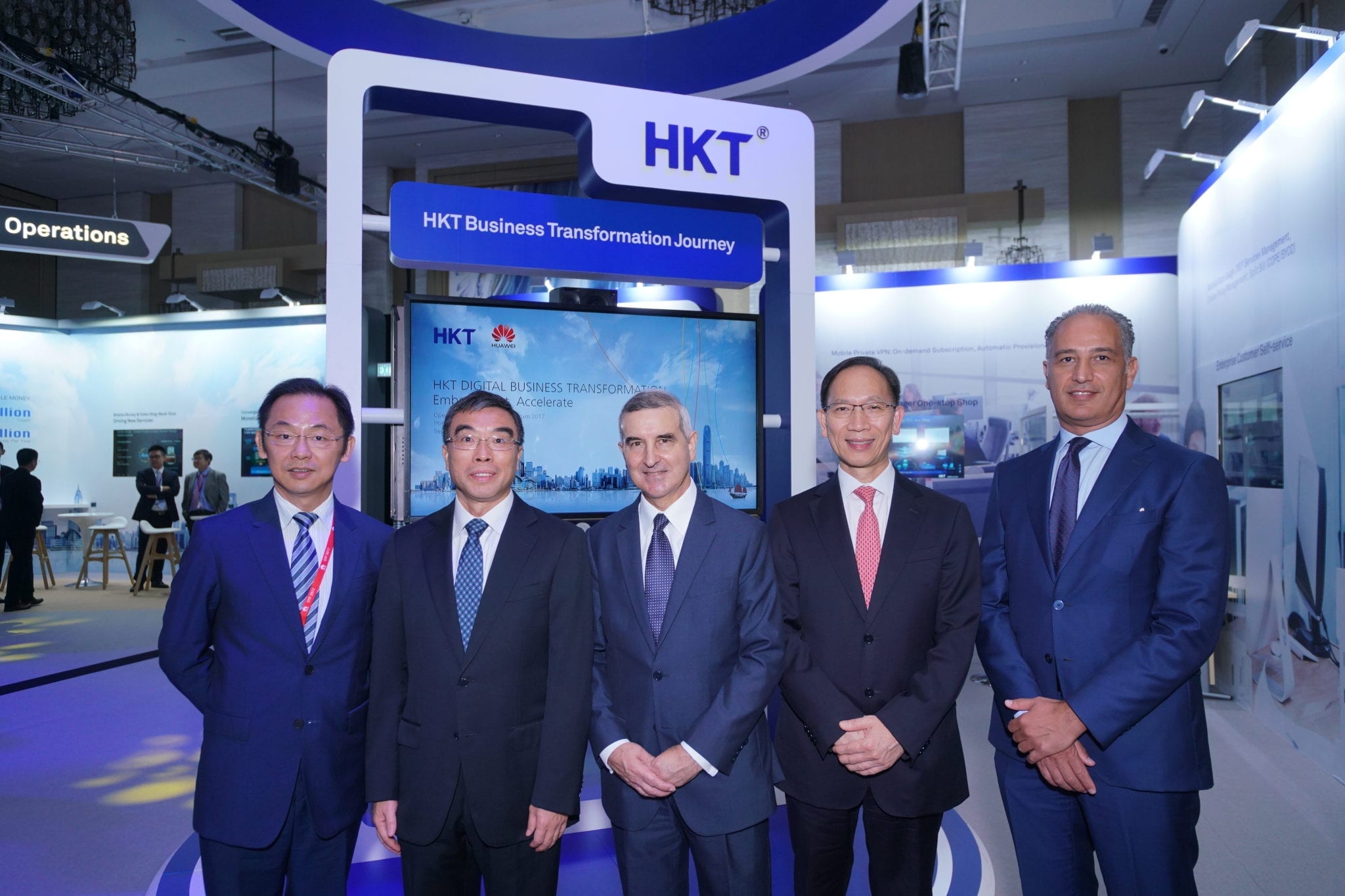
    Hong Kong operator HKT has secured HK$680 million ($86.6 million) worth of contracts to design, deploy and manage a new-generation smart parking meter system in Hong Kong.

    The two contracts with the HKSAR government’s Transport Department will see HKT deploy a mobile app-enabled parking meter system as part of the government’s Smart Mobility initiative.

    The system will use vehicle sensors to detect the occupancy of parking spaces and provide real-time information on parking vacancy for motorists. It will also allow users to pay parking fees with multiple payment methods, including credit that can be topped up to the app remotely.

    In addition, data from the system will be collected ad provided to the Transport Department to conduct parking analysis. The new parking meters will gradually replace existing meters in Hong Kong Island, Kowloon and the New Territories by early 2022.

    HKT’s contract includes the design, development and implementation of the new parking meters, as well as management, operation and maintenance of the system.

    “At HKT, we are very committed to helping accelerate Hong Kong to become a smarter city and empowering digital transformation for enterprises,” HKT Commercial Group managing director Tom Chan said.

    “We have been investing on advanced ICT and digital solutions in the last five years. We will continue with our dedication to develop innovations with latest technologies to empower the development of Hong Kong.”

  • SKT showcases potential of 5G in VR streaming

    SKT showcases potential of 5G in VR streaming

    SK Telecom is demonstrating the potential of 5G to enable virtual reality video streaming by developing exclusive VR content for a popular reality TV series.

    The company is offering 100 exclusive VR clips related to the Produce X 101 idol audition program on the oksuku OTT video service.

    The new content, added to a dedicated menu within the SKT-5GX section of the streaming app, will be provided to SK Telecom customers free of charge. The company is currently offering around 400 VR video clips on this section of the streaming app.

    SK Telecom said it has utilized 5G technologies for the planning, filming and delivery phases of the project. The company used 3D ultra-high definition video cameras to film joint performances, and applied video distortion correction technology to produce realistic and natural 3D video.

    “SK Telecom is witnessing a dramatic rise in the use of VR video contents on ‘oksusu’ since the launch of its 5G service,” the company’s 5GX VP and head of service business group Yang Maeng-seog said.

    “SK Telecom will continue to provide customers with a differentiated 5G experience by rapidly expanding dedicated services and contents on diverse themes.”

  • Telstra to launch HTC 5G Hub next week

    Telstra to launch HTC 5G Hub next week

    Australian operator Telstra has is taking pre-orders for what it is calling the country’s first 5G mobile device. The HTC 5G Hub will be available in Telstra stores from next Tuesday.

    The HTC 5G hub is a 5G and 4GX (LTE-Advanced) media hotspot designed for both enterprise and consumer use.

    The hotspot can support up to 20 Wi-Fi enabled devices as well as a gigabit Ethernet connection and provides an all-day battery life.

    For corporate customers, the device offers corporate VPN authentication and remote wipe capability. For the consumer segment, the device offers a voice-activated remote control for other home smart devices and media hub capabilities.

    Telstra CEO Andy Penn said the launch of the device was an important milestone in the operator’s transition to 5G.

    “Our launch of the HTC 5G Hub is the moment 5G becomes a reality for Australian consumers. Since 2016, we have been working with some of the world’s leading technology brands to ensure Australians are among the first in the world to be able to access 5G,” he said.

    “HTC has been a key partner for Telstra, innovating new technologies and driving greater connectivity for our customers. This launch of Australia’s first 5G mobile device is a testament to that partnership and we are proud to be launching it today”.

    At launch, customers will be able to access 5G in selected areas of Adelaide, Brisbane, Canberra, the Gold Coast, Hobart, Launceston, Melbourne, Perth, Sydney and Towoomba, he said.

    “This is just the start. The roll out of 5G coverage is ongoing and, as 5G develops, there will be more devices and more technologies to come. But this is an important step we take today, as the first Australian network to offer mobile 5G”.

  • Cisco expects 5G windfalls in the future

    Cisco expects 5G windfalls in the future

    Cisco is primarily known for its switches and routers for service providers and enterprises. It has not been a big competitor in the radio access networking space against vendors such as Ericsson and Nokia. But on its fiscal third-quarter 2019 earnings call this week, Cisco CEO Chuck Robbins mentioned “wired and wireless” networking a few times.

    “We are moving into an era of truly immersive and pervasive wireless connectivity, which generates demand for high density, low latency performance, for real-time experiences over both wired and wireless networks,” said Robbins, according to a Seeking Alpha transcript. “Our guys like to say behind every great wireless network is a great wired network,”

    In fact, the company has been hired by Rakuten to help it build its new greenfield mobile network in Japan. Cisco is building Rakuten’s network functions virtualization infrastructure (NFVi) with 4,000 edge nodes. In addition to software, Cisco is delivering routing and switching hardware. And Cisco is also the primary systems integrator for Rakuten’s virtualized telco cloud.

    On its earnings call, Robbins said, “With our newest Catalyst 9000 family additions, we have completed the most comprehensive enterprise networking portfolio refresh in our history. We have rebuilt our entire access portfolio with intent-based networking across wired and wireless.”

    Robbins also mentioned 5G, saying Cisco is helping telcos build out their core networks ahead of large-scale 5G rollouts. Although Cisco is already selling packet core technology to carriers for their new 5G networks, “the big play for us is when they begin to evolve their networks to accommodate the traffic,” he said. “And we’ve always said we felt like that would be sometime in calendar 2020.”

    Carriers are leveraging their existing core networks to run the early trials on 5G. “We believe that sometime in the future when the number of connections increases and the capacity gets to a point, then they’re obviously going to begin to build out these new backbones dedicated to the 5G infrastructure, where we will generally come into play,” he said.

    Although Robbins focused on telcos’ core networks in the earnings call, the company has investments in Altiostar, a startup that has developed RAN virtualization technology. Altiostar is also working with Rakuten.

    Finally, Robbins talked a bit on the earnings call about Wi-Fi 6. Cisco recently announced new Wi-Fi 6 access points across its Catalyst and Meraki portfolios, as well as the Catalyst 9600 core switch family.

    “Wi-Fi 6 is effectively what used to be called 802.11ax,” said Robbins. “And, what’s happening now is when you get these high-performance access points into the organizations and you get the low latency immersive experience possibilities, then it’s also going to drive the need to upgrade the backbones.”

  • China driving global cellular IoT adoption

    China driving global cellular IoT adoption

    An “exceptional adoption” in China has lifted the global number of cellular IoT subscribers by 70% to reach 1.2 billion in 2018, says a report released by Berg Insight.

    The research firm predicts that there will be 9 billion IoT devices connected to cellular networks worldwide by 2023.

    China, which accounted for 63% of the global installed base in 2018, is expected to continue to be the key driver for IoT adoption, as the Chinese government is actively driving adoption as a tool for achieving domestic and economic policy goals.

    “China is deploying cellular IoT technology at a monumental scale”, said Tobias Ryberg, principal analyst and author of the report.

    According to data from the Chinese mobile operators, the installed base in the country increased by 124% year-on-year to reach 767 million at the end of 2018.

    China has overtaken Europe and North America in penetration rate with 54.7 IoT connections per 100 inhabitants, Ryberg said.

    He said the role of the government is the main explanation for why China is ahead of the rest of the world in the adoption of IoT.

    “The most distinctive characteristic of the Chinese IoT market is however the way that the government is systematically using new technology to implement its vision for urban life in the 21st century,” Ryberg said.

    “At the same time the private sector also implements IoT technology to improve efficiency and drive innovation.”

    China has witnessed widespread adoption of connected cars, fleet management, smart metering, asset monitoring and as well as new consumer services like bike sharing.

    The report also analyses the IoT business KPIs released by mobile operators in different parts of the world and found significant regional differences.

    While China has the world’s highest IoT penetration rate, Europe seems is doing better job in terms of monetizing the IoT business.

    According to the report, the monthly ARPU for cellular IoT connectivity services in China was only €0.22 ($0.25), compared to € 0.70 in Europe.

    Global revenues from cellular IoT connectivity services increased by 19% in 2018 to reach €6.7 billion. The ten largest players had a combined revenue share of around 80%.