Tag: telecom

  • NOW Telecom details “NVNO” model

    NOW Telecom details “NVNO” model

    The Philippines’ NOW Telecom has introduced a new model aimed at partnering with small and medium sized businesses to deliver wireless broadband services to individual areas.

    The company’s new NOW Virtual Network Operator (NVNO) model will see the operator partner with SMEs and even individuals to bring NOW’s fixed wireless broadband technology to a particular area.

    The SMEs will be given exclusive distributorship rights over the broadband services in the given areas, which could be an office building or a local village area.

    NOW plans to enter five year business partnerships under a revenue sharing model. The business partner would be responsible for selecting the area, selling the product, marketing and installing the service and ensuring payment by subscribers.

    NOW’s Fiber in the Air service is a fixed wireless broadband internet service that provides guaranteed broadband internet for enterprises with a capacity of 2.4Gbps.

    To be selected, business partners will have a local business in the area and a strong local influence.

  • CMR says most smartphones in India go for below industry ASP

    CMR says most smartphones in India go for below industry ASP

    The CyberMedia Research (CMR) report, “CMR India Mobile Pricing Index 2018”, revealed that 80% of smartphone brands are selling their handset below the average price of smartphones in India.

    Consumers want sleeker and cheaper devices, even as they demand overall better user experience, all contributing to increased average sales value of smartphones. CMR says in CY2018 India was one of the few major smartphone markets that grew by around 10%. It expects 2019 to be no different.

    According to Narinder Kumar, lead analyst -IIG CMR, “CY2018 witnessed growth in average sales value (ASV of smartphones largely due to upgradation. A majority of the current smartphone shipments are essentially upgrades, driven by consumers seeking more from their smartphones.”

    Indian and Chinese brands contributed the most to below industry average ASV, whereas 60% of brands in above ASV segment were global brands, including Apple, Google and Samsung.

    “The decline in above ASV percentage can be attributed to increasing market consolidation. There was around 10% decline in numbers of brands operating in the 4G Smartphone space. With top 10 players contributing 80% – 85% of market, there is stiff competition for rest of brands,” stated Narinder.

    CMR anticipates growth in ASV in CY2019, driven primarily by increasing consumer demand.

  • Vodafone’s reveal keeps the pressure on Huawei

    Vodafone’s reveal keeps the pressure on Huawei

    In this week’s news is yet another story about Huawei and security as European telecommunications operator and regulators continue to scrutinize the gear in advance of 5G deployments. This one is historical though. Apparently Vodafone found security flaws in Huawei gear its Italian unit bought back in 2011 and 2012.

    In the technical sense, this is hardly a surprise. Vulnerabilities and patches are an ongoing part of pretty much all software development, and in this case the problem came with the telnet protocol. There was a day when telnet was a thing for everyone, but these days it’s more a diagnostic thing. According to Vodafone, the flaw would not have been accessible via the internet and was quickly patched. All vendors have processes to handle exactly this sort of thing, and all have done so many times. So the fact that it happened eight years ago in this case is news today only because it was Huawei.

    But the pressure to block Huawei from 5G deployments continues unabated. The contention is that because China requires all its companies to help its national security apparatus and Huawei (like every major Chinese company) has deep ties to that apparatus. On the one hand, it’s easy to envision spies doing this sort of thing. On the other hand, it’s very hard to imagine such deliberate vulnerabilities remaining undetected for long in a suspicious world.

    The most recent development came a few days ago when KPN decided Huawei gear was fine for radios and antennas, but not when it comes to the gear in its core 5G network. They’ve got a deal in place, but with an exit clause in case regulators or lawmakers act to ban Huawei entirely. That seems to have emerged as the consensus response of European telcos to all this pressure, a way to keep Huawei in the mix while still mollifying critics and covering themselves legally.

  • SKT to help broadcasters create 5G livestream system

    SKT to help broadcasters create 5G livestream system

    SK Telecom has signed agreements with South Korea’s top three terrestrial broadcasters to develop new media solutions and business models based on 5G technology.

    The operator has signed memoranda of understanding with Seoul Broadcasting System (SBS), Korean Broadcasting System (KBS) and Munhwa Broadcasting Corporation (MBC) to jointly develop a 5G-based 4K ultra high definition live broadcasting system and test the system at sports games and other events.

    SK Telecom also plans to work with each broadcaster to develop 5G-based content and explore joint opportunities in digital advertising, augmented reality and hologram technology.

    In January, SK Telecom entered an agreement with US broadcaster Sinclair Broadcast Group to establish a joint venture to lead development of next-generation broadcasting solutions in the US.

    The operator has also just revealed plans to merge its broadband subsidiary and South Korea’s largest pay TV provider SK Broadband with the market’s second largest player t-broad to create a media company with around 8 million subscribers.

    Separately, SK Telecom announced it has signed a memorandum of understanding with Yonsei University Health System to introduce the first 5G powered digital hospital.

    The companies have agreed to develop a 5G network and specialized 5G-based solutions for the Yongin Severance Hospital, which is scheduled to open in February next year and so will be built from the ground up to support 5G solutions.

    SK Telecom will provide its AI speaker NUGU to allow patients with physical difficulties to control their beds, lighting and TVs with their voice, or call for assistance in case of emergencies. The hospital will also offer 5G-powered augmented reality indoor navigation and a hologram solution for remote visits to patients in isolation wards.

    Other solutions being planned or considered include quantum cryptography for advanced cybersecurity, as well as facial recognition for contact-free biometric access control for buildings and other rooms.

  • China Telecom formally signs Philippines JV agreement

    China Telecom formally signs Philippines JV agreement

    China Telecom has formally signed the agreement to create Mislatel, the joint venture that will become the Philippines’ third mobile operator, committing to invest $5.4 billion in the venture.

    The agreement with local conglomerate Udenna Corporation was signed last week in Beijing.

    China Telecom teamed up with Udenna Corporation, consisting of businesses owned by local tycoon Dennis Uy, to jointly submit an application in the Philippines’ new major player selection process in 2018.

    A company owned by Uy, also known as Mislatel, was granted a congressional telecommunications franchise in 1998, and the joint venture plans to use this franchise to operate.

    The joint venture’s entry in the market had the support of president Rodrigo Dutertre, but doubts were raised over the validity of this franchise due to Mislatel’s failure to launch services within the required window. But in February, the Philippines’ senate approved the transfer of the franchise to the joint venture.

    But due to delays receiving the required approvals to operate, Mislatel last week revealed plans to postpone its planned launch date from late 2020 to early 2021.

  • Globe extends GoWiFi service to over 2,000 sites

    Globe extends GoWiFi service to over 2,000 sites

    The Philippines’ Globe Telecom has announced it has expanded its GoWiFi public WiFi service to more than 2,000 sites across the country.

    The operator is now providing over 20,000 access points nationwide, up from 15,000 in 2018, and the network is hosting 18 million sessions per month, Globe said.

    During the year, Globe plans to further expand the network to cover more health clinics and hospitals, colleges and universities, and retail establishments.

    The service is also currently available at major transit points including the Ninoy Aquino International Airport (NAIA), as well as Metro Rail Transit (MRT) and Light Rail Transit (LRT) stations.

    Globe provides a free GoWiFi service with a maximum allocation, as well as a paid service than can be used to extend usage beyond the free allocation.

    Both services are available to all users with WiFi-enabled devices and select international numbers, and provide speeds of up to 100Mbps depending on location.

  • Vietnam gets its first MVNO Provider

    Vietnam gets its first MVNO Provider

    Indochina Telecom has become the first MVNO in Vietnam, operating on the VinaPhone network. The operator is initially introducing services for workers in industrial parks in nine provinces and cities.

    Indochina Telecom has been attempting for over a decade to launch MVNO services in Vietnam, the report states. The company had initially failed to negotiate an MVNE deal with Viettel, but has secured one with VinaPhone, the mobile subsidiary of VNPT.

    The company plans to introduce a variety of packages tailored to different groups and user segments, and will cooperate with Vietnam’s mobile network operators to negotiate the best deals.

    Indochina Telecom’s introductory package provides unlimited under 20 minute within network and 30 minute out of network calls for 77,000 dong ($3.31) per month.

  • SK Broadband agrees to merge with t-broad

    SK Broadband agrees to merge with t-broad

    South Korea’s SK Telecom has arranged to merge its fixed broadband subsidiary SK Broadband with the nation’s second largest cable TV operator t-broad to help both companies weather rapid changes in the pay TV market.

    Under the proposed merger, which still requires government approval, SK Telecom would take a 74.4% stake in the combined company.

    Meanwhile t-broad’s parent company Taekwang Industrial would take a 16.8% stake in the company, with the remaining held by financial investors, treasury stock and others.

    The merger ratio has been set at 75:25 based on corporate valuation analysis, the companies said. The two companies have also attracted additional investment of 400 billion won from financial investor MiraeAssetDaewoo.

    As of June 2018, t-broad had around 3.14 million subscribers. Adding SK Broadband’s IPTV subscriber base of 4.54 million recorded at the same period, the combined entity would become a media company with around 8 million subscribers.

    But the two companies could face difficulty securing competition regulatory approval for the merger due to this figure.

  • 5G helps Ericsson swing to profit in Q1

    5G helps Ericsson swing to profit in Q1

    Ericsson swung back to a 2.4 billion kronor ($254.3 million) net profit for the first quarter of 2019, partly as a result of the growth opportunities being afforded by 5G.

    Total sales increased 13% year-on-year to 48.9 billion kronor, driven by growth in North America due to the market’s early lead in the deployment of 5G.

    Ericsson CEO Börje Ekholm commented that the company has to date announced an industry-leading 18 commercial 5G deals.

    Meanwhile Ericsson managed to improve its gross margin to 38.5% from 35.9% due to improvements in its networks and managed services segments.

    But while network equipment sales grew 10% year-on-year during the quarter quarter, managed services revenue fell 5% over the same period as a result of scheduled contract exits.

    “As previously communicated, we continue to take strategic contracts and incur costs for 5G field trials and, in addition, by end of 2019 we expect large-scale deployments of 5G to commence in parts of Asia,” Ekholm said.

    “Combined, this will gradually impact short-term margins but strengthen our position in the long term. The impact of strategic contracts and 5G field trials was limited in Q1. The 5G market is gaining momentum and we are well positioned to capture opportunities.”

    Meanwhile Ekholm revealed it is now in the early stages of negotiating a settlement to close an investigation by both the US Securities and Exchange Commission (SEC) and the Department of Justice (DOJ) into allegations the company was involved in a bribery scheme in certain EMEA markets.

  • Qualcomm’s next Snapdragon processor could take 5G mainstream Easily

    Qualcomm’s next Snapdragon processor could take 5G mainstream Easily

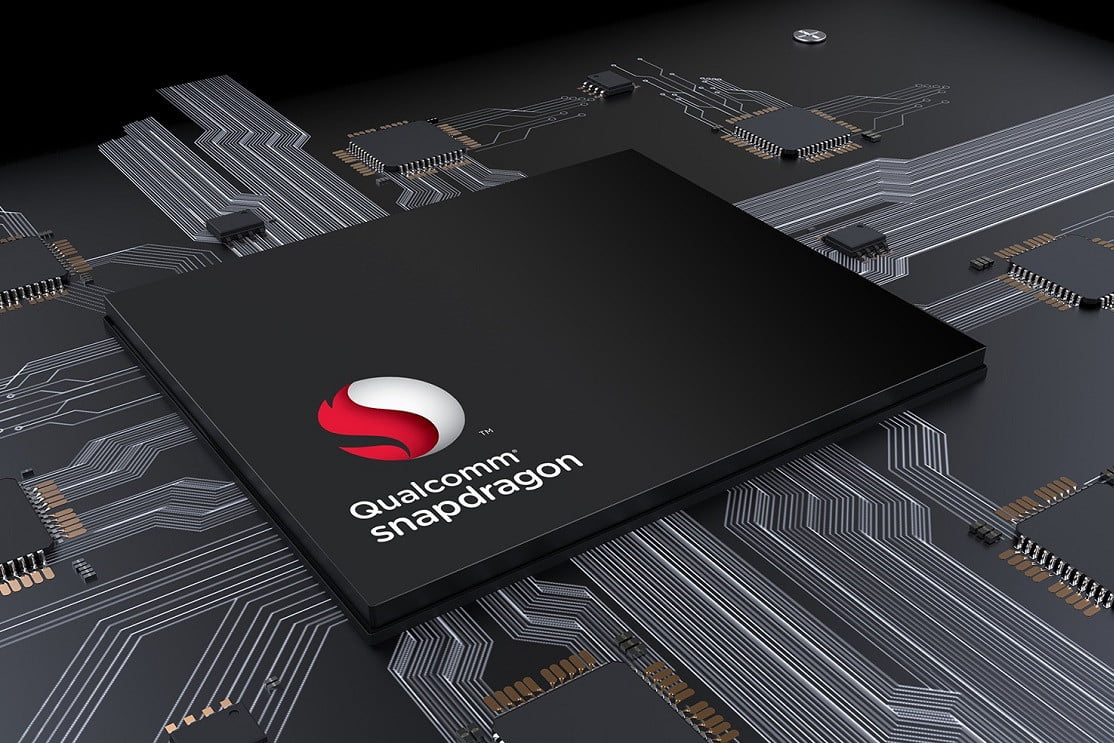
    Support for 5G networks is currently limited to a handful of flagship devices such as the Galaxy S10 5G, LG V50 ThinQ 5G, and Huawei Mate 20 X 5G. This situation is unlikely to change anytime soon, but in order to boost the adoption rate, Qualcomm is apparently developing a 5G-ready chip that’ll make its way into future mid-range smartphones.

    Dubbed the Snapdragon 735, the upcoming chip is expected to succeed the recently-announced Snapdragon 730. Like Qualcomm’s flagship processors, this new one will reportedly be manufactured on the 7-nanometer manufacturing process. Concrete details about this are yet to be revealed, but compared to the older Snapdragon 710 it should result in a performance boost of up to 20% and an increase of 50% in terms of efficiency. Additionally, efficiency gains of up to 20% are to be expected over the Snapdragon 730.

    As mentioned above, the Snapdragon 735 will introduce support for 5G networks. But rather than utilizing the separate Snapdragon X50 modem found inside the Galaxy S10 5G, the Snapdragon 735 will apparently use an integrated 5G modem. This should result in thinner and lighter 5G smartphones. It should also reduce the overall cost associated with the technology.

    Moving on to some of the more technical details, the included CPU will boast an octa-core 1+1+6 setup. This will include six efficiency cores clocked at 1.6GHz, a slightly faster one at 2.4GHz, and a high-performance core clocked at 2.9GHz. There will also be an upgraded GPU in the form of the Adreno 620.

    Lastly, the Snapdragon 735 should allow manufacturers to build mid-range smartphones with as much as 12GB of RAM. Additionally, the chip will support 21:9 displays with 3360x1440p resolutions, 4K video recording at 60FPS, and a dedicated NPU that’ll help with AI features.

    The Qualcomm Snapdragon 735 is expected to arrive during the final quarter of this year, perhaps alongside the flagship Snapdragon 865. In terms of a release, the first Snapdragon 735-powered devices should arrive during the first half of 2020.

  • HKBN cleared to merge with WTT

    HKBN cleared to merge with WTT

    HKBN has secured approval from the Communications Authority to complete its acquisition of WTT Holding after making new commitments to the regulator.

    HKBN and WTT revealed plans in August last year to merger through an all stock deal valuing WTT at HK$10.5 billion.

    But the Communications Authority subsequently announced that it had identified a number of competition issues that could arise under the merger, and warned it may conduct a formal investigation into the merger.

    These issues included concerns that competing operators could face difficulty accessing buildings that are not exclusively for residential use where both companies already have equipment in order to compete with the combined company.

    The authority also raised concern that downstream rivals may become locked into wholesale agreements with the combined company, making them captive customers.

    To address these concerns, HKBN and WTT made additional commitments in January, and subsequently revised them in response to feedback from the regulator.

    Under the revised commitments, the combined company has agreed to facilitate access to any elements of its in-building communications systems in relevant buildings that will be required for rivals to serve non-residential customers.

    The merged company would also agree to provide wholesale services on existing or no less favorable terms to downstream rivals for three years after the date of the revised commitments rather than two.

    With these commitments, the authority said it is satisfied that its competition concerns have been effectively addressed, and now does not intend to commence an investigation into the deal.

    HKBN said the company is now on track to complete the acquisition by the end of the month. The company has appointed two new directors that will represent the new major shareholders it will be acquiring through the transaction. Zubin Iraini will represent TPG Capital Asia, and Teck Kong will represent MBK Partners.

    Meanwhile HKBN has selected current HKBN Enterprise Solutions COO Billy Yeung to assume the dual role of CEO of HKBN Enterprise Solutions and CEO of WTT and lead the integration of the companies.

    Current WTT CEO Vincent Ma will retire from the role immediately upon completion of the transaction.

  • Vietnam telcos ready to pilot mobile money

    Vietnam telcos ready to pilot mobile money

    Vietnamese operators MobiFone, VNPT and Viettel have all submitted proposals to participate in pilot mobile money services.

    Vietnam’s prime minister Nguyen Xuan Phuc has directed the telecommunications ministry and the State Bank of Vietnam to develop a project that will allow operators to pilot mobile money services not linked to customers’ bank accounts.

    The three operators have submitted applications to launch mobile money services that will allow customers to transfer money using mobile phones, including Vietnam’s unbanked population.

    According to the report, the operators believe they have the capital, infrastructure and user base necessary to launch mobile money services and contribute to the development of non-cash payment in Vietnam.

    The market could represent a promising avenue for expansion for the operators – Vietnam’s fintech market is set to reach $8 billion in 2020, with digital payment solutions accounting for around 89% of the market. Meanwhile only around 40% of the population have bank accounts, but mobile penetration is well above 100%.

  • Docomo to cut mobile rates by up to 40%

    Docomo to cut mobile rates by up to 40%

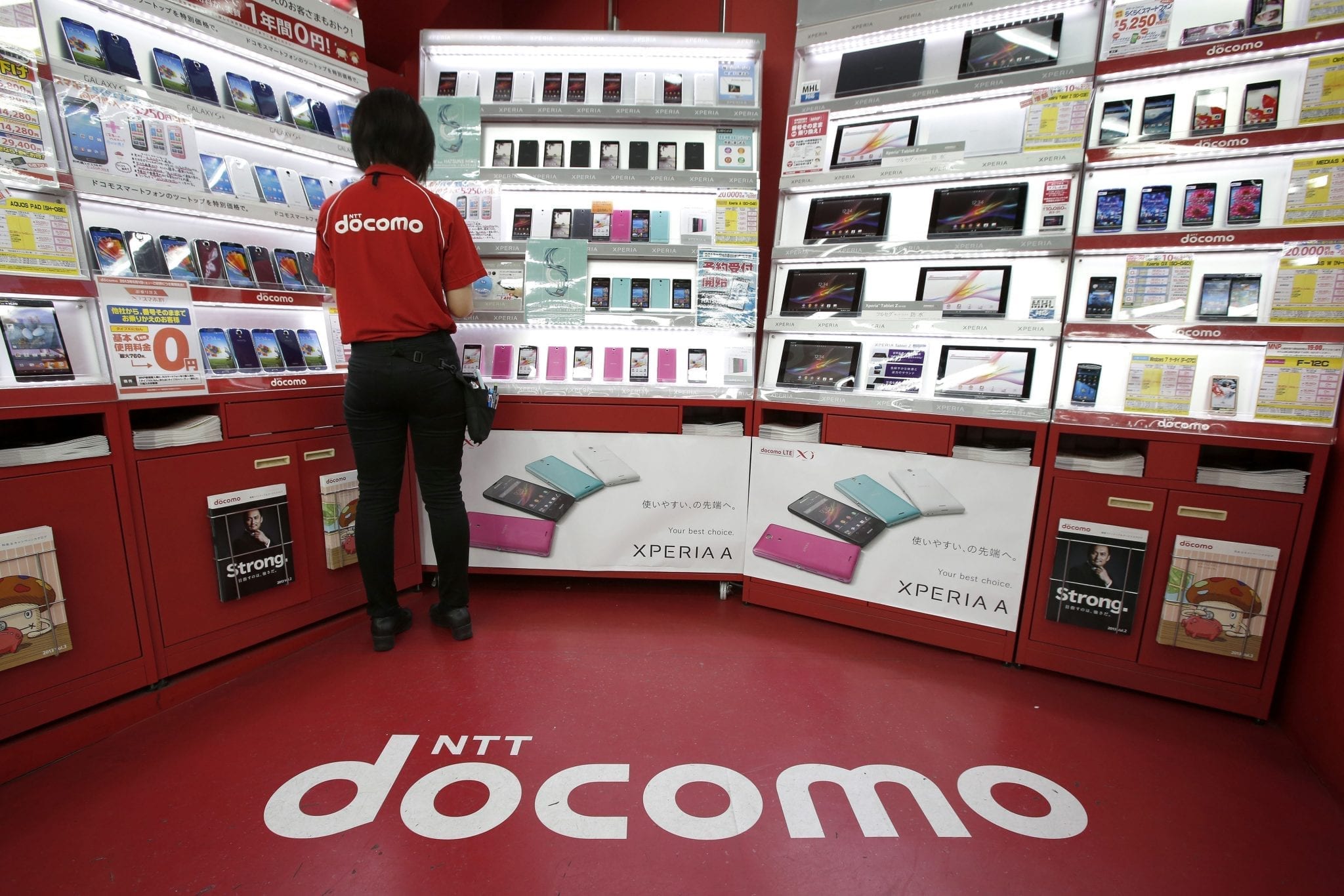
    Japan’s NTT Docomo has announced a new simplified mobile service fee structure that the operator says will reduce mobile charges by between 20% and 40%.

    The operator plans to completely separate handset and service fees and unify voice, SMS and data charges in response to criticism that its existing plans have been too complicated and hard to understand.

    The new plans are divided into two categories – a “Gigalight” plan which will charge based on data consumed, and a flat rate “Gigaho” plan for heavy data users.

    Docomo also plans to start offering family discounts of 500 yen ($4.46) per month for contracts covering two family members, and 1,000 yen per month for contracts with three or more members.

    Docomo’s new fee structure is also a response to pressure from the Japanese government on operators to reduce mobile service fees to bring them in line with prices in comparable markets.

    The operator expects that the new fee structure could reduce its income by as much as 400 billion yen ($3.6 billion) per year.

  • Lack of clarity will stump 5G growth

    Lack of clarity will stump 5G growth

    As the first commercial deployments of 5G start to appear, the stage is set for consumers finally to find out what the powerful next-generation mobile standard promises can bring: an ambitious and far-reaching technological advance that transforms virtually all aspects of human activity—how we experience life, conduct business, create goods, and build societies.

    That’s the theory and the hope.

    For many in the industry 5G will set the stage for incredible change. However with standards are still being rolled out, it remains a confusing landscape, with varied and sometimes conflicting interpretations of what 5G is and what to expect from it.

    This confusion is impacting not just consumers but also complicating the industry’s ability to measure itself against a standard set of 5G expectations and requirements.

    To optimize short-term and long-term 5G adoption, it is imperative that clarity regarding what 5G is and when each capability will be available is established for both consumers and the ecosystem. To that end, IHS Markit follows the official 3GPP definition of 5G but also believes that this description needs to be understood within the context of everyday experience and concepts.

    According to the IHS Markit whitepaper, The promise and potential of 5G, 5G will improve existing services and enable new use cases, such as driverless cars, immersive entertainment, zero-delay virtual reality, uninterrupted video and no-latency gaming. On the industrial front, 5G will be key to expanding and realizing the full promise of the internet of things (IoT), with the technology’s impact to be felt in smart homes, smart cities and smart industries.

    “The marketplace implicitly understands 5G represents an unprecedented growth opportunity, with the initial smartphone rollout set to generate record shipment volumes,” said Francis Sideco, vice president at IHS Markit. “However, fewer people understand the iterative nature of major technology rollouts such as the one we are going through now with 5G—a process involving multiple major updates that will add new capabilities in the coming years. With each of these updates having the potential to significantly disrupt the market’s competitive dynamics, it’s critical for companies to clearly understand the implications of each rollout or risk falling behind the competition.”

    New 5G technical standards will eventually enable the creation of applications that could open new opportunities, inform new business models and transform everyday life for multiple industries and billions of users throughout the world.

    However, many of these capabilities won’t be available in initial 5G rollouts, but instead will arrive in subsequent releases of the standard to be implemented over the next few years. Each of the releases will deliver new challenges and opportunities not only for the wireless industry but also every industry for which the new use cases are envisioned. To fully realize the potential of these opportunities, competitors will need to understand and capitalize on new capabilities even before they are fully introduced.

    The 5G standard’s next release is already on the horizon, with the expected introduction of Release 16 in late 2019. The upcoming release will deliver highly desirable enhancements, including far greater reliability and peak data rates of 20 Gbps downlink and 10 Gbps uplink.

    “This next phase of implementation and rollout will trigger a race among mobile network operators to meet and take advantage of these performance enhancements. The winners of this race are likely to gain a competitive advantage as they gear up for the next wave of growth,” Sideco said.

    Future revisions will spur similar competitive battles, as 5G adds major new capabilities and expands into other markets beyond mobile communications, such as mission-critical applications and massive internet of things (IoT) deployments.

    “For companies throughout the technology supply chain—from network operators, to smartphone brands, to industrial and automotive device manufacturers and electronics suppliers—it will become increasingly important to understand the changes brought by each phase of the 5G deployment and to be ready to capitalize on the latest capabilities to gain a competitive advantage,” concludes Sideco.


  • Telecom Fiji to deploy 10G PON

    Telecom Fiji to deploy 10G PON

    Telecom Fiji has announced it will deploy the first all-optical 10G PON fiber network in the South Pacific, in partnership with Huawei.

    The operator plans to use the network to deliver gigabit network services for both households and enterprise customers.

    Huawei has been contracted for the deployment, which is aimed at enhancing the operator’s customer experience while significantly reducing networks operations and maintenance costs.

    “By adopting this 10G PON solution, the competitiveness of our fixed broadband in Fiji has now significantly enhanced… We are fully confident to maintain our technological leadership in the South Pacific island markets,” Telecom Fiji general manager of sales and marketing Joseph Naua said.

    “We are also proud to work in partnership with Huawei on the deployment of the 10G PON network. At present, the 10G PON network deployment is moving on a fast track, and Huawei will continue to invest and innovate in the ultra-broadband domain.