Tag: telecom

  • Japanese telcos assigned 5G spectrum

    Japanese telcos assigned 5G spectrum

    Japan’s telecom ministry has allocated 5G mobile spectrum to incumbent operators NTT Docomo, KDDI, and Softbank, as well as local e-commerce giant Rakuten.

    The Ministry of Internal Affairs and Communications has approved the allocation of spectrum after determining that the companies’ applications met the conditions of the allocation.

    The four companies plan to invest heavily in 5G, spending a combined 1.6 trillion yen ($14.4 billion) over the next five years. Docomo is planning the largest spend, with goals to invest at least 795 billion yen in 5G over this time.

    The four plan to commence commercial 5G services in 2020, with KDDI and SoftBank planning to commence advertising for its services in March.

    Rakuten Mobile, Japan’s upcoming newest market entrant, meanwhile plans to commence 4G services in October 2019 and 5G services in June 2020.

    The conditions for the allocation of spectrum included commitments to commence services in every prefecture of the nation within two years, and set up 5G base stations in at least half the country within five years.

    According to the report, Docomo and KDDI are each targeting more than 90% 5G population coverage by the end of the five years, while SoftBank is targeting 64% coverage while Rakuten is aiming for 56%.

  • Viettel deploys Vietnam’s first 5G base stations

    Viettel deploys Vietnam’s first 5G base stations

    Vietnamese military-run operator Viettel has installed Vietnam’s first 5G base stations in Hanoi ahead of planned 5G trials.

    The operator has deployed three test 5G base stations at various offices, and expects to switch them on for trials in early May.

    Viettel plans to test 70 5G base stations in Hanoi and Ho Chi Minh City in June in preparation for a large-scale deployment, the report states.

    Viettel plans to be one of the early adopters of 5G, targeting a commercial launch in 2020. Viettel is taking the lead in the deployment of the technology in the market.

    At the recent ASEAN Conference on 5G in Vietnam, minister of information and communications Nguyen Manh Hung said 5G represents an opportunity for Vietnam to change its global rankings by stimulating growth in the digital economy.

  • China’s 5G investments may be slowing

    China’s 5G investments may be slowing

    While China is certain to be one of the world’s largest 5G markets and has been spending heavily to gain an early lead in 5G adoption, there are signs that 5G momentum is slowing down in the market.

    This was one of the conclusions of a new report from IDTechEx Research on the 5G technology market forecast for the next 10 years.

    The report found that China’s big three operators China Mobile, China Telecom and China Unicom have all announced 5G capex budgets that are lower than expected.

    China Unicom plans to spend between 6 billion yuan ($893.3 million) and 8 billion yuan on 5G in 2019, while China Telecom has allocated 9 billion yuan. While market leader China Mobile has not disclosed its projected 5G spending, the report forecasts that its spending will be in the region of 17 billion yuan.

    The total 5G capex budget allocated in China (34 billion yuan) for 2019 is therefore significantly lower than the projected 50 billion to 100 billion yuan.

    Factors behind the lower than expected spending include greater activity to upgrade 3G networks to 4G, falling per-subscriber revenue and the uncertainty over whether 5G investments will generate returns, the company said.

    Based on slower than expected 5G deployment schedules, the total contribution of 5G for the telecoms sector could be reduced from the projected $200 billion by 2029 to $160 billion.

    But operators are projected to invest around $200 billion to $350 billion for 5G development from 2020 to 2030.


  • Nepal to shut down CDMA from 2022

    Nepal to shut down CDMA from 2022

    The Nepal Telecommunications Authority (NTA) has reportedly decided to switch off CDMA services in Nepal from 2022.

    The regulator’s Radiofrequency Policy Determination Committee has decided on a policy of CDMA network shutdowns in order to pave the way for refarming spectrum in the 800-MHz band.

    Currently only Nepal Telecom operates an active CDMA service, under the brand Sky. The service is currently available in most areas of the country, but the user base is low due to the preference for GSM services in the market.

    Nepal Telecom had decided in 2017 to stop investing further in both CDMA and Wimax, but has not currently set a date for the network shutdown.

    The operator plans to return its 6 MHz of 800-MHz spectrum to the regulator after the network shutdown.

  • Mobitel to invest $50m in 5G this year

    Mobitel to invest $50m in 5G this year

    Sri Lankan national mobile service provider Mobitel has revealed plans to invest $50 million this year to deploy a 5G network and upgrade its network infrastructure.

    The operator, a wholly-owned subsidiary of Sri Lanka Telecom, has commenced 5G trials ahead of a planned rollout.

    While Sri Lanka was the first country in South Asia to introduce 3G and 3.5G technology, Mobitel does not expect it to be the first to introduce 5G, the report states.

    Meanwhile Mobitel has been investing heavily to upgrade its 3G network to 4G, having spent around $100 million to convert around 100 3G base stations. The operator plans to continue the 4G upgrade, with plans to soon switch off its 3G network.

    Mobitel has now invested around $600 million over its 25 year history. But despite heavy investments and foreign exchange losses, the company managed to increase its revenue by around 10% last year.

    Mobitel is the second largest mobile operator in Sri Lanka after Dialog Axiata, with around 22.6% market share.

  • Carriers to account for 20% of digital content sales

    Carriers to account for 20% of digital content sales

    The proportion of worldwide digital content paid for via carrier billing is expected to nearly double over the next 5 years, said Juniper Research.

    The study, Direct Carrier Billing: Forecasts, Player Strategies & Emerging Opportunities 2019-2024, revealed that with most leading app stores and content providers now seeking to enable carrier billing as an option, consumer spend via the mechanism is expected to rise from $28 billion last year to nearly $90 billion by 2024.

    It claimed that carrier billing deployments would benefit both operators and content publishers; allowing the former to generate a revenue stream from content while enabling the latter to gain subscribers by using carrier marketing channels.

    Juniper claimed that the convenience and growing availability of carrier billing would see it increasingly used for content subscriptions as well as impulse purchases.

  • Changing of guard at Spark

    Changing of guard at Spark

    New Zealand incumbent Spark announced that its managing director Simon Moutter (pictured) has resigned from the telco. Moutter will leave the positions of MD and a director of the company from July 1. Jolie Hodson, currently customer director at Spark, will take over as chief executive.

    Spark chair Justine Smyth said the company has been undertaken succession plan from within the business by giving potential internal candidates opportunities over time to demonstrate they have the right leadership capabilities.

    “Jolie is an accomplished leader with a strong record of delivering results and managing complex business units and to be able to appoint an executive of Jolie’s calibre and experience is a testament to the quality of the talent within the company,” she said.

    She has led major programmes related to Spark’s business transformation and has been a key driver of the company’s growth strategies in business cloud and IT services. Her most recent role has been customer director, with responsibilities across Spark’s consumer and retail operations, large corporate and government customers, and cloud services businesses.

    Previously, she was CEO of the former Spark Digital unit and chief financial officer.

    Smyth said Moutter became MD in 2012 and had done so in the expectation of a likely five- to seven-year tenure.

    “In almost every respect, Spark today is a vastly different company to the one that Simon re-joined in 2012. We are New Zealand’s leader in wireless communications, with a rejuvenated mobile business across both Spark and Skinny brands, a promising IoT business and a determination to be at the forefront of 5G,” she said.

    In 2014, Moutter led the transition of Spark changing its name from Telecom. He had helped the telco transform in many other ways including improving diversity and inclusion in the workplace, Smyth said.

    Moutter has also recently driven an “agile” restructure of Spark and an aggressive drive into sports content and streaming.

    This will be the second time Moutter has left the telco.

    Moutter served as chief operating officer between 2003 and 2008 before leaving to become chief executive of Auckland Airport.

    Moutter returned to Spark in 2012 to take the top job with the expectation that he help turn around the company after a demerger of Chorus in 2011.

    “I’ve given my absolute best to putting Spark onto a positive track over the last seven years, so the company can fully deliver on its purpose to ‘help all of New Zealand win big in a digital world,” he said.

    “I feel it’s the right time to pass the leadership baton on.”

    Moutter said he hadn’t made any decision about what he will do after he finish at Spark, other than spend the first couple of months with his family.

  • Philippines’ House to hold common tower hearing

    Philippines’ House to hold common tower hearing

    A Philippines’ House of Representatives committee will next week hold a hearing on the government’s common tower policy to address the industry opposition and potential legal hurdles of the proposal.

    The House Committee on ICT will look into the status of the Department of ICT’s common tower policy during a hearing scheduled for Monday, committee chairman Victor Yap told.

    Representatives of Globe Telecom and PLDT, the National Telecommunications Commission, the Department of ICT and the Philippines Competition Commission are all expected to attend.

    Under the proposed policy, tower companies will be allowed to build and operate common telecom towers that can be leased to operators. The DICT has signed agreements with a number of tower companies ahead of the introduction of the policy.

    As well as helping to improve the Philippines’ telecommunications infrastructure, the common tower policy is aimed at allowing the market’s upcoming third operator Mislatel more quickly deploy a mobile network.

    But Globe and PLDT have objected to the draft terms, which had proposed that the number of cell site builders be restricted to two registered tower providers.

    According to the operators, this could lead to an infringement of the rights to own and establish cell sites that is stipulated in their legislative franchises.

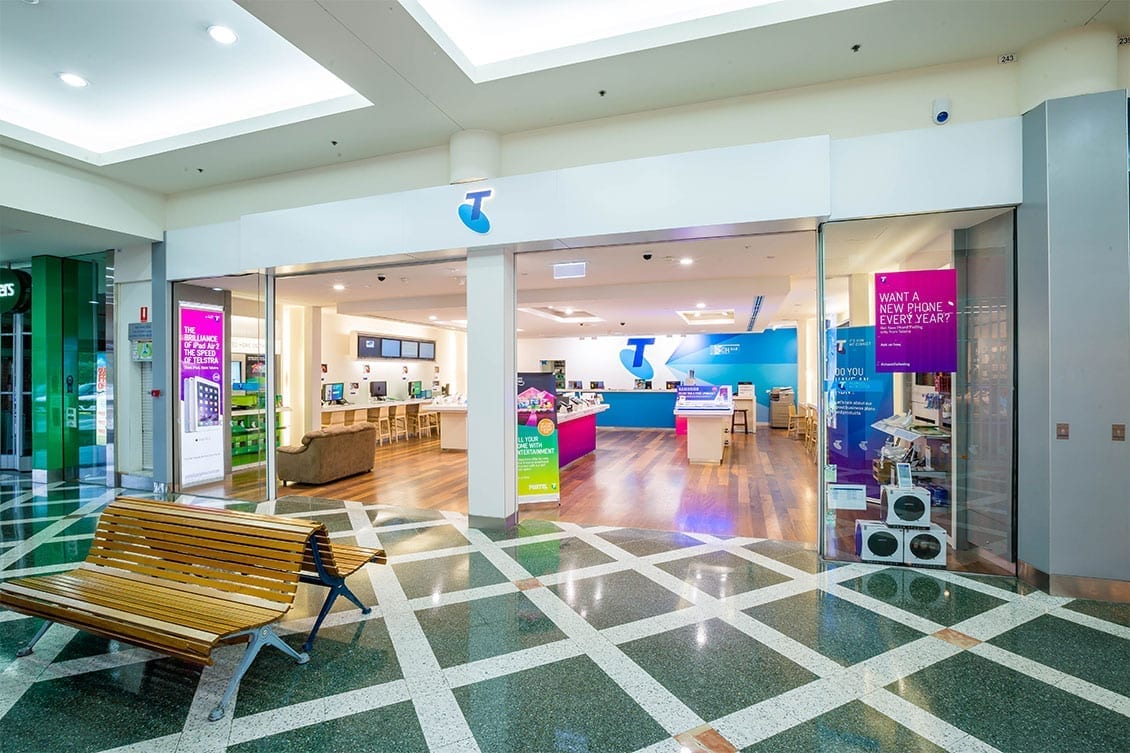
  • Telstra launches tiered loyalty program

    Telstra launches tiered loyalty program

    Australia’s Telstra has announced a new tier-based loyalty program designed to allow customers to earn points for every dollar they spend with the operator.

    The Telstra Plus program will be available to both prepaid and postpaid customers. Members will accumulate points they will be able to exchange for discounts on new devices and accessories.

    Through partnerships, Telstra will also offer access to benefits such as discounted sport and movie tickets and complementary extras.

    Membership to the tiered system will be calculated based on spend over the previous 12 months. The higher tier services include benefits such as priority call handling and 24×7 tech support, as well as yet to be announced entertainment bonuses.

    Telstra CEO Andy Penn said Telstra plans to extend the new offering to its roughly 8 million customers from May.

    “Every service, subscription or hardware repayment will see customers earn points towards new technology, and we think that’s a pretty powerful offer,” he said.

    “The first 5G devices will be available with Telstra soon, opening up even more opportunities for Australians to get more out of life through technology and helping our customers take advantage of all our network has to offer… In addition to the better value we provide our customers through our larger network coverage and data speeds, we’re upping the ante through rewarding our customers for their loyalty over time.”

  • Huawei profit grows 25.1% Last Year

    Huawei profit grows 25.1% Last Year

    Huawei has reported a solid 25.1% increase in net profit for 2018 despite the continuing political challenges the vendor has been facing in the US and other markets.

    The Chinese vendor reported a net profit for the year of 59.3 billion yuan ($8.83 billion), on the back of a 19.5% increase in revenue to 721.2 billion yuan.

    Sales in the vendors’ core carrier business declined slightly to 294 billion yuan, but consumer business revenue surged 45.1% from 2017 to reach 348.9 billion yuan as Huawei carved out a higher share of the global smartphone market.

    Enterprise revenue also grew 23.8% to 74.4 billion yuan, due to demand for the company’s cloud, big data, AI and IoT solutions.

    Commenting on the results, Huawei rotating chairman Guo Ping appeared confident that the company can weather the impact of decisions by regulators in markets including the US, Australia and New Zealand  to restrict the vendor from providing equipment to segments of their respective markets over national security concerns.

    “Through heavy, consistent investment in 5G innovation, alongside large-scale commercial deployment, Huawei is committed to building the world’s best network connections,” he said.

    “Throughout this process, Huawei will continue to strictly comply with all relevant standards to build secure, trustworthy, and high-quality products. As we work towards this goal, we have been explicitly clear: Cyber security and user privacy protection are at the absolute top of our agenda.”

    He added that the company is “confident that the companies that choose to work with Huawei will be the most competitive in the 5G era, and countries that choose to work with Huawei will gain an advantage for the next wave of growth in the digital economy.”

  • China Mobile Hong Kong holds 5G experience showcase

    China Mobile Hong Kong holds 5G experience showcase

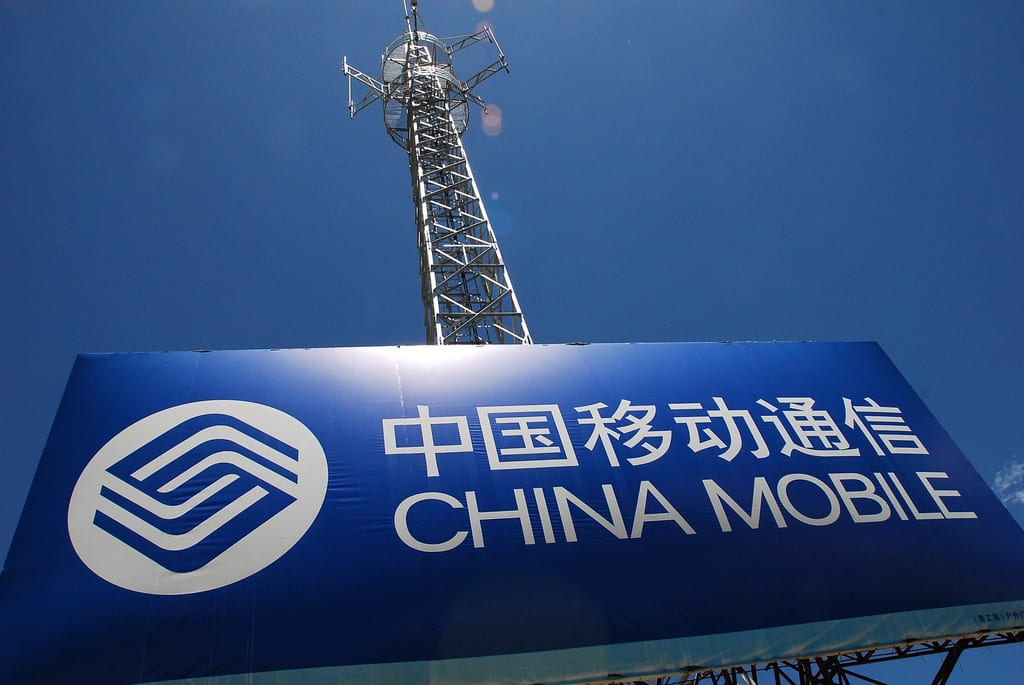
    China Mobile Hong Kong (CMHK) and property company Sino Group have jointly held what they are calling Hong Kong’s first in-mall 5G experience showcase at the Olympian City 2 mall.

    The Future is Now 5G Experience Showcase, which was held over four days ending yesterday, comprised six experience zones intended to introduce ad demonstrate 5G technology.

    These zones were based around concepts including autonomous vehicles, smart glasses and a machine that purports to be unbeatable at janken (also known as rock paper scissors) by using 5G leased lines and a sensory system to detect gestures as they are thrown.

    Other zones highlight the speed improvement between 4G and 5G, the potential of 5G technology in smart city development and a start-up exhibition based on IoT technology.

    “Out of Hong Kong’s many mobile carriers, CMHK is the first network provider to receive the 5G trial permit, and has succeeded in engineering Hong Kong’s first end-to-end 5G network testing as well as the first Commercial Equipment Field-Testing of 28GHz 5G base stations,” CMHK chairman Dr Li Feng said.

    “In the future, CMHK will continue to adhere to the concept of ‘4G changes lives, 5G changes society’ by presenting “5G+ Project” in three agendas: firstly, to complement the existing 4G network with 5G infrastructure; to promote 5G with new networking technology; and develop more comprehensive 5G ecosystems to maximize the value of 5G.’

  • Tower market to grow at 4.56% CAGR from 2019-24

    Tower market to grow at 4.56% CAGR from 2019-24

    The global telecom tower market is on track to grow at a CAGR of over 4.56% between 2019 and 2024, according to Research and Markets.

    In a new report, the research firm stated that tower sharing has become one of the major growth drivers for the telecom industry as the tower leasing concept takes hold.

    This leasing concept has enable mobile operators to invest heavily in developing their infrastructure in rural areas, which is in turn bringing in new revenues to tower operators.

    Major market trends include expected significant growth in demand for lattice telecom towers, designed to manage heavy loads making them suitable for central communication hubs and backbone sites in disaster-prone areas.

    The primary purpose of a lattice tower is to support more than one antenna for communication purposes.

    The report also notes that the telecom tower market is currently highly competitive, with several major players dominating the market in terms of total share. These include India’s Bharti Infratel, China Tower – the joint venture established to operate the towers of China’s big three mobile operators, Helios Towers Africa and American Tower Corporation (ATC).

  • Dominic Barton joins Singtel board

    Dominic Barton joins Singtel board

    Singtel has appointed Dominic Barton (pictured) as an independent director with immediate effect, the Singaporean telco announced Monday.

    Barton is currently global managing partner emeritus of McKinsey & Company. Prior to that he was global managing partner of McKinsey until July 2018, a role he held for nine years. He has also served as chair of the board of Canadian mining company Teck Resources since October, 2018.

    “Dominic brings rich expertise and insights from across a broad swathe of industries, having advised clients in banking, consumer goods, tech and industrials over three decades of consulting,” said Singtel chairman Simon Israel said. “The diversity of his experience will be invaluable as Singtel’s digital transformation takes the group into businesses and partnerships that cut across multiple industries.”

    The Singtel Board now comprises 12 directors: Simon Israel (chairman), Chua Sock Koong (Group CEO), Gautam Banerjee, Dominic Barton, Bobby Chin Yoke Choong, Venky Ganesan, Bradley Horowitz, Gail Kelly, Low Check Kian, Peter Mason, Christina Ong, and Teo Swee Lian.

    HKBN names Elinor Shiu marketing chief for residential services

    Elinor Shiu, CMO, Residential Services, HKBN Group

    HKBN Group has named Elinor Shiu (pictured) as chief marketing officer, residential services.

    In her new role, Shiu will lead the marketing strategies and operations of the group’s residential market business. She has also joined the group’s management committee, overseeing HKBN’s continued growth with six other senior executives, according to a company announcement.

    Shui has extensive experience in marketing management and business operations. She has held several senior positions across the group’s residential and enterprise solutions business before becoming head of marketing in 2018.

  • SK Telecom streams AR dragon in Korean stadium

    SK Telecom streams AR dragon in Korean stadium

    SK Telecom has announced it has used augmented reality to simulate a fire-breathing dragon at a sports stadium as part of its ongoing development of new 5G-powered services.

    Using augmented reality technology, the large fire-breathing wyvern was streamed flying around the SK Happy Dream Park during the opening day of the Korea Baseball Organization.

    The dragon was streamed both to the LED baseball scoreboard installed at the stadium and via sports broadcasting channels for fans watching the game on TV and smartphones.

    To achieve large scale augmented reality streaming, SK Telecom used its self-developed augmented and virtual reality technologies including the eSpace and T real Platform solutions.

    The demonstration arose from SK Telecom’s focus on the development of 5G-based services to support its commercial network, which launched in December last year. Augmented and virtual reality are a key area of focus for the company.

  • ZTE swings back to black in Q1

    ZTE swings back to black in Q1

    ZTE expects to have swung back to profit in the first quarter, after reporting an annual loss in 2018 as a result of the temporary ban on its import of components from US vendors.

    The Chinese vendor estimates a net profit for the first quarter of 800 million yuan ($118.9 million) to 1.2 billion yuan, which compares to a profit of 1.69 billion yuan in the first quarter of 2018.

    The first quarter results are nevertheless an improvement on the 6.98 billion yuan ($1.04 billion) loss the company recorded for the full year 2018.

    ZTE blamed its performance on the impact of the ban on the import of components from US companies imposed by the US government due to ZTE allegedly violating US sanctions on Iran by conspiring to sell equipment with US components in the market, as well as the $1 billion settlement agreement ZTE reached to have this ban overturned.

    Revenue for the year  meanwhile fell 21.4% to 85.51 billion yuan despite signs of recovery in ZTE’s major businesses of wireless networks, wireline networks and mobile devices.

    ZET has meanwhile announced it has been intensifying its investment in 5G research and development.

    The company has so far submitted more than 7,000 5G standard proposals and 3,000 5G patent applications to international organizations, and has declared over 1,200 standards of 5G standard-essential patents to the European Telecommunications Standards Institute (ETSI).