Tag: telecom

  • Telenor Myanmar extends non-stop roaming to Malaysia, Singapore

    Telenor Myanmar extends non-stop roaming to Malaysia, Singapore

    Telenor Myanmar has expanded its unlimited international data roaming service to Malaysia and Singapore, one month after the launch of the new service in Thailand.

    The company’s non-stop data roaming pack offers unlimited data in the three international markets for total fees of 999 kyats ($0.65) for three days of service. Speeds are uncapped for the first 1GB per day, and then shaped to 512kbps.

    Prepaid and postpaid customers can activate the service on the MyTelenor APP, sending a message to a dedicated number, or dialing a different number.

    “We are amazed by the support we have seen on our latest roaming product for visitors to Thailand. So we decided to extend this popular service to Malaysia and Singapore which we know as the other two most frequently visited countries in Southeast Asia,” Telenor Myanmar CMO Amaresh Kumar said.

    “We have made international roaming affordable for everyone and we welcome our customers to experience the only worry-free data roaming packs that users can get in Myanmar.”

    Thanks to the connections of parent company Telenor from Norway, Telenor Myanmar now offers roaming services with 171 partner operators in 125 countries, with its 4G roaming service currently available in China, Thailand, Malaysia, Singapore, Japan, UAE, Canada, Macau, Taiwan, New Zealand, Sweden, Belgium and Norway.

    Meanwhile subscribers to 227 operators from 134 countries can use their overseas SIMs with the Telenor network in Myanmar.

  • Mass-production of a key component for 5G Apple iPhone about to Start

    Mass-production of a key component for 5G Apple iPhone about to Start

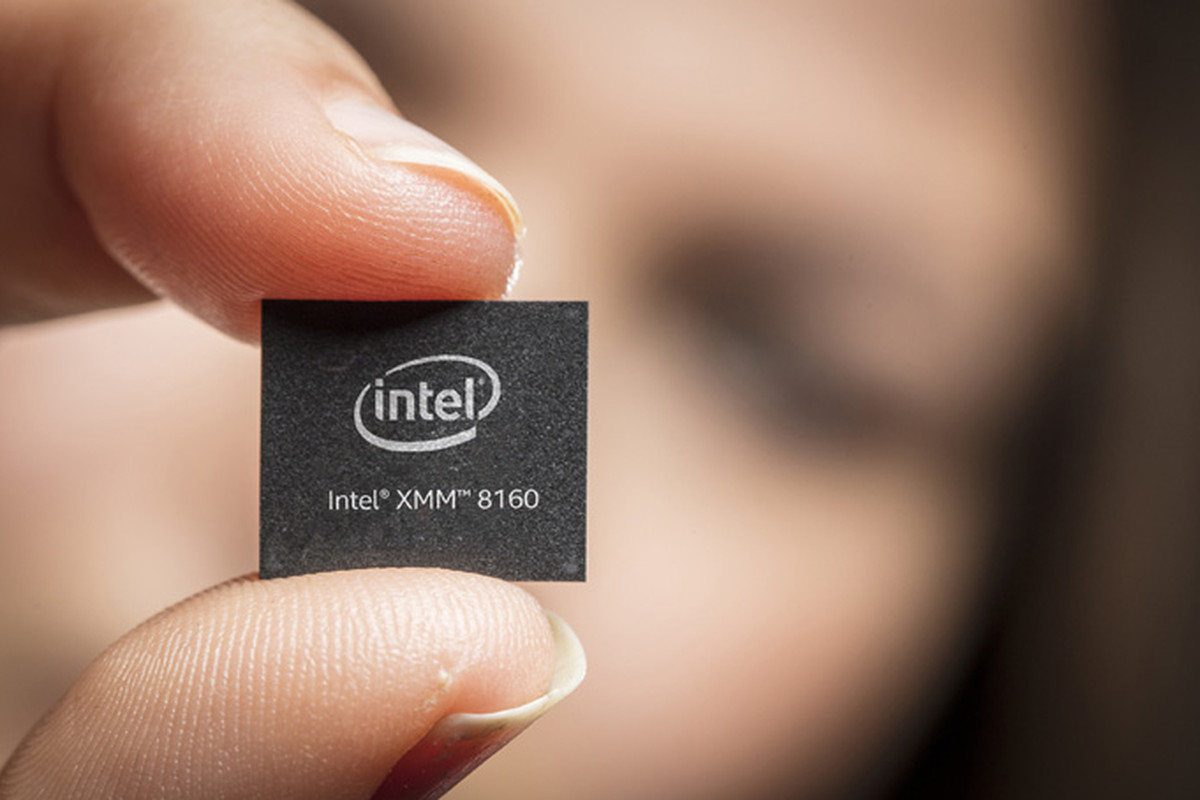
    Since Apple is expected to use Intel’s modem chips for its first batch of 5G compatible phones, we know not to expect 5G iPhones to be unveiled until 2020. That’s because Intel won’t have its modem chip for the next generation of wireless connectivity ready until next year. The chip maker will start work next quarter on the engineering projects it needs to finish in order to begin volume production of its 5G modem.

    Once Intel starts producing its 5G modem chip in 2020, it will compete with Qualcomm’s recently introduced Snapdragon X55 5G modem, the sequel to the Snapdragon X50 5G modem. The latter will be used on most 5G Android phones this year. It also will go up against the 5G modem chip designed by MediaTek. All three firms could still be in play to become the source of Apple’s 5G modem chips, although previous reports state that Intel has already won this battle. Sources cited in yesterday’s report say that Intel will also continue to generate revenue from selling its 4G modem chips to Apple for older iPhone 7 and iPhone 8 models.

    Apple currently has a contentious relationship with Qualcomm; over the last few months both sides have squared off in court on issues ranging from patent infringement to royalty payments. Just yesterday, one judge ruled that Qualcomm owed Apple close to a billion dollars in royalty payments it promised to rebate to the company (the actual figure is much. much higher says FOSS Patents). Meanwhile, a jury in San Diego yesterday ordered Apple to pay Qualcomm $31 million after it found Apple liable of infringing on a trio of patents. On March 26th, the International Trade Commission will rule on Qualcomm’s request for an exclusion order to be imposed on the iPhone in the U.S. Such an order would result in a sales and import ban of certain iPhone models in the states.

    Intel is now the exclusive source of modem chips for the iPhone

    During yet another trial held earlier this year (FTC v. Qualcomm), the plaintiffs called Apple supply chain executive Tony Blevins to the stand. Blevins testified that Apple had looked at sourcing 5G modems from Samsung and MediaTek. There is also speculation that Apple will design its own 5G modem chip, like it does for the A-series chipset that powers the iPhone and iPad. But Apple isn’t expected to deliver an in-house 5G modem design until 2021 at the earliest.

    From 2011 to 2015, Qualcomm was the exclusive provider of modem chips for the iPhone. That changed in 2016 when both Qualcomm and Intel were responsible for the modems used on the iPhone. That continued in 2017, and last year Apple sourced all of the modem chips used on the latest iPhone models from Intel.

    Apple is expected to be among the last major phone manufacturers to produce a 5G phone. Samsung has already unveiled its first 5G phone, which will debut on Verizon this summer. Huawei, LG and Oppo should also release 5G phones this year, and the 5G Moto Mod will allow the Motorola Z3 to support the faster data speeds as soon as Verizon flips the switch to turn on its new service. Once 5G service becomes more mainstream and less a curiosity, the faster data speeds will allow new services and businesses to be created. With 5G, a television series that takes 10 minutes to 15 minutes to download over 4G, will take only seconds to complete the task.

    When the industry transitioned from 3G to 4G LTE, Apple was one of the last major manufacturers to deliver a phone that supported the then-new technology. While a number of Android phones were launched with support for 4G LTE in 2011, Apple didn’t release a 4G LTE enabled handset until 2012’s iPhone 5.

  • Huawei ready to replace Android if it loses legal battle

    Huawei ready to replace Android if it loses legal battle

    Huawei is being attacked from all sides, and even though the Chinese company seems to have been cornered, it still has the will to fight. Huawei recently sued the United States, as a means to fight a ban that prevents its telecom equipment from being purchased and used by government institutions.

    The same ban prohibits major US government contractors from using Huawei equipment, a major blow for the Chinese company’s local telecom business. Although the legal battle between Huawei and the US is just beginning, the former has everything prepared in case of a negative outcome.

    Huawei’s executive Richard Yu said in a recent interview with Die Welt that his company already has its own operating system ready to replace Android and Windows.

    We have prepared our own operating system, if it turns out we can no longer use these systems, we will be ready and have our plan B. Huawei started working on its proprietary ecosystem seven years ago, following a US investigation that also targeted ZTE. According to Yu, Huawei will continue to use Google and Microsoft operating systems, but if the legal battle intensifies, it won’t hesitate to switch to its own ecosystem.

    The bad news for fans of the Chinese brand is that not even Huawei believes in the success of its own ecosystem. A Huawei spokesperson was cited saying that the company doesn’t expect to use its “backup systems” and that it doesn’t actually want to use them.

  • GateHouse Telecom developing universal satcom interface

    GateHouse Telecom developing universal satcom interface

    Satellite industry software provider GateHouse Telecom has revealed it is developing a technology that will allow a single physical satcom terminal to use multiple satellite systems.

    The company is developing a new interface that will allow users to run the same satcom terminal hardware and interface on different satellite services.

    GateHouse Telecom product manager Svend Holme Sørensen said the project reflects the company’s belief that there is a need for a universal satcom application interface.

    “To stay connected, user terminals have to adapt to changes in data routing and frequent changes of satellites,” he said.

    “Our new software platform, when based on software defined radio hardware, combined with the increasing availability of multi-service antenna systems opens the possibility of operating terminals on several satellite systems.”

    He said such demand appeared to be reflected in discussions at this year’s SmallSat Symposium in Silicon Valley.

    “There seems to be a general wish to run satellite constellations using network management functions, for example, software defined networks. However, this kind of functionality goes beyond the existing protocol specifications used today.”

    Using the same hardware terminal for multiple satellite systems would allow developers and engineers to bring down user terminal costs by increasing volumes to improve business cases.

  • US trails world in 5G mid-band spectrum

    US trails world in 5G mid-band spectrum

    The mid-band spectrum is critical to 5G but the United States trails other countries in mid-band availability, according to a 2018 Analysys Mason study, which shows other countries plan to make over four times more licensed mid-band spectrum available than the US by 2020.

    Next-generation 5G networks rely on a mix of high-, mid- and low-band spectrum. Low-band spectrum carries signals over long distances and was the foundation for the first four generations of wireless networks. High-band spectrum travels much shorter distances, but offers the greater capacity required for data-intensive applications. Mid-band spectrum blends the attributes of both, delivering high capacity across larger geographic areas.

    In 2018, Analysys Mason compiled the mid-band spectrum plans of 13 countries, including the United States, to produce a report for US wireless industry association CTIA.

    Among the key findings of a 2018 compilation of mid-band spectrum plans in 13 countries around the world suggests that by the end of 2020:

    • On average, countries included in the study will make 4 times more licensed mid-band spectrum available than the United States.
    • Japan is planning to make ten times more licensed mid-band spectrum available than the United States.
    • China is planning to make more than seven times more licensed mid-band spectrum available than the United States; the United Kingdom is planning to make nearly five times more licensed mid-band spectrum available.

    “Resources available to US operators are improving, but spectrum in the mid-band remains limited compared to other leading 5G markets,” said Janette Stewart, a principal with Analysys Mason and the lead author of the report, “Mid-band spectrum will be key to wider-area 5G coverage.”

  • Automated frequency coordination at tipping point

    Automated frequency coordination at tipping point

    Automated spectrum management databases and algorithms are an important public policy tool for meeting surging demand for low-cost high speed wireless broadband connectivity, according to a new report from the Dynamic Spectrum Alliance (DSA).

    The report argues that automated frequency coordination (AFC) is critical to allowing more efficient shared use of underutilized spectrum bands, while protecting incumbent services from interference.

    The DSA, which includes members including Amazon, Facebook, Google, Microsoft, Cisco and Hong Kong’s Applied Science and Technology Research Institute (ASTRI), released the report yesterday at an event co-sponsored by the Congressional Spectrum Caucus in the US.

    It argues that automated spectrum management systems have reached a tipping point for adoption worldwide, and that these systems will greatly extend the supply of wireless connectivity in markets that adopt them.

    AFC also has the potential to lower transaction costs and help national regulatory authorities meet the growing and very diverse spectrum needs of both industries and individuals.

    The US FCC is considering the use of AFC systems to manage spectrum capacity across several bands for licensed and unlicensed use. The EU and the UK are also conducting consultations over adopting AFC systems for shared spectrum access.

    “At a time when regulators are under increased pressure to meet wireless connectivity demands, AFC is critical to enable more efficient shared use of underutilized frequency bands while protecting incumbent services from interference,” DSA board chairman Paul Garnett said.

    “Automated spectrum databases are now a proven means of achieving large-scale, low-cost, and virtually real-time access to communications capacity that would otherwise go unused.”

    Other members of the DSA include HPE’s Aruba Networks, Broadcom, Ruckus Wireless, the IEEE and the Taiwan Institute for Information Industry.

  • 5G will power outdoor robots in the future, but not now

    5G will power outdoor robots in the future, but not now

    Low latency and cloud intelligence are the two main features of 5G that will significantly change the deployment of mission critical and business critical robots, particularly those deployed outdoors. ABI Research argues that the commercialization of a 5G network is expected to usher in the significant growth of commercial robotics.

    Shipments of 5G robots are expected to reach 570,000 by 2027, largely deployed in mission critical and business critical settings. Outdoor applications that will be enabled by 5G connectivity include public safety and first responders, critical asset inspection, last mile delivery and transportation, precision agriculture, field extraction, and haulage.

    Traditionally, high-speed broadband connectivity is only available to robotics systems in indoor environments via Wi-Fi and broadband fiber. Therefore, existing outdoor commercial and industrial robots are often fully autonomous devices with onboard intelligence. With 5G, robots’ capabilities will be upgraded.

    “Existing onboard capabilities, such as object and people detection, path planning, and optimization can be shifted to the cloud to benefit from a larger set of data lake,” said Lian Jye Su, Principal Analyst at ABI Research.

    “At the same time, robotics systems will have access to capabilities that could not be previously hosted on existing systems. At present, remote control appears to be the focus, with Toyota’s T-HR3 and Naver’s AMBITEX, but the real game-changers will be conversational Artificial Intelligence (AI) and swarm intelligence. 5G’s low latency will enable robotics vendors to augment the onboard intelligence or even move parts of it to the cloud to introduce new capabilities to existing robotics hardware. Enterprise users will be able to connect their fleet of outdoor robots to the cloud and enjoy the performance, scalability, and flexibility of the cloud-based intelligence.”

    In order to enable 5G capabilities, robotics vendors must work closely with connectivity and chipset vendors in their design and prototyping phase to maximize the benefits of ubiquitous connectivity. Qualcomm has recently launched the Robotics RB3 Platform, powered by its Snapdragon 845 SoC with future 5G upgradability and Inseego has partnered with CloudMinds to provide 5G connectivity to the XR-1 Cloud Robot.

    By integrating LTE and 5G connectivity from the onset, robotics vendors can provide a clear roadmap in terms of future upgrades. The clear connectivity roadmap will provide the industry guidance on the future capabilities that cellular connectivity can enable.

    This includes multi-access edge computing that provides computing, networking, and caching at the network edge and wide area machine-to-machine communication that facilitates situational awareness and information exchange between mobile robots, cloud platforms and surrounding infrastructure.

    “In the long run, 5G will become the de facto connectivity method for outdoor robots. As a global standard, 5G enjoys economies of scale. This brings down the total cost of ownership of 5G networks and the price of 5G modem chipsets, allowing robotics developers to integrate 5G connectivity with ease,” Su concluded.

  • Jazz contracts Nokia for 4G network expansion

    Jazz contracts Nokia for 4G network expansion

    Pakistan’s Jazz has contracted Nokia to expand the operator’s 4G network capacity and coverage.

    Under the five-year agreement, Nokia will provide its radio solutions for Jazz’s network in the central and southern Punjab province as well as the Sindh and Baluchistan provinces.

    The rollout area will cover densely populated cities including Faisalabad, Multan, Bhawalpur, Rahimyar Khan and Sukkur, allowing Jazz to provide improved services for customers.

    The deployment will include Nokia AirScale base stations for expanded 4G coverage and Massive MIMO technology for enhanced capacity and speed.

    “Expanding 4G coverage across all cities and towns in Pakistan is one of the key strategic pillars of Jazz to fuel the consumption of broadband services,” Jazz chief technology and information officer Khalid Shehzad said.

    “Nokia’s advanced equipment coupled with its commitment to provide quality professional services will ensure that our subscribers enjoy superior service experience. It will help us maintain our growth momentum and attract new subscribers.”

  • MWC2019 was a “reality check” for telcos

    MWC2019 was a “reality check” for telcos

    MWC 2019 demonstrated the mobile industry knows it needs to change and without that change and a massive recalibration of its fundamental business model and modus operandi, it will become obfuscated, according to ABI Research.

    “MWC 2019 could best be characterized as displaying an anxiety borne from an industry suffering from a combination of split personality disorder and ADHD,” wrote Stuart Carlaw, Chief Research Officer at ABI Research, in the firm’s post-conference whitepaper: A Reality Check from Mobile World Congress 2019.

    One half of the industry encompasses an emerging band of technology companies that are addressing some pressing industry-centric issues with real-world solutions based on direct vertical market customer need.

    “The other half of the industry is made up of a carrier community that is moving at the same pace as the Titanic attempting to turn and avoid the iceberg. Too slow and too late,” added Carlaw.

    ABI Research had seven analysts at MWC 2019, which was held in Barcelona, Spain, between Feb. 25-28, 2019. The analysts focused on the following compelling transformative technologies:

    • 5G & Mobile Network Infrastructure
    • Digital Security
    • M2M, IoT & IoE
    • Smart Cities & Smart Spaces
    • Smart Mobility and Automotive
    • Smartphones and Wearables

    Some of the analysts’ conclusions about 5G and mobile network infrastructure from the whitepaper include:

    • Mobile Service Providers (MSPs) are becoming more rational in discussing what 5G can and cannot do. And, are realizing that 5G will be a slow affair.
    • Telcos and their partners will first use 5G to target the consumer market as that is the area where telcos have the know-how, reach, and experience.
    • Private LTE is slowly getting momentum in a market where 5G takes all the headlines. MSPs and network vendors already have well-tested and reliable technologies that can be used to deliver solutions in the enterprise space.
    • A new trend is emerging in the convergence of MSPs and cloud giants as the two categories need each other. This is part of the wider discussion around edge computing, network cloudification, and the role of 5G in creating new applications and supporting the growth of vertical markets.
  • CTG, Global Switch, Daily-Tech open Singapore data center

    CTG, Global Switch, Daily-Tech open Singapore data center

    China Telecom Global, Chinese data center infrastructure developer and operator Daily-Tech and the UK-based Global Switch have jointly open a data center in Singapore’s Woodlands district as part of their three-way partnership.

    The S$280 million ($206.4 million) Global Switch Singapore Woodlands data center spans 25,000 square meters and has been constructed to operate to Tier III+ standards.

    The Singapore data center is the second to be built under the three-way partnership after the HK$5 billion data center in Tseung Kwan O that opened in December 2017.

    The Singapore Woodlands data center is designed to a power usage efficiency of just 1.34, making it the most power efficient data center available to customers in Singapore. The data center services are powered by 30MVA of utility power supply capacity and backed by a 24/7 networks operations center.

    The data center will connect to China Telecom Global’s network of subsea and terrestrial cables as well as other data centers around the world. It is Global Switch’s 12th data center globally.

    “This is a milestone entry into the Southeast Asian countries’ market for Daily-Tech through our strategic business partnership,” Daily-Tech chairman Li Qiang said.

    “Customers in the region – particularly those looking to expand through China’s Belt and Road projects, will now find more convenient connections and access to well-managed services to support their business growth. This partnership offers customers commitment, a track record in servicing and bespoke services, and best practice management.”

  • SK Telecom, IT&E to deploy 5G network in Guam and Saipan

    SK Telecom, IT&E to deploy 5G network in Guam and Saipan

    South Korean mobile carrier SK Telecom announced that it is in discussion with Citadel and IT&E to deploy a 5G network in Guam and Saipan. In a statement, SKT and IT&E will work together to commercialize the 5G network with fixed wireless access (FWA) offering in Guam and Saipan in the second half of 2019.

    SKT said IT&E has already secured 1150MHz bandwidth in the 28-GHz frequency band for 5G communications and aims to become the first operator to launch commercial service in the region.

    The 5G network will initially cover dense central areas of cities, local business customers, and areas that lacked fixed broadband infrastructure. This will be expanded gradually to wider areas.

    According to SKT, the decision to deploy 5G FWA initially came as a result of an analysis of the region’s fixed broadband infrastructure, topographic features and the needs of residential and enterprise customers. FWA provides IT&E with a more cost-effective and efficient alternative to offer broadband services in areas with limited access to fixed broadband infrastructure.

    As part of the collaboration, SKT will help IT&E design a 5G network optimized for the local environment, support network deployment and perform field trials and network optimization.

    SKT said the pair have also discussed cooperation in other areas, such as deploying SK Telecom’s security solutions to IT&E’s 5G network, and adopting mobile edge computing and quantum cryptography technologies to enable faster and safer 5G services.

  • Huawei takes US government to court

    Huawei takes US government to court

    Huawei lost its trade mark reticence when it announced yesterday that it is suing the US government for banning federal agencies from buying its products.

    The complaint filed in a U.S. federal court challenges the constitutionality of Section 889 of the 2019 National Defense Authorization Act (NDAA). Through this action, Huawei seeks a declaratory judgment that the restrictions targeting Huawei are unconstitutional, and a permanent injunction against these restrictions.

    From Huawei’s perspective, the NDAA restrictions prevent the company from providing more advanced 5G technologies to U.S. consumers, which will delay the commercial application of 5G, in turn, impeding efforts to improve the performance of 5G networks in the U.S.

    “The U.S. Congress has repeatedly failed to produce any evidence to support its restrictions on Huawei products. We are compelled to take this legal action as a proper and last resort,” Guo Ping, Huawei rotating chairman said in a press conference held yesterday at company’s Shenzhen campus.

    “This ban not only is unlawful, but also restricts Huawei from engaging in fair competition, ultimately harming U.S. consumers,” he said.

    The lawsuit was filed in a U.S. District Court in Plano, Texas. According to the complaint, Section 889 of the 2019 NDAA not only bars all U.S. Government agencies from buying Huawei equipment and services, but also bars them from contracting with or awarding grants or loans to third parties who buy Huawei equipment or services, without any executive or judicial process.

    The Chinese telecoms and IT equipment vender claims this violates the Bill of Attainder Clause and the Due Process Clause. The Huawei lawsuit also claims the violation of the Separation-of-Powers principles enshrined in the U.S. Constitution, because Congress is both making the law, and attempting to adjudicate and execute it.

    “Section 889 is based on numerous false, unproven, and untested propositions,’ said Song Liuping, Huawei’s chief legal officer.” Contrary to the statute’s premise, Huawei is not owned, controlled, or influenced by the Chinese government.”

    He added: “Moreover, Huawei has an excellent security record and program. No contrary evidence has been offered.”

    Citing industry sources, Huawei claims that allowing them to compete would reduce the cost of wireless infrastructure by between 15% and 40%. This would save North America at least US$20 billion over the next four years.

    “If this law is set aside, as it should be, Huawei can bring more advanced technologies to the United States and help it build the best 5G networks,” Guo Ping said. “Huawei is willing to address the U.S. Government’s security concerns. Lifting the NDAA ban will give the U.S. Government the flexibility it needs to work with Huawei and solve real security issues.”

  • Public safety applications among early use of 5G sUAVs

    Public safety applications among early use of 5G sUAVs

    Public safety agencies in big markets have started to deploy mobile broadband communication networks to replace their existing narrowband technology, such as FirstNet in the United States and the Emergency Services Network in the United Kingdom.

    The transition to 5G New Radio will unlock a myriad of civil use cases for small Unmanned Aerial Vehicles (sUAVs), said ABI Research.

    As compared to a few years ago, sUAVs have been widely deployed in various public safety applications. This includes asset surveillance and monitoring, traffic management, crowd surveillance, and control, as well as search and rescue.

    However, all these applications are performed using remote control and within visual line of sight. Existing communication technologies, such as LTE, Wi-Fi, Bluetooth, and unlicensed spectrum, all have their limitations and restrictions.

    “The biggest strengths of 5G are high throughput and low latency,” said Lian Jye Su, a principal analyst at ABI Research. “The high throughput enables the seamless transmission of high-resolution images and videos that are critical for search and rescue missions. Low latency, on the other hand, allows sUAVs to be controlled by a centralized command and control in beyond visual line of sight (BVLOS) flight. Path and route information, sensor information, geospatial, and telemetry data can be exchanged with the command and control almost instantaneously.”

    With the increasing number of sUAVs sharing the airspace, public safety agencies will need UAV Traffic Management (UTM) system to control and manage national airspace. Each sUAV that is connected to the network will have a unique identifier which allows tracking and tracing across all kinds of terrains and environments. This will help public safety agencies track down rogue sUAVs and preserve the safety and security of the airspace.

    In addition, 5G also enhances existing geo-positioning technology. Currently, satellite communications such as GPS and GLONASS are used for sUAV tracking, but satellite signals face a canyoning effect in dense urban landscapes and are subjected to interruption by buildings and natural landscapes. In indoor environments, sUAVs rely on optical flow and ultrasonic sensors for positioning and navigation, but this system is limited to the hardware available on the sUAVs. Cellular technology can augment satellite by using a radio fingerprinting technique, which matches cellular signal measurements against a central calibrated database and does not require an extra device or upgrade to the public safety network.

    “The mission critical nature of public safety use cases demands a high level of reliability, scalability, and redundancy. Despite still being in the early stage of deployment, 5G has strong potential to solve the pain-points of public safety use cases. The telecommunications industry will start to roll out 5G equipment and devices in 2019 and it is just a matter of time before we start to see 5G sUAVs being deployed by public safety agencies,” concluded Su.

  • Nokia to open Cognitive Collaboration Hubs

    Nokia to open Cognitive Collaboration Hubs

    Nokia has announced plans to open a network of Cognitive Collaboration Hubs to drive collaboration between operators and enterprises on the development of AI-powered use cases. By hosting development on the Nokia AVA cognitive services platform, the hubs will reduce operators’ time to market and increase their return on investments in data analytics.

    The Cognitive Collaboration Hubs build on the success of Nokia Cloud Collaboration Hubs established in 2018, which have attracted substantial interest from operators to help them build new cloud-based capabilities.

    The hubs aim to provide a catalyst for operator strategy development and help them solve key challenges by applying analytics and AI techniques. Agile development processes are used to jointly create use cases, test and put them into operation within weeks.

    Typical application areas focus on network operations, network performance, customer experience and data monetization. 5G is another key focus, and Nokia is currently working with several US operators on the use of machine learning to improve 5G network planning – for example to help identify the best site locations or Massive MIMO beamforming configurations.

    “Network operators are eager to deploy AI to improve network operations and strengthen customer relationships,” GlobalData service director for telecom technology and software John Byrne said.

    “Nokia’s Cognitive Collaboration Hubs can help accelerate those plans by providing a space for operators, partners and enterprises to co-create new AI solutions utilizing a mix of data science and telco domain expertise.”

    Nokia is already engaged in a number of AI-based trials with operators worldwide. For example, in Turkey, Nokia and Türk Telekom are testing machine learning based artificial intelligence technologies on new generation mobile and fixed networks by using Nokia’s artificial intelligence assistant MIKA and AVA cognitive services platform.

    Nokia is also announcing a new innovation to improve road safety and passenger experience. Driver Behavior Analytics provides real-time analysis of data from commodity sensors delivering useful data insights for government authorities, the automotive industry and commercial enterprises.

    Advanced insights derived using a proprietary smartphone application to deliver information on aggressive driving, inadequate road conditions or dangerous junctions.

  • India may allocate 5G trial spectrum in June

    India may allocate 5G trial spectrum in June

    The Indian government is reportedly planning to allocate spectrum to mobile operators for 5G trial services in June.

    A panel established to set the terms for 5G trials is expected to soon begin deliberations on the spectrum that will be allocated for the trials, as well as the trial time period and other factors, citing government sources.

    Operators could then commence trials in July or August, and a spectrum auction for commercial 5G services may take place from September onwards.

    According to the report, the Department of Telecom is currently in the process of appointing an auctioneer and drafting bid documents for the online auction.

    Incumbent operators Bharti Airtel and Vodafone Idea have reportedly engaged vendors including Huawei, Ericsson and Nokia over the proposed trials.

    But the mobile industry has expressed concern that the expected high cost of 5G rollouts could further damage the financial performance of what is already a highly indebted industry.

    The market’s three operators – which also include Reliance Jio Infocomm – have an estimated total net debt of nearly 8 trillion rupees ($114.15 billion), due in part to high spectrum prices during previous auctions.