Tag: telecom

  • Equity gains see SK Telecom record good quarterly results

    Equity gains see SK Telecom record good quarterly results

    SK Telecom, Korea’s top mobile carrier, said Tuesday that its third quarter net profit rose 32.4 percent from a year earlier.

    Net income reached a record high of 1.04 trillion won ($910.4 million) in the July-September period, compared with a profit of 793 billion won for the same period the previous year, the company said in a regulatory filing.

    SK Telecom said shareholding gains from SK Hynix. gave a boost to its quarterly bottom line. SK Telecom holds a controlling 20.1 percent stake in the world’s second-biggest chipmaker by sales.

    SK Hynix’s third quarter net profit surged 53.6 percent on-year to 4.69 trillion won on record sales of 11.4 trillion won.

    Still, SK Telecom said its operating profit fell 22.5 percent on-year to 304.1 billion won in the third quarter, while sales dropped 5.77 percent to 4.18 trillion won over the cited period.

    Shares in SK Telecom fell 2.54 percent to 269,000 won.

  • Zong 4G – The First Company to Reach 10,000 4G sites

    Zong 4G – The First Company to Reach 10,000 4G sites

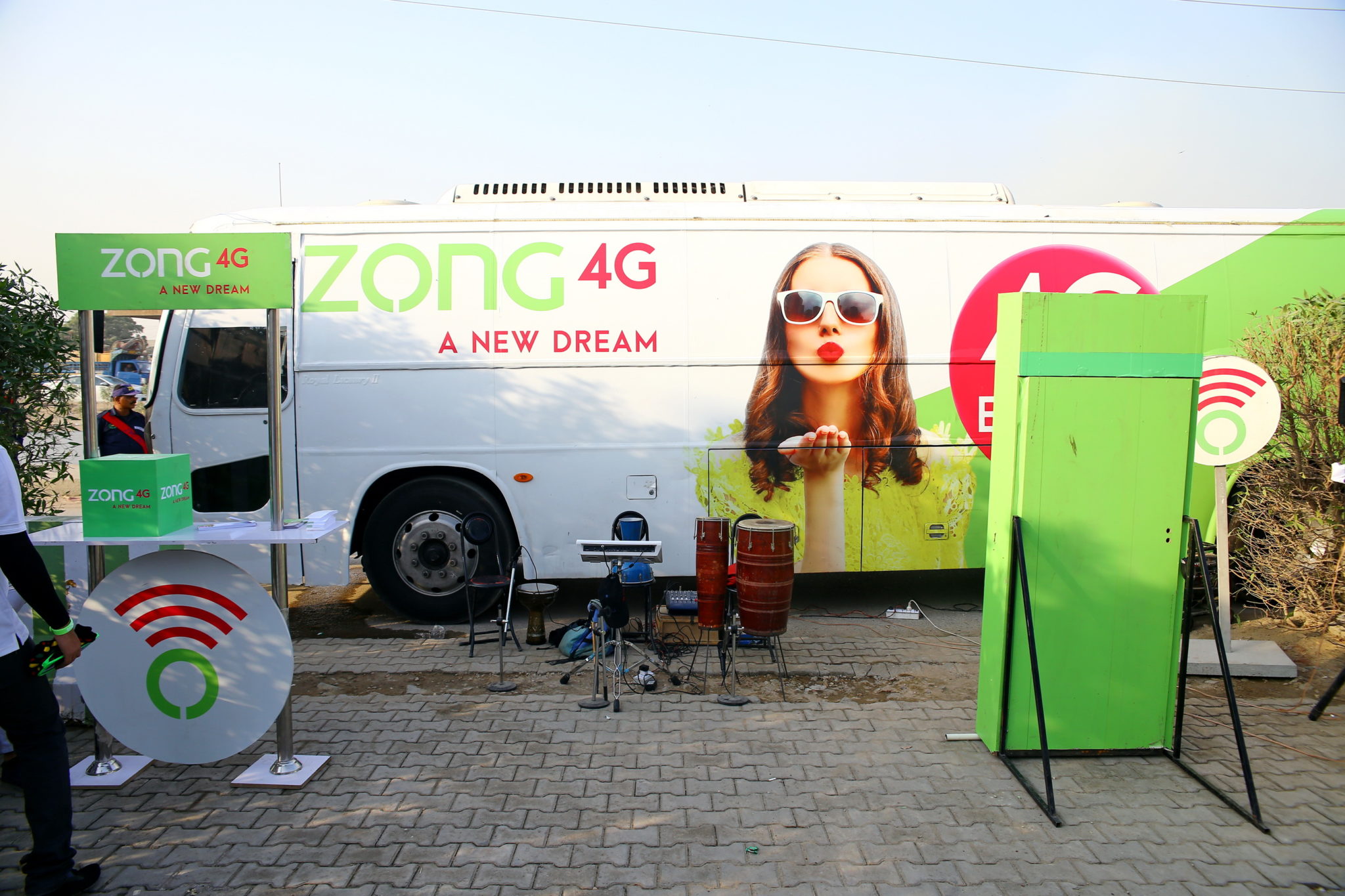
    Pakistan’s No.1 Data Network brings widest 4G coverage for its valued subscribers. Having pioneered the 4G in country, Zong 4G is the first telecom company in the country to successfully deploy and cross the prolific 10,000 4G sites mark.

    With 4G presence in already more than 300 cities, the company’s current development implies that Zong 4G has not only become the first telecom entity to own over 10,000 operational 4G sites but also the one and only to secure widest 4G coverage at every nook and corner of the country.

    Additionally, Zong 4G plans to roll out over 5,000 4G sites in the next three years to cater to the growing demands of its 4G customers whose number has been exponentially increasing with every passing day.

    “Zong 4G has taken the lead to connect Pakistan with the rest of the world. We have upgraded all our sites to 4G and developed the most seamless and technologically advanced network which is second to none,” said the telecom company’s spokesperson in a statement.

    “For a telecom company, this kind of technological excellence not only enhances the professional quotient but also brings along a host of responsibilities—to shoulder the demands of our ever growing network that offers unmatched connectivity from Peshawar to Gwadar. Being fully cognizant of the situation, Zong is eyeing to add 5,000 additional sites in next three years as we believe that our customers should experience the largest 4G coverage in country- which is unrivaled for in reliability and connectivity. With our customer focused planning and strategic investments, we will always remain geared up to provide nothing less than the best!” continued the telecom company’s spokesperson in a statement.

  • Telenor Pakistan and foodpanda bring exclusive discounts for customers

    Telenor Pakistan and foodpanda bring exclusive discounts for customers

    Country’s top telecom digital services provider, Telenor Pakistan, and the country’s leading food delivery service, foodpanda, have announced collaboration in three key areas namely marketing, operations, and cash management with an aim to offer exclusive discounts to their mutual customers in Karachi, Hyderabad, and other cities in the southern region.

    A Memorandum of Understanding (MoU) was signed between Telenor Pakistan and foodpanda in Hyderabad at the latter’s corporate launch event in the city. As part of the agreement, Telenor subscribers in Karachi, Hyderabad, and Quetta who are first-time foodpanda users will be offered exclusive discount vouchers for their food delivery orders.

    Telenor Pakistan will also distribute discount vouchers at its franchises and retail outlets in these locations with the sale of every new Telenor 4G SIM, Wingle & MiFi device, as well as SIM upgrade to 3G/4G.  In order to bring the benefit of the partnership, an awareness campaign will be launched with foodpanda advertising to Telenor customers on its own channels including website, mobile app and blog and Telenor reaching out to its subscriber base through SMS broadcast.

    “We remain the primary digital lifestyle partner of millions of Pakistanis and want to facilitate them in the most innovative of ways,” said Umair Mohsin, VP Circle South, Telenor Pakistan, during the MOU signing ceremony. “By forging such associations as the one with foodpanda, we aim to bring ease and excitement to everyday lives of our customers and help them take maximum advantage of their smartphones and super-fast Telenor data network.”

    “We are pleased to have partnered with Telenor Pakistan for promotion of foodpanda services,” said Noman Sikander Mirza, Country Manager, foodpanda. “At foodpanda Pakistan, we continually aim to serve our customers better and expand our food delivery network. We hope that Telenor Pakistan customers will find the exclusive discount offers exciting and enjoy using our food delivery services.”

    Presently, over 1,000 foodpanda riders and restaurants are connected with Telenor Pakistan network with the two partners aiming to connect an additional 5,000 riders and restaurants in the next few months. Moreover, the partnership envisions utilization of TelenorPakistan’s transformative digital financial services assets such as Easypaisa and QR Code technology for collection of cash from riders and customers in the future.

  • Asia-Pacific telcos to face slower revenue growth: Moody’s

    Asia-Pacific telcos to face slower revenue growth: Moody’s

    Moody’s Investors Service expects stronger competition for the Asia Pacific (APAC) telecommunications sector and stronger commoditisation, and slower revenue growth for companies across 11 markets in the region, including Malaysia. The other markets are Hong Kong, India, Indonesia, Japan, Korea, the Philippines and Singapore.

    The rating agency’s report entitled “Telecommunications – APAC: 2019 Outlook” noted that while slower overall revenue growth will be evident in all 11 markets, the emerging market is expected to see a more pronounced slowdown with revenue growth to fall to 3-3.5% in 2019 versus the 3.9% in 2017.

    “Comparing overall revenue growth across APAC with GDP (gross domestic product) growth, Moody’s says that companies as a whole will show modest revenue growth of 2-2.2%, with such growth lagging average GDP growth of about 4.6% for the region,” said Moody’s vice-president and senior analyst Nidhi Dhruv.

    Meanwhile, new entrants are expected to intensify competition in Singapore, Japan and Australia.

    High shareholder returns and capital expenditure levels will continue to temper free cash flow generation, which will consequently make companies to look into diversifying revenue as traditional telecommunications revenues contract. This will eventually lead to more cross-industry partnerships.

    Additionally, while 4G will remain the dominant technology used by telecommunications companies in APAC, 5G will gain some traction in 2019-20.

    Japan, Korea and Australia are expected to lead the region in rolling out 5G services in 2019.

    Nevertheless, Moody has given a stable outlook for the sector in APAC 2019, with companies in the region likely to show relatively stable leverage and debt levels over the next 12-18 months.
    Moreover, while liquidity is weakening, it remains supported by the companies’ access to the banks and bond market at current levels.

  • SK Group continues to focus on social value

    SK Group continues to focus on social value

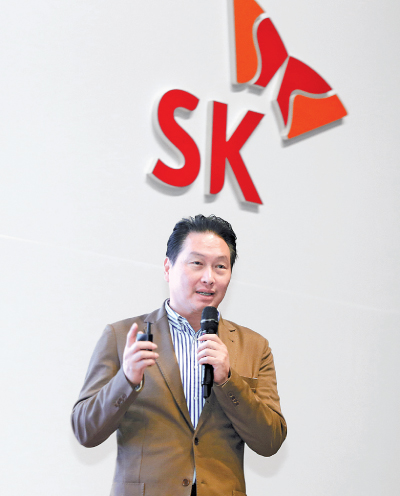
    SK Group is reevaluating its business models in a bid to ensure that all of its affiliates create social value along with economic value. SK Chairman Chey Tae-won and the heads of all SK affiliates discussed ways to renew their business models so that doing business leads to increasing benefits for the public as well as SK shareholders and employees during a three-day meeting on Jeju Island that ended Friday.

    “Creating social value is a way to earn strong trust from our customers and society,” Chey said. “By social value, I mean increasing the benefits of all stakeholders in our business including our customers, shareholders and employees.”

    Chey then ordered the chief executives to think over whether there was any part of their business that they are tricked into believing is sustainable.

    “Rethinking business models that you believe are sustainable is the beginning of a deep change that we are trying to accomplish,” the chairman added.

    SK has been making small steps into realizing Chey’s vision from earlier this year. The group’s oil refining arm SK Energy opened up the idle space at its gas stations so a logistics start-up can move in and use the space as storage.

    However, many other SK affiliates still need to come up with ideas to create social value.

    To renew business models, the CEOs agreed that sharing data and resources between SK affiliates is crucial. The heads also said that all members of SK should be a part of the movement for the vision to materialize.

    The chief executives first decided to improve human resources management policies and the research and development system. Details of the discussion weren’t revealed, but Chey ordered the chief executives to rethink the work environment for employees and to bolster R&D capabilities.

    As SK has businesses in a range of industries, the group is also thinking about business convergence among affiliates.

  • BSNL, Nokia to collaborate on public safety networking

    BSNL, Nokia to collaborate on public safety networking

    Nokia and Indian state-owned operator BSNL are expanding their relationship with an agreement to jointly explore opportunities in the public safety sector.

    Under the agreement, Nokia will become BSNL’s OEM technology partner for public safety projects in support of the government’s efforts to advance public safety standards in the country.

    The two companies will explore developing solutions for first responders based on Nokia‘s ViTrust line of critical communications products.

    This will include the Nokia Ultra Compact Network, a portable solution designed to allow the deployment of a mission critical LTE mobile broadband network within minutes of arrival.

    The companies will explore opportunities in industry segments including smart cities, border enforcement, and mines and quarries in remote areas, and will work with India’s National Disaster Response Force (NDRF) to augment public safety communications systems with LTE technology.

    “As a trusted telecom service provider, BSNL is committed to providing the best technology solutions for public safety professionals,” BSNL chairman and managing director Anuam Srivasta said.

    “Our technology partnership with Nokia is a crucial step in this direction. We have a longstanding working relationship with Nokia, and this project starts a new chapter in our journey. Nokia’s innovation and leadership in mission-critical communications will allow us to deliver a best-in-class public safety network.”

    Last week the two companies announced another collaboration aimed at using LTE technology to improve operational efficiency at Nokia’s Chennai manufacturing plant.

  • Malaysia’s TM hires four new board members

    Malaysia’s TM hires four new board members

    Telekom Malaysia (TM) has appointed four new directors to the company’s board, following the resignation of David Benello as an independent non-executive director. The new directors are Dato’ Asri Hamidin @ Hamidon, Dato’ Mohd Naim Daruwish, Hisham Zainal Mokhtar and Saheran Suhendran.

    Asri Hamidin is appointed as a non-independence non-executive director representing the special shareholder, Minister of Finance (Inc) on the board.

    Mohd Naim has been made a non-independent non-executive director representing the interests of the Employees Provident Fund (EPF) which is a major shareholder of the Malaysian incumbent.

    Asri is currently the deputy secretary general (investment) at the Ministry of Finance, while Mohd Naim is currently the deputy chief executive (operations) of EPF.

    Hisham and Saheran were appointed as the independent non-executive directors.

    Hisham is currently a director in the group MD’s office at Malaysian Industrial Development Finance Bhd, while Saheran is currently a consultant at Messrs Chua Associates.

    All the board appointment took effect on October 3.

    TM also announced that Farid Basir has joined the telco as its new chief human capital officer (CHCO). Farid, taking over the position previously covered by Suhaimi Sulong as the acting CHCO since early this year, assumed his new role on October 1.

    Prior to his appointment, Farid was the CHCO at Bank Rakyat for almost three years.

    Cisco names Herman Lam as MD for HK & Macau

    Cisco has appointed Herman Lam as managing director for Hong Kong and Macau.

    The company has also announced that Barbara Chiu, vice president of Hong Kong, Macau and Taiwan, will retire by end of October.

    Cisco said Lam brings to the table over 25 years of experience in IT industry combined with a wealth of leadership and management experience gained with leading technology firms.

    Prior to joining Cisco, Lam’s previous stints include CEO of Hong Kong Cyberport Management Company, and general manager of Microsoft Hong Kong.

    Commenting on the appointment, Cisco Greater China chief executive officer Hera Siu said Lam’s “unique blend of experience and knowledge, complemented by extraordinary vision and operational expertise within large organizations,” will bring valuable insights to the company.

    “I also want to thank Barbara, who has had an immeasurable impact on Cisco’s success and express my utmost appreciation for her devotion and leadership during the past 12 years,” Siu noted.

    21Vianet appoints Wing-Dar Ker as DYXnet Group’s CEO

    Chinese carrier-neutral network service provider DYXnet Group has announced that Wing-Dar Ker has been appointed as the company’s new CEO.

    He takes over the position from company founder and CEO Lap Man, who will continue to serve the group as adviser.

    The appointment was made by 21Vianet Group, parent company of DYXnet Group and one of China’s carriers and cloud-neutral internet data center service providers.

    Wing is also president of Shanghai Blue Cloud Technologies Co Ltd, 21Vianet Group’s other wholly-owned subsidiary.

    The move is aimed at facilitating greater collaboration between DYXnet Group and Blue Cloud, while exploring and capitalizing on synergies, 21Vianet said.
  • Dialog Axiata launches VoWiFi

    Dialog Axiata launches VoWiFi

    Sri Lanka’s Dialog Axiata has launched what it says is the nation’s first voice over Wi-Fi calling service. The operator’s VoWiFi service does not require a third party app to be installed and allows calls to be received over Wi-Fi as if they were standard incoming calls.

    Dialog Axiata is offering five Huawei smartphones that support the VoWiFi service, and plans to extend it to other VoWiFi supported handsets from Samsung, Apple and other vendors in the near future.

    “Dialog is committed to delivering the latest in technology and connectivity to all Sri Lankans, and VoWiFi is another key step in offering next generation solutions to our customers,” Dialog Axiata CTO Pradeep De Almeida said.

    “We started this journey by enhancing the infrastructure in our network and migrating to a new state-of-the-art core network. For our customers, this means a better experience through greater agility and flexibility.”

  • KT secures $26.5m smart meter project in Uzbekistan

    KT secures $26.5m smart meter project in Uzbekistan

    South Korean telco KT has signed a 30 billion won ($26.5 million) contract with state-run power electricity supplier Uzbekenergo to install smart meters in Uzbekistan. Under the deal, KT will install smart meters in 360,000 households throughout the central Asian country over the next two years. KT has made its foray into Uzbekistan’s energy sector since it secured a 120 billion won deal ($106 million) with Uzbekenergo to provide its smart energy meters in 2015.

    The company so far installed its smart meters in 1 million Uzbek households throughout the three provinces of Samarkand, Jizzakh and Bukhara as a result of the first contract.

    Smart meters are electronic devices that record electricity consumption and have a two-way, real-time communication feature between the power company and its customers.

    With the smart energy meters, Uzbek households can monitor their real-time power usage and view online billing, enabling them to use electricity in a more efficient and effective way, KT said in a statement.

    Following the deal with Uzbekenergo, KT said it hopes to expand its smart meter business to the energy sectors in other Eurasian countries.

    “This project shows KT’s success in building trust in Uzbekistan with our technological excellence,” said Yoon Kyoung-Lim, head of KT’s global business office.

  • SK Group continues to focus on social value

    SK Group continues to focus on social value

    SK Group is reevaluating its business models in a bid to ensure that all of its affiliates create social value along with economic value. SK Chairman Chey Tae-won and the heads of all SK affiliates discussed ways to renew their business models so that doing business leads to increasing benefits for the public as well as SK shareholders and employees during a three-day meeting on Jeju Island that ended Friday.

    “Creating social value is a way to earn strong trust from our customers and society,” Chey said. “By social value, I mean increasing the benefits of all stakeholders in our business including our customers, shareholders and employees.”

    Chey then ordered the chief executives to think over whether there was any part of their business that they are tricked into believing is sustainable.

    “Rethinking business models that you believe are sustainable is the beginning of a deep change that we are trying to accomplish,” the chairman added.

    SK has been making small steps into realizing Chey’s vision from earlier this year. The group’s oil refining arm SK Energy opened up the idle space at its gas stations so a logistics start-up can move in and use the space as storage.

    However, many other SK affiliates still need to come up with ideas to create social value.

    To renew business models, the CEOs agreed that sharing data and resources between SK affiliates is crucial. The heads also said that all members of SK should be a part of the movement for the vision to materialize.

    The chief executives first decided to improve human resources management policies and the research and development system. Details of the discussion weren’t revealed, but Chey ordered the chief executives to rethink the work environment for employees and to bolster R&D capabilities.

    As SK has businesses in a range of industries, the group is also thinking about business convergence among affiliates.

  • KT’s Kids’ Land is now available on the move

    KT’s Kids’ Land is now available on the move

    KT’s Kids’ Land will soon be available on the move, as the mobile carrier tries to take on YouTube Kids by moving its popular child-friendly content service to smartphones.
    Kids’ Land, which launched in May on KT’s internet-protocol TVs, is now used by 3.6 million customers, according to KT. By creating a mobile app that is connected with the IPTV, the carrier said that kids will now be able to enjoy their favorite content anywhere they want.

    New content was also been added to the service, now upgraded to Kids’ Land 2.0, on Tuesday. While most of the content on the original Kids’ Land was for children, the new version comes with new videos dedicated to parenting, made for KT in cooperation with Dr. Oh Eun-young, a famous figure in the field of child care in Korea.

    Oh’s content will cover 10 big topics in parenting, spanning about 50 video clips, so that parents can easily learn how to behave with their children in specific situations, like when they won’t sleep.

    “There is so much, in fact, too much information on parenting that parents these days can’t really tell between reliable content and those that are not,” Oh said. “KT’s platform offers curated and reliable content that parents can always turn to.”

    Kang In-sik, vice president of the media content department at KT, said KT will be working to provide more original content to beat competition from other platform providers like YouTube. KT is currently contacting experts to make videos specifically targeting infants as well as the elderly and those hoping to learn a new language.

    The new Kids’ Land app will be ad-free and filter out harmful content for children.

  • Ericsson posts first quarterly profit since 2016

    Ericsson posts first quarterly profit since 2016

    Corrupt business practices dating back to 2007 have led to the dismissal of 50 employees and will likely result in a “material” fine for Ericsson once the Justice Department and Securities and Exchange Commission complete their investigation into the matter, the Swedish company said Thursday.

    During an earnings call with analysts, CEO Börje Ekholm said the company found evidence of corruption during an internal investigation and reported those findings to authorities. “We don’t know how the discussions will go, but we think it is likely that some measures will be taken,” he said.

    Top executives at the company were allegedly involved in a bribery scandal in Africa, Asia, Europe and the Middle East. Ekholm said the company has declined to make provisions against the expected financial penalties because it’s unsure of the magnitude of what the ongoing investigation will uncover.

    The tempered admission of guilt on the part of Ericsson overshadowed an otherwise successful quarter for the business, its first profitable quarter since June 2016.

    Investments in research and development along with 18 months of cost reductions are finally contributing to the company’s financial performance, according to Ekholm. The company has laid off 22,000 employees since June 2016 and had a total head count of 95,000 workers at the end of September.

    Strong demand for 5G network equipment in the United States also boosted sales to almost $6 billion during the quarter. “There is strong momentum in the global 5G market with lead markets moving forward,” Ekholm said in a statement. “More work remains, however, to get all parts of the business to a satisfactory performance level.”

    Net sales in North America, the company’s biggest regional market behind Europe, jumped 21% year over year and network equipment sales increased 24% in North America during the same period.

    Ericsson banked a net profit of $304 million during the quarter. Sales in North America reached nearly $1.7 billion during the quarter, representing almost 28% of its entire business. The company forecasts a steady research and development cost during the final quarter of 2018 and says it will primarily focus those expenses in the network division.

  • Nokia launches Fixed Access Health Index

    Nokia launches Fixed Access Health Index

    Nokia has announced it has developed a new metric for measuring the quality and performance of fixed access networks in a standardized way.

    The Nokia Fixed Access Health Index for service providers uses Nokia’s automation and analytics capabilities to benchmark the performance and health of fixed line networks against those of industry peers.

    It is designed to act as the foundation for network optimization programs, and measure their performance and progress over time through regular performance measurements.

    The index is already in use by multiple operators, including a major Asian service provider that used the tool to optimize the network health and quality of its recently introduced IPTV service.

    “The initial results we saw with our pioneering customers in this domain were so impressive that we decided to go for a ‘standardized’ approach, which can be replicated with other service providers,” Nokia president of fixed networks Federico Guillén said.

    “Based on a series of playbooks, each operator gets a personalized evaluation and improvement plan. To offer this kind of service, we build on our expertise in all 20 of the largest access networks globally, and with more than 300 fixed broadband customers worldwide, which gives us an endless source of knowledge to tap.”

  • India’s Reliance Industries to invest in two MSOs

    India’s Reliance Industries to invest in two MSOs

    India’s Reliance Industries, parent company of operator Reliance Jio Infocomm, has announced strategic investments in two multiple system operators (MSOs) to accelerate the planned JioGigaFiber rollout. The company plans to invest 22.9 billion rupees ($311.48 million) to take a 66% stake in Den Networks Limited, India’s largest cable TV distribution company and a provider of high-speed broadband services in 100 cities nationwide.

    Reliance Industries will also invest 29.4 billion rupees for a 51.3% stake in Hathway Cable and Datacom Limited, a cable TV company providing high speed broadband in 21 cities.

    The company intends to make open offers for DEN and Hathway shares as well as two Hathway subsidiaries, as required by Indian takeover regulations.

    Announcing the planned investments, Reliance Industries said the acquisitions will accelerate Jio’s efforts to bring the JioGigaFiber service to a potential 50 million homes across 1,100 Indian cities and towns as quickly as possible.

    Jio will work with Hathway and DEN to bring the JioGigaFiber services to the two companies’ 24 million existing cable customers.

    Jio plans to use the JioGigaFiber network to offer high-speed broadband, ultra high definition video streaming, multi-party video conferencing, VR gaming, smart home and AI virtual assistant and fixed mobile convergence services.

    Reliance Industries chairman and MD Shri Mukesh said the acquisition is also expected to benefit the 27,000 local cable operators (LCOs) that are aligned with Hathway and DEN by enabling them to participate in India’s digital transformation. Indian LCOs provide coaxial cable connections on a per-neighborhood basis.

    “With Local Cable Operators now as part of the Jio ecosystem, we look forward to bringing Jio’s advanced JioGigaFiber and Smart Home Solutions to more Indian homes, even quicker,” he said.

    “We look forward to welcoming other MSOs and LCOs to be part of this partnership. This will result in growing wireline data connectivity in India and making state-of-the-art high-speed affordable internet and digital services accessible to the widest population in the shortest possible time.”

  • StarHub offering free local calls to prepaid customers

    StarHub offering free local calls to prepaid customers

    Singapore’s StarHub has started offering prepaid customers free outgoing local calls as long as they have an active data plan. The company will continue offering prepaid customers free local calls for the duration of their data plan, even if they run out of data.

    StarHub offers customers a choice of six prepaid data plan over its Happy Prepaid app, starting at S$2 for 30MB of data and free outgoing calls for three days. An S$8 mid-tier option adds 1GB and free calls for seven days, while an S$25 plan offers 5GB of data and free calls for 30 days.

    “Just by being on our new prepaid data plans, customers can enjoy the best of two worlds – surfing on Singapore’s fastest 4G network and chatting with family, friends and co-workers easily and affordably,” StarHub VP of marketing Donovan Kik said.

    “Simplicity is key and we will continually enhance our services to ensure we deliver the best possible experience to customers.”