Tag: telecom

  • Hong Kong companies see the importance of Wi-Fi

    Hong Kong companies see the importance of Wi-Fi

    “Wi-Fi is critical to deliver multimedia content to a proliferation of connected devices to enable a connected global economy,” said Linda Hui from Ruckus Networks at an early October press conference in Hong Kong.

    “If IT departments need to spend considerable time fixing Wi-Fi issues, this puts severe pressure on the organization to digitally transform, reduce operational costs and hinders their ability to deliver new products, services and revenue models,” said Hui, the firm’s managing director for Hong Kong and Taiwan.

    In the survey of eight Asia-Pacific markets by Ruckus—which was acquired by Arris last year—76% of Hong Kong enterprises said they intend to upgrade their Wi-Fi equipment in the next 12 months. “This is to meet demands for enhanced Wi-Fi security, improve overall user experiences, and provide a stable high-speed connection [that can handle] the rise in multimedia content,” said Ruckus in a statement.

    The firm said “an equipment overhaul is long due in many [Hong Kong] businesses as 35% said they estimated HK$400,000 per year ($51,300) is lost annually due to connectivity issues.

    Survey stats & specs
    This is according to the firm’s first “Asia Pacific State of Wi-Fi Study, which surveyed 1,200 business and IT leaders in Australia, China, Hong Kong, India, Indonesia, Japan, Singapore and Taiwan to identify Wi-Fi usage trends and expectations.” “Respondents ranged from mid- to large-sized organizations and are in decision-making or implementation roles for IT-related initiatives.”

    “From a corporate perspective, implementing Wi-Fi in the workplace meant better productivity (74%), flexibility (55%), and improved collaboration (44%),” said Ruckus. “Yet over half (51%) had experienced at least six instances of connectivity downtime, and 9% indicated they had over 20 instances in the last twelve months.”

    More importantly, Ruckus said their survey indicates that “half of all businesses said a bad Wi-Fi experience can negatively impact a brand image.”

    Wi-Fi security…rock-solid?
    As usual, security concerns top the list. When rating the current state of Wi-Fi security in their organizations, 47% of Hong Kong firms said it was good or very good—compared to 53% across Asia Pacific. However, 61% also said they only used basic usernames and passwords to provide Wi-Fi access, while 16% indicated they have an open Wi-Fi network with no secure log-in measures.

    The survey also found that Hong Kong businesses suffered losses of HK$37 million ($4.8 million) in total over the past year due to Wi-Fi downtime. Apart from monetary losses, 48% of Hong Kong respondents said their IT departments needed to spend about a week or more each month to manage Wi-Fi or network-related issues.

    “Today, Hong Kong people expect a seamless, reliable and fast Wi-Fi experience and accessibility whether at home, at work, on the move or at a public venue,” said Hui. “When there is a connectivity issue or other disruption to the Wi-Fi experience, this dampens accessibility by throttling the ability to work anywhere, at any time with productivity taking a hit.”

    Wi-Fi wonderland
    Ruckus said the survey demonstrates “how ingrained Wi-Fi has become in Hong Kong society,” as 51 percent of respondents said they carry at least four Wi-Fi enabled devices including smartphones, smart watches, laptops, and tablets.

    But work & home setups are preferred by Hong Kongers. Respondents voiced concerns about the Wi-Fi service offered in public places with 81% saying slow Wi-Fi connection speeds top their list of concerns with connection drops and limited coverage area close behind. Only 17% said they had enjoyed a good or very good experience using public Wi-Fi.

  • StarHub to cut jobs in efficiency drive

    StarHub to cut jobs in efficiency drive

    Singapore’s StarHub has announced plans to cut around 300 jobs and pursue other cost-cutting measures as part of a plan to respond to intense competition and shrinking core telecoms revenues.

    The strategic transformation plan will also see the operator invest in growing new digital businesses such as its recently created cyber-security company Ensign InfoSecurity, in the development of ICT solutions for enterprise customers, and in digitalization initiatives aimed at improving the customer experience.

    StarHub’s planned headcount reductions will concentrate on non-customer facing functions, the operator revealed. The company also plans to make additional roles redundant through natural attrition and tighter management of contractor roles.

    Affected employees will be notified by no later than the end of the month. StarHub will take a $25 million one-off charge to fund restructuring costs including the provision of support for laid off employees.

    Through the headcount reductions and planned improved operational efficiencies, StarHub aims to generate S$210 million ($152.1 million) in savings over the three years from 2019.

    The operator is targeting savings in areas including procurement activities, leasing costs, maintenance and sales and distribution expenses, but plans to funnel a portion of these savings into the investments in new growth areas.

    “The intense competitive ferocity right across the market, new entrants, lower voice revenues, thinning margins for fixed broadband services, high content costs for Pay TV operations and high market penetration for mobile and fixed services, has necessitated efficiency optimization initiatives as part of the strategic transformation plan,” StarHub CEO Peter Kaliaropoulos said.

    “Technological innovation and competition are redefining how we deliver services to our customers and we at StarHub need to transform our operating model, otherwise we will face greater risks in the future. Our revised operating structure will be best placed to meet our strategic intent, enhance customer experience, increase accountability and effectiveness and improve competitiveness and agility.”

  • Dtac welcomes extension of 900-MHz bid decision deadline

    Dtac welcomes extension of 900-MHz bid decision deadline

    Thailand’s Dtac has welcomed the decision by regulator NBTC to extend the submission deadline for applying to participate in an upcoming 900-MHz auction if no bids come in today.

    The deadline extension will allow Dtac to complete its feasibility study before making a final decision on whether to participate.

    Dtac is the only operator to pick up bid documents for the upcoming auction by the deadline yesterday, and rivals AIS and True Corp have already indicating that they will not be participating.

    Dtac was expected to use the spectrum to replace its expiring 850-MHz spectrum and ensure continuity of service for customers still using the spectrum. The feasibility study is evaluating whether the 900-MHz spectrum is required, as well as the criteria and procedures of the license being auctioned.

    The operator will now have until October 16 to decide whether to participate in the bid, which will be held later in the month. The date will be October 20 if there are multiple participants, and October 28 if there is only one bidder.

    The NBTC recently rejected a request from Dtac for a remedy period allowing it to use its expiring spectrum now its license has expired, but the court had issued an emergency injunction while a hearing on the matter was before the courts.

  • Huawei invited to participate in India’s 5G use case trials

    Huawei invited to participate in India’s 5G use case trials

    Huawei has reportedly received an invitation from the Indian government to participate in the telecom ministry’s 5G technology trials, after being initially left out of the list of vendors asked to take part.

    Huawei India CEO Jay Chen told that the company has received an invitation after approaching the government to express an interest in taking part.

    The telecom ministry’s earlier decision to exclude Huawei and ZTE from the list of vendors approached to take part in the trials led to speculation that India could follow Australia and the US in preventing Chinese vendors from participating in their respective nation’s 5G rollouts.

    But after Huawei expressed an interest in participating in the trials, the telecoms ministry announced that it will evaluate the vendor’s proposal and consider including Huawei in the planned 5G field trials.

    According to Huawei’s Chen, Huawei has a collaborative relationship with the Indian government and has already been working with various Indian operators in laying the groundwork for 5G deployments.

    The vendor has expressed an interest in running 5G trials in two Indian cities, including Delhi, and plans to partner with operators, academia and companies in adjacent industries to identify relevant 5G use cases for the Indian market.

    According to the report, ZTE has yet to receive an invitation from the ministry.

  • Smart taps Samsung for VoWiFi service launch

    Smart taps Samsung for VoWiFi service launch

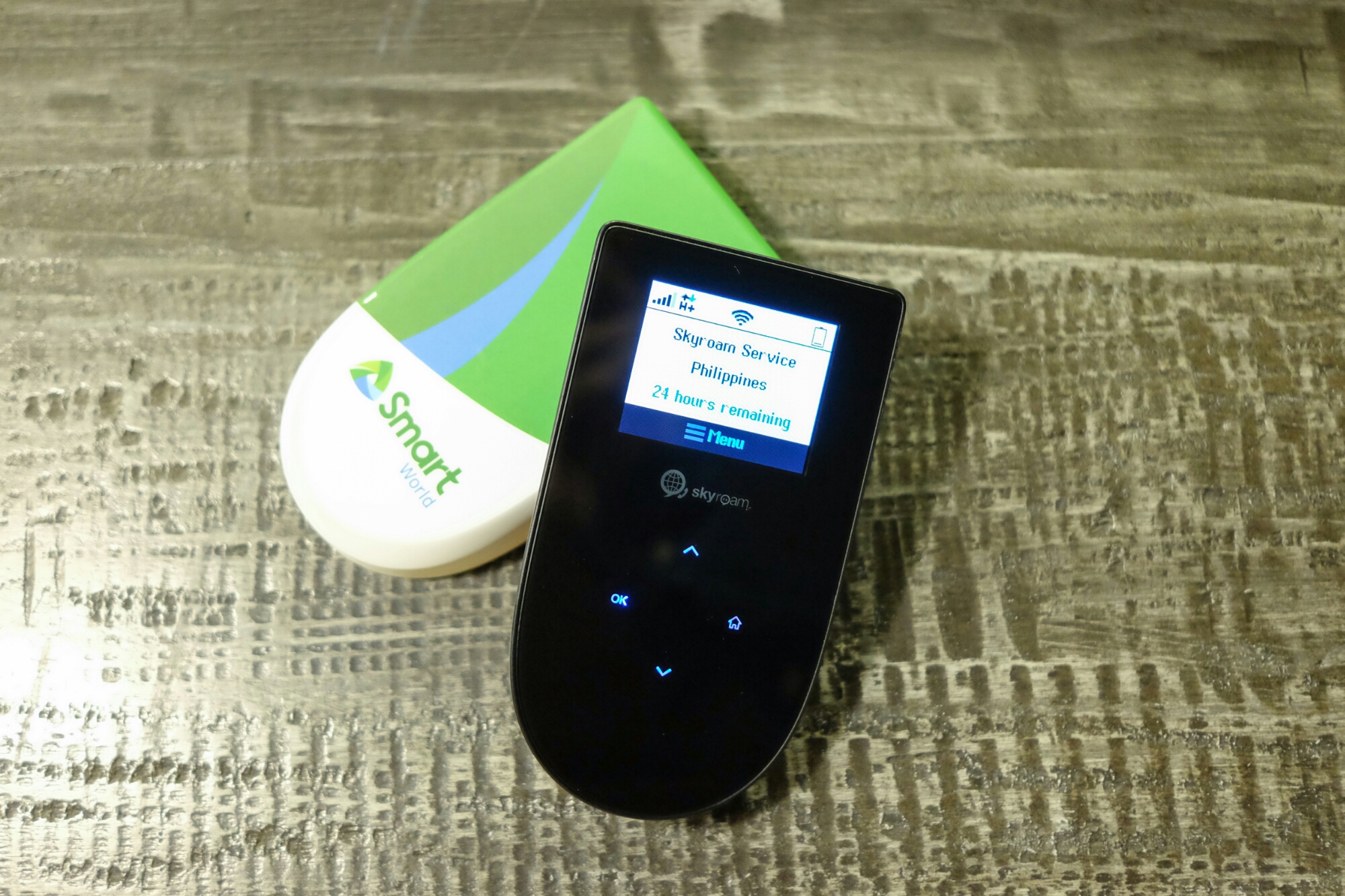
    PLDT’s mobile subsidiary Smart Communications has teamed up with Samsung for the launch of its voice over WiFi (VoWiFi) service.

    Smart said the service will initially available to selected subscribers by October after Samsung releases its latest firmware over-the-air update.

    Smart customers can make VoWiFi calls using Samsung smartphones such as the Samsung Galaxy S8 and S8+, Galaxy S9 and S9+, Note 8, and Note 9 via any WiFi connection like Smart WiFi and PLDT Home WiFi.

    VoWiFi, also known as WiFi calling, lets customers make and receive calls and text messages over a WiFi connection using their smartphone’s native dialer, without having to install a third-party app.

    Smart said WiFi calling will also be available soon to other select Samsung devices.

    Earlier this month, Smart made its first successful VoWiFi call over a live network in Cebu, in partnership with its technology partners Huawei and Samsung.

    Mario G. Tamayo, PLDT-Smart senior vice president for network planning and engineering, said the call is the first of its kind outside metro Manila, and “a key part of PLDT and Smart’s integrated efforts to continuously improve and evolve our voice services.”

    Last year, Smart also made the country’s first voice over LTE (VoLTE) mobile call, which uses LTE or 4G to conduct calls.

    Smart is also deploying carrier-grade Smart WiFi in high-traffic public places across the country, such as transportation hubs like MRT-3 and LRT-1 stations, major airports, bus terminals and seaports across the country, as well as in schools, government buildings, hospitals, malls and entertainment centers.

  • NEC completes construction of SACS cable

    NEC completes construction of SACS cable

    Japanese vendor NEC has announced it has completed the construction of the first subsea cable crossing the south Atlantic ocean for Angola Cables.

    The South Atlantic Cable System (SACS) has been deployed and is now ready for commercial service. The cable system spans between Angola with Brazil, connecting the African continent to Latin America directly for the first time.

    The system uses a four fiber pair configuration to deliver an initial design capacity of 40Tbps. In Angola, it will land at the existing Sangano cable landing station, while in Brazil it will land in a newly constructed data center constructed for SACS and another cable system connecting Brazil with the US.

    SACS was partly funded through a loan provided by the Japan Bank for International Cooperation to Angola state-owned development bank the Banco de Desenvolvimento de Angola.

    “NEC is honored to have been selected as a partner for SACS, the world’s first optical submarine cable system crossing the South Atlantic, directly connecting two Portuguese speaking nations of Angola and Brazil,” NEC GM for submarine networks Toru Kawauchi said in a statement issued on Monday.

    “Yesterday, all communication between the two continents had to go up north and cross the North Atlantic. From today, this new cable will bring information at the speed of light, improving the connectivity between the two nations and two continents.”

  • 3 HK calls for transparent 5G spectrum roadmap

    3 HK calls for transparent 5G spectrum roadmap

    Hutchison Telecommunications Hong Kong Holdings’ (HTHKH) mobile division 3 Hong Kong has joined the call for reforms to the market’s spectrum policy and roadmap to expedite the launch of 5G services.

    In a submission to the government’s consultation on arrangements for the allocation of spectrum in the 3.4-GHz to 3.6-GHz band, 3 Hong Kong urged the government to introduce a transparent and long-term spectrum policy with a 10-year rather than 3-year spectrum supply plan.

    The operator raised concerns about issues including the Communications Authority’s proposal to establish large scale 5G restriction zones to minimize interference to the satellite services operated in the band for satellite remote testing, tracking and control.

    3 Hong Kong said such zones would have a negative impact on both 5G communications and the deployment of M2M connectivity across Hong Kong, which will be a key component of the HKSAR government’s smart city ambitions.

    Mobile operators have proposed a number of alternatives to the restriction zones, including relocating the telemetry, tracking and control station from Tai Po Industrial Estate to a remote area, adding shielding coverage to telemetry stations and optimizing radiation from mobile base station antennae.

    The operator also opposed a suggested spectrum cap of 100MHz at the upcoming auction, citing concerns it may lead to a scenario of only two successful licensees dominating 5G markets.

    Meanwhile the reserve price should be set at a minimal level to encourage 5G infrastructure investment, the submission states.

    Finally, 3 Hong Kong joined HKT in urging the government to provide operators with a right of access to enter buildings, shopping malls, MTR premises and road tunnels to install 5G equipment.

    But in its own submission, Asia’s top satellite operator AsiaSat has expressed significant concerns about the proposal to reallocate the C band to 5G services, and argued that the proposed exclusion zones are not an adequate solution.

    The C-band provides a variety of services including contribution and distribution of TV services, broadcasting data and information such as meteorological data, maritime/aeronautical related safety, disaster relief and emergency communications services, AsiaSat said.

    Reallocating the band will significantly limit Hong Kong and Greater China’s satellite operators’ ability to control and monitor their satellite fleet and earth stations, the submission states.

    Links for safe monitoring and operation of satellites may be lost and numerous satellite TV dishes mounted on buildings across Hong Kong would need to be readjusted.

    AsiaSat has recommended that the government require operators to find alternative mitigation methods to minimize interference, and that operators should bear the cost of implementing these methods.

  • Singapore telcos expect partner ecosystem boom

    Singapore telcos expect partner ecosystem boom

    Half of communications service providers in Singapore expect to improve revenue by at least 16% in just two years by leveraging partner ecosystems, according to a new study from BearingPoint.

    Over 80% believe that partner ecosystems can help them remain competitive and 70% expect that ecosystems can improve the customer experience.

    But most operators are yet to embark on the execution of ecosystem strategies due to a series of technological challenges, including lacking  the right technology in place to manage monetization across the partner ecosystem.

    Other significant challenges include overcoming complex IT environments that may not be able to support minimum viable products and having the right technology to manage the partner ecosystem.

    Only 30% of operators in Singapore have embarked on partner system execution, while 40% are about to do so, 10% are analyzing their options and 20% are at the very start of their journey, the survey found.

    “Based on our research, companies leveraging digital platform-based business models have already doubled their growth rate compared to businesses that have stayed stagnant in their CSP transformation efforts,” BearingPoint Asia Pacific senior representative Dr Chris Stephenson said.

    “That only a fifth of CSPs appear to be in the initial stage is a matter of concern.  A lot of CSPs today continue to rely on rapid product commoditization rather than proactively taking steps to create new more compelling products that will drive profits now and in the future.”

  • Huawei tests 3GPP R16 standards

    Huawei tests 3GPP R16 standards

    Huawei has announced it has completed verification testing for a series of new technologies and functions due to be introduced in the 3GPP Release 16 5G phase 2 standards.

    The company has tested and verified ultra-reliable and low latency communications (URLLC) scenarios including cellular vehicle to everything (C-V2X), as well as massive machine type communication (mMTC) and enhanced mobile broadband (eMBB).

    The C-V2X test involved a roadside unit and mobile edge computing technologies in a self-driving vehicle scenario including reacting to a car in front conducting an emergency lane change.

    Video signals were sent to a vehicle-to-everything control center to make a decision such as implementing a lane change or braking, and transmitted back to the vehicle as instructions.

    Meanwhile mMTC involved using 5G NR for uplink to enable video enabled services over 5G networks as well as 5G-enabled AI on university campuses.

    “Currently, the formation of 5G standards is at a critical juncture. June 2018 is a pivotal moment in history with the formation of standalone (SA) standards and the release of R15,” Huawei said in a statement.

    “It also serves as a great starting point for researches on R16 study items and work items. December 2019 is expected to see the completion of a full set of 5G standards meeting all ITU. Huawei is fully committed to preparing for the finalization of R16 standards and supporting the standardization of 5G enhanced technologies.”

  • Telenor Myanmar to offer free iflix access

    Telenor Myanmar to offer free iflix access

    Telenor Myanmar has teamed up with streaming entertainment service iflix to offer customers with unlimited streaming access to promote the operator’s new fixed broadband offerings.

    Access will be provided to customers on Telenor’s 5Mbps, 10Mbps and 15Mbps broadband plans at no additional cost, giving customers the ability to consume thousands of hours of movies, TV shows and original programming.

    Myanmar subtitles are available in both Zawgyi and Unicode and the content selection and marketing will be tailored to local audiences.

    The iflix service is now available to over 1 billion customers throughout Asia and the MEA, with a focus on emerging markets.

    In Asia-Pacific iflix is currently available in Malaysia, Indonesia, the Philippines, Thailand, Brunei, Sri Lanka, Pakistan, Myanmar, Vietnam, Cambodia, Bangladesh and Nepal.

    “Data demand is growing in Myanmar and people especially in major cities are accessing educational and entertainment content online more,” Telenor Myanmar head of fixed broadband and wholesale Tan Sian Tuang said.

    “With Telenor’s broadband service, currently available in Yangon and Taunggyi, our customers can enjoy most consistent experience without worrying for data. Enriching our customers’ digital lives is a key part of our focus in Myanmar, and the partnership with iflix complements our efforts in delivering digital entertainment services that our users love.”

    Telenor Myanmar has started introducing fiber-based home broadband services to augment its mobile offerings in the market.

  • Huawei releases SAP HANA TDI solution

    Huawei releases SAP HANA TDI solution

    Huawei has launched a tailored data center integration (TDI) solution for SAP HANA designed to meet the data center and business consolidation needs of large enterprises.

    The HANA TDI solution is based on Huawei’s all-flash high performance storage platforms, and has been designed to support up to 200 SAP HANA nodes, each expandable to 32TB.

    The solution is designed to allow SAP HANA databases to be seamlessly integrated into existing data enter infrastructure to improve flexibility, reliability, management and maintenance and allow for the reuse of existing data center IT investments.

    Dedicated management plugins allow the solution to work with the SAP Landscape Management platform.

    The solution is also capable of automatically manage SAP applications, databases, networks and IT infrastructures, and uses Huawei storage snapshots to greatly improve setup speeds.

    “Huawei’s all-flash storage meets the storage requirements of enterprise-class applications such as databases, virtual desktops, and server virtualization. This allows it to effectively meet solid-reliability and high-performance standards in SAP HANA scenarios,” Huawei president of storage products Meng Guangbin said.

    “This allows it to effectively meet solid-reliability and high-performance standards in SAP HANA scenarios. Huawei will work with SAP to build a high-performance data processing platform that helps enterprises accelerate core data processing.”

  • FCC’s C-Band plan prompts fresh concerns

    FCC’s C-Band plan prompts fresh concerns

    Those with a vested interest in C-Band spectrum, which is being eyed for terrestrial wireless use, continue to cite concerns about harmful interference if the US FCC decides to change the rules.

    Comcast and NPR are two of the more recent entities to reiterate concerns with the FCC. In separate meetings and filings, they’re talking about the central role that C-Band spectrum plays in their distribution networks.

    NPR executives who met with FCC Chairman Ajit Pai on June 5 discussed concerns about possible changes to the commission’s rules regarding the use and licensing of C-Band spectrum—the 3.7-GHz to 4.2-GHz band—on which the public radio system depends for reliable distribution of programming to the 475+ public radio earth station downlinks.

    They also explained that sharing of individual C-Band frequencies with commercial wireless services can’t be accomplished without causing harmful interference.

    “There is no panacea for the interference created by wireless mobile devices, whose roaming, dynamic signals cannot be coordinated with the fixed, low-power downlinks on which public radio stations depend,” NPR said in an ex parte filing(PDF), echoing previous statements (PDF).

    “Instead, opening up C-band frequencies for co-frequency sharing by wireless broadband devices will result in widespread interference that will disrupt public radio broadcasts and could significantly impair the PRSS [Public Radio Satellite System] as a reliable, cost-effective means of program distribution across the nation.”

    NPR has recommended that the FCC subdivide the C-Band rather than enforce co-frequency sharing to ensure a portion for exclusive use of fixed satellite service without harmful interference. It also suggests reserving a portion of C-Band spectrum exclusively for PRSS.

    For its part, Comcast says (PDF) it receives the majority of the primary signals of its cable channels via C-Band spectrum—about 84%—but it also has agreements with 11 programmers, in addition to NBC Universal, to receive their primary content via fiber. In those situations, the programmers continue to use C-Band for redundant delivery of the content to their systems.

    Pai has said he will put the C-Band item on the FCC’s agenda for July 12, with the aim of making more intensive use of the 500 MHz of spectrum, including seeking additional input on making it available for commercial terrestrial use.

  • Nokia completes 4G/5G dual connectivity data call

    Nokia completes 4G/5G dual connectivity data call

    Nokia has announced the successful completion of a 5G New Radio (5G NR) data call based on 4G/5G dual connectivity during a demonstration in China.

    The demonstration, conducted as part of China’s Ministry of Industry and Information Technology’s (MIIT) 5G R&D trials, involved a dual connectivity call conducted using a 5G NR system on the 3.5-GHz spectrum band as well as LTE in the 2.1-GHz frequency band.

    Nokia said the successful demonstration is an important step in the verification of 5G in sub 6-GHz frequency bands, which will be required for wide-area coverage.

    The data call used the Nokia AirScale Cloud RAN, Nokia AirScale baseband unit, Nokia 5G Massive MIMO Active Antenna, Nokia Cloud Packet Core and Nokia home subscriber service. PRISMA Telecom Testing provided a 5G end user equipment simulator.

    As well as the 3.5-GHz trials, Nokia also plans to work with the MIIT to trial 5G in the 4.9-GHz frequency bands.

    “We are pleased to showcase our end-to-end capabilities in 5G in this successful call and trial with MIIT,” Nokia president of mobile networks Marc Rouanne said.

    “Nokia is ready to support dual connectivity with the AirScale radio access portfolio as it is upgradeable via software to 5G and provides single RAN support for 4G, 4.5G Pro and 4.9G as well as legacy technologies. As a result we can help our customers meet their early 5G deployment schedules and initial coverage demands.”

  • BlackBerry to secure operations centers for G7 Summit

    BlackBerry to secure operations centers for G7 Summit

    BlackBerry is collaborating with the government of Canada to modernize their operations centers during international ministerial meetings and the 2018 G7 Summit.

    Using BlackBerry AtHoc, a crisis communication platform that includes AtHoc Alert for mass notification and AtHoc Collect for field reports, the operations centers are able to efficiently mobilize and secure the flow of critical information by delivering updates to targeted lists of recipients in real-time.

    “We are honored that the government of Canada has chosen BlackBerry to support their operations,” BlackBerry AtHoc SVP and GM Sanjay Saini said.

    “Whether in times of crisis or during a high-profile event like the G7 Summit, reliable and secure communications are crucial. BlackBerry AtHoc technology enables real-time information exchange across organizations, their people and devices, providing them with the necessary details to make informed and safety-critical decisions.”

    Additionally, BlackBerry is one of the companies that has been selected to demonstrate its innovative solutions at the 2018 G7 Innovation Showcase.

    Many G7 government departments and agencies, including the Parliament of Canada, US Department of Homeland Security, US Department of Defense and New Zealand Parliamentary Service, use BlackBerry security software.

  • Juniper Networks unveils 5G-ready routing platform

    Juniper Networks unveils 5G-ready routing platform

    Juniper Networks has announced plans to launch a 5G and IoT ready routing platform to help operators, cloud providers and enterprise customers manage the growing complexity of next-generation service delivery.

    The MX Series 5G Universal Routing Platform will support extensive feature programmability, as well as hardware accelerated 5G control and user plane separation (CUPS) functionality.

    The 3GPP CUPS standard is designed to allow customers to separate the evolved packet core user plane and control plane to allow operators to scale each independently as needed.

    Juniper’s new Penta Silicon chipset will power the new platform. The company said the new chipset supports both MACsec and an IPsec cryptography engine, and can originate and terminate thousands of IPSec sessions without sacrificing performance.

    According to Juniper Networks chief product officer Manoj Leelanivas, research from the company found that operators consider the cost and complexity of orchestrating a distributed network to be among the top challenges associated with being able to offer 5G and other next-generation network services.

    “Cloud is eating the world, 5G is ramping up, IoT is presenting a host of new challenges and security teams simply can’t keep up with the sheer volume of cyber attacks on today’s network,” Leelanivas said.

    “One thing service providers should not have to worry about among all this is the unknown of what lies ahead. That’s why we’ve continued innovating our flagship MX platform to deliver more speed, flexibility, programmability and security capabilities, giving our customers the peace of mind they need as a variety of demands continue to put pressure on the network.”

    The first router products powered by the new platform are expected to launch during the second half of the year.