Tag: telecom

  • Telstra outage leads to 000 disruption

    Telstra outage leads to 000 disruption

    Australian incumbent operator Telstra has repaired a damaged fiber cable that led to intermittent disruptions to the nation’s 000 emergency call service in half of the nation’s states.

    The operator said a preliminary investigation indicates that the disruption was caused by fire damage consistent with a lightning strike.

    The disruption commenced at around 2am on Friday, and persisted until impacted routers were restored at about 4:50am, after which services progressively returned to normal. The cable was fixed at around 11am.

    While most call traffic was diverted to alternative cable and equipment, an issue occurred with the routing of some traffic which resulted in intermittent disruptions to 000 calls.

    The disruption impacted some callers in Queensland, NSW, Victoria and South Australia. The Queensland Ambulance Service has identified 11 emergency calls that experienced delays calling through its operations centers as a result of the disruption, while a NSW Ambulance commissioner complained that the operator did not inform it about the outage.

    Other representatives of emergency services departments have stated that it is difficult to ascertain how many emergency calls failed to get through, or if anybody died or was harmed as a result of the outage.

    The damage also reportedly caused disruptions to other telephony services as well as EFTPOS machines and street lighting.

    The federal government has revealed it will conduct a formal investigation into the outage, including the cause of the fire and the failure of Telstra’s contingency plans. The operator may face significant financial penalties as a result of the investigation.


  • South Korea to hold 5G auction June 15

    South Korea to hold 5G auction June 15

    The South Korean government has announced plans to hold an auction for 3.5-GHz and 28-GHz 5G spectrum on June 15.

    The government has also decided to go with its first proposed option of distributing the spectrum evenly among the nation’s three operators – SK Telecom, KT and LG U+ – rather than allocating the largest portion of spectrum to the highest bidder.

    Likewise, the government plans to limit bid amounts to stop the auction from being overly competitive and burdening the winners with high spectrum costs.

    With the move, the ICT ministry hopes to set the stage for the commercialization of 5G technology in South Korea.

    South Korean operators are expected to be among the earliest adopters of 5G technology. Currently KT has announced plans to launch commercial 5G services in March, and is expected to be the first South Korean operator to go live with the technology. But both KT and LG U+ have significant 5G rollout plans of their own. The operators already trialed 5G during the recent PyeongChang Winter Olympics.

  • Korean telcos object to universal fare plan

    Korean telcos object to universal fare plan

    South Korean operators are protesting the government’s proposed introduction of a “universal fare plan” that would require the market’s top operator to provide a low-cost plan to help households reduce mobile costs.

    The government is planning to revise the Telecommunications Business Act to require the top ranked operator to offer a plan including 200 minutes of voice calls and 1GB of data for around 20,000 won ($19).

    While the regulation would technically only impact incumbent SK Telecom, rivals KT and LG U+ have complained they would have no choice but to release similar plans to remain competitive.

    The three operators are protesting the government’s plans on the basis that it could be devastating to their profitability – SK Telecom estimates that operating profits for the three companies could be reduced by up to 60% as a result of the move – and that it imposes too much state intervention into their businesses.

    This would be coming at a time when operators will need to make huge investments in 5G infrastructure to support their goals of launching 5G services in early 2019.

    Government and SK Telecom officials failed to reach a consensus during a meeting to discuss the proposed change by the Regulatory Reform Committee late last month, the report states. The committee plans to hold a new meeting next week to continue the discussion.

    Under the proposal, the universal fare plan would be revised every two years. But SK Telecom has argued that the plan would effectively force operators not to conduct marketing activities and eliminate the incentive to compete with each other.

  • Singtel, Razer to create SEA’s largest e-payments network

    Singtel, Razer to create SEA’s largest e-payments network

    Singtel Group and gaming hardware manufacturer Razer have entered an agreement to collaborate in the areas of e-payments, eSports and gaming related digital media and telecoms services in the Southeast Asian region.

    The two companies will seek to capitalize on the growth of the mobile payments market in Southeast Asia, which is predicted to be worth around $32 billion by 2021.

    As part of the partnership, the companies aim to create the largest e-payments network in Southeast Asia by enabling the interoperability of their respective e-payments systems to create an integrated regional network.

    Singtel Group has already announced plans to interconnect the mobile wallets of Singtel and its network of regional mobile associates into an interoperable platform linking over 50 million wallet users.

    Razer meanwhile recently announced plans to acquire MOL Global, the operator of one of the largest e-payment networks in the region, for $61 million. MOL Global handled over $1.1 billion of digital payments in 2017.

    The two companies also plan to leverage Singtel’s regional footprint to develop the Southeast Asian eSports ecosystem and community. The companies will hold joint activities including regional invitational events and seek to cultivate eSports talent.

    Finally, the two companies will explore the development of gaming-related telecommunications and digital media products and services such as broadband plans, mobile services and eSports content for customers in the region.

    As a Group devoted to connectivity, we are making a big push to create an ecosystem of digital services for our customers. Digital services from mobile payments to entertainment have become a big part of their lives, especially the millennials,” Singtel International CEO Arthur Lang said.

    “Our collaboration with Razer, which shares our vision on e-payments and eSports, will help advance our goal to empower customers to spend seamlessly across borders and experience the thrill of eSports. We look forward to working with gaming partners and supporting community initiatives to grow eSports in the region.”

  • Japan’s KDDI sets sights on extended reality

    Japan’s KDDI sets sights on extended reality

    KDDI is branching out into the emerging world of extended reality (XR) – which includes virtual reality, augmented reality and mixed reality – by forging partnership with US-based Osterhout Design Group (ODG) to jointly plan and develop XR-based smartglasses for the Japanese market.

    The Japanese operator is also teaming with various partners to conduct business trials and create XR services as the company moves toward developing new business operations using virtual characters and other XR technologies to create new business models for the coming era of widespread 5G use.

    The partnership with ODG, announced last week, will see KDDI help with the development of domestic Japanese products using the R-9 smartglasses developed by ODG. The operator will help optimize the potential of smartglasses for the Japanese domestic market through practical testing.

    According to KDDI, the R-9 smartglasses to be used in future verification tests are equipped with the Qualcomm’s Snapdragon 835 chipset and compatible with an AR/VR app that enables stand-alone position tracking for users.

    The R-9 smartglasses will feature a wide 50° viewing angle, and will be compatible with wide-screen displays using 22:9 and 16:9 aspect ratios. The R-9 smartglasses will also include dual stereo cameras; front camera with 13-megapixel resolution; and simultaneous Localization and Mapping (SLAM) compatibility.

    KDDI and ODG also plan to work with Qualcomm toward equipping future models with a modem function to bring cellular communications capability to smartglasses in addition to existing Wi-Fi functionality.

    KDDI and various partner companies, such as Japan Airlines, plan to begin practical testing of smartglasses in Japan in June.

    Collaborating with partners to create virtual characters and XR services

    In a separate announcement, KDDI said it is planning to start conducting business trials on the XR technologies with various partner companies beginning this month.

    Through business trials with various partner firms and applications of this technology, KDDI aims to create worlds in which people and virtual characters can communicate interactively.

    So far KDDI has worked with Crypton Future Media for the development of the Miku☆Sampo AR application. Moving forward, the operator plans to expand the AR presentation developed through Miku☆Sampo to enable users to communicate more naturally with the character.

    This will be accomplished through virtual character development capabilities unique to AI, which enable the character to recognize and understand objects and sounds, etc., in the surrounding environment, KDDI said.

    In addition, this project will include a real-time image recognition engine provided by Couger. Couger will also cooperate with virtual character AI-related technology.

    KDDI’s announcements signal the increased interests from telecoms operators in VR/AR. According to GlobalData, telecoms operators – who have a key role in enabling VR/AR services as providers of broadband and mobile network services – are exploring  revenue opportunities in VR/AR that are beyond 5G data and connectivity.

  • PT Telkom profit falls 14% in Q1

    PT Telkom profit falls 14% in Q1

    Indonesia’s PT Telkom has reported a 14% decline in first quarter profit to 5.73 trillion rupiah ($410.8 million), partly as a result of stricter competition.

    Revenue for the quarter grew 4.3% to 32.3 trillion rupiah, but tighter competition and the ongoing decline in revenue from legacy voice and SMS revenue impeded further growth.

    Data, internet and IT services revenue by comparison grew a strong 23.3% to 15.9 trillion rupiah due to increasing demand as a result of the growing use of smartphones.

    Mobile broadband subscribers grew 21.3% to 108.73 million subscribers, with mobile subsidiary Telkomsel reporting a net profit of 6.4 trillion rupiah and revenue of 21.9 trillion rupiah.

    On the fixed line front, consumer broadband revenue grew to 3.1 billion rupees with enterprise revenue increasing to 8.63 trillion rupees. Subscribers to Telkom’s IndiHome fiber broadband service nearly doubled to 5.74 million.

    Telkom’s capex for the quarter reached 6.13 trillion rupees, up from 6.06 trillion the year earlier, the report adds.

    The funds were primarily used to finance the construction of new base stations, expand access network and backbone infrastructure and develop the operator’s Sea Cable Communication System that supports its fixed and mobile broadband businesses.


  • India’s MTNL makes play for 4G spectrum

    India’s MTNL makes play for 4G spectrum

    Loss-making Indian state-controlled operator MTNL has approached the government seeking an allocation of 4G spectrum across two bands, in return for equity in the company.

    MTNL has written to the Telecom Department seeking spectrum in the 1800-MHz and 2100-MHz bands, arguing that a 4G presence is a must to survive in the mobile market.

    The operator is seeking spectrum in both of its operating circles of Delhi and Mumbai, and hopes to be able to launch 4G services in the current financial year ending in March 2019.

    MTNL has requested that its license payment for the spectrum, which it estimates at 65 billion rupees ($973.3 million) be taken by the government in the form of equity shares, to ensure MTNL is not burdened with additional debt.

    MTNL is currently 56% owned by the Indian government and 19% owned by Life Insurance Corporation, with the remainder held by the public.

    The operator is meanwhile already straddled with a hefty 170 billion rupees in debt, and is currently considering a revival plan to return the operator to profitability. This would include asset monetization, pursuing additional revenue schemes, a voluntary retirement scheme for employees and other measures.

  • Hutch Lanka to merge with Etisalat Lanka

    Hutch Lanka to merge with Etisalat Lanka

    Hong Kong conglomerate CK Hutchison Group has announced plans to merge its Sri Lankan mobile unit Hutch Lanka with UAE-based Etisalat’s mobile business in the nation Etisalat Lanka.

    The combined company will be majority owned and controlled by CK Hutchison, the company said in a statement.

    The merger is aimed at better positioning the companies to serve their Sri Lankan customers, and is part of Etisalat’s ongoing portfolio optimization strategy.

    The deal still requires competition and regulatory approvals in Sri Lanka as well as other closing conditions.

    If approved, the merger would reduce the number of mobile operators in Sri Lanka from five to four and put the combined company in a better position to compete with incumbents Dialog Axiata and Mobitel.

    According to GSMA Intelligence, Etisalat Lanka has a roughly 13% share of the local market, while Hutch Lanka has around 10%. This compares to 45% for market leader Dialog Aixiata and 24% for Mobitel. The remaining 8% is controlled by Bharti Airtel Lanka.

  • Huawei may face criminal probe from US DoJ

    Huawei may face criminal probe from US DoJ

    The building US-China trade war could have an even more substantial impact on the telecommunications sector following reports that Huawei may be facing a criminal probe from the US Department of Justice.

    The Department of Justice is investigating allegations that Huawei violated US sanctions by selling equipment with US components to Iran.

    This is the same offense for which ZTE was recently hit with a seven year export ban prohibiting the company from procuring US components, although the ban was only put into effect after the department accused ZTE of violating its settlement agreement over the initial investigation.

    Huawei’s ambitions of gaining a foothold in the US already faced a potentially fatal blow earlier this month following a vote by the US FCC to prohibit US government departments from acquiring equipment from the vendor and rival ZTE. Now the company could face even more significant consequences.

    Neither the department or Huawei have publicly confirmed that an investigation is underway, but analysts are already exploring the potential impact of the imposition of US sanctions on Huawei.

    The worst case scenario would involve Huawei being banned from acquiring US components just like ZTE. But while the sanctions imposed on ZTE have put the vendor in survival mode, Huawei is thought to be in a better position to weather the potential impact.

    One reason for this is that Huawei has been investing heavily in developing its own components, including with its Kirin chips. According to the South China Morning Post, Huawei has confirmed that it will be able to substitute its Kirin chips for the more high-end chips it acquires from the US should need arise.

    Meanwhile the vendor is also said to have been developing its own smartphone OS since 2012 as a preparation for worst-case scenarios that would leave the vendor unable to continue licensing Android.

    But according to sources cited in the report, the company has not yet released it because it is not as good or has as many third party apps available as Android.

    The Chinese government is nevertheless appealing to the US to avoid undermining investor confidence by imposing any unilateral sanctions on Huawei.

    The government is also making moves to reduce the nation’s reliance on US semiconductors by establishing a nearly $19 billion fund to support the domestic chip sector.

    The second fund from the National Integrated Circuitry Investment Fund would focus on boosting local chip production and technologies, three sources told the news agency.

    While the fund has been in the pipeline since before the flare-up of the US China trade war and the ZTE sanctions, the government now plans to invest more in the sector due to these tensions.

  • Telkomsel can do a much better Customer Support Job!

    Telkomsel can do a much better Customer Support Job!

    Indonesia’s telecom companies must vastly improve their customer service, the regulator has warned, after revealing that some providers had deliberately made their service worse in 2017. The likes of Telkomsel, Indosat and XL “dominate the list of worst-rated companies for customer service — behind even banks”.

    13 per cent of mobile customers experience “poor service”, according to Which?, the consumer rights company. “The fact that the telecoms industry is so far behind should be a concern for us all” Previously. Indonesia’s mobile users have long complained they do not get the service they pay for, with speed failing to match advertised promises or patchy mobile connections. Ou survey shows that some telecom companies had deliberately downgraded their service levels during 2017.

    Telkomsel was the worst offender, taking seven minutes and 27 seconds to pick up the phone to customers, driving more than a fifth of people to give up before connecting. When connected, XL scored higher in terms of handling its complaints than Indosat and Telkomsel. It’s time for telecom operatios in Indonesia to wake up, craft new procedure and finally cope with their promises. Subscribers are tired of unwanted bulk advertising, long waiting queues and to speak with an operator who literally can do nothing for them.

    Telkomsel recently has a lot of issues with increased amounts of support calls due to the new law to register sim cards in Indonesia and how to execute this ; no one was available for a proper explanation. Telkomsel reported a loss in customers of 0,6-1% during the last month.

  • Telenor & QMobile collaborate to bring Pakistan’s most affordable 4G Smartphone

    Telenor & QMobile collaborate to bring Pakistan’s most affordable 4G Smartphone

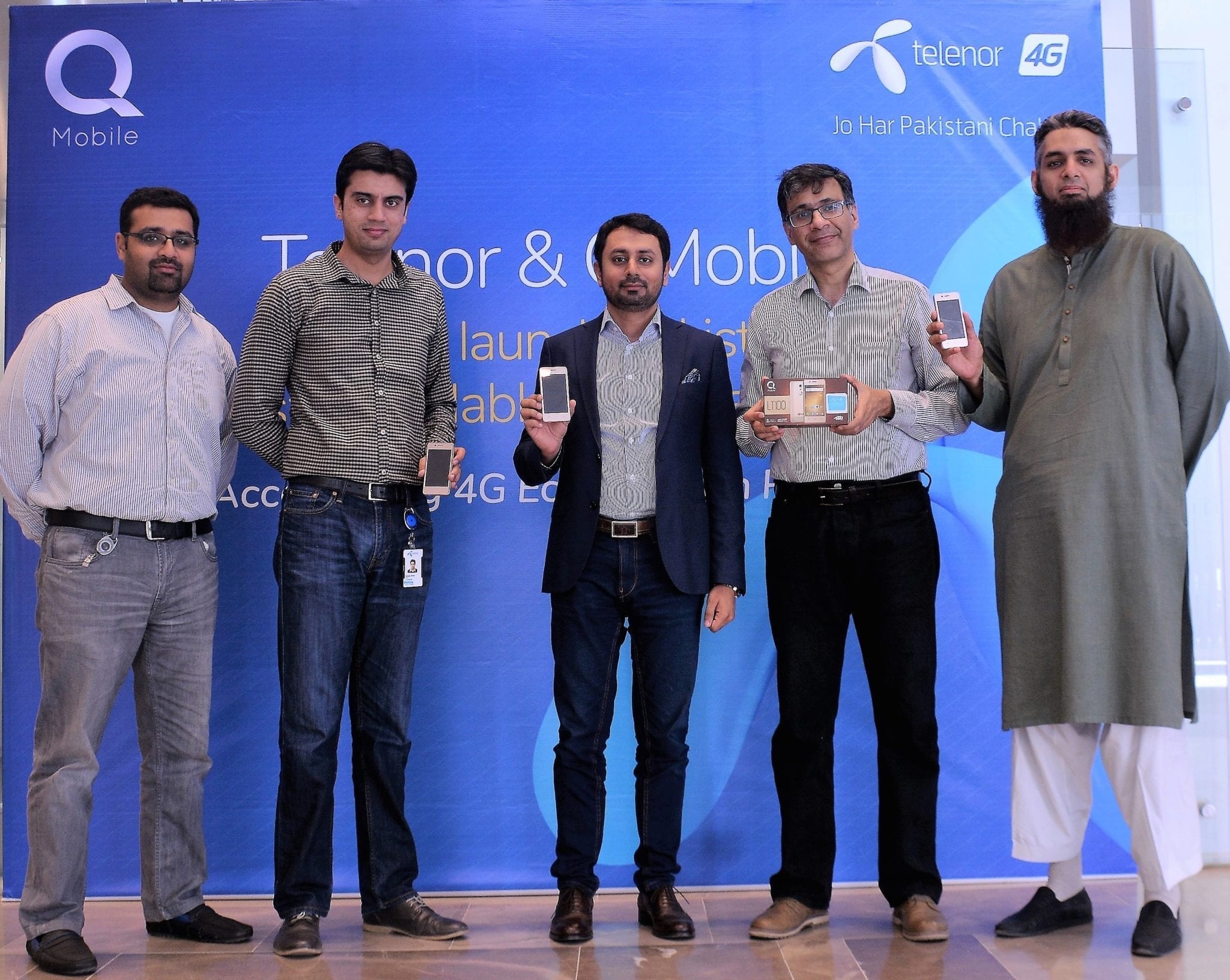
    With an ambition to better connect Pakistan and empower the Pakistani society, Telenor Pakistan, country’s foremost telecom and digital services provider, and QMobile have entered into the next phase of their long-standing collaboration ushering in a new era of 4G ecosystem development through the introduction of LT-100, an LTE-enabled low-cost smartphone. Telenor Pakistan and QMobile had previously joined hands to enable all QMobile 4G phones with Telenor 850 MHz band, and launch new LT (LTE capable) mass market appeal series in 2017.

    The partnership entails both parties working together to develop and promote a robust digital ecosystem in Pakistan where industry’s best digital products and services are served to their mutual customer base. LT-100, a stylish and powerful smartphone delivers on customer expectations of up-to-date specifications, great design, and an attractive price of PKR 6,150. The smartphone comes with a great value combination with 3 Months Free Telenor Pakistan Bundle which includes 1GB/month data and PKR 100 balance/month.

    “We are delighted to enter the next phase of our partnership with QMobile as part of our unrelenting efforts to boost the country’s digital ecosystem which Telenor Pakistan continues to lead,” said Bilal Kazmi, Chief Marketing Officer, Telenor Pakistan. “Since the beginning, we have pursued a two-pronged strategy to develop and promote the digital ecosystem in Pakistan to enhance the mobile broadband outreach and experience while making supporting hardware affordable for the masses. We hope that this partnership will help us achieve our mutual digital inclusion goals faster and in a more effective manner,” he added.

    “The partnership seems natural as both QMobile and Telenor Pakistan share the ambition to empower the Pakistani society to equip our customers with the tools to keep up with today’s fast-paced digital world,” said Zeeshan Akhtar, Chairman and CEO, QMobile. “As we strive to build and promote a strong smartphone ecosystem in the country, together, QMobile and Telenor Pakistan will make technology and internet services more affordable and accessible for the masses.”

    LT-100 comes preloaded with My Telenor App, providing Telenor Pakistan customers unparalleled self-service experience and complete control over their mobile usage and bundle needs. The device will be available across Pakistan at all major mobile markets and retail shops, supported by an extensive communication campaign. Some of the key features of LT-100 include 4G-enabled all-band capability, dual SIM, Android 7.0, 4-inch screen, 8GB ROM with 1 GB RAM, and 5MP back and 2 MP front cameras.

  • Macau to include 5G in technology-neutral licenses

    Macau to include 5G in technology-neutral licenses

    The Macau SAR government does not plan to have a separate license for 5G services, and will instead include 5G in its planned new technology neutral licenses for mobile service providers.

    The director of Macau’s Post and Telecommunication Bureau Derby Lau Wai Meng told that its proposed new communications convergence legislation will include 5G.

    The new legislation would replace Macau’s current basic telecommunication law as well as by-laws governing the various telecoms licenses that have been allocated in the city.

    In addition, the regulator has prepared changes aimed to provide infrastructure support for operators pursuing 5G deployments and redefined some service standards, with the goal of providing more favorable conditions for 5G operators.

    According to the report, the new changes will give more powers for operators to deploy 5G as well as more powers to the government to supervise these deployments.

  • Bharti Infratel to merge with Indus Towers

    Bharti Infratel to merge with Indus Towers

    India’s Bharti Airtel has approved a plan to merge its infrastructure unit Bharti Infratel with Indus Towers to create a listed pan-India tower company.

    The combined company will fully own the respective business of Bharti Infratel and Indus Towers, and will own over 163,000 towers across all 22 of India’s telecom circles, making it the largest tower company in the world outside of China. It will change its name to Indus Towers Limited.

    Bharti Airtel already owns a 42% stake in Indus Towers, with Vodafone Group owning another 42%, Idea Group owning 11.15% and Providence Equity Partners owning the remaining 4.85%.

    Post-merger, Vodafone will be issued 783.1 million new shares in the combined company, while Idea Group will be given the option of selling its shares in the company or taking shares based on the merger ratio, and Providence will be given the option of selling most of its holdings.

    Assuming Idea and Providence take up the option of selling their shares for cash, Airtel’s shareholding in the combined company will be diluted to 37.2% and Vodafone’s shareholding would be diluted to 29.4%.

    The combined company is expected to have an enterprise value of around $10.8 billion, Airtel said in a statement.

    Based on this expected valuation, Idea stands to gain around $1 billion from the sale of its shares. Vodafone’s holding in the combined company would meanwhile be worth around $4.3 billion.

    The merger is expected to be complete in the current financial year, which ends in March 2019.

  • uCloudlink launches innovative mobile data service GlocalMe Inside

    uCloudlink launches innovative mobile data service GlocalMe Inside

    uCloudlink, the global innovative mobile data solution provider, has today launched GlocalMe® Inside, a powerful data service designed for frequent and business travelers. GlocalMe® Inside service provides network coverage in 100+ countries and regions, enabled by CloudSIM technology and delivered through extensive carrier partnerships that ensure fair local data charges for its customers. This move marks the introduction of a new era of positive disruption for cross-border business, bringing expense management, convenience, flexibility and robust global network coverage for reliability of service.

    Alongside this new service innovation, uCloudlink also introduces two models of the brand new GlocalMe® Inside World Phone, in which the service has been pre-installed.

    As of April 2018, the new GlocalMe® Inside service has been rolled out in Hong Kong in collaboration with Hong Kong Broadband. The company is also in active conversations with potential customers and partners across key markets in Asia and North America, discussing the launch of GlocalMe® Inside service’s forthcoming global footprint in the near future.

    Mr. Simon Tan, Co-Founder and Chief Marketing Officer, uCloudlink says, “uCloudlink is dedicated to continuous mobile data solution innovation. Our vision is to offer the utmost accessibility of mobile data for everyone in the world. The new service and our new phone products are a reflection of our commitment to improve global mobility by enhancing and sharing CloudSIM technologies with the world. This will achieve true global connectivity and sharing without limitations. We hope this service innovation can turn many silent roamers into active ones, addressing one of the most pressing challenges facing the entire industry.”

    Elitek is the first phone brand to be launched with the service embedded. uCloudlink is expecting to see increasingly rapid collaboration with more third-party phone brands in the future for which the GlocalMe Inside mobile data service will be available, making them the first true World Phone.

    Mr. Bill Zhang, General Manager of the Smart Devices Business, uCloudlink, explains, “We are very excited about this service innovation which represents a significant breakthrough for business users and other mobile data service users who travel extensively. GlocalMe® Inside overhauls the current mobile data package fee and contracting model, and therefore is a massively positive disruption to the telecommunications industry in this regard. For too long, service users have been subject to high rates, non-transparent pricing models and data roaming which often costs well beyond what was expected; the GlocalMe® Inside revolution changes all that. We have for a long time now been inspired by the truly disruptive players who have changed the way the world works, from social media and accommodation booking services to app-based technology and changes to the media industry by disruptive communication. This is what uCloudlink GlocalMe® Inside is all about”.

    Global roaming revenue was not significantly increased with the growth of international travelers and smartphone users as was expected by the carriers. The main reason is the user’s fear of high data roaming charges. “Our disruptive technology and innovations built on customer convenience and genuine cost management changes all of this”, he concludes.

  • Myanmar to impose 2% USF levy in June

    Myanmar to impose 2% USF levy in June

    The Myanmar government has revealed plans to impose a 2% tax on the income of mobile operators starting in June to fund expansion of telecoms services to unserved rural areas.

    The proceeds from the tax will be pooled into a universal service fund to fulfil the provision of basic telecoms services in rural areas.

    Myanmar’s four mobile operators, which include state-owned MPT, Telenor Myanmar, Ooredoo Myanmar and Mytel – the joint venture between Vietnam’s Viettel and a consortium of local ICT companies – will be required to pay into the scheme.

    Current mobile networks cover over 90% of Myanmar’s population, but the government believes the USF will be necessary to fund the development of network towers in unserved areas.

    Through the project the government is targeting 94% population coverage by the first quarter of next year and 99% coverage in the future.

    Once basic infrastructure is deployed to the rural areas, more advanced telecommunications services can be introduced in the future, the report states.