Tag: telecom

  • SKT raises $500m to refinance debt

    SKT raises $500m to refinance debt

    SK Telecom has raised $500 million in offshore private loans to help refinance existing debt and secure enough capital to weather a destabilized global economy.

    The company has issued five-year loans at a coupon rate of 3.75% after holding financial roadshows across Asia, the US and Europe, receiving favorable responses from around 60 global bond investors.

    Despite the impact of the recent US-China trade war on the global financial market, SK Telecom managed to draw a positive response from global investors due to its high credit rating, stable cash flow and strong growth potential, the company said in a statement.

    The offer was around seven times oversubscribed from SK Telecom’s estimated bond issuance of $500 million, and the final interest rate was set at 22.5 basis points lower than the initially proposed level.

    “Diversifying the loan maturity structure is expected to improve the company’s financial structure,” SK Telecom said in a statement.

  • Xiaomi signs a partner deal with LightInTheBox Holding

    Xiaomi signs a partner deal with LightInTheBox Holding

    Global online retailer LightInTheBox Holding has signed a strategic distribution agreement with Xiaomi to sell its technology products in North America.

    It is Xiaomi’s first cross-border e-commerce distribution partnership in the region, and customers buying its products through LightInTheBox platforms will receive local customer support from Xiaomi.

    Founded in 2010 by entrepreneur Lei Jun, Xiaomi is based on the vision “innovation for everyone”.

    The Beijing-based company incorporates customer feedback into its product range, which includes Mi and Redmi smartphones, TVs and set-top boxes, routers and Mi Ecosystem products including smart home products, wearables and other accessories. Xiaomi has a presence in more than 70 countries and regions.

    With its headquarters in Beijing, LightInTheBox websites and mobile applications are available in 23 languages and cover more than 80 per cent of global internet users.

  • Chunghwa Telecom upgrades video security framework

    Chunghwa Telecom upgrades video security framework

    Taiwan’s Chunghwa Telecom is upgrading its video security framework as it seeks to expand its multimedia-on-demand (MoD) service offering to include 4K ultra-high definition video streaming.

    The operator has upgraded to the latest generation of the Verimatrix Video Content Authority System (VCAS), VCAS Ultra, to support new delivery models and next-generation streaming services for its MoD offering.

    VCAS Ultra is designed to allow operators to provide premium ultra-HD services and advanced hybrid network deployments. It includes enhanced content security profiles to meet the service requirements for UHD including multi-network video watermarking technology.

    “As we enter this exciting new domain of premium video delivery, we couldn’t be more pleased to already have such a deep level of confidence in our security framework and trust in Verimatrix to navigate us through the complex requirements associated with UHD/4K services,” Chunghwa Telecom deputy principal engineer Dr. Chih-Cheng Lo said.

    “Selecting VCAS Ultra was an easy decision, but we also know it is the optimal solution to support our future goals as we continue to evolve to stay ahead of the competition.”

    In October, Chunghwa Telecom announced plans to develop original video programming and films to drive growth and allow expansion overseas, in the face of growing competition from local cable TV companies.

    The operator announced an ambition to transition into a digital media company with both a telecoms and multimedia presence.

    But Chunghwa’s video on demand service has reportedly lost NT$30 billion ($1.02 billion) since launching 13 years ago.

  • RCom gets court approval to sell wireless business

    RCom gets court approval to sell wireless business

    India’s Supreme Court has cleared Reliance Communications (RCom) to sell its wireless assets to Reliance Jio Infocomm for 250 billion rupees ($3.85 billion), vacating two stay orders on the sell-off.

    The court has vacated a stay on the sale of spectrum, media convergence nodes and real estate, and has directed the National Company Law Appellate Tribunal (NCLAT) to vacate the stay on the sale of the operator’s tower and fiber assets, RCom announced.

    In an interim order, the NCLAT has complied with the Supreme Court’s direction, but will require the proceeds from the tower and fiber asset sale to be deposited into an escrow account.

    Distribution of the proceeds will be subject to a final decision by the NCLAT expected next Wednesday.

    RCom arranged to sell off its wireless business to Reliance Jio Infocomm as part of a radical debt reduction program.

    But the tribunal issued an order prohibiting the sale of assets without court permission in response to an insolvency petition from Ericsson seeking a recovery of around $177.8 million in unpaid dues.

    According to RCom, minority investors are making a claim for part of the proceeds of the sale of its tower and fiber assets, a claim that the operator fully disputes. Based on legal advice, RCom estimates that this claim can be for at most 2 billion to 3 billion rupees worth of the proceeds.

  • Operator capex to return to growth in 2018

    Operator capex to return to growth in 2018

    Global operator capex will to return to growth this year after two consecutive years of decline, research firm Dell’Oro predicts.

    The company is expecting a compound annual growth rate of 1% in constant currency terms between 2017 and 2020. This is an improvement on the company’s previous forecast for the period.

    The more optimistic projection is largely due to signs of improvement in both the US and Chinese markets, Dell’Oro carrier economics lead Stefan Pongratz said in a blog post.

    But total capex spend in China [Figure 1] is still expected to decline year-on-year in 2018 and stay flat in 2019 before returning to growth in 2020.

    Pongratz noted that constrained operator revenue growth is expected to be one of the primary inhibitors of further capex acceleration that could be expected with the introduction of 5G.

    Currency adjusted operator revenues are projected to remain flat between 2017 and 2020, with operators expected to struggle to find new revenue streams to offset slower smartphone revenue growth.

    Likewise, while the IoT has long-term revenue generation possibilities, there is expected to be limited benefit over the next few years. Dell’Oro estimates that carrier IoT revenues will account for just 2% of total mobile revenues by 2020. This could be even lower if current pricing trends prevail.

  • Japan’s Rakuten teams with electric utilities for MNO business

    Japan’s Rakuten teams with electric utilities for MNO business

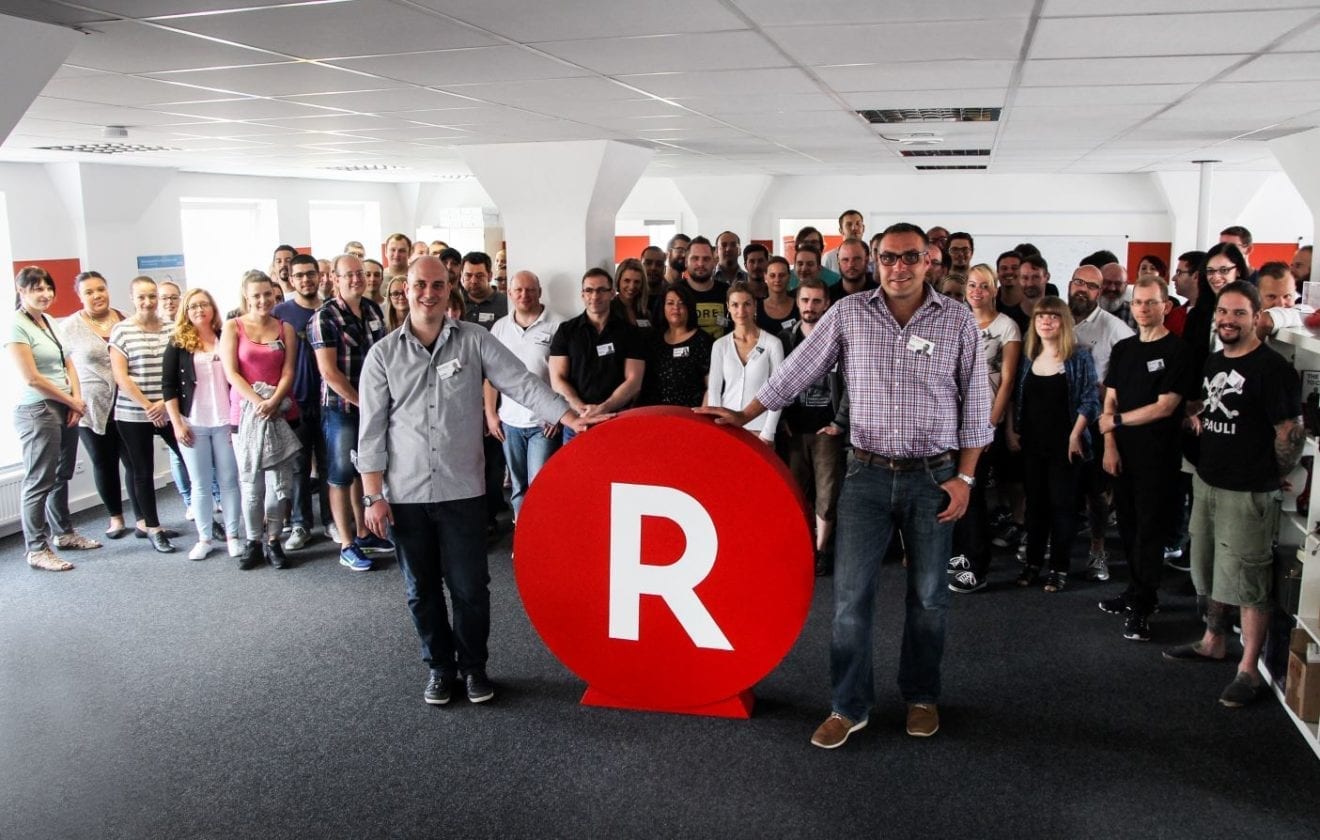
    As part of its plan to become the country’s fourth mobile carrier, Japanese e-commerce giant Rakuten is teaming up with a handful of local electric utilities to leverage the latter’s infrastructure and facilities to build its own 4G mobile network in Japan.

    The e-commerce firm signed an agreement last week with Kansai Electric Power Co that enable Rakuten to utilize the utility firm’s transmission towers, utility poles, telecoms towers and other facilities and equipment for its planned 4G network.

    At present, Rakuten operates as a mobile virtual network operator (MVNO) leasing network capacity from market leader NTT Docomo. The company announced last December its intention to enter the mobile network operator (MNO) business and has applied to Japan’s Ministry of Internal Affairs and Communications for a mobile license to build its own 4G network operating on the 1.7-GHz and 3.4-GHz bands.

    If the frequency band allocation is granted, Rakuten said, it plans to make use of Kansai Electric Power’s transmission towers, utility poles, telecoms towers and other infrastructure in and around Japan’s Kansai region for its base station locations.

    As well as Kansai Electric Power, Rakuten also signed similar agreements with Chubu Electric Power Co and TEPCO Group in March, in a bid to build its mobile network in the most efficient way.

    Rakuten, which plan to invest up to ¥600 billion ($5.6 billion) to build the mobile network, said it will also consider similar tie-ups with other electricity utilities to achieve nationwide service coverage, as it prepares for entry into the MNO business.

    Rakuten launched its MVNO business under the Rakuten Mobile brand in October 2014.  As of January 2018, Rakuten Mobile has over 1.5 million MVNO subscribers.

  • Anant Kaewruamvongs to take helm at Thaicom

    Anant Kaewruamvongs to take helm at Thaicom

    Asian satellite operator Thaicom Public Company Limited (Thaicom) has appointed Anant Kaewruamvongs as chief executive officer and director of the board, effective May 1.

    Anant takes over from Paiboon Panuwattanawong, who resigns from his positions as director, member of the executive committee and CEO, after severing Thaicom for over 25 years.

    Commenting on the appointment, Thaicom chairman Prasert Bunsumpun said [PDF] Anant “is the right person to lead and move Thaicom forward.”

    “The Thaicom board of directors and I welcome Anant Kaewruamvongs as new CEO. We believe his extensive experience makes him the ideal candidate to lead the company as we navigate through the next stage of growth and diversification of our business,” said Prasert, who took over as chairman at Thaicom in March.

    He said Paiboon’s contributions and dedication to Thaicom and the Thai satellite industry have been “immeasurable”.

    “We would like to thank Mr. Paiboon for taking on the challenge as CEO and for steering the company to new horizons. He and his leadership team have successfully embarked on a difficult restructuring process of our business and organization during difficult times for the satellite industry and Thaicom,” Prasert said.

  • True taps Comarch for loyalty management

    True taps Comarch for loyalty management

    Thailand’s True Corporation has selected Comarch to help the operator overhaul its loyalty management services.

    True – parent company of mobile operator TrueMove H, ISP True Internet and cable TV provider TrueVisions – will use Comarch’s solution to replace its legacy in-house application True You.

    True You Loyalty is one of the most successful loyalty programs on the Thai market with around 11 million members. The operator has decided to replace its present application with a more future oriented and expandable solution to enhance flexibility and help support further growth.

    Comarch plans to complete the deployment in stages, with the first of these expected to be operational in the fourth quarter.

    In addition, the solution will be expandable in the future to allow for upgrades including gamification, business intelligence or managed hosting services.

    True You Loyalty is a unit of True Corporation’s digital arm True Digital and Media Company. Other units under this umbrella include True Mobile Applications and True Digital Content Business.

    Comarch is a Polish IT business solutions provider with employees in 30 countries. The company was founded in 1993.

  • India imposes import duty on smartphone components

    India imposes import duty on smartphone components

    The Indian government has introduced a 10% import duty on key smartphone components as part of its ongoing efforts to stimulate local handset and component manufacturing.

    The new duty covers PCBs, camera modules and connectors and is likely to increase prices of mobile phones for companies that do not source these components locally.

    In February, the government introduced a 20% basic customs duty on imports of full mobile phones, as well as duties of between 5% and 20% on components including LCD panels, PCBs for chargers, lithium batteries and other components including keypads, battery packs and antennae.

    The report notes that currently more than 80% of phones sold in India are assembled locally, and sales volumes for mobile phones made in India are projected to improve 55% this year. Major contract manufacturers including Foxconn, Wistron, Flex and several Chinese handset makers have established local manufacturing to reduce costs.

    But Samsung remains the only major brand to locally assemble PCBs, which account for around half the cost of manufacturing a handset, prompting the government to attempt to stimulate market growth.

  • Spark launches LoRa IoT network across NZ

    Spark launches LoRa IoT network across NZ

    New Zealand operator Spark has announced the commercial launch of its nationwide IoT network for businesses across the nation, with coverage reaching 60% of the country’s population.

    The IoT network, using the LoRaWAN technology, has been switched on in Auckland, Tauranga, Hamilton, Rotorua, Palmerston North, Shannon, Wellington, Nelson, Blenheim, Christchurch and Dunedin. Sites in Hastings and Invercargill will go live in the next few weeks, the telco said in a company statement.

    The network consists of gateways and antennas installed on Spark’s 4G cell sites. Spark is using Actility’s ThingPark Wireless platform, Kerlink’s gateways, and Kordia to build and maintain the network.

    Spark initially announced its LoRaWAN plans in July 2017, and details of coverage plans in December 2017.

    “Our IoT capability is really gathering pace, and now we’ve got this critical mass of coverage we’re able to make the network commercially available. This is a real milestone for Spark as we help New Zealand organizations win big in IoT,” said Michael Stribling, Spark’s general manager of IoT solutions.

    “While we currently have 60% of rural and urban New Zealand covered, we’ll be working to extend that to 70% by July this year. We’re also looking to partner with organizations to extend coverage into areas where they need it.”

    With its LoRaWAN IoT network, Spark said, business and local governments can deploy sensors across on a range of objects including vehicles, waterways, rubbish bins, machinery, carparks and livestock, with the sensors sending such information as the volume of rubbish in a public bin or water pH in a stream, over the network to the people managing these objects.

    Spark said LoRaWAN technology, which carries small amounts of data over long distances, uses less power than cellular networks, making it an affordable IoT solution.

    Compared to cellular connectivity, it works with a wide range of low-cost sensor technologies that are significantly cheaper on average than sensors for cellular networks. The cost to use the network is based on the number of sensors connected, and the number of messages those sensors send each month, the telco explained.

    For example it would cost a local farmer around NZ$1.79 ($1.29) per cow each month to track location and body temperatures of their cows using the LoRaWAN IoT network, Spark said.

    Spark has been testing LoRaWAN technology on trial sites for well over a year, with partners from a range of industries, including agriculture, marine and smart buildings.

    Some of its early adopters of the new commercial network include Levno, which has signed up as Spark’s first customer and will be working with the telco to extend network coverage to other areas. The Pamerston North-based agriculture firm is using Spark’s network to connect its fuel tank monitoring sensors.

    NB Smartcities NZ, a local firm offering smart city services, will also use Spark’s connectivity for smart outdoor lighting across the country.

    Claus Oustrup, director NB Smartcities NZ said the Spark network enables its council customers to leverage a range of smart city applications in addition to smart light technology.

    “For many councils, having real-time data, asset information and being in control of these devices can increase customer service response times and create real benefits for communities. For example, street lighting can account for as many as 50% of call center complaints. By having adaptable street lighting managed with real-time systems, these complaints can be quickly addressed, and their volume decreased,” said Oustrup.

    According to Stribling, the new LoRaWAN network will also enable more IoT technologies from overseas, like smart street lighting, to be adopted in New Zealand. At the same time, it is expected to give New Zealand developers of IoT technologies the chance to launch their products locally.

    “We’ve worked with the International LoRa Alliance to agree on Asia-Pacific standards so that products developed on LoRaWAN in New Zealand will work the same way on LoRaWAN networks in other countries,” he said.

    In addition to LoRaWAN, Spark has also deployed an IoT network using the 3GPP-compliant LTE CAT-M1 standard to cater different use cases. The company is also monitoring the global progress of the emerging Narrow Band (NB-IoT) standard and will invest in it when the use cases and ecosystem for NB-IoT become more mature.

    Last week, Spark also kicked off a 5G trial in Wellington, making it the country’s first mobile carrier to do so. The 5G trial came weeks after Spark announced changes to its management team as part of the company’s restructuring.
  • China strikes telecoms from list of “sensitive” outbound sectors

    China strikes telecoms from list of “sensitive” outbound sectors

    The Chinese government has reportedly taken the telecoms sector off a list of “sensitive sectors” that require special approvals for outbound investment.

    The list compiled by the National Development and Reform Commission (NDRC) names the industries that Chinese planning to invest in an overseas company or project need to secure approval for.

    Starting from next month, companies investing in overseas telecoms projects will instead only need to file the same records with authorities as required for investment in other non-sensitive sectors.

    The telecoms sector has been considered sensitive since the previous list was published in 2014.

    The change comes at a time that the Philippines government is courting Chinese investment in its mobile market through a proposed 60-40 venture that would become the nation’s third telco.

    Xinhua noted that China’s outbound direct investment outside of the financial sector fell 29.4% in 2017 to $120 billion.

    As part of the reforms to the sensitive sector list, the energy sector has also been removed while the arms industry, properties, hotels, cinemas, entertainment, sports clubs, and equity investment funds have been added.

  • APAC companies reaping the benefits of IoT

    APAC companies reaping the benefits of IoT

    Companies across Asia-Pacific are already seeing the benefits of IoT, according to a new report conducted by Forbes Insights.

    Sponsored by Hitachi Vantara, the report found that 76% of APAC companies are operating IoT programs that generate revenue while 60% agree that IoT programs are generating data that is very useful to their business. As a result, 88% expect to see increases in their IoT budgets over the coming fiscal year.

    “Across the Asia Pacific region, it is clear that executives see the value in IoT initiatives,” Forbes Media chief insights officer Bruce Rogers said.

    “With 70% stating that they see IoT as either important or very important to their business, it is fast becoming a competitive differentiator that will affect almost every industry.”

    The report also reveals that 70% of companies in the region believe IoT is important or very important to their current business, and 87% believe IoT will be important to the future of their business. Of all emerging technologies, executives in Asia Pacific believe IoT, artificial intelligence (AI) and robotics will be the most important.

    Nearly three quarters (72%) of respondents say their company has significant or pilot IoT programs in operation, and 11% say that IoT programs are already a major contributor to their business.

    When building out IoT capabilities, companies say their greatest challenges are keeping the IoT secure (31%), ensuring cross-department cooperation (31%) and availability of skilled staff (31%). The inability to present a compelling return on investment (30%) and integration of disparate data (28%) are other significant challenges.

  • Akamai could be up for sale

    Akamai could be up for sale

    A recent report claims that Akamai is working with Morgan Stanley to explore strategic alternatives. On the table, apparently, is a sale of the company. To whom, though?

    The move may be in response to pressure from Elliot Management Corp, which holds a 6.5% stake in Akamai and has been pushing the company to consider ways to maximize shareholder value. The thesis is that Akamai’s core business is being challenged by big content’s moves to bring such capabilities in-house.

    Now, it’s not the first time Akamai has faced overall trends that threatened to divert revenue away from the middle man, yet the company always seems to come out on top. We believe that this time is the same, but just as a theoretical exercise let’s consider who might do the buying.

    From the network infrastructure side, it would probably take a major network operator like Verizon or AT&T or Comcast or CenturyLink to do such a deal. In particular, Verizon’s appetite for Yahoo and other content certainly could fit well with Akamai. If the opportunity were right, We think they might jump at it. But We doubt they’d pay the premium required in this case.

    It’s a bit more interesting from the content/cloud side of course. Since they are building such infrastructure in-house, it’s not such a stretch to think that one of Google, Microsoft, Facebook, Apple, or Amazon could decide to drop $12 billion to 15 billion to instantly scale it. But there are channel conflicts in there that give me pause.

    The other option would be for private equity to move in and take the company private. If there is private equity out there that thinks Akamai isn’t taking advantage of all the opportunities on its plate and that it could grow faster and more profitably if not tethered to a publicly floated stock, then sure. But again, it’s not as if Akamai is hurting for resources to invest.

  • Philippines’ Duterte urges fast-track for third telco

    Philippines’ Duterte urges fast-track for third telco

    The Philippines’ president Rodrigo Duterte has announced plans to fast-track the entry of a third operator into the market, and wants the operator to be up and running within the first three months of next year.

    Duterte has directed the Department of Information and Communications Technology and regulator the National Telecommunications Commission to approve all applications and licenses within seven days of a completed submission.

    The president last month approached the Chinese government with the opportunity to become the Philippines’ third major player in partnership with a local company. The as-yet unnamed Chinese telco would take a 40% stake in the venture with a consortium of local companies expected to own the remaining 60%.

    Philippines’ courts have meanwhile been warned against interfering and prolonging the process of the entry of the third player.

    The government has meanwhile moved to allay fears that China’s entry into the telecoms sector may compromise national security in light of the ongoing South China Sea dispute, noting that foreign players already hold minority stakes in incumbent operators Globe and PLDT.

  • SK Telecom Q3 revenue grows 4.7%

    SK Telecom Q3 revenue grows 4.7%

    SK Telecom has reported a 4.7% year-on-year increase in revenue for the third quarter to 4.44 trillion won ($3.99 billion), on the back of a solid performance across the operator’s core segments.

    Net profit surged 146.2% year-on-year to 793 billion won due to higher gains on the operator’s equity method investment in chipmaker subsidiary SK Hynix.

    Mobile service revenue grew 1.7% over the same period to 2.74 trillion won, driven by solid subscriber and data usage growth.

    SK Telecom’s total customer base increased by 705,000 to 30.16 million, with LTE data users accounting for 74.8% of these subscribers.

    Broadband subsidiary SK Broadband meanwhile reported a 1.2% increase in revenue to 760.2 billion won due to growth in IPTV subscription and paid content sales. High speed internet customers increased 1.1% sequentially to 5.4 million.

    Internet platform unit SK Planet posted a 5.8% improvement in revenue to 285.1 billion won, due primarily to the growth of its online commerce business, but still reported a loss of 55.2 billion won.

    Overall capex increased 5.3% year-on-year and 68.3% quarter-on-quarter to 556.7 billion won, while marketing expenses were up 10.8% year-on-year to 797.6 billion won.

    Looking ahead, SK Telecom said it continues to explore opportunities in new businesses such as AI, IoT and autonomous driving to ensure mid- and long-term growth.