Tag: telecom

  • China Unicom, Huawei collaborate on 5G network slicing

    China Unicom, Huawei collaborate on 5G network slicing

    China Unicom and Huawei Technologies have signed an agreement to conduct joint research, demonstration, and deployment of 5G network slicing.

    Under the agreement, Unicom and Huawei will work together to develop key technologies and solution for the Chinese telco’s 5G network slicing services and applications.

    The pair will also jointly promote network slicing for various vertical markets, such as VR/AR games, industrial control, Internet of Vehicles (IoV), and the Internet of Things (IoT).

    “Network slicing is a key native capability of 5G, which can maximize the efficiency of communications networks and reduce network construction and O&M costs,” said Zhang Yong, president of China Unicom’s Network Technology Research Institute.

    “In the 5G era, the concepts of slice as a capability and slice as a product have become an industry consensus. China Unicom will demonstrate the multi-scenario slicing service in vertical industries and deepen the integration with the industry to facilitate digitalization in China.”

    Zhang said Unicom wants to focus efforts on terminals, chips, networks, and vertical industries.

    He Weijie, vice president of Huawei Cloud Core Network Product Line, said the company’s concepts of slice as a service and slice as a product have played a major role in shaping the 5G business model.

    With its agile deployment, security isolation, high reliability, and automatic management, network slicing helps operators like Unicom to expand the vertical industry market in the 5G era and fully exploit the potential of their networks, He said.

    As the fundamental feature of 5G, network slicing enables mobile operators to run multiple logical networks as virtually independent business operations on a common physical infrastructure. It brings new opportunities for operators to engage with the vertical market.

    In February, a handful of industry players, including China Mobile, Huawei, Tencent, Germany’s Deutsche Telekom, Digital Domain and Volkswagen, jointly founded the 5G Slicing Association.

    The association, inaugurated during Mobile World Congress 2018, will study key technical issues in 5G network slicing, cooperate with slicing-related standards development organizations and forge test beds and trials aimed at verifying the capabilities of the technology.

  • GSMA halts development of eSIM standard

    GSMA halts development of eSIM standard

    The GSMA has confirmed it has put development of a universal standard for eSIMs on hold pending the outcome of an investigation by the US Department of Justice.

    The eSIM standard would contain a range of features, including an option for the eSIM to be locked to a specific carrier.

    But the Department of Justice has now opened an antitrust investigation into the GMSA, as well as US operators AT&T and Verizon which are helping lead the development of the standard.

    The report, which cites six unnamed sources, states that the department is investigating allegations that AT&T, Verizon and the GSMA have been colluding to prevent customers from easily switching to another provider by allowing them to lock a device to their network.

    The investigation was reportedly opened in response to complaints from at least one device maker – Apple – and one rival wireless operator, the report adds.

    In a statement, the GSMA said that the development of the latest version of the eSIM specification is on hold pending the completion of the investigation, and that it is cooperating fully with the department.

    The industry body also noted that under the proposed standard, in the US, consumers would have to explicitly consent to being locked to a provider when signing up to specific contracts, such as when purchasing a subsidized device.

  • Open source movement to disrupt NFV and SDN marketplace

    Open source movement to disrupt NFV and SDN marketplace

    Software-defined networking (SDN) and network functions virtualization (NFV) are predicted to enable businesses that use these technologies to gain greater flexibility in backhaul infrastructure.

    Cost savings is the primary driver for accelerated NFV and SDN adoption, but these benefits will be realized gradually.

    According to Technology Business Research’s 1Q18 NFV/SDN Telecom Market Landscape report, open-source groups will spur NFV and SDN adoption by establishing industry standards that foster interoperability among a broader range of solution providers.

    “The ability to reduce capex will initially be the largest cost benefit realized by adopters of NFV and SDN as software-mediated technologies enable operators to significantly reduce spend on proprietary hardware,” said TBR telecom senior analyst Michael Soper. “Reducing opex will be a longer process as most operators will maintain both legacy and virtualized environments until they are ready to migrate fully to virtualized infrastructure.”

    As operators pursue cost reduction through NFV and SDN, incumbent vendors face numerous threats to their business models and disruption on multiple technology fronts. Industry trends are moving against the vendor community, with incumbent vendors, particularly hardware-centric vendors, poised to struggle the most.

    Operators globally are focused on significantly reducing the cost of network operations and capex, underscored by a desire to disaggregate the black box and commoditize the hardware layer. White-box-based universal customer premises equipment is the leading application of industry-standard hardware thus far, but operators are targeting additional domains, including the core and edge network.

    Operators are also facilitating NFV and SDN adoption by targeting new hires with relevant skill sets, retraining existing employees and launching internal startups to quickly improve their resource pools.

  • Vocus Group scraps plans to sell NZ business

    Vocus Group scraps plans to sell NZ business

    Australian enterprise-focused fixed line operator Vocus Group has abandoned plans to sell its New Zealand business, ending negotiations with all interested parties.

    In a statement, Vocus Group said none of the multiple offers it had received for the New Zealand business appropriately reflected the strategic value of the operation.

    The offers also did not provide the required certainty of funding and execution, according to Vocus Group chairman Bob Mansfield.

    As a result, Vocus Group now plans to “continue to invest in and grow Vocus NZ to enable that business to realise its strategic potential for shareholders.”

    Vocus Group first revealed it was seeking a buyer for its New Zealand operations in October 2017, and had originally planned to complete the sale by June this year.

    The company meanwhile announced that it is in the process of finalizing the appointment of several banks to arrange a full refinancing of its existing debt facilities, which will include an upsizing of the facilities. Vocus expects to complete its debt refinancing by the end of June.

    “The board would like to thank our bank group for their strong support shown to date,” Mansfield said.

    “We are comfortable that the increased financial capacity and covenants that will be sought through the refinancing will provide sufficient financial flexibility for the company to complete its strategic and transformation initiatives over the next few years.”

  • Carriers take M&A route to woo enterprise cloud business

    Carriers take M&A route to woo enterprise cloud business

    Revenue growth for carriers will be of critical importance in 2018, according to Craig Wigginton, global telecommunications sector leader for Deloitte.

    “Revenue yield on data services (revenue per bit consumed) continues to decline as consumers use more and more data, with static or declining monthly bills. Hence it is critical to identify rapid investment opportunities across the telecom portfolio—including 5G, IoT, and cross-industry partnerships (such as mHealth and mPayments), as well as a host of other growth opportunities,” Wigginton said.

    One avenue that many operators are pursuing with interest is enterprise cloud. Given that enterprises are a demanding lot,  operators are ramping up on infrastructure to support demand for cloud services.

    The Technology Business Research (TBR) 4Q17 Carrier Cloud Benchmark revealed a 15.7% year-to-year growth in 4Q17 is largely due to strategic acquisitions and alliances, investments in new data centers, and portfolio expansion in growth segments such as SaaS and hybrid cloud.

    Cloud revenue growth is being limited, however, due to pricing pressures and growing demand for solutions from webscale cloud providers such as Amazon Web Services (AWS). Carriers are cognizant of these trends and are becoming more focused on supporting hybrid and multi-cloud environments by launching new orchestration platforms.


    “All benchmarked companies sustained year-to-year Cloud as a Service revenue growth in 4Q17 as significant opportunity remains for carriers to target businesses seeking greater cost savings, scalability and efficiency by migrating traditional infrastructure and applications to the cloud,” said Steve Vachon, an analyst in TBR’s Telecom Practice.

    “Though cloud revenue growth is being limited by pricing pressures from webscale providers, carriers are relying on the value proposition and convenience offered by the bundling of their cloud solutions with other network offerings, such as SD-WAN, security and mobility services, to attract customers.”

    Operators are revamping their go-to-market strategies to counter disruption from webscale providers such as AWS, Google and Microsoft. Competition will intensify over the next several years as webscales seek to play a larger role within the European and Asian cloud markets by investing in additional data centers in those regions.

    Amid demand for solutions from webscales in the cloud market, most carriers are offering access to these companies to complement their existing cloud portfolios and to support hybrid and multi-cloud environments. Carriers are also integrating webscale cloud platforms to enhance adjacent portfolio segments such as Internet of Things and unified communications.

  • Taiwan price war could impede 5G development

    Taiwan price war could impede 5G development

    An ongoing price war in the Taiwanese mobile industry could hamper the development of 5G in the market, regulator NCC has warned.

    The regulator has asserted that operators merely competing to lure each other’s subscribers rather than developing innovative business models would not be positive for the development of 5G in Taiwan.

    The NCC’s comments come in the wake of Chunghwa Telecom’s introduction of a TW$499 ($16.85) per month unlimited 4G mobile data and phone call plan, and the subsequent introduction of plans at the same price by rivals Taiwan Mobile, Far EasTone and APT.

    While the NCC insisted that it respects the free market, a race to the bottom n price does not make the admissible market bigger and will not sustain operators through to the commercial launch of 5G services.

    Offering unlimited data and call services at unreasonably low prices will hurt operators’ development in the long term, the regulator added. Operators are already grappling with declining revenue as a result of the price war, coupled with the continued decline in voice revenues.

    The report adds that the NCC does not believe that Taiwan’s operators will be able to follow the models their overseas counterparts have been pursuing to sustain growth – such as expanding overseas or diversifying into original media content – due to Taiwanese operators’ relatively small size and regulatory restrictions.

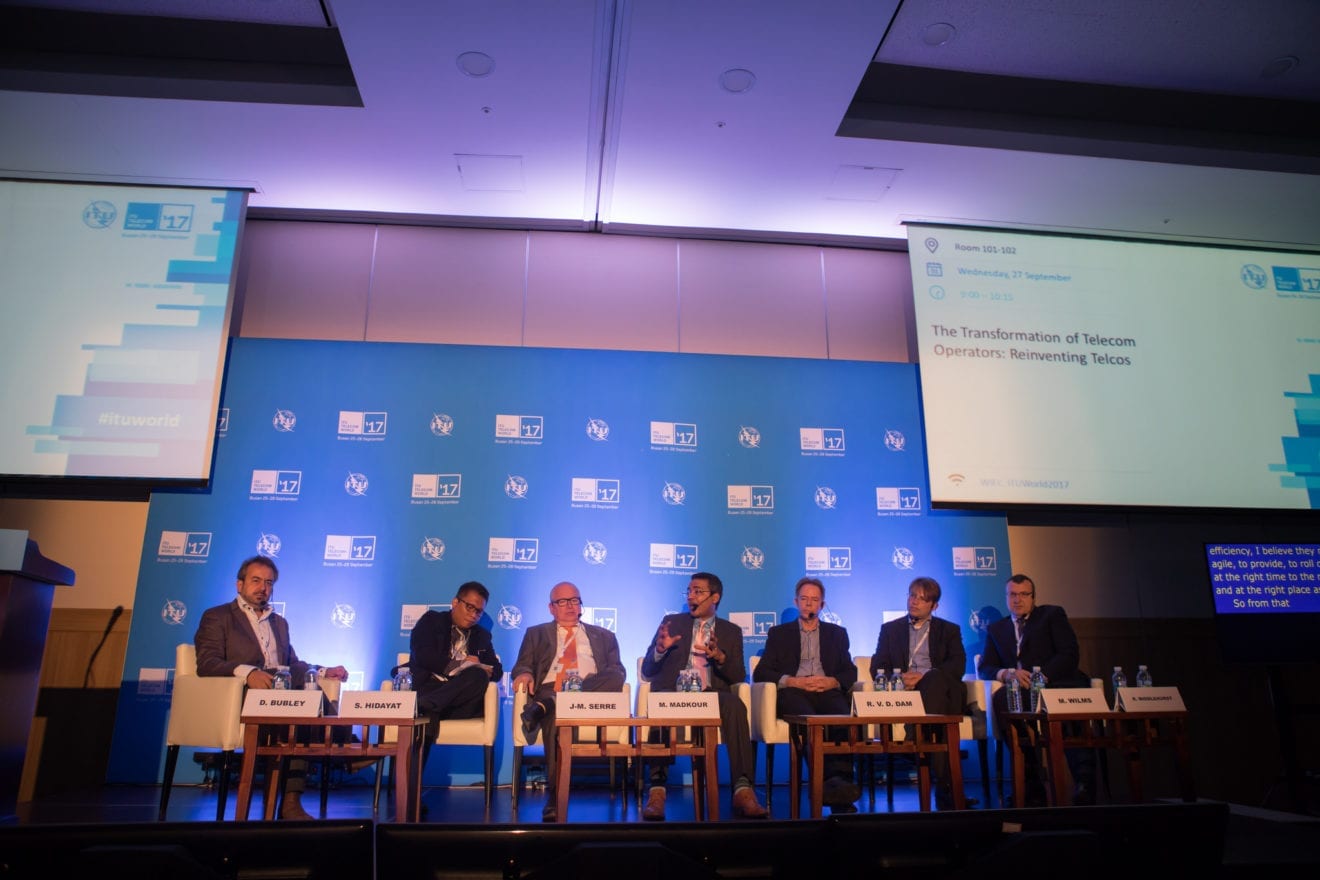
  • Innovation for a smarter world: ITU Telecom World 2018

    Innovation for a smarter world: ITU Telecom World 2018

    Creativity and innovation have driven human development throughout the course of history.  From agriculture to industry to the information age, revolutionary innovations in technology have marked major leaps forward in the development of our societies. As the pace of technological innovation increases, the gaps between those revolutions reduce, so that today, just ten years after the arrival of the smart phone, we are already on the cusp of the next major leap: the smart revolution.

    Two aspects of the smart revolution stand out as significantly different. It provides the possibility for less developed markets and nations to leapfrog in developmental terms, not just to leap forward. And the creativity and innovation driving it will not only be human.

    Artificial intelligence (AI) is one of the great enablers of smart society. AI is a blend of advanced analytical and machine learning applications which can perform processes or actions that would traditionally require human intelligence – and at an often greatly accelerated pace.

    The use cases and benefits of AI are multiple, varied – and developing rapidly, with tremendous potential to serve purposes and provide solutions to problems we are not yet aware of, in ways we cannot yet imagine.

    One key aspect is AI’s ability to swiftly and effectively analyse the ever-increasing wealth of sensor data available as the growing power and falling costs of computing provides for much faster and richer data analysis. Practical outcomes include identifying and treating disease, accelerating financial and machine to machine transactions, enhancing public safety, and improving city services, from provision of utilities to driverless public transport and city management. The aim is to save energy, time and lives through AI-enabled smart solutions.

    AI will not be working alone, however. The data it feeds from is set to grow exponentially in volume as the Internet of Things continues to connect billions of sensors and devices to each other, to the internet and to humans. As the IoT develops and refines, it opens the door to innovation across all vertical sectors, including health, media, transport and energy – and manufacturing, as the paradox of personalized mass production increasingly becomes a reality.

    Innovation needs new tools to thrive, and 5G software-defined networks promise a rich playing field for creative minds. The exponential increases in bandwidth, speed, reliability and flexibility offered by 5G will create a powerful critical infrastructure capable of providing solutions to the economic, social and environmental needs of an expanding and increasingly urbanised global population.

    Our smarter world will be enabled by these three key technological developments, in parallel and in overlap: AI, IoT and 5G. Three acronyms driving innovation, with the potential to drive human development at a greater speed and with greater impact than ever before. In developing markets and nations in particular, smart can power the leapfrog effect, bypassing earlier stages of development, taking villages in Asia or Africa straight from no connectivity to 3G or 4G networks, from no access to education or health to world-class professionals available online, providing entry to the knowledge economy for the millions of digitally disenfranchised.

    But for innovation to flourish, it needs to work in a supportive and positive environment. And for innovation to be fair, it – and the services, applications and products it ultimately produces – must be open to all.

    Providing modern and fit-for-purpose regulatory frameworks as far as possible throughout the world of tech is critical to the success of smart innovation. Taking ideas to scale and maximising impact can only happen with international standardization. Privacy, security, trust and reliability are all huge issues when discussing or dealing with data as the life blood of innovative products and services. And the debate on ethical and regulatory frameworks for AI has only just begun.

    Making a smarter world for all, not just for the elite minority, is an even greater, multi-faceted challenge. It starts, of course, with connectivity for all as a basic human right. Just providing access to the internet and the benefits of the services, applications and knowledge it offers, is not enough, however – even if this can be done at affordable prices, with available devices. There is an urgent need to create awareness of, and demand for, the internet; to provide apps and services in local languages, with local contexts and the needs of local communities at the forefront; and to train, educate and develop the skills to use the internet and bring whole new populations and generations online, releasing untapped human potential for innovation across the world.

    Exploring the innovations in technology, policy, and strategy that are driving a smarter world – and the challenges we face in getting there – is at the heart of ITU Telecom World 2018. The leading tech event for governments, large businesses and SMEs, it is organized each year by ITU, the UN’s key agency for ICT matters. This year’s event will be held at the Durban International Conference Centre, Durban, South Africa, from 10 – 13 September, 2018.

    The event features an international exhibition of tech solutions and projects, a world-class forum of interactive, expert-led debates, a networking programme connecting organizations, individuals and ideas, and an acclaimed Awards programme recognising innovative ICT-based solutions with real social impact.

    As an important regional commercial hub with a diverse, multicultural outlook and a dynamic, growing economy, Durban offers an invaluable perspective as a venue for experts and leaders from public and private sectors around the world.  And given ITU’s key role in allocating spectrum and establishing international consensus on industry standards, as well as supporting the critical role of ICTs and smart technologies in meeting the UN’s Sustainable Development Goals, the event is certain to provide informed, interesting and valuable input on the power of innovation to drive a smarter world.

    ITU’s authority and expertise enable it to convene a unique and influential global audience. Heads of state and government will come together with ministers, regulators, leading industry CEOs from major players and SMEs, organizations, associations and consultants. As a UN event, it delivers a truly international perspective on innovation in technology, policy and regulation from emerging and developed markets from all around the world.

    Visit telecomworld.itu.int to find out more ITU Telecom World 2018 and how to take part in Durban this September.



  • ZTE calls US export ban “unacceptable”

    ZTE calls US export ban “unacceptable”

    ZTE has objected to the imposition of a seven-year ban on importing any US components as part of the ongoing fallout over allegations that the company violated US sanctions by selling equipment with US components to Iran and North Korea.

    In a statement, ZTE said it is “unacceptable” that the US Department of Commerce’s Bureau of Industry and Security has imposed the most severe penalty on the company even before the completion of the investigation of facts.

    The Department of Commerce last week activated a seven year prohibition on US companies exporting products to ZTE.

    The prohibition had been imposed in March last year, when ZTE agreed to pay $892.3 million to settle the US investigation into the sanctions case. The ban, as well as a $300 million additional penalty, were suspended for a seven-year period as long as ZTE complied with the requirements of the settlement agreement.

    But the Department of Commerce has now imposed this ban after accusing ZTE of making false statements during settlement negotiations and the probationary period relating to disciplinary actions the vendor claimed it was taking on senior employees embroiled in the sanctions case.

    The action has been taken on the grounds that ZTE did not reduce bonuses offered to the employees or issue them letters of reprimand in a timely manner.

    But the company said this ignores the disciplinary action that has been taken and the fact that the company has engaged a prestigious US law firm to conduct an independent investigations.

    “The Denial Order will not only severely impact the survival and development of ZTE, but will also cause damages to all partners of ZTE including a large number of US companies,” ZTE said.

    “In any case, ZTE will not give up its efforts to resolve the issue through communication, and we are also determined, if necessary, to take judicial measures to protect the legal rights and interests of our company, our employees and our shareholders, and to fulfill obligations and take responsibilities to our global customers, end-users, partners and suppliers.”

    The department’s decision comes in the wake of the recent ban on US government departments buying devices and equipment from fellow Chinese vendor Huawei.

    At the Huawei Analysts Summit in Shenzhen last week, Huawei rotating chariman Eric Xu appeared to acknowledge that the company has been largely locked out of the US market.

    ”For Huawei, we still focus on doing our own things well. No matter what difficulties we encounter, we can only survive and thrive by doing our own business well and serving our customers better,” he said.

    “There are things we cannot change its course, and it’s better not to put it on top of your mind. In this way, we have more energy and time to serve our customers, and to build better products to meet the needs of our customers. In some cases, just let it go and we’ll feel at ease.”

    The timing of the two decisions have spurred speculation that Huawei and ZTE may have been casualties in the ongoing trade war between the US and China, which has also led to the imposition of tariffs on the importation of multiple categories of products.

    There has also been speculation that China may be retaliating by holding out on providing US chipmaker Qualcomm with regulatory approval to acquire NXP Semiconductors.

  • RCom faces fresh hurdle over wireless asset sale

    RCom faces fresh hurdle over wireless asset sale

    Reliance Communications has been hit with a fresh roadblock to its attempt to sell its tower and fiber assets to Reliance Jio Infocomm.

    India’s National Company Law Appellate Tribunal (NCLAT) has withdrawn aninterim order that had cleared RCom to proceed with the asset sale.

    RCom has instead been instructed to wait until the outcome of an NCLAT ruling to be released next Wednesday.

    The NCLAT’s about face was prompted by a Supreme Court decision staying the interim order, which was in response to a petition to India’s apex court from HSBC Daisy Investments, which represents a group of investors holding nearly 5% of RCom.

    RCom is still free to proceed with the sale of its spectrum, real estate and media convergence node assets as part of its 250 billion rupee ($3.02 billion) asset fire sale.

    The operator is planning to exit the wireless market and monetize other assets in order to avoid insolvency as a result of mounting debt. The zero writedown debt restructuring program is expected to reduce RCom’s residual net debt by around 390 billion rupees ($5.89 billion).

  • Huawei appears to give up on the US market

    Huawei appears to give up on the US market

    Huawei appears to have largely given up on the US market. The company has reportedly laid off a chunk of its top US officials including William Plummer—actions that preceded a vote by the FCC yesterday to withhold federal money from equipment suppliers “that raise national security concerns,” according to the agency.

    Huawei last week laid off five American employees including Plummer, who had served for years as Huawei’s top representative in the US market in Washington and at various industry and media events.

    Further, this this week at a Huawei analyst event in China, the company’s deputy chairman Eric Xu essentially acknowledged that Huawei has been largely blocked from the US market, noting that “with some things, when you let them go, you actually feel more at ease.”

    It’s worth noting, though, that Huawei continues to move forward as the world’s largest supplier of network equipment. During its event this week, the company announced its 5G-oriented SingleRAN Pro solution that supports 2G, 3G, 4G and 5G, and the company also said its first 5G smartphone will be released in the third quarter of next year. Interestingly, though, the company’s management also sought to lighten the focus on 5G: “If you look across our entire portfolio, 5G is just one product,” Huawei’s Eric Xu said. “It’s just a natural evolution of the technology from 2G to 3G to 4G, and now we’re going to have 5G, but you don’t have a fundamental difference between 5G and 4G.”

    Huawei’s apparent final withdrawal from the US market is noteworthy considering the rising momentum against the company. Huawei and ZTE were singled out in a 2012 government report warning that equipment from the two Chinese companies could be used by the Chinese government for espionage. More recently, both AT&T and Verizon reportedly dropped plans to sell smartphones from Huawei, and the FCC embarked on a proposal to tacitly block any network operator—big and small—from using Universal Service Funds to purchase equipment from companies that pose a security threat.

    Indeed, that last issue was brought to a vote today during the FCC’s monthly open meeting, and the five-member commission voted unanimously to move forward with the action. The agency said it will also consider how best to implement the proposal, what types of equipment and services should be covered by the proposed rule, and “how the FCC should identify, and how USF recipients can learn, which suppliers are covered by the proposed rule.”

    Indeed, the FCC’s notice goes slightly beyond its initial scope to include potential additional threats: “The Notice now explores a broader set of options for remedying any threats that we identify,” explained Commissioner Brandan Carr in a statement. “For instance, we now ask about more than just USF-funded equipment. And the Notice now tees up additional remedies from testing regimes (which have been employed by some of our closest allies) to actions related to the removal or prospective deployment of equipment.”

    For example, Commissioner Jessica Rosenworcel pointed to recent reports that foreign powers are using “Stingrays” to eavesdrop on cell phone communications in Washington, DC. “These surveillance tools can transform cell phones into real-time tracking devices by mimicking legitimate cell towers and some may even have the technical capability to record the content of calls,” Rosenworcel said in her own statement. “If these reports are true, someone needs to explain how foreign actors are transmitting over our airwaves without approval from this agency. Someone also needs to explain whether the devices being used have been certified by the FCC. The security of our communications is at stake right here, right now in Washington and this agency owes the public more than silence.”

    The FCC’s vote on the issue generated both cheers and criticism.

    “Many small carriers serve the most costly, remote and hard-to-reach areas, and provide low-income Americans with affordable device options,” said CCA President and CEO Steven Berry in a statement. “Any proposed solution should be cognizant of significant economic hardships on many operators, but also, and perhaps most concerningly, must consider rural and low-income consumers’ choice of viable, affordable devices, in an already very limited market. The government’s actions have injected uncertainty at a time when carriers need stability, and CCA fears this will impact the United States’ efforts to bring wireless broadband services to rural areas and win the global race to 5G.”

    “NTCA continues to evaluate the extent to which proposals and questions in the notice might affect member operations,” noted NTCA CEO Shirley Bloomfield in a statement. “NTCA is hopeful that this process will identify with precision any concerns about security of the nation’s networks and seek to address them thoughtfully and appropriately.”

    “Any effective solution will require close partnership with all parts of the broader technology sector, as well as government agencies that have the necessary deep expertise and experience to evaluate national security risks associated with particular vendors, equipment and services,” said USTelecom President and CEO Jonathan Spalter in a statement. “If the Commission prevents the use of universal service support for purchases of communications equipment from vendors deemed to pose a national security threat, rural carriers will continue to benefit from a competitive marketplace for equipment that includes a number of trusted suppliers.

    And Cinnamon Rogers, TIA’s Senior Vice President of Government Affairs, said in a statement: “TIA takes supply chain security very seriously and supports the Commission’s efforts to address concerns regarding specific vendors. However, we also appreciate the Commission’s recognition that addressing security concerns requires cooperation across the federal government in partnership with industry. We look forward to working with the Commission on these issues.”

  • Vodafone New Zealand accused of misleading conduct

    Vodafone New Zealand accused of misleading conduct

    New Zealand’s Commerce Commission has filed 27 charges against Vodafone New Zealand, accusing the operator of engaging in false and misleading conduct with its FibreX hybrid fibre coaxial (HFC) service.

    The charges filed in the Auckland District Court allege that Vodafone NZ has been misleading customers since October 2016 by using the name FibreX in advertising and marketing.

    The Commerce Commission alleges that by using the name FibreX Vodafone mislead customers into thinking that FibreX is a full fiber to the home service comparable to the services delivered over the state-subsidized Ultrafast Broadband (UFB) network.

    Vodafone NZ has announced it will defend the charges in court, and insisted it has been clear in its communications throughout the life of the service.

    New Zealand’s Advertising Standards Authority has already ruled that the company’s advertising of FibreX has not been misleading, and noted that customers are more interested in the speed their broadband service can provide than the technology behind it.

    “The single biggest pain point our customers are facing is fiber installation delays by local fibre companies, and FibreX offers an alternative for customers who want to avoid these delays while enjoying the benefits of ultra-fast broadband,” the company said in a statement. https://news.vodafone.co.nz/article/vodafone-defend-fibrex-charges

    “For consumers wanting broadband services at the highest available speeds, FibreX represents an extremely competitive option. We are proud of being able to offer this over our own network and this is why we will stand up to the charges.”

  • Siemens building global SD-WAN network

    Siemens building global SD-WAN network

    Global electronics and electrical engineering company Siemens has engaged Orange Business Services to deploy a global “Siemens Digitalization Network” (SDN) built on an SD-WAN infrastructure, connecting 1,500 sites in 94 countries.

    The increased performance of its communications infrastructure will enable Siemens to take full advantage of further digitalization to improve its Industry 4.0 processes.

    Under this new six-year contract worth €240 million ($295.9 million), Orange Business Services will migrate Siemens’ entire global infrastructure to an SD-WAN network which will connect cloud applications as well as IoT devices.

    Consolidating network design and maintenance with one single provider will further reduce complexity and strengthen application performance and agility.

    “As a globally operating company with subsidiaries and divisions all over the world, we need a reliable and flexible communication network that is a critical business enabler and can evolve with our growing business,” Siemens head of IT infrastructure portfolio and strategy Frederik Janssen said.

    “We chose Orange Business Services because we see it as a prime partner with the ability to deliver seamless worldwide SD-WAN coverage with the highest degree of security standards – especially to protect against threats from the internet, quality of service, local support and an attractive price-performance ratio. We were also impressed by the flexibility and the service level Orange Business Services has been providing as a trusted partner to Siemens over the past several years.”

    Demands on the Siemens WAN have increased with virtual teams and teleworkers collaborating on global projects. Orange Business Services can meet Siemens’ needs by combining SD-WAN technology with cloud- and web-based services and solutions.

    With a single-point-of-contact service desk and local presence in 166 countries, Orange Business Services provides Siemens with managed network services in the 94 countries in which it operates. This builds on the long-standing cooperation and governance established throughout Siemens’ worldwide divisions and the headquarters in Munich.

  • HKBN launches roaming-focused mobile plan

    HKBN launches roaming-focused mobile plan

    Hong Kong Broadband Network (HKBN) and free to air TV broadcaster Television Broadcasts Limited (TVB) have launched a new joint mobile service plan offering a shared data allocation for customers roaming internationally.

    The new plan includes a free Global Phone, an Android-based smartphone that uses CloudSIM technology to provide mobile network service across more than 60 countries and territories.

    The Global Phone also supports dual SIM technology to allow local mobile network service to be activated by inserting a local SIM into the device.

    Customers will receive 5GB of monthly global data usage, as well as between 3GB and 12GB of local data depending on plan tier. Prices start at HK$198 ($25.22) per month.

    New customers porting their mobile number from any other operator will be granted 2GB of bonus data on the base 3GB plan, and existing HKBN broadband, home phone or mobile service customers registering the plan will be provided a HK$58 monthly discount.

    Via the partnership with TVB, the Global Phone will come pre-loaded with a 24-month subscription to TVB’s MyTV SUPER App as well as its TVB Anywhere App for use in mainland China and other overseas markets.

    “Today, many Hong Kongers and companies are still paying a lot for roaming. We’re determined to put an end to the era of exorbitant roaming charges, so that Hong Kongers can enjoy high-speed, high-quality mobile data services at great prices, at home and abroad,” HKBN CEO William Yeung said.

  • Duterte sets up third telco oversight committee

    Duterte sets up third telco oversight committee

    Philippines president Rodrigo Duterte has established an oversight committee to support his ongoing goal of attracting a third telco player into the market.

    The president has signed an administrative order establishing the committee, which will work to ensure that the entry of a new major player into the telecom market is undertaken in “an integrated and transparent manner.”

    The committee will consist of a representative from the department of ICT as a chairperson, from the department of finance as a vice-chair, from the Office of the Executive Secretary and from the National Security Adviser.

    It will be tasked with assisting regulator NTC with the formulation of terms of reference for the selection and assignment of radio frequencies to the proposed new player and oversee timely implementation of the third telco policy.

    The committee will also have the power to call on government agencies for assistance if needed.

    Duterte has been pushing for some time to introduce a third player to break the PLDT-Globe duopoly. The ICT department has previously indicated plans to hold a “beauty contest” selection process some time this year, and Duterte has been courting Chinese operators to take a minority interest in the proposed new player.

    But the government has missed its deadline of ensuring a third player was up and running by March, and has now moved this deadline until the end of June or July.

  • Warnings of ‘online catastrophe’ in domain name industry

    Warnings of ‘online catastrophe’ in domain name industry

    A long-simmering dispute between the .au Domain Administration (auDA), the industry self-regulatory body tasked with managing the country’s top-level domain, and its members has erupted this week, with some members calling for the resignation of the organisation’s CEO, Cameron Boardman, and three directors.

    Jim Stewart, chief executive of digital marketing firm StewART Media and a signatory to the letter calling for Boardman’s resignation, said the situation has become untenable and demanded a special general meeting to discuss Boardman’s position.

    The auDA in recent months has held public hearings and received submissions on the development of an implementation process to add a direct registration option to Australia’s domain space. This would allow website owners to register a domain ending in .au, rather than .com.au, .net.au, .org.au and so on.

    However, some auDA members say the panel has failed to make a business case for direct registration, nor has it fully complied with its obligation to include a peak industry body representative on the review panel, despite repeated calls to do so.

    “Business has not been consulted on this at all,” Stewart told.

    “The auDA were meant to have a peak industry body rep on a panel going over the .au proposals, but they only appointed someone last month, after submissions closed.

    “And the person they appointed works for Canstar…you wouldn’t call Canstar a peak industry body,” he said.

    Weighing up the costs and benefits

    According to Stewart, the implementation of direct registration could result in businesses disappearing from Google searches, cybersquatters claiming desirable .au domains and holding them ransom, widespread confusion among consumers and internet users and potential security issues.

    “Most people don’t fully understand the implications. For instance, a competitor may secure your domain name without the dot com. When the changes come into effect, any company can register say commbank.au or bhpcom.au causing confusion and cybersecurity issues. If a company was able to register their name.au and just switched it on that would be a disaster, you would lose all your Google search traffic,” he said.

    “By switching your current domain name (for example ‘.com.au’ to ‘.au’) you’re effectively creating a new website.

    “This means you run the risk of disappearing from Google searches. Imagine if you were an Australian retailer, what would that do to your business?”

    Stewart said the benefits – shorter, more appealing and memorable domain names, according to the auDA – pale in comparison to the risks. He also questioned the need for the change, noting that more than 100 million .com domains have been registered, compared to only around three million .com.au domains.

    Panel member resigns

    A spokesperson for the auDA told Inside Retail the reform is intended to preserve the value of the .au domain and pointed out that countries like Canada, the UK and New Zealand all offer direct registration.

    “Currently, Australia is among only a minority of G20 nations that do not offer a direct registration option. There is a risk that […] .au could diminish in value and usefulness,” an auDA spokesperson said.

    The auDA also said the review panel has consulted with a range of industry representatives and that the views and interests of business are always a leading consideration.

    However, a member of the review panel, Luke Summers, owner of The Lucky Country, recently resigned his position, citing a lack of confidence in the panel’s ability to act in the best interest of the Australian internet community.

    “The size and composition of the panel is entirely inappropriate for a policy review of this scale and significance,” he wrote in a letter of resignation to the panel chair, John Swinson, on 7 April.

    “I am greatly concerned that the panel lacks objectivity, and that stakeholder feedback is being overwhelmingly overlooked in favour of personal views held by some panel members.

    “Many of the policy reforms being pushed for by the panel are in direct opposition to the majority of views expressed by stakeholders; and should these reforms be implemented, then a large number of stakeholders’ concerns will ultimately be realised.”

    Acting in whose interest?

    There are two types of auDA members: domain name holders, which include internet users the general public, and domain name industry participants, which include registry operators, registrars and resellers.

    According to Stewart, the push for direct registration is being driven by the industry participants to the detriment of the other members.

    A law firm acting on behalf of the auDA responded on Tuesday to the letter signed by Stewart, saying the auDA is currently considering the request for a special general meeting.

    The panel is due to present its findings to the auDA board by the end of this year.