Tag: telecom

  • China drives rebound in PON market

    China drives rebound in PON market

    After five consecutive quarters of decline, global sales of passive optical network (PON) gear rebounded in the first quarter of 2018, according to a new report by Dell’Oro Group.

    The rebound is mainly driven by the growth in China, where broadband subscribers pushed optical networking terminal (ONT) shipments to a record level, said the report.

    “China added over 11 million new broadband subscribers in 1Q18, and network operators such as China Mobile purchased large volumes of ONTs to connect those customers to high-speed Internet services,” commented Alam Tamboli, senior analyst at Dell’Oro Group. “Huawei was the primary beneficiary of the surge, capturing the largest ONT market share.”

    Despite the encouraging growth, Tamboli said the research firm expects this rebound is short-lived, however.

    “While 2018 may be off to a great start for the PON market, we expect demand to soften for rest of the year as China Mobile is expected to add subscribers at a significantly lower rate,” Tamboli explained.

    “Huawei and ZTE, the top ranked PON vendors, are working to diversify their customer base in anticipation of reduced demand in China, as operators in China accounted for over four-fifths of each company’s PON revenue in 1Q18.”

  • China Mobile Hong Kong plans more 5G trials

    China Mobile Hong Kong plans more 5G trials

    China Mobile Hong Kong has participated in the Hong Kong 5G Industry Forum 2018 organized by the Communications Association of Hong Kong.

    The forum addressed Hong Kong’s 5G mobile development roadmap and the crucial role that mobile operators will play in supporting the HKSAR government’s smart city and 5G development plans.

    At the event, CMHK principal engineer for network planning and implementation Alex Cheng said the company commenced 5G testing in March after being assigned trial permits and since launching its China Mobile 5G Innovation Center Hong Kong Open Lab.

    He said the operator plans to continue rolling out more 5G lab tests and demonstrations from the open lab, and expects to be able to release results from the first round of tests from the second half of the year.

    Cheng also expressed support for the government’s 5G spectrum release plan, which is expected to be announced as early as next year.

    The company is working with business partners on constructing a trial 5G network environment and testing applications over the network. In addition, CMHK intends to collaborate with local universities to promote the development of 5G applications. These activities will cover areas including 5G technical research and IoT application innovations.

  • China Tower files IPO application

    China Tower files IPO application

    Chinese state-backed tower company China Tower has filed an application for an IPO on the Hong Kong Stock Exchange (HKSE) that could raise as much as $10 billion.

    The company, which was created to hold the tower assets of China’s big three state-backed operators China Mobile, China Telecom and China Unicom, filed its IPO documents on Monday.

    The report cites unnamed sources as stating that China Tower is expected to seek a valuation of up to $40 billion, although the final size of the offer will depend on market sentiment.

    China Tower is the world’s largest tower company, operating around 1.9 million tower sites across China. The company’s net profit grew more than 25 times last year to 1.9 billion yuan, according to its prospectus.

    China Tower was established in 2015 as part of a government-directed initiative to eliminate inefficiencies and duplication of assets. China Mobile, China Unicom and China Telecom agreed to transfer their tower assets to the joint venture in exchange for a 38%, 28.1% and 27.9% stake respectively. State-owned asset manager China Reform Holding took the remaining 6%.

    The joint venture had initially planned to hold its IPO early this year, but had reportedly faced delays in securing the needed approvals.

    China Tower’s IPO could be the second $10 billion public offer on the HKSE this year. Earlier this month Chinese smartphone maker Xiaomi filed documents for its own IPO.

  • 5GAA, Audi, Ford, Qualcomm demo C-V2X direct comms

    5GAA, Audi, Ford, Qualcomm demo C-V2X direct comms

    The 5G Automotive Association (5GAA), Audi, Ford and Qualcomm have announcedwhat they claim is the world’s first demonstration for cellular vehicle-to-everything (C-V2X) direct communications technology operating across vehicles from different manufacturers.

    Using the C-V2X chipset from Qualcomm in Audi and Ford vehicles, demonstrations showcased various scenarios of how C-V2X communications can alert nearby vehicles to potential hazards when the driver’s view may be obstructed. A case in point is to use vehicle-to-vehicle (V2V) communications to alert surrounding vehicles when cars were turning left or braking.

    Additional use cases were featured, including a vulnerable road user (VRU) demo showcasing what can be possible with future vehicle-to-pedestrian (V2P) communications, 5GAA said in a statement.

    Use cases for vehicle-to-infrastructure (V2I) communication were also demonstrated, which showcased how direct communications can work closely with traffic signal controllers to ensure reduction in carbon emissions and optimization of traffic efficiency in cluttered intersections and dense environments.

    5GAA said the demos showcased the benefits of using C-V2X real-time direct communications on the 5.9-GHz Intelligent Transport Systems (ITS) spectrum for V2V collision avoidance and improved road safety, independent of the cellular operator network involvement, credentials or coverage.

    In addition, initial field test results of the demos showed C-V2X direct communications had more than twice the range of 802.11p radio technology.

    The 5GAA, Audi, Ford and Qualcomm are scheduled to showcase another live C-V2X interoperability demo at the upcoming Intelligent Transportation Society of America (ITS-A) World Meeting in Detroit from June 4-7.

  • New form of Hide and Seek IoT malware discovered

    New form of Hide and Seek IoT malware discovered

    Security researchers from BitDefender have discovered a new form of the ‘Hide and Seek’ IoT malware, which targets several generic devices.

    The most worrying aspect of this new strain is its ability to persist despite a reboot. With previous versions, equipment owners could always remove IoT malware from their smart devices, modems, and routers by resetting the device.

    Hide and Seek’s original version, discovered in January 2018, was notable for using a proprietary peer-to-peer network for both C&C and new infection communication. With persistence now added to the feature mix, the botnet has become a more pressing concern for owners of the 90,000+ IoT devices already infected and other equipment that are vulnerable and still unprotected.

    “The botnet seems to undergo massive development as new samples compiled for a variety of architectures have been added as payloads,” said Bogdan Botezatu, senior e-threat analyst at Bitdefender, in a blog post concerning the new variant of the malware.

    According to the Bitdefender researchers, there are at least 10 different versions of executables that can run on 10 different system variants.

    Botezatu said that new binaries now include code to leverage two new vulnerabilities to compromise more IPTV camera models. “In addition to the vulnerabilities, the bot can also identify two new types of devices and pass their default username and passwords,” he said.

    The malware targets several generic devices. Once infected, the device scan for neighboring peers for the presence of the telnet service. As soon as the telnet service is found, the infected device attempts brute-force access.

    “New variations of the Hide and Seek malware continue to exploit common issues with system/software hardening in deployed IoT devices,” Irdeto global head of software protection John O’Connor said.

    “The current generation of the Hide and Seek botnet could effectively be stopped in its tracks if diligent system hardening was applied during development, including proper management of applications, permissions, ports and user IDs/passwords. As a result, hardening should be a baseline requirement of a system in the development phase.”

  • NEC to help Docomo upgrade to 5G

    NEC to help Docomo upgrade to 5G

    Japan’s NTT Docomo has entered an agreement with NEC covering the supply of control units for 5G base station equipment to help commercialize 5G services.

    NEC plans to develop technology to enable existing telecoms equipment such as high density base station equipment to be fully compatible with 5G. Docomo plans to leverage this technology to meet its goal of launching 5G services in 2020.

    Under the agreement, NEC will achieve 5G compatibility through software upgrades and a minimal replacement of hardware to maximize the use of existing high-density base station equipment, using the base station technology NEC first launched in February 2015.

    The upgrade will allow Docomo to continue providing LTE and LTE-Advancedservices even after the equipment is upgraded to be made compatible with 5G.

    “Docomo aims to deploy and expand our commercial 5G services efficiently by maximizing the use of existing communications equipment,” NTT Docomo CTO and board member Hiroshi Nakamura said.

    “This agreement with NEC is in line with that policy and we expect it to make a significant contribution to our 5G services. Going forward, Docomo accelerates co-creation of new services and businesses with vertical industry partners.”

    The operator has separately announced that its board of directors has proposed a number of changes in executive positions for approval at next month’s shareholders meeting aimed at further developing the company.

    Among the proposed changes include the appointment of five senior executives to the board, the hiring of a new executive vice president, and the promotion of four candidates to senior vice president.

  • 3 HK wins permit for 26-GHz, 28-GHz 5G trials

    3 HK wins permit for 26-GHz, 28-GHz 5G trials

    Hutchison Telecommunications Hong Kong Holdings’ mobile division 3 Hong Kong has secured a temporary permit to conduct 5G new radio trials.

    Hong Kong’s Office of the Communications Authority (OFCA) has granted 3 Hong Kong permission to conduct network trials using 26-GHz and 28-GHz millimeter wave spectrum, the operator said.

    The permit will allow 3 Hong Kong to possess, establish, maintain and use transmitting and receiving stations for indoor and outdoor 5G trials, which are expected to commence in the third quarter.

    The operator successfully applied for a 5G indoor test permit for the 3.5-GHz band last August and completed a number of tests over the remainder of the year.

    “3 Hong Kong is determined to launch a 5G service at the earliest opportunity, after 5G spectrum specifications and standards have been finalized,” the company said.

    OFCA has previously announced plans to ensure Hong Kong is one of the earliest adopters of 5G technology by setting the regulatory groundwork for commercial services to be launched in 2020.

    In March, 3 Hong Kong activated Hong Kong’s first five-carrier aggregation (5CC CA) LTE-Advanced services, using its 900-MHz, 1800-MHz, 2100-MHz, 2300-MHz and 2600-MHz spectrum. During network trials, the company achieved speeds of 1.1Gbps over the network.

  • Zong 4G – No.1 Data Company of Pakistan Continues its Expansion Nationwide

    Zong 4G – No.1 Data Company of Pakistan Continues its Expansion Nationwide

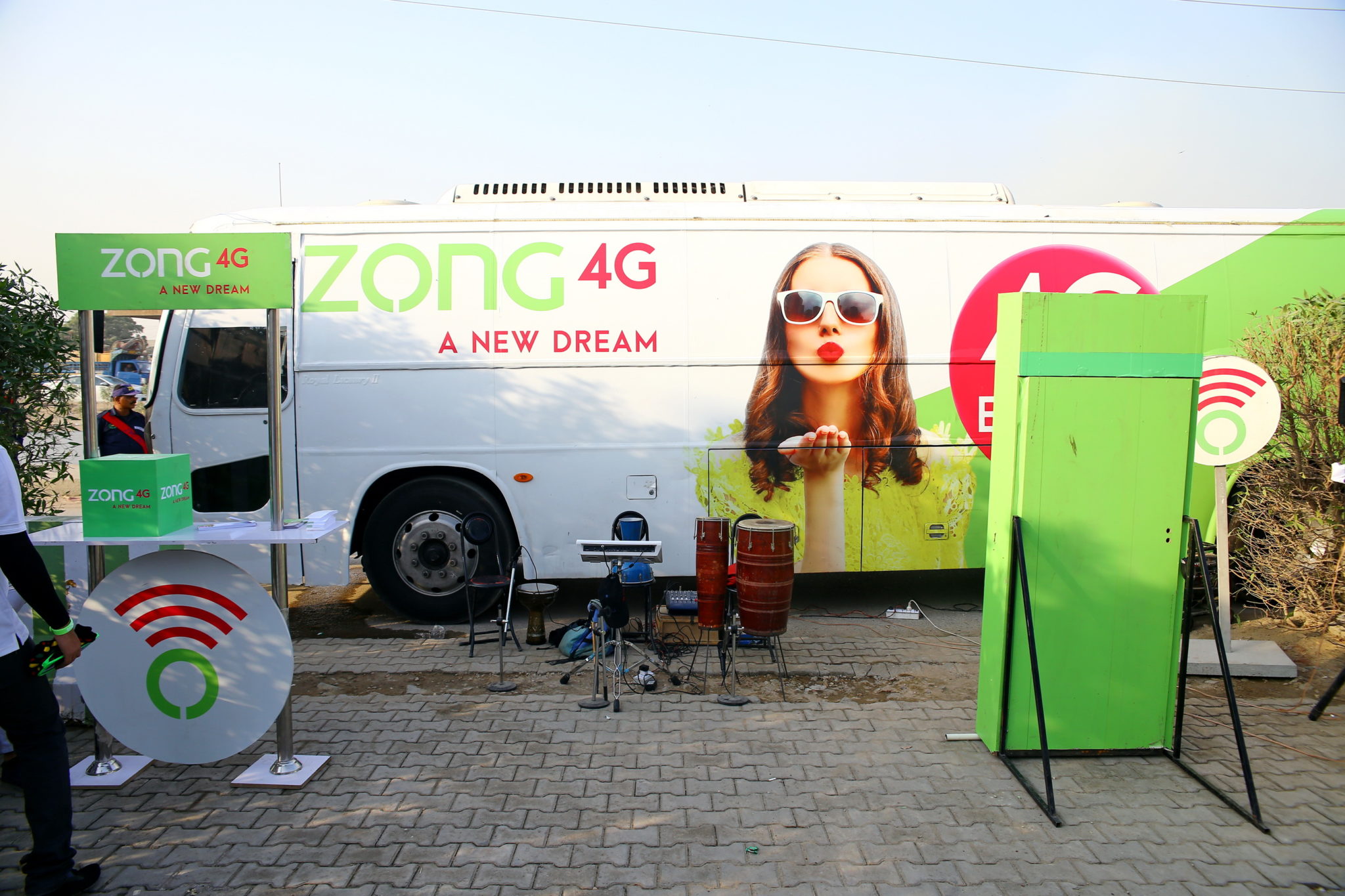
    In a prolific development, Pakistan’s largest telecom network Zong 4G has launched its operations in the port city of Gwadar, a future international business hub which has already seen foreign and local investment amounting in billions of dollars and rupees.

    The launch of fastest 4G services in Gwadar implies that foreign citizens from across the globe and local residents who have been pursuing their respective business endeavours in the port city will have unhindered access to the fastest 4G technology against reasonably affordable tariff. The move is likely to boost online businesses in the fast developing international city and the adjoining belt of rural Sindh.

    With its 4G consumer-base already having exceeded the 6 million mark, Zong eyes to keep expanding its matchless voice and data services.

    “Zong 4G’s network expansion symbolises our customer-centric approach to ensure that the interests of consumers stay above all the rest by offering them best and affordable network,” the telecom company said in a statement.

    “We keep expanding our operational portfolio to ensure enhanced operations in cities, towns, villages, and far-flung areas,” it said.

    The ongoing momentum of the rapid network expansion implies that Zong 4G continues to invest heavily in modernisation of the mobile network to respond to growing market needs.

    Innovation, performance and reliability have long been Zong’s hallmark. The No.1 Data Company of Pakistan epitomises professional excellence and digitised supremacy coupled with its customer-oriented policies with an aim to deliver the best but at highly affordable rates.

  • NTT Docomo trials 5G at 305km/hr

    NTT Docomo trials 5G at 305km/hr

    Japan’s NTT Docomo, parent company NTT and vendor NEC have jointly achieved the first 5G transmission between a 28-GHz base station and a 5G mobile station in a car moving at 305km/hr.

    The trial also achieved a 1.1Gbps high-speed data transmission to a 5G mobile station moving at 293km/hr as well as fast handover between 5G  base stations and a 5G mobile station moving at 290km/hr.

    During the trial at the Japan Automobile Research Institute, a test environment was created using a car traveling at speeds similar to that of Japan’s bullet train high-speed railways.

    To overcome the challenges associated with long-range transmission of 28-GHz radio waves, the base and mobile stations were both equipped with beamforming and beam tracking technology.

    The 5G base station also used massive MIMO antennas with 96 elements and supporting up to two beams, and two antenna units per base station.

    Docomo also succeeded in a wireless live transmission of 4K, 120 frame per second video from a car moving at speeds of 200km/hr using NTT’s real-time 4K high frame rate HEVC codec.

    Sony Business Solutions Corporation provided the 4K camera for the trial, while Docomo Team Dandelion Racing manager Dandelion Limited tuned the trial car for an ultra-high-mobility environment and operated the car on the test course.

  • ZTE on life support after US export ban

    ZTE on life support after US export ban

    ZTE has been forced to cease its global operations as a result of the crippling sanctions imposed on the company by the US government.

    In an announcement to shareholders, ZTE said [PDF] that the major operating activities of the company have ceased due to the activation of the denial order from the US Department of Commerce’s Bureau of Industry (BIS).

    This order prohibits US companies, including ZTE’s major suppliers such as Qualcomm and Google (for Android), from exporting their products to ZTE for a period of seven years.

    The denial order was initially imposed but automatically suspended in March last year on the condition that ZTE adhere to a settlement agreement which included penalizing the senior officials responsible for the decision to contravene the Iran sanctions.

    But the BIS activated the denial order last month after accusing ZTE of violating these conditions by offering full bonuses to executives implicated in the case and failing to issue letters of reprimand in a timely manner.

    The sanction relates to an investigation into ZTE’s alleged sale of telecommunications equipment containing US components to Iran in violation of US sanctions imposed on the country.

    ZTE’s announcement states that the company has sufficient cash to remain in business “as of now”, and is actively seeking a modification or reversal of the denial order from various US government departments.

    But in light of the ongoing trade war between the US and China, the Trump administration may not back down so easily, which would threaten ZTE’s ongoing existence.

  • EllaLink gets anchor customer for trans-Atlantic cable

    EllaLink gets anchor customer for trans-Atlantic cable

    The Atlantic will be getting yet another subsea cable system it seems, but this time it’s on a route rarely travelled.

    EllaLink has won a key anchor customer for a cable system connecting Portugal with Brazil. The research and education networks GEANT and RedCLARA are putting €25 million ($29.6 million) up for direct capacity between Europe and South America.

    As currently planned, EllaLink will bring some 72Tbps of connectivity between the two continents. In South America it will land at both Fortaleza and at Praia Grande near Sao Paolo, two popular cable destinations with plenty of interconnection options.

    In Portugal the system will come ashore at Sines, not far from Lisbon and at a new location distinct from other cables landing in the region and with terrestrial access over to Madrid of course. In between are several islands that will probably see branches, such as Madeira and Cabo Verde.

    We haven’t seen a cable on this route since ATLANTIS-2, and unlike most new builds it doesn’t seem to be on the radar of the big cloud/content guys. That may change as interest in the nearby interconnection market of Madrid continues its rapid growth.

    EllaLink offers a bypass route between Europe and Latin America that doesn’t land first in the eastern US. By taking the direct route and avoiding North America, latency will be substantially reduced, probably by about half or more.

    Alcatel Submarine Networks will be handling the installation, which is envisioned to be complete sometime in 2020.  With much of its funding in place, it looks as if this cable system is ready to move onto the marine survey and construction.

  • China Telecom signs interconnect deal with HGC

    China Telecom signs interconnect deal with HGC

    China Telecom and Hong Kong based fixed line operator HGC Global Communications (HGC) have signed an agreement to build a network interconnection system via the Hong Kong-Zhuhai-Macau Bridge.

    Once completed later this year, the HZM Bridge will be the longest cross-ocean bridge in the world, spanning 55km and directly connecting mainland China to Hong Kong and Macau.

    The two operators plan to deploy a fiber connection along the HZM Bridge to meet anticipated growth in cross-border network traffic and demand for low-latency connectivity across the Greater Bay Area region.

    China, Hong Kong and Macau are involved in the Guangdong-Hong Kong-Macau Bay Area initiative to enhance economic activity in the area and improve the level of co-operation within the region. The project aims to help put the telecoms infrastructure in place to support this increased activity.

    “China Telecom is pleased to establish an interconnection with HGC at the HZM Bridge,” China Telecom managing director of global business Deng Xiaofeng said.

    “With both parties’ diverse network connection routes and our history of close cooperation, the new fiber connection will provide customers of both parties with stable and reliable service, meeting the ever-increasing demand in the Greater Bay Area and neighboring countries and regions.”

    China Telecom has established cross-border links with ten operators in Hong Kong and Macau across five ports since 1998, helping boost total traffic capacity in the region to 17Tbps.

  • Virtutel to use PCCW Global’s nTwine platform

    Virtutel to use PCCW Global’s nTwine platform

    Australia-based wholesale and enterprise communications services provider Virtutel has contracted PCCW Global to bring hosted unified voice services to Australia and New Zealand using PCCW Global’s nTwine platform.

    Virtutel will use the platform to support its expansion plans in the Australian and new Zealand markets.

    The nTwine multi-tenant unified communications as a service (UCaaS) platform includes the provision of a white label hosted platform as well as automated orchestration operation and management.

    It uses PCCW Global’s fiber network spanning 3,000 cities in 150 countries as well as network partnerships with more than 200 global operators to provide international voice and VoIPX services.

    Gartner projects that the global market for cloud based telephony and messaging will grow at a 14.4% CAGR through to 2022, reaching $22 billion.

    “The PCCW Global team has been extremely committed to our partnership and the nTwine uCaaS solution is a perfect fit for our business growth in the coming years,” Virtutel managing director David Allen said.

    “Thanks in large part to the transformative power of cloud computing, in most markets the idea of what makes an office is rapidly changing. We expect that the technologically savvy and forward-thinking business leaders in Australia and New Zealand will appreciate the advantages the nTwine service provides.”

  • 5G-ACIA created to promote 5G in industrial production

    5G-ACIA created to promote 5G in industrial production

    A number of key players from the telecoms, automation and manufacturing sectors have banded together to create a new alliance that aims to promote adoption of 5G in industrial production and to design it for industrial capability from the outset.

    The 5G Alliance for Connected Industries and Automation (5G-ACIA), which was formed at the ZVEI in early April, brings together 26 leading companies including Ericsson, German Research Center for Artificial Intelligence, Fraunhofer Gesellschaft, Bosch, Huawei, Infineon, Intel, Mitsubishi, Nokia, Siemens, Vodafone, and Yokogawa.

    The 5G-ACIA is contributing to the standardization and regulation of 5G technologies. At the same time, the alliance is working to identify and analyze possible use cases and the associated requirements from the perspective of the industrial domain.

    Dr. Andreas Müller, chairman of 5G-ACIA, said the key objective of 5G-ACIA is to ensure the best possible applicability of 5G technology and 5G networks for connected industries, in particular the manufacturing and process industries.

    The alliance brings together important players in the fields of IoT and smart factories for the first time and will make it possible to align 5G with the needs of industries worldwide, Muller said in a statement.

    “5G will become the central nervous system of the Factory of the Future and will have a disruptive impact on industrial production,” he said. “There are many advantages to 5G, including a very powerful wireless networking technology that is suitable even for critical industrial applications.”

  • Airtel sell 25% of its African unit

    Airtel sell 25% of its African unit

    India’s Bharti Airtel reportedly plans to raise up to $1.5 billion through a public listing of Bharti Airtel International, the holding company for its African operations.

    The operator plans to dilute a 25% stake into the holding company for roughly $1 billion to $1.5 billion.

    The public listing is expected to take place in early 2019, the sources said. At the upper end of the estimate, Bharti Airtel International would be valued at $6 billion.

    Netherlands-registered Bharti Airtel International is the holding company of Airtel’s operations in 14 African markets – Nigeria, Chad, Congo-Brazzaville, Democratic Republic of Congo, Gabon, Madagascar, Niger, Kenya, Malawi, Seychelles, Tanzania, Uganda, Zambia and Rwanda.

    Airtel’s African operations have finally started making profits seven years after Airtel entered the African market with the $9 billion acquisition of Kuwait-based Zain’s African assets. The African operations reported their first full year of profit for the financial year of around 18.27 billion rupees ($273.4 million).

    A global listing for Bharti Airtel International is expected to help the parent company get better value for its African operations, deleverage its balance sheet, and help it raise funds to invest in its core Indian mobile business to help it better compete in a tight market.