Tag: telecom

  • Zong 4G Continues The Momentum of F-16

    Zong 4G Continues The Momentum of F-16

    Pakistan’s No. 1 Data Network, Zong 4G has risen to earn the distinguished title of being the “F-16 of Pakistan” on account of its fastest 4G speed and matchless connectivity. The genesis of the F-16 lies in its unmatched speed, precision and accuracy and so are the underlying features of Zong’s 4G network that offers blazing speed at the same reliability level of F-16 to more than 8 million subscribers. With the manoeuvrability like F-16, Zong 4G is enabling people to reach new heights and accelerating the tech-empowered young people to adopt digital lifestyle on the go.

    In telecommunication arena, network coverage outreach and speed are two key characteristics for being a market leader, particularly in 4G domain. Zong 4G is equipped with both these attributes; it is the largest 4G operator in Pakistan having widest network coverage ensuring seamless data connectivity.

  • Docomo invests in semiconductor startup QD Laser

    Docomo invests in semiconductor startup QD Laser

    Japanese mobile giant NTT Docomo, through its subsidiary NTT Docomo Ventures, has invested in QD Laser for an undisclosed amount.

    QD Laser – which was founded in 2006 as an offshoot of Fujitsu Ltd with funding from Mitsui Ventures – develops and manufactures semiconductor lasers, retinal scanning laser eyewear, and other products based on quantum dot laser technology.

    By leveraging its nanocrystal technology, the Kanagawa-based firm achieved mass production of quantum dot lasers capable of operating stably even at high temperature.

    In 2018, QD Laser applied its technology to incorporate a compact laser projector with extremely small output into a spectacle-type device, and commercialized what was claimed to be the world’s first retinal scanning laser eyewear that directly projects an image onto the user’s retina for image display.

    The technology for projecting a direct image onto the retina using a laser does not require the user to focus their eyes to see an image, so it is expected to improve the quality of life of patients with ametropia or corneal opacity and weak-sighted individuals.

    The technology can also be applied for realizing natural-looking augmented reality (AR) that people with normal vision can experience.

    Docomo said it has high expectations for potentials of the retinal scanning laser eyewear developed by QD Laser for resolving various social issues and contribute to creating new services through AR.

  • SK Telecom launches IoT-based cattle healthcare service

    SK Telecom launches IoT-based cattle healthcare service

    SK Telecom has developed a new IoT-based solution which allows farmers to monitor the health of their cattle in real-time using Semtech’s LoRa devices and wireless radio frequency technology (LoRa Technology). Dubbed “LiveCare”, the product is a LoRa-equipped biocapsule which is implanted into a cow’s gastrointestinal tract to monitor a variety of health indicators. The new service will see biocapsules packed with a communication module connected to the operator’s LoRA-based IoT network. The smart biocapsule is then injected into the stomach of a cow, monitoring body temperature and potential hydrogen levels, with data recorded and then sent to a central server as well as cattle farm owners via a smartphone or computer.

    Thus, ranchers can monitor the data transmitted from the devices for anomalies in a cow’s body temperature and other vitals to detect the onset of disease, estrus and to forecast delivery of calves.

    The LiveCare device is shielded from being tampered with by outside conditions due to its strategic position inside the cow itself. This solution is expected to drastically improve the quality of life for the cow and by extension the cattle as a whole on the dairy farm.

    “Our unique solution lets farmers know immediately when a cow’s health is compromised. It takes the guesswork out of farming and lets the rancher focus on preventing cattle disease,” said Taehee Moon, project leader for the small farm project group of SK Telecom. “Healthier cows mean more milk can be produced and dairy farms can focus more on growing their business.”

    According to SK Telecom, a trial run on a South Korean farm using the technology showed an increase in annual milk harvest of 1,200 liters per cow, an increase of $1,100 in income per cow for the farmer and an additional $400 in savings for each estrus successfully planned using the LiveCare solution.

    SK Telecom plans on extending its services to provide automatic notification to ranchers of contagious disease as well as location tracking in the near future.

  • Telenor Pakistan and Telenor MicrofinanceBank join hands with BISP

    Telenor Pakistan and Telenor MicrofinanceBank join hands with BISP

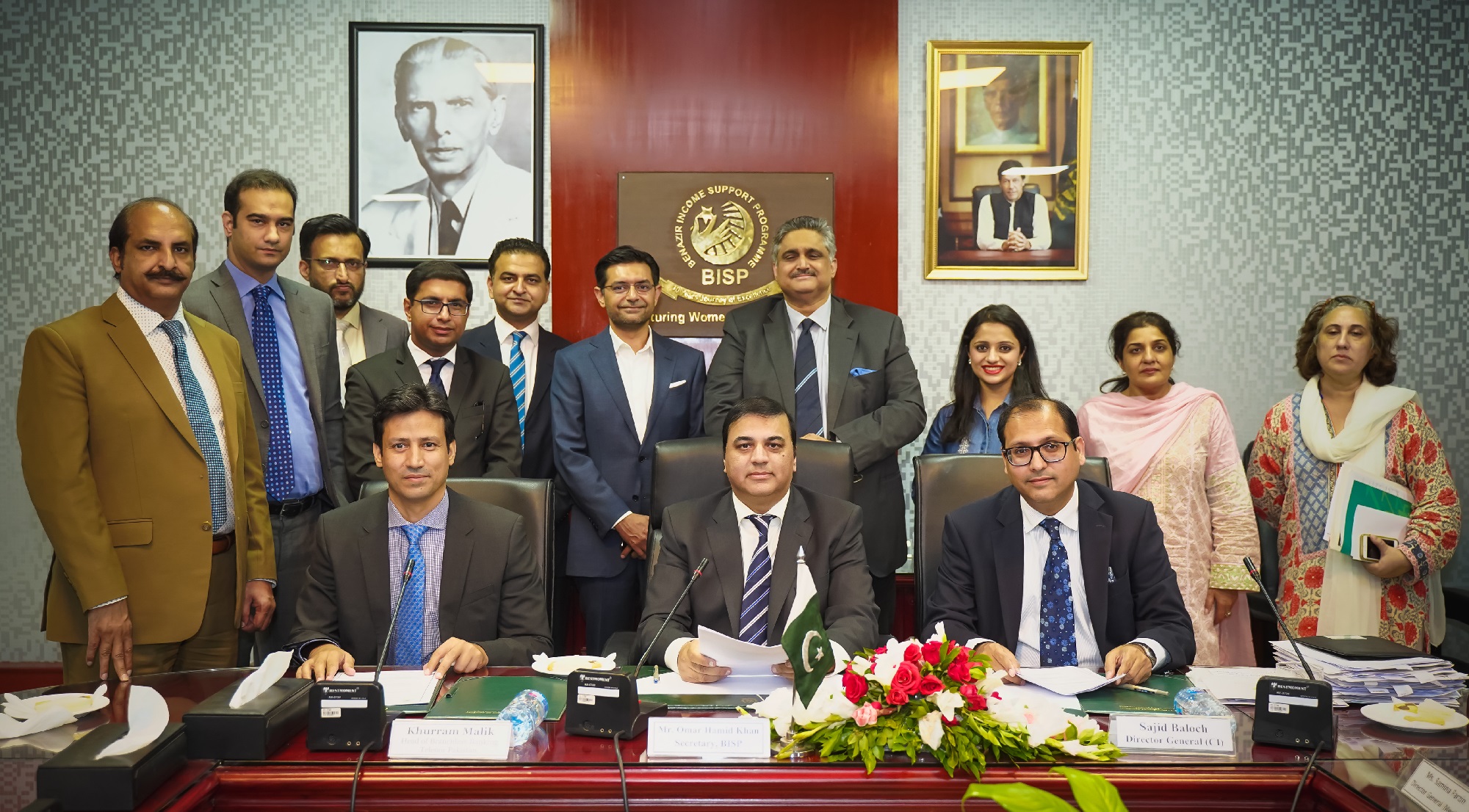
    Continuing their pursuit to the shared mission of empowering the Pakistani society, Telenor Pakistan and Telenor Microfinance Bank have partnered with the Benazir Income Support Program (BISP) to facilitate its beneficiaries across Pakistan in several ways that include creating business opportunities, granting microcredit, and extending support in education and health in the long run.

    As per the agreement, Telenor Pakistan and Telenor Microfinance Bank will select BISP beneficiaries as potential retailers for GSM & Financial products. Telenor Pakistan will give the chosen beneficiaries a unique opportunity to become retailers of its GSM products and services and thus improve their source of livelihood. Telenor Pakistan will pilot this initiative in Chakwal District among 20,000 beneficiaries, which will be later scaled to 34 Districts with a reach to 1.2 million people. Moreover, Telenor Pakistan will enlist BISP as a partner for its CSR contributions, be it in kind or cash, to help support beneficiaries in emergency situations or natural disasters.

    Through the partnership, Telenor Microfinance Bank will reach out to the beneficiaries identified by BISP to assess their credit worthiness and provide them with micro-loans. In the process, the Bank will also educate customers on the uses of m-Wallets, handling and repaying of the micro-loans, and graduating to higher loan amounts. Customers will also be offered a term-life insurance product with natural and accidental death cover of PKR 100,000 including pre-existing conditions.

    “We are pleased to have joined hands with Telenor Microfinance Bank and BISP to extend the best of our contributions to the deserving citizens,” said Haroon Bhatti, Chief Business Officer, Telenor Pakistan. “All three of the agreement partners including Telenor Pakistan, Telenor Microfinance Bank, and BISP share the vision of an empowered Pakistan where every citizen has access to opportunities and solutions to improve means of their livelihood and provide a better lifestyle to their family. The partnership also aims to fight unemployment as more people will be able to start their own business.”

    “This partnership is of great significance to us as it enables the underserved by providing them access to flexible micro-loans.” said Khurram Malik, Head of Branchless Banking, Telenor Microfinance Bank. “Driven by our mission of empowering societies, we will continue to lead in innovating financial solutions to the people of Pakistan and contributing to the country’s vision 2025.”

    “Running this unmatched poverty alleviation program in Pakistan since 2008, we have helped millions of deserving families fight inflation and enhance their purchasing power,” said Secretary, BISP Mr. Omer Hamid Khan. “We are pleased to partner with the country’s leading digital services and microfinance players to empower the BISP beneficiaries in more innovative ways. We are thankful to both parties for finding ways to help the deserving create their own sources of livelihood and gain access to formal financial solutions which will work to boost financial inclusion nationwide. We hope that the collaboration goes a long way and yields results that beat expectations.”

    In the long run, the partnership may also cover Telenor Pakistan’s Safe Internet Program as well as the e-Education project. In the Safe Internet Program, Telenor educates girls and boys on using Information Communication Technology (ICT) and the Internet responsibly in a safe manner. In the e-Education project, Telenor provides free-of-cost international-standard digital educational content to primary schools in order to improve conceptual understanding of science and other subjects.

  • Singtel, StarHub and M1 must keep innovating to stay in the game

    Singtel, StarHub and M1 must keep innovating to stay in the game

    Signs have not been good lately for Singtel, StarHub and M1, the country’s three large telecommunications companies. Technological innovations, as well as changes in regulations, have sent shock waves through the big three companies, and virtual mobile telcos such as MyRepublic, Zero1 and Circles.Life have also posed a threat to the larger players.

    But with new kid on the block, TPG Telcom, set to launch later this year, the question remains whether there is still a place for one more large telecommunications company in an already crowded market.

    The existing telcos say that since the country is small and has a mature mobile market with very high rates of penetration, perhaps three’s a company, but four would be a crowd.

    In other places such as Germany, Denmark and the UK there is consolidation of only three mobile network operator (MNO) providers. Indonesia, whose population of 250 million is huge, compared to Singapore’s 5 million, is also leaning toward consolidation.

    Three years ago, the  Info-communications Development Authority of Singapore (IDA) asked whether expanding mobile services in the country is a viable option. Today, opinions still are divided as to whether or not there is room in Singapore for a fourth telco.

    One concern is that tougher competition will lead to fewer revenues in the mobile sector, which would in turn discourage service innovation, and even investments as well.

    On the opposite side is the IDA, which has evolved into the Infocomm Media Development Authority (IMDA), says that there is space for telcos to innovate their services, as well as room for more competition in the market.

    When a new MNO enters the market, this may also spur existing ones to further invest in innovating their networks in order to stay competitive.

    TPG Telecom, which is based in Australia, is already making quite a splash in Singapore, with a special offer for seniors, an audience not often catered to by telcos. TPG is giving a fee mobile plan for people aged 65 and above, complete with a SIM card, 3GB of data and unlimited mobile calls.

    Other telcos are greeting TPG’s launch as a splash of cold water on their faces, to get them to innovate their strategies. The telco industry is marked by both competition and innovation, and companies have to work hard to keep up. Their strategies must remain both quick and agile to remain enticing to existing customers as they attract others.

    For example, telcos have been threatened by over the top (OTT) voice, text and messaging options that only require WiFi for consumers to make calls and send messages. This has meant that telcos can no longer rely on old revenue streams that depended on subscription plans, infrastructure and bandwidth, as consumers ceased to need them as much.

    Big players in the tech market such as Apple, Amazon and Google offer such OTT services merely using data connections, which removes the need for additional infrastructure.

    Industry experts predict that WhatsApp, Skype and different OTT applications will cause telcos the loss of around US$400 billion in revenue for this year alone.

    How then can telcos, which have invested millions on infrastructure, secure their future despite fewer returns on those investments, or else, face the possibility of growing redundant in the industry.

    Perhaps the bigger question here is not whether there is room in the country for yet another mobile telecommunications company, but to ask whether the existing companies are doing enough to innovate in order to maintain relevance in a quickly evolving industry.

  • Indian telco sector facing three more quarters of losses

    Indian telco sector facing three more quarters of losses

    India’s telecoms sector is facing at least three more quarters of losses due to the ongoing price war, according to industry body the Cellular Operators’ Association of India (COAI).

    The Indian GSM industry body’s director general Rajan Mathews told that he believes the market’s current tariffs are unsustainable in the long term.

    The industry’s woes are being added to by high license fee and spectrum charges, including high upfront payments, which has guaranteed that the current fiscal year will be tough for the industry.

    The current situation commenced in 2016 when disruptive new entrant Reliance Jio Infocomm entered the market with entirely free services during an extended promotion period. The operator continues to charge only for data, at low rates.

    Jio’s strategy prompted established operators to cut prices to compete, and prompted a wave of consolidation that has seen the market reduced to just three private operators – Jio, Bharti Airtel and the combined Vodafone India and Idea Cellular (now Vodafone Idea).

    Mathews said that there is light at the end of the tunnel, and clarity I expected to emerge in the fiscal year 2019-2020, which begins in April next year.

    But he warned that if tariffs continue to decline it will be detrimental to the health of the industry as it will threaten operators’ ability to invest in emerging technologies and in expanding coverage.

  • China Telecom enters Philippines third telco fray

    China Telecom enters Philippines third telco fray

    China Telecom and Telekom Austria’s Mobiltel have become the latest companies to purchase bid documents for the selection process for the Philippines’ third telco player.

    The operators purchased bid documents from regulator NTC on Saturday.

    The two overseas companies have joined six others, including Norway-based Telenor and fixed line operator Philippine Telegraph and Telephone (PT&T), in purchasing the application documents for the beauty contest style section process.

    China Telecom was approached by Philippines president Rodrigo Duterte last yearwith the opportunity of being awarded the third telco license, before the government elected to hold the selection process instead.

    Any overseas entity winning the third telco license will need to establish a joint venture with local companies in order to comply with the Philippines’ restrictions on foreign ownership in telecoms infrastructure.

    Meanwhile local company NOW Telecom, which has been vying to become the market’s third telco and has been fighting a legal battle to disrupt the selection process, has had its application for a temporary restraining order against the selection process rejected by a Manila court.

    The court reportedly found no basis for the restraining order on the grounds that NOW’s case does not meet the requirements such as a clear right to be protected, or an urgent need for an injunction due to the risk of irreparable injury.

    Bidders will have until early November to submit their bids for the selection process, which will be judged on criteria including guaranteed investment and rollout commitments.

  • Spark launches flexible pricing broadband plan

    Spark launches flexible pricing broadband plan

    New Zealand operator Spark has moved to differentiate its broadband offerings by launching a new unlimited fiber broadband plan that offers consumers discounts on months they use less data.

    The company’s “Unplan” branded fiber broadband plan offers unlimited bandwidth for NZ$85 ($55.50) per month.

    But on months where consumers use less than 60GB of data this price reduces to NZ$65, and for months where 60GB to 120GB of data is consumed it reduced to NZ$75.

    An entertainment plan is also available for an additional NZ$10 per month that comes with 6 months of free Netflix and a subscription to the Spark-owned Lightbox SVOD service for the life of the plan.

    The offer is also available via Spark’s fixed wireless broadband service, but restrictions will apply on usage of over 300GB of data in a single month of regular usage of 180GB in an average month.

    “We think it’s a fairer way of offering broadband, as it reflects our customers’ needs. This is the first broadband plan in New Zealand that flexes to reflect customers’ data usage – and it has the potential to save our customers a lot of money,” Spark consumer lead Joe Goddard said.

    “It’s also the first plan that’s only available on new generation broadband options of wireless broadband and fiber.”

  • Telenor, PT&T interested in Philippines third telco bid

    Telenor, PT&T interested in Philippines third telco bid

    At least six companies have purchased the bid documents related to the selection process for the Philippines’ third telco.

    A representative of the nation’s telecoms regulator NTC told local media on Tuesday that Telenor and three local ventures, as well as another company that has asked not to be named, had purchased bid documents for the selection process.

    Local fixed line operator Philippine Telegraph and Telephone (PT&T) has affirmed its interest in joining the fray by purchasing the documents.

    The fixed line operator has evaluated the terms of the bid documents and found them acceptable, and believes it has a strong chance of winning as the only local company that can satisfy the requirements, PT&T’s CEO James Velasquez told the publication.

    More potential applicants may purchase bid documents in the coming days.

    Bidders will have until between November 5 and November 7 to submit their bids for the beauty contest style selection process, and the winning applicant could be announced by as early as the same month.

    Any overseas company winning the license will need to partner with at least one local company to comply with the nation’s limits on foreign ownership of telecoms operations.

  • Philippines finally sets terms of third telco selection

    Philippines finally sets terms of third telco selection

    The Philippines’ telecoms ministry and regulator has finally published the formal terms of the selection process for the market’s third operator.

    The final terms of reference for the beauty contest style selection process have been released by the Department of Information and Communications Technology and National Telecommunications Commission (NTC).

    Compared to the most recent draft, the final terms give a heavier weight to guaranteed internet speeds and allow more flexible terms on payment of performance security bonds, the report states.

    Now that the terms have been released, the NTC plans to commence the sale of bid documents for 1 million pesos ($18,450) each on October 6, and has set a bid submission deadline of November 5.

    A winner will be selected based on the highest committed level of service, including population coverage and internet speed promises, over a five-year commitment period.

    With the modified weighting, the most important criteria is now national population coverage, which will be weighted at 40%. The weighting for capex and opex commitments has meanwhile been decreased to 35% with the weight for minimum average broadband speed increased to 25%.

    The draft terms of reference for the selection of the third telco to break the Philippines’ telecoms duopoly of Globe and PLDT were released in February.

    These terms have been subject to multiple revisions, delaying the selection process. But after Philippine president Rodrigo Duterte threatened to personally intervene in the process and select a winner himself in “about 30 minutes,” the regulator responded by quickly reaching agreement on the final terms.

  • APAC telcos to have 477m 5G subs by 2023

    APAC telcos to have 477m 5G subs by 2023

    Asia-Pacific’s mobile operators are expected to have a combined 477 million 5G subscriptions by 2023, according to GlobalData.

    In a new report,  the research firm said that it expects the first 5G service launches by operators in the region next year.

    Total mobile users in Asia-Pacific are meanwhile on track to reach 2.87 billion by the end of the year, growing to 3.3 billion by the end of 2023, for a CAGR of 2.8%.

    Subscription growth will be driven by the expansion of wireless networks in underserved markets, GlobalData predicted.

    Meanwhile 4G will become the dominant mobile technology by share of subscriptions this year, outnumbering 2G for the first time.

    The total LTE market share is on track to nearly double by the end of the forecast period in 2023 driven by continuous expansion of LTE networks by operators in the region.

    Data services revenue is meanwhile predicted to account for 60.3% of total mobile service revenue generated by operators in the region between 2018 and 2023.

    GlobalData has also estimated that MVNOs in Asia-Pacific have around 194 million subscribers, accounting for 4% of the total market.

  • Myanmar telcos launch mobile scam info campaign

    Myanmar telcos launch mobile scam info campaign

    Myanmar’s mobile operators have teamed up to increase awareness of the importance of mobile security in the wake of a rise in the number of mobile phone scams targeting the nation.

    MPT, Ooredoo Myanmar, Telenor Myanmar and MyTel have launched a join information campaign covering various types of mobile phone fraud and steps consumers can take to protect themselves.

    The operators said Myanmar’s rapid increase in mobile penetration over the last few years has made the market an attractive target for both local and international cybercriminals.

    Over the last few weeks, there has been an increase in the number of missed call scams, involving tricking consumers into dialling back premium rate services, as well as smishing scams, involving sending SMS to coerce users into filling their information into an online form believing they are updating their contact details or registering for a special offer from a legitimate business.

    The operators are advising their customers not to install applications or download files from untrusted sources, avoid answering calls from international numbers they do not know and hang up immediately on calls where nobody appears to be on the other end.

    The advice also covers tips including avoiding providing callers with PINs and one-time passwords, or SIMs from unknown sources, and conducting a factory reset before selling or giving away a phone.

  • SmarTone launches smart building solution

    SmarTone launches smart building solution

    Hong Kong’s SmarTone has unveiled a new smart hotel and smart home solution, developed as part of the second wave of its Innovation Hub program.

    The new solution is an end-to-end, IoT-based solution aimed at helping property developers create a personalized and convenient experience for residence and hotel guests.

    It is designed to integrate existing property management systems into a single platform for providing services including check in and check out with mobile keys and app-based control of room facilities.

    SmarTone provides networking support for the solution via its mobile network, fiber broadband and Wi-Fi footprints.

    The solution will be made available to both property owners and consumers. It was developed at SmarTone’s Innovation Hub.

    “With the launch of our Innovation Hub last year, we have a dedicated open ecosystem to drive cross-industry collaboration and propel Hong Kong on its smart city journey,” SmarTone CEO Anna Yip said.

    “To cater for the trend of the hospitality industry and meet the needs of today’s digital-savvy consumers, at the outset SmarTone initiated partnerships with property developers at both the conceptualization and construction stages to deliver an intuitive and engaging experience.  This allows us to get closer to revolutionizing the quality of everyday life and achieving customer satisfaction throughout the smart journey.”

  • Telenor Myanmar launches Asia 9 roaming package

    Telenor Myanmar launches Asia 9 roaming package

    Telenor Myanmar has launched a new international roaming package offering data roaming at local rates in nine Asian markets.

    The new Asia 9 plan offers data roaming at 9 kyats ($0.0058) per MB in Vietnam, Thailand, Malaysia, China, Singapore, Cambodia, Bangladesh, Pakistan and Indonesia.

    Aimed at prepaid and postpaid customers traveling to or working in the markets, the new plan has a weekly subscription fee of 900 kyats.

    Standard data rates in the nine countries start at 500 per MB. During a promotional period which will last until further notice, Telenor Myamnar will offer customers not subscribing to the new roaming package data roaming in the nine markets at 14 kyat per MB.

    “Telenor possesses one of the best data networks in the region and taking the best out of it, we created this new ‘ASIA 9’ promotion. Telenor customers in Myanmar can now browse the internet as if they are in their own country while they are traveling or working in those 9 Asian countries,” Telenor Myanmar CMO Amaresh Kumar said.

    “This would create the best chance for our customers to stay connected with their friends, families and even to run a virtual office. To offer the customers with the most affordable and innovative services that suit their needs is always on top of our priorities and we will continue to do so.”

  • Malaysia telco sector seen facing stiff headwinds

    Malaysia telco sector seen facing stiff headwinds

    The telecommunications (telco) sector is expected to face difficult headwinds given the heightened regulatory pressure and competition that is unlikely to abate anytime soon, said PublicInvest Research analyst Eltricia Foong.

    “We reckon that the operating landscape for both mobile and fixed-line operators will continue to be challenging. In the past, the fixed-line broadband market had been nonchalant but with the implementation of Mandatory Standard on Access Pricing (MSAP) following the change of federal government in May, this segment has since been hit by lower margin and greater competition,” she said in her report.

    With the implementation of MSAP, wholesale prices for network services are expected to be reduced by 8.7% to 12.1% between 2018 and 2020 while retail broadband prices are expected to decline 25% by end-2018.

    Although Telekom Malaysia (TM) currently monopolises the fixed-line fibre network, lower wholesale prices and the possible opening of its fibre network could mean greater competition in the future.

    Foong said the mobile segment has gone through a price war in recent years but judging from the relatively high profit margins enjoyed by operators, she believes that there is still room for further decline in prices, noting the risk of the regulator pressing for lower prices in the future.

    “We note that the mobile industry has been hit by price competition in recent years, particularly the postpaid segment where average revenue per unit (Arpu) has declined from a high of RM91 in 2013 to RM86 currently. Interestingly, prepaid Arpu has been holding up at around RM36 during the same period, though competition had temporarily brought down the rate to RM32 in 2016,” she said.

    She noted that Digi was hit the most, as its prepaid pricing was reduced from about RM40 in 2013 to RM32 currently.

    Operators in Malaysia continue to enjoy higher profit margin relative to regional peers, with net margins of between 10% and 24%. In Thailand, Indonesia and Singapore, operators’ net margins are between 2% and 20%.

    While the price competition that started in 2015 has led to lower profit for most telco players, Foong said, overall Arpu is not likely to improve but instead, may continue its downtrend, either due to market forces or regulatory pressure.

    “In an environment of falling revenues, cost optimisation will be the key for players to strive in this challenging telco industry. Digi and Maxis have proven track records in cost management while TM and Axiata are high-cost operators. This could also mean that there is limited scope for Digi and Maxis to extract greater cost efficiency going forward,” she said.

    For TM, the MSAP would result in lower revenue for its wholesale business and lower Arpu for Unifi services, and it is crucial for TM to achieve better cost efficiency in order to cushion the impact of further margin erosion.

    Foong said TM has the highest manpower cost as a percentage of revenue at 22% in FY17, compared to under 10% for the mobile operators. Although its high proportion of staff cost is justifiable with its extensive backhaul infrastructure, it is still lagging in terms of achieving optimal level of productivity.

    “Measured against revenue per employee, TM has the lowest count of RM500,000. Generally, we feel that any staff downsizing measures by TM would be costly and perhaps sensitive given the presence of labour union,” she said.

    Other costs that TM could potentially rationalise are supplies and materials, and maintenance costs.

    Given the weak prospect of declining revenue while cost rationalisation may be an uphill challenge for TM, Foong does not rule the possibility of TM being privatised in the future, which may make it easier for TM to restructure its operations.

    However, a merger between TM and Axiata is unlikely to materialise as the differences in corporate culture would impede a smooth integration process.

    Operators with good management track records like Digi and Maxis could still leverage on cost efficiency to minimise earnings decline in the near term, though the scope to do so is limited.

    Meanwhile, the less cost-efficient operators are likely to post a more significant drop in earnings in an environment of declining revenue, which would jeopardise their ability to maintain their historical dividend payout.

    “Prior to the onslaught of price competition in 2015, the telco sector had been paying attractive dividend but this has since deteriorated over the years. Between 2014 and 2019, our projected DPS CAGR for the sector is -12%.

    “In view of the unexciting earnings growth prospects, higher operating risk and lower dividend, we downgrade the telco sector to ‘underweight’. We cut our Arpu assumptions for FY19-20F for all the mobile operators and reduce terminal growth to 1.5%,” said Foong.