Tag: telecom

  • Colt Asia Cloud PBX Service to launch in April

    Colt Asia Cloud PBX Service to launch in April

    Colt Technology Services has announced it will launch its Colt Asia Cloud PBX Service for enterprises in the region starting in April.

    The company will offer an all-in-one solution combining PBX functionality, IP phones and remote access connectivity to the office.

    The service is aimed at alleviating customers from the need of purchasing their own PBX. Instead customers will use the PBX system installed within Colt’s data centers in exchange for a a small upfront cost and monthly fee.

    Calls made using the service within the same organization will be treated as internal extension numbers and be placeable for free.

    Numbers provided by the company will be able to use the full set of PBX features including call transfer, hold and conference calling.

    “Cloud computing is already a standard in today’s IT environment. This reality also applies to voice communications, including telephony, that are indispensable to corporate business,” Colt CCO for Asia Kenji Hioki said.

    “With this service, Colt is dramatically reducing the cost of acquiring PBX and corporate telephony, in turn reducing the associated maintenance and overhead expenses that come with a communications network spanning multiple sites.”

  • China Unicom Global expands CUniq MVNO to US

    China Unicom Global expands CUniq MVNO to US

    China Unicom Global has extended its MVNO venture into the US, which will allow customers to keep Hong Kong, mainland China and US mobile numbers on a single account.

    The operator’s CUniq MVNO business has expanded to America after launching in Europe late last year. CUniq now allows data sharing across 47 countries and regions including Hong Kong, Europe and the US.

    Customers will be able to use data, voice and SMS services in the 47 countries. The service is supported by a 24/7 customer support service in Chinese, English and Cantonese.

    In the US, CUniq will have three plans, tailored to global businesspeople, American local users and tourists respectively. It will support electronic payment including WeChat Pay, Alipay, Visa, MasterCard and UnionPay.

    China Unicom Global president Shusen Meng said the company plans to continue expanding its CUniq business into more countries and regions in the future.

    CUniq is being developed in collaboration with multi-country cloud-based MVNE Plintron.

  • Indian telcos to start their 5G journeys this year

    Indian telcos to start their 5G journeys this year

    India’s plan of utilizing 5G technology to keep up with the rest of the world may soon become a reality.

    Indian operators will start the process of upgrading to 5G technology from this year. According to Huawei India CEO Jay Chen, 5G technology in present form can deliver up to 1Gbps download speed.

    “I can tell you Massive MIMO (Multiple Input Multiple Output) technology (part of 5G technology) will go to India this year. We have had discussions with leading telecoms operators who are interested and right now it is only available with Huawei for commercial deployment,” Chen said in an interview. Wide-scale commercial deployment of 5G is expected to start in India in the next three years.

    Bharti Airtel Chairman Sunil Bharti Mittal had earlier said that the MIMO technology available with Huawei and ZTE can increase current capability of spectrum by up to 8 times at an additional cost of only about 20%.

    Chen said that 5G standards are expected to be firmed up next year when wide scale commercial deployment of 5G will begin.

    “We have already deployed 4.5G networks in 13 circles across India which with minor upgrades can be transformed to 5G. With 4G subscriber base in India increasing, the download speed will reduce for which operators will need to begin start 4.5G services,” said Chen.

    5G will bring advanced technology which will change the way network coverage is provided to subscribers.

    “At present, subscribers runs to connect with the network. We are ready with pilots for multi MIMO technology that will follow subscribers. Dedicated spectrum frequency (beam forming) will connect with device of the subscribers and follow them wherever they go,” explained Chen.

    He added that the Indian industry is improving significantly with consolidation in the sector and end of spectrum shortage which provides good opportunity for telecoms equipment companies.

    “Earlier their was spectrum scarcity in India. There were 13 operators who were involved in tariff war. Since last year we have not seen operators complaining about spectrum scarcity. Availability of spectrum gives them opportunity to deploy latest technologies like 5G. With Huawei we see this a very positive move. Our growth has also improved in India in last two years,” Chen said.

    He said that Indian operators are now moving in the direction where they can catch up with rest of the world.

  • China to end domestic roaming fees by October

    China to end domestic roaming fees by October

    China’s big three mobile operators have revealed plans to stop charging domestic roaming fees by October.

    China Mobile, China Telecom and China Unicom have announced they will end the practice of charging inter-province roaming voice and data fees.

    The operators are also planning to introduce discount pricing for small and midsize businesses in a bid to encourage corporate customers to adopt more network technologies such as cloud computing.

    The operators are responding to pressure from the government to reduce the price of telecoms services to spur consumer spending and encourage greater adoption of network technologies.

    China has also been seeking to encourage price competition in the mobile sector, and opened up the market to MVNOs in 2013.

    These efforts were also extended to the fixed broadband market in 2014.  According to the Reuters report, the government recently announced it has approved applications from 198 private enterprises seeking to provide broadband services under a pilot project.

    China’s move to abolish domestic roaming will take the industry one step closer to meeting current GSMA chairman and Bharti Airtel founder Sunil Bharti Mittal’s recent call and doing away with roaming altogether – including international roaming.

  • Ant Financial invests in Globe Telecom’s Mynt

    Ant Financial invests in Globe Telecom’s Mynt

    Alibaba’s Ant Financial is making its first foray into the Philippines via partnership with Ayala and an investment into Globe Telecom’s Fintech business unit Mynt.

    The fresh capital infusion will help Mynt achieve its vision of becoming a world-class online and offline payment provider as well as scale up its mobile wallet services and quickly expand its digital financial services.

    Mynt is a wholly-owned subsidiary of Globe Capital Venture Holdings (GCVHI) under Globe Telecom. Upon closing of the transaction, Ant Financial will own a substantial minority interest in Mynt, while Ayala Corp will acquire a minority interest. GCVHI will hold the remaining equity interest.

    Ernest Cu, Globe President and Chief Executive Officer, Ernest Cu said the capital infusion from will help position Mynt to democratize financial services in the Philippines.

    Mynt is pioneering mobile and digital initiatives that provide financial services that previously were not available to most Filipinos. It is currently the biggest mobile money base in the Philippines with over 3 million registered customers and 1 billion pesos ($19.9 million) worth of transactions per week.

    Mynt claims to be the only company in the country that serves as a one-stop shop for Fintech services for consumers, merchants, and organizations through GCash and Fuse Lending.

    Mynt operates GCash and Fuse Lending. GCash is a micropayment service used to buy prepaid load, pay bills, send money, make donations, shop online, and purchase goods without the need for cash.

    Fuse Lending offers personal and business loans to unbanked and underserved Filipinos through the use of mobile technology, alternative data, as well as innovative credit scoring methods.

  • Indonesia to hold limited spectrum

    Indonesia to hold limited spectrum

    The Indonesian government plans to hold a limited tender for unused spectrum in the 2.1-GHz and 2.3-GHz bands by the middle of the year.

    Communications and informatics minister Rudiantara has announced that the government expects to issue the terms of the tender process by the end of March, and to announce the winner by mid-year.

    Only existing operators will be entitled to participate in the limited tender, the minister said.

    The 2.1-GHz band is used by operators including Telkomsel, Indosat Ooreedoo, XL Axiata and Hutchison 3 Indonesia for 3G services, while the 2.3-GHz band is used for 4G wireless broadband services in parts of the country.

    Plans to reallocate the unused capacity in the 2.1-GHz band returned by Axis Telecom in 2014 following its merger into XL Axiata have been in the works since 2015, but the process has been delayed by technical and other difficulties.

    According to the report, only half of the unused 30 MHz of capacity in the 2.3-GHz band will be allocated.

    Indonesian operators, facing a spectrum crunch in major cities, have responded enthusiastically to the announcement, and are urging the government to ensure there are no further delays.

  • India’s Jio introduces its first price plans

    India’s Jio introduces its first price plans

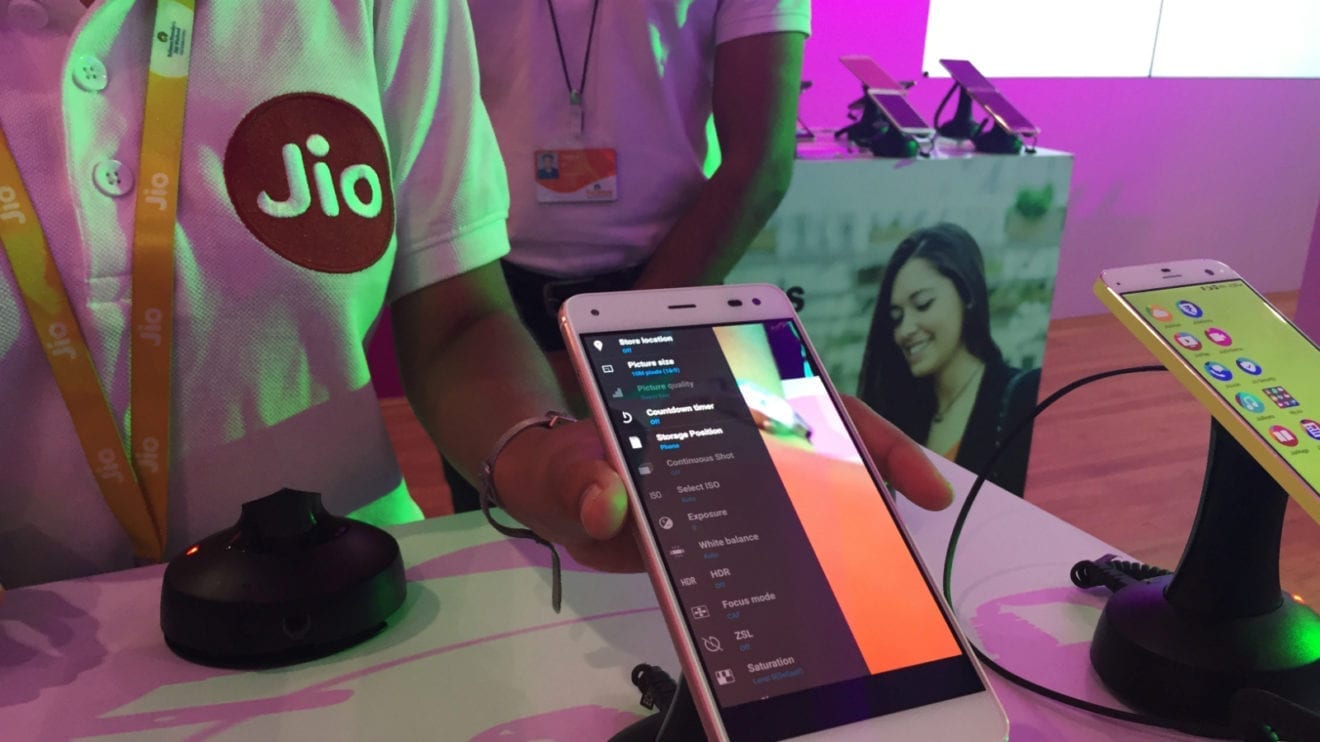
    Disruptive new Indian 4G operator Reliance Jio’s free services offer will soon be coming to an end, but the operator has announced an aggressive new pricing strategy in a bid to retain as many of its new customers as possible.

    Jio launched nationwide services in September last year, but made all services available for free as a promotional offer. The company subsequently extended this promotion until March 31.

    The aggressive marketing strategy has helped Jio sign up new customers at a record rate – the operator recently revealed it is nearing 100 million customers. But a number of these are expected to port out once the free services period comes to an and, due in part to the current patchy nature of Jio services.

    In an attempt to limit churn, Jio has introduced a new Prime offer that will take effect from April 1. Under this offer, customers will be able to pay a one-time 99 rupee ($1.48) fee for prime membership, and another 303 rupees a month for unlimited voice calls and 30GB of allocated data.

    Jio’s rivals, which have already been feeling the impact of the operator’s entry into the market and been pushed into making their offers more competitive, may find themselves needing to further cut prices or increase allocations in response.

    This could put even more pressure on a hotly-competitive telecoms market and accelerate the consolidation trend.

  • Ericsson launches telco security automation tool

    Ericsson launches telco security automation tool

    Ericsson has launched a new telecoms security product designed to enable automated security orchestration across multiple ICT domains.

    The Ericsson Security Manager supports out-of-the-box security for telco cloud operations, physical and virtual networks and digital support solutions, as well as enterprise networking applications.

    It is designed to provide real-time, contextual security management using a customizable, adaptive policy engine.

    The new product will comprise part of the Ericsson Digital Support System, and will enable customers to set and enforce security policies to protect important assets. It supports continuous monitoring of threats, vulnerabilities and compliance with the capability for automated remediation

    “In today’s ICT landscape, security is of the utmost importance for organizations across all domains,” Ericsson head of IT and cloud products Anders Lindblad said.

    “Ericsson Security Manager leverages our leadership and expertise across a wide array of ICT domains to bring to the market an innovative, adaptive and contextual security automation solution for telecom networks as well as cloud, IoT and enterprises.”

    Ericsson plans to showcase the new suite at Mobile World Congress 2017 in Barcelona later this month.

  • Energia Communications to deploy G.fast nationwide

    Energia Communications to deploy G.fast nationwide

    Japan’s Energia Communications has signed a partnership and reseller agreement covering Nokia’s G.fast technology.

    Energia Communications plans to offer G.fast nationwide across Japan as part of an initiative to expand its utility service provider operations.

    G.fast is designed to squeeze fiber-like speeds from copper cable over last-mile connections such as apartment buildings with no fiber wiring. Energia Communications will use G.fast to replace the use of traditional VDSL2 technology.

    Energia Communications last year became Nokia’s first G.fast customer in Japan and one of its first customers for the technology worldwide, according to Energia Communications CEO Satoshi Kumagai.

    “We have been very happy with the service and have complete trust in Nokia’s capability and strengths of its fixed access business, which is why we decided to take the relationship forward as a successful business partnership/reseller model,” he said.

    Nokia’s Bell Labs holds the current world speed record for a single copper pair, having demonstrated speeds of 10Gbps using its XG-FAST technology in 2014.

    “This strategic partnership with EneCom will increase G.fast deployments in Japan, providing real benefits to subscribers who might otherwise be unable to enjoy ultra-broadband speeds. Japan is a very important market to us, and we look forward to a successful venture that will boost local economies,” Nokia Japan head Jae Won added.

  • StarHub Q4 profit falls 33.2%

    StarHub Q4 profit falls 33.2%

    Singapore’s StarHub revealed its fourth quarter profit fell 33.2% to S$54 million ($38.6 million), as a result of higher costs and growing competition.

    Revenue for the quarter stayed flat at S$634.8 million, but service revenue grew 1% year-on-year to S$567.1 million.

    Higher handset subsidies, a higher finance expense and other costs all contributed to the decline in profit during the quarter.

    Mobile revenue decreased slightly to S$311.8 million, with both postpaid and prepaid ARPU declining by S$2 year-on-year to S$70 and S$15 respectively. Pay TV revenue also decreased 6% year-on-year to S$93.9 million.

    Broadband revenue by contrast grew 4% year-on-year to S$54 million, with ARPU growing S$2 year-on-year to S$37. But residential broadband customers fell by 1% year-on-year to 473,000.

    Enterprise fixed line revenue also grew 10% year-on-year to S$107.2 million due to a higher take-up of data and managed services.

    For the full year, SartHub’s net profit fell 8.3% to S$341.4 million, with total revenue down 1.9% to S$2.39 billion. Mobile revenue was up 2% to S$1.2 billion, broadband revenue was 8% higher at S$216.6 million and enterprise fixed revenue increased 3.9% to S$400 million.

    “Despite increased competition, we have registered growth in key areas. Mobile, which accounts for half of our total revenue, showed resiliency as we saw an increase in subscriber base and data revenue. Momentum for our broadband revenue was maintained and we also witnessed a consistent revenue growth in our enterprise fixed business,” StarHub CEO Tan Tong Hai said.

    “In the new year, we remain focused on our customer-centric approach to deliver innovative solutions to both our consumer and enterprise customers.”

    Based on the current outlook, StarHub is currently projecting roughly flat service revenue for the current year. The operator has a capex target of around 13% of total revenue.

    The Singaporean mobile market is facing renewed competitive pressure due to the upcoming entry of Australia-based TPG Telecom as well as the impact of disruptive 4G MVNO Circles.Life.

  • Private cloud can cut IT costs by 25%

    Private cloud can cut IT costs by 25%

    Most large enterprises can save at least 25% on their IT costs over five years by migrating to a private cloud from a legacy IT environment, according to financial analysis from by Nokia.

    The analysis, known as the Nokia Enterprise Private Cloud TCO Model, also demonstrates that enterprises can expect to break even on their private cloud investment in less than three years.

    Advocates of enterprises moving to private cloud have typically focused on the operational and business benefits that this approach can offer, in terms of flexibility, agility and the ability to scale quickly.

    The analysis underlying the Enterprise Private Cloud TCO Model is among the first available in the market that exclusively explores the question that is most critical to IT managers – what are the cost benefits of this move?

    The model shows that the common assumption that private cloud is too difficult or costly to adopt is wrong, and that large enterprises should make the move directly to private or public-private hybrid cloud because it utilizes off-the-shelf components and is less expensive.

    The analysis began with an existing budget for a representative legacy IT environment, and contrasted that with the requirements of a shift to a private cloud model and associated costs.

    More specifically, the analysis takes the overall operational budget of the enterprise data center (eliminating costs that will be largely the same in either scenario such as facilities costs – power, rent, air conditioning/heating), and then provides a high-level breakout by the software or operational tasks performed. The breakout was then used to calculate potential cost impacts – both increases and decreases – for a cloud environment.

    Nokia’s financial model is based on a private cloud, or private-public hybrid cloud architecture that can be built at any large enterprise today, incorporating commercial components from a variety of vendors as well as open source components including OpenStack cloud management software.

    The model also assumes that the cloud architecture is one that does not require ‘forklift’ replacement of the IT environment, but instead sits on top of the existing IT infrastructure as an overlay. As a result, it also assumes a deployment strategy that would minimize changes to day-to-day IT operations.

    Leading industry analyst firm IDC validated the model overall, including the ranges of potential increased and decreased costs by category.

    The cost savings identified by the model were calculated using the most conservative assumptions available, based on the needs of highly regulated industries such as finance and healthcare. Further, increased costs, such as the costs of migrating legacy applications to the cloud, were calculated at the upper end of a possible range of values. Therefore the overall 25% cost savings can be considered a minimum baseline – actual savings in practice would likely be considerably higher.

  • Telecom giants must develop equitisation plans

    Telecom giants must develop equitisation plans

    The three telecommunication groups under direct management of the Information and Communications Ministry (MIC) will have to develop their equitisation plans in 2017, according to the Minister of Information and Communications, Trương Minh Tuấn.

    The three groups are the Việt Nam Post and Telecommunications Group (VNPT), Việt Nam Multimedia Corporation (VTC) and MobiFone Telecommunications Corporation (MobiFone).

    The equitisation of the three telecom giants has to be speeded up in accordance with a December 2016 decision by the Prime Minister on criteria to differentiate State-owned enterprises (SOEs) and State-invested companies, he added, speaking at a meeting on January 23.

    Along with the decision, the PM also published the list of 240 SOEs that have to be equitised by 2020. On the list of 240 SOEs to be equitised, VNPT and MobiFone are the two among 27 firms in which the Government will hold 50-65 per cent ownership. VTC is among 106 SOEs in which the State’s stake will be reduced to below 50 per cent.

    Among the rest of the 240 SOEs, the State’s ownership will remain 100 per cent in 103 SOEs while its stake will stay over 65 per cent in four others.

    VNPT in 2016 recorded revenues of VNĐ135 trillion (US$6.09 billion), up 7 per cent from 2015, whereas income rose by 20 per cent to VNĐ4.16 trillion.

    MobiFone reported revenues of VNĐ38.4 trillion, up 14.5 per cent from 2015 with 19 million subscriptions. VTC surpassed their goal for 2016, with total revenues reaching VNĐ5.2 trillion, up 39 per cent compared to 2015.

    The Government has enhanced divestment from SOEs, ranging from breweries to dairy producers. Those deals have attracted intense attention from foreign investors given that Việt Nam is one of the fastest growing economies due to its young population and rapidly increasing export turnover, the Wall Street Journal reported last week.

    In the past 15 years the number of SOEs has fallen from around 6,000 to over 700. Between 2011 and 2015 almost 600 SOEs were equitised, 96 per cent of the targeted number.
    Read more at https://vietnamnews.vn/economy/350276/telecom-giants-must-develop-equitisation-plans-mic.html#0TOutqLCIzMYb4Ew.99

  • M1 profit falls 16.1% in 2016

    M1 profit falls 16.1% in 2016

    Singapore’s M1 has reported a 16.1% slump in net profit for 2016 to S$149.7 million ($105.3 million), blaming lower international call and roaming revenues as well as rising expenses.

    The operator’s service revenue for the year fell 2% to S$805.5 million, due to the ongoing impact of OTT substitution. But fixed-line revenue grew a strong 21.4% to S$104.2 million, growing to account for 12.9% of service revenue.

    Besides the decrease in revenue, M1 said depreciation and amortisation expenses grew due to an increasing 4G network fixed asset base, and additional spectrum acquisition costs also contributed to the profit decline.

    M1 added 52,000 postpaid customers and 39,000 prepaid customers during the year, bringing its total mobile customer base up to 2.02 million. Mobile churn meanwhile stayed flat at 1%.

    During the year, mobile data consumption grew to account to more than half of M1’s total service revenue, increasing 7.7 percentage points year-on-year during the fourth quarter to 54%.

    M1 meanwhile added 32,000 fiber customers during the year, taking its total to 160,000 and contributing to the growth in fixed service revenue.

    Capex for the year grew to S$140.5 million, up from $133.5 million a year earlier,

    “We continue to invest and innovate to enhance our service offerings to better serve our customers, as well as capitalize on new opportunities in the digital economy such as solutions for smart nation and  IoT services,” M1 CEO Karen Kooi said.

    “These initiatives, together with the foundation that we have laid over the years, will enable us to create and deliver long-term value to our stakeholders.”

  • CUG signs IPX peering deal with 3 APAC telcos

    CUG signs IPX peering deal with 3 APAC telcos

    China Unicom Global (CUG) has signed an IPX direct interconnection bilateral agreement with regional peers PCCW Global, Hutchison Global Communications (HGC) and Chunghwa Telecom.

    The direct IPX peering agreement will allow CUG to expand its mobile roaming coverage areas.

    In a statement, CUG said the agreement will also help provide mobile customers within the region reached by its new partners with high quality mobile voice and data roaming services as well as advanced IP services including VoLTE and HD video calling.

    CUG executive vice president Yuerui Ma said CUG IPX will become a critical platform for the operator’s international roaming data exchange.

    He said CUG aims to jointly promote direct-connection among mobile networks in Asia-Pacific by using IPX direct-connection. This would allow operators in the region to provide faster, stabler and more secure international roaming services for mobile customers.

    CUG, China Unicom’s wholly-owned international subsidiary, has a presence in 28 branches worldwide. Its main businesses include leased line, internet, system integration, cloud computing, data center, video conferencing and MVNE services.

  • Globe sets 2017 capex budget at $750m

    Globe sets 2017 capex budget at $750m

    The Philippines’ Globe Telecom has allocated a capex budget for 2017 of around $750 million as the operator invests to expand its data network.

    The operator will spend the majority of its capex budget for the year on data network expansion, including investing towards its target of providing ultra-fast fiber broadband to 2 million homes by 2020.

    Globe also plans to take advantage of the spectrum it acquired from the joint purchase of San Miguel Corporation’s telecoms assets last year by investing heavily in LTE.

    But the $750 million figure marks a significant planned reduction from the operator’s roughly $1 billion in capital expenditures last year.

    The report cites Globe CEO Ernest Cu as stating that the reduction marks a rebalancing from 2016, when the company needed to borrow money to fund its network spending.

    Cu told BusinessWorld Online that the operator’s priority with its capital investments will be revenue generation, which the company plans to achieve by focusing on high-value customers in order to improve ARPU.

    This will be important in light of the agreement Globe and rival PLDT signed with the government late last year to reduce their fixed and mobile voice interconnection rates.