Tag: telecom

  • Smart starts deployment of LTE-Advanced

    Smart starts deployment of LTE-Advanced

    The Philippines’ PLDT, through wireless subsidiary Smart, has commenced the rollout of LTE-Advanced carrier aggregation.

    The operator has initially deployed the technology in the popular tourist destination of Boracay, marking the first implementation of the technology in the Philippines.

    Smart said the Boracay LTE-A network has posted speeds of up to 250Mbps. The company started testing the technology in Boracay and other locations in 2013, and has commenced the rollout now commercial devices that support LTE-A are available.

    “Combined with our other network improvement initiatives for both our mobile and fixed line networks, the introduction of LTE-A will help boost internet services in the country and enable more Filipinos to enjoy and benefit from the fast-growing range of digital services that PLDT and Smart offer,” PLDT and Smart CTO and information adviser Joachim Horn said.

    These initiatives include a program to integrate the networks of PLDT mobile brands Smart and Sun to improve network quality for subscribers of both. This is expected to improve the effective coverage for subscribers by anywhere from 50% to 100% depending on service area.

    Horn said particular attention is being paid to enhancing 3G coverage because 90% of Smart and Sun’s mobile internet users have 3G handsets.

    “We are also planning ahead, in anticipation of future advances in technology. Our current investments in network facilities are already being done in a way that will enable us to be ready for 5G when it arrives sometime in 2020. For this purpose, we are working closely with NTT DoCoMo, which is one of the global pace-setters in the development of 5G,” Horn added.

  • Thai junta takes control of 900-MHz re-auction

    Thai junta takes control of 900-MHz re-auction

    Thailand’s military junta has overruled the telecoms regulator for the 900-MHz auction, bringing it up one month to May 27, curtailing public debate on and possibly allowing TrueMove in for another chance to claim the entire 900-MHz band. The opening bid will be Jasmine’s winning bid of $2.1 billion (75.65 billion Baht). Jasmine failed to secure payment and defaulted, giving rise to the need for a new auction.

    The junta, formally known as the National Council for Peace and Order, issued its 16th decree under article 44 of the interim constitution, commonly referred to as the absolute power clause. This means that the order is final and cannot be appealed in any court. The order was signed by Prime Minister General Prayut Chanocha in his capacity as NCPO chairman.

    Earlier reports suggested that moving the auction up a month would mean there would be little or no public consultation as is required under the frequency act, though this was not made explicit in the order.

    The NCPO also ordered the National Broadcasting and Telecommunications Commission to amend the auction rules in order to ensure value for the country and healthy competition. Any changes will have to be agreed to by the NCPO. This puts the NCPO in direct control of the auction.

    While again this was not explicit in the wording of the order, earlier reports suggested that the junta was keen to allow TrueMove to participate in the auction, despite an NBTC ruling to exclude TrueMove from the new auction by imposing a spectrum cap as it had already won half the 900-MHz band in the December auction.

    The deadline for applying for the auction is May 18.

    The NCPO also ordered TrueMove’s 900-MHz licence to be extended to match the new expiry date of the new licence.

    The NCPO order allows AIS to continue using the 900-MHz spectrum for its 2G customers until June 30 or until the NBTC issues a new licence for the auction winner. AIS’ 900-MHz was originally scheduled to be turned off in a couple of days on April 14.

    AIS CEO Somchai Lertsutiwong thanked the NCPO for decisively using article 44 to settle the matter and to prevent 2G AIS customers from losing connectivity over the long weekend that is the Thai new year.

    “The NCPO has truly returned happiness to the people. I want to shout at the top of my voice, ‘The government is acting in the best interests for the people’”, he said.

    The AIS CEO said that the situation had changed and that the regulator has now made it clear that there would be no more cheap spectrum available, hence the starting price for the new bid is reasonable.

  • Vodafone said to start preparations for Indian IPO

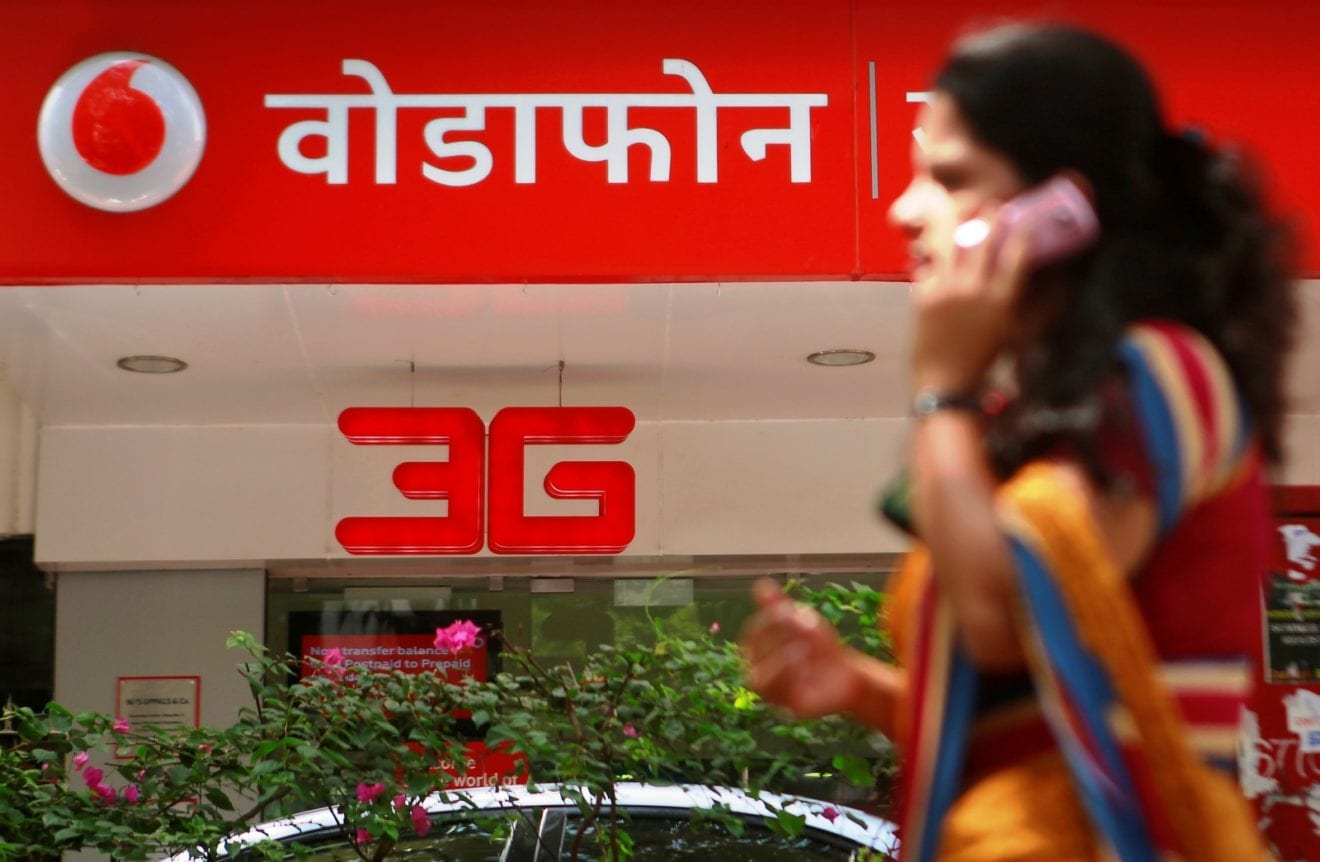
    Vodafone said to start preparations for Indian IPO

    The company has asked interested investment banks to sign NDAs so it can provide more detailed information about the unit, citing people familiar with the matter.

    Vodafone may be ready to pick advisers by next month, the sources said. Around 10% of the Indian unit could be sold as part of the IPO. Vodafone India has a potential valuation of around $20 billion, which would make the IPO the largest in India to date.

    Vodafone has been planning to conduct an IPO for Vodafone India for some time, but macroeconomic, regulatory and market conditions have stood in the way.

    On the record, Vodafone spokesperson Matt Morgan commented that “[w]e have previously stated that we have started preparations for a potential IPO, which includes private conversations with banks, but this is a lengthy process and no decision will be made until we are at the end of it.”

  • Telenor may exit the Indian market

    Telenor may exit the Indian market

    Telenor India is gearing up to launch LTE services across its footprint, but according to reports Telenor’s days in India’s telecom sector may be numbered.

    CEO Sharad Mehrotra told that the operator has already upgraded 7,000 mobile sites to LTE.

    Telenor India plans to have its entire network upgraded by the end of the current financial year, which in India ends on March 31.

    The operator has awarded Huawei with a 12.4 billion rupee ($186.3 million) contract to modernize all 25,000 of its base stations across the six circles.

    But according to a separate report, Telenor is also considering exiting the Indian telecom market due to its negative experiences to date.

    Besides only holding spectrum in seven circles, Telenor India also has limited data spectrum and no 3G services. The company has only around a 5% share of India’s mobile market with its 2G-only operations.

    Despite investing over $3 billion since 2008 trying to build its Indian business, the loss of its Indian telecom licenses during the 2012 spectrum scandal was a setback the operator has been unable to come back from.

    According to the report, Telenor is seeking a valuation of $1.6 billion to $1.8 billion for its Indian business, but experts believe the company could find it difficult to find a buyer at this price.

  • Singtel, Inmarsat join forces on maritime cyber security

    Singtel, Inmarsat join forces on maritime cyber security

    SingTel has forged a strategic alliance with Inmarsat to jointly offer cyber security tools for the global maritime industry.

    Under the partnership, Trustwave, the cyber security arm of Singtel, will provide its Unified Threat Management (UTM) managed solution, to be integrated with Inmarsat hardware onboard ships, to protect data reduce cyber risk for maritime companies.

    Singtel said the UTM service offers a suite of cyber security defenses, such as advance firewall, anti-virus, intrusion prevention and web-filtering.

    Singtel and Inmarsat plan to launch the new maritime cyber security service in the second half of 2016, the companies said a joint statement.

    The new service will be delivered through FleetXpress, the highly anticipated high-speed broadband communication service Inmarsat launched in March for maritime and offshore operators.

    Andrew Lim, managing director of business group at SingTel’s Enterprise Group, said the partnership with Inmarsat is important for the company as it marks the first phase in rolling out Singtel cyber security services for Inmarsat.

    “As maritime systems become more digital, it is imperative for the industry to protect data onboard ships against all forms of cyber attacks. Our partnership with Inmarsat will provide maritime companies with a cyber security solution to meet rapidly evolving cyber threats, globally,” the executive said.

    Gary Gagnon, Inmarsat’s senior vice president of global cyber security, said the partnership with Singtel supports the company’s commitment to the market and elevates the benchmark for maritime cyber security.

    “The landscape of shipping is changing. As we move from traditional shipping into the ship intelligence era, the threat of cyber attacks have never been more real,” commented Ronald Spithout, president of Inmarsat Maritime.

    “Risks from malicious attacks and unlawful access to a ship’s intelligence, its system infrastructure and networks cannot be ignored, and the shipping industry needs to take action.”

    The Singtel-Inmarsat collaboration comes a day after Inmarsat announced it will use its new Global Xpress satellite fleet to provide in-flight connectivity services for the airline industry.

  • RCom to upgrade CDMA network to 4G from May

    RCom to upgrade CDMA network to 4G from May

    India’s Reliance Communications (RCom) has revealed plans to progressively upgrade its CDMA customers to 4G starting in May.

    The operator will upgrade its CDMA network to LTE using the newly liberalized 800-MHz spectrum starting on May 4, citing a letter sent from the company to the Department of Telecom.

    RCom will progressively move its roughly 5 million CDMA customers onto 4G as the rollout progresses.

    RCom has already liberalized its 800-MHz spectrum in 16 of India’s 22 telecom circles and recently received clearance from India’s cabinet to do the same in four more.

    The first round of spectrum liberalization cost a hefty 53.83 billion rupees ($806.5 million), while the second will cost around 1.3 billion rupees. In the remaining two circles, RCom has already paid for liberalized 800-MHz spectrum.

    The sources stating that RCom plans to take advantage of its spectrum sharing pact with Reliance Jio Infocomm by deploying its own network but mostly using Reliance Jio’s infrastructure to provide the 4G services.

    RCom and Reliance Jio plan to leverage each others’ spectrum to ensure they are both capable of providing pan-India 4G coverage and competing against the nation’s three largest operators, Bharti Airtel, Vodafone India and Idea Cellular, which have already launched 4G.

  • Huawei’s 2015 profit grows 33% to $5.7b

    Huawei’s 2015 profit grows 33% to $5.7b

    Huawei has reported a 33% growth in net profit for 2015 on the back of strong performance across the vendor’s carrier, enterprise and consumer business groups.

    The company’s net profit reached 36.9 billion yuan ($5.69 billion), with revenue increasing 37% to 395 billion yuan.

    Revenue from Huawei’s carrier business group jumped 21% to 232.3 billion yuan, with 4G network rollout revenue accounting for a large portion of the annual growth.

    Enterprise revenues meanwhile reached 27.6 billion yuan, up 44% year-on-year, while consumer revenue surged 73% to 129.1 billion yuan.

    “In part, Huawei owes its long-term growth to the sheer size of the ICT market, which is the driving force of digital economies around the world. However, our growth is also a direct result of strategic focus and heavy investment in our core businesses,” Huawei rotating CEO Guo Ping said.

    Huawei invested 59.6 billion yuan – or 15% of its annual revenue – in 2015 alone, he said. The company’s total R&D investment over the past decade exceeds 240 billion yuan.

    “Over the next three to five years, we will concentrate on enhancing connectivity, enabling the development of vertical industries, and redefining network capabilities, working closely with our customers and partners to maximize industry development opportunities,” Ping said.

  • Globe open to pursuing M&As over 700-MHz spectrum

    Globe open to pursuing M&As over 700-MHz spectrum

    The Philippines’ Globe Telecom has revealed it is open to the possibility of acquiring conglomerate San Miguel Corporation’s (SMC’s) telecom subsidiaries to give it access to valuable 700-MHz spectrum.

    Globe’s CEO Ernest Cu said the company would be open to acquiring SMC’s Wi-Tribe and High Frequency Telecommunications units, considering that efforts to appeal to regulator NTC to allocate it a portion of the spectrum have repeatedly been rebuffed since as early as 2005.

    He said the prospect of buying the companies comes up occasionally and the company is always open to considering a deal.

    SMC controls the entire 700-MHz band via its ISP subsidiaries. The company had been planning to form a joint venture with Australian operator Telstra to become the Philippines’ third mobile operator, but this partnership was called off last month after negotiations stalled.

    According to the report, SMC still plans to use the spectrum to launch a mobile venture this year, initially targeting the metro Manilla region.

    Globe and rival PLDT are meanwhile persisting in efforts to convince the NTC to assign portions of the band to them. The most recent attempt involved an appeal to the Philippine Competition Commission filed in February.

  • Telstra announces new head of retail

    Telstra announces new head of retail

    One of Australia’s most senior telecommunications executives, Kevin Russell, will join Telstra this month as Group Executive Telstra Retail. In this new role, he will lead the company’s consumer, business, stores and product functions.

    Russell replaces Karsten Wildberger, who resigned last December to return to Europe.

    Wildberger left Telstra on March 31, and short term arrangements are in place until Russell commences in late April.

    Russell, 49, has a wealth of telecom and technology experience in Australia, US, Europe, Asia and the Middle East.

    He has held executive roles for SingTel Optus, most recently as Country Chief Officer and CEO Consumer, Australia, as well as senior positions at Hutchison Whampoa Group in Australia and internationally.

    Telstra CEO Andrew Penn said Russell would bring substantial expertise to the retail role at an important time for Telstra. Russell will report directly to Penn.

    “We are looking forward to welcoming Kevin to the Telstra leadership team. He has an impressive track record working for several of the world’s largest telcos in a range of demanding markets,” Penn said in a statement.

    “He has passionately worked to build customer experiences in new and existing major consumer brands and service business clients. He has managed major programs across national fixed and mobile networks and is well regarded in the local technology community.”

    Russell was with SingTel Optus from January 2012 to March 2014, holding the positions of COO, CEO Consumer, Australia then the combined role of Country Chief Officer and CEO Consumer, Australia.

    He is currently CEO for a Silicon Valley-based technology start-up.

    Meanwhile Telstra has also appointed controversial former Nokia CEO Stephen Elop to the newly created role of group executive for technology, innovation and strategy.

    Ken Hu appointed Huawei CEO

    Huawei deputy chairman Ken Hu (pictured) will become the company’s acting CEO from April 1 to September 30, in accordance with the company’s Rotating CEO system.

    The rotating CEO acts as the primary person in charge of the company’s operations and crisis management during his tenure and is responsible for convening and chairing the meetings of board of directors’ executive committee and the company’s executive management team, Huawei said in a statement.

    Hu is a member of Huawei’s board of directors and executive management team (EMT) and is also chairman of Huawei USA.

    As part of his role as deputy chairman, Hu is head of Huawei’s human resources committee and is responsible for the company’s leadership and organizational development. He is also the head of the company’s global cyber security committee which oversees the development of Huawei’s global cyber security strategies and the establishment of an end-to-end cyber security assurance system.

    With 20 years of experience in the telecoms industry, Hu is integral to the strategic direction of the company and instrumental to Huawei’s efforts to expand its business in the global markets. He joined Huawei in 1990.

  • Thai 4G: Deputy PM tightens reauction timeline

    Thai 4G: Deputy PM tightens reauction timeline

    Deputy Prime Minister Wissanu Krueangam who has stepped into the mess left after Jas Mobile Broadband walked away without paying for its 900-MHz licence. He has stated that there would be no need to invoke the junta’s absolute power clause in the interim constitution just yet – though he did give the telecom regulator strict marching orders.

    He said the NBTC must successfully auction off the spectrum at a price that is not less than what Jas bid and must do so within one year. It it fails then Jasmine must be held responsible for any shortfall.

    Earlier NBTC Takorn Tantasit had put a timeframe of 4 months for an auction with the starting price of Jas’ winning bid and a second auction one year after that if it fails to go.

    Takorn said the starting price might be lowered to Dtac’s last bid of $1.98 billion (70.18 billion baht)  instead of Jas Mobile’s winning bid of $2.14 billion (75.65 billion baht) or even a round figure of 70 billion baht.

    The auction guarantee would rise to between 10 to 30% of the revised opening bid (previously it was 5% of 12.88 billion baht opening bid)

    Takorn said the draft auction rules would be finished by April 12 which would then be put out for public comment between April 18 to May 23 and should be formalised in the Royal Gazette by 31 May. The auction will be held by June 20 at the latest.

    Takorn said that Dtac had protested TrueMove’s inclusion in the auction given that they already had won half the 900-MHz spectrum. However, Takorn said the NBTC insists that True will be eligible to take part.

  • XL Axiata to sell more telecom towers for $250m

    XL Axiata to sell more telecom towers for $250m

    Indonesia’s XL Axiata has arranged to sell 2,500 more telecom towers for 3.56 trillion rupiah ($250 million) as part of an ongoing asset management reorgnization.

    XL has agreed to sell the towers to local tower operator Professional Telekomunikasi Indonesia (Protelindo) and rent most of them back for 10 years as the anchor tenant.

    Announcing the move, XL said it expects to benefit from significant capex and opex savings, and plans to use proceeds from the sale to help further reduce its debt.

    The operator is also expected to use the divestment to help more aggressively roll out 4G services.

    XL already sold 3,500 towers to PT Solusi Tunas Pratama (SUPR) as part of a deal arranged during 2014, and used the proceeds to reduce its debt burden.

    In related news, credit ratings agency Moody’s has recently published a report predicting that telecom tower companies in Indonesia as well as India are well-placed to continue growing.

    Tower companies in the two markets are the most developed in Asia, Moody’s said. But the company noted that geographical, operational and regulatory differences between the two countries will affect their growth rates and financial performance.

    “We expect continued growth in both markets as mobile operators, building out and strengthening their third- and fourth-generation (3G and 4G) footprints, will seek to lease tower space and sell more of their own towers,” Moody’s assistant vice president and analyst Nidhi Dhruv said.

    “In this context, we expect overall year-on-year revenue growth of about 8%-10% for tower operators in both countries during the next one to two years.”

  • Telekom Malaysia launches POP in Laos

    Telekom Malaysia launches POP in Laos

    Telekom Malaysia has arranged to establish a new point of presence in Laos in collaboration with the Lao National Internet Centre (LANIC).

    Under the agreement, LANIC will host and provide infrastructure for the POP via its international data center in Vientiane.

    Telekom Malaysia will use the POP to provide alternative connectivity options to its customers and afdress growing demand for international internet bandwidth in Laos.

    LANIC is an affiliate of the Laos Ministry of Posts and Telecommunications. The new POP will enable services including IPVPN, IP transit and global Ethernet services.

    “This alliance with LANIC will further strengthen our regional footprint in Southeast Asia, Telekom Malaysia VP for product marketing and operations Mohamed Asri Jaafar said.

    “Through the new POP, TM will be able to offer a vast range of services at a competitive price, going in and out from Laos through diversified routes via submarine and terrestrial cables, connecting to our existing on-net network presence.”

    Telekom Malaysia now has 22 POPs worldwide, spanning Asia, Australia, North America, Europe and the Middle East.

  • Thai telecom market let down by state mis-investment

    Thai telecom market let down by state mis-investment

    Telecoms consultancy Yozzo has released a report on Thailand’s telecom market at the end of 2015 in which it highlighted a vibrant, healthy market that is let down by mis-investment by the state.

    Report author Allan Rasmussen told TelecomAsia that according to the ICT Ministry’s own national statistical office 25 million Thai citizens do not use the internet because they do not know how, 47,000 do not use the internet because of network access issues and 216,000 because they find it too expensive. However, the ICT Ministry is spending $427 million (15 billion baht) [on the state telcos] to roll out internet so that everyone can get online at cheaper prices – when that is obviously not the issue.

    “It would be a wise move to teach them how to surf [the internet] as obviously neither lack of network nor pricing is the major issue,” he said.

    On the plus side Rasmussen noted that overall the data shows that the Thai population is very well positioned when it comes to mobile communication with very high mobile internet usage as part of a daily routine.

    “It is especially great to see the female population having a small upper hand with 83.9% using a smartphone to access the internet while ‘only’ 79.6% of males do the same,” he said.

    The report also shows that 2015 was a record year in terms of smartphone sales, with 22 million units.

    “Samsung is probably also smiling as 20% of this volume carried their brand, mostly due to the introduction of their Galaxy J series (J2, J5 and J7) but overall the 47% year-on-year growth in sales was due to the fierce handset promotions from the operators as they tried to move users from 2G to 3G or 4G handsets.

    “In June 2015 alone, there were a staggering 1,800 different mobile device models competing in the market Thai market a clear indication on just how interesting the Thai market is for mobile device manufactures,” he noted.

    In terms of social media YouTube stood out with a 70% growth in watch time and equal (70%) growth in uploaded content. But the real killer was that Thailand now has 18 local YouTube channels with more than a million subscribers each, which is 4.5 times the average.

    The full report can be accessed here.

  • China Telecom FY15 profit grows 13.4%

    China Telecom FY15 profit grows 13.4%

    China Telecom has reported a sharp increase in its net profit for 2015 thanks to one-off gains from the sale of telecom towers and related assets last year.

    Profit surged 13.4% year-on-year to 20.05 billion yuan ($3.07 billion) on the back of a one-time gain of 3.94 billion yuan from the transfer of towers and other infrastructure to China Tower, the JV formed by the three telcos last year.

    Revenues rose 2.1% to 331.20 billion yuan, while EBITDA fell 0.8% to 94.11 billion yuan, impacted by a number of regulatory changes and higher costs.

    In its 2015 annual results, China Telecom said revenue growth was mainly driven by its mobile businesses, with revenue rising 3.5% to 124.50 billion yuan.  Fixed service revenue increased 1% to 168.76 billion yuan.

    China Telecom finished the year with 58.46 million 4G customers, or more than a quarter of its total mobile subscriber base of nearly 200 million customers. The operator’s 4G ARPU stood at 78 yuan, against the 58.46 yuan of blended ARPU.

    The operator added more than 51 million 4G customers last year after it received government approval to provide a nationwide 4G service in February.

    Mobile data traffic doubled last year, with 4G contributing 51%.  Monthly average data traffic per 4G user increased by 25% year-on-year to 751 MB. By January-February this year, 4G customers averaged 850 MB per month.

    By comparison, biggest rival China Mobile had 312 million TD-LTE customers, while China Unicom, the country’s second largest mobile carrier, had 44 million 4G customers.

    China Mobile last week reported a 0.6% dip in its full-year net profit for 2015, while Unicom posted its first decline in net profit since 2010 for last year.

    Looking ahead, China Telecom said “2016 is a crucial year for the Company in building up a more favorable market position for the future,” adding that the company will strengthen the core competence in network and operation and grasp the opportunities from the scale-up and value enhancement of its 4G and fiber broadband businesses.

    China Telecom president and COO Yang Jie said China Telecom aims to add 60 million 4G subscribers this year. The operator plans to add 290,000 more 4G base stations by the year-end, bringing the total to around 800,000, as it expands coverage in towns and rural areas.

    China Telecom also plans to deploy 4G+ in all cities, start testing 800-MHz band spectrum and prepare for the launch of VoLTE in 2017.

    The company expects capex to fall to around 97 billion this year from 109 billion in 2015, with nearly half of spending going towards 4G.

    In addition, the operator will expand its FTTH network by another 50 million homes passed, to a total 270 million.

    China Telecom saw a strong growth in its FTTH business last year, with net additions of 28.38 million customers for a total 70.99 million of wireline broadband subscribers.

  • HDS launches churn-predicting software

    HDS launches churn-predicting software

    Hitachi Data Systems (HDS) has launched a new Hitachi Unified Compute Platform (UCP) 6000 for Predictive Analytics solution, with integrated next-generation advanced analytics software that predicts churn.

    The solution gives telecom and media service providers insight into customer behavior with predictive scoring for real-time decision making. It uses the open and scalable Hitachi UCP architecture, which is designed to support high-performance, mission critical workloads and scale without disruption.

    With the ability to proactively address customer attrition, service providers can gain competitive advantage and increase customer satisfaction and loyalty by identifying churn-prone subscribers and creating targeted retention offers before customers defect.

    “With continuous technological advancements, relatively short product and service lifecycles, growing content consumption, and highly competitive marketing among vendors, customer churn is a significant issue in today’s global telecom marketplace,” said Sean Moser, SVP for global portfolio and product management at HDS.

    “Equally important is a proactive approach to customer retention, satisfaction and loyalty, which can all grow revenue and increase profit,” said Moser.

    The new solution promises deeper insight into customer behavior and provides data that improves the customer experience.

    With its fully integrated enterprise-class storage, networking and blade servers, UCP 6000 for SAP HANA delivers promises deployment of SAP solution environments, speeds time to value, and removes IT infrastructure disruption.