Tag: telecom

  • DMI, Wing launch mobile payments in Cambodia

    DMI, Wing launch mobile payments in Cambodia

    Enterprise mobility vendor DMI has teamed up with Cambodian mobile banking service provider Wing to offer mobile payment services in the market.

    The companies have developed an app for iOS and Android to allow customers to transfer, deposit and withdraw money via any mobile phone.

    Using the app, customers can pay bills, top up their mobile credit, send money to other users, donate to charity and find the nearest Wing Cash Xpress outlet.

    Cambodia has a significant unbanked population – only around 10% of the population of 15.5 million are in possession of bank cards. The mobile app is designed to address this customer segment.

    The app is available in both English and Khmer and has been designed by DMI to be quick to set up and use.

    “Following the launches of hundreds of mobile solutions all over the world, DMI is very proud to deliver a project in Cambodia for Wing,” DMI International COO Daniel Karlstrom said.

    “DMI is one of the leading technology companies in Cambodia and our collaboration has resulted in a world-class solution that is tailored for the Cambodian market and developed in-country by our Khmer team.”

  • Ericsson CEO Hans Vestberg steps down

    Ericsson CEO Hans Vestberg steps down

    Ericsson has announced the resignation of long-serving CEO Hans Vestberg, effective immediately, as the company seeks to transform to adapt to changing market dynamics.

    Vestberg has also stepped down as president and as a member of the board of directors, but remains “at the company’s disposal” for a six month term of notice, the company announced.

    Executive vice president and CFO Jan Frykhammar will take the role of interim CEO until a permanent replacement is found.

    Vestberg has been with Ericsson for 28 years and has been serving as CEO for the last seven. But he has been facing pressure to step down as the company struggles with profitability in a period of slowing demand and intense competition.

    Last week the company reported a 24% decline in second-quarter net profit, along with an aggressive cost reduction plan aimed at turning around the company’s operations.

    “Hans has been instrumental in building strong relationships with key customers around the world and his leadership and energy have been an inspiration to employees and leaders across Ericsson,” Ericsson chairman Leif Johansson commented.

    “However, in the current environment and as the company accelerates its strategy execution, the Board of Directors has decided that the time is right for a new leader to drive the next phase in Ericsson’s development.”

  • Huawei grows 1H16 revenue by 40%

    Huawei grows 1H16 revenue by 40%

    Huawei grew its sales revenues for the first half of the year by 40% to 245.5 billion yuan ($36.6 billion), despite a decline in its operating margin.

    The vendor reported an operating margin of 12%, down from 18% in the same period last year, partly as a result of increased investment in the company’s smartphone business as part of an aggressive push to become the market leader in 4-5 years.

    “We achieved steady growth across all three of our business groups, thanks to a well-balanced global presence and an unwavering focus on our pipe strategy,” Huawei’s CFO Sabrina Meng commented.

    “We are confident that Huawei will maintain its current momentum, and round out the full year in a positive financial position backed by sound ongoing operations.”

    Huawei has not yet disclosed its profit for the half-year period. Looking ahead, the company said it plans to continue to adhere to its pipe strategy, and invest heavily in R&D in areas including 5G and the IoT.

    In the carrier business, Huawei said it is focusing its attention on supporting operators’ digital transformation in four core areas – business, operations, architecture, and networks.

  • M1 profit falls 7.2% in H1

    M1 profit falls 7.2% in H1

    Singapore’s M1 has reported a 7.2% year-on-year decline in net profit for the six months ended in June, partly as a result of a 44% slump in handset sales.

    The operator reported a net profit of S$83.5 million ($61.8 million), on the back of flat revenue of S$407.3 million.

    While M1 added 14,000 postpaid and 24,000 prepaid customers during the six month period, bringing its total mobile customer base to 1.98 million, total handset sales fell to S$91 million. For the second quarter, handset sales declined by 50% year-on-year to S$36 million.

    Mobile data’s contribution to total revenue increased by 9.1 percentage points to 54%, with average postpaid mobile data usage growing by 100MB year-on-year to 3.3GB.

    On the fixed line front, service revenue grew 26.7% to S$50 million, or 12.3% of service revenue. M1 added 9,000 residential and corporate fiber customers in the first half, bringing its base to 145,000.

    Based on the current economic outlook, M1 announced that it now expects a single-digit decline in net profit for the full year 2016.

    “We are investing in new technologies and capabilities, and building up a portfolio of digital solutions to enhance our service propositions and cater to changing customer needs,” M1 CEO Karen Kooi commented.

    “While expenditure is incurred upfront, meaningful contribution will only be upon achieving scale in service adoption over future years.”

  • AIS to offer family safety services

    AIS to offer family safety services

    Thai operetor AIS has awarded a contract to Gemalto covering the company’s LinqUs Mobile Protection solution.

    Gemalto will provide integrated sophisticated safety-checking features for digitally connected consumers, allowing mobile users to seek real-time location information and online protection for their loved ones.

    AIS expects to use the capability to enhance customer engagement by offering services aimed at keeping subscribers safe and connected to their families. Gemalto will also provide support services to AIS.

    Gemalto partners with iMobileMagic, a provider of cloud based family location and protection products, to offer a service which will allow users to receive real-time notifications when their kids, elderly or other relatives arrive, leave, or stray away from designated areas.

    Families can expect to be able to instantly locate their loved ones or send panic alerts during emergencies. Parents will have the additional ability to put restrictions on their children’s device usage.

    This cloud-connected mobile application, which runs on a wide range of devices and wearables, can help AIS customers to stay close to their families and even pets, in a simple and cost-effective way.

    “Safety and security are the key issues on everyone’s mind these days, and Gemalto’s LinqUs Mobile Protection solution allows us to meet the rapidly changing needs of our society, with lower cost of ownership,” said Titipong Khiewpaisal, SVP for consumer marketing and sales at AIS.

    “It is easy to deploy, scalable, and even available on wearables, making it easy for our customers to stay up to date with the status of their family members, anytime and anywhere,” he said.

  • VimpelCom to invest $1b in Pakisan over five years

    VimpelCom to invest $1b in Pakisan over five years

    Global telecoms group VimpelCom has announced plans to invest $1 billion in its Pakistani operations over the next five years.

    The company plans to roll out what it says will be one of the largest and most ambitious IT infrastructures in the industry for its Mobilink and Warid operations.

    With the new systems the company aims to ensure faster rollout of new products and services, particularly in areas including mobile entertainment, communications, the IoT and mobile financial services.

    Mobilink recently completed a merger with Warid to create Pakistan’s largest mobile operator with over 50 million customers.

    The merger was announced  in November last year, won regulatory approval in May and closed at the start of this month.

    At a press conference announcing the investment plans Mobilink CEO Jean-Yves Charlier said with the merger 38 million Mobilink customers will be provided with 4G while 12 million Warid customers will be provided with 3G.

    He also said around 1,500 joint Mobilink-Warid franchise shops will be opened nationwide. The operator has also made a commitment to the government to roll out services to remote areas.

  • Thai PM grants regulator total immunity when censoring

    Thai PM grants regulator total immunity when censoring

    Thailand’s Prime Minister and head of the ruling Junta General Prayut has used Article 44 of the interim constitution, commonly known as the absolute power clause, granting total indemnity for the National Broadcasting and Telecommunications Commission when engaging in censorship for national security.

    Article 44 order 97/2557 grants the NBTC commissioners, NBTC secretary-general, NBTC staff and anyone appointed by the NBTC total indemnity from any criminal, civil or disciplinary action resulting from their actions when acting in good faith against those who are engaged in sedition, are a threat to national security, are disturbing the peace or those who are acting against the good morals of the country. However, an affected third party may still seek monetary compensation through the courts.

    The order came days after the NBTC lost a court case when it tried to silence a TV station that was loyal to the former regime of Thaksin Shinawatra.

    Meanwhile, Thailand’s state enterprise policy commission has agreed with the plans put forth by the ICT Ministry and ordered the two state telcos – CAT Telecom and TOT Corporation – to merge their data operations and transfer staff to three new companies within a year.

    Transmission and fiber networks will be under the National Broadband Network Company, Internet gateway and submarine networks will be merged under the Neutral Gateway Company and data centers will be merged under the IDC Company.

    This has not gone down well with the unions.

    CAT Union chairman Thaworn Poomtieng held a rally at CAT’s headquarters yesterday and issued a statement that the plan was drawn up only by the ICT Ministry and Deloitte without any input from CAT management and condemned the order to split up the state telco as dictatorial.

    Thaworn questioned whether the plan was actually to strengthen the state enterprise or if it was simply to sell it off.

    CAT acting President Surapan Meknavin said that he has not yet received any details of the plan from the State Enterprise Policy Commission and that in the past he has only had some high-level talks about reorganisation without going into any detail.

    The move has only added to a groundswell amongst Thailand’s netizens with many fearing the merged Neutral Gateway is simply the first step towards the rebranding of the much hated Single Gateway mass-surveillance project.

    ICT Ministry spokesperson Chatchai Khunpitiluck issued a statement that anyone still talking about the Single Gateway probably either had some misunderstandings or that they were purposefully distorting the issue in order to damage the country.

    Earlier Prime Minister and junta leader General Prayut Chanocha dismissed the numerous Prime Ministerial orders published on the Cabinet website referring to the Single Gateway mass surveillance project as a clerical error by someone who simply got his notes wrong.

  • Nepal Telecom revs up rollout of new services

    Nepal Telecom revs up rollout of new services

    Nepal Telecom chose Tecnotree to supply its Agility Mediation and Interconnect system, which will enable the rapid rollout of new services for the telco’s 14 million subscriber base.

    The Tecnotree Agility Mediation and Interconnect system will replace Nepal Telecom’s existing systems for GSM and other networks – and supports mobile, fixed line and broadband lines of business as well as future services.

    The solution will be delivered as a turnkey project, including complete hardware and third party software implementation.

    “By enabling the integration of new and legacy network components we are pleased to help Nepal Telecom to execute its convergence strategy and achieve its objective of complete optimized Business Support Systems,” said Padma Ravichander, CEO of Tecnotree.

  • Dtac profit tumbles 90% to $4m in Q2

    Dtac profit tumbles 90% to $4m in Q2

    Thailand’s Dtac has reported a record 90% slump in net profit for the second quarter of the year, due to a steep decline in prepaid subscribers as well as high capex and other costs.

    Net profit for the quarter fell to 141 million baht ($4 million), in a result the operator also attributed on higher depreciation and amortization costs and lower ebitda, as well as a one-time 394 million baht restructuring cost.

    The company’s total subscriber base shrank by 524,000 to 25 million, with prepaid subscribers falling by 715,000. By contrast, postpaid net additions increased by 77% to 191,000.

    In its quarterly report, Dtac blamed the weak prepaid performance on “competitors’ aggressive subscriber acquisition activities through heavy handset subsidization and strong distribution channels.”

    To address the decline, Dtac has reintroduced prepaid handset subsidies and launched new Dtac prepaid branded SIMs targeting data-oriented users.

    Dtac’s 4G userbase meanwhile increased from 2.9 million in Q1 to 3.5 million in the second quarter, and the operator aims to grow this to 6 million by the end of the year.

    Blended ARPU for the second quarter grew 7% year-on-year to 211 baht as a result of the lower prepaid subscriber base, but declined 2.6% quarter on quarter as growth in data revenue failed to fully compensate for declining voice revenue.

    Capex meanwhile grew to reach 4.29 billion, or 22% of total revenue, as Dtac spent heavily on network rollouts. Network opex increased 3.9% year-on-year to 1.49 billion baht.

    For the full year, Dtac warned it expects intense market competition to continue into the second half. As a result, the company expects service revenues to slightly decline from the previous year, and plans to maintain capex at the same level as last year, which was around 20 billion baht.

  • Thai PM details Thailand 4.0 policy

    Thai PM details Thailand 4.0 policy

    The Thailand 4.0 policy will chart the country’s new direction, according to prime minister General Prayut Chan-o-cha.

    During his recent national address on the program “Return Happiness to the People”, the prime minister said Thailand 4.0 is a new economic model to develop Thailand into a valued-based economy.

    It is envisioned to change the country’s traditional farming to smart farming, traditional SMEs to smart enterprises, and traditional services to high-value services.

    The policy also seeks to promote creativity, innovation, and the application of technology in various economic activities, the objective of which is to create equilibrium between the environment and society.

    The report in the government website said Thailand has passed through three economic development models – Thailand 1.0, which emphasized agricultural development; Thailand 2.0, which focused on light industries and helped upgrade the country’s economy from the low-income to middle-income status; and the third model, Thailand 3.0, which emphasized heavy industries for continued economic growth.

    In Thailand 4.0, the country needs to pull itself out of the middle-income trap and deal effectively with disparities and the imbalance between the environment and society.

    “This model will be carried out along with the 20-year national strategy and economic reform through the mechanism of “public-private-people partnership.” It will transform Thailand’s comparative advantage into a competitive advantage. In this regard, new engines of growth will be introduced,” the report noted.

    The Prime Minister was also quoted as saying that 10 target industrial groups will become new engines of growth. “Thailand 4.0 also consists of seven industries that are considered the backbone of the digital economy,” the report added.

  • Globe defends need for 700-MHz to ISOC

    Globe defends need for 700-MHz to ISOC

    Globe Telecom has challenged the Internet Society-Philippines Chapter (ISOC) move to oppose Globe and PLDT’s proposed joint acquisition of San Miguel Corporation’s telecoms assets, including its 700-MHz spectrum holdings.

    ISOC recently wrote to the Philippine Competition Commission opposing the planned acquisition on grounds including the argument that there is nothing special about the 700-MHz band in particular.

    Globe chief technology and information officer Gil B. Genio has written his own letter to the society to clarify what the company called “erroneous facts” presented in the society’s objections.

    He said the 700-MHz band would allow the operator to expand its LTE footprint to areas that were previously unserved even by 3G.

    “The 700-MHz provides an additional capacity layer over existing 3G and LTE capacity layers using frequencies on the 1800-MHz, 2100-MHz band and the 2500-MHz bands. As a result of this layer, customers at the cell edge coverage of the high frequency capacity layers are served by the 700 MHz providing better experience to these customers,” he said.

    “As an off-shoot of these, the 3G and 4G layers using high frequency band are offloaded, providing additional capacity for better mobile data experience of our customers. Aside from its ability to carry information, the use of the 700-MHz band provides better coverage versus higher frequency bands (such as 2300 or 2600), and therefore mobile service providers can support more high speed users using the same tower or cell site footprint that currently exists today.”

    In response to ISOC’s argument that it is possible to deliver strong wireline connectivity without specturm assets, Genio said Globe has been seeking to aggressively roll out fiber in key cities.

    But he added that these efforts have been hampered by bureaucratic red tape as well as the challenges of providing effective backhaul to an archipelagic country.

    “We want to underscore the fact there has been a history of underinvestment in fixed broadband infrastructure in this country, which is why we are on catch up mode to lay down as much fiber optic cables in our primary cities and key development areas as we can,” he said.

    “Our situation in the Philippines is different compared to others as our primary means of broadband access remains wireless (mobile) broadband for now. In using wireless technology, it is more pervasive, however over the long term, it will have difficulty in matching the throughput rates or speed of fixed broadband network. Hence our desire to build more infrastructure as fast as we can.”

  • Globe Telecom offers new-gen Chromecast

    Globe Telecom offers new-gen Chromecast

    Globe Telecom in collaboration with Google now offers the new generation Chromecast, with the promise for a connected life for the home.

    Globe’s broadband subscribers can avail of the new and improved Chromecast for an add-on of only P99 (about $2) per month.

    The company said its customers today are no longer just tied in using their smartphones and PC’s at home for personal consumption, they also demand better content to share and experience on a bigger screen.

    The new Chromecast offers the solution to “cast” content from their personal device such as movies, shows, music, games to a bigger screen TV using their HDMI connection.

    The solution is now equipped with better connectivity with the latest 802.11ac dual band Wi-Fi and three antenna structure for a more faster, stable and less buffering streaming using the latest mobile devices.

    Aside from being a better hardware, the new Chromecast is also fully compatible to cast with the latest entertainment apps including Globe exclusive digital content partners such as HOOQ, NBA and Spotify.

    “With our continuous partnership with Google, we stay true in providing new and meaningful innovations to fully maximize the digital lifestyle of our customers,” said Martha Sazon, Globe SVP for broadband business.

    “The latest installment in this is the new Chromecast, now with better features and compatibility to our content partners such as Spotify, HOOQ, NBA to a more immersive casting experience,” said Sazon.

  • Half of APAC cellcos have OTT partnerships

    Half of APAC cellcos have OTT partnerships

    Nearly every Asian mobile operator is interested in pursuing partnerships with OTT players to combat the growing problem of revenue loss, a survey suggests.

    The survey, conducted by Alepo ahead of Mobile World Congress Shanghai 2016, shows that just over half of respondents already have working partnership agreements with OTT providers.

    On the other hand, nearly two thirds of Asian operators are also directly competing with OTT providers with their own video, messaging or content service.

    Respondents indicated that declining voice revenues in the face of the growing popularity of OTT voice services is one of the main challenges operators face today. But revenue loss for OTT providers is higher for SMS than other services.

    Asked about the main obstacles to partnering with OTT providers, respondents named an inability or difficulty competing with the growing number of market entrants as the largest challenge, followed by difficulty controlling QoS of OTT services. Complications involved with billing for OTT services came third.

    By comparison, a lack of willingness to partner on the part of either the OTT provider and the operator were considered the least significant challenges.

    “It’s clear that mobile network operators in Asia Pacific recognize the emerging threat of OTT services on the bottom line and are proactively seeking new strategies and business models to overcome that,” Alepo director of marketing Danielle Elaine Smith said.

    “This report indicates that the implementation of those strategies is not limited by an unwillingness to partner by either the operators or the OTT providers, but rather by poor or outdated policy and charging control infrastructure that can’t adapt to meet the new realities of today’s dynamic APAC telecom markets.”

  • Thailand will tighten call drop regulations

    Thailand will tighten call drop regulations

    Thai regulator NBTC will introduce stricter standards governing the quality of mobile signals in an effort to address a growing number of complaints related to dropped calls.

    The NBTC will amend current regulations, which require operators not to exceed a dropped call rate of 15% across all calls, to instead require operators to maintain this rate in each of Thailand’s service areas.

    The new regulations, which are expected to come into effect in September, have been implemented in response to the fact that in more busy service areas with congested traffic dropped call rates are much higher than the average.

    In addition to the new regulation, the NBTC has given five mobile operators – AIS, Dtac, True Move, CAT Telecom and TOT – 15 days to resolve their dropped call problems.

    According to the report as of May there were 994 complaints involving dropped calls from AIS, 497 from Dtac, 386 from True Move, 32 from CAT and seven from TOT. Complaints are picking up now operators are focusing on customer acquisition strategies to maximize their 4G investments.

    Indian regulator Trai is also focusing heavily on the issue of call drops.

  • SingTel to launch VoWiFi in August

    SingTel to launch VoWiFi in August

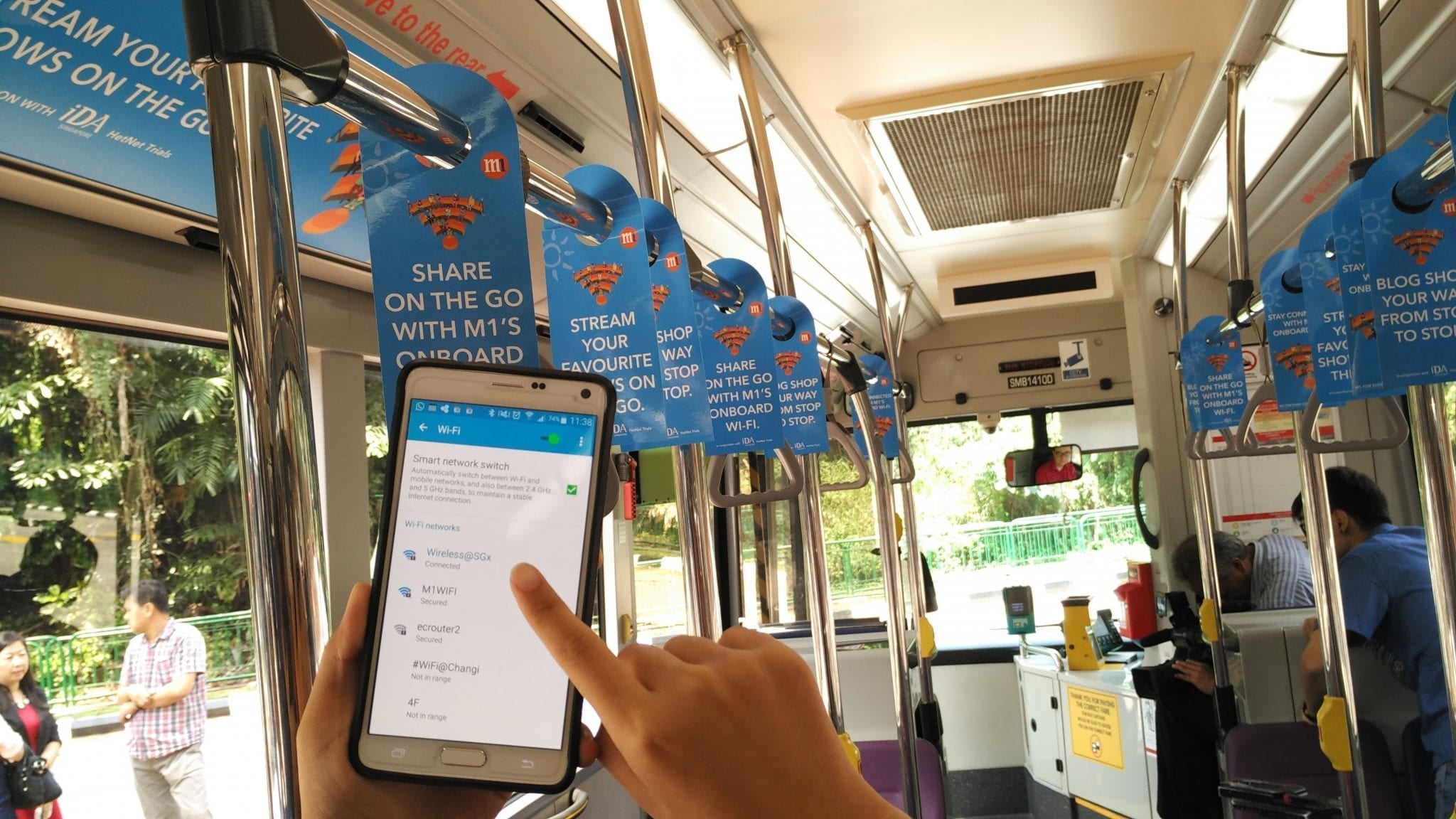
    SingTel has revealed plans to launch Singapore’s first commercial Voice over Wi-Fi service in August following the success of its recent HetNet trials.

    The trials, conducted in collaboration with IDA Singapore, confirmed that voice calls and texts can be sent over Wi-Fi in areas which are challenging for mobile signals.

    Service continuity can be maintained as smartphones transition between cellular and Wi-Fi networks, without the need of an installed mobile app. SingTel said this will allow its customers to make uninterrupted calls over Wi-Fi in locations including basements and the upper floors of skyscrapers.

    The trials also demonstrated the readiness of SingTel’s HetNet to support the IoT by providing reliable connections to sensors and other connected devices, the operator said.

    “In the near future, with millions of connected devices fuelling data demand, ensuring a consistent experience for multiple mobile customers across different locations is paramount,” SingTel CEO consumer Singapore Yuen Kuan Moon said.

    “With pervasive connectivity and higher data capacity set to become the norm, it was important for us to conduct a HetNet trial to gain further insights.  Given our positive trial results, we are ready to support the Internet of Things with our networks and provide SingTel mobile users with high-quality voice calls and SMS island-wide.”

    IDA co-managing director Gabriel Lim said 90% of HetNet trial users had an improved mobile experience, including superior connectivity, download and upload speeds and transitions between wireless and cellular networks.

    “We will use the lessons from the trial to work with our industry partners to further enhance the experience of Singapore mobile users,” he said.