Tag: telecom

  • Telstra to launch mobile broadband capability for ESOs

    Telstra to launch mobile broadband capability for ESOs

    Telstra plans to introduce a national public safety mobile broadband capability for emergency services organizations (ESOs) this summer.

    Alex Stefan, Telstra’s national general manager public safety and security, said the technology behind Telstra LANES Emergency allows ESOs to communicate with each other, and it could also provide governments with significant cost savings.

    “Preserving the safety, security, and prosperity of Australian communities is an essential role provided by our emergency services and Telstra is committed to providing innovative solutions and capabilities to support them,” he said in a statement.

    Telstra developed the LANES Emergency solution in collaboration with Ericsson primarily to help ESOs increase their network capability, coverage and reach, without building their own private network but by offering them priority access on Telstra’s LTE network.

    Telstra LANES Emergency will be available in two forms – Telstra LANES Emergency Priority, which will provide access to Telstra’s LTE spectrum; and Telstra LANES Emergency Tailored, which will consist of customer-owned dedicated spectrum and access to Telstra’s LTE spectrum or enhancements to Telstra’s LTE network.

    “Through LANES we can offer Emergency Services priority data access on our 4G network or on a dedicated and partitioned spectrum for their exclusive use. On the wireless highway it is like offering Emergency Services their very own express lane,” explained Stefan.

    A recent report from the Australian Productivity Commission indicated that a commercial public safety solution like LANES has the potential to save ESOs $4 billion over 20 years over the cost of running their own systems, and provides them with access to more easily updated technology and innovations.

    “Telstra will be initially providing access to up to 160MHz of Telstra LTE spectrum, including our 700-MHz band, for use by ESOs under this new offering,” Stefan said.


  • Nokia boosts True’s broadband network

    Nokia boosts True’s broadband network

    True Group in Thailand has deployed Nokia’s IP/MPLS routing technology to upgrade its broadband infrastructure in Bangkok.

    Surging demand for ultra-broadband fixed and mobile services, such as high-definition video and business services, have helped drive a dramatic increase in data traffic across True’s converged network, both in the city and its surrounding area.

    True is using Nokia’s IP routing technology to modernize its broadband infrastructure to improve the quality of experience and better support the growing high-bandwidth content demands of consumers and businesses.

    Nokia’s Service Router portfolio helps True to provide 4G LTE and 3G coverage to its 18 million mobile subscribers, high speed broadband to its 2.5 million broadband subscribers, and pay TV service to its 3.2 million TrueVision customers. The network upgrade was completed in May 2016.

    True can leverage Nokia’s infrastructure in the future to evolve to more dynamic agile services powered by Software Defined Networks and Network Functions Virtualization.

    True is using Nokia 7750 Service Routers (7750 SR) in Bangkok with the 7210 service access switch (SAS) being deployed in the northeast, east and central west regions of Thailand.

    “By leveraging Nokia’s expertise and leading routing technology,  we are able to provide seamless 4G LTE and 3G coverage along with quality, high-speed broadband data, voice and TV services to our mobile and fixed customers,” said Vichaow Rakphongphairoj, deputy CEO of operational development at True. “We can also deliver advanced high-speed residential, business and mobile services even more quickly and efficiently.”

  • NBTC to auction Dtac’s 1800-MHz spectrum early

    NBTC to auction Dtac’s 1800-MHz spectrum early

    Thai telecoms regulator NBTC plans to hold an auction for Dtac’s 1800-MHz spectrum in July 2018, three months before the operator’s concession expires.

    The auction of 45MHz of 1800-MHz bandwidth is expected to raise at least 135 billion baht ($3.89 billion) in revenue for the state, citing NBTC secretary general Takorn Tantasith.

    Dtac is using the spectrum under a concession arrangement with CAT Telecom. This concession is due to expire in September 2018 under the new licensing regime.

    The reserve price for the auction will be based on the winning prices of the previous 1800-MHz auctions in 2015, factoring in inflation. Takorn told the Postthat the winning prices must not be lower than the 2015 auction of two 15MHz 1800-MHz licenses.

    While Dtac CEO called it a good sign that the regulator plans an early auction, he said a lead time of three months is not enough time for a network installation. In other countries spectrum must be auctioned at least 1-2 years before a license expires.

    Dtac itself has the most invested in winning the 2018 license, the report notes. If the operator fails to reacquire the spectrum, it will be left with only 15MHz of 2100-MHz spectrum to serve over 25 million subscribers.

  • Hidden chat room found in Facebook Messenger

    Hidden chat room found in Facebook Messenger

    The Facebook Messenger app has a hidden chat room feature that lets groups of users publicly converse on different topics.

    According to a report on the TechCrunch, the code for this feature was found buried in the iOS app’s source code.

    The tip comes from a tech evangelist who spotted the code that described the hidden ‘Rooms’ feature as: “Rooms are for public conversations about topics and interests. Each room has a link that can be shared so anyone on Messenger can join the conversation”. Screenshots of its user interface were later furnished by other developers.

    The Rooms feature is likely to be implemented in the app as part of an internal trial that is being scaled up to include more users. It is unlikely that the code was included on whim though, as including frivolous or redundant code is not considered a good practice by developers.

    Of course, the code itself offers no clue as to a possible release date, and it is also entirely possible for the feature to be pulled for any number of reasons before it is actually released.

    It is worth noting that Facebook had introduced a similar app called Rooms in 2014 which offered the ability to create and join interest-based public chats. The app was later pulled after it failed to gain traction; it is probably reasonable to assume that the lesson learned by Facebook will help its second attempt succeed.

    For now, new research shows that WeChat is winning the two-pronged race in China, where access to the likes Facebook, YouTube, Twitter and Instagram is blocked. Research figures from iResearch shows that 61.1% of Chinese Internet users use WeChat over Alibaba’s Weibo.

  • Telstra, Ericsson achieve five-carrier LTE aggregation

    Telstra, Ericsson achieve five-carrier LTE aggregation

    Telstra and its technology supplier Ericsson claim to have achieved a world-first with a test that used four separate radio frequency spectrum bands with five carriers for very high long term evolution-advanced (LTE-A) bit rates.

    The trial at an undisclosed location used Telstra’s production network, with a Cobham Aeroflex TM500 4G network testing device as the receiver.

    It used 20 MHz each in the 700 MHz, 1800 MHz and 2100 MHz ranges, as well as two 20MHz bands in the 2600 MHz frequency range, for a total of 100MHz aggregated bandwidth.

    Five carriers and 100MHz are the maximum under the current LTE-A specification.

    Ericsson utilised high encoding rate 256 quadrature amplitude modulation (QAM) for the signal to provide better peak data speeds.

    Using the stateless user datagram protocol (UDP), the trial achived 950Mbps downlink speeds.

    With the more commonly used transmission control protocol (TCP), Ericsson and Telstra hit 843Mbps against the Speedtest website, the two telcos said. They declined to reveal the latency of the connection or the distance over the air for the signal.

    Telstra operations managing director of networks Mike Wright said that was “a widely accepted view that 4G should achieve peak speeds in the range of 1Gbps”.

    In reaching such high speeds, Wright said it could be argued that LTE technology was finally moving beyond the 4G barrier.

    “The demonstration of 1Gbps end to end capability shows the advanced state of these standards and our ability to rapidly bring them into commercial service in order to deliver increased capacity in our network to meet growing demand,” he said.

    “In addition to Telstra consumer customers, we are preparing our networks for growth in business use, as well as emerging technologies, which rely on our ability to deliver high capacity and low-latency solutions.”

    There are currently no handsets or devices capable of working with the combined five carrier LTE signal, and Telstra would not say when or whether it is planning on launching commercial services.

  • Wharf T&T said to attract at least seven bidders

    Wharf T&T said to attract at least seven bidders

    At least seven companies, including HKBN and SmarTone, have submitted bids for Wharf Holdings’ Hong Kong telecoms division Wharf T&T, according to reports.

    The private equity copanies including KKR, MBK Partners and TPG Capital Management have also submitted bids for the company.

    The sale is looking likely to reach a price of $1 billion to $1.2 billion, according to the report. HKBN is currently the front-runner in the auction, but may face antitrust scrutiny and will require shareholder approval for the purchase, so its bid is less certain than others’.

    Wharf T&T is Hong Kong’s second largest enterprise fixed line telecoms operator in Hong Kong, and also has subsidiaries providing residential broadband, eBusiness and IT services.

    Parent company Wharf Holdings put its telecoms business up for sale in June following a strategic review of its communications, media and entertainment division.

    Last year Wharf T&T generated an ebitda of around $100 million, the sources said.

  • Video to account for 75% of 4G traffic by 2020

    Video to account for 75% of 4G traffic by 2020

    By 2020, mobile video usage will have increased to about 75% of total 4G traffic, from 15% in 2016, according to Huawei and Ovum.

    A paper from the companies predicts that 4K UHD video, social media video, mobile video, VR/AR applications, 5G/FTTx network penetration will be among the driving forces of increased video usage.

    Also contributing will be the latest IT technology trends, including cloud computing, bid data and Telco OS.

    Enterprise video is also becoming a major factor of this growing video trend. On top of existing incumbent provided video services such as training, meetings with clients and remote medical services, a series of new video conferencing tools is being broadly deployed in various industries.

    Video conferencing is quickly shaping the strategic infrastructure business of telcos. Major players are exploring new ways to implement successful strategies for enterprise video, striving to be the leaders in the field amidst the video business transformation opportunities.

    Important steps to success

    Since big video has already been identified as a strategic imperative, the paper points out that IPTV, SVOD and the broad application of video services will influence how telcos build their big video business strategies. Three important steps to success are:

    First, telcos will need to fully capitalize on the opportunities offered by targeted bundled services: identify individual, family and enterprise groups as the three major markets into which telcos should provide target-oriented and innovative bundled services, such as aggregated online or mobile video services and TV entertainment offerings.

    Second, telcos should strive to ensure customer loyalty and retention by exploring new video business monetization models from simply paying for services to paying for a differentiated, high-quality video user experience.

    Third, yet as important, telcos should attempt to drive integration across the entire video industry ecosystem to maximize the market opportunities for all participants in the video distribution value chain.

  • 5G connections tipped to reach 690m by 2025

    5G connections tipped to reach 690m by 2025

    There will be around 690 million 5G connections by 2025, five years after the standard is expected to be approved, Strategy Analytics predicts.

    The research firm expects 5G to account for 7% of mobile connections by this time, driven by early adopters in the US, South Korea and Japan.

    China has also laid out a 2020 5G launch plan, Strategy Analytics notes, which will help accelerate adoption.

    Operators including NTT DoCoMo, SK Telecom, Verizon and AT&T are leading the charge

    Commercial 5G handset sales are meanwhile expected to exceed 300 million by 2025, according to Strategy Analytics director Ken Hyers.

    “While the first commercial 5G handsets will appear in small numbers in 2020 in South Korea and Japan, from 2021 more countries including the US, UK, Sweden, UAE and China will see their own launches,” he said.

    “By 2022 tens of millions of 5G handsets will be sold, and as a proportion of total handset sales will reach low single digit percentages.”

    The first trial 5G handsets expected to emerge in 2018 are expected to have issues including short battery life, no 4G handover or unstable connectivity, Strategy Analytics said. But these teething problems are expected to have been largely resolved once commercial handsets reach the market.

  • Thailand aims to rethink Thaicom concession

    Thailand aims to rethink Thaicom concession

    Thailand’s ICT ministry plans to renegotiate the terms of Thaicom’s satellite concession, in the wake of a recent Supreme Court ruling against the amendment allowing Shin Corp to reduce its minimum holding in the company.

    The court recently found former ICT Minister Surapong Suebwonglee guilty of criminal malfeasance over the agreement to amend the terms of the concession, and sent him to jail for a year.

    Shin Corp was allowed to reduce its stake in what is now Thaicom to 40% from 51%, which the court found was against telecoms law. The court held that the move unfairly boosted Thaicom’s competitiveness and put the business at risk of foreign dominance.

    As a result of the ruling the ministry plans to device a new investment model for the satellite industry to replace the licensing regime.

    The government is considering four investment options – turning Thaicom into a state enterprise, a public-private joint venture majority owned by the state, a more flexible public-private joint venture model or the existing licensing model with higher fees.

    Negotiations with Thaicom are expected to be complete by early next year. The current concession, which involves fees amounting to 20.5% of revenue, is due to expire in 2021.

    Thaicom operates three of its satellites under the concession regime, while two more are operated under an NBTC licensing system involving a license fee of 5.75% of total revenue.

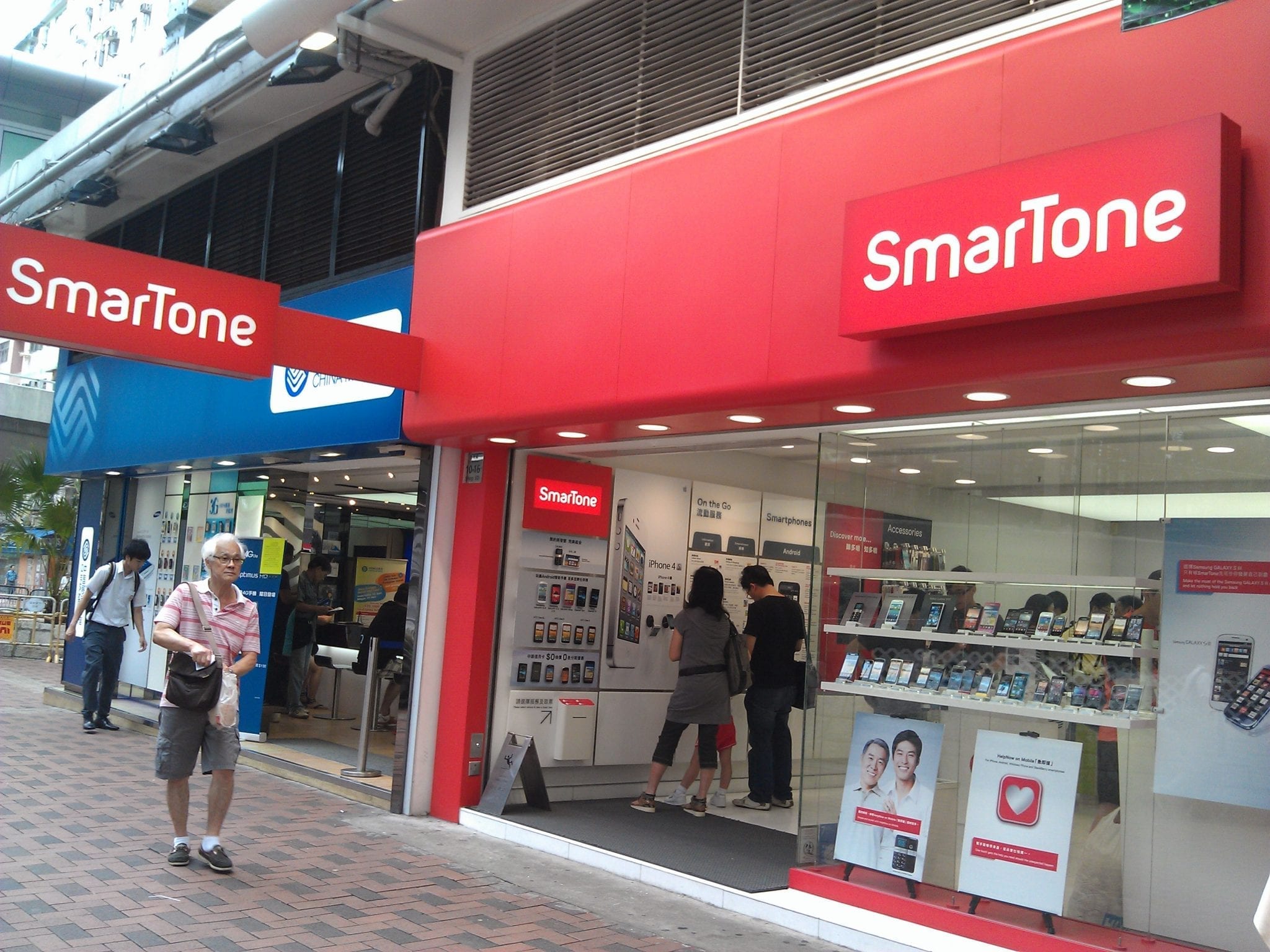
  • SmarTone FY16 profit falls 15%

    SmarTone FY16 profit falls 15%

    Hong Kong’s SmarTone has reported a 15% slump in net profit for the financial year ending in June, as the company felt the brunt of the ongoing maturation of the smartphone market.

    Net profit declined to HK$797 million ($102.7 million), as handset earnings crashed 77% back to historical levels due to the impact of this maturation on the smartphone segment.

    Group total revenue fell 2% to HK$18.36 billion, with service revenue also declining 2% due in part to lower roaming and pre-paid revenue.

    But net of handset subsidy amortization service revenue stayed flat at HK$4.79 billion due to underlying growth in the operator’s local postpaid business.

    Hong Kong customer numbers grew 1% to 1.97 million, with postpaid churn remaining unchanged at 0.9%. Mobile postpaid ARPU meanwhile rose 2% to HK$301.

    While SmarTone noted that the Hong Kong telecoms market remains competitive, the operator expressed optimism about its prospects for the current financial year. SmarTone’s financial report notes that the company is “well-placed to capture industry opportunities and bring value to both customers and shareholders in the long term.”

  • Taiwan Mobile to offer enterprise IoT services

    Taiwan Mobile to offer enterprise IoT services

    Taiwan Mobile plans to offer enterprise IoT services in the Taiwanese market using the Cisco Jasper Control Center platform.

    The operator plans to offer plug-and-play IoT services that can be configured to provide analysis, automation and diagnostic intelligence.

    The company will offer services for any industry, with a particular focus on segments including connected cars, mobile payment, manufacturing, smart cities and public transport.

    “Enterprises throughout Taiwan are eager to deliver new, value-added IoT services to their customers,” Taiwan Mobile senior director of mobile marketing and IoT services Eddie Chan said.

    “Companies are increasingly focused on offering services that generate recurring revenue while improving the customer experience. Taiwan Mobile is excited to be at the forefront of enabling this transformation for businesses throughout Taiwan via the industry-leading Cisco Jasper IoT platform.”

    Cisco acquired US-based Jasper and its cloud-based IoT service platform for $1.4 billion in March, as part of efforts to gain a stronger foothold in the burgeoning new market segment.

    The Cisco Jasper Control Center offers real-time monitoring, management and control over IoT services, and is scalable to global implementations thanks to the company’s partnership with 30 global mobile operator groups representing more than 120 mobile networks worldwide.

  • M1 to deploy NB-IoT network by 2017

    M1 to deploy NB-IoT network by 2017

    M1 and Nokia have teamed up to roll out the first nationwide commercial narrowband Internet of Things (NB-IoT) network in Singapore by 2017.

    When completed, the deployment – Nokia’s first large-scale deployment with an operator partner in Asia – is expected to be among the world’s first commercial NB-IoT deployments.

    NB-IoT networks and devices are designed to deliver improved network performance for M2M (machine-to-machine) communications – low-bandwidth, robust indoor penetration, and low power consumption, while delivering the benefits of licensed spectrum such as network reliability and security.

    The NB-IoT standards were finalized by the GSMA Standards body 3GPP in June 2016. Commercial NB-IoT devices are expected to be available by mid-2017.

    According to Bell Labs Consulting, there will be up to five billion IoT devices connected through mobile networks by 2020. In Singapore, NB-IoT deployment will support the nation’s journey to become a Smart Nation underpinned by data to deliver anticipatory services to its people.

    “NB-IoT is emerging to be a potentially promising technology for smart city’s machine-to-machine type of applications and services. We look forward to working with NB-IoT partners to explore the use of NB-IoT in developing innovative Smart Nation services that improve our citizens’ lives and make our businesses more productive,” said Jacqueline Poh, Chief Executive-designate, Government Technology Agency (GovTech).

    Sandeep Girotra, Nokia’s Senior Vice President of Asia-Pacific and Japan, said Nokia’s joint collaboration of NB-IoT deployment with M1 lays an important groundwork for further application of LTE-based IoT services.

    M1 also recently announced it is working with Nokia on Singapore’s first commercial HetNet deployment.

  • Singapore testing SIM logins for US visitors

    Singapore testing SIM logins for US visitors

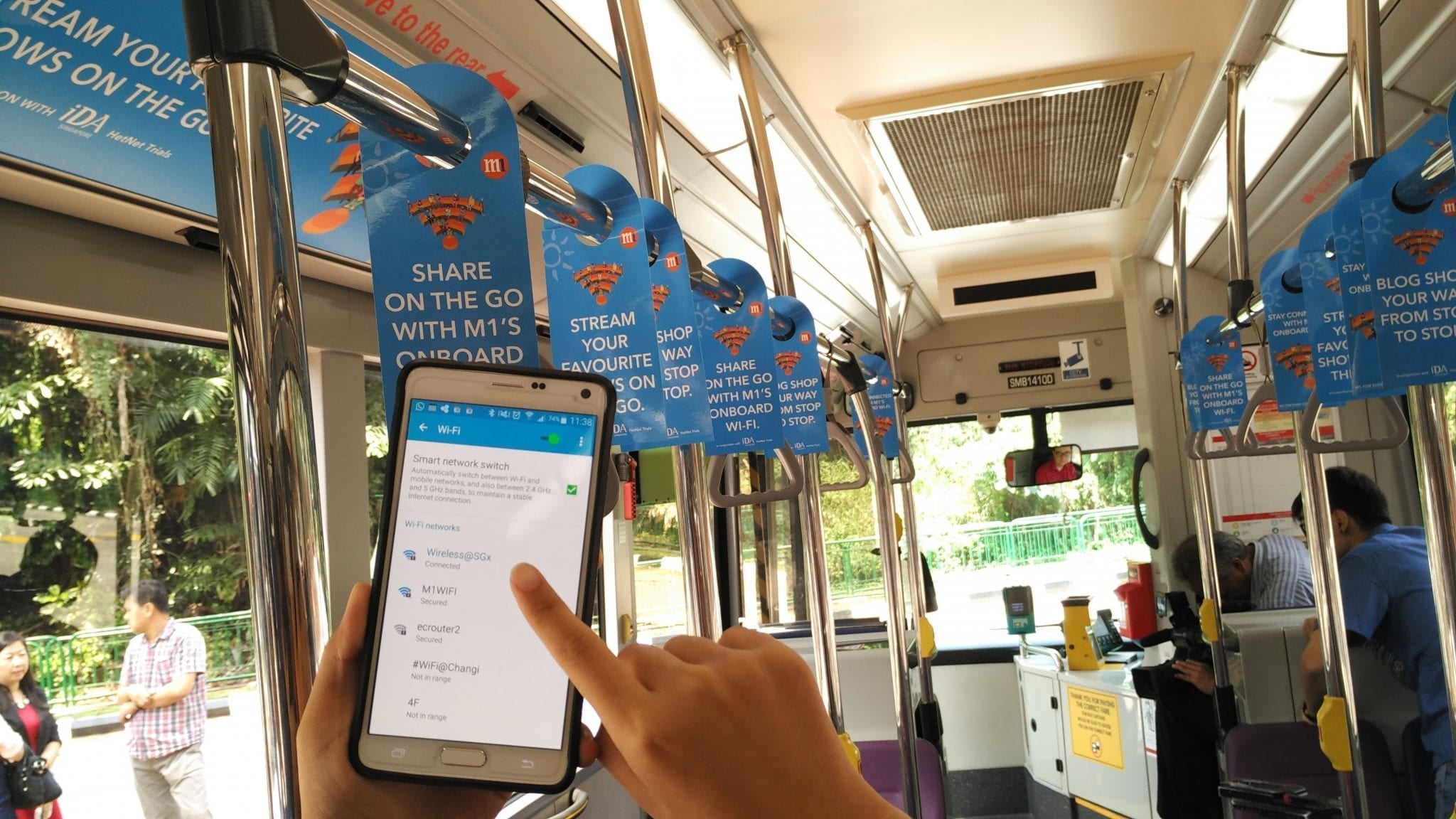
    The Infocomm Development Authority of Singapore (IDA) is piloting trials for US visitors to connect to the local wireless broadband network, Wireless@SG.

    The trials, which commenced yesterday and will run until September 21, will be conducted in partnership with the Land Transport Land Transport Authority (LTA), M1, Sentosa Development Corporation (SDC) and Singtel.

    Under the project, T-Mobile US subscribers can connect automatically to Wireless@SG after a one-time setup on their SIM devices. This would enable them to connect to around 290 hotspots in designated test areas – Sentosa and major MRT stations. Other US visitors who are not subscribers of T-Mobile can sign up for a free account in the government website.

    “Wi-Fi is fast becoming a daily necessity and Wireless@SG as the largest city-wide federated Wi-Fi network will be an important enabler to improve connectivity and liveability in Singapore as we move towards a Smart Nation,” said Khoong Hock Yun, IDA’s assistant chief executive.

    “Trialing the SIM-login method for foreign visitors is something new to us, and we hope to gather new insights, fine tune technical challenges, and enhance the Wireless@SG program further,” he added.

    IDA said the trial is taking place in conjunction with the Wireless Broadband Alliance (WBA) City Wi-Fi Roaming Project, which also allows Singapore visitors to the US to roam automatically and securely between free public Wi-Fi hotspots in participating US cities, namely, San Jose, San Francisco and New York for the same period.

    The City Wi-Fi Roaming Project is likewise a supporting activity of World Wi-Fi Day initiative. Both initiatives are backed by the Connected City Advisory Board, which aims to deliver the vision of Connected Cities around the world

  • Level 3 to deliver NaaS solution for enterprise customers

    Level 3 to deliver NaaS solution for enterprise customers

    Level 3 Communications announced that it is delivering an on-demand network-as-a-service solution on the market using Cisco’s Network Services Orchestrator (NSO), enabled by Tail-f.

    The firm said its Adaptive Network Control Solutions suite leverages the benefits of network automation and Software-Defined Networking (SDN) to deliver technology solutions to customers in a rapid, self-service manner, empowering them to be more agile and competitive.

    Level 3 customers want faster, easier ways to bring applications from test environments to full-scale production. They’re looking to integrate new third-party cloud services and applications more easily, with less complexity and overhead. With the click of a button, Cisco’s NSO innovative capabilities are helping to enable Level 3’s customers to rollout new services in a matter of minutes or days rather than weeks or months.

    With the support of NSO, Level 3 developed a programmable wide area network (WAN). The service provider can automate the full range of data services and multivendor devices in its markets around the world. The company can also orchestrate the entire service lifecycle—including activation, testing and ongoing service-level assurance—through a single data model.

    Travis Ewert, SVP of network software development at Level 3, said “The power of agility in today’s competitive marketplace is not overstated.”

    “Global businesses need network resources that are flexible enough to be leveraged as a service, with the reliability and security they can rely on to deliver critical business applications. With Cisco NSO, Level 3 is making the once-distant dream of full lifecycle service automation a reality for enterprises around the world,” the executive said.

    The company further said Level 3 now manages more than 75,000 different network devices around the world. It is offering the same automated services, with the same scalability, high availability and redundancy across geographies, regardless of the underlying infrastructure.

  • ABS-CBN scales back MVNO ambitions

    ABS-CBN scales back MVNO ambitions

    Philippine media group ABS-CBN has scaled back its MVNO business in response to a declining subscriber base.

    The company has cut the annual fees it is paying network provider Globe Telecom in half as part of efforts to curb losses from its ABS-CBN Mobile operations.

    ABS-CBN CFO Aldrin Cerrado told the publication that the company plans to continue its mobile operations but has scaled down its ambitions, and has not yet decided whether to renew its MVNO agreement with Globe after it expires in two years.

    He said the company’s annual fee for using Globe’s network has been reduced from 400 million pesos ($8.6 million) per year to 200 million pesos.

    The cuts came after the MVNO reported a 13% decline in subscriber base for the first six months of 2016 to 520,000.

    In addition, ABS-CBN’s strategy had been based on luring customers via offering exclusive access to television content via its iWant TV app. But the company has since altered its model to open up access to iWant TV to Globe and rival mobile operator Smart.