Tag: telecom

  • China Telecom Shanghai, Huawei test network slicing

    China Telecom Shanghai, Huawei test network slicing

    China Telecom Shanghai and Huawei have successfully jointly implemented access network slicing at a trial site.

    The trial solution involves slicing the access network into home, enterprise and campus connections, which will potentially allow the operator to use a single network to deliver all types of services.

    OLT hardware is shared by services, and all segments are isolated from each other in order to improve service reliability and network security.

    China Telecom Shanghai engaged Huawei to develop an access network slicing solution to address issues including insufficient equipment room space and runaway power consumption associated with rapid user base growth.

    “Traditional OLTs do not support the access of full services. Network slicing enables service isolation and optimizes resource utilization,” China Telecom Shanghai vice chief engineer Zhang Jun said.

    “Network slicing is our first step toward cloud. It is now being including in the related technical standards of China Telecom. In the future, we will cooperate with Huawei to further optimize network slicing.”

    The companies expect that network slicing will propel the development of gigabit networks. This will be essential to helping operators meet the enormous capacity demands of the cloud era.

  • Singtel expands ReadyRoam to 26 countries

    Singtel expands ReadyRoam to 26 countries

    Singtel has expanded its ReadyRoam mobile data roaming service to cover multi-destination roaming across 26 countries in Asia, Europe and North America.

    The ReadyRoam 1GB for 30 days service will allow customers to use the same pool of data while traveling between any of the supported countries.

    The base service supports roaming between 11 Asian markets – China, Hong Kong, India, Indonesia, Japan, Macau, New Zealand, the Philippines, South Korea, Taiwan and Thailand – for S$20 ($14).

    For customers traveling further afield, ReadyRoam USA and Europe supports roaming to the above countries, as well as Canada, Denmark, France, Finland, Germany, Ireland, Italy, the Netherlands, Norway, Portugal, Spain, Sweden, Switzerland, the UK and the USA.

    Excess usage will be charged at S$0.019 per MB or S$0.034 per MB depending on a customer’s plan.

    “It’s the holiday season and many of our customers and their families will be traveling,” Singtel VP of mobile marketing consumer Singapore Diana Chen said.

    “Our enhanced ReadyRoam 1GB for 30 days will allow them the convenience of remaining contactable via their Singtel SIM card number while roaming seamlessly across multiple destinations.”

  • ITU Telecom World Awards 2016 winners announced

    ITU Telecom World Awards 2016 winners announced

    ITU today announced the winners of its prestigious ITU Telecom World Awards, which recognize excellence and innovation in ICT solutions with social impact. The Awards were announced by ITU Secretary-General Houlin Zhao at a buzzing ceremony in the presence of H.E. Air Chief Marshal Prajin Juntong, Deputy Prime Minister and Acting Minister of Digital Economy and Society, Air Chief Marshal Thares Punsri, Chairman NBTC and ITU elected officials at the close of ITU Telecom World 2016. 

    “It is tremendously exciting to see so many ideas, innovations and so much talent and creativity all in one place,” Zhao said. “I hope that winning our Award and having their innovative solutions recognized by global experts will help these talented innovators grow and scale up their businesses, contributing fresh ideas and vision to our digital economy. I wish them every success.” 

    “We are making education accessible to all children around the world,” said Alex Masika, head of business development at BRCK, the maker of rugged wireless and mobile wifi devices in Kenya and the winner of Telecom World 2016’s Global SME Award. “I am happy that the impact we are making has been recognized.”   

    Winners, who took turns pitching their innovations during the event, were selected by an expert jury. ITU Telecom World Awards were open to all exhibitors and sponsors at ITU Telecom World in Bangkok. The awards were presented in three different categories: 

    • The Global SME Award, recognising the most promising innovative solution from an SME.
    • Thematic Awards – open to SMEs and large corporations — for the most promising innovative solutions with social impact in eEducation, eHealth, eGovernment and disaster prevention/communications.
    • Host Country SME Award for the best solution chosen by Thailand.

     Recognition of Excellence Certificates were presented for the best innovative exhibitor within each National Pavilion.

    The ITU Telecom World 2016 Award winners and finalists are:

    • Global SME Award Winner: BRCK, Kenya, represented by Alex Masika 
    • Global SME Award Finalist: gnúbila (be|ys group), France, represented by David Manset
    • Global SME Award Finalist: ulalaLAB, Korea, represented by Sophia Park       
    • Thematic Award Winner eHealth: Neofect, Korea, represented by Kyuhee Lee
    • Thematic Award Winner eEducation: Academic Bridge, Rwanda, represented by Mariam M. Muganga
    • Thematic Award Winner eGovernment: Nile Center for Technology Research – E15 Project, Sudan, represented by Elwaleed Bashir Ahmed
    • Thematic Award Winner Disaster Recovery/Prevention: MasterCard, USA, represented by Umar Hashmi
    • Host Country Award Winner Finalist: ServisHero Co.,Ltd, Thailand, represented by Khun Noppol Toochinda
    • Host Country Award Winner Finalist: Anywhere 2 go Co.,Ltd.(Claim Di), Thailand      
    • Host Country Award Winner: PRO-toys Co., Ltd., Thailand, represented by Boonchai Wongbawornkiat


    Recognition of Excellence Certificates:

    • Bangabandhu Satellite Launching Project, Bangladesh, represented by H.E. Begum Tarana Halim, Minster for Posts & Telecommunications
    • 3D Factory Co.,Ltd., Korea, represented by Sang Hyun Park
    • Academic Bridge, Rwanda, represented by Mariam M. Muganga
    • BESTCOMP GROUP, Azerbaijan, represented by Najafova
    • Bisa, Ghana, represented by Dennis Addo
    • BRCK, Kenya, represented by Alex Masika
    • Fedironics Intelligent Metering Company, Nigeria, represented by Emmanuel Ifediora Ugochukwu
    • Ministry of Transport, Thailand
    • Protonics, Zimbabwe, represented by Chingore
    • NexTech, Japan, represented by Kento Takahashi
    • Potevio Company Limited, China, Luo Lin
    • Telecommunications Infrastructure Company, Iran, represented by Susan Ayerman 

    The ITU Telecom World Awards will continue to play an integral part at future ITU Telecom events, supporting innovative ICT solutions with social impact. For more information on ITU Telecom World 2016 click here.

    ITU Telecom World heads next to Busan, Republic of Korea, where it will take place from 25-28 September, 2017.

  • ITU Telecom World 2016 highlights importance of collaboration across ICT ecosystem

    ITU Telecom World 2016 highlights importance of collaboration across ICT ecosystem

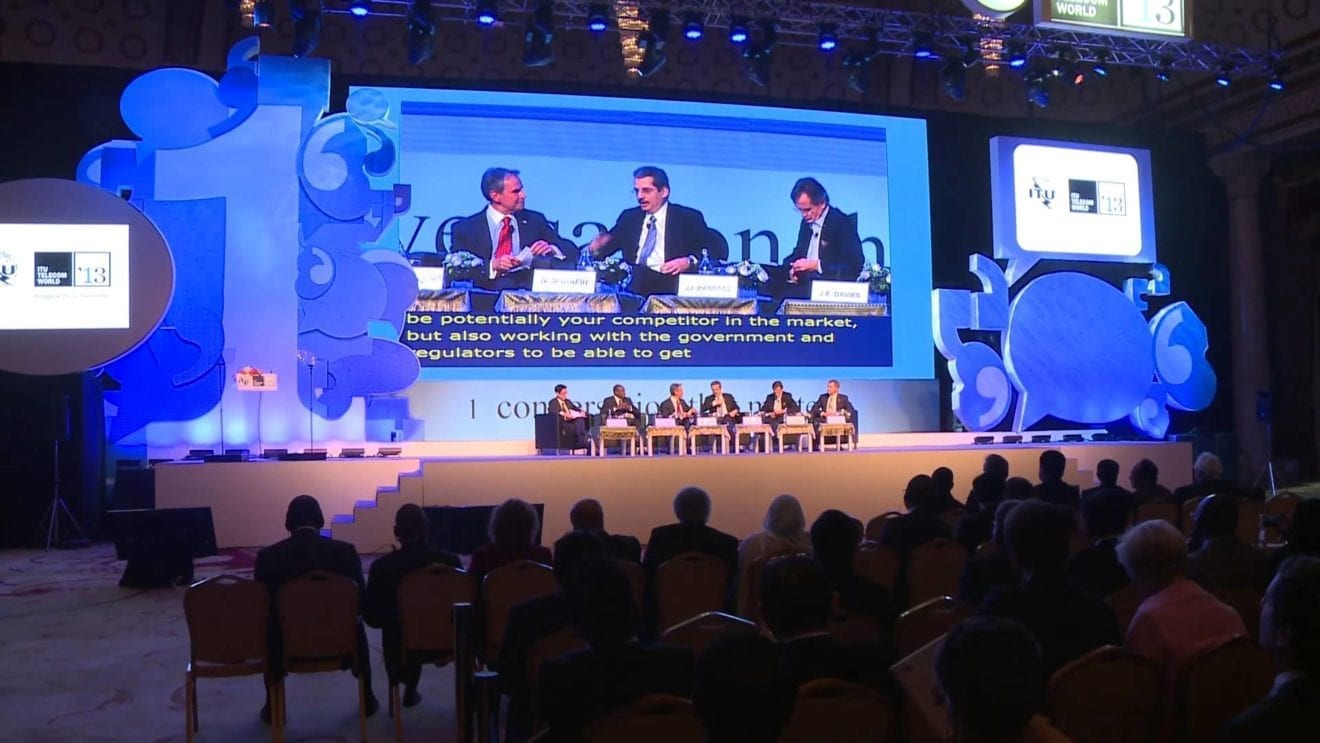
    ITU Telecom World 2016 wrapped up proceedings today at IMPACT Convention and Exhibition Center, Bangkok, following an action-packed programme of showcasing, debate, networking and Awards. 

    The event, which was formally opened in the presence of H.R.H Princess Maha Chakri Sirindhorn, Kingdom of Thailand and  General Chan-o-cha Prayut, Prime Minister, Kingdom of Thailand included big names, countries and SMEs from around the world and welcomed over 8,800 participants.  

    Among the high-level guests in attendance were: H.R.H. Tapouto’a Ulukalala, the Crown Prince of Tonga; Xavier Bettel, Prime Minister of Luxemburg; Charlot Salwai Tabimasmas, Prime Minister of Vanuatu; Debretsion Gebremichael Deputy Prime Minister of Ethiopia; and Mukhisa Kituyi, Secretary General of UNCTAD.  

    Some 250 Exhibitors, including 107 exhibiting tech-SMEs and 60 partners and sponsors took part in the event. Over 330 leaders from 90 countries joined the debates, including top-level representatives from Hungary and the Republic of Korea – past and future ITU Telecom World host countries. 

    “From its high-level Forum debates to the activities on the show floor, ITU Telecom World has successfully moved towards becoming the truly inclusive international platform connecting tech-SMEs with global governments and industry leaders,” said ITU Secretary-General, Houlin Zhao. “The dialogues, showcases, networking and other activities I have joined this week have given all our community and stakeholders – be they senior government officials, international organizations, leading corporate players or SMEs – the chance to examine issues vital to accelerating ICT innovation, and explore the many ways in which ICTs can help meet the SDGs.” 

    “Thailand is pleased to be the host of the very successful ITU Telecom World 2016,” said Air Chief Marshal Prajin Juntong, Deputy Prime Minister and Acting Minister of Digital Economy and Society. “I have received positive feedback from Thai participants that the event has been extremely useful in showcasing Thailand’s thriving digital economy and society and, importantly, demonstrating innovations and entrepreneurship which are key drivers for national development today. The event and speakers have provided many lessons and case studies on how the government’s forward looking and inclusive digital economy policies are being turned into action by the private sector including SMEs and start-ups.” 

    The Exhibition featured the types of technology driving our digital economy, from 5G and cloud computing to smart devices, smart city solutions and national broadband plans, as well as investment and partnership opportunities from around the world. 

    Reflecting the significance of ICT across key verticals, ITU welcomed new vertical sectors to the event, such as MasterCard, Honda or Toyota, joining debates in sessions such as the Connected Car or Cashless Future. 

    Leadership Summit & Forum debates 

    162 speakers from 55 countries took part in plenaries, panel debates, workshops, high-level roundtables and networking sessions in the Forum and at the Leadership Summit. Speakers spanned heads of state and governments from across the globe, leaders from the ICT industry and key verticals, SMEs, entrepreneurs and innovators to international organizations and academia. They provided truly global perspectives and viewpoints from developed and developing countries alike. 

    Discussions launched with the Leadership Summit, on 14 November, which brought highly influential participants together to share views and explore why working together is so important for growing the digital economy. Forum sessions delved into an exciting set of topics such as AI, how ICTs can meet the UN’s Sustainable development goals (SDGs), the connected car, digital financial inclusion and fiscal incentives and taxation in the industry. 

    Other debate highlights included the B2G and B2B dialogues, which brought together tech-SMEs and large companies for an open exchange; the Ministerial Roundtable on the crucial role of governments in advancing digital economy; Economic and Industry Roundtable, bringing together global ICT consulting firms, R&D entities, regional and international organizations; and the Asia Pacific Exchange on Broadband Regulation and Policy (co-hosted with Huawei).  

    The event showcased sponsored sessions on topics spanning 5G, reaching the next billion, digital financial services, towards a digital Nigeria and enabling third network services for the digital economy. Key players included Huawei, KT, Japan’s MIAC, GTI, China Mobile and TDIA, Intel, MasterCard, GSMA/GSA, Nigeria and MEF.  

    Panel lunches hosted by the Smart Africa Alliance and CITRA, helped facilitate networking and discussion, along with high profile networking occasions, such as the Leaders Lunch, sponsored by Huawei, or Korea night sponsored by ITU Telecom World 2017 host, Republic of Korea’s MSIP. Networking breaks sponsored by Rohde & Schwarz and URCA of the Bahamas helped ensure conversation continued between Forum sessions. 

    Global Platform 

    As the international platform connecting ICT SMEs with corporations and governments, it was no surprise that high-level participants used the opportunities and influential audience that the event offered to conclude many important agreements between business and business (B2B), business and governments (B2G) and business and governments to UN, as well as launching new reports.  

    ITU Telecom World Award 

    The Event Closing and ITU Telecom World Awards Ceremony brought ITU Telecom World 2016 to a close on the final day of the event and also saw the much-awaited announcement of the winners of the ITU Telecom World Awards. During the week of the event, finalists pitched their ideas and innovations to judges and a global audience. In keeping with ITU Telecom World’s focus on SMEs and their role within the broader ICT ecosystem, these Awards recognized excellence and innovation in ICT solutions with social impact from SMEs and corporations alike. The winning entries included: 

    • Global SME Award: BRK, Kenya
    • Host Country SME Award: ServisHero, Kingdom of Thailand
    • Thematic Award (eGovernment): Nile Center for Technology Research (NCTR)
    • Thematic Award (eHealth): Neofect, Republic of Korea
    • Thematic Award (eEducation): Academic Bridge, Rwanda
    • Thematic Award (Disaster Prevention/Recovery Communications): MasterCard, United States 
    • ITU co-hosted events  
    • The event also welcomed perspectives from across ITU and its membership and partners, who used the international platform which the event provides in order to hold a series of important co-hosted events. A series of closed meetings took place a day before the official opening. These were the advisory boards meetings of the Smart Sustainable Development Model Initiative (SSDM) and m-Powering Development Initiative, 7th Private Sector Chief Regulatory Officers (CRO) meeting, 8th Chief Technology Officers (CTO) Meeting.  
    • For the first time this year, the event proposed an extensive program engaging with academia in the global debate. Activities included the ITU Secretary General Academia Consultation, 2nd Brainstorming Meeting of Impact Study on ICT4SDGs, ITU Kaleidoscope Academic Conference 2016, World Standards Cooperation Academic Roundtable, organized in cooperation with International Organization for Standardization (ISO) and the International Electrotechnical Commission (IEC).  
    • Important side-events working on technical standards included the 4th APT and ITU Conformance and Interoperability (C&I) event – IPTV Testing, Third ITU Test Event on Compatibility of Mobile Phones and Vehicle Hands-Free Terminals, and showcasing of the implementation of recommendation ITU-T X.1255 promoting interoperability of heterogeneous systems via digital labelling. A strong gender equality agenda focused events, such as EQUALS: the Inaugural Meeting of the Global Partnership for Gender Equality in the Digital Age, Mentorship Sessions: Promoting Women’s Digital Entrepreneurship, and the Gender Equality and Mainstreaming in Technology (GEM-TECH) Awards, a joint ITU/UN Women prize recognizing outstanding efforts in using the power of information and communication technology (ICT) to empower women and girls was conferred during a prestigious ceremony at Telecom World. 

    Event Baton passes to Republic of Korea 

    For 2017, ITU Telecom World will head to Busan, Republic of Korea, focussing on the creative digital economy and fostering SME growth. Telecom World 2017 will take place from 25-28 September. ITU warmly invites Member States, regulators, and heads of international organizations, global media, digital experts and visionaries, leading ICT corporations and cutting-edge tech-SMEs from the region and across the globe to save the date and prepare to join us at the event. 

    Key Telecom World 2016 Statistics

    • Over 8,800 Participants
    • 250 exhibitors, including 107 exhibiting SMEs, 60 partners and sponsors from 37 countries
    • 162 speakers from 55 countries in the Leadership Summit and Forum
    • 338 Leaders from 95 countries, split between public and private sectors
    • 7 Agreements/Contracts signed during the period of ITU Telecom World 2016 between Governments, Regulatory Bodies and Private Entities.
    • 235 accredited media attended from 17 countries
  • Globe Telecom to secure controlling stake in Taodharma

    Globe Telecom to secure controlling stake in Taodharma

    “Accordingly, the change of our stake in Taodharma shall be reflected in the pertinent regulatory reports,” Globe Telecom said in its statement. Taodharma does buying, selling, distributing, marketing all kinds of goods, including mobile communication devices and accessories.

    It is also engaged in establishing, operating and maintaining retail stores in the Philippines that sell telecommunications or internet-related services, gadgets and devices.

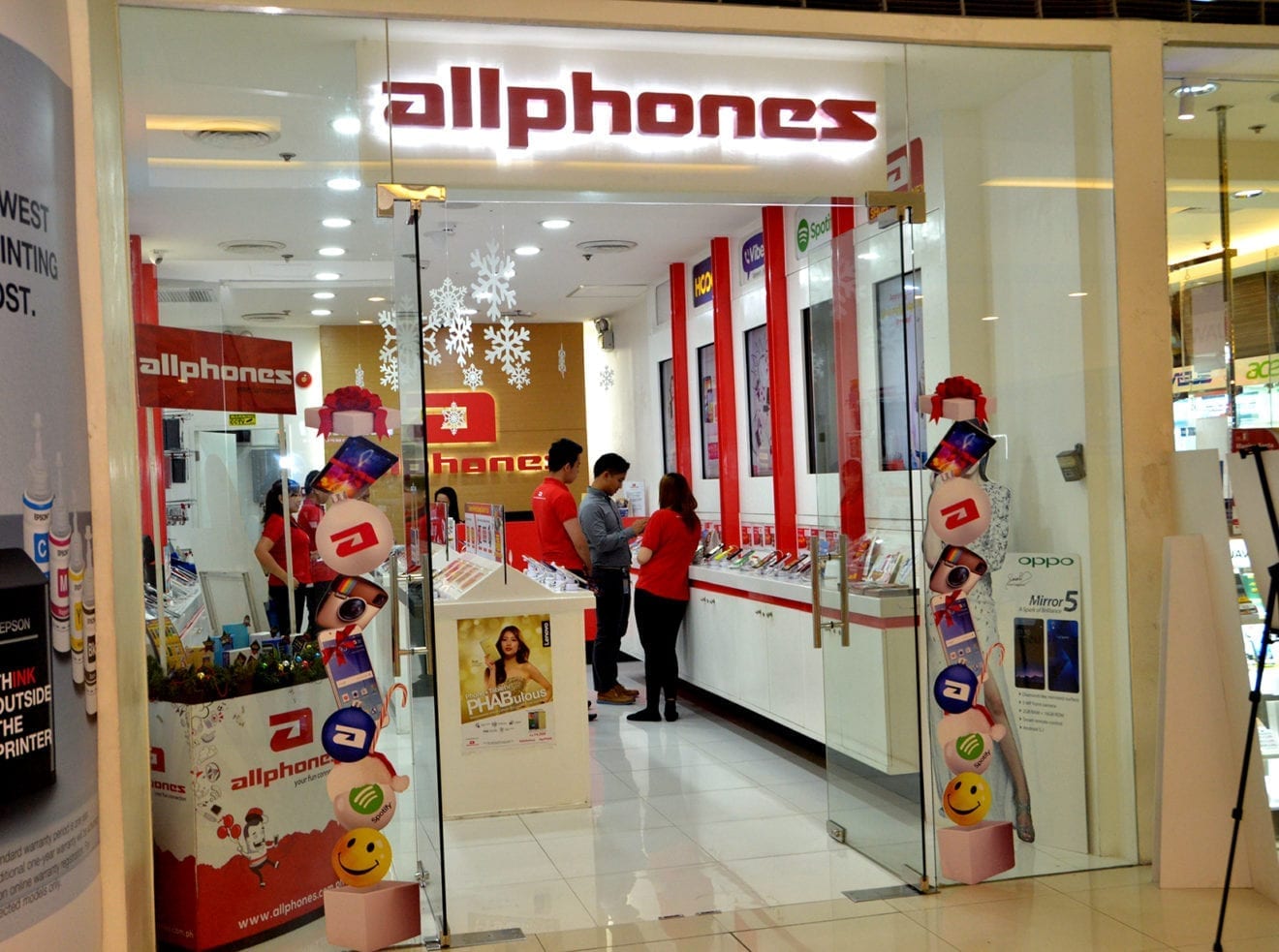
    Globe Telecom partnered with Allphones Australia, and Taodharma’s parent firm Tao Corp in 2014 to boost its postpaid customer base by expanding its sales distribution channels. This gave birth to Allphones Philippines, a national reseller of mobile phone solutions across multiple carriers.

    Tao Corp is a community of companies in the Philippines focused on supply-chain services related to health & wellness, distribution and marketing, resources, and financial services.

    Allphones claims to be the largest specialist multi-carrier mobile telecommunications retailer in Australia having over 170 retail outlets. Australia Philippines currently has 46 retail outlets.

  • Globe’s Fintech Subsidiary Mynt Selects Amdocs to Power its Casa Service

    Globe’s Fintech Subsidiary Mynt Selects Amdocs to Power its Casa Service

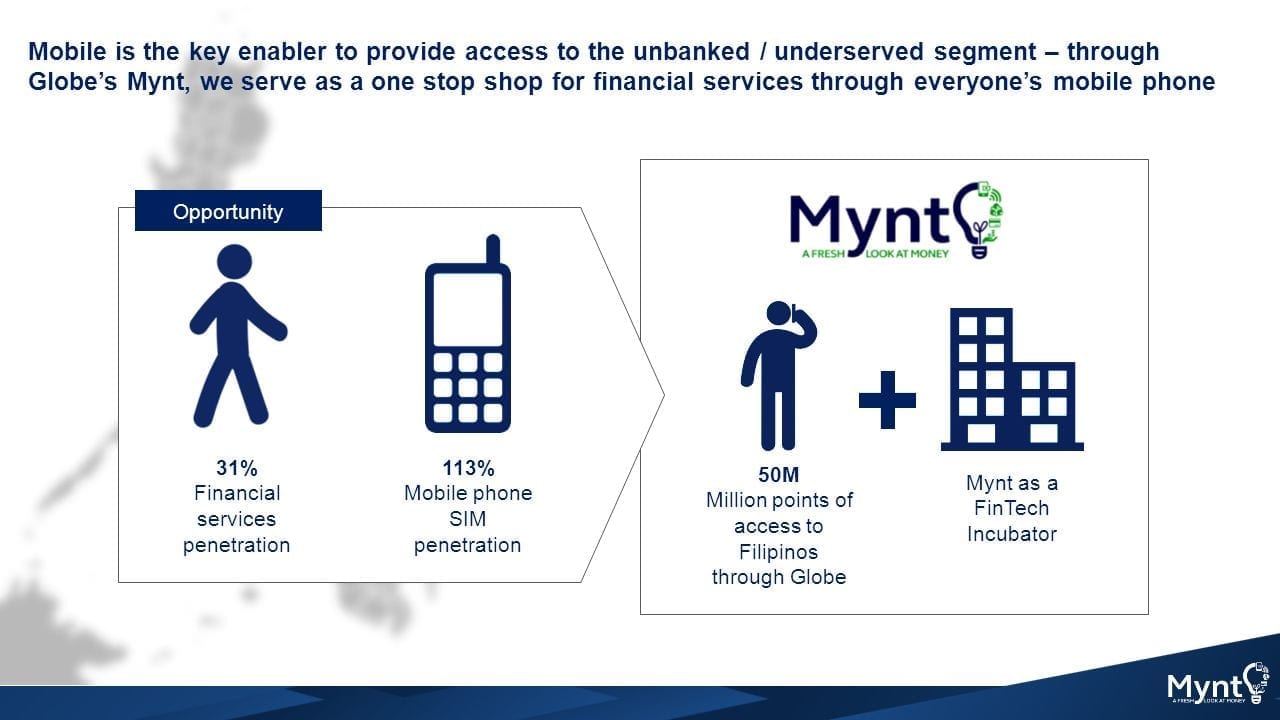
    Amdocs, the leading provider of customer experience solutions, today announced that Mynt, Globe Telecom’s fintech subsidiary, has selected the Amdocs Mobile Financial Services solution to power Casa – a new service that will enable Mynt to offer retailers a cloud-based, financial-grade, white-label digital money fintech platform, providing retailers with the means to offer a wide range of financial services and generate a new revenue stream.

    The Mynt Casa service, which will be powered by the Amdocs Mobile Financial Services solution, will enable retailers to offer bill payments, money transfers, closed-loop merchant payment solutions and loyalty program management. In addition, a card management feature will support them in issuing a closed-loop companion prepaid card to any customer, even if they do not hold a bank account. Cards will be linked to the user’s mobile wallet account, allowing them to pay for purchases at retail and online stores.

    The Amdocs solution will be deployed on Amazon’s public cloud. Based on a multi-tenant system, it will enable retailers in different locations to be hosted as separate tenants on a centralized platform, wholly managed by Amdocs. Under a five-year software as a service (SaaS) agreement, Amdocs will assume complete responsibility for development, deployment, operation and maintenance of the Amdocs solution via a revenue-sharing model with Mynt.

    “Retailers in emerging markets such as the Philippines need their own e-money solution that allows them to offer financial services such as point-of-sale payments, using cashless methods such as mobile wallets, payment cards and loyalty points,” said JM Aujero, chief sales officer at Mynt. “With Casa’s easy-to-use cloud-based platform, we will be able to provide for this need in a way that is tailored to each individual retailer. At the same time, it will enable them to offer wider financial services, such as third-party bill payments and money transfers without having to invest in new infrastructure deployment and operations.”

    “The ability for retailers and merchants to offer their own financial services solutions is a huge opportunity for mobile financial services providers to drive usage and adoption,” said Patrick McGrory
    , president for Amdocs’ emerging offerings. “Casa, powered by Amdocs’ cloud-based solution, provides superior, retail-specific capabilities, combined with a time-to-market advantage that will enable Mynt to quickly roll out services to its retail partners across the Philippines.”

    Amdocs also separately announced the availability of its Mobile Financial Services Card Management System (CMS). CMS supports any service provider in issuing both closed loop and open loop prepaid and debit cards to their customers, even to those who have no bank account. The card can be linked to a consumer’s mobile wallet with a stored value and/or loyalty point account as the source of funds. They can use the card to pay for purchases at a retail point of sale terminal, withdraw cash from an ATM, or for online shopping.


  • Vodafone India boosts 1H revenue by 5.9%

    Vodafone India boosts 1H revenue by 5.9%

    Vodafone India has reported solid revenue growth for the first half of its financial year despite parent company Vodafone’s decision to take a €5 billion ($5.36 billion) writedown of its Indian operations.

    Service revenue for the first half increased 5.9% to 225.79 billion rupees ($3.32 billion), with mobile data revenue up 18.8% to 46.17 billion rupees.

    The operator crossed the 200 million customer milestone during the period, with a 6.7% year on year growth in subscribers to 200.7 million. Vodafone India is the market’s second largest by subscribers after Bharti Airtel.

    Vodafone’s network in India meanwhile grew to around 140,000 cell sites, with a little over half of these being 3G or 4G sites.

    The operator had a revenue market share for the quarter of 22.5% during the first quarter, up 0.6 percentage points year-on-year. But the company reported a service revenue ARPU during the second quarter of just 186 rupees, reflecting the tight competition in the market.

    With the entry into the Indian market of Reliance Jio Infocomm, these competitive pressures are only getting worse.

    In light of this, Vodafone Group has written down the value of its Indian business by €5 billion as the company braces for an expected significant revenue impact.

  • Global 5G subscribers to reach 500m by 2022

    Global 5G subscribers to reach 500m by 2022

    Global 5G subscriptions will grow rapidly once the technology is available, Ericsson has forecast, with the vendor predicting that subscriptions will reach 500 million by 2022.

    North America is expected to lead the way in 5G uptake, with 5G projected to account for 25% of subscriptions in the region by 2022. But APAC will be the second fastest growing region, with 5G accounting for 10% of subscriptions.

    Ericsson’s latest Mobility Report also projects that global mobile subscriptions will grow to 8.9 million, with 90% of these for mobile broadband, and 6.1 billion unique subscribers in 2022.

    As of the third quarter of this year, there were 84 million new mobile subscriptions being added per quarter, for a total of 7.5 billion. India had the most net additions for the third quarter of 15 million, followed by China’s 14 million, Indonesia’s 6 million and Myanmar and the Philippines’ 4 million each.

    By the end of 2016 there will be 3.9 billion smartphone subscriptions worldwide, Ericsson said, with nearly 90% of these registered on WCDMA/HSPA and LE networks. This is expected to grow to 6.8 billion and 95% of subscriptions by 2022.

    The report also shows that mobile video is projected to grow by 50% annually through to 2022 to account for nearly 75% of all mobile data traffic. Increased use of live video streaming to contact friends, family and followers is meanwhile expected to contribute to a 39% annual growth in social media traffic.

    Finally, the report suggests that IoT will account for around 18 billion of the 29 billion connected devices forecast by 2022.

  • Vodafone India to launch 4G in 8 more circles

    Vodafone India to launch 4G in 8 more circles

    Vodafone India has revealed plans to roll out 4G services in eight additional telecoms circles by March 2017, giving it a 4G presence in 17 of India’s 22 service areas.

    The operator aims to deploy 4G in 2,400 additional towns over the next four months, in the circles of of Maharashtra and Goa, Odisha, Punjab, Rajasthan, Tamil Nadu, Uttar Pradesh West, Assam and North East.

    Vodafone’s SuperNet 4G service already covers nine circles – Mumbai, Delhi and NCR, Kolkata, Karnataka, Kerala, Haryana, Gujarat, Uttar Pradesh East and West Bengal.

    Vodafone was the biggest winner of India’s recent $9.8 billion spectrum auction, securing 2x 82.6MHz of FDD and 200MHz of TDD spectrum across the 1800-MHz, 2100-MHz and 2500-MHz bands. The auction gave the company 4G capability in 17 of India’s 22 telecoms circles.

    Now the company plans to leverage this spectrum to expand its 4G network. This will allow Vodafone to better compete against disruptive new pan-India 4G operator Reliance Jio Infocomm, which has been shaking up the market with its mobile data focused approach. Jio’s unlimited voice and SMS plans threaten to further cut into existing Indian mobile operators’ low margins.

  • Fujitsu Consulting India deploys SDN technology

    Fujitsu Consulting India deploys SDN technology

    Fujitsu Consulting India has deployed an end-to-end SDN infrastructure to support operations at its new 2,000-seat Global Delivery Center (GDC) in Pune and Bangalore.

    Fujitsu Consulting India selected Brocade’s SDN technology, partly due to the vendor’s open standard approach, which Fujitsu felt were critical to fully realizing the benefits of SDN.

    Brocade switches form the campus network core at the new Fujitsu GDC, offering 96 wire-speed 10 Gigabit Ethernet (GbE) ports per switch and the capability to integrate up to a dozen switches into a high-performance stack.

    The stack can be managed as a single device delivering up to 5.76 Tbps of aggregated stacking bandwidth.

    “Being successful in outsourced development requires more than just great design and programming talent. It also needs a high-performance IT infrastructure capable of keeping development teams productive 24×7, with the flexibility to emulate clients’ environments, which are of an increasingly hybrid-cloud nature,” Fujitsu Consulting India group head of IT and CISO Mohammed Shahed Khan said.

    “In putting together the specifications for our new Bangalore GDC and upgrade of the Pune GDC, it was clear that we would need to go beyond traditional networking to deliver the capabilities we see as essential to a successful future.”

  • India’s parliament addresses call drop controversy

    India’s parliament addresses call drop controversy

    An Indian parliamentary panel has taken up the issue of call drops on new mobile operator Reliance Jio Infocomm’s network.

    The panel met with GSM industry body COAI – representing the market’s incumbent operators – and Reliance Jio to discuss the reasons for the high number of call failures.

    Reliance Jio has been engaged in a bitter dispute with operators over the issue of frequent call drops. Earlier this month, Jio said around 50% to 60% of calls from Jio users to the three largest mobile network operators Airtel, Vodafone and Idea Cellular were failing or dropping.

    While this has recently contracted to around 25%, this still represents a substantial number of call drops and call failures..

    Reliance Jio has accused the operators of not making enough points of interconnection available to meet the demand for its pan-India mobile services. But incumbents have blamed the company’s strategy of offering free calls, which has led to a surge in network traffic.

  • Singtel Q2 revenue falls 2.3%

    Singtel Q2 revenue falls 2.3%

    Singtel has reported a 2.3% decrease in group revenue for its fiscal second quarter to S$4.08 billion (2.89 billion), as the company felt the impact of regulatory changes in Australia.

    Australian competition regulator ACCC’s decision last year to cut termination rates from 3.6 to 1.7 cents per minute impacted the performance of Singtel’s wholly-owned Australian subsidiary Optus. Excluding this impact, revenue would have grown 2% to S$4.28 billion.

    The impact of the rate cut contributed to Singtel reporting an 8% decline in its group consumer revenue, covering both Singapore and Australia. In Singapore, revenue fell 3% due largely to lower handset sales and a rise in penetration of lower-priced Android handsets.

    Group enterprise revenue by contrast grew 5% on the back of strong demand for cyber security and international data services.

    Net profit fell 6% year-on-year to S$972 million, due to exceptional gains recorded by Indian mobile affiliate Airtel in the previous corresponding quarter.

    Underlying net profit by comparison was stable for the quarter and up 3% for the first half of the financial year.

    Regional mobile associates’ pre-tax profit contributions grew 7% to S$679 million as a result of strong operating results from Airtel and Indonesia’s Telkomsel. The latter’s pre-tax profit jumped 22% as it reaped the results of investments in its voice, data and digital businesses.

    The group’s total customer base – including its mobile affiliates – grew 3% to 629 million subscribers.

    Singtel is currently projecting a low single digit decline in group operating revenue but stable ebitda for the full year.

  • TrueMove deploys Procera’s ScoreCard

    TrueMove deploys Procera’s ScoreCard

    Thai mobile service provider TrueMove has deployed Procera’s ScoreCard technology to monitor the quality of experience (QoE) its network is delivering to subscribers across 2G, 3G, and 4G LTE.

    ScoreCard is being used for raw QoE KPI intelligence and the visualization of network performance, thereby helping to guide capex investments and better service planning.

    TrueMove’s management can quickly use the data and visualization to further aid business investment decisions, maximize ROI, and reduce churn among the subscriber base.

    “Mobile operators are increasingly differentiating their offerings by delivering a differentiated experience to subscribers,” said Viriya Upatising, CIO at TrueMove.

    “Procera’s solutions enable TrueMove to see the actual experience delivered to their subscribers in real-time, and ScoreCard provides unique QoE KPIs and visualization that is ensuring the experience is a good one for all subscribers.”

    As higher bandwidth mobile devices, connected cars, and the Internet of Things (IoT) continue to proliferate, TrueMove needs better intelligence about the QoE delivered to subscribers to maximize the return on investment for its capex.

    ScoreCard has been deployed across TrueMove’s network to measure the quality of mobile broadband delivery. No Personally Identifiable Information (PII) is collected from the subscribers, but the overall quality of the broadband service is measured and fed back to a centrally deployed Procera Insights system.

    ScoreCard has already identified several areas of investment that will improve the QoE of the TrueMove network, and action has been taken to enhance the subscriber experience based on ScoreCard’s recommendations.

  • Dtac taps Nokia to revamp core network

    Dtac taps Nokia to revamp core network

    Thailand’s Dtac has become the market’s first mobile operator to implement an SDN-ready IP/optical network using equipment from Nokia.

    Dtac is implementing the technology to replace its existing IP core routing and DWDM infrastructure, in order to achieve the capacity to serve Thailand’s fast-growing mobile subscriber base.

    The deployment also includes Nokia’s security gateway for Dtac’s LTE network.

    “Over the last two years we’ve seen demand for mobile broadband grow exponentially,” Dtac CTO Prathet Tankuranun said.

    “As we prepare for future advanced technologies we’ve made a strategic choice for an SDN-ready IP/Optical network because it gives us the control and agility needed to run an efficient network that can rapidly adjust to evolving demand patterns. This deployment with Nokia is an important next step in our migration towards full SDN automation.”

    Nokia Thiland head Sebastien Laurent added that the deployment “provides the foundation for an SDN-centric network and will allow dtac to implement on-demand services while also easing operation and maintenance demands.”

  • Bangladesh’s CityCell has spectrum reinstated

    Bangladesh’s CityCell has spectrum reinstated

    Cash-strapped Bangladeshi operator CityCell has resumed operations after having its spectrum temporarily reinstated by a Supreme Court ruling.

    The Bangladesh Telecommunication Regulatory Commission (BTRC) revoked CityCell’s spectrum last month for failing to pay its spectrum renewal, license and associated fees.

    But the court has asked the government to restore CityCell’s spectrum and allow it to continue operations for the time being.

    If CityCell fails to pay 1 billion taka ($12.7 million) to BTRC by November 19, the regulator will have the authority to revoke the spectrum again, the court order states.

    CityCell has been operating since 1993 but has a low market share and revenue base. The company earned just 1.39 billion taka in revenue during the 2014-15 financial year. The BTRC has calculated that CityCell owes 4.77 billion taka in unpaid fees.

    The operator is 44.5% owned by Singtel, 37.9% owned by Pacific Motors and 17.5% owned by Far East Telecom.