Tag: Thailand

  • Central Group sees flat spending in Thailand

    Central Group sees flat spending in Thailand

    As Thai retail conglomerate Central Group suffers a sluggish domestic economy, its owners the Chirathiwat family worry that premium customers are spending overseas rather than at home.

    “The upper class group is still spending money,” Chief Executive Tos Chirathiwat told reporters in Bangkok on Wednesday. “The problem is that they are spending outside of Thailand.”

    In 2015, roughly 7 million Thais travelled abroad, up 9% year on year. Tos said that these outbound travelers spent some 170 billion baht ($4.76 billion).

    “What’s worrying is that the figure is growing at 10% every year, while domestic consumption is expanding at only 2%,” he said. At this rate, the spending leak from Thailand will reach 300 billion baht in five years.

    The number of inbound tourists meanwhile hit a record 29.88 million in 2015, up 20% year on year from a low base in 2014 following political turmoil. But according to Tos spending has not kept pace, rising just 2% last year. He called for Thailand to promote domestic consumption and tourism.

    Central Group is Thailand’s largest retail company with subsidiaries including property development arm Central Pattana. Wearing another hat, Central is itself expanding overseas where operations now account for nearly 20% of group revenue. The company plans to more than double revenue in Europe to 2 billion euros ($2.17 billion) by 2020 — aided by custom from Asian tourists, including China and Thailand.

    Some 10.4 billion baht has been earmarked for renovating five department stores Central has acquired in the region. “We want the stores to be not only a shopping destination but also a tourism destination,” said Tos.

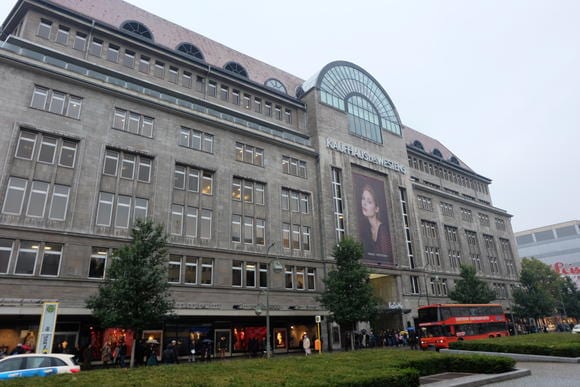
    Central began its shopping spree in Europe in 2011 buying Italy’s La Rinascente chain, which has a 150-year history. Revenue from Europe has been growing an average 40% each year since. This year, it is expected to jump 70% to 51 billion baht as three German department stores acquired in mid-2015, including KaDeWe in Berlin, start contributing.

    Tos said further mergers and acquisitions in Europe are being put off for now. “We have quite a large coverage in Europe now, and there’s a lot of work to do,” he said.

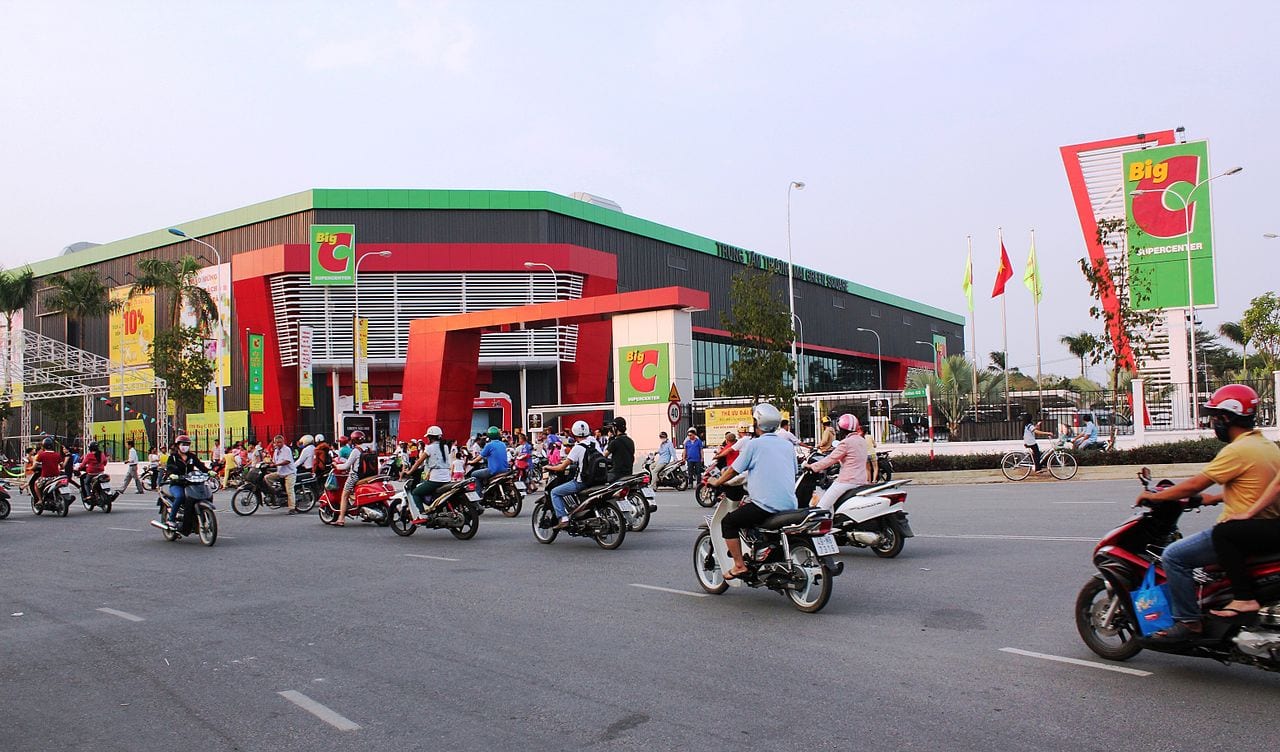
    A more immediate focus is Southeast Asia, particularly neighbors Cambodia, Laos, Myanmar, and Vietnam. In Vietnam, France’s Casino Group is selling off its Big C supermarket chain, and Central already has 25% of Big C in Thailand.

    “We are interested but we have not decided yet whether to join the bidding,” Tos said. “The acquisition will require a substantial amount of money which could be used to acquire something else.”

    TCC Group, the parent company of Thai Beverage, is also reported to be looking at Big C in Vietnam. It recently acquired Casino’s 58.56% stake in Thailand’s Big C for 3.1 billion euros.

    Bidding for Big C in Vietnam is expected to conclude next week. Tos said that if Central acquired the chain, its sales in Vietnam would double from $600 million at present. The company already has two Robins department stores there, and acquired Nguyen Kim, an electronics retail chain, last year.

    Tos said Central has no plans to reenter China after recently exiting. “China was a difficult market,” he said, noting the need for good government connections. “We learnt a lot.”

    Central’s group revenue in 2015 was over 283 billion baht, up 13.5% on 2014. It is targeting growth of 18.9% this year, with international sales contributing the lion’s share of the increase. Revenue from abroad will contribute 24% of the total, up from 18% in 2015.

  • Ikea Kicks Off $444 Million Global Media Review

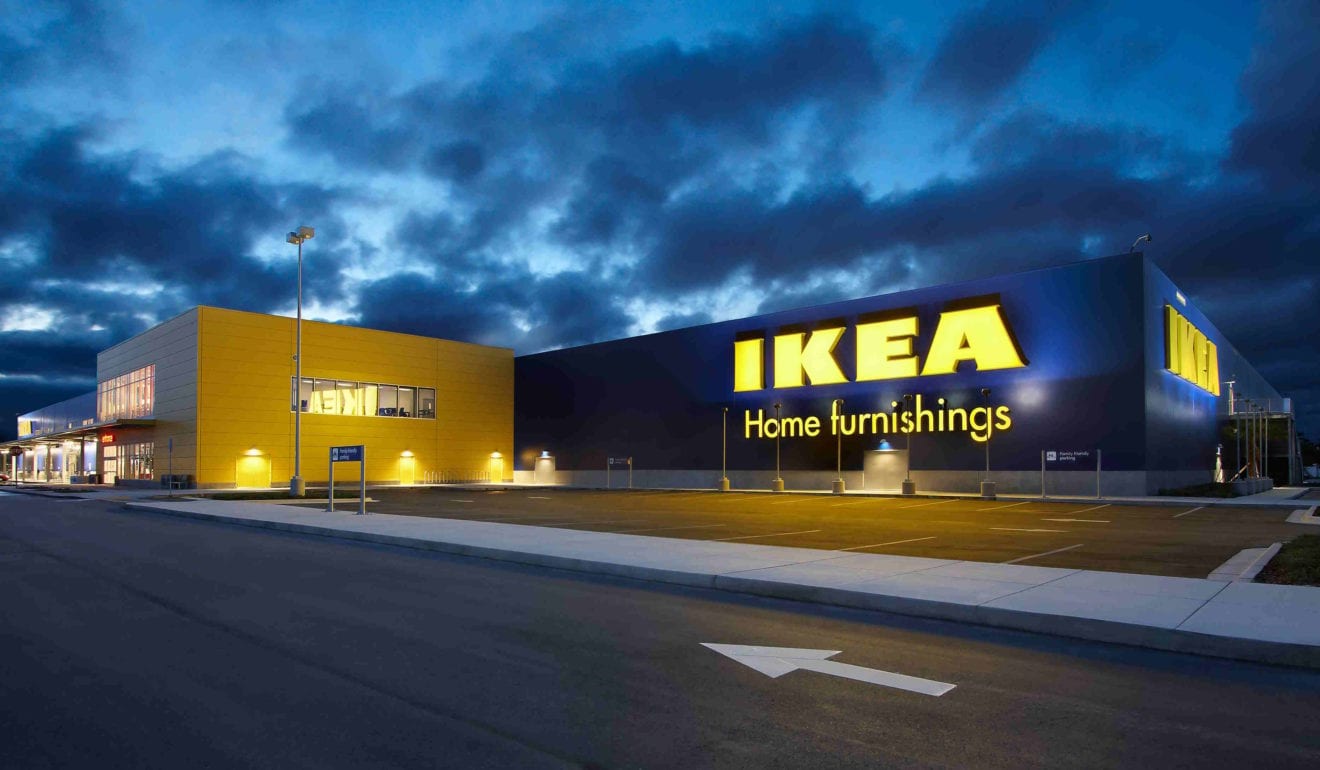
    Ikea Kicks Off $444 Million Global Media Review

    Ikea is reviewing its entire $444 million global media account, which is currently split between a range of agencies across five different holding companies. WPP’s MEC retained Ikea’s media planning and buying duties in the U.S. following the last media review in 2009. Dentsu Aegis Network’s Vizeum won the U.K. business from WPP’s MediaCom in the same review, which took more than six months to complete. In Asia, Vizeum picked up the business in Singapore, Thailand and Malyasia in September 2015, after winning Korea a year earlier.

    The Swedish furniture retailer confirmed in a statement: “Ikea is currently in the process of reviewing its media agency suppliers globally. ID Comms, our media consultancy partners, will be helping us facilitate this process.”

    An executive familiar with plans for the review said media buying is currently split among agencies from five different agency holding companies.

    Ikea’s statement continued, “As part of our commitment to the ongoing improvement of our media and marketing governance, Ikea periodically evaluates all marketing service suppliers to ensure we maintain the best working relationships with the best agency partners.

    Creative duties on Ikea are not under review. Like the current media arrangements, creative is split between a number of different agencies around the world. New York, BBH Singapore, Buzzman Paris, Mother London, and Forsman & Bodenfors and Akestam Holst in Sweden have all created memorable campaigns for the brand.

    Ikea’s sales reached $35 billion in the year ending Aug. 31, 2015, with like-for-like sales up 5% on the previous year. Including new store openings, sales were up 11.2% last year.

    The company’s head of sustainability, Steve Howard, recently told a conference organized by The Guardian in London, “We have probably hit peak stuff.” He pointed to growing emphasis on repairing and recycling in future, while at the same time declaring a target of almost doubling sales by 2020. China and Russia are currently its fastest growing markets.

    Ikea is No. 66 in the ranking of Top 100 Global Marketers compiled by Ad Age’s Datacenter. In 2014, the vast majority of Ikea’s spending – 79% – was in Europe, with 15% in the U.S. and less than 2% in Asia.

    ID Comms also worked on the $2.6 billion global Johnson & Johnson pitch last year, and on the U.S. and European A-B InBev reviews in 2014.

  • Rakuten quits Thailand

    Rakuten quits Thailand

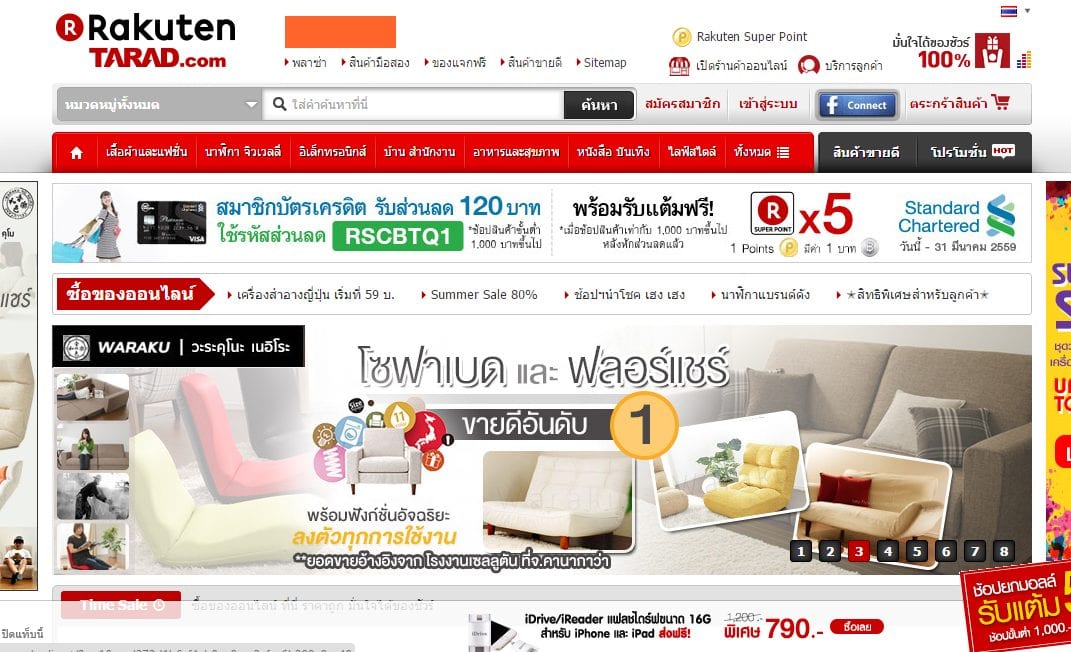
    Japanese eCommerce giant Rakuten is negotiating to sell its stake in Thailand’s largest eCommerce company Tarad.com to an undisclosed Thai company.

    Rakuten Tarad.com founder and MD Pawoot Pongvitayapanu has told the Bangkok Post the deal is expected to be sealed within a few days. Rakuten has a 67 per cent stake in Tarad.com since acquiring it in 2009 for US$35 million, and Pongvitayapanu holds the balance.
    Rakuten’s move follows a strategic overhaul of its business in Southeast Asia, Deal Street Asiareports. It had previously focused on business-to-business and business-to-consumer models, but now plans a shift to consumer-to-consumer (C2C) by launching a mobile app, Rakuma.
    Shopee, which already has a foothold in Thailand, is one of the main competitors for C2C apps in the region, along with Carousell.
    Tarad.com had an accumulated loss of 117 million baht ($3.2 million) in 2013, rising from losses of 35 million baht in 2010 and 5.6 million baht in 2009. Pongvitayapanu says business will continue business as usual as it prepares to implement a strategic shift following the new shareholding structure.
    Rakuten earlier announced it is shutting down its eCommerce marketplaces in Indonesia, Malaysia and Singapore from March 1, laying off about 150 employees. It plans to focus on eCommerce in Japan, where it is a market leader. It will also keep a presence in east Asia, Taiwan and the US.

  • Hooters Thailand doubles presence

    Hooters Thailand doubles presence

    Hooters Thailand has doubled its network with two new locations: one more in Bangkok and the other in Pattaya – the group’s largest outlet.

    Hooters Pattaya and Hooters Nana join Hooters Bangkok and Hooters Phuket as part of a 30-location Southeast Asia development agreement between the American chain and Bangkok-based international franchisee Destination Resorts.

    In the heart of Pattaya, about an hour from Bangkok’s Suvarnabhumi Airport, Hooters Pattaya has a ‘Wild West theme’. Covering 3300 sqm, it has two bars, 50 high-definition televisions, live music, pool tables, a mechanical bull named Ricardo and two patios.

    “Opening the largest international Hooters location in the heart of bustling Pattaya signifies our commitment to continued expansion in Asia,” says Hooters of America senior VP of global development Mark Whittle.

    Meanwhile, the 630 sqm Nana outlet in the heart of the Sukhumvit district seats 271 customers. Along with, 21 high-definition flat screens, DJs and pool tables, it has a mechanical bull named Turbo.

    Based in Atlanta, Hooters America owns and franchises more than 430 Hooters outlets in 28 countries. The privately held corporation owns 160 units. Its first establishment, in Clearwater, Florida, opened in 1983. Hooters’ website says the six founders were “quickly detained for impersonating restaurateurs, but fortunately for America they were soon allowed to go about their business”.

    Hooters’ casual beach-themed establishments feature music, sports on large flat screens, and a menu that features chicken wings, seafood, sandwiches, burgers and salads.

    “Destination Resorts has proven success with many restaurants in Thailand, and we’re continuing to bolster our presence with the largest international Hooters and a new location in Bangkok,” says CEO Gary Murray.

    Destination Resorts properties include DoubleTree Resort by Hilton Phuket – Surin Beach, DusitD2 Phuket Resort, Sri Racha International Golf at Sri Racha Hills, Hard Rock Cafe Phuket at Patong Beach, Novotel Phuket Karon Beach Resort & Spa, Novotel Hua Hin Cha Am Beach Resort & Spa, Swissotel Resort Phuket and Four Points by Sheraton Bangkok Sukhumvit 15.

  • A parade of pandas aims to raise awareness in Thailand

    A parade of pandas aims to raise awareness in Thailand

    A parade of 1,600 papier-mache pandas will be touring Bangkok this month as part of a worldwide campaign for the conservation of the endangered species.

    Campaigning in a country that has no wild pandas at all may sound odd, but the message from World Wide Fund for Nature Thailand goes beyond just those cuddly creatures. Thailand is home to a vast population of wild animals, including Asian elephants and Bengal tigers. The panda campaign intends to raise awareness for the conservation of these species, too. At the end of the exhibition, all the pandas will be offered for “adoption” for 600 baht ($16.8) and the proceeds donated to WWF Thailand.

    The pandas, created with recycled materials by French artist Paulo Grangeon, represent the 1,600 or so that were left in the wild when the campaign was first launched in France in 2008. Since then, the art project has traveled to around 100 locations around the world and the number of wild pandas has increased to 1,864, according to the WWF.

    In the Thailand tour, the pandas will appear, flash-mob style, at 10 landmarks in Bangkok and the ancient city of Ayutthaya. They will be on exhibit for just three hours at each spot sometime between March 3 and 16.

    After that, the pandas will be on exhibition through April 10 at Central Embassy, an upscale shopping mall in Bangkok that belongs to retail giant Central Group.

    It is hoped that the pandas will also draw visitors to the mall, which opened just before the military staged a coup in May 2014. The country’s economy and consumer confidence have been sluggish since.

    “Pandas are cute, and the campaign will attract everyone from young children to families and tourists,” Barom Bhicharnchitr, managing director of the mall, said.

  • Why are many Thai buyers in the Vietnam retail market?

    Why are many Thai buyers in the Vietnam retail market?

    Berli Jucker Plc (BJC), has taken over the Japanese chain of 42 FamilyMarts and renamed it as B’mart. The Vietnamese retail market recently witnessed a series of mergers and acquisitions (M&A) in which the buyers were businessmen from Thailand.

    In mid-2014, BJC made a deal on buying Metro Cash & Carry Vietnam at $880 million, the biggest affair in the retail sector in Vietnam so far. The deal wrapped up 1.5 years later, in January 2016.

    In early 2015, Central Group successfully acquired a 49 percent stake of the Nguyen Kim home appliance distribution chain.

    Right after French Casino Group announced the plan to sell Big C Vietnam, analysts predicted that Big C chain in Vietnam was likely to fall into Thai hands. Later, BJC stated it was vying for Big C Vietnam.

    This is because, according to Phu, the Vietnamese market promises great potential: while other countries in the world focus on developing the home market, Vietnam has been gathering strength on boosting export, while paying less attention to the domestic market.Vu Vinh Phu, chair of the Hanoi Supermarket Association, who was deputy director of the Hanoi Trade Department, noted that only a few foreign retailers came to Vietnam in the past, but things are quite different now. Nearly all big retailers in the world are present in Vietnam, especially Thais.

    This explains why foreign investors have to spend several months only to find retail premises and penetrate the home market. Meanwhile, a domestic retailer told Phu that it took him three years to do this.

    “Business opportunities will be missed after such a long time,” Phu said, adding that domestic and foreign retailers are in an unequal competition.

    An analyst commented that many Thai businessmen eye Vietnam because Thailand is near Vietnam in geographical position. Thai businesspeople understand Vietnamese consumers’ taste and hobbies.

    “Thai businessmen kicked off plans to penetrate the Vietnamese market a long time ago. And they have been doing this in a methodical way and they have been step by step expanding both production and distribution in Vietnam,” he commented.

    At first, Thai businesses usually organize trade fairs in Vietnam to familiarize Vietnamese with Thai products.

    “I believe that 100 percent of families in Hanoi and HCMC use Thai products, from washing liquid to knives,” he said, adding that Thai products are present in every Vietnamese family.

    Phu commented that though Thai is less strong than Japanese and South Korean; therefore, they have been ‘waging guerilla warfare’ when attacking the Vietnamese market.

  • The Mall Group plans further expansion

    The Mall Group plans further expansion

    Despite a tougher retail market, The Mall Group in Thailand plans to expand this year, allocating 5 billion baht (US$139.8 million) for new projects and upgrades.

    CEO Phaibul Kanokvatanawan says this includes 800 million baht pegged for a new building behindThe Mall Bang Khae.

    Parking will also be increased to 3800 spaces from 3000, and the remaining 4.2 billion baht will pay for an extension of two malls in Nakhon Ratchasima, scheduled to open soon. After relaunching its Korat project in September, total space at the complex will be 200,000 sqm.

    Two billion baht will be spent on developing Blue Port, the group’s latest retail project in Hua Hin. About 80 per cent complete, this project is scheduled to open in October, earlier than planned.

    Part of the budget will be allocated renovating The Mall Bang Kapi to respond to the rapidly changing customer profile of the area.

    While competitors have expanded their retail complexes on Rama IX and Ekamai-Ram Intra, including Crystal Park Phase II, Central East Ville and Show DC, Phaibul is optimistic, saying his company will thrive by both catering to core customers across a complete range of products and fostering brand loyalty.

    However, the spending power of Thai consumers has not improved despite heavy consumption at the end of last year sparked by a government tax break, he says. Also, overseas tourist levels are back to normal at Siam Paragon, The Emporium and EmQuartier since the Lunar New Year holiday.

    “We want the government to speed up the airport extension to attract more tourists to Thailand.”

    Phaibul says the company expects sales growth of 5 per cent to 52 billion baht this year.

  • Royal Enfield opens retail store in Bangkok

    Royal Enfield opens retail store in Bangkok

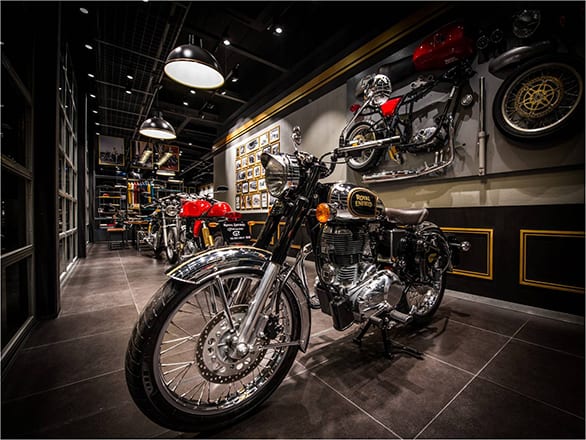
    Royal Enfield launched its retail operations in Thailand with an exclusive store in Thonglor, Bangkok, Wednesday, Feb.24. Royal Enfield’s first retail store in Thailand has been set up in partnership with General Auto Supply Co. Ltd.

    The 3,685 square feet retail outlet located at 842 SoiSukhumvit 55 (Thonglor), Sukhumvit Road, KlongtanNua, Wattana, Bangkok, is a full-service dealership and will provide aftermarket service to the buyers. The new store will sell the Bullet, world’s oldest motorcycle in continuous production since 1932, for Thailand Baht 179800 for 500cc, which is approximately Rs 3.45 lakh. The range of motorcycles includes the Classic 500, Classic Chrome and the Continental GT 535cc cafe racer.

    “Royal Enfield is today one of the most profitable automotive brands in the world and we believe that our future growth will come from our international markets such as Thailand where motorcycles are a popular medium of commuting. Our phenomenal success in India gives us the confidence to thrive in similar markets like Thailand and Indonesia, which will play an instrumental role in fuelling our growth in Asia,” Arun Gopal, international business head, Royal Enfield, said in a statement.

    Royal Enfield announced its entry into Thailand, the fifth largest two wheeler market in the world in December 2015, at the Thailand International Motor Expo.

    With a target to become a global leader in mid-sized motorcycle segment, Royal Enfield has been expanding its global footprints across UK, Europe, Latin America, Middle-East and now in South East Asia. In 2015, the company sold over 4.5 lakh motorcycles across the globe and also announced its plan to produce upto 9 lakh motorcycles by end of 2018, from two of its existing manufacturing facilities and a third upcoming facility near Chennai.

  • Revamped Siam Discovery to embrace ‘lifestyle’ concept

    Revamped Siam Discovery to embrace ‘lifestyle’ concept

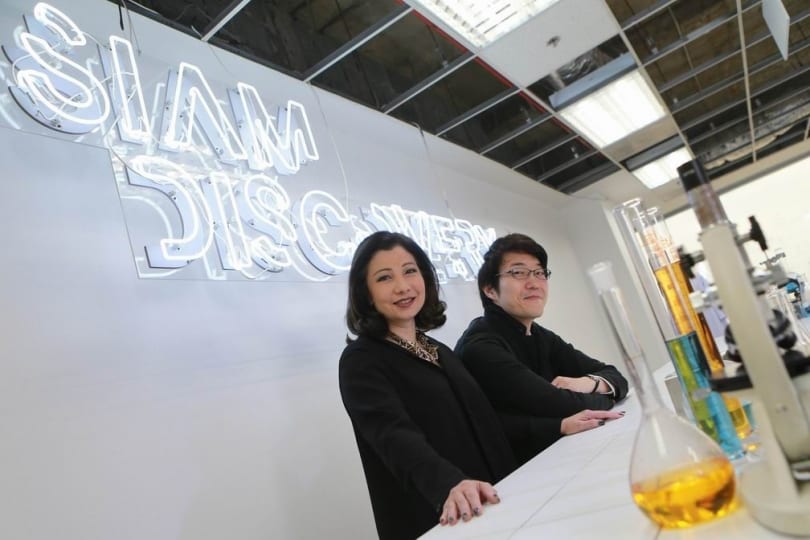
    The 18-year-old mall in central Bangkok has been closed for a Bt4-billion overhaul since May and expects to reopen under the new title “Siam Discovery – The Exploratorium” next quarter.

    “We want to create a unique shopping experience for all customers. To make the new Siam Discovery different from its neighbouring shopping malls Siam Center and Siam Paragon, we want to introduce a revolutionary new retail concept in Thailand,” said Chadatip Chutrakul, chief executive officer of Siam Piwat, which also owns and operates Siam Paragon and Siam Center.

    To turn this shopping venue into a hybrid retail destination, Siam Piwat decided to ensure that its 40,000 square metres of retail space would offer a range of products and undertake sales and marketing strategies that would be more flexible and respond to customers’ demands.

    Previously, Siam Discovery hosted at least 120 retail tenants.

    After the reopening, there will be hundreds of categories and more than 5,000 international and local brands on offer.

    “We invited [Japanese design studio] Nendo to provide the inspirational design concept for Siam Discovery because Siam Piwat looks at the future from a global perspective rather than just the potential of the Thai market,” Chadatip said.

    To turn this vision into reality, the Siam Discovery renovation was overseen by Oki Sato, one of the world’s top designers.

    “Our role as a retailer has advanced to another level and become one of managing visitors’ experiences and emotions at the destination, rather than just one of managing products, categories and displays,” Chadatip stressed.

    Besides being Nendo’s largest project in Thailand, this is the first major facelift of the 18-year old shopping complex. The aim is to cash in on the potential growth in shopping and retail markets in Thailand following the implementation of the Asean Economic Community (AEC) early this year.

    Chadatip said the 2 million square metres comprising the Siam area was considered one of top-ranked retail destinations in Bangkok, which annually attracts more than 200,000 visitors. The number of foreign-tourist arrivals is expected to rise, particularly after the full implementation of the AEC.

    Give this potential, one year after the reopening, Siam Discovery is expected to welcome 100,000 visitors a day, of whom about 65 per cent will be local shoppers while the remaining 30-35 per cent will be foreign tourists.

    “We aim to double our sales revenue within one year compared the sales in the year before this major renovation,” she said.

    Siam Piwat targets recovering the cost of this renovation within five to six year as it believes that this is a long-term investment. By the end of this year, the company hopes to see at least 10-per-cent revenue growth, partly driven by the new Siam Discovery.

  • Thai insider trading row lays bare governance concerns

    Thai insider trading row lays bare governance concerns

    An escalating row over insider share trading by executives at one of Thailand’s most high-profile groups has laid bare wider worries about corporate governance and regulatory enforcement in Asian emerging markets.

    Leading fund managers have vowed to freeze investments in CP All, part of the multinational Charoen Pokphand Group agribusiness, food and retail conglomerate, until it takes further action against three directors fined by the stock market regulator.

    The unusual public spat has highlighted what critics say are soft penalties for financial market wrongdoing in Thailand, which risk further hurting investor confidence already hit by domestic political turmoil and fears of global crises.

    Jamie Allen, secretary-general of the Asian Corporate Governance Association, a non-profit group that works with investors, companies and regulators, said of the CP All case: “This is unprecedented in Thai corporate governance. We have not seen domestic institutional investors show this level of public concern before about insider trading.”

    The case has also tapped into concerns about corporate governance in the broader Asian region, where many companies — such as CP Group — are still wholly or partly controlled by their founding families.

    Bandid Nijathaworn, chief executive of the Thai Institute of Directors, said the CP All dispute showed both companies and regulators still needed to improve compliance with market rules and norms, despite progress made since the 1990s Asian financial crisis.

    “This debate is a reflection of the heightened awareness and recognition of the importance of corporate governance,” he said. “We support the [regulator] to tighten up to make the punishments much tougher than we see.”

    This debate is a reflection of the heightened awareness and recognition of the importance of corporate governance– Bandid Nijathaworn, chief executive, Thai Institute of Directors

    Thai financial institutions managing more than $170bn in funds this week said they would boycott new investment in CP All, which is the operator of the 7-Eleven convenience store chain and is 42 per cent owned by CP Group companies. Among them were the Association of Investment Management Companies and Thailand’s two largest pension fund managers. They want CP All to impose unspecified further sanctions on executives who were among a group of six people fined a total of Bt33.3m ($930,000) for insider share trading in December, under a settlement with Thailand’s Securities and Exchange Commission.

    CP All’s shares tumbled 8.5 per cent between the regulatory announcement and the end of last week, more than three times the fall in the broader benchmark SET index. But the company’s stock rallied more than 5 per cent on Friday, in what some analysts suggested was relief that the fund managers stopped short of announcing they would cut their holdings.

    The SEC fined Korsak Chairasmisak, CP All’s executive chairman, along with fellow directors Piyawat Titasattavorakul and Pittaya Jearavisitkul, over purchases of shares in Siam Makro, the retailer, when CP All was in talks to take the company over in 2013. Mr Korsak, who accounted for more than 90 per cent of the fine, has acknowledged buying the shares, but said he did not mean to commit insider trading.

    CP All said in a stock exchange announcement this month that the directors had not intended wrongdoing, although they had acted with “imprudence” and “limited understanding” of the rules. The company said it would strengthen its corporate governance committee and formally admonish the executives, but would allow them to stay in their posts because they had settled the case quickly and had “track records of ethical practice”.

    The dispute has also raised questions about the enforcement of insider trading rules by the Thai authorities. The regulator’s notice of penalties for the case gave few details about how the offence was carried out or of the profit made by perpetrators, who in two instances were fined as little as Bt333,333 ($9,340).

    Critics say light penalties not only fail to deter wrongdoing, but actually encourage it by making it a risk worth taking. The SEC and the Stock Exchange of Thailand did not respond to requests for comment.

    Corporate governance at Asian companies slipped between 2010 and 2014 after steady improvement since the 1997-98 financial crisis, according to a report published in late 2014 by CLSA, the Asia-focused brokerage, and the Asian Corporate Governance Association. While some countries, including Thailand, had not fallen back, CLSA said the overall picture was still a “warning flag for investors”.


  • Facelifted Mazda CX-5 launched in Thailand

    Facelifted Mazda CX-5 launched in Thailand

    Mazda Sales (Thailand) has launched the facelifted CX-5 with tweaked looks, new safety and convenience features, more economical drivetrains and slightly lower retail prices.

    Exterior changes include new front grille design and LED daytime running lights with adaptive function up front. Inside, there’s the brand’s latest infotainment called MZD Connect. There’s also a new drive mode selector to alter the vehicle’s driving characteristics.

    Safety features from Mazda’s i-Active Sense package include lane departure warning, automatic braking at low speeds, blind spot monitoring and rear traffic alert.

    The engine lineup has been streamlined to just two variants. The 2.2-litre diesel now comes with front-wheel-drive-only format that’s capable of yielding 17.5kpl on the average.

    The 2.0-litre petrol can now take E85 gasohol – just like in the Mazda 3 and CX-3 – and can return 14.5kpl. The 2.5-litre variant, meanwhile, has been dropped from the CX-5 lineup.

    Under new excise tax rules based on CO2 emissions, the diesel now has a lower price range of 1.53-1.69 million baht, whereas the petrol costs between 1.22-1.33 million baht.

  • Royal Enfield sets up shop in Bangkok, Thailand

    Royal Enfield sets up shop in Bangkok, Thailand

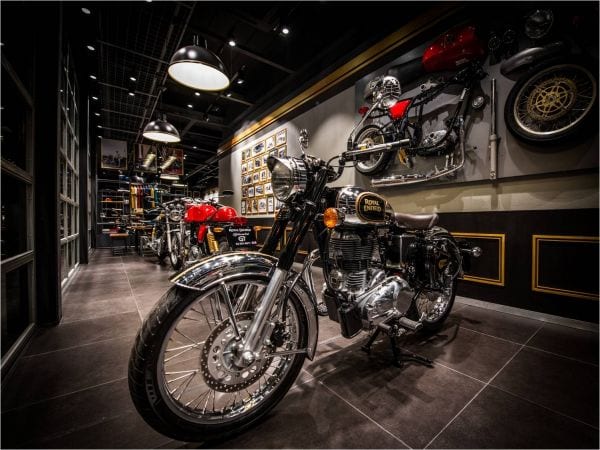
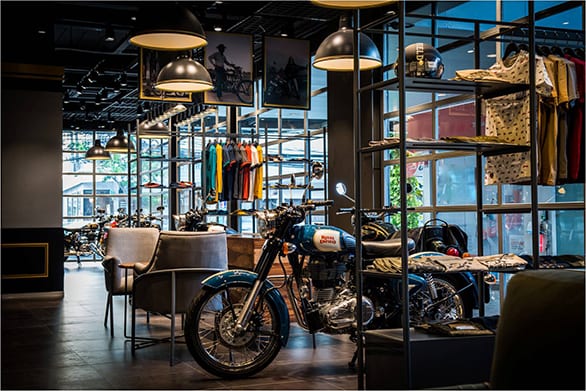
    Royal Enfield has just opened up its first exclusive showroom in Thailand, which is located in Thonglor, Bangkok. The Royal Enfield’s retail store there has been set up by General Auto Supply Co Ltd. The showroom will sell the Royal Enfield Bullet priced at THB 1,79,800 (approximately Rs 3.45 lakh), the Royal Enfield Classic 500 which will cost THB 1,89,800 (approximately Rs 3.64 lakh) and the Royal Enfield Classic Chrome for THB 1,98,800 (approximately Rs 3.81 lakh). The Royal Enfield Continental GT café racer, which displaces 535cc, will be sold in Thailand for THB 2,19,800 (approximately Rs 4.22 lakh). All-prices are ex-showroom.

    An inside view of the new Royal Enfield store in Bangkok

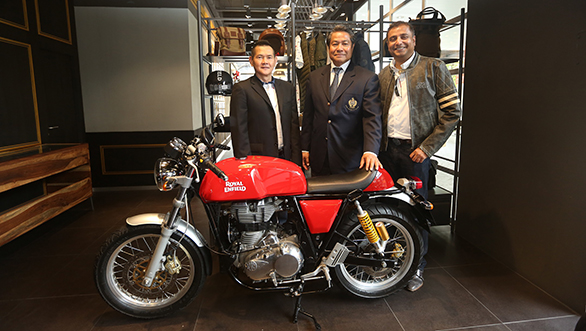
    A Royal Enfield proudly stands at the new the company's new exclusive store in Bangkok launched today

    Natavude Charoensukhawatana, Executive Director, General Auto Supplies Co Ltd-Palakorn Suwanarath, Privy Councillor, Thailand-Arun Gopal, Royal Enfield, international Business head

    From left to right: Natavude Charoensukhawatana, executive director, General Auto Supplies Co Ltd, Palakorn Suwanarath, privy councillor, Thailand, Arun Gopal, Royal Enfield, international business head

    “Royal Enfield is today one of the most profitable automotive brands in the world and we believe that our future growth will come from our international markets such as Thailand where motorcycles are a popular medium of commuting. Our phenomenal success in India gives us the confidence to thrive in similar markets like Thailand and Indonesia, which will play an instrumental role in fuelling our growth in Asia. We see a huge potential for our evocative, all purpose, and middle-weight (250-750cc) motorcycles that will allow customers an optimum choice for upgrade,” said Arun Gopal, the international business head of Royal Enfield.

    Royal Enfield opens Thailand’s first exclusive store in Bangkok

    Royal Enfield, the fastest growing motorcycle brand in the world, today launched its retail operations in Thailand, with the price announcement of its complete range of motorcycles, apparel and accessories at the launch of its first exclusive store in Thonglor, Bangkok. Royal Enfield’s first retail store in Thailand has been set up by the prestigious General Auto Supply Co. Ltd.

    In Bangkok, Royal Enfield’s iconic motorcycle– the Bullet, world’s oldest motorcycle in continuous production since 1932, is available at a price of THB 179800 for 500cc. Royal Enfield’s retro street model, known for its post war, timeless styling – the Classic 500 is available for THB 189800 and Classic Chrome for THB 198800. The Royal Enfield Continental GT 535cc café racer is now available at a price of THB 219800.

    “Royal Enfield is today one of the most profitable automotive brands in the world and we believe that our future growth will come from our international markets such as Thailand where motorcycles are a popular medium of commuting. Our phenomenal success in India gives us the confidence to thrive in similar markets like Thailand and Indonesia, which will play an instrumental role in fuelling our growth in Asia. We see a huge potential for our evocative, all purpose, and middle-weight (250-750cc) motorcycles that will allow customers an optimum choice for upgrade”, said Mr. Arun Gopal, International Business Head, Royal Enfield.

    “Also, Thailand is home to one of the most enthusiastic and seasoned riding communities in the world, with thousands of riding clubs and a prevalent culture of leisure riding. With Royal Enfield coming into the market riding enthusiasts will have an option to ride a unique product that is known for its leisure riding experiences”, he added.

    With a view to become the leader in global mid-sized motorcycle segment, Royal Enfield has been expanding its global retail footprint across UK, Europe, Latin America, Middle-East and now in South East Asia, with its most recent launch in Indonesia. Royal Enfield announced its entry into Thailand, the fifth largest two wheeler market in the world in Dec 2015, at the Thailand International Motor Expo. With its aspirational yet accessible range of motorcycles suitable for riding within the city, as well as long-distance rides during weekend, the 115 years old iconic motorcycle brand intends to revolutionize and reinvigorate the mid-size motorcycle segment in Thailand.

    “As part of our international strategy, we are focused on building the brand and creating demand in nodal cities across the world such as London, Bogota, Medellin, Dubai, Madrid, Paris, Jakarta and now Bangkok. We are working to create a robust eco-system comprising of highly differentiated retail experience and aftermarket capabilities, rides and community events and other adjacencies that bring to life the heritage and world of Royal Enfield. We believe that once we are successful in Bangkok, our brand and products will resonate very well in other key Thailand cities as well”, Arun added.

    Delivering the brand philosophy of “Pure Motorcycling” in every aspect of ownership experience, Royal Enfield’s exclusive store will be the first ever in the country. The 1190’ square feet store creates an ambience of motorcycle enthusiast’s living room by featuring an interesting visual merchandising format, comfortable sitting spots in several corners, and innovative product displays, which include a wall display of a stripped down Continental GT showcasing the bike’s internals and frame. The store will house not only Royal Enfield’s motorcycle range, but also its complete range of apparels and accessories, including purpose-built protective riding gear and lifestyle gear. The space of store has been designed not just as a point of purchase but also a meeting point for enthusiasts to have conversations around motorcycling.

    The 3685’ square feet retail outlet located at 842 SoiSukhumvit 55 (Thonglor), Sukhumvit Road, KlongtanNua, Wattana, Bangkok, is a full-service dealership by General Auto Supply Co. Ltd, is equipped to provide service and aftermarket capabilities. Royal Enfield will work closely with General Auto Supply to bring a differentiated experience for motorcycle enthusiast in the region.

    Royal Enfield designs classic styled motorcycles that are simple, evocative, tactile and fun to ride, providing riders with a “Pure Motorcycling” experience. Blending traditional craftsmanship with modern technology, as a means to achieve the perfect balance between the man, machine and the terrain, Royal Enfield motorcycles creates a unique experience for riders that is more approachable and unintimidating.

    In Calendar Year 2015 the company sold over 450,000 motorcycles across the globe to support its global growth strategy and also announced its plan to produce upto 900,000 motorcycles by end of 2018, from two of its existing manufacturing facilities and a third upcoming facility, in Tamil Nadu, India. With a view to become the leader in the global mid-sized motorcycle industry, Royal Enfield is also building two new technology centres – one in India and one in UK, to enhance capability and execute long term product strategy. Royal Enfield recently announced its entry into Brazil along with the launch of its first subsidiary outside India in North America.

  • Thailand’s First Tanning Salon Opens in Bangkok

    Thailand’s First Tanning Salon Opens in Bangkok

    “A tanning salon in Thailand? Isn’t that like trying to sell ice to the Eskimos?”

    That was the response from a friend when I mentioned I was going to visit a tanning salon in Bangkok that claims to be the first of its kind in the country.

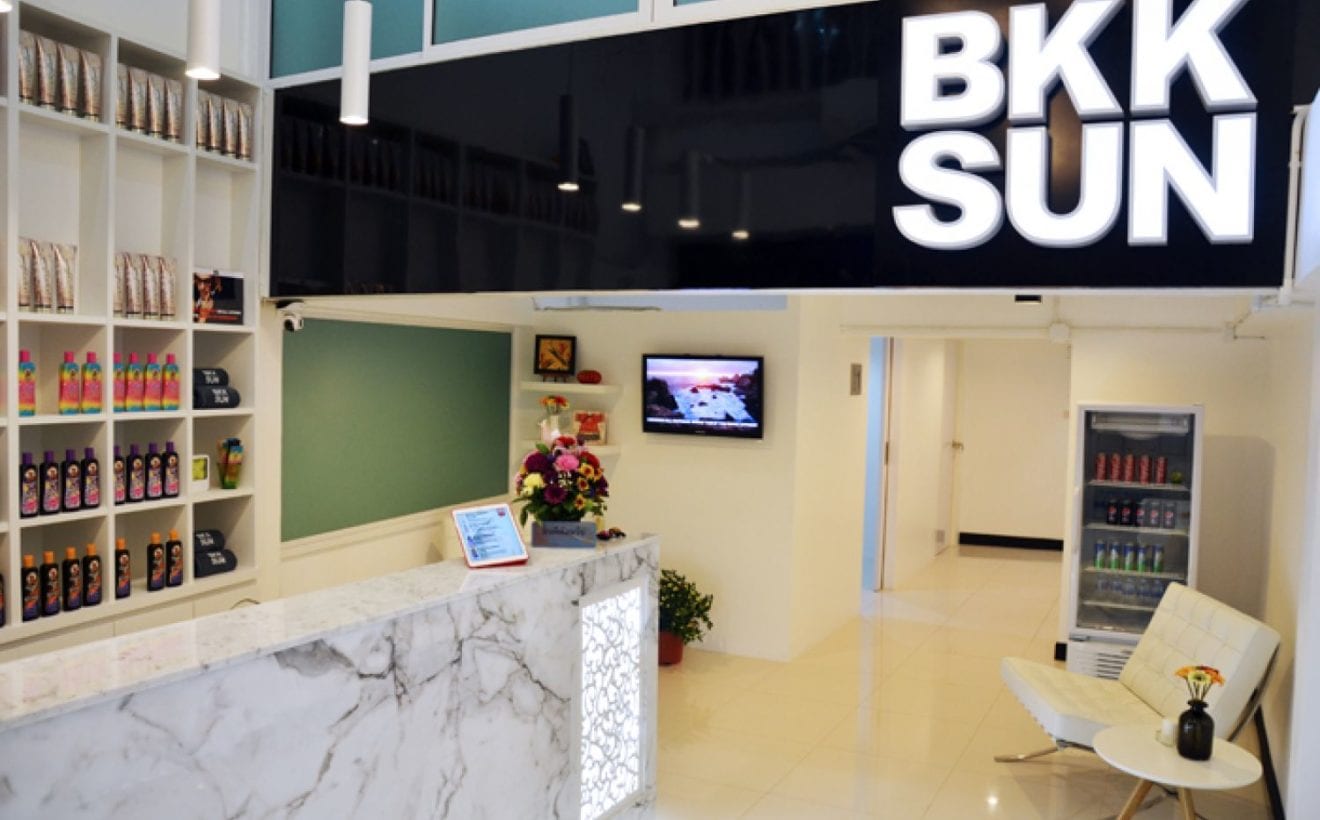
    It’s a fair question, and one that CEO Jeff Amato has heard several variations of in the run-up to the opening of his new venture, BKKSUN.

    “Of course people have asked me ‘why are you opening in the sunniest place on Earth?’” the American laughed as he sat in his office in the newly opened salon in Sukhumvit, minutes away from Thonglor BTS.

    “But we have a lovely high season that lasts just two to three months and the rest of the year it’s too hot and uncomfortable to be outside if you’re in the city,” he added, explaining that ironically it’s during these months that Bangkokians can be deprived of sunshine, and therefore a tan, as they take shelter in air-conditioned offices and malls away from the sweltering humidity of the city.

    Hopping in one of the tan booths or sunbeds at BKKSUN for just a few minutes could give them that much-needed hit of Vitamin D to pick up their spirits and release feel-good endorphins, he said.

    “You need sunshine in your life,” smiled the Missouri native, who fled the cold winters of the Midwest for the blazing heat of Thailand eleven years ago.

    Regardless of whether a tan salon can be a hit in Bangkok, it’s a welcome change from the pervasive skin-whitening craze here, from whitening creams, masks and soaps sold at every pharmacy and beauty counter, to racist adverts, competitions and even school vocab charts, all with the message that dark skin is ugly, while “white is winning”.

    However there is an emerging trend of more Thai celebs and role models celebrating and promoting darker skin, like Nonthawan “Maeya” Thongleng, a southern beauty with tan skin who beat out paler-skinned competitors in 2014 to be crowned Miss Thailand World.

    Top actress Janie Tienphosuwan and influential beauty blogger Pearypie naturally have fair skin, but both are known for working on their tans and sending the message to young Thai girls that tan skin can be beautiful too.

    And with the recent launch of TAN Magazine which aims to promote healthy, sun-kissed skin, perhaps the tide is turning.

    “Tanning is trending,” Amato said. “Thai celebrities have really embraced tanning and I give them a lot of credit for starting this trend.”

    “The whole world loves Thai tan skin and I think promoting tanning is a great message for people.”

    The salon is in its soft opening phase, having launched around six weeks ago, and already has around 15-20 customers coming through its doors every day for spray tans and tanning booth sessions.

    lthough the majority of their clients are, unsurprisingly, foreigners, Amato and the salon’s director of operations, Amy Oanchali, say around 30 percent are Asian, with Thais making up most of that figure.

    “Whitening is not for everyone,” Amato said. “When we did our research we knew there was not just a demand for tanning here, but a pent-up demand.

    “Tanning is huge in Hong Kong, Shanghai and Tokyo, so we saw Bangkok as the last bastion.

    “I think it’s cool that we’re the first to bring tanning salons to Thailand.”

    The salon’s minimalist look, overseen by Thai designer Nong, of gleaming white surfaces and tasteful black and white artwork dotting its three floors (a fourth will soon open), and its expensive tanning equipment imported from the States, are obviously geared towards more well-heeled clients, although prices are pretty decent — a stand-alone sunbed or booth session is THB799, and that price drops if you opt for a package. New customers get a promo price of THB299.

    The salon recommends new customers complete a short questionnaire which determines their skin type. Staff can then recommend tan session times, so customers can gradually and safely build up an even tan, they say.

    However Coconuts is obliged to remind readers of the risks associated with UV radiation and indoor skin tanning, which has been linked to some skin cancers.

    Amato and Oanchali are confident that they can grow their customer numbers and are even eyeing a second location in Silom.

    But first they want to focus on their flagship store in Thonglor and their customers there.

    “We’ve already got some regular customers who are so interesting and nice, we’ve been delighted,” Amato said.

    “We just want them have a killer experience.”

  • E-commerce ‘unstoppable’ as 4G rollout goes rural in Thailand

    E-commerce ‘unstoppable’ as 4G rollout goes rural in Thailand

    On The Ground: Mobile will be the catalyst for digital-focused communications and online retail—aided by a data sector in its infancy. Apart from King Bhumibol Adulyadej, there is another unifying force in Thailand: mobile.

    Thailand is the world’s leader in mobile internet usage, ahead of Saudi Arabia and Malaysia, with four hours of web time per day, about 44 percent of a Thai’s total internet time. “Thailand is a mobile-led society, as is most of Southeast Asia except Singapore,” said Grant Bertoli, CEO of Marketbuzzz.

    Thailand did not see internet adoption kick in until the end of the Web 2.0 wave in 2007, and most of the access to the internet was through mobile. “Thailand leapfrogged straight to mobile as the primary device, and as people dwell longer on it, the mobile is increasingly becoming the device,” indicated Pathamawan Sathaporn, managing director of Mindshare Thailand.

    Smartphone ownership, largely driven by lower costs, has accelerated to a point where current We Are Social numbers show that 69 percent of Thais own at least one smartphone. Mobile connections, thanks to budget packages in the competitive telco market, stand at 122 percent as a percentage of the total population.

    With the realisation of 4G service in Thailand (more of which in tomorrow’s On The Ground feature), mobile will be the catalyst for digital-focused communications and rich-media content in 2016, said Rattakorn Potharam, general manager and executive creative director of MRM Thailand.

    “This is noteworthy as rural areas are now given a better chance at mobile ubiquity.” Potharam already observes content in three prominent categories: tear-jerking dramas, Thai-humour comedies and gossipy ‘insights’ transcending above-the-line formats to digital.

    Above average social use

    As the pool of mobile internet users in Thai provinces expands, social-media users will follow suit accordingly. Thai urbanites already spend more time on social networking than the global average, with Facebook being the most popular platform. In fact, Bangkok is the number one city of Facebook users in the world with over 104 percent penetration, according to Social Bakers. And 65 percent of all locals use Facebook to search for brand information according to eMarketer—the fourth highest in APAC.

    According to TNS, 74 percent of Thais also use instant messaging daily, well above the 55 percent worldwide figure. Line is the leading app in Thailand with more than 33 million users—that is half the Thai population using Line.

    These social platforms are playgrounds of expression for Thai consumers, but they are open only in their digital lives while more conservative in person. “Whatever we are expressing on Facebook, when it comes to reality we may not do so, as rooted in the Thai culture of being accommodating,” said Yupin Muntzing, chief executive officer of McCann Thailand. This dynamic can be inspiring for future developments in brand communications.

    E-commerce opportunities abound

    Coupled with that, there are numerous implications for marketing without the burden of a PC-internet legacy. Thailand being a mobile-first market allows businesses a unique position to capitalise.

    On the commerce side, Lazada began operations only a few years ago and made a bold statement to become the Amazon of Southeast Asia. And they were one of the first e-commerce players in the region to launch both iOS and Android apps. Now, the brand claims that more than half of its traffic comes from mobile.

    New faces in the e-commerce sector include Shopee, a mobile-only discounted marketplace, Eatigo offering daily lifestyle deals, and GrabBike (rebranded to Grab) delivering urban commuting services.

    In 2015, overall internet retail recorded healthy value growth of 30 percent to stand at THB47 billion (US$1.33 billion), according to Euromonitor, with fashion and consumer electronics significant contributors.

    The Thai e-commerce market is expected to more than triple in size to THB138.86 billion (US$3.94 billion) between now and 2020, according to DHL that introduced a next-day logistics addition to its delivery infrastructure in January for this reason. At present, Thailand’s share of the market is still relatively low compared to other high-growth economies, according to DHL E-commerce Asia Pacific CEO Malcolm Monteiro. Only 1.7 percent of DHL’s total sales in Thailand are from e-commerce, compared to more than 10 percent in China.

    Anisa Ngandee, research analyst at Euromonitor, is of the view that pure internet retailers such as Lazada, WeLoveShopping and iTrueMart perform much better than multi-channel players due to the shift in buying behaviour. The provision of mobile payments, especially when facilitated offline, will be a differentiator, Marketbuzzz’s Bertoli advised.

    “Although Thai people like shopping online, they find it more convenient to pay upon delivery, especially consumers within provincial areas. Sales are still limited to younger generations,” added Ngandee.

    In the meantime, MRM’s Potharam feels e-commerce will be “unstoppable and borderless”, at least among younger buyers on social media. “Thai consumers are born social. They are yearning for relationships, rapport and chemistry. In this sense, social commerce is undergoing a makeover to match this demand for socialising, while Line, Instagram and Facebook are becoming storefronts for interaction and conversation.”

    Social and content collide

    As a result, smaller Thai brands have embraced their entrepreneurial spirit in these mobile times, selling their products and services in as many ways as possible, whether Luuk Thep dolls or clothes. Preetanjali Kukreja, strategy director at Brand New Day, has noticed local businesses “getting a lot more aggressive” on Instagram, prioritising these accounts over official websites or Facebook pages. “Somehow it feels less intrusive on Instagram compared to Facebook,” she said. “It’s simple, quick, visual, and cheap as a sales tool. People just scroll through pictures of products, click to see the price, then ‘line’ the vendor and you’re done.”

    It is of little wonder that Line is one of the go-to channels for SMEs to reach consumers, not simply for shopping, but for lifestyle solutions as well, like content. The Feb 2015 launch of Line TV, competing with digital television, provided exclusive content to customers via mobile.

    Thailand now has a “huge appetite” for content across all forms—a push factor for advertising, media and even telecoms operators, said Sunee Paripunna, CEO of Omnicom Media Group Thailand. True Digital Plus, a Thai telco, has increased its budget from US$1 million to US$3 million to buy digital content in 2016, for example.

    In the past, Thai advertisers have focused their attention on content creation in the pursuit of digital marketing, but have missed opportune moments of context now made possible by mobile technology, said MRM’s Potharam. To reap the benefits of mobile, the key is gearing towards “contextual content” that is targeted and personalised. “The context will matter a lot and unveil new spot-on insights into creativity,” he said.

    Data driving integrated marketing

    Also, mobile development will open more doors for brands to collect real-time data generated by consumers who are connected online. Big data, though in its infancy stage, will transform communications, particularly for retail, telecoms, finance and lifestyle services, said Potharam.

    For starters, Julien Chalté, co-founder and co-CEO of WearYouWant, has gathered data to identify the bulk of the online retailer’s classic customers. “In December 2015, the profile that emerged was a 36 year old woman, living in Bangkok who likes to shop on Wednesdays between 11 am and 2 pm,” he said. Half of WearYouWant purchases were made during this shopping peak of the year. Outside of Bangkok, 20 percent of customers filled shopping carts from Chiang Mai, with white shoes being the favourite purchase during December. In Nonthaburi, home to a fifth (19 percent) of shoppers, skincare and makeup products were the top category. A tenth of customers placed orders in Chonburi and was mainly looking for black outfits (79 percent of all orders).

    With more data like the above, real integrated communication—“something marketers have dreamed of”, said Potharam—has potential to blossom in 2016. In the past, marketers have “tried to be visible everywhere in the digital world but were seldom standouts”. To steal a march on their rivals, brands need a “unified ecosystem of experiences under one enriching brand story”, he said.

    That represents a new canvas for shoppable content, stated Mindshare’s Sathaporn. “People will move more quickly from seeing to shopping”.

    As Thai advertisers compete to reach multi-tasking, ad-avoidant consumers, the type of content that will stick are reality shows, singing contests and other international content formats adapted for Thailand, said Sathaporn, who expects the domestic advertising industry to grow by only three to six percent in 2016—a lower growth forecast than 2015 amid economic uncertainties.

    So, even as Thailand’s king ails and its economy slithers, advertisers may be able to rely on mobile and content for continued joy.
  • Reebok Launches Tuk Tuk Inspired Sneakers

    Reebok Launches Tuk Tuk Inspired Sneakers

    A new sneaker collaboration between Reebok and international sneaker destination store 24 Kilates in Barcelona pays homage to Bangkok and, even more specifically, to the bright colors of the city’s iconic tuk tuk.

    The video, released a few days ago in advance of the sneaker’s March 12 drop date, plays out like a two minute-long love letter to Bangkok.

    The clip opens with a sunrise over Bangkok and the ambient traffic noise that is the never-ending soundtrack to life in the city. The viewer follows the sneakers as they visit many of Bangkok’s key sites: the Chao Phraya River, the Grand Palace, Wat Arun, the Giant Swing, Asoke intersection and what appears to be Soi Cowboy. The entire homage is set to the driving line of a morlum tune.

    And how does the dude wearing the sneakers get from place to place around our giant city? In a tuk tuk that matches the shoes, of course.

    The sneaker design is the brainchild of the owners of 24 Kilates. The two men come to Bangkok often, saying they have fallen in love with the city and also plan to open their second 24 Kilates location in the capital in the not-too-distant future.

    Whether you care about sneakers or not, seeing the city through their eyes in this video is a worthwhile way to spend a few minutes.