Tag: Thailand

  • Vietnam risks losing entire retail market to Thailand

    Vietnam risks losing entire retail market to Thailand

    Industry insiders have warned that Vietnam is on the brink of losing its entire retail market to neighbor Thailand. Made-in-Thailand goods, from confectionery to luxury items, are making their largest-ever ‘invasion’ of the Vietnamese market, and many local firms are looking like being acquired by Thai investors.

    Last month, Thailand’s TCC Holding Co. officially acquired Metro Cash & Carry Vietnam’s operations from Germany’s giant retailer Metro Group for an enterprise value of €655 million (US$712.14 million).

    The business includes 19 wholesale stores and related real estate portfolios across Vietnam.

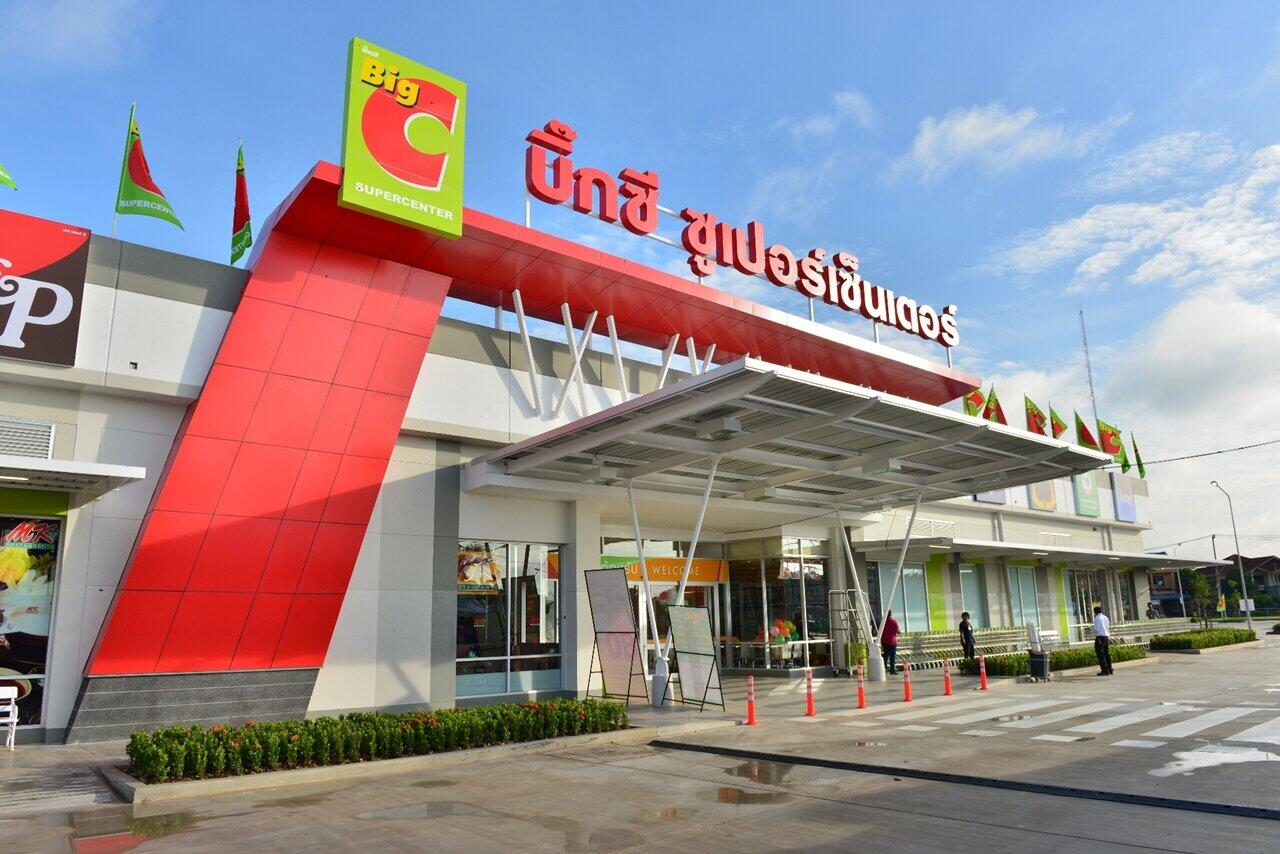
    Another major Thai investor, Berli Jucker (BJC), is also is keen to buy the Big C Vietnam supermarket chain from its French operator, Casino Group.

    The French company reportedly wanted to sell its Vietnam business after completing the transfer of its business in Thailand, Thai Big C, to home player TCC in a $3.5 billion deal earlier this month.

    “If Big C Vietnam is sold to a Thai investor, it can then be said that the entire Vietnamese retail market is in Thailand’s hands,” said Vu Kim Hanh, chairwoman of the Business Association of High-Quality Vietnamese Goods.

    In 2013, BJC acquired the Vietnamese convenience store chain from Japan’s Family Mart and renamed it B’s Mart.

    Later that year, Family Mart teamed up with a new Vietnamese partner to keep the Family Mart chain running, not to be confused with the Thai-operated B’S Mart.

    “A supermarket chain is the missing piece at a time when Thai companies are already running wholesale markets, convenience stores, and even traditional retail channels in Vietnam,” Hanh told us recently.

    With multiple retail channels under their control, Thai investors can easily cut costs and increase competitiveness, and “it will be more difficult for Vietnamese goods to enter Thai-controlled retail outlets,” Hanh said.

    In fact, Thai goods are currently dominating the B’s Mart chain in Vietnam following its acquisition from Family Mart, according to the director of a processed food company.

    “There have been huge changes in the way these stores source products, with Thai candies, snacks and packaged food dominating shelves,” she told Tuoi Tre.

    A real threat

    Shelf space for Thai goods has also increased in other Thai-owned retail channels in Vietnam.

    One executive from a Ho Chi Minh City-based frozen foods trading firm said they had stopped making private-label products for Metro late last year, even before the cash and carry business was sold to TCC.

    Private-label goods are typically those manufactured or provided by one company sold under another company’s brand name.

    “Several procedures have taken longer than usual since the Thais have controlled Metro,” she added.

    “It took me six months to pull some products from their shelves, and requests to adjust prices also took a long time to be effected.”

    Other Vietnamese businesses said the trading policies of Metro, under the new owner, have changed a lot.

    “We are offered higher commissions, but sales have been much slower,” one company director said.

    N.T.C., director of a fresh food producer, said Metro Cash & Carry Vietnam has a new marketing policy that openly favors Thai suppliers.

    “Across product categories, only the Thai ones are subject to repeated promotional campaigns, which leave Vietnamese suppliers like us in shock,” he said.

    The presence of Thai-made products has even increased in retail outlets not owned by the Thais, including South Korea’s Lotte Mart and Co.op Mart, which is Vietnam’s largest supermarket chain.

    “Thai businesses are receiving huge support from the government, in terms of both policies and capital, in their ‘invasion campaign’,” said Vo Xuan Trung, director of IBP Co., a local distributor of Thai snacks.

    While there used to be only one annual Thai goods fair in Ho Chi Minh City, the event has been held four times annually since 2014, Trung said.

    “Having said that, we should acknowledge that most Thai products are of better quality and available at more attractive prices than their local competitors,” he said.

    Tran Anh Tuan, general director of Pathfinder, a Ho Chi Minh City-based market consulting firm, said it was a real threat for Vietnam to lose its home market to Thai retailers.

    “Once Thai retailers are in Vietnam, it is certain that they will try to increase the presence of their goods,” he said.

    Tuan underlined that timely policies should be made before the second, bigger risk comes.

    “Soon we will see not only our consumers rush to buy Thai goods, but also Vietnamese firms acquired by Thai investors,” he warned.

  • Explore bittersweet world of coffee at ‘Thailand Coffee Fest’

    Explore bittersweet world of coffee at ‘Thailand Coffee Fest’

    With the bittersweet scent of coffee in the air and the endless coffee products on display, Thailand Coffee Fest 2016 will turn Queen Sirikit National Convention Center into a heaven for coffee addicts.

    Organized by SCATH and CP Link, Thailand Coffee Fest 2016 will be a hub for all things caffeinated. The event features shopping and will showcasing products from Thailand’s leading coffee companies, along with fancy appliances that can help you to brew your perfect cup.   

    The event will host various exhibitions including a photography gallery, while coffee lovers can head to workshops to learn basic barista skills including the art of latte making and cold drip coffee, and coffee-themed seminars.

    Thailand’s Brewer Cup and Latte Art Championship 2016 will pit skilled baristas against each other, while the Highlight will host the search for quality coffee and the 10 best coffee beans of the fair, followed by an auction of the coffee treats.

    You can register for workshops and seminars on the website.

    Thailand Coffee Fest 2016 takes place from Feb. 25-28 at Plenary Hall, Queen Sirikit National Convention Center. Entry is free.

  • New ‘Siam Discovery-the Exploratorium’ to open Q2 as Thailand’s first hybrid retail store

    New ‘Siam Discovery-the Exploratorium’ to open Q2 as Thailand’s first hybrid retail store

    Siam Piwat Co., Ltd., the owner and operator of prestige retail developments such as Siam Paragon, Siam Center, Siam Discovery, and Paradise Park, as well as the joint venture partner of ICONSIAM, today, announced that it is introducing a revolutionary new retail concept to Thailand with the opening of the new Siam Discovery retail destination in the second quarter of 2016, after a Bht 4,000 million re-build.

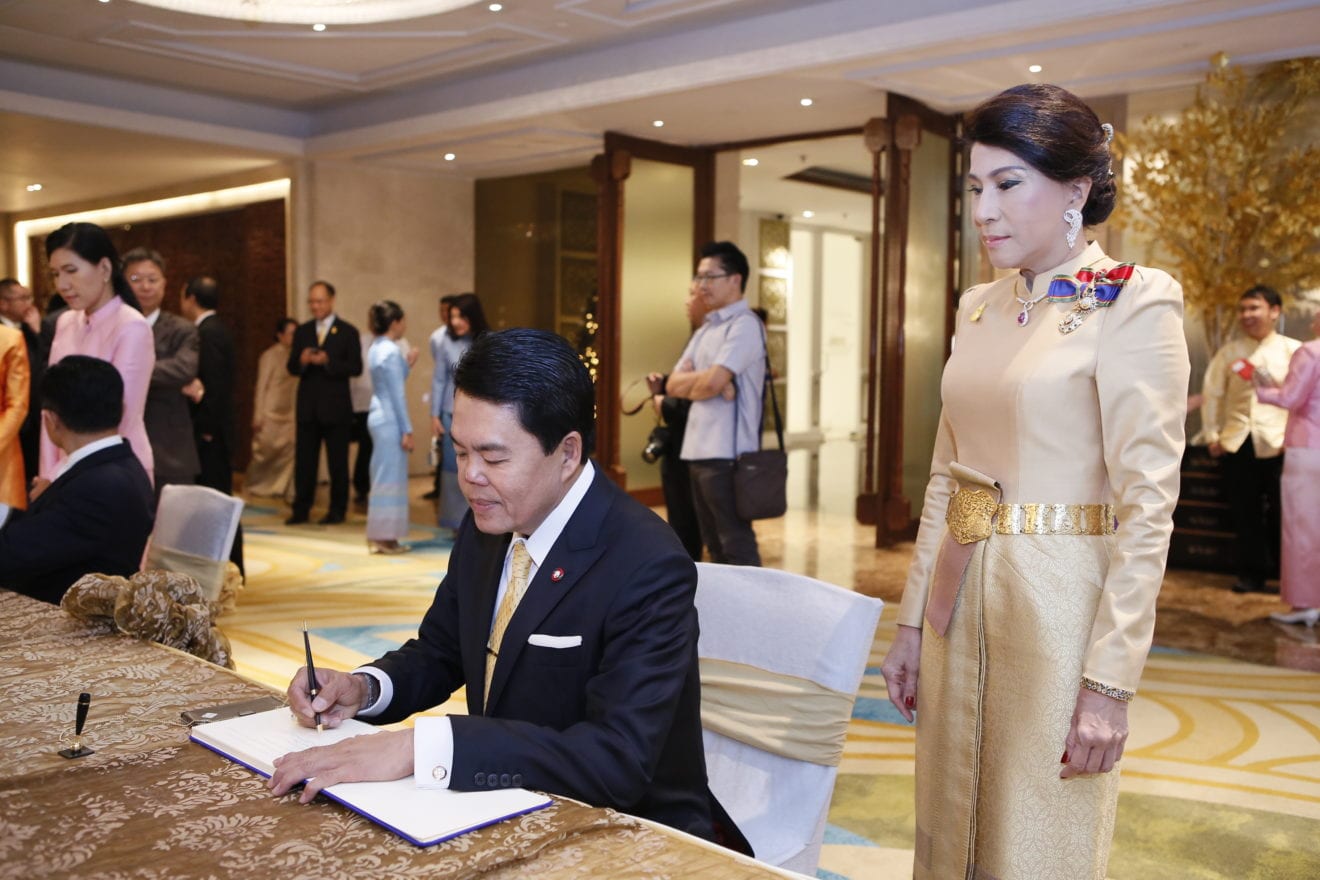
    Mrs. Chadatip Chutrakul, Chief Executive Officer of Siam Piwat Co., Ltd. said: “The new Siam Discovery is the first hybrid retail destination in Thailand.  We have created a venue where thousands of lifestyle brands are brought together under a single universal concept that puts customers at the centre, rather than brands.  That means everything presented at Siam Discovery is not organized by brand, or category, as in traditional retailing, but by the visitors’ interest, because our purpose is no longer just to sell products but to provide an extraordinary and emotional experience to the visitor allowing them to discover themselves, as well as express themselves.

    Mr. Oki Sato, Chief Designer and Founder of nendo and Mrs. Chadatip Chutrakul, Chief Executive Officer of Siam Piwat-1

    “We then enhance that experience by presenting a story rather than just products, and by making the experience in our store highly interactive as well as allowing visitors to personalize their purchases.  We give visitors opportunities to make a statement about their life preferences, whether it be about sustainability or a love of nature, and to support those preferences through their purchases, and through occasions to interact with like-minded people and communities.  And then we further enhance those experiences through the power of the most advanced digital technology,” she said.

    Mrs. Chutrakul added, “Taken together, this new retail format makes a visit to the store an exciting, emotional experience that gives visitors a great opportunity to play, to experiment, to discover and re-discover themselves.  We want people to fall in love with that experience.

    “Our role as a retailer has advanced to another level and become one of managing visitors’ experiences and emotions at the destination, rather than just one of managing products, categories and displays,” she said

    “We target all genders and all age groups, and there is something for everyone at all price points,” Mrs. Chutrakul said.

    “Come Play With Me”

    Empowering visitors to create their own personal style

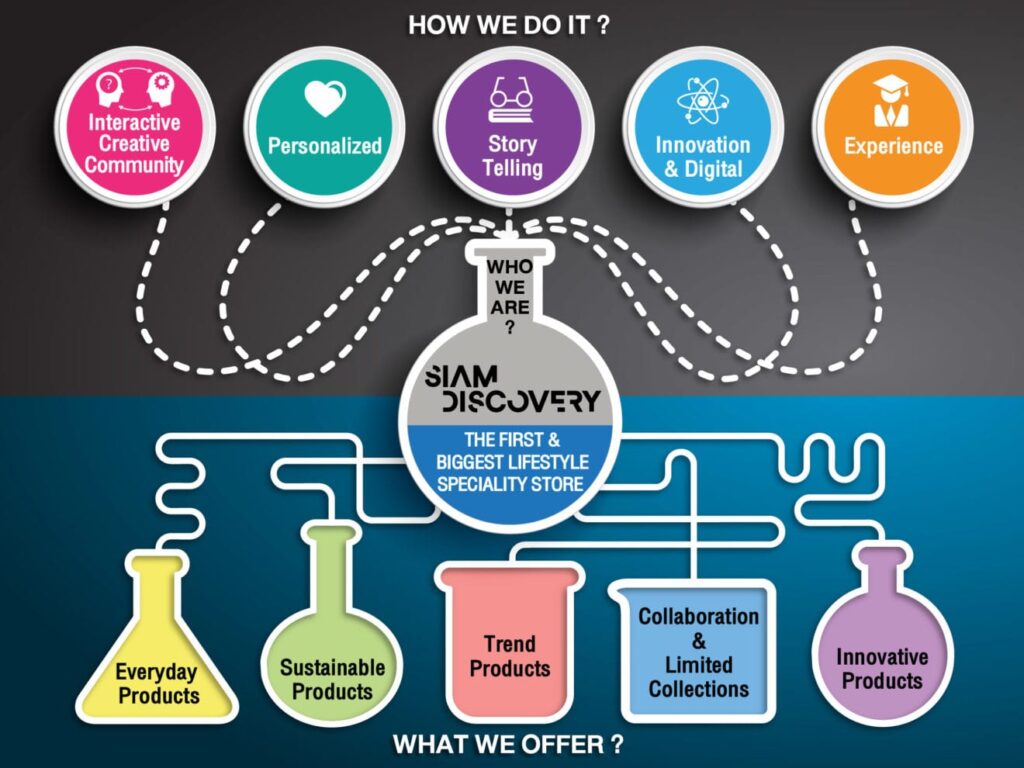
    Siam Discovery Infographic

    According to Mrs. Chutrakul, “The new Siam Discovery says ‘Come play with me!’ to visitors, inviting them to experiment by trying out new products, new ideas, re-thinking conventions, and customising their purchases, all across 40,000 square metres of floor space.”

    “We are completely overturning past retailer practice of organising and presenting products by brand or category.  Instead, at the new Siam Discovery, multiple brands and complementary merchandise are brought together for the convenience and enjoyment of the visitor and unified with underlying stories.  They are organised and presented by type, function, relevance and, most importantly, the visitor’s interest.

    “This is a pioneering retail concept that empowers visitors to mix and match across brands and categories to discover, define and create their own distinct, personal style, while also pursuing related interests and passions that need not be tied to any purchase intent.  It has never been done before in Thailand and on such a scale, and it’s a concept that will bring new excitement to any visit to Siam Discovery.  We estimate it will also double Siam Discovery’s per-square-metre sales within a year,” she said.

    Mrs. Chutrakul added that the new Siam Discovery is called ‘The Exploratorium’ and is a ‘lifestyle lab’ because it allows every individual to explore who they want to be and what is the style that best reflects their true self without the constraints of a particular brand or school of design.  She said that visitors can try new ideas across the hundreds of categories and more than 5,000 international and local brands on offer, many of which are first-time-in-Thailand brands.  It includes everyday products, sustainability products, trend products, collaboration and limited edition collections, as well as innovative products.

    Visitors can go even further in experimenting with creating their own style because the new Siam Discovery also provides bespoke personalisation opportunities that let customers tailor their purchases to their own personal preferences.

    Immersive Story-Telling, Advanced Digital Technology, Interactive Experience

    The presentations of products have a very strong story-telling component.  As visitors move through the various parts of Siam Discovery, they are immersed in the heritage and the intangibles of a brand and a category.  They are also drawn into stories relevant to their interests, their beliefs, and trends rather than just being presented a selection of products.

    “These experiences are enriched and heightened through advanced digital technology as well as many interactive experiences that are offered to the visitor.  It’s a totally new and an extraordinarily exciting way of presenting products and their associated lifestyles,” she said.

    “As part of this ‘immersive experience’, Siam Discovery has created areas for people of similar interests to interact, share experiences, make friends and create their own communities, whether they be designers, sportsmen, collectors, health gurus, or travellers.  Not only can they do things with other people, they can also do things for other people: through their purchases, they will be able to indulge in their passions and convictions, such as supporting sustainability or other causes important to them,” she added.

    Siam Discovery Visual Ad-1

    Thailand on the World Stage

    Mrs. Chutrakul noted that the introduction of a revolutionary, new retail concept will reinforce Bangkok’s appeal as the retail hub of the ASEAN Economic Community (AEC) and help make the city a favourite shopping destination for the world.

    “Siam Area is Bangkok’s top-ranked retail destination with more than two million square metres of world-class attractions and the widest variety of shopping, dining, art, culture and education offerings in Thailand, attracting traffic of over 160 million visits, annually.  The new Siam Discovery enriches the total package of offerings in Siam Area by introducing a completely new proposition,” she said

    Top Global Designer ‘nendo’

    ‘nendo’ (Mr. Oki Sato), who is one of the world’s top designers and a person voted as among the ‘100 Most Respected Japanese’ by Newsweek Magazine, provided the overall design inspiration for the new Siam Discovery.  He was engaged as the chief consultant for the building design as well as the interior design, while Urban Architect Co., Ltd. was the Thai architectural design and interior design company for the project.

    The new Siam Discovery is nendo’s largest project, ever, and his first in Thailand.

    Mrs. Chutrakul said, “We invited nendo to provide the inspirational design concept for Siam Discovery because Siam Piwat looks at the future from a global perspective rather than just the potential of the Thai market.  This is because Siam Piwat is committed to the business of creating extraordinary experiences for customers who are not only Thai people but also visitors from every corner of the world.

    “In line with our growth strategy, Siam Piwat is creating unprecedented destinations in Thailand that can compete with the best of the world’s destinations and help support Thailand to become a top-ranked global retail and entertainment paradise.”

    “Within the first year, we aim to have 100,000 people a day visit and fall in love with the new Siam Discovery, of which around 65% are expected to be Thai and 35% to be international visitors.  What our visitors will have in common will be their progressive, independent-minded outlook on life, and a passion to explore and try new things,” she said.

    The new Siam Discovery follows from Siam Piwat’s highly successful Bht 1,800 million     re-build of Siam Center three years ago, which pioneered a revolutionary retail development concept where the developer worked collaboratively with retailers and brand owners to give the entire venue a consistent visual identity that is clearly and distinctly Siam Center.  The concept has been showered with eight highly prestigious international awards, including recognition as one of the world’s 5 best-designed retail centres by the retail industry’s leading international association – the International Council of Shopping Centers (ICSC).

  • MPG shifts focus to beauty products

    MPG shifts focus to beauty products

    Nalaanlat Nunnonl, chief marketing officer, said the company’s vision was now to become one of the leading players for beauty products in Asean by 2020.

    The company next month will launch its own house brands – Clouda for makeup and Keira for skincare – with about 100 products altogether.

    The ranges will be distributed via a number of channels, both online and offline.

    “We will next year explore selling our house-brand cosmetics beyond Thailand, primarily to the CLMV markets [Cambodia, Laos, Myanmar and Vietnam]. We will appoint local distributors in each of those territories. Under the 2020 vision, we will shift the way we do business from business-to-consumer to be more business-to-business,” she said.

    “We want to stand behind the beauty of women in Asean. Our house-brand cosmetics will be distributed to all potential markets throughout the region.”

    MPG wants to grow its annual revenue from around Bt400 million posted last year to about Bt5 billion in 2020, of which 80 per cent will be contributed by its own house-brand beauty products and the rest from its existing retail businesses.

    The revenue contribution from overseas markets will be about 40 per cent by 2020, Nalaanlat said.

    The business revamp is in line with the arrival of digital technology, which allows individuals to download and enjoy movies and music in front of a computer screen, she explained. Digital tech had affected traditional retailers of home-entertainment products, including Mangpong, which were burdened with huge stocks of music and movies as a result.

    Mangpong is among the longest-established entertainment retailers in Thailand, merchandising a wide range of products, including Blu-ray discs, DVDs, compact discs, vinyl records and other formats.

    Mangpong was established by Montri Mitsatha and Kityajai Triekvijit, who were both initially movie and music enthusiasts rather than businesspeople.

    They opened their first store as a small movie and music retailer in 1981, before developing the business into Mangpong, a full-size retailer, in 1989.

    The first Mangpong shop was located at The Mall Ratchaprasong, offering movies and music in the form of laser disc, VHS and cassette tape, as well as other entertainment-related products such as movie posters and T-shirts. Nalaanlat, a second-generation member of the Nunnonl family, said Mangpong had spent the years through to 1994 as the “beginning-to-stand era” for a business that was raised via her parents’ love for home-entertainment products. At that time, cassette recordings of Harajuku music became the most popular products sold by the company.

    From 1995 to 2006, the company entered the “growing era” by acquiring the rights for blockbuster movies, such as “The Terminator” and “Lord of the Rings”, and retailing them as home-entertainment products.

    Mangpong was a pioneering business in terms of bringing licensed Hollywood blockbusters into Thai homes, she said.

    “In 2000, which was the peak year for Mangpong, the company operated about 300 Mangpong outlets, of which 200 were kiosks and the remainder were shops. The number of movie titles stocked in our library was as high as 100,000 at the time,” the chief marketing officer said.

    The company then entered an “adjustment period” between 2007 and 2012, shaped by the transformation of media technology from cassette tape to digital format, which allowed movies on Blu-ray discs and DVDs to spread easily via a large number of players in the market.

    “At that time, we adjusted ourselves by bringing in documentaries and edutainment content created by the BBC, such as ‘Planet Earth’ and ‘Blue Planet’, to sell exclusively at our Mangpong stores, in order to offer different products to the market,” Nalaanlat said.

    However, with the rapid development of the Internet and digital technology in recent years, today’s consumers can download and enjoy movies at home, she added.

    “We have gradually reduced the number of Mangpong stores to about 24 today. The number of movie titles in our library has also declined gradually, to between 3,000 and 4,000,” she said.

    Diversifying risk

    In a move aimed at diversifying its business risk, MPG launched the Gizman chain in 2013 as a “house of lifestyle gadgets”. The flagship Gizman store was opened at the company’s headquarters on Lat Phrao Road Soi 90, while the first official outlet was opened at CentralPlaza Rama 3.

    MPG now operates a chain of 30 Gizman stores.Inspired by Nalaanlat and her mother, MPG last year launched Stardust, a chain of multi-brand beauty stores, with its first outlet at Future Park Rangsit.

    There are now seven stores in the Stardust chain. “We will this year convert full or partial space in 10 to 15 of our Mangpong stores to Stardust. We expect that by 2020, there will be about five Mangpong stores left in the marketplace, located only at prime locations in Bangkok,” MPG’s marketing chief said.

  • Furla Asia-Pacific plans more flagships

    Furla Asia-Pacific plans more flagships

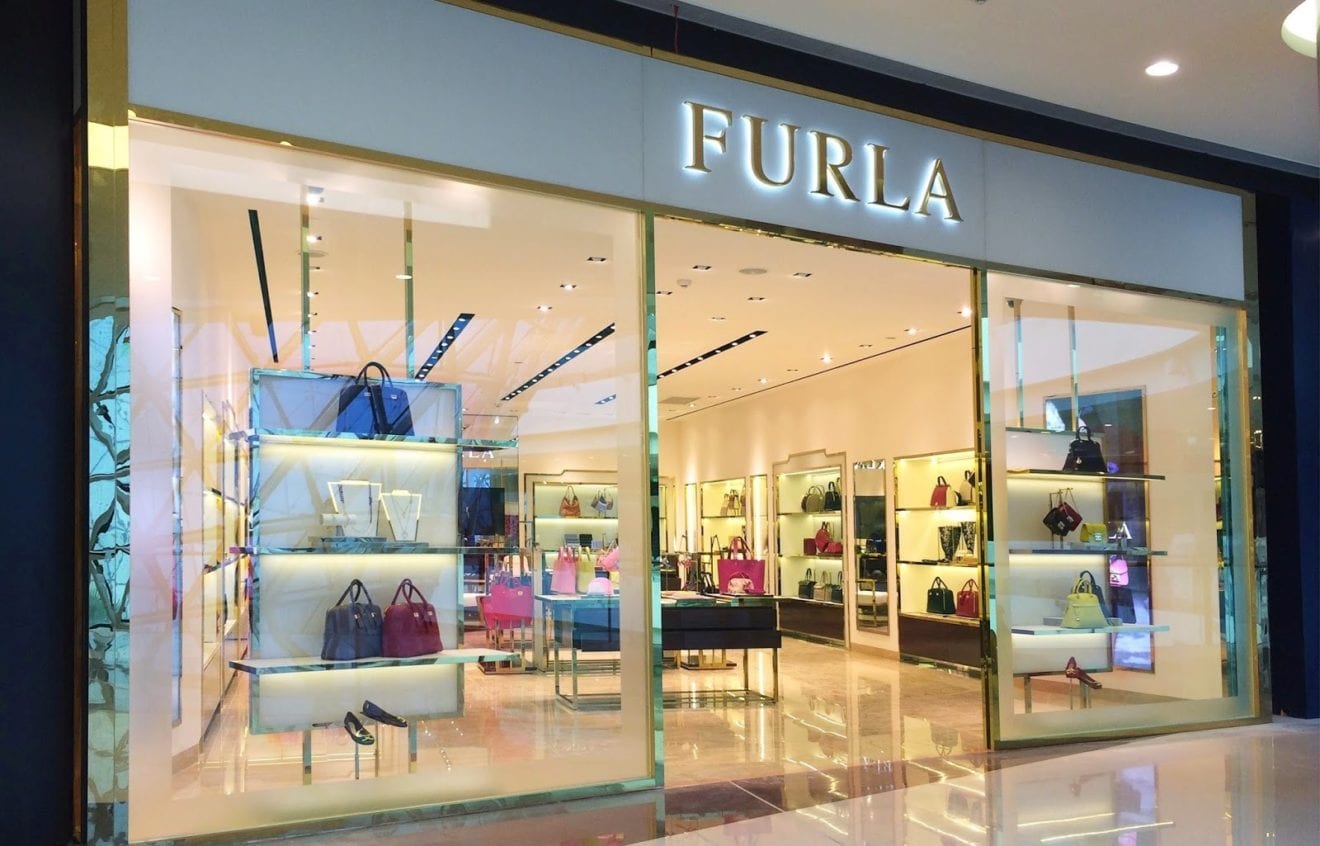
    Luxury Italian brand Furla is planning more flagship stores in Asia as the region delivers strong growth for the 89-year-old family-owned company.

    FURLA CEO_Eraldo PolettoIn an exclusive interview with Inside Retail Asia, Furla CEO Eraldo Poletto explains how the company has bucked the decline in luxury spending in core markets like Hong Kong and Singapore during the past year. Furla achieved 53 per cent growth in total sales (in euro at the current exchange rate) in Asia-Pacific, where it counts 14 markets – Australia, Cambodia, China, Hong Kong, India, Indonesia, Korea, Macau, Malaysia, Singapore, Taiwan, Thailand, The Philippines and Vietnam. Japan, a stand-alone territory in Furla’s accounts, saw sales grow 24 per cent.

    Even discounting sales from new stores, like-for-like growth for Furla Asia-Pacific reached 15.5 per cent last year, yet the region accounts for just 19 per cent of the company’s sales – about €64.4 million ($72.1 million) – suggesting strong growth potential ahead.

    “The consistent strategy we have implemented over the past four years – positioning ourselves as the only Italian and ‘Made-in-Italy’ brand in the premium segment, without accepting compromises in terms of quality – is paying off,” says Poletto.

    “We are expanding our footprint with important flagships: Singapore Marina Bay Sands opened in September; Hong Kong Miramall and Shanghai Citic, each with a 300 sqm street facade, opened in December with a luxury retail concept showcasing our full ladies’ and men’s collections.”

    Furla China Flagship Store @ Shanghai Citic Square 4

    He says more flagships will open this year in Australia and Bangkok.

    “Flagships are meant to represent every aspect of the brand in terms of image and product range; however, we are not expecting to open more than five or six flagships in the region, as we are focusing on the profitability of our retail network, and prefer to penetrate the market extensively.”

    In what he terms a “capillary” approach, more standard-sized stores and points of sale will also open across the region.

    Furla China Flagship Store @ Shanghai Citic Square 7

    For the past two years the company has opened or renovated one store a week. It now has 172 points of sale in Asia-Pacific, along with 72 monobrand stores in Japan.

    “In terms of our retail format, our average store size is increasing together with Furla’s total-look collections. Malls and high-street locations complement each other, and in this period of time, rent levels in some markets have decreased substantially because of a drop in demand from luxury, watch and jewellery brands. We are always on the lookout for new opportunities to invest in,” says Poletto.

    “Our retail store concept is also quite special, as it wants to deliver a 360-degree luxury shopping experience while maintaining our the value-for-money approach.”

    Furla China Flagship Store @ Shanghai Citic Square 2

    Asians appear to be embracing Furla’s distinctive quality brand feel and shopping experience. Perhaps surprisingly, the brand has no strategy of differentiating its Asia-Pacific product range from those of other markets.

    “We believe that if a product captures customers’ hearts in one market, its appeal is universal. Our price and product range have always been appealing to a large spectrum of clientele; it is not by chance that our two best-seller styles – Metropolis and Artesia – represent the most affordable and the highest offer of our collection respectively.

    Furla China Flagship Store @ Shanghai Citic Square 6

    “In terms of branding, strong marketing investments – like our collaboration with Mario Testino and a more aggressive digital and outdoor media planning strategy – are making Furla far more visible.”

    Department stores are still an integral part of the Furla sales strategy, especially in China, where that sector is still in its infancy by western standards.

    “The department store culture in Greater China isn’t very strong yet, and there are very few players compared to the shopping mall retail model in western markets. There is most surely room for improvement in this region.

    Furla China Flagship Store @ Shanghai Citic Square

    “The situation is much more developed in Singapore and Australia, and obviously a priority in Korea with Shinsegae, Hyundai and Lotte, where we are present with 10 domestic stores and an aggressive development plan.”

    Furla is also experiencing strong growth in the travel retail sector, which is helping both top-line sales and brand awareness.

    “Travel retail will continue to fuel the growth in APAC,” says Poletto. “Total sales generated by the travel retail channel were up 27 per cent for 2015, and we opened five new locations. We see blooming opportunities in this channel as Asian customers shop worldwide while they travel: it is a great showcase for the brand.”

    In June, Furla will open a directly managed boutique in Hong Kong International Airport.

    Furla China Flagship Store @ Shanghai Citic Square 8

    Southeast Asian focus

    Furla’s strong growth in the region is coming not just from the established markets of Hong Kong, Singapore and Greater China.

    “We have witnessed a significant double-digit growth in Southeast Asia markets including Cambodia, Malaysia, Singapore, Thailand, The Philippines and Vietnam,” says Poletto.

    “In Indonesia, a fast-growing country with a population of 250 million, we have a capillary quality presence with 10 boutiques in five cities. As of today, Furla has 46 stores in Southeast Asia, and we will focus on strengthening our foothold in these markets this year.”

    Furla China Flagship Store @ Shanghai Citic Square 5

    In India, which Furla has entered in a joint venture with Genesis Luxury, the label has three boutiques – one each in Mumbai, Delhi and Calcutta.

    “They are all performing very well with a 50 per cent sales growth increase in 2015,” says Poletto. But the market has considerable challenges.

    “India is a market with very high potential, but also with a huge limits when it comes to infrastructures. There are not enough qualitative shopping malls to cover Indian clients’ high demand for fashion and luxury: this is why Indian consumers represent a key nationality in markets like Dubai, London or Singapore.

    “In terms of expansion, we will tap into all the new relevant real-estate projects.”

    Globally, Furla has 415 monobrand stores, of which 190 are directly owned and 198 franchised. It has 27 travel retail stores and more than 1200 outlets in department stores and multibrand outlets.

    Furla China Flagship Store @ Shanghai Citic Square 10

    Results released today show that Furla’s global turnover reached €339 million last year, up 30 per cent on 2014. The growth was driven across all Furla product categories, including the new men’s collection, women’s footwear collection and eyewear.

    Poletto says that being a family-owned business – an increasingly rare phenomenon in the model luxury retail business – has its advantages.

    “Being 89 years old gives us a great DNA to be around into the future: the real assets are the brand and its heritage, which are translated into equity. The Furlanetto family has very strong values – they have a long-term vision, instead of making opportunistic choices.”

  • Construction of second Bangkok Ikea store starts

    Construction of second Bangkok Ikea store starts

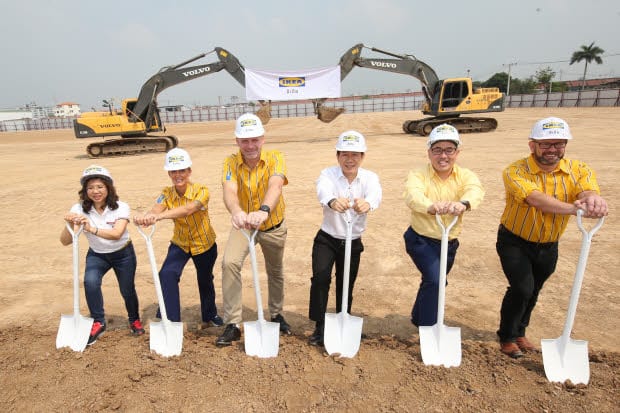
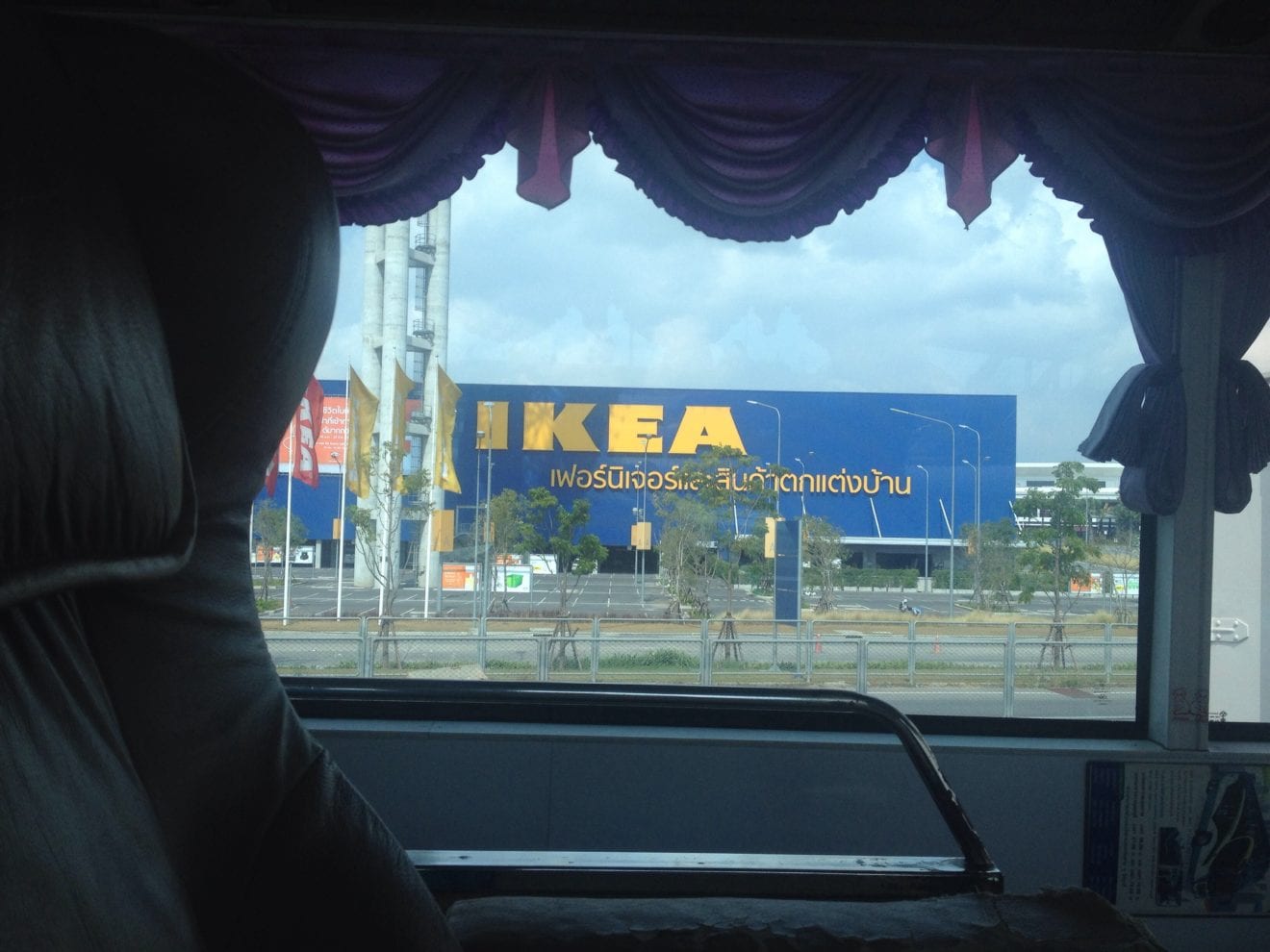
    On 18 February 2016 Ikano and Central Pattana representatives broke ground at the site for Thailand’s second IKEA second store in West Bangkok.

    IKEA-Bangyai-Ground-Breaking2

    From left to right: Ms. Amornrat Bunyongsin GM-Central Plaza Westgate; Ms. Lacia Sherlock, IKEA Retail Project Leader for Ikano Private Limited; Mr.Sebastian Hylving, Expansion Director for Ikano Private Limited; Mr. Narit Ratanaphichetchai, Executive Vice President-Business Development Central Pattana Public Company Limited; Mr. Isareit Chirathivat, Vice President of Property Management, Central Pattana Public Company Limited; Mr. Mike King, the IKEA Retail Director for Ikano Private Limited

    The site is in Bangyai, to be fully integrated into Central Plaza Westgate shopping centre with wide open entrances at all levels of the mall and direct link to the upcoming MRT (public transportation) line.

    “We are creating the world’s best integration of an IKEA store into a shopping centre,” said Sebastian Hylving, Expansion Director for Ikano Private Limited, owner of the IKEA franchise in Singapore, Malaysia and Thailand.

    In a highly complex design, the showroom and a market hall are housed inside an expansive two-storey concourse building that creates a bridge to the Westgate mall. The self-serve warehouse will be on the ground floor.

    IKEA-Bangyai-Ground-Breaking

    “This is not going to be the usual blue box,” said Lacia Sherlock, IKEA Retail Project Leader for Ikano. “This will be our only store that offers customers an opportunity to enter and checkout at every level. We will deliver a fantastic customer experience.”

    Ms. Sherlock explained that the 50,278m2 building includes 1,900 parking spaces, a dedicated area for outdoor furniture, and two unique cafes – one will “float” over the showroom in an open mezzanine. The 6.3 billion THB project also aims to reach new heights in Thailand terms of sustainable construction and operation. It will be fitted out with hundreds of rooftop solar panels, 100% LED lighting and other features that are expected to earn this IKEA store the highest level of LEED certification.

    Mike King, the IKEA Retail Director for Ikano, is confident many of the 1.6 million people who live in Bangyai and the surrounding area – including a growing population of young families – will make the trip to the new store when it opens at the end of 2017.

    IKEA-Bangyai-perspective

    “There may be a lot of competition in the home furnishing business here in Thailand, but no other retailer offers the whole family a great day out in the way IKEA does,” said Mr. King. “No other retailer provides customers both an inspirational showroom and 9,500 functional, well-designed products – flat-packed and ready to take home the same day.”

    In November last year, the company opened a second store in Kuala Lumpur and a Pick Up and Order Point in Phuket. The Bangyai project marks Ikano’s first collaboration with Central Pattana Public Company Ltd.

    Isareit Chirathivat, Vice President of Property Management, Central Pattana Public Company Limited said: “We are honored to join hands with Ikano to develop the newest model of IKEA store. We are confident IKEA will help Central Plaza Westgate achieve its vision of being ‘The Most Complete Super-Regional Mall in Southeast Asia’. We will attract Thai and foreign customers alike and create a truly great destination for people to shop, dine and play in West Bangkok.”

  • Ikea breaks ground for Bang Yai outlet

    Ikea breaks ground for Bang Yai outlet

    “We are creating the world’s best integration of a Ikea store into a shopping centre,” said Sebastian Hylving, expansion director for Ikano Private Ltd, holder of the Ikea franchise rights in Singapore, Malaysia and Thailand.

    The branch will offer wide-open entrances at all levels of the CentralPlaza WestGate shopping centre and a direct link to the future mass-transit line.In a highly complex design, the showroom and a market hall are housed inside an expansive two-storey concourse that creates a bridge to the WestGate mall.

    The Ikea self-service warehouse will be on the ground floor.

    “This is not going to be the usual blue box,” said Lacia Sherlock, Ikea retail project leader for Ikano.

    “This will be the only Ikea store that offers customers an opportunity to enter and check out at every level. We will deliver a fantastic customer experience.”

    Mike King, the Ikea retail director for Ikano, is confident that many of the 1.6 million people who live in Bang Yai and the surrounding area – including a growing population of young families – will make the trip to the new store when it opens at the end of next year.

    “There may be a lot of competition in the home furnishing business here in Thailand, but no other retailer offers the whole family a great day out in the way Ikea does,” he said.

    The Bang Yai Ikea store is an integral part of the overall expansion plan for Ikano. In November, the company opened a second store in Kuala Lumpur and a pick-up and order point in Phuket.

    The Bang Yai project marks Ikano’s first collaboration with Central Pattana, developer of the shopping centre.

  • Pernod Ricard Asia troubles parent

    Pernod Ricard Asia troubles parent

    Despite difficulties in Asian travel retail, particularly in Korea, liquor supplier Pernod Ricard reports solid first-half 2015/2016 results totalling €5b ($5.7b) and organic growth of 3 per cent.

    It says the results represent a continued gradual improvement apart from difficulties for the Chivasbrand in the pernod Ricard Asia portfolio.

    There was a negative mix driven by geography – growth in India vs. a decline in China. Overall in Asia, the company had 5 per cent growth (or 4 per cent, taking into account the changing dates of the Chinese New Year) with double-digit growth in India. However, China declined by 2 per cent (down 8 per cent adjusting for Chinese New Year).

    “Our half-year results are solid, delivering a continued improvement in sales,” says chairman and CEO Alexandre Ricard. “Our strategy has remained consistent and is driving results, in particular in terms of innovation.”

    He says the company plans to continue improving its performance and will continue to support priority markets, brands and innovations.

    Pernod Ricard includes Cambodia, China, India, Indonesia, Malaysia, Sri Lanka, Thailand, The Philippines and Vietnam in its emerging markets, and lists its top 14 brands for organic growth as Absolut, Ballantine’s, Beefeater, Chivas Regal, Havana Club, Jameson, Kahlua, Malibu, Martell, Mumm, Perrier-Jouët, Ricard, Royal Salute and The Glenlivet.

    Formed in 1975 by the merger of Ricard and Pernod, the company has a workforce of about 18,000 people. Its decentralised organisation has six brand companies and 80 market companies in each key market.

  • Rakuten Singapore axes eCommerce site

    Rakuten Singapore axes eCommerce site

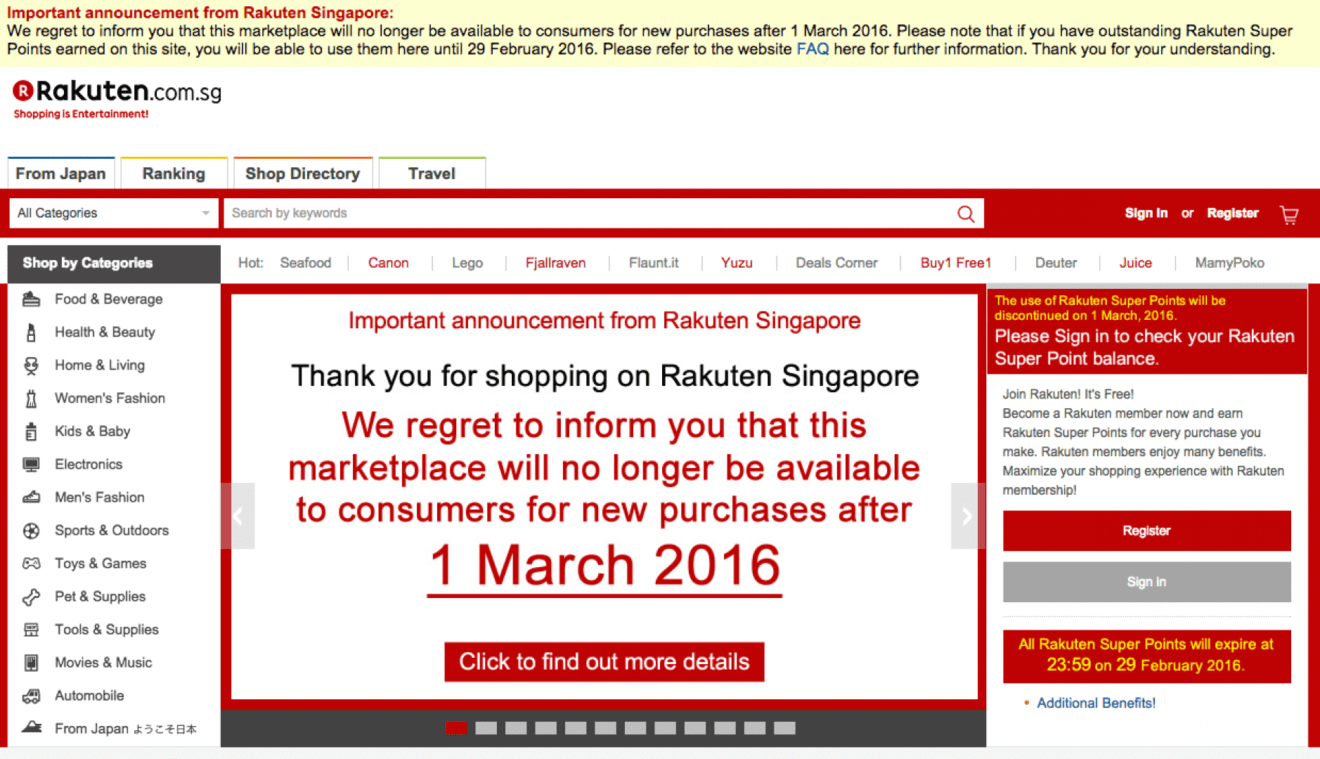
    Japan’s online retailing giant Rakuten is to close its eCommerce websites in Singapore, Indonesia andMalaysia on March 1.

    And it is reportedly seeking a buyer for its Thailand business Tarad.com which it bought in 2010.

    The decisions follow a disappointing trading result which has prompted the business to refocus on its domestic operations and scale back unprofitable overseas activities. The company reported net profit for the year fell 38 per cent year-on-year to 44.3 billion JPY (US$393 million) on revenue of 714 billion JPY ($6.3 billion) – up 19 per cent, largely due to writedowns of its Kobo, Southeast Asian and other struggling divisions.

    Some 30 staff in Singapore had their employment terminated on Friday, just five days into the Lunar New Year. By the time the sites are wound down, about 150 staff will have been axed in the three markets, but the company will retain a regional headquarters in the city state.

    Rakuten’s apparently profitable Taiwan business will continue to operate.

    Tech website Techcrunch reported the three eCommerce sites to be shuttered will be replaced by a new product in Southeast Asia, “a consumer-to-consumer app called Rakuma” which, Rakuten said, has grown 20 per cent month-on-month in Japan.

    “That concept sounds a lot like (indeed, the same as) Carousell, the app that Rakuten Ventures is an investor in. Singapore-based Carousell is currently in three countries in Southeast Asia but, as we reported late last year, it is trying to raise a $50 million round to expand its service significantly across Asia.”

    No further details of the Rakuma concept, which is mobile-based, have been released, with the project still under development.

    In a statement to Reuters, Rakuten said the new concept was a consumer-to-consumer business model, rather than the aggregation-based business-to-business-to-consumer format of the closing Rakuten sites.

    “In Southeast Asia, as the market itself changes and adapts, we are looking toward C2C (customer to customer) and mobile business models for eCommerce and other businesses,” Rakuten said.

  • Asian retail outlook: “more cautious”

    Asian retail outlook: “more cautious”

    High operating costs – particularly rents and labor in Asia – will ensure retailers are more cautious this year, concludes real estate specialist CBRE.

    In its annual Asian retail outlook, the company’s research department predicts many retailers will shift their strategic focus from expanding their store networks to rationalisation, improving in-store profitability and upgrading to better locations.

    That trend is expected across the broad Asia-pacific market, including Hong Kong.

    “Leasing activity will diverge across markets, with Australia, Japan and New Zealand the most upbeat, whereas Hong Kong and Singapore will continue to struggle,” CBRE concluded.

    “Driven by ongoing urbanisation and wage increases, Southeast Asia will also see solid leasing activity. Demand across the region will be led by food and beverage retailers, while affordable and niche luxury brands will also be active.”

    CBRE also warns the rise of online shopping will continue to force shopping malls to embrace ‘retail-tainment’ and adjust their trade mix to include more experience-oriented retailers to retain foot traffic. Around 63.8 million sqft of new shopping center supply is scheduled to be completed in 2016. Against the sluggish leasing demand and ample new supply, overall retail rents are forecast to experience a mild correction of below 1 per cent in 2016.

    In a broader property outlook, CBRE forecasts that due to Asia Pacific’s steady economic growth – which will continue to outpace the rest of the world in 2016 – investment activity in the region will remain solid, although activity will be limited by asset pricing and availability.

    “The region’s investment market will continue to see strong demand from real estate funds and institutional investors. Institutional investors will continue to invest in Asia Pacific to increase their exposure to real estate for strategic diversification,” said Dr Henry Chin, head of research, CBRE Asia Pacific.

    “That said, Asia Pacific will enter a period of slower growth in the commercial real estate market with activity likely to moderate over the course of the year as it becomes more challenging to source investable stock able to meet investors’ target returns. Interest rates will remain low in 2016 so yields are largely to remain stable across Asia Pacific. However, we are expecting to see a mild yield expansion in 2017 together with the rise in interest rates.”

    The economic slowdown in China – as well as higher-than-expected US interest hike rates, and currency volatility – will also remain a key concern for investors, given the scale of its impact across the whole region.

    “However, macro trends of urbanisation and the rise of the middle class remain largely unchanged and will continue to drive growth across Asia.

    “There are structural investment-themed opportunities for investors to focus on in 2016, such as the growth of e-commerce, regional tourism and demographic changes. Demographic changes will create opportunities in niche sectors such as self-storage facilities, senior and student housing, and data centers,” said Chin.

    “Regionally, active markets will continue to be led by Australia and Japan, whilst India expects to see a positive year following the relaxation of FDI norms at the end of last year.

    “China will also remain on the radar for most international investors although demand will be largely confined to tier I cities. Overall, the long-term outlook remains positive for the region,” he concluded.

    CBRE’s 2016 APAC Real Estate Market Outlook report can be downloaded here.

  • CITS forecasts Thai wholesale and retail markets to grow by one percent

    CITS forecasts Thai wholesale and retail markets to grow by one percent

    The Center for International Trade Studies (CITS) has predicted that the wholesale and retail markets in Indonesia and the Philippines will score the highest growths among the ASEAN countries in 2020.

    Indonesia and Vietnam will have higher growth rates than all other countries due to a relatively large number of foreign investments and an increased income per head, the center forecast.

    Meanwhile, Thailand’s wholesale and retail markets are expected to grow by just one percent this year and 10 percent in the next five years, according to CITS. However, that will largely depend on the people’s incomes and domestic consumption. Thailand’s modern-day trading is expected to grow while traditional retail trading will be gradually closed down like in other countries.


  • Thai fashion e-commerce goes from rags to riches

    Thai fashion e-commerce goes from rags to riches

    WearYouWant’s site has 500 fashion merchants offering some 14,000 products. The company plans to release a native mobile app next month as 50% of its website traffic comes from mobile phones.

    The online fashion sector in Thailand is drawing massive interest from global players eager to cash in on one of the fastest-growing markets.

    Competition in the interactive fashion stores is expected to be more intense this year, says Thai fashion marketplace WearYouWant.

    But it will be increasingly difficult for newcomers to find a place in the Thai market because existing players have established a strong foothold here, said Julien Chalte, co-founder and co-chief executive of WearYouWant, a four-year-old website.

    E-commerce accounts for about 1% of retail sales in Thailand but the market is expected to see steeper growth this year.

    Mr Chalte said e-commerce was an immensely motivating sector because of its versatility.

    Thai consumers are very conscious of shopping behaviour both offline and online, so it is essential to provide the best and widest selection of products, good prices and efficient delivery, he said.

    WearYouWant’s site has 500 fashion merchants including boutiques, distributors and brands that offer 14,000 products.

    Online merchants can sell directly to consumers but delivery is handled by the site, which earns revenue through commission on purchased products.

    WearYouWant secured Series B investment funding of US$3.5 billion last September, led by the leading fashion e-commerce player in Japan, Start Today, which operates Japan’s largest fashion e-commerce portal Zozotown.

    Mr Chalte said Bangkokians were no longer driving the growth of online fashion shopping.

    “The fastest-growing provinces are Nonthaburi and Chon Buri, and the trend seems to be continuing into 2016,” he said.

    WearYouWant plans to release a native mobile app by March because 50% of its website traffic comes from mobile phones.

    The company will also introduce new feature apps including an image recognition engine that allows user to take a photograph of an item in a store and instantly be presented with a good offer on the same or similar product.

    The trend this year will move towards more mobile payment options, but cash on delivery will remain the preference.

    Mr Chalte said the average age of the company’s customers was 32. They mainly live in Bangkok, with 65% of customers female.

    Customers spend an average of 3,000 baht on the website. Beauty products remain the best-selling product, with clothing, shoes and accessories experiencing significant growth.

    In 2015, WearYouWant’s annual revenue rose 200% from 2014, with a 150% hike in turnover generated by mobile devices.

  • BNOW.org In Preparation for Entrepreneur Now Awards 2016

    BNOW.org In Preparation for Entrepreneur Now Awards 2016

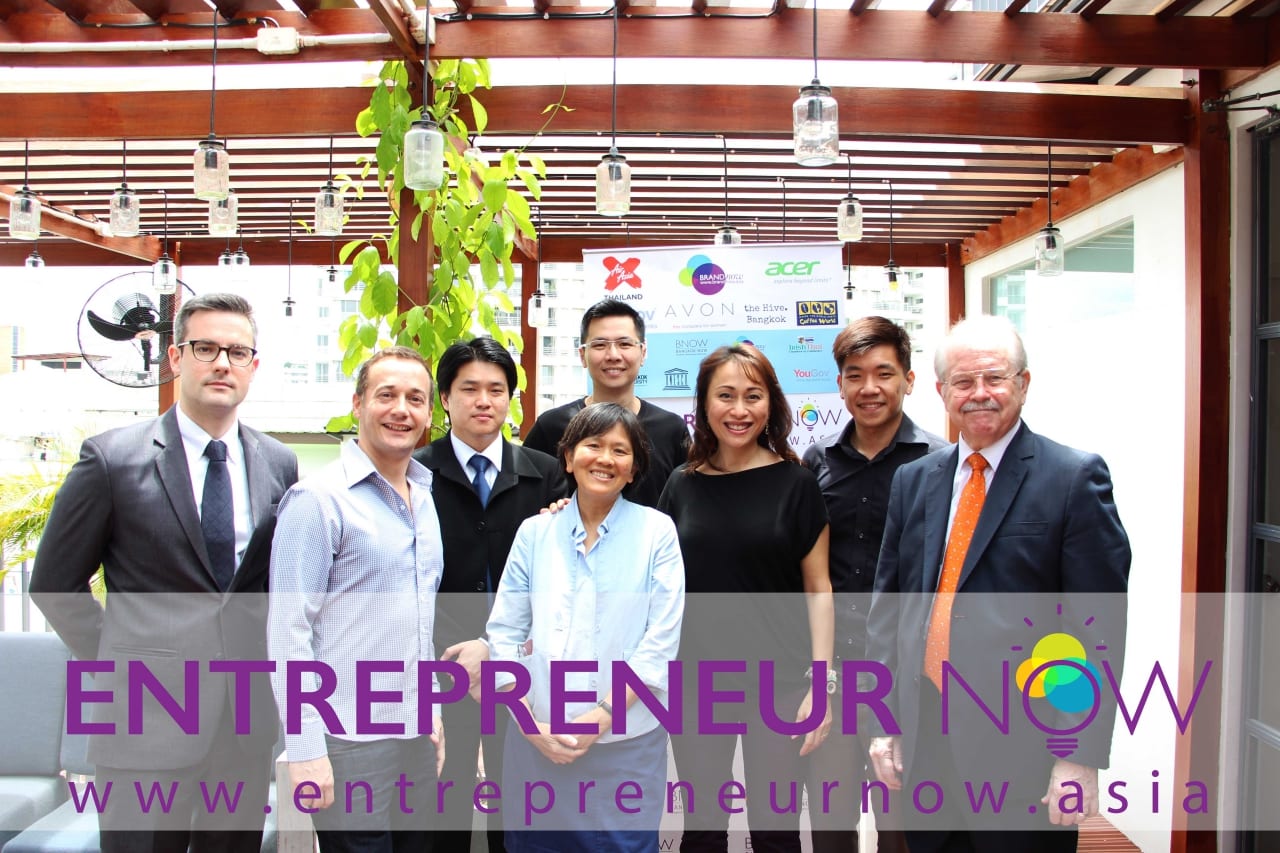
    Bnow.org  (Bangkok Now), a Bangkok networking community for startups, SMEs  and a registered social enterprise based in Thailand, announced during a media group interview today that preparations are under way for the Entrepreneur Now Awards  (ENA) 2016 scheduled to be held in October 2016.

    Last year, ten awards were presented to various Thai and non-Thai entrepreneurs and the event was presided over by Khun Salinee Wangtal, Director General of the Office of the Small and Medium Enterprises Promotion (OSMEP).

    Entrepreneur Now Awards is a program recognizing enterprising people and teams operating in the kingdom of Thailand. The objective of ENA is to promote entrepreneurism, attract investors to Thailand and ASEAN and revitalize the Thai economy and SME sector.

    “Last year ENA attracted over 100 Thai and non-Thai entrepreneurs with a registered business in Thailand, representing a wide range of industries including tech, F&B, health, fashion, education, FMCG, sports and construction, among others,” said Pacharee Pantoomano Pfirsch, Founder of  Bnow.org and Chairwoman of ENA, adding that this year she is looking  forward to see more entries.

    “According to the Federation of Thai Industries, there were about 2.7 million SMEs and start-ups in Thailand, providing more than 10 million jobs nationwide. These businesses are estimated to account for nearly 40% of the country’s GDP. FTI added that for the Thai economy to grow with stability, the country needs to balance it by boosting SME share of GDP to 40% in the future,” said Pacharee.

    “As a social enterprise, ENA aims to support the start-up and SME community in Thailand. We want to garner more involvement from the various chambers of commerce in Thailand, including the start-up community. We believe that working collaboratively with such organizations will facilitate the recognition of enterprising people and teams. Ultimately, it creates a better market place for all,” added Pacharee.

    “Our partners this year include Thai-Italian Chamber of Commerce, The Irish Thai Chamber of Commerce, Thai-Canadian Chamber of Commerce, GMASA, Creative Bangkok, Connecting Founders, Startup Bangkok, Travel Daily News and Brand Now.  More partners are expected to join and we will also be announcing the working committee and judges at the press conference slated for mid-2016.”

    This year, BNOW.org is organizing a series of knowledge sharing events related to SMEs and Startups, which will culminate at The ENA 2016 Awards Night in October 2016.

    These include:

    –  Feb 18th / 6.30pm-9pm at FCCT: Insight from investors and serial entrepreneurs: Why some start-ups success while others fail

    –  Mar 19th/11.30am-5pm at DraftBoard, Chidlom: Geek Girl Gathering:  A Workshop on Digital Marketing and Coding for non-coders

    –  April 26th/  Discussion: Tips and Advice for SMEs on “How to Export to Other Markets”

    –  May 26th/ 9am-5pm: Entrepreneur Summit at Bangkok University School of Entrepreneurship and Management

    –  June/ Announcement of ENA 2016

    –  July –Aug / Accepting Nominations for ENA 2016

    –  Aug/ Walkabout Bangkok : Several companies will open their doors to visitors who can meet the founders, entrepreneurial team, and get insights from some of most creative and innovative organizations in Thailand.

    –  Sept/ Networking Night for ENA nominees and judges

    –  October/ ENA Award Night 2016

  • Foreigners, beware of condo laws

    Foreigners, beware of condo laws

    If you are foreign and you marry a Thai, and you agree between you that all of your marital assets will be split 50:50 and designated as such, the Thai Government has found a way under which, even post marriage, part of this agreement can be completely excluded.

    This does not relate to the well-known exclusion of land, but to condominiums. Condominiums are much heralded as generally being available and favorable for foreign investment. Unfortunately, this is not always so.

    Most of my clients over the years have bought their condominiums outright with cash from overseas, or had the cash in Thailand, and due to the quirky rules on ensuring you have a ‘Foreign Exchange Transaction Form’ had to move monies out and then move those monies back into Thailand again with the bank fees and potential foreign exchange losses thrown in for good measure. I took out a loan many years back for my first condominium purchase in Thailand and the monies were loaned in foreign currency through HSBC Thailand which had its retail banking in Thailand taken over by the Bank of Ayudhya.

    We then decided to buy a condominium for rental investment purposes in Bangkok. We went through the mill when it came to applying for and obtaining a loan. We applied through seven banks. The first was the ‘favored’ bank of a well-known developer in Bangkok. They took literally every piece of financial information imaginable about me and my wife and looked at my various companies’ assets and credit history; tax payments and even the number of employees in my business. After three months, we were told we could obtain a loan only for an amount of 20 per cent of the outstanding balance due on the condominium. We then rushed out and made six further applications. One bank came through but the conditions were:

    (i) we had to take out a loan for furnishing the condominium

    (ii) we had to take out the hefty insurance premium through the bank’s ‘preferred’ insurer

    (iii) the loan had to be taken out by my wife because “she is Thai and you are a foreigner”

    Notwithstanding this, we was still expected to sign all the loan documentation and be involved.

    Fast-forward, and we were close to the transfer date. All of a sudden, I am informed that I must sign a ‘declaration of Sin Suan Tua’ (personal property). What is all that about, I thought – I have already made my agreement with my wife when I got married. Also Sin Suan Tua is by definition supposed to apply to all matters before marriage.

    Then the reality of the situation became apparent. Due to the fact my wife was borrowing the money from the bank, regardless of who would be making the mortgage payments, the authorities have found a way to exclude a marital asset from the marriage and adjust the entire concept of Sin Suan Tua.

    The Land Department insists that a foreigner must declare that a condominium belongs entirely to his/her spouse and that he or she (the foreigner) has absolutely no rights or interest in such condominium unless:

    (i) He/she pays for the unit and obtains a Foreign Exchange Transaction form – an impossibility if the monies are loaned in Thailand

    (ii) He/she has Permanent Residency – and many long term expatriates know how long and difficult that process is

    (iii) He/she is permitted to enter Thailand under the ‘Investment Promotion Act’ – which is very rare.

    So, if you believe being married to a Thai is somehow advantageous when it comes to investing in property as a foreigner, the reality is quite the opposite. The Land Office I attended in Bangkok was very helpful, efficient and polite while I signed the document confirming that our condominium would have nothing to do with me despite the fact of my marriage and that I’d paid the down payment.

  • Casino confident could exceed asset sale target

    Casino confident could exceed asset sale target

    Shares in Big C finished up 9.7 percent as investors cheered an up to $3.5 billion deal by France’s Casino Group to sell its majority holding in the Thai hypermarket operator to TCC Group, owned by whiskey tycoon Charoen Sirivadhanabhakdi. The Vietnam unit sale had been planned earlier. Casino has said it plans to raise 4 billion euros ($4.5 billion) by selling assets this year, including its operations in Thailand and Vietnam. Ratings agency Standard & Poor’s in January put the French retailer’s debt on “negative watch” for a possible downgrade to junk status, citing concerns over weakness in Brazil and the retailer’s debt.

    In a significant step to reduce mounting debt levels, French retailer Group Casino has sold its controlling stake in one of Thailand’s largest supermarket chains.

    The sale is expected to be completed by 31 March 2016.

    A deal would add to the $50.6 billion of acquisitions in Southeast Asia over the past 12 months, data compiled by Bloomberg show.

    TCC, which owns the maker of Chang Beer among other assets, outbid Thailand’s biggest retailer Central Group to push into a retail sector that is expanding along with the number of middle class consumers.

    With over 700 outlets across Thailand, Big C’s market capitalisation nears €4.bn, while its annual revenue for 2015 totalled €3.4bn.

    With the news of Big C now under his belt as well, there seems to be no sign of Charoen slowing down in the coming year. Last month, Mr. Charoen’s TCC Group closed a EUR655 million acquisition of Metro Group’s cash & carry wholesale business in Vietnam. He became a household name in 2013 when he bought a controlling stake in Singapore-listed conglomerate Fraser & Neave that valued the firm at $11 billion.