Tag: Thailand

  • Isetan Thailand unveils Washoku Gallery food concept

    Isetan Thailand unveils Washoku Gallery food concept

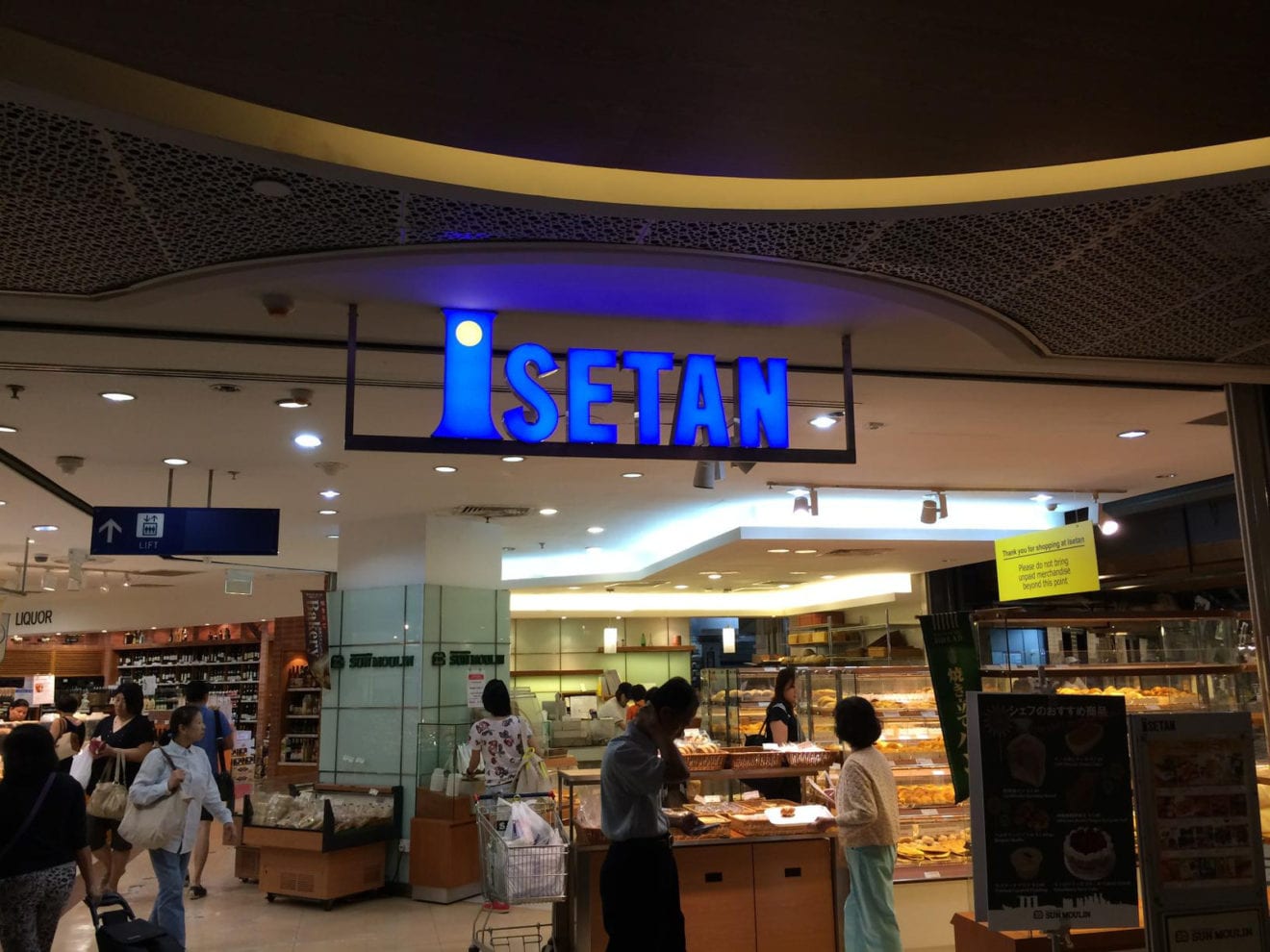
    Isetan Thailand has converted its fifth floor into a food concept called Washoku Gallery, which opens today (December 18).

    Washoku Gallery will, in keeping with the department store’s heritage, feature food products imported from Japan. Japanese food and culture are broadly liked by Thailand’s urban consumers and Isetan wants to tap into the growing demand.

    Isetan Washoku 4

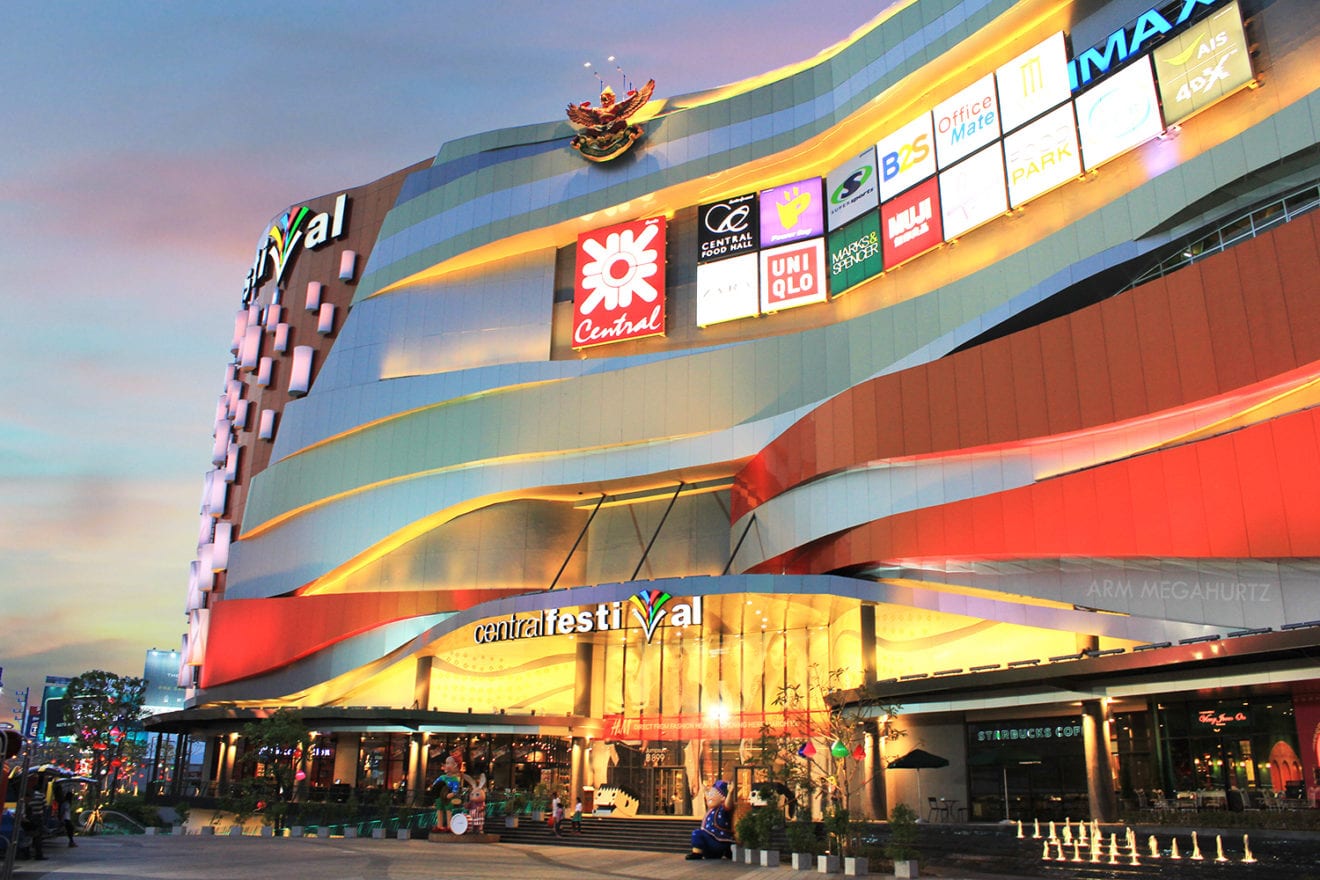
    The Isetan Thailand department store is located in CentralWorld in downtown Bangkok.

    “The Thai retail market has undergone drastic changes since Isetan Thailand opened in 1992, and numerous Thai customers have said they want to see the same things at the store as at Isetan stores in Japan,” a spokesman for the retailer said in a statement.

    Isetan Washoku 1

    “At Washoku Gallery, Isetan offers goods and services so that customers can enjoy Japanese culinary culture. Isetan will also minimise price differences between products in Japan and those in Thailand as much as possible so that as many customers as possible can feel ‘this is Japan’.”

    Most of the products on sale have been introduced to Thailand for the first time. There are also nine Japanese-Western food brands, four Japanese bakery brands, 10 Western bakery brands and a Japanese Food Court with seven Japanese food brands.

    Isetan Washoku 2

    Isetan will work with Japanese food companies to bring experts to Bangkok to demonstrate their artisanship to customers. Tea masters will visit the store when newly harvested tea leaves are put on sale, and sake-brewing masters from rice wine breweries will be invited from all over Japan. Sashimi experts will slice freshly imported fish from Japan as customers look on.

    Isetan Washoku


    Said Isetan Thailand president Takaki Akune: “The newly remodelled floor, Washoku Gallery, is unique – only a Japanese department store can offer [it]. I’m confident that at Washoku Gallery, Thai customers will feel a sense of satisfaction they have never experienced. ‘This is Japan’ is a concept that Mitsukoshi Isetan Holdings recognises as part of its corporate strategy.

    “The whole group uses this concept to present the beauty of Japan to the world, from products to sales and services,” he said.

  • Thai CP Group unit True Money Myanmar to test money transfer service soon

    Thai CP Group unit True Money Myanmar to test money transfer service soon

    The firm is currently working in Myanmar as a mobile top-up service provider for Myanmar Post and Telecommunications (MPT) and MEC since September 2015.

    In Myanmar, the money transfer service will be through True Corporation Plc, a subsidiary of the CP Group.

    True Money Myanmar Company Limited has already recruited agents around the country to enable easy access to banks.

    “We want to help people who are not able to reach banks easily. For people who have to go to another township to use the bank,” said Amara, assistant marketing manager of True Money Myanmar Company Limited.

    The firm is also aiming to expand to other payment services like bill payments and international remittance.

    The money transfer service is looking at the possibility of offering safe and easy remittance facility for the Myanmar population working in south east Asian countries.

    True Money Myanmar is targeting the retail customers for the money transfer business. It is also in talks with Aeon credit service and Gold Bus online booking company for future partnerships.

    True Corporation Plc also operates internet services operator, data centres and pay TV business.

  • Telecoms, internet come up strong

    Telecoms, internet come up strong

    A mascot promoting the spectrum auctions for fourth generation (4G) service is seen at the headquarters of the National Broadcasting and Telecommunications Commission. Winning bidders for the 1800- and 900-megahertz spectrums are set to launch commercial 4G service early next year. Outlook for next year even rosier.

    Mobile firms ready to start 4G network

    The mobile sector is one of the big winners this year, escaping the country’s sluggish economy as mobile communications are expected to have an effect on nearly every aspect of life and business.

    Major mobile operators project a slight increase in revenue this year.

    Thailand has 110 million mobile subscribers, expected to rise to 150 million in 2016, says the National Broadcasting and Telecommunications Commission (NBTC).

    This gain will be fuelled by the continued growth of mobile data users and the arrival of machine-to-machine communications or the Internet of Things.

    Thailand has more than 40 million mobile internet users and only 35 million desktop internet users. It is a mobile-first country.

    Pete Bodharamik, chief executive of Jasmine International, the parent firm of JAS Mobile Broadband, said its average fixed-line broadband household owned up to five internet-enabled devices, with at least three of the devices mobile.

    JAS will launch its commercial fourth-generation (4G) service early next year.

    Thailand’s mobile market is valued at 300 billion baht annually.

    Somchai Lertsutiwong, chief executive of Advanced Info Service Plc, the country’s largest mobile operator, said his company’s 2015 data revenue surged thanks to mobile traffic, which is driven primarily by the proliferation of data-hungry mobile devices.

    “The mobile data market is going to explode in 2016 thanks to the arrival of full commercial nationwide 4G service,” he said.

    An Ericsson ConsumerLab report shows 89% of Thai consumers use social media on a weekly basis.

    Traffic on mobile networks will continue to grow at an impressive rate, driven by the uptake of smart devices and apps. This rapid growth is having a significant impact on networks.

    Global research firm IDC said average mobile internet usage in Thailand would increase to 192,265 Mbps per number per month over the next five years, up by 165% from this year.

    Mobile internet service could also generate new revenue streams for other ICT-related businesses, particularly e-commerce. Thailand has more than 500,000 e-commerce merchants via many channels including social media, websites and online marketplaces. The country’s e-commerce sector has grown by 20% annually.

    The value of Thailand’s e-commerce market is expected to reach 2.1 trillion baht this year, up by 3.65% from last year, which surged 165% from 700 billion in 2013 thanks to intense discount promotions and greater availability of high-speed wireless broadband networks.

    Studies suggest doubling internet broadband speeds can add 0.3% to GDP.

    Tech start-ups ready to ring in innovation

    Thailand’s tech start-up industry is one of the three most attractive in Southeast Asia thanks to a proliferation of mobile internet users and capable world-class tech talent.

    The development of tech start-ups is part of the government’s policy of promoting innovation among small and medium-sized enterprises.

    According to Thailand’s “Tech Startup Report 2015” compiled by TechSauce.co, as of last month Thai tech start-ups had raised US$84.5 million from 53 projects compared with three projects worth $2.1 million in 2012.

    The biggest tech start-up investment in Thailand in 2015 was worth $10.7 million, while the biggest in 2012 was worth $2 million.

    The number of venture capital funds in Thailand jumped to 12 worth $79 million in 2015 from three in 2012 worth $7 million.

    Nattawut Pungjarernpong, fund manager at Bangkok venture capital firm 500 Tuktuk, said the early stage of the local start-up market was just blossoming.

    Indonesia and Malaysia are other attractive destinations for global venture capital in Southeast Asia, given their large populations and strong start-up ecosystems.

    Mr Nattawut urged policymakers in Thailand to provide more attractive incentives for tech start-ups and ease regulations to promote investment.

    The government provides tax exemptions for capital gains when companies invest in tech start-ups, but the country needs more incentives to reduce the risk of investment losses, he said. Thai tech start-ups can continue to grow for another few years as capital pours into Southeast Asia.

    E-commerce continues to bloom

    E-commerce saw strong growth this year thanks to the proliferation of smartphone and mobile internet users.

    Thailand has 40 million mobile internet users, with the smartphone penetration rate exceeding half the population.

    The e-commerce market will continue to blossom next year, with a host of key regional players jumping on the bandwagon.

    The local e-commerce market increased at a double-digit rate this year, overtaking GDP, thanks to aggressive marketing and attractive discount campaigns among e-commerce companies.

    There are an estimated 14 million online shoppers in Thailand and more than 500,000 online merchants.

    The advent of full commercial fourth-generation (4G) wireless broadband service next year will transform the local mobile commerce and mobile payment markets.

    “Thailand’s retail e-commerce [business-to-consumer or B2C] market was Southeast Asia’s largest in 2014, worth US$11.7 billion,” said Surangkana Wayuparb, chief executive of the Electronic Transactions Development Agency (ETDA).

    Malaysia’s B2C market was valued at $9.6 billion, followed by Singapore ($3.4 billion), Vietnam ($2.9 billion), Indonesia ($2.6 billion) and the Philippines ($2.3 billion).

    However, compared to developed countries, Thailand trailed the US ($359 billion), China ($322 billion), Japan ($118 billion) and South Korea ($25.4 billion).

    Mrs Surangkana said Thailand’s B2C market was expected to grow by 15.2% to 475 billion baht in 2015.

    An ETDA survey of 502,676 e-commerce operators countrywide from April-October showed electronics, cosmetics and fashion were the three best-selling products in retail e-commerce.

    The survey found the top three payment channels were e-banking, credit or debit cards and mobile payment.

    Mrs Surangkana expects mobile payment will surpass other channels in 2016 thanks to the proliferation of smartphones.

    Pawoot Pongvitayapanu, president of the Thai e-Commerce Association, said operators must expand abroad, particularly to other Asean members, instead of focusing only on the domestic market.

    Paul Srivorakul, chief executive of aCommerce Group, said next year’s launch of commercial 4G service would further cement Thailand’s leading position in mobile internet and accelerate the growth of mobile commerce.

    Thailand is already one of the most mobile-enabled countries in the world, with the average Thai user having 1.4 mobile devices, he said.

    The country’s mobile internet penetration of 56% already exceeds that of the US and China, at 40% and 34%, respectively.

    However, e-commerce accounts for only 1% of Thailand’s total retail market. Local e-commerce is expected to reach double-digit figures within the next four or five years.

    Local e-commerce has grown by 20-25% year-on-year despite the stuttering economy, Mr Paul said.

    Meanwhile, a number of retailers and manufacturers have been tapping opportunities from the online channel.

    Among them are major retailers such as Central, The Mall and Tesco Lotus as well as furniture chain Index Living Mall and Mc Jeans, which already have online shopping platforms.

    Their online sales have grown in the range of 10-100% this year, depending on product category.

    Popular items are cosmetics, apparel and electrical appliances.

    Next year, these operators hope to boost online sales and attract more young-generation customers.

    An increasing number of companies plan to expand via the online channel, as they can access customers not only in the domestic market but also abroad.

    When they have succeeded in providing online shopping platforms on their own, some operators such as Central plan to serve as a marketplace, selling products for other producers, Mr Paul said.

    High hopes pinned on tourism rebound

    Tourism has been singled out as the economy’s biggest hope and a powerhouse this year amid the export slump.

    The sector has strongly recovered from the last year’s political instability and passed through the economic storm and the deadly Erawan Shrine bombing.

    Foreign tourist arrivals are expected to reach almost 30 million in 2015, exceeding the official target of 28.8 million.

    The Erawan bombing on Aug 17 caused a brief hiccup in tourism’s recovery, and the industry bounced back in a couple of months.

    The sector’s resilience led Tourism and Sports Minister Kobkarn Wattanavrangkul to declare her ministry was confident total international tourist arrivals would hit 29.5 million by year-end.

    As of last Wednesday, Thailand had welcomed 29 million foreign visitors.

    The tourism revenue target of 2.2 trillion baht is being maintained.

    Of that total, 1.4 trillion baht will come from foreign tourists and 800 billion from local travellers.

    Tourism’s strong recovery has benefited the hotel business, with many chains reporting healthy performances this year.

    Thai hotel chain Onyx Hospitality saw its operating profit rise 36% year-on-year in the first nine months, with properties in Thailand contributing 70% of revenue, president and chief executive Peter Henley said.

    He expects the strong performance will continue next year.

    For next year’s first quarter, Onyx forecast an 8.1% increase in room revenue for properties in Thailand.

    Patrick Basset, AccorHotels’ chief operating officer for East and upper Southeast Asia, called Thailand an attractive destination for tourists from around the world.

    The country’s tourism has a strong reputation, boasting natural beauty and a rich cultural heritage.

    It also offers a variety of attractions that appeal to a wide range of visitors from business travellers to eco-tourists.

    Mr Basset remains concerned about political uncertainty, which could emerge as a major risk for Thailand and tourism in the future. Tourism has been very sensitive to political problems.

    Meanwhile, the Association of Thai Travel Agents (ATTA) is satisfied with tourism’s recovery this year and projects the sector will continue to outperform next year even though Thailand will face many negative factors such as the global economic slowdown and risks of terrorism.

    “Thailand remains a popular destination, with many main feeder markets within three hours’ flying time,” ATTA president Charoen Wangananont said.

    Prior experience of dealing with crises provides proof that Thailand can sail through many negative situations and recover in a short period.

    As of Dec 20, ATTA reported the number of international tourist arrivals via its member agents had grown by 63% to 5.06 million.

    ATTA said 2015 was another good year for tourism after several years of stagnation due to political conflict.

    However, the government must boost all industries next year, not just rely on tourism revenue, Mr Chareon said.

    Tourism and sports permanent secretary Pongpanu Svetarundra said the weaker baht following the interest rate hike by the US Federal Reserve would benefit both the export and the tourism sectors.

    Budget carriers seize the helm in air wars

    Low-cost carriers (LCCs) have continued to evolve and flourish in 2015 to outshine other business sectors against the backdrop of economic doldrums.

    Having opened the skies over Thailand and other parts of the world for millions of travellers, budget airlines are now a force to be reckoned with in the aviation industry.

    Growth has been particularly dramatic in Thailand, where LCCs continue to raise their passenger share and spur traffic in a way that full-service carriers (FSCs) are unable to mimic.

    Several LCCs in Thailand continue to stimulate air travel by lowering fares and opening new routes and destinations — the primary drivers of their proliferation.

    Higher growth in Thailand’s tourism industry due largely to political stability has sent traffic soaring for LCCs, a popular transport mode for leisure travellers.

    Passengers travelling on budget airlines through the six major Thai airports run by SET-listed Airports of Thailand Plc (AoT) surged 34.1% in the first nine months of 2015 to a record 33.4 million from 24.9 million in the year-earlier period.

    That pushed LCCs’ share of the overall passengers passing through those airports during the same period including Suvarnabhumi and Don Mueang to 41.3%, up from 38.5% in the year-ago before period.

    LCC aircraft movements — take-offs and landings — rose in tandem to 229,921, up by 28.9% year-on-year, according to AoT statistics.

    Tassapon Bijleveld, chief executive of Thai AirAsia (TAA), Thailand’s biggest LCC, said the foregone conclusion was LCCs in places such as Thailand in particular and Southeast Asia in general would continue to consolidate their profiles in air transport.

    “What we see taking place in Southeast Asia is similar to Europe, where LCCs account for up to 75% of intra-European air travel,” he told the Bangkok Post.

    In Thailand, the share of LCCs in the overall passenger market is set to rise by 3-4% annually over the next several years to reach the high levels seen in Europe.

    Given the trend apparent in the first 10 months of this year, indications are the LCC passenger tally for the whole of 2015 will reach 45.5 million, according to industry executives.

    Next year, the LCC share of passenger totals will grow to 46%, Mr Tassapon said.

    Several LCCs have seen improvement in their balance sheets due to enhanced business performance.

    For instance, TAA posted a record net profit of 1.47 billion baht in the first nine months of 2015 compared with a net loss of 265 million in the same period last year.

    AOT shares closed yesterday on the SET at 344 baht, down three baht, in trade worth 427 million baht.
  • Launching Thailand’s first ‘Clip ‘n Climb’

    Launching Thailand’s first ‘Clip ‘n Climb’

    Bangkok’s newest climbing hub, Clip ‘n Climb, which is one of the happening zones at BOUNCE Thailand, features 24 innovatively themed indoor climbing walls in visually attractive colours and textures, set over 255 sq m, ranging in difficulty and skill.

    A revolutionary indoor climbing experience from New Zealand comes to Thailand in the form of Bangkok’s first ever ‘Clip ‘n Climb’, at the brand new BOUNCE Thailand trampoline universe, on the 5th floor of The Street Rachada, a lifestyle mall located on Ratchadapisek road. Clip ‘n Climb, launched on 22nd December 2015 in conjunction with Quicksilver-Roxy-DC brands, is a fantastically fun and exciting alternative to outdoor rock-climbing, not to mention incredibly safe. a

    “It feels great to bring one of the world’s hottest new activity attractions to Bangkok all the way from New Zealand! Clip ‘n Climb’s innovative safety systems make it a breeze for anybody to start climbing, and the design of the walls have some of the hardest challenges for even the most experienced athletes,” commented Mr. Galeno Chua, Clip ‘n Climb Master Trainer. “It’s a completely new way of climbing. I can’t wait to rock Bangkok with this!”

    Bangkok’s newest climbing hub, Clip ‘n Climb, which is one of the happening zones at BOUNCE Thailand, features 24 innovatively themed indoor climbing walls in visually attractive colours and textures, set over 255 sq m, ranging in difficulty and skill. With no two obstacles the same, Clip ‘n Climb presents enticing physical and mental challenges for kids starting from 3 years old, and from novice to expert climber. Clip ‘n Climb utilizes a new generation auto-belay device, TruBlue™, which employs a magnetic eddy current braking technology, for absolute safety first. During ascent, TruBlue™ takes up the slack, then lowers gently in a controlled descent to the ground.

    To celebrate the launch of Clip ‘n Climb BOUNCE Thailand and also as a present during this festive season, every one-hour ticket purchased gets one trampoline voucher for a one-hour FREE bounce in the trampoline zone, until 10th January 2016. Clip ‘n Climb BOUNCE Thailand opens daily from 10:00am –10:00pm.
  • Starbucks volunteers joined 500 middle and high school students

    Recently, Starbucks volunteers joined 500 middle and high school students for the Youth Skill Development and Food Sustainability Project in partnership with the Books for Children Foundation. The event took place at the Bumrung-Raviwan Wittaya School, which promotes healthy food and living, grows vegetables for school and home meals, and sells leftover crops to student families. Combined, 330 volunteer hours impacted nearly 5,000 students and their families, along with others in the community.

    “At Starbucks, our long-term commitment is to make a positive and sustainable change in the areas of environment, society and economy,” said Murray Darling, managing director of Starbucks Coffee Thailand. “The community event allowed us to reaffirm the company’s long-term commitment to local communities.”

    For part of the day, students practiced project planning, leadership and communications skills during a food sustainability project. Students and volunteers built nursery shelves for vegetables, created an organic shade plot for crops and repaired the pier for a small fish farm.

    The majority of the community project focused on skills development through an English conversation class. Starbucks Thailand partners helped students hone their English-speaking skills through songs and word games.

    Starbucks volunteers also read stories to a kindergarten class with Ruangsakdi Pinprateep, managing director of the Books for Children Foundation and author of “Ping Pong, Will You Come with the Bear.” This children’s book was funded by a portion of sales from Starbucks Thailand Barista Bears.

    “It was such an honor for Starbucks to join us in service,” said Naiyana Aua-amnueychai, director of Bumrung-Raviwan Wittaya School. “We place a great deal of emphasis on English skills development and food sustainability at our school and Starbucks volunteers helped our teachers and students in these areas. We are pleased that Starbucks and our school share the same goal to contribute back to our society.”

    Starbucks Thailand has collaborated with Books for Children since 2005. Together, they have collected more than 400,000 books through an annual Christmas book drive and completed a library renovation at Silapadech community. In addition, they completed the Bookstart for Intellectual Disability Children’s Project at Rajanukul Institute and renovated the Wat Kla Cha-um School library and playground.

    “By working with Books for Children for the past 10 years, we have delivered educational opportunities to both public and private organizations nationwide,” said Sumonpin Jotikabukkana, marketing and communications director of Starbucks Coffee Thailand. “We realize that literacy is an essential element for children’s development and we aim to do our best to continue to promote and support these areas for Thai children in every sector of the society.”

  • Siam Paragon in Bangkok Ranked 6th Place as the World’s Most Talked-About Places

    Siam Paragon in Bangkok Ranked 6th Place as the World’s Most Talked-About Places

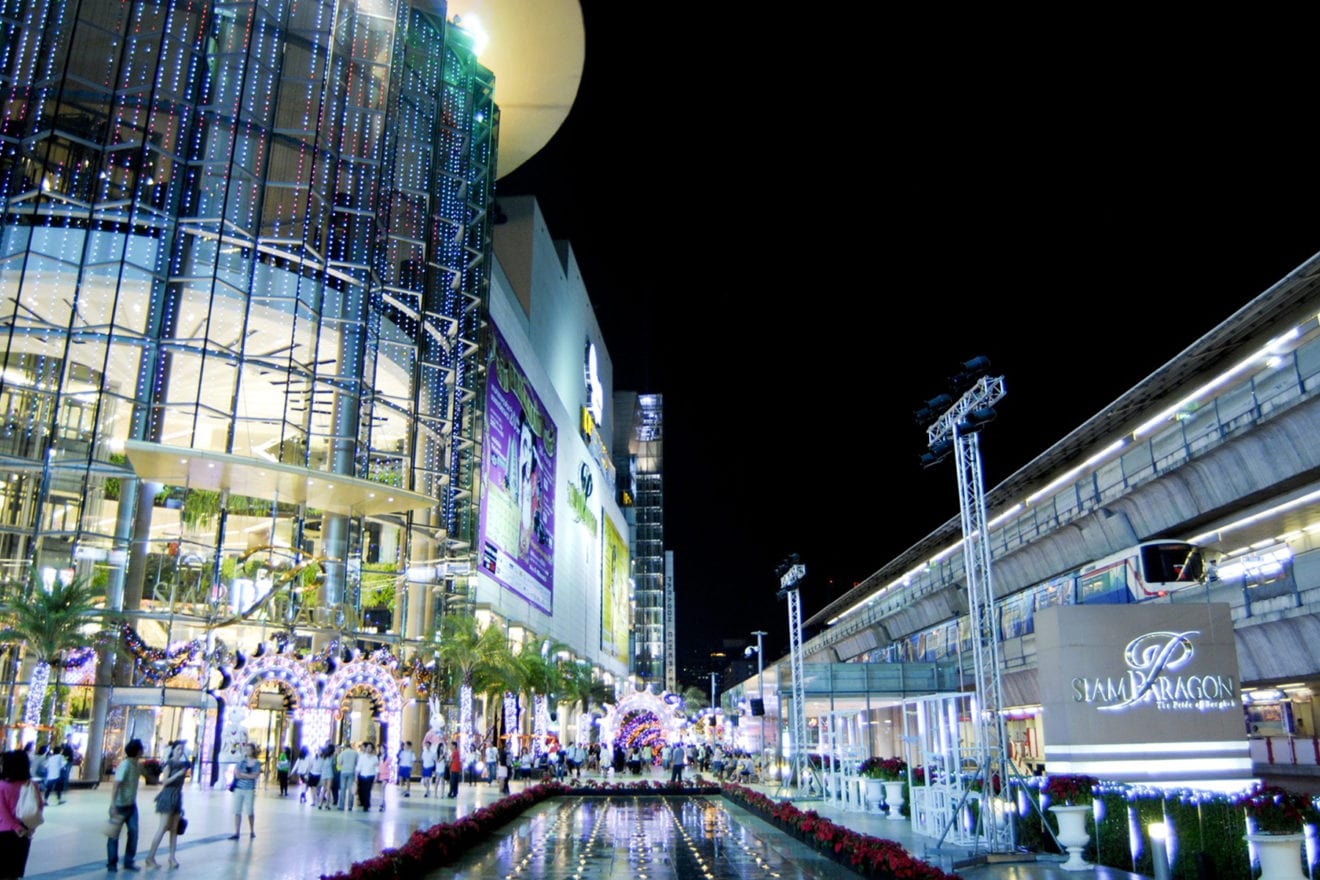
    Siam Paragon, Thailand’s world-class shopping destination, has gained prestige to Thailand after being ranked 6th as the most talked-about places among people around the world in 2015 and being the only place in Asia that has made the top 10 rankings — according to the ranking of 20 most popular places globally talked about in 2015, announced early December by Facebook.

    Opened in 2005 with an investment budget of THB 15 billion (USD 375 million), Siam Paragon Shopping Center is a world-class shopping and lifestyle phenomenon, welcoming over 300 leading international luxury labels and cutting-edge local names that suit the needs of all visitors to its 500,000 square meters of retail space in the heart of Bangkok.

  • Thailand geared to increase foreign tourist spending

    Thailand geared to increase foreign tourist spending

    The other proposals are; instant VAT refund, exclusion of VAT from some items, reduction of import tariffs of some consumer product items, and the scheme to promote “Thailand Brands Sale”.

    The proposals are aimed at boosting foreign tourists’ spending in Thailand.

    Rawittha Pongnuchit, a tax-law expert and former deputy director-general of the Revenue Department as chairman of the duty-free association, said that all the proposals would boost the economy.

    “We are pleased that the government responded (to our proposals) and is ready to materialise the proposals within the specified timeframe,” he said.

    He added that pick-up counters at all international airports would facilitate foreign tourists’ shopping. This would lead to more jobs and higher income at airports.

    It is agreed that all the airports would have the counters within 60 days.

    The decision followed a meeting yesterday between Finance Minister Apisak Tantivorawong, Tourism Minister Kobkarn Wattanavrangkul, and representatives of the Thai Shopping Centre Association, Thai Retailers Association, and duty-free shop association.

    A working committee will be set up to study on the exclusion of VAT from some items. The Revenue Department is tasked to explore overseas experiences involving instant VAT refund.

  • Thailand’s Central Group cautious over 2016 expansion

    Thailand’s Central Group cautious over 2016 expansion

    Central Group sees 2016 as another year to be more conservative with expansion, as the country’s largest retail operator is still concerned about weak domestic consumption. Prin Chirathivat, deputy chief executive officer, said yesterday that both the global and domestic economies are expected to improve in the coming year. The only worry was moribund consumer spending, as the group is heavily involved in the retail business.

    Unlike the retail business, the group’s hotel business was still performing well this year.

    The group will continue to develop department stores as planned but with a cautious approach.

    “We have to be well prepared with a more flexible plan and put more focus on our core business,” he said.

    The company appears to be hedging its risk by focusing less on non-core businesses like warehousing.

    To support future growth of its hard-line business, which heavily relies on inventory management, Central Group’s CRC Power Retail is forming a 50:50 joint venture with WHA Corporation Plc.

    WHA Central Alliance was established with Bt850 million in registered capital to manage its Bt4-billion warehouse project in Ayutthaya’s Wang Noi district.

    Located on 320 rai (51.2 hectares) of land owned by Central Group, the new warehouse will offer a total of 250,000 square metres of space. As the first phase, Central Group has already built a 56,000sqm facility on 100 rai.

    The JV would take over both the land and warehouse under a sale-and-leaseback deal and carry out the next two phases to expand its capacity to 250,000sqm in three years. The Bt4-billion investment includes land.

    Jareeporn Jarukornsakul, vice chairman and chief executive officer of WHA, said that through the sale and leaseback of the first phase, the new JV will realise revenue of about Bt100 million from the beginning.

    The first phase was aimed at serving Central’s hard-line retail business consisting of Thai Watsadu, HomeWorks, Baan&Beyond and Power Buy.

    In preparation for continuing expansion, particularly of the new imported product line-up, the second phase is scheduled to be completed next year, adding 28,000sqm of rental space.

    The hard-line business has played an important role in the group accounting for 10 per cent of total revenue, with an average annual growth of at least 10 per cent in revenue.

    Somyos Anantaprayoon, chairman of WHA, said that after the completion of all phases, Central Group would lease 60 per cent of the total warehouse space for 10 years. The remaining areas would be available for new customers.

    With experience in the build-to-suit warehouse business, WHA could help clients to save about 30 per cent in costs incurred by constructing their own warehouse.

    WHA projects Bt400 million a year in income from the completed project, which would boost its rental, service and utilities income by 10 per cent.

    Jareeporn said the JV was the third collaboration with Central Group. The company already provides the group a 23,000sqm warehouse and distribution complex on Bang Na-Trad Road and a 20,000sqm cold storage facility on Rama II Road.

  • PTT firms up local expansion program

    PTT firms up local expansion program

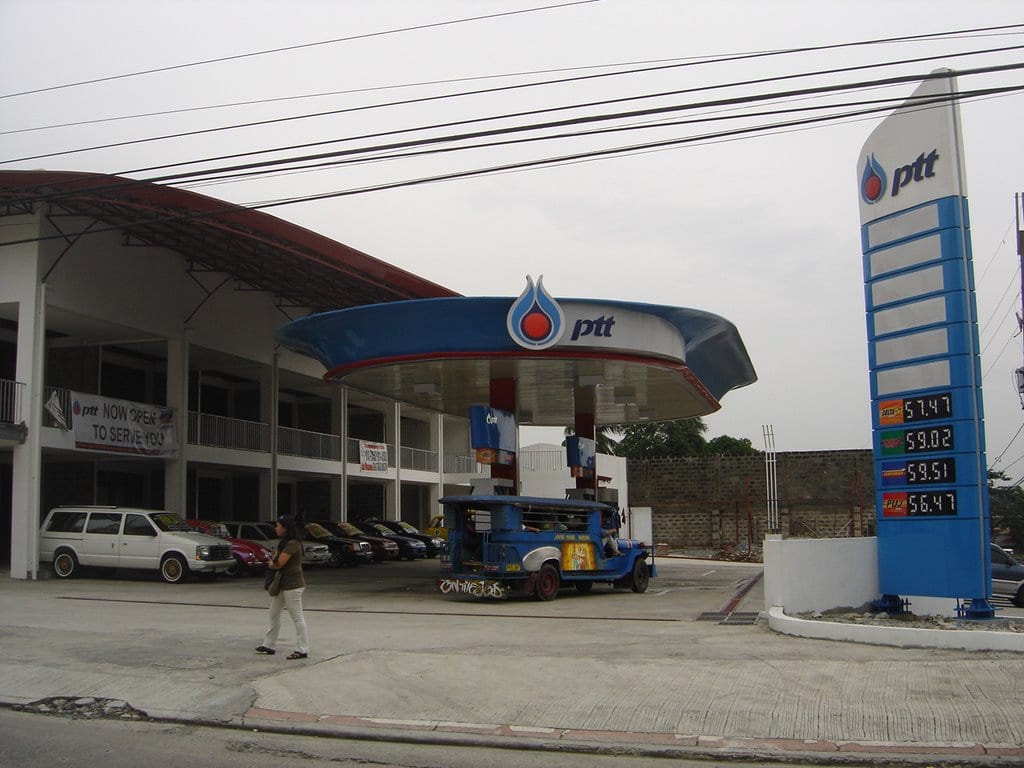
    PTT Philippines, a unit of PTT Public Co. Ltd. of Thailand, plans to invest P3 billion in the next five years to expand the company’s network here.

    The capital expenditure program includes investments in retail stations, oil depots and terminals in Luzon and Visayas.

    “In the next five years, PTT appropriated P3 billion for expansion plan, for laying down on infra,” general manager Danilo Alabado told reporters.

    PTT Philippines currently has 94 stations and plans to put up a total of 300 by 2020.

    “Right now we have the trading areas in Luzon and Cebu. In order for us to achieve our goal to be one of the top five oil companies in the next five years, we will expand into other trading areas, other islands,” Alabado said.

    He said the company needed the support of a stronger infrastructure network  for its expansion program.

    “We need depot, fuel terminal that could come in in Visayas and Mindanao which we have been looking at,” the official said.

    PTT president and chief executive Sukanya Seriyothin cited a strong growth projected growth in Luzon for the company’s planned expansion.

    “Visayas and Mindanao we still have to further expand. We’re still moving forward in Luzon, but aside from that, we move further in Visayas, Mindanao,” Sukanya said.

    Alabado, meanwhile, said the company performed “fairly well” in 2015 with sales volume likely to increase 5 percent to 6 percent.

    “We are confident we are going to meet our target,” Alabado said, adding revenues may reach P1.1 billion this year.

    “We are looking at 5 to 6 percent growth next year until 2017 because we are going to lay down our infra support for expansion for 2018 going into 2020, we are looking at growth of 60 percent compared to what we had in 2015,” he said.

    PTT Thailand is Thailand’s biggest oil player and ranked number 81 under Fortune 500’s List of world’s largest companies.

    The company, controlled by the Thai government, is engaged in downstream and upstream petroleum, natural gas, coal, and other related businesses.

    PTT Public Co. Ltd. of Thailand, the parent of PTT Philippines, earlier said it planned to increase the revenue share of its overseas retail oil business to 20 percent in the next five years.

    PTT Thailand vice president for international marketing Wisarn Chawalitanon noted that the share of the overseas retail oil business to the company’s revenues was still small.

    PTT Thailand, which owns around 1,200 to 1,300 retail stations in Thailand, is banking on its overseas presence in the Philippines and other countries to help propel the company’s growth.

    Wisarn said the Philippines remained PTT Thailand’s priority market.

    “The Philippines is the biggest operation that we have in other Asean countries. Our revenue in the Philippines is more than 20 billion baht [P26 billion] compared with the other countries which have around 5 billion baht [P6.5 billion]. That’s why we pay attention to the Philippines,” the official said.

  • Supermarkets, restaurants worldwide admit to using slave labour-processed seafood

    Supermarkets, restaurants worldwide admit to using slave labour-processed seafood

    A large-scale investigation spanning multiple continents has revealed that top seafood retailers and restaurants around the world were using products that were tainted with forced slave labour, originating from Thailand’s seafood peeling factories.

    The Gig Peeling Factory on the outskirts of Bangkok houses horrors made of nightmares. Here, the forced labourers work for 16 hours for little or no pay fearing violence from the overseers.

    An Associated Press investigation revealed that Thai Union, the largest seafood supplier, employs the Gig Peeling Factory where a hundred Burmese people, including children, are kept under lock and key and forced to work for hours without end with their hands in cold water, tearing and shedding at the heads and tails of the shrimps.

    Woolworths, Coles and Aldi, Australia’s top retail grocery chains, have all said that they use Thai Union as suppliers for their retail stores.

    “We will investigate this further with our supplier and seek advice from our NGO partners,” quoted Woolworths as saying.

    Australian retailer, IGA Supermarkets’s supplier Metcash confirmed that it uses Thai Union as well.

    “Some of our other locally based seafood suppliers may purchase prawns from Thai Union as they are one of the largest seafood suppliers in the world,” a Metcash spokesman said.

    In the US, the Red Lobster and Olive Garden, both restaurant chains as well as retail chains like Wal-Mart, Kroger, Whole Foods, Dollar General and Petco, have all confirmed using the Thai seafood supplier.

    The seafood produce from Gig Peeling Factory gets mixed with products from other suppliers making it impossible to tell between tainted and ethically produced farm products.

    According to UN and US standards, the whole produce then becomes tainted.

    “They didn’t let us rest,” said 16-year-old Eae Hpaw, 16, a labourer at the factory, whose arms were lacerated with shrimp-related infections and allergies. “We stopped working around seven in the evening. We would take a shower and sleep. Then we would start again around three in the morning.”

    “I was shocked after working there a while, and I realised there was no way out,” said Tin Nyo Win, 22. He and his wife were only paid US $4 per day for peeling 175 pounds of shrimp.

    Europe and Asia, has been similarly importing products from Thai Union, the AP investigation revealed. Germany, Italy, England and Ireland were able to find products from Thailand in grocery stores there.

    “As the world’s largest seafood restaurant, we know the important role we play in setting and ensuring compliance with seafood industry standards, and we’re committed to doing our part to make sure the seafood we buy and serve is sourced in a way that is ethical, responsible and sustainable,” Red Lobster said in a statement.

    In 2015, Thailand had passed laws to come down heavily on the abuses by the seafood industry in the country, and to register migrant workers without papers to ensure their safety.

  • King Power opens downtown Phuket store

    King Power opens downtown Phuket store

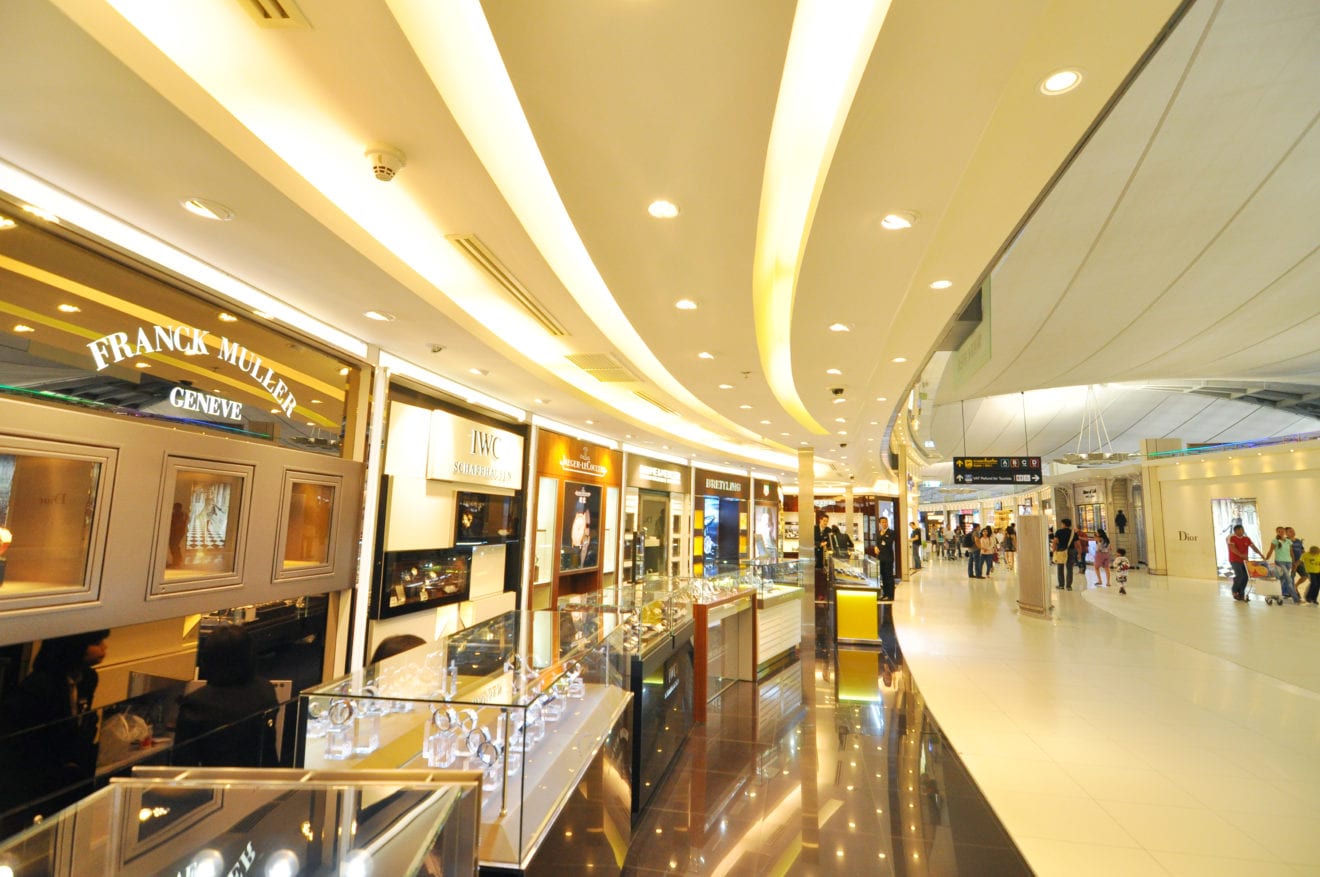
    Thai duty-free monopoly King Power mixes international brands with local products in its new downtown Phuket store opened this month.

    The new store’s design was inspired by the nearby Andaman Sea and uses dimensional depth and lighting to mirror the ocean.

    King Power Phuket stocks perfumes, cosmetics, and skincare from leading brands such as Bobbi Brown, Clinique, Dior, Estee Lauder, Lancome, L’Occitane, L’Oreal, Mac, SKII, and Shiseido; apparel, jewellery, and eyewear from brands including Emporio Armani, Bally, Coach, Longchamp, Furla, Hugo Boss, Kate Spade, Michael Kors, Calvin Klein, Dunhill, and Ray Ban; and watches from Omega, Rolex, Chopard, Tudor, IWC, Longines, and Breguet.

    A range of products from leading Thai brands, as well as local Phuket goods are on sale in a dedicated Thai Pavilion and the store also sells electronics and gadgets.

    The store’s interior is painted in pearl white contrasted by fluid lines simulating the movement of water. Additionally, the design incorporates Phuket’s unique Sino-Portuguese patterns.

    King Power Phukhet store 1

  • Phuket Airport expansion to double passenger capacity

    Phuket Airport expansion to double passenger capacity

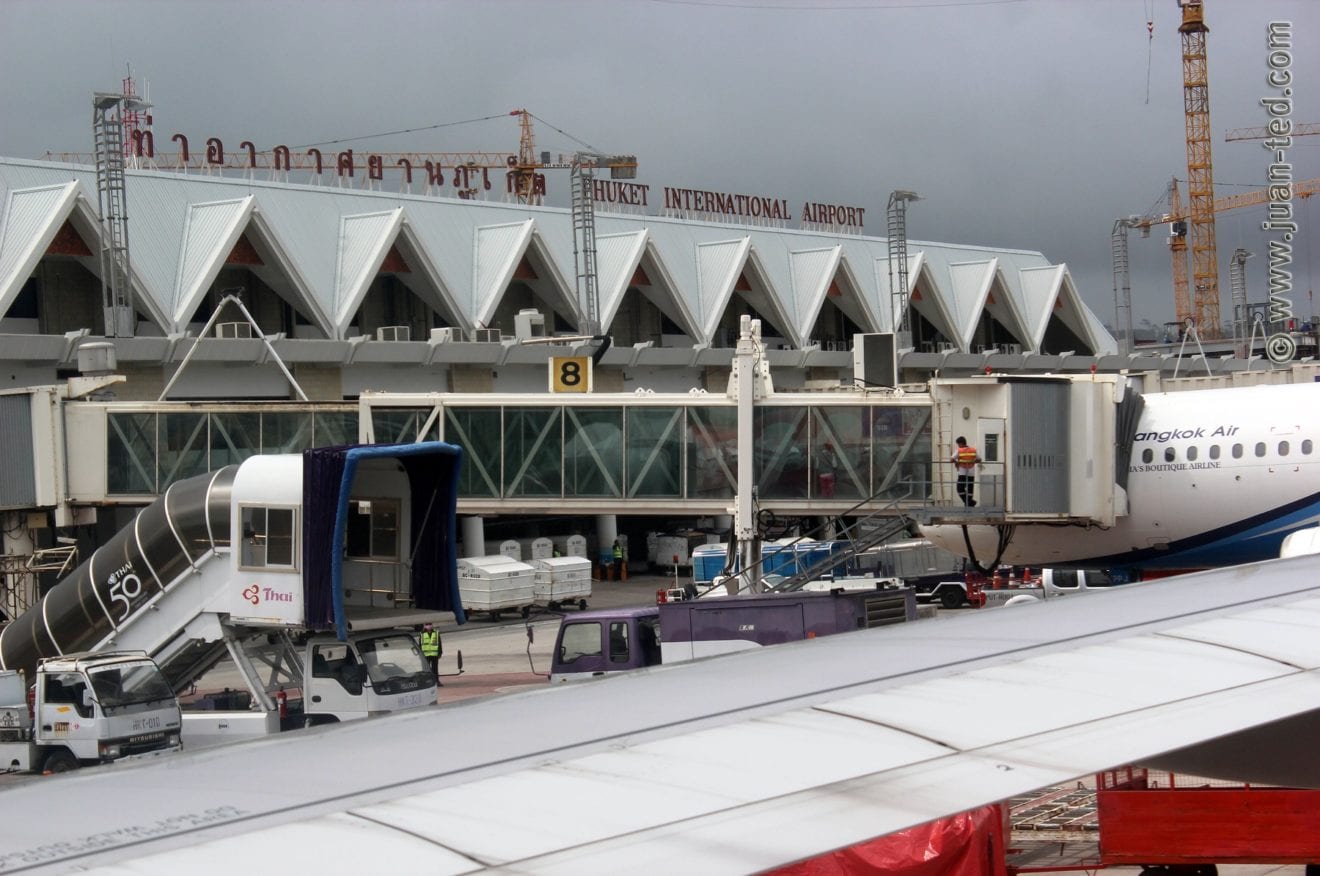
    Phuket Airport’s new international terminal is set to double its passenger capacity when it opens next May, according to airport director Monrudee Gettuphan.

    Construction of the terminal is more than 80 percent complete. It will undergo initial systems checks this month ahead of its soft opening on Feb. 14 and is on target to be fully operational by May, Monruidee said.

    “The new international terminal will be able to handle 12.5 million passengers annually, which is almost double the existing one, which can take only 6.5 million passengers per year,” Monrudee said.

    5868233

    The new terminal will include 10 aircraft parking bays, four gangways for passengers to embark and disembark from aircraft, and a brand-new shopping area with duty-free shops and restaurants.

    “But we are not only rushing the project to be done according to the plan, but also ensuring that the airport meets the standards by the Civil Aviation Authority of Thailand,” Monrudee added.

    The new terminal is part of a major THB5.7 billion overhaul of the airport, which began more than two years ago.

    phuket_airport_expansion

    Concerns have already been raised that Phuket Airport will be over-capacity soon after the expansion project is complete. A THB3 billion “upgrade of the upgrade” to raise passenger capacity to 18 million has already been tabled.

  • Bangkok Planetarium to reopen in January

    Bangkok Planetarium to reopen in January

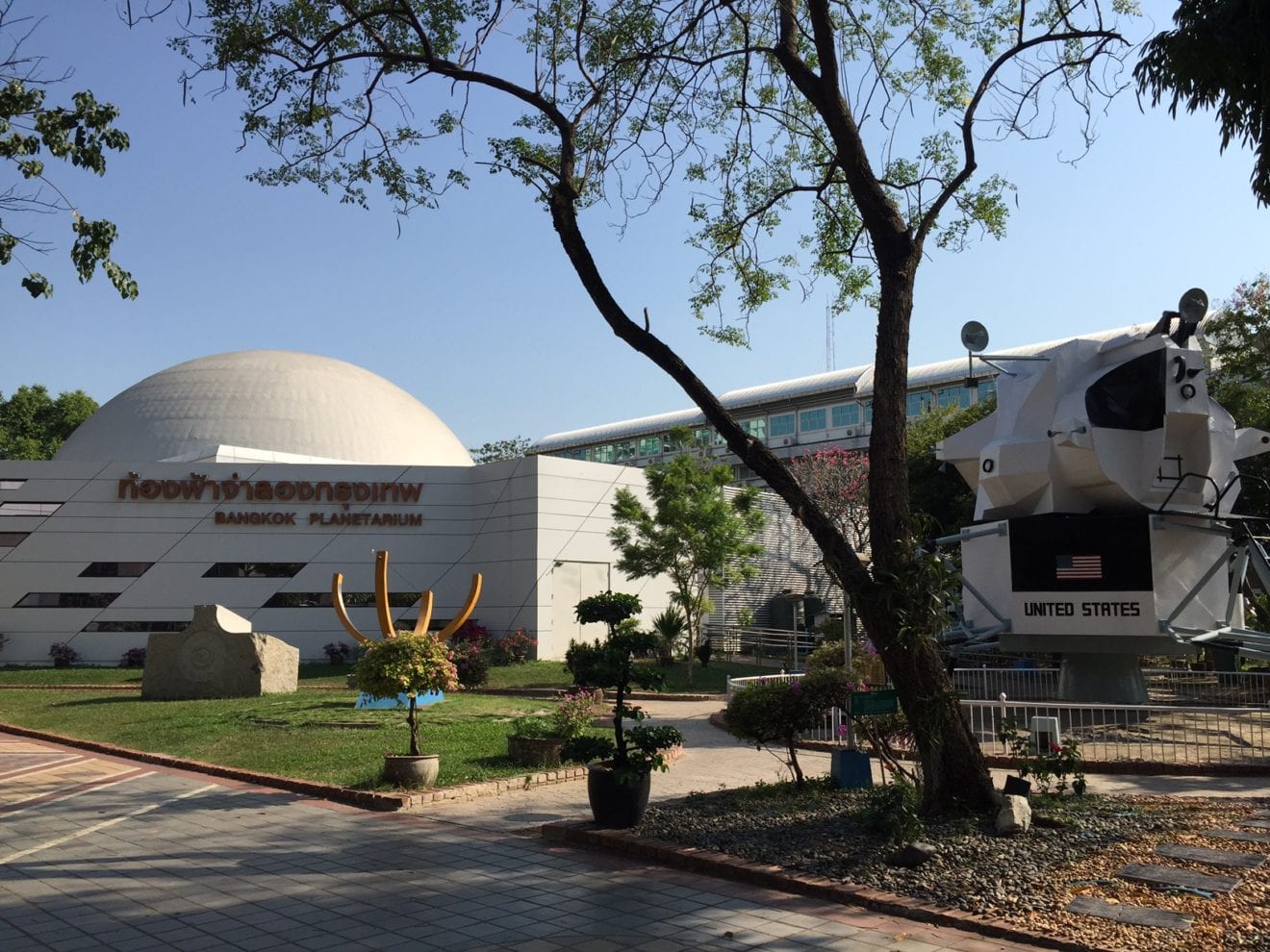
    After eight months of renovation, Thailand’s oldest planetarium will finally reopen its doors to the public on Jan. 5 at the same location on Sukhumvit Road.

    The old-fashioned semi-dome planetarium, which first opened its doors in 1964, has undergone a THB92 million refurbishment and upgrade including new digital projects, digital theater system and aurora-themed decor.

    Viewers can enjoy stargazing with the planetarium’s new custom-built fish-eye lens, high-definition 360-degree visuals and 5.1 surround sound.

    1_44

    The opening ceremony will take place on Jan 5, and visitors (both Thais and foreigners) will get free admission until Jan. 9. After that, admission prices will be as before: THB20 for students and THB30 for adults.

    It’s unclear when English-language shows will be held for non-Thai speakers, although before the refurbishment they took place every Tuesday.

    The Bangkok Planetarium is located at the National Science Centre for Education, which is just a short walk from BTS Ekkamai.

  • Don Mueang to reopen terminal 2 on Christmas Eve

    Don Mueang to reopen terminal 2 on Christmas Eve

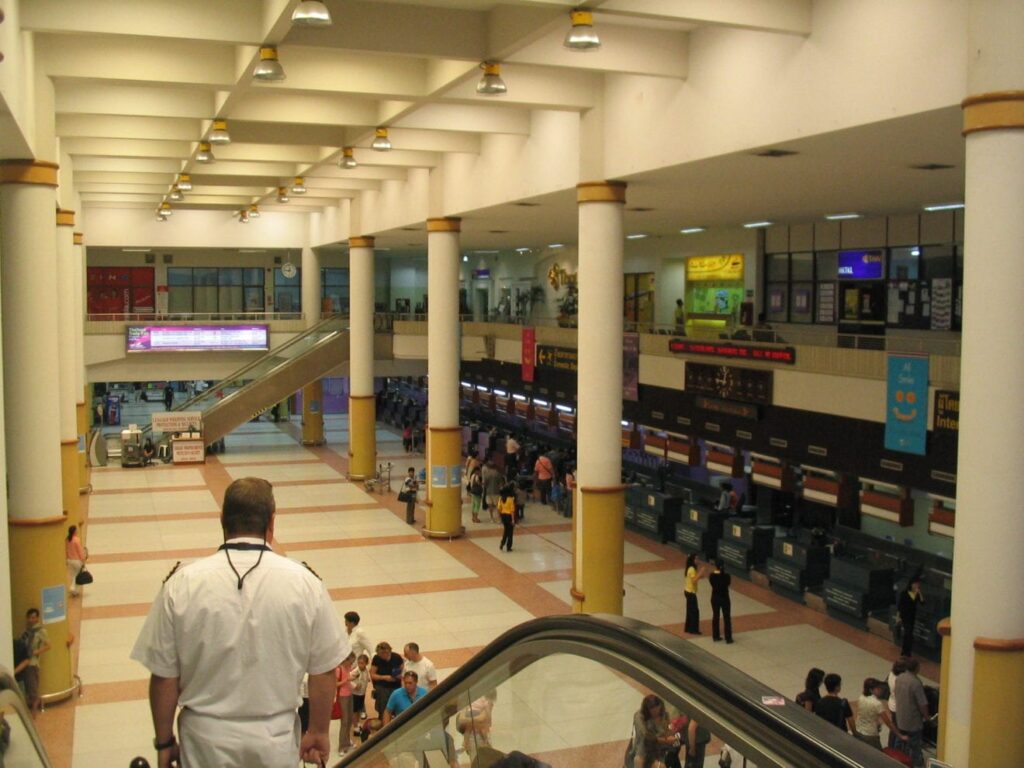
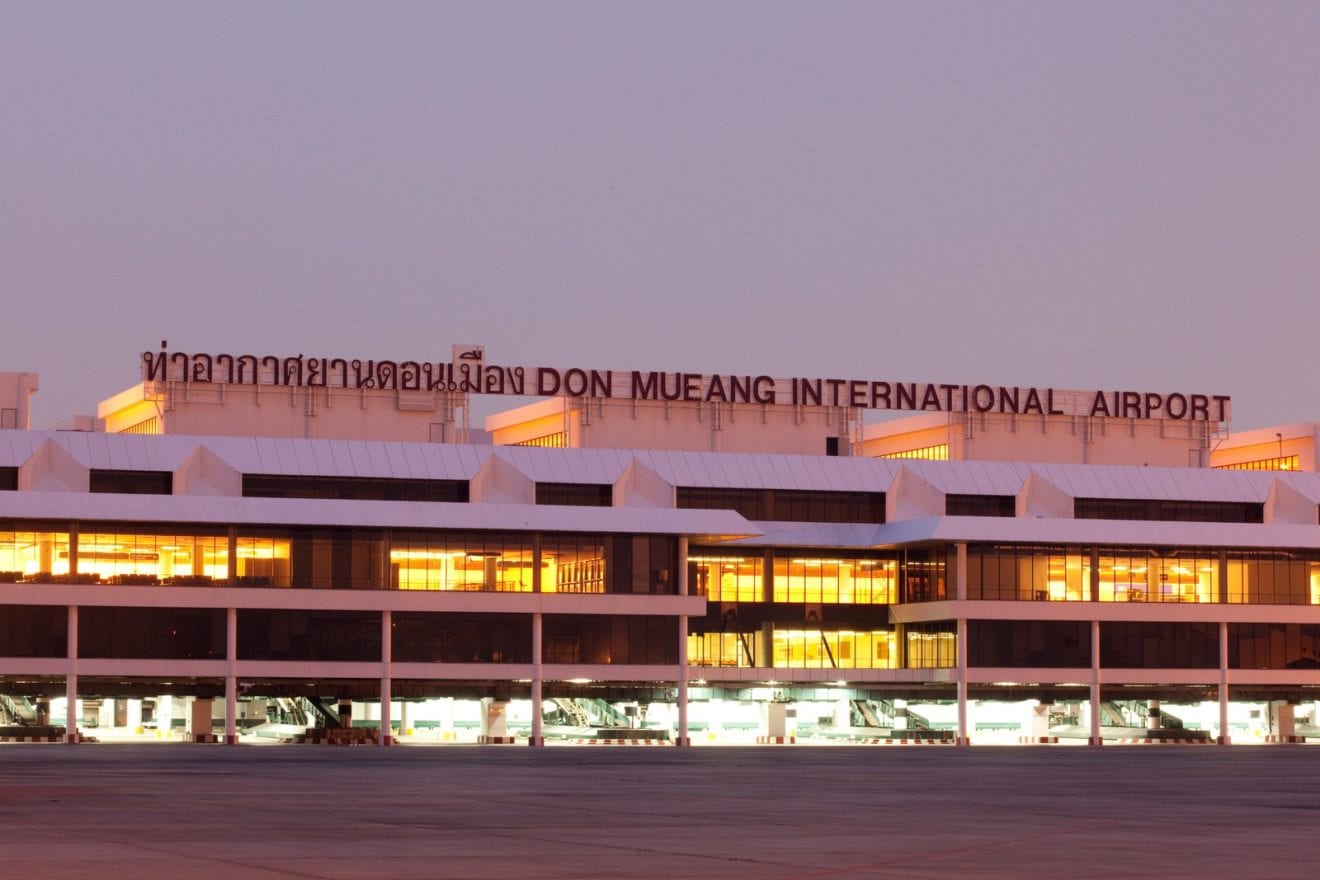
    Don Mueang International Airport, Bangkok’s hub for low-cost airlines, will reopen its newly renovated Terminal 2 for domestic flights on Christmas Eve.

    Due to the popularity of the budget airline service, Terminal 2 was put into renovation to improve the situation and to also ease the crunch on low-cost flyers. It is expected to serve up to 70% of domestic travel during the New Year holiday.

    Terminal 1 will continue to serve international flights but will soon undergo renovation as well.

    Don Mueang was initially closed down when Suvarnabhumi Airport was opened, but after Suvarnabhumi experienced overcrowding and service issues, Don Mueang was eventually put back into operation.

    1_45

    Don Mueang now accommodates between 80,000 and 110,000 passengers daily, and the newly added terminal will enlarge capacity from 18.5 million  to 30 million passengers annually.

    The airport has also recently launched a 33-seat Airport LimoBus Express on Nov. 27 which has free Wi-fi and takes travellers to the city center.

  • Thais taking firm steps towards Vietnamese market

    Thais taking firm steps towards Vietnamese market

    VietNamNet Bridge – The business fields that Thais have poured money to in Vietnam – infrastructure, building materials, retail, consumer goods, food and automobiles – are all fields with great potential.

    MAF’s research team, in its latest report, pointed out that the merger and acquisition (M&A) in 2015-2016 will still focus on consumer goods, finance & banking, real estate and retail. However, the investors from Thailand will be the major buyers.

    Thai investors have many reasons to come to Vietnam. It is not only a large market with increasingly high demands, but also serves as a ‘jumping board’ for them to access neighboring markets.

    In the retail sector, Central Group in early 2015 spent $100 million for a 49 percent stake of Nguyen Kim, a home appliance distribution network, and announced a plan to turn the network into the leading distribution chain of its kind in South East Asia.

    Commenting about Thai investment strategy, a branding expert said Thais have been following a professional investment strategy based on their knowledge about local culture and habits.Meanwhile, Berli Jucker stirred up the public with the announcement about taking over Metro Cash & Carry Vietnam at $879 million. Prior to that, BJC bought Family Mart and 65 percent of Vietnamese Phu Thai Group.Central Group plans to open 50 Nguyen Kim shops by 2019, twice as many as the existing number of shops. Prior to that, Central Group established Robins, a high end retail chain in Vietnam.

    The investors have drawn up clear roadmaps for penetrating the Vietnamese market: they know well when and what they should do to acquire Vietnamese businesses – an important move in their plan to conquer the Vietnamese market.

    The branding expert also noted that the Thai capital flow to Vietnam comprises capital from billionaires with Chinese origin.  Charoen Sirivadhanabhakdi, the owner of ThaiBev, BJC and TCC Holdings, and Dhanin Chearavanont, chair of CP Group, are of Guang Dong origin. Meanwhile, the Chirathivat family which owns Central Group, is of Hainan origin.

    Thai investors are mostly targeting most important and potential business fields in Vietnam.

    The retail sector, for example, is predicted to have annual growth rate of 15 percent with  total revenue of $97 billion by 2016, according to Economist Intelligence Unit. Meanwhile, CP Vietnam has been succeeding in the animal feed market worth $6 billion a year, and the animal meat market worth $18 billion.

    Thai investors, who have powerful financial capability, tend to take shortcuts to Vietnam by acquiring Vietnamese leading enterprises. SCG, after buying Prime Group, now controls Vietnam’s building material industry with 20 percent market share. The investments in two Vietnamese leading plastics manufacturers – Binh Minh and Tien Phong Plastics – promises to help SCG cement its position in the industry.