Tag: Thailand

  • Tesco profits ups as turnaround kicks in

    Tesco profits ups as turnaround kicks in

    UK supermarket Tesco has managed to turnaround several years of lacklustre results, booking a pre-tax profit of £1.3 billion (AUD$2.38bn) for the year ended 24 February, up 795 per cent.

    The grocery giant’s shares jumped almost 6 per cent in the UK overnight on the figures, which included a 2.2 per cent increase in like-for-like sales in its home market and a 29.6 per cent reduction in net debt.

    “This has been another year of strong progress, with the ninth consecutive quarter of growth. More people are choosing to shop at Tesco and our brand is stronger, as customers recognise improvements in both quality and value,” Tesco chief executive Dave Lewis, who was appointed in 2014 to turnaround the business, said.

    “We have further improved profitability, with Group operating margin reaching 3.0% in the second half.  We are generating significant levels of cash and net debt is down by almost £6bn over the last three years.  All of this puts us firmly on track to deliver our medium-term ambitions and create long-term value for every stakeholder in Tesco.”

    There are now 260,000 more people shopping at Tesco, driving group revenue up by 2.3 per cent to £51 billion (AUD$93.18bn).

    Sales increases were booked in all Tesco’s operating region’s bar Asia, where LFL sales worsened over the year, decreasing by 14 per cent in the fourth quarter.

    The business has now completed its £3.7 billion (AUD$6.76bn) acquisition of wholesaler Booker and has begun improving its top line growth, leaving it on track to deliver at least £200 million (AUD$365m) in pre-tax synergies.

    “I am delighted to have completed our merger with Booker, and we are moving quickly to deliver synergies and access new growth, making the most of the complementary skills in our combined business,” Lewis said.

    Tesco reiterated its commitments set out in October 2016 to reduce costs by £1.5 billion (AUD$2.74bn) and generate an additional £6.3 billion (AUD$11.51bn) in retail cash from operations while also improving margins between 3.5 per cent and 4 per cent by 2019/20.

    Tesco’s operating margins increased by 57 basis points year-on-year to the year ended February 24 to 2.9 per cent.

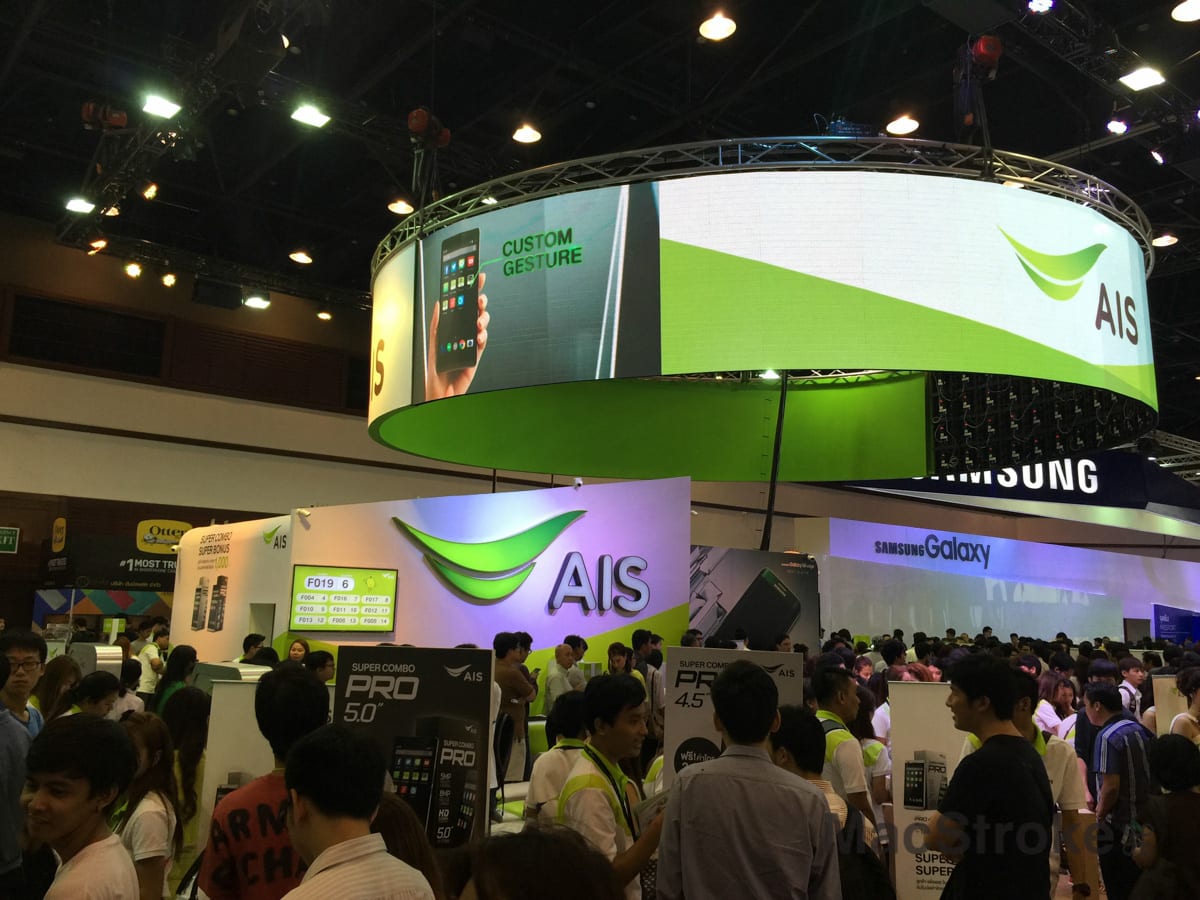
  • NBTC backs down on financial relief for AIS, True

    NBTC backs down on financial relief for AIS, True

    Thai telecoms regulator NBTC has backed down on its recommendation of providing financial relief for mobile operators AIS and TrueMove in the face of criticism from academia and the public sector.

    The regulator will no longer support a plan to provide relief from the operators’ 900-MHz license payment obligations.

    The ultimate decision will be down to the National Council for Peace and Order (NCPO) and the government, but the NBTC will not oppose a plan that would ease the financial burden of digital TV operators but leave 900-MHz license winners out.

    AIS and TrueMove both petitioned the NCPO in September requesting assistance in easing their license payment terms. The NBTC had drawn up a proposal to grant five year extensions for the payments of the final 900-MHz license payments, but the proposal was controversial.

    TrueMove noted that the winning prices of the 2015 900-MHz spectrum auction were six times higher than the reserve price and the highest in APAC, and has warned that without financial relief the company will have limited capital for investment in services including 5G and the IoT. The company could also be hampered in its participation in the upcoming 1800-MHz auction.

    AIS has likewise argued that relaxing the 900-MHz payment scheme would allow the company to invest in expanding and upgrading its mobile network, benefiting consumers.

  • ShopBack Thailand Announces Partnership With Shopee

    ShopBack Thailand Announces Partnership With Shopee

    ShopBack, the biggest online Cashback platform connecting retailers and consumers, is partnering with Shopee, the leading e-commerce platform in Southeast Asia and Taiwan, in response to Shopee being the top-requested merchant by ShopBack customers. This strategic collaboration is set to enhance the ShopBack shopping experience, broaden the range of brands available and provide Shopee users up to a whopping 6.5% Cashback on their purchases.

    Since ShopBack’s launch in Thailand in July 2017, demand has been high, with shopping trends revealing that Thailand is leading the way in online retail therapy.  Top favoured products by Shopback users include health and beauty products and electronics – two of Shopee’s leading categories. Interest in these categories is growing and ShopBack has experienced huge buying peaks during big online sale events, with a 10 times increase in purchases – another reason why the ShopBack-Shopee partnership is destined to capture more of the online market.

    Now, ShopBack fans can click on the Shopee logo on the ShopBack app, and conveniently shop millions of products on Shopee, while earning Cashback as they spend on their favorite products. New Shopee users can enjoy a special 6.5% Cashback rate while existing Shopee users can also benefit from a 2.5% Cashback rate on the purchase price of Shopee goods. The Cashback will be paid directly to users’ bank accounts, allowing for greater convenience.

    Kawin Prachanukul, Country Head of ShopBack Thailand explains how important the relationship with Shopee is, “The success of ShopBack is that we give power to consumers, not only by giving them Cashback for their loyalty and their custom, but also by listening and responding to the platforms, brands, and types of products they want. They want Shopee and now they’ve got it. ShopBack has experienced a great milestone in Thailand with over 1,300 merchants, over 4 million users and around 1,000 orders per hour.”

    Agatha Soh, Head of Marketing at Shopee, said, “We look forward to working closely together with Shopback to provide a great online shopping experience for users all across Thailand, and to further drive the growth of the Thai e-commerce industry.”


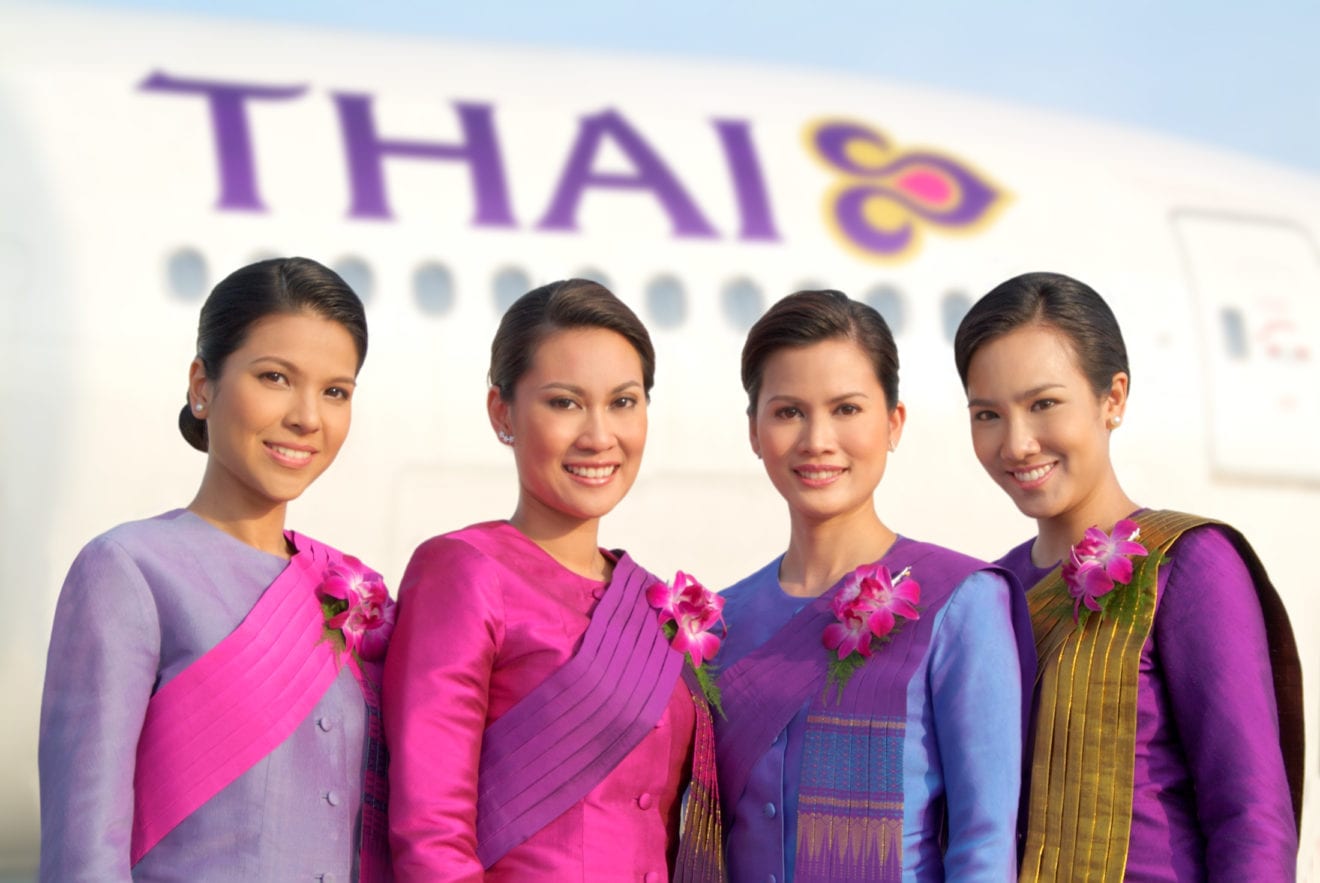
  • Thai Airways ban obese flyers and young kids from business class on new Dreamliner

    Thai Airways ban obese flyers and young kids from business class on new Dreamliner

    The ban was explained on Friday by the airline’s director of security and flight standard division, Flight Lieutenant Pratthana Pattanasirim. Thai Airways received two new 787-9 Dreamliners in September, which included brand new Zodiac Cirrus seats for their Royal Silk business class in a more spacious 1-2-1 configuration.

    The seats convert to a fully flat bed and allow privacy and direct aisle access.

    In accordance with the US Federal Aviation Administration, the seats have been installed with new airbag systems and safety belts, which cannot accommodate passengers with a girth wider than 56 inches (142.24 centimetres).

    This also rules out parents flying with young children seated on their laps, who will now be forced to fly cattle class on the Bangkok to Auckland and Taipei routes the new Dreamliners operate.

    The new Boeing 787-9 planes were introduced to bring the most technologically advanced aircraft  to its fleet for passenger comfort, and to open up opportunities to fly new long distance, non-stop routes to destinations such as North America.

    This is in addition to their existing fleet of Boeing 787-8s (slightly smaller than the 787-9s) and Airbus A350s (a direct competitor to Boeing’s Dreamliner) – which operate on flight routes to Europe, Melbourne and Singapore.

    Of course, this is not the first time international airlines have sidelined overweight passengers.

    In 2013, Samoa Air was the world’s first airline to charge passengers according to their weight. The now defunct airline asked passengers for one Samoan tala –around 55 cents – for each kilo that they were bringing aboard (including luggage). Samoa has one of the highest rates of obesity in the world, with nearly three quarters of its adult population considered obese.

    Hawaiian Airlines also introduced a new policy for those flying to or from Pago Pago, American Samoa’s capital, whereby passengers were no longer allowed to choose their seats online and were subject to weighing before boarding, so that the airline could redistribute weight in its cabins accordingly.

    The enforced weigh-in was made after the airline discovered their fuel burn on Pago Pago flights were consistently much higher than projected, indicating their estimated weight for the flight route was inaccurate.

    In late 2017, Finnair began weighing their boarding passengers as they believed the average weight estimates from the European Aviation Safety Agency (EASA) – a report compiled nine years ago – were off.

    The EASA estimates the average male weighs 84.6 kilograms, and the average female 66.5 kilograms. Yet average weights for the Finnish population tend to be slightly higher at 85 kilograms for males and 70 kilograms for females.

    So Finnair set about conducting its own report, surveying 2000 voluntary passengers to gain more current figures on passengers’ weight.

    To estimate how much fuel is required for a flight, airlines must know the weight its aircraft carries.

    The heavier the plane, the more expensive the flight, but safety is an important factor too as planes have a maximum take-off weight.

    The new seats in business have been installed with new airbag systems and safety belts, which cannot accommodate passengers with a girth wider than 142.24 centimetres.

  • Fendi Thailand has launched two pop-up stores in Bangkok

    Fendi Thailand has launched two pop-up stores in Bangkok

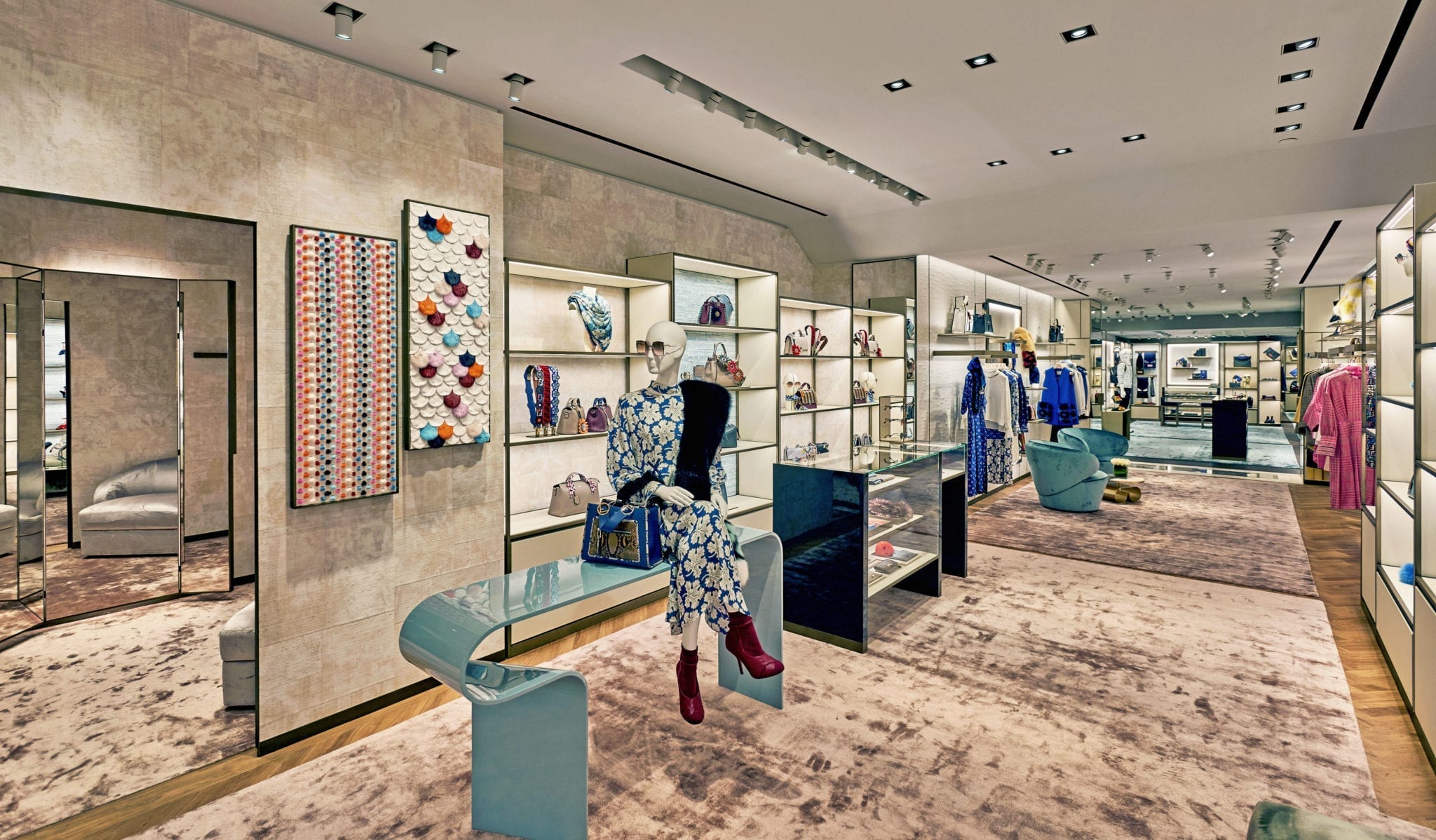
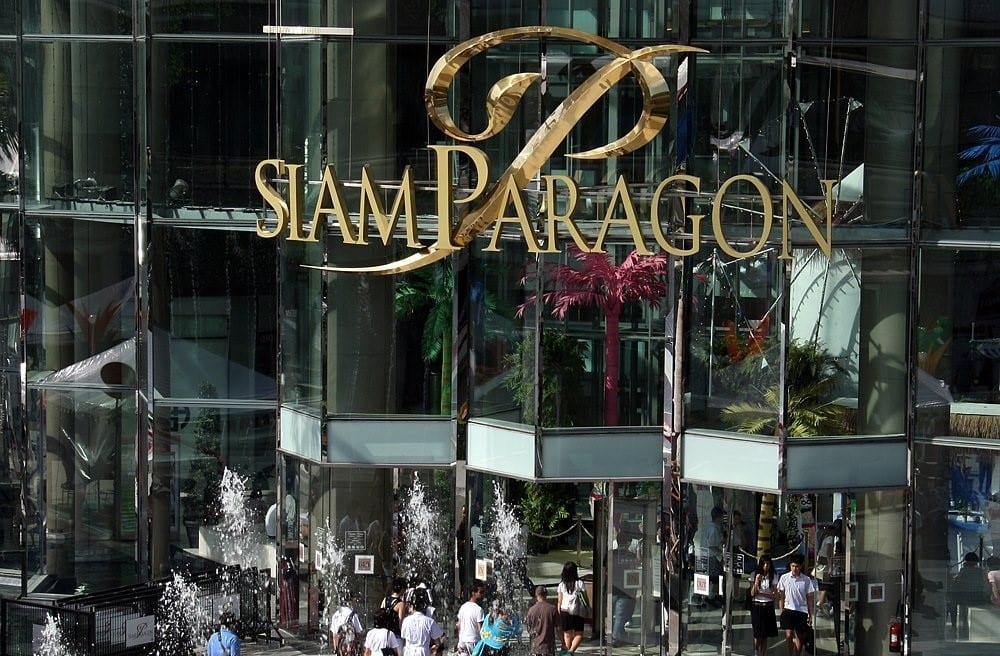
    Fendi Thailand has launched two pop-up stores in Bangkok’s Siam Paragon. Its concept is a luxurious reinterpretation of the Roman-style vintage newsstands typical of piazza in the heart of Rome. One kiosk is dedicated to the label’s spring/summer women’s collection while the other puts its focus on the men’s collection. Both outlets feature ready-to-wear, leather goods, small leather goods, accessories and shoes.

    To mark the launch of the pop-ups, Fendi hosted a Roman-inspired cocktail party with special guests including Chontida Asavahame, Mai Davika, Nattarat Nopparuttayaporn, Note Panayangkool, Pasakorn Vanasirikul, Sonya Singha, Sorawis Saengvanich and Violette Wautier.

    Included in the men’s collection are everyday Fendi items including illustrations done by British artist Sue Tilley. Items include a glossy red corkscrew, an antique set of keys, leaky bathroom taps, a plastic rotary telephone and a desk lamp.

    The kiosks will be active until June.

  • iPrice Thailand is profiling online shoppers

    iPrice Thailand is profiling online shoppers

    Thai online shoppers are most active before leaving the office or school, according to research from online shopping startup iPrice Thailand.

    Based in Kuala Lumpur, iPrice has a presence in seven markets across Asia and aims to uncover important e-commerce metrics from the perspective of thousands e-commerce practitioners, highlighting the differences and similarities in each market.

    Its research draws on its proprietary data from more than 1000 e-commerce players in Indonesia, Malaysia, Philippines, Singapore, Thailand and Vietnam.

    For Thailand, mobile traffic is the second-highest in Southeast Asia, where mobile traffic has grown by an average of 19 per cent in the past 12 months to now account for 72 per cent of overall e-commerce web traffic.

    Indonesia leads the field, accounting for 67 per cent in the third quarter of 2016 and 79 per cent in the second quarter last year.

    Therefore, mobile e-commerce traffic accounts for more than 70 per cent of overall web traffic, while desktop traffic is less than 30 per cent.

    Meanwhile, Thailand’s conversion rate is lowest in Southeast Asia (conversion rate is the percentage of website visits that result in a product purchase). Along with the Philippines, Thailand’s conversion rates are 20 per cent lower than average.

    The comparison between mobile and desktop conversion rates shows that mobile is 1.7 times higher on average. For Thailand, the desktop conversion rate is 1.3 times higher than mobile. However, there is an increasing trend of mobile e-commerce traffic.

    Thai basket size is fourth among the six countries in the study. This metric measures the average total amount spent for every order made by customer over a defined period of time. Singapore has the highest basket size of $91, with a GDP per capita of US$90,530; on the other hand, Vietnam was the lowest with a basket size of $23 and a GDP per capita of $6880. Thailand’s basket size is in the middle with the value of $42 and a GDP per capita of $17,000.

    On average, the basket size on desktop is slightly higher than the basket size on mobile. In Thailand, desktop conversion rate is 1.3 times higher than mobile, which implies that people in Thailand prefer using desktops over mobile phones when buying online.

    Also, Wednesday shows the highest peak in online shopping in Thailand. Taking Monday as a base value, e-commerce merchants have an increase in conversion rate on Wednesdays of up to 15 per cent, but it dips up to 30 per cent over weekends, which is consistent across the region. For Thailand, the Wednesday conversion rate increases 8 per cent above the average while the weekend conversion rate drops 19 to 22 per cent.

    For Thailand, orders increase in volume up to 53 per cent at 11am and reach up to 69 per cent at 3pm. A dip in conversion rate is noted across all countries between 5pm and 7pm.

    Bank transfer and offline POS are among popular payment methods in Thailand.

    Credit cards are used for 90 per cent of payments, but the credit-card transaction rate in Thailand is relatively low at 6 per cent, which is below the average of 9 per cent in Asean countries, according to Global Findex database 2014.

    To work around this issue, Thai e-commerce companies offer alternatives. For example, 81 per cent offer a bank transfer option such as ATM, making the country rank third in Southeast Asia. Also, 46 per cent of e-commerce sellers offer offline POS such as counter service at 7-11, ranking Thailand second place when it comes to frequency of using this type of payment.

  • Paragon dip hits SPH Reit income

    Paragon dip hits SPH Reit income

    Lower revenue at Paragon mall hit net property income for SPH Reit Management for its second quarter to the end of February.

    The return of S$42.2 million (US$32 million) dipped 1.1 per cent from the same period last year. This reflected a rental reversion of -7.1 per cent for new and renewed leases at Paragon in the first half, mainly because of negotiations during the retail sales downturn since 2014. The decline was more moderated in the second quarter, says SPH.

    There were only three changes in tenancies at Clementi Mall, representing 1.4 per cent of the mall’s net lettable area.

    However, tenant sales have grown in the malls in tandem with the recovery in retail sales since June. Both properties also continued their track record of full occupancy.

    “In keeping with our philosophy of treating tenants as business partners, we work closely with them to ride through both cyclical and structural challenges in the retail environment,” says SPH Reit Management CEO Susan Leng.

  • SookSiam centrepiece for IconSiam Thailand

    SookSiam centrepiece for IconSiam Thailand

    IconSiam will showcase the best products, services and artistic creations from Thailand’s 77 provinces in a single exciting destination when the massive THB 54 billion (US$1.7 billion) riverside landmark development opens later this year.

    Called SookSiam, the retail space will take up 15,000sqm of the ground floor of the massive shopping destination being built on the banks of the Chao Phraya River.

    The THB 700 million (US$22.4 million) SookSiam is expected to attract 21.9 million visitors, annually, and introduce a new retail concept to Thailand which IconSiam calls “co-creation”.

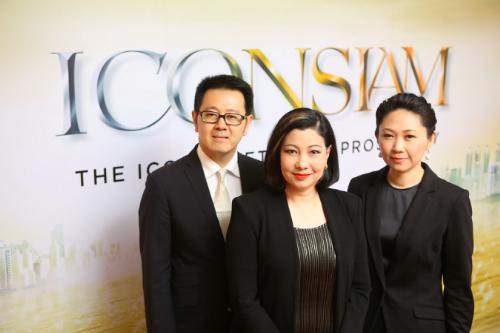
    Chadatip Chutrakul, IconSiam director and Siam Piwat CEO, promises SookSiam will be “an immersive, emotional and entertaining” drawcard to the mall.

    “It is a part of IconSiam’s commitment to bring all that makes Thailand great to the world’s attention. It will help small enterprise owners, artisans, artists, and performers who are local heroes from around the country access a globally visible, omni-channel platform on which to showcase their creations and become integrated into a greater commercial ecosystem. This will help local heroes become national heroes and global heroes,” she says.

    “SookSiam is conceived as a place that will present the cultural heritage of the four main geographic regions of Thailand, capturing their arts, handicrafts, performing arts, and local wisdom. Within SookSiam are outlets of varying types that are built in the style of their respective regions, and which offer regional specialties, whether they be crafts, foods, beverages, or services that are unique to that region.

    “We have layered on top of this a completely new, emotional dimension by letting visitors experience the stories behind everything they see, and we let them know about the people involved with each place, product, and service at SookSiam. It makes the offerings at SookSiam exciting and meaningful, and the destination very much more engaging because of the deeper knowledge that visitors will have about all that is around them,” says Chutrakul.

    Local builders drawn from each region will construct SookSiam and more than 200 artists have been commissioned to decorate it.

    “Their involvement in the creation of the regional zones has been the key to making the entire destination impeccably faithful to the artistic heritage of the localities and in a way that could only be done by a truly local person,” she says.

    Authenticity key

    “What’s never been done before and what makes SookSiam truly unique is its authenticity.

    The outlets at SookSiam are real stores that all also exist in towns and villages around Thailand and which have been transposed into SookSiam. They are small mom-and-pop operations that are famous in their localities but which have never had a chance to present themselves to a wider national or global audience. They are stores with real, extraordinary stories and real, multi-generational legacies that are rooted in their respective local communities,” says Chutrakul.

    “SookSiam is like a window into every province and into every corner of Thailand. People can see, feel, and experience with their every sense the true heart and soul of each locality.”

    She believes the destination will help every Thai and foreign visitor connect with and admire products, recipes and artistic creations that are the result of dedication and accumulated knowledge built up through generations.

    “Because of this, the destination has an emotional dimension that comes from the lives and life stories behind everything present at SookSiam. It is a very moving experience because it honours the heritage of so many great people who have been a living part of our culture and of Thainess, but who have been hidden from view. Nothing like this has ever been done in Thailand before,” she says.

    SookSiam is being produced and curated by Luckana Naviroj, who is known for her expertise in sourcing authentic products and foodstuffs from around Thailand.

    Naviroj said the outlets in SookSiam all have a real counterpart in small towns in Thailand, and that many of them are enterprises that have been operated by several generations of the same family.

    “We travelled the entire country to find these unique shops, artisans, and artists, and invited them into SookSiam, which will serve as an extraordinary platform onto which people – the “local heroes” from around the country – can place their talents and products, and draw global attention as well as expanded sales opportunities, 365 days a year.

    “Thai and foreign visitors to SookSiam will have the opportunity to experience or purchase some genuinely exciting and special offerings which have been hidden away in towns and villages around Thailand,” she says.

    Preserving the nation’s heritage

    Naviroj says helping these small operators will help preserve Thailand’s cultural heritage and the rapidly disappearing Thai way of life.

    “SookSiam offers a platform that will help the next generation turn their legacies into bigger enterprises that can challenge and reward them enough for them to continue in their families’ proud traditions while preserving Thailand’s priceless cultural heritage at the same time.  Without an opportunity to expand their businesses and become part of a greater commercial ecosystem, or for artists and artisans to attract more sponsors, the next generation will, almost certainly, abandon their occupations and turn to new sources of employment leading to the loss, forever, of our cultural heritage and the way of life that has defined what it means to be Thai.”

    Co-creation initiative

    Meanwhile, Chutrakul says SookSiam is the first example of a new retail approach called “co-creation” around which the entire IconSiam development is designed.

    “Everyone involved with IconSiam, whether they be outlets selling products, or designers and artists showcasing their creations, are an inseparable part of our business model and our design and development process. IconSiam is being created in collaboration with thousands of tenants and other partners. SookSiam represents that co-creation concept perfectly because everything special being presented at SookSiam is actually created by someone somewhere else in Thailand. We ‘co-create’ with them by adding our knowledge of consumer preferences and supporting them with innovation as well as retailing and marketing techniques based on our insights into the needs of Thai and foreign visitors. We also assist them in ‘curating’ the selection and presentation of their offerings at SookSiam, all in a way that is consistent with the government’s Thailand 4.0 program to help people add value to their intellectual property and proprietary skills,” she concludes.

    IconSiam will open in the last quarter of this year.

  • Alibaba to set up Thai logistics centre, extend local investments in Southeast Asia

    Alibaba to set up Thai logistics centre, extend local investments in Southeast Asia

    Alibaba is in talks with the Thai government to set up a logistics centre in the country as part of its aggressive expansion into the Southeast Asia region, bringing the company a step closer to fulfilling founder and executive chairman Jack Ma Yun’s dream of empowering small companies to trade globally.

    According to a report  on Monday, Thailand’s Industry Minister Uttama Savanayana said that Alibaba plans to set up the logistics centre in Chachoengsao, one of the three provinces the government hopes to develop into a leading economic zone in the region as part of its flagship Eastern Economic Corridor scheme.

    The plans for a Thailand-based logistics centre is Alibaba’s latest move in Southeast Asia’s burgeoning e-commerce landscape, following a recent US$2 billion additional investment into e-commerce firm Lazada and last year’s joint establishment of an electronic trading hub with the Malaysian government.

    Southeast Asia boasts more than 370 million internet users as of January 2018, according to a recent “Digital in 2018 in Southeast Asia” report by We Are Social and Hootsuite. With the majority of its internet users going online with their mobile devices, as well as a growing middle class population eager to spend money online, Southeast Asia represents a lucrative region for e-commerce companies.

    Alibaba wants to use Thailand as a logistics base for e-commerce not just to link small and medium enterprises from Thailand, but also Cambodia, Laos, Myanmar and Vietnam to the global market, Uttama said.

    Calls made to Thailand’s Industry Ministry went unanswered.

    When reached, an Alibaba spokesperson said that the company is firmly established in Southeast Asia and understands the needs of local businesses and consumers.

    “Our focus for the region is to drive partnerships with merchants, offering them access to new customers and markets, enabling SMEs as drivers of economic growth and foster hassle-free trade and e-commerce across borders,” the spokesperson said, without elaborating on its Thailand plans.

    In March last year, Alibaba made the first move in linking Southeast Asia e-commerce trade with the rest of the world by setting up a trading and logistics hub in cooperation with the Malaysian government, as part of an electronic world trade platform that is expected to become a modern version of the ancient Silk Road trade route.

    The Malaysian “e-hub” comprises a regional logistics centre and an accompanying electronic platform that will help facilitate cross-border trade for SMEs.

    Alibaba’s additional injection of US$2 billion into Lazada last week also takes its total investment into the Singapore-based e-commerce platform to US$4 billion, as it seeks to carve out market share and compete with regional rivals such as Sea’s Shopee and Singapore-based Zalora. Alibaba also appointed Lucy Peng, executive chairman of its financial affiliate Ant Financial, as new chief executive of Lazada.

    In Singapore, Alibaba has also set up a joint research institute in conjunction with Singapore’s Nanyang Technological University to develop artificial intelligence technologies that can help tackle issues from ageing societies to urban transport.

  • Anant Kaewruamvongs to take helm at Thaicom

    Anant Kaewruamvongs to take helm at Thaicom

    Asian satellite operator Thaicom Public Company Limited (Thaicom) has appointed Anant Kaewruamvongs as chief executive officer and director of the board, effective May 1.

    Anant takes over from Paiboon Panuwattanawong, who resigns from his positions as director, member of the executive committee and CEO, after severing Thaicom for over 25 years.

    Commenting on the appointment, Thaicom chairman Prasert Bunsumpun said [PDF] Anant “is the right person to lead and move Thaicom forward.”

    “The Thaicom board of directors and I welcome Anant Kaewruamvongs as new CEO. We believe his extensive experience makes him the ideal candidate to lead the company as we navigate through the next stage of growth and diversification of our business,” said Prasert, who took over as chairman at Thaicom in March.

    He said Paiboon’s contributions and dedication to Thaicom and the Thai satellite industry have been “immeasurable”.

    “We would like to thank Mr. Paiboon for taking on the challenge as CEO and for steering the company to new horizons. He and his leadership team have successfully embarked on a difficult restructuring process of our business and organization during difficult times for the satellite industry and Thaicom,” Prasert said.

  • TrueMoney Wins Payment Services License in Vietnam, Launches TrueMoney Wallet

    TrueMoney Wins Payment Services License in Vietnam, Launches TrueMoney Wallet

    TrueMoney Vietnam (“TrueMoney”), part of Southeast Asian Fintech company Ascend Money, has obtained the Intermediary Payment Services License from the State Bank of Vietnam to operate digital financial services in e-money, e-payment, wireless transfers, and payment gateways. TrueMoney is processing over one million transactions per month, with 500,000 customers a month transacting with TrueMoney agents and TrueMoney Wallet.

    Tanyapong Thamavaranukupt, President of Ascend Money, said, “Winning the license to operate digital financial services cements our presence in Vietnam, an important market for Ascend in our expansion throughout Southeast Asia. This means TrueMoney is now able to deploy a broad range of safe, affordable and convenient digital money solutions to Vietnam’s population of 90 million. In particular we hope to provide equal access to financial services for the unbanked.”

    Consumers can now use TrueMoney Wallet to make online purchases, pay bills and top up their pre-paid mobile and gaming cards, as well as to transfer money from their bank accounts to the digital wallet and from their wallet to other wallets. Offline and online merchants can use TrueMoney’s system as a payment gateway. Companies will soon be able to disburse payroll to their employees via TrueMoney Wallet.

    TrueMoney has a network of over 5,000 agents across 40 provinces in Vietnam. Agents are small business owners who conduct financial services for customers, enabling the largely underserved Vietnamese population to access fast and easy services such as top-up and bill payment near their location. TrueMoney Vietnam will soon offer additional financial services such as loans and insurance, in the second quarter of 2018.

    Vietnam has one of the lowest banking penetration rates in the region, with only one third of the population having an account with a formal financial provider, compared to the regional average of 69%.

    “While Vietnam has the potential to surpass China in GDP growth by 2020, the country urgently needs to connect its people and businesses to financial services, to reap the benefits of inclusive growth. As Southeast Asia’s fastest growing mobile commerce market, as well as one of its largest unbanked populations, Vietnam poses a key opportunity for TrueMoney to innovate and scale,” Tanyapong continued.

    TrueMoney, an e-payment and financial services provider for digital and unbanked consumers, is the only Fintech company with e-money licenses to operate financial services in Thailand, Myanmar, Indonesia, Cambodia, Philippines, and Vietnam. Across Southeast Asia, Ascend Money has reached over 35 million customers in 2017 and aims to reach 100 million customers by 2020.

    Vietnam, along with the Philippines, Indonesia, and Myanmar, has been identified by the World Bank as among the top 25 countries to focus strategic efforts on financial inclusion. According to the World Bank, in 2014 Vietnam had the lowest credit card usage in Southeast Asia, and only 50 per cent of the debit cards in circulation were in use.

    Tanyapong added, “The blurred lines between the unbanked and the underbanked—those with formal access but limited engagement—points to the need for not just access to bank accounts, but the regular use of banking in the daily lives of the population. This means that digital financial services can reach a much larger segment of the population if delivered through a comprehensive platform—addressing not just the need for a digital wallet, but also broader daily needs of merchants and users to transition from offline to online payment methods seamlessly. By strengthening the overall prevalence and convenience of e-money in daily life, Ascend Money plays a leading role in unlocking the potential of the digital economy in Southeast Asia for digital consumers and the underbanked alike.”

    Vietnam is the second country in the region to launch TrueMoney Wallet after Thailand. Following the successful roll-out of TrueMoney Wallet across Thailand in major retail outlets such as 7-Eleven convenience stores, with almost 10,000 branches nationwide, Ascend has continued to expand in markets that are among the region’s lowest in financial inclusion rates.

    TrueMoney Wallet was officially launched in Vietnam this year during the Lunar New Year with the TrueGift campaign, in which celebrities and users sent virtual red packets (hongbao) to their fans and friends to celebrate the special holiday.

    The Asian Development Bank estimates that bringing digital financial services to Southeast Asia’s unbanked population can boost the GDP of economies by as much as 6%.

  • Baan Ying heads Thai dining double

    Baan Ying heads Thai dining double

    Thai casual-dining restaurant Baan Ying and Dink Dink Thai Street Cafe, with the same owners, have opened at Royal Square Novena.

    Baan Ying has made a name for itself in Bangkok, where a family started the diner at Siam Square, encouraged by friends, 20 years ago. The original shop burned down after protests in the Thai capital in 2010.

    Now the group has a dozen restaurants, with Baan Ying outlets at Central World, Mega Bangna, Siam Centre, Siam Kitti, Silom Complex, Terminal 21 and The Promenade.

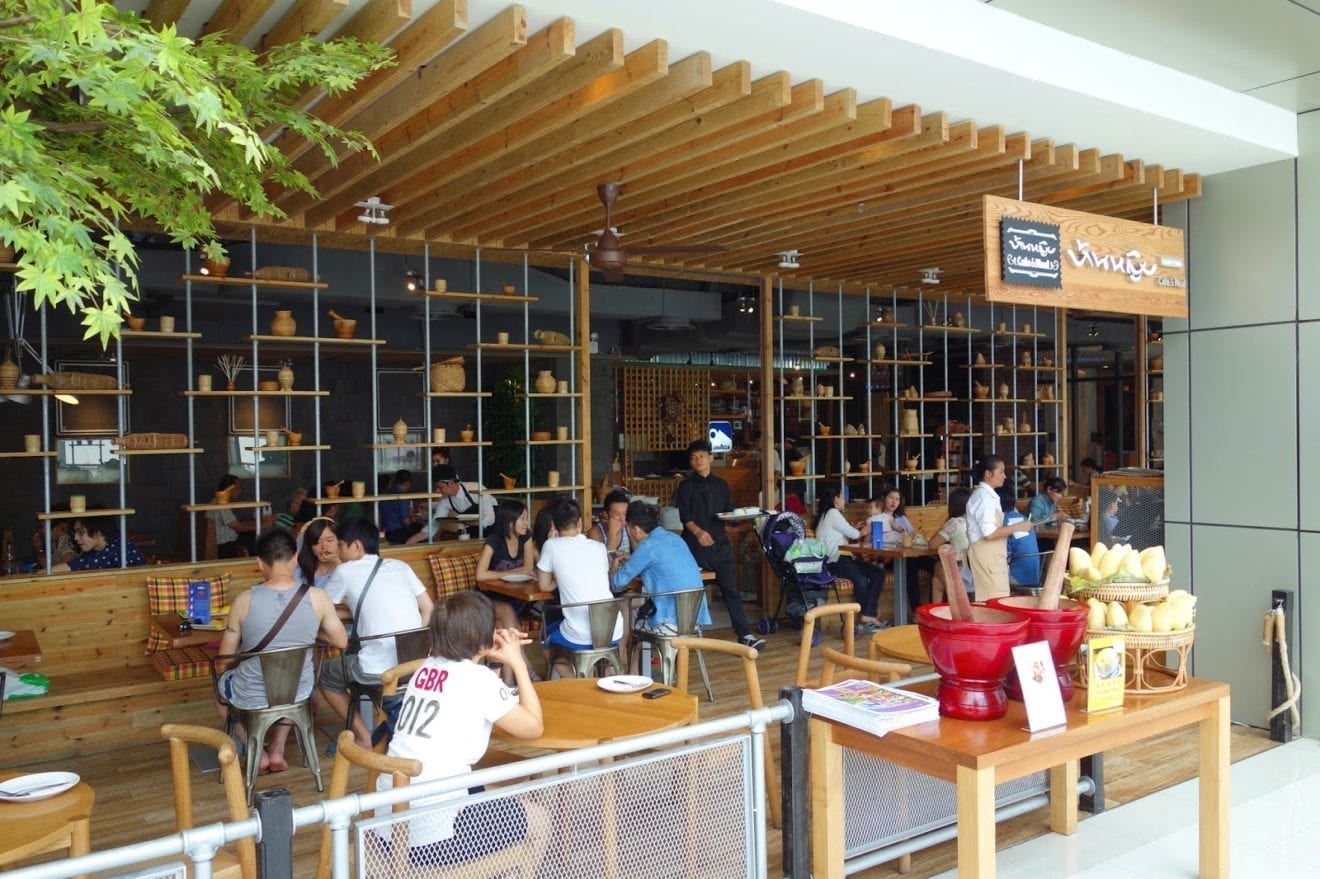
    For Singapore, the 126-seat Baan Ying has been opened in a bright space with tall ceilings, windows offering soft natural sunlight, light wooden furniture and greenery.

    Recommended items include the signature Baan Ying Omelette, Deep-Fried Sea Bass with Crispy Herbs, and Squid Stir Fry with Salted Egg.

    Downstairs on the first level of Royal Square Novena, Dink Dink Thai Street Cafe has a decor that echoes the streets of Thailand, with metallic tables and stools for the dine-in area. The menu offers noodles and toast dishes as well as drinks.

  • AEON together with Robinson make this summer cool ! The “Robinson Summer Holiday” campaign

    AEON together with Robinson make this summer cool ! The “Robinson Summer Holiday” campaign

    Mr. Praphan Rangsiyopas (2nd from left), Executive Vice President of AEON Thana Sinsap (Thailand) Public Co., Ltd. together with Mr. Anawat Sangkhasap (Left), Senior Vice President – Customer Strategy, Robinson Public Co., Ltd. welcome summer by launched a special promotion campaign “ROBINSON SUMMER HOLIDAY”. Exclusive for AEON credit cardholders, get up to 8,000 Baht cash back when spend through AEON credit cards at Robinson department store, and get 10 exclusive chances to win 1 Baht gold necklace 45 prizes, with a total value of 1 million Baht. The campaign start from now on until 23rd May, 2018 at 46 Robinson department store locations across the country.

  • NBTC reverses decision on 1800-MHz spectrum split

    NBTC reverses decision on 1800-MHz spectrum split

    Thai regulator NBTC has reversed a decision to split the 1800-MHz spectrum due to be reallocated in a spectrum auction into nine 10 MHz blocks.

    The regulator plans to revert to the plan to instead auction the spectrum in three 30 MHz lots.

    The about face was motivated by complaints from operators that the decision to carve the spectrum into 10 MHz blocks would hurt their long term business strategies, and to bring the upcoming auction in line with the two previous 1800-MHz auctions in 2015.

    Meanwhile JAS Mobile Broadband has been banned from participating in the planned auction after it defaulted on its first license payment in 2016.

    The 1800-MHz spectrum due to be allocated in the auction is currently used by private operator Dtac as part of its old concession agreement with state-owned CAT Telecom. But this concession is set to expire at the end of September, before the auction is planned, potentially leaving Dtac without the required spectrum to maintain service continuity for customers.

    Dtac has insisted that there will be no disruption, but the operator is facing a profit hit as a result of the decision. One option would require Dtac to operate using remedy measures, which would require it to transfer all earnings after expenses to the government as a result of being able to continue operating without a license for the required spectrum.

  • AEON and Bangkok Bank jointly offer gold and iPhone 8 to lucky customers

    AEON and Bangkok Bank jointly offer gold and iPhone 8 to lucky customers

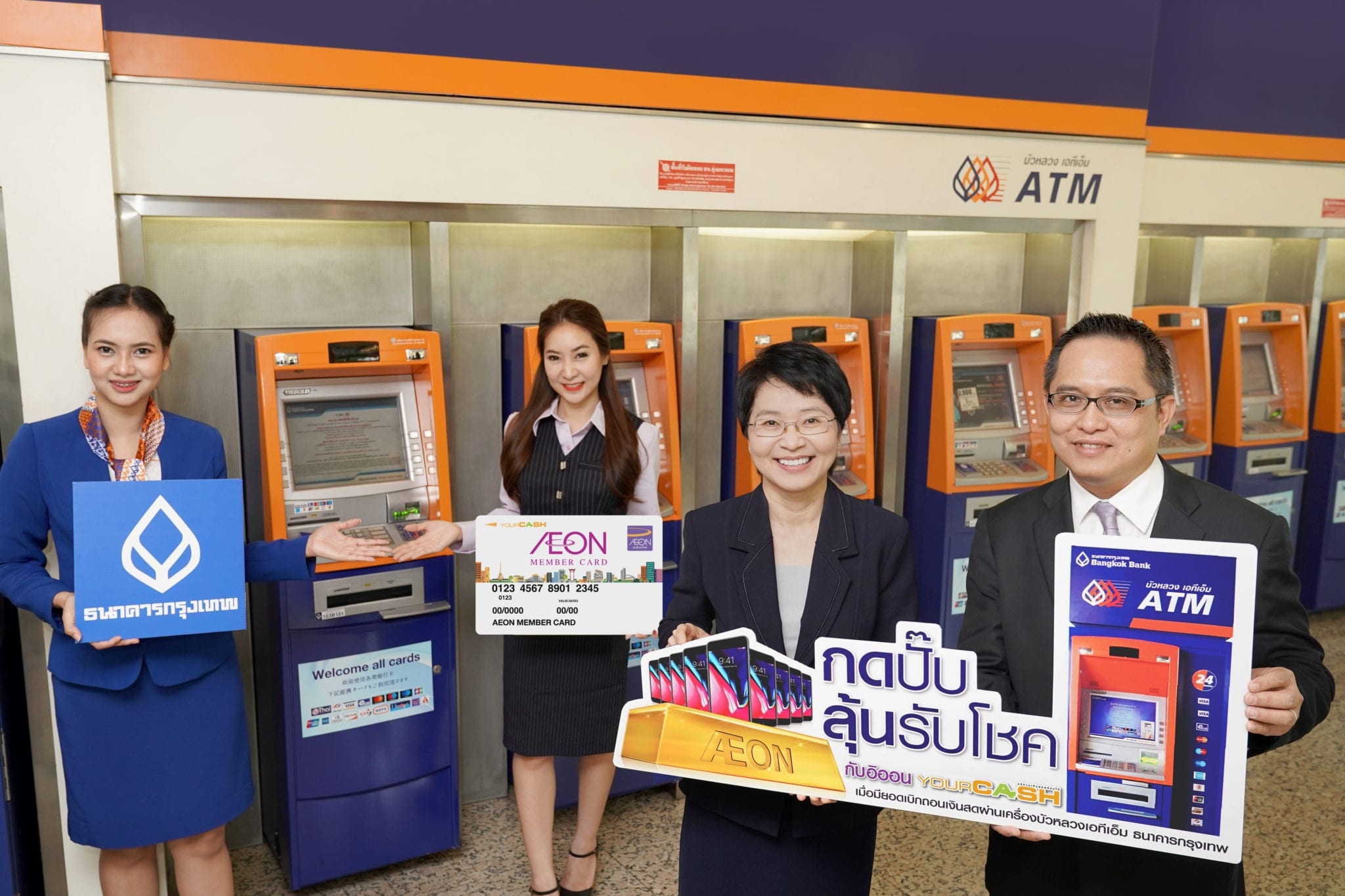
    Mr. Nuntawat Chotvijit (Right), Marketing Director of AEON Thana Sinsap (Thailand) Public Company Limited, together with Ms. Prassanee Ouiyamaphan (2nd from Right), Executive Vice President of Bangkok Bank announced a campaign “Get Prizes with AEON Your Cash”. Get a chance to win, worth a total of 745,000 Baht, include a gold bar worth 400,000 Baht and 10 prizes of iPhone 8 256GBs. AEON Your Cash cardholders are eligible to participate in the campaign by making cash withdrawals at least 1,000 Baht per sales slip at Bualuang ATMs Bangkok Bank during 1 April – 31 May 2018.