Tag: Thailand

  • Tumi acquisition lead Samsonite to good numbers

    Tumi acquisition lead Samsonite to good numbers

    Samsonite Asia sales lept 16 per cent last year, a rate slower than the Hong Kong-listed company’s global growth, and predominantly driven by the acquisition of Tumi.

    The world’s largest travel luggage company achieved global sales of US$3.49 billion, up 23.3 per cent, with Asia accounting for $1.19 billion of that. Samsonite Asia sales excluding the Tumi effect grew by a much more modest 4.8 per cent, while sales in Japan grew by 32 per cent, or 12 per cent excluding the Tumi business, driven by the Gregory, American Tourister and Samsonite brands.

    In the first half of last year, Samsonite assumed direct control of the wholesale and retail distribution of Tumi products in South Korea, Hong Kong, Macau, China, Indonesia and Thailand.  Net sales in China increased by 11.9 per cent year-on-year, (7.2 per cent excluding Tumi), due to increased sales of the Samsonite and American Tourister brands. Net sales in South Korea increased by 15.7 per cent, but fell 2.5 per cent excluding Tumi, due to fewer shoppers visiting from China and weak consumer sentiment.

    Net sales in Hong Kong increased by 34 per cent year-on-year, driven by the addition of Tumi, but by just 1.5 per cent excluding Tumi.

    Net sales in India increased by 4.6 per cent, despite a temporary disruption during the year due to the Indian government’s introduction of a goods and services tax that took effect in the third quarter of last year.

    Strong direct-to-consumer growth

    Samsonite showed solid progress on its move towards increasing its direct-to-consumer sales, aided by the acquisition of online luggage retailer eBags last May.

    Net sales rose 57.4 per cent overall, by 32.1 per cent excluding Tumi and by 12.2 per cent after 1 further excluding eBags.

    Dollar reported profit attributable to the equity holders increased by US$24.1 million, or 12.1 per cent.

    “We saw very satisfying growth last year, further driven by a strong performance from the Tumi and eBags businesses following their integration into the group,” said chairman Tim Parker.

    “In particular, we made solid strides in improving Tumi’s performance and as a result it was accretive to earnings in its first full year post acquisition. Now that we have strategically expanded into the highly attractive premium segment, and established a firm foothold in e-commerce, we look forward to more aggressively expanding our presence in the direct-to-consumer channel worldwide, especially direct-to-consumer e-commerce, where we see strong growth opportunities.”

    CEO Ramesh Tainwala said that while the company continued to benefit from the buoyant growth in travel and tourism worldwide, its strong performance was also driven by continued investment in brands, especially in the form of increased marketing support, as well as the expansion of direct-to-consumer e-commerce and brick-and-mortar retail operations.

    “Looking ahead, we will continue to implement our multi-brand, multi-category and multi-channel strategy, while leveraging our decentralised management structure and investment in marketing, in order to capitalise on the many exciting opportunities ahead of the group,” he said.


  • McDonald’s and private taxis in Thailand now accept Alipay

    McDonald’s and private taxis in Thailand now accept Alipay

    Alipay, the world’s largest mobile, online payment and lifestyle platform operated by Ant Financial Services Group, announced today that the payment platform will be available in all McDonald’s restaurants in Thailand by April 2018. This makes Thailand the first destination outside Greater China to accept Alipay at McDonald’s.

    Commenting on the development, Cherry Huang, General Manager, Cross-border Business for South and Southeast Asia, Alipay, said: “Thailand ranks #4 on the list of Top 10 Most Popular Destinations Outside Chinese Mainland for Chinese Tourists; to better facilitate the travel experience of Chinese visitors, our mission is to enable their smart lifestyle through our continuous efforts in expanding the merchant network and providing more value-added services. McDonald’s as one of the most popular fast food brands is an exciting addition to our merchant network in Thailand to bring greater convenience to Chinese visitors.”

    To date, Alipay has established a broad network of merchants in Thailand across shopping, F&B, entertainment, hotel and attractions, including duty-free brand King Power, convenience store 7-ELEVEN, shopping malls and night markets such as Asiatique and JJ Green.

    “Alipay has seen one of the highest penetration rates in Thailand. The average on-location spending of Chinese visitors in Thailand has surpassed USD2,000 per person per trip, which reflects a great business opportunity for local merchants,” added Cherry Huang, “Duty-free shops and convenience stores are the top two locations where Chinese visitors spend. Increasingly, we have also seen taxis becoming the transportation of choice in Thailand among Chinese visitors.”

    Currently, Alipay is available in hundreds of private taxis in Bangkok, which will further expand in 2018.


  • Lazada comes with idea to simplify selling system

    Lazada comes with idea to simplify selling system

    To help Southeast Asian entrepreneurs ride the e-commerce boom, Lazada has rolled out measures to make doing business online easier, faster and more financially rewarding.

    Already in effect, the moves benefit new sellers and about 135,000 merchants already on Lazada’s platform.

    One of the highlights is Seller Rewards, a powerful framework that recognises sellers for outstanding performance. The higher the ratings, the more rewards or benefits the seller enjoys such as:

    ● Higher visibility of products when users search and browse the site
    ● Access to shipping services and price subsidies extended by Lazada
    ● Access to promotional campaigns spearheaded by Lazada
    ● Access to preferred sellers programs; or premium seller program in Malaysia and Seller Prioritas program in Indonesia.

    Customers can rate sellers based on how they apply best practices to deliver a positive customer experience, such as quality checks on products sold, using recommended packing materials to avoid damage, and preventing purchase cancellations through third-party negligence.

    As another plus, sellers will no longer be financially penalised for policy breaches. However,  errant sellers may be delisted by Lazada.

    Instead of three to four days for anyone to start their business on Lazada, the process can now be completed in mere minutes. The simplified sign-up form requires registrants to provide just their email address, telephone number and address. They can start logging up sales 15 minutes after creating an account.

    Lazada group chief operations officer Aimone Ripa di Meana says the seller-friendly initiatives are part of the company’s efforts to empower entrepreneurs to grow their business online. “By incentivising sellers and giving them more leeway to sell efficiently and effectively, we want to ensure Lazada’s marketplace is the best place for sellers to reach out to more consumers.”

    Launched in 2012, Lazada is present in Indonesia, Malaysia, the Philippines, Singapore, Thailand and Vietnam. It helps more than 135,000 local and international sellers as well as 3000 brands serving 560 million consumers. Lazada Group is majority owned by Alibaba Group Holding.

  • Sellsuki awarded THB1 million in Visa’s Everywhere Initiative

    Sellsuki awarded THB1 million in Visa’s Everywhere Initiative

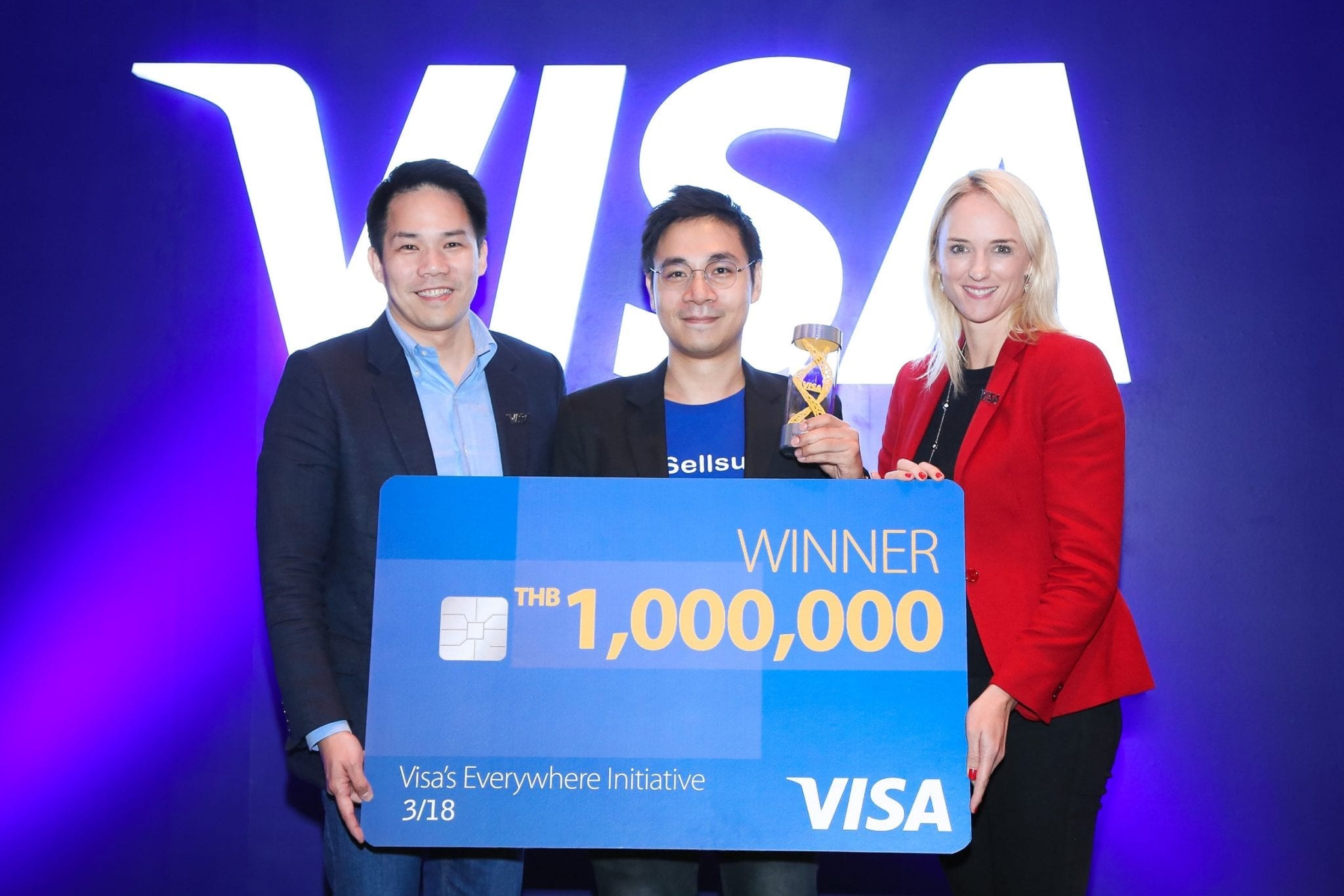
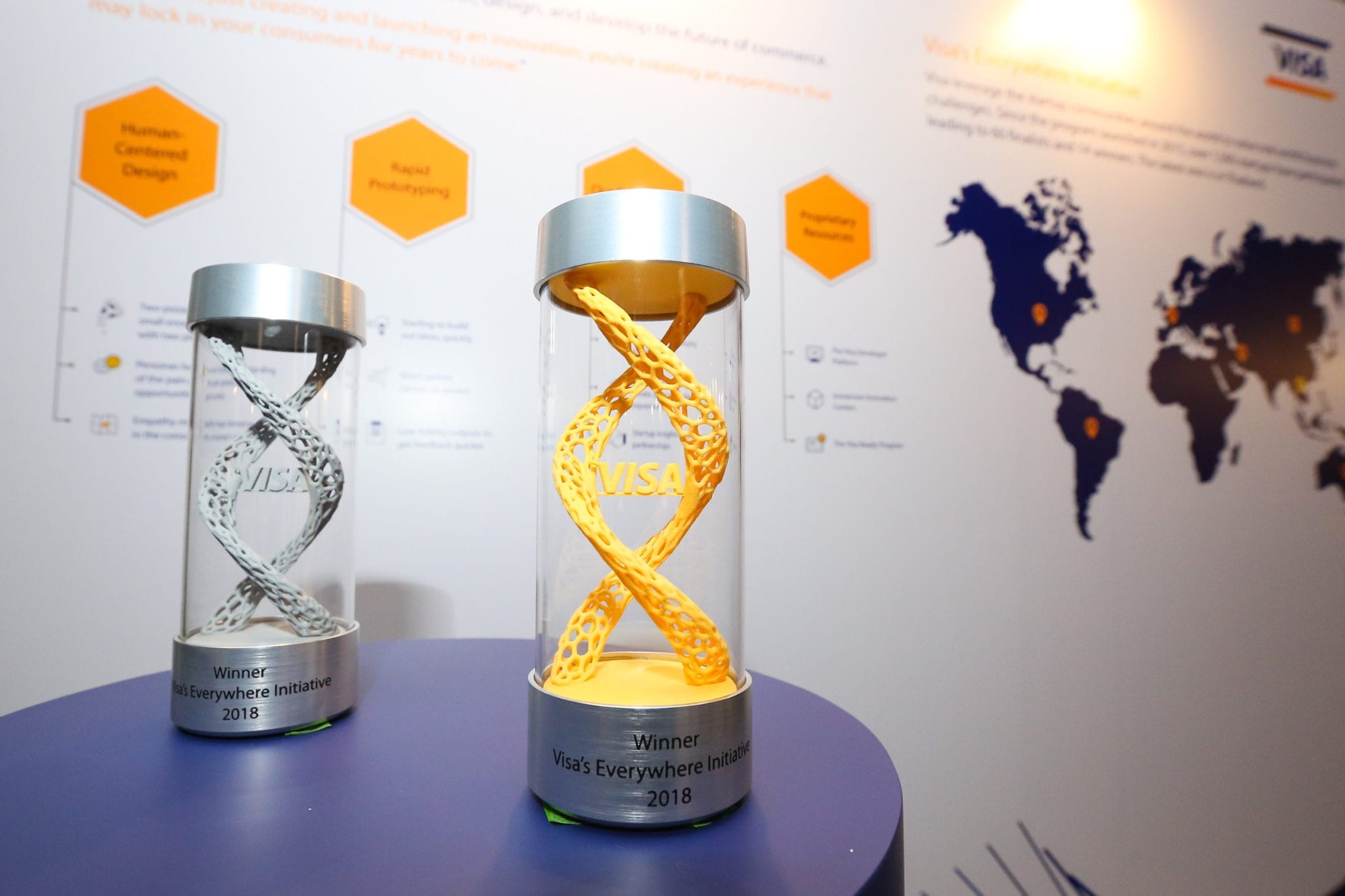
    Visa, the world’s leader in digital payments, announced the winner of its first Visa’s Everywhere Initiative competition in Thailand, awarding Sellsuki the grand prize of THB1 million in funding, in addition to mentorship, exposure to Visa partners and access to facilities and experts at Visa’s Innovation Center in Singapore.

    The winner of the VEI goes to Sellsuki, a social-first omnichannel retail platform that helps merchants to manage their own sales channels with end-to-end integrations on a variety of logistics. In cooperation with Visa, Sellsuki will make use of Visa’s APIs via adopting the use of digital payment services onto their platform, in order to help foster the most well-rounded e-commerce ecosystem.

    Visa’s Everywhere Initiative (VEI) is a global innovation program that challenges start-ups to build the next big thing in payments and accelerate the future of commerce, leveraging Visa’s world-class network. The 2018 global program kicks off with the Thailand competition.

    Of more than 80 submissions, a total of nine finalists were selected for the three opportunity statements:

    How can start-ups innovate to create relevant and rewarding digital payment experiences for international tourists visiting Thailand?

      1. UTU
      2. Angel Life
      3. Instarem

    How can start-ups leverage social media platforms to accelerate commerce & scale access to financial services?

    1. 2C2P
    2. Jumper
    3. Sellsuki

    How can start-ups innovate to make digital payments easy to access and capable of adding value for merchants?

    1. Seekster
    2. Digio
    3. Silo

    Silo won the People’s Choice Award and THB200,000 in prize money.

    Suripong Tantiyanon, Country Manager, Visa Thailand said: “There is a strong momentum in Thailand’s fintech scene evident in the quality of the application we received. At Visa, we believe innovation hinges upon collaboration and co-creation, by bringing different parties together to jointly produce an outcome that brings value to all. Engaging with the start-up community through Visa’s Everywhere Initiative is therefore crucial in growing the payments ecosystem and enabling new ways of innovation. We look forward to working with these companies, helping them to harness Visa expertise and APIs, to scale their solutions to the next level.”

    Visa’s Everywhere Initiative was created in 2015 to harness the creativity and talent within the startup community worldwide. To date, nearly 2,100 startups have participated, and have collectively raised over $2 billion in funding. The program has selected more than 131 finalists and 36 overall winners. More than 40 countries and regions that have hosted Visa’s Everywhere Initiative including the US, China, Australia, New Zealand, Europe, the Middle East, and Latin America.

  • Honestbee’s Shared Cart is the next big step in food delivery ordering

    Honestbee’s Shared Cart is the next big step in food delivery ordering

    Honestbee, Asia’s leading online delivery service for food and grocery concierge, is creating a real buzz by introducing a new feature called Shared Cart to its food delivery service.

    Shared Cart is fast, free and easy to use.

    How it works:

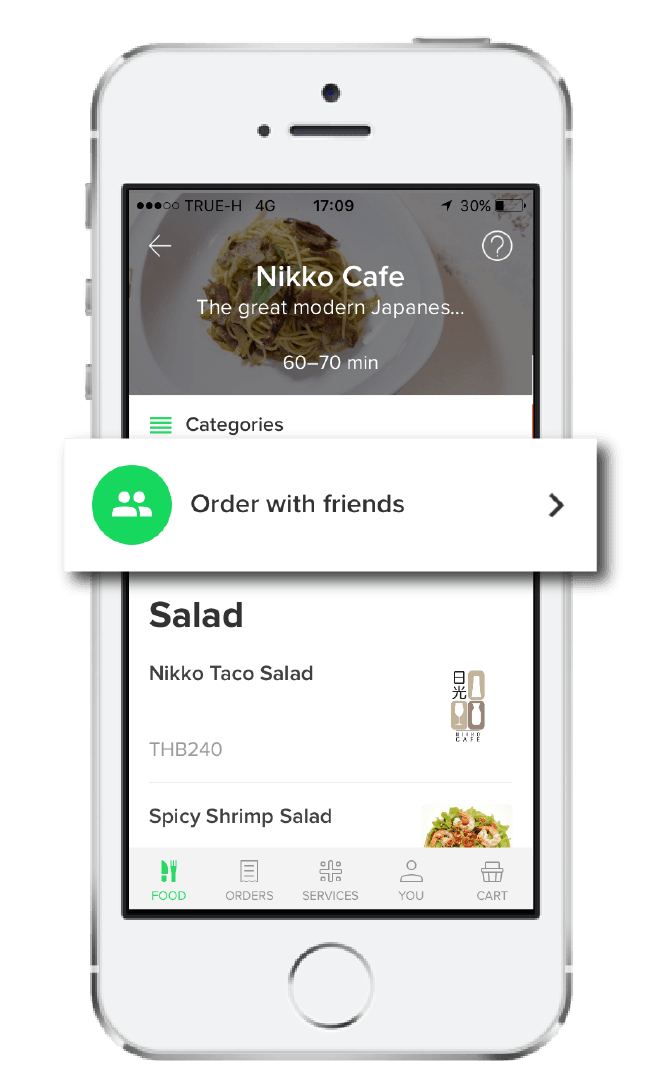
    1. An honestbee food user selects a restaurant then clicks on the ‘Order with Friends’ button. Now the “Shared Cart” is created!
    2. They get a link they can share via any messaging app they like.
    3. Anyone who has the link can add food orders to the shared cart for the next 30 minutes.
    4. Combined into one single payment and delivery

    Users of the Shared Cart will add their own food choices to a shared order using the honestbee app on their own desktop or mobile device. The menu items for these users in the same group are sent to a restaurant as one combined order and the food is delivered in one single quick delivery. Plus, as it’s a combined order, customer will only need to pay one delivery fee since it’s considered as one order. Saving you time and money!

    The Shared Cart will save time, energy and delivery costs in office or group of friends.

    Here are the advantages from using honestbee’s Shared Cart:

    • No more headaches trying to coordinate complicated group orders or being resented for writing down the wrong order;
    • No more missing out on ordering;
    • No more multitudes of sticky notes;
    • No more tracking down busy execs who are always “in a meeting”;
    • No more interruptions of productive meetings

    The honestbee food delivery Shared Cart also promises food-delivery-freedom for Bangkok’s millennials.  Couples can order separately on their way back from work in time for their meetup. Friends can chill-out, and order food without having to stop what they are doing and debate what to order. Shared Cart fits with today’s busy, modern and mobile lifestyles. On top of that, the service is free in delivery.

  • Singha puts investment arm on hunt for startups

    Singha puts investment arm on hunt for startups

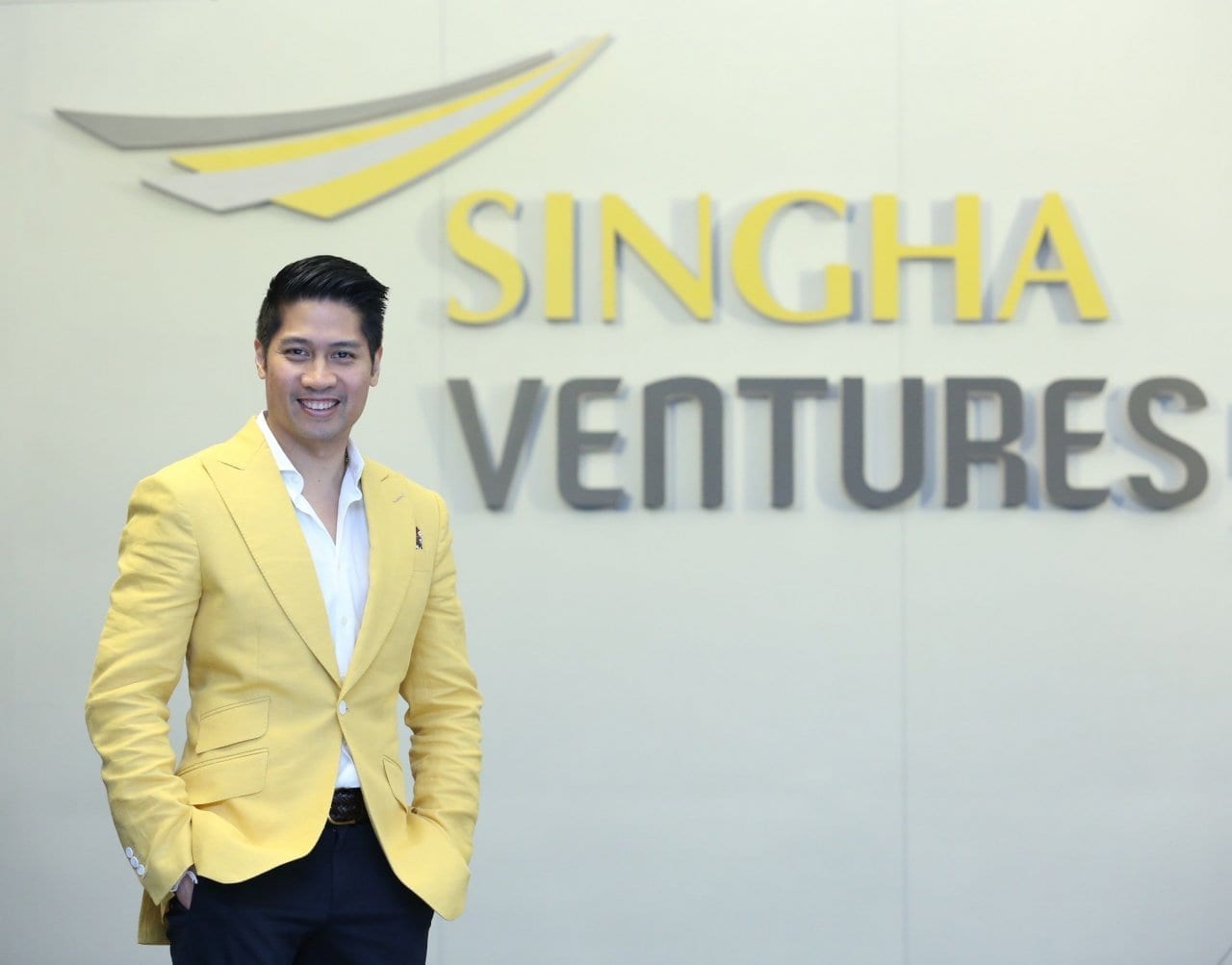
    The company, announcing the official establishment of the investment arm yesterday, also said that it aimed to make Thailand a hub for startup ventures in Asia.

    The company sees the new investment unit as helping Singha Corporation to achieve greater business diversification.

    With Singha Ventures, the company can channel investment capital directly into promising startups, without the need for approval from the board of directors. This will also save time.

    With US$25 million in registered capital, Singha Ventures was registered in Hong Kong in the middle of last year as a wholly owned subsidiary of Singha Corporation.

    Bhurit Bhirombhakdi, chairman of the executive board at Singha Ventures, said the company will invest in startups, both directly and indirectly, through venture capital funds. The company, however, will not invest more than a 25 per cent stake in individual startups in the initial stage and will allow the startup owners to run their companies. The arrangement is aimed at ensuring the startup owners remain fully motivated.

    Bhurit said that the world’s top-ranking companies, such as Apple, Google, Microsoft, Facebook and Amazon, have grown their businesses from startups. The scene is different from 10 years ago, he said, when big companies came from the so-called real sectors of the economy, such as in the oil industry.

    “With the ventures, we will able to help those startups to develop and grow their businesses over the long term,” he said. “With such a collaboration, the startups will be able to utlise Singha’s resources, such as human resources experts, and those from research and development, and marketing and sales. They will be able to leverage our distribution network.”

    Singha Corporation has distribution partners in more than 50 countries. In Thailand, the company has an extensive distribution network covering more than 400,000 retail outlets.

    “Gaining a return on investment from those startups is not our maximum aim, we (Singha Corporation) would like to leverage know-how and technologies from those startups so that we will be to deal better with the disruption of technologies such as artificial intelligence and robotics,” said Bhurit, adding that such technology disruption would not only impact the ways of doing businesses, but also change the world.

    Vorapat Chavananikul, managing director of Singha Ventures, said the company was interested in investing in promising startups – in Thailand and abroad – in its core business areas. These comprise consumer products (foods, beverages and packaging), retail and logistics, and enterprise solutions, as well as healthcare and renewable energy.

    He said that during the past year, Singha Ventures has invested in two funds. These are Kejora Ventures, Southeast Asia’s biggest technology ecosystem with its headquarters in Jakarta, which has invested in more than 29 startups; and Vertex Ventures from Singapore, a network of experts in technology and venture capital from all over the world. They can create a good return of 2.5 to three times the initial investment so far, Vorapat said.

  • Thailand to have largest Ikea in SE Asia

    Thailand to have largest Ikea in SE Asia

    Ikea Thailand will open the Swedish furniture brand’s largest Southeast Asian store in Bangkok next week.

    In Bang Yai, Nonthaburi, it will be the second Ikea store to cater for the outlying districts in Bangkok’s northwest. It covers 50,278sqm, compared to the 46,700sqm of the Ikea Tebrau store in Johor, Malaysia, which was dubbed Southeast Asia’s largest Ikea when it opened in November.

    Ikea Bang Yai is partially solar-powered. Its rooftop solar arrays are capable of producing 1.5 megawatts of electricity a year, or about 13 per cent of the building’s needs.

    Unlike other Ikea outlets, the Bang Yai store has cashier stations on every floor. This new design enables shoppers who are short on time to get in and out of the store faster.

    Ikea’s largest store is in South Korea. Opened in 2014, the Ikea Gwangmyeong covers 59,000sqm.

  • E-business of Giordano International looks good

    E-business of Giordano International looks good

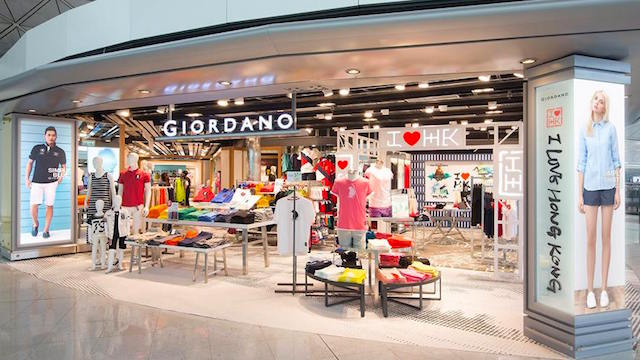
    E-business last year was particularly strong for apparel retailer Giordano International.

    Overall, consolidated sales reached HK$5.4 billion, up 5.2 per cent. Group comparable-store sales and comparable-store gross profit rose  by 5.2 and 5 per cent respectively.

    Consolidated gross margin edged up by 0.1 points to 59.5 per cent.

    Profit after income taxes attributable to shareholders of the company was $500 million,
    an increase of 15.2 per cent over 2016.

    Operating profit rose by 21.3 per cent, with most regions having double-digit growth, particularly Southeast Asia, Mainland China and Taiwan. The group’s business in Vietnam was acquired on July 1.

    With an improved merchandise assortment, Indonesia and Malaysia delivered good results.

    Operating profit increased by 18.6 and 26 per cent for Indonesia and Malaysia respectively. In Singapore, operating profit increased by 31.2 per cent, attributable mainly to the gross margin improving by 1.7 points to 63.7 per cent.

    Unusually strong sales from Thailand in 2016 resulted in an unfavourable year-on-year comparison. Operating profit declined by 20.1 per cent in local currency terms.

    A surge in net profit for South Korea – a 48.5 per cent JV under an independent management team – resulted from better cost control, closure of non-performing stores and enhancement in gross margin.

    Giordano had a network of 2414 stores at the end of December, of which 1268 were standalone outlets. Most stores were in Greater China, South Korea, Southeast Asia and the Middle East.

    Meanwhile, the group’s e-business is directly managed and derived mainly from third-party platforms as well as its own proprietary website in Greater China. This channel generated $310 million in revenue at a 31.4 per cent growth rate.

    Accounting for 93.2 per cent of the group’s e-business sales, Mainland China continued its momentum and recorded a 28.2 per cent increase in sales on various platforms combined.

    Giordano’s e-business in Taiwan was revamped during the year to become its second-largest online presence.

  • Beacon VC invests in Ookbee to expand C Channel Thailand

    Beacon VC invests in Ookbee to expand C Channel Thailand

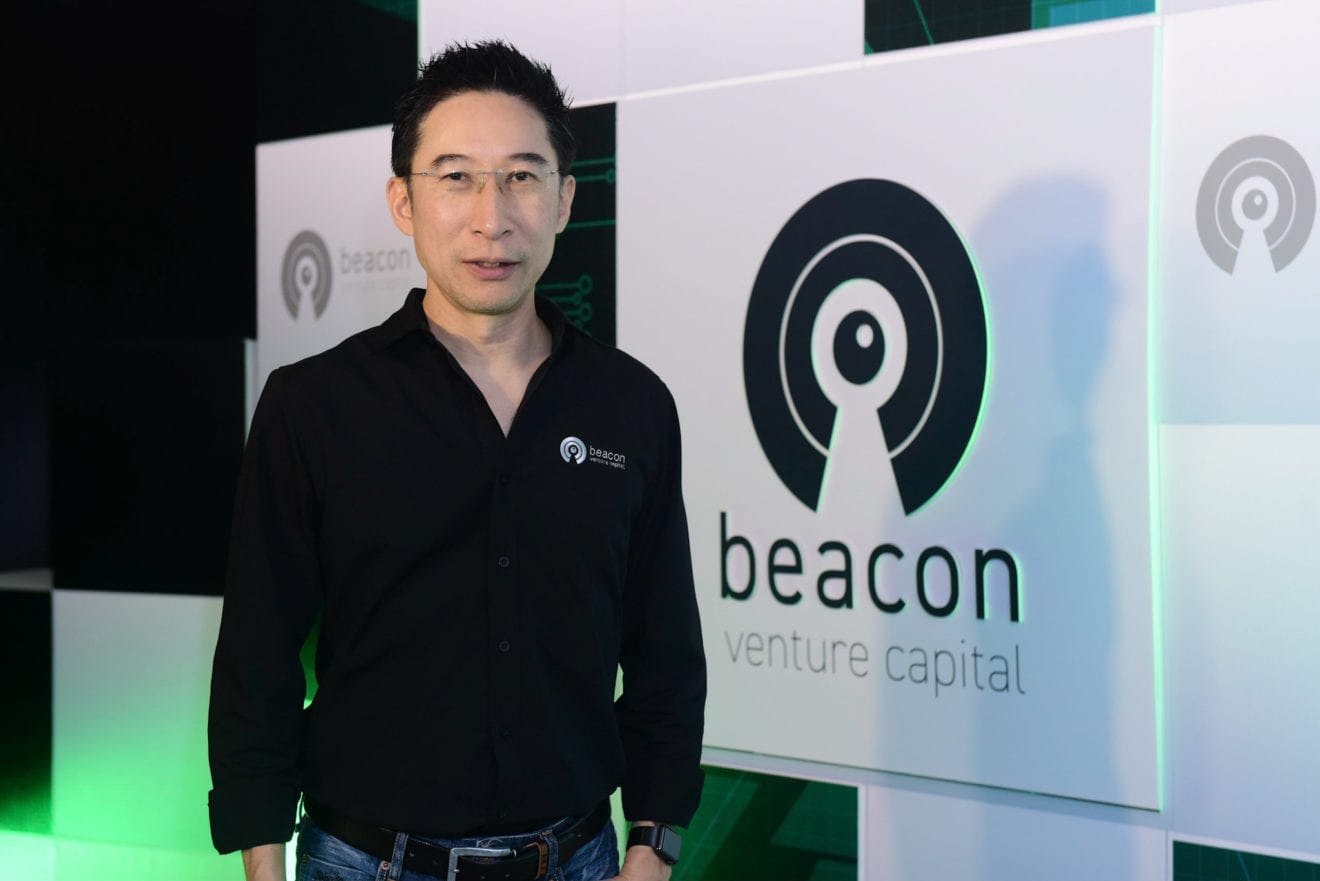
    Beacon Venture Capital announced its investment in Ookbee, the provider of Southeast Asia’s top digital lifestyle platform, to support the expansion of C Channel Thailand. Under collaboration of Ookbee and C Channel Japan, this joint venture will offer online lifestyle content, along with another new business to be announced within the first quarter of this year. Through this partnership, KASIKORNBANK (KBank) aims to approach greater audiences of new generations, which will reemphasize its digital platform leadership.

    Mr. Thanapong Na Ranong, Managing Director of Beacon Venture Capital Co., Ltd., said Beacon VC is a venture capital arm of KBank, with an aim to invest in potential startups in support of business advancements of the bank. Ookbee is one of the promising Thai startups, which has successfully redefined the digital publication landscape for the Southeast Asian market. At the early stage of business, Ookbee provided e-book products with content provided by publication companies. Currently, its products have diversified to professional- and user-generated contents, focusing on new trends and digital innovations with comprehensive online payment channels.

    C Channel Thailand, a new and interesting business of Ookbee, is a lifestyle video platform based on cooperation between Ookbee and C Channel Japan. Most recently, Beacon VC has joined in to support further development of C Channel Thailand.

    In addition, Ookbee is planning to launch another new and exciting business in 1Q18, which will not only help strengthen businesses that produce content for Ookbee’s current platform, but also spur the creation of better quality and more diverse content for service users, being part of Ookbee’s endeavor to meet the lifestyle needs of millennials. Beacon VC has set a target that such an investment will allow KBank to reach audiences, specifically Post-Millennials, in unique and creative ways, thus reinforcing KBank’s leadership in the digital platform.

    Mr. Natavudh Pungcharoenpong, CEO at Ookbee said that, “Our vision is to grow and expand platforms to accommodate creative content creation and consumption, as well as strengthening economic returns for creative communities.” Meanwhile, C Channel Thailand is an online VDO fashion magazine for women, featuring creative lifestyle content. It was launched by Ookbee in 2017 and has been popular since then. C Channel Thailand can be viewed via website and facebook. It has over 250 million monthly views and over 150,000 average views per clip.

    The partnership with Beacon VC will help Ookbee add value to C Channel Thailand and introduce new business to the market within 1Q18. The cooperation marks a significant step toward complementing Ookbee’s current digital lifestyle businesses and strengthening its ties with creative communities to enhance productive collaboration and foster its business presence.

    Since its inception in 2011, Ookbee has become No. 1 provider of digital lifestyle platform in Southeast Asia with over 10 million users and more than 1 billion page views per month. Ookbee provides a variety of informative content and entertainment on various modes of platforms, including e-books, translated novels, comics, music, videos, blogs, story chat, horoscope, from the company’s producing teams and user-generated contents. Achieving Series B funding round, the startup is expected to scale up to Series C funding round by the end of this year.

    Beacon Venture Capital, a VC arm of KASIKORNBANK PCL, was established in 2017. Mr. Thanapong Na Ranong is the company’s Managing Director. Beacon Venture Capital aims to jointly invest in Thai and international startups with the total funding of THB1 billion.

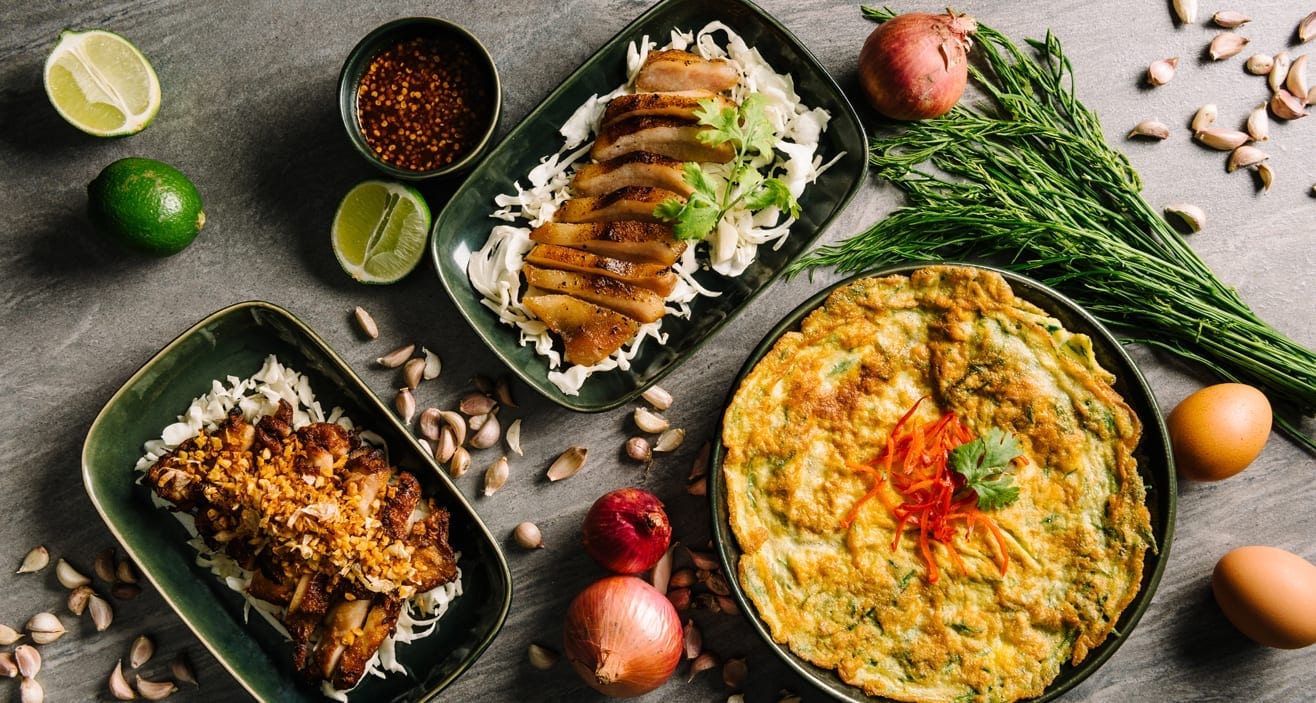
  • Nara Thai Brings Classic Thai Dishes To Manila

    Nara Thai Brings Classic Thai Dishes To Manila

    Bangkok’s Nara Thai restaurant has opened a branch in the Philippines.

    It has been brought in by the Roku restaurant group following Roku Sushi and Ramen, which opened in Katipunan six years ago, and Sushi Nori, which specialises in sushi and maki, and already has five branches around Metro Manila.

    Founded in 2003 by a group of female entrepreneurs, Nara Thai is named for one of its founders, Narawadee Srikarnchana. Apart from Thailand, it has branches in Hong Kong, Myanmar, Taipei and Mumbai.

    “Nara is a celebration of families,” says Roku Group CEO Sheila Romero, who runs the restaurant with her daughter Milka. “Sharing memories is my thrust in business.”

    Celebrities and representatives from Nara Thai Cuisine in Bangkok attended the restaurant’s official launch, with the ribbon being cut by the Thai ambassador to the Philippines Thanatip Upatising.

    On the restaurant row of SM Megamall’s Mega Fashion Hall, Nara Thai has interiors bathed in silver and purple.

  • State tobacco to suffer first time loss in history

    State tobacco to suffer first time loss in history

    Thailand Tobacco Monopoly (TTM) says it is expected to suffer it’s first time loss in history of a tremendous amount of 5 billion baht this year from the government’s recent excise tax increase.

    TTM managing director Daonoi Suthinipaphan said the expected huge loss stemmed from the new excise tax law which became effective on September 16 last year.

    She said the new excise tax resulted in higher retail prices of cigarettes produced by TTM by 3-20 baht per pack.

    But on the contrary, prices of imported or foreign cigarettes which have lower production cost adjusted retail prices slightly, or some brands even lowered retail prices, she said.

    This situation, she said, has affected TTM’s market share falling from 80% to 55-60% in February this year, she said.

    She said the new excise tax has enabled sellers to reduce retail price for foreign cigarette to 60 baht per pack, while Thai cigarette which was earlier sold at 35-40 baht per pack instead has gone up to 60 baht, or same as foreign cigarettes.

    She said TTM’s production this year was expected to be 18,000 million cigarettes a year from its full production capacity of 65,000 million cigarettes after its new factory has officially started operations.

    With its huge machinery cost of over 16 billion baht, TTM therefore has to allocate it’s annual profit to pay for the machines with now has 7 billion remainder still unpaid.

    She said this year TTM was committed by its contract to pay 2.9 billion baht.

    Apart from the machinery cost, TTM still has to pay for the relocation of factory from Rama 4 road in Bangkok to new factory in Ayutthaya, take care of its own hospital’s expenses, buy tobacco leaves 22 baht higher than market price from farmers under the state’s subsidy programme, and 1.5 billion baht renovation for Benjakitti park, she said.

    In total, initial estimate of loss was expected to be 5 billion baht this year, she said.

    This would be the first time loss of the TTM’s history since it was established and began operation in 1948 or 70 years ago, she said.

  • Central group Thailand expanding property portfolio plan

    Central group Thailand expanding property portfolio plan

    Thailand’s Central Group plans to invest more than THB200 billion (US$6.3 billion) over the next five years on expanding its retail and hotel properties in Thailand and abroad.

    It is especially targeting Vietnam, where it expects its retail business to grow by four times over the period. The group aims for total revenue to reach THB397.3 billion this year, up 14 per cent from last year.

    CEO Tos Chirathivat says the group is studying designs and concepts for two mixed-use commercial projects in Bangkok. A site on Rama IV Road will be developed under a strategic partnership with Dusit Thani and a site in Ploenchit Road will be undertaken in partnership with Hongkong Land. The design process for the projects will take about two years to be fully completed. The mixed-use projects will require investment of about THB25 billion each.

    Tos says Central Group is committed to maintaining its investment at between THB30 billion and THB40 billion every year for the expansion of its retail and hotel properties in Thailand and potential markets abroad, especially in Vietnam and Europe.

    The group will this year invest THB47.5 billion in business expansion both at home and overseas, which is 27.8 per cent more than last year. This excludes the possible acquisition of e-economy businesses.

    Tos says the group is focusing on initiating online platforms so it can transform into a tech company.

    Main focus

    For overseas expansion, however, Vietnam is the group’s main focus. He says Central Group has grown there by an average of 340 per cent over the past five years. It is the largest foreign retailer in the country, with five core business units: 31 malls (Big C), 59 food stores (Big C, Lanchi Mart), 49 fashion stores (Delala, Marks & Spencer, Robins, Supersports), 79 stores for construction materials, home decoration and electrical appliances (including B2S, PowerMall and Nguyen Kim), and three online platforms (B2S.com.vn, NguyenKim.yn, Robins.vn).ins

    “Our penetration in Vietnam is now more than 217 stores with more than 700,000sqm in combined retail space in 37 provinces. By 2022, we expect to have more than 753 stores, and will occupy 2.5 million square metres in 57 provinces in Vietnam,” says Tos.

    The sales contribution from Vietnam would increase significantly from 13 per cent now to about 20 per cent over that period, he says. The company has 17,000-plus employees in Vietnam, serving more than 175,000 customers a day.

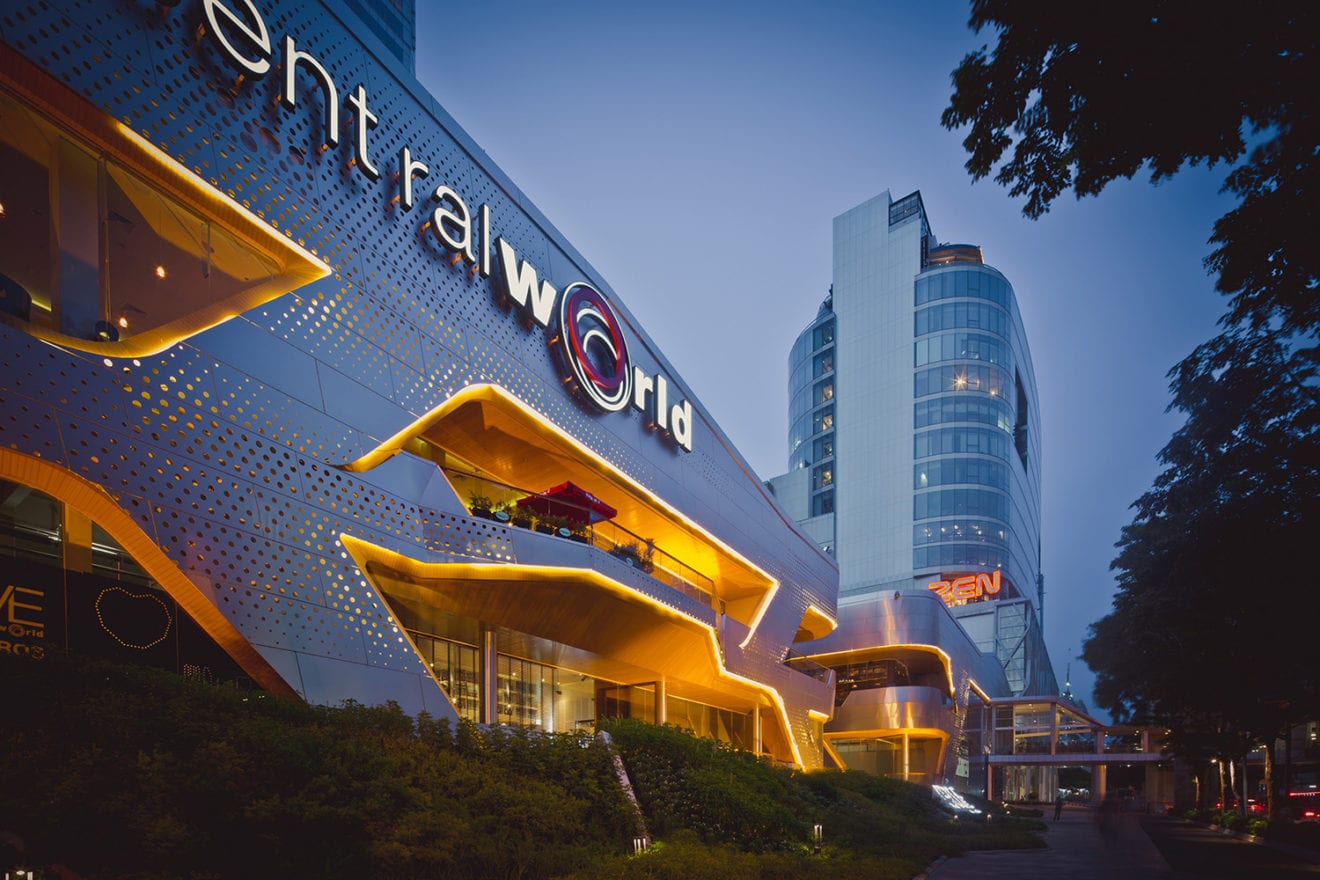
    In Thailand, he says the group will officially open its Tops Plaza in Phayao Province this quarter, followed by the relaunch of its CentralWorld in Bangkok in the second quarter. The group will also open the Robinson Lifestyle complex at Amata Chon Buri, Tops Plaza in Sing Buri, Central Phuket 2 and the Triphum theme park in Phuket.

    Other openings include residences and suites in Qatar, as well as Tops Plaza Amphur Phon, Khon Kaen and Pattalung, Zen Pathong in Phuket, Robinson Lifestyle in Chaiyaphum, and I-City Mall, the group’s first overseas mall, in Malaysia.

    An extra 459 stores will be opened in Thailand and Vietnam this year.

  • Vietjet announces route expansion plan with  direct flights and Bangkok – Krabi route

    Vietjet announces route expansion plan with direct flights and Bangkok – Krabi route

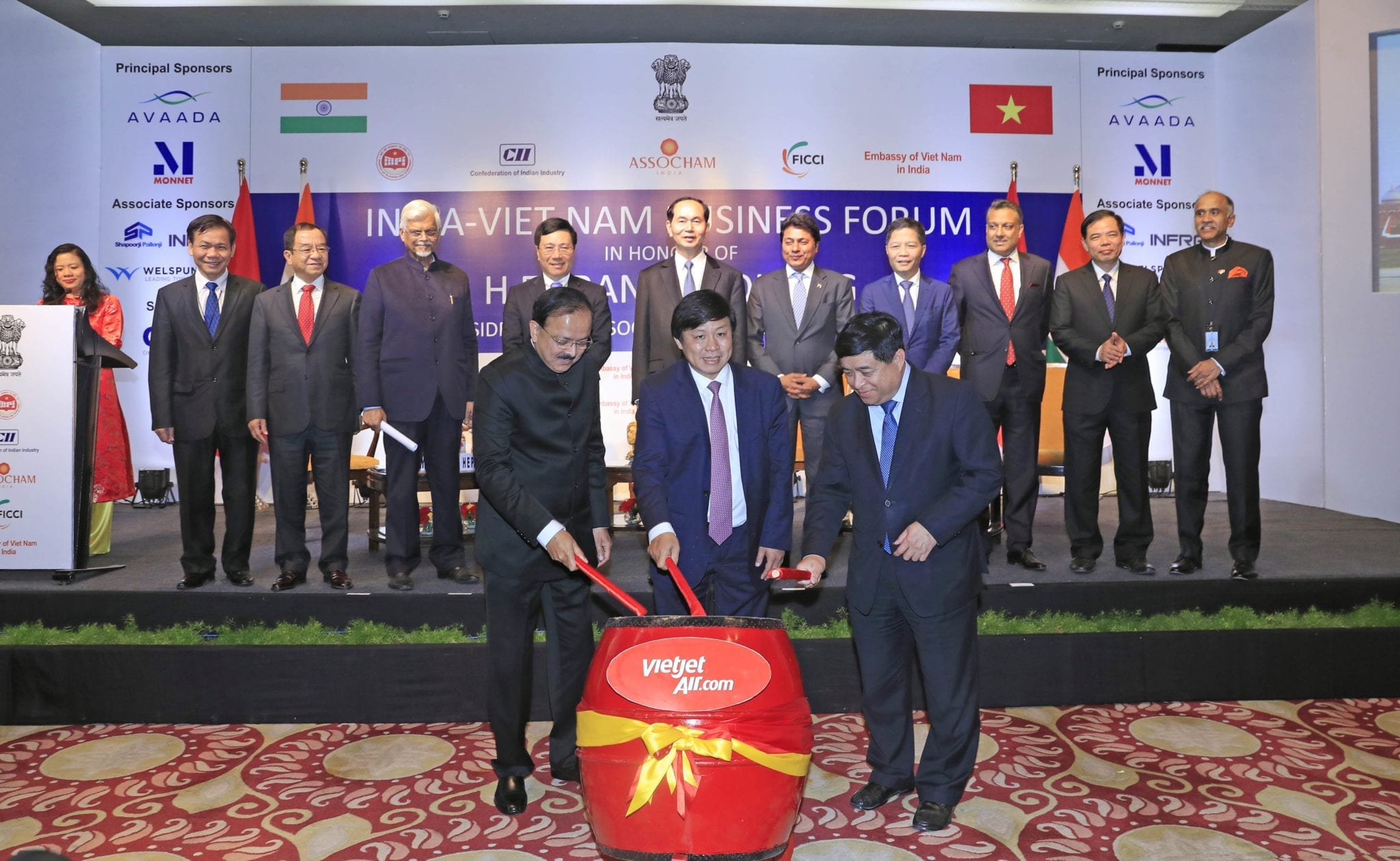
    Vietjet has announced its plan to operate direct flights connecting Vietnam and India, while its subsidiary, Thai Vietjet, is to launch a new direct domestic service between Bangkok and Krabi from April 5, 2018. Both plans are designed to become part of Vietjet’s long term development program to be a “Consumer Airline” that serves all demands of its customers.

    The India route will connect Ho Chi Minh City with New Delhi with four flights a week, serving the growing travel demands of the two peoples and contributing to the region’s integration and trade exchange. The announcement was made at the Vietnam – India Business Forum which was witnessed by Vietnam President Tran Dai Quang and senior leaders of Vietnam and India. It also came as a highlight of the 45th anniversary of the establishment of Vietnam – India diplomatic relationship and the 10th anniversary of strategic partnership between Vietnam and India.

    India, the country with the world’s second largest population, is famous for its diversified culture, religions, cuisine and tourism. Also, the country is well-known for its marvelous nature and grand architectures that are certified as world heritages. Among them are the Valley of Flowers National Park (Uttarakhand), Lotus Temple (New Delhi), Taj Mahal (Uttar Pradesh), Red Fort (New Delhi), etc.

    For the Thailand route, Thai Vietjet will launch a new direct domestic service between Bangkok (Suvarnabhumi) and Krabi, starting from April 5, 2018. The service will operate with two daily return flights and a flight duration of one hour twenty minutes per leg. Departure times from Bangkok (Suvarnabhumi) are 07:10, 19:25 and departure times from Krabi are 09:05, 21:20. Thai Vietjet will deploy an A320 aircraft with 180 seats for the route, representing the airline’s determination to meet passenger demand for popular routes. Krabi is an eternally popular holiday destination, offering great beaches, clean air, beautiful temples, stunning views of both lush mountains and stunning coastlines. It is also a getaway for Bangkok residents to escape the city smog for some clean coastal relaxation. Krabi is also renowned for its world class seafood, beach barbeques and popular nightlife attractions in Krabi Town. With the new Bangkok (Suvarnabhumi) to Krabi flight addition, the airline will be flying five Thailand domestic routes, including Bangkok (Suvarnabhumi) to Chiang Mai, Chiang Rai, Phuket, Krabi and a daily direct flight connecting Phuket and Chiang Rai.

  • LANCÔME Spreads Festive Joy At King Power Rangnam

    LANCÔME Spreads Festive Joy At King Power Rangnam

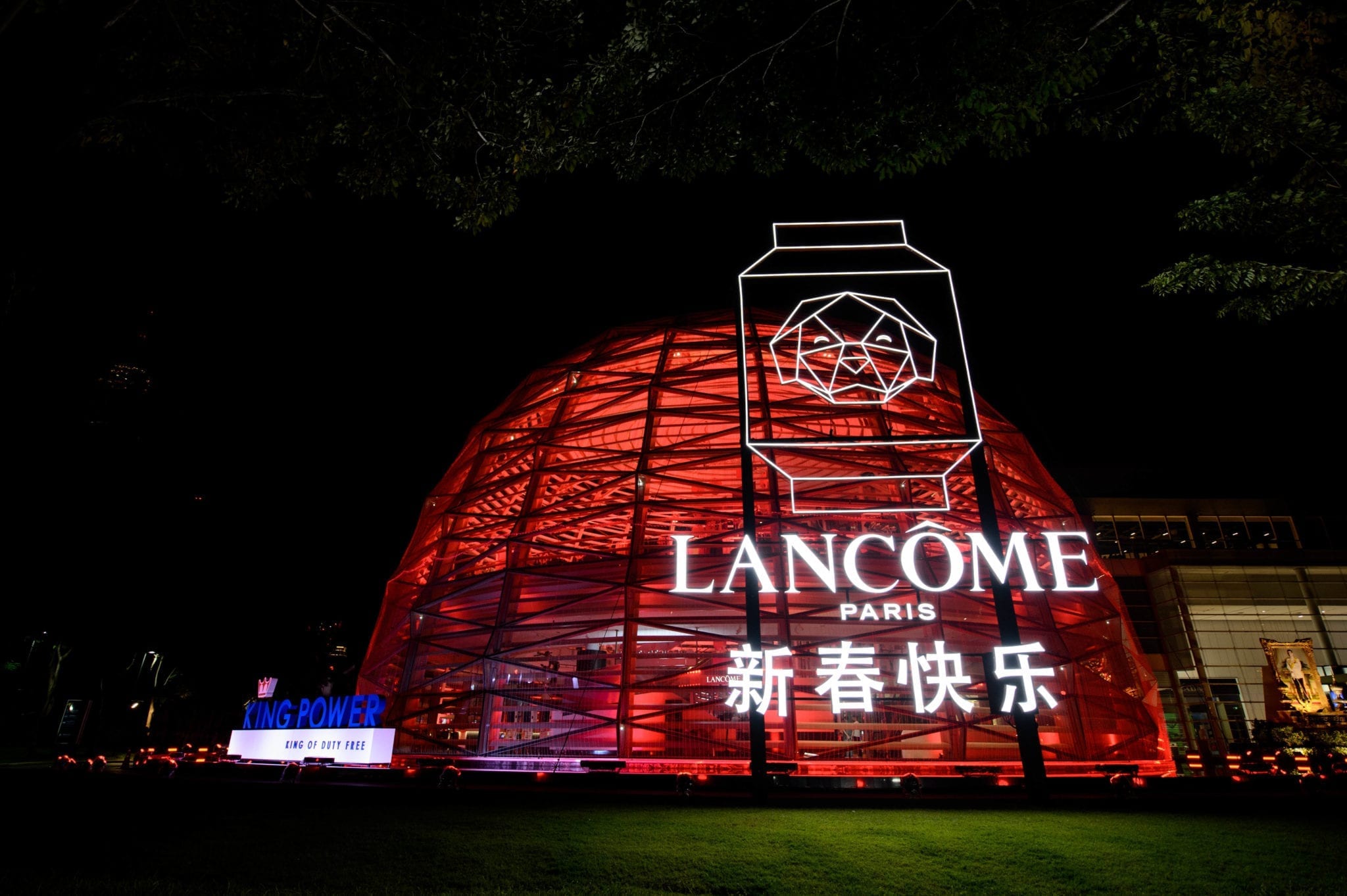
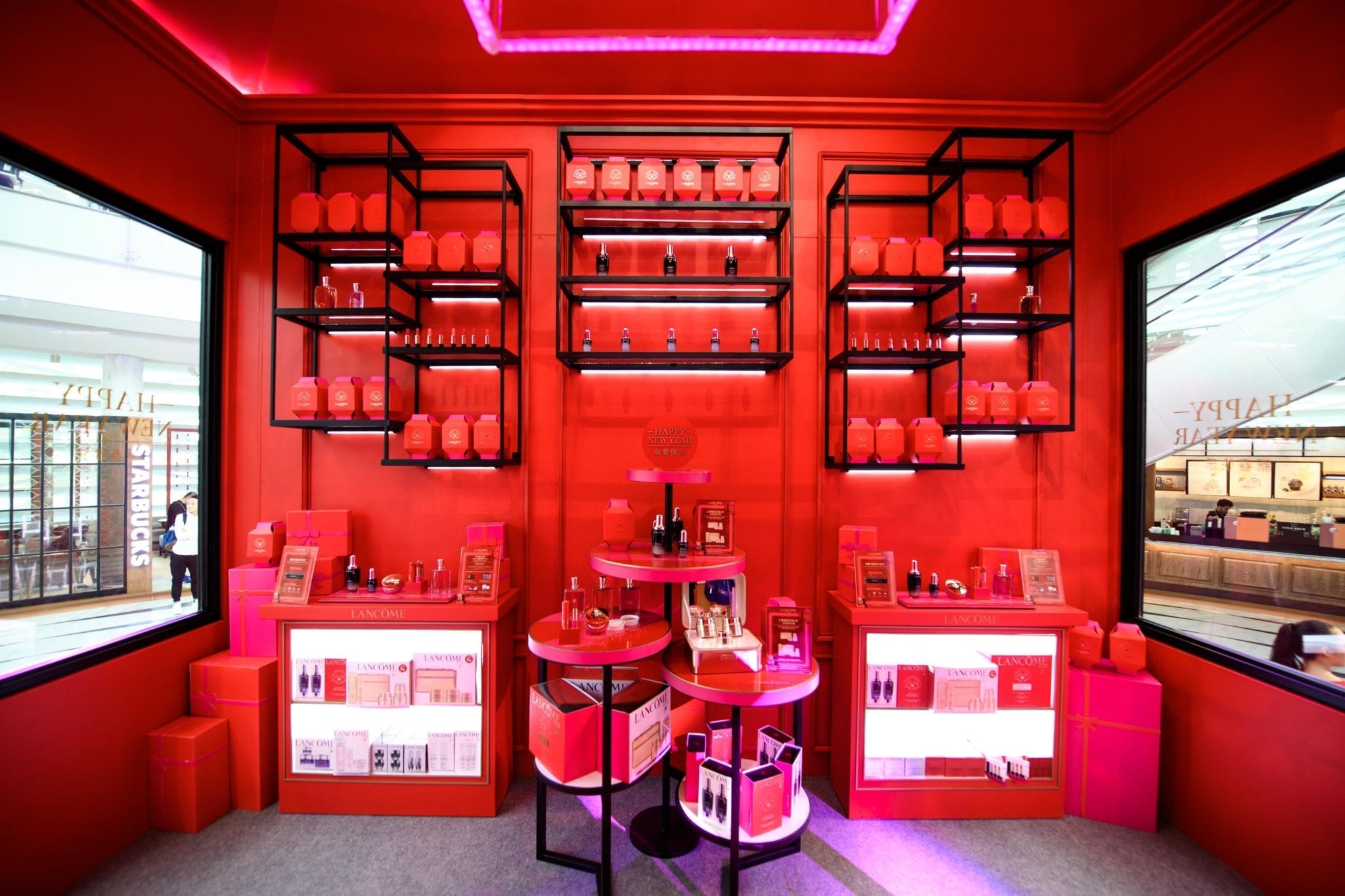
    Lancôme has unveiled its first travel retail pop-up in Asia Pacific, complete with an AR feature.

    The activation at the newly-refurbished King Power Rangnam is to mark the Year of the Dog for the luxury beauty brand. The scheme invovles a red facade, pup-up store, light shows and live performances.

    Lancôme Travel Retail Asia Pacific has looked to create a “multi-sensory festive treat” with the campaign. It begins as shoppers approach the store with red lights illuminating the front façade, inside giant TV screens and a fountain symphony of lights and water choreography greet travellers. At the heart of the mall is the Lancôme pop-up which features a lantern-inspired design and digital offerings which draw in shoppers to explore. Inside, an augmented reality photobooth creates images of users with a virtual puppy, while there is also a touch-screen digital game.The bright red colour is both eye-catching and draws in the Chinese New Year theme.

    Lancôme Travel Retail Asia Pacific general manager Tao Zhang said: “Having been inspired by Lancôme’s Chinese New Year campaign design, we specially conceptualised and brought to life this exclusive Chinese New Year pop-up with King Power. Every touchpoint from the digital LED wall to the pop-up was specially created to excite consumers so we hope that this will deliver a memorable brand experience for our travellers. We look forward to sharing moments and memories of happiness with more women during this festive season.”

    Shoppers will also get their hands on limited edition Chinese New Year offers and travel exclusives at the shop. The event launched on 13 February and will end on 31 March in the atrium of the King Power Rangnam Downtown Duty Free Store.


  • First Vietnam’s duty-free cars arrive from Thailand

    First Vietnam’s duty-free cars arrive from Thailand

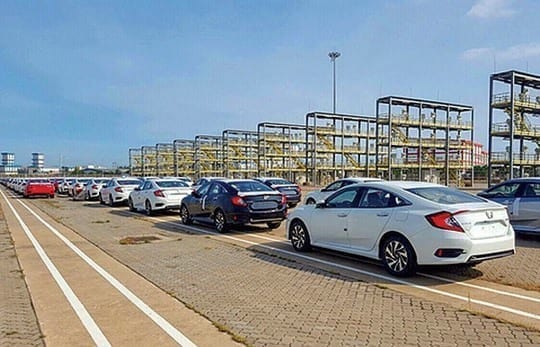
    Over 2,000 Honda cars from Thailand—the  first batches of cars to enjoy zero per cent import duty under the ASEAN Free Trade Agreement (AFTA)—have been imported to Việt Nam.

    Under the AFTA commitments, a zero per cent tax is applicable to cars imported from the bloc, with a localisation rate of 40 per cent or more in the country of origin, starting January 1 this year.

    The current batch has Jazz, Accord, CR-V and Civic models.

    A representative of Honda Vietnam said that to import the autos to Việt Nam, the firm had completed procedures to meet the requirements of Việt Nam’s Decree 116 on the conditions for production, assembly, import, business of warranty service, car maintenance and particularly the Vehicle Type Approval certificate granted by the Thailand Department of Land Transport.

    A consulting staff member at Honda’s Mỹ Đình agent said that the new vehicles would be rolled out to the market in May or early June, as it will take one or two months to complete checks on emission, quality and technical safety at ports.

    “The price of each car is expected to fall by more than VNĐ200 million.  This will be a turning point in the Vietnamese automobile market,” said the staff member.

    Earlier, the insiders calculated that with the zero per cent import tax, the price of imported cars from ASEAN countries to Việt Nam would fall by 20-25 per cent.

    Toyota Motor Vietnam and Ford Việt Nam are completing procedures to meet the requirements of the Decree 116 to import cars which are favourites in Việt Nam, such as the Ford Explorer, Everest, Ranger, Toyota Fortuner and Yaris.