Tag: Thailand

  • Cisco sees doubling in digital banking clients

    Cisco sees doubling in digital banking clients

    James Cronk, global director, Financial Services Industry, at US-based Cisco, said the banking and financial-services sectors were now “transferring their legacy environment into digital transformation to support digital payment”.

    Around 4.5 per cent of Thai banking customers currently use digital payment, a proportion that will rise significantly in the next few years, driven by the development of information-technology infrastructure and security, he said.
    Cisco’s comprehensive economic analysis estimates that digital innovation in retail banking will drive US$405 billion (Bt14.4 trillion) in value globally from 2015 to 2017.

    Last year, financial services as a whole captured just 29 per cent or $117 billion of that opportunity. Moreover, more than 90 per cent of the potential value is driven by key digital-use cases, including sales and services transformation, next-generation workers, video-based advice, mobile payment and connected ads, Cronk said.

    Cisco has six platforms and solutions to support digital transformation in financial services – customer experience, workforce experience, agile IT-fast IT, analytics and insights, cyber security and liability, and risk compliance and management – the global director said.

    Having a road map to digital value in retail banking means banks will be positioned “to enable IT agility and operational effectiveness, create differentiation in their business strategies from those of competitors, and define disruptive new digital-enabled business processes”, he explained.

    Vatsun Thirapatarapong, managing director of Cisco in Thailand and Indochina, said the ratio of digital-banking users in Thailand would increase to 10 per cent of all banking users in the next three years, due to the popularity of using e-payment among generation-Z individuals, the usage of mobile first/cloud first, as well as start-ups developing fintech (financial technology) solutions to support digital payment.
    Moreover, IDC has reported that consumers expect banks to deliver highly personalised hi-tech services coupled with the convenience of anytime, anywhere.

    This group of consumers is growing and accounted for about 4.5 per cent of banking customers in the Asia-Pacific last year, according to the global IT market-intelligence firm, which expects the segment to grow to about 15 per cent by 2020.
    Meanwhile, the Bank of Thailand has reported that there are currently around 12.9 million users of mobile banking in the Kingdom. The value of Thailand’s online retail market is expected to reach $10 billion-$15 billion by 2020, up from less than $2 billion last year, the central bank said.

    The mobile penetration rate reached almost 87 per cent of the population, with smart-phone penetration at 50 per cent, while 50 per cent of all online transactions are done via mobile devices, it added. E-payments are expected to surge from Bt68.2 billion last year to Bt143 billion in 2020.

    Moreover, Thailand is entering in the first stage of the government’s national e-payment policy and, when the e-payment system is fully operational next year, the estimated cost savings for banks and businesses will be around Bt75 billion per year, the Bank of Thailand said. The Thai Bankers’ Association’s Payment System Office has agreed on a new fee structure, which will lower the cost of digital banking.

  • Asia Pacific leads for mobile cross-border shopping

    Asia Pacific leads for mobile cross-border shopping

    Asia Pacific leads the world in mobile cross-border shopping, according to the third PayPal Annual Global Report, released in conjunction with global market research company Ipsos.

    With its investigation of the online domestic and cross-border shopping habits of more than 28,000 consumers in 32 countries, the report reveals international opportunities for merchants.

    Of the Asia Pacific shoppers interviewed, 68 per cent said they had made a cross-border purchase by smartphone in the past 12 months.

    There has been a marked shift to mobile purchasing in China, with an average of 35 per cent of cross-border purchases being made on a smartphone this year compared to 27 per cent last year.

    Fewer than 15 per cent of shoppers in both western and eastern European as well as North America, however, used a smartphone for cross-border purchases.

    Meanwhile, their online spending will increase in the next 12 months according to 64 per cent of internet users in China, 39 per cent in Russia and 26 per cent in the UK. This is primarily driven by convenience (76 per cent), changes in disposable income (30 per cent), faster shipping (35 per cent) and cheaper shipping (27 per cent).

    “Selling internationally is a substantial opportunity for merchants around the globe to grow their business,” says PayPal director of global initiatives Melissa O’Malley. “We’ve seen our cross-border volume grow 38 per cent in the past two years, from $14 billion in the third quarter of 2014 to $19 billion in the same quarter this year.

    Merchant benefits

    “PayPal’s mobile payment volume is also up 56 per cent over last year, so we see the direct benefits merchants can reap by optimising their mobile shopping offerings.”

    For the first time in the survey’s three years, China is the most popular online cross-border shopping destination – 21 per cent of online shoppers interviewed claimed to have shopped from Chinese websites in the past 12 months, followed by the US (17 per cent) and the UK (13 per cent).

    What is attractive about cross-border shopping? Of the global consumers in the survey, 76 per cent cited better prices, while 65 per cent said they could buy items not available in their own country.

    Factors that would make online shoppers more likely to buy from a website in another country include free shipping (46 per cent of respondents) and secure payment system (44 per cent).

    In 24 of the 32 countries surveyed, PayPal is most used for payments. Key factors for choosing particular payment methods include security (53 per cent of respondents), convenience (44 per cent) and acceptance by retailers (41 per cent).

    Of the shoppers using PayPal, 44 per cent say it is their preference as they do not need to share financial details with the seller.

    On behalf of PayPal, Ipsos interviewed a representative quota sample of about 800 to 2000 (28,012 in total) adults who use an internet-enabled device in each of 32 countries, including China, India, Japan, Singapore and Thailand. Interviews were conducted online between late August and early October.

  • Vietnamese consumers prefer the ‘Made in Thailand’ label

    More than ever, consumers in Vietnam are looking for the ‘Made in Thailand’ label when purchasing consumer goods, and they’re willing to pay a premium for these products, according to experts.

    The high domestic demand for Thai products, they say, was the driving factor that resulted in the Thai Central Group earlier this year acquiring a controlling interest in 33 Big C Vietnam supercenters (and 10 convenience stores) and later Thai BCJ Group’s purchase of 19 Metro Vietnam superstores.

    The majority of Vietnamese consumers are willing to pay more for many key product categories, from baby food and appliances to electronics and apparel, as long as these goods were produced in Thailand, say the experts, reported Thai News Bureau.

    In each of the key categories, they say, at least 50% of domestic consumers are willing to pay a premium of more than 10%.

    More surprising, however, is the fact that the prices of Thai products are often lower than the prices of Vietnamese products of similar size and quality.

    Vu Dieu Thuan, a customer at Metro Ha Dong, says after careful consideration she chose to buy 5kg of Thai rice at US$4.71 (VND105,000) over Dien Bien rice at US$4.93 (VND110,000) because it tastes better.

    Experts say, many Vietnamese consumers report they regularly choose Thai made products over Vietnamese goods regardless of price on a regular basis.

    An assistant at the Metro in Ho Chi Minh City, points out that customers regularly purchase condensed milk from Thailand, which is US$.27 (VND 6,000) less expensive per can than Vietnamese milk.

    Only Thai clothing items are routinely more expensive than similar items made in Vietnam, says the assistant.

    Experts express the view that Thai products are positioned well in the domestic market. On the one hand they are less expensive than Japanese and Korean products of equivalent quality. On the other hand, they are of much better quality than Chinese products.

    To top it all off, they are aesthetically more appealing than Vietnamese products say the experts, adding that domestic consumers on the whole perceive Thai-made products as being of higher quality than local products. In fact, even when comparing Vietnamese and Thai products of similar price and quality, the majority of domestic consumers would still buy the Thailand-made items, they say.

    Still other experts disagree vehemently and say not so fast. Vu Vinh Phu, president of the Hanoi Supermarket Association, says Thai products are benefiting from better placement in stores like Big C and Metro.In these supercenters, says Mr Phu, the placement of retail products on shelves favors Thai products over Vietnamese products. One commonly used phrase in retail is “eye level is buy level”.Meaning that products positioned at eye level are likely to sell better. Stores like Big C and Metro are putting Thai products at eye level or just below, which is the best location and this explains in part why their sales are better.

    The location of goods within an aisle is also important, says Mr Phu. Vietnamese goods are being placed at the start of an aisle and don’t sell as well as Thai products placed in the center of the aisle. As well items placed at the end of aisles sell better because of higher visibility and Thai products are given these choice locations as well, says the Vietnam Association of Seafood Exporters and Producers (VASEP). The battle between supercenters and their placement of Vietnamese produced goods continues, says VASEP, adding they are urging Big C and Metro to give better visibility and placement to Made-in-Vietnam products.

  • New Phuket boutique opens for Furla at Shilla Duty Free

    New Phuket boutique opens for Furla at Shilla Duty Free

    The new boutique was officially opened last Saturday ^ featuring Furla’s Autumn and Winter 2016 Collection.

    The outlet is well lit and easily browsed with aisle room for customers to browse the wall-mounted leathergoods collections, as light boxes reinforce the brand’s product presentation and lifestyle.

    Gerry Munday, Furla’s Global Travel Retail Director said: “We thank Shilla Duty Free for their continued support of the brand.”

    Furla Phiket November 2016 Shilla
    The new boutique offering at Shilla Duty Free’s downtown store in Phuket.

    BACKGROUND TO PHUKET STORE OPENING

    It is first reported this new downtown duty free store development back in July of this year when Shilla Duty Free joint venture partner GMS Duty Free talked directly with our Asian Correspondent David Hayes.

    GMS Duty Free is the joint venture company formed by Shilla Duty Free with local partners, Gems Gallery Group and The Mall Group, to operate the store.

    The Mall Group is one of Thailand’s leading shopping mall operators with six malls, five of which are in Bangkok and one in northeast Thailand. The Gems Gallery Group is a leading Thai jewellery retailer and wholesaler with four showrooms in Bangkok, Chiang Mai, Pattaya and Phuket.


  • AEON Your Cash awards Nissan March to lucky winner

    AEON Your Cash awards Nissan March to lucky winner

    Saranya Pipoppinyo (right), Vice President Marketing of AEON Thana Sinsap (Thailand) Public Company Limited, hands over keys to a Nissan March, valued at 451,000 baht, to Suthit Saisuwan from Sisaket, the lucky winner of the grand prize from the AEON Promotion Your Cash Car Lucky Draw campaign which had run from July 1 to September 30.

  • Thai AirAsia has plans to expand its fleet in China

    Thai AirAsia has plans to expand its fleet in China

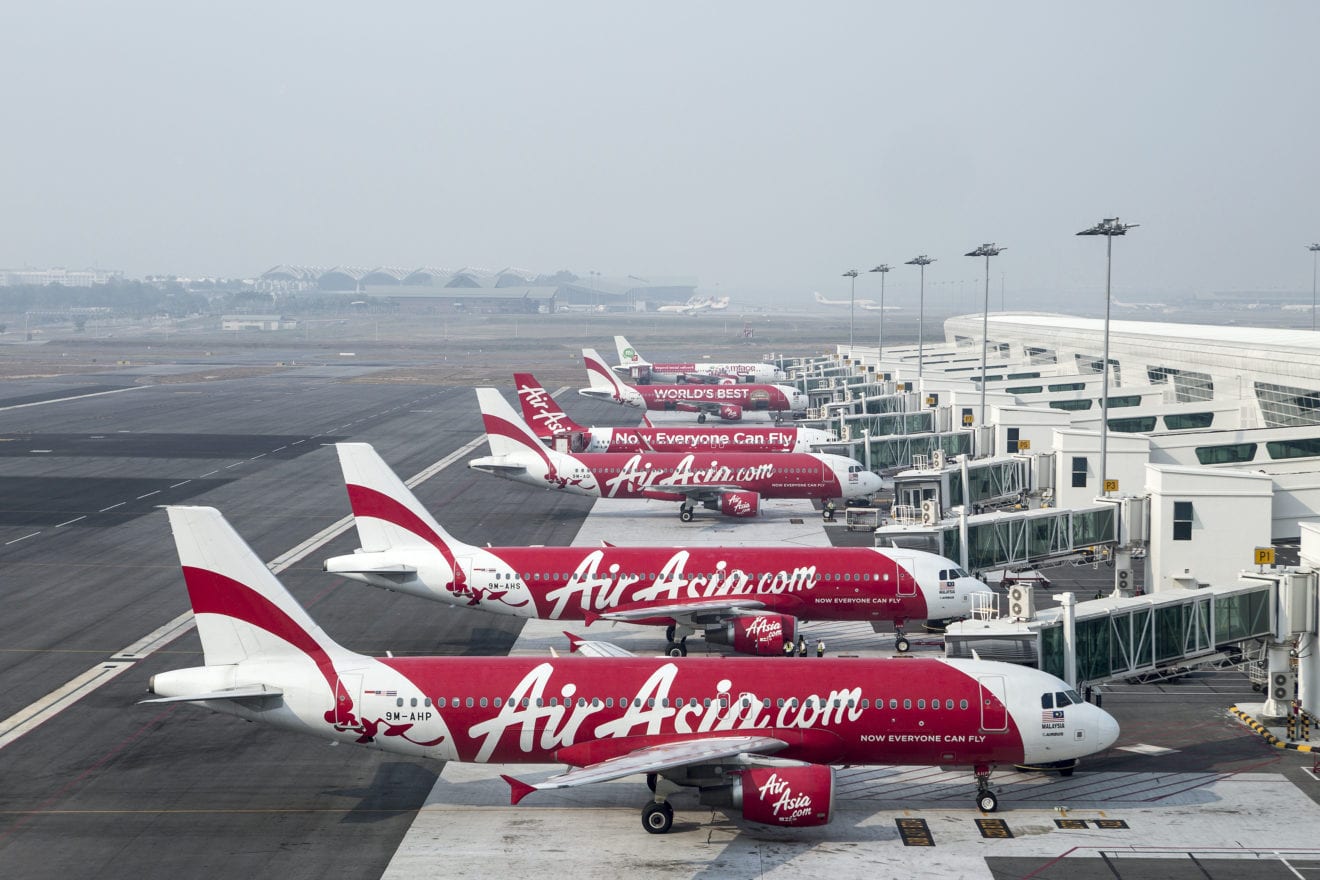
    Low-cost carrier (LCC) Thai AirAsia has plans to expand its fleet in China, revealing that it is planning to add five to six aircraft per year over the next few years.

    Thai AirAsia CEO Tassapon Bijleveld told that half of the additional aircrafts would be allocated to China, its largest international market.

    China has accounted for 26 percent of the carrier’s total international capacity to date. Thai AirAsia currently, has 38,880 weekly seats across 14 routes in the Thailand-China market.

    CAPA–Center For Aviation stated that China accounts for 13 of the combined 35 international destinations to which Thai AirAsia/Thai AirAsia X flies.

    Thai AirAsia currently serves 11 destinations in mainland China. Its sister medium/long haul LCC Thai AirAsia X serves another two Chinese destinations.

    The airline, a joint venture between the Malaysia’s AirAsia and Thailand’s Asia Aviation, is keen to grow its base at U-Tapao near the city of Pattaya, which opened in September 2015 and is linked to Macau.

    The expansion on the U-Tapao/Pattaya base would enable new routes to China.

    The low-cost airline has two A320s based at U-Tapao operating three domestic and four international routes – including the two mainland Chinese routes, Macau and Singapore.

    According to Bijleveld, all the U-Tapao routes “are doing very well”, and the Pattaya market is promising.

    The carrier is also considering launching routes from Hat Yai to Hong Kong, Macau and Singapore.

    Through the first three quarters of 2016, Thai AirAsia’s passenger numbers increased by 19 percent to 12.86 million.

    Thai AirAsia plans to add five A320 neos aircraft in 2017. Under its current five-year fleet plan it envisages a fleet of 71 aircraft by the end of 2020.

    Further, Thai AirAsia is also expanding in India, which it referred to as a logical growth market for Thailand.

  • Village for Cafe Amazon’s Japan launch

    Village for Cafe Amazon’s Japan launch

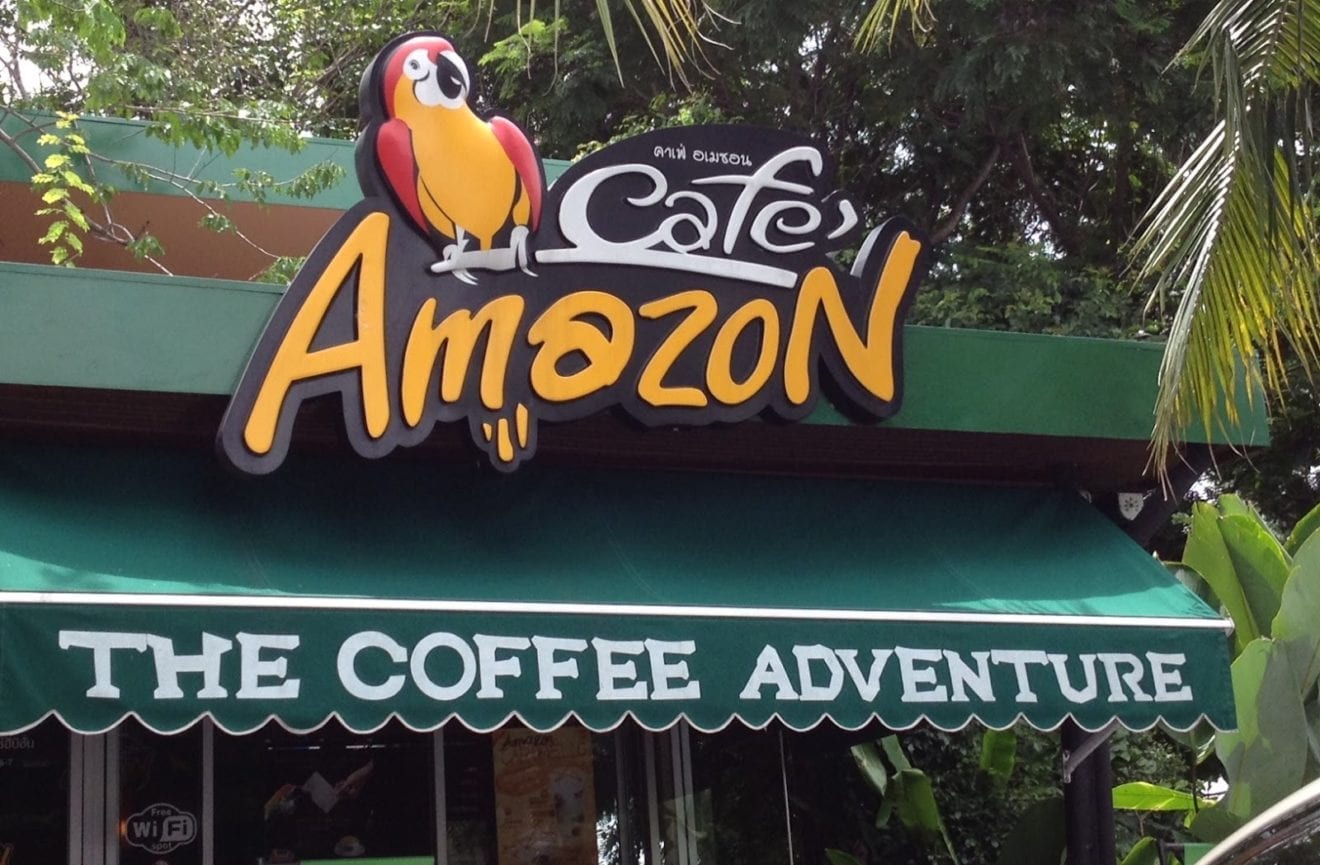
    Rather than a big city, Thai coffee-shop chain Cafe Amazon has chosen a village for its launch into Japan.

    More than 200km from Tokyo, Kawauchi in the Fukushima prefecture has fewer than 2000 residents, and the community is still struggling to recover from the 2011 nuclear disaster.

    Cafe Amazon Japan store

    Kawauchi is about 25km away from the Fukushima Daiichi nuclear power plant, which had meltdowns after the earthquake and tsunami on March 11, 2011. The village was temporarily evacuated, with about 30 per cent of the registered population of 2700 yet to return.

    However, Thai state oil and gas company PTT, which owns the Cafe Amazon chain, believes that starting out in such a location could help to raise brand awareness.

    PTT president/chief executive Kevin Vongvanich, who travelled from Bangkok to attend the Kawauchi shop’s opening ceremony, says the company hopes to open other branches across Japan.

    Cafe Amazon Japan open

    He says one of PTT’s objectives in Kawauchi is to gather consumer feedback. “We have a special coffee designed for the Japanese – a bit lighter than coffee in Thailand. The testing will provide us with information so we can adapt our coffee to suit Japanese tastes.”

    Cafe Amazon is using the same Thai beans it offers in its 1600 domestic outlets. A basic cup of coffee in Kawauchi sells for 250 yen (US$2.30), and the 60-seat shop resembles a wooden house, with customers being asked to leave their shoes at the entrance.

    Japanese building materials maker Codomo Energy, which has a factory in Kawauchi, has the Cafe Amazon franchise for Japan, and the partners plan to open several more branches next year, starting in Osaka.

    For Kawauchi, the cafe represents a rare investment from outside the community. At the opening ceremony, Mayor Yuko Endo said he hoped more outsiders would visit the village because of the cafe.

  • Jamie Oliver to announce its opening for the first Jamie’s Italian restaurant in Thailand

    Jamie Oliver to announce its opening for the first Jamie’s Italian restaurant in Thailand

    Jamie’s Italian by Jamie Oliver is pleased to announce its opening head chef for the first Jamie’s Italian restaurant in Thailand, set to open in the fourth quarter of this year. Alex Barman, a dynamic and passionate chef with more than 11 years of culinary experience, will be leading the kitchen team as head chef of Jamie’s Italian Siam Discovery.

    Born in North Wales, UK, Alex started working in restaurants at a young age while still studying, beginning his culinary career as a kitchen assistant in a local hotel restaurant, and then progressing to be a sous chef in a local bistro, and head chef for Whitbread Group in Cardiff. In 2010 he joined the Jamie’s Italian family in Cardiff as a commis chef, moving swiftly through the ranks and taking his first head chef role for Jamie’s Italian in Cheltenham and Birmingham. He was also a member of the training support team for the opening of Jamie’s Italian Westfield, Stratford near the London 2012 Olympic Stadium. Alex moved to Singapore three and a half years ago to open the first Jamie’s Italian in Asia in VivoCity, where he started as the sous chef and was quickly promoted to head chef. In 2015, he moved to Bali as head chef for the new restaurant, Jamie’s Italian Kuta Beach.

    “Everything we serve is made with care,” Alex Barman, the head chef of Jamie’s Italian Siam Discovery said. “Good food is as the heart of everything we do. We are fully committed to supporting Jamie’s fight for better food worldwide, and his mission to make good food accessible for everyone.”

    As with all Jamie’s Italian outlets, the Siam Discovery restaurant will remain committed to sourcing only the best free­range, sustainable and ethically sourced ingredients. The restaurant will also work closely with Thai farmers to showcase local, responsibly grown produce.

    Alex said: “One of the most exciting parts of the job so far has been sourcing ingredients that fit in with Jamie Oliver’s food ethos. It’s not always easy, but it is always enjoyable as I have been able to meet some really amazing people. I am very passionate about sourcing and working with great local suppliers who are as passionate about great ingredients and the food ethos behind them, as I am. I’m really looking forward to seeing these ingredients feature throughout our menu.”

    “Since moving to Asia I’ve always wanted to work in Thailand and experience the culture, people and amazing local food on a regular basis, not just for a holiday, as you never really get to experience the real country and people on short breaks. It’s such a diverse and dynamic country with big differences from one province to another, making it very exciting to travel around and experience all the country has to offer. I love cities and actively seek to work and live in big, bustling, dynamic cities in which Bangkok has to be one of the best so far I’ve lived in.”

    Alex said: “Jamie’s Italian food is simple, rustic and inspired by dishes eaten all over Italy, delivered to the local market at affordable prices, which means it’s great for any occasion. I will also be creating some fantastic daily specials, maximising ingredients I can get at short notice from local markets and suppliers. I’m really looking forward to using some of the interesting products that are available here to create some brilliant dishes, with a new brigade of talented local chefs, and seeing our first guests enjoy our food.”

  • The Hour Glass profits drops 14 per cent

    The Hour Glass profits drops 14 per cent

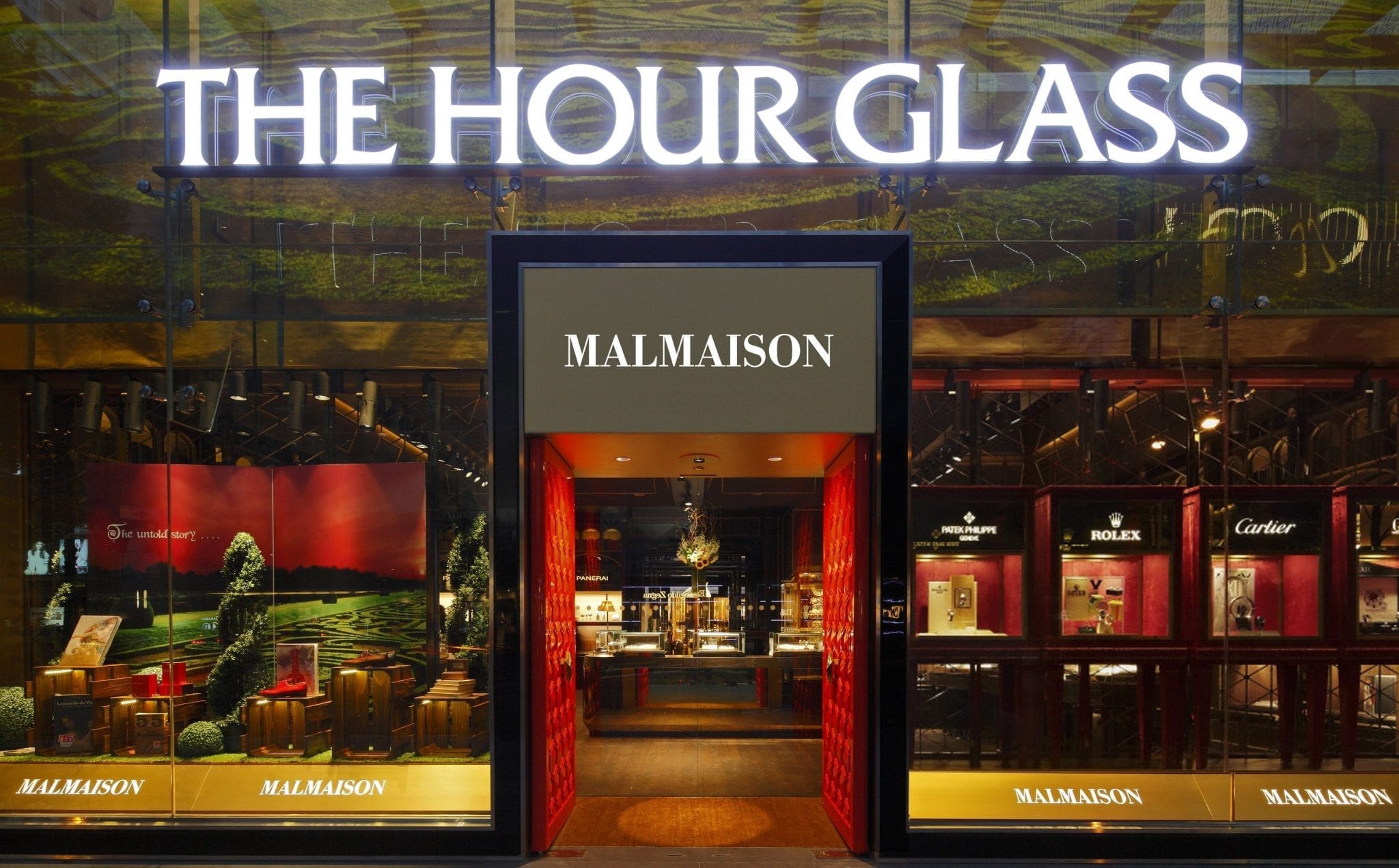
    Citing challenging business conditions and weakening consumer confidence, luxury-watch retailer The Hour Glass reports that its net profit for the second quarter ended September 30 fell 14 per cent year-on-year to S$8.32 million (US$5.88 million).

    Revenue declined 7 per cent to S$163.11 million for the period.

    For the six months to September 30, The Hour Glass profit slumped 18 per cent to $16.51 million and revenue was down 7 per cent at $311.3 million.

    The group says the death of the King of Thailand will have an impact on the performance of the group’s Thai associates as the country enters a prolonged period of mourning.

    While the retailer believes market conditions will continue to be challenging, it expects to remain profitable for the rest of the financial year.

  • Foodland, plans to expand lots over the next five years

    Foodland, plans to expand lots over the next five years

    Expats’ favorite supermarket, Foodland, plans to expand lots over the next five years. The chain has doubled its yearly investment budget to THB500 million to open four or five new grocery stores and add three new types of restaurants to their roster.

    Some of the new locations are already open. There is now a Foodland at The Street community mall on Bangkok’s Ratchadaphisek Road. Another Foodland opened yesterday at Rama 3’s The INT Intersect community. A third is opening soon at the Terminal 21 in Nakhon Ratchasima. The other locations have not yet been announced.

    Foodland’s new restaurants will include a Japanese ramen chain, a Hong Kong-style roasted-goose dining spot and a Singapore-style street food restaurant.

    Chief executive officer Somsak Teerapattanakul said, “As I am getting older, I want to speed our expansion as much as possible. Starting from next year, we plan to open four or five new Foodland stores for five consecutive years,” Somsak said.
    These expansion plans means that the company’s sales might reach THB10 billion in 2017, which would be 25 percent higher than the THB8 billion they should hit this year.

  • TrueMove deploys Procera’s ScoreCard

    TrueMove deploys Procera’s ScoreCard

    Thai mobile service provider TrueMove has deployed Procera’s ScoreCard technology to monitor the quality of experience (QoE) its network is delivering to subscribers across 2G, 3G, and 4G LTE.

    ScoreCard is being used for raw QoE KPI intelligence and the visualization of network performance, thereby helping to guide capex investments and better service planning.

    TrueMove’s management can quickly use the data and visualization to further aid business investment decisions, maximize ROI, and reduce churn among the subscriber base.

    “Mobile operators are increasingly differentiating their offerings by delivering a differentiated experience to subscribers,” said Viriya Upatising, CIO at TrueMove.

    “Procera’s solutions enable TrueMove to see the actual experience delivered to their subscribers in real-time, and ScoreCard provides unique QoE KPIs and visualization that is ensuring the experience is a good one for all subscribers.”

    As higher bandwidth mobile devices, connected cars, and the Internet of Things (IoT) continue to proliferate, TrueMove needs better intelligence about the QoE delivered to subscribers to maximize the return on investment for its capex.

    ScoreCard has been deployed across TrueMove’s network to measure the quality of mobile broadband delivery. No Personally Identifiable Information (PII) is collected from the subscribers, but the overall quality of the broadband service is measured and fed back to a centrally deployed Procera Insights system.

    ScoreCard has already identified several areas of investment that will improve the QoE of the TrueMove network, and action has been taken to enhance the subscriber experience based on ScoreCard’s recommendations.

  • Dtac taps Nokia to revamp core network

    Dtac taps Nokia to revamp core network

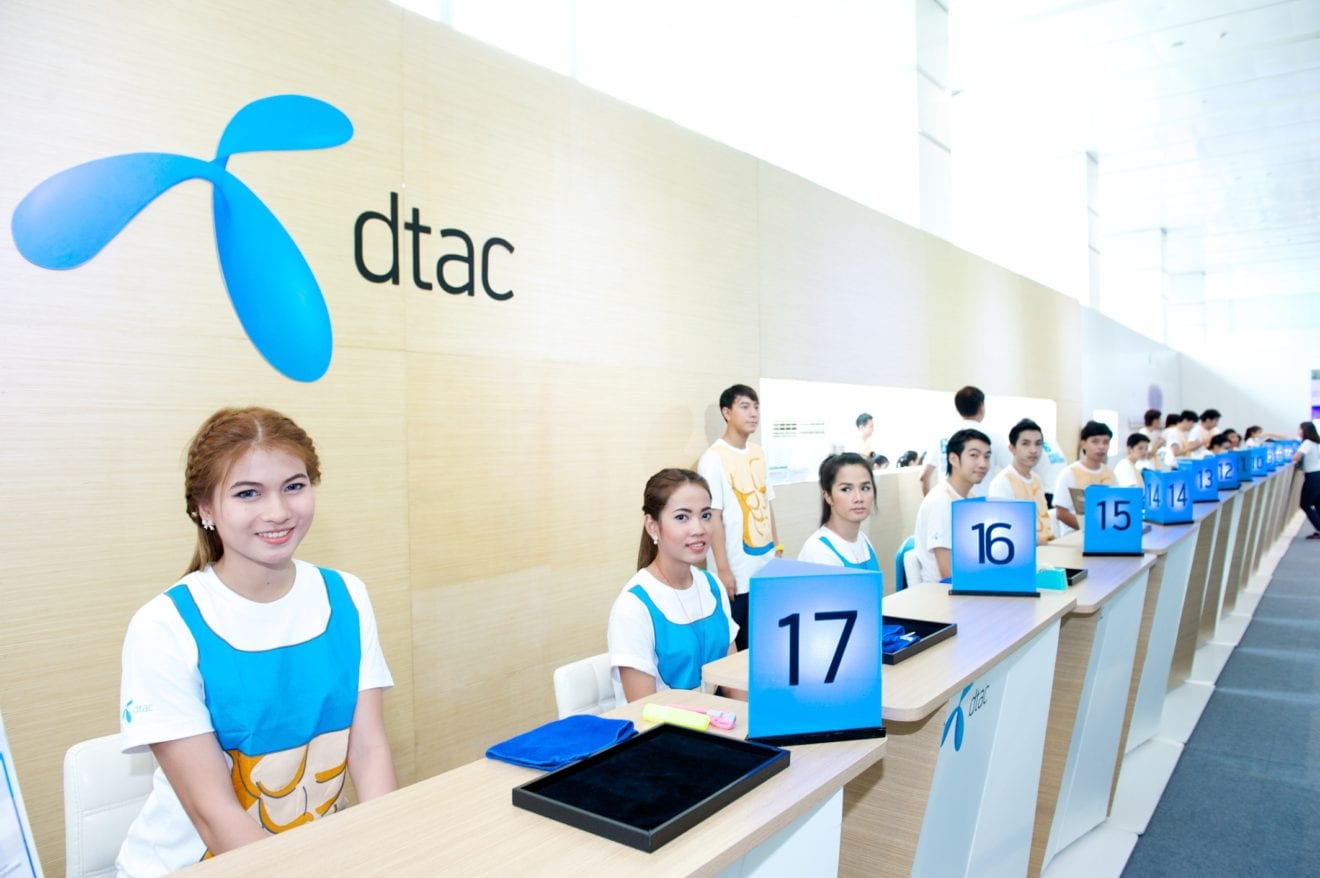
    Thailand’s Dtac has become the market’s first mobile operator to implement an SDN-ready IP/optical network using equipment from Nokia.

    Dtac is implementing the technology to replace its existing IP core routing and DWDM infrastructure, in order to achieve the capacity to serve Thailand’s fast-growing mobile subscriber base.

    The deployment also includes Nokia’s security gateway for Dtac’s LTE network.

    “Over the last two years we’ve seen demand for mobile broadband grow exponentially,” Dtac CTO Prathet Tankuranun said.

    “As we prepare for future advanced technologies we’ve made a strategic choice for an SDN-ready IP/Optical network because it gives us the control and agility needed to run an efficient network that can rapidly adjust to evolving demand patterns. This deployment with Nokia is an important next step in our migration towards full SDN automation.”

    Nokia Thiland head Sebastien Laurent added that the deployment “provides the foundation for an SDN-centric network and will allow dtac to implement on-demand services while also easing operation and maintenance demands.”

  • AEON Provides Privileges for Northern Customer at the 11th Money Expo Chiangmai 2016

    AEON Provides Privileges for Northern Customer at the 11th Money Expo Chiangmai 2016

    AEON Thana Sinsap (Thailand) Public Company Limited will be offering information on its different financial services and special promotions at the 11th Money Expo Chiangmai 2016. Services include Personal Loan, Your Cash, Cash Withdrawal, AEON Credit Cards and Member Cards application service.

    AEON customers who make financial transactions at the expo will also be in with a chance to win a 1-Baht gold necklace, John Lang Ford Bag or AEON Umbrella. Furthermore, AEON customers who has the financial transaction that meet AEON’s conditions will receive Caggioni Luggage or Big C Gift Voucher valued at 2,000 Baht maximum. Additionally, AEON is giving a special interest 0% installment on gold.

    The 11th Money Expo Chiangmai 2016 will be held from Nov 18 – 20, 2016 at Chiangmai Hall, Central Plaza Chiangmai Airport. 

  • CAT to cut network leasing rates by 10%

    CAT to cut network leasing rates by 10%

    Thai state-owned operator CAT Telecom will cut its wholesale 850-MHz network leasing prices by 10% to help the companies using the network under an MVNO model improve profit margins.

    CAT plans to implement the price cuts by the end of the year, citing comments from president Col Sanpachai Huvanandana.

    Several MVNOs had asked CAT to lower its rates to help reduce operating costs and help MVNOs struggling to compete stay above water.

    But Sanpachai insisted that the rates are not too high, and that it is instead competitive pressures and low ARPUs that are leaving MVNOs finding it difficult to compete.

    CAT currently has five companies providing 3G services on the operator’s 850-MHz network – TrueMove subsidiary Real Move, Samart i-Mobile, Penguin operating unit the White Space, 168 Communication and Data CDMA.

    According to the report, Samart i-Mobile recently returned 300,000 mobile numbers to save rates on numbering fees after determining that the company can not profitably provide services due to a high network leasing cost. Thai mobile operators pay a fee of 1 baht ($0.029) per month per mobile number.

  • Korean Fashion Struts Authentic Style to Thailand’s Online Shoppers

    Korean Fashion Struts Authentic Style to Thailand’s Online Shoppers

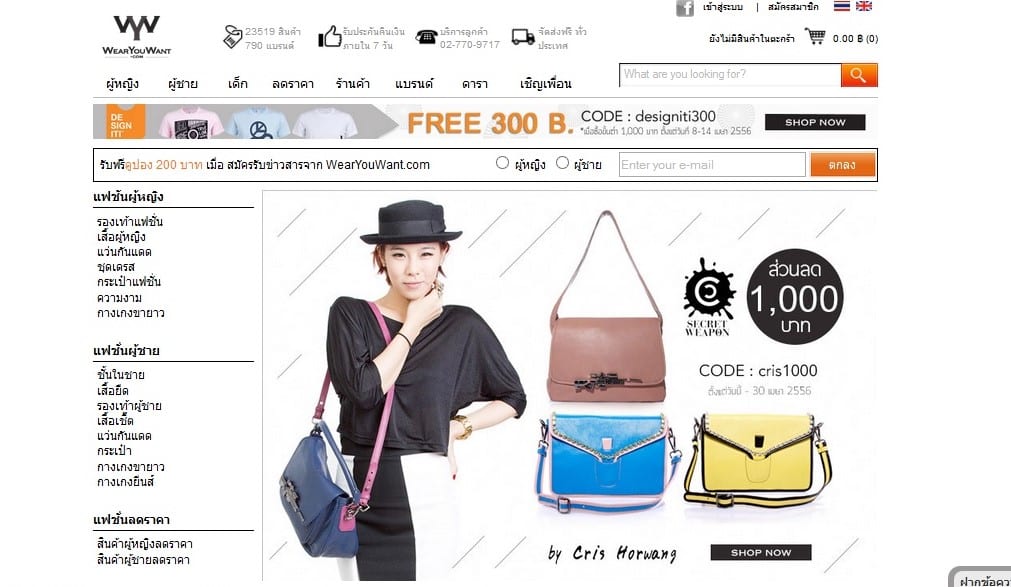
    WearYouWant, Thailand’s leading online fashion and beauty marketplace, is launching a premium, Korean fashion range in Thailand, designed and made in Korea, to satisfy the ever-growing love of Korean brands in the Kingdom. Developing a close relationship with online fashion house, Atria International Style, WearYouWant is sourcing authentic Korean brands, importing these for the Thai market from up-and-coming local Korean designers.

    Just as Korean pop music as captured a huge fan base in Thailand, there is high demand for Korean fashion too. The new Korean range of cool and stylish women’s apparel, accessories, bags and shoes, is to be showcased on WearYouWant. The launch, planned for December 2016, is big news for Thailand’s online shoppers. It is also a sign of growing focus from Korea on Thailand’s rapidly developing e-commerce market; the fastest growing in Southeast Asia.

    The WearYouWant collection is unique in Thailand and has been specially curated by fashion experts to assure quality and to appeal to the country’s online fashion-buying market who are actively seeking out Korean brands. Martin Toft Sorensen, Co-Founder and Co-CEO of WearYouWant confirms that this latest fashion collection launch is part of an ongoing strategy to understand and meet their customers’ needs and a response to the market in Korea too.

    Our decision to move forward with Korean brands is in part due to a general push for designers to expand beyond the saturated markets in Korea. WearYouWant is an ideal platform for this expansion as there is a great amount of passionate interest from our online shoppers for Korean fashions. We pride our success in being ahead of the curve with consumer trends and this is what makes our platform so vibrant, relevant and exciting.”

    This launch follows the Last Mile Fulfilment (LMF) Korea 2016 conference in September 2016, which Martin Toft Sorensen attended. The event focused on the attraction of Thailand’s solid e-commerce market and higher purchasing power for Korean brands looking to grow within Southeast Asia and succeed outside Korea’s competitive markets. Also clearly highlighted was the importance of fashion distributors in assisting Korean brands to spread out within the region and the value that this can bring to outside markets. The WearYouWant launch aims to add value to Thailand’s blossoming ecommerce market where demand is strong and expectations high.

    ATRIA STYLE (www.atriastyle.com), a powerful South Korean platform that sells contemporary fashion and beauty brands all over the world has been working closely with WearYouWant to fuel cross-border fashion and beauty relations in Thailand to build strong commerce presence between these two key retail luxury markets.

    Founder and CEO, Cindy Yun is optimistic about the future success of Korean fashion and beauty brands through the WearYouWant platform.  “Korean designer fashion is forward thinking, high quality and, in terms of production, there is a good lead time in creating output. This means that brands are stylish and affordable which greatly appeals to savvy Thai consumers. For designers looking to expand their collections outside of Korea, WearYouWant is a vital online lifeline and the e-commerce opportunity this launch entails will enable them to realize their true potential.”