Tag: Thailand

  • First Cross-Border Rewards Platform UTU Launches

    First Cross-Border Rewards Platform UTU Launches

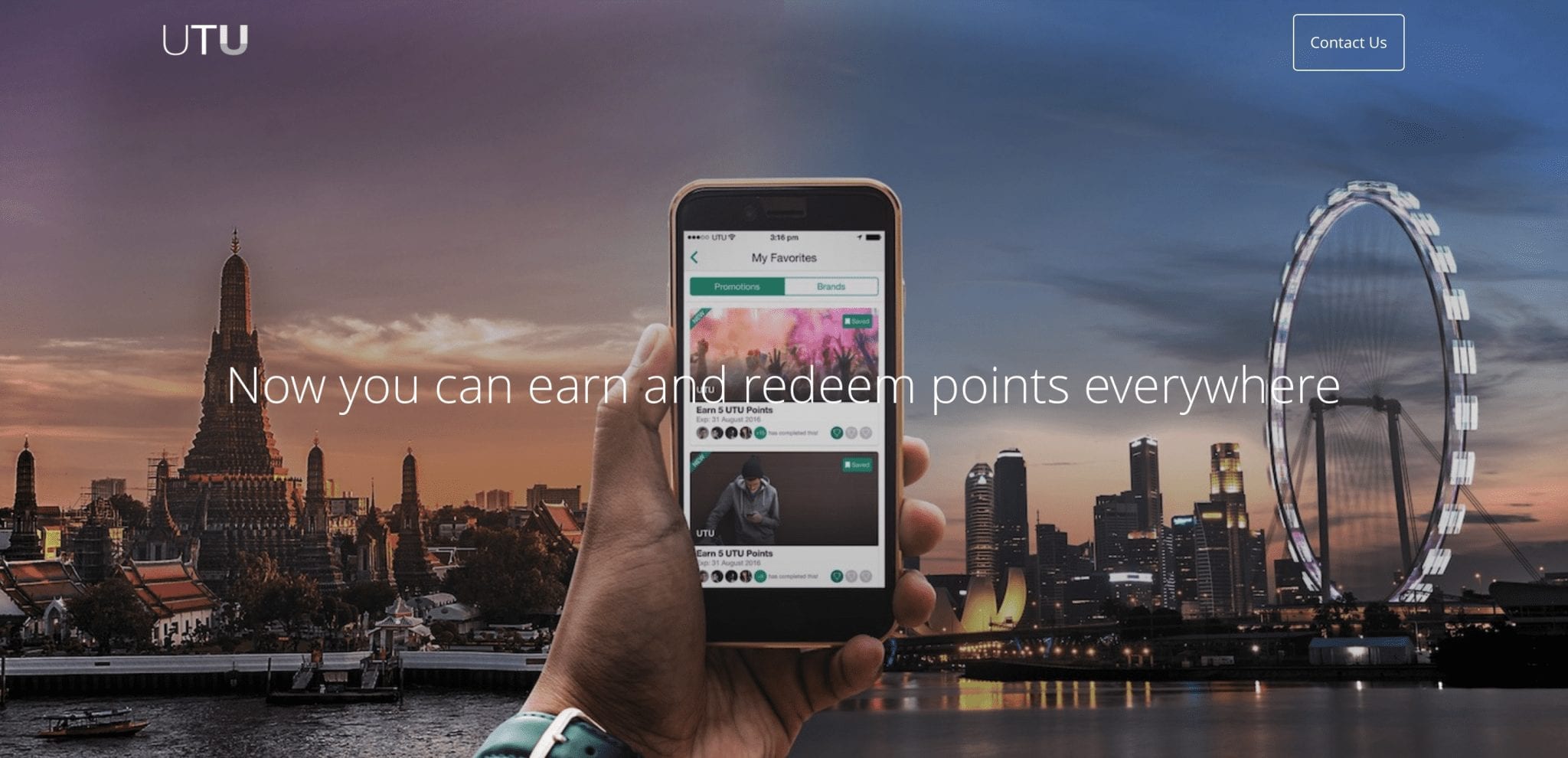
    Father and son team Asad and Ameer Jumabhoy from tourist VAT refund and payments technology company The Scotts Group, and Jeremy Tan, an expert in financial technology, mobile payments and loyalty platforms from Korvac Holdings, announce the launch of UTU, a cross-border loyalty and rewards platform that enables people to convert, earn and redeem points in real time at any UTU merchant outlet worldwide through their smartphone.

    UTU consolidates rewards points from multiple credit and debit cards; eliminates the time it takes for those points to be processed; removes the barriers to cross-border loyalty; and offers shoppers a new kind of consumer model – one that enables them to earn rewards points now and pay with them at point of sale. The platform also features a merchant portal that allows brands to set up their own promotions, optimize campaigns and track their return on engagement.

    “UTU’s potential lies in its ability to engage merchants with consumers, acquirers with merchants and issuers with their consumers on a single integrated platform,” says Asad Jumabhoy, an entrepreneur and pioneer in the digitization of global tax-free shopping. “Real innovation minimizes the gap between process and people. With UTU, we’re bringing it all together in the retail, travel and rewards space at home and away, online and instore.” 

    UTU launches in Thailand in November, with further roll out happening in Asia in 2016/2017. The choice of Thailand as a launch location is attributed to the country’s deep loyalty culture, and presents UTU the opportunity to fill an immediate need (e.g. as of August 2016 over 70 million credit and debit cards were in circulation in the country; Thais carry an average of seven loyalty cards each; and brand rewards programs are the country’s most popular Google search category). Brand partners at launch include Visa Thailand, the Tourism Authority of Thailand, RSH Limited and Singapore’s NTUC Link. Availability in the UK, Europe and US is anticipated in 2017. 

    “We are excited to be working with UTU on the expansion of the Plus! Partners network beyond Singapore and is in line with our vision to provide gratifying experiences for members of the Plus! Rewards Program,” says Tony Tan, CEO of NTUC Link. “This synergistic partnership allows Plus! Members to maximize the mileage of their overseas expenditure as points earned during their travels can be converted and redeemed for rewards when they return home. The growing number of leisure and business travelers in our membership base will definitely benefit from the enriched array of options UTU will make available around the world.”

    “UTU promises to enhance everyday retail experiences by providing greater seamlessness between customers and brands across borders,” says Indranu Hati, CEO of RSH Thailand Group. “UTU is the perfect loyalty service partner for us, given our growing footprint in nearly a dozen countries across Pan Asia.” 

    UTU is a response to the observation that the tourist today is a local tomorrow, and a local today is a tourist tomorrow. With more than one billion people travelling to foreign countries a year, locals and tourists want integrated loyalty programs, greater ease in managing their rewards points and more relevant deals from merchants. With UTU, shoppers continue to be rewarded, regardless of geography, through the one piece of technology they use every day – their mobile phone. 

    To use UTU, users download the free mobile application; register up to five credit or debit cards on to the UTU app; earn rewards points when they shop; convert those points through the UTU platform; and spend them at thousands of participating redemption outlets. Users can also gift points, select to receive promotions and earn extra points through merchant engagement.

    The global loyalty industry is estimated to reach US$20 billion by 2020. Loyalty management today is an expensive and segmented process which has resulted in a plethora of programs delivering incremental advantages to the consumer. Merchants bear the cost of loyalty systems and front line education and training. Shoppers are burdened with physical cards and are responsible for monitoring their points and merchant offers through separate portals. UTU eliminates the inconvenience for all parties and provides a streamlined experience. 

    “We congratulate UTU on launching this global loyalty rewards program and choosing Thailand as its springboard,” says Suripong Tantiyanon, Country Manager, Visa Thailand. “Through Visa Direct, UTU taps the push payment capability of Visa’s global payment system to redeem points and rewards.” 

    “Loyalty is the key to brand success in a digital world, yet we’re still limited in how we are rewarded for how we choose to spend our money,” says Ameer Jumabhoy, a second-generation student at MIT Sloan School of Management involved in MIT’s Digital Currency Initiative. “What we’re working to achieve with UTU is to remove those boundaries and give people the freedom to get more.”

  • 2C2P’s Online-To-Offline E-commerce Service Now Available At Over 320,000 Locations

    2C2P’s Online-To-Offline E-commerce Service Now Available At Over 320,000 Locations

    2C2P, the leading Southeast Asian payments company which processes billions of dollars in transactions each year, has announced 320,000 offline payment locations for its ‘123’ payment solution. ‘123’ is an alternative payment service. Through it, consumers of 2C2P’s merchants across Southeast Asia (SEA) can pay for their online purchases with cash or alternate means at these 320,000 offline payment locations. 2C2P’s merchant partners include some of the largest online retailers across Southeast Asia, spanning the travel and tourism, retail, food and beverage and hospitality industries, among others.  123 enables these online retailers to bring online commerce to the region’s unbanked population which, according to KPMG, spanned 73 per cent of the region’s population, or 438 million people.  

    At online check-out, their consumers will have the option to pay for purchases using 123. They will be provided a bar code which can be printed out or scanned from their mobile devices, enabling them to then pay with cash or alternate means 2C2P’s extensive network of offline payment locations – available through 2C2P’s channel partners. Payment channels include cash over-the-counter at retail chains and agents, ATMs and electronic kiosks (such as AXS, SAM, SingPost), as well as internet banking and mobile banking. These locations are available across Southeast Asia, including Indonesia, Malaysia, Myanmar, the Philippines, Singapore and Thailand.

    Bringing e-commerce capabilities to rural Myanmar

    123 has increased its payment locations across the SEA region, with 12,000 new locations added in Myanmar in 2016, near ten times the network of the country’s largest bank. It has achieved this by establishing partnerships with Myanma Post Offices, Myanmar Awba Group and ABC convenience store chain. Retailers and merchants including Myanmar National Airlines (MNA) and Oway are among the first in Myanmar to actively offer 123 to their customer base.

    MNA is the largest airline carrier, and one of only two international carriers in Myanmar. It has the most extensive route network within the country. With 123, its customers can book their tickets online and then pay at over 12,000 physical locations across Myanmar, or pay through AYA Mobile Banking and branches. Customers of Oway, Myanmar’s largest online travel agent, can use 123 to make travel bookings more convenient and accessible – all without a debit or a credit card.

    Aung Kyaw Moe, CEO and Founder of 2C2P said, “2C2P has made extensive efforts to open up Myanmar’s unbanked population to e-commerce. As the country continues to see increased mobile penetration, rising urbanization and improved consumer spending, there is an urgent need to modernise its e-commerce and payments infrastructure. 2C2P’s vision is to bring e-commerce to every single person in Myanmar, and more broadly, in Southeast Asia. In so doing, we look to build the region’s e-commerce future.

    “2C2P, through 123, looks to bring convenience to Myanmar’s citizens, particularly those that remain underserved by banking and financial institutions – lacking banks accounts, credit and debit cards or access to a bank branch. They can now, for the first time, tap into the fast-growth of national, regional and global e-commerce by paying for their online purchase at a convenient offline location via 2C2P’s extensive network of physical channel partner locations,” added Aung.

    Myanmar’s Ministry of Hotels and Tourism estimates 6 million annual inbound tourists for 2016, a 25 per cent increase from 2015 (4.68 million). This number is predicted to cross 7.5 million by 2019. The Asian Development Bank (ADB) is optimistic that tourism will drive the country’s overall economic growth. It forecasts tourism revenues to have increased by 19 per cent from 2014 to 2015 to US$2.1 billion – representing over 4 per cent of Myanmar’s GDP.  Asia-Pacific will overtake North America to become the largest digital travel market globally in 2019, according to eMarketer.

  • PayPal appoints Somwang Luangphaiboonsri as Country Lead for PayPal Thailand

    PayPal appoints Somwang Luangphaiboonsri as Country Lead for PayPal Thailand

    PayPal, a global leader in digital payments, has appointed Somwang Luangphaiboonsri as Country Lead of its Thailand subsidiary. 

    As Country Lead, Mr. Somwang will be responsible for assisting PayPal to capitalize on the explosive growth of cross-border e-commerce in the Thai market. Together with the newly-established PayPal Thailand team, Mr. Somwang will also be focused on educating Thai merchants on the growth opportunities available in the global e-commerce marketplace. 

    Rahul Shinghal, General Manager for PayPal Southeast Asia said, “I am pleased to announce Somwang’s appointment as the Country Lead for the Thailand office. Somwang has been instrumental in many of our partnership dealings with Thai merchants, including Thai Airways.  I am excited to see the growth of our offerings to customers in the market.” 

    Having spent more than 16 years in the finance and technology industries, Mr. Somwang is a veteran in the e-commerce space. Prior to joining PayPal, Mr. Somwang co-founded a domestic online payment service provider and built the company to be the platform of choice for many Thai consumers. He is well-entrenched in the Thai payments scene, and is also a secretary of the Thai E-Commerce Association and the secretary of Thailand ePayment and eMoney Association.

    “Fintech is a hot topic right now and Thai businesses will need guidance to help them navigate through the fast-changing payment innovations in order to tap on the consumer growth opportunity. I am looking forward to PayPal introducing new solutions for its Thai merchant partners for their evolving customer needs and building PayPal’s presence in Thailand,” said Mr. Somwang. 

    The appointment of Mr. Somwang is just one of the latest steps taken by the digital payments company to reinforce its position in Thailand this year. PayPal has been actively building its merchant portfolio to enable Thai businesses to have access to a seamless cross-border payment experience. In August 2016, an MoU was signed with the Department of International Trade Promotion (DITP) to promote and facilitate cross-border trade for Thailand’s small and medium sized businesses. PayPal also onboarded leading travel businesses including Centara Hotels & Resorts, Centre Point Hotels Group, and Thai Airways as merchant partners that same month, being the sole payment provider for their cross-border online payments. 

  • Siam Makro buys four food companies

    Siam Makro buys four food companies

    Siam Makro, which runs the Makro cash-and-carry store chain, has clinched a 3-billion-baht (US$85.75 million) deal to acquire four food companies.

    Through its wholly owned subsidiary Siam Food Services, Siam Makro has entered into an agreement to acquire an 80 per cent stake in each of Indoguna (Singapore), a listed firm on the Singapore Exchange, Indoguna Dubai, Lordly and Just Meat. Indoguna is listed on the Singapore exchange, while Lordly and Just Meat are Hong Kong listed.

    The funds will come from Siam Makro’s cash flow and bank loans.

    Siam Makro’s major shareholder, Charoen Pokphand Group (CP), has its strength in the food and agricultural businesses. CP acquired a 64 per cent stake in the cash-and-carry chain from the Dutch trading company SHV Holdings for $6.6 billion in 2013.

    Siam Makro has partnered with with local companies to take its Makro cash-and-carry chain to Cambodia. The JV is 70 per cent owned by Makro ROH, a wholly owned subsidiary of Siam Makro, and the balance by Cambodian investors, with $2 million in initial registered capital.

    Siam Makro plans to open 10 stores in Thailand this year, bringing its total outlets to 108 nationwide. During the first half, Siam Makro posted a net profit of 2.38 billion baht on revenue totalling 85.7 billion.

  • Manchester United stars to introduce Cafe Football

    Manchester United stars to introduce Cafe Football

    Former Manchester United stars Ryan Giggs and Gary Neville will open a football-themed cafe in Singapore next year as part of a business venture with real-estate firm Rowsley.

    rmp_cafe_football_0823-1280x853-

    Gary Neville (left) and Ryan Giggs team up.

    Cafe Football is the first overseas venture for the UK franchise, which also includes Hotel Football just beside Old Trafford in Manchester.

    Cafe Football and Hotel Football were initially set up by Singaporean businessman Peter Lim along with five of the Manchester United’s “Class of 92” cohort, which includes Giggs, the Neville brothers Gary and Philip, Paul Scholes and Nicky Butt. Rowsley last year acquired the majority share of both Cafe Football and Hotel Football, as well as hotel management company GG Collections.

    The company has just revealed its intention to bring the franchise to Asia, as well as Europe, over the next decade. It has identified China and India as the main markets it is targeting for expansion.

    “We’ve been approached quite a lot by partners to expand,” says Gary Neville, who played 602 games for the club. “Knowing there’s quite a lot of excitement in the market, we’re filtering down to the best opportunities that support our brand and product.

    “So far, we’ve had fantastic reviews in Manchester, with a more than 80 per cent occupancy rate even during non-match days. Now we are looking for a UK, Europe and Asian expansion over the next 12 to 18 months to add multiple properties.”

    Neville says they hope to build more than 5000 rooms over the next 10 years. They are hoping to open in Indonesia, Malaysia and Thailand, with some developments including both a hotel and cafe, while others will be a cafe only.
    There are currently two Cafe Football outlets in the UK, in Manchester and London. The cafes feature menus divided into “defence, midfield and attack”, with dishes named after football phrases such as “The Special One”, “Mexican Wave” and “El Classico”.

    Lim previously was involved in a football-themed eatery in Singapore. Fashion brand distributor FJ Benjamin, of which Lim is a shareholder, co-owned the now-defunct Devil’s Bar, a sports pub with a Manchester United theme, at Orchard Parade Hotel.

  • Security is key for mobile wallet adoption in Thailand

    Security is key for mobile wallet adoption in Thailand

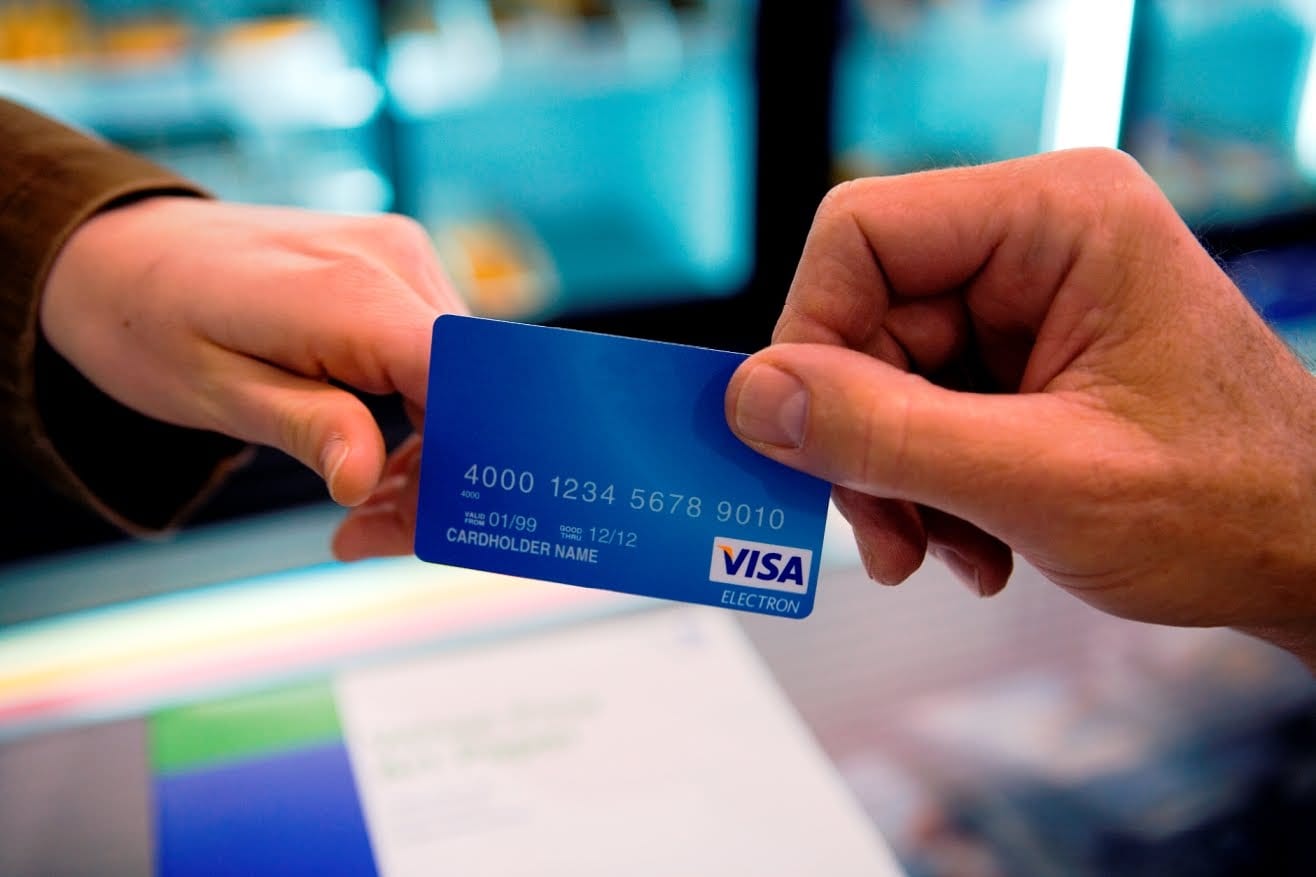
    Whether paying with contactless cards or mobile wallets, Thais prioritize security over convenience and are more likely to use contactless payment methods when they know strong security measures are in place, according to a recent study conducted by Visa.

    The Visa Mobile Wallet and Contactless Study found that the majority of Thais (82 percent) believe security is more important than convenience when it comes to mobile and contactless payments.[1] With accelerated growth in financial technology (FinTech), public and private sectors are grappling with ways to increase consumer confidence in electronic payments, particularly when it comes to transactions carried out on mobile devices.

    The average Thai spends around 160 minutes a day on their mobile devices.[2] By the end of 2016, it is estimated that around 20 million people will own smartphones in Thailand, a figure expected to rise to 24.8 million by 2019.[3] Although internet access and mobile device ownership among Thais are on the rise, uptake of mobile financial services has been gradual, partly due to Thai consumers being unaware of advancements in cyber security, and technology. 

    Suripong Tantiyanon, Visa Country Manager, Thailand said: “Based on our study, the more secure the mobile payment experience is, the more willing Thai consumers will be to use it. We’re confident this cautious yet optimistic attitude, coupled with Visa’s multilayered approach to security, will drive the uptake of mobile transactions in Thailand.” 

    The Visa study, independently conducted by YouGov on behalf of Visa, examines Thais’ attitudes towards mobile and contactless payments alongside those of other Southeast Asian markets, namely Singapore and Malaysia. It finds that the three biggest fears in mobile wallet security are hacking of mobile phone (73 percent), theft of mobile phone (65 percent) and getting charged for unintended purchases (63 percent). 

    “Among the respondents, only 39 percent said they would consider using third-party mobile wallets. But within this particular group of potential adopters 74 percent are already aware of how encrypted tokens eliminate the risk of personal data theft,” added Mr. Suripong.

    Visa Token Service (VTS) ensures mobile and contactless payments are secure as well as convenient. VTS replaces cardholder information, such as account numbers and expiration dates, with a unique digital identifier (a “token”) that can be used for payment, via a user’s mobile wallet, without exposing the cardholders’ more sensitive account information.

    Tokenization hides consumers’ confidential account information during digital transactions, making digital payments more secure. According to the study, approximately 55 percent of Thais are familiar with VTS, with awareness highest among those that are also familiar with mobile wallet technology.

    Just under half of Thais (46 percent) believe paying with a mobile device is as safe as with physical cards; a figure likely to increase in the future, as people become more familiar with advancements in Visa’s mobile payment systems. 

    Three in five Thais (61 percent) believe that one day they will no longer need to carry a card or cash and will instead be able to use their mobile wallets for everyday spending.

    “Once Thais become familiar with innovative security measures, such as encrypted tokens, they are much more likely to use mobile and contactless payments more regularly,” said Mr. Suripong.

  • Ant Financial teams with Thailand’s Ascend Mobile

    Ant Financial teams with Thailand’s Ascend Mobile

    Ant Financial Services Group has announced a strategic agreement with Thailand fintech company Ascend Money.

    Under the agreement Ant Financial will invest in Ascend Money, with the aim of accelerating the growth of a mobile lifestyle and digital financial services platform in Thailand and support the company’s growth in Southeast Asia.

    Headquartered in Bangkok, Thailand, Ascend Money operates in six countries, including Thailand, Indonesia, the Philippines, Vietnam, Myanmar and Cambodia. Ascend Money targets two under-served groups, including digital consumers with its innovative mobile wallet application and the under-banked with its massive agent network.

    It currently provides payment services such as domestic and international remittance, bill payment, top up services, online and offline payments and payroll services. Future services will include lending, insurance and investment.

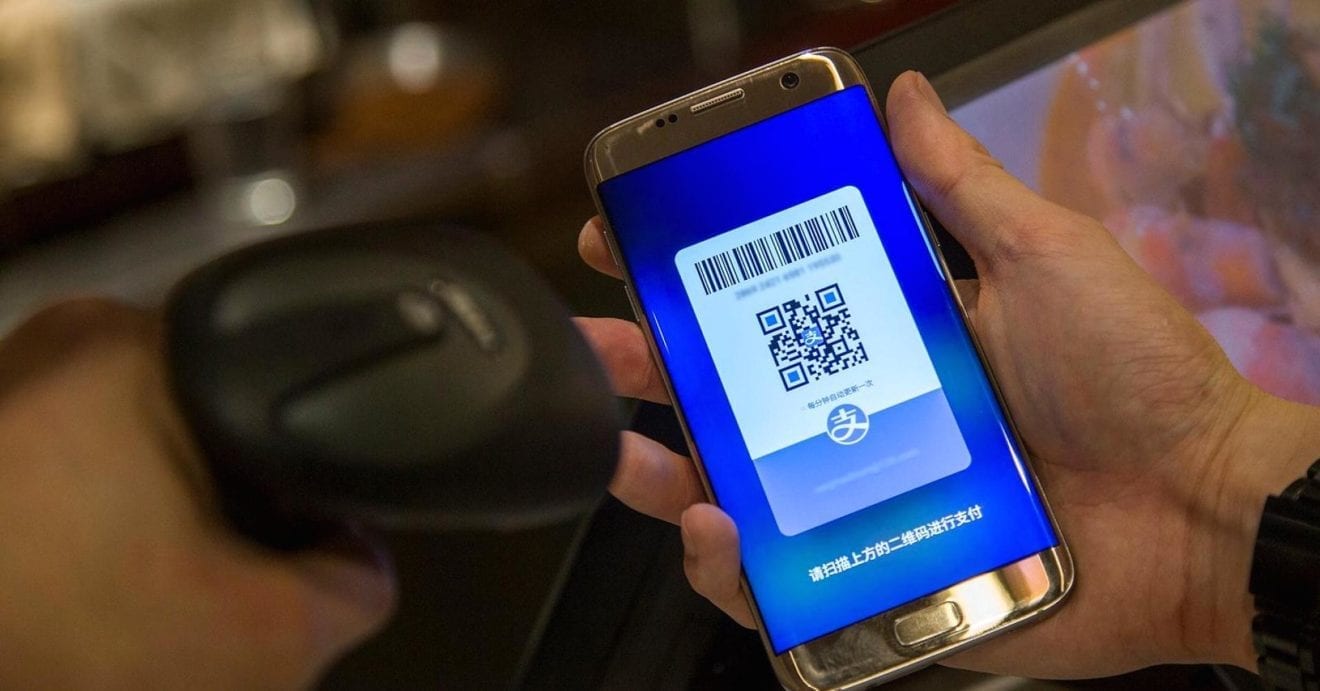
    Together with Ant Financial, Ascend Money will grow its online and offline payment and financial services ecosystem and strengthen its payment services for users and merchants. The deal represents Ant Financial’s first-ever investment in a Thailand-based company. With this partnership Ant Financial, which also runs Alipay, the largest mobile lifestyle and payment app in China, will provide Ascend Money with strategic and technical support for the growth of its business.

    Leveraging Ant Financial’s capabilities in payment, Big Data, risk control and cloud computing capabilities, the partnership with Ascend Money aims to offer Thai consumers comprehensive and equal access to financial services. Ascend Money is Ant Financial’s first partner in Southeast Asia and second globally after Paytm in India.

    “Ascend Money’s mission is to enable everyone access to innovative financial services, leading to better lives,” said Suphachai Chearavanont, Chairman of Ascend Group. “The shared vision of financial inclusion and company values in creating opportunity and sustainability have lead us to this partnership.”

    “Ant Financial is setting its footprint worldwide, not only to provide services for its Chinese users, but to promote equal access to financial services globally,” added Ant Financial SVP Douglas Feagin.

    “Partnerships are vital for Ant Financial’s growth and we want to work alongside companies around the world who share our missions.”

    In early 2015 Ant Financial joined forces with Paytm, the world’s fourth largest e-wallet, to promote secured digital payment to local users in India. Ant Financial is also working with dozens of global payment partners, including Concardis, Ingenico, Wirecard and Zapper in Europe, First Data and Verifone in North America, Paysbuy and Counter Services in Southeast Asia, Recruit in Japan and KICC and ICB in Korea.

  • Big C profit grows despite challenging economy

    Big C profit grows despite challenging economy

    Thai hypermarket operator Big C Supercenter boosted margins in the latest quarter despite the challenging economic climate.

    The company has reported continued resilient rental and service income growth, margin improvement across the board thanks to a focus on the quality of sales – delivering a “robust” Big C profit boost.

    The third quarter to September 30 was the first full reporting period of its new strategic focus on quality of sales rather than the absolute sales amount.

    “On our operations we continued our push to localise our offer in order to become the ‘Thai retailer with customers in our heart’ as we will be better positioned to serve local communities and their varying tastes,”explained Rumpa Kumhomreun, CFO & VP of accounting and finance, in a filing with the Thai SET. “Our work to capture synergies between BJC and Big C is continuing, and during the quarter we for example moved some of our private label tissue manufacturing to BJC. We also started serving Big C Soft Serve ice cream in pilot hypermarkets and Mini Big C stores. Our access to TCC “land bank” also made it possible for us to open an additional Big C Market store at Pantip Chiang Mai during the quarter.”

    The company also improved its online offer, rebranding its Cdiscount.co.th to Cmart.co.th, with over 70,000 SKUs available.

    Big C’s Total Revenues from retail sales, rental and service income, and other income, for the quarter reached Baht 25.892 billion – a decline of Baht 5.799 billion or 18.3 per cent over the same period last year. This decrease was driven by a retail sales decline of 20 per cent from the same period last year, and a same-store-sales decline of 22.6 per cent.

    “The significantly declining same-store-sales trend was driven by our strategic focus on the quality of sales rather than absolute sales volume,” said Kumhomreun.

    With a similar fall in expenses, however, Big C’s net income attributable to shareholders grew by 14.6 per cent to Baht 1.538 billion for the quarter, up Baht 196 million year-on-year.

    Gross profit margin reached 17.8 per cent for the quarter, representing an increase of 487 basis points from last year.

    Store expansion continued during the quarter in all store formats, with two hypermarkets opening in Phonphisai and Na Thawi, two Big C Market stores in Loei and Chiangmai, 23 Mini Big C stores including 15 franchise stores, and one Pure Drugstore. Those took the store count at the end of September to 128 large format stores (Big C Supercenter, Extra, and Jumbo), 59 Big C Market, 431 Mini Big C (including 21 franchise stores), and 142 Pure Drugstores.

  • Samsung Pay to expand to Malaysia, Thailand

    Samsung Pay to expand to Malaysia, Thailand

    Samsung Electronics has confirmed Samsung Pay Thailand will make its debut before the end of this year.

    Thailand, Malaysia and Russia are three of 10 new markets where the payment technology will be introduced.

    Samsung Pay has also announced a global partnership with MasterCard to offer a simplified online payment and express checkout solution through its digital payment service Masterpass, starting early next year. Hundreds of thousands of merchants in 33 countries currently accept Masterpass for online payments.

    “When we introduced online payments in South Korea last year, the service was well received by the market.

    Online payments accounted for more than 25 per cent of the 2 trillion won in processed transactions, demonstrating that consumers may be actively looking for solutions to make their online experiences faster, simpler and secure,” said Thomas Ko, VP and Global GM, Samsung Pay, Mobile Communications Business at Samsung Electronics.

    Samsung Pay will provide consumers with a seamless online payment platform with benefits including:

    • Express Checkout: Skip the process of filling out long online forms. With the express checkout solution, customers will be able use their Mastercard debit or credit cards along with the shipping information saved on their Samsung Pay account to quickly complete online transactions.
    • Make Purchases from Any Device: Customers can make online purchases from a computer, tablet or smartphone while shopping on their favorite sites or apps.
    • Secure Transactions: Security remains our top priority. When making online payments, a unique token is used in an encrypted form – not the actual debit or credit card number. Users can authenticate transactions using secure methods including a fingerprint scanner, which is built into Samsung’s mobile devices.
  • Pomelo boosts funding to $11m

    Pomelo boosts funding to $11m

    Thai online fashion retailer Pomelo has raised a follow-on round, bringing its total Series A funding to US$11 million.

    This round was again led by Singapore-based Jungle Ventures, with participation from existing investors and new contributors including 500 Tuk Tuks (a fund of major venture capitalist 500 Startups), Andre Hoffmann and Jonathan Price.

    Pomelo says it will use the funds to continue expanding in Southeast Asia. While focussed on Indonesia, Singapore and Thailand, it has customers in more than 40 countries.

    “We strive to provide the absolute best in terms of online fashion through our vertically integrated supply chain,” says Pomelo co-founder/CEO David Jou. “eCommerce is clearly approaching a tipping point in Southeast Asia, and we’re lucky to be one of the leaders in the fast-growing fashion vertical.”

    Additionally, the label continues to strengthen its management depth, having added Meg Mistry as brand president and James Lamrock as regional VP (operations). Mistry was previously regional creative director for online fashion house Zalora, while Lamrock was chief logistics officer at Luxola, which was acquired by beauty products company Sephora. Investment firm TPG senior adviser Jonathan Price has also joined in an advisory capacity. He was previously MD of cosmetics and skincare group The Body Shop Asia and global COO of accessories company Targus.

  • Bank of Ayudhya Wins Global Business Outlook 2016 Awards

    Bank of Ayudhya Wins Global Business Outlook 2016 Awards

    Global Business Outlook (GBO), a business publication based out of London, has conferred the 2016 awards for ‘Best Commercial Bank’ and ‘Best Retail Bank’ in Thailand to Bank of Ayudhya (Krungsri).

    Krungsri was established in 1945, and its ordinary shares were listed on the Stock Exchange of Thailand in 1977. The bank is currently the fifth largest in Thailand in terms of loans and deposits. Krungsri provides a comprehensive range of banking, consumer finance, investment, asset management, and other financial products and services to individual consumers, SMEs, and large corporations through 681 branches and over 28,000 service outlets nationwide. Also Krungsri Group is the largest card issuer in Thailand with 7.8 million credit cards, sales finance, and personal loan accounts in its portfolio.

    Noriaki Goto, Krungsri President and Chief Executive Officer, upon receiving the awards said: “Krungsri is honoured with the Best Retail Bank Thailand and the Best Commercial Bank Thailand for 2016 awards. They are testimony to the strength of both our retail and commercial banking businesses and the fruit of our people’s passion to deliver excellent financial products and services to our valued customers. We are proud that these efforts are recognised by such a large base of professional organizations. Driven by our customer centricity strategy, we anticipate customers’ demands and serve them through innovation and technology. Krungsri remains committed to investing for the future and delivering innovative financial products and services for both retail and corporate segments.”

  • Dtac, True slam new computer crime bill

    Dtac, True slam new computer crime bill

    Legal representatives from both TrueMove and Dtac have slammed the new computer misuse act for moving the burden of proof to ISPs to prove their innocence while True said that the Single Gateway government mass surveillance program was still alive and well.

    Speaking at a recent seminar entitled Online life: which way shall we go, Akarawit Jongsawasdiworakul from Dtac’s legal division said that unlike the US’ common carrier law, Thailand’s computer misuse act article 15 puts telcos at risk of criminal prosecution for the actions of their subscribers as service providers face the same criminal liability as their users for, say, an illegal posting.

    Dtac has to invest significant resources into monitoring its users to stay safe legally, resources that could have better been invested in 5G, he said.

    Unlike most aiding and abetting clauses in Thai law in which the aider gets two-thirds of the punishment, the computer misuse act doles out the same punishment to the service provider as it does to the criminal using it.

    However, the latest draft amendment is much worse. In trying to fix that glaring problem, the new version lays out a system where authorities can issue orders to service providers to block the offending post. The law then goes on to say that if the service provider can prove they complied with the order, then they are exempted from any punishment.

    Akarawit said that the computer misuse act shifts the burden of proof. Instead of the prosecution proving guilt, the service providers will now have to prove their innocence to a court.

    He also noted that under the current law, censorship orders must be only via a court order. The new version only needs an order from a “the official in charge” without any judicial oversight.

    Suporn Hornchaiya from True’s legal division, added that the definition of service provider is so vague that anyone with an unsecured WiFi hotspot would be subjected to the full force of the law.

    Suporn said that today authorities use article 20 to block websites, not just those which are a threat to national security or good morals which are allowed under the law, but also use it to block gambling websites and copyright infringement sites which is not allowed under the law. He noted that courts regularly grant blocking orders for the latter.

    Suporn said True has in the past appealed a court order, but the appeal was not accepted as the courts said that True was not an affected party to the blocking order.

  • After Death of Thai King, Luxury Market Wavers

    After Death of Thai King, Luxury Market Wavers

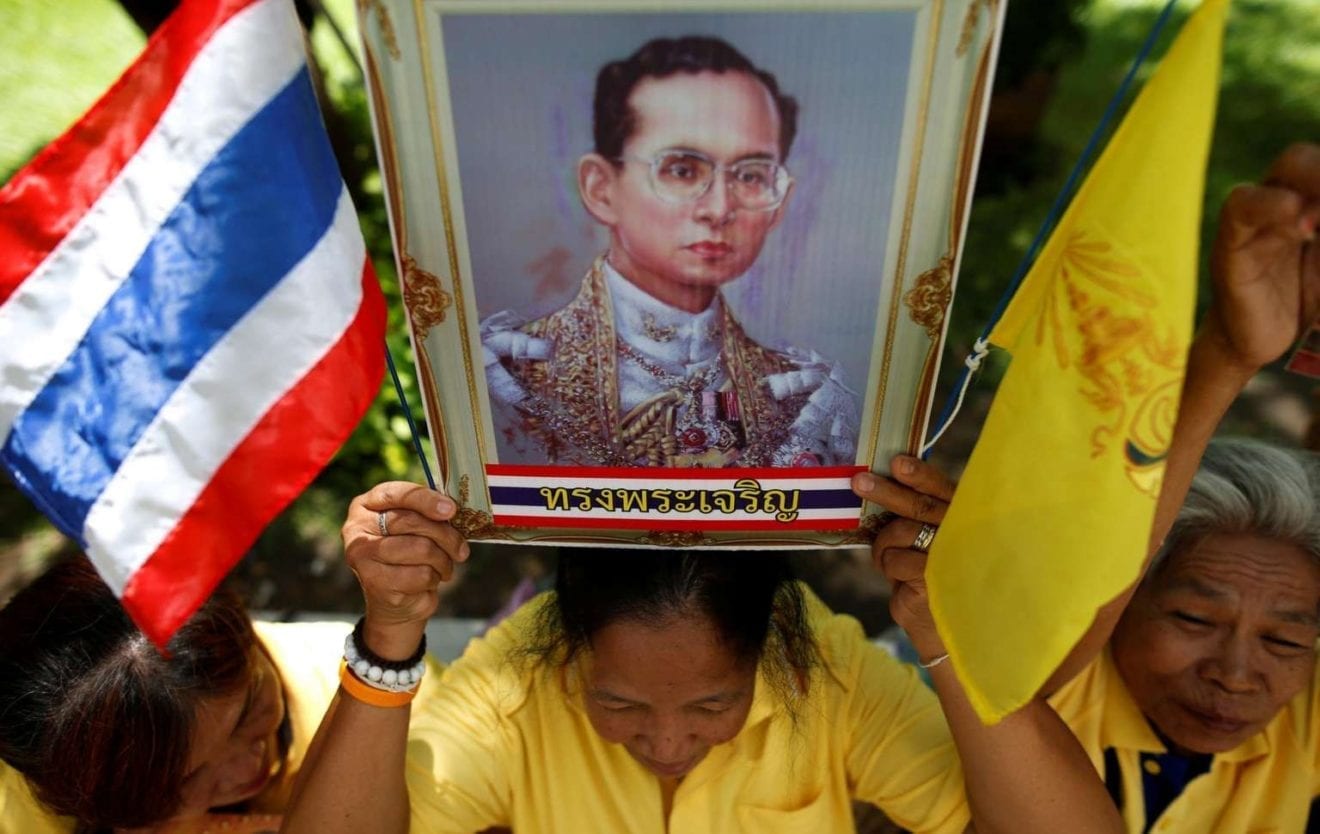
    Following a decade of declining health, 88-year-old King Bhumibol Adulyadej of Thailand, the world’s then-longest-reigning monarch, passed away in Bangkok on October 13. The king’s untimely death concluded a reign that lasted more than seven decades and initiated a year-long period of mourning, bearing substantial consequences for the nation’s luxury and fashion sectors.

    As declared by Prime Minister Prayuth Chan-ocha, leader of the junta that has ruled the country since 2014 after seizing power through a bloodless coup d’état, civil servants will be expected to wear “sombre-coloured” attire for the duration of the mourning period, while the rest of the population has been ordered to “tone down” or cancel entertainment and “joyful events” for at least the next month.

    Though the first full week of mourning has yet to pass, the consequences are already being felt. “I think [the fashion and luxury sectors] are definitely going to suffer — there will be a drastic decline in consumers of fashion brands,” predicts Kullawit ‘Ford’ Laosuksri, editor-in-chief of Vogue Thailand. “For example, I have spoken to a distributor of Kate Spade and Valentino, and they said that they had to re-estimate their Spring/Summer orders … The tourist and retail sectors are going to see a decline in sales — that is something the whole nation is afraid of.”

    Indeed, many of these fears are justified. “Retailers and hotels cancelled all promotions and activities related to sales and events during October to November,” says Anisa Ngandee, an analyst from Euromonitor. “Generally, the last quarter is usually the peak tourism period and the months where retailers [see] festive spending [during the] holiday seasons; thus, it will have a short-term impact on the retailers and hotels sales.”

    Regarding his publication, Laosuksri says, “There’s nothing we can do for the November issue, [but] for December issue, we are definitely going to decrease the print run, [while] a lot of traditional advertisements will be — if not in black and white — condolence messages.”

    From a Western perspective, the extent of mourning may seem extreme, but King Bhumibol’s reign was unique. For most Thais, life under Bhumibol is all they have ever known. “I and all the Thai people view this passing of the king as something that is quite personal as if somebody from our family has passed,” says Laosuksri. King Bhumibol’s heir, Crown Prince Maha Vajiralongkorn, has delayed his ascension to join the Thai people in grieving for his father; however, the country’s general election will go ahead as planned in late 2017.

    In recent years, the Thai luxury market has shown tremendous promise, growing 8 percent year-on-year from 2015 to 2016, reaching a total value of nearly $1.6 billion, according to Euromonitor. This can partly be attributed in part to the country’s young, wealthy upper-middle class. According to Digital Luxury Group,a business intelligence firm headquarted in Geneva, 20.5 percent of consumers who earned $150,000 or more in 2014 fell into the 30-34 age bracket, while another 18.6 percent fell into the 35-39 bracket, giving luxury brands and retailers ample space to penetrate the Thai market.

    The tourist and retail sectors are going to see a decline in sales — that is something the whole nation is afraid of.

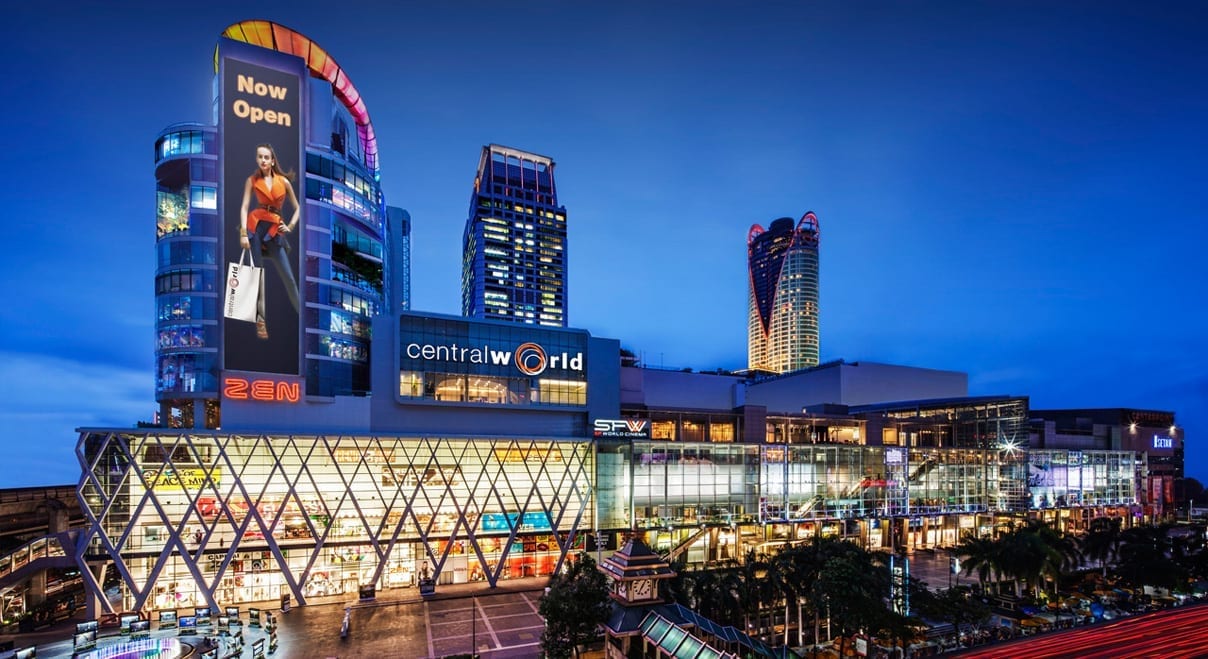
    Nevertheless, despite this wealthy domestic consumer base, tourism still plays a significant role in sales of luxury goods. According to Bain & Company’s 2015 Global Luxury Goods Report, “Thailand [is a] top performer [in the Southeast Asia market] thanks to Chinese flows with strong potential going forward.” Just two days before the death of the king, Thailand’s biggest retailer, Central Group, announced expectations of a 21 percent rise in revenue to 320 billion baht ($9.17 billion) for fiscal 2016; sales at Central stores to foreigners rose 15 percent while transactions with domestic consumers merely increased by 5 percent.

    Given the immediate decline in the domestic demand for luxury goods, the Thai government must now tighten their dependence on the tourism sector to offset regressions, as retailers scramble to compensate losses in sales. “[The fashion industry] is very much going to depend on tourism; therefore, I think the government will be trying their best to promote it … after the one-month period,” predicts Laosuksri.

    If Laosuksri’s forecasts are correct, the Thai government will need to amplify its current efforts to engage Chinese tourists. “Thai authorities are leveraging Mandarin websites and KOL (key opinion leader) representation in China to promote the destination,” says Thibaud Andre of Daxue Consulting, a market research firm based in China. “[They] are strongly pushing their domestic practitioners to be more educated on Chinese culture and basic Mandarin, as well as [to increase activity] on Chinese platforms such as Wechat, Weibo or Taobao.”

    Despite the negative image of Chinese tourists in Thailand and controversy surrounding the recent crackdowns on “zero-dollar” budget tours targeted at lower-income tourists from China earlier this month, according to the Siam Commercial Bank, the average daily expenditure per person amongst Chinese tourists has grown to 5,748 baht ($164.1) in 2015, from 4,425 baht ($126.4) five years prior. In terms of purchasing power, foreign shoppers, especially Chinese tourists, have become a cornerstone of the Thai luxury market.

    In data provided by Thailand’s Department of Tourism, from January to August of this year, approximately 6.6 million tourists from China visited Thailand — more than from Europe, the United States, Australia, Africa and the Middle East combined – with nearly two million arriving between January and February 2016 alone, an especially high-traffic period for the Lunar New Year.

    In the near future, Thailand’s luxury retail market may face several hurdles in sustaining recent growths in sales — particularly given the country’s strict lèse-majesté laws and the increasing risk of ultra-monarchist violence in the capital deterring inbound tourists from mainland China. “In the short term … we already lowered our expectations to 10.5 million visits for 2016 due to the mourning period,” says Andre. “Chinese agencies are already refunding their clients and tour operators are cancelling trips.”

    While the short-term forecast may seem turbulent, market analysts remain positive about the future. According to Ngandee, “In the long term, with the development of infrastructure, expected number of tourists are projected to be positive; [compounded with] the expansion of Thai middle-income population, industries are generally looking forward to more optimistic performances.” Nevertheless, Euromonitor suggests that stability still remains contingent upon next year’s government election.

    However, the country has shown resilience during previous political and social upheavals, and many Thai industry insiders like Laosuksri maintain a sense of hope in this period of uncertainty.

    “Euromonitor projects that more than 12 million incoming Chinese tourists at the end of 2020, [and] Thailand is expected to remain among the top destinations and might overtake the second hit destination [for outbound Chinese travellers] at the end forecast period,” assures Ngandee.


  • ASEAN e-commerce market keeps booming

    ASEAN e-commerce market keeps booming

    The ASEAN region (The Association of Southeast Asian Nations) is emerging as one of the most promising e-commerce markets in the world to replace the saturated Chinese market.

    Following the establishment of the ASEAN Economic Community (AEC) at the end of 2015, e-commerce is providing huge opportunities for Korean retailers seeking new customers abroad.

    Most member states of ASEAN, including Indonesia, Thailand, Malaysia, Singapore, the Philippines and Vietnam, are experiencing an e-commerce boom.

    The Internet-based retail market has been relatively underdeveloped in Southeast Asia due to low Internet penetration and lack of customers with purchasing power.

    However, with the middle class growing and Internet penetration spreading, the number of online and mobile shoppers in the region is rising fast.

    Still, it is fragmented and Internet users account for only around 40 percent of the total population of Southeast Asia, indicating that the region has much room to grow.

    According to the 2016 report “E-Conomy SEA (Southeast Asia)” released jointly by Singapore’s sovereign fund Temasek and Google, the average annual growth rate of Internet users in the region is forecast to reach approximately 14 percent by 2020, well above 4 percent for China and 1 percent for the United States.

    Online shoppers, accordingly, are also on a sharp rise.

    According to Bain & Company, the number of digital consumers, or those aged over 16 and using e-commerce, reached 150 million in 2015. Of them, around 100 million or 75 percent actually purchased goods online.

    By nation, Indonesia ranked at the top with 51 million digital consumers, followed by Vietnam (31 million), the Philippines (28 million), Thailand (23 million), Malaysia (14 million) and Singapore (3 million).

    “Chinese and global Internet companies should look at Southeast Asian e-commerce as their next potential gold rush,” reported IT-specialized media TechCrunch in June, 2015.

    In particular, ASEAN’s e-commerce has a special feature that sets itself apart from other countries.

    For example, the online retail market in the U.S. and Korea first grew with expansion of PC-based shopping. However, Southeast Asia experienced the e-commerce boom with more consumers accessing Internet via smartphones.

    In 2015, e-commerce in the ASEAN is estimated at $5.5 billion (6.06 trillion won), and the amount is expected to rise to $8.78 billion by 2025, according to E-Conomy.

    The portion of e-commerce to retail sales in the region stood at only 0.8 percent in 2015 but is forecast to jump to 6.4 percent by 2025.

    Global players eye ASEAN

    Against this backdrop, global players are making fast forays into the ASEAN e-commerce market.

    In April, Alibaba, China’s largest e-commerce company, purchased a controlling stake in Southeast Asian online retailer Lazada Group for $1 billion, its largest overseas investment.

    Lazada was started by Germany’s Rocket Internet in 2012 with headquarters in Singapore. It is operating in Malaysia, Indonesia, the Philippines, Thailand and Vietnam. It is the number one e-commerce player in Philippines, Malaysia, Thailand and Vietnam.

    In June, U.S. retail giant Amazon also decided to invest $600 million to open an e-commerce platform in Indonesia, according to Daniel Tumiwa, chairman of the Ecommerce Association of Indonesia (IDEA).

    Japanese SoftBank and Silicon Valley venture capitalist Sequoia Capital acquired a $100 million stake in Tokopedia, the biggest startup investment in Indonesia. eBay, another U.S. e-commerce giant, currently owns Qoo10, the online shopping mall based in Singapore.

    Korean companies are also expanding their operations in the region to capitalize on the rising popularity of hallyu or the Korean Wave.

    On Sept. 20, CJ Korea Express, South Korea’s largest parcel delivery service company, signed an international delivery service contract with Lazada. Under the deal, CJ would deliver goods made in Korea purchased by customers via Lazada’s website.

    On the same day, KOTRA, Korea’s trade-investment promotion agency, joined hands with Qoo10 to start an online support program and help Korean small firms export their goods to Southeast Asia. Qoo10 has a total of 300 million online members in Singapore, nearly 60 percent of its population.

    SK Planet opened 11th Avenue, its online shopping mall, in Indonesia in 2014 and Malaysia in 2015.

    Korea is now focusing on expanding exports of consumer goods to ASEAN as it has faced limitations to increase external shipments of parts and intermediary products.

    “With more Korean firms entering the ASEAN e-commerce network, including Lazada, exports of Korean consumer goods, such as mobile phones, cosmetics, food and fashion items, are on a sharp rise,” Roh In-ho, KOTRA’s Asia Regional Director based in Singapore, said.

    For sustainable growth, Korean firms need to make more effort to come up with localized strategies that meet demands from local customers.

    “If diversifying marketing strategies, ASEAN e-commerce will offer good opportunities for small Korean exporters,” Roh said. “It is very important to develop designs and products that locals would like.”

  • Tourists boost Central Group revenue

    Tourists boost Central Group revenue

    Thai retailer Central Group expects revenue to rise 21 per cent to Bt320 billion ($9.17 billion) this year following strong growth in overseas business plus tourist spending.

    Controlled by Thailand’s Chirathivat family, Central is seeking to expand in Southeast Asia, says CEO Tos Chirathivat, citing Cambodia, Laos, Myanmar and Vietnam.

    He expects overseas revenue to account for 40 per cent of total in the next five years from 30 per cent now.
    Central bought superstore chain Big C‘s Vietnam business from French retailer Casino in April, comprising 43 stores and 30 malls. Vietnam is Southeast Asia’s fastest-growing market for Central, and the company expects sales to reach Bt37 billion this year.

    Central has also benefited from rising tourist numbers in Thailand, with sales up 15 per cent this year versus 5 per cent for Thai customers, says Tos.

    The group, whose interests include shopping mall developer Central Pattana, Robinson Department Store and Central Hotel Plaza, plans to spend more on its online retail business, which currently accounts for just 1 per cent of revenue.

    Central bought fashion-focused eCommerce site Zalora in April as part of a push to win back shoppers who increasingly prefer internet shopping.