Thailand’s Prime Minister and head of the ruling Junta General Prayut has used Article 44 of the interim constitution, commonly known as the absolute power clause, granting total indemnity for the National Broadcasting and Telecommunications Commission when engaging in censorship for national security.
Article 44 order 97/2557 grants the NBTC commissioners, NBTC secretary-general, NBTC staff and anyone appointed by the NBTC total indemnity from any criminal, civil or disciplinary action resulting from their actions when acting in good faith against those who are engaged in sedition, are a threat to national security, are disturbing the peace or those who are acting against the good morals of the country. However, an affected third party may still seek monetary compensation through the courts.
The order came days after the NBTC lost a court case when it tried to silence a TV station that was loyal to the former regime of Thaksin Shinawatra.
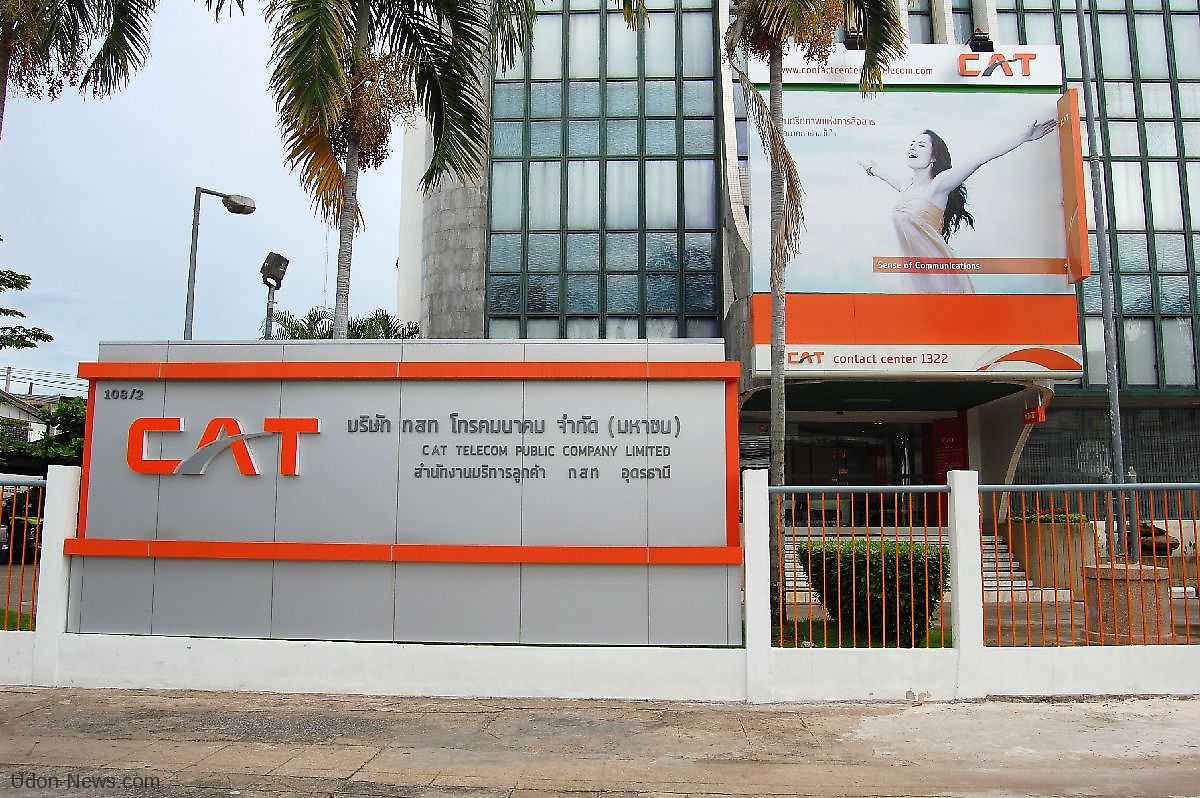
Meanwhile, Thailand’s state enterprise policy commission has agreed with the plans put forth by the ICT Ministry and ordered the two state telcos – CAT Telecom and TOT Corporation – to merge their data operations and transfer staff to three new companies within a year.
Transmission and fiber networks will be under the National Broadband Network Company, Internet gateway and submarine networks will be merged under the Neutral Gateway Company and data centers will be merged under the IDC Company.
This has not gone down well with the unions.
CAT Union chairman Thaworn Poomtieng held a rally at CAT’s headquarters yesterday and issued a statement that the plan was drawn up only by the ICT Ministry and Deloitte without any input from CAT management and condemned the order to split up the state telco as dictatorial.
Thaworn questioned whether the plan was actually to strengthen the state enterprise or if it was simply to sell it off.
CAT acting President Surapan Meknavin said that he has not yet received any details of the plan from the State Enterprise Policy Commission and that in the past he has only had some high-level talks about reorganisation without going into any detail.
The move has only added to a groundswell amongst Thailand’s netizens with many fearing the merged Neutral Gateway is simply the first step towards the rebranding of the much hated Single Gateway mass-surveillance project.
ICT Ministry spokesperson Chatchai Khunpitiluck issued a statement that anyone still talking about the Single Gateway probably either had some misunderstandings or that they were purposefully distorting the issue in order to damage the country.
Earlier Prime Minister and junta leader General Prayut Chanocha dismissed the numerous Prime Ministerial orders published on the Cabinet website referring to the Single Gateway mass surveillance project as a clerical error by someone who simply got his notes wrong.
Thailand’s Dtac has reported a record 90% slump in net profit for the second quarter of the year, due to a steep decline in prepaid subscribers as well as high capex and other costs.
Net profit for the quarter fell to 141 million baht ($4 million), in a result the operator also attributed on higher depreciation and amortization costs and lower ebitda, as well as a one-time 394 million baht restructuring cost.
The company’s total subscriber base shrank by 524,000 to 25 million, with prepaid subscribers falling by 715,000. By contrast, postpaid net additions increased by 77% to 191,000.
In its quarterly report, Dtac blamed the weak prepaid performance on “competitors’ aggressive subscriber acquisition activities through heavy handset subsidization and strong distribution channels.”
To address the decline, Dtac has reintroduced prepaid handset subsidies and launched new Dtac prepaid branded SIMs targeting data-oriented users.
Dtac’s 4G userbase meanwhile increased from 2.9 million in Q1 to 3.5 million in the second quarter, and the operator aims to grow this to 6 million by the end of the year.
Blended ARPU for the second quarter grew 7% year-on-year to 211 baht as a result of the lower prepaid subscriber base, but declined 2.6% quarter on quarter as growth in data revenue failed to fully compensate for declining voice revenue.
Capex meanwhile grew to reach 4.29 billion, or 22% of total revenue, as Dtac spent heavily on network rollouts. Network opex increased 3.9% year-on-year to 1.49 billion baht.
For the full year, Dtac warned it expects intense market competition to continue into the second half. As a result, the company expects service revenues to slightly decline from the previous year, and plans to maintain capex at the same level as last year, which was around 20 billion baht.
The Thailand 4.0 policy will chart the country’s new direction, according to prime minister General Prayut Chan-o-cha.
During his recent national address on the program “Return Happiness to the People”, the prime minister said Thailand 4.0 is a new economic model to develop Thailand into a valued-based economy.
It is envisioned to change the country’s traditional farming to smart farming, traditional SMEs to smart enterprises, and traditional services to high-value services.
The policy also seeks to promote creativity, innovation, and the application of technology in various economic activities, the objective of which is to create equilibrium between the environment and society.
The report in the government website said Thailand has passed through three economic development models – Thailand 1.0, which emphasized agricultural development; Thailand 2.0, which focused on light industries and helped upgrade the country’s economy from the low-income to middle-income status; and the third model, Thailand 3.0, which emphasized heavy industries for continued economic growth.
In Thailand 4.0, the country needs to pull itself out of the middle-income trap and deal effectively with disparities and the imbalance between the environment and society.
“This model will be carried out along with the 20-year national strategy and economic reform through the mechanism of “public-private-people partnership.” It will transform Thailand’s comparative advantage into a competitive advantage. In this regard, new engines of growth will be introduced,” the report noted.
The Prime Minister was also quoted as saying that 10 target industrial groups will become new engines of growth. “Thailand 4.0 also consists of seven industries that are considered the backbone of the digital economy,” the report added.
Vorapak Tanyawong, president of KTB, said yesterday that the financial adviser would propose the options for fund mobilisation to the government, with KTB having the nationwide network to distribute fund units to retail customers.
The capital from selling fund units will be used to finance infrastructure projects, starting with the high-speed-rail project from Bangkok to Nakhon Ratchasima province.
Separately, KTB yesterday unveiled the KTB PromptPay campaign, which offers prizes worth a total of Bt9 million.
The campaign will run from July 15 to October 15.
Songpol Chevapanyaroj, senior executive vice president and head of the bank’s global transaction banking group, said the campaign was part of a strategy to get existing customers to use KTB as their main bank.
Under the scheme, the bank said fund transfers would be more convenient because there would be no fee if the amount was less than Bt5,000, while the cost of cash management was reduced as well.
Vorapak said the benefit of being the main bank for customers was the cross-selling of products.
The bank said it had received more than 300,000 PromptPay pre-registrations since it began accepting them on July 1.
Official registrations for the scheme, which is designed to enhance e-payments, will be accepted from July 15.
KTB said it had about 17 million depositors, and it hopes to bring in 8 million more under the campaign.
Vorapak said the bank’s upcountry customers were more aware of using automated teller machines and digital banking, with transactions at branches declining, including those for retail vendors’ lottery reserves.
He said retail vendors were migrating to booking lottery tickets via ATMs and KTB’s online channels because they could access reserves from those channels more quickly than they could through the branches.
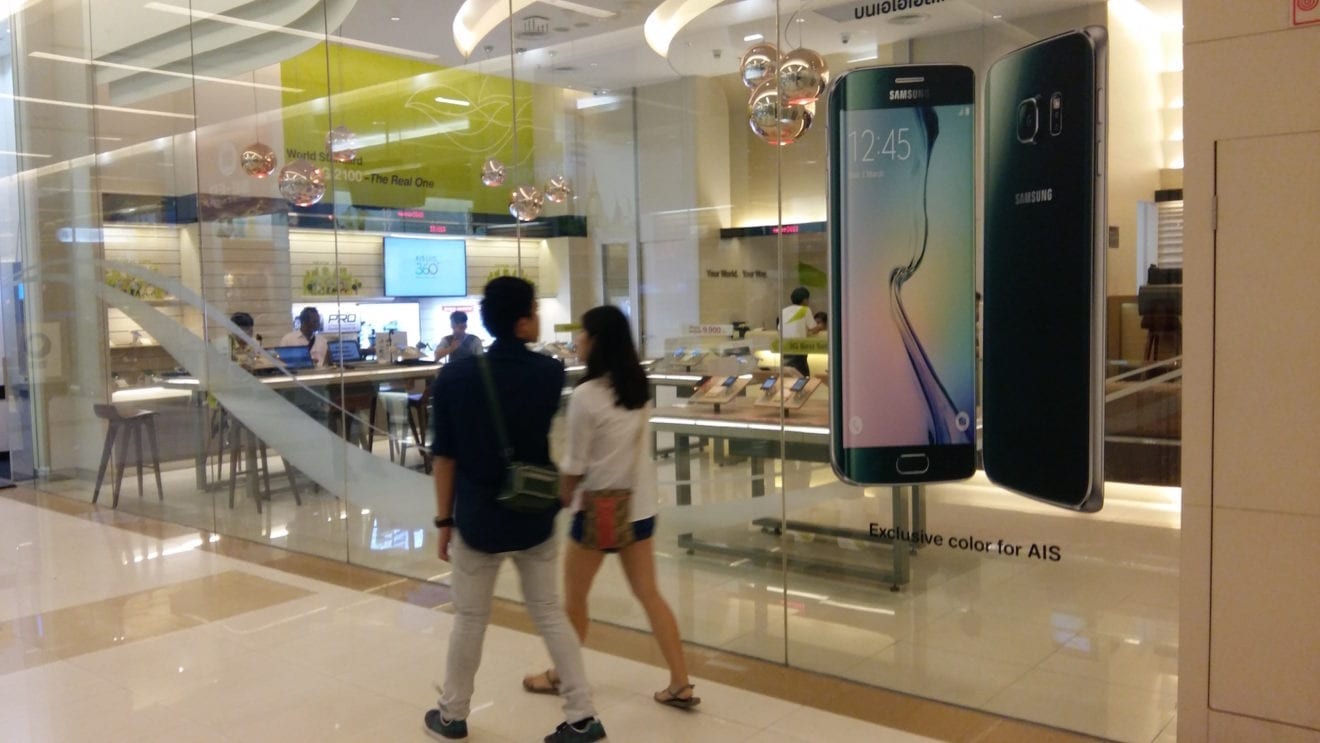
Thailand’s AIS has upgraded its customer contact center system in a bid to provide a consistent, enhanced and personalized customer experience for its growing subscriber base.
The new system now routes up to 70% of all customer calls to a self-service system.
The self-service capacity allows subscribers to gain access to services such as activating their SIM card, subscribing to roaming services or selecting rewards, without dealing with long queues.
Leveraging Avaya’s Self-Service solution, AIS’ Advanced Contact Centers (ACC) have streamlined customer care and enhanced personalized live agent support at its contact centers located in Bangkok and Korat.
The centers currently employ 3,300 customer service employees, serving 40 million subscribers nationwide.
Smartphone users in Thailand are expected to reach 20 million in 2016 and this is expected to soar further with the introduction of 4G commercial services this year. Demand for more sophisticated, seamless and highly reliable broadband connectivity from business is also expected to escalate as Thailand’s digital economy accelerates.
ACC saw the digital transformation of its contact center as a critical enabler in the new economy. The new self service system will ensure a consistent customer experience for AIS’s 11 million calls it receives through its contact centers every month.
In the past, each customer call routed to a live agent can cost between 50 to 100 baht ($1.42 to $2.84), depending on the competency level of the agent. In contrast, the new system means that each call costs only 1 baht for ACC.
The new system also provides capabilities for ACC to identify and categorize AIS’s customer calls and the services they require before matching them with the right agents trained to help specific service requests or customer types.
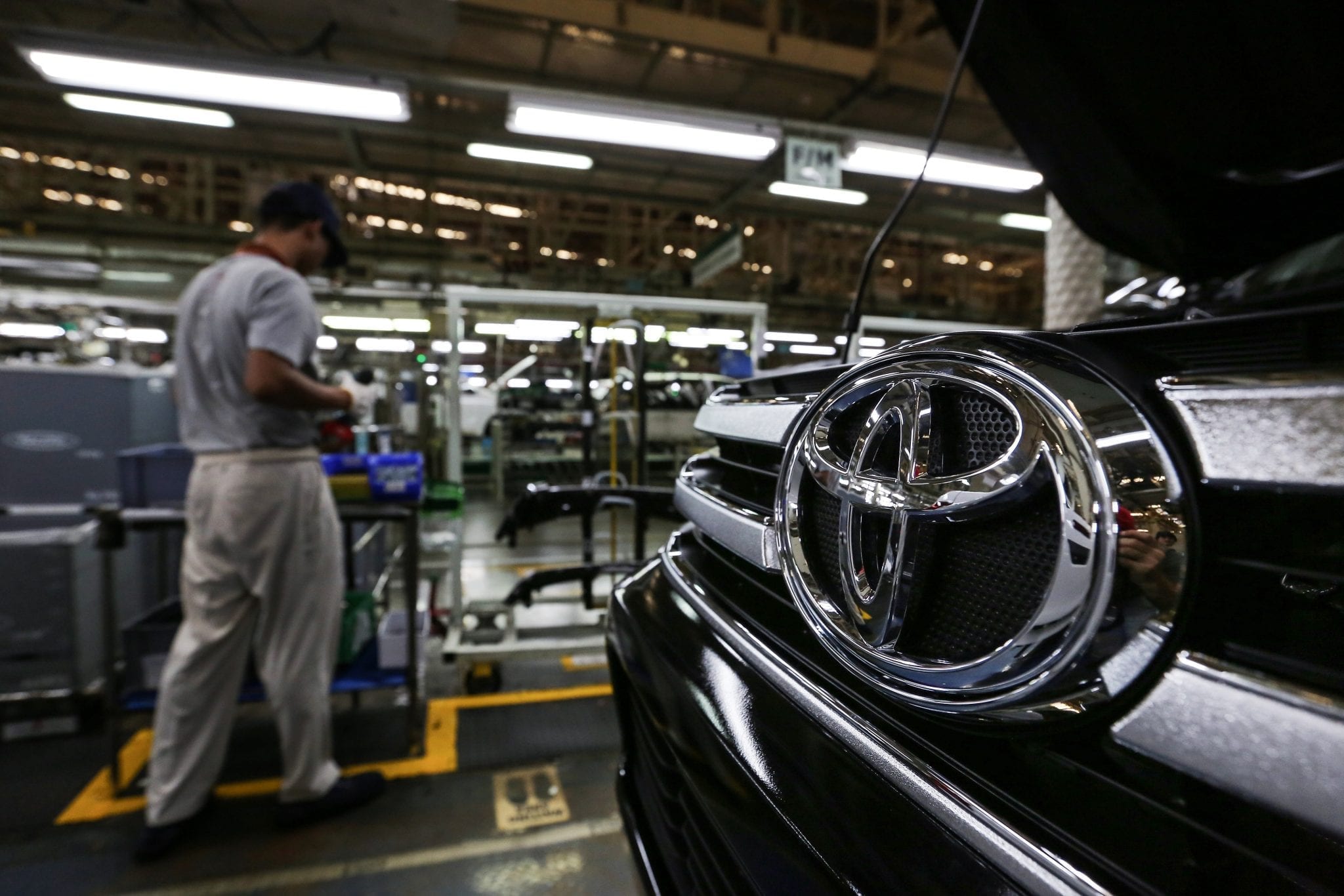
Toyota Motor Corp’s Thai unit has launched a voluntary redundancy program aimed at cutting around 800 subcontractors in Thailand due to economic problems in the southeast Asian country and abroad.
Thailand’s economic slowdown, along with uncertainty over the global economy, have affected both the domestic automotive industry and exports since the beginning of the year, it said in a statement.
That has caused a reduction in production volume, overtime hours and monthly income offered to employees, it said.
The company has offered the redundancy package to around 800 subcontractors but more workers have applied for the scheme, Phuphal Samata, the president of Toyota Thailand Worker’s Union, told Reuters.
“There isn’t overtime payment anymore, so many subcontractors may want to find other work and take this compensation package,” he said.
Toyota commands about a third of the local auto market and has 18,000 workers in Thailand, 40 percent of whom are subcontractors, he said.
Thailand is a regional production and export hub for the world’s top carmakers. The sector accounts for around 10 percent of the country’s gross domestic product.
Domestic auto sales have declined almost every month on a yearly basis since May 2013 following the ending of a government car subsidy scheme in 2012.
In January, Toyota forecast Thailand’s total domestic car sales would fall 10 percent in 2016 from a year ago to 720,000 units. It sees its own annual auto sales falling 9.8 percent from last year.
Job cuts at Toyota are unlikely to spread to other automakers as the firm has hired many workers since the car subsidy scheme, said Surapong Paisitpattanapong, spokesman for the Federation of Thai Industries’ Auto Industry.
“I don’t think others will immediately follow suit because May’s auto production, exports and domestic auto sales are growing. There’s still hope,” he said.
Thai travelers to Singapore will benefit from exclusive offers, courtesy of Visa and the Singapore Tourism Board, throughout 2016. With a variety of attractions, Singapore offers something for every family member. This campaign, a collaboration between Visa and the Singapore Tourism Board (STB), includes exclusive offers from airlines, hotels, and attractions, aiming to augment the unique experiences for Thai visitors in the vibrant island city.
Participating partners include Singapore Airlines, Scoot, Resorts World Sentosa (RWS), Sentosa Leisure Management, Gardens by the Bay, Asiatravel.com, ION Orchard, Mount Faber Leisure Group, Wildlife Reserves Singapore and many more.
“For Thais, Singapore is a destination that is easy to plan and travel, offering a mixture of cultures, and great experiences for leisure and business travelers alike. Hence, Thailand is one of our key markets. Over half a million Thais visited Singapore last year spending an average of THB 30,000 per trip. They stayed for around 4 days each time,” said, Edward Koh, Executive Director, Southeast Asia, Singapore Tourism Board.
The island country is full of events and festivals year round, as well as packed with concerts and exciting entertainment options. Families can enjoy world-renown attractions such as Singapore Zoo, River Safari, Universal Studios Singapore and S.E.A Aquarium. It is also regarded as a shopper’s paradise with options aplenty for all budgets.
“Singapore has so many fun activities for both business and leisure travelers – people of all ages and backgrounds. Even though you might be frequent travelers to Singapore, there will always be some new activities and experiences that are worth exploring. Under the partnership, VISA and Singapore Tourism Board want Thais to have memorable treasured moments in Singapore,” said Ms. Sherleen Seah, Area Director, Thailand & Myanmar, Singapore Tourism Board.
“As the preferred card for Thai travelers Visa is delighted to work with Singapore Tourism Board and our merchant partners in the city-state to offer special privileges and discounts exclusively to Visa cardholders. Singapore is a family-friendly destination. Our offers add crucial values for everyone on all touchpoints during travel from purchasing air tickets to booking accommodation and all the way to shopping and dining,” said Suripong Tantiyanon, Visa Country Manager, Thailand.
Key highlight for the promotion is the lucky draw. Thai visitors to Singapore who spend more than THB 30,000 during a calendar month between July and September will have the chance to win a premium travel package worth THB 250,000 for that month. A total of 3 premium travel packages will be given away. Key events in Singapore during this time include the Great Singapore Sale between June 3 and August 14, the Singapore Night Festival on the last two weekends in August, and the Singapore Formula 1 Grand Prix on September 16 – 18.
Thailand’s three largest mobile operators – AIS, Dtac and True Move – have united to oppose current regulations capping tariffs for 3G and 4G services.
The operators brought up their opposition a group discussion with regulator NBTC on Monday.
Revising the regulations would encourage greater competition and stimulate the further development of mobile networks and services, the operators claimed.
They have argued that existing caps have diminished the development of service packages, distorted price mechanisms and impeded the operation of an open and competitive market.
Currently the NBTC caps the maximum 3G tariff at 0.82 baht ($0.02) per minute for voice service, 1.33 baht per SMS, 3.32 baht for MMS and 0.28 baht for data services. The equivalent 4G limits are 0.69 baht, 1.15 baht, 3.11 baht and 0.26 baht respectively.
A representative for Dtac stated that other mobile markets with the same level of development as Thailand do not impose tariff caps, and noted that tariffs in Thailand are among the lowest in the ASEAN region.
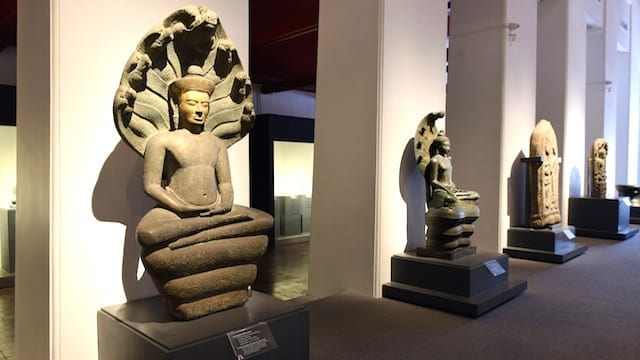
Thailand’s first world-class museum is to be built as part of the massive IconSiam development on the banks of the Chao Phraya River in Bangkok.
The Fine Arts Department of the Thai Ministry of Culture and IconSiam Co have signed a memorandum of understanding to mark their collaboration to preserve Thailand’s arts and cultural artifacts, to be displayed in the 8000 sqm IconSiam Heritage Museum.
The museum, which will open in 2018, is set to become a space where different cultures interact as well as a major tourist attraction, according to a statement from IconSiam.
“Local and foreign visitors will be able to witness the pride of Thailand and the elements that signify our national identity.”
More than 500 retailers will be housed in two shopping malls being built in the IconSiam development, which also includes a hotel and luxury apartment complex. The US$1.538 billion (54 billion THB) project is scheduled to open in late 2017.
The Fine Arts Department will be in charge of analysing, sourcing and preserving antiques and artifacts to be displayed in the National Heritage Gallery, one of the museum’s three exhibition spaces.
Vira Rojpojchanarat, Minister of Culture Ministry, described the collaboration as auspicious for the country.
“The private sector will officially play an important role in helping the government support, promote and showcase Thai culture. This answers directly to the government’s public-private collaboration policy. The museum will communicate with Thai values to both locals and tourists, driving forward our admirable culture and national identity. The project will also push our identity and the creative cultural industry to an international level.”
IconSiam director Chadatip Chutrakul said it is “the mission and ambition” of IconSiam to create a unique project that represents the admirable identity of Thailand from every aspect. “Our excellent indigenous wisdoms, intricate handicraft skills, architectural brilliance, our history, traditions, cultures etc, will be represented here.”
The display of Thailand’s precious cultural heritage and historical treasures.
IconSiam will invest more than THB 500 million (US$14 million) in the museum. “This investment, although great in number, is not a move that seek profit in return. We hope that this museum initiative will inspire other organisations to see the value and importance of museum which is a significant symbol of the country’s economic and social advancement,” said Chutrakul.
Part of the museum’s earning from the National Heritage Gallery admission fee will be donated to the Archeology Foundation for future restorations of historical sites, artifacts and the National Museum.
The other two exhibition spaces will be a Temporary Exhibition Gallery featuring exhibitions from master artists and world class museums from all over the world, and the River Gallery, which will aim to present contemporary works from renowned local and international artists and host art related activities.
Lord Cultural Resources, a global professional practice dedicated to creating cultural capital worldwide which has worked on museums such as France’s The Louvre and Spain’s Guggenheim Museum, Bilbao, is working with IconSiam on the project. The company also has experience working with Britain’s Tate Modern, The US’s Library of Congress’s security and filing systems as well as setting up exhibition models for Thailand Creative and Design Centre.
Thailand’s True Corporation has deployed what it says is the world’s largest commercial 4-transmit-4-receiver (4T4R) 4.5G network using Huawei RAN technology.
Huawei provided its SingleRAN 4T4R technology for the rollout. To date True Corporation’s wireless division True Move has deployed over 6,300 4T4R sites
Announcing the deployment, Huawei said compared to conventional 2T2R networks, the deployment has improved downlink throughput at cell edge by over 38% and uplink throughput by 50%.
True Corp is conducting the deployment to support Thailand’s booming demand for mobile data. Currently Thailand’s most common data charge model involves unlimited monthly packages and data usage per subscriber exceeds 1GB.
“Spectrum is extremely precious resource for all operators. Any technology which improves the spectrum efficiency attracts operators.” True Corporation executive advisor Steven Christopher Hopcraft said.
“[The] 4T4R solution improves the spectrum efficiency, and that’s the reason why True chose 4T4R. Along with the mature ecosystem, we think that the deployment of 4T4R is a wise choice.”
In January, True Move revealed that it will spend 56 billion baht ($1.59 billion) this year to roll out an LTE-Advanced network covering 97% of the population.
Many NLA members also clashed on the composition of the NBTC board which will now be a unified board with 7 members instead of 11 with a telecoms and broadcasting sub-board. Many of the legislators feared that the changes in the criteria such as age and experience would lead to a board filled with career bureaucrats.
The selection process will see a 7-member committee (consisting of the chair of the country’s three courts, chair of the national anti-corruption commission, auditor-general, comptroller-general and governor of the bank of Thailand) to select 14 candidates to be sent to the upper house to vote on.
Earlier there was widespread concern over article 13 that would force the NBTC to comply with the Digital Economy Commission policy and article 19 that gave the DE Commission final say as to whether the NBTC had complied with their plans or not.
The new article 15 also allows for shared use of spectrum while articles 24 and 25 forces the NBTC to consider the greater good rather than just money when holding a spectrum auction.
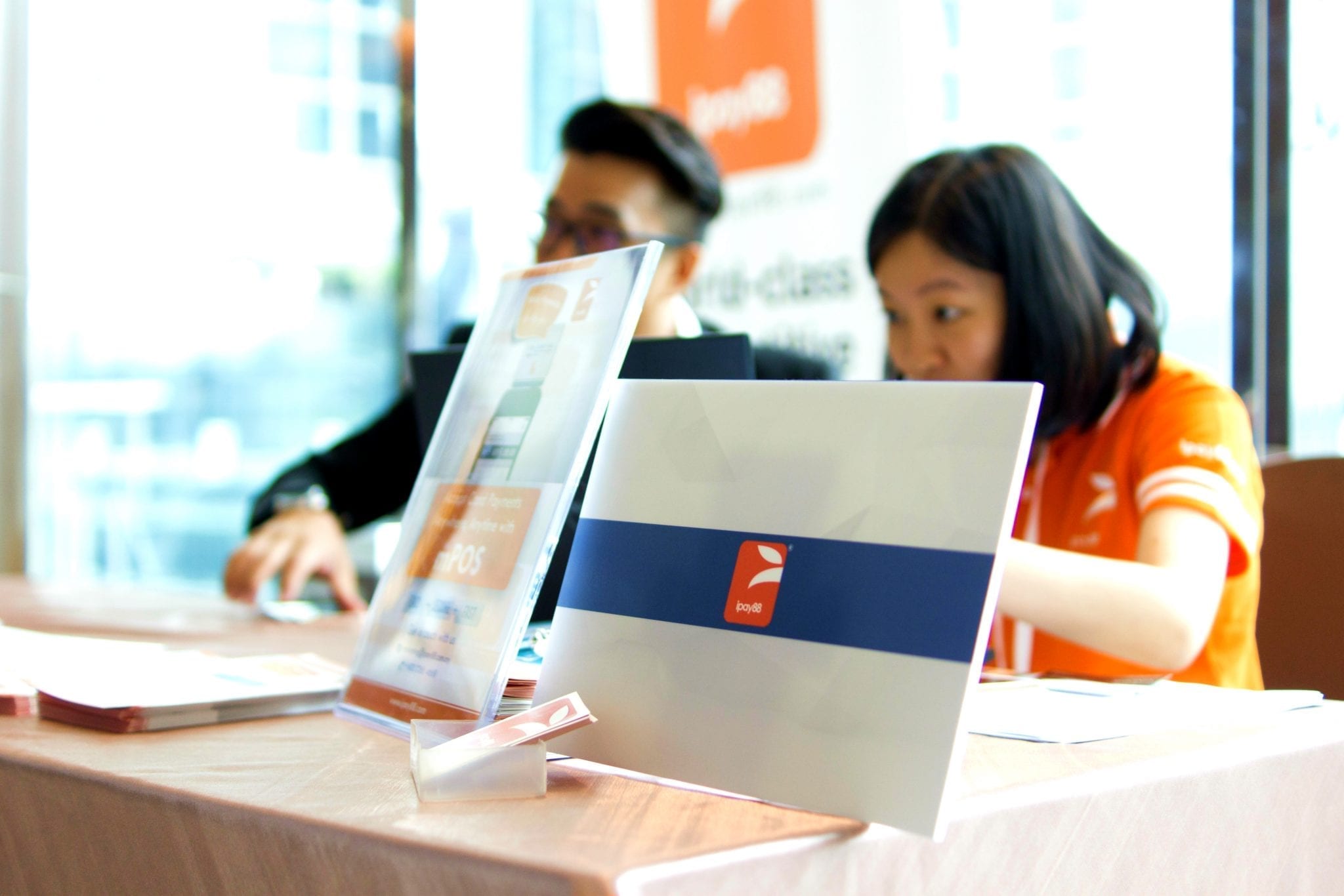
Malaysian online payment service iPay88 has entered a collaboration with online payment company PayPal to promote and support cross-border trade for iPay88 merchants.
For small businesses in particular, cross-border eCommerce provides a chance to sell to the world, and iPay88 believes the collaboration will enable its merchants to leverage PayPal’s 184 million active accounts and presence in more than 200 markets.
Executive director KL Chan says iPay88 has nearly 10,000 e-merchants, including SMEs and conglomerates, but there is also a large, untapped market of businesses and companies still considering moving into eCommerce. “This collaboration with PayPal is timely as it will help capture this market effectively by offering both online banking and credit-card payment options.”
Merchants signing up for a PayPal account can now do so through iPay88. Approvals will be sent to merchants within three working days. Aside from the quick sign-up process, iPay88’s online merchants will also be able to benefit from PayPal’s multi-currency checkout.
Chan estimates the collaboration will drive extra revenue for iPay88 in 12 months.
“It has always been a challenge for businesses, especially small ones, to expand and sell overseas,” says PayPal Southeast Asia GM Rahul Shinghal. “PayPal is committed to helping them grow by leveraging the power of eCommerce, which gives them a level playing field when competing with larger export houses.”
A subsidiary of NTT Data Corporation, iPay88 was set up in Kuala Lumpur in 2006 and has an established presence in Indonesia, Singapore, Thailand, the Philippines and Vietnam.
Japanese payments company NTT Data Corporation has agreed to take on pioneer Vietnam fintech company VietUnion Online Services, which has an intermediary payment services licence issued by the State Bank of Vietnam.
VietUnion, a group company of Saigon Construction Corp (SCC), mainly provides payment services through big chain retailers such as convenience stores.
VietUnion has been expanding its payment business primarily through Payoo, which enables users to make payments to about 4000 stores, including supermarkets and in shopping centres.
Payoo also has a smartphone app that can be used for internet banking, and it provides software for mobile POS systems, smart cards for transport and tuition fee management for more than 1700 schools in Ho Chi Minh City.
With more than 30 years of experience in the payments business in Japan, NTT Data will help VietUnion expand its non-cash payment services and help develop Vietnam’s payment infrastructure.
NTT Data will introduce Payoo and other payment services to its customers in global eCommerce and financial institutions in APAC regions through collaborations with its other companies – iPay88 in Malaysia, NTT Data Hong Kong, and NTT Data Thailand.
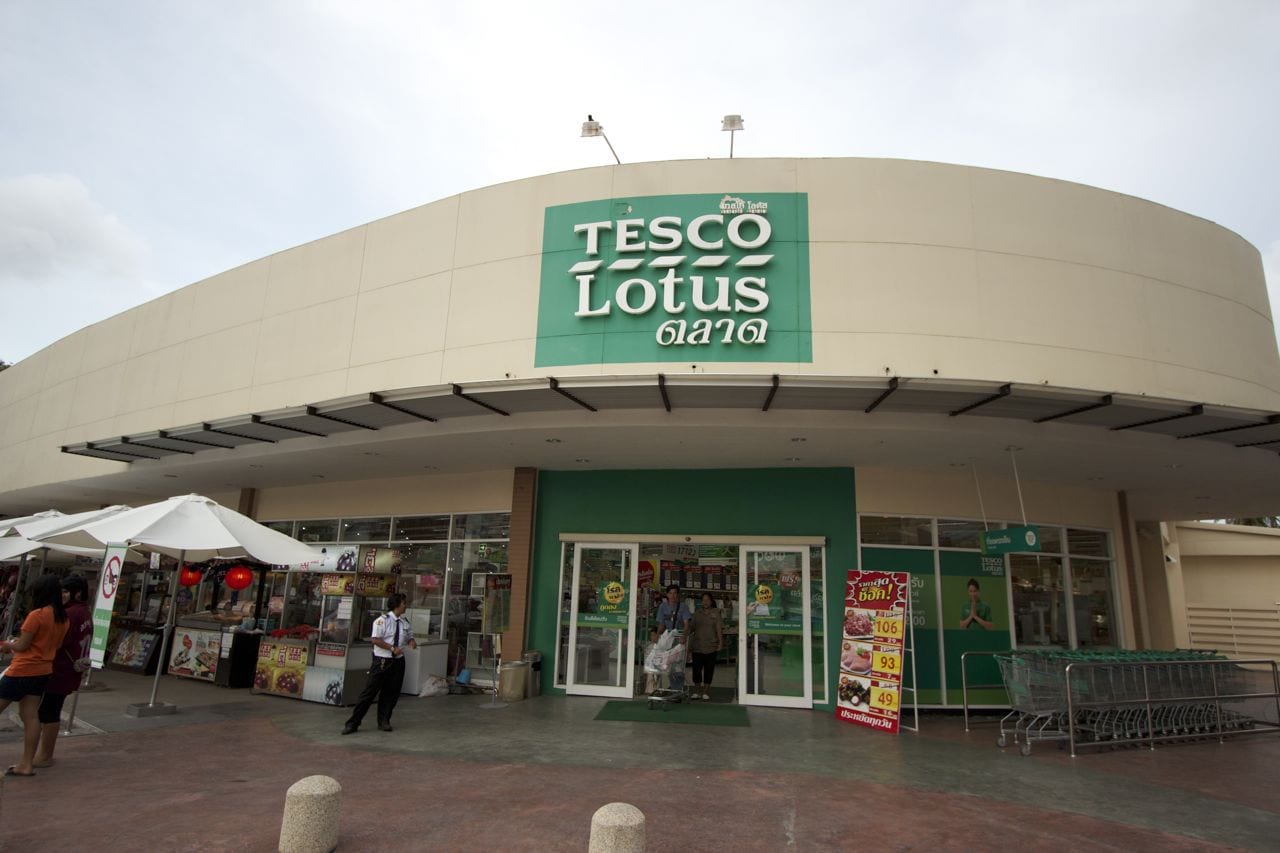
Tesco Thailand aims to double its online shopping sales annually for the next three to five years.
Local digital and online business director for the UK-owned Tesco Lotus business, Wanna Swuddigul, told The Nation newspaper Thai shoppers are looking for instant access to product information and to be able to buy while they browse. The company’s eCommerce site is especially popular in Bangkok and larger Thai regional cities. More than three in four shoppers are female.
“The largest age groups are 25-44 years old. Most online customers are mid- to up-market customers,”Swuddigul said.
“As demand tends to come from customers living in urban areas, Tesco Lotus has recently introduced a new delivery service at lockers located at 48 condominiums along the BTS and MRT lines, in prime residential neighbourhoods such as Sukhumvit, Sathorn, Ratchada, Phayathai and Phaholyothin,” she said.
Tesco Lotus launched an online store in 2012, claiming to be the first major Thai retailer to do so.
Besides its own store, Tesco Lotus offers more than 9000 items on the Lazada online mall.
Tesco Lotus uses big data to carefully monitor changing customer preferences for products and service expectations so as to constantly update the range online.
“By constantly listening to what our customers want and need, we innovate services and solutions that address their pain points,” she told The Nation.
“We aim at least to double the growth of our online sales and order numbers every year, as we have done since the launch of our online business in 2012.”
The best-selling categories online are cold beverages, household chemicals and cooking needs, such as seasonings.
Generali Life Assurance is forging ahead with plans to tap the country’s growing middle class in what until now has been an under-explored market for wealth management products generally, and especially insurance solutions.
With most high net worth (HNW) investors preferring to park money in US dollar or Euro-denominated products, wealth management may seem to be a non-starter in the Thai economy.
But being largely unexplored, Thailand, where the country’s financial system had been fortified and the local business sectors gained much more sustainable strengths after the infamous Asian meltdown of the 1980s, offers attractive opportunities for wealth managers, say local players.
According to Bundit Jiamanukoonkit, country manager and chief executive officer, Generali Life Assurance (Thailand) Plc, the country is witnessing traction in the demand for local products – both in the asset management and insurance segments.
And although the demand for traditional insurance products currently dominates the sector, a growing middle class is helping the market for wealth management-type solutions get bigger.
“I think it’s under-explored,” says Jiamanukoonkit, commenting on the growth opportunity for wealth management in Thailand.
He adds that over the last 10 years, with an increasing number of Thais turning “middle upper class”, the wealth management sector has started coming of age as well.
Competing
The motivating factors, according to Generali, are the same as elsewhere in the region, in terms of children’s education, retirement planning and ensuring social security.
“People want to have available funds to meet their medical needs, and for some in the affluent segment, even planning succession and passing on wealth,” explains Samdarshi Sumit, chief retail officer, Generali Life Assurance (Thailand) Plc.
And according to Jiamanukoonkit, an interesting feature of the competitive landscape in Thailand is that there is no-one who really dominates the HNW market for life insurance.
New channels
Consequently, Generali – with its rich experience dealing with all type of customers including HNW individuals in Europe – has crafted an exclusive tie-up in Thailand with the Kiatnakin Phatra financial group, a local banking group and a significant wealth management player.
This opens up access to a huge client-base with products that clients want.
“We have a complete range of products which are focused on all the segments, including endowment, annuity, whole life protection, accident and health [policies], and everything which is needed by all the segments including the affluent,” says Sumit.
Jiamanukoonkit adds that despite the growing demand for wealth management and insurance products, there remains a need to educate investors.
For instance, the HNW clients think they have more than enough and insurance is not a necessity, he explains.
Months after its debut, Generali with KK Priority’s first HNW insurance solution “CHRONOS” – the 24/7 solution providing worldwide experience that makes life of HNW customers much easier and more fulfilled – has proven the market opportunity that’s worth to pursuit, he adds.
“We want to seek for more understanding among Thai HNW [individuals] and also get closer [to them],” he says.
Still, Jiamanukoonkit’s priority is to scale up, and to be the “number-one choice retail insurer”.
And, however lofty that may sound, he also believes that the goal is not far-fetched.
“As there is no strong established player in the segment, we can do something great and acquire this group of customers and earn their trust,” he says.
His other objectives include offering “better service and a premium brand at a reasonable price”.
New experiences
Generali has also identified ‘going digital’ as an area of significant importance.
“This is especially in the direct marketing business where we have a significant portion of our premium coming from,” says Sumit.
In line with this, Generali has already created a digital platform called Generali 365. This allows its clients to avail of a range of services, from transaction experience to online generation of tax certificates.
“Generali 365 can be downloaded to a mobile and customers can see new offers and new products, as well as get special privileges offers that fulfil their lifestyles on food or hotels, and everything is there within a single application,” explains Sumit.
But being largely unexplored, Thailand, where the country’s financial system had been fortified and the local business sectors gained much more sustainable strengths after the infamous Asian meltdown of the 1980s, offers attractive opportunities for wealth managers, say local players.
Bundit Jiamanukoonkit
And although the demand for traditional insurance products currently dominates the sector, a growing middle class is helping the market for wealth management-type solutions get bigger.
“I think it’s under-explored,” says Jiamanukoonkit, commenting on the growth opportunity for wealth management in Thailand.
He adds that over the last 10 years, with an increasing number of Thais turning “middle upper class”, the wealth management sector has started coming of age as well.
Competing
The motivating factors, according to Generali, are the same as elsewhere in the region, in terms of children’s education, retirement planning and ensuring social security.
And according to Jiamanukoonkit, an interesting feature of the competitive landscape in Thailand is that there is no-one who really dominates the HNW market for life insurance.
New channels
Consequently, Generali – with its rich experience dealing with all type of customers including HNW individuals in Europe – has crafted an exclusive tie-up in Thailand with the Kiatnakin Phatra financial group, a local banking group and a significant wealth management player.
This opens up access to a huge client-base with products that clients want.
“We have a complete range of products which are focused on all the segments, including endowment, annuity, whole life protection, accident and health [policies], and everything which is needed by all the segments including the affluent,” says Sumit.
Jiamanukoonkit adds that despite the growing demand for wealth management and insurance products, there remains a need to educate investors.
For instance, the HNW clients think they have more than enough and insurance is not a necessity, he explains.
Months after its debut, Generali with KK Priority’s first HNW insurance solution “CHRONOS” – the 24/7 solution providing worldwide experience that makes life of HNW customers much easier and more fulfilled – has proven the market opportunity that’s worth to pursuit, he adds.
“We want to seek for more understanding among Thai HNW [individuals] and also get closer [to them],” he says.
Still, Jiamanukoonkit’s priority is to scale up, and to be the “number-one choice retail insurer”.
And, however lofty that may sound, he also believes that the goal is not far-fetched.
“As there is no strong established player in the segment, we can do something great and acquire this group of customers and earn their trust,” he says.
His other objectives include offering “better service and a premium brand at a reasonable price”.
New experiences
Generali has also identified ‘going digital’ as an area of significant importance.
“This is especially in the direct marketing business where we have a significant portion of our premium coming from,” says Sumit.
In line with this, Generali has already created a digital platform called Generali 365. This allows its clients to avail of a range of services, from transaction experience to online generation of tax certificates.
“Generali 365 can be downloaded to a mobile and customers can see new offers and new products, as well as get special privileges offers that fulfil their lifestyles on food or hotels, and everything is there within a single application,” explains Sumit.