Tag: tmall

  • Alibaba’s chairman tells US businesses: ‘You can sell almost anything’ online in China

    Alibaba’s chairman tells US businesses: ‘You can sell almost anything’ online in China

    Jack Ma, chairman of China’s dominant e-commerce company, says Alibaba can help U.S. businesses sell to the more than 500 million consumers expected to make up China’s middle class by 2025.

    Alibaba Group doesn’t want to compete with Amazon.com Inc. for sales inside the United States—rather, the Chinese e-commerce giant wants to help small and medium-sized U.S. businesses sell online in China, Alibaba executive chairman Jack Ma said today in Chicago.

    “We are the e-commerce enabler,” Ma says. “We do not buy and sell like Amazon because we think that SMB’s already know how to sell easily and effectively. We help others do e-commerce, find customers, help with payment and help with logistics.”

    Ma is making a tour of the U.S., following a similar one to Europe last week, seeking to introduce a company that is mainly known in the West for its record-breaking $25 billion stock offering on the New York Stock Exchange in September.

    Ma spoke today with Kenneth Chenault, CEO of American Express, at the Chicago Millennium Knickerbocker Hotel today. No partnership between American Express and Alibaba was announced, although Ma did say “[Alibaba] should leverage and work with global companies like American Express.”

    Ma explained that Alibaba is already helping small U.S. businesses sell to China, and he emphasized the opportunity represented by China’s growing middle class, which he said will number more than 500 million by 2025, Ma said. In 2014, the value of purchases consumers and businesses made on Alibaba’s sites totaled $390 billion. And the 10 million mostly Chinese small and midsized business that sell on Alibaba’s marketplaces, particularly the Taobao and Tmall retail shopping portals, accounted for 95% of those transactions, Ma said. In the next five years, Ma predicts Alibaba’s transaction volume will reach $1 trillion. In 10 years, he hopes 40% of sales will come from businesses outside of China.

    “When you have 120 million people shopping on our site every day, you can sell almost anything,” he said.

    Because China does not have the extensive bricks-and-mortar retail infrastructure of the United States, Chinese consumers rapidly moved to shopping online, Ma said. E-commerce is expected to make up 24.2% of Chinese total consumption by 2020, Alibaba says. As an example of the opportunities open to foreign companies, Ma pointed out that Chinese consumers bought 300,000 “German lake crabs” in one day last year on Alibaba’s site. Farmers from the Pacific Northwest sold 600 tons of cherries through Alibaba last year, after selling 180 tons in 2013, Ma wrote in a column published this week in the Wall Street Journal.

    Ma said that Chinese consumers love American products, and that imports represent a big part of the continued growth of not just Alibaba but also China. His trip to the U.S. follows a recent visit to Europe, in the hopes of enticing foreign companies to sell on Alibaba sites. Ma said his goal is to and turn Alibaba into the largest import platform in the world.

    “In the next 20 years, China will grow to be the largest importer country in the world,” Ma says. “But, Chinese resources like the water, soil and air could never support such a huge demand. I think if China keeps exporting we will never see the blue sky in China. We have to leverage global resources to serve the 1.3 billion people.”

    While Ma downplayed suggestions Alibaba intends to compete with U.S. e-retailers, it has been investing in the United States. That includes taking stakes in Snapchat, a mobile image sharing app; TangoMe Inc., a video call app maker; Quixey Inc., a mobile search provider; and ride-hailing service Lyft Inc.

    Last year, the company also launched 11Main.com, a shopping portal for boutique U.S. retailers.
  • Alibaba chairman: No, seriously, we’re not competing in the US

    Alibaba chairman: No, seriously, we’re not competing in the US

    Ever since Wall Street’s interest in Chinese e-commerce giant Alibaba reached a fever pitch last year, investors and analysts have focused on one major question: When will the company expand into the US and take on Amazon and eBay?

    Jack Ma, Alibaba’s charismatic founder and executive chairman, visited New York this week to try to dispel that notion.

    “When are you going to come to invade America?” Ma joked, during a Tuesday speech before the historic Economic Club of New York at the Waldorf Astoria’s Grand Ballroom. Instead, he countered, “The strategy for us is helping small business in America go to China, sell their products to China.”

    While that pitch to help small businesses sounds positive and uncontroversial, US onlookers and competitors could be excused for not believing Ma. The US retail market remains the largest in the world — with China coming in second — so it’s not a stretch to think Alibaba’s long-term plans could eventually include coming to America. That means Amazon, eBay and others may someday be facing a major, new competitor on their shores and US consumers will get to know the name Alibaba.

    For now, the company has been positioning itself as a partner for US businesses, hoping it can act as a bridge for them to reach the Chinese market and become a more influential global retail player along the way. To do that, though, Alibaba needs to build trust with US retailers and not appear as a rival.

    “I think a lot of this is time frames,” said Scot Wingo, executive chairman of ChannelAdvisor, which provides research and other tools for online retailers. “I think right now [China is] definitely their priority. I think two years from now I’d be shocked if they didn’t have a more direct US presence.”

    Alibaba’s focus on small US businesses makes sense in the short-term, Wingo said, since many retailers using Alibaba’s websites have told his company they don’t have enough inventory of Western goods to meet the surging demand of their Chinese customers. ChannelAdvisor is a partner with Alibaba’s Tmall Global, which helps import products to China.

    Today, Alibaba makes nearly all its revenue in China and has little exposure to the US. The company opened online retail site 11 Main in the US last year and has a handful of investments in US businesses. While that’s not nearly enough to interest most US customers, Wall Street last year swooned for Alibaba — the largest e-commerce company in China — when the firm raised $25 billion on the New York Stock Exchange, pulling off the biggest initial public offering ever.

    Ma doesn’t plan to stop there, saying his goal is to make his company bigger than Walmart and eventually generate annual gross merchandise volume — the total value of goods sold on Alibaba’s websites — of $1 trillion. To get there, though, Ma and Alibaba will likely need more partners.

    “We did not come here to compete,” Ma said Tuesday. “We come here to bring the small business.”

  • New Alibaba financial institution targets SMEs

    New Alibaba financial institution targets SMEs

    Chinese language e-commerce behemoth Alibaba has launched an web financial institution aimed toward serving small companies, which frequently wrestle to acquire credit score from giant banks.

    MYbank, 30 per cent owned by Alibaba linked Ant Monetary Providers Group, stated in a microblog publish on Thursday it will supply loans of as much as 5 million yuan ($A1.04 million).

    The financial institution, based mostly within the metropolis of Hangzhou the place Alibaba has its headquarters, stated it might serve small companies, particular person shoppers and rural customers.

    Alibaba accomplished the world’s largest IPO final September with an inventory on the New York Inventory Change that raked in $US25 billion and made founder Jack Ma considered one of China’s richest males.

    The corporate’s ambitions prolong past e-commerce and it has already sought to shake up state banks with a monetary product referred to as Yuebao, an funding fund that gives higher returns than conventional deposits.

    The IPO was priced at $US68 and the shares rocketed to $US120 in November. However since then they’ve been hammered by poor third-quarter outcomes and a row with Chinese language authorities, who’ve accused Alibaba of permitting imitation items to be bought on its platform.

    Alibaba stated final month it might exchange its chief government regardless of a 45 per cent achieve in income within the January-March quarter. Income plunged by almost half within the interval.

    Final yr, China accredited a number of personal banks together with one invested in by web big Tencent, a key rival of Alibaba.

    China beforehand had solely two personal banks, Minsheng and Ping An. Its state-run banks have been seen as reluctant to lend to small and medium-sized enterprises.

    Different main shareholders in MYbank embrace models of privately owned conglomerate Fosun with 25 per cent, auto elements maker Wanxiang Group with 18 per cent and funding agency Yintai with 16 per cent.

  • Alibaba to launch ‘nation pavilions’

    Alibaba to launch ‘nation pavilions’

    Chinese language etailing big Alibaba says it’ll launch 11 ‘nation pavilions’ on its Tmall International on-line market to spice up cross-border eCommerce commerce.

    On the similar time, Alibaba’s group-buying platform, Juhuasuan, is becoming a member of the corporate’s cross-border drive. Alibaba has entered into partnerships with the embassies of 26 nations on advertising and promotion of their nation’s merchandise by way of Juhuasuan.

    On Tmall International, 11 nations – the US, New Zealand, Australia, Switzerland, France, Britain, Spain, Singapore, Thailand, Malaysia and Turkey are working to construct out their pavilions – described as “curated, vertical buying websites designed to advertise fashionable merchandise and genuine specialties from chosen SMEs from every nation”, in addition to present journey and cultural info to China’s internet buyers.

    South Korea’s authorities turned the primary nation to launch an official pavilion on Alibaba’s Tmall.com in Might.

    “Alibaba Group has been incubating this nation pavilion undertaking for a while now,” stated Jeff Zhang, president of China retail marketplaces for Alibaba Group, calling the 11 websites launched this week because the “first fruit of this ongoing challenge to make international commerce simpler.”

    Retailers which are already promoting on Tmall.com and Tmall International marketplaces can choose to hitch their nation’s pavilion in the event that they meet sure necessities, based on Alibaba.

    Alibaba Group in current months has been aggressively selling the expansion of cross-border on-line purchasing with authorities officers and enterprise leaders all over the world. Earlier this month, Alibaba government chairman Jack Ma visited the US to speak about Alibaba’s worldwide technique and the way small companies can use the Net to promote on to Chinese language shoppers, who’re more and more in search of top quality, imported merchandise.

    Based on a current report on cross-border eCommerce by Accenture, China is predicted to grow to be the world’s largest cross-border B2C market by 2020.

    In the meantime, the businesses becoming a member of the Juhuasuan initiative are the US, Canada, Russia, New Zealand, South Korea, Japan, Italy, Australia, Thailand, Bulgaria, Ukraine, Greece, Mexico, Singapore, Finland, Indonesia, Norway, the Czech Republic, Slovakia, Costa Rica, Brazil, Chile, Nepal, Israel, South Africa, and Malaysia.

  • Yahoo Japan ties up with Tmall

    Yahoo Japan ties up with Tmall

    Japan’s third largest on-line retailer Yahoo Japan Co jumped probably the most in two months in Tokyo buying and selling after the corporate stated it is going to group up with Chinese language e-commerce big Alibaba Group Holding to increase footprint into the world’s second largest financial system.

    Yahoo Japan’s share surged 11.7 % to 556 yen (US$four.5) on Friday, the very best closing worth since March 31, lifting its market worth to three.2 trillion yen.

    Daniel Zhang, Alibaba’s chief government officer, stated they may launch “Japanese Pavilion” on the Tmall websiten with 100 manufacturers and plans to extend the quantity to 600 in three years.

    “The rising reputation of Japanese items in China is creating an enlargement alternative for home retailers. We see the cross-boarder e-commerce as an explosively rising market,” Yahoo Japan stated in its assertion, noting to faucet Alibaba’s large buyer base, logistics community and settlement system.

    The tie-up is predicted to start out as early as this summer time.

    These Japanese corporations can pay solely one-fifth the often preliminary prices for promoting merchandise on Tmall to benefit from the preferential coverage of the cooperation, Japan’s Nikkei Newspaper reported.

    The Chinese language e-commerce market is estimated at 50 trillion yen, or 2.5 trillion yuan (US$403 billion), 5 occasions the dimensions of the Japanese market, based on iResearch. Alibaba controls greater than 60 % of the market, boasting 350 million customers on the Tmall web site, stated iResearch, a number one market analysis agency specializing in Web business.

  • German soccer big opens on Tmall

    German soccer big opens on Tmall

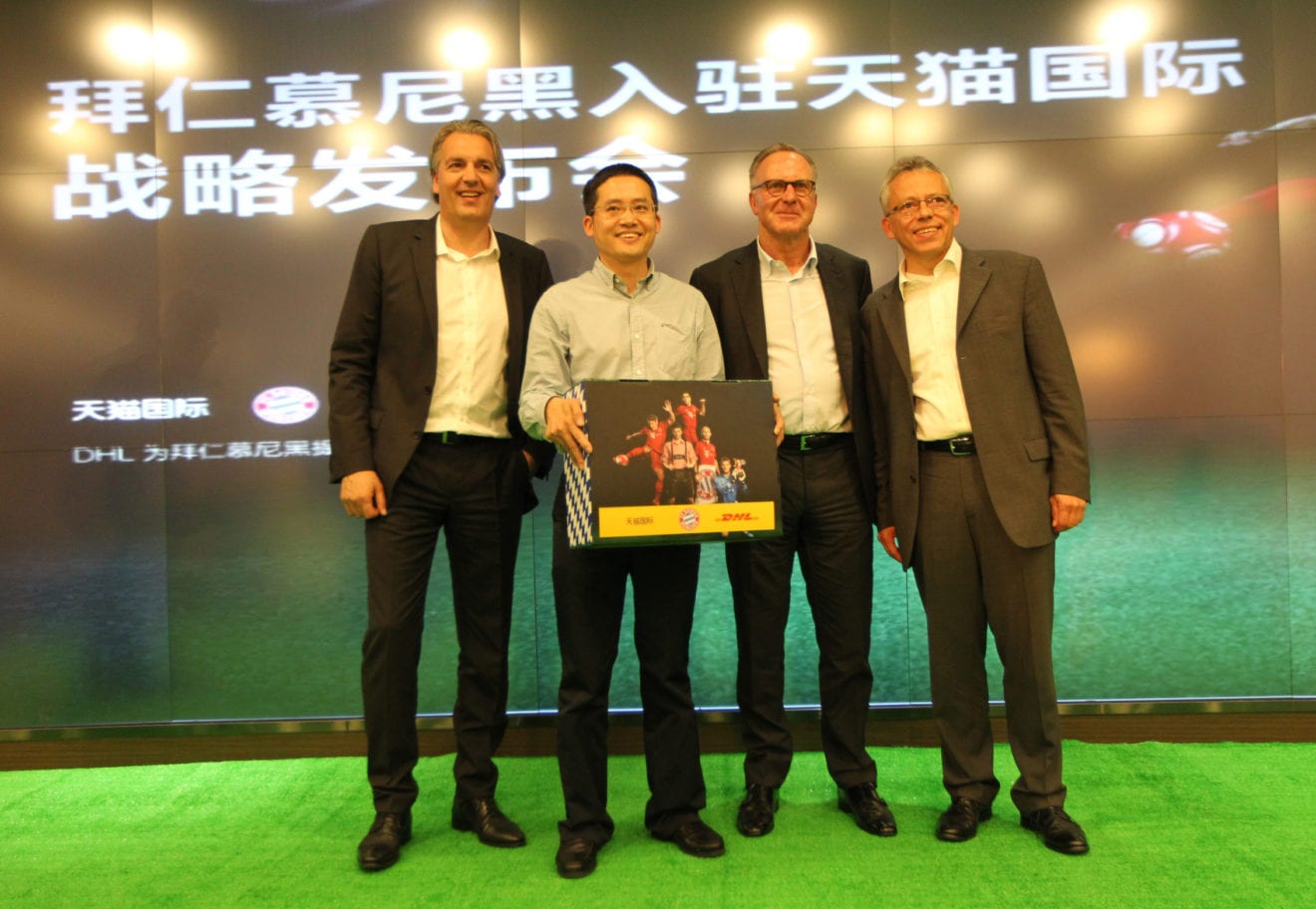
    European soccer powerhouse FC Bayern Munich has opened a flagship retailer on Tmall.com, China’s largest B2C purchasing web site.

    The membership, Germany’s newly topped champion, is promoting jerseys and different fan merchandise on to Chinese language shoppers via a collaboration with Tmall International, Tmall’s cross-border options supplier, and DHL eCommerce, in line with a press launch from the businesses.

    DHL eCommerce, a part of DHL, the world’s main logistics firm, will present worldwide supply providers and handle a part of FC Bayern Munich’s merchandising in China, working with Tmall International on product itemizing, order administration, achievement of orders, native distribution and returns, native customer support and market entry help.

    By opening a Tmall flagship retailer, FC Bayern Munich joins British membership Liverpool, in addition to America’s NBA basketball and NFL soccer leagues, as sports activities organisations that use the location to faucet China’s giant and rising base of followers. The German membership has an estimated 90 million followers on the mainland.

    “Making our fan merchandise accessible is essential to attach with our followers in China,” stated Bayern Munich Chairman Karl-Heinz Rummenigge in a press release.

    Jörg Wacker, FC Bayern Munich’s government board member, internationalisation and technique, added that the nation is vital to the membership’s efforts to succeed in followers worldwide and “for our market entry in China, Tmall International is the perfect platform since lots of our followers already use the platform at present. Along with our strategic companion DHL, we’ll guarantee a quick supply.”

    Tmall.com is a part of e-commerce big Alibaba Group, which operates China’s largest online-shopping marketplaces with some 350 million Chinese language customers.

    Jeff Zhang, president of China Retail Marketplaces for Alibaba, referred to as the addition of FC Bayern Munich’s unique flagship retailer to the Tmall platform “an important step in our European technique”.

    FC Bayern Munich is likely one of the world’s largest soccer golf equipment with over 255,000 members and in addition one of the crucial profitable having gained 5 Champions League titles, three Membership World Cup trophies in addition to 25 nationwide championships.

  • Inditex’s Oysho China debuts on-line

    Inditex’s Oysho China debuts on-line

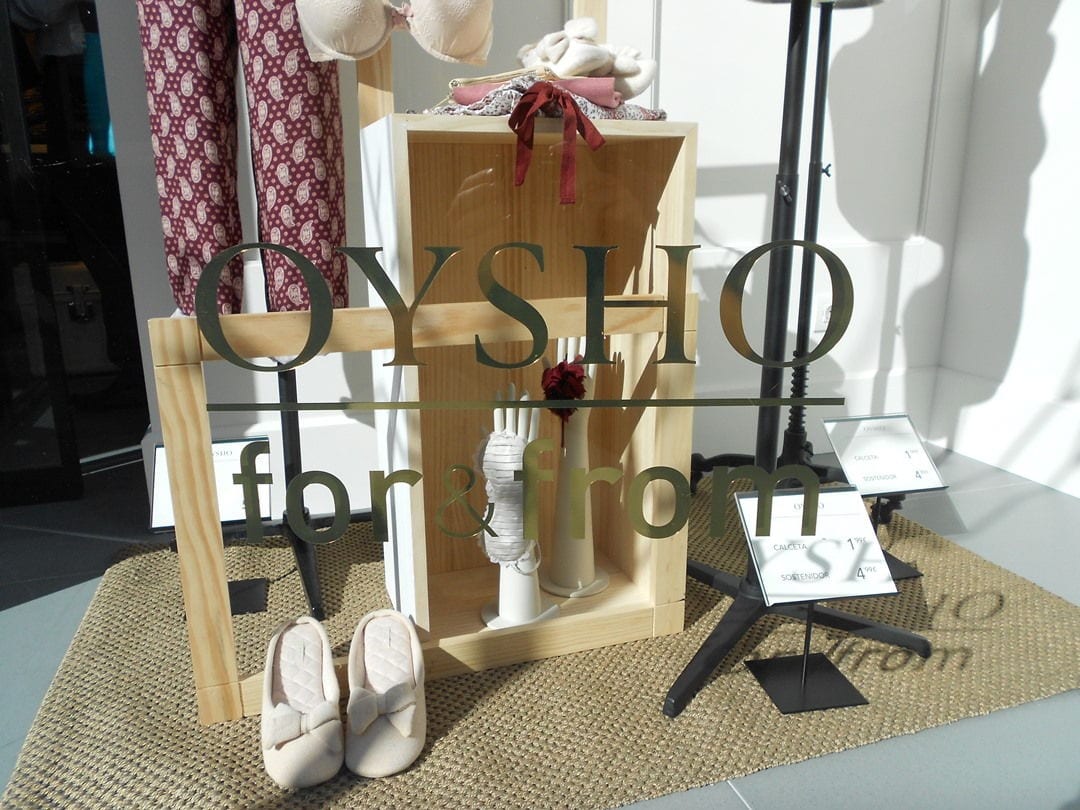
    Oysho China, Inditex’s lingerie model, has launched a web-based retailer on Alibaba’s Tmall.

    The web entry was executed in close to silence, with media protection primarily in Spanish.

    A number of of Spain-based Inditex’s different manufacturers have already entered China on-line by way of Tmall partnerships, most lately Stradivarius in April.

    Oysho, created in 2001, gives the newest trend developments within the lingerie phase. At Oysho, clients can discover “enjoyable but refined and female” underwear, and “trendy but informal outerwear”, snug loungewear and unique equipment.

    Oysho has 575 shops throughout 40 worldwide markets.

    The Tmall retailer quietly opened on Might 19 and its launch “represents Oysho’s main dedication to the Asian market and strengthens its presence and enterprise improvement,” in accordance with Evigo.com.

    On the Oysho.tmall.com storefront, consumers can select from lingerie, sportswear, sleepwear, beachwear, equipment and footwear.

  • Alibaba companions with Korean authorities to launch Korea Pavilion on Tmall

    Alibaba companions with Korean authorities to launch Korea Pavilion on Tmall

    Chinese language e-commerce big Alibaba Group on Monday launched the Korea Pavilion on Tmall.com, China’s largest third-party B2C platform. The Korea Pavilion is the primary official on-line nation pavilion devoted to offering shoppers in China with one-stop store for real Korean merchandise and journey and cultural info.

    In partnership with Korea Argo-Fisheries & Meals Commerce Company and Korea Worldwide Commerce Affiliation (KITA), the Korea Pavilion provides Korean retailers a devoted on-line platform to faucet the Chinese language market. It is the results of fruitful discussions between Alibaba Group and the Korean authorities over the previous yr. These discussions have yielded different constructive initiatives akin to collaboration in logistics and the creation of internship packages aimed toward growing the cooperation between Chinese language and Korean enterprises.

    “The Korea Pavilion is Alibaba Group’s first official nation pavilion and we’ll proceed to work with governments of different nations to launch comparable pavilions sooner or later with a view to fulfill the wants of our Chinese language shoppers,” stated Jack Ma on the opening ceremony of the Korea Pavilion on Monday in Seoul. “Korean made merchandise have all the time been well-liked in China and we’re excited to convey these merchandise onto Tmall.com.”

    To additional strengthen the collaboration between Chinese language and Korean corporations, Alibaba Group is working with KITA to provoke a youth internship program that may let 100 Korean school graduates intern at Alibaba Group’s headquarters in Hangzhou. The primary session of the three-month lengthy internship program will begin in early July. The chosen interns will study concerning the Chinese language shopper market, its traits, and the operations and enterprise of Alibaba Group’s e-commerce platforms. Via this internship, Korean school graduates can study concerning the quickly rising Chinese language market and convey that have and information again to South Korea.

    With the rising demand of Korean merchandise amongst Chinese language shoppers, Cainiao, the logistics affiliate of Alibaba Group, is trying to broaden its partnerships with Korean corporations to deliver the perfect cross-border logistics options potential to the Chinese language shoppers.

  • Kingold Jewelry opens on Tmall

    Kingold Jewelry opens on Tmall

    Kingold Jewelry, one of China’s leading manufacturers and designers of gold jewellery, ornaments and investment-oriented products, has launched an online retail flagship store on Tmall.com.

    Nasdaq-listed Kingold expects to leverage the Chinese eCommerce platform to sell the Company’s 24-karat gold jewelry and products, including rings, necklaces, bracelets and pendants.

    Additional categories may be added in the future.

    Zhihong Jia, chairman and CEO of the company, said having a presence on Tmall allows Kingold to interact directly with consumers and builds brand awareness in China.

    “We will continue to introduce new products and designs in our online flagship store on a regular basis.”

    Tmall.com provides an online shopping experience for increasingly sophisticated Chinese consumers in search of quality branded merchandise. It was launched in April 2008 as part of Taobao Marketplace and became an independent platform in June 2011.

    Thousands of international and Chinese brands and retail merchants have established storefronts on Tmall.com, part of the Alibaba Group. According to iResearch, Tmall.com was the largest B2C online retail platform in China based on the value of goods transacted as of September 2013.

    Kingold Jewelry, located in Wuhan City, was founded in 2002 and is now one of China’s leading designers and manufacturers of 24-karat gold jewelry, ornaments, and investment-oriented products. The Company sells both directly to retailers as well as through major distributors across China.

  • Stradivarius China launches on Tmall

    Stradivarius China launches on Tmall

    Inditex has launched another of its brands in China online.

    The Spanish apparel maker has opened a Stradivarius China storefront on Tmall, the largest online sale platform in China.

    After launching in China in 2010, the junior cousin of Zara has built a network of 68 physical stores in more than 40 cities.

    The broader Inditex Group has 501 stores there.

    Inditex says at stradivarius.tmall.com, customers can find the entire fashion and accessories collection from the group’s feminine fashion brand.

  • Lotte.com opens Tmall storefront

    Lotte.com opens Tmall storefront

    Korean retailer Lotte Mart has opened a shop front on China’s Tmall.

    The Lotte Mart store on Tmall Global, is the first Korean discount store to have an online presence on the popular Chinese online shopping mall.

    Lotte Mart has launched with an offer of 16 selected Korean products popular with Chinese customers, including beauty products such as shampoo and bathing goods, ginseng and Tongkeun Oxford blocks.

    The range will be expanded to between 100 and 120 products by the end of March.

    Lotte.com will manage the Tmall site operations and marketing while Lotte Mart will manage product sourcing.

    Tmall Global Mobile Lotte Mart page 315

    Lotte Mart will monitor sales to Chinese tourists in its offline department stores and duty free outlets to guide product selection for the new Tmall store.

    Lotte.com opened a Global Lotte.com site in February 2014, serving overseas purchasers. Chinese shoppers account for 75 per cent of the Global Lotte.com sales, despite the site serving 19 international markets. Sales to Chinese shoppers are increasing by an average of 40 per cent each month this year.

    Lotte.com says Chinese shoppers trust the quality of Korean products with the most popular categories Korean cosmetics and baby products such as diapers and wet tissues.

    Tmall is a business to consumer online store managed by Alibaba, China’s largest eCommerce group. Tmall Global specialises in foreign brands and foreign companies targeting Chinese residents.

  • Neteven to help Europeans sell on Tmal

    Neteven to help Europeans sell on Tmal

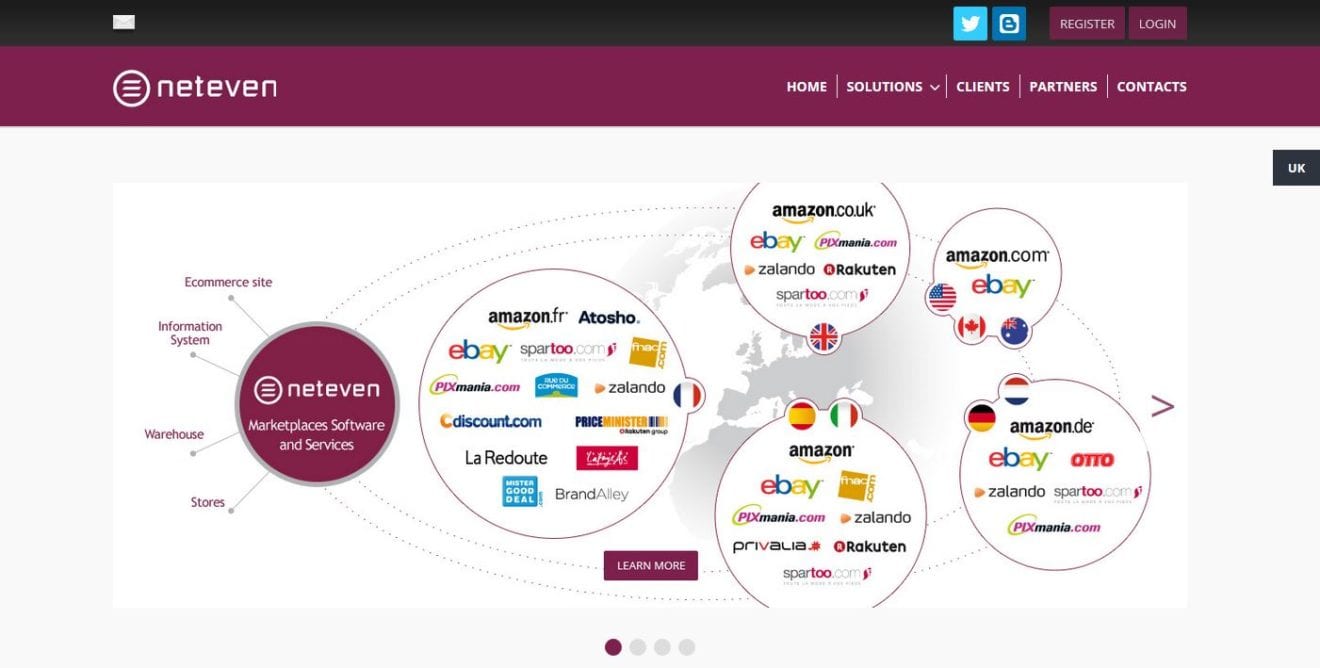
    Online marketplaces management solution provider Neteven has partnered with China’s Tmall Global to help European brands sell to Chinese consumers online.

    The partnership with Alibaba Group’s Tmall Global marketplace will allow European brands to launch their business across China’s vast consumer market.

    It opens the way for brands and retailers in fashion, home and garden, kids, accessories and many more categories to sell their products to the Chinese market and drive incremental revenues.

    Neteven says its has worked closely with Tmall Global in order to launch “a fully managed solution” which includes the technical integration of the Tmall Global marketplace within Neteven’s platform and the adapted services for brands.

    Launched in April 2008, Tmall provides a premium shopping experience for Chinese consumers seeking quality branded merchandise. Tmall Global allows international brands and retailers to sell on China’s largest third-party platform, with very few localisation constraints. For example, overseas companies without Chinese business licenses are eligible to apply to sell on Tmall Global. Orders can be fulfilled and shipped from outside of China, and customer payments are settled in the preferred origin currency such as US Dollars, Euros, etc.

    For the past 10 years, Neteven has collaborated with leading brands and marketplaces to provide its clients with a comprehensive offering. Thanks to the API integration of Tmall Global within Neteven’s software, European brands and retailers have now access to the most effective entry point for China e-commerce market.

    Greg Zemor, Neteven CEO, says more than half of Neteven’s clients are based outside of France.

    “All our European clients use our solution to trade locally, in Europe or in the US. The logical next step was to open their distribution to the largest and fastest growing e-commerce market in the world – China. Beyond technology, we needed to offer the market a good value proposition.”

    Shaoming Yang, head of Tmall Global Europe said Europe is a key strategic focus for Tmall Global. “Our aim is to help brands and retailers reach Chinese consumers that are eager for their products. To extend our reach we work with trusted and respected organisations such as Neteven to build an ecommerce ecosystem that works for both consumers and brands.”


  • Domestic online giants to overtake MNC rivals as China’s favourite retailers

    Domestic online giants to overtake MNC rivals as China’s favourite retailers

    New consumer research shows that domestic online retailers are becoming as popular as multi-national brands amongst shoppers in China. eCommerce brands such as TMall (Alibaba Group) and JD.com (invested by Tencent) are now increasingly trusted businesses, offering far more than just cheap prices and convenience. At their current rate, one of them will likely take the top spot in the next two years, according to OC&C Strategy Consultants Greater China.

    Although sportswear brands, Adidas and Nike, once again topped the latest rankings in Second Mover Advantage – The OC&C Retail Proposition Index China 2014 (The Index), Tmall now appears in the top three for the first time. In total, four of the top ten places are now occupied by Chinese online-only retailers – TMall, JD.com, YHD.com and Taobao. The rankings are based on the views of over 2,000 consumers across China who rated retailers against criteria including, trust, value for money and product suitability.

    The growth in popularity of eCommerce retailers means that the Chinese retail landscape is starting to become more like other global markets where generalist, online-only players such as Amazon, tend to be dominant.

    “As retail execution and consumer expectations increasingly mirror what we see in Western markets, it may only be a matter of time before a pure online-only player becomes the most popular retail brand in China,” said Jack Chuang, Associate Partner at OC&C Strategy Consultants Greater China. “Chinese consumers are becoming more confident and independent in their shopping habits and exercising greater choice between retail brands, particularly online.”

    “This means that foreign retailers are losing their inherent advantage over their Chinese counterparts as the high-profile, trusted brands of choice with shoppers. The era of relying on their brand strength and its implied trust is coming to an end. Retailers will need to respond by tailoring their products specifically to the local target market.” he added.

    The growth of eCommerce in China will continue over the next few years. The evidence from The Index highlights that the key challenge for traditional bricks and mortar retailers will be developing an attractive multi-channel offering (online as well as offline) to consumers. Some retailers in western markets are starting to fight back against the competition from online-only retailers and, in the long-term, this will likely also be a feature of the Chinese market.